
Crypto World
Paul Ryan Foundation Backs Ohio’s Canton Pilot for Digital Asset Use


Digital Asset, the firm behind the Canton Network, and the American Idea Foundation—an organization associated with former U.S. House Speaker Paul Ryan—say they are preparing a blockchain-based pilot to modernize how public benefits are distributed in the United States.
The program, dubbed RISE, is designed to consolidate multiple state-administered benefits into scheduled payments, with rules that can adjust to changes in household income. The partners said the pilot is expected to begin in the first quarter of 2027, pending federal approvals.
Key takeaways
- Digital Asset and the American Idea Foundation plan a benefits-distribution pilot using the Canton Network across three U.S. states.
- RISE is expected to bundle benefits into monthly or twice-monthly payments and apply spending categories such as food, child care, and cash.
- The system would automatically recalibrate benefit levels when household income changes.
- Participating agencies would reportedly be able to monitor payments, balances, spending, and compliance data through Canton, while limiting access to sensitive information.
- Participating states and specific benefit programs have not yet been named, and the pilot remains subject to federal approval.
A blockchain-based approach to a fragmented benefits system
In their announcement, the partners described RISE as a way to reduce the friction that can come from administering multiple benefit streams that may have different rules and eligibility thresholds. The program is positioned as a “safety net” modernization effort by using Canton to coordinate permissions, payment logic, and transaction execution.
Digital Asset said Canton would be responsible for managing the rules and permissions involved in distributing benefits, while also constraining who can access sensitive data. The partners further stated that the system would support tracking at the agency level, including payment history, balances, spending behavior, and compliance information.
According to the announcement, the pilot would generate benefit payments on a monthly or twice-monthly schedule and apply spending restrictions to categories including food, child care, and cash. A central feature is automation: benefit levels would reportedly adjust as household income changes, aiming to reflect real-time circumstances rather than relying on static eligibility assumptions.
“By combining fragmented benefits, reducing penalties as families earn more, and rigorously measuring results, these pilots can help show what a modern safety net should look like.”
Why the partners say penalties could be reduced
The program’s rationale, as outlined by Paul Ryan, focuses on a common pressure point in benefits administration: when household earnings rise, recipients can face penalties or reductions that may not align with how quickly income changes. Ryan’s remarks explicitly connect the pilot to reducing penalties as families earn more.
From an investor and builder standpoint, the significance of the approach is less about one-off payments and more about how a rules engine can be coupled to compliance and reporting. If RISE works as intended, it could serve as a template for how public agencies handle complex eligibility and spending constraints—especially where multiple benefit categories must be administered without creating operational overload or exposing sensitive information.
However, the partners did not specify which states would participate or which programs would be included in the pilot. They also emphasized that the project requires federal approval, meaning timelines and scope could shift depending on regulatory review.
Canton’s government-linked momentum
This announcement adds another public-sector use case to Canton, whose growth in recent periods has been driven largely by institutional finance deployments. Earlier projects show a pattern of Canton being tested for settlement and collateral use, rather than for consumer-facing redistribution of funds.
In April, Japan Securities Clearing Corporation (JSCC), Mizuho, Nomura, and Digital Asset launched a proof of concept using Canton to test Japanese government bonds as digital collateral, including for real-time cross-border transactions. That work was reportedly selected for support under Japan’s Financial Services Agency Payment Innovation Project.
More recently, in July, Canton was used to settle a tokenized U.S. Treasury trade between Franklin Templeton and Virtu Financial. Tradeweb handled execution and price discovery, and the firms said the transaction moved against USDCx in real time—described as an industry first by Tradeweb.
With RISE, Canton’s role would extend from capital markets applications into the mechanics of public benefits. The pilot, if it gains regulatory traction, would test whether the network can handle compliance-heavy workflows while coordinating payment logic and access controls across multiple agencies.
What to watch before the first quarter of 2027
While RISE’s stated objectives are clear, key operational details remain unconfirmed. The partners have not named the three participating states or identified which benefits would be bundled. The pilot also depends on federal approval, which may determine the final structure of the payment schedules, spending categories, and reporting requirements.
Prospective observers should also watch how the system measures performance—particularly whether automated adjustments to benefit levels meaningfully reduce penalties as income changes, and how agencies validate compliance and audit trails through Canton. If the project advances beyond planning, it could become a reference point for how blockchain-based infrastructure fits into regulated, data-sensitive government programs.


Palantir (PLTR) stock has been trading just above a buy zone from a stage-one pattern. Now, investors monitoring the Big Cap 20 name and data analytics company should be on the lookout for the stock to clear a potential add-on entry above the buy zone. Palantir stock has a best-possible Composite Rating of 99, boosted by two quarters of year-over-year earnings…
Copyright ©2026 Investor’s Business Daily, LLC. All rights reserved. 87990cbe856818d5eddac44c7b1cdeb8
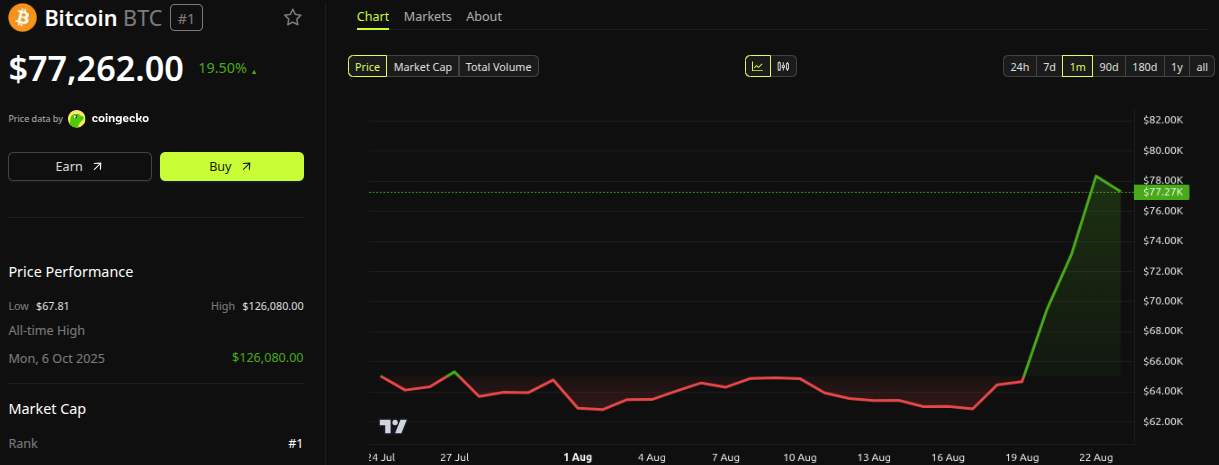
BitMEX co-founder Arthur Hayes delivered a blunt message to investors following a sudden market surge, telling Crypto Banter host Ran Neuner that avoiding risk assets right now would be foolish.
His comments came just after the US Treasury moved to double the size of its debt buybacks.
Note: Arthur Hayes recent crypto trading actions have been anything but examplarary. BeInCrypto published an extensive analysis of his publicly known wallets. KOL comments and discussions shouldn’t be considered as investment advice.
What Triggered Hayes’s Bullish Call
Soft yield curve control refers to central bank or Treasury actions that cap bond yields without formally announcing a fixed target, injecting liquidity through indirect market intervention. Hayes described the buyback expansion in exactly those terms.
“You’re an idiot if you’re not long stocks, long gold, long Bitcoin, long the market,” Arthur Hayes said, linking the Treasury’s actions directly to renewed liquidity-driven gains.
Treasury Secretary Scott Bessent announced the expansion targeting longer-dated Treasuries. Markets had been testing the 5% level in 10-year yields, a threshold many view as unsustainable for US debt servicing.
By increasing buybacks, the Treasury effectively capped yields, injecting liquidity much like previous interventions under Janet Yellen.
Hayes argued that when governments suppress bond yields artificially, private capital flees fixed income in search of scarce alternatives.
“That’s why markets ripped gold, Bitcoin stocks, right? This is the the Yellen put if you want to call it that. Uh she started this. Um, funny at the time, you know, he wasn’t this treasur treasury secretary then. You know, Scott Bessent had a lot of choice words for how moronic it was that uh Janet Yellen was issuing so much debt at the short end,” Hayes explained.
Follow us on X to get the latest news as it happens.
He drew a parallel to the Bank of Japan’s decade-long experiment with yield-curve control, arguing that capped yields inevitably push capital toward equities, gold, and Bitcoin.
Why Hayes Sees This as the Start of a Pattern
The immediate market reaction validated his view. The 30-year Treasury yield fell, Bitcoin broke above key moving averages near $70,000, equities rose, and altcoins turned sharply green.
Hayes called the move a recognition that authorities will keep intervening to defend debt sustainability, creating a series of liquidity injections over time rather than a single event.
With the Federal Reserve holding rates steady to support Treasury operations and additional tools, such as expanded repo facilities, still on the table, Hayes sees the policy bias as firmly pro-asset prices. He added that Trump’s focus on a strong stock market further aligns those incentives.
While acknowledging that part of Bitcoin’s sharp move reflected a short squeeze, Hayes stressed a deeper structural shift: governments now prioritize debt defense over free-market pricing of yields.
“The balance sheet expands infinitely because the market say, ‘Oh, you want to you want a capul 5%? Yours. Here are all these bonds. I want equities. I want gold. I want Bitcoin. I want anything that has a scarce supply if you’re going to create more dollars to artificially manipulate these yields.” BitMEX co-founder noted.

In that environment, he argued, holding cash or staying under-allocated to equities, gold, and Bitcoin becomes the riskier choice. Hayes said he remains heavily positioned, having stayed risk-on for weeks with significant exposure to both Bitcoin and Ethereum.
His words, which also touched on his new project Flop Labs, underscored a simple thesis for the current regime: stay long scarce assets while authorities keep printing and intervening.
“I mean, I’ve been riskon for a, you know, a few weeks now. I mean, we pumped a lot into Ethereum, bought some Athena, bought some Ethery. So, we’re pretty much at probably maximum risk, I would say, right now, uh, given our holdings and so, you know, just sitting back and watching the number go up on the screen. So, it’s nice,” Hayes said.
Subscribe to our YouTube channel to watch leaders and journalists provide expert insights.
The post Arthur Hayes Shares Surprising Tip on Stocks, Gold, and Bitcoin appeared first on BeInCrypto.


NoOnes has shut down, telling users to withdraw funds immediately. The team warned that balances tied to the platform may be flagged after August 23.
The peer-to-peer marketplace served more than 2.5 million users in three years. Sanctions cost it essential partners, leaving withdrawals as the only function still running.
Follow us on X to get the latest news as it happens
NoOnes Shuts Down After Sanctions Hit
NoOnes said it worked to resolve and remove the sanctions, but failed. Blockchain monitoring providers then classified its wallets and transactions as high risk.
This has made it difficult for the platform to process transactions and operate normally.
“We explored every possible option, but continuing NoOnes was no longer sustainable,” the blog read.
The wind-down began on August 17. The P2P marketplace closed on August 21, taking Swap, the Visa card, crypto off-ramps, the gift card store, and Lightning payments with it.
Withdrawals now run only through the Bitcoin (BTC) network and Tether (USDT) on TRON. The team strongly advised users to withdraw their entire balance immediately and no later than Sunday, August 23, 2026.
“Because of the EU sanctions listing, external compliance providers may review or change the risk ratings of certain NoOnes company wallets,” the team said.
The Council of the EU adopted its 21st sanctions package against Russia in late July. Binance will also stop processing transactions involving several platforms on August 23.
Crypto Closures Pile Up While BitMart Changes Course
NoOnes joins a long 2026 list. OrdinalsBot announced its wind-down this week after three years. More than 120 crypto projects have shut down in 2026, according to RootData.
Alea Research reviewed 110 of those cases through mid-August. Decentralized Finance (DeFi) accounted for 40 closures (36%), while centralized exchanges accounted for only 7.
One name has since moved the other way. BitMart said this week that it is weighing a restructuring plan rather than a full liquidation, with a roadmap expected by September 9.
Subscribe to our YouTube channel to watch leaders and journalists provide expert insights
The post Crypto App NoOnes Shuts Down After Sanctions, Affecting 2.5M Users appeared first on BeInCrypto.

Uber Technologies (UBER) stock is back above its 200-day moving average after a rough start to the year for the ride-hailing platform operator. With the stock potentially back in favor with investors, let’s explore using options to create synthetic long exposure for a fraction of the cost of buying shares outright. The strategy is constructed by selling an out-of-the-money put…
Copyright ©2026 Investor’s Business Daily, LLC. All rights reserved. 87990cbe856818d5eddac44c7b1cdeb8

Three biotech stocks are making their mark, hovering around the top of the IBD 50 list, and even held all three top slots at one time over the past week. Eight biotech stocks made the list but Travere Therapeutics (TVTX), Eton Pharmaceuticals (ETON) and Kiniksa (KNSA) stood out. All three names are at or near profitability and their stocks gapped…
Copyright ©2026 Investor’s Business Daily, LLC. All rights reserved. 87990cbe856818d5eddac44c7b1cdeb8

After a week dominated by retail earnings, the upcoming earnings calendar holds a more mixed basket. Nvidia (NVDA) stock is the highlight with second-quarter results expected on Wednesday after the market close. Several software names stand on deck as do a number of retail and artificial intelligence names. Aircraft engine and parts maker Heico (HEI), database play Box (BOX) and…
Copyright ©2026 Investor’s Business Daily, LLC. All rights reserved. 87990cbe856818d5eddac44c7b1cdeb8

It has more than doubled since rallying furiously from 2026 lows. And now enterprise software play JFrog’s (FROG) stock is eyeing a fresh entry as it tests support at a key technical benchmark. The California company operates an end-to-end platform that powers and controls software supply chain. While not a pure-play artificial intelligence equity in the same way as a…
Copyright ©2026 Investor’s Business Daily, LLC. All rights reserved. 87990cbe856818d5eddac44c7b1cdeb8

Franklin Templeton is preparing to put tokenized assets inside its conventional mutual funds and ETFs, Bloomberg reported on Thursday, eight days after SEC staff cleared the firm to hold its $721 million blockchain-based money market fund in those portfolios.
Franklin characterizes relief as the first US regulatory clearance for digitally native products inside conventional funds.
“It is not a rule, regulation, or statement of the Commission, and the Commission has neither approved nor disapproved its content,” the Division of Investment Management wrote on August 12, adding that it “has no legal force or effect.”
Staff set aside paragraphs (b), (e), and (f) of Rule 17f-2 under the Investment Company Act of 1940, the provisions built around vault custody of share certificates.
The Franklin OnChain U.S. Government Money Fund (FOBXX) reported net assets of $720,928,224 on July 31 and a 3.50% seven-day net yield. Franklin Templeton Investor Services will open a separate wallet on Stellar for each investment fund.
Twelve Conditions Attached
Staff attached twelve conditions. Each fund’s board of trustees must approve the arrangement and review it at least annually.
FTIS has to retain the power to correct errors, freeze or migrate wallet records and restore the official ownership record, and if it ever stops acting as transfer agent it must hand the successor administrative control over the smart contracts.
Independent public accountants must verify each fund’s holdings at least three times a fiscal year, two without prior notice. Moreover, funds may use the shares for cash balances and securities lending collateral. CryptoPotato reported in December that BENJI served as collateral in a SemiLiquid credit pilot, staying encumbered across the loan lifecycle.
Relief Rests on a 1992 Letter
Staff granted the position by analogy to a September 24, 1992 letter to Franklin Investors Securities Trust, which covered a master-feeder arrangement where an affiliated transfer agent held fund shares in book-entry form. Franklin argued a Stellar wallet raises the same question, since FTIS still maintains the official ownership record and keeps unilateral control over it.
The letter names 23 investment managers, among them Putnam, Western Asset, ClearBridge, BrandywineGLOBAL, Royce and Clarion Partners. CryptoPotato has covered Franklin’s agreement to buy 250 Digital, the firm spun out of CoinFund, as its digital asset arm passed 50 staff.
On August 18, the SEC proposed the Regulation Crypto Assets with $5 million and $75 million offering paths, a proposed rule carrying a 60-day comment period. Franklin’s request was signed by Navid J. Tofigh, Senior Associate General Counsel, and answered by Taylor Evenson, Senior Counsel.
The post Franklin Templeton Wins SEC Staff Relief for Its $721M Onchain Fund appeared first on CryptoPotato.


Eric Trump denied that anyone was launching a new Trump-linked coin on Saturday, calling contrary claims fraudulent as TRUMP and MELANIA posted double-digit gains over 24 hours. “What a joke… This is absolutely not true,” Trump wrote on his Blue-checkmarked X account. “No one is launching any kind… Read the full story at The Defiant

This week, Binance founder Changpeng Zhao (CZ) finally revealed why he chose to face US prosecutors during his AML violation case despite holding UAE citizenship that could have kept him from the grasp of US law enforcement.
His account offered a rare explanation of his thinking before a four-month prison sentence and the end of his leadership at Binance.
CZ Says Running From the Case Was Never an Option
Zhao talked about the matter in a fireside chat with Anthony Scaramucci on August 19 at the Wyoming Blockchain Symposium in Jackson Hole, stating that he had become a citizen of the United Arab Emirates approximately six months before the Binance case became public and that the country has no extradition treaty with the USA.
He could have stayed in the Middle East and avoided US courts altogether, but he said that option didn’t feel honorable to him.
“Actually, I was granted citizenship of the UAE, but I didn’t want to leverage that,” Zhao explained. “That’s just the wrong thing to do.”
According to him, resolving the case one way or the other was better for himself, Binance, BNB holders, and the wider crypto industry.
“When the US government is going after you, you don’t dodge it,” declared the former Binance CEO. “You shouldn’t be hiding or running away from it.”
But on the other hand, Zhao had quite different expectations about the punishment he would face. He told Scaramucci that he never expected to get imprisoned since his case had no fraud, just one Bank Secrecy Act violation.
CZ also compared his sentence with that of former BitMEX executive Arthur Hayes, who received six months of home confinement after pleading guilty to one count of violating the Bank Secrecy Act by failing to establish adequate AML and KYC at his exchange.
Zhao, meanwhile, got four months in federal prison for fundamentally the same personal offense. And while that was still a much shorter jail term than the three years the Justice Department had recommended, it was certainly more than the no-prison-time his legal team had asked for.
“I think I’m still the single only person that went to jail for a single violation of a Banking Secrecy Act,” he remarked.
A Case That Ended With Prison, Then a Pardon
In the interview, CZ also reflected on Binance’s position at the time of the case. He pointed to its status as the world’s largest crypto platform while stressing that it was neither US-based nor China-based.
“We’re not US-based, we’re not China-based, but look Chinese, so kind of an easy target,” he said. “I don’t blame them. It is what it is.”
The 48-year-old stepped down from his position at the helm of Binance after the exchange agreed to a $4.3 billion settlement with US authorities.
He himself also paid a $50 million personal penalty before heading to the Federal Correctional Institution (FCI) Lompoc II in Santa Barbara, California, to serve out his sentence, leaving the facility near the end of September, 2024.
A year after that, President Donald Trump gave him a full and unconditional pardon.
The post CZ Reveals Why He Didn’t Use UAE Citizenship to Avoid US Charges appeared first on CryptoPotato.

Mayors to get powers to overrule local councils on planning decisions

Niu Technologies: A Disappointing Report Comes With A Silver Lining (NASDAQ:NIU)

Good Good apologizes for controversial Callaway Golf video ad





-

 Fashion1 day ago
Weekend Open Thread: Madewell – Corporette.com
-

 Business5 days ago
SMA Solar Technology AG (SMTGY) Q2 2026 Earnings Call Transcript
-

 Tech5 days ago
Qwen3.8-27B runs frontier-class coding agents and reasoning locally, no cloud API required
-

 Crypto World5 days ago
OCC Greenlights Trump Family Crypto Firm for Trust Charter
-

 Politics16 hours ago
6 months on, Irish renters crushed by effects of government housing bill
-

 Crypto World5 days ago
NAVI Prime launches institutional lending framework on Sui
-

 News Videos3 days ago
Don’t Leave Your Financial Future To Chance | August 19, 2026
-

 Crypto World6 days ago
Data of 54K Wallet Users Leaked, Clarity Odds Just 10%: Hodler’s Digest, Aug. 16
-

 Tech7 days ago
What are the rumors about the AirPods Pro 4?
-
 NewsBeat19 hours ago
The ‘Lucky Dip Gang’ causing carnage for clicks: After five thugs were killed speeding in the wrong direction on a motorway, GUY ADAMS investigates a sick new trend… and why police aren’t even allowed to pursue them
-

 Politics6 days ago
Britain is facing a housing disaster
-

 Business5 days ago
Stock Market Today: Tech Futures Slide As Treasury Yields Jump; Nvidia, Micron, Sandisk Sell Off
-

 Business7 days ago
Rebel Creamery files Chapter 11 with $23.8M Van Leeuwen judgment on appeal
-
 Crypto World5 days ago
Dow’s 3-Year Winning Run Isn’t a Crash Signal, Still 49% Odds of Double-Digit Gains
-

 Tech6 days ago
Straight Up the Cliff, Yunnan’s New Fuyao Ladder Turns a Three-Hour Climb Into a 50-Second Ride for Students
-
Tech5 days ago
5 Of The Most Reliable Car Brands To Consider If You’re Buying A Used SUV
-
 Tech6 days ago
OpenAI’s new ChatGPT feature logs your keystrokes and stores them in plain text
-

 Tech7 days ago
DeepSeek’s top-ranked V4 Flash stumbles on real agent tasks as its prices surge
-
 Tech5 days ago
Nvidia discloses $21B stake in SpaceX
-

 Tech4 days ago
GLM-5.3 hits the API at $1.4/$4.4 per million tokens
You must be logged in to post a comment Login