


 (@thefrogmaxi)


 (@DelliBabu_POL)
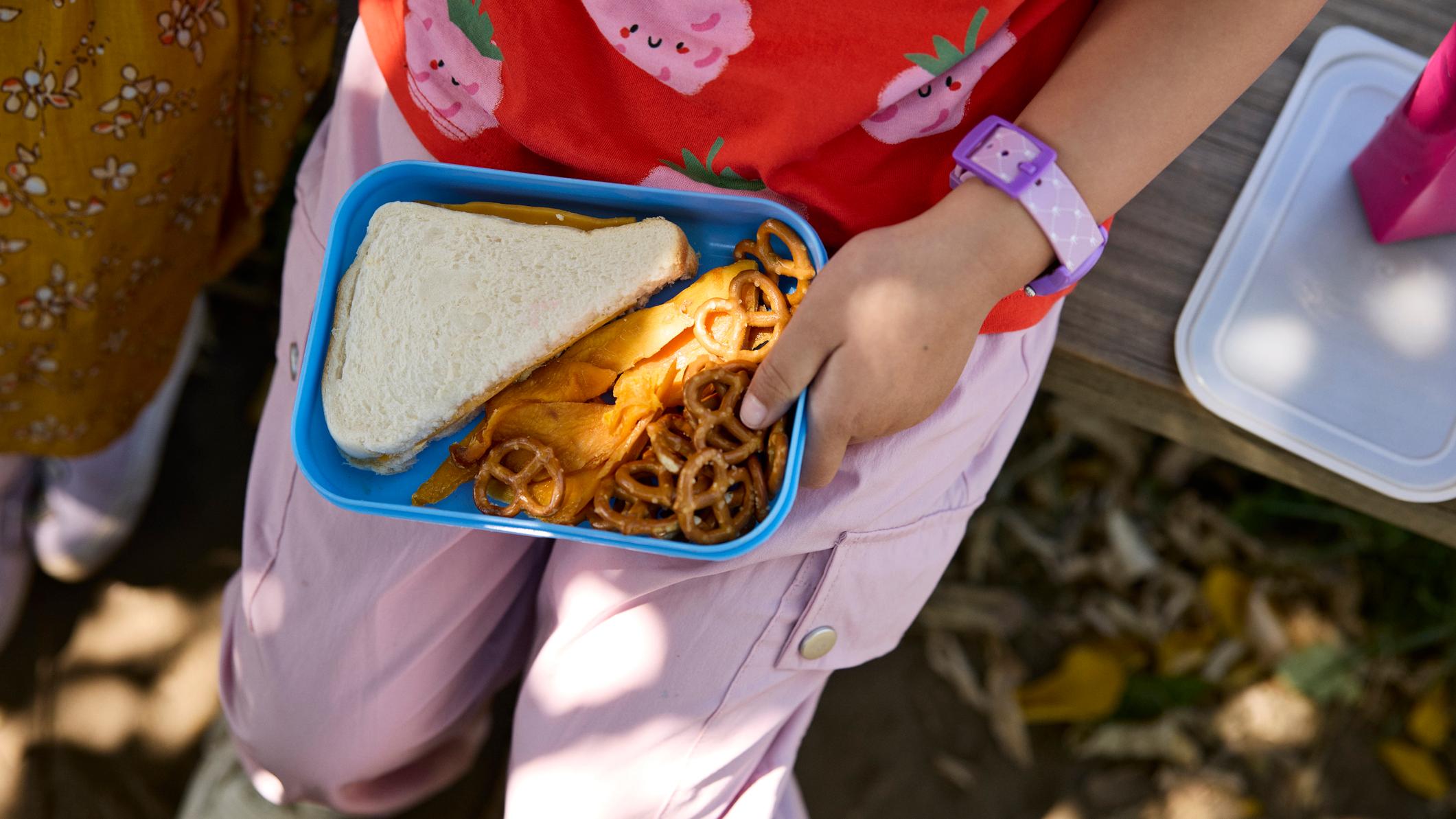
Collect everything the average American kid throws away in the school cafeteria over a single year, pile it on a scale, and you’d be looking at roughly 39 lbs of food. That’s about what a typical 4-year-old weighs.
Multiply that across the country, and school food waste adds up to an estimated 530,000 tons every year—an alarming amount of uneaten sandwiches, rejected fruit, and unopened snacks.
That makes food waste difficult to dismiss as somebody else’s problem. “If you eat food, you’re part of this whether you like it or not,” says Lauren Click, founder of the nonprofit Let’s Go Compost, which runs food-waste programming in more than 600 schools, libraries, and community centers. The flip side is that you’re also in a position to waste less—starting with a packed lunch, one of the few pieces of the food system a family fully controls.
Here’s how experts recommend packing a school lunch that produces less trash—and stands a better chance of getting eaten.
See what comes home
Before you overhaul your lunch-packing routine, spend a couple weeks paying attention to what returns at the end of the day. Which foods are untouched? Is the bologna sandwich always missing exactly one bite? What never even made it out of the wrapper?
After a few days, you’ll probably start to notice a pattern. “If you pack based on what actually comes home, not what seems balanced on paper, you can track it each week and adjust over time,” says Lizzie Horvitz, founder and CEO of Finch, a platform that evaluates products for sustainability.
You don’t have to keep tabs on the lunchbox all year. August and September are when parents are still figuring out what—and how much—their kids will eat. “If you’re really paying attention to ‘what’s my kid eating?’ and ‘what’s my kid consistently bringing home?’” Horvitz says, “there really shouldn’t be any waste after a couple of weeks.”
Ask your kid what happened
Seeing what comes home is only half the job. You also need to find out why—and good luck guessing correctly.
Click has heard every version of this story: A kid suddenly stops eating apples, and their parent assumes they don’t like the fruit. The real problem? A classmate declared apples uncool. “You can’t make assumptions, because you’ll never guess what’s going on in the mind of a 5-year-old,” she says.
Keep the conversation curious, not accusatory. Ask your kid who they sit with, how much time they have to eat, and what their friends bring. Maybe the orange takes too long to peel, or they can’t open one of the containers without help. Maybe their friend brings two sandwiches and shares one every day—in which case, congratulations, you can stop making a sandwich.
Save new foods for dinner
The school cafeteria isn’t exactly an ideal tasting room. Lunch periods are short, cafeterias can be loud and chaotic, and no one is sitting nearby encouraging your kid to give that unfamiliar vegetable one more chance. (Rutabaga, anyone?)
“Maybe this isn’t the time to have a really balanced, try-new-things meal,” Horvitz says. “Let’s save that for meals at home.” That’s not an argument for packing nothing but cookies. It means lunch should mostly consist of foods you already know your child will eat; save the experiments for dinner, when you’re there to encourage them.
Choose the food before the lunchbox
Compartmentalized bento boxes are adorable. They’re also built for a very specific amount (and shape) of food, which may not match what—or how much—your kid eats.
Lindsey Schoenfeld, a registered dietitian nutritionist, chef, and co-author of To Your Taste: How to Eat Well and Feel Better for Your Whole Life, suggests starting with the food instead. Ask your kid what they ate all summer and which lunches they loved last year. Then choose containers that fit those foods. The folded half-sandwich that nestled perfectly into one tiny compartment in second grade might not cut it for a middle-schooler.
Before splurging on new gear, check your cabinets. “There’s so many containers that we have around the house,” Schoenfeld says. “Maybe they don’t have a lid right now. Maybe we need to dig through a few shelves.” You might need a new lunchbox, but you probably don’t need every container inside it to be new too.
Reusable containers only reduce waste if you use them over and over, so make cleanup as painless as possible. Many silicone bags and food containers can go straight into the dishwasher—check the manufacturer’s instructions—and you don’t need to scrub them spotless first. “The dishwasher’s job is to make them completely spotless,” Horvitz says.
Pack the amount your child actually eats
An oversized container practically begs to be filled, Schoenfeld says—and parents often respond by packing more than their kid will eat.
As a rough starting point, she suggests about half a cup of fruit, or one small piece of whole fruit, for younger elementary-school kids, in addition to a quarter- to half-cup of vegetables and one serving of grains, such as a slice of bread or a 6-inch tortilla. Middle-schoolers might need the higher end of those ranges, while high-schoolers may eat a full cup of produce and two servings of grains.
But kids aren’t measuring cups. “They grow at different times, and their activity is very different,” Schoenfeld says. One child might spend all day running around on the playground or practicing with the marching band, while another might take medication that suppresses their appetite at lunchtime. If the same amount keeps returning, try sending less before deciding your child has rejected the food altogether.
Find out what time lunch starts
Plenty of parents don’t know what time their kid eats lunch. It’s worth checking: Because schools stagger lunch by grade, some are sitting down with their sandwiches at 10:30 a.m.
That can explain a lot. A child who ate breakfast at 7 might not be hungry three and a half hours later, even though they’re ravenous when they get home. Pack a little less for an early lunch, Schoenfeld suggests, and have a substantial snack ready after school. She likes options that include a real food group, such as cheese and whole-grain crackers, fruit, or carrot sticks.
“It’s good to capture these kids when they’re hungry and you have something good ready,” she says.
Send last night’s dinner
One of the easiest ways to waste less is to pack food you already made—and already know your child likes.
Jessica Randhawa, the chef and recipe developer behind The Forked Spoon, has used vacuum-insulated stainless-steel containers for her son’s lunch since preschool. In the morning, she reheats leftovers—vegetables, meat, whatever is in the fridge—and transfers them to the insulated container. In winter, she sends leftover chicken soup, one of his favorites, in a larger container with a handle. A reusable metal spork goes in with it.
Her larger point: The container matters far less than whether the food gets eaten. “The best low-waste lunch system is one that the child actually eats,” Randhawa says. “Reusable containers aren’t helpful if the food inside is repeatedly wasted.”
Open the lunchbox before the pantry
When a hungry kid walks through the door, take a look inside their lunchbox before handing over a new snack. Schoenfeld does this automatically. “I’m known for saying, ‘Oh, you’re hungry?’” Schoenfeld says. “I just open the lunchbox back up. ‘Look, it’s perfect. It’s ready to go.’”
Of course, food safety gets the final say. Shelf-stable foods—crackers, a sealed pouch, an unopened bag of chips—can go back into the pantry or be eaten later. Perishable food is a different story: If it didn’t stay cold during the school day, toss it.
Don’t automatically rule out single-serve packages
An individually packaged snack isn’t always an environmental villain. If your kid brings home an unopened package of crackers, it can go straight back into the pantry. “It’s like it never came to school,” Horvitz says.
Loose crackers can be saved too, of course, but people are often more willing to toss food that’s already been opened and portioned out. Buying in bulk and using reusable containers still produces the least packaging—but a single-serve snack that gets eaten another day can be better than food that lands in the trash.
“If we’re assuming a kid is eating everything in their lunchbox, we of course want to stray from individually packaged food,” Horvitz says. But if your child is unpredictable about what they’ll eat, a sealed package that comes home isn’t necessarily a failure. The best option is to buy in bulk and portion food into reusable containers; after that, a packaged snack that gets eaten another day can be better than loose food that lands in the trash.
The same general rule applies to drinks: A reusable bottle is best, and pouring juice from a large jug creates less packaging than sending an individual box. If you do pack a can, don’t crush it afterward; Horvitz notes that intact cans are easier for recycling facilities to sort.
Consider a secondhand lunchbox
There’s no rule that says a lunchbox has to be new. Click suggests checking Facebook Marketplace, Poshmark, and eBay, where last year’s enthusiasm for a particular cartoon character is now available at a discount. “They have every character you can think of,” she says.
Just don’t try to replace every disposable item in one frantic back-to-school shopping trip. Pick one change, get used to it, and then consider another. “Don’t try to go zero-waste in one day, because you’re gonna get frustrated,” Click says. “It’s like saying you’re gonna lose 50 lbs in one month.”
Be skeptical of “compostable” packaging
“Compostable” packaging usually needs more than a trash can—or even a backyard compost pile. Many products break down only in commercial composting facilities. Yet a 2025 national analysis found that just 18.1% of the sampled U.S. population had access to a curbside or drop-off program that accepted food scraps and at least some forms of compostable packaging. If your local program doesn’t accept these products, they’ll probably end up in a landfill.
“The word compostable doesn’t mean it will compost,” Click says. She recommends choosing reusable items first. If you do buy compostable products, make sure you have a realistic way to compost them—either at home, if they’re certified for home composting, or through a local service that accepts and processes them.
Show kids where the trash goes
The most effective tool for cutting lunch waste isn’t a product. It might be a field trip.
Click takes children to landfills, where the hard hats, safety vests, and enormous trucks are a hit. But the adults tend to leave with the bigger revelation. “You start to see the birds there eating trash,” she says. “You’re really faced with this reality of, like, you contribute to this.”
Many recycling facilities offer free tours, and county extension offices around the country run gardening and composting programs for kids. The point isn’t to make children feel guilty about every granola-bar wrapper. It’s to help them see where their trash ends up—and why small changes matter.
“There’s not a magical product that you can order online and have it shipped with two-day shipping that will solve this,” Click says. “It really comes down to healthy daily habits that you build over time.”


























































You must be logged in to post a comment Login