
Crypto World
Quants are paying $4,000 a month to front-run Solana trades



According to a new investigation, validators are accepting payments starting at 10 SOL ($1,000) a month to leak early access to Solana trades they receive for block production.
Maximal extractable value (MEV) is on allegedly sale to quants via an incredibly valuable, realtime feed of pre-execution transactions.
Corvus Labs’ Andrei Vacariu traced payouts through a vault where Everstake, led by former Grayscale founding general manager David Kinitsky, sells a $4,000/month private data feed of pending trades.
He also claimed that Everstake salespeople are soliciting more validator node operators to join the scheme with offers of over 10 SOL a month.
With this valuable information, sophisticated traders can allegedly front-run and sandwich-attack common orders on DeFi exchanges.
‘Every trader on Solana’
Vacariu spelled out the implications of his allegation for average users of Solana applications: “Every trader on Solana hits these slots, can’t tell which leaders mirror their traffic, and can’t opt out.”
Everstake, which runs one of Solana’s larger validators, with about 7.4 million SOL delegated to it, claims that it uses “filtering mechanisms specifically to prevent this type of activity,” and that it doesn’t encourage front-running or sandwiching.
Thanks to this largesse, Everstake’s traffic priority enjoys institutional “stake-weighted quality of service,” a service tier that it repackages via Blockspace.
No public mempool, just high-priced, private mempools
Blockspace’s high-priced service only exists in the first place because Solana has no public mempool.
Unlike common memory pools of pending transactions that are free and easy to access on other blockchains, most Solana transactions travel straight to the validator scheduled to build the next block without queueing in any public mempool.
That design was supposed to be net positive. Only the scheduled validator would see a trade before it executed, which should minimize MEV.
However, MEV opportunities haven’t disappeared under this model. Instead, they’ve consolidated into a high society of customers who can afford to pay thousands of dollars for slices of MEV opportunities directly from validators with over 15,000 SOL staked on Solana’s blockchain.
Customers can run Everstake’s software, mirroring incoming traffic to Everstake servers before a block exists and rushing through new transactions earlier (or right after) retail orders.
Read more: Solana validator decentralization under scrutiny
Solana validators on the payroll
Everstake isn’t a single validator but rather an association of 39 validators who collectively have staked more than 50 million SOL.
Payouts from Blockspace’s revenue-sharing wallet, according to Vacariu, have disbursed to Prostaking, RockawayX, Staking Facilities, and Stake.org.
Staking Facilities allegedly took more than 950 SOL in such payments since July, while Prostaking allegedly collected over 200.
Other major players in the Solana ecosystem, Blockspace noted, run MEV infrastructure through different architectures.
Got a tip? Send us an email securely via Protos Leaks. For more informed news and investigations, follow us on X, Bluesky, and Google News, or subscribe to our YouTube channel.


The world’s largest cryptocurrency exchange will end support for several trading pairs across its margin and spot sections.
Many of the involved digital assets have entered red territory today (September 16), but is Binance the sole reason for their poor performance?
The Upcoming Delistings
The company conducts periodic reviews of all listed trading pairs on its platform and removes those that no longer meet key criteria, such as adequate liquidity, solid trading volume, development activity, and more.
Based on this research, it will delist the following cross-margin pairs: ENJ/USDC, GENIUS/USDC, CVX/USDC, and VANA/USDC, as well as the isolated-margin pair GENIUS/USDC.
The actual removal is scheduled for September 18. On the same day, the exchange will terminate access to the BREV/USDC, COOKIE/USDC, LA/USDC, and QNT/USDC spot trading pairs.
“The delisting of a spot trading pair does not affect the availability of the tokens on Binance Spot. Users can still trade the spot trading pair’s base and quote assets on other trading pair(s) that are available on Binance,” the entity clarified.
Most of the cryptocurrencies included in the delisting efforts have posted daily losses, yet Binance doesn’t seem to be the main culprit behind the decline. Perhaps the main factor is the overall market correction, caused by the CLARITY Act failure.
Binance remains a behemoth in the industry and can trigger a major crash, but that typically happens when it terminates all trading services for certain tokens, not just trading pairs. Such was the case in August this year when it said goodbye to Across Protocol (ACX), Hashflow (HFT), PIVX (PIVX), Vulcan Forged PYR (PYR), Vanar (VANRY), and Viction (VIC). All affected coins plunged by double digits after the news.
On the other hand, Binance support can drive a substantial price pump. Just a few weeks ago, the exchange added PONS to its Binance Alpha section, thus contributing to the token’s rally and its brief entry among the top 100 cryptocurrencies.
The Scam Warning
In addition to updating its platform, Binance recently issued a critical scam alert about phishing attacks targeting crypto investors. The team disclosed that attackers send fake text messages that seem official, such as “Your account settings were changed: or “Suspicious login detected,” to trick users into clicking malicious links that could result in painful losses.
“Remember: Binance will never ask you to tap a link in a text message to “verify” or “secure” your account,” the company emphasized.
It also outlined steps that could improve protection. People should never click on unfamiliar links, turn on Withdrawal Address Whitelist in the security settings, and enable Anti-Phishing Code.
The post Binance Unveils Multiple Delistings: Check Out the Affected Cryptocurrencies appeared first on CryptoPotato.


Two Robinhood engineers have been accused of using the platform’s confidential crypto listings to insider trade perpetual futures on the decentralized derivatives exchange Hyperliquid.
The US filed the charges yesterday against 36-year-old Hefu Chai and 30-year-old Huaisong Xiang, accusing them of wire fraud and commodities fraud.
Their knowledge of Robinhood’s plans to support certain cryptocurrencies was allegedly used to trade positions on Hyperliquid, which in turn constituted a breach of duty.
Across 2025 and 2026, each of them allegedly made over $50,000 trading with the undisclosed information.
Read more: Did ‘insider’ secretly short Robinhood on Hyperliquid?
US attorney Jamie McDonald said, “Today’s charges make clear that corporate insiders cannot evade the securities and commodities laws by trading based on misappropriated information in derivatives like perpetual futures, tokenized securities, or other similar financial instruments.”
Robinhood insider trading was tracked in 2025
Onlookers linked yesterday’s filing to the work of pseudonymous researcher Astra Trades.
They uncovered a series of trades in 2025 that saw one user buying dozens of tokens, across a few months, minutes before they were listed publicly on Robinhood.
Astra Trades has also shared suspicious activity that involved well-timed Hyperliquid shorts on Robinhood stock that were placed just before disappointing earnings calls.
It believes it’s the same trader conducting the shorts and token pre-buys.
Not the first crypto insider trading case
In 2023, the US sentenced a former Coinbase employee who received the country’s first-ever crypto insider trading charge.
Ishan Wahi tipped off his brother and friend with confidential upcoming listings. They then purchased these cryptocurrencies before they were listed and sold them for profit around the time of the listings.
A new wave of insider trading has also plagued crypto-based prediction markets.
Suspicions have been raised around markets involving Israeli military action, the kidnapping of Venezuela’s Nicolas Maduro, and the Nobel Peace Prize.
Got a tip? Send us an email securely via Protos Leaks. For more informed news and investigations, follow us on X, Bluesky, and Google News, or subscribe to our YouTube channel.
Deutsche Bank’s (DB) digital asset custody service is set to go live by the end of the year.
Germany’s largest bank said the service, subject to the completion of applicable regulatory checks, will give European institutional and corporate clients regulated custody of digital assets.
The service will support a select range of cryptocurrencies at debut, including bitcoin and ether and stablecoins like USDC and EURC.
“Digital assets are not a replacement for the traditional financial system but an important complement to it,” Deutsche’s co-head of corporate bank, Gerald Podobnik, said in an announcement on Wednesday.
“We see them as new rails that coexist with existing marketing infrastructures. The service will be developed in line with client demand, regulatory requirements and the bank’s risk appetite,” Podobnik added.
Deutsche Bank was reported to be preparing a crypto custody service alongside exchange Bitpanda for debut sometime in 2026 last July.
As institutions and corporates adopt digital assets, they will likely gravitate toward asset-custody services offered by financial institutions they already rely on for their traditional financial portfolios.
Prominent Europe-based banks such as Standard Chartered and BBVA already offer such services.
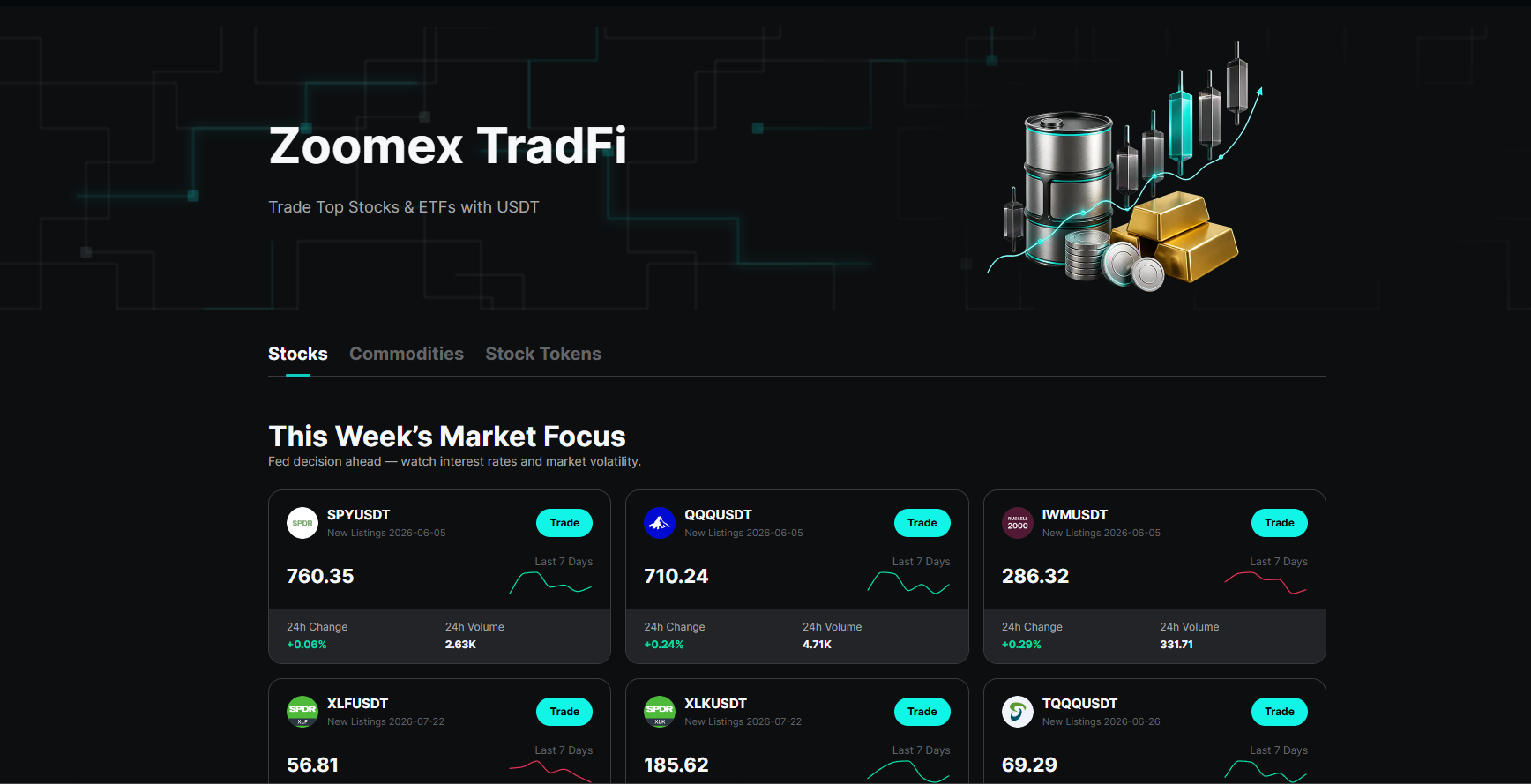
Zoomex’s TradFi Zone includes a set of ETF-linked perpetual contracts alongside its single-stock and commodity lineup, giving users USDT-margined exposure to broad index, sector, and leveraged ETF products through the same interface used for crypto derivatives.
What an ETF perpetual is
A traditional ETF gives investors diversified exposure to an index or sector without picking individual stocks. It trades on an exchange during market hours, settles in fiat, and is bought and sold as a share.
An ETF perpetual contract references the same underlying product but works differently in three respects. It has no expiry, so a position can be held as long as margin requirements are met. It is margined and settled in USDT rather than fiat, which means no currency conversion and no separate brokerage account. And it trades continuously rather than during exchange hours.
That last difference is the practical one. A traditional ETF position cannot be adjusted when the underlying market is closed, which covers roughly two-thirds of every week once evenings and weekends are counted. A perpetual contract referencing the same ETF can be opened, adjusted, or closed at any point.
The trade-off is that a perpetual contract is a derivative, not ownership of the underlying fund. It carries funding payments, margin requirements, and liquidation risk that a spot ETF holding does not.
The contracts available
Zoomex’s ETF perpetual lineup covers several distinct types of exposure.
Broad market index. SPYUSDT references the SPDR S&P 500 ETF Trust, the most widely held ETF tracking the S&P 500, and gives exposure to the broad US large-cap market in a single contract. QQQUSDT references the Invesco QQQ Trust, which tracks the Nasdaq 100 and carries a heavier weighting toward technology than the S&P 500.
Small-cap exposure. IWMUSDT references the iShares Russell 2000 ETF, tracking US small-cap equities. Small caps historically behave differently from large caps across the economic cycle, which is why the contract sits in the lineup as separate exposure rather than as a variation on SPY.
Sector-specific. XLFUSDT references the Financial Select Sector SPDR Fund, covering banks, insurers, and other financial companies. XLKUSDT references the Technology Select Sector SPDR Fund, covering the technology names within the S&P 500. Sector contracts let users take a position on a specific part of the market rather than the index as a whole.
Leveraged. TQQQUSDT references ProShares UltraPro QQQ, a 3x leveraged product tracking the Nasdaq 100. Because the underlying ETF is already leveraged, price movement in this contract is amplified relative to QQQ before any additional leverage a user applies on the platform. It is the highest-risk instrument in the group and behaves differently over multi-day holding periods than an unleveraged product, due to the compounding effects inherent to leveraged ETFs.

How the contracts work on Zoomex
All ETF perpetuals run on the same infrastructure as Zoomex’s crypto perpetuals. There is no separate account, no different interface, and no distinct onboarding flow. Users search the ticker under the TradFi category and open a position the same way they would on any crypto pair.
Contracts are USDT-margined and support both cross and isolated margin modes. Published contract specifications cover leverage caps, tick size, funding rate schedule, and margin requirements, each visible before a position is opened rather than disclosed afterward.
Funding is exchanged at fixed intervals, following the same mechanics that apply to the platform’s crypto perpetuals. Because these contracts track assets that trade on traditional exchanges during limited hours, pricing outside those hours reflects the market’s ongoing assessment rather than a quoted exchange price, which is worth understanding before holding a position across a weekend.
Positions can be opened long or short. The ability to take a short position without a margin account at a traditional broker is one of the structural differences between an ETF perpetual and a conventional ETF holding.
Risk considerations
ETF perpetuals carry the risks common to all leveraged derivatives. Positions can be liquidated if margin requirements are not met, and losses can exceed initial expectations in fast-moving conditions. Funding payments accrue over time and affect the cost of holding a position.
Leveraged ETF products such as TQQQ carry additional considerations. A 3x leveraged ETF is designed to deliver three times the daily return of its index, not three times the return over longer periods. Over multi-day holding periods, compounding means the realised return can diverge meaningfully from three times the index’s move over the same window, particularly in volatile or range-bound conditions. Users considering positions in leveraged ETF perpetuals should understand this behaviour before holding across multiple sessions.
Zoomex publishes contract parameters, funding schedules, and liquidation mechanics for every contract in the TradFi Zone. Users should review these before opening a position, and treat position sizing as a function of account balance rather than of available leverage.
Why ETF perpetuals fit the Zoomex model
ETF perpetuals extend the same logic that underpins the rest of Zoomex’s TradFi Zone. The exchange has not pivoted away from crypto derivatives to chase traditional markets; it has extended the same derivatives engine, matching logic, and risk controls that already serve its crypto perpetuals to a wider set of underlying assets.
For users, that consistency is the point. The same margin mechanics, the same order types, the same risk tools, and the same published rules apply whether a position references Bitcoin or the S&P 500. A user who already understands how a crypto perpetual behaves on the platform does not need to learn a second system to take a position on an index.
Access follows the same Fair Access & Rule-Based Execution framework applied across the product suite. Contracts are not gated behind separate onboarding or tiered eligibility, and execution logic applies identically regardless of position size.
About Zoomex
Founded in 2021, Zoomex is a global cryptocurrency trading platform focused on derivatives trading. The platform serves over 3 million users across 35+ countries and regions, offering access to 700+ trading pairs. Built around ease of use, transparency, fairness, and speed, Zoomex provides a clear and efficient trading experience for users worldwide.
Through its high-performance matching engine, clear asset and order displays, and transparent fee and rule mechanisms, Zoomex helps users better understand their account status, order execution, trading costs, and results. Zoomex maintains registrations, licenses, and regulatory statuses across multiple jurisdictions, including the U.S. MSB, Canada MSB, U.S. NFA, and Australia AUSTRAC, and has completed security audits conducted by blockchain security firm Hacken. The platform also continues to strengthen its trust framework through Proof of Reserves, Security & Transparency, Compliance Information, and Fees / Rules Transparency initiatives.
Beyond trading, Zoomex builds a refined brand experience through elite sports partnerships, including the TGR Haas F1 Team, World Cup-winning goalkeeper Emiliano Martínez, and world-class tennis events such as Wimbledon. The values of speed, precision, discipline, fair play, and rule-based execution are closely aligned with Zoomex’s approach to derivatives trading.
At Zoomex: Easy to Use. Transparent balance. Fair access to your earnings.
The post Zoomex TradFi Zone: How ETF Perpetual Contracts Work appeared first on BeInCrypto.


Italy is probing the Revolut-linked breach after its cyber agency reported more than 650 cases involving abused or illicit certified email accounts.
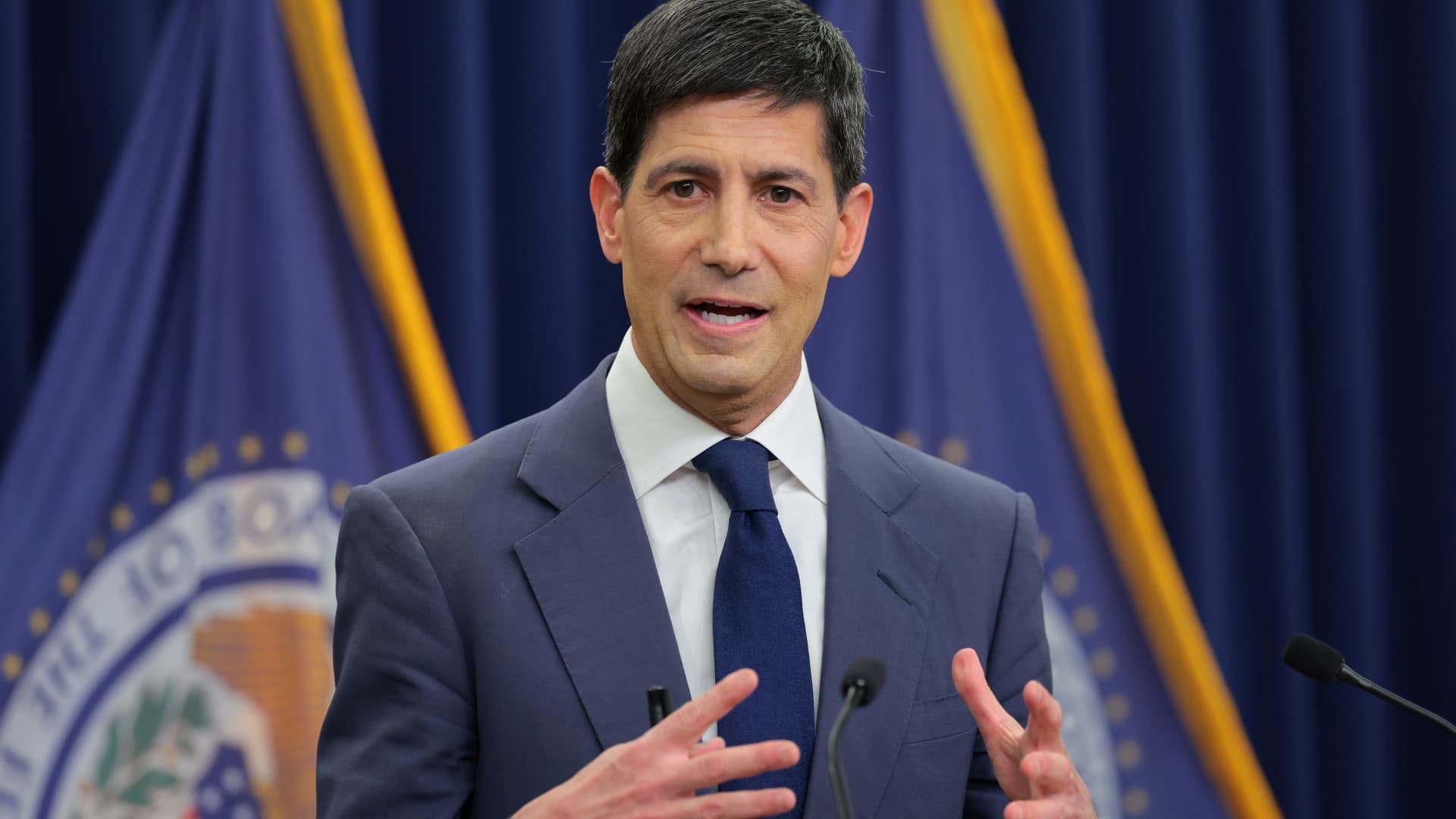
Federal Reserve Chair Kevin Warsh speaks to reporters during his first news conference since taking the helm at the central bank on June 17, 2026 in Washington, DC.
Chip Somodevilla | Getty Images
This is a comparison of Wednesday’s Federal Open Market Committee statement with the one issued after the Fed’s previous policymaking meeting in July.
Text removed from the July statement is in red with a horizontal line through the middle.
Text appearing for the first time in the new statement is in red and underlined.
Black text appears in both statements.
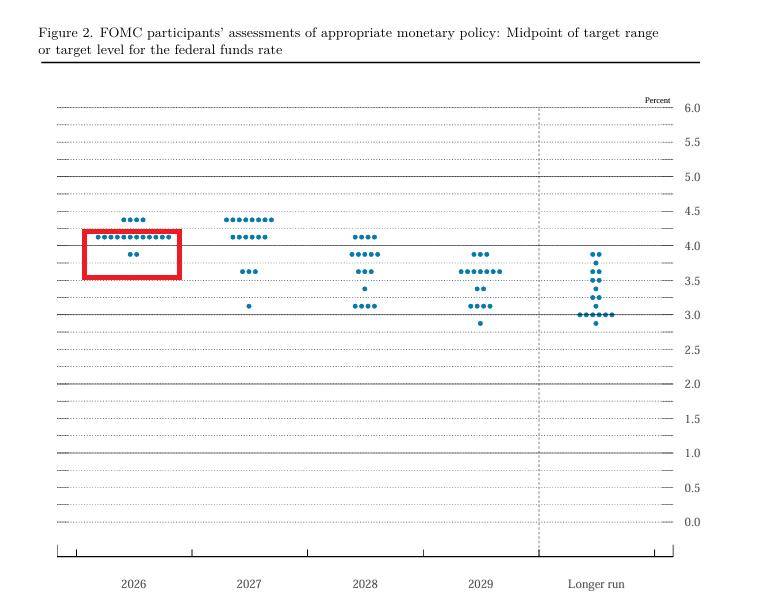
The Federal Reserve raised interest rates by a quarter point on Wednesday, lifting the target range to 3.75% to 4.00%. All 12 voting officials backed the move, the first increase since 2023.
Forecasts released alongside the decision went further than the hike itself. A total of 16 of 18 policymakers now expect at least one more increase before the year ends.
The Statement Dropped Its Explanation for Inflation
The wording moved further than the rate did. In July, the Fed pinned part of high inflation on supply shocks in sectors including energy. That line is gone.
One claim replaced it. Wednesday’s increase will support a “timelier” return to the 2% goal. The closing promise survived intact, that the committee will deliver price stability.
Officials also raised their assessment of business investment and swapped a reference to the Middle East conflict for broader geopolitical developments.
Projections Show 16 Officials Want Another Hike
The dot plot, a chart where each of 18 policymakers marks where they think rates should sit, turned sharply hawkish.

Officials put core Personal Consumption Expenditures (PCE) inflation, the Fed’s preferred price gauge, at 3.4% in December 2026 and 2.5% a year later. They cut the unemployment forecast to 4.1% for both years, from 4.3%.
BeInCrypto reported in June that nine officials had broken ranks. That count has now nearly doubled.
Bitcoin Climbed While Gold Gave Up Gains
Bitcoin traded near $76,152 after the release, up 0.7% over 24 hours. Prices jumped from roughly $75,350 to above $76,100 within minutes of the announcement.
Gold went the other way. Spot prices spiked toward $4,368, then sold off hard and settled near $4,333.

The hike landed in a week already going badly for crypto. Bitcoin and XRP slid after the CLARITY Act’s failure in the Senate, a bill that would have set out which US regulator oversees digital assets, wiping out more than $300 million in leveraged bets.
White House adviser Christopher Phelan warned against a hike this week, citing falling inflation data. Chair Kevin Warsh has delivered zero cuts since Powell left.
Traders are keeping their bets on another increase this year. Warsh’s press conference decides whether that holds.
The post Fed Hikes to 4%: Why Are 16 Officials Still Not Done? appeared first on BeInCrypto.

The Federal Reserve on Wednesday approved its first interest rate hike in more than three years and indicated another is to come, as part of an effort aimed at combating inflation brought on by spiraling oil prices and other factors.
In a move that markets widely anticipated, the central bank’s Federal Open Market Committee voted 12-0 to increase its key interest rate by a quarter percentage point, or 25 basis points. The move brought the overnight funds rate to a target range of 3.75%-4%.
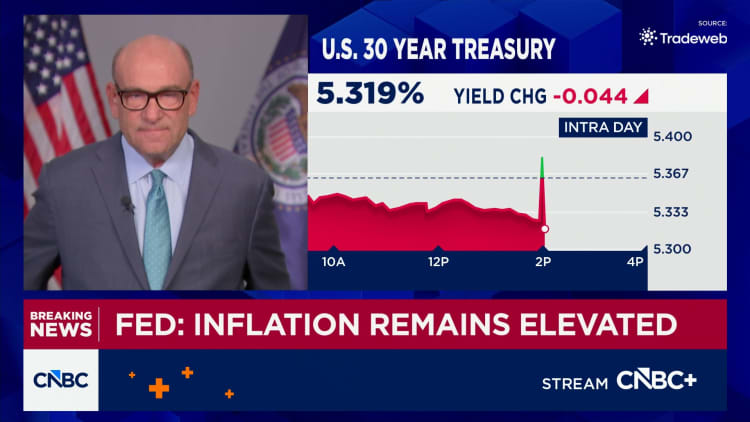
“Inflation remains elevated,” the committee said in its brief post-meeting statement. “Today’s policy action will support a timelier return to the Committee’s 2 percent goal. The Committee will deliver price stability.”
During a news conference, Chairman Kevin Warsh said inflation has been “too high … for too long.”
“We must be confident that underlying inflation is moving to our objective clearly and at sufficient speed,” he said. “Today, the FOMC decided that this standard has not been satisfied.”
Warsh further explained that recent economic reports showed the economy, including the labor market, was strong. However, inflation remained above the central bank’s target, and added that tension in the Middle East also contributed to the decision.
“All three of of those things lend themselves to a firm unanimous decision today,” he said.
Highly anticipated
Despite a raft of conflicting recent statements from policymakers, markets had priced in a better than 90% chance that the FOMC would approve the increase, though there was chatter about the possibility of multiple dissents.
Persistently high inflation readings coupled with statements from Warsh a few weeks ago had convinced Wall Street that the Fed would OK its first rate increase since July 2023.
Updated projections the committee released Wednesday showed that a strong majority of officials think another hike is possible later this year.
The dot plot grid of individual officials’ expectations indicated that 16 of the 18 participants – Warsh has chosen not to submit a dot since taking the position – expected another rate increase, with four of those seeing two more as possible. Two participants expected the committee to stop at one hike.
However, there are no increases penciled in for subsequent years, with one cut each indicated for 2028 and at least one for 2029.
Officials also nudged up their expectations for inflation this year.
They see the headline personal consumption expenditures price index at 3.7% and core excluding food and energy at 3.4%, both 0.1 percentage point higher than the last update in June. The Fed doesn’t expect to reach its inflation target until 2029, though it sees both measures dropping off sharply in 2027 – 2.3% for headline and 2.5% for core.
The committee had been on hold all year and was expected to stay there, until the tide began turning towards a hike in late August.
Fed rarely moves once
The Fed rarely only moves once, as policymakers generally eschew incremental decisions when they think inflation is too high and needs elevated rates, or when growth is too slow and the Fed tries to boost demand with lower rates.
While the Fed’s action was expected, the rationale behind the hike was unusual.
The Fed generally looks through the kind of inflation the economy is experiencing now, with the higher fuel costs from the Iran war and the lingering impacts from tariffs. However, officials in recent days have weighed the cost of continuing to look through the price increases, particularly in light of a stabilizing labor market. The committee lowered its outlook for the unemployment rate to 4.1%, down 0.2 percentage point from June.
The worry now is that the duration of the energy prices could raise inflation expectations and start to spread through the economy. Economists also see expanded investment in artificial intelligence as a potential inflationary factor.
Also, the “transitory” episode from a few years ago is still fresh in policymakers’ minds, as Fed officials thought the supply-and-demand shock from the Covid pandemic eventually would fade. Instead, inflation readings hit 40-year highs before the Fed decided to act.
In July, the debate generated considerable dissent on the policy view, with three FOMC members voting against the decision to hold, preferring instead a quarter-point hike.
At this week’s meeting, 2027 was a fairly close call, with eight officials pointing to another hike, six seeing the funds rate holding steady and four envisioning cuts.
Markets already have been pricing in higher rates across the spectrum. The S&P 500 rose after Wednesday’s announcement.
Treasury yields have been surging. The 10-year note has risen about a quarter percentage point since Warsh’s remarks at the Fed’s Jackson Hole, Wyoming, symposium on Aug. 28. The benchmark is up about a full percentage point since its February low. The 2-year note, which is most sensitive to rate expectations, has seen even sharper gains.
Borrowing costs also have been on the move. A 30-year fixed rate mortgage had soared to 7.19%, up some 38 basis points since the Jackson Hole speech and more than a full percentage point from a year ago, according to Mortgage News Daily.
In the wake of the decision, Treasury yields were lower, a signal that investors were encouraged by the central bank’s attempt to tamp down inflation. Yields and prices move in opposite directions.
“Today’s FOMC could mark the moment when the FOMC regained a measure of spine,” Brad Conger, chief investment officer at Hirtle & Co. said. “There were many arguments for standing still. But for once, the committee sided with main street.”
“Inflation is a pervasive concern, and its uncertainty is impeding decision making among all businesses. One swallow doesn’t make a spring, but we might have just caught a glimpse of Volckerian decisiveness as opposed to the eternal sycophancy of the Powell era,” Conger added.
Crypto World
Both Democrats and Republicans Are Increasingly Worried About AI’s Environmental Impact

There are currently 1,287 data centers in operation in the U.S., with more than 2,000 planned projects, according to Clearview, a market intelligence company tracking U.S. power infrastructure and data center development. Virginia and Texas currently have the most data centers in operation, but many new developments are planned in rural areas in the South and Midwest. The growth is driven by the rise in hyperscale data centers, which are larger, more powerful, and often used to train and run large-scale AI models.
Despite the boom, Americans seem to be increasingly supportive of measures to regulate growth. About 6 in 10 Americans said they would support limiting the number of new data centers that can be built—including most Democrats and Republicans—the survey found.
Democrats seem to be the most concerned by the environmental impacts of data center growth. About two-thirds say they are “extremely” or “very” concerned about how AI will affect the environment, the poll found, compared to about half in 2025. By contrast, about half of Independents and 4 in 10 Republicans are highly concerned about the environmental impact of AI.


Ethiopia has reportedly reduced electricity delivered to Bitcoin miners to 23% of contracted levels as lower water inflows strain the country’s hydroelectric reservoirs.
On Tuesday, Bloomberg reported that El Niño intensified dry conditions in the east African country, reducing water inflows into its reservoirs by 20%. Ethiopian Electric Power (EEP) CEO Ashebir Balcha said the company cut power to miners to prioritize households and manufacturers.
Balcha said EEP initially reduced deliveries to 75% of contracted levels, easing to 50% and then 23%. The company will reassess conditions in October and could impose further reductions or even restrict electricity exports to neighboring countries, according to the report.
Bitcoin miners reportedly accounted for 35% of EEP’s revenue last fiscal year and consume almost one-third of Ethiopia’s electricity output. The country’s inexpensive hydropower has attracted international miners, including Phoenix Group, which expanded its Ethiopian mining capacity to 132 megawatts in April 2025.
Bitcoin mining power growth faces pressure from halvings and AI
Separately, economist and The Bitcoin Standard author Saifedean Ammous said in a Tuesday X post that global Bitcoin mining electricity consumption and capital expenditure may have peaked in 2024 to 2025.
Ammous said Bitcoin’s price would need to rise more than 18.92% a year just to keep the dollar value of newly mined coins growing, even before accounting for dollar depreciation. Under Bitcoin’s halving mechanism, the amount of Bitcoin awarded to miners is cut in half about every four years.
The price of the biggest crypto by market cap is down by more than 35% over the last 12 months, Yahoo Finance data shows.
“Given this decline in mining rewards, it would be expected that bitcoin mining would slow down, or even contract,” Ammous said. “Unless there is a major turnaround in this metric, this trend may continue indefinitely.”
Related: Bitcoin miner Phoenix Group adds 52 MW of mining capacity in Ethiopia
He also cited competition from artificial intelligence data centers, which gives miners an alternative way to monetize their electricity connections and infrastructure. Citing VanEck data, Miner Weekly estimated in June that public miners could require around $50 billion to develop their planned AI infrastructure as weaker mining economics encourage companies to redirect capacity.
Ammous said his conclusion as a testable hypothesis, acknowledging that substantially higher transaction fees or a sustained recovery above Bitcoin mining’s previous electricity-consumption peak could invalidate it.
Magazine: AI may already use more power than Bitcoin — and it threatens Bitcoin mining
Shorter-dated US Treasury yields surge in anticipation of another Fed rate hike
Binance Unveils Multiple Delistings: Check Out the Affected Cryptocurrencies

David Pollack Gives Tough Update About Wife’s Brain Cancer

Weekend Open Thread – Corporette.com

Memory prices are slowing because buyers ran out of money

Micron Stock Climbs Above $1,031 as AI Memory Crunch and a $50 Billion Outlook Fuel the Rally

Prop Money Unboxing! #propmoneyinc #propmoney #moviemoney #movieprops #unboxing #unboxingvideos

Scott Bessent Just Lit the Fuse for a Major Bitcoin Pump!

Fuel price rises push UK inflation rate up to 3.1% #Inflation #Money #Fuel #UK
-
 Fashion5 days ago
Weekend Open Thread – Corporette.com
-
 Business7 days ago
Micron Stock Climbs Above $1,031 as AI Memory Crunch and a $50 Billion Outlook Fuel the Rally
-

 Tech3 days ago
The Latest Weird Thing to Play Doom Is the Mapped-Out Brain of a Fruit Fly
-

 Business7 days ago
AMD Stock Climbs After Management Lifts 2027 Data Center Outlook Toward $70 Billion in AI Sales
-

 Business6 days ago
10 Most-Streamed Songs On Spotify In 2026 So Far, Led By Ella Langley’s Dominant Run On The Charts This Year
-

 Crypto World5 days ago
XAG/USD: Silver’s Short-Term Rally Meets Its Moment of Truth
-
 Crypto World6 days ago
2 Chip Stocks Broke Out This Week. Neither Was Nvidia
-

 Tech6 days ago
Battery life is the only iPhone 18 Pro and iPhone Duo upgrade I care about. Apple didn’t disappoint
-

 Crypto World7 days ago
Pi Network ships Protocol 27 on a network with 14 million users and zero DeFi
-

 Crypto World6 days ago
OKX launches 10x OpenAI, Anthropic X-Perps in Europe
-

 Crypto World5 days ago
Diesel Tops $6 a Gallon for the First Time as 28 States Set Records
-

 Tech7 days ago
Apple Watch Ultra 4 vs Watch Ultra 3: Should you really spend another $799?
-

 News Videos5 days ago
Facing Financial Fears
-

 Business6 days ago
Western Digital Slips 2.7% as AI Storage Rally Cools After Record Cash and Guidance
-
 Crypto World7 days ago
Bitcoin price risks $70K if $78K neckline breaks
-

 Entertainment7 days ago
Case Sees Major Update As Jury Deliberations Begin
-

 Business4 days ago
Rivals Sam Altman and Elon Musk Rally Behind Dario Amodei’s Call for a Slowdown in AI Development
-

 Crypto World2 days ago
Elon Musk Drops a Bombshell: Grok 5 Could Be the AGI Breakthrough
-

 Business6 days ago
Five Leading AI Experts Warn Superintelligence Could Kill Humans and Explain Their Case
-
 Crypto World7 days ago
Ethereum price breakout hinges on a close above $2,535
You must be logged in to post a comment Login