
Crypto World
Rachel Goldberg-Polin




BitGo has replaced LayerZero with Chainlink CCIP for $7.3 billion WBTC cross-chain transfers.
Summary
- BitGo has selected Chainlink CCIP as the exclusive cross chain provider for its $7.3 billion Wrapped Bitcoin ecosystem, replacing LayerZero.
- The migration brings the total value of announced LayerZero to Chainlink CCIP transitions to about $14.6 billion.
- BitGo said the new setup lets it retain control over WBTC token contracts, transfer limits and cross chain settings.
According to CoinDesk, crypto infrastructure company BitGo has selected Chainlink’s Cross-Chain Interoperability Protocol (CCIP) as the exclusive cross-chain provider for Wrapped Bitcoin (WBTC), replacing LayerZero in a move that brings the total value of publicly announced migrations from LayerZero to Chainlink’s infrastructure to roughly $14.6 billion.
BitGo said the migration will standardize WBTC deployments around Chainlink’s Cross-Chain Token (CCT) standard while using CCIP by default for future digital assets it issues. The company added that the design allows it to retain direct control over token contracts, transfer limits and other operational settings instead of handing those functions to an external bridge provider.
WBTC is the largest tokenized version of Bitcoin, with a market capitalization of about $7.4 billion, according to CoinMarketCap. Because the token is widely used across decentralized finance applications outside the Bitcoin network, the migration represents one of the largest cross-chain infrastructure changes announced this year.
Chainlink CCIP expands after industry migrations
The latest announcement follows a series of similar moves made after the $292 million exploit involving Kelp DAO’s LayerZero-powered bridge earlier this year. Following that incident, several crypto projects disclosed plans to replace LayerZero with Chainlink CCIP for their cross-chain infrastructure.
Earlier migration announcements came from Mantle, Lombard, Aave, and Kraken, among others. With BitGo now adding WBTC to the list, the combined value of assets covered by announced migrations has climbed to nearly $15 billion.
Chainlink’s directory already lists CCIP-enabled WBTC pools on Ethereum and Ronin. Neither BitGo nor Chainlink disclosed when the migration across all supported blockchain networks will be completed.
Before the switch, BitGo had adopted LayerZero in 2024 to expand WBTC onto Avalanche and BNB Chain. Under that arrangement, each cross-chain transfer required approval from BitGo’s own verifier together with either LayerZero or Polyhedra before a transaction could proceed.
BitGo keeps operational control over WBTC
BitGo said its new setup is designed to preserve operational control while simplifying cross-chain deployments. Under the CCT standard, the company will continue managing token contracts, configure transfer rate limits and adjust cross-chain settings directly.
The announcement comes as BitGo continues expanding services for institutional digital asset clients beyond traditional custody.
Earlier this week, the company introduced BitGo Link, a treasury management platform that gives institutional clients a single dashboard to monitor balances and move assets across BitGo custody accounts and connected cryptocurrency exchanges. The platform also routes transfers through BitGo’s Policy Engine, allowing firms to apply internal approval workflows and permission controls across participating venues.
Separately, BitGo has continued adding security-focused products to its institutional offering. In July, the company launched four quantum-risk management tools for supported Bitcoin multisignature wallets, including a Quantum Risk Score, an exposed-address remediation workflow, updated UTXO selection and new default address controls to help institutions measure and reduce public-key exposure before quantum computing becomes a practical threat.
Migration follows BitGo’s institutional infrastructure push
Recent product launches indicate that BitGo has been adding new infrastructure around custody, settlement and asset management while continuing to expand its institutional business.
BitGo Link complements the company’s existing Go Network and BitGo Prime services by helping treasury teams manage capital distributed across external exchange accounts instead of limiting workflows to assets held within qualified custody. Earlier this year, the company also expanded controlled custody access to decentralized finance protocols including Aave, Spark and Tesseract.
The WBTC migration fits into that strategy by replacing one part of the company’s cross-chain infrastructure while maintaining direct oversight of asset transfers.
BitGo did not announce any changes for existing WBTC holders beyond the migration to CCIP, nor did it disclose whether additional assets currently using LayerZero will also move to Chainlink in the future.
The company has also not provided a rollout schedule for the migration, leaving the timing of full deployment across supported blockchain networks undisclosed.


OKX has reported record inflows to its centralized exchange following the Coldcard hardware wallet exploit, as the company says users are increasingly prioritizing managed custody after one of the largest known Bitcoin wallet security incidents.
Summary
- OKX says it has recorded record exchange inflows after the Coldcard hardware wallet exploit prompted some users to move assets from self custody.
- The exchange said it prevented $26.3 million in scam related losses and protected more than $1.1 billion in customer assets during the first half of 2026.
- Galaxy Research has confirmed thefts totaling 1,596 Bitcoin across three attack waves, with losses potentially reaching 2,055 Bitcoin if a fourth wave is verified.
- The Coldcard flaw has renewed calls from security experts for independent testing of hardware wallet firmware and seed generation.
According to The Block, OKX Chief Compliance Officer Jonathan Brockmeier said customer behavior has changed noticeably in the wake of the Coldcard attacks, with the exchange recording unusually high inflows as users move assets away from self-custody.
“We’re seeing record levels of inflows now to centralized exchanges post-Coldcard,” Brockmeier told the publication. “It’s interesting — it’s sort of the flip side of FTX. FTX happens, and everybody moves their money into self-custody, and it’s coming back now.”
He said managing private keys requires users to take responsibility for their own security, while exchanges can offer dedicated security teams and automated monitoring systems.
Brockmeier explained that OKX uses layered security controls supported by artificial intelligence to identify suspicious behavior before customers are affected, while still allowing users to choose self-custody if they prefer.
Coldcard exploit has changed custody decisions
The comments come as investigators continue tracking losses tied to the Coldcard hardware wallet vulnerability, which has become one of the largest known Bitcoin thefts linked to a flaw in wallet seed generation.
Galaxy Research said on Aug. 4 that it has confirmed the theft of 1,596 BTC from about 7,300 addresses across three verified attack waves. The firm added that the total could increase to roughly 2,055 BTC, worth nearly $130 million, if a fourth suspected wave receives sufficient confirmation from affected wallet owners.
Earlier blockchain analysis had estimated larger on-chain losses across four observed waves, but Galaxy narrowed its confirmed figures after distinguishing verified victim reports from blockchain observations. According to the research firm, investigators continue refining address mapping while coordinating with cryptocurrency exchanges, cyber investigation groups and U.S. law enforcement agencies.
Galaxy also reported that roughly 90% of the stolen Bitcoin has not moved since the attacks, giving investigators additional time to monitor the funds if they begin moving through exchanges or other services.
OKX says AI has prevented millions in scam losses
Alongside the change in customer behavior, Brockmeier told The Block that fraud prevention has become a growing focus for the exchange as digital asset scams and exploits continue affecting users.
According to figures shared by OKX, the exchange prevented $26.3 million in scam-related losses during the first half of 2026 by stopping suspicious transfers before they were completed. The company also said it protected more than $1.1 billion in customer assets belonging to over 500,000 users during the same period.
Brockmeier said the exchange has expanded its use of artificial intelligence to monitor blockchain activity for patterns associated with compromised devices, account takeovers and social engineering attacks before customer funds leave the platform.
He added that security preferences should vary depending on each customer’s needs. Users who want additional protection can choose stricter account controls even when the exchange’s internal systems do not classify their accounts as high risk, he said.
OKX also told The Block that its investigative unit includes former law enforcement officials, including former U.S. Drug Enforcement Administration personnel and a principal agent involved in the Silk Road investigation.
Coldcard flaw remained unnoticed for years
The attacks originated from a vulnerability that Coinkite disclosed last week after determining that affected Coldcard firmware generated wallet seeds using a deterministic pseudo-random number generator instead of the intended hardware-backed true random number generator.
According to Coinkite’s technical review, the flaw was introduced in March 2021 while engineers integrated a new cryptographic library into the wallet firmware. Although the hardware random-number generator remained active elsewhere in the software, wallet creation mistakenly relied on MicroPython’s deterministic generator, reducing the strength of newly created seed phrases.
Block’s Bitcoin engineering and security team independently reached the same conclusion after reviewing the firmware. The company said vulnerable devices called the deterministic MicroPython fallback rather than the STM32 hardware random-number generator during seed creation, although it noted that it had not completed empirical testing across every affected model before publishing its findings because reports of active theft had already surfaced.
Coinkite estimates that affected Mk2 and Mk3 devices may provide roughly 40 bits of effective entropy, while vulnerable Mk4, Mk5 and Coldcard Q models may generate around 72 bits, well below the intended 128-bit security level.
Emergency firmware updates have since been released for every affected product line. Coinkite has stressed, however, that updating firmware protects only wallets created after the fix. Users whose seed phrases were generated with vulnerable firmware have been instructed to create entirely new wallets, verify a receiving address with a small test transaction and move funds only after confirming the transfer.
The company also said wallets created using at least 50 fair private dice rolls are not exposed by the random-number-generation flaw alone, although it still recommends migrating vulnerable seeds even when users employ a strong BIP-39 passphrase.
Industry has called for independent firmware verification
Separate comments from Kraken Chief Security Officer Nick Percoco have renewed discussion around how hardware wallets are tested before reaching customers.
Writing on X earlier this week, Percoco argued that manufacturers should not be the only parties validating how production firmware generates wallet seed phrases. He said independent testing should confirm that approved hardware entropy sources are actually used during wallet creation instead of relying primarily on code reviews or vendor audits.
To support that argument, Percoco pointed to NIST SP 800-90B, which governs validation of true random-number generators used in cryptographic systems, and Germany’s BSI AIS-31 framework. According to him, comparable end-to-end verification is not routinely performed for hardware wallet firmware despite the importance of secure seed generation.
The latest Coldcard incident has unfolded against a year of continued security breaches across the cryptocurrency industry. Last year, Dubai-based exchange Bybit lost approximately $1.4 billion in the largest recorded cryptocurrency theft, while blockchain security firm Blockaid reported that crypto projects lost more than $1 billion to hacks during the first half of 2026 as the number of verified exploits reached a record level.
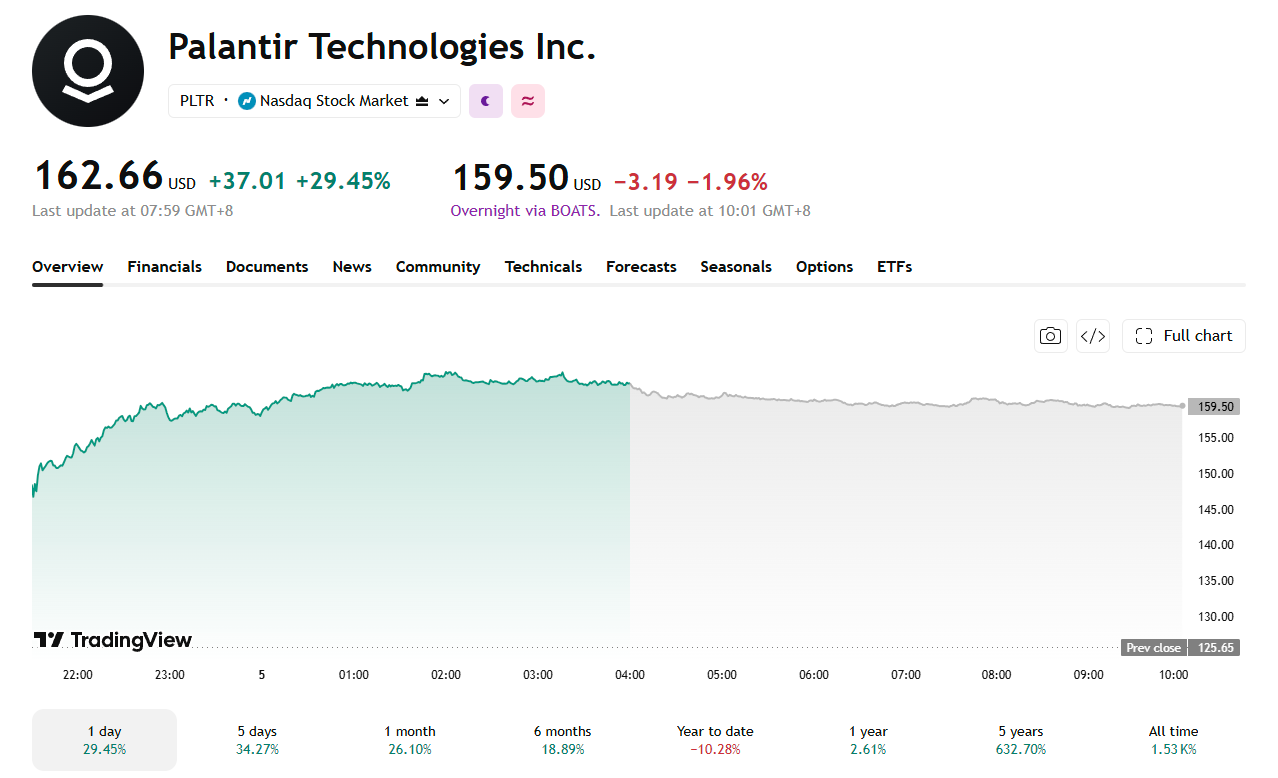
Palantir Technologies stock jumped 30% on Tuesday. The surge wiped out $3 billion in short sellers’ paper profits for 2026.
The rally marked Palantir’s best single-day performance in two years, S3 Partners LLC said. Short sellers had built a $2.7 billion paper gain before Monday’s earnings news reversed course.
Earnings Beat Catches Bears Off Guard
The reversal followed Monday’s raised full-year forecast, which beat Wall Street’s revenue and income estimates. Short sellers, who had profited from Palantir’s sluggish run, watched those gains disappear in a single session.

Meanwhile, investor Michael Burry disclosed a bearish position against Palantir in November. His short bet helped trigger the stock’s earlier slide. He later said in a June newsletter that he had covered half of that position.
Palantir still trades down 10% for 2026, on pace for its worst year since 2022. The stock’s earlier slide followed months of contract concerns surrounding its government business.
Palantir Still Showing Risks
Some analysts still see risk in Palantir’s valuation. The stock trades at more than 83 times forward earnings. Jefferies kept an underperform rating on the stock, seeing better risk-reward in other AI-linked software names, including Microsoft and Amazon.
In contrast, Deutsche Bank analyst Brad Zelnick took the opposite view. He upgraded Palantir to buy from hold and kept a $200 price target, pointing to a second straight beat-and-raise quarter.
CEO Alex Karp addressed one lingering worry on the earnings call. He called commercial demand for Palantir’s data analytics tools “otherworldly.” That eased fears that rival AI developers could erode its software business.
Nearly 70% of analysts covering Palantir now rate the stock a buy. Its rally’s staying power, therefore, may hinge on whether commercial demand keeps justifying Palantir’s premium price.
The post Palantir Short Sellers Lose $3 Billion After 30% Earnings Rally appeared first on BeInCrypto.


Dinari has introduced tokenized access to the entire S&P 500 for U.S. investors, allowing eligible users to trade blockchain-based shares backed one-to-one by underlying securities.
Summary
- Dinari has launched tokenized versions of all S&P 500 stocks for eligible U.S. investors.
- Users can buy and sell blockchain based equities through self custody wallets funded with USDC.
- Each tokenized share is backed by an underlying security held in regulated custody and carries investor rights.
- The launch comes as competition in tokenized equities continues to grow among crypto and financial firms.
- Dinari says its platform is already available across 85 jurisdictions and supports more than 6,100 tokenized assets.
According to Fortune, the launch expands Dinari’s blockchain-based equities platform through a wallet-first system that lets users fund accounts with USDC instead of relying on traditional brokerage infrastructure.
The rollout allows eligible U.S. users to buy and sell tokenized shares through self-custody wallets instead of conventional brokerage accounts.
Dinari said the launch combines tokenized equities with stablecoin payments through a partnership with Circle, creating what it describes as a link between the roughly $300 billion stablecoin market and the more than $60 trillion U.S. equities market.
Circle declined to comment, citing a quiet period ahead of its upcoming earnings report.
Dinari replaces traditional brokerage access with tokenized stocks
Rather than relying on the conventional brokerage process, Dinari’s platform lets users fund accounts with USDC and hold tokenized equities directly in compatible wallets. The company said the model removes several layers of the traditional brokerage system while allowing investors to remain in control of their assets.
Each tokenized security, branded as a dShare, is backed one-to-one by an underlying stock held in regulated custody. According to Dinari, holders retain rights associated with the underlying securities, including voting rights, cash dividends distributed in native USDC, corporate actions, and redemption based on market prices.
Because transfers occur on blockchain infrastructure, transactions can settle almost instantly instead of following the standard market settlement cycle. Dinari also said tokenized portfolios can move between supported platforms rather than remaining tied to a single brokerage account.
The company added that its tokenized stock platform is already available across 85 jurisdictions outside the new U.S. rollout and currently supports 6,139 active tokenized assets.
Tokenized equities market continues to expand
A recent a16z crypto report said the market value of tokenized stocks climbed about 600% to nearly $1.7 billion by the end of June, as more financial firms introduced blockchain-based versions of traditional securities.
While firms including Securitize and Figure have developed tokenized asset offerings, Fortune reported that they have largely concentrated on private or specialized assets. Dinari co-founder and chief executive Gabriel Otte said his company’s model differs by making publicly traded U.S. stocks available through tokenized securities.
The launch also comes as competition in tokenized equities continues to increase. Robinhood recently introduced tokenized stock products through its blockchain network for eligible European users, while Coinbase and Base have said they are working toward one-to-one-backed tokenized equities using regulated structures.
Dinari has also expanded its regulatory and institutional presence over the past two years. In July 2024, the company joined the Blockchain Association to participate in U.S. policy discussions covering tokenized securities, digital asset market structure and financial regulation.
At the time, Dinari said tokenization should operate within existing securities laws while preserving investor protections already established in traditional capital markets. The company also noted that it operates as an SEC-registered transfer agent, while its broker-dealer subsidiary is registered with the SEC and is a member of FINRA and SIPC.
CEO points to long-standing market structure concerns
Speaking to Fortune, Otte said the idea for Dinari grew out of his own experience after leaving cancer diagnostics company Freenome, where he had been a co-founder.
After becoming a client of wealth management firms, he said he found the traditional investment system difficult to understand because clients often receive limited visibility into how their money is managed. He argued that existing capital markets tend to favor established participants and provide limited transparency for individual investors.
Otte also criticized the role of the Depository Trust and Clearing Corporation, describing it as a centralized system that makes it difficult for investors to move assets freely between brokerages. According to him, blockchain-based ownership could remove many of those restrictions by allowing investors to control tokenized securities directly through digital wallets.
Fortune quoted Otte as saying he expects blockchain-issued tokens to eventually become the trusted record of stock ownership, allowing investors to hold assets directly rather than through multiple intermediaries.
Dinari continues building regulated blockchain infrastructure
Founded in 2021 by Gabriel Otte, former LegalZoom executive Chas Rampenthal and Crunchyroll founder Brandon Ooi, Dinari has continued building infrastructure that connects regulated financial institutions with blockchain settlement.
Earlier this year, the company introduced the Dinari Financial Network, a framework designed to connect broker-dealers, exchanges, custodians, issuers and transfer agents across the lifecycle of tokenized securities.
According to Dinari, the network supports issuance, trading, custody, settlement, dividend distribution and corporate actions while allowing participating firms to keep their existing regulatory responsibilities.
The company has also worked with established financial and crypto firms on tokenization initiatives. Earlier participants in the Dinari Financial Network included Gemini, BitGo and VanEck, while another partnership with S&P Dow Jones Indices and Chainlink brought the S&P Digital Markets 50 Index onto blockchain infrastructure.
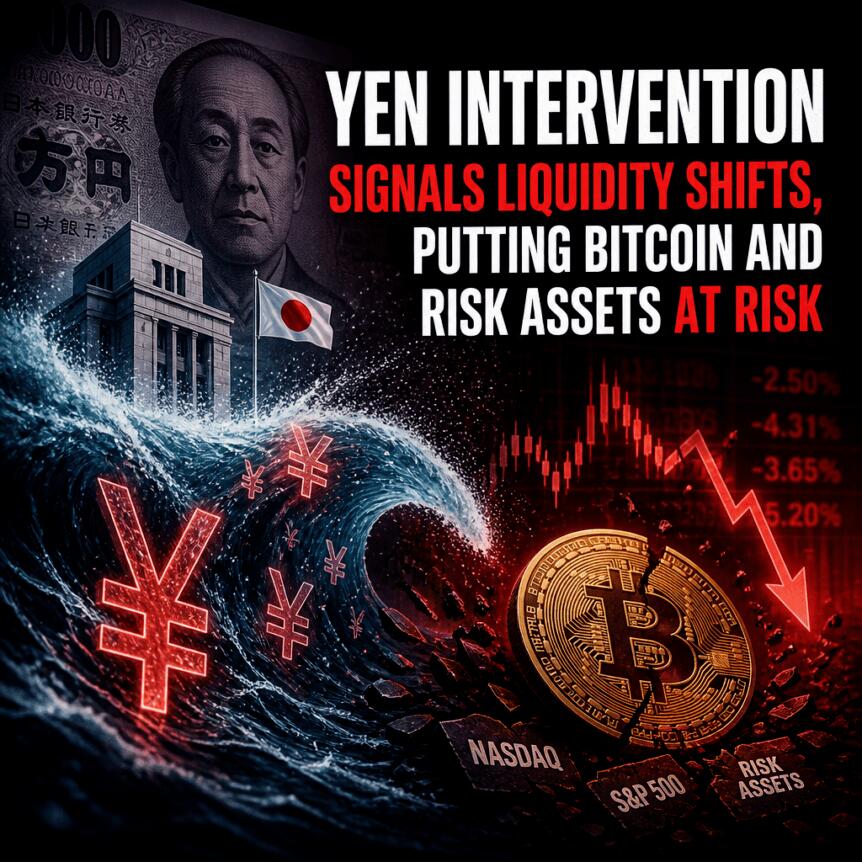
The United States and Japan have carried out a rare joint intervention to support the yen, and the follow-up messaging from Washington suggests the coordination is likely to intensify rather than fade after a single market move. For crypto markets, the key question is how the intervention affects global dollar liquidity and the balance-sheet stress that can follow when the yen carry trade unwinds.
Earlier this month, the US and Japan conducted their first joint yen intervention since the late 1990s, when the yen was still considered a different kind of funding currency. The event also reinforced the role of Fed-related dollar liquidity channels—an issue that matters to traders broadly, including those holding Bitcoin and other risk assets.
Key takeaways
- The first US-Japan joint yen intervention since 1998 sets a potential precedent for future coordination.
- Treasury Secretary Scott Bessent emphasized meeting with Bank of Japan Governor Kazuo Ueda ahead of the late-August G20 finance ministers session.
- Bessent highlighted the Fed’s FIMA repo facility as a “backstop” and urged that it be upsized to support dollar liquidity.
- Japanese two-year bond yields rose above 1.57% on Monday, signaling higher rates and increasing pressure on yen funding strategies.
- Crypto market participants view a possible end to the yen carry trade as a swing factor for liquidity conditions and risk appetite.
US-Japan coordination returns to the spotlight
Last week’s intervention was notable not only for its timing but for its design. According to reporting in the source, the New York Fed sold euros on behalf of the US Treasury, using the Exchange Stabilization Fund (ESF), a reserve pool used for currency stabilization activities. The practical goal was to support the yen, which had fallen to around 164 per US dollar—levels described as the weakest in roughly four decades.
That “first since 1998” framing matters because it hints at a shift toward deeper macro-policy coordination. If interventions become more common, markets may start pricing not just immediate exchange-rate stabilization, but longer-term expectations for policy alignment between Washington and Tokyo.
Bessent’s message: more planning, and more liquidity insurance
After the joint intervention, US Treasury Secretary Scott Bessent publicly drew attention to upcoming coordination with the Bank of Japan. He specifically said he planned to meet with BoJ Governor Kazuo Ueda during the G20 gathering of finance ministers in North Carolina at the end of August. Bessent’s post emphasized ongoing “close coordination” with Japan’s leadership and central bank.
Beyond the meeting itself, Bessent’s focus shifted to liquidity plumbing. He pointed to the Fed’s Foreign and International Monetary Authorities (FIMA) repo facility, describing it as an important backstop and arguing that it should be expanded “in the coming months.”
The core mechanism, as described in the source, is that the Fed provides dollars to foreign institutions. Those institutions can use Treasuries as collateral, which helps increase the supply of dollars outside the US without forcing sales of US Treasuries. For US Treasury markets, that distinction is material: if dollar liquidity support is delivered via repo channels rather than through abrupt Treasury market actions, the risk of destabilizing pricing and yields is reduced.
The yen carry trade unwind: why bond yields and liquidity collide
The yen carry trade has long depended on a relatively low-yielding yen funding base. The source argues that expectations have built around the trade’s gradual disintegration as Japan moves away from the prolonged era of very low interest rates.
A tangible indicator of that shift appeared in the domestic bond market. According to the article, Japanese two-year bond yields rose above 1.57% on Monday, a move interpreted as evidence that low-rate conditions are ending sooner than many markets had previously assumed. When yen yields rise, the economic logic of borrowing in yen and investing elsewhere becomes less attractive, increasing the probability of carry trade unwinds.
The liquidity angle is complicated. Carry trade unwinds can produce sharp cross-currency flows, which may temporarily tighten financial conditions for some market participants. Yet, Bessent’s emphasis on FIMA’s role signals a policy effort to prevent such stress from spilling into broader dollar funding markets—an effort that could support risk assets if it succeeds.
That tension is part of why reactions to the intervention were described as mixed in the source. Economist Mohamed El-Erian argued that Washington is now “bound into coordination” with the BoJ, suggesting that the effectiveness of the strategy may increasingly rely on a broader alignment within Tokyo—across the central bank, the Ministry of Finance, and the Prime Minister’s Office—rather than on US actions alone.
What this could mean for Bitcoin and risk assets
For Bitcoin, the immediate causal path isn’t direct—BTC doesn’t trade on yen carry trade mechanics. But liquidity conditions often influence how investors and institutions manage exposure to volatile assets. In that sense, the same macro levers that affect currency markets can still shape the risk environment for crypto.
The source highlights a particularly bullish hope circulating in Bitcoin circles: that a disorderly or at least notable yen carry trade unwind could ultimately tighten funding stress and reshape global liquidity in ways that benefit BTC. Even if that outcome is framed as a “bull case,” the pathway depends on whether policymakers can cushion the dollar-liquidity shock while also allowing yen stabilization to proceed.
At the same time, there are clear reasons for caution. If Japanese actions push up the cost of borrowing across markets—or if liquidity support via repo facilities proves insufficient—investors could see risk assets react to financial tightening rather than easing. The source specifically notes that Japan’s large holdings of Treasuries could raise yields if more Treasury-related sales occur, which would spill into broader borrowing costs. That’s why the emphasis on FIMA matters: it’s intended to support dollar liquidity without directly impairing Treasuries.
Watch points for traders and long-term holders
The next phase will likely be defined by two things: whether the US and Japan continue institutional coordination after the initial intervention, and how large and sustained any liquidity support becomes via the FIMA repo facility. Traders should also monitor Japanese short-end rates—such as the two-year area cited above—because they offer an early signal of how quickly funding incentives are changing and how much pressure remains for carry trade positions to unwind.
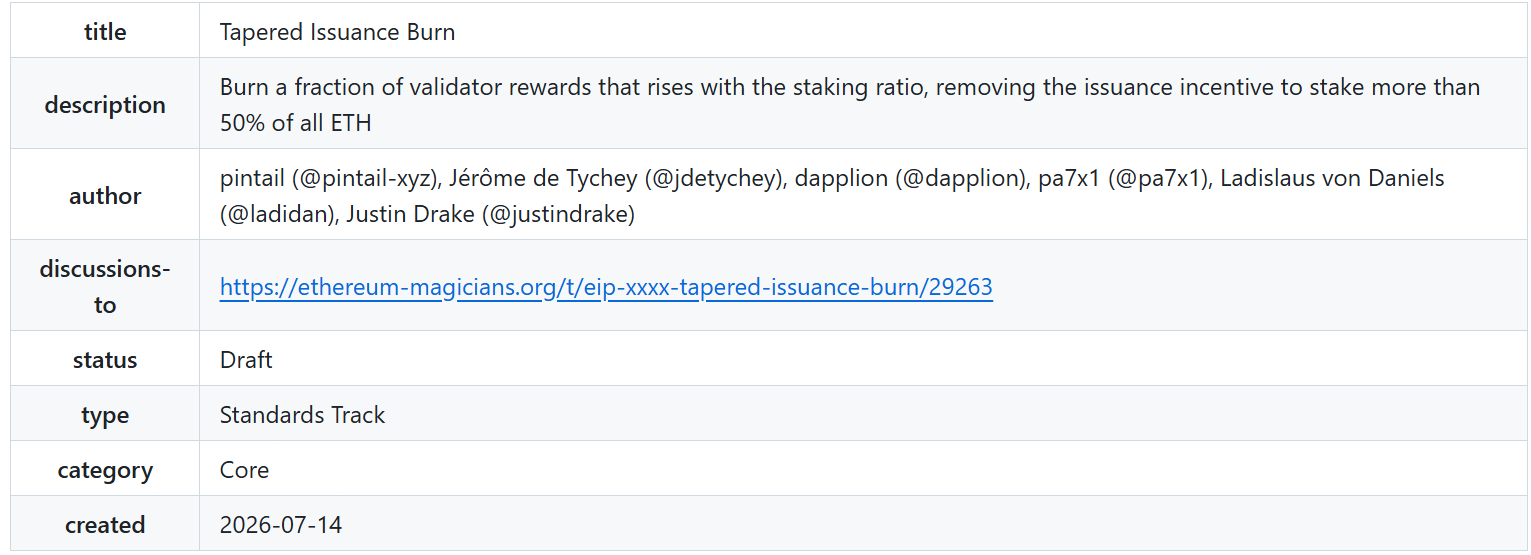
A group of six Ethereum researchers and developers, including Ethereum Foundation’s Justin Drake, has proposed changing the network’s issuance policy to cut validator rewards more sharply as the proportion of staked ETH rises.
The draft, called the Tapered Issuance Burn and currently being assigned the provisional number EIP-8363, would burn an increasing fraction of validators’ consensus rewards as the amount of staked ETH approaches a fixed threshold of 60.25 million ETH (around 50% of the current ETH supply), at which point the deduction hits 100%. The changes would phase in over 18 months.
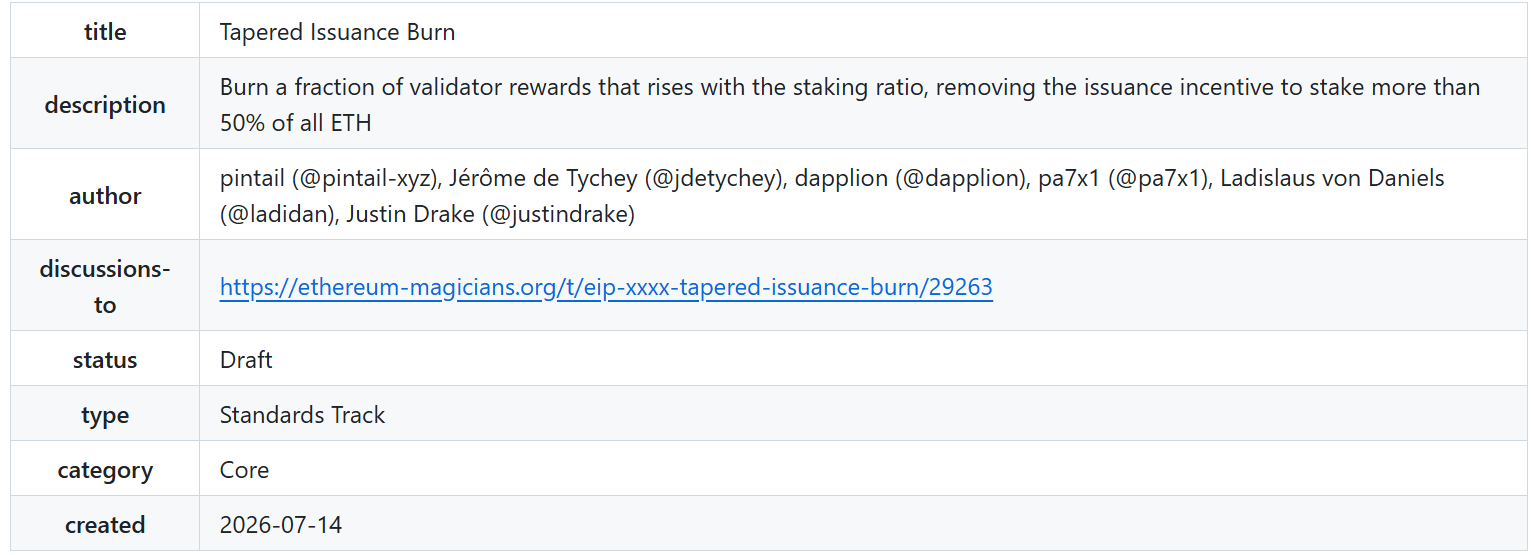
Tapered Issuance Burn Ethereum Improvement Proposal. Source: Github
The proposal has triggered backlash from developers, stakers and DeFi founders, who warn that the reward cuts could force out solo validators before larger institutions are affected, weaken institutional demand for ETH, and disrupt DeFi markets built around staking yield.
One of the proposal’s authors, Jérôme de Tychey, said the changes are needed to address the rising share of Ether being staked, which passed 33% in April. The authors argue continued staking growth could concentrate ETH in large custodians and liquid staking providers, while unchecked issuance erodes Ether’s role as a neutral, trustless store of value.
“Ever-growing issuance is a dilution tax on every holder: stake, or be diluted. At high ratios, LSTs and other staking derivatives displace raw ETH as the ecosystem’s working money, thus swapping the most neutral, trustless asset for intermediated claims on issuers,” he said.
Although EIP-8363 remains an early draft, its publication just two days before a deadline for proposals targeting Ethereum’s Hegotá upgrade has also raised concerns about whether there is enough time to consider the impacts on Ethereum’s tokenomics.
EIP-8363 authors’ argument to cut issuance
The proposal’s authors argue that under the current curve, staking yield never drops below 1.5% even with all ETH in existence being staked.
“The incentive to stake never switches off. Where does it stop? It doesn’t,” said de Tychey.
With no changes, a worst-case scenario could see more than 55% of Ethereum supply locked in staking by 2028, he said.
“Maximal neutrality & minimal dilution: those are the two fundamentals of a store of value. This EIP not only hardens both, it sets a bar no other blockchain clears.”
The proposed policy would see issuance peak at 0.5% of ETH supply per year at its highest (around 20% of ETH is staked), declining to zero when the staking ratio of Ethereum hits the 60.25 million ETH threshold.
Related: Ethereum treasury firms lean on staking as ETF pressure builds: Report
“ETH supply growth will be bounded and more predictable. Combined with the EIP-1559 and Blob burn, the supply will more often decrease. Ethereum, the most mature of all the protocols, with a sustainable security budget, will also be the least dilutive of all protocols,” said de Tychey.
The proposal’s broader direction has also received support from Grayscale. In May, Grayscale’s head of research Zach Pandl said limiting staking incentives would be “positive for the price of Ether over time.”
Critics say it’s punishing Ethereum’s growth
Aave founder Stani Kulechov said reducing staking rewards would weaken institutional demand for ETH and borrowing activity across DeFi, arguing the proposal “doesn’t achieve the outcome it tries to achieve and is actually hurtful for Ethereum.”
Another argument is that the proposal would impact solo validators as they have generally higher relative costs and are more susceptible to reward changes, leading to a more concentrated validator set.
“This will self evidently push out solo stakers who aren’t subsidized by the EF or others,” said Mike Silagadze, CEO of Ether.Fi.
“It will essentially guarantee that the only ones staking are large centralized entities with zero cost of capital where users passively hold their ETH.”
De Tychey disputed this point, saying on the Ethereum Magicians forum that users of large staking providers must pay fees, making those services less attractive as rewards fall, though he acknowledged the research on this is still contested.
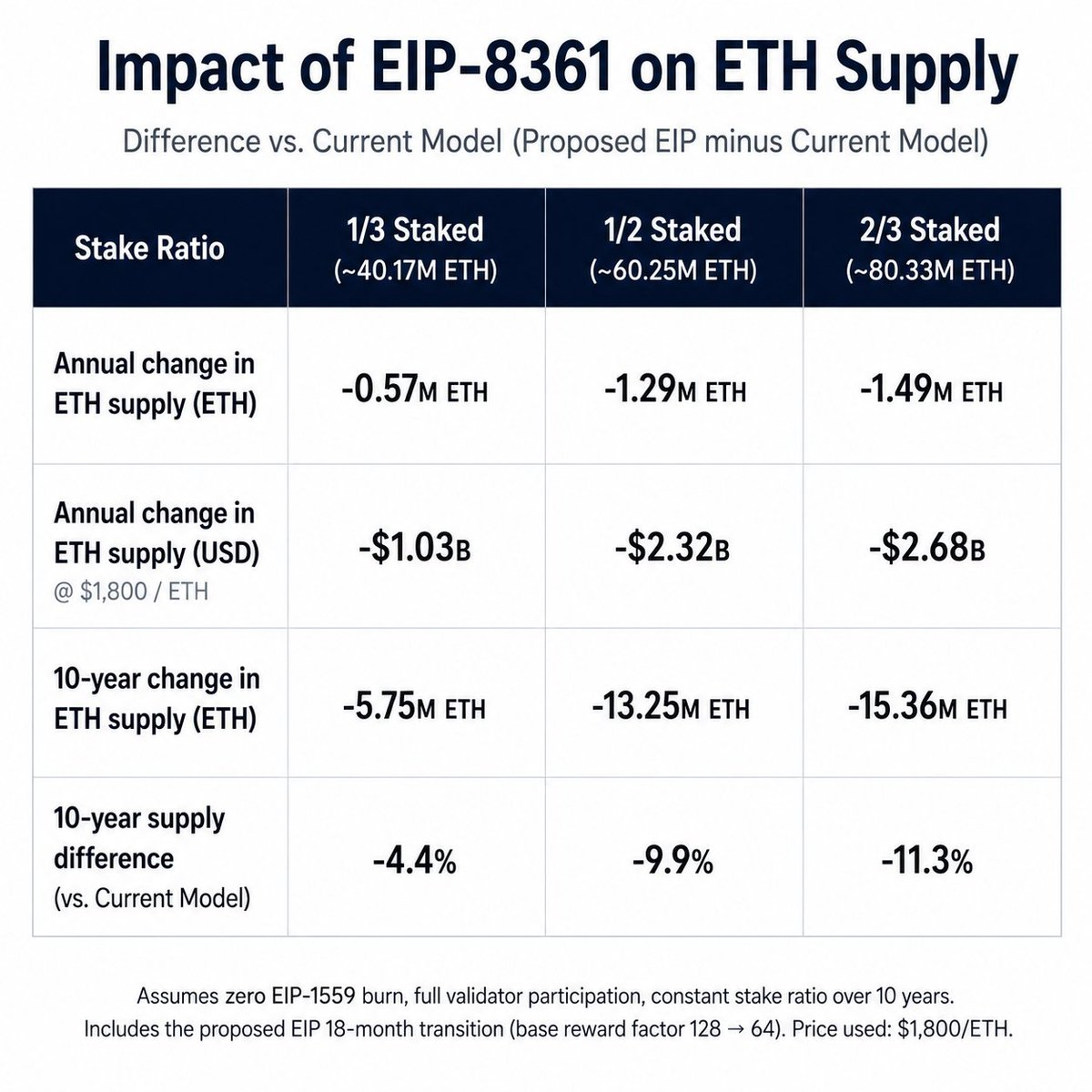
The proposed network update will lower ETH issuance and inflation. Source: Zach Pandl
Others pointed to the seemingly rushed timeline to consider the proposal, though this appears to be due to confusion over the upcoming deadline on Aug. 6.
“This clearly doesn’t leave adequate time for community review of a monetary policy change of this magnitude,” said Greg Koumoutsos, a co-author of EIP-8148 and EIP-8205.
Where the proposal currently stands
The Tapered Issuance Burn proposal has not been approved, scheduled or included in Hegotá.
While there is an Aug. 6 deadline relating to this proposal, the deadline is for pull requests proposing additional EIPs for Hegotá, not a deadline for deciding which proposals will be included.
Ethereum community organizer Trent Van Epps said the selection process could continue until Nov. 8, and that Hegotá is likely to reach mainnet in the second quarter of 2027.
Magazine: The 100x obsession: Fundamentals grow in importance as crypto matures

A former FBI supervisory agent stole roughly $1 million in cryptocurrency and consulted ChatGPT on how to use the funds and relocate to Europe.
Federal investigators charged Patrick Steven Yaroch with interstate transportation of stolen goods and receipt of stolen goods after he allegedly confessed to stealing cryptocurrency from wallets linked to FBI investigations between late 2024 and early 2025.
Former FBI Agent In Custody
Yaroch allegedly stole the cryptocurrency from wallets described in court documents as “adversarial cryptocurrency accounts.” The former agent was arrested on Friday after confessing to the theft.
According to an affidavit filed on August 1, Yaroch discovered private keys that allowed him to access and transfer funds from the wallets to himself. The transfers were completed through a dozen transfers between late 2024 and early 2025.
Prosecutors stated that Yaroch contacted an employee of the United States Department of Justice and requested a meeting to discuss personal matters. However, during the meeting, held at FBI headquarters, he broke down and admitted to accessing the FBI’s systems to obtain the cryptocurrency.
“During the afternoon of July 28, 2026, Yaroch contacted DOJ Employee 1 via Signal and requested to meet to discuss personal matters. Upon meeting DOJ Employee 1 at FBI headquarters, Yaroch immediately started to break down as he told his story.”
Yaroch allegedly told the DOJ employee he had made “some very poor decisions related to cryptocurrency wallets.” He added that he was frustrated because he was “unable to do more to stop people connected to an adversarial nation from using cryptocurrency.” However, prosecutors have alleged he transferred the assets for his personal benefit outside authorized seizure or forfeiture processes, and mixed the cryptocurrency with his personal funds. Yaroch’s crypto holdings eventually totaled nearly $1 million, and investigators searching his home seized a Trezor hardware wallet and handwritten seed phrases.
They also discovered $188,570 in a Kraken account, including $166,000 in USD, $18,000 in USDC, and small holdings of Bitcoin and other cryptocurrencies. Yaroch had also transferred $1.02 million into a Suilend account on July 23.
ChatGPT Conversations
Investigators stated that Yaroch turned to ChatGPT to figure out how to use the funds, including questions about how he could invest a million dollars and maximize profits and returns. He also asked the AI about leaving the US and settling in a European country.
Investigators also discovered queries regarding visa requirements and an email draft about job opportunities in Greece. They also discovered details of a planned trip to Portugal, related power-of-attorney documents, and evidence of unreported foreign travel.
When presented with the details, Yaroch said he wasn’t planning to funnel money to Portugal, and that his family had planned a trip to the country to meet friends. The complaint states, “FBI WF Agents mentioned to Yaroch that they located the power of attorney forms for Portugal. Yaroch stated he was not planning to funnel money into Portugal. Yaroch told FBI WF Agents that his family had a trip planned to Portugal in September 2026 to meet friends. Yaroch realized he might not be able to attend the trip but stated he hoped his wife and child would still go on the trip.”
Crypto Under Scrutiny
The incident comes at a time when crypto is under intense scrutiny after a wave of security incidents. Coldcard was hit by a major exploit after a 2021 firmware bug bypassed its hardware wallet’s random number generator, allowing hackers to remotely drain $89 million in Bitcoin.
Ostium’s off-chain infrastructure was also compromised after an attacker manipulated BTC-USD price reports, draining 23.75 million in USDC from its liquidity vault.
However, Yaroch’s case is one of alleged insider theft by a supervisory special agent working at the FBI headquarters’ Counterintelligence and Espionage Division.
Disclaimer: This article is provided for informational purposes only. It is not offered or intended to be used as legal, tax, investment, financial, or other advice.

The 40-year-old director became the first person to have her first three solo feature films—Lady Bird, Little Women, and Barbie—each nominated for “Best Picture” at the Academy Awards. The key to a Gerwig film, she says, has to do with her decision to take on ambitious projects, a topic which she expounded on before discussing the possibility of a Barbie sequel.
“Sometimes, because I write and direct, I write things that I genuinely sit back and think, ‘I have no idea how I’m actually going to accomplish that.’ And that’s actually the most exciting feeling. Because then you can gather people— gather your designers, your heads of departments—and everybody kind of figures out something that’s never been done before. And that’s thrilling.”
Gerwig said that when she works on a film she has to find an “undertow.” For Barbie, the undertow was the intergenerational struggle behind the doll. “I remember going to Toys R Us and looking at the Barbies, and I loved their hair. And I loved everything about them. And my mom was not sure about it. And I thought that’s the story,” Gerwig says. A sequel to the film would be dependent on her finding a similar element.
Gerwig remains tight-lipped about how that dynamic will manifest in her forthcoming adaptation of the Chronicles of Narnia—“that’s just for me,” she jokingly says—but does share that it would be an honor to work with the Barbie cast and crew again.
For now, she says she’s choosing to focus on the other joys in life, monumentally her family, but also more trivial matters.
When asked what she wants her future self to remember about this moment in her life, Gerwig said, “I hope that the thing I remember is how amazing and fun it is,” before adding, “and how—and this sounds totally superficial but you know, when you go to these events and you put on clothes and part of me is like, ‘I don’t know’—I looked great.”
“That’s sort of a hard thing to feel all the time, and I think when I’m 80, I’ll be like, ‘Look at you! You’re 40! You look wonderful.’”
TIME Women of the Year was sponsored by P&G, Rolex, Ray Ban-Meta, Donna Karan New York, FIJI Water, Campari, and Mattel.
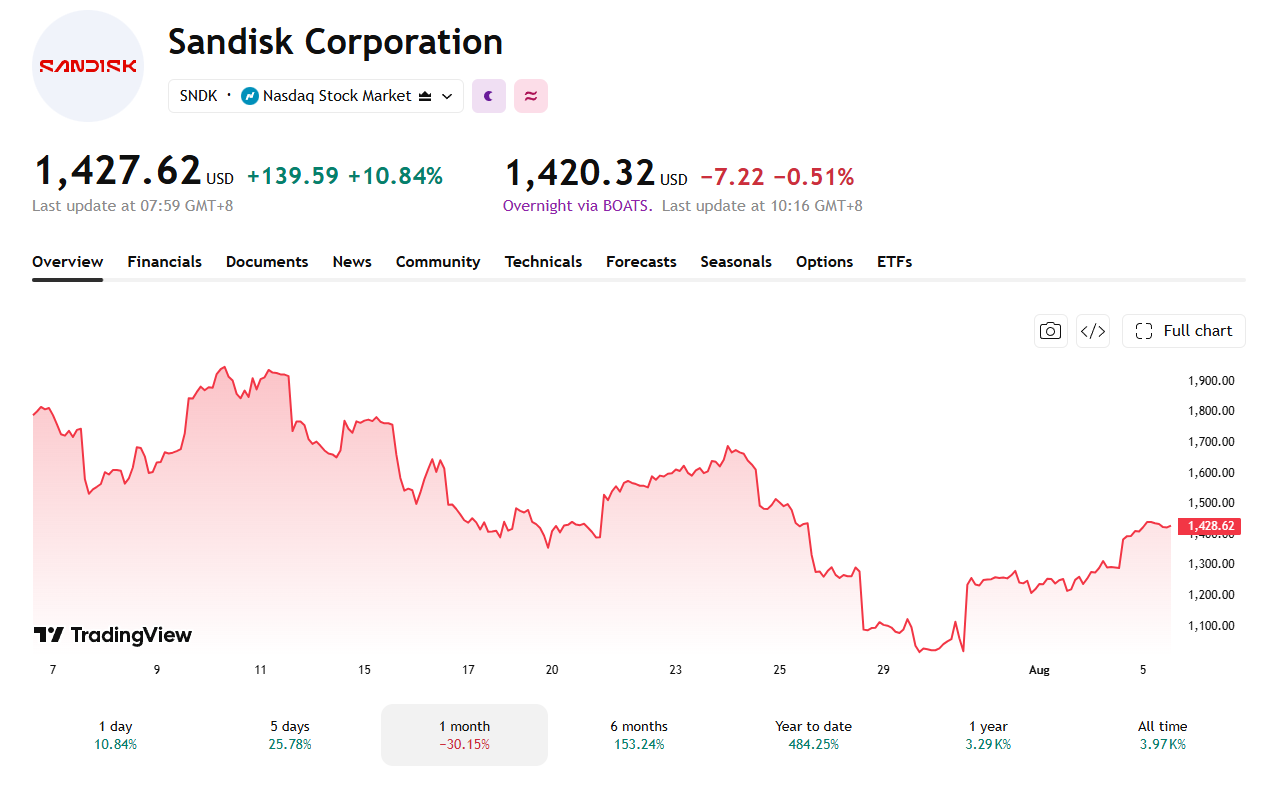
Whale Rock Capital Management’s flagship hedge fund fell 21.7% in July. The drop cut its 2026 gains roughly in half as artificial intelligence and semiconductor stocks sold off.
Whale Rock’s year-to-date return dropped to 35.1% through July. That’s down from 72.5% at the end of June, a person familiar with the matter told Bloomberg. Alex Sacerdote runs the Boston-based, $19 billion firm.
A Rough Month for AI Stockpickers
Whale Rock’s long-only fund fell 18.8% in July but still holds a 36.8% gain for the year. The firm marks its 20th anniversary in 2026. It rode a chipmaker rally through the first half of the year, but conditions reversed sharply in July.
Regulatory filings show Whale Rock added to its stakes in SanDisk and Bloom Energy during the first quarter. Both names tumbled in July alongside CoreWeave. All three fell victim to a broader memory sector selloff that hit chip and AI infrastructure stocks hardest.

The damage spread beyond semiconductors. Mega-cap names like Google and Meta also saw minor declines in July. Meanwhile, investors grew wary of continued AI spending. That concern echoes a broader warning that the market now trades as one AI bet.
Not the AI Industry’s Only Casualty
Whale Rock wasn’t alone in taking a hit. Leopold Aschenbrenner’s Situational Awareness fund posted a 67% loss last month. That marked the sharpest hedge fund drawdown of July, following a forced unwind of its stock book.
The reversal fits a pattern playing out across Wall Street’s AI trade this summer. Some strategists compare it to the dot-com era. Others, however, see the pullback as a buying opportunity, not the start of a longer bust.
Whale Rock’s August performance may hinge on the current earnings season. Investor sentiment toward AI infrastructure spending will likely decide whether the fund stabilizes or extends July’s losses.
The post Whale Rock’s AI Bet Turns Volatile: July Losses Erase Half of 2026 Gains appeared first on BeInCrypto.


Institutional investors accounted for a record 72% of spot trading volume on Wintermute’s over-the-counter desk in the first half of 2026, up from 59% a year earlier. The shift marks the clearest sign yet that Wall Street, not retail traders, now sets the pace of crypto markets.
Wintermute’s OTC flow report ties the change to a prolonged bear market that pushed retail traders toward equities instead. That absence gave institutional flow more weight in shaping prices.
Wall Street’s Growing Crypto Footprint
Hedge funds, digital asset treasuries (DATs), asset managers, and family offices drove that 72% share. Wintermute called it the highest level on record.
The figure compares with 61% in the second half of 2025 and 59% in the first half of that year.
“At three quarters of volume, institutional flow defines market structure.”
Wintermute linked that dominance directly to falling volatility. Bitcoin’s (BTC) realized volatility has roughly halved across market cycles, sliding from about 70% to 45%.
Institutions increasingly sit through price swings instead of chasing them, and that patience helps explain the drop.
This concentration builds on a trend BeInCrypto has tracked before. Institutional crypto bets have narrowed toward Bitcoin, Ethereum and a handful of select DeFi names, rather than spreading across the long tail of smaller tokens.
Institutions Move Faster Than Retail in Crypto
Institutions and retail traders both pile into a token once its volume and price surge. However, the difference lies in how long each side stays.
Institutional activity typically fades within a day of a rally. Retail traders remain active for about three days.
Retail now makes up a smaller share of the market overall. That mismatch means altcoin momentum can fade faster than it did in past cycles.
Derivatives and Tokenization Pick Up the Slack
Institutional activity did not stop at spot trading. Altcoin options volume on Wintermute’s OTC desk grew roughly 3.4 times over the past year. The rise ran from the second half of 2025 into the first half of 2026.
The trend started as a yield trade in major tokens like Bitcoin and Ethereum (ETH). It has since moved down the curve into altcoins.
Yield-seeking flow tends to dampen price swings rather than amplify them. Wintermute said that effect, long visible in Bitcoin and Ethereum, is now reaching altcoins too.
Meanwhile, tokenized real-world assets (RWA) are crypto tokens that represent ownership of off-chain assets like bonds or real estate. That sector grew nearly 50% to $31 billion in the first half of 2026.
That fits a broader trend. Tokenized assets have emerged as one of the market’s few growth pockets even as trading volumes elsewhere softened.
What It Means for Altcoin Season
Wintermute frames the shift simply. The market increasingly reflects its dominant participant. It is patient, selective in tokens, and inclined toward derivatives rather than spot trades.
Retail traders still spread their activity across a much wider set of assets than institutions do. If institutional flow keeps setting the market’s direction, the next rally may reward fewer winners than past cycles did.
The post Institutions Now Drive 72% of Crypto’s OTC Flow, Wintermute Data Shows appeared first on BeInCrypto.

Man United permanent transfer now close with buy-back clause included in deal

Polystyrene Foam Can Be Gasoline With Some Help

Cambridge widow left feeling ‘isolated and alone’ as more HMOs pop up on estate


-

 Business6 days ago
Why Trees Belong on the Risk Register
-

 Fashion4 days ago
Weekend Open Thread: Wit & Wisdom
-

 Politics4 days ago
Meta enters AI-training agreement with far-right ‘propaganda rag’ Newsmax
-

 Politics7 days ago
Reform UK betrays West Mids residents by running from party pledges
-

 Crypto World4 days ago
MicroStrategy Post-Earnings CLARITY Act Push Could Add New Catalyst for Its Stock
-

 Politics2 days ago
Zack Polanski: an incitement to murder Nigel Farage?
-

 Business7 days ago
Major shareholder moves on Canyon
-

 Crypto World4 days ago
XRP Ledger v3.3.0 brings five institutional features
-

 News Videos6 days ago
Bitcoin Enters the 3rd Stage of the Bear Market
-

 Politics5 days ago
Luke Littler’s dominance sparks GOAT debate
-

 Sports5 days ago
Seema Kaliramna Wins Discus Throw Bronze, Takes India’s CWG Medals Tally To 17
-

 Crypto World4 days ago
New York sues Kalshi over prediction market gambling
-

 Crypto World3 days ago
Crypto PAC spending tops $2M in Michigan House race
-

 Business5 days ago
Trump Announces Hamas Disarmament Agreement as Iran Strikes Kuwait Air Base and US Attacks Pause Overnight
-

 Tech7 days ago
Gemini can now summarize the messiest comment threads in Google Docs
-

 Tech3 days ago
ESET tracks rise in malicious AI skills and adaptable malware
-

 Business2 days ago
DTCR: Deleveraging And A Hedge Fund Collapse Point To A Possible AI Bottom
-
 Tech5 days ago
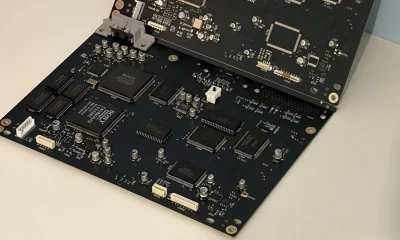
Building A Reproduction PlayStation Motherboard
-

 NewsBeat6 days ago
Four people die trying to cross Channel in small boats
-

 Tech5 days ago
Gemini Spark can now use Chrome logins and saved passwords to run errands on your behalf
You must be logged in to post a comment Login