

Crypto World
Resolv hack shows DeFi learned nothing from last contagion



Sunday’s $23 million hack of Resolv’s stablecoin USR has led to contagion across the DeFi sector.
Opportunistic traders used depegged USR to borrow against, draining liquidity in over a dozen yield vaults.
To make things worse, so-called “risk curators” then automatically allocated more funds to broken markets as lending rates spiked.
In November, a similar contagion hit DeFi’s “curated” vault ecosystem after Stream Finance announced a $93 million loss, leading to a 75% of xUSD.
Despite discussions of risk ratings and curators putting up first-loss capital in the aftermath, it appears not much was learned, after all.
Read more: Four months on, MEV Capital falls victim to $4B DeFi daisy chain implosion
The hack
Resolv Labs’ statement confirmed that a private key compromise led to the unauthorized (and unrestricted) “minting of approximately $80 million of uncollateralized USR.”
USR’s pre-hack token supply remains fully backed, with losses coming from liquidity providers (LPs) on decentralized exchanges as the hacker sold the minted tokens. For example, LPs on Curve Finance alone are estimated to have lost $17 million.
The hacker’s sell-off caused a depeg of USR, which is currently trading at $0.23, according to CoinMarketCap data. Blockchain security firm Beosin puts the attacker’s profits at 11,409 ether (ETH), worth over $23 million at the time of writing.
The Resolv team faced criticism for a slow response time while collecting the necessary multisig signatures to pause the protocol.
It has contacted the exploiter on-chain, requesting return of 90% of the converted ETH, as well as the remaining USR.
Read more: Venus Protocol hacker lost $4.7M after nine months of planning
The fallout
The hack may have been simple, but the knock-on effects have been anything but.
Depegged USR was pounced upon by opportunistic traders who used it to drain yield vaults with hardcoded price oracles. In buying cheap USR to use as collateral, users could borrow other assets, such as USDC, as if USR were still worth $1.
Read more: Oracle error adds to turmoil at DeFi giant Aave
As if things weren’t bad enough, “risk curators” automated strategies then allocated further funds to the affected markets, whose high utilization had spiked supply yields.
Chaos Labs’ Omer Goldberg explained how Morpho’s Public Allocator feature allowed curators “including Gauntlet, re7, kpk, and 9summits” to autoallocate millions of dollars worth of assets into markets “based on pre-configured and approved caps and credit lines.”
In some cases, Goldberg says, allocation into broken vaults continued for hours.
The chaos also brought innovation, however, as the auto-allocations were even specifically targeted to free up additional liquidity. Enterprising competitors Obsidian also capitalized on the incident, offering a migration service to users whose deposits are stuck in illiquid Morpho vaults
Assessing the damage
Morpho’s Paul Frambot tallied 15 affected vaults with over $10,000 of exposure to USR.
According to security researcher Weilin Li, curators of the affected vaults, on Morpho and elsewhere, include Gauntlet, Re7, MEV Capital, Extrafi, Seamless, August, Clearstar, kpk, Leyrock and 9Summits.
For those who followed November’s collapse, many of these names may be familiar.
Yearn, whose contributors were amongst the harshest critics of the yield vaults which led to November’s crash, suffered a minimal loss of $377.
Ironically (or tellingly), Resolv’s own risk manager, Steakhouse, wasn’t exposed to USR, despite stating that “operationally, Resolv demonstrates institutional rigor” just five days before the hack.
The backing of Inverse Finance’s DOLA stablecoin was indirectly exposed to the depeg of USR, with the team pledging to patch the $340,000 hole.
A number of lending markets paused USR markets, including Venus Protocol, which was itself hacked last weekend, and Lista.
Fluid was the worst hit, and may have accrued up to $17.5 million of bad debt. However, the team reassured users that it had “secured short-term loans to cover 100% of the bad debt.”
It also considers selling FLUID tokens “should any additional funds be required.”
Following a dicey few months for top dog lending protocol Aave, with governance drama and an oracle mishap, Aave Labs’ Stani Kulechov was keen to highlight Aave’s lack of exposure.
DeFi daisy chain
The web of platforms affected by the compromise of a single private key is a stark reminder of how one of DeFi’s key innovations, interoperability, is a double-edged sword.
Automated allocation may optimize returns under normal conditions, but when things break, which they often do in DeFi, unintended behavior follows.
Without their own funds in play, the current setup incentivises “malicious game theory pushing [curators] to seek more risk.”
This latest episode has renewed calls for curators to have skin in the game. One approach is tranching of deposits, with curators set to lose out first should their risk be improperly “curated.”
Got a tip? Send us an email securely via Protos Leaks. For more informed news, follow us on X, Bluesky, and Google News, or subscribe to our YouTube channel.

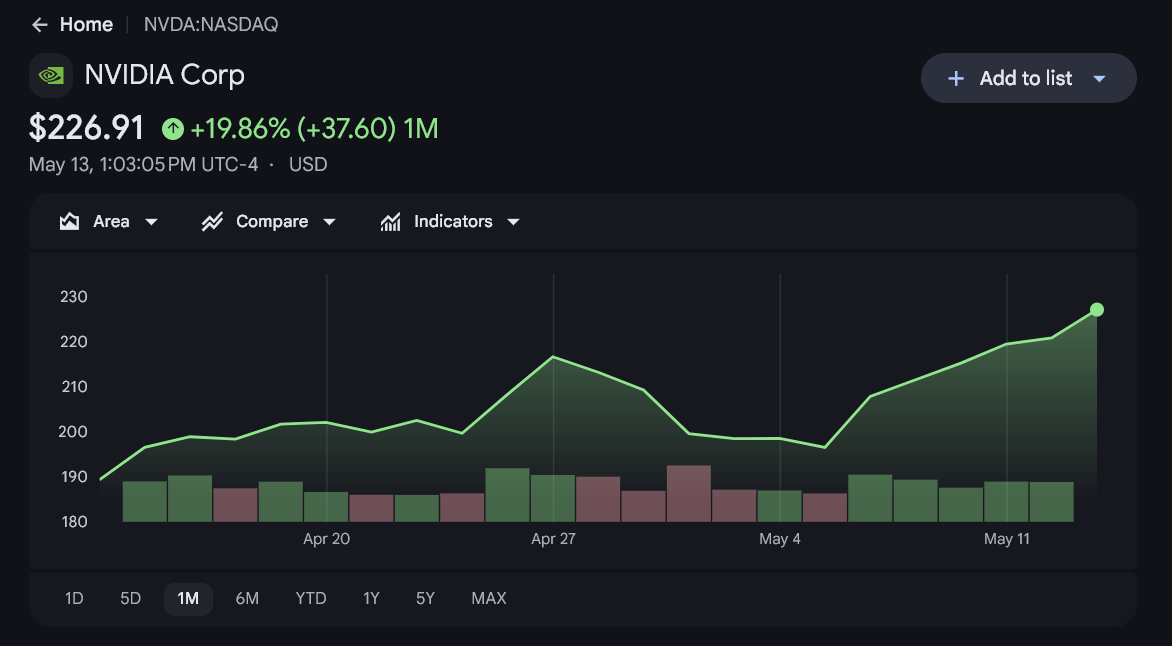
Nvidia (NVDA) stock price has rallied for seven consecutive sessions since the May 6 breakout, climbing to $227 on May 13. The move sits inside a 32% measured move setup, and the fundamental catalysts behind it have just multiplied.
Jensen Huang joined President Trump’s Beijing delegation as a last-minute addition on Tuesday, putting $50 billion in China AI chip opportunities back in play.
At least five Wall Street firms have raised or reiterated their Nvidia price targets in the past 48 hours. Earnings land on May 20. But the Chaikin Money Flow is sending a quieter, more cautious signal underneath the rally.

Nvidia Stock Bull Flag Breakout Targets $267
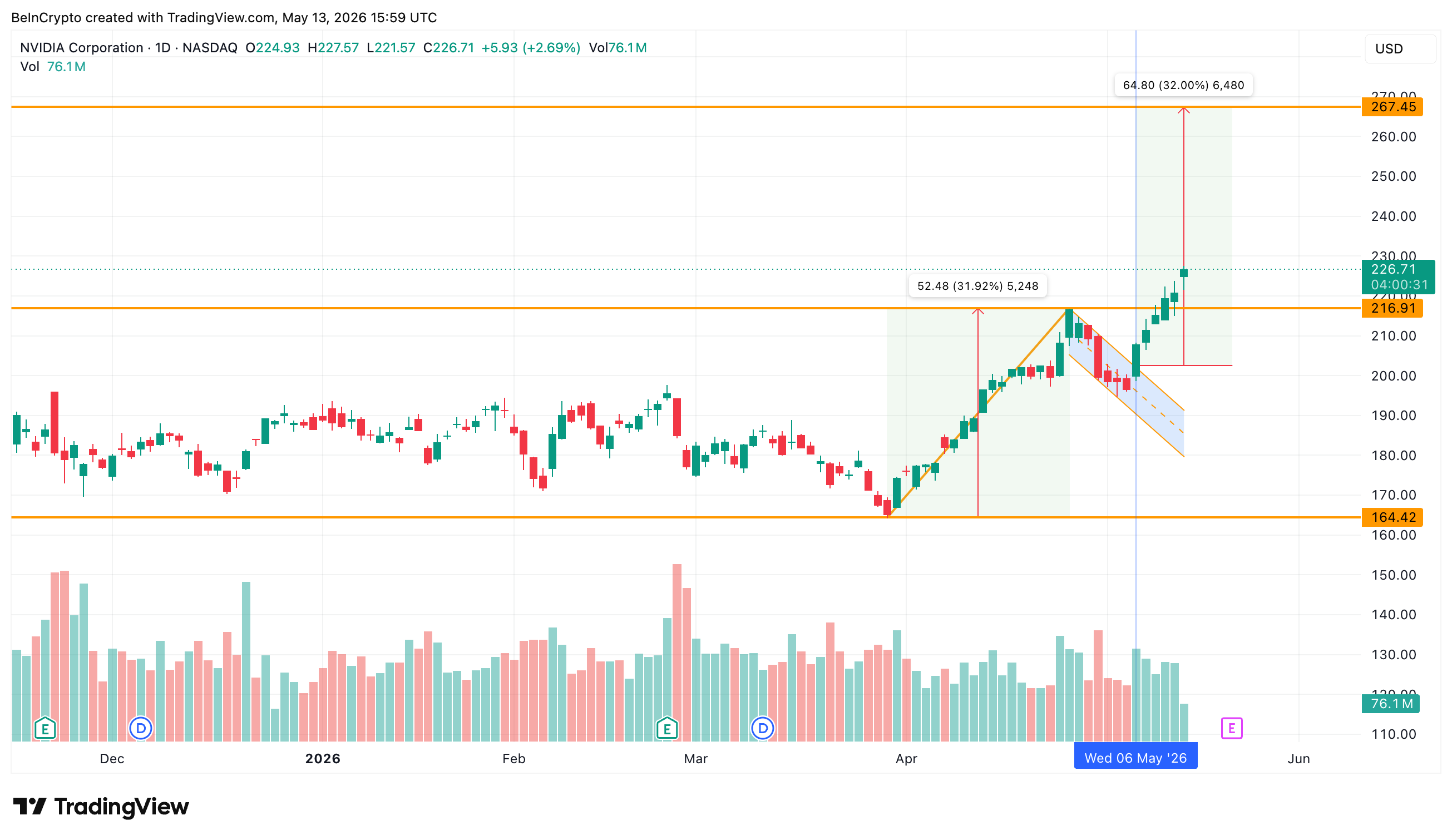
The Nvidia stock chart broke out of a bull flag and pole pattern on May 6, 2026. The pole rallied 31.92% across April and early May, and the flag resolved upward with strong volume on the breakout candle.
Want more insights like this? Sign up for Editor Harsh Notariya’s Daily Newsletter here.
Every daily session since May 6 has closed green. The measured move projects a 32% rally from the breakout zone, with $267 the textbook target.
The fundamental catalysts have stacked up in the past 48 hours. Jensen Huang joined President Trump’s delegation to Beijing as a last-minute addition on May 12.
Trump personally called Huang after the Nvidia CEO was initially absent from the executive list, and Huang flew to Alaska to board Air Force One. Beijing has been pushing for greater access to Nvidia’s H200 AI chips, a market Huang has sized at $50 billion.
Wall Street has reinforced the setup. Bank of America’s (BofA) Vivek Arya raised the firm’s Nvidia price target to $320 from $300 on May 13, citing a $1.7 trillion total addressable market for 2030 AI data centers.
Wells Fargo’s Aaron Rakers raised to $315 from $265 on May 12, using a new gigawatt-capacity model. Susquehanna’s Christopher Rolland raised to $275 from $250, aligned with the chart targets discussed earlier. Citi reiterated $300. Oppenheimer reiterated $265.

The Nvidia stock price now sits between the breakout zone and the target, with earnings due May 20. The next signal sits in the institutional flow data.
Money Flow Sends a Quieter Warning
The Chaikin Money Flow (CMF) indicator, which measures the volume-weighted balance of buying and selling pressure as a proxy for large money positioning, sits at 0.24 on the Nvidia daily chart.
The reading is in positive territory. The interesting signal is what has happened underneath it. The CMF peaked in late April and has since trended steadily lower, while Nvidia’s stock price has trended higher. The result is a bearish divergence on the daily chart.

That divergence does not invalidate the breakout. Big-money flow has softened, but it remains net positive. The pattern is consistent with profit-taking into strength or hedging ahead of the May 20 earnings report.
The put-call ratio data adds the second layer. The Nvidia put-call volume ratio sits at 0.32 on May 13, up from 0.29 around the May 6 breakout. The open interest ratio has eased to 0.80 from 0.81 over the same period.

The increase in volume-based puts alongside steady open interest fits the same picture as the CMF divergence.
Some hedging is being added to the rally, but overall positioning remains heavily call-skewed, with put-call ratios well below 1.0. The setup stays bullish with some prudence layered in.
Nvidia Stock Price Levels Show $227 as the Decision Point
Nvidia stock price trades at $226, sitting right next to $227, the 0.618 Fib zone of the recent range.
The 0.618 level is the structural pivot. A daily close above $227 opens $235, $247, and the textbook pattern target at $267. Beyond that, the 1.618 extension at $279 aligns with Susquehanna’s price target.
The 2.618 extension at $332 sits just above Bank of America’s $320 target.
The downside levels matter too. Support stacks at $214 and $207. A daily close below $207 would weaken the breakout structure. The deeper invalidation sits at $194, the 0 Fibonacci anchor. A break under $194 would weaken the entire bullish structure.

A daily close above $227 keeps the path to $267 open and brings the analyst price ladder into view. A close below $207 hands control to the CMF divergence and risks a deeper consolidation toward $194.
May 20 earnings will likely break the tie.
The post A Phone Call From Trump Just Earned Nvidia Stock a Potential 30% Boost appeared first on BeInCrypto.
Wall Street market maker Jane Street reduced its exposure to Bitcoin exchange-traded funds (ETFs) in the first quarter of 2026 while increasing positions in Ether funds.
Jane Street cut major Bitcoin ETF holdings in Q1 2026, including BlackRock’s iShares Bitcoin Trust (IBIT) and Fidelity Wise Origin Bitcoin Fund (FBTC), according to a 13F filing published Tuesday.
IBIT holdings fell about 71% from Q4 2025 to roughly 5.9 million shares valued at about $225 million, while FBTC dropped about 60% to around 2 million shares worth roughly $115 million.
At the same time, Jane Street increased its exposure to Ether (ETH) ETFs, nearly doubling its position in BlackRock’s iShares Ethereum Trust (ETHA) and sharply raising its stake in Fidelity Ethereum Fund (FETH), adding about $82 million combined across the two products over the quarter.
The move comes amid early signs of institutional Ether ETF buying in early 2026, including increased exposure reported at Wells Fargo. The filing points to a reshuffling of Jane Street’s reportable crypto-linked holdings at quarter-end, though 13F disclosures do not show the market maker’s full trading book or net exposure.
Bitcoin exposure weakens further as Strategy stake falls
Jane Street’s Bitcoin-linked exposure weakened further in Q1 2026 as it reduced its stake in Michael Saylor’s Strategy (MSTR) alongside major ETF cuts.
In Q4 2025, the firm held about 968,000 MSTR shares worth roughly $145.9 million. By Q1 2026, the common stock stake fell to about 210,000 shares valued at roughly $27 million, a decline of about 78% quarter-over-quarter.

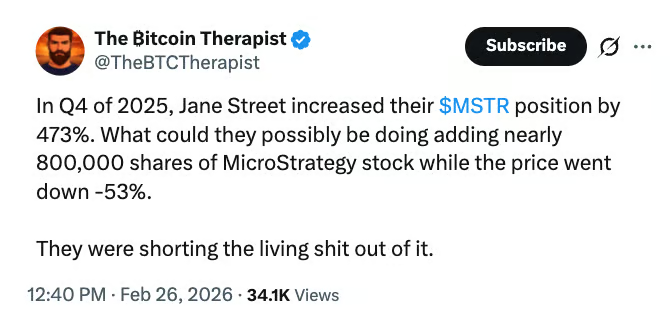
Jane Street increased its Strategy (MSTR) position by 473% in Q4 2025. Source: TheBTCTherapist
Strategy selling followed significant buying in the previous quarter as Jane Street reportedly increased MSTR position by 473% in Q4 2025.
In Q1 2026, the company also trimmed exposure across several Bitcoin mining stocks, including IREN, Cipher Mining, TeraWulf and Core Scientific.
Increased exposure to Coinbase, Galaxy and Riot
Despite broad downside pressure on Bitcoin-related assets, Jane Street increased exposure to several crypto-linked equities over the quarter, suggesting more selective positioning in crypto-related equities rather than a broad exit from the sector.
Jane Street raised its stake in the crypto mining company Riot Platforms (RIOT) to about 7.4 million shares, up from 5 million, increasing its value to roughly $91 million from $63 million.
It also increased its position in Coinbase (COIN) to about 888,000 shares from 778,000, with the value rising to about $155 million from $176 million in the prior quarter.
Related: EToro profits rise as commodities boom offsets crypto trading slump
Galaxy Digital (GLXY) saw the sharpest expansion, jumping to about 1.5 million shares from just around 17,000, lifting its value to roughly $28 million from around $380,000.
Jane Street posted a record $16.1 billion in Q1 trading revenue, according to Reuters, as volatile markets and gains tied to artificial intelligence-related investments boosted financial results.
Magazine: Strategy reveals why they would sell BTC, Trump Media posts loss: Hodler’s Digest, May 3 – 9
A Bitcoin holder posting as cprkrn on X (Twitter) said he recovered 5 BTC from a wallet locked for more than 11 years after uploading his old college computer files to Anthropic’s Claude AI.
They claimed the chatbot found an encrypted wallet file, debugged the open-source tool btcrecover, decrypted the keys, and converted them to Wallet Import Format. He had paid roughly $250 per failed attempt at commercial services before turning to AI.
How Claude Cracked the Wallet
cprkrn said he uploaded files from his old college machine to Claude as a last attempt. The chatbot located an encrypted wallet file among the dumped data, then turned to btcrecover, a widely used open-source recovery utility.
Screenshots posted to X show the model worked through the password logic. It found that btcrecover concatenates a sharedKey value with the user password during decryption. The private keys then decrypted on the first corrected run.
The recovery hinged on a mnemonic the user said he rediscovered weeks earlier. He set the original password while in college and changed it shortly after, joining a long list of crypto fortunes stranded for years.
Last ditch effort dumped my whole college computer into Claude. It found an OLD wallet file that the pneumonic successfully decrypted,” posted cprkrn.
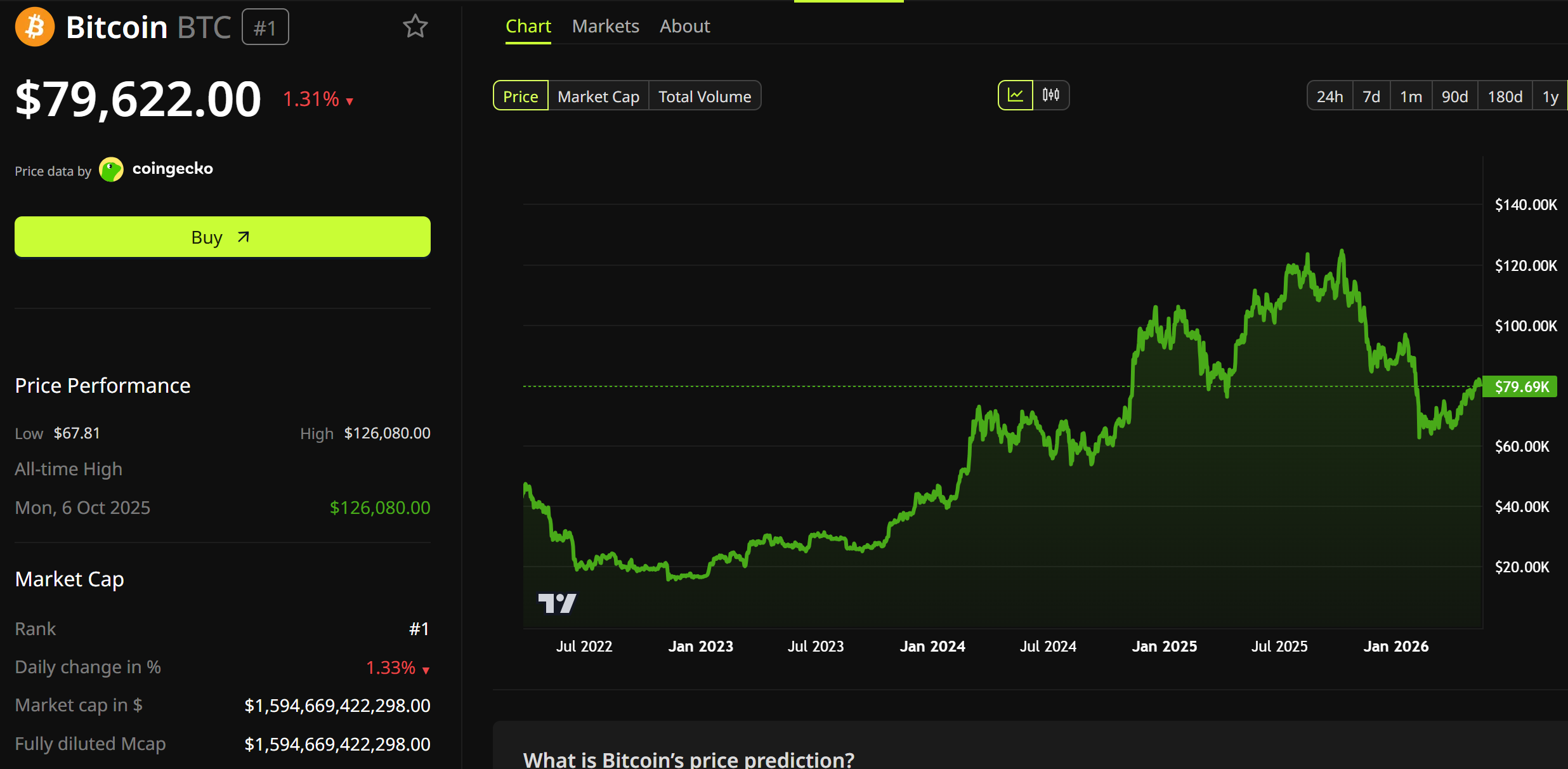
With the pioneer crypto now trading for $79,622, the recovery is now worth almost $400,000.

Why the Case Is Drawing Attention
The recovery post drew more than one million views within hours. Castle Island Ventures partner Nic Carter called the result “insane.” Crypto journalist Laura Shin and Base creator Jesse Pollak posted similar reactions.
Experts say the recovery is proof of how general-purpose AI now handles specialized cyber and debugging work.
Meanwhile, wider attention has followed Anthropic as Claude’s capabilities expand.
The case adds to a growing pile of recoveries tied to long-dormant addresses. Roughly a third of all Bitcoin supply remains held in wallets that have not moved in years, per Glassnode data on dormant coins.
Whether the technique extends to other forgotten wallets depends on the files holders kept from earlier years. cprkrn advised others to upload everything from old machines and notebooks before giving up.
The post Bitcoin Holder Recovers 5 BTC From 11-Year Locked Wallet Using Claude AI appeared first on BeInCrypto.


Best Liquidity Provider is a category within the BeInCrypto Institutional 100, an annual research-driven program recognising institutional digital asset excellence across 26 categories and six pillars.
This category sits under Pillar 2: Capital Markets & Infrastructure. The 15 firms below are listed alphabetically and are not ranked. A shortlist will be named in May 2026, with the winner announced at Proof of Talk in Paris on June 2–3, 2026.
Key Facts
- Long list: 15 firms across crypto-native market makers, TradFi prop firms with crypto desks, regulated European and Asian LPs, HFT platforms, prediction-market specialists, and multi-strategy LPs
- Initial pool: More than 30 firms screened; 15 advanced to the long list
- Order: Listed alphabetically, not ranked
- Scoring: 50% quantitative data · 50% Expert Council
- Criteria assessed: Average daily trading volume, venue connectivity, token and pair coverage, regulatory licensure, settlement and risk framework, asset class breadth, reputation, innovation signal
- Data sources: FCA, NYDFS, FINMA, BaFin, MAS, SFC, GFSC, VARA, MiCA-CASP registers, audited filings, issuer disclosures, partnership announcements, KBRA/Kroll, PitchBook, Tracxn, and Crunchbase
| Firm | LP Sub-Segment | HQ | Reach | Top Licensure / Platform | Representative Work |
| Auros | Algorithmic crypto-native market maker | Hong Kong / Sydney | Multi-strategy LP across CeFi, derivatives, options, and DeFi Recovered scale after 2023 restructuring |
Crypto-native algorithmic trading firm Multi-jurisdiction operating footprint |
Auros Ventures launched with $50M+ allocation Expanded to approximately 4% of global crypto MM volume by mid-2024 |
| B2C2 | Institutional OTC and algorithmic execution | London, UK | SBI Holdings majority-owned since 2020 Offices in London, New York, Tokyo, and Singapore |
FCA, NYDFS BitLicense, Luxembourg VA EU MiFID framework |
Provides 24/7 OTC across spot, derivatives, and structured products Launched Solana stablecoin settlement infrastructure in 2026 |
| Caladan | TradFi-pedigree multi-strategy crypto MM | Singapore / New York | $170B+ annual trading volume 1,000+ digital assets across 70+ exchanges |
Singapore operating base Exploring US broker-dealer and FINRA registration |
OTC options desk launched in Oct 2024 New York office opened in May 2025 |
| Cumberland (DRW) | TradFi prop firm crypto institutional LP | Chicago, USA | Subsidiary of DRW Holdings DRW founded in 1992 with multi-asset coverage |
TradFi-regulated proprietary trading firm Privately held by DRW |
Provides institutional crypto OTC and market making Serves hedge funds, asset managers, and prime brokers |
| Flow Traders | European TradFi market maker extending to crypto | Amsterdam, Netherlands | Listed on Euronext Amsterdam Multi-asset coverage across equities, FX, fixed income, and digital assets |
Public-listed market maker Multi-jurisdiction TradFi licences |
Supports crypto ETP creation and redemption flows Extends TradFi execution technology into digital assets |
| Flowdesk | European crypto MM and capital markets services | Paris, France | Active across 100+ trading venues Multi-asset liquidity coverage |
French regulatory framework Series B closed in 2024 |
Combines market making with OTC and derivatives services Provides capital markets support for token issuers and exchanges |
| GSR | Legacy crypto-native liquidity provider | London / Singapore / Zurich | 250+ tokens covered Founded in 2013 |
Multi-jurisdiction regulatory footprint Institutional OTC and market-making framework |
Long-standing exchange and issuer SLA provider Covers OTC, market making, structured products, and derivatives |
| Gravity Team | Asia-focused crypto market maker | Singapore | Active across CeFi and DeFi venues Crypto-native multi-strategy footprint |
Crypto-native trading firm Asia-Pacific operating base |
Provides liquidity across spot and derivatives markets Focuses on Asian markets and emerging token pairs |
| Keyrock | European institutional market maker | Brussels, Belgium | Active on 80+ exchanges 400+ tokens covered |
EU MiCA regulatory pathway $72M Series B closed |
Provides market making for issuers, exchanges, and OTC counterparties Maintains a European institutional client base |
| Optiver (Crypto) | TradFi global market maker with crypto desk | Amsterdam, Netherlands | Global TradFi market maker founded in 1986 €3.3B+ net trading income in 2022 |
Multi-jurisdiction TradFi licences Conservative capital structure |
Operates an active crypto trading desk Expanded selectively into new markets and asset classes through 2025 |
| Portofino Technologies | Swiss HFT crypto market maker | Zug, Switzerland | 35+ HFT specialists across five locations Spot, derivatives, and OTC coverage |
FCA, Swiss, and BVI regulated $50M raised from institutional investors |
Founded by former Citadel Securities leaders Joined Pyth Network as data provider in 2024 |
| Raven | Prediction-market specialist LP | Sofia, Bulgaria | Quotes more than 5,000 prediction-market contracts daily Active across CeFi, DeFi, and prediction markets |
Founder-led proprietary HFT firm $2.7M seed at $25M valuation |
Co-founded by former Wintermute employees Backed by Hack VC, Coinbase Ventures, CMCC Global, and Wintermute Ventures |
| Selini Capital | Multi-strategy crypto LP and venture | Singapore | Large crypto market participant across CeFi and DeFi Founded in 2021 |
VARA-licensed in Dubai for broker-dealer and OTC services Singapore operating base |
Provides systematic trading and statistical arbitrage Venture arm has 56+ portfolio investments |
| Wincent | Gibraltar HFT crypto market maker and OTC | Gibraltar | $5B+ daily notional volume Approximately 500,000 trades per day |
GFSC-authorised Experienced Investor Fund Founder-owned with no VC cap table |
Founded by Matus and Michal Kopf in 2017 Integrated with Wyden, Crypto Finance AG, and Laser Digital |
| Wintermute | Market maker and institutional OTC platform | London, UK | Approximately 141 employees across five continents $15B+ average daily volume across CeFi and DeFi |
FCA-affiliated group structure Wintermute Asia regulated separatelyis |
Operates NODE institutional trading platform and API Launched tokenized gold OTC and WTI crude oil CFDs |
About This List
The BeInCrypto Institutional 100 — Liquidity Provider (2026 Long List) identifies firms providing institutional-grade liquidity across digital asset markets. The category covers 24/7 OTC desks, algorithmic market-making, prediction-market liquidity, structured product market-making, bilateral streaming, and DeFi liquidity provision.
Coverage spans crypto-native liquidity providers, TradFi proprietary trading firms with crypto desks, European and Asian regulated market makers, HFT crypto market makers, and specialist providers such as Raven for prediction markets. For firms with broader business lines, this review is scoped to their LP and OTC activity.
Methodology
This category is evaluated under Track A of the BeInCrypto Institutional 100 methodology: 50% based on quantitative metrics and 50% on Expert Council scoring.
Assessment spans eight criteria: average daily trading volume, venue connectivity, token and pair coverage, regulatory licensure, settlement and risk management framework, asset class breadth, institutional reputation, and innovation signal.
The 50/50 split reflects the availability of quantitative liquidity data, balanced with Expert Council assessment of counterparty quality, execution reputation, and innovation. Specialist positioning is recognised where the firm operates in a narrower but institutionally relevant liquidity segment.
Data was verified using regulatory registers, audited filings, issuer disclosures, partnership announcements, third-party rating agencies including KBRA and Kroll, and private-market sources including PitchBook, Tracxn, and Crunchbase.
The post BeInCrypto Institutional Research: 15 Firms Providing Institutional Crypto Liquidity appeared first on BeInCrypto.
Vietnam could see the first official activity in its regulated crypto asset market as early as the third quarter of 2026, Deputy Minister of Finance Nguyen Duc Chi said at the Digital Trust in Finance 2026 forum.
“We believe that, as early as the third quarter, Vietnam could witness the first official activities of its crypto asset market, operating under a framework designed to ensure safety and transparency,” Chi said Tuesday, according to VnEconomy.
The comments mark another step in Vietnam’s effort to bring one of Asia’s most active crypto markets under formal supervision, after regulators opened a licensing pathway for domestic crypto asset trading platforms earlier this year.
The push is tied to Vietnam’s broader digital economy strategy, which reportedly targets a digital economy worth at least 30% of gross domestic product by 2030, with 80% of transactions conducted cashlessly and more than 40% of enterprises involved in innovation activities.
Vietnam targets regulated crypto launch
In March, five Vietnamese companies had reportedly passed the initial qualification round in a race to launch the country’s first regulated cryptocurrency exchange. The companies included affiliates of private banks Techcombank, VPBank and LPBank, alongside stockbroker VIX Securities and conglomerate Sun Group.
In February, Vietnam drafted a tax framework that would tax crypto transactions akin to traditional securities trading, proposing a 0.1% individual tax on each crypto transaction processed through a licensed provider.
Cointelegraph contacted Vietnam’s Ministry of Finance for comment but had not received a response by publication.
Related: LMAX Group launches digital asset collateral solution for institutions
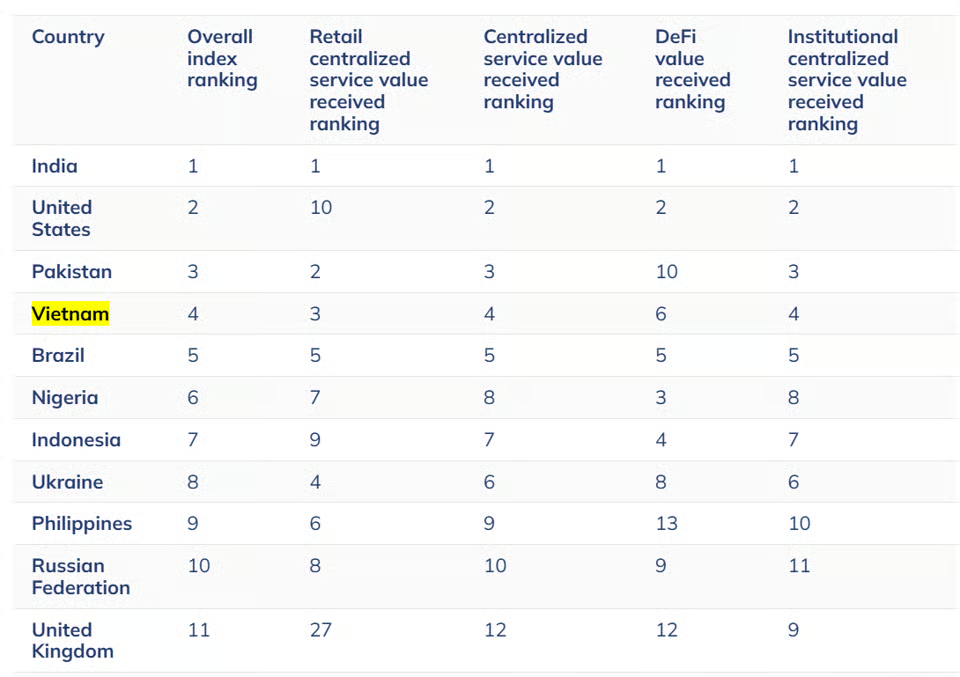
Vietnam ranks 4th in global crypto adoption
Vietnam remains one of the world’s most active crypto markets, ranking fourth in Chainalysis’ 2025 Global Crypto Adoption Index behind India, the United States and Pakistan.

Global cryptocurrency adoption index. Source: Chainalysis
Vietnam has also emerged as a major hub for crypto trading in Asia, ranking third in terms of onchain value received with $200 billion in estimated transactions over the 12 months to June 2025, behind India and South Korea.
However, most traders still rely on offshore cryptocurrency exchanges such as Binance, OKX and Bybit.
In a bid to bring more activity to onshore platforms, Vietnam launched a five-year crypto pilot in September 2025, requiring all transactions to be conducted in Vietnamese dong through locally registered companies.
Magazine: Guide to the top and emerging global crypto hubs: Mid-2026
Sports and fans have always had a dialectical relationship. In some cultures and organisations, the club or sport calls all the shots and the fans adapt. In others, there is fan ownership of the team and shared governance.
Sports web3 has made it easier for this tense relationship to be more of a two-way street. Fans are more engaged than before, and the newfound digital fan experience all comes down to technology. It started off as Twitter and YouTube, but not blockchain is truly offering infrastructural opportunities, like fan tokens.
For clubs, the fan data captured on the blockchain is a useful marker of sentiment, predictive behaviour, and a way to more accurately reward loyalty. For fans, it’s about having evidence of their support – a new currency.

The information gap
The use of fan tokens in major sports leagues has created a need for dedicated educational resources. Platforms like Socios have helped explain token-based fan participation models to global audiences, because it is extremely novel and strange at first, and it’s helping supporters to engage with their favorite teams in new ways.
For this ecosystem to mature though, users really do need convincing. They need context and to trust the motivations, and this is where information hubs come in. For example, FanTokens provides help to people track market movements, understand concepts, and look at governance utility so they can understand what’s going on behind these digital assets.
By offering fan tokens data insights, these platforms put minds at rest over market volatility. They’re analytical reference points for those getting to grips with web3 sports platforms, and even stabilize the market so that it’s grounded in fan token data rather than just speculation. It’s the difference between just guessing a player’s popularity given its actual jersey sales and knowing how many fans across three continents voted on a specific kit design.
Transparency and ownership
At the heart of this infrastructure is digital ownership. Traditional engagement metrics have never been transparent like the public blockchain ledgers, nor immutable, regarding fan participation. Things like on-chain voting or performance-related token burns – it’s helping build trust because of the transparency.
Tokenized sports ecosystems encourage better support for their club because it reflects how their involvement impacts the broader network too. Sports blockchain adoption is still in its infancy despite being taken on by major soccer clubs. Both fans and stakeholders alike are enjoying the visibility of metrics and reward distributions – it’s not just about pushing a like button anymore, but actual stake-weighted governance. We aren’t too far away from a fan-managed team with on-field tactical inputs or player selection, at least as an experiment.
Such decentralized sports communities can’t use complex technology without everyday usability and understanding. It’s still maturing, and while it continues to do so, the demand for structured education and analytics will only mount up. Prioritizing transparent information is a must for all parties so that data-driven fandom can continue to reflect and reward the masses. There simply are no sports without fans.
Disclaimer: The above article is sponsored content; it’s written by a third party. CryptoPotato doesn’t endorse or assume responsibility for the content, advertising, products, quality, accuracy, or other materials on this page. Nothing in it should be construed as financial advice. Readers are strongly advised to verify the information independently and carefully before engaging with any company or project mentioned and to do their own research. Investing in cryptocurrencies carries a risk of capital loss, and readers are also advised to consult a professional before making any decisions that may or may not be based on the above-sponsored content.
Readers are also advised to read CryptoPotato’s full disclaimer.
The post How Fan Tokens are Becoming Trusted Data Sources in the Sports Web3 Ecosystem appeared first on CryptoPotato.


Parliamentary standards watchdog formally launched a probe into Nigel Farage over an undeclared £5M gift tied to crypto donations.
Summary
- Parliamentary Standards Commissioner Daniel Greenberg has opened a formal inquiry into whether Farage breached the Commons Code of Conduct.
- The £5M came from Christopher Harborne, a Thailand-based investor who holds a 12% stake in Tether and has given over £22M to Reform UK.
- The UK government banned political crypto donations in March 2026 after the Rycroft Review warned that digital assets could channel foreign money into elections.
The investigation centers on a £5 million payment Farage received from Christopher Harborne in early 2024, weeks before he reversed a public decision and announced his candidacy for the Clacton seat.
Harborne, who holds a 12% stake in stablecoin issuer Tether, has separately donated over £22 million to Reform UK since the party’s founding, a total that makes him arguably the largest single financial backer of any British political party in recent memory.
Farage has maintained the £5 million was a personal gift intended to cover lifetime security costs, citing a firebomb attack on his home, and that it falls under an exemption from disclosure rules. Reform UK described the payment as “unconditional and irrevocable.” Both the Conservative and Labour parties rejected the exemption argument and referred the matter to Commissioner Greenberg, who has now formally opened a full inquiry.
The ban that changed British political finance
The probe arrives seven weeks after Prime Minister Keir Starmer announced a moratorium on political crypto donations, effective March 25, 2026. The measure followed the Rycroft Review’s conclusion that digital assets posed a unique risk for foreign interference, given the difficulty in tracing the origin of funds across pseudonymous blockchain transactions. The ban is being written into the Representation of the People Bill with criminal penalties for non-compliance once enacted.
BitMEX co-founder Ben Delo separately disclosed donating approximately £4 million to Reform UK since the start of 2026. Reform was the first Westminster party to accept crypto, a policy Farage announced at the Bitcoin 2025 conference in Las Vegas.
If Greenberg finds a breach, sanctions range from a formal apology to suspension from the Commons, potentially triggering a by-election in Clacton. A YouGov poll this week put Reform UK at 28% of voting intentions, ahead of both Labour and the Conservatives.
JPMorgan has filed to launch a tokenized money market fund targeting stablecoin issuers, following Morgan Stanley’s similar product launch.

April brought a subtle retreat in Polymarket’s monthly trading activity, marking the first month-over-month decline since August as competition within the prediction-market space intensifies. Combined volume on Polymarket and its US trading app surpassed $10.2 billion in April, slipping from more than $11.2 billion in March, according to Dune Analytics data.
In contrast, Kalshi published a stronger showing for the month, with trading volume climbing roughly 13% to about $14.8 billion. Overall, the broader prediction-market sector moved higher, with total monthly volume reaching about $29.8 billion in April from around $26.5 billion in March — an increase of roughly 12.4%.
The shift occurs as Polymarket continues its bid to reintegrate US users amid heightened regulatory scrutiny that followed the sector’s rapid growth during the 2024 elections. At the same time, an array of new entrants is reshaping the landscape for event-based markets.
Last week, Prophet, an AI-native prediction market, launched its first live trading tranche, introducing an AI model that acts as the counterparty using real capital. Separately, MoonPay unveiled an AI-powered tool to assist traders with strategies on prediction markets, signaling a broader push toward AI-assisted decision-making in this space.
Related context: Dutch users still access prediction markets despite Polymarket’s US restrictions, underscoring how different regulatory regimes shape participation across regions.
Polymarket eyes US expansion as prediction markets face heightened scrutiny
Polymarket has been pursuing a path back into the US market after exiting in 2022 as part of a settlement with the US Commodity Futures Trading Commission (CFTC), which barred the platform from serving US residents on its main global exchange. To regain a foothold, Polymarket rolled out a dedicated US app in December 2025, a stand-alone product that operates separately from the main platform and its liquidity pool.
Still, the platform and the broader sector are under intensifying regulatory glare. Senior lawmakers and enforcement officials have raised concerns about insider trading in prediction markets, particularly on geopolitically sensitive topics such as war and energy prices. Earlier this year, lawmakers urged the CFTC to curb potential insider trading and to ensure federal restrictions apply to government insiders engaging with prediction-market platforms.
In parallel, state authorities have begun to push back against prediction-market operators. Wisconsin Attorney General Josh Kaul filed lawsuits in April against Kalshi, Polymarket, and other prediction-market platforms, alleging violations of state sports-betting laws. The evolving legal landscape suggests a continued tension between innovative market formats and compliance requirements across jurisdictions.
The regulatory narrative matters for investors and users because it influences who can participate, how much liquidity flows, and which platforms can sustain long-term growth. For Polymarket, the path forward hinges on clarifying US access while maintaining liquidity and trust with a global user base.
AI-enabled rivals and the reshaping of the prediction-market map
The April volume data illustrate a more contested market where incumbents and newcomers alike vie for share. Kalshi’s surge highlights how a platform with established regulatory compliance frameworks continues to attract substantial activity, even as others experiment with AI-driven models and new business lines.
Prophet’s live-trading tranche represents a notable development: an AI model stepping into the counterparty role could alter risk dynamics, pricing efficiency, and user trust if it scales and proves robust in various event types. MoonPay’s AI tooling signals a broader fintech push into strategy automation, potentially lowering barriers to entry for non-professional traders and expanding participation.
As the sector experiments with AI-driven participation and more sophisticated counterparty models, the relative appeal of human-only versus AI-assisted decision-making remains a live question for traders. For Polymarket and similar platforms, the challenge is balancing innovation with regulatory compliance and ensuring that liquidity remains robust enough to support meaningful markets across a broader set of events.
A broader takeaway for readers is that the trajectory of prediction markets now hinges not only on appetite for event-risk betting but also on how policymakers, regulators, and market participants negotiate insider trading safeguards, cross-border access, and platform accountability. The signals from April suggest continued growth in overall activity, but with a more complex regulatory and competitive backdrop that could shape which platforms emerge as durable players in the next cycle.
What to watch next: whether Polymarket’s US-enabled offering can regain traction amid ongoing scrutiny, how AI-native entrants perform at scale, and which regulatory actions—if any—reshape the permissible contours of prediction-market activity in the United States and abroad. The evolving policy environment and the competitive dynamic between traditional and AI-enhanced platforms will likely define the pace and direction of adoption in the months ahead.
Data and context: the April activity figures and the broader market movements come from Dune Analytics data, with citations to related coverage on regulatory developments and platform updates referenced in the article.
References and further reading:


AI Layer-2 token Matchain MAT surged 349% in a single session as speculative capital rotated into small-cap altcoins.
Summary
- Matchain is a BNB Chain zk-rollup focused on decentralised identity and AI-driven advertising infrastructure, with a market cap under $3 million.
- The move coincided with CryptoQuant’s Bull-Bear Market Cycle Indicator turning bullish on May 12 for the first time since March 2023.
- The Altcoin Season Index stands at 35 as of May 2026, still well below the 75-point threshold that signals a genuine market-wide rotation.
Matchain is an AI-powered zk-rollup blockchain built on BNB Chain that focuses on decentralised identity, data sovereignty, and performance-based advertising. Its native token MAT is used for gas fees, staking, governance, and access to its MatchID decentralised identity layer.
The project reports over 27 million wallets created and holds a partnership with Paris Saint-Germain targeting mainstream Web3 onboarding.
The 349% move, reported across crypto market data platforms on May 13, occurred as Bitcoin consolidated in the $79,000 to $82,000 range. Matchain carries a market cap of well under $3 million, meaning large percentage moves can occur on thin volume and reverse equally fast.
The token launched on Binance Alpha in June 2025 at an all-time high of $6.67 before falling over 99% to a low of $0.036 in March 2026.
CryptoQuant bull signal adds context to the rotation
The session came one day after CryptoQuant’s Bull-Bear Market Cycle Indicator flipped bullish on May 12 for the first time since March 2023. That prior reading preceded a sustained run taking Bitcoin from $20,000 to above $73,000.
Analysts note that sharp small-cap moves typically occur in the early stages of broader speculative altcoin rotation, when retail capital begins hunting for exposure below the top 20 tokens.
As crypto.news documented, Bitcoin’s dominance has remained elevated above 59% through 2026, with genuine altcoin season historically requiring it to fall below 45%.
The Altcoin Season Index sits at 35 in May 2026, still well short of the 75-point threshold associated with a full market-wide rotation. Capital flows this year have remained heavily concentrated in large-cap names.
Traders should approach assets in this market-cap range with significant caution. Percentage gains of this size in illiquid tokens frequently reverse within hours, and Matchain’s prior price history includes a 99% decline from its listing high in less than a year.

Daily horoscope May 14, 2026: Predictions for your star sign

A Phone Call From Trump Just Earned Nvidia Stock a Potential 30% Boost

Pep Guardiola gives Man City updates on Nico Gonzalez and Rodri – ‘He’s fine’

Manchester United reach agreement with Casemiro over contract clause amid transfer speculation

US brings back mandatory military draft registration

Steven Gerrard disagrees with Gary Neville over ‘shock’ Chelsea and Arsenal claim | Football

GOLD AND CRYPTO LIVE TRADING || 12 MAY || Bitcoin Live Trading | Crypto Market Analysis |

The Worst Finances In Financial Audit History

how to feel instantly better #music #motivation #attitude #exercise #women #money #love #life #viral
-
 Crypto World6 days ago
HarrisX Poll Found 52% of Registered Voters Support the CLARITY Act
-

 Fashion5 days ago
Weekend Open Thread: Marianne Dress
-

 Crypto World7 days ago
Upbit adds B3 Korean won pair as Base token gains Korea access
-
 NewsBeat7 days ago
NCP car park operator enters administration putting 340 UK sites at risk of closure
-

 Fashion2 days ago
Coffee Break: Travel Steam Iron
-

 Tech4 days ago
Auto Enthusiast Carves Functional Two-Stroke Engine from Solid Metal
-

 Fashion3 days ago
What to Know Before Buying a Curling Wand or Curling Iron
-

 Politics2 days ago
What to expect when you’re expecting a budget
-
 Business5 days ago
Ignore market noise, India’s long-term story intact, say D-Street bulls Ramesh Damani and Sunil Singhania
-

 Politics5 days ago
Politics Home Article | Starmer Enters The Danger Zone
-

 Tech3 days ago
GM Agrees To Pay $12.75 Million To Settle California Lawsuit Over Misuse Of Customers’ Driving Data
-

 Politics6 days ago
Simon Cowell Says He Was ‘Horrible’ To Susan Boyle During BGT Audition
-

 Entertainment7 days ago
Sarah Paulson Called Out For Met Gala ‘Hypocrisy’
-

 Entertainment6 days ago
General Hospital: Ric & Ava Bombshell – Ric’s Massive Secret Exposed!
-

 Crypto World7 days ago
Robinhood says Wall Street is building onchain
-

 Sports7 days ago
UEFA Champions League final schedule, teams, venue, live time and streaming | Football News
-

 Entertainment7 days ago
Why David Letterman Called CBS ‘Lying Weasels’
-
Entertainment7 days ago
Hayden Panettiere reveals she's estranged from mom, addresses brother Jansen's sudden death: 'I was floored'
-
 Sports7 days ago
Mike Tyson speaks out on status of Floyd Mayweather fight
-
 Entertainment7 days ago
Paramount+’s ‘Landman’ Season 3 Gets Promising New Update From Returning Director
You must be logged in to post a comment Login