

Crypto World
Ripple CEO Brad Garlinghouse says Clarity better than chaos as Senate hits key moment

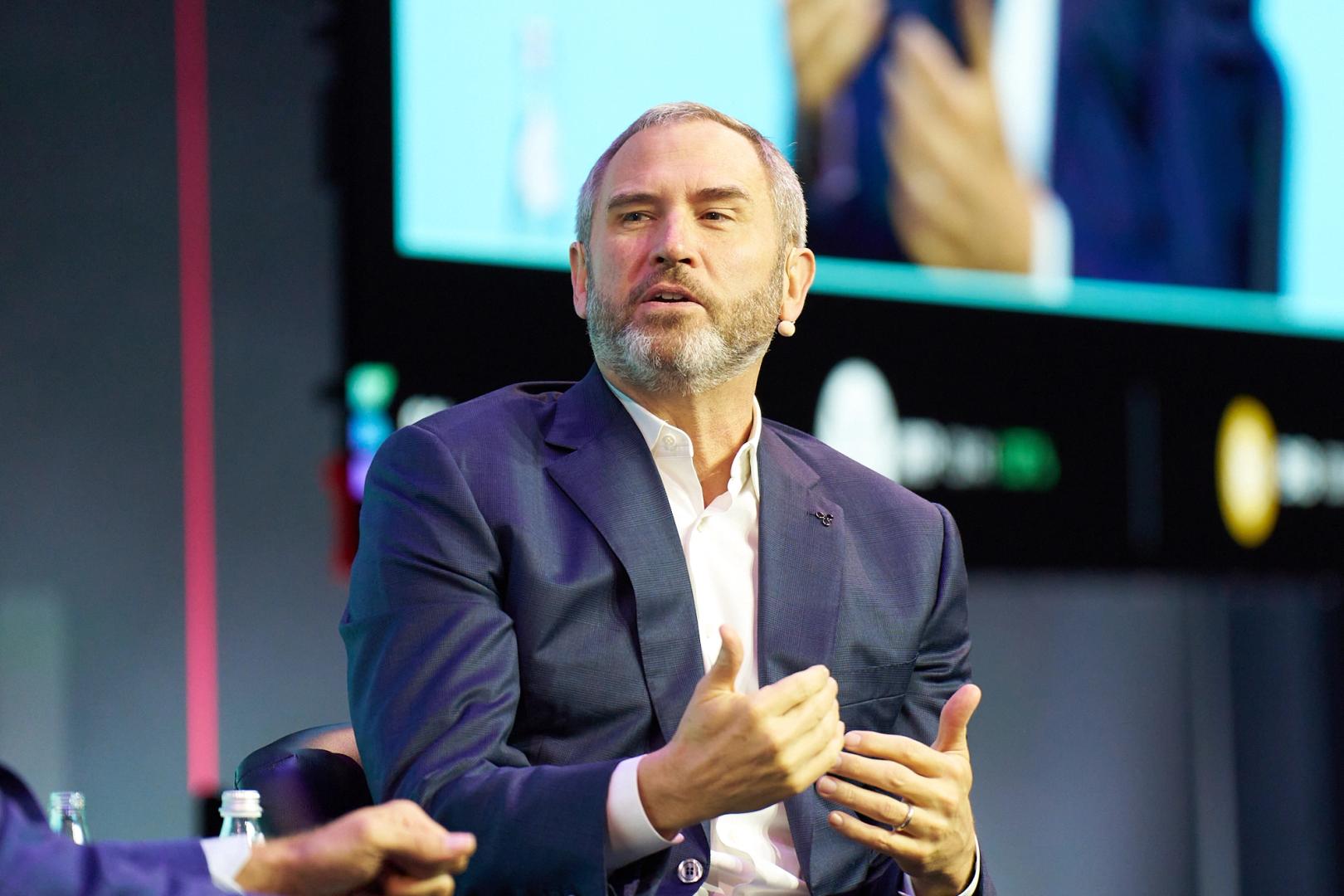
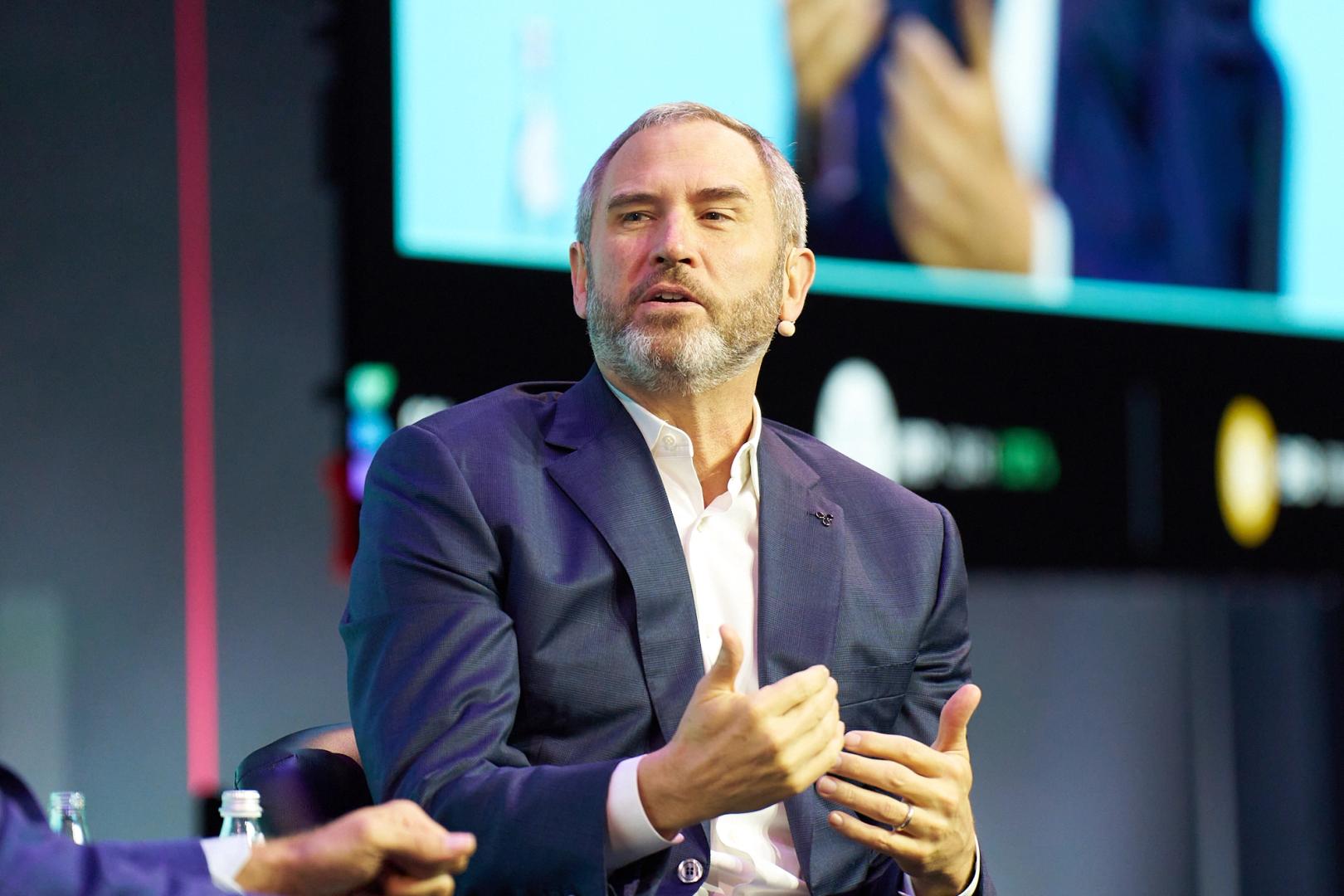
Miami Beach, FL — Brad Garlinghouse, Ripple’s CEO, has been closely following the U.S. Senate’s progress on the crypto market structure bill, and he said it’s not a “done deal” as the next two weeks may be pivotal for the legislation’s chances.
“If it doesn’t happen then, I think the likelihood is going to drop precipitously,” Garlinghouse said Tuesday at Consensus 2026 in Miami. But he said he still thinks it’s likely to happen, and the next moment will be the scheduling of the Senate Banking Committee’s long-awaited hearing to “mark up” the bill and advance it to the next stage.
Senators at the center of the negotiations over the Digital Asset Market Clarity Act revealed last week the latest compromise language on a major sticking point — stablecoin yield — that is expected to allow the banking panel to schedule the hearing.
“Do I think it’s perfect? Hell, no,” Garlinghouse said. “There’s tradeoffs and compromises, but I do think clarity is better than chaos.”
The stablecoin compromise aims for a balance that allows crypto firms to pursue certain rewards programs without offering yield-bearing stablecoin accounts that resemble banks’ interest-bearing deposits that fuel U.S. lending. Crypto insiders have generally agreed that it’s acceptable, but a coalition of banking groups said this week that the deal “falls short.”
The Ripple CEO said the importance of the Clarity Act lies in the permanence of backing crypto-friendly policies already being established at the U.S. Securities and Exchange Commission by Chairman Paul Atkins, who replaced a crypto-resistance predecessor, Gary Gensler. Without a law, Atkins’ successor can simply change those policies.
“There will be another Paul Atkins after Paul who we don’t know which side of this argument they’re going to fall on,” Garlinghouse said. “Hopefully, the trend line has moved far enough we don’t go back, no matter what, but codified into law means you kind of can’t go back.”
Also at Consensus, Garlinghouse predicted that the stablecoin market will reach $3 trillion by 2031. Ripple Labs launched its own stablecoin, , in 2024. The current market is at about $320 billion, led by Tether’s USDT.


XRP price has touched a 15-week low of $1.18 before clawing back to stabilize near $1.20, and the prediction setup heading into the next few sessions is anything but clean.
The decisive break came yesterday when volume surged to 205.7 million XRP and drove price through the $1.25 support level. That triggered a cascade before buyers stepped in.
$XRP SLIDES 5% TO $1.20, BREAKS $1.25 SUPPORT ON 205M TOKEN VOLUME; EXCHANGE BALANCES SHRINK, ETF INFLOWS REMAIN STRONG, $1.13 IN VIEW
—
 BDN NEWS WIRE (@BCDNewsBot) June 3, 2026
What makes the selloff unusual is the backdrop. More than 25 million XRP have been left on exchanges in recent days, a supply contraction that typically signals accumulation. This, while Binance inflows fell to their lowest levels of 2026.
Bullish on-chain data. Bearish price. What’s next? Here’s our latest XRP price prediction.
Discover: The Best Crypto to Diversify Your Portfolio
XRP Price Prediction: Can It Recover This Week?
XRP is currently trading in the $1.21–$1.26 range, down 2% over 24 hours and 7% over the last seven days. The Fear & Greed Index sits at 23 or Extreme Fear, and momentum is visibly weak.
Technically, the 4-hour chart is bearish. The 50-day moving average is falling, and the 200-day moving average has been declining since May. Resistance levels cluster at $1.32, $1.36, and $1.38. Immediate support sits at $1.21, with the next meaningful floor not far below at $1.18, the recent intraday wick low.

Three scenarios are plausible from here. If buyers defend $1.21 with conviction, volume could dry up on further dips, so XRP can grind back toward $1.27. Reclaiming the first meaningful resistance. Or, price consolidates in the $1.20–$1.24 range through the week.
However, a close below $1.18 opens the door to a deeper flush, invalidating the current stabilization thesis entirely.
The on-chain divergence of exchange outflows and slowing inflows could act as a lagging tailwind, but technical selling has consistently overridden those signals this week.
Discover: The Best Token Presales
LiquidChain Builds as XRP Falls
When an established asset like XRP sheds 7% in a week while sitting at 15-week lows, it raises a fair question: where is asymmetric upside actually sitting right now?
For those rotating out of large-caps during drawdowns, early-stage infrastructure plays have historically absorbed that capital, and one project drawing attention in the current cycle is LiquidChain.
LiquidChain is cooking. — LiquidChain (@getliquidchain) June 3, 2026
The Order doesn't sleep. ⟁ pic.twitter.com/CXY4ya0MC5
LiquidChain ($LIQUID) is a Layer 3 infrastructure protocol positioning itself as the cross-chain liquidity layer, fusing Bitcoin, Ethereum, and Solana liquidity into a single execution environment.
The architecture is built around four pillars: a Unified Liquidity Layer, Single-Step Execution, Verifiable Settlement, and a Deploy-Once Architecture that lets developers access all three ecosystems without redeployment overhead. The token is currently priced at $0.01466, with the project having raised $820K to date in its presale phase.
Traders wanting to examine the fundamentals can research LiquidChain here.
The post XRP Price Prediction: Falling But Bullish Signals Stacking appeared first on Cryptonews.
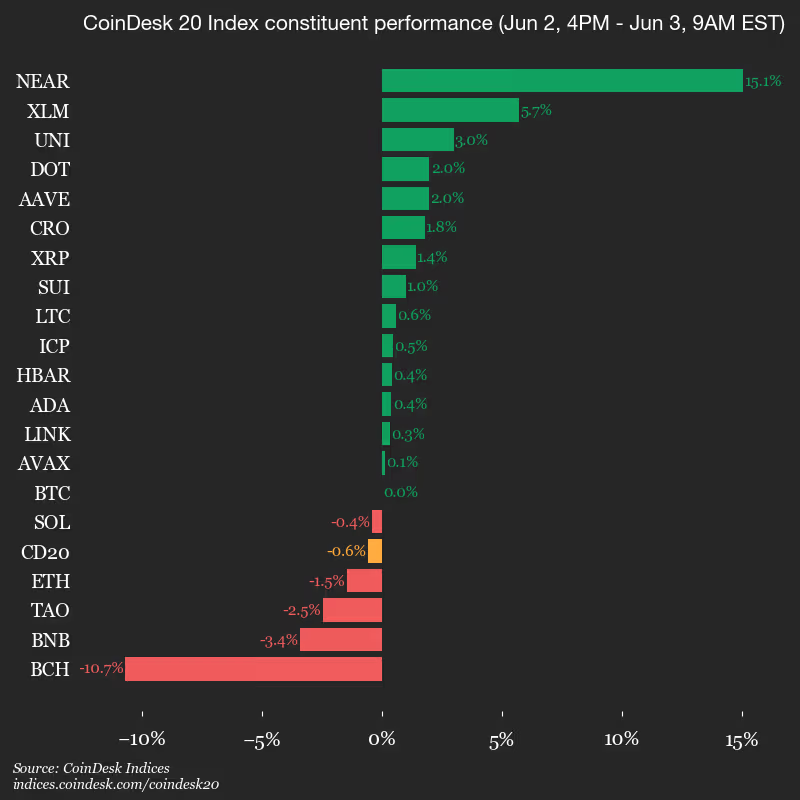
CoinDesk Indices presents its daily market update, highlighting the performance of leaders and laggards in the CoinDesk 20 Index.
The CoinDesk 20 is currently trading at 1862.4, down 0.6% (-11.0) since 4 p.m. ET on Tuesday.
Fifteen of the 20 assets are trading higher.

Leaders: NEAR (+15.1%) and XLM (+5.7%).
Laggards: BCH (-10.7%) and BNB (-3.4%).
The CoinDesk 20 is a broad-based index traded on multiple platforms in several regions globally.
Crypto World
‘Dead Meme’ or Major Opportunity? DOGE Is Flashing The Same Signal That Preceded Its Biggest Rallies

Dogecoin (DOGE) suffered a fresh decline of over 5% on Wednesday amid continued selling pressure. However, the OG meme coin is trading at a level that has historically served as an accumulation zone, as flagged by a largely overlooked setup based on its CVDD (Cumulative Value Days Destroyed) Channel model.
According to Alphractal, the CVDD Channel is a thermodynamic floor model that estimates an asset’s structural cost basis by weighting each on-chain coin movement according to both its value and the number of days since it last moved. Historically, Dogecoin’s price approaching the lower CVDD bands has coincided with the deepest long-term accumulation zones, while touches of the upper Alpha CVDD band have aligned with every major DOGE market top over the past decade.
DOGE’s Next Structural Target At $0.85
Alphractal said Dogecoin is currently trading near the lower CVDD band at around $0.10-$0.11, a level that has previously appeared before major price rallies. Similar setups appeared in late 2014, mid-2020, and mid-2023, with the meme coin later posting gains of approximately 25,000%, 18,000%, and 500% after those periods.
According to Alphractal, the current lack of a strong narrative around DOGE is not unusual, as major narratives typically emerge after accumulation phases. The analytics firm also explained that DOGE’s year-long sideways trading indicates accumulation and a rebuilding of its cost basis rather than weakness.
It added that traditional volume metrics may not fully capture this activity because the CVDD model focuses on value-days rather than raw transaction volume, with the current chart showing what it described as “quiet absorption.”
Alphractal said its Alpha CVDD model, which it claims has successfully identified every major Dogecoin market top in previous cycles, currently places the upper target band at around $0.85. This means a potential 7.7-fold increase from its current price levels.
“DOGE is the largest, most liquid, most distributed memecoin in existence. It has the longest historical CVDD record of any meme asset by a decade. The current print is mechanically identical to every prior bottom – and the upper Alpha CVDD band has held as resistance every single cycle without exception. The market is reading DOGE as a dead meme. The chart is reading it as a coiled spring.”
Breakout Calls
Alphractal predicted that DOGE could deliver a 3x gain before AI-themed meme coin narratives become the market’s main focus.
Meanwhile, analyst Ali Martinez also noted that the TD Sequential indicator had flashed a buy signal on Dogecoin. Several other market observers suggested that the asset could be on the verge of a major breakout.
The post ‘Dead Meme’ or Major Opportunity? DOGE Is Flashing The Same Signal That Preceded Its Biggest Rallies appeared first on CryptoPotato.
Raoul Pal, who ran European hedge-fund sales at Goldman Sachs before founding Real Vision, has rejected claims that money is fleeing crypto for technology stocks. He says the data tell a different story.
His pushback came as US equities slipped at Wednesday’s open, pressured by fears of a hawkish Federal Reserve and stalled Iran-US talks.

Why Raoul Pal Is Pushing Back on the Crypto Doom Narrative
Pal challenges the crypto is finished narrative, rejecting the sentiment that capital now favors AI and chip makers.
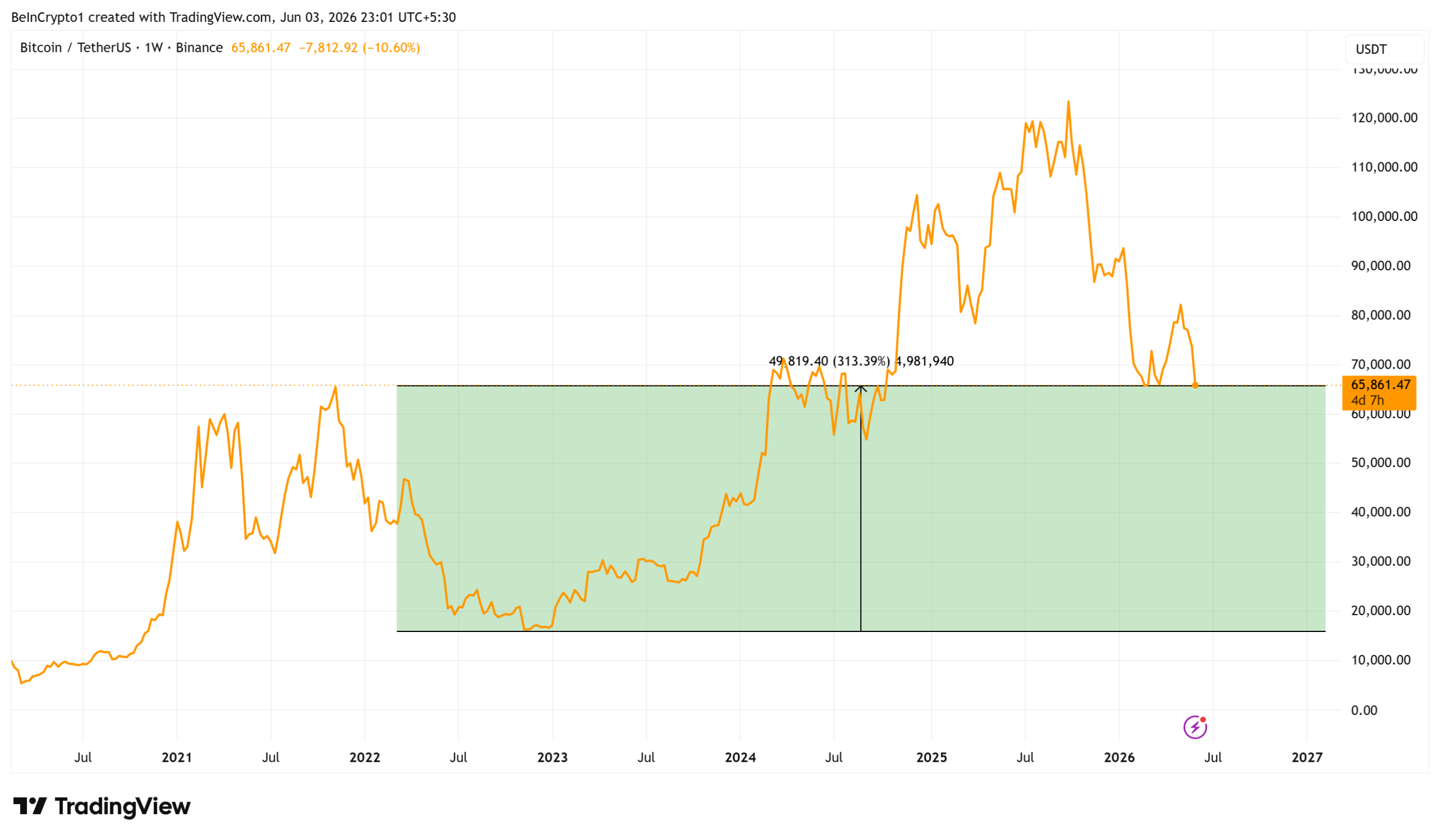
To back the claims, he measures returns from the 2022 liquidity-cycle low, when the FTX collapse drove Bitcoin near $15,700 in November.
From that trough, Bitcoin has gained about 318%, trading near $65,800. The Nasdaq 100 has risen roughly 187% over the same span, to near 30,660.
That gap is the heart of his case. Bitcoin has outpaced the tech benchmark by a wide margin, even after a steep recent pullback.

Pal argues that liquidity cycles, not market narratives, drive prices. He has made that case since launching Global Macro Investor in 2005, and frames the current weakness as a mid-cycle correction.
“The ‘Crypto is dead, its all going to tech stocks’ narrative is alluring but overall this is the actual results from the liquidity cycle low in 2022…” Pal wrote.
Other analysts also expect crypto to outperform tech stocks.
Follow us on X to get the latest news as it happens
Bitcoin Trades Below Its Record as Stocks Wobble
Despite the cumulative gains, Bitcoin has cooled lately. The token traded near $65,800 on Wednesday, down about 2.7% over 24 hours. That sits far below its record high of $126,080, though its market value still tops $1.3 trillion.

Stocks, meanwhile, opened weak. Over $500 billion was wiped from US equities within 20 minutes of the open, analyst Bull Theory said.

“US equity indices pulled back from records amid risks of a hawkish Federal Reserve and the lack of progress between Iran and the US. The S&P 500, Nasdaq 100 edged lower and the Dow lost 0.5%. Data from the ADP showed the private sector added a net 122,000 jobs in May, above expectations, to add leeway for the Fed to raise rates and fight inflation.,” wrote analysts at Trading Economics.
Pal’s framework has both supporters and critics. Backers say the data confirms that global liquidity expansion rewards high-beta assets like Bitcoin.
Skeptics argue he picked the exact low. Others say AI has changed how capital now flows into equities.
Pal also contends Bitcoin trades at a discount to liquidity conditions. His models point toward a higher liquidity target once financial conditions ease again.
The token’s link to the Nasdaq has tightened over the past year. That connection cuts both ways, since Bitcoin tends to fall harder when stocks drop.
The post Raoul Pal Shuts Down ‘Crypto Is Dead’ Narrative With One Chart appeared first on BeInCrypto.
Another crypto-focused political action committee, the Defend Developers PAC, has joined the field of campaign-funding operations that have in recent years put the industry on the political map.
The new entrant won’t rival the sector’s leading super PAC, Fairshake, nor is it expected to jump to the scale of the mid-level committees that include the Fellowship PAC linked to Tether and the Digital Freedom Fund tied to Tyler and Cameron Winklevoss at Gemini. But it’s approaching the political field differently than others, by backing incumbent lawmakers who’ve already proven to be allies to its cause: the legal protection of crypto developers and creators of decentralized finance (DeFi) projects.
“We plan to raise and contribute more than six figures across dozens of key races in the midterms, because crypto technologists deserve champions in Congress who will go to bat for them,” said Gavin Zavatone, the PAC’s founder, in a Wednesday statement announcing the effort. Zavatone is also the policy lead at the DeFi Education Fund, a trade association that lobbies for DeFi-friendly policymaking.
Defend Developers — federally registered last month — is what’s known as a hybrid PAC, meaning it can make direct contributions to candidates that follow the Federal Election Commission limits as well as channeling unlimited corporate contributions into independent ads. The bulk of the crypto sector’s high-profile political intervention has been through super PACs that have no monetary limits, though another new PAC, the Blockchain Leadership Fund established by Anchorage Digital and Chainlink, is also a hybrid.
“As a hybrid PAC, we’re building the political infrastructure to ensure the United States remains the best place in the world to build blockchain technology freely — and we’re doing it the right way, powered by individual contributions raised directly from the founders, builders, and CEOs who have the most at stake,” Zavatone said. The board of directors behind him include members from Uniswap Labs, DEF and the Solana Policy Institute, though no dollar amounts have yet been disclosed about its initial funding.
Without the tens of millions deployed by Fairshake and its affiliates, a new crypto PAC isn’t likely to make major waves. Fairshake is coming away with its latest primary election wins this week, having backed nine Democratic U.S. House of Representatives candidates in California, one in New Jersey and Republican U.S. Senate Mike Rounds in South Dakota. All of them won their primaries on Tuesday, maintaining a high win record for crypto-supporting politicians that Fairshake bought independent ads for, though the PAC didn’t expend more than $476,000 (for U.S. Representative George Whitsides) on this week’s races.
Fairshake had expended $6.5 million in its successful effort to make sure veteran House lawmaker and crypto critic Al Green lost out to Christian Menefee in their Texas primary last week. However, the super PAC — one of the largest in U.S. politics — has also seen a few misfires, such as in Illinois.
The general election in November brings extremely high stakes, with the potential to shift the party majority to Democrats in at least one chamber of Congress.
Read More: The crypto industry’s massive political war chest is starting to lean Republican ahead of midterms
Bitcoin (BTC) hovered near two-month lows on Wednesday as 2022 bear-market comparisons returned.
Key points:
- Bitcoin traders bring back the 2022 bear market to assess where BTC price action might go next.
- History shows a new lower high followed by a breakdown of a key 50-month trend line.
- That trend line has held throughout 2026 so far.
Analysis: Bitcoin 50-month trend line break down “likely”
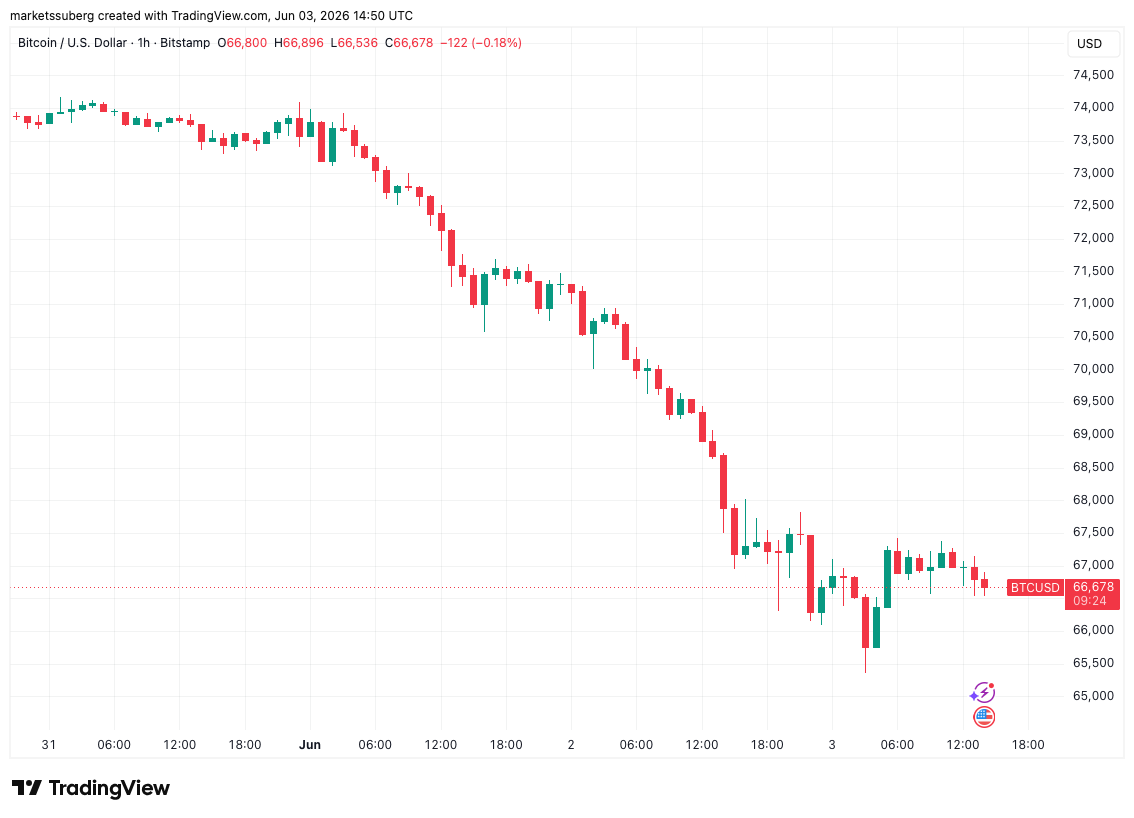
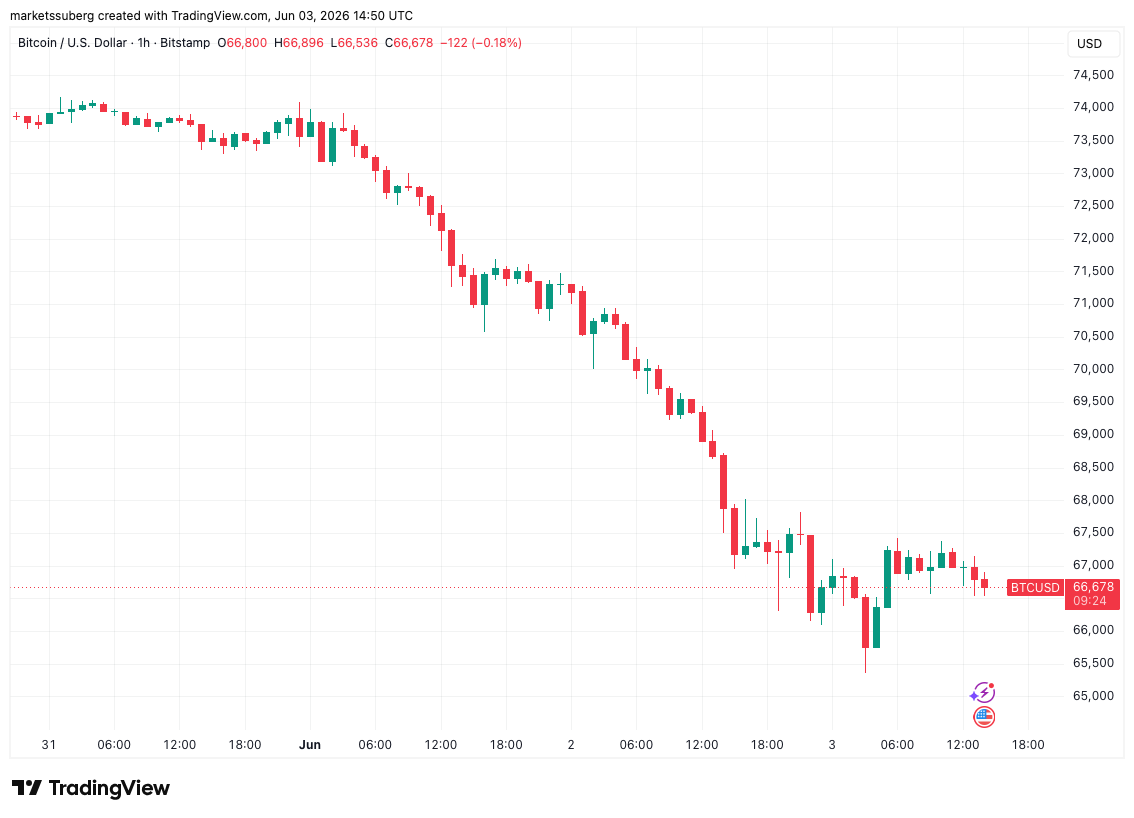
Data from TradingView showed cooling BTC price volatility after a trip to $65,362 on Bitstamp — a level last seen in early April.
BTC/USD one-hour chart. Source: Cointelegraph/TradingView
After billions of dollars in liquidations, BTC/USD fielded new warnings that the worst of the bear market may still be ahead.
Trader and analyst Rekt Capital focused on the 50-month exponential moving average (EMA) trend line at $66,628.
“Over time, Bitcoin is likely to breakdown from this EMA and continue macro downside in this Bear Market,” he warned in one of several posts on X.
Rekt Capital said that if history were to repeat from the 2022 bear market, price should now see a relief bounce to form a lower high before returning to the 50-month EMA, which would in turn fail as support.
“Historically, Bitcoin tends to rebound initially from the 50-Month EMA but then loses it as support as the Bear Cycle progresses,” he added.
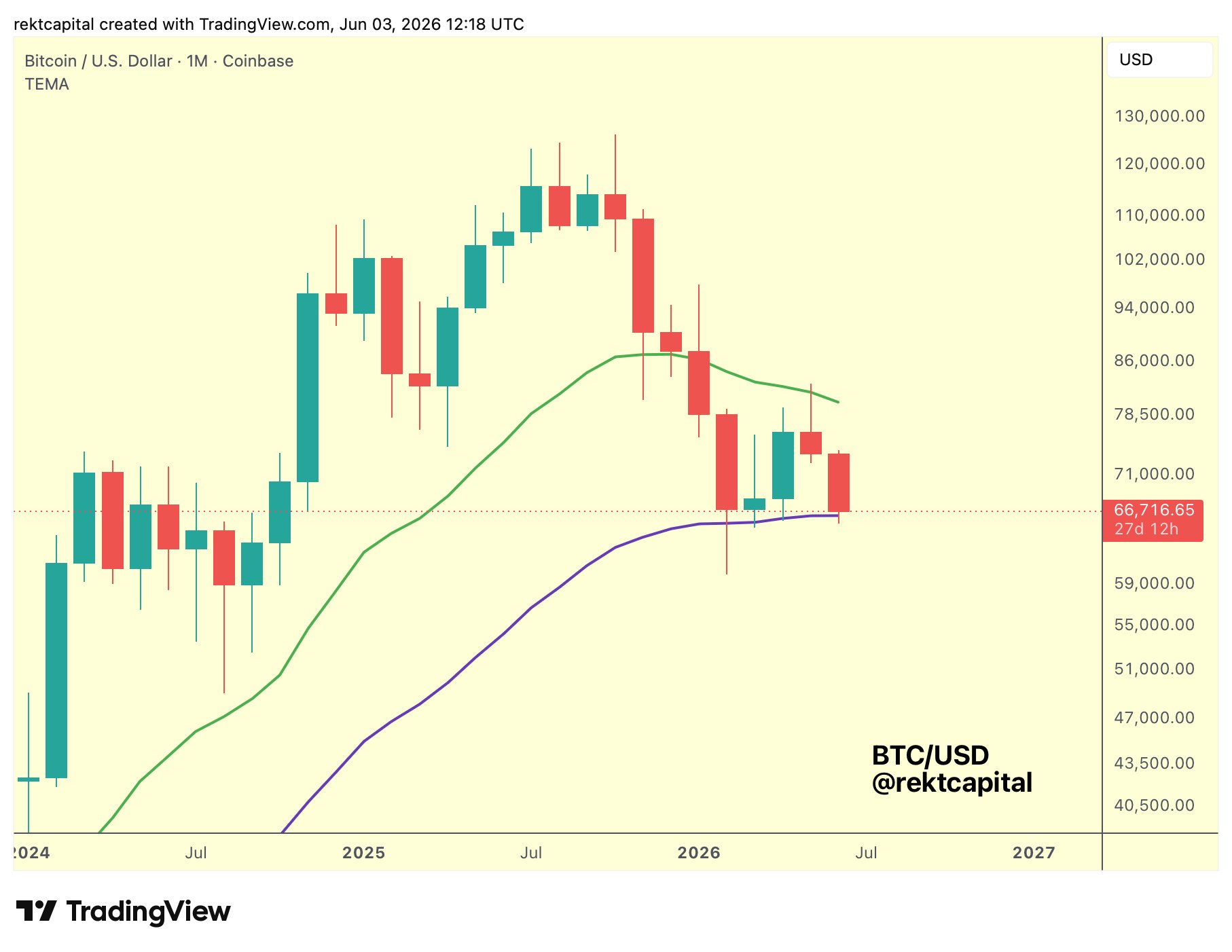
BTC/USD one-month chart with 21, 50EMA. Source: Rekt Capital/X
Continuing, trader Leviathan argued that the 2026 bear market was copying its predecessor “almost perfectly.”
“Every stage printing in the same order,” an X post reported, calling $60,000 the “line that matters.”
“Hold it – liquidity flush complete, recovery begins. Lose it – deeper correction, no support below. One level, two completely different outcomes. Market makes the call soon.”
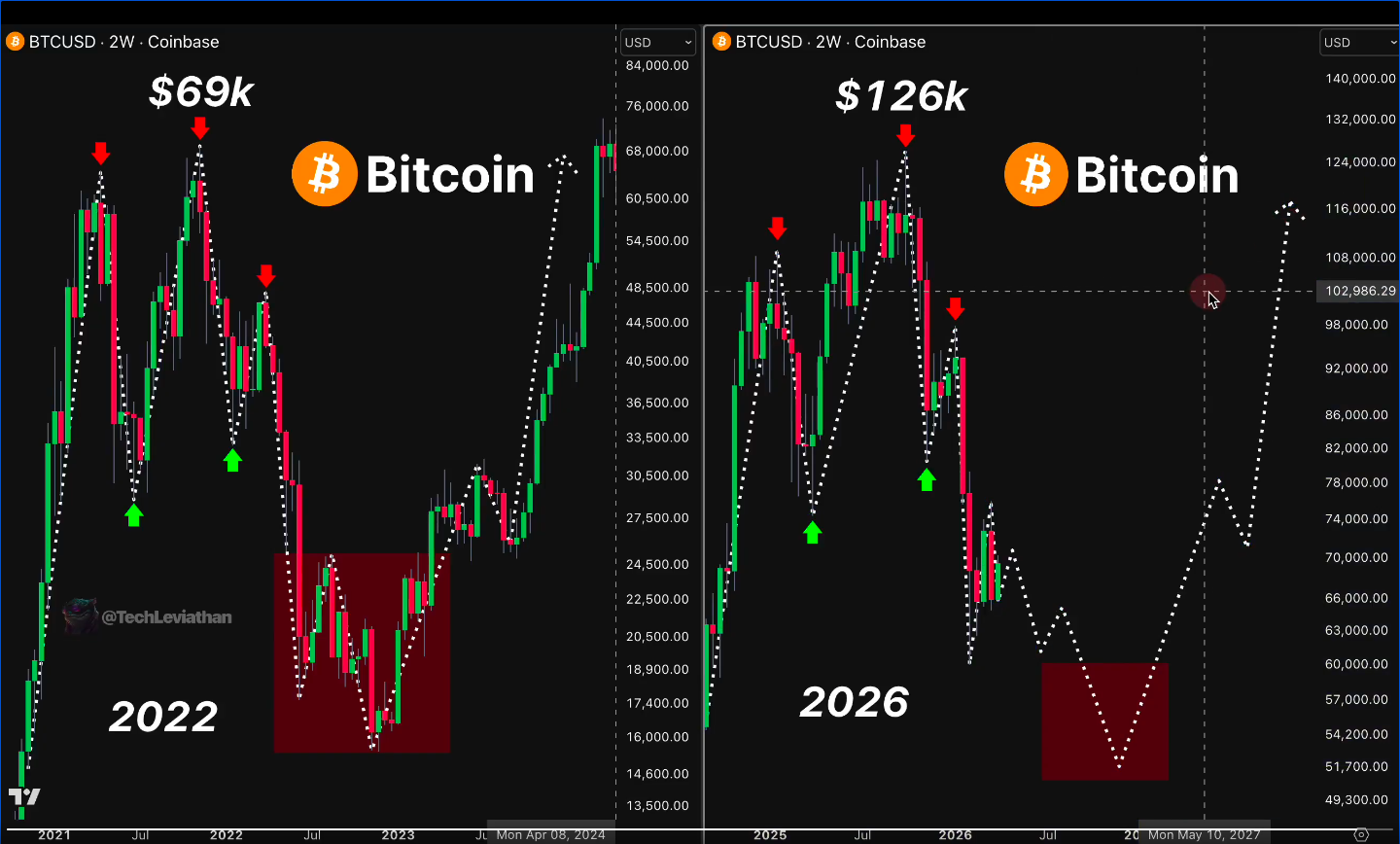
BTC/USD two-week chart comparison. Source: Leviathan/X
Another trader, Killa, leveraged 2022 price action to suggest “weeks” of consolidatory movement between $63,000 and $65,000 next.
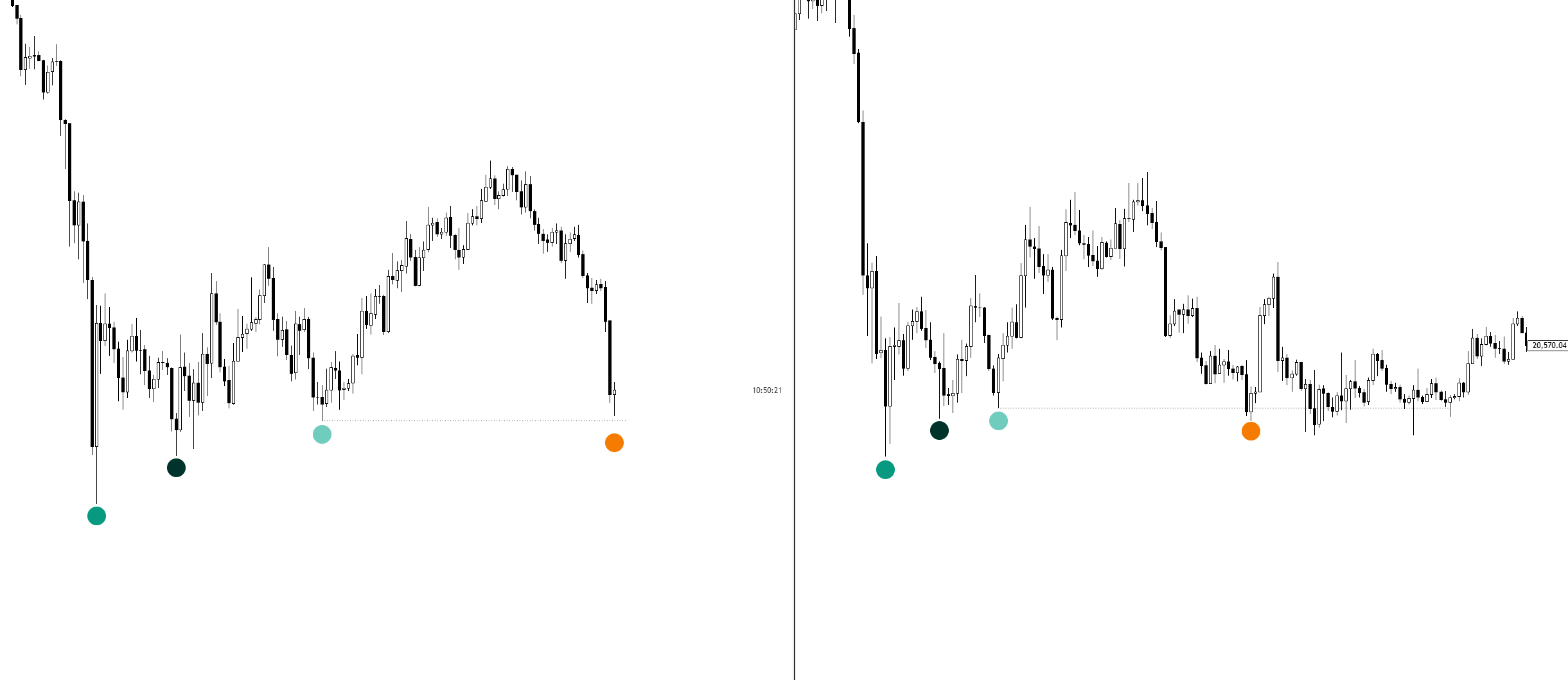
BTC price chart comparison. Source: Killa/X
BTC price support reclaim could offer 700%+ returns
A silver lining on the day came from historical reactions to the 50-month EMA.
Related: Bitcoin has hit ‘max fear’ below $67K as analysis sees BTC price rebound
Analytics account Paradox noted the extent of potential gains that could come from Bitcoin’s eventual reclaim of the trend line after losing it.
“$BTC lost the monthly 50MA in 2022. It reclaimed it 5 months later, delivering a 715% return over the next 2 years,” it told X followers.
In February, BTC/USD saw several daily closes below the trend line, ultimately avoiding a full breakdown. In March and April, meanwhile, it functioned successfully as support.
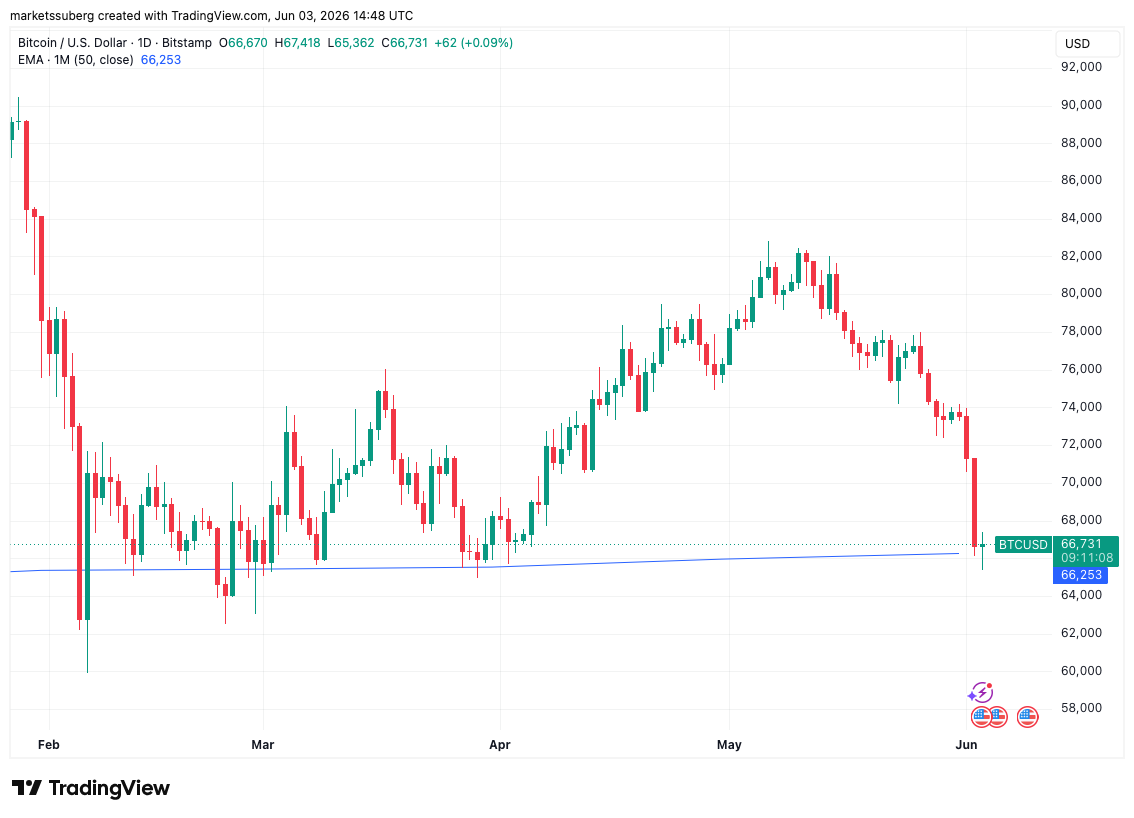
BTC/USD one-day chart with 50-month EMA (blue line). Source: Cointelegraph/TradingView
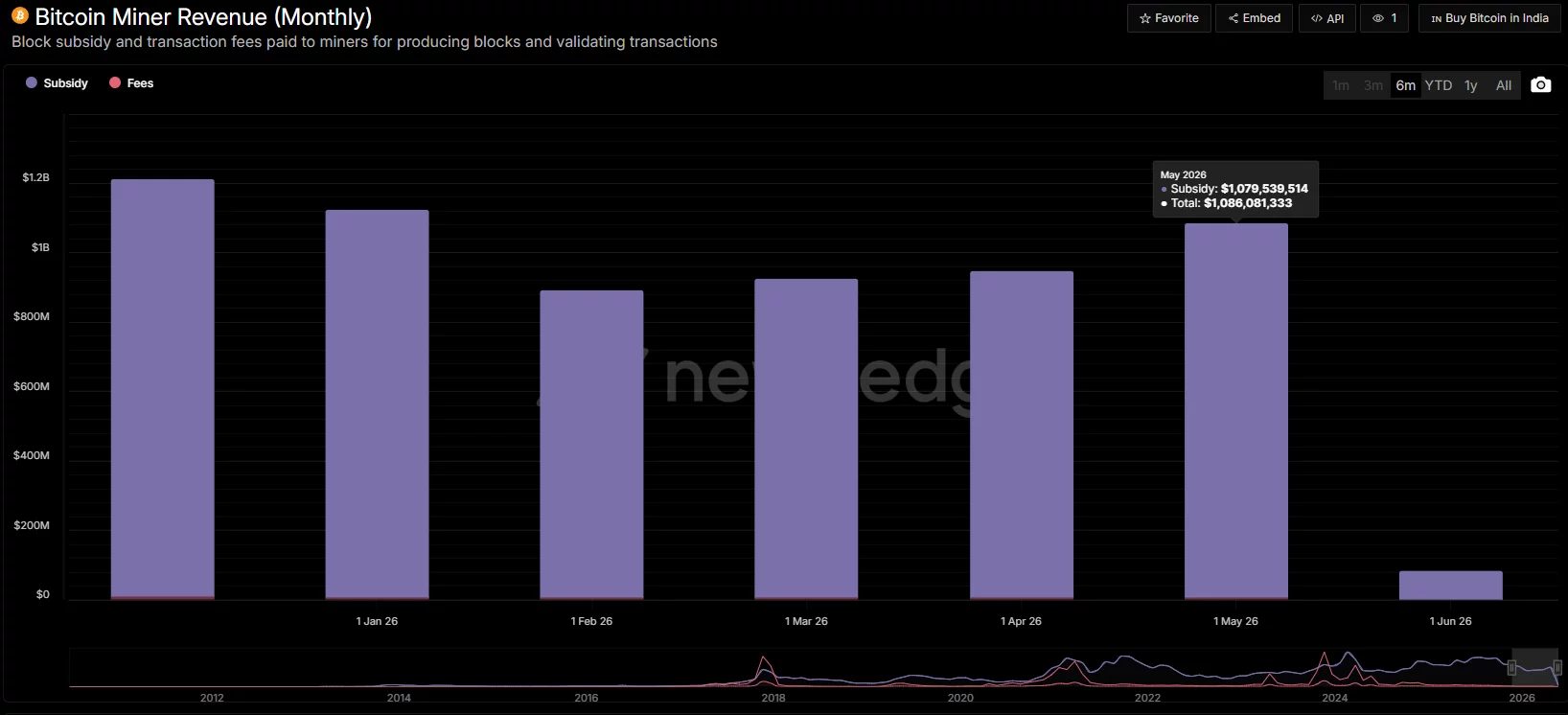
Bitcoin miners have entered June with revenue above $1 billion for the first time in four months, but falling Bitcoin prices are already putting renewed pressure on mining economics.
Summary
- Bitcoin miner revenue topped $1.08 billion in May, the highest level since January.
- Hashprice fell nearly 18% in a month as Bitcoin hovered near the $65,000 support zone.
- A projected 9% difficulty cut may ease pressure on miners if current conditions persist.
According to data from Newhedge, miners generated $1.086 billion in revenue during May, the highest monthly total since January. Most of that income came from the 3.125 BTC block subsidy, which contributed roughly $1.079 billion, while transaction fees accounted for only a small portion of earnings.
Even as miners posted a stronger month, conditions have weakened since the start of June. According to data from crypto.news, Bitcoin (BTC) price dropped as much as 4.5% on June 3, touching an intraday low of $65,700. The leading crypto asset was trading a little higher at $65,800 at press time.
Bitcoin’s recent decline followed heightened geopolitical tensions after Iran launched retaliatory strikes against U.S. targets, prompting a broader risk-off move across financial markets.
Meanwhile, analysts at Citigroup recently argued that sustained spot Bitcoin ETF outflows have also been a more important driver of Bitcoin’s weakness than Strategy’s sale of 32 BTC. In a research note, the bank pointed to nearly $4 billion in ETF withdrawals and described ETF flows as one of the strongest indicators of demand for the asset.
Falling Bitcoin prices are reducing miner profitability
As Bitcoin price trades close to the important $65,000 support area, mining profitability has continued to deteriorate.
Data from Hashrate Index shows the daily value generated by one petahash per second of mining power has fallen to approximately $30.77, down from $37.44 a month ago. The decline represents a drop of nearly 18% over the past 30 days and has pushed hashprice to levels last seen in early April.
Mining companies are already responding to the weaker economics. Network hashrate has fallen from around 1,000 exahashes per second to below 975 EH/s as some operators reduce activity or disconnect less efficient machines.
Meanwhile, slower mining activity has affected block production times. Hashrate Index data showed blocks were being produced every 10 minutes and 59 seconds on average, well above Bitcoin’s 10-minute target. If current conditions persist until the next adjustment period around June 13, estimates suggest mining difficulty could decline by roughly 9%.

A lower difficulty level would reduce competition among miners and allow remaining participants to earn slightly more Bitcoin for the same amount of computing power.
Technical and network signals point to a critical period ahead
While the expected difficulty reduction could provide temporary relief, Bitcoin’s price remains the biggest factor affecting miner revenue.
According to a previous analysis report by crypto.news, Bitcoin is approaching completion of a rounding top formation on the daily chart. Such a pattern is generally considered a bearish reversal formation, and a decisive break below $65,000 could expose the next major demand zone near $60,000.
On the other hand, the same analysis stated that a recovery above $68,700 could weaken the bearish setup and create conditions for a move back toward $72,000.
Transaction fees have offered limited support. After remaining below 0.6% of total block rewards for an extended period, fee income has recently improved. Recent network data shows fees accounted for roughly 1.16% of total block rewards over the past 24 hours.
For now, miners are balancing the benefits of a likely difficulty cut against a market that remains under pressure from ETF outflows and geopolitical uncertainty. Whether May’s strong revenue performance can continue through June may depend largely on Bitcoin’s ability to hold above key support levels.
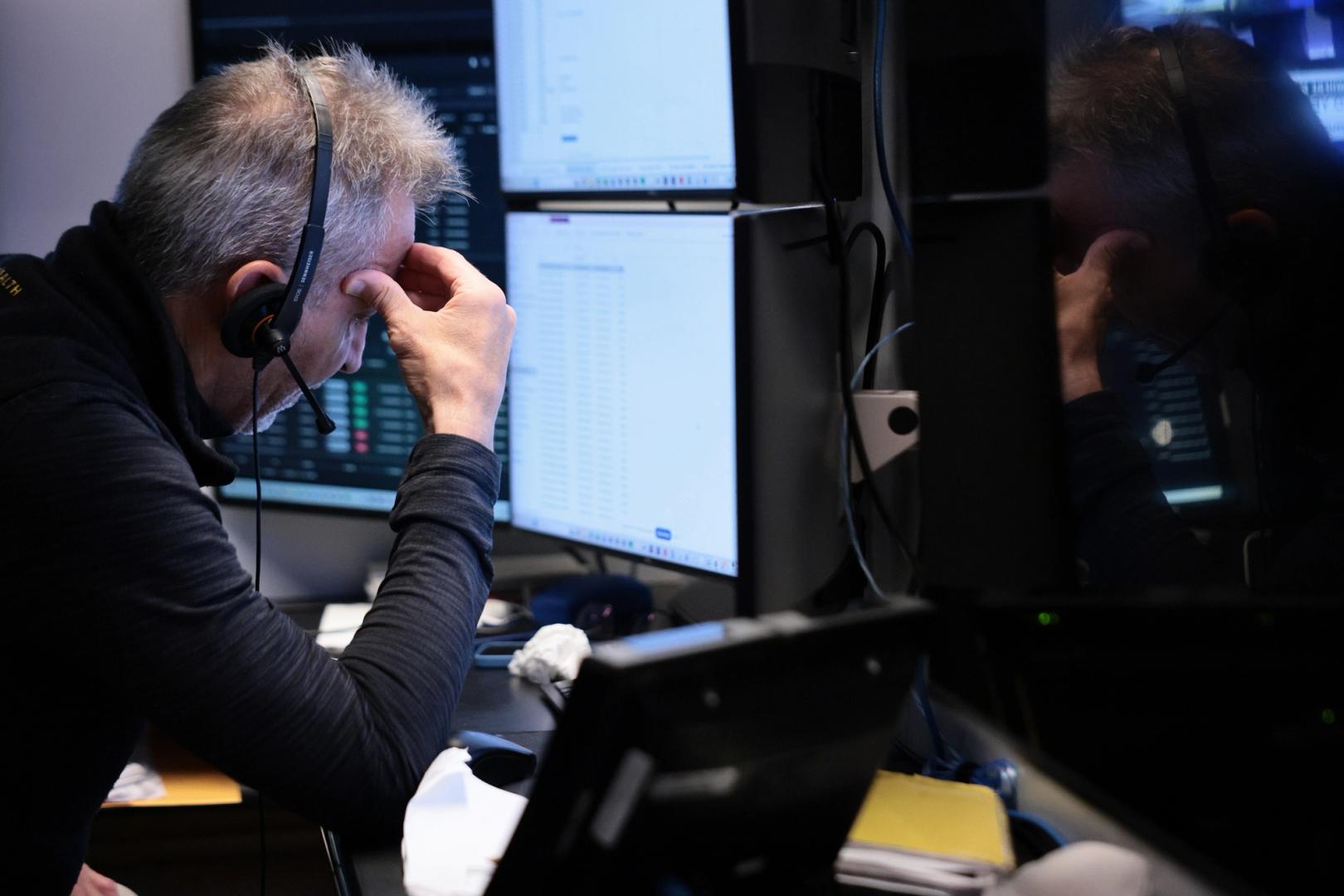
Bitcoin’s recent struggles to rise in tandem with U.S. stocks has sparked a wave of explanations, from concerns about Michael Saylor’s Strategy (MSTR) selling bitcoin to questions about whether institutional demand is beginning to fade.
Charles Schwab analyst Jim Ferraioli sees a simpler explanation: Bitcoin is losing the momentum trade.
“Bitcoin has been in a bear market since October,” Ferraioli said in an interview. “Not to say it’s as simple as that, but it’s kind of simple as that.”
The comments stand in contrast to a market narrative that has remained largely focused on positive developments. Over the past year, crypto has secured spot ETF approvals, attracted billions of dollars in institutional capital and moved closer to regulatory clarity in Washington. Yet despite those developments, bitcoin has struggled to sustain the type of explosive rally many investors expected.
Instead, capital has been flowing elsewhere.
“We found a bottom in early February, and since then another large Wall Street firm had a successful ETF launch, and so you saw this kind of return to the institutional adoption narrative,” Ferraioli said.
That rebound helped bitcoin recover from its February lows. But unlike previous crypto cycles, the recovery stalled before developing into a broad speculative frenzy.
That’s because crypto investors are not fundamentally driven, but chase momentum, he said. In his view, bitcoin’s problem isn’t a lack of bullish news. It’s competition.
Historically, crypto has benefited when it becomes the market’s most compelling speculative opportunity. When prices rise, traders pile in. When another asset class begins attracting attention, capital often follows.
“Crypto investors historically just go wherever the momentum is,” Ferraioli said. “And momentum is out of crypto at the moment.”
The destinations for that capital have changed over the past year.
Some investors have gravitated toward precious metals. Gold has attracted significant inflows as investors seek alternatives to both equities and crypto. Others have become increasingly focused on artificial intelligence, which has emerged as the dominant growth narrative across financial markets.
The AI boom has created a new class of speculative opportunities that didn’t exist in previous crypto cycles. Public companies tied to AI infrastructure, data centers and advanced computing have generated strong returns, while anticipated IPOs from firms such as OpenAI and Anthropic have become focal points for investors looking for the next growth story.
According to Ferraioli, crypto investors are participating in that shift as well.
“I think people that are excited about momentum are getting excited about IPOs,” he said. “Then some of these you can actually access the private shares on these decentralized exchanges on Hyperliquid.”
That trend is significant because it highlights how crypto-native trading infrastructure is increasingly allowing investors to speculate on assets beyond cryptocurrencies themselves.
Platforms such as Hyperliquid (HYPE) have introduced perpetual contracts tied to private companies, commodities and other non-crypto assets, giving traders new places to deploy capital.
For bitcoin, that means it is no longer competing solely against other cryptocurrencies.
It is competing against every major speculative narrative in the market.
Ferraioli also downplayed concerns surrounding Strategy’s recent sale of 32 bitcoin, a transaction that sparked debate among investors because of Saylor’s long-standing reputation as one of bitcoin’s most committed advocates.
“The narrative has been that they’ll never sell,” Ferraioli said. Yet he believes the market impact of the transaction itself has been overstated. “But I don’t think [the sale] is what’s really driving it,” he said.
Instead, he views the sale as a convenient narrative attached to a broader trend that was already underway.
Part of that trend may be tied to investor cost bases and many ETF investors are still recovering from sharp swings over the past year and see the current price point as an opportunity to exit positions rather than increase them.
“I think you get to those levels and you get people that are saying, ‘Hey, I made my money back, maybe I’ll revisit it later,’” Ferraioli said.
That dynamic has contributed to a market that feels very different from the euphoric phases of previous cycles.
Ferraioli argues that institutional adoption, while real, remains smaller than many market participants assume. Bitcoin ETFs have expanded access to crypto, but much of the asset class remains dominated by retail investors and momentum-driven traders.
“Again, this is primarily a retail asset,” he said.
The distinction matters because retail investors often react differently than traditional institutional allocators. Rather than building positions based on discounted cash flow models or long-term valuation frameworks, they tend to chase trends.
That behavior helps explain why bitcoin has struggled to capitalize on positive regulatory developments.
The crypto industry is awaiting potential passage of the Clarity Act, a bill that many industry participants believe could provide a clearer framework for digital assets in the U.S. Over the longer term, Ferraioli believes such developments could support adoption.
In the short term, however, regulation alone may not be enough to reverse the current trend.
“There is still more demand for downside protection,” he noted elsewhere in Schwab’s market outlook, though that pressure has begun to ease in recent weeks.
Seasonality may also be contributing to the slowdown. Summer has historically been one of bitcoin’s weaker periods, as trading activity declines and investors shift attention elsewhere.
“People know that for bitcoin seasonally summer is the weakest time,” Ferraioli said.
That leaves the market in an awkward position.
Institutional adoption is improving. Regulatory clarity is advancing. Major financial firms continue building crypto products. Yet none of those developments guarantee higher prices if investor attention is focused elsewhere.
“There’s a lack of a reason to be buying here when there’s other things you can choose,” Ferraioli said.
For now, he argues, the biggest challenge facing bitcoin isn’t Saylor, regulation or even macroeconomics.
It’s that investors have found something else to chase.
Crypto World
Old DxSale Lockers Drained for $7.3M Across 1,400 BNB Chain Pools as Owner-Privilege Exploits Pile Up


An attacker drained roughly $7.3 million from more than 1,400 legacy liquidity-provider positions sitting in old DxSale locker contracts on BNB Chain, security firms PeckShield and Coinsult flagged on May 29, a drain made possible not by a smart-contract bug but by a silent ownership transfer… Read the full story at The Defiant

[PRESS RELEASE – Mahe, Seychelles, June 3rd, 2026]
Whale.io is excited to announce the official launch of The Whale Printer, an on-platform staking system for the native $WHALE token. The feature enables eligible token holders to lock $WHALE for fixed periods in exchange for predetermined token rewards.
The staking system is structured around three lock-up periods, each associated with a fixed multiplier and corresponding annual percentage yield (APY):
$WHALE Staking Yields
Whale Printer offers three straightforward lock periods with impressive returns:
- 90 days (1.2x multiplier) — 107.8% APY
- 180 days (1.5x multiplier) — 129% APY
- 365 days (3x multiplier) — 200% APY
Multipliers are fixed at the time a staking position is created, providing predefined reward terms throughout the selected lock period.
Whale Printer Reward Pool
All rewards are paid from a dedicated pool of 20 billion $WHALE, representing 20% of the total token supply. The pool does not replenish. When it is exhausted, The Whale Printer closes permanently and no new staking positions can be opened. This creates strong incentives for early participants while ensuring long-term sustainability and real value accrual for $WHALE stakers.
How to Stake $WHALE on Whale.io
To participate, $WHALE tokens must be available within a Whale.io account balance. Staking positions can be created through the token page by selecting a token amount and preferred lock period.
The system supports up to 10 concurrent staking positions per account, each operating independently with its own allocation, lock period, and completion timer. The minimum staking requirement is determined by platform parameters. Early withdrawal is not available for active staking positions.
Why Stake $WHALE
$WHALE serves as the native utility token of the Whale.io ecosystem. According to the project, token distribution has occurred through platform gameplay, missions, and user activity, without allocations to private sales, presales, or venture capital participants.
Whale Printer expands the token’s functionality by introducing a staking mechanism that distributes rewards in $WHALE based on selected lock periods and predefined reward structures.
Whale Printer is now available through whale.io/token
About Whale.io
Whale.io is a leading online crypto casino and sportsbook. The platform features exclusive Whale Originals games, blockchain-integrated rewards, massive cashback, and a strong emphasis on transparency, community ownership, and on-chain verifiability. With $WHALE as its native utility token, Whale.io continues to build one of the most rewarding ecosystems in crypto gaming.
To discover the future of Whale.io Casino and $WHALE token users can:
Read more on whale.io/token
Visit Whale socials: https://linktr.ee/whalesocials_tg
The post Whale.io Launches Whale Printer: $WHALE Token Staking appeared first on CryptoPotato.

French Open 2026: Aryna Sabalenka sees another Grand Slam chance disappear after Diana Shnaider defeat in Paris

SPAC and New Issue ETF (SPCK) Rises 0.72% as Investors Hunt Fresh IPO and Merger Plays in 2026
XRP Price Prediction: Falling But Bullish Signals Stacking



-

 Tech6 days ago
Waymo dominates autonomous vehicle registrations as Tesla trails behind
-

 News Videos5 days ago
This is BROKEN! INSANE 5x MONEY CAR WASH WEEK! The NEW GTA Online UPDATE Today! (GTA5 New Update)
-
 Tech4 days ago
SpaceX just won a second Golden Dome contract. This one is $4.16 billion.
-

 News Videos5 days ago
SHE IS KILLING XRP!!! WATCH URGENT AND ACT FAST
-

 Business2 days ago
Jade Biosciences, Inc. (JBIO) Discusses Positive Interim Results From JADE101 Phase I Healthy Volunteer Study and Development Plans Transcript
-
 NewsBeat5 days ago
FIRST NIGHT REVIEW: Take That bring the Circus back to life in spectacular sun-soaked style
-
 Crypto World5 days ago
CFTC Has Approved the First Regulated Bitcoin Perpetual Contract in the U.S.
-

 Business4 days ago
Is the Spurs Phenom Already Better Than Prime Diesel?
-
 NewsBeat5 days ago
Novak Djokovic v Joao Fonseca LIVE: French Open latest scores and results after Jannik Sinner’s shocking collapse
-
 Crypto World5 days ago
Snowflake (SNOW) Stock Rallies on Strong Q1 Results and AI Product Growth
-
 Entertainment5 days ago
Weak ‘Supergirl’ Box Office Tracking Amid Milly Alcock Backlash
-

 Business4 days ago
Demand Conditions Improve In Chemicals Sector In April 2026
-

 Crypto World5 days ago
MicroStrategy Moves $30 Million in BTC to Coinbase Prime: Is the Bitcoin Sell-Off Already Here?
-

 Politics4 days ago
The House | Inside Andy Burnham’s Makerfield Campaign: “Nobody Thinks This Is In The Bag”
-

 Tech5 days ago
This Week In Security: Ubiquiti Fixes, And FreeBSD Joins The Club You Don’t Want To Join
-
 Entertainment4 days ago
One of the Greatest Sitcoms of All Time Shoots Up Apple TV’s Charts 11 Years Later
-

 Entertainment5 days ago
Maddox Jolie-Pitt Legally Requests to Drop Brad’s Surname
-
 Crypto World1 day ago
Seagate (STX) Stock Surges to Record High on AI Boom and Legal Settlement
-
 Entertainment4 days ago
Britney Spears Shares Troubling Update After Hard Year
-
 Entertainment5 days ago
Bruce Willis’ Generosity Resurfaces Amid His Dementia
You must be logged in to post a comment Login