
Crypto World
Robert Kiyosaki Says These 3 Phrases Keep People Poor

Robert Kiyosaki thinks one of the biggest differences between rich and poor people can be heard in everyday conversation.
The Rich Dad Poor Dad author says phrases such as “I can’t afford it,” “I’ll try,” and “the rich are greedy” reveal how people think about money. In a recent post on X, he argued that repeating those ideas can reinforce a scarcity mindset.
The Phrases Kiyosaki Says Keep People Poor
Kiyosaki’s argument goes beyond positive thinking. His broader point is that wealthy people understand money differently, especially when it comes to income.
He divides income into three categories.
- Earned income comes from wages and usually faces the highest tax burden.
- Portfolio income comes from investments such as retirement accounts.
- Passive income, which Kiyosaki favors, can sometimes receive much lighter tax treatment.
That distinction helps explain one of his favorite examples: Warren Buffett.
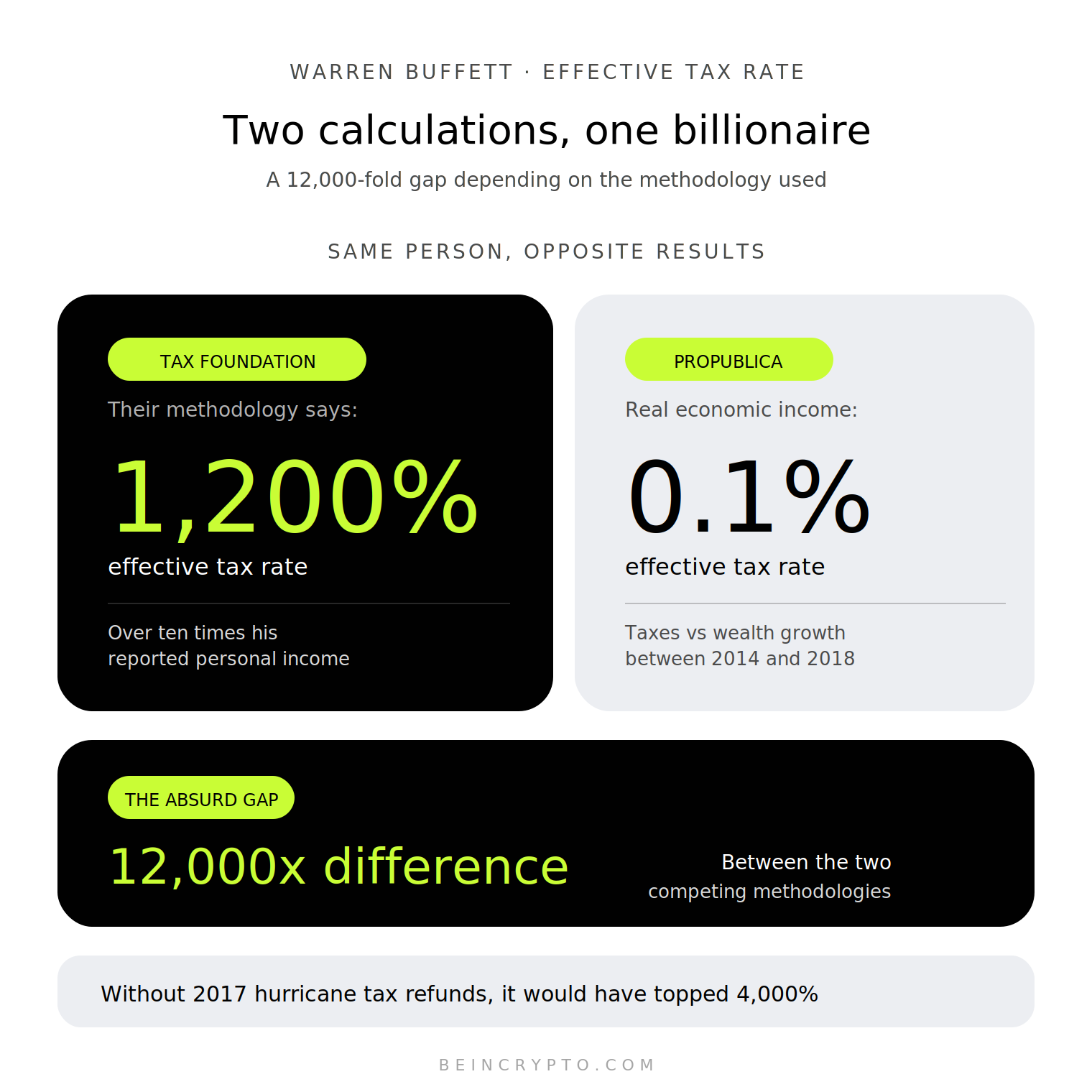
Buffett has famously paid a lower effective tax rate than his secretary in some years because most of his wealth comes from investments rather than salary.
ProPublica went further. Using leaked IRS data, one analysis estimated Buffett’s “true tax rate” at just 0.1% between 2014 and 2018 when comparing taxes paid with the rise in his overall wealth.
That figure is controversial because unrealized investment gains are generally not treated as taxable income.

Why Kiyosaki Keeps Telling People to Stop Thinking Like Employees
Kiyosaki has spent years pushing the same broader message: rely less on cash and own assets.
He says he has held gold since 1971, silver since 1965, Bitcoin since 2012, and more recently Ethereum.
His price forecasts often attract attention, and several of his 2026 targets remain well away from current levels.
Still, his central claim is simpler than any market prediction. The way people talk about money, Kiyosaki argues, often reveals how they expect money to work for them.
The post Robert Kiyosaki Says These 3 Phrases Keep People Poor appeared first on BeInCrypto.


In an interview with crypto.news, Selva Ozelli speaks with CKC Fund founder and managing director David Doss about institutional digital asset investing, risk management and the infrastructure needed to connect crypto strategies with professional investors.
Summary
- CKC Fund founder David Doss said the firm prioritizes risk management, liquidity and segregated portfolios over short term market predictions.
- Doss said clearer stablecoin rules have improved institutional confidence, while the failed CLARITY Act vote could push more tokenization activity offshore or into private markets.
- CKC Fund primarily focuses on Bitcoin, Ethereum and other liquid digital assets, while AI intellectual property investments are kept in a separate vehicle.
- Doss said the 2026 crypto decline appeared to be an orderly reduction in leverage and is watching global liquidity, leverage and Bitcoin resistance for the rest of the year.
The discussion also covers Bitcoin and Ethereum, AI and blockchain intellectual property, data centers, stablecoin regulation under the GENIUS Act, the CLARITY Act and tokenization, as well as Doss’ outlook for the digital asset market through the rest of 2026.
David Doss is a digital asset fund manager, growth advisor, and marketing executive who serves as the founder and managing director of CKC Fund (CKC Management LLC). His work centers heavily on digital asset wealth management, blockchain infrastructure, compliance, and institutional risk standards. He sits on the board of ChainBLX (fostering corporate fintech events like Digital Davos) and authored the investor guide Digital Assets Decoded.
1. Tell us about your journey to founding CKC Fund.
My career has two chapters: a decade in research, education, and technology, followed by a decade in digital assets.
I started in academic research in 2005, including a Fulbright graduate research scholarship, before moving into education technology and growth leadership. That experience taught me to follow the evidence and build the operational scaffolding that turns good ideas into real businesses.
In digital assets, I kept seeing the same gap: strong traders on one side and serious investors on the other, without enough institutional infrastructure connecting them.
CKC exists to close that gap: not through better predictions, but through better architecture. We built around segregated portfolios, non-custodial execution, auditable NAV, and clear separation between the manager and investor assets. The structure came first, then the strategies. I’m convinced that’s the right order.
2. How did you get interested in digital assets?
I was drawn to the technology before the price. A financial ledger that anyone could independently verify represented a major shift from traditional systems built around trusted intermediaries.
I became interested in 2016. Today, that original promise is becoming practical through stablecoin payments, tokenized assets, and on-chain proof of holdings.
3. Tell us about the investment strategy and philosophy of CKC Fund.
In a market this volatile, the durable edge is risk management — not prediction.
We separate market exposure, momentum, yield strategies, and longer-term private investments rather than blending them into one portfolio. Each has a different risk profile.
Custody is equally important. Our traders can execute strategies without being able to withdraw investor assets. We also size positions for the drawdowns we can withstand, not the returns we hope to make.
My background in internationally competitive épée fencing taught me something similar: winning is less about moving fastest than controlling distance and choosing the right moment.
4. How much do you have in assets under management?
We don’t publicly disclose current fund-level AUM, but over my career, I’ve consulted on or managed more than $100 million across digital asset strategy, growth, and fund operations.
5. Which digital assets do you invest in?
We focus primarily on Bitcoin, Ethereum, and a small group of highly liquid digital assets.
Liquidity comes first. We need to know we can exit a position in a stressed market without moving the market ourselves. We also look for a real economic purpose and enough derivatives-market depth to manage risk. If we can’t explain the asset or model the exit, we don’t invest.
6. Are you investing in AI and blockchain intellectual-property ventures?
Yes, selectively. We’re interested in defensible intellectual property in AI-enabled media, including patents and equity in the companies developing them.
Those investments sit in a dedicated vehicle, ART SP, rather than being mixed with liquid digital assets. The risks and timelines are completely different.
As AI models become cheaper and more widely available, lasting value will increasingly come from proprietary data, distribution, and enforceable intellectual property.
7. How about data centers, orbital data centers, and platform technologies?
They’re promising, but they’re at very different stages.
Traditional data centers are investable now. AI’s constraints increasingly involve power, grid access, and physical capacity, not just chips.
Orbital data centers are much earlier-stage. The potential is real, but so are the engineering risks and dependence on launch costs. I view them as frontier venture investments, not predictable infrastructure assets.
Platform technologies may offer the most capital-efficient opportunity. Software that manages, verifies, and transacts around computing resources can scale without owning the entire physical layer.
8. Has the enactment of the GENIUS Act made investing in stablecoins easier?
It has made stablecoins easier to use by clarifying standards around reserves, audits, and redemptions. That gives banks and institutions greater confidence.
It has also made the business model more competitive. Because issuers cannot pay interest directly, more value is shifting toward exchanges, wallets, and distribution platforms.
The next major issue is stablecoin rewards. Banks see them as competition for deposits; crypto platforms see them as a way to share value with users.
9. What are your thoughts on the impact of the CLARITY Act cloture vote failing? Will this slow down tokenization?
The CLARITY Act could give digital assets a clearer path from securities treatment to commodity treatment as their networks become more decentralized. The industry needs rules it can follow in advance, rather than discovering the boundaries through enforcement.
If the Act fails, tokenization won’t stop. More activity will simply move offshore or remain inside private markets.
The United States risks losing market share, jobs, and influence … and ordinary investors may have less access to the benefits.
10. Digital assets are showing a late-year price recovery in 2026. What are your market predictions for the rest of 2026?
I don’t give short-term price targets. I focus on the conditions driving the market.
The 2026 decline looked more like an orderly reduction in leverage than a breakdown of the system. Exchanges kept operating, stablecoin infrastructure held up, and no major intermediary failed. That’s meaningful progress.
For the rest of the year, I’m watching global liquidity, how quickly leverage returns, and whether Bitcoin can break through recent resistance. A gradual recovery would be healthier than another fast, heavily leveraged rally.
11. Anything else you would like to add?
Investors should ask every manager a simple question: “Who verified the numbers, and when?” A return, valuation, or track record is only as reliable as the process behind it. The industry has made enormous progress on infrastructure. It now needs the same discipline in reporting and transparency.
12. How can people reach you?
Email: [email protected]
Web:
LinkedIn: linkedin.com/in/davidambrosedoss
X: @DDossAttack
I’m always glad to hear from journalists, researchers, investors, founders, and others working in digital assets, AI, and market infrastructure.
About the Author:
Selva Ozelli Esq, CPA, is an international digital asset legal expert and author of Sustainably Investing in Digital Assets Globally and an award winning artist. Her writings are translated into 45 languages and republished in over 200 global publications. She is recognized as an expert media/TV commentator on global AI, digital asset regulation, tax, and technology matters.

New York Attorney General Letitia James has sued Polymarket, alleging that the prediction market operated without a state gambling license and allowed people under 21 to use its platform.
Summary
- New York is seeking fines, restitution for customers, and the forfeiture of gains it says Polymarket earned illegally.
- The state says Polymarket offered sports contracts without a license from the New York State Gaming Commission.
- James has filed similar cases against Kalshi, Coinbase Financial Markets and Gemini Titan.
- Conflicting federal appeals court rulings have left the reach of state gambling laws unresolved.
According to a petition filed by New York Attorney General Letitia James in a Manhattan state court on Sep. 24, Polymarket offered New Yorkers contracts tied to the outcomes of future events without obtaining a license from the New York State Gaming Commission.
The state is asking the court to stop the alleged unlicensed operation, order restitution for customers, impose civil fines, and require Polymarket to give up gains it says were earned illegally.
The filing puts the company in the same state legal fight as Kalshi, Coinbase Financial Markets and Gemini Titan. James brought a case against Kalshi in July, after filing petitions against Coinbase and Gemini in April. Each case centers on New York’s claim that the companies offered gambling products without the licenses required under state law.
Polymarket’s sports contracts draw New York’s challenge
New York’s petition cites contracts tied to sports outcomes, including a July baseball game between the Los Angeles Dodgers and New York Mets. In the state’s view, customers risk money on events they cannot control in exchange for a payout if their chosen outcome occurs. James describes the products as gambling, a legal claim Polymarket can contest in court.
State officials also object to Polymarket allowing users aged 18 to 20 onto the platform. New York sets a minimum age of 21 for mobile sports betting, and the attorney general argues that operating outside the state’s licensing system leaves customers without the safeguards required of approved betting companies.
Governor Kathy Hochul said the alleged operation had put New Yorkers at risk, particularly younger users whom she described as more vulnerable to problem gambling. James likewise argues in the petition that unlicensed contracts expose residents to gambling addiction without the protections imposed on state-regulated operators. Polymarket expressed disappointment with the lawsuit and said it would speak with the state, Reuters reported.
In July, New York sued Kalshi over prediction markets, alleging that its event contracts amounted to unlicensed gambling. The state’s case against Kalshi also raised the age of users and the absence of state approval. Kalshi has argued that its federal registration places its contracts under Commodity Futures Trading Commission oversight.
A separate inquiry has focused on how the products are sold to customers. In August, the New York City Council examined prediction market advertising by Polymarket, Kalshi, Coinbase and Gemini Titan. Council Speaker Julie Menin’s office said the inquiry concerned allegations of deceptive marketing and planned to consider whether consumer protection measures were needed. The city inquiry is separate from James’s state gambling cases.
CFTC jurisdiction remains contested in the US
At the center of the court disputes is whether federal oversight of event contracts prevents states from applying their gambling laws to sports-related markets. Prediction market operators have argued in litigation that contracts traded on federally regulated exchanges fall under the Commodity Exchange Act and the CFTC’s authority. State officials say a federal derivatives framework does not remove their power to license and regulate sports wagering within their borders.
James set out New York’s position in April when she joined 37 other attorneys general in a filing supporting Massachusetts’s case against Kalshi. The coalition argued that Congress did not give the CFTC exclusive control over sports gambling when it expanded federal regulation of swaps through the Dodd-Frank Act. The attorneys general also said state rules address matters such as minimum betting ages and protections for people at risk of gambling harm.
The distinction matters to US users because access to a sports contract can depend on the state where a customer lives and on court orders governing a particular operator. In Michigan, for example, a state court ordered Kalshi to keep sports event contracts blocked for residents while that lawsuit proceeds. The preliminary injunction carries potential fines of $500,000 per day for violations of its terms, as covered in September. That order concerns Kalshi; it does not decide New York’s claims against Polymarket.
Federal appeals courts have also reached different preliminary conclusions in Kalshi’s cases. In April, the Third Circuit upheld an order preventing New Jersey from enforcing its gambling rules against Kalshi’s sports contracts while the litigation continues. The court found Kalshi likely to succeed on its argument that the contracts qualify as swaps subject to the CFTC’s exclusive jurisdiction.
In August, the Ninth Circuit allowed Nevada gaming regulators to proceed against Kalshi’s sports contracts. Its ruling found Kalshi unlikely to succeed on the claim that federal commodities law displaced Nevada’s requirements. Neither preliminary ruling is a final decision resolving every claim in the underlying cases.
New Jersey has asked the Supreme Court to review the split
Following its Third Circuit loss, New Jersey petitioned the Supreme Court on Sep. 2 to review whether federal law prevents states from applying sports gambling rules to contracts offered on a CFTC-registered market. The state argues that Congress did not remove its authority over sports wagering by defining and regulating swaps.
New Jersey’s petition asks the justices to review the Third Circuit decision in the Kalshi case. Filing the petition does not mean the Supreme Court has agreed to hear it; the justices must first decide whether to grant review.
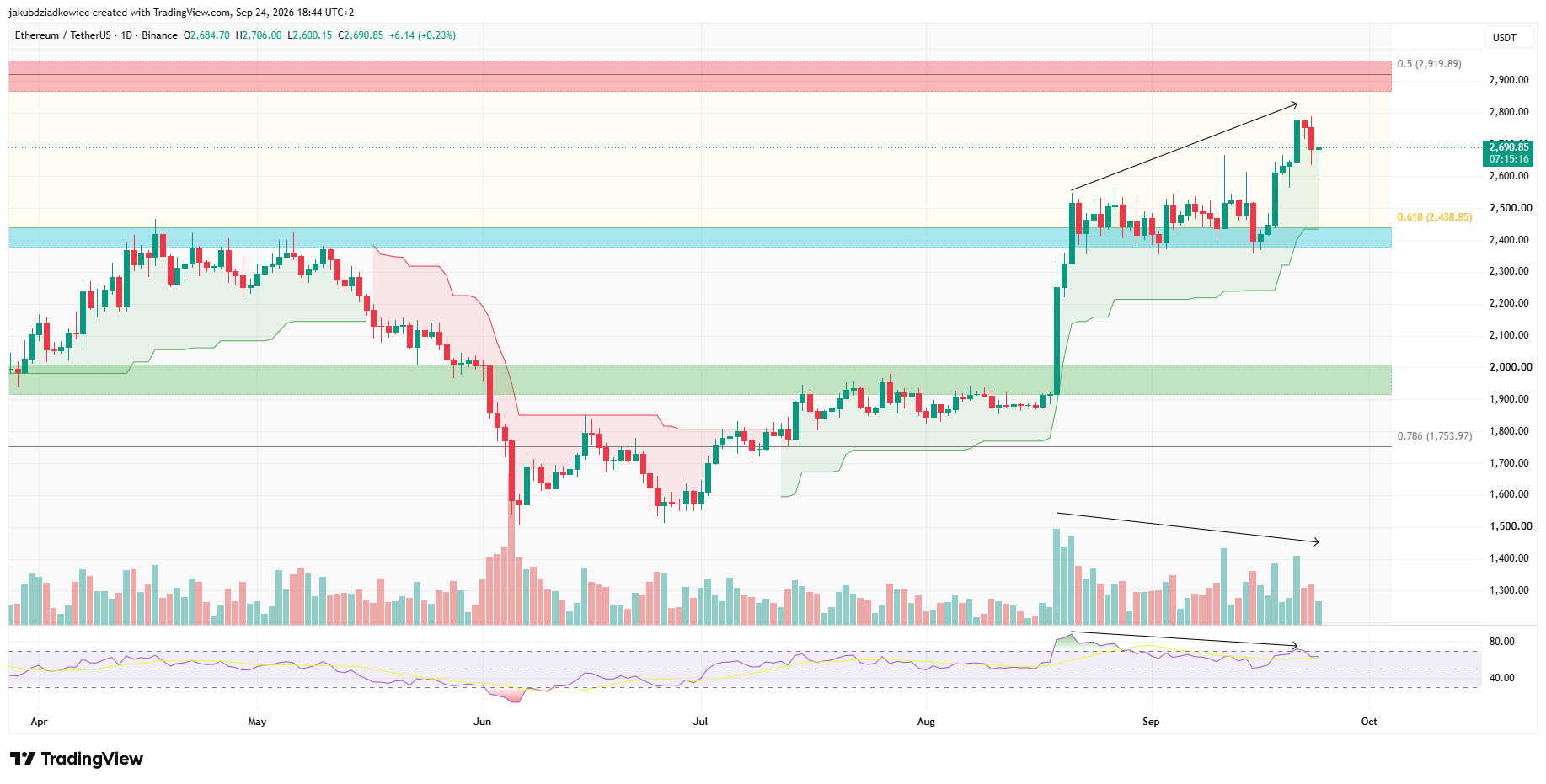
Ethereum has just done something it has not managed since its August 2025 record high.
For the first time in more than a year, ETH has printed a higher high. It has also pushed through a resistance zone that repeatedly stopped previous rallies. So, what does this mean for Ethereum price? Will it break $3,000 this cycle?
Ethereum Is Finally Back in Its Long-Term Range
Crypto analyst Benjamin Cowen says Ethereum has returned to its long-term logarithmic regression band, a range he uses to estimate where ETH sits relative to its historical trend.
“At least this cycle I don’t have to spend the whole time calling for ETH to go home, considering it’s already there.”
Cowen has said he favors dollar-cost averaging through the second half of the US midterm year, while still leaving room for another market shock later in Q4.
Meanwhile, corporate treasuries continue adding ETH.
The Weekly Chart Has Changed
Ethereum peaked near $4,957 in August 2025. Every major rally that followed ended with a lower high.
That pattern has now broken. ETH reached $2,807 this week, while the former resistance around $2,438 has turned into support. The weekly RSI has climbed to 64. A move above $2,920 would strengthen the case for a push toward $3,400.
But the Daily Chart Is Flashing a Warning
The problem is momentum. ETH keeps making higher highs, while the daily RSI is making lower highs. Traders call this bearish divergence. It can signal that a rally is losing strength.
Trading volume is also falling.
The key line is now around $2,440. Holding it keeps the bullish structure intact. Losing it could expose the 1,950–2,000 area.

The post Ethereum Breaks a Year-Long Pattern. The Chart Still Has One Warning appeared first on BeInCrypto.
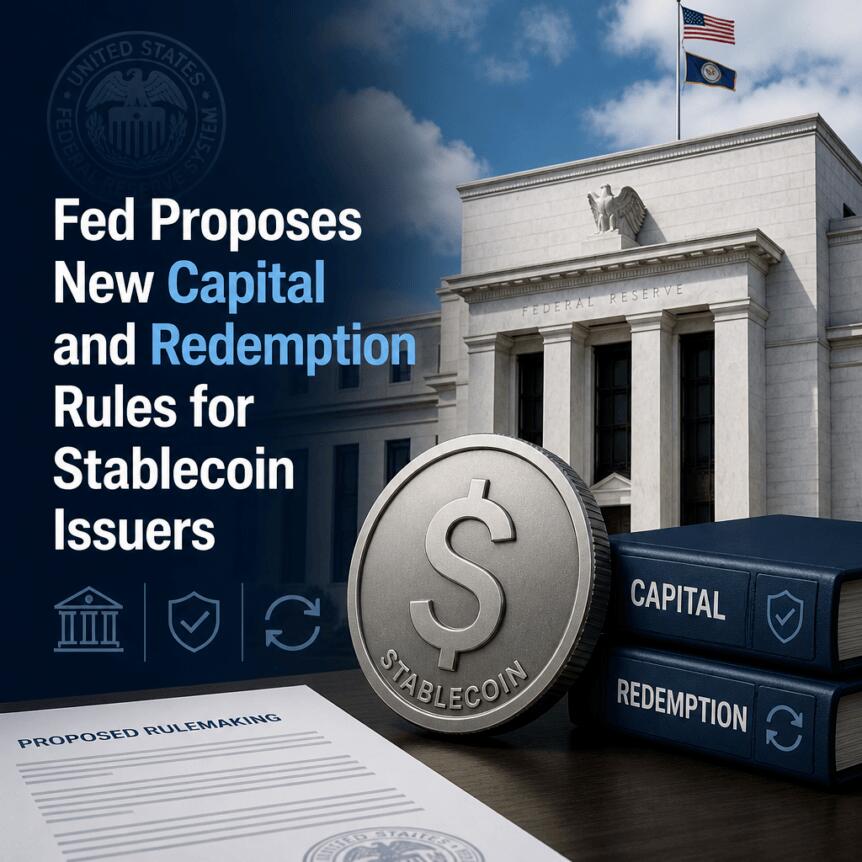
The Federal Reserve has published two proposals aimed at putting more detailed guardrails around stablecoin issuers as the U.S. implements the GENIUS Act. The plan, developed for entities under Fed supervision, would add capital requirements, define operational-risk charges, tighten redemption expectations, and mandate standardized reserve reporting—while also outlining an approval path for certain banks to issue payment stablecoins through subsidiaries.
At the same time, Fed Governor Michael Barr signaled support for the overall direction but emphasized that stablecoins must remain reliably redeemable at par even under market stress. His remarks point to the central test investors and users will apply to the final rules: will redemption work smoothly when liquidity tightens and even high-quality government debt trades under strain?
Key takeaways
- The Fed’s proposal adds an operational-risk capital framework for Fed-supervised stablecoin issuers, with charges that vary based on the amount of stablecoins outstanding.
- Redemptions would generally need to be processed within two business days, and issuers would face defined steps if reserves fall below the one-to-one backing requirement.
- Issuers would be required to publish monthly reserve and outstanding stablecoin disclosures, certified by senior executives and audited by a registered public accounting firm.
- A separate proposal would set an application process for Fed-supervised banks to seek approval to issue payment stablecoins through subsidiaries.
- Barr backed the direction of the framework but urged additional clarity on how stability is ensured during stress, including interest-rate and foreign-currency risks.
How the GENIUS Act shapes the Fed’s stablecoin rulemaking
The GENIUS Act already contains baseline requirements for stablecoin issuers: tokens must be backed by reserves on a one-to-one basis, and issuers are limited in the types of assets they can hold. In particular, the statute restricts reserves to certain categories including cash, bank deposits, and short-term U.S. Treasurys, while leaving regulators to build out more granular capital, diversification, and risk-management standards.
According to the Fed’s proposal, the missing piece is the operational and supervisory detail: how much capital issuers must hold against specific risks, what redemption timelines must be met, and how often issuers must document and verify that reserves remain adequate.
Capital charges, redemption timelines, and what happens if backing slips
Under the Fed proposal, issuers would face an operational-risk capital charge calculated as a percentage of the stablecoins they have issued. The rate would step down as outstanding amounts increase: 2% for the first $20 billion of stablecoins outstanding, 1.5% for the next $30 billion, and 1% for amounts above $50 billion. The proposal also references additional capital requirements tied to credit and operational risks.
The rules would also establish a practical expectation for redemption operations. In general, Fed-supervised issuers would be expected to process redemptions within two business days.
Importantly, the proposal addresses a key failure scenario: if an issuer’s reserves fall below the required one-to-one backing, it would have to notify the Fed and choose between two paths—either restore reserves according to a remediation plan or liquidate reserves and redeem outstanding stablecoins.
For investors and market participants, this structure matters because it translates a statutory “always backed” principle into an operational consequence framework. Instead of only requiring reserve sufficiency after the fact, the proposal attempts to specify how quickly an issuer must act and what supervisory information will be available.
Monthly transparency with audited reporting
To reinforce the reserve-backstopping requirement, the Fed proposal would require issuers to publish monthly reports. These disclosures would cover the outstanding amount of stablecoins and the value and composition of reserves.
The proposal also sets a higher standard for accountability around that data: the disclosures would need to be examined by a registered public accounting firm and certified by the issuer’s CEO and CFO.
That combination—frequent reporting, third-party review, and executive certification—can be significant for traders, partners, and users trying to assess whether a stablecoin remains compliant as market conditions evolve. It also increases the importance of internal controls at issuers, since executive sign-off implies direct responsibility for the quality and accuracy of reserve information.
Separate track for Fed-supervised banks issuing through subsidiaries
Alongside issuer-focused requirements, the Fed released a separate proposal that would establish an application process for Fed-supervised banks seeking approval to issue payment stablecoins through subsidiaries.
Per the proposal, banks would need to submit a business plan and provide financial information as part of the approval process. While the GENIUS Act sets the statutory groundwork, this track would determine whether banks—under Fed supervision—can bring certain stablecoin issuance activities under a subsidiary structure and how they would be evaluated before launch.
For the broader industry, the distinction matters: approval frameworks can affect timing, product design, and risk management choices for banks looking to participate in stablecoin markets.
Barr stresses redemption reliability under stress and highlights open questions
In remarks accompanying the proposals, Fed Governor Michael Barr supported the overall direction but argued that more work is needed before stablecoins can qualify as reliable payment instruments. In a statement released Thursday, Barr said stablecoins will only be stable if they can be “reliably and promptly redeemed at par in a range of conditions,” explicitly including periods of market stress.
Barr’s commentary focused on scenarios where liquidity strains can affect even otherwise liquid government debt, as well as episodes where an issuer—or related entities—faces pressure. He said he was encouraged by the proposed limits on reserve assets and the standardized capital requirements, but he also called for public feedback on whether the framework adequately addresses interest-rate and foreign-currency risks.
Barr also raised process-and-enforcement considerations. He said universal redemption rights should be clearly established in the final rule. He further expressed concern about a proposed standard that would limit the Fed’s ability to take supervisory or enforcement action over an anti-money laundering deficiency unless the issue is deemed “significant or systemic.”
These points suggest that while the Fed is moving to operationalize the GENIUS Act, the “stress test” details—particularly around interest-rate, FX, redemption rights, and supervisory triggers—may still evolve through the comment period.
What happens next
The Fed’s proposals are open for public comment for 60 days after publication in the Federal Register. With the GENIUS Act scheduled to take effect on Jan. 18, 2027, or 120 days after final implementing rules are issued—whichever comes first—the key question for market participants is how the final rule will address Barr’s concerns and refine redemption reliability, capital adequacy, and stress-related risks.

Paxos Labs has launched PAXGy, a token built on PAX Gold that is designed to increase the amount of PAXG a holder can redeem as its reserves earn returns from gold leasing.
Summary
- Holders can deposit PAXG or swap accepted stablecoins to receive PAXGy.
- Paxos Labs says lending income accrues through a PAXGy-to-PAXG exchange rate, rather than an increase in token balances.
- PAXGy is available through OKX Gold Earn and X Layer, with access through several onchain platforms.
- Borrower defaults or losses in the reserve strategies could lower the exchange rate, according to Paxos Labs.
According to Paxos Labs’ launch announcement shared with crypto.news, the company deploys the reserves behind PAXGy to vetted institutional gold borrowers. As the borrowers pay to lease the metal, the company says the value of each PAXGy rises in PAXG terms. Holders can redeem PAXGy for PAXG, although the amount returned depends on the exchange rate at the time.
The structure gives holders a way to seek returns measured in ounces of gold rather than dollars. It also makes PAXGy different from simply holding PAXG: the return depends on the performance of a lending strategy, while the dollar value of both tokens remains exposed to changes in the gold price, Paxos Labs said.
How PAXGy turns gold leasing into token returns
Paxos Labs said a holder can enter the product by depositing PAXG or swapping an accepted stablecoin. Instead of distributing additional tokens to the wallet, income from the reserve assets is designed to increase the amount of PAXG redeemable for each PAXGy.
The reserves are placed with institutional borrowers in the bullion leasing market, according to the announcement. Refiners, jewelry makers, miners and bullion banks may borrow gold for their operations and pay a lease rate in gold terms. Paxos Labs said the market has long relied on large transactions and direct relationships with banks, limiting access for smaller holders.
“Gold has been lent for thousands of years, and institutions have earned on their bullion reserves for decades,” Paxos Labs co-founder Bhau Kotecha said in the announcement. He said PAXGy is intended to give token holders access to those economics, with the reserves growing in ounce terms when the strategy earns a return.
The distinction between the two tokens matters for anyone entering or leaving the product. Under Paxos’ PAXG terms, each PAXG represents one fine troy ounce of London Good Delivery gold held on a segregated basis for holders. PAXGy, by contrast, is built on PAXG and uses reserves in an external lending strategy, as described by Paxos Labs.
For direct redemptions through the Paxos platform, the PAXG terms require a verified account. They also set a minimum of 430 PAXG, plus a fee, for redemption into an allocated London Good Delivery bar. Those conditions concern the underlying PAXG product; Paxos Labs describes the exit from PAXGy as redemption into PAXG.
Where PAXGy is available at launch
Paxos Labs named OKX as PAXGy’s only centralized exchange listing at launch and said the token is available through OKX Gold Earn and X Layer. It also named 0x, Uniswap and Ether.Fi among its onchain launch partners. Additional venues are expected to follow, the company said.
For transfers between blockchains, Paxos Labs selected Chainlink’s Cross-Chain Interoperability Protocol as its exclusive messaging provider. The company said holders can move a PAXGy position across supported chains without first redeeming it for PAXG. Availability through a particular exchange or service may still depend on that provider’s terms and the holder’s location.
The launch comes as tokenized gold is being used for more than spot trading. In August, Arch Lending began accepting PAXG and Tether Gold as collateral for loans, according to an earlier crypto.news report. Arch’s service lets eligible holders borrow against their tokens; PAXGy instead seeks a return by placing reserve assets with gold borrowers.
Trading activity has also increased. A report on tokenized gold volume in May cited CoinGecko data showing $90.7 billion in first-quarter 2026 spot volume, above the $84.64 billion recorded throughout 2025. CoinGecko identified PAXG and Tether Gold as the main contributors to that market’s trading activity.
What U.S. holders need to know about the risks
Paxos Labs’ product notice says PAXGy carries credit, liquidity, and market risks. Returns are not guaranteed: losses in the external strategies or a borrower default could cause the PAXGy-to-PAXG exchange rate to fall, leaving a holder with less gold exposure than the amount deposited. A rise in the exchange rate would likewise not guarantee a dollar profit if the price of gold fell.
For U.S. holders considering the underlying asset, Paxos’ PAXG terms spell out a separate set of redemption conditions. Only verified customers can purchase PAXG from Paxos or convert and redeem it directly through its platform, and the company says it may refuse a transaction in circumstances described in those terms. PAXGy’s launch announcement does not state that holding the new token changes those direct PAXG redemption requirements.
Paxos Labs said tokenizing gold allows smaller holdings to be pooled into positions large enough for institutional leasing. Chief executive and co-founder Charles Cascarilla described PAXGy as a way to put tokenized gold to work after it has been made transferable onchain. The company’s notice says any resulting growth still depends on the reserve strategy, and its exchange rate may be adjusted downward if that strategy incurs losses.
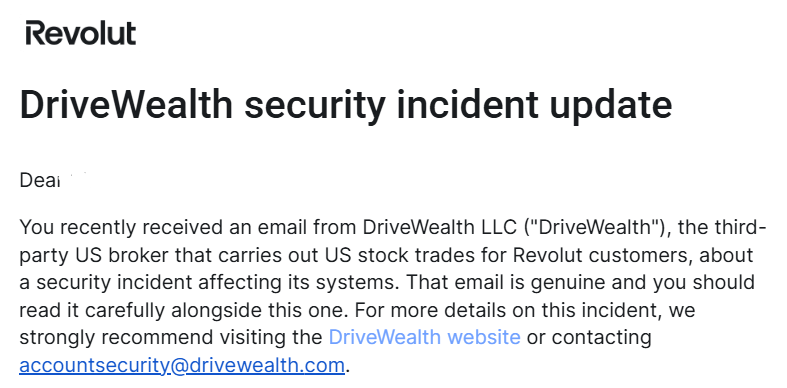
Revolut customers, including thousands in Ireland, faced their second data incident this month. This time, a third-party provider, not Revolut’s own systems, was responsible.
DriveWealth, the US broker that previously handled US stock trading for Revolut users, confirmed the breach occurred on September 4 and 5.
What Actually Happened at DriveWealth
A social engineering attack manipulates people into revealing sensitive information, rather than exploiting a technical software flaw directly. DriveWealth confirmed that’s exactly how attackers gained unauthorized network access this time.
The exposed data covers only historical customer records from before Revolut changed its trading model. In the European Economic Area, including Ireland, that cutoff fell in December 2023. Revolut stopped sharing individual customer details with DriveWealth after that switch, so recent users remain unaffected.
Exposed information may include names, email addresses, phone numbers, postal addresses, employment details, and biographical data like citizenship, age, and gender. Partial DriveWealth account numbers were also affected.
Passwords, payment card details, bank information, Revolut passcodes, and identity documents were not compromised. A Revolut spokesperson confirmed DriveWealth contacted affected customers directly, with Revolut following up through its own emails.

Why Does This Keep Happening to Revolut Customers?
This breach follows a separate incident earlier in September, when a sophisticated impersonation scam using a legitimate Italian government email domain tricked Revolut into releasing sensitive data. That case affected roughly 680 customers globally and involved identity documents.
The breach also reached beyond Revolut. Stake and Hatch, two other platforms using DriveWealth’s infrastructure, confirmed similar exposure.
Neither Revolut nor DriveWealth has disclosed exact numbers of impacted customers. Revolut serves approximately 3.4 million customers in Ireland alone.
Affected users should monitor communications, watch for phishing attempts, and contact Revolut through official channels with concerns. Two breaches in one month highlight growing risk tied to third-party fintech infrastructure.
The post Revolut Customers Hit by Second Data Breach in Just One Month appeared first on BeInCrypto.

The Federal Reserve has proposed capital, redemption and other regulatory requirements for stablecoin issuers under its supervision as it moves to implement the GENIUS Act.
The GENIUS Act already requires stablecoin issuers to maintain reserves backing their tokens on a one-to-one basis and limits the types of assets they can hold, including cash, bank deposits and short-term US Treasurys. The law left federal regulators to establish more detailed capital, reserve-diversification and risk-management requirements.
Under the Fed proposal, issuers would face an operational-risk capital charge equal to 2% of the first $20 billion in stablecoins outstanding, 1.5% of the next $30 billion and 1% of amounts above $50 billion, along with additional capital requirements tied to credit and operational risks.
Issuers would generally be required to process redemptions within two business days. If reserves fall below the required one-to-one backing, an issuer would have to notify the Fed and either restore its reserves under a remediation plan or liquidate them and redeem outstanding stablecoins.
Issuers would also have to publish monthly reports detailing their outstanding stablecoins and the value and composition of their reserves. The disclosures would have to be examined by a registered public accounting firm and certified by the issuer’s CEO and CFO.
A separate proposal would establish an application process for Fed-supervised banks seeking approval to issue payment stablecoins through subsidiaries, including requirements to submit a business plan and financial information.
The proposals are open for public comment for 60 days after publication in the Federal Register.
Related: EU banking watchdog calls for crypto lending rules under MiCA
Barr says stablecoins must remain redeemable during market stress
Fed Governor Michael Barr supported the proposal on Thursday but said further work would be required for stablecoins to become reliable payment instruments.
“Stablecoins will only be stable if they can be reliably and promptly redeemed at par in a range of conditions. This includes during market stress, when pressure can be put on the value of even otherwise liquid government debt, and during episodes of strain on the individual issuer or its related entities,” Barr said.
Barr added that he was encouraged by the proposed limits on reserve assets and standardized capital requirements, while calling for public feedback on whether the framework adequately addresses interest-rate and foreign-currency risks.
He also said universal redemption rights should be clearly established in the final rule and raised concerns about a standard that would prevent the Fed from taking supervisory or enforcement action over an anti-money laundering deficiency unless the issue is considered “significant or systemic.”
The GENIUS Act is set to take effect on Jan. 18, 2027, or 120 days after federal regulators issue final implementing rules, whichever comes first.
Magazine: Winners and losers of the SEC’s new tokenized stocks rules

The case adds to a growing fight between prediction markets and state gambling regulators over who has the authority to oversee the products.
Prediction market companies argue that their event contracts are financial products overseen at the federal level by the Commodity Futures Trading Commission (CFTC). States have taken a different view, particularly when the contracts involve sports, arguing that the products are effectively bets and must follow state gambling rules.
New York has been one of the most active states in that fight. The state sued Kalshi in July after negotiations between the company and Hochul’s office broke down, seeking as much as $36 billion in penalties and disgorgement. Many of these court cases have gone to appeals courts, and a recent case between Kalshi and New Jersey has been appealed to the U.S. Supreme Court.
“Our gambling laws exist to protect New Yorkers, prevent the potential harms of problem gambling, and ensure funding for educational and public benefit programs,” James said in a statement.
The lawsuit comes less than a year after Polymarket returned to the U.S. market.
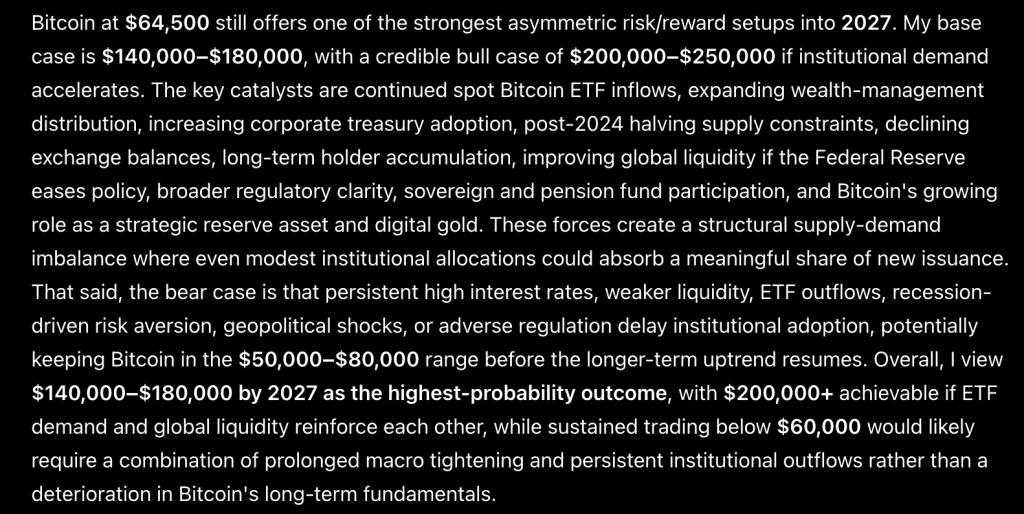
Microsoft Copilot AI predicts a wild move for BTC in Q4 2026, calling it one of the strongest asymmetric risk-reward positions available. The base case sits at $140,000 to $180,000. A credible bull case reaches $200,000 to $250,000 if institutional demand actually accelerates from here.
The catalyst list is long, but the underlying logic is simple. Continued spot ETF inflows, expanding wealth management distribution, and growing corporate treasury adoption all pull the same lever: more structural buyers competing for a shrinking pool of coins.
After the 2024 halving, supply constraints are already in effect. Layer declining exchange balances and long-term holder accumulation on top, and Microsoft Copilot AI sees a market where sellers are becoming scarce at the exact moment demand keeps widening.
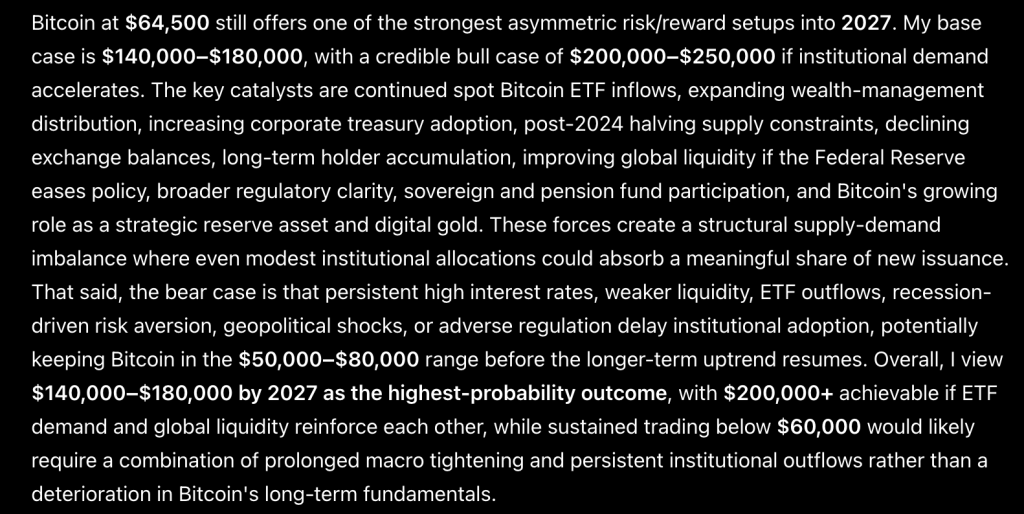
Macro matters here, too. Improving global liquidity if the Fed eases, broader regulatory clarity, and early participation by sovereign or pension funds would all push in the same direction.
Microsoft Copilot AI frames Bitcoin’s evolving role as a strategic reserve asset and digital gold as the connective thread running through it all. The argument is that even modest institutional allocations could absorb a meaningful share of new issuance, given how constrained supply already is.
The bear case is not soft. Persistent high rates, weaker liquidity, ETF outflows, a recession-driven flight from risk, geopolitical shocks, or adverse regulation could all delay institutional adoption.
In that bearish scenario, Microsoft Copilot sees Bitcoin stuck in a $60,000 to $80,000 range before any longer-term uptrend resumes. Notably, the model draws a hard line at $60,000, arguing that sustained trading below it would require actual macro tightening and real institutional outflows, not just a normal pullback.

Bitcoin Price Prediction: Five Years On A Weekly Chart Says This Is Still The Same Cycle
Zoom out to the weekly, and the story changes shape entirely. Bitcoin closed yesterday above $84,000, essentially flat, with a range between $83,600 and $86,600.
From the 2022 bear market low, the climb into 2025 was one of the cleanest uptrends this asset has ever produced, breaking cleanly above the old 2021 highs and pushing toward $128,000 by late 2025.
What followed was a sharp, multi-month correction that brought the price back to a level it last visited over a year ago. It has since pushed back above $80,000 following a two-week period of bullish price action across the market.
Support on this weekly view sits at $80,000, a level defended multiple times across March and April 2025 before the breakout. Below that, $73,000 marks the last major consolidation floor from earlier in the cycle.
Resistance is layered higher up, first at $84,000, then a heavier ceiling near $92,000 to $120,000, where the 2025 top formed. Reclaiming that zone would be the first real signal that the uptrend has resumed rather than just paused.
Momentum on the weekly is neutral, neither compressed nor extended, which fits a market that has spent months digesting a major move rather than trending in either direction.
For the ‘Microsoft Copilot AI predicts’ 2027 targets to play out, this current range needs to resolve as a pause within a longer uptrend, not the top of one. The chart itself hasn’t answered that question yet.
Here is What Microsoft Copilot AI Predicts About LiquidChain
Most people will only recognize this shift in hindsight. Smart investors have already made their moves. Large-cap tokens are still finding their feet in this growing bull market structure, but they aren’t going parabolic just yet.
Bitcoin, Ethereum, and XRP are all testing key resistance levels right now. Each favorable macro trend has a new expected timeline, and the true institutional investment wave is expected to arrive next quarter.
Investing in assets where growth depends solely on someone else’s decision isn’t a solid strategy; it’s just waiting in a waiting room. Capital that has weathered numerous market cycles understands one key point: it moves before the destination becomes clear.
Early-stage infrastructure plays by completely different rules. A small market cap means that a modest rotation can produce dramatic price movement.
The returns live in the gap between what something is genuinely worth and what the market has assigned it so far. That gap exists only while the project remains undiscovered. Once found, it closes permanently.
Multi-chain fragmentation bleeds DeFi every day. Bitcoin, Ethereum, and Solana exist as completely isolated systems. No native bridge between them. Every user crossing those boundaries absorbs the cost directly in fees, slippage, and failed transactions. Every single crossing. Every single time.
Microsoft Copilot AI predicts LiquidChain fixes this entirely. All 3 networks within a single execution layer. One deployment reaches everything. Zero cross-chain tax on any interaction.
The presale is at $0.014958 with just over $972,000 raised. The market has not fully discovered this yet, and that is exactly the point.
Gain Special Access to Layer 3 Trading Here
Don’t Miss: The Hottest Meme Coin Opportunities Silently Climbing the Crypto Ranks in September
The post Microsoft Copilot AI Predicts Bitcoin Will Do Something Incredible in Q4 2026 appeared first on Cryptonews.
“Under the proposal, certain types of arrangements involving third parties would be presumed to be prohibited payments of interest or yield,” the Fed wrote, noting that its approach is consistent with the OCC’s. Though the regulations aren’t final, the agencies seem to be allowing a very narrow approach by crypto platforms to offer stablecoin rewards akin to credit-card incentive programs.
The question of how much companies such as Coinbase could reward stablecoin users was one of the sticking points in the debate over the recently failed Digital Asset Market Clarity Act. As it stands, the GENIUS Act is now the primary law governing stablecoin rewards, because the efforts to revise it in the Clarity Act didn’t succeed.
Proposed rules like those offered by the Fed on Thursday need to gather input from the public before the federal regulator can revise them and publish them in final form — a process that usually takes several months, sometimes much longer.
The central bank’s first proposal on Thursday governs capital and reserve requirements meant to ensure that the stablecoins are fully represented by the most liquid assets and the issuers have a solid foundation in times of stress. It also outlines accepted stablecoin activities at its supervised banks, and it’s the proposal that includes the stablecoin rewards component.

The Psychology Behind the 6 Levels of Financial Freedom

Trump and Melania host China’s Xi alongside DC elite and business titans for lavish black-tie state dinner as details on historic toast, guest list and menu are revealed

Intelligent Bio Solutions Inc. (INBS) Discusses FDA 510(k) Submission and Progress of Intelligent Fingerprinting Drug Screening System Transcript




-

 Fashion6 days ago
Weekend Open Thread: Talbots – Corporette.com
-

 Tech4 days ago
Researchers escape OpenAI Codex sandbox to run commands on host
-

 Crypto World2 days ago
Goldman Sachs and Deutsche Bank Agree: The S&P 500 Rally Isn't Over
-

 Crypto World4 days ago
Who Needs CLARITY Anyway? ARB Could See 70X Increase: Hodler’s Digest
-

 Fashion12 hours ago
8 iPhone Accessories That Add Personality
-

 Crypto World6 days ago
Circle launches Arc Studio AI agent for building onchain apps
-

 Crypto World7 days ago
Mortgage and refinance interest rates today, Thursday, September 17, 2026
-
 NewsBeat6 days ago
Trump says US has reached an agreement to take permanent control of Greenland’s security
-

 Crypto World6 days ago
Trading Bitcoin on Robinhood? Why 2% Spread Has Traders Worried
-

 Crypto World6 days ago
Bitcoin price breaks channel as RSI climbs to 63
-

 Business4 days ago
Analog Devices (ADI) Bets $1.35 Billion on Chips that Let Machines Think for Themselves
-

 Tech3 days ago
Google’s $899 Googlebook is a bet that you’ll buy a new laptop for Gemini
-

 Tech5 days ago
Trump suggests rebranding AI with a new name, says he’s also creating an AI Force
-

 Crypto World4 days ago
Coinbase, Robinhood, Circle Seen as Tokenized-Stock Winners
-
 Business2 days ago
Oil Price Today (September 23): Crude oil below $100 on hopes of US-Iran talks. What did Trump say?
-

 Crypto World2 days ago
Trump-Xi Polymarket Odds for Handshake Hit 50%
-

 Crypto World6 days ago
World Money launches in 150+ countries with Stripe
-

 Crypto World7 days ago
Silver prices recover quickly, hitting weekly high today
-

 Crypto World1 day ago
Bitcoin Threatens Sub-$84,000 Breakdown as Long Liquidations Spike
-

 Entertainment2 days ago
These 17 Fall Amazon Dresses Seriously Look Like Anthropologie
You must be logged in to post a comment Login