

Crypto World
Robinhood’s chief operating officer of crypto Tanya Denisova is leaving the firm



Tanya Denisova, chief operating officer of Robinhood Crypto, is leaving the firm, according to two people with knowledge of the matter.
Denisova had been employed by the popular trading platform for over five years, according to her LinkedIn profile.
Neither Robinhood nor Denisova responded to requests for comments.
The departure comes amid Robinhood missing its first-quarter earnings and revenue estimates, mainly due to weaker crypto trading activities. Crypto-related revenue, one of Robinhood’s biggest sources of transaction income, fell 47% year over year to $134 million, down from $252 million. The drop comes as the company works to reduce its reliance on crypto market swings and reposition the business beyond price-cycle volatility.
Robinhood enables users to trade stocks, exchange-traded funds (ETFs), options, and cryptocurrencies through a mobile-first app. The company also offers retirement accounts, cash management services, and market insights designed to simplify investing and broaden access to financial markets.
The firm has expanded its presence in crypto by offering commission-free trading for major digital assets, including bitcoin , ether (ETH), solana (SOL), and , directly within its app.
The company also provides crypto wallets, onchain transfers, staking services in select markets, and educational tools aimed at newer investors. As part of its broader strategy to bridge traditional finance and digital assets, Robinhood has continued to grow its crypto offerings internationally while positioning itself as a simple, low-cost entry point into the crypto market
Read more: Robinhood stock falls 8% after big earnings miss due to weak crypto trading revenue


Popular on-chain sleuth ZachXBT warned earlier today that an admin address of Polymarket appeared to have been compromised on the Polygon blockchain.
At first, he noted that the stolen amount was around $520,000. However, follow-up updates from Bubblemaps and Lookonchain explained that the actual amount might have surpassed $600,000.
2/ @zachxbt was the first to share the exploit and identify that it was a Polymarket UMA CTF adapter contract.
The attacker has already split the funds across 15 addresses.
More updates soon.
Attacker address: https://t.co/G9sNVvunkT
— Bubblemaps (@bubblemaps) May 22, 2026
The attacker split the funds across 15 addresses after exploiting Polymarket’s UMA CFT adapter contract.
Polymarket’s Shantikiran Chanal acknowledged the attack on X, saying that the team is “aware of the security reports linked to rewards payout” before adding that “user funds and market resolutions are safe.”
Chanal also explained that the team is investigating whether any other internal secrets may have been affected and that they are rotating their backend services.
The post Polymarket Admin Wallet Exploited on Polygon, Says ZachXBT appeared first on CryptoPotato.

Ethereum (ETH) has shed nearly 30% of its market value so far this year. Despite numerous recovery attempts, its market performance throughout May remained weak. Growing fear and frustration around the asset have become increasingly visible across social media and market activity.
According to Santiment, the downturn has not been driven by a single major negative event, but rather by several bearish narratives building at the same time.
Bearish Narratives Spiral
One of the clearest signs highlighted by the firm was the rise in Ethereum’s social dominance even as prices continued falling. While higher social dominance can often signal strong bullish attention during rallies, Santiment noted that Ethereum’s discussion volume surged after its April 17 local top precisely when the asset began losing momentum.
Instead of conversations centered around optimism or new highs, social media discussions were increasingly focused on disappointment, frustration, and concerns about further downside. Santiment also flagged a steady deterioration in sentiment ratios on social media platforms.
During late April, Ethereum maintained relatively strong sentiment levels, as it recorded more than two bullish comments for every bearish one. However, that ratio gradually declined throughout May until bullish and bearish commentary became nearly equal. The firm said this kind of sentiment erosion typically indicates weakening trader confidence in an asset’s short-term outlook.
Ethereum’s weak price performance itself has been one of the biggest contributors to the negative mood. Many traders have increasingly viewed ETH as “dead money” compared to assets that have shown stronger momentum during 2026, Santiment said in its latest post.
While Bitcoin has continued attracting institutional confidence and newer ecosystems have drawn speculative interest, Ethereum has struggled to regain the market leadership role it held in previous cycles. ETF flows also added to bearish sentiment. Several Ethereum exchange-traded funds reportedly recorded continued outflows throughout May, including significant withdrawals from BlackRock-related funds.
Santiment added that days with more than $50 million in net inflows, once relatively common for Ethereum ETFs, have not occurred for almost three weeks. Although ETF flows often follow sentiment rather than predict it, retail traders frequently interpret outflows as evidence that institutions are losing confidence in the asset, which further adds to fears already created by falling prices.
Negative headlines surrounding the Ethereum Foundation also contributed to the change in market mood. Reports about researcher departures and ongoing exits from the ecosystem spread widely across social media. Many traders see them as signs of instability within Ethereum’s leadership and development community.
At the same time, viral rumors claiming prominent Ethereum figures, such as David Hoffman, were reducing or exiting their ETH holdings further fueled uncertainty, even when some reports lacked full context. Santiment said such narratives can spread rapidly in crypto markets, especially when traders begin fearing that insiders are abandoning positions before the broader market reacts.
Contrarian Setup?
Competition from other blockchain ecosystems has also intensified pressure on Ethereum’s reputation. Data showed Ethereum still leads the crypto industry in raw development activity, as it generates millions of GitHub events and maintains one of the largest developer communities in the sector.
However, retail traders have increasingly prioritized short-term price performance over long-term development strength, while ecosystems such as Solana and BNB Chain continue to attract speculative enthusiasm. On-chain activity has weakened as well, with both daily active addresses and network growth declining from the high levels seen during Ethereum’s strongest rallies in 2024 and 2025.
Despite the overwhelmingly bearish environment, the firm said extreme pessimism can sometimes point to exhaustion among traders and potentially emerge near major market turning points.
“Growing bearishness may eventually become constructive from a contrarian perspective. Historically, markets tend to punish the crowd when consensus becomes too one-sided. Ethereum is now reaching a point where social media discussion has become overwhelmingly focused on reasons to abandon the asset. “
The post Has Ethereum (ETH) Reached Peak Pessimism: Or Is More Pain Coming? appeared first on CryptoPotato.
Bitcoin’s seemingly stable and dull price moves over the past couple of days came to an end hours ago as the asset initiated a notable leg down that drove it to a new multi-week low of well under $76,000.
The latest rejection came just hours after Kevin Warsh officially became the seventeenth Chairman of the United States Federal Reserve.
He was sworn in on Friday at the White House for the four-year role. US President Donald Trump said he expects Warsh to “go down as one of the truly great Chairmen of the Federal Reserve that we have ever had, I really believe that.”
The POTUS also added that Warsh will be “totally independent,” which was rather contradictory to some of his previous statements regarding the former Fed Chair, as Trump urged Powell countless times to cut the rates and called him different names in the past year and a half.
“I will lead a reform-oriented Federal Reserve, learning from past successes and mistakes, both escaping static frameworks and models and upholding clear standards of integrity and performance,” Warsh said.
As mentioned above, bitcoin’s price started to nosedive shortly after the ceremony concluded, and dropped from almost $78,000 to $75,500 minutes ago, which became its lowest level since April 30.
Many altcoins have followed suit, with ETH dumping toward $2,050, XRP losing the $1.35 support, and SOL dropping below $85. The total value of wrecked positions is up to $485 million according to CoinGlass, with more than $430 million coming from longs.

The post Bitcoin Price Crashes Below $76K as Kevin Warsh Sworn In as Next Fed Chair appeared first on CryptoPotato.

BitGo and Galaxy Digital are continuing their courtroom battle over the collapse of a $1.2 billion acquisition agreement that was once expected to become the largest merger in the crypto industry.
During proceedings this week in Delaware Chancery Court, BitGo argued that Galaxy backed out of the transaction in 2022 and is now seeking at least $100 million in damages, according to Bloomberg.
Bitter Legal Showdown
The crypto custody firm claims Galaxy failed to make reasonable efforts to complete the merger and also hid information about investigations by US authorities that may have affected their ability to obtain regulatory approval for the deal. Galaxy founder and CEO Michael Novogratz disputed those allegations in court. He argued that the probes did not involve Galaxy and had no effect on the approval process tied to the merger.
The acquisition was first announced in May 2021. Under the proposed agreement, BitGo co-founder and CEO Mike Belshe was expected to join Galaxy as deputy CEO and take a seat on the company’s board. The combined entity also planned to list shares on the Nasdaq, which required approval from the US SEC.
However, the deal began facing obstacles as crypto markets weakened in 2022 and regulators increased scrutiny on the sector.
As per the testimony in court, both companies eventually became concerned that the SEC, which was then chaired by Gary Gensler, would not approve the transaction. In an attempt to avoid SEC-related hurdles and move the deal forward, Novogratz said Galaxy even explored restructuring the merger through Canada, where the company was already publicly listed.
Missed Audit Deadline
Galaxy terminated the acquisition in August 2022. At that time, it stated that BitGo had failed to provide audited financial statements for 2021 by a July 31 deadline outlined in the merger agreement. The company said at the time that the missed deadline meant it was not required to pay a termination fee.
BitGo, on the other hand, has repeatedly denied those claims and maintained that the necessary documents had been delivered. During testimony earlier this week, Belshe said Galaxy’s public explanation for ending the deal was “incredibly damaging” as it created an impression that the company was unable to complete an audit.
The post Galaxy Digital and BitGo Clash in Court Over Failed $1.2 Billion Crypto Merger appeared first on CryptoPotato.
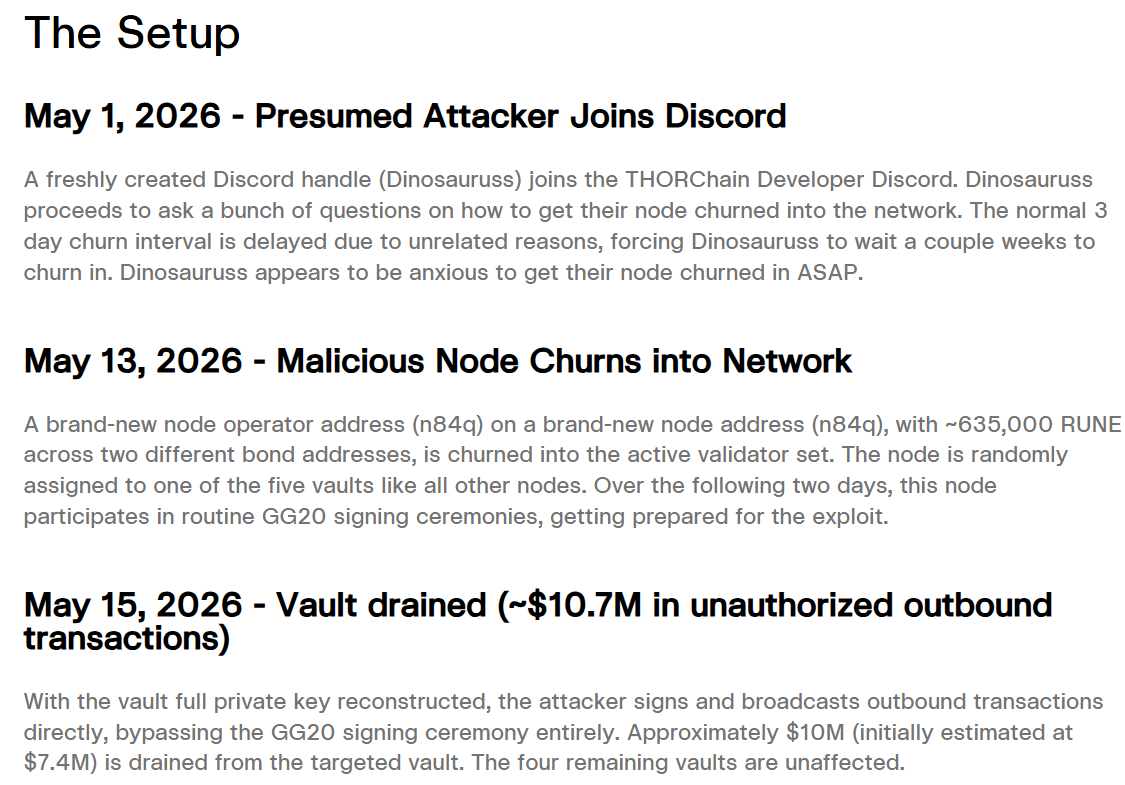
THORChain said a malicious node operator exploited a vulnerability in its GG20 threshold signature system to drain about $10.7 million from one of the protocol’s vaults.
The GG20 threshold signature scheme is used to secure THORChain vaults by splitting key control across multiple node operators, meaning no single node normally holds the full private key.
The vulnerability allowed the malicious node operator to reconstruct a full private key for one vault, through “progressive key material leakage,” the protocol said in a post-mortem report released on Wednesday.
THORChain said its automatic solvency checks triggered within minutes and halted signing and trading across multiple chains without human intervention. Node operators subsequently coordinated via Discord for a full network halt within two hours after and deployed a patch to fix the vulnerability.
The post-mortem report shows that the protocol’s automatic solvency checks functioned and stopped the exploiter from draining more funds. The report comes a week after blockchain investigator ZachXBT first flagged the $10 million exploit, shortly before THORChain announced a halt to all trading and signing.
The incident adds to a resurgence in crypto exploits, which stole more than $634 million in April, according to DefiLlama data.
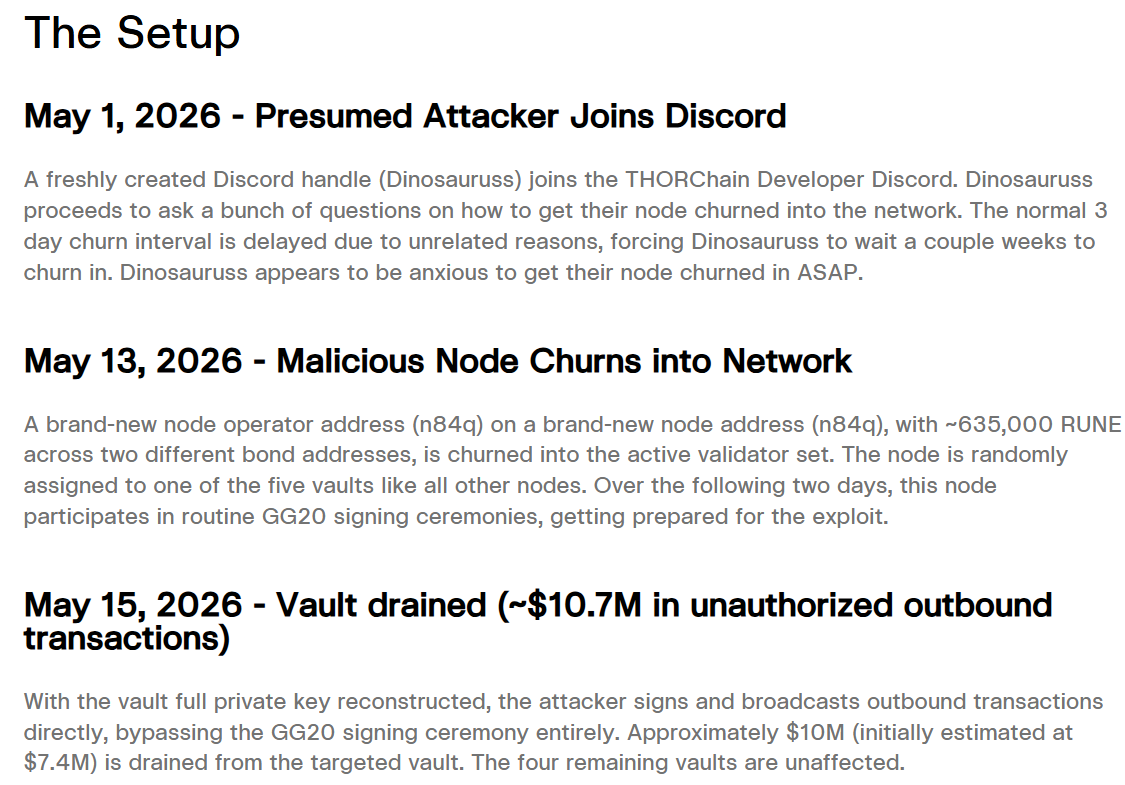
Timeline of the $10 million THORChain exploit. Source: THORChain
THORChain weighs recovery path without RUNE sales
THORChain said Friday that the post-exploit recovery path will be determined by a community consensus and published governance proposal ADR-028, with votes currently open for node operators.
The proposal would have THORChain absorb losses first through protocol-owned liquidity and spread the remainder across synth holders. It would deplete protocol-owned liquidity but redirect a portion of protocol income to replenish it over time, without minting or selling THORChain (RUNE) tokens.
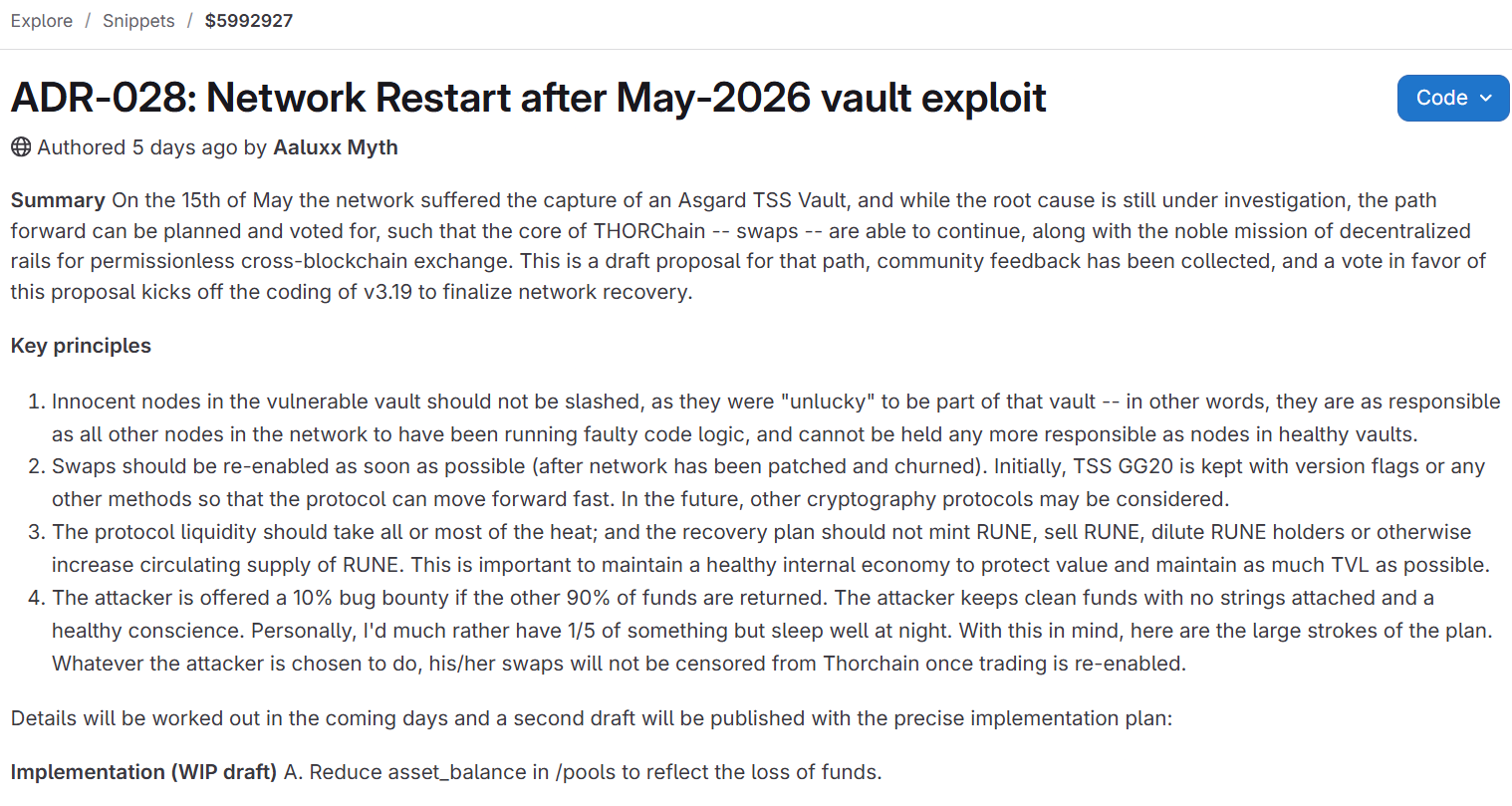
ADR-028 community proposal for recovery after $10 million exploit. Source: Gitlab
THORChain also offered a recovery bounty for the return of the stolen funds and said it would slash the attacker’s malicious node while protecting innocent nodes that were placed in the same vault as the exploiter.
Related: Polymarket team says user funds safe as exploit losses climb above $600K
ADR-028 proposes keeping the existing GG20 TSS framework in a patched and upgraded version and said it will resume trading only after the vulnerability is fixed, drawing mixed reactions from crypto industry watchers.
Pseudonymous crypto project analyst Bird said the initial vulnerability suggests that the GG20 TSS signing stack has a “flaw in randomness generation or local signing isolation,” but praised THORChain’s auto-safeguard for limiting the damage done by the exploit.
Other industry watchers were more critical of the decision. “My mental model is that GG20 has many brittle assumptions. You can keep patching it, but it will forever be a bit of a black box,” wrote crypto investor JP in a Wednesday X post.
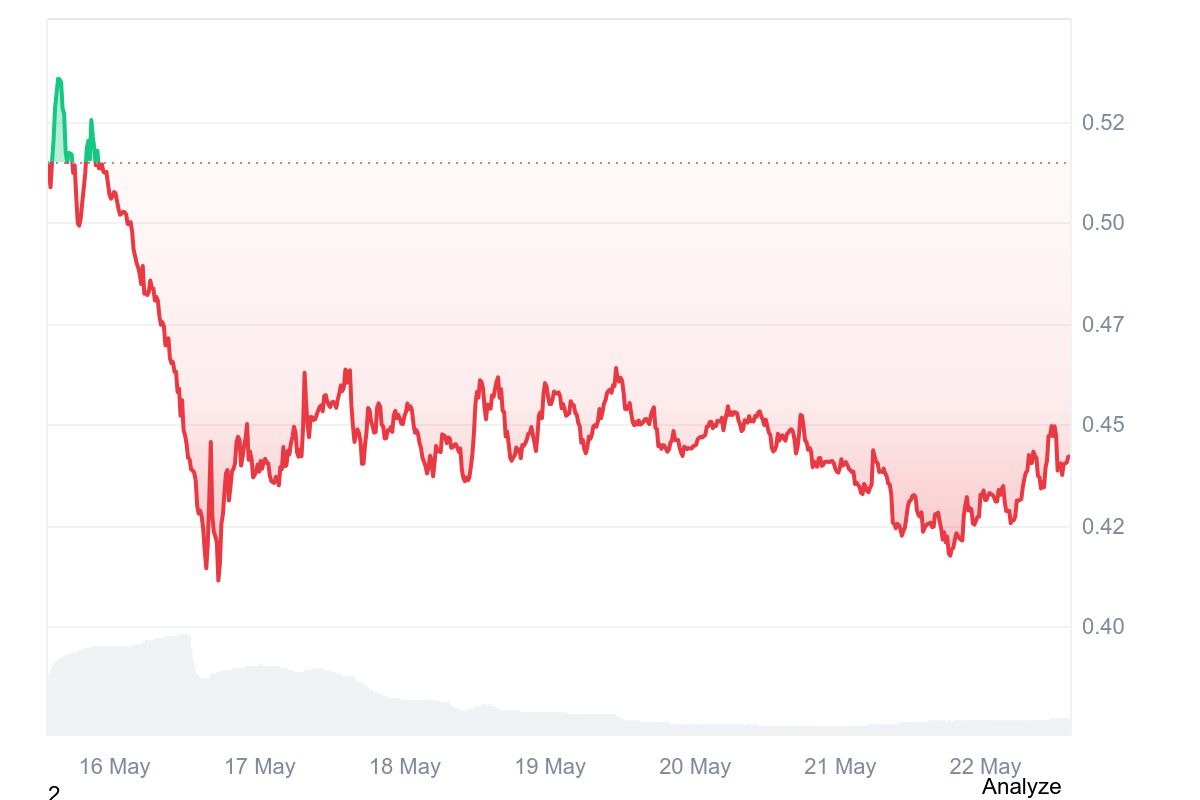
RUNE/USD, 1-week chart. Source: CoinMarketCap
The RUNE token’s price fell 15.5% in the week following the exploit, but staged a 4% recovery in the 24 hours leading up to 11:00 a.m. UTC on Friday, CoinMarketCap data shows.
Magazine: The legal battle over who can claim DeFi’s stolen millions
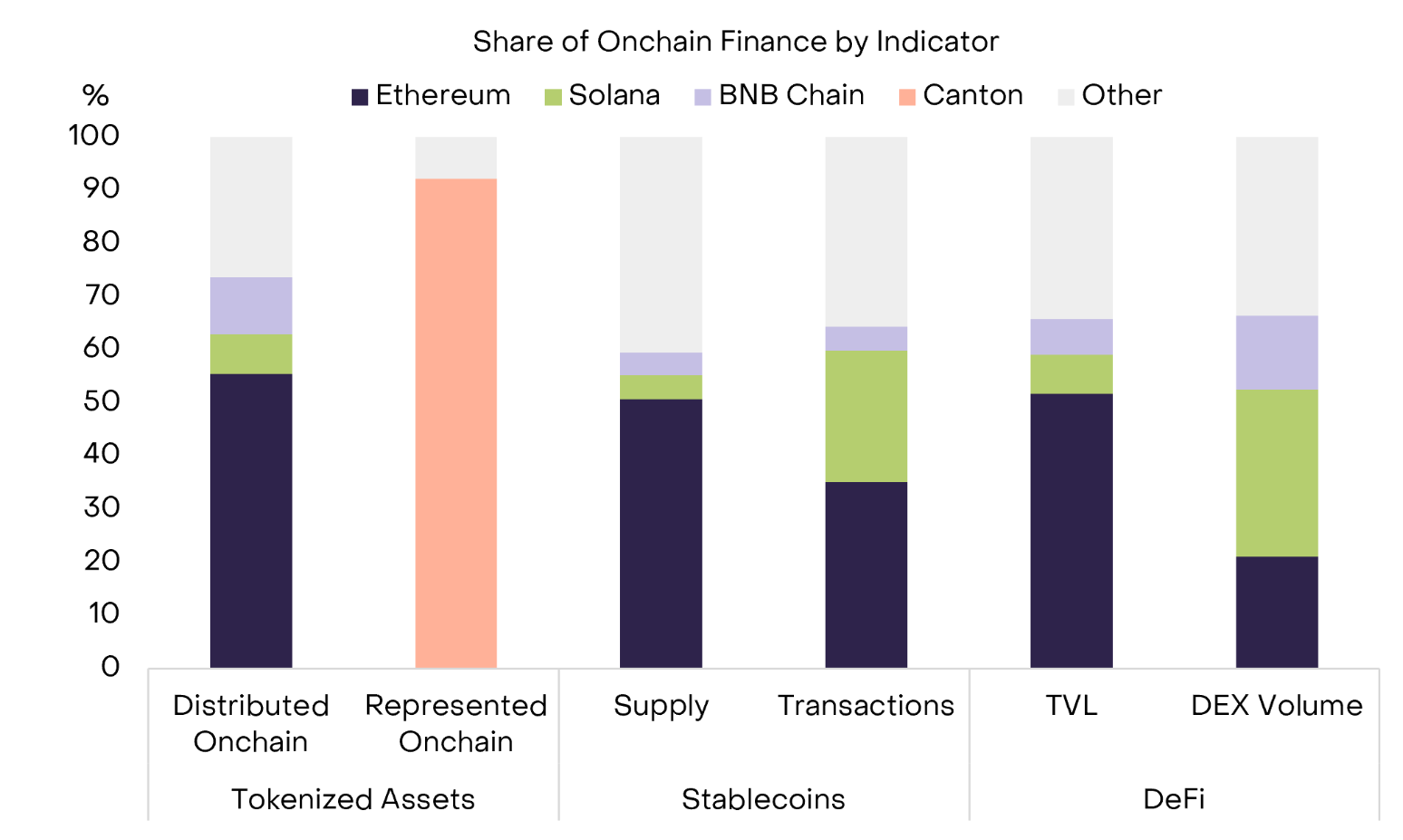
Asset manager Grayscale named four blockchains best placed to absorb institutional flows after the CLARITY Act passes. The list pairs Ethereum and Solana with BNB Chain and Canton Network.
The Digital Asset Market Clarity Act cleared the Senate Banking Committee on a 15-9 vote on May 14. The bill would split crypto oversight between the SEC and CFTC, and now heads to the full Senate floor.
Why Grayscale Picked These CLARITY Act Beneficiaries
Ethereum (ETH) leads the field for assets with full on-chain functionality, Grayscale wrote. BNB Chain and Solana (SOL) follow in second and third place.
The same three networks rank highest by stablecoin supply and DeFi total value locked, the firm said.

The four chains were also part of Grayscale’s broader tokenization megatrend picks earlier this year. The firm sees regulated capital flowing toward networks with the deepest on-chain finance footprints.
That dynamic favors incumbents already wired into traditional finance pipes.
“Regulatory clarity is coming, and a rising tide will likely lift digital assets broadly. It’s targeting the chains already leading tokenized assets, stablecoins, and DeFi: $ETH, $SOL, $BNB, and $CC,” Grayscale wrote in a post.
Follow us on X to get the latest news as it happens
Canton Network Takes a Different Route
Canton Network (CC) sits apart from the other three. The privacy-focused Layer-1 was built specifically for regulated institutions, and a recent Canton Network ETF launch gave retail investors exposure.
It now hosts DTCC’s tokenized U.S. Treasury pilot, with J.P. Morgan, HSBC, and Visa among its validators.
“Wall Street is already onchain. $350B settles daily on Canton, with over $6T in tokenized real-world assets and institutions like JPMorgan and DTCC building in production,” the network said recently.
Grayscale also flagged Avalanche, Base, Arbitrum, Hyperliquid, and Tron as altcoins set to benefit from the new framework.
The next Senate floor vote will test how quickly capital follows policy. The Senate Banking Committee vote cleared the first major hurdle on May 14.
With 60 votes needed for final passage, the bill’s path depends on Democratic support.
Subscribe to our YouTube channel to watch leaders and journalists provide expert insights
The post Grayscale Names 4 Altcoins Likely To Benefit From the CLARITY Act appeared first on BeInCrypto.


Gold fell below $4,500 per ounce on Friday as both spot prices and New York futures dropped about 0.94 percent, extending a sharp pullback from this year’s record highs.
Summary
- Spot and New York gold futures fell roughly 0.94 percent, breaking below $4,500
- Contracts traded in a rough $4,497 to $4,536 range as the US dollar hit a six week high
- Rising oil above $97 per barrel revived bets on another Federal Reserve rate hike this year
Early on May 22, gold slipped below $4,500 as spot and New York futures fell 0.94 percent, after the metal broke a key psychological level during New York trading.
Why did gold fall below $4,500 today?
In a widely cited follow up post, market watcher OnChainHutan said gold “slipped below $4,500, closing around $4,497.29 – $4,535.60 depending on the contract,” adding that the drop came as the US dollar hovered near a six week high and oil pushed above $97 per barrel.
That combination reinforced a familiar macro squeeze for bullion, since a stronger dollar makes gold more expensive for buyers in other currencies while higher energy costs fan inflation fears and push traders to price in the risk of tighter policy rather than imminent cuts.
According to OnChainHutan, futures markets are now “fueling bets the Fed may hike rates later this year,” with markets “pricing in a roughly 58 percent chance” of another move, a shift that directly undermines the appeal of a non yielding asset that earlier soared on expectations of aggressive easing.
The pullback lands just months after gold repeatedly punched through records above $4,900 per ounce, driven by central bank buying, geopolitical stress and wagers that Federal Reserve chair would have to slash borrowing costs into a slowing US economy.
In April, analysts surveyed by Investing.com still projected a median 2026 gold price of about $4,916 per ounce, underscoring how far sentiment has swung in a matter of sessions as spot now tests the lower edge of a $4,300 to $4,700 trading corridor highlighted in prior rate cut driven rallies.
What does the gold slide signal for risk assets and crypto?
Reactions on X captured the emotional whiplash, with one user noting that “gold drops 1 percent and suddenly everyone becomes a long term investor again,” while another user quipped that a “tiny red candle creates more panic than ten green ones create excitement.”
OnChainHutan argued that “gold pulling back while risk assets stay strong says a lot about current market sentiment,” pointing to an environment where equities and high beta plays have held up despite renewed Iran war risks, a dynamic also visible in recent crypto market outlook coverage of how traders fade geopolitical headlines.
Earlier this month, gold briefly fell back toward $4,500 per ounce on “heightened inflation fears” after a three percent intraday drop wiped out two weeks of gains, a move that foreshadowed today’s breach of the same level as investors reassessed whether bullion had outrun its macro narrative.
Analysts have warned that if the Fed leans more hawkish into the summer, bullion could spend extended time below $4,500 before any renewed push toward the $4,700 to $5,000 band that technical strategists previously mapped out once prices cleared $4,300 and $4,400.
For crypto traders, the move matters because this year’s record breaking gold surge above $4,900 per ounce ran alongside a powerful rally in Bitcoinm (BTC), as both assets traded like alternative macro hedges on US policy risk and Middle East tension.
If the market now believes the Federal Reserve is more likely to hike than cut, that same macro repricing could pressure high flying digital assets, just as it has started to bleed some air from bullion’s record run, something earlier crypto market outlook and ceasefire reports have highlighted whenever rate expectations flip.
Security exploits are weighing on institutional appetite for decentralized finance (DeFi), even as broader crypto adoption continues through stablecoins and tokenized assets.
In an April research note, JPMorgan analysts said that bridge security remains a challenge for the industry, raising questions on whether DeFi can grow to support further institutional adoption.
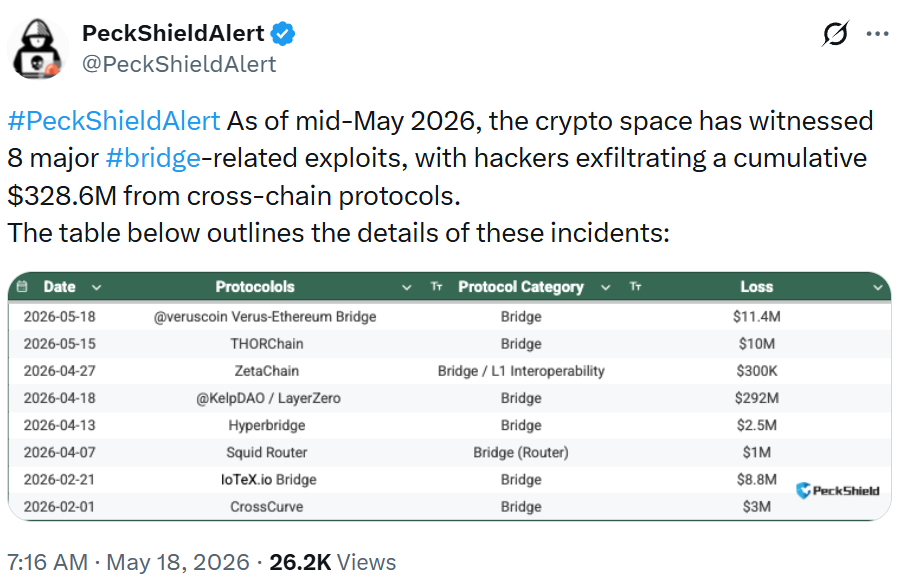
The recent exploit on the Versus-Ethereum bridge was the eighth major attack against DeFi bridges in 2026 so far, with cumulative losses totalling $328.6 million.
DeFi bridges remain prime targets for hackers seeking to steal millions of dollars. Source: PeckShield
Misha Putiatin, CEO of smart contract security firm Statemind and co-founder of DeFi protocol Symbiotic, said he regularly fields calls from major traditional institutions exploring DeFi exposure, often with bad timing.
“Five minutes before I have a call with a big traditional institution, another big hack,” he told Cointelegraph.
“They sit there looking at me like, ‘Is this normal? Is this every day for you?”
Still, institutions may get into DeFi, but the terms on which they arrive could reshape it into something that looks a lot more like traditional finance than the open, permissionless system its builders envisioned.
DeFi has become too complex for DYOR
At the beginning of April, North Korea’s Lazarus Group was implicated in the $285 million Drift Protocol exploit, carried out through a months-long social engineering campaign in which infiltrators approached Drift contributors at an in-person crypto conference.
The same actors were blamed for the KelpDAO breach a few weeks later, which drained about $290 million from the protocol’s cross-chain bridge.
Total value locked across DeFi fell to around $86 billion from just under $100 billion in two days following the KelpDAO hack in April. The outflows came from pools with no direct exposure to compromised assets, said JPMorgan analysts.
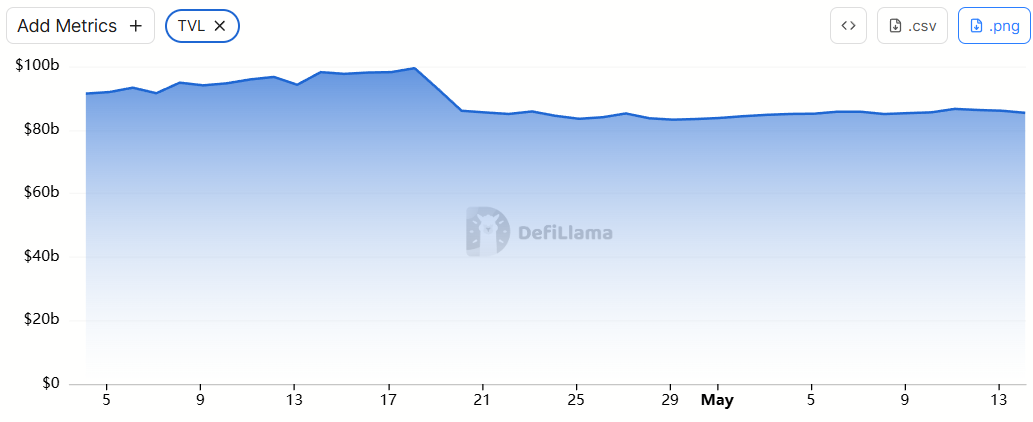
DeFi pools lost around $14 billion following the attack on KelpDAO. Source: DefiLlama
Related: Wall Street’s tokenization boom has a liquidity problem: Axis CEO
Putiatin said the complexity of modern DeFi makes it nearly impossible for ordinary users to know where their risk actually sits. “Do your own research doesn’t work anymore,” he said. “It hasn’t been working for a really long time.”
He explained that the system has become too interconnected and complex to trace.
For example, when a user deposits Ether (ETH) to earn yield while never touching any other token, they can still get hit by a breach on a bridge connected to a token they’ve never even heard of.
Do your own research, or DYOR, is an industry mantra born in the early days of Bitcoin, when protocols were simple enough that a user could read a whitepaper and make an informed decision.
Today, with smart contracts running up to tens of thousands of lines of code, protocols layered on top of one another, and new services and tokens launching at breakneck speed, that expectation has become almost impossible to meet.
“I’m not ever expecting people that just want to invest their money to ever figure out every part of the stack themselves,” Putiatin said.
“I’m not going to spend the next two years of my life trying to figure out how to get a 6% yield,” he added, claiming that traditional finance alternatives are close enough in return that the DeFi’s security risk rarely makes sense for most investors.
A shrinking premium for an unquantifiable risk
Tether (USDT), the world’s largest stablecoin, offers a supply APY of 2.74% on Aave’s Ethereum market, the biggest DeFi lending protocol. That’s below the 3.57% available on a three-month US Treasury bill. Circle’s USDC (USDC) fares better at 4.14%.
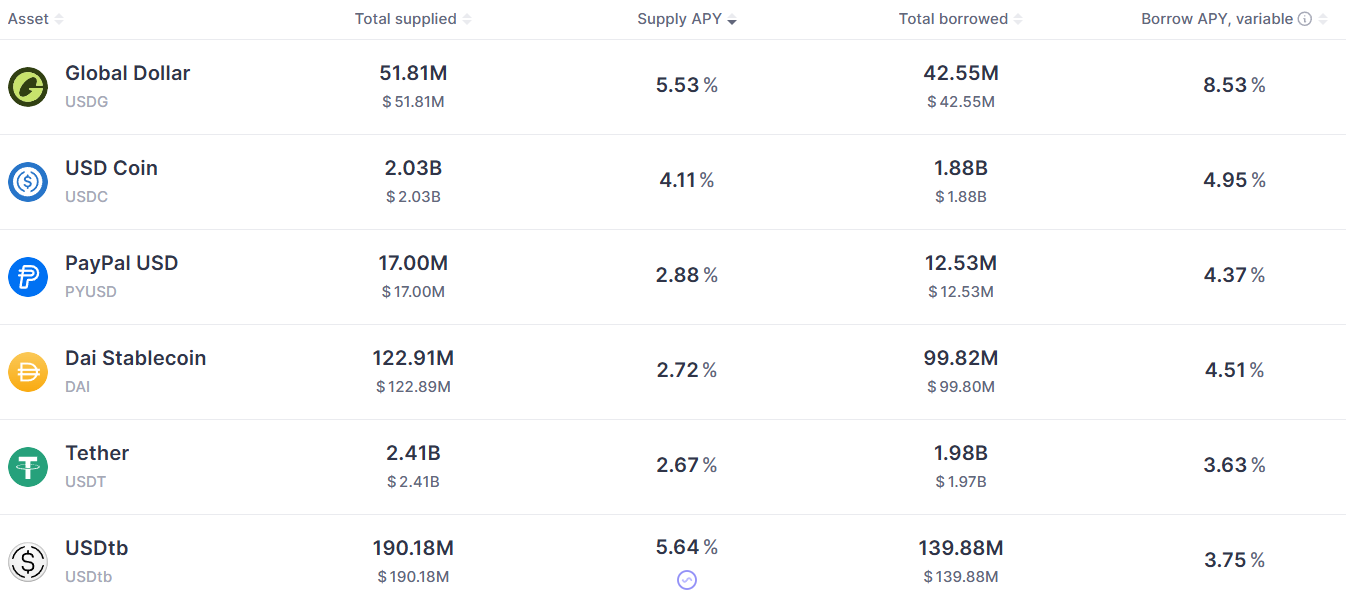
Supply and borrow APY on Aave’s Ethereum market. Source: Aave
Related: Why stablecoins and SWIFT may have to coexist
Putiatin said institutions see this clearly, even if they struggle to quantify it precisely. The problem is that institutions have no reliable framework for pricing the hack risk sitting underneath them.
“They can’t price risk properly,” he said. “So they discount the yield we provide by a lot.”
DeFi yields have compressed as the market has matured, eroding the premium that once justified the risk.
At the same time, the hacks have not slowed down. For investors used to underwriting risk with actuarial precision, shrinking upside and unquantifiable downside is a hard sell.
The cost of DeFi’s seat at the table
Putiatin’s benchmark for when DeFi has genuinely turned a corner is an onchain insurance system capable of underwriting hack risk across the entire ecosystem and pricing it with the kind of actuarial precision that institutions require.
“When we have circuit breakers, curators that can do due diligence, and a framework for that — we will get the fourth one that we desperately need as an industry,” he said. “We will get insurance.”
DeFi has lost over $7.76 billion to exploits, according to DeFiLlama data tracing back to 2016. Though DeFi insurance providers exist, their capacity remains too small to backstop anything approaching institutional scale.
Without that infrastructure, institutions that do come in will do so on their own terms, demanding full know-your-customer checks, custodial controls and tokens that can be frozen at any time.
The open, permissionless architecture that made DeFi worth building gets stripped to satisfy compliance requirements.
“All of the benefits that we have as an industry, they kind of go away,” he said. “Blockchain becomes just a database.”
It is an outcome Putiatin finds more troubling than the hacks themselves. The hacks, at least, are a problem the industry can work on. A version of DeFi that institutions have hollowed out to make it safe enough for their mandates is a surrender of everything the technology was supposed to change.
Magazine: 5 tech predictions the mainstream media got horribly wrong
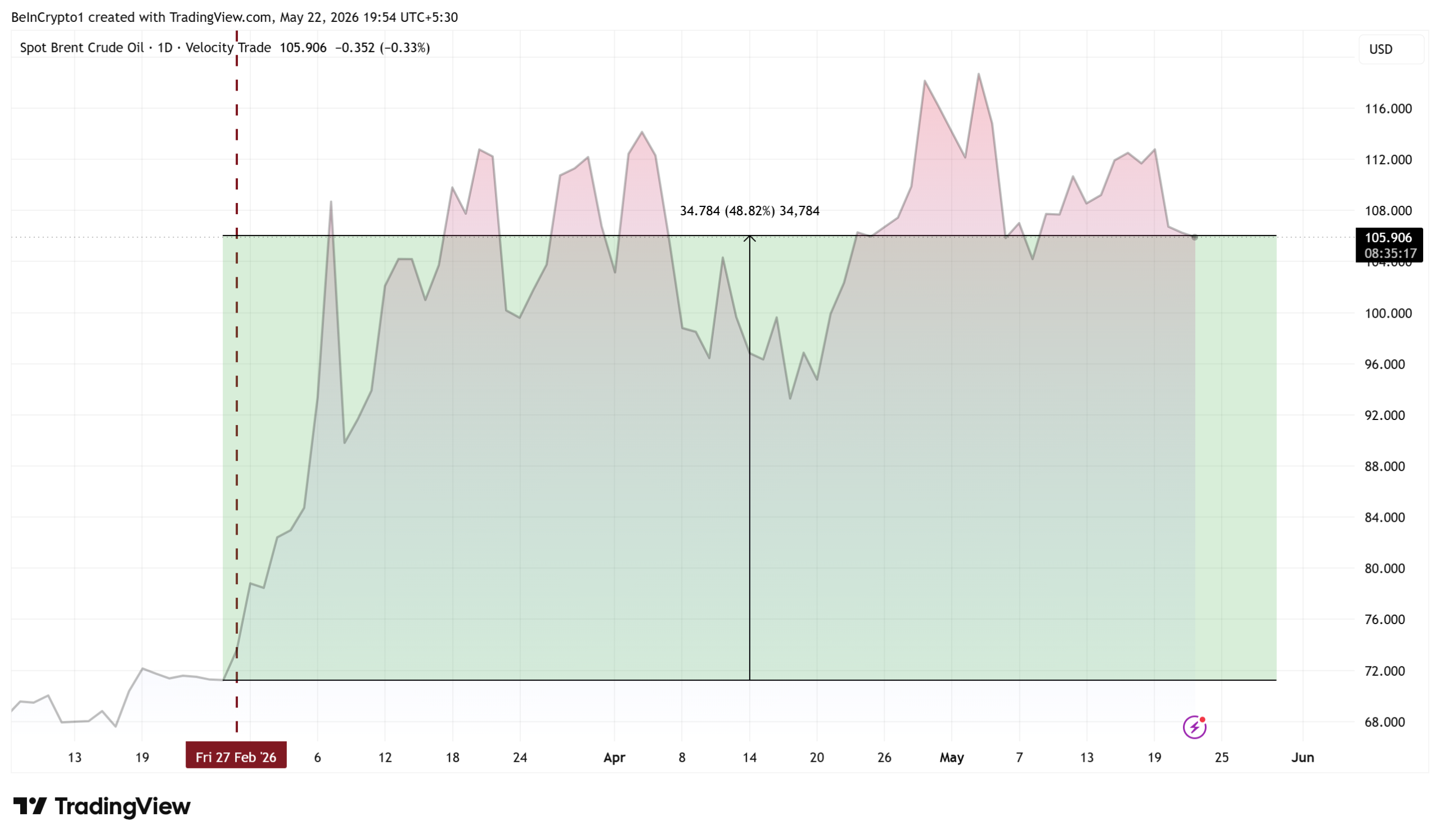
NYSE parent Intercontinental Exchange (ICE) and crypto exchange OKX announced plans to launch perpetual oil futures tied to Brent and WTI benchmarks. The contracts will never expire and will roll out where OKX holds licenses to offer perpetuals.
The product is the first joint launch since the March investment, which valued OKX at $25 billion. The Iran war has kept oil prices elevated and trading desks stretched in recent months.
ICE Moves From Strategic Stake to Shared Product with OKX
ICE Brent and WTI futures prices will anchor the new perpetual contracts, the companies said in a joint statement.
OKX serves more than 120 million customers worldwide, giving ICE distribution into crypto-native markets traditional exchange infrastructure rarely reaches.
The launch follows ICE’s March OKX investment, which secured a board seat at the crypto exchange. The deal also outlined plans to license OKX spot crypto prices and route tokenized NYSE securities through the exchange.
ICE Chair Jeffrey Sprecher said the March deal aimed to bring on-chain infrastructure to trading, settlement, and capital formation.
Friday’s product is the first concrete delivery on that roadmap, with ICE Senior Vice President Trabue Bland noting the new contracts open the company’s regulated oil markets to OKX users.
“These new OKX perpetual contracts, based on ICE’s deep, liquid, transparent, and global oil markets, allow OKX’s customer base of 120 million retail traders to access energy benchmark products,” said ICE Senior Vice President Trabue Bland.
Follow us on X to get the latest news as it happens
By wrapping Brent and WTI in a perpetual futures contracts structure, ICE pushes its core energy franchise into a crypto-native format.
The move also fits the broader real-world asset (RWA) tokenization trend that has pulled treasuries, equities, and commodities onto blockchain rails this year.
Why Perpetual Oil Futures Fit the Iran War Era
Brent crude rose to about $105.90 a barrel on Friday, nearly 50% above pre-war levels. The 2026 Iran conflict and the Strait of Hormuz standoff continue to feed the move.

“Energy markets are becoming global, digital, and 24/7. Bringing ICE Brent and WTI to OKX is another step toward that future,” commented Star Xu, founder and CEO of the OKX Exchange.
Tehran has even demanded crypto tolls from tankers passing through the chokepoint. The waterway carries close to a fifth of global oil flows.
Traditional Brent and WTI futures close on weekends and force traders to roll positions before expiry. Perpetual futures avoid both.
They use a recurring funding payment between long and short holders to keep the price near the underlying benchmark
“Oil markets are critical to the world economy. ICE’s Brent and WTI futures markets provide the benchmark prices that energy traders everywhere rely on. Bringing them into regulated perpetual futures is exactly the kind of bridge between traditional and digital markets that market participants have been asking for,” OKX Global Managing Partner Haider Rafique noted.
OKX had already listed USDT-margined oil perpetuals tied to Brent and WTI-linked benchmarks earlier this year.
Trading volume on Hyperliquid silver perpetuals hit roughly $1.1 billion in a single day this year. That figure showed strong appetite for commodity products on crypto rails.
What Traders Should Watch
Contract size, leverage tiers, fees, and the precise launch date were not disclosed Friday. Availability will be limited to OKX licensed regions.
Those today include the European Economic Area, the UAE, Singapore, Australia, and select other markets.
OKX also holds US licenses, although perpetual futures remain restricted for most US retail traders.
For ICE, the project tests whether its energy franchise holds pricing power once retail traders gain a simpler entry point.
For OKX, it is another step toward becoming a distribution layer for traditional benchmarks, but that bridge being able to hold will depend on launch volumes.
Price discovery may also shift once retail flows can react around the clock to tanker and ceasefire headlines. The first weekend after launch may matter more than the first weekday.
The post NYSE Owner ICE Brings Perpetual Oil Futures to OKX as Iran War Drives Demand appeared first on BeInCrypto.
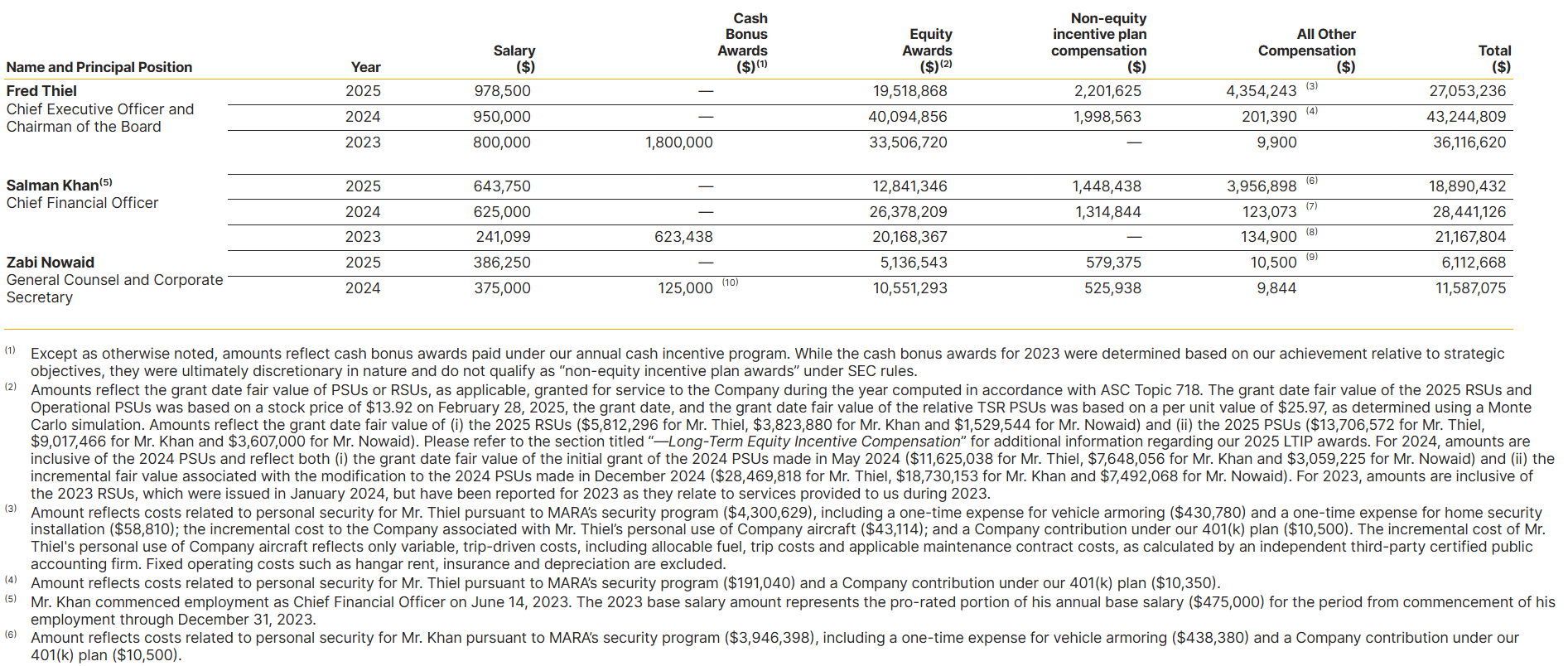
Bitcoin miner MARA Holdings spent $4.3 million on personal security for CEO Fred Thiel in 2025, including $430,780 to armor a vehicle, as crypto companies respond to rising physical attacks on industry executives and investors.
MARA, the seventh-largest Bitcoin mining company worth more than $5 billion, also spent about $58,810 on Thiel’s home security installations and reported additional expenses related to the security measures of other executives, according to its DEF 14A filing with the US Securities and Exchange Commission on April 30.
The filing shows that MARA spent a total of $4.3 million on Thiel’s security during fiscal year 2025, including the armored vehicle, bodyguards and home security fortifications.
Thiel’s security costs rose sharply from 2024, when MARA reported $191,040 in personal security costs for the CEO. His total “All Other Compensation” rose to $4.4 million in 2025 from $201,390 a year earlier.
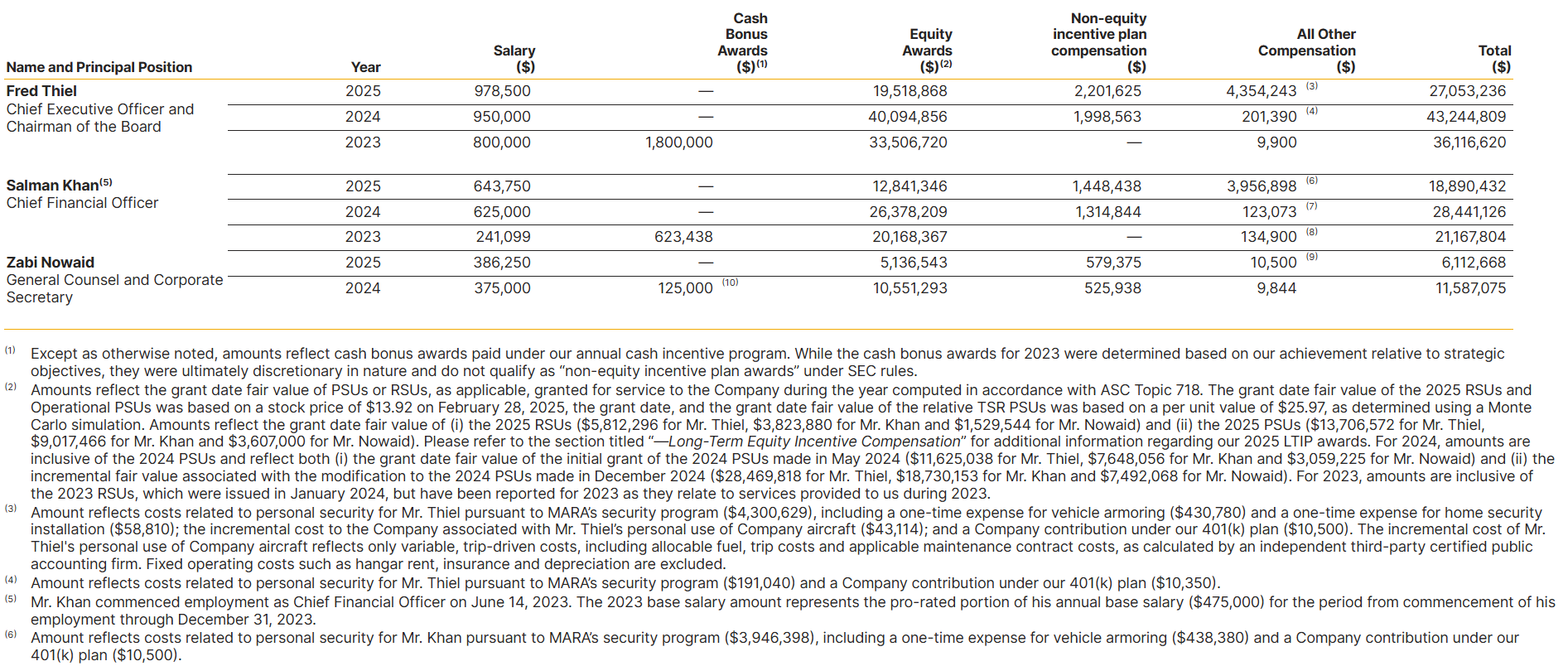
MARA Holdings DEF 14A filing for fiscal year of 2025 with the Securities and Exchange Commission. Source: SEC.gov
The disclosures come as crypto-linked physical attacks, often called wrench attacks, have increased globally. The spending shows how physical security has become a material corporate cost for some crypto companies as executives face threats tied to the public visibility and portability of digital assets. Unlike traditional financial theft, wrench attacks use coercion, kidnapping or violence to force victims to surrender private keys, passwords or account access.
The filing also shows that MARA spent $3.9 million on personal security for chief financial officer Salman Khan in 2025, including $438,380 to armor a vehicle.
Cointelegraph has approached MARA for comment on the growing security spending.
Related: Polymarket team says user funds safe as exploit losses climb above $600K
Wrench attacks targeting crypto investors see alarming rise
Cybersecurity firm CertiK reported 72 verified physical coercion incidents in 2025, up 75% from a year earlier.
France saw the biggest number of such incidents in 2025, with 19 confirmed wrench attacks. In response, Jean-Didier Berger, minister delegate to the interior minister of France, promised to implement new “preventative measures” against these threats.
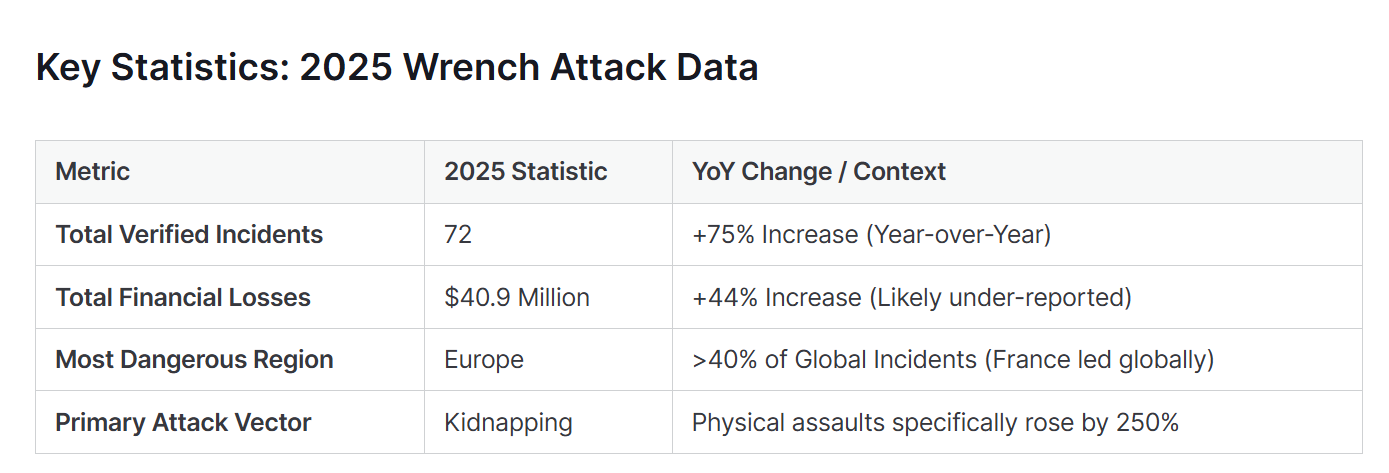
Crypto wrench attacks, key stats for 2025. Source: CertiK
At least 88 people, including 10 minors, have been reportedly indicted in connection with alleged wrench attacks against crypto owners in France, leading up to April 27.
Earlier in February, a senior employee at Binance’s French unit was the victim of an armed home invasion. French authorities arrested three suspects hours after the break-in, Cointelegraph reported on Feb. 13.
Magazine: The legal battle over who can claim DeFi’s stolen millions
Polymarket Admin Wallet Exploited on Polygon, Says ZachXBT

Bolivian puppet regime and US Pentagon target leftist strike leaders

MOON 491 Network Player/Preamplifier and 461 Amplifier Launch With Canadian Muscle


-

 Crypto World7 days ago
BloFin War of Whales 2026 Grand Prix opens registration for $5M trading championship
-

 Sports7 days ago
Napoleonic enters 2026 Doomben 10,000 field via Abounding withdrawal
-

 Tech7 days ago
Google reimburses Register sources who were victims of API fraud
-

 Crypto World7 days ago
BeInCrypto 100 Institutional Awards Nomination: KAST for Best Digital Assets Neobank and Best Digital Assets Fintech
-
 Crypto World7 days ago
Bitcoin Battles US Bond Nerves With BTC Price Dip Toward New May Lows
-

 Crypto World7 days ago
ICE and CME urge US regulators to curb Hyperliquid energy trading
-

 Fashion6 days ago
On the Scene at Gucci’s Cruise Show in New York City: Mariah Carey, Kim Kardashian, Lindsay Lohan, Iman, and More!
-
 Crypto World7 days ago
Wall Street’s Boldest Gold Prediction Has Russians Rushing to Buy
-

 Crypto World7 days ago
IREN closes $3 billion convertible notes deal amid AI infrastructure expansion
-

 Fashion6 days ago
Trending Western Style Vests Perfect for Summer
-

 Politics6 days ago
Watch: far-right flag-fanatics run over victim, attack locals – Setup By the Left wing for your entertainment
-

 Fashion4 hours ago
Holiday Weekend Open Thread – Corporette.com
-

 Crypto World1 day ago
Blockchain.com files with SEC for U.S. IPO
-

 Fashion6 days ago
Amazon Sundays: Memorial Day Hosting
-

 Entertainment6 days ago
Off Campus Easter Eggs Explained: Characters, Stories, More
-

 Crypto World7 days ago
BeInCrypto 100 Institutional Awards Nomination: KuCoin for Leader in Digital Asset Adoption and Best Trading Infrastructure
-

 Business7 days ago
Strategies for Australian Businesses Entering Southeast Asian Markets
-

 Politics7 days ago
Voter disenfranchising, bulldozer operations, trampling democracy in India
-
 Crypto World7 days ago
Traditional Financial Exchanges Sound Alarm on HYPE’s Commodity Perps
-
Business6 days ago
Australia defends property tax changes designed to fix ‘broken’ housing
You must be logged in to post a comment Login