
Crypto World
RWA market reaches $34.18B as equities surge 390.4%



Onchain real-world assets have reached $34.18 billion as of September 15, 2026, after growing 85.2% since the start of the year, while only around 12% of tracked tokenized capital is being used in onchain financial applications.
Summary
- Onchain RWA assets reached $34.18 billion by September 15, rising 85.2% year to date overall.
- Bonds and money market funds led with $18.29 billion, contributing most new onchain asset value.
- Tokenized equities grew 390.4% year to date, lifting their tracked RWA market share to 13.0%.
- Only around 12% of tracked tokenized asset value is deployed across onchain financial applications today.
- SEC relief now permits limited tokenized NMS stock trading through qualifying permissioned onchain venues temporarily.
Binance Research published the figures on September 18 in its“The RWA Activation Era” report, using DefiLlama data and its own methodology to compare asset issuance with onchain use. Bonds and money market funds remained the largest category at $18.29 billion, while tokenized equities reached $4.43 billion after rising 390.4% year to date.
The report separates tokenization into two measures. Its Programmable Asset Ratio, or PAR, compares tokenized value with the size of the underlying market. Capital Activation Rate, or CAR, measures how much eligible tokenized value is deployed in liquidity pools, lending markets, collateral systems and other verified onchain applications.
RWA growth is being led by bonds and tokenized stocks
Bond and money market funds generated 54.7% of this year’s increase in tracked RWA assets, Binance Research said. Equities contributed another 22.4%, meaning the two categories produced more than three-quarters of the added market value through September 15.
Other categories expanded at slower rates. Gold and commodities rose 46.6% year to date, private credit increased 43.6%, and real estate gained 17.9%, according to the report.
Tokenized equities posted the fastest percentage growth among the main categories tracked by Binance Research. Their share of RWA assets rose from 4.9% to 13.0%, even though the $4.43 billion onchain balance represented only 0.0029% of the $151.9 trillion listed-equity reference market used in the report.
Across all covered markets, Binance Research estimated that only around 0.01% of the underlying asset base has been tokenized. Bond and money market funds had an indicative PAR of 0.0171%, leaving their onchain share small compared with the traditional markets they represent.
The latest figures extend an expansion documented earlier in the year. In June, Binance Research had recorded rapid growth in tokenized stocks while bond and money market funds added billions of dollars in onchain value.
Most tokenized capital remains outside DeFi applications
The report found an overall CAR of roughly 12%, meaning close to $12 of every $100 in qualifying tokenized asset value was deployed in tracked financial applications. Binance Research used the measure to separate issued assets from assets being used as liquidity, collateral or lending capital.
A separate DeFiLlama-based review published earlier in September produced a similar result.As crypto.news reported, around $3.79 billion of a $34.6 billion tokenized RWA market was deployed in protocols at the time, leaving roughly 89% outside the applications covered by the dataset.
Utilization varies sharply by asset type. Binance Research put private credit CAR at 49.67%, the highest among its tracked categories. Equity CAR rose from 1.95% at the start of the year to 7.54% by September 15.
Within tokenized-equity DeFi activity, liquidity pools accounted for 65.4% of deployed value and lending represented 28.1%. Together, the two uses made up 93.5% of equity DeFi total value locked measured by the report.
Product-level data can look very different from the market average. The crypto.news review of DefiLlama data found BlackRock’s BUIDL at 0.64% utilization, Franklin Templeton’s BENJI at 0%, and Circle’s USYC at 0.52%. Centrifuge’s JAAA and Re Protocol’s reUSD both had utilization above 97% in the same dataset.
U.S. rules now give tokenized equities a limited onchain route
One day before Binance Research published its report, the U.S. Securities and Exchange Commission approved a temporary framework for limited onchain trading of tokenized National Market System stocks.
The SEC’s September 17 Innovation Exemption gives qualifying Tokenized Securities Venues conditional relief from the Exchange Act definition of an exchange. Related relief covers certain liquidity providers supplying proprietary capital through permissioned automated market makers and liquidity pools.
The five-year exemption comes with limits. Tokenized NMS stocks must provide the same rights and privileges as corresponding traditional shares, including voting and dividend rights where applicable. Issuers must be able to object when an unaffiliated third party wants to make a tokenized version of their stock available on a qualifying venue.
Trading venues must use auditable public smart contracts on public permissionless distributed ledgers, follow trading halts in the underlying security, maintain records and publish required transaction information. Anti-fraud and anti-manipulation provisions continue to apply.
The regulator is seeking public comment while it considers longer-term rules. SEC Chairman Paul Atkins said the exemption would permit trading in a permissioned environment “while the Commission considers the need for additional action” on onchain stock trading.
Market infrastructure is moving tokenized assets toward use
Institutional projects are putting tokenized securities into trading, collateral and settlement workflows. On September 16, DTCC said Ondo Finance subsidiary Oasis Pro Markets had joined Fund/SERV, becoming the platform’s first tokenization member. DTCC said Fund/SERV processes more than 85% of U.S. mutual fund transaction activity.
DTCC had already completed production transactions using DTC-tokenized assets on July 15. Participating firms used tokenized securities in Treasury repo, equity delivery-versus-payment, securities lending, collateral pledge and central-counterparty margin workflows, according to the company.
The DTC tokenization service remains scheduled for an October 2026 launch. DTCC said tokenized versions of DTC-custodied securities are designed to retain the same ownership rights, entitlements and investor protections as their traditional forms.
DeFi lenders have built separate channels for RWA collateral. Aave launched Horizon in August 2025 for qualified borrowers seeking stablecoin liquidity against tokenized assets. By February 2026, Aave Labs said deposits had exceeded $440 million.
Aave plans a dedicated RWA credit hub on Avalanche where eligible institutions could borrow USA₮ against approved tokenized financial assets. Aave’s governance materials had previously specified that a dedicated RWA hub would follow the initial Avalanche V4 deployment through a separate governance process.
Binance Research sees issuance and utilization moving separately
For tokenized equities, Binance Research used three 2030 scenarios from an earlier report: approximately $61 billion, $349 billion and $987 billion in tokenized equity value. The firm presented the figures as scenario ranges, not company-confirmed future market values.
Under its $349 billion base scenario, Binance Research estimated a PAR of 0.23%. Its sensitivity analysis showed that moving equity CAR from 10% to 20% at that asset level would increase deployed capital from $34.94 billion to $69.87 billion without requiring more tokenized supply.
The report calls the next stage an “RWA Activation Era,” referring to tokenized assets becoming usable in exchanges, lending and collateral markets. Current figures still show a large difference between asset value represented onchain and capital deployed in those applications.
Binance Research cited earlier platform data showing 58.5% of early bStocks users used perpetuals or direct equities as well. The report said future adoption will depend on whether distribution channels and financial applications convert access to tokenized assets into recurring liquidity and financing activity.

Crypto World
The S&P 500 Has Returned About 11% Annually Since 1958. Here’s the ETF I’d Trust for the Next 30 Years.

In 1996, these were the S&P 500‘s (SNPINDEX: ^GSPC) largest holdings by market cap:
-
Coca-Cola: $130.6 billion
-
ExxonMobil: $121.7 billion
-
Intel: $107.6 billion
-
Microsoft: $99.4 billion
-
General Electric: $97.4 billion
-
Merck: $86.4 billion
-
International Business Machines: $73.5 billion
-
Procter & Gamble: $72.5 billion
-
Johnson & Johnson: $66.3 billion
-
Walmart: $52.2 billion
30 years later, all of these companies remain well-known names in the current economy. But it’s fair to say that they don’t at all resemble what the index looks like today. Microsoft is the only “Magnificent 7” stock still in the Top 10. Apple was in the midst of a corporate crisis until Steve Jobs eventually returned to the company. Nvidia, Amazon, Meta Platforms, Alphabet, and Tesla weren’t even publicly traded companies (or didn’t exist) back then.
Missed AI’s “Act 1”? Act 2 Could Be 15x Bigger. Most investors think they missed the AI boat because they didn’t buy Nvidia in 2005. But according to our analysts, we’re only at the end of “Act 1″—the R&D phase. “Act 2” is the global rollout. Continue »
Economies evolve over time, sometimes significantly. When investing for the long term, you can try to pick stocks that will survive and thrive. Or you can buy an ETF that tracks the economy and provides broad exposure. That’s why the Vanguard Total Stock Market ETF (NYSEMKT: VTI) is my choice for a core holding for a multidecade portfolio.

VTI doesn’t need to pick the next big winners
Since 1958, the S&P 500 has returned an average of 11% per year. But as demonstrated just now, it’s a rapidly changing group of stocks that is driving those returns over the year.
That’s what makes the Vanguard Total Stock Market ETF so compelling. It doesn’t need to try to identify and pick individual winners. It will increase its exposure to them naturally over time as the market caps of these companies grow.
If you had owned the S&P 500’s top 10 holdings in 1996 and held them for the next 30 years, you probably would have still done fairly well. But you would have missed out on the emerging tech names that grew to dominate the market and economy over that time.
Plus, the Vanguard Total Stock Market ETF owns the smaller companies that often turn into bigger companies down the road. By investing in the S&P 500, you limit yourself to just the large companies that have already established themselves. Adding small-cap and mid-caps to the mix potentially gets you in earlier on the next decade’s leaders.
That’s why I’d own this ETF and have it act as the core of my portfolio over the next several decades. Its diversification, low cost, and ability to change over time make it an ideal long-term holding.
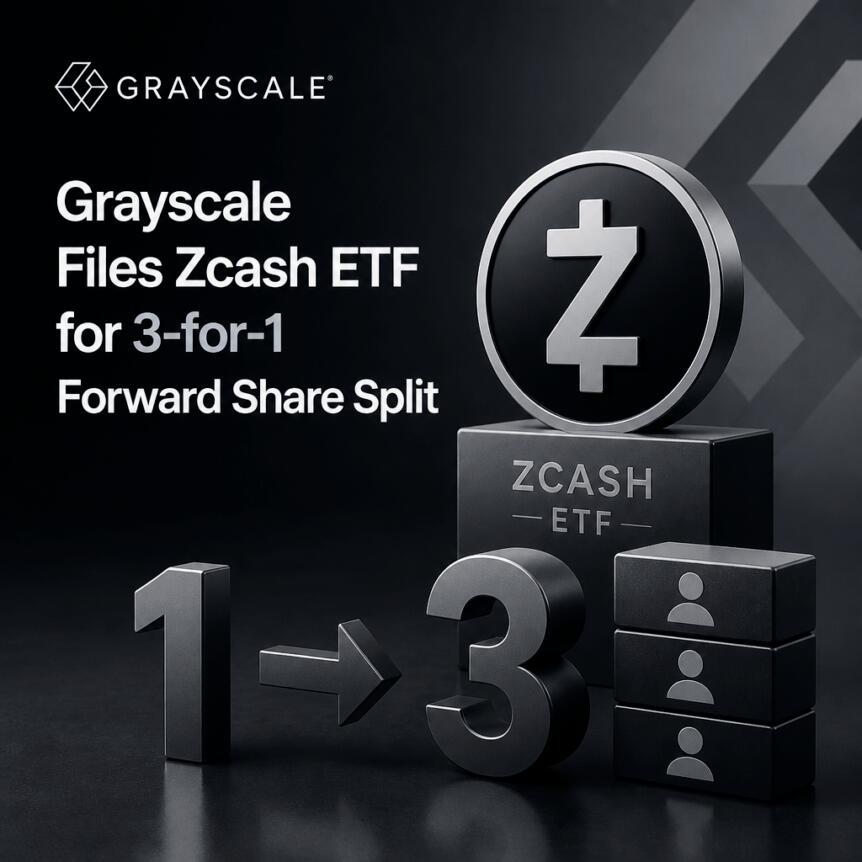
Grayscale’s Zcash ETF is set to undergo a 3-for-1 forward share split, according to a filing submitted with the U.S. Securities and Exchange Commission. The change is scheduled to take effect after the market close on Sept. 28, with shareholders set to receive two additional shares for every share they hold.
In a press release cited in the ETF filing, Grayscale said the forward split is designed to reduce the price per share while increasing the total number of shares outstanding in equal proportion—leaving the value of an investment unchanged in theory.
Key takeaways
- Grayscale’s Zcash ETF (ZCSH) plans a 3-for-1 forward split effective after the Sept. 28 market close.
- Shareholders receive two extra shares per held share; the filing describes the change as proportionate, not value-accretive.
- Grayscale expects the lower per-share price to improve accessibility, referencing that the unit price had become “too high.”
- The move comes as Zcash’s broader market momentum has been strong over the past year, with the token up about 2,800% in that period, according to the ETF materials.
What the 3-for-1 split means for ZCSH holders
The SEC filing describes the mechanism clearly: at the close of trading on Sept. 28, shareholders will receive two additional shares for each share they own. Grayscale’s included explanation—referenced in the filing—frames the result as a straightforward arithmetic adjustment rather than a change in underlying value.
For example, the materials illustrate that an investor holding 10 shares valued at $300 each—totaling $3,000—would own 30 shares priced at $100 each after the split, with the portfolio’s total value remaining the same.
The practical effect for investors is largely operational. Shares typically trade at a lower nominal price after such events, which can influence how the product is perceived and how easily some investors can size positions. However, the split does not inherently alter the ETF’s exposure to its underlying asset.
Why Grayscale is lowering the per-share price
Grayscale said the forward split is expected to “decrease the price per share” of the fund while increasing the share count proportionately. The ETF’s materials connect this to accessibility concerns, noting that Zcash’s token has risen sharply over the past year and that the per-unit price had become considered too high.
According to the filing-related press release, ZEC has increased by about 2,800% over the last year, and that surge helped push the ETF unit price to a level Grayscale deemed less convenient for potential investors. The split is therefore positioned as a way to make the ETF easier to buy and track in everyday terms.
For traders, these changes often matter most around implementation, including how order sizes and price targets are recalibrated. For longer-term investors, the key question is whether sentiment and liquidity improve as the share price becomes more “consumer-friendly,” even though the economics should remain proportionate.
Broader Zcash market momentum and ETF spotlight
While the share split is a structural adjustment inside the ETF wrapper, the timing also lands amid renewed attention on Zcash itself. Cointelegraph previously reported that Zcash had gained about 20% over a 24-hour period after Paradigm co-founder Matt Huang disclosed an unspecified purchase of ZEC.
In that coverage, Huang characterized Zcash as a “private complement to Bitcoin” and discussed the importance of long-term funding for the project, particularly as AI-driven cyber capabilities and quantum computing advance. Earlier coverage also linked Zcash’s performance to the visibility of privacy-focused assets in a market that remains sensitive to both regulation and technological narratives.
The Block reported that ZEC climbed as high as $1,521 early Friday, which would have been viewed as an effective new all-time high for the token before retreating slightly. That context matters for ETF holders and prospective investors: when the underlying asset experiences volatility and headline-driven flows, structural moves like share splits can draw additional attention to the vehicle, even if the split itself is not a market catalyst.
What investors should watch next
The most immediate checkpoint is the Sept. 28 record date tied to the forward split, since the share ratio will take effect after the market close. After that, investors should monitor how ZCSH trades relative to its adjusted share price—especially how liquidity and bid-ask spreads behave around the split window.
More broadly, the sustained relevance of ZCSH will likely track Zcash’s next fundamental and technical developments, alongside market demand for privacy-oriented assets. Even with the per-share price coming down, the underlying question for investors remains unchanged: whether the ETF continues to attract steady inflows as ZEC’s volatility and narrative momentum evolve.
Related references: Grayscale’s SEC filing includes details of the forward split (SEC EDGAR: zcsh-ex99_1.htm), and Cointelegraph previously reported on Zcash’s short-term price action and Matt Huang’s disclosure of a ZEC purchase (Cointelegraph coverage).


Hong Kong has jailed former China Construction Bank (Asia) relationship manager Lam Chun-yin for four years after he admitted accepting more than $470,000 in Tether to authenticate false bank instruments carrying a stated value above $1.6 billion.
Summary
- Hong Kong jailed former CCB Asia manager Lam Chun-yin for four years over USDT bribes.
- Lam accepted more than $470,000 in Tether to authenticate false bank documents totaling $1.6 billion.
- The court ordered HK$3.7 million restitution, matching the cryptocurrency bribes Lam received from conspirators involved.
- ICAC obtained arrest warrants for other people implicated after CCB Asia uncovered the scheme internally.
- A New York court let key White Rock claims against China Construction Bank survive dismissal.
The Independent Commission Against Corruption said on Sept. 18 that District Court Judge Ernest Lin Kam-hung sentenced the 32-year-old after his guilty plea to one count of conspiracy for an agent to accept advantages under Hong Kong’s Prevention of Bribery Ordinance and Crimes Ordinance.
The court ordered Lam to repay approximately HK$3.7 million to CCB (Asia), an amount equal to the bribes identified in the case. ICAC said the judge started from a six-year prison term and reduced it by one-third because Lam pleaded guilty, leaving a four-year sentence after finding no exceptional reason for another reduction.
Hong Kong bribery case centered on false bank guarantees
At the time of the offenses, ICAC said Lam worked in the Consumer Banking Division at CCB (Asia)’s Causeway Bay retail branch, where he served individual customers. The agency said his role did not cover business credit facilities or letters of credit, and the bank had never authorized him to handle such products.
Vesttoo Limited, which has since ceased operations, ran a platform for insurance-related investment transactions. ICAC said investors using the platform had to provide bank-issued standby letters of credit so an issuing bank could ultimately cover relevant losses if an investor failed to meet its obligations.
Yu Po Holdings Limited entered the platform as an investor in early 2022. The anti-graft agency said a criminal group then arranged for Lam to falsely present himself as China Construction Bank’s contact person for standby letters of credit connected with Yu Po.
Between April and June 2022, Lam admitted conspiring with a Vesttoo department head and other associates to receive more than $470,000 worth of Tether. ICAC said he authenticated multiple standby letters of credit that falsely purported to come from China Construction Bank and two collateral letters presented as Yu Po documents endorsed by the bank. The stated value of the instruments exceeded $1.6 billion.
An earlier ICAC charge announcement gave more detail about the document count. In June 2025, prosecutors alleged that Lam had been involved with 88 false standby letters of credit and two false collateral letters. His later guilty plea covered the bribery conspiracy, while a separate conspiracy charge involving false instruments was left on the court file.
CCB Asia uncovered the scheme through an internal review
CCB (Asia) found the problem during an internal investigation and then filed a corruption complaint, according to ICAC. The agency said its inquiry established that neither China Construction Bank nor its related companies had issued any of the standby letters of credit or collateral letters involved in Lam’s case.
During sentencing, Judge Lin described Lam’s criminality as “higher than in other similar cases,” according to ICAC. The judge cited the use of forged bank documents, the potential risk faced by the bank and damage to Hong Kong’s standing as an international financial center.
ICAC said people involved in the scheme had tried to make the bribery harder to detect by routing payments through cryptocurrency. The commission said it had applied for court warrants to arrest other individuals implicated in the case, but its Sept. 18 public statement did not identify the wanted people.
Public ICAC materials reviewed for this report do not disclose wallet addresses or transaction hashes for Lam’s Tether payments. The specific transfers therefore cannot be independently matched to public blockchain transactions from the information released by the agency.
The use of USDT in the case does not mean the payments were untraceable. In related coverage,crypto.news reported that Hong Kong investigators traced 8,127 USDT in a separate trafficking case to an exchange account and then to a bank transfer. The Hong Kong Court of Appeal relied on evidence from that payment trail when it upheld a 56-month prison term in August.
Vesttoo-linked claims continue through U.S. courts
The conduct behind Lam’s Hong Kong case sits within a larger series of disputes tied to Vesttoo’s reinsurance collateral. Vesttoo and affiliated entities filed Chapter 11 cases in Delaware in August 2023 after questions emerged over letters of credit used to support insurance and reinsurance transactions. A Vesttoo liquidating trust remained active in the bankruptcy docket in 2026.
A separate New York case brought by White Rock Insurance, an Aon subsidiary, concerns letters of credit allegedly used in Vesttoo transactions. White Rock alleges its segregated insurance cells released roughly $140 million in premiums after relying on purported collateral associated with China Construction Bank entities. The allegations remain civil claims and are not findings from Lam’s Hong Kong criminal sentence.
On April 21, New York Supreme Court Justice Andrea Masley rejected most of China Construction Bank’s attempt to dismiss White Rock’s amended complaint. The court allowed claims including fraud-related and negligent-supervision theories to continue, while dismissing a separate negligence claim as duplicative.
At the motion-to-dismiss stage, the New York court treated White Rock’s pleaded facts as allegations that still require proof. The order said there were factual questions over whether Lam had actual or apparent authority and whether CCB entities could face liability for his alleged conduct. The court expressly stated that those questions would have to be developed later in the litigation.
Another U.S. case involving Vesttoo collateral reached the Fifth Circuit Court of Appeals in April. Porch.com sued reinsurance broker Gallagher Re over duties connected with a reinsurance arrangement involving Vesttoo, White Rock and collateral expected from China Construction Bank.
The Fifth Circuit affirmed dismissal of some Porch claims but revived one contract claim concerning post-placement administrative services and sent that part of the case back for further proceedings. The appeals court said the scope of services customarily performed by a reinsurance intermediary presented a factual question that should not have been resolved through a motion to dismiss.
ICAC is still seeking other people tied to the case
The Sept. 18 sentencing does not close ICAC’s investigation into every person connected to the false instruments. The agency said it had sought warrants for other implicated individuals after Lam’s case reached sentencing.
ICAC had previously identified Vesttoo employee Udi Ginati and intermediary Wan Cheuk-lun in its June 2025 charging announcement, saying Lam was accused at the time of receiving Tether from Ginati, Wan and others. The same announcement separately charged former Standard Chartered Bank (Hong Kong) senior relationship manager Lee Ka-man with conspiracy to use four false standby letters of credit purportedly issued by Standard Chartered. Those earlier accusations must be distinguished from Lam’s Sept. 18 conviction and sentence.
The anti-graft agency said CCB (Asia) and Standard Chartered Bank Hong Kong cooperated with its investigation when the charges were announced. Its Sept. 18 statement said CCB (Asia) had lodged the corruption complaint after detecting the conduct internally and continued assisting investigators.
Hong Kong authorities have continued dealing with crypto-linked crime in other cases during 2026. Hong Kong police received 255 reports tied to the alleged Fun Coffee crypto investment scheme, with reported losses reaching HK$104 million. Police said the scheme involved USDT-based investment plans and had led to several arrests by August.
Separately, the city has continued expanding its regulated digital-asset framework. crypto.news reported on Sept. 17 that Hong Kong plans to expand regulated stablecoin trading and tokenized-asset infrastructure under its 2026 policy program.
ICAC’s latest public statement in Lam’s case says the commission is pursuing the remaining people implicated through court-issued arrest warrants, while Lam must serve the four-year sentence and repay approximately HK$3.7 million to CCB (Asia).
Jim Cramer expects a relatively quiet week for Wall Street, with only a few major corporate events left on the calendar before September ends.
Much of the month’s major macroeconomic news has already passed, with the Federal Reserve, European Central Bank, and Bank of Japan all raising rates. That leaves the last full week with one analyst meeting and a short earnings run.
September Is Doing What September Usually Does
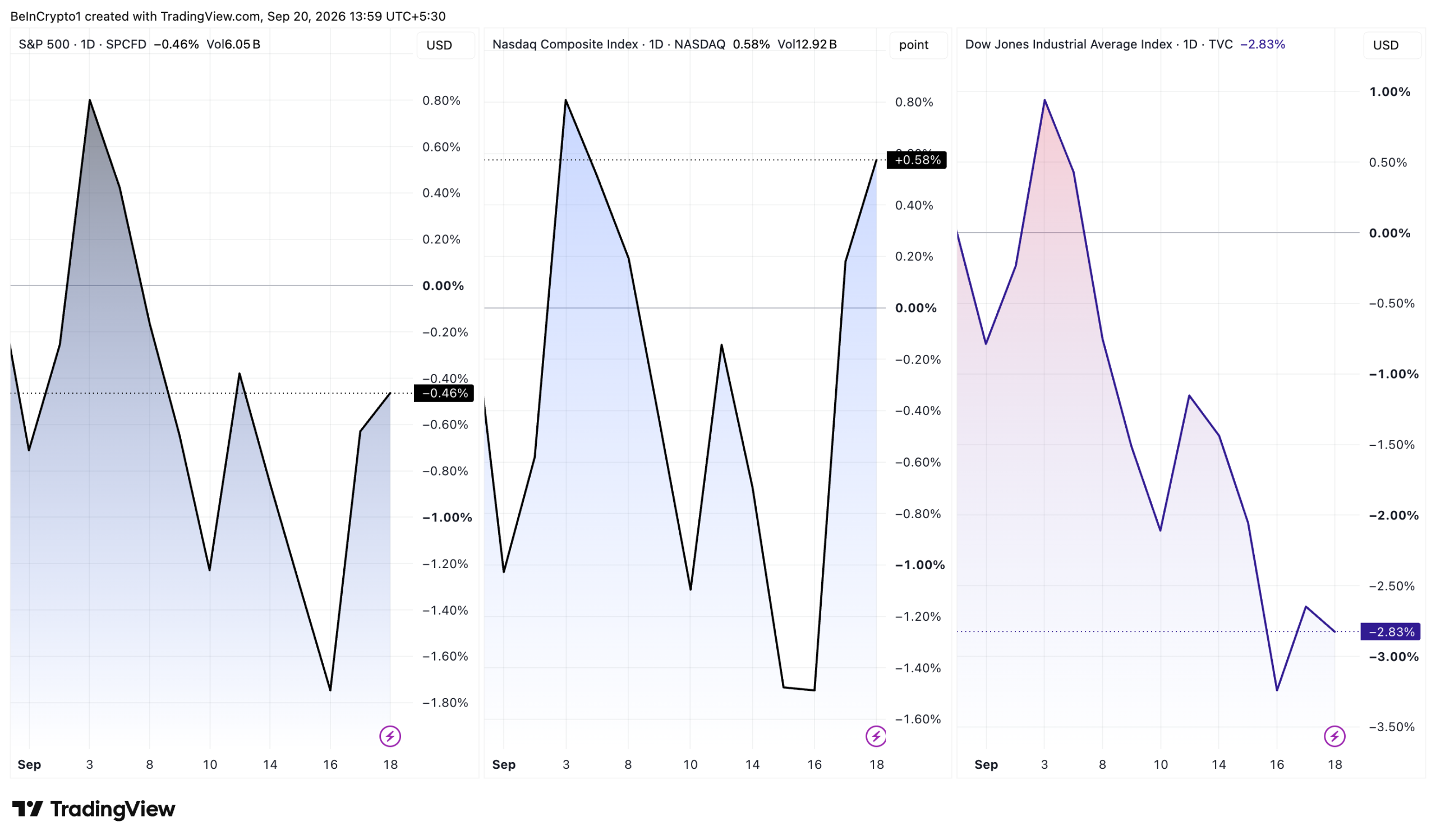
The major US indexes have posted mixed results so far in September. The Dow Jones Industrial Average has lost roughly 3% so far in September. Meanwhile, the S&P 500 has edged up 0.46%, and the Nasdaq Composite has gained 0.58%.
Follow us on X to get the latest news as it happens

The blue-chip index also absorbed most of the damage from the Fed’s decision, falling 1.7% on the week.
The Nasdaq rose 0.7% over those same five sessions as buyers returned to artificial intelligence (AI) names. The Fed also signaled that further tightening could follow.
The calendar also works against US stocks, adding to pressure from central banks. Historically, all three indexes have struggled in this stretch.
The Dow has averaged a 0.8% September loss since 1950, and the Nasdaq has dropped 0.9% since 1971, a seasonality record that has been punishing autumn optimism for decades.
Cramer set expectations accordingly.
“Remember, September is the cruelest month. … Here’s hoping we’ll have a relatively sedate couple of weeks,” he said.
Jim Cramer’s Stock Watchlist Runs From Okta to Costco
With the macroeconomic calendar relatively light, individual companies could take more of the market’s attention. Cramer identified Okta’s Wednesday analyst meeting as the week’s most consequential corporate event.
The cybersecurity company’s stock has doubled in 2026. CEO Todd McKinnon has also positioned the company’s technology to identify and track AI agents.
“It got me thinking, how is it possible that we have all these real smart people at these AI companies, and they have us all worried about a practical cyber solution?..Why don’t they, like, talk to the cybersecurity guys?” Cramer stated.

Cramer also highlighted several earnings reports coming out this week. KB Home reports on Tuesday, with shares trading down 17.43% in 2026. Its second-quarter revenue already fell 27% from a year earlier, keeping the housing market in focus.
General Mills reports on Wednesday, down roughly 20% this year. Cramer said he cannot recommend it, citing higher input costs and GLP-1 weight-loss drugs. Cintas and Paychex also report on the same day.
Darden Restaurants reports Thursday holding a 12% gain, though Cramer prefers Chili’s owner Brinker International, which has run far ahead of it this year.
Costco closes the week after Thursday’s bell. Shares have slid from above $1,000 in late April to about $894, with Cramer watching for signs of whether younger members are becoming harder to retain.
A quiet week still carries a test, covering housing, small business, groceries, and warehouse retail.
Subscribe to our YouTube channel to watch leaders and journalists provide expert insights
The post Jim Cramer Says the Upcoming Week Looks Quiet. Here's What He'll Still Be Watching appeared first on BeInCrypto.


Kalshi has filed with the SEC and CFTC on September 18 to list U.S. stock and ETF-linked perpetual futures, proposing 23-hour weekday trading and a 15.50% minimum customer margin.
Summary
- Kalshi filed stock perpetual rules with regulators, while CFTC approval remains pending after September 18.
- Proposed contracts would trade from Sunday evening through Friday, with daily one-hour maintenance windows scheduled.
- Kalshi proposes 15.50% minimum customer margin and cash settlement through its registered Kalshi Klear clearinghouse.
- CFTC records list Apple, Tesla, Microsoft, Nvidia, Amazon, SPY and QQQ perpetuals awaiting approval currently.
- Coinbase and Bitnomial submitted competing stock perpetual proposals on September 18 under separate regulatory processes.
The SEC filing says the contracts would have no preset expiration date and would be treated as security futures products, while the CFTC has not approved Kalshi’s proposal. The regulator’s public product database still listed Kalshi’s equity perpetual submissions as “Approval Pending (45)” on September 20.
Kalshi’s proposed Rule 14.11 sets trading from 6:00 p.m. ET on Sunday through 5:00 p.m. ET on Friday, with a daily maintenance window from 5:00 p.m. to 6:00 p.m. ET. The SEC notice says trading would stop during required regulatory halts affecting the underlying security, while Kalshi could set different hours for a particular contract when its rules permit.
The same SEC filing says the perpetual security futures would settle in cash. Funding payments would be exchanged at the daily settlement time, normally 4:00 p.m. ET when the regular U.S. equity session closes. Kalshi’s rule text sets a 0.002% deadband for small pricing differences and a maximum funding magnitude of 2.00%, while its customer-margin rule requires at least 15.50% of the current market value of each position.
Kalshi Klear would clear every perpetual security-futures transaction under the proposal, according to the SEC filing. The rule text uses a standard contract unit equal to 100 shares of the underlying security, although trading can use smaller permitted units under Kalshi’s specifications.
CFTC records now list separate Kalshi submissions for AAPL, TSLA, MSFT, NVDA, AMZN, SPY and QQQ perpetuals, among other equity-linked contracts filed September 18. Each of those records remained in “Approval Pending (45)” status when checked September 20, so none of the listed stock or fund perpetuals has CFTC clearance yet.
CFTC approval and a November 2 date remain ahead
Kalshi’s SEC filing states that the proposed rule change “will become effective on November 2, 2026, or such later date” as CFTC regulations permit. The SEC’s rulemaking page says public comments are due 21 days after publication in the Federal Register, but the agency had not posted a fixed comment deadline on its page as of September 20.
The SEC separately acknowledged Kalshi’s Form 1-N registration on September 8, allowing the CFTC-designated contract market to notice-register as a national securities exchange for the limited purpose of security futures. The September 18 filing supplies the product rules Kalshi wants to use for perpetual security futures, while CFTC approval remains a separate condition.
Kalshi’s proposed listing standards restrict which securities can serve as underliers. The SEC filing requires an estimated deliverable supply above 20 million shares, market capitalization of at least $100 billion and average daily transaction value of at least $450 million over the prior six months. A security listed for less than six months would need at least $1 billion in average daily transaction value over the prior month, while the rules separately require public float of at least 7 million shares.
The SEC filing gives the Commission another control after effectiveness. It says the SEC, after consulting with the CFTC, may summarily abrogate the rule change within 60 days of its effective date and require Kalshi to refile it under a different Exchange Act process.
Coinbase and Bitnomial filed competing stock-perpetual plans
SEC records show Coinbase Derivatives filed its own security-futures rule change on September 18, the same day as Kalshi. The CFTC database lists Coinbase’s “Single Stock Perpetual Futures Contract” as “Approval Pending (45),” while the SEC filing states that the CFTC had not yet approved Coinbase’s proposal.
As crypto.news reported in its Coinbase stock-perpetual filing coverage, Coinbase had already filed notice registrations earlier in September before submitting the product proposal. The SEC’s September 18 notice covers cash-settled futures on individual equities and exchange-traded fund shares, including perpetual single-stock futures.
Bitnomial Exchange filed a separate SEC proposal on September 18 covering security-futures listing standards, customer margin and related rules. CFTC records show 10 Bitnomial stock perpetual submissions in pending status, including AAPL, MSFT, NVDA, TSLA, AMZN, AVGO, MU, GOOGL and PLTR contracts.
Bitnomial’s SEC filing proposes a 24/5 weekly session from Sunday evening through Friday and a 15.25% minimum initial and maintenance customer-margin floor. The same filing says one standard contract represents 100 shares, funding would be calculated three times daily, and the exchange would halt a stock perpetual whenever the primary listing exchange halts the underlying security.
In related coverage, crypto.news reported that Payward planned to use Bitnomial’s regulated infrastructure for U.S. perpetual products, subject to regulatory approval. The company’s September plan named Bitnomial Exchange and Bitnomial Clearinghouse as the regulated entities handling listing, clearing and settlement.
Kalshi’s Bitcoin perp approval faces a separate court challenge
The CFTC approved Kalshi’s BTCPERP contract on May 29 after reviewing it as a futures contract tied to Bitcoin’s spot price. In its approval release, the Commission cautioned that perpetual contract design “may not be suitable for all asset classes” and encouraged exchanges to seek Commission review for perpetuals referencing assets outside the Bitcoin order.
Kalshi launched its CFTC-approved Bitcoin perpetual contract in early June. Kalshi has since listed other crypto and precious-metals perpetual products, while the September stock filings use the joint SEC-CFTC security-futures process because their underliers are securities. Kalshi Bitcoin perpetual launch coverage
A separate federal case remains pending over the CFTC’s Bitcoin perpetual decision. The docket in Chicago Mercantile Exchange Inc. v. Selig shows CME sued the CFTC and Chairman Michael Selig on June 18, arguing that the May 29 Bitcoin order and related perpetual-contract policy should be vacated. The lawsuit concerns the classification of the Bitcoin perpetual and the CFTC policy statement; it does not constitute a ruling on Kalshi’s September 18 stock-perpetual applications.
The federal docket shows the CFTC moved to dismiss the case on September 2, and no merits ruling had been issued by the latest docket update reviewed. Judge Colleen Kollar-Kotelly’s September 8 schedule gives CME until October 2 to respond, sets an October 16 reply deadline, requires discovery by November 13 and sets cross-motions for November 20, with later amicus and response deadlines in December.

No matter how motivated a concussed individual is to achieve recovery, they rarely have the capacity to follow the treatment regimen, which involves drastic lifestyle changes affecting their daily screen exposure, shifting circadian rhythms, intellectual stimulation, and the cognitive demands of school or work. The intriguing and undeniable result was a patient who recovered more swiftly and with fewer complications or setbacks when compared with their independent counterparts. The helicopter parent actively reinforces the details, effectively guiding an incremental and purposeful exposure to stimuli. The parent also validates the recovery process as an active coach, facilitating and motivating the path ahead.
Concussion recovery is best accomplished using a systematic and methodical approach. Each advancement toward complete recovery is closely calibrated whether it be bedtime, the number of minutes of breaks between screen exposure, or even the heart rate at which the first cardiovascular exercise is attempted. A helicopter parent can be taught and also encouraged by their child’s doctor to maintain strict sleep and waking schedules, specific protein-based meals, drastically reduce screen time, supervising exercise, and with a constant willingness to adjust specific circumstances of exposure to monitor recovery.
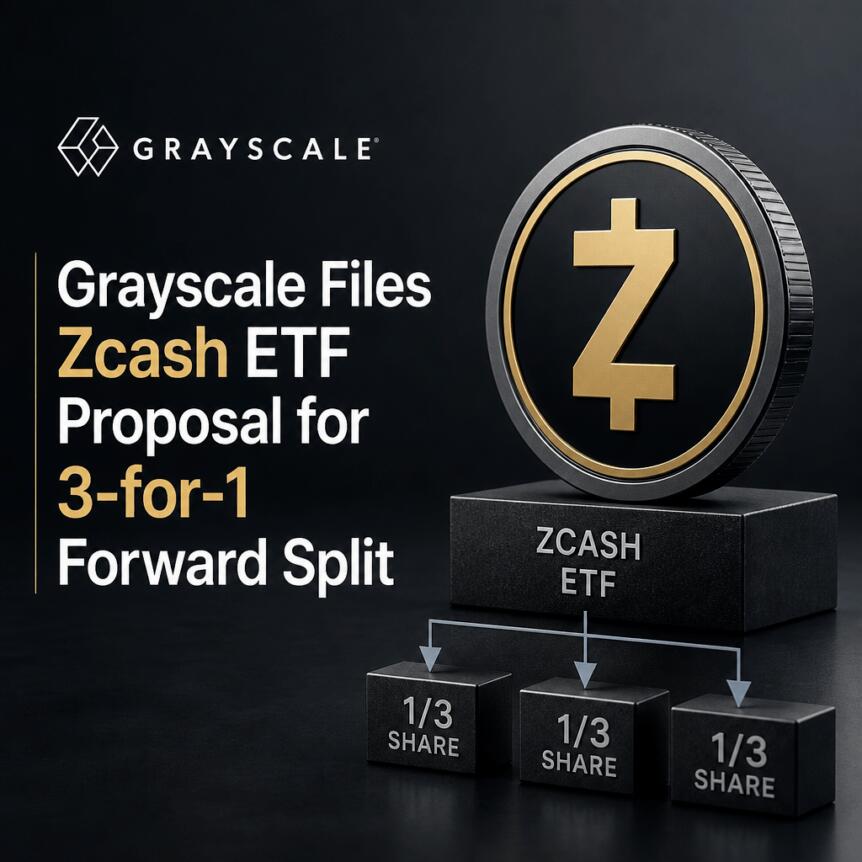
Grayscale’s spot Zcash ETF has filed plans with the U.S. Securities and Exchange Commission for a 3-for-1 forward share split, a move designed to lower the fund’s quoted price per share while keeping the overall value of an investment unchanged.
According to the filing referenced by Grayscale, shareholders of Grayscale’s Zcash ETF (ZCSH) would receive two additional shares for every share they hold after trading closes on Sept. 28. The change is expected to increase the number of shares outstanding proportionately and reduce the price per share accordingly.
Key takeaways
- Grayscale’s Zcash ETF (ZCSH) has filed for a 3-for-1 forward split with the SEC, with a Sept. 28 record timing after market close.
- The split is structured to keep investment value the same while reducing the fund’s per-share price through a proportional increase in shares.
- Grayscale says the action is intended to make the ETF more accessible, amid a sharp rise in Zcash’s value over the past year.
- Zcash-related news flow continues alongside the corporate action, including recent market moves tied to disclosed ZEC buying by Paradigm co-founder Matt Huang.
What Grayscale is changing in ZCSH
In the ETF filing, Grayscale outlines a forward split that would redistribute shares to current holders on the specified date. The forward split mechanism means the new share count is applied automatically based on existing holdings, rather than requiring holders to take any action.
Grayscale’s accompanying explanation, as cited in the filing and press materials, emphasizes that the split should not alter an investor’s economic position. The fund’s market value would remain the same, but each share would represent a smaller fraction of that value. In Grayscale’s illustrative example, an investor holding 10 shares valued at $300 each (for $3,000 total) would end up with 30 shares valued at $100 each—again totaling $3,000.
Grayscale also frames the change as an accessibility improvement. With the fund’s per-unit price potentially viewed as too high following Zcash’s strong performance, reducing the share price can make it easier for retail and smaller institutional investors to enter positions without needing to buy higher-priced units.
Why a forward split matters for ETF investors
Share splits are often operationally simple, but they can have practical implications for how investors engage with funds. While splits do not create or remove value by themselves, a lower quoted price per share can improve usability—particularly for investors using set dollar amounts rather than specific share quantities.
In markets that have seen high asset appreciation, per-share prices can rise quickly, sometimes shifting the balance between investors who can buy a single share versus those who require fractional trading or larger allocations. In that sense, Grayscale’s stated goal—greater accessibility—directly links the corporate action to the ETF’s recent performance context.
That context is significant here: the filing materials referenced by Grayscale indicate that Zcash has increased by about 2,800% over the past year. When an underlying holding—and by extension the ETF—rallies sharply, the fund’s share price can follow, even if the number of shares outstanding changes only through actions like splits.
Zcash moves in parallel: adoption narratives and market attention
Zcash’s renewed visibility in broader crypto markets has also been supported by recent commentary from prominent investors. Earlier coverage referenced by the article notes that Zcash (ZEC), known for enabling shielded transactions that conceal transaction addresses and amounts using zero-knowledge proofs, gained roughly 20% over a 24-hour period. That move was tied to disclosure by Paradigm co-founder Matt Huang that Paradigm made an unspecified purchase of ZEC.
Huang characterized Zcash as a “private complement to Bitcoin,” positioning privacy-focused digital assets as part of a broader ecosystem rather than a replacement. He also argued for continued long-term funding for Zcash’s development, citing the pace at which AI-enabled cyber capabilities and quantum computing progress could affect the security landscape.
As reported by The Block, ZEC traded as high as $1,521 early Friday before giving back some gains. The report described that level as a new effective all-time high, underscoring how quickly attention can return to assets when catalysts—whether investor flows, infrastructure expectations, or regulatory milestones—align.
For investors evaluating Grayscale’s ZCSH, the timing matters: a corporate action aimed at improving affordability and trading access arrives while Zcash is drawing active market interest. Even though a split itself doesn’t change fundamentals, it can affect day-to-day trading behavior and positioning, especially for investors who track price levels and use automated or discretionary allocation rules.
What to watch next after the SEC filing
Grayscale’s SEC filing sets out the split framework, including the forward split ratio and the share delivery timing tied to the close of trading on Sept. 28. The next key question for market participants is whether the planned schedule proceeds as described and whether the ETF’s share trading begins reflecting the new share count according to the expected timeline.
More broadly, investors should watch how ZCSH trades around the implementation—particularly whether the lower per-share price influences liquidity and investor participation. In parallel, attention on Zcash’s ecosystem—its privacy features backed by zero-knowledge proofs, and its development funding narrative—may continue to shape sentiment during the period leading up to the split.
With the split intended to make the ETF more accessible amid a period of strong performance for the underlying asset, market participants will likely focus on execution details and on whether Zcash’s momentum persists after the corporate action takes effect.


XRP Ledger’s Batch V1.1 has remained above its required validator threshold as Ripple says asset managers and commercial projects are preparing to use the transaction feature if it activates later this month.
Summary
- Batch V1.1 has 30 validator votes, keeping XRP Ledger’s September 29 activation countdown on track.
- Ripple says asset managers are building around Batch, though specific partners remain undisclosed for now.
- Batch can group eight transactions, allowing linked asset and payment transfers to settle atomically together.
- Developers replaced the original Batch after researchers found a critical signature validation flaw in February.
- XRPL version 3.3.0 shipped Batch V1.1 after expanded reviews and fixes to additional security issues.
CoinDesk reported on September 19 that RippleX head of engineering Ayo Akinyele said work involving asset managers is being prepared around Batch V1.1, which can package up to eight transactions into a single Batch operation. Ripple has not publicly named the asset managers or disclosed firm launch dates.
Live amendment data reviewed on September 20 showed 30 of 35 tracked trusted validators supporting Batch V1.1. The XRP Ledger requires at least 80% support to be maintained for 14 consecutive days before an amendment activates, putting the current threshold at 28 votes. The countdown began on September 15 at 14:06:41 UTC and points to possible activation shortly after the same time on September 29 if support holds.
XRP Ledger Batch V1.1 can tie settlement legs together
The XLS-56 specification defines Batch as a transaction that packages between two and eight inner transactions. It supports four processing modes: All or Nothing, Only One, Until Failure and Independent. The All or Nothing setting requires the complete group to execute successfully or prevents the batch from taking effect.
Ripple is focusing part of the commercial discussion on delivery-versus-payment, or DvP. In such a transaction, an asset transfer and its payment can be placed within the same atomic operation. A failed payment would prevent the linked asset transfer from completing under the all-or-nothing setting.
Akinyele told CoinDesk that “We’ll be sharing more once the feature is live, including work with key asset managers.” Ripple has not identified those firms, so the statement remains a company description of work that has not yet been publicly documented through named partner announcements.
The XLS-56 specification lists trustless multi-account swaps, platform fees and flash-loan structures among potential uses. A marketplace or wallet could, for example, package a customer payment with a service charge instead of requiring separate transactions, while different accounts can authorize individual legs of the same Batch.
Akinyele said “some projects are already being built with Batch in mind,” but partner identities and production schedules remain undisclosed. Ripple said details would follow after plans are finalized.
Validator support keeps the September 29 window open
As of the latest September 20 reading, Batch V1.1 had 30 supporting votes among 35 validators tracked by XRPLDashboard, equal to roughly 85%. Support therefore remained above the 28-vote threshold required to continue the activation window.
The projected September 29 date is conditional. XRPL amendments do not activate simply because they cross 80% once. Validators must maintain the supermajority for the complete 14-day period, and validators can change their votes while the clock is running. If support falls below the required level, the current window stops and another uninterrupted period would be required after the threshold is recovered.
The latest count extends a rapid rise in support this month. Batch V1.1 then had 24 of 35 validator votes, or 68.57%, leaving it below the activation threshold. Support had increased to 27 votes by September 15, before enough validators backed the amendment to start the countdown.
The amendment itself shipped with xrpld version 3.3.0 on August 6. Official XRP Ledger release notes describe Batch V1.1 as the replacement for the original Batch amendment and state that it supports up to eight inner transactions, including atomic-swap structures.
Since then, the XRP Ledger Foundation has released xrpld 3.4.0. The September 16 software release introduces separate lending and cleanup amendments and does not replace Batch V1.1, which remains in its own mainnet voting process. Server operators were advised to upgrade to version 3.4.0 for service continuity.
Batch V1.1 followed a critical flaw in the first version
The current amendment arrived after developers stopped the original Batch proposal in February. XRPL’s official vulnerability disclosure says security researcher Pranamya Keshkamat and Cantina AI’s Apex tool identified a critical signature-validation flaw on February 19.
Under specific conditions, the vulnerable code could stop checking Batch signers after encountering a newly created account. XRPL Labs said an attacker could then have included an unauthorized transaction from another account without possessing that account owner’s private keys. Potential transactions could have included payments and certain ledger-state changes.
The flaw never became active on XRP Ledger mainnet. The original amendment was still in its voting stage, and XRPL Labs said no funds were at risk. Validators were advised to vote against it, while rippled version 3.1.1, released February 23, made Batch and fixBatchInnerSigs unsupported so they could not activate.
Developers then changed the signing and authorization logic for the replacement. The vulnerability report said the remediation removed the premature success condition, added authorization safeguards and tightened signature-checking rules. Batch V1.1 was later incorporated into xrpld 3.3.0 after development and review.
Security work continued before the current validator vote. As crypto.news reported in its Batch V1.1 security review coverage, developers fixed another 11 issues involving signatures, authorization checks and possible server crashes before the amendment reached its present voting stage.
Akinyele told CoinDesk that the review included internal adversarial testing, AI-assisted analysis, a Sherlock security contest and assessments involving Halborn and Common Prefix. CoinDesk attributed those details to RippleX; public partner reports covering every part of that review were not included in the material reviewed for this report.
The XRPL developer ecosystem made supporting changes as the signing design evolved. A June issue in the official xrpl.js repository documented that older Batch signing logic did not match Batch V1.1’s revised format because additional account and sequence information had been bound to signatures. The JavaScript binary-codec release history states that Batch V1.1 signing support was added in version 2.9.0 in August.
Asset managers are testing more tokenized settlement on XRPL
Ripple’s comments on Batch arrive as financial firms and developers are using XRP Ledger infrastructure for tokenized assets and institutional settlement projects. In June, JPMorgan, Mastercard, Ondo Finance and Ripple participated in a tokenized U.S. Treasury redemption test using the XRP Ledger.
Ripple President Monica Long said in August that financial institutions were moving some tokenized-asset work from pilot programs toward production. Crypto.news reported on Ripple’s institutional tokenization projects that Aviva Investors had launched a tokenized fund share class on XRPL in July and that Ripple viewed RLUSD as a possible cash leg for atomic delivery-versus-payment settlement.
Onchain asset activity has grown alongside that development. Another crypto.news review of XRP Ledger RWA data reported in July that the network had added roughly $2.6 billion in tokenized real-world asset value over six months, excluding stablecoins, based on RWA.xyz figures. The same report cautioned that represented asset value and actively distributed assets were materially different measures.
Batch V1.1 itself does not require asset managers to use XRP as the asset being transferred. The feature operates at the transaction layer and can package supported XRPL transactions from different accounts. XRP remains relevant for ledger transaction fees, while the underlying transactions can involve other supported assets and token structures.
The next procedural event is the end of the current amendment window. XRPLDashboard projects Batch V1.1 activation for September 29 at approximately 14:06:41 UTC if at least 80% validator backing remains uninterrupted through the full countdown. The latest published tally on September 20 remained 30 votes in favor out of 35 tracked validators.


Grayscale’s Zcash ETF (ZCSH) plans a 3-for-1 forward share split, according to a filing with the US Securities and Exchange Commission.
At the close of trading on Sept. 28, shareholders will receive two extra shares for each one they hold, according to the filing.
The forward split is expected to decrease the price per share of the fund, according to a Grayscale press release, with a proportionate increase in the number of shares outstanding.
Hypothetically, this means that if you owned 10 shares valued at $300 each for a total $3,000 before the split, afterward you will own 30 shares valued at $100 each for an unchanged total of $3,000, the release said.
The split will make the ETF more accessible to investors, as the token has increased in value by about 2,800% over the last year and the price per unit was considered too high.
Related: Zcash targets November for NU7 mainnet upgrade with 25-second blocks
Cointelegraph reported on Thursday that Zcash (ZEC), a cryptocurrency that enables users to make shielded transactions that conceal addresses and transaction amounts using zero-knowledge proofs, had gained about 20% over 24 hours as Paradigm co-founder Matt Huang disclosed that the crypto investment firm made an unspecified purchase of ZEC.
Huang described Zcash as a “private complement to Bitcoin” and also backed its developer fund, arguing that long-term funding remains important as AI-driven cyber capabilities and quantum computing advance.
Zcash’s ZEC token climbed as high as $1,521 early Friday, The Block reported, in what would be considered a new effective all-time high, before falling back slightly.
Magazine: Who is legally liable when an AI agent goes rogue?
Cryptocurrency markets absorbed a weekend of escalation in the Middle East alone. The global market cap fell by 4% to $2.76 trillion, while oil, bond, and equity markets remained closed.
Houthi forces struck the Saudi capital Riyadh on Saturday. The US has also warned that the conflict has “the potential to escalate rapidly.”
Oil Closed Lower Before the Weekend Turned
Traders spent last week concluding that Saudi supply risk had been overstated. Brent crude settled at $103.87 on Friday, and West Texas Intermediate closed at $100.30, a third consecutive decline for both.
That reading was priced in before Saturday. Yemen’s Houthis then said they attacked sensitive sites in Riyadh with missiles and drones. Reuters photographed black smoke rising near the King Khalid International Airport.
The Saudi-led coalition said its air defences destroyed a missile fired toward Riyadh early on Saturday. The Iran-backed group separately claimed a strike on an Aramco facility at Yanbu.
It appeared to be the first Houthi attack claimed on Riyadh since the current escalation began. Therefore, the market that closed on Friday priced a different risk picture than the one that exists now.
Follow us on X to get the latest news as it happens
What Monday’s Open Will Test
Meanwhile, the State Department’s Bureau of Consular Affairs told Americans across the region to exercise heightened vigilance and warned of flight cancellations, airspace closures, and travel disruptions.
It said Iranian-supported Houthis have attacked Saudi Arabia, including civilian airports, and that Iran and groups supportive of Iran may target US interests and businesses overseas.
“This military conflict has the potential to escalate rapidly,” the post read.
Trump had separately signaled a decision point on Iran earlier in the week. He told Axios on Thursday that he was weighing whether to restart large-scale attacks.
“I have a big decision coming up. Do I want to go in and annihilate them, or do I not? It’s a big decision. Anything could happen with me,” he said.
Alex Plitsas, a national security analyst at CNN, said on X that Trump’s Camp David meeting was convened to review options for a strike in Yemen. He cautioned in a follow-up post that nothing had been decided.
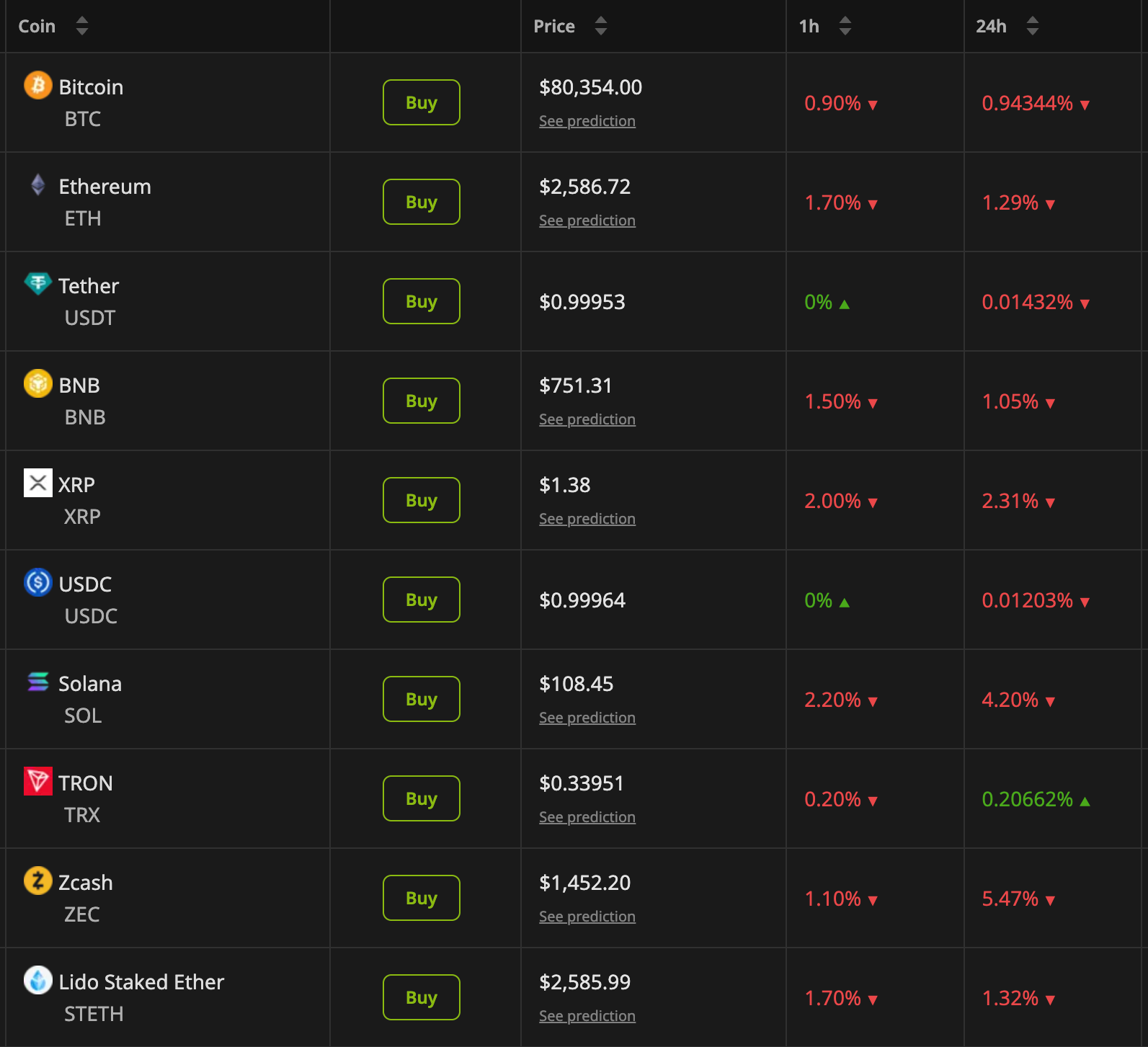
Crypto carried all of this while everything else was dark. Bitcoin (BTC) traded near $80,354, down 0.9% over 24 hours yet still up 3.9% on the week. Ethereum (ETH) slipped 1.29% to $2,586.72.

Smaller assets moved further. Solana (SOL) fell 4.2% to $108.45, and Zcash (ZEC) dropped 5.47% to $1,452.20, a spread that points to risk reduction rather than a haven bid.
Monday’s open will show how oil, bonds, and equities price the weekend. Whether Brent surges will indicate if traditional markets agree with crypto’s weekend repricing.
The Fed raised rates this week and signalled at least one more increase, leaving markets with little room to absorb an oil shock.
Subscribe to our YouTube channel to watch leaders and journalists provide expert insights
The post Is Crypto's Weekend Drop a Preview of Monday? Houthis Target Riyadh, Trump Weighs Iran appeared first on BeInCrypto.

The Spanish town that stole John Lennon’s heart: Almeria 60 years after Beatlemania
Billionaires abound in California. Why not tax their wealth?

The S&P 500 Has Returned About 11% Annually Since 1958. Here’s the ETF I’d Trust for the Next 30 Years.




-

 Fashion2 days ago
Weekend Open Thread: Talbots – Corporette.com
-

 Tech7 days ago
The Latest Weird Thing to Play Doom Is the Mapped-Out Brain of a Fruit Fly
-
 NewsBeat2 days ago
Trump says US has reached an agreement to take permanent control of Greenland’s security
-

 Crypto World5 days ago
Kraken Lets xStocks Holders Earn Yield Through DeFi
-

 Crypto World5 days ago
Revolut Attackers Warn of Ongoing Daily Customer Data Leaks
-

 Crypto World1 day ago
Circle launches Arc Studio AI agent for building onchain apps
-

 Crypto World4 days ago
What Is the Status of the U.S.-Iran Peace Talks? Here's What Both Sides Are Saying
-

 Crypto World3 days ago
US Charges Robinhood Engineers Over Crypto Listing Trades
-

 Crypto World5 days ago
Robinhood engineers charged over $50K crypto scheme
-

 Crypto World6 days ago
Elon Musk Drops a Bombshell: Grok 5 Could Be the AGI Breakthrough
-

 Crypto World1 day ago
Bitcoin price breaks channel as RSI climbs to 63
-

 Crypto World7 days ago
New Tesla Roadster Uses SpaceX Tech. Will It Impact the Stock Price?
-
 NewsBeat6 days ago
‘Sick conspiracy’: Trump says only guardrails AI needs is ‘a strong and smart (High IQ!) president’ in all-caps rant
-

 Crypto World5 days ago
NVIDIA Analysis: Attempted Rising Wedge Breakout Amid Pressure on the AI Sector
-
Business6 days ago
SK Hynix ADRs Fall More Than 6% as Memory Rally Breaks on Fears of Slower AI Spending
-

 Tech4 days ago
Webb’s IC 348 Mosaic Includes Two-Jupiter Dwarfs, Twin Jets, and a Nursery Still Making Worlds
-

 Crypto World6 days ago
3 Token Unlocks to Watch in the Third Week of September 2026
-

 Crypto World5 days ago
DOJ Seeks to Seize $61M in Iran Oil Funds From Binance Accounts It Vouched For
-
Crypto World5 days ago
Can Circle’s Arc Repeat Robinhood Chain’s Meme Coin Boom?
-
 Crypto World7 days ago
Goldman Sachs backs 25bp Fed hike after CPI
You must be logged in to post a comment Login