
Crypto World
Saudi Arabia Executes First Sovereign Tokenized Property Deed


Editor’s note: Saudi Arabia has completed its first end to end tokenized property deed transaction using sovereign grade digital infrastructure developed by droppRWA. Unlike pilot projects that tokenize assets alongside existing legal systems, this transaction embeds national property law and registry rules directly into the settlement layer itself. The result is a legally enforceable, blockchain verified transfer that settles in seconds rather than days. This milestone signals a shift in how real estate can be digitized at a national level, with implications for capital markets, foreign investment, and the future structure of property ownership.
Key points
- Saudi Arabia executed the first sovereign native tokenized property deed transfer in a G20 economy.
- The national Real Estate Registry was directly integrated into the blockchain settlement infrastructure.
- Settlement time was reduced from days to seconds through automated delivery versus payment.
- Compliance and property law rules were enforced at the infrastructure level, not layered on top.
- The transaction involved National Housing Company and the Real Estate Development Fund.
Why this matters
This transaction moves tokenization beyond experimentation into enforceable national infrastructure. By making the property registry the single source of truth within a blockchain system, Saudi Arabia addresses a core challenge in real world asset tokenization: legal certainty. For investors and developers, this approach improves settlement efficiency, liquidity, and confidence. For the region, it reinforces the Kingdom’s role as a leader in regulated digital asset adoption aligned with Vision 2030.
What to watch next
- Expansion of the infrastructure across Saudi Arabia’s broader real estate pipeline.
- Adoption within designated investment zones and large scale development projects.
- How foreign institutional investors engage with tokenized Saudi real estate.
Disclosure: The content below is a press release provided by the company/PR representative. It is published for informational purposes.
Saudi Arabia Completes First End-to-End Tokenized Property Deed Transaction Using droppRWA Sovereign-Grade Infrastructure
The transaction marks the first time a G20 economy has executed a property deed transaction where national property law and registry rules are enforced directly within the digital settlement infrastructure.
RIYADH, SAUDI ARABIA — 3 February 2026: The Kingdom of Saudi Arabia has achieved a global milestone in the digitization of capital markets with the successful execution of the world’s first sovereign-native tokenized property title deed transfer.
The transfer, conducted under the patronage of His Excellency. Majed Al-Hogail, Minister of Municipalities and Housing, marks the direct integration of the Kingdom’s Real Estate Registry (RER) with droppRWA’s blockchain transaction layer.. This infrastructure reduces property settlement times from days to mere seconds, transforming once illiquid physical territory into highly liquid, programmable assets. This enhances the attractiveness of the Saudi real estate market for foreign direct investment and is in line with the digital frameworks of Saudi Vision 2030.
The transaction was executed between the National Housing Company (NHC), the government developer of affordable housing solutions and the Real Estate Development Fund (REDF). Built on droppRWA sovereign-grade market infrastructure, a digital token (tokenized deed) representing the property title deed was linked to the RER’s official registry, alongside the issuance of a separate token representing a transferable ownership interest. Compliance rules were encoded into the ownership transfer logic and settlement was executed securely and simultaneously through stable delivery-versus-payment mechanisms.
His Excellency Majed bin Abdullah Al-Hogail, Minister of Municipal Rural Affairs and Housing, said “Saudi Arabia is building a real estate sector that is digital by design, integrating PropTech and AI across planning and delivery in line with Vision 2030. We have successfully executed the Kingdom’s first end-to-end blockchain verified real estate transaction, using the first government authored standards for tokenizing real estate ownership. By linking transactions directly to official records from the outset, this will expand participation, strengthen FDI confidence, improve liquidity, accelerate development financing and enable new PropTech innovation.”
Faisal Al-Monai, CEO of droppRWA, said “The end-to-end infrastructure used to execute this historic transaction, including the token standard, settlement rails, compliance logic, issuance framework and the stable delivery-versus-payment mechanism, was provided exclusively through droppRWA’s sovereign-grade infrastructure, our goal is to help Saudi skip the “digital wrapper” era other markets are currently stuck in by entirely by embedding enforceability into the asset at the source, creating a new category of sovereign-grade assets and the industrial engine that will allow the Kingdom’s multi-trillion-dollar real estate pipeline to be accessed by global institutional capital with absolute legal certainty.”
While jurisdictions such as Singapore, the UK and the EU have introduced digital asset frameworks, Saudi Arabia is the first in the world to implement the technical code for its own property market. Following this successful execution, the infrastructure is slated for a wider rollout across the Kingdom’s multi-trillion dollar real estate pipeline, including designated investment zones.
About droppRWA
droppRWA is a leading provider of regulator-native sovereign tokenization infrastructure. Built to anticipate the demanding requirements of G20 economies and other fast-growing nations, droppRWA’s proprietary Trust Stack™ enables high value and traditionally illiquid assets and fund instruments in critically important sectors such as real estate, energy, and infrastructure, to be managed on-chain. droppRWA empowers enterprises, governments, and institutional investors to unlock programmable ownership and expand capital markets in a secure, transparent, and scalable digital economy.

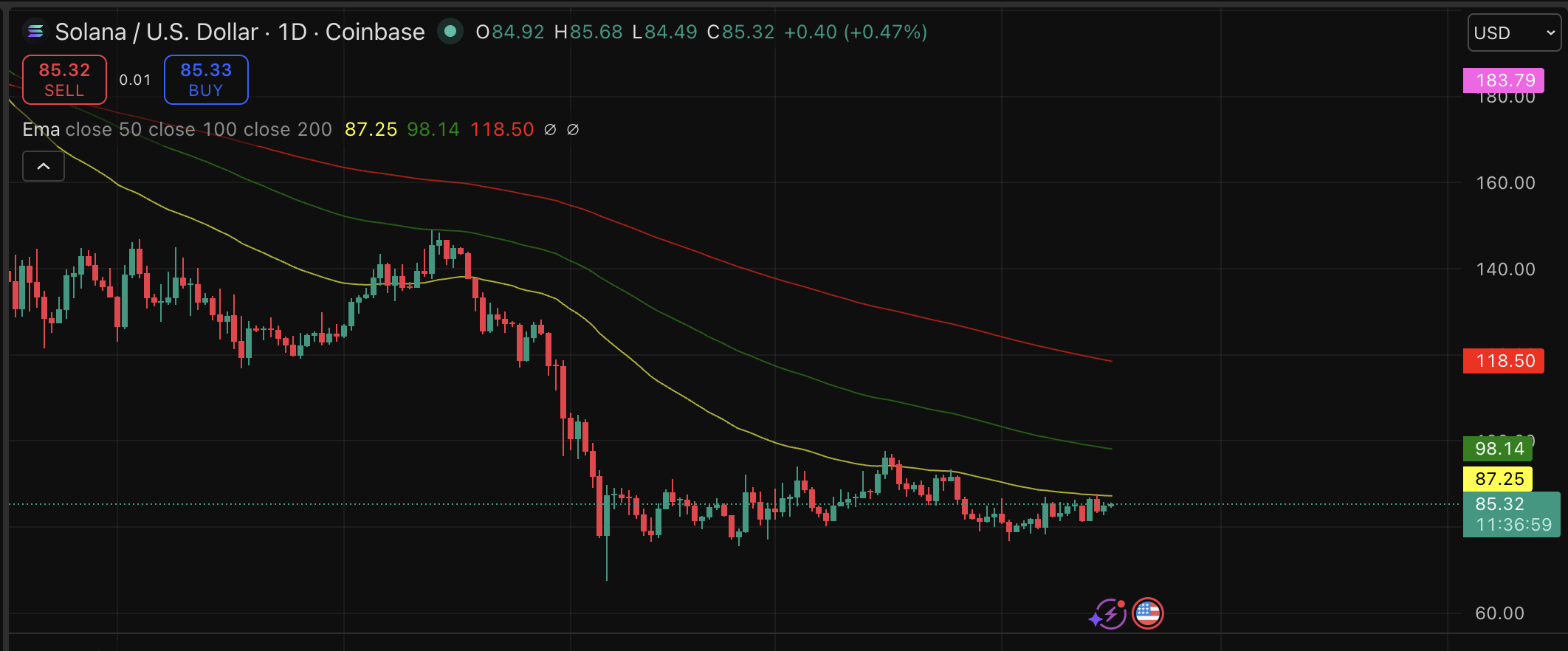
Solana’s official X account posted a single word last night, “XRP,” and the internet promptly lost its mind. Solana itself is currently trading at a $85 price range in a muted price reaction that stands in sharp contrast to the social prediction the post triggered.
The post paired that lone word with a four-second cinematic animation of the Solana logo, no caption, no thread, no explanation. Millions of views followed within hours. The XRP community declared a “flip the switch” moment; Solana’s account fanned the flames with replies including “time to flip the switch” and “we signed 589 NDAs”. The latter a deliberate nod to one of XRP’s most enduring inside jokes.
Against this backdrop of social spectacle, SOL’s underlying technicals tell another story, one worth parsing before drawing any conclusions.
Discover: The best pre-launch token sales
Solana Price Prediction: Break $90 Resistance Now?
SOL has traded in a tight 24-hour range between $84 and $85. The price action is technically compressed. Our short-term model targets $90 as the critical resistance for any near-term recovery, with tomorrow’s range pegged at $84–$86.
SOL holds above its 10- and 20-day EMAs, tentatively constructive, but remains pinned below the 50-, 100-, and 200-day EMAs, all of which are bearish on the daily chart.
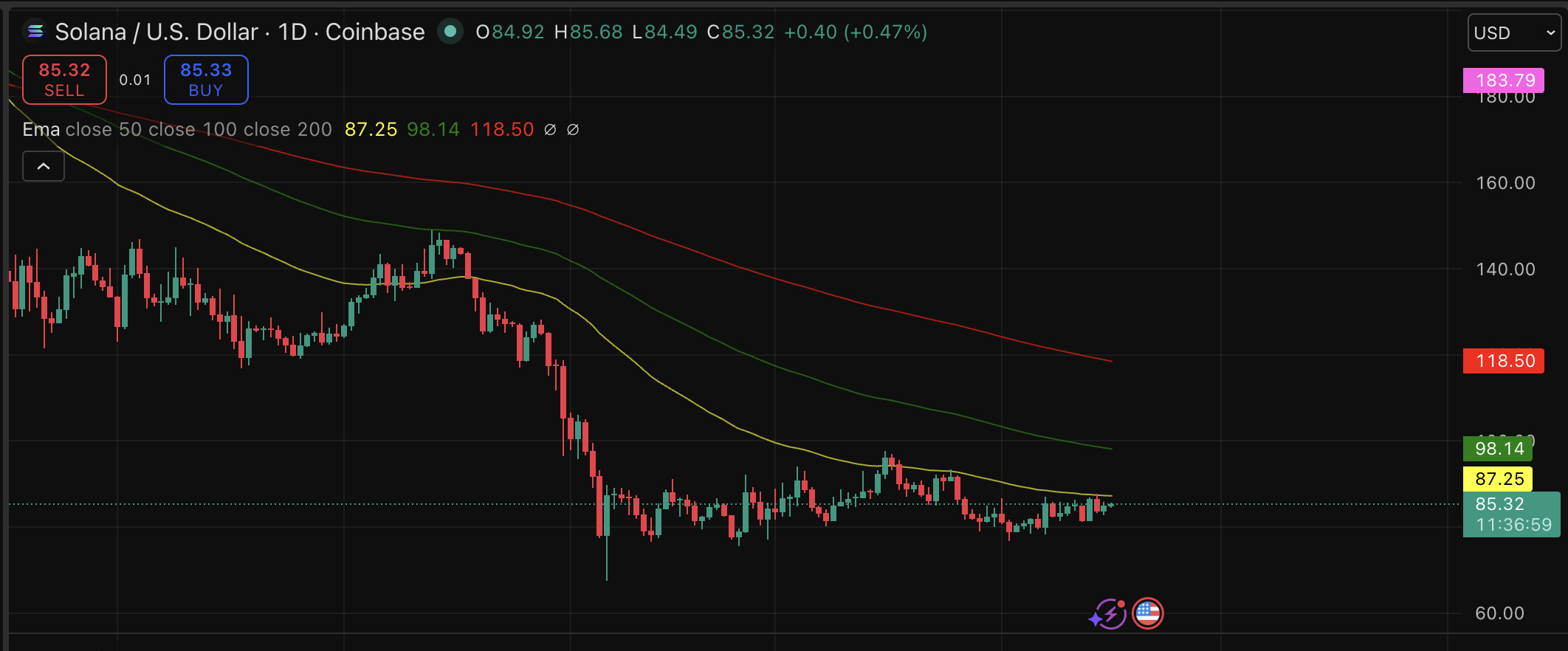
If SOL can clear $86 on sustained volume, it could open a path toward $88–$90 resistance. For now, consolidation between $82 and $86 is the most likely scenario, with the contracting triangle on the hourly chart resolving directionally within days.
The XRP tweet generated attention, but not volume. Until SOL clears $86 with conviction, the path of least resistance remains sideways.
Discover: The best crypto to diversify your portfolio with
LiquidChain Breaking Social as Solana Tests Key Levels
SOL consolidating below multi-month EMAs is precisely the environment where traders start asking whether large-cap exposure still offers asymmetric upside, or whether that window has already closed at a $48B market cap.
The XRP angle adds narrative heat, but narrative alone doesn’t move price. That asymmetry question is worth taking seriously. For context on where XRP itself fits into the current macro picture, recent XRP price analysis highlights the regulatory tailwinds still in play.
One early-stage project drawing attention in this environment is LiquidChain ($LIQUID), a Layer 3 infrastructure protocol positioning itself as the cross-chain liquidity layer for the BTC, ETH, and SOL ecosystems simultaneously.
A new layer emerges. Only a few see it first. — LiquidChain (@getliquidchain) March 24, 2026
The future is LiquidChain  ⟁https://t.co/vqvBcdSj94 pic.twitter.com/R7ZeZ0NPGl
The core proposition: a Unified Liquidity Layer that fuses Bitcoin, Ethereum, and Solana liquidity into a single execution environment, with Deploy-Once Architecture allowing developers to build once and access all three networks.
The presale has raised $675K at a current price of $0.0145, with more than 1600% APY staking bonus. Verifiable features include Single-Step Execution and Verifiable Settlement, infrastructure-layer tooling aimed at the fragmentation problem that has dogged multi-chain development for years.
Research LiquidChain’s presale structure before the next price increase.
The post Solana Price Prediction: SOL Twitter Dropped XRP Bomb appeared first on Cryptonews.


- BNB price hovers near $620 as bulls target a fresh short-term rally.
- The 35th quarterly burn has reduced BNB supply to 134.7 million.
- A shift in macro and geopolitical conditions could bolster BNB and other altcoins.
BNB price traded to highs of $630 on Wednesday, recovering to intraday highs after earlier moves across crypto dented bulls’ plans.
The rejection at the multi-week peak means the Binance Coin’s value is back near the $620 mark, where buyers are looking to pile in as the BNB Foundation reveals its second quarterly burn of 2026 has cut the native token supply to approximately 134.7 million.
Could this supply squeeze help BNB price higher, or are short-term headwinds too strong for bulls?
BNB supply drops amid quarterly burn
According to the BNB Foundation, the 35th quarterly burn has permanently removed 1,569,307.34 BNB tokens valued at $1.02 billion from circulation.
This means the total supply has dropped further, with the metric now at 134,786,916.53 and reinforcing the coin’s deflationary mechanism.
On a bullish note, what this burn does is to advance BNB toward the 100 million token target.
More than 40% of the initial supply has now been eliminated since BNB’s launch, with regular removals introduced in 2021. In January this year, Binance marked the 34th burn, which removed 1.37 million BNB worth $1.29 billion at the time.
Surging on-chain metrics, such as all-time high daily active users and dApp usage, have directly boosted the burn’s scale amid growth in real-world assets, DeFi, gaming, and layer-2 ecosystems.
$16,600,000,000 in tokenized assets on BNB Chain, making it a new ATH.
According to @tokenterminal 👇 https://t.co/gFwSsV9Kis
— BNB Chain (@BNBCHAIN) April 9, 2026
BNB price analysis
While BNB exploded in 2025, the past several months have seen the ecosystem token struggle with downside pressure. Controversial headlines and fear, uncertainty, and doubt (FUD) around Binance and its founder, Changpeng Zhao, have contributed to the downtrend since the highs of $1,300.
Notably, the 54% dip from the ATH of $1,370 on October 13, 2025, aligned with overall losses for Bitcoin and Ethereum.
Macroeconomic and geopolitical headwinds have largely capped BTC, with the latest uptick stalling around $76,000.
Currently, BNB price lingers near $620, slightly off highs seen after the burn and in line with Bitcoin’s retest of the $74k level.
Despite this outlook, a double-bottom formation at the $600 support zone points to bullish reversal prospects for BNB. Positive momentum indicators and fresh flows could strengthen this picture.
If Bitcoin rides macro and geopolitical tailwinds to a new year-to-date peak, BNB could test resistance at $800.
The supply zone coincides with the 50-week moving average; breaching it could propel prices to the $1,000-$1,200 hurdle.
However, a close below $600 risks awakening more bears.
If this mirrors a broader crypto downturn, the next support level could be around $530.
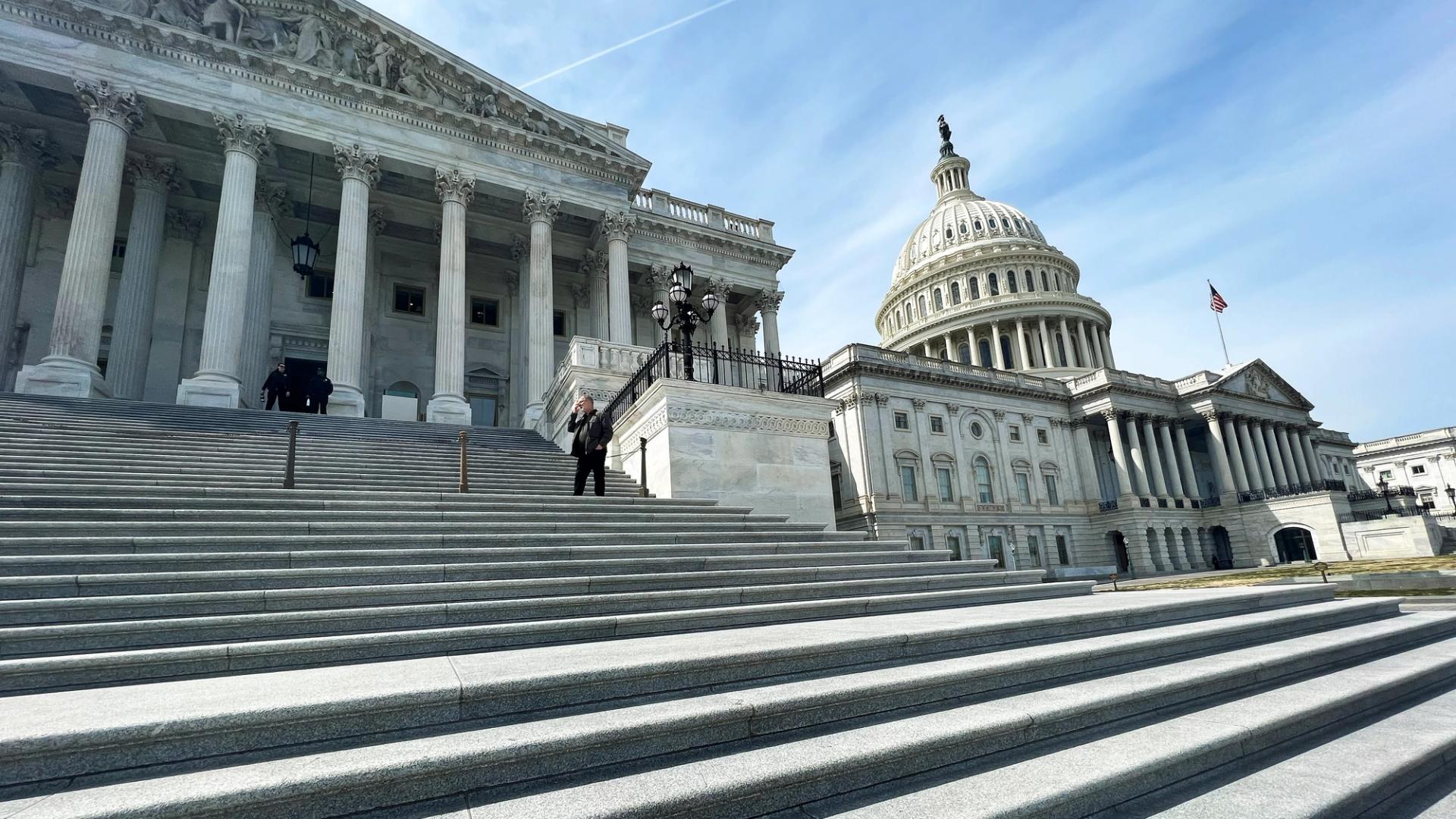
Momentum is building in Washington for the long-awaited CLARITY Act, with JPMorgan (JPM) pointing to signs that negotiations may be nearing a breakthrough.
JPMorgan said discussions among lawmakers and regulators suggest the legislation is close to completion, with only a small number of issues still unresolved in a Wednesday report.
One senior policy official noted that the list of contentious items has narrowed from roughly a dozen to just “2–3 issues,” while debate around stablecoin rewards is now “in a good place.”
The CLARITY Act is designed to define how digital assets are regulated in the U.S., including how oversight is divided between agencies such as the Securities and Exchange Commission (SEC) and the Commodity Futures Trading Commission (CFTC). It also addresses how stablecoins and decentralized finance platforms should be treated under existing financial rules.
Lawmakers involved in the discussions struck an optimistic tone. A Senate staffer familiar with the process said the draft legislation is “very close,” with remaining questions around areas like DeFi oversight and token classification potentially resolved in the near term, according to the report.
One of the most closely watched debates centers on whether stablecoin issuers should be allowed to offer yield-like rewards to users. The issue has drawn pushback from banks, which argue such features could replicate deposit-taking without the same regulatory safeguards.
The latest proposals could find support from both crypto firms and traditional financial institutions, according to JPMorgan.
Still, the path forward is not without risk. The final legislative text has yet to be released and no formal vote has been scheduled. Timing is also a factor, with some policy experts warning that delays could push the bill into a more uncertain political environment.
JPMorgan noted that the outlook for the 2026 midterm elections remains mixed, with expectations that Democrats could regain control of the House of Representatives. If that scenario plays out, crypto legislation could lose priority, potentially slowing further progress.
For now, the direction of travel appears clear. As one policy advisor put it, “there is no such thing as a perfect bill,” underscoring willingness among stakeholders to compromise in order to establish a workable framework.
If passed, the CLARITY Act would mark a major step toward integrating digital assets into the U.S. financial system, providing rules that industry participants have sought for years.


Taiwan Semiconductor Manufacturing Company reported strong first-quarter earnings on Thursday, as steady demand for artificial intelligence chips pushed both revenue and profit to record levels.
Summary
- Taiwan Semiconductor Manufacturing Company posted a 58% jump in Q1 profit to a record NT$572.48 billion, beating estimates as AI chip demand stayed strong.
- Revenue rose 35% year over year, with Nvidia-led demand driving growth and pushing advanced chips to dominate the sales mix.
- TSMC expects over 30% revenue growth in 2026 and plans higher capex as capacity remains tight amid persistent AI demand.
The world’s largest contract chipmaker posted net income of $18.2 billion for the three months ended March, up 58% from a year earlier and ahead of expectations. The result extended its streak of record profits to a fourth consecutive quarter. It also marked its eighth straight period of double-digit growth.
According to LSEG SmartEstimates, which weigh forecasts from consistently accurate analysts, Taiwan Semiconductor Manufacturing Company beat expectations on both revenue and profit.
The company reported revenue of about $35 billion, ahead of the expected $34.8 billion, while net income came in at around $18.2 billion, surpassing estimates of roughly $17.3 billion. On a yearly basis, revenue rose 35% to about $35 billion, in line with the preliminary figure disclosed earlier.
As Asia’s largest listed technology firm, TSMC manufactures chips used across a wide range of industries, from consumer electronics to hyperscale data centers. It has seen strong demand from major clients such as Apple and Nvidia, with the latter now its largest customer due to rising demand for AI processors.
Chief Executive C.C. Wei said “AI-related demand continues to be extremely robust,” adding that rapid advances in artificial intelligence are driving more computing needs and, in turn, higher semiconductor demand. He also pointed to strong customer signals that support expectations for a multi-year growth cycle tied to AI.
TSMC now expects full-year 2026 revenue to grow by more than 30% in U.S. dollar terms, slightly above its earlier outlook. For the second quarter, it forecast revenue between $39 billion and $40.2 billion, implying about 10% sequential growth.
The upbeat guidance comes despite concerns over supply chain risks linked to the Middle East conflict, which could affect energy supplies and key materials such as helium and hydrogen. Executives said they do not expect any near-term disruption, noting the company maintains safety inventories and sources critical inputs from multiple suppliers.
Advanced chips lead revenue mix
High-performance computing, which includes AI and 5G applications, remained the main driver of sales, accounting for 61% of total revenue in the first quarter.
Advanced chips, defined as 7-nanometer or below, made up around 74% of wafer revenue. Within that, 3-nanometer chips contributed 25%, highlighting a rapid shift toward more advanced nodes. Smaller process nodes allow for more compact transistor designs, improving both performance and energy efficiency.
To keep up with demand, TSMC is expanding its manufacturing footprint. The company confirmed plans to add a new advanced fabrication plant in Tainan, Taiwan, while also scaling 3-nanometer capacity across Taiwan, the United States, and Japan. Its U.S. expansion forms part of a broader $165 billion investment in Arizona.
William Li, senior analyst at Counterpoint Research, said demand for AI chips has effectively pushed TSMC’s production capacity to its limits.
“Demand still significantly outpaces supply and isn’t showing any major sign of slowing down,” Li said, adding that tight capacity conditions are likely to persist through 2026.
External analysts echoed similar views, noting that TSMC’s facilities are operating at high utilisation levels as AI workloads continue to drive orders.
The company reiterated that capital expenditure for 2026 will be at the upper end of its previously guided $52 billion to $56 billion range, as it accelerates expansion to meet sustained demand.
Crypto World
Chainlink price approaches bullish SMA crossover as whales accumulate, will it breakout?
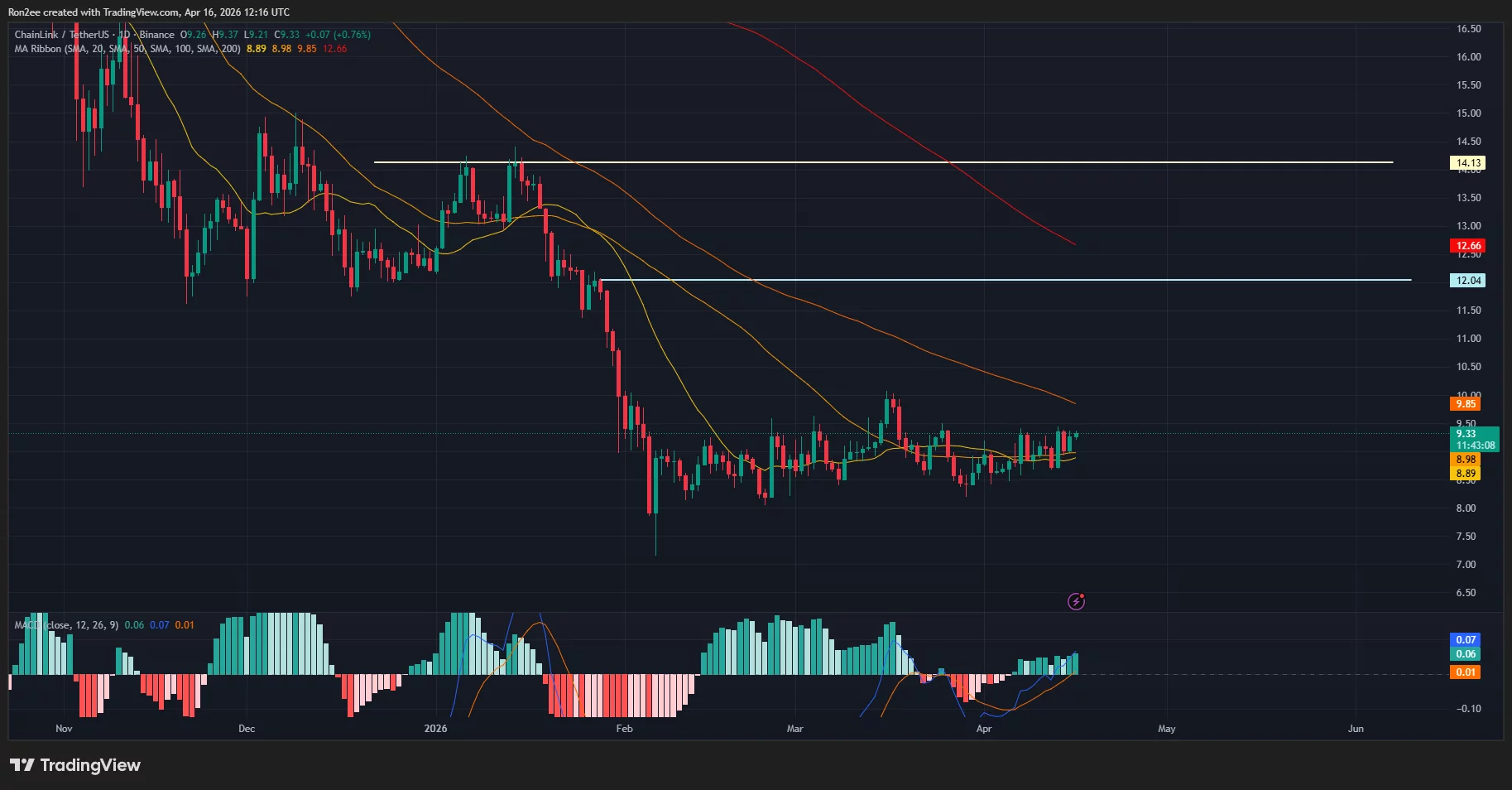
Chainlink price has remained confined in the consolidation range between $8 and $10 since early February this year as market participants weigh broader macroeconomic uncertainty against the protocol’s growing fundamental utility.
Summary
- Chainlink price remains range-bound between $8 and $10 after dropping over 40% from its January high, with technical indicators hinting at a potential breakout.
- A bullish SMA crossover, along with rising RSI and MACD, suggests momentum is building, with upside targets at $12 and $14 if resistance breaks.
- Partnerships, whale accumulation, and growing LINK reserves are tightening supply and could act as key catalysts for a sustained rally.
According to data from crypto.news, the Chainlink (LINK) price fell over 40% from its January high of $14.12 to a yearly low of $7.93 in February. It has since entered into a consolidation phase between the $8 and $10 range as liquidity remains fragmented across the decentralized finance sector.
Despite the recent stagnation, a look at charts reveals several conditions that are close to completion that could potentially empower the token to exit from consolidation and potentially spark a sustained rally.
On the daily chart, Chainlink price appears to be approaching a bullish crossover between the 50-day SMA and the 100-day SMA. Such a crossover, which indicates strengthening medium-term momentum, has previously been a precursor to significant parabolic moves.
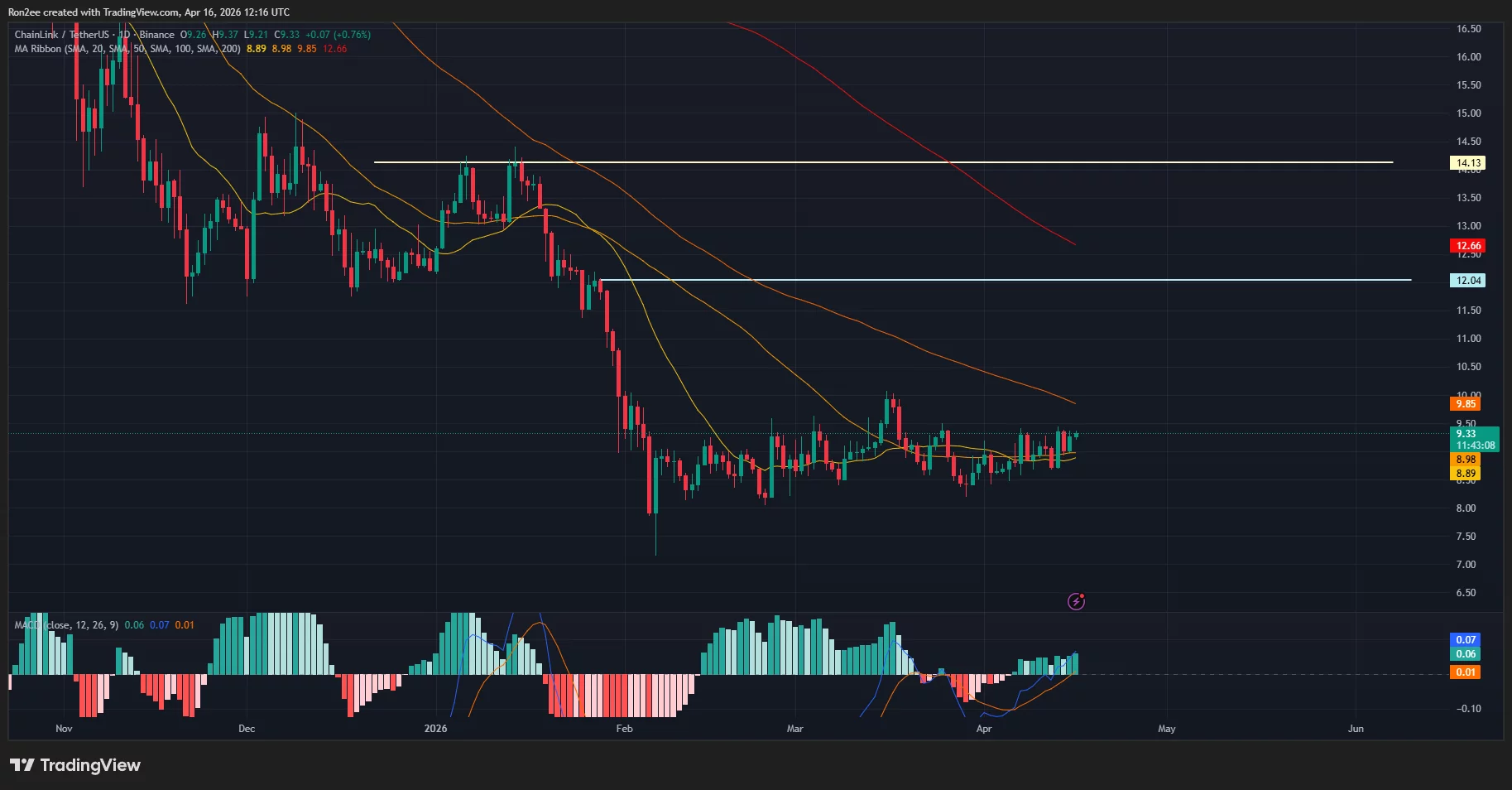
In Chainlink’s case, a crossover could lead its price to climb as high as $12, which represents the next key psychological resistance level. A strong breakout from this range with supporting trading volume could push prices all the way up to its year-to-date high of $14.
Momentum indicators like the MACD and the RSI lines both seem to suggest that a bullish reversal is already underway, as both of these metrics were pointed upward.
However, on the flip side, a drop below $9 support could shift the trajectory towards the next floor at $8, which forms the ultimate demand zone for bulls.
There appear to be a few key catalysts that could help Chainlink price sustain this newfound momentum.
First, the most significant catalyst for Chainlink’s price this week is its partnership with SIX Group, the operator of Swiss and Spanish stock exchanges. SIX is now delivering real-time equity pricing for blue-chip stocks worth approximately €2 trillion directly to smart contracts via Chainlink.
The integration makes regulated financial data accessible to over 2,600 blockchain applications, reinforcing Chainlink’s role as the standard for institutional tokenization.
Second, on-chain data reveals whales have been accumulating the token while absorbing the supply of the token in a manner that often precedes a supply shock rally. Last week, whale wallets added approximately 3.30 million LINK tokens.
Furthermore, whales recently moved 265,132 LINK worth $2.38 million off exchanges, thus reducing the risk of these assets being sold on the open market.
Third, the Chainlink Reserve, a specialized vault for protocol revenue, continues to grow and currently holds over 3 million LINK tokens as protocol fees are automatically converted to the native token. This mechanism effectively tightens the circulating supply by locking up tokens as the network achieves greater adoption.
Disclosure: This article does not represent investment advice. The content and materials featured on this page are for educational purposes only.


Paris Blockchain Week, the self-proclaimed “European power forum for the future of digital finance,” has reportedly doubled its security efforts for this week’s event amid claims that France has seen one violent crypto-related robbery attempt every five days on average this year.
The tally for crypto-related attacks in 2026 hit 19 on Monday when a mother and son were abducted from their home in Burgundy, according to The Register.
Franceinfo reports that the pair were held hostage in a hotel room in Val-de-Marne while the attackers attempted to extort the father, a crypto entrepreneur, for hundreds of thousands of euros.
The pair were released unharmed on Tuesday following a successful extraction operation by French counter-terrorism police.
It’s a problem the country can’t quite seem to shake with criminals continuing to regard crypto holders and entrepreneurs as relatively easy and very lucrative pickings.
In February, the president of Binance’s French arm was targeted by three armed crypto robbers. The attackers only managed to steal his phones and, after failing to confront him in person, they decided to pursue a different target.
Read more: Crypto execs hiring private security after high-profile kidnappings, report
In January, a 74-year-old man was tortured for 16 hours by three men attempting to extort $3.5 million worth of crypto from his son. They reportedly gave up when they discovered his son wasn’t a wealthy crypto entrepreneur at all.
The attacks were already bad before this year. Indeed, last June, France’s Interior Minister Bruno Retailleau promised crypto entrepreneurs that they would have a dedicated emergency police line.
One suspected mastermind of several crypto kidnappings in France was arrested in Morocco last year. They allegedly orchestrated the kidnapping and mutilation of Ledger co-founder David Balland.
Paris Blockchain Week rolls out police escorts
Despite the alarming rise in crypto-related attacks in France, the conference firm Chain of Events is hosting Paris Blockchain Week (PBW) at the Carrousel du Louvre.
PBW co-founder Charlie Meraoud told BFM, “We’ve doubled our security measures this year.” This included measures to transport conference goers to a dinner using buses guided by police escorts.
Read more: Mother of Olympics TV host kidnapped for bitcoin ransom
BFM reports that crypto founders are increasingly employing bodyguards and are choosing to keep their personal, financial, and business details on the down-low.
France’s Minister-Delegate to the Minister of the Interior, Jean-Didier Berger, opened the conference by reiterating France’s dedication to stamping out these crypto-related attacks.
According to Berger and Chain of Events’ Chairman Michael Amar, France has enrolled 466 crypto industry members onto “a priority emergency response platform” and arrested 230 people since January via a newly established national organised crime prosecution office.
Berger said, “Cybercrime and organised crime are two worlds that are becoming increasingly porous. That is why we have reinforced our collaboration with platforms and with you. In France, there is freedom, there is stability, there is predictability. And that is why choosing France is always a good idea.”
Artem Sinyakin, CEO of the crypto research firm OAK Research, also warned on X, “Don’t wear your badge outside of the main venue. Don’t scream about crypto in the streets. Try and limit the crypto merch.”
“The wrench attacks in France have been a huge problem and you should take all the necessary precautions. Better safe than sorry,” he added.
Got a tip? Send us an email securely via Protos Leaks. For more informed news and investigations, follow us on X, Bluesky, and Google News, or subscribe to our YouTube channel.

Circle CEO Jeremy Allaire anticipates a yuan-backed stablecoin could emerge within the next three to five years, a view that highlights how geopolitical rivalry over money is increasingly being settled in code as much as in policy. Speaking to Reuters in Hong Kong, Allaire framed stablecoins as a way for China to “export” its currency by making cross-border payments easier in a more tokenized financial world, even as Beijing pursues its own digital yuan and tightens rules on private RMB-pegged tokens.
The comments come at a moment of heightened tension between a centralized, CBDC-first approach and a thriving private-stablecoin ecosystem. While the Chinese authorities push the e-CNY as the flagship vehicle for digital money, they have also cracked down on offshore yuan-linked stablecoins and broader tokenization of real-world assets, signaling a deliberate shift in how China envisions its monetary sovereignty in a global, tokenized economy.
Key takeaways
- yuan-backed stablecoin on the horizon: Circle’s leadership signals opportunity for a yuan-pegged token within a few years as global payments become more digitized.
- China tightens on offshore RMB tokens: Beijing recently banned unauthorized offshore issuance of yuan-pegged stablecoins and tightened vetting for tokenizing domestic real-world assets.
- USDC remains the benchmark: Circle’s USDC grew 72% year-on-year to $75.3 billion by end-2025, underscoring continued demand for dollar-denominated stablecoins.
- Dollar dominance persists in stablecoins: Outlier Ventures data shows USD-backed stablecoins accounted for 99.8% of fiat-denominated supply in 2025, reflecting sustained market concentration in dollars.
- Regulatory tension shapes the path forward: The evolving stance from China’s authorities and the global appetite for stablecoins together frame what the next phase of digital money will look like for cross-border commerce and financial stability.
Circle’s view: yuan tokens as a gateway to global payments
Allaire’s remarks position stablecoins as a potential bridge between China’s domestic monetary strategy and international commerce. By framing a yuan-backed stablecoin as a mechanism to facilitate seamless cross-border payments, he suggests that a tokenized version of the renminbi could accelerate the currency’s global reach, even as the PBOC pilots the e-CNY for domestic use. The broader question this raises is whether governments that restrict private digital currencies can still harness the efficiencies of tokenized payment rails to maintain competitive influence in global finance.
Geopolitical competition over money is being fought not only through policy, but through technology choices and network effects. Allaire’s comments coincide with Beijing’s explicit push toward the central bank digital currency and a tightened regulatory stance against RMB-linked private tokens. The tension underscores a larger debate: will states embrace or curb tokenized instruments that can facilitate cross-border flows while preserving monetary sovereignty?
USDC and the dollar-led stablecoin landscape
Amid the regulatory headwinds and shifting geopolitics, the dollar remains the dominant anchor in the stablecoin universe. Circle reported that its USD-backed stablecoin, USDC, expanded to $75.3 billion in circulation by the end of 2025, a 72% year-over-year increase. The company also noted that during periods of global stress, demand for portable digital dollars surged, with Allaire alluding to “several billion dollars” in extra USDC transactions following the outbreak of the US-Iran conflict as users sought liquidity and settlement certainty in crypto markets.
The resilience of USDC underscores how, for now, the market gravitates toward dollar-denominated stability as a baseline for on-chain liquidity and settlement. Circle’s 2025 fiscal results reinforce the point: even as various jurisdictions experiment with digital currencies, the real-time utility and trust in USDC keep it at the center of many decentralized finance and cross-border payment use cases.
China’s crackdown and the CBDC-first trajectory
China’s regulatory stance remains unambiguous about the limits of offshore and RMB-pegged tokens. In February, the People’s Bank of China and seven other agencies declared that unauthorized offshore issuance of yuan-pegged stablecoins would be treated as illegal financial activity. They also signaled that tokenization of domestic real-world assets would face stricter vetting. Officials argued that such enforcement is essential to protect financial stability, curb capital flight, and safeguard monetary sovereignty as China advances the e-CNY as its preferred digital money model.
The crackdown follows a broader pattern: a 2021 prohibition on crypto trading and mining, ongoing cautions around stablecoins, and a clear pivot toward a CBDC-led framework. The timing is notable, coming after reports earlier in the year that China had been studying yuan-backed tokens as a potential mechanism to boost global usage of its currency. Beijing’s stance starkly contrasts with the more permissive, market-driven approach seen in other jurisdictions and adds another layer of complexity to the global stablecoin narrative.
Implications for the market and what to watch next
Taken together, these developments illustrate a market-wide shift where policy pragmatism and national security concerns shape how digital money evolves. For investors and builders, the key questions revolve around the viability and timing of a yuan-backed stablecoin, the regulatory trade-offs that accompany cross-border tokenization, and how the e-CNY will interact with private digital currencies in the global payments stack.
Two threads deserve close watching. First, any concrete indications from Circle or other partners about collaboration on yuan-linked tokenization or pilots would signal a new phase of cross-border digital currency experimentation. Second, China’s policy lane—whether it will relax or accelerate restrictions on RMB-linked tokens and RWA tokenization—will influence the competitive dynamics of stablecoins, international settlement rails, and the broader appetite for tokenized assets among institutions and consumers alike.
The coming quarters could reveal whether a yuan-backed stablecoin moves from concept to concrete project, and how that aligns with the e-CNY rollout and global demand for faster, cheaper cross-border payments. Readers should monitor official regulatory updates from Chinese authorities, any formal announcements from Circle or partners, and the evolution of stablecoin issuance standards and supervisory frameworks worldwide.

Key Highlights
- USB stock advances following 14% year-over-year earnings increase
- Financial institution demonstrates resilience with expanding loan portfolio and stable deposit base
- Net interest margin stability and fee income growth drive revenue expansion
- Efficiency improvements and positive operating leverage enhance profitability
- Capital strength remains robust with solid CET1 ratio maintenance
Shares of U.S. Bancorp (USB) demonstrated positive momentum following a strong quarterly earnings report, with the stock finishing regular trading at $56.37, representing a 0.50% gain. Pre-market activity showed continued strength as shares climbed to $56.79, adding another 0.73%. The financial institution’s results showcased resilient fundamentals and strengthening operational metrics.
Quarterly Performance Demonstrates Financial Strength
The Minneapolis-based financial institution delivered net income of $1.945 billion for the quarter, representing a substantial 14% year-over-year advancement. Diluted earnings per share came in at $1.18, demonstrating a 15% annual expansion. The results underscore broadening profitability across multiple business lines.
Total net revenue reached $7.288 billion during the reporting period, propelled by strengthening interest earnings and fee-based activities. On a taxable-equivalent basis, net interest income climbed 4.1% compared to the same quarter last year. Fee-based revenue demonstrated even stronger momentum, advancing 6.9% and reflecting successful business diversification.
Operational efficiency metrics showed notable enhancement as the company achieved positive operating leverage of 440 basis points. The efficiency ratio improved to 58.2%, down from previous levels, signaling tighter expense management. These operational improvements underscore management’s commitment to productivity gains and disciplined cost oversight.
Balance Sheet Expansion Reflects Business Momentum
U.S. Bancorp demonstrated continued lending momentum while preserving solid funding stability throughout the quarter. Average total loans expanded 3.8% on a year-over-year basis and grew 2.4% from the previous quarter. The lending expansion signals sustained customer demand across various business segments.
On the funding side, average total deposits grew 1.7% versus the comparable year-ago period. Sequential deposit levels remained relatively flat, providing consistent liquidity support. The institution maintained a well-balanced funding mix throughout the period.
Asset quality indicators remained generally stable, though the net charge-off ratio increased modestly to 0.56%. Overall credit metrics stayed within manageable parameters. The bank’s asset quality positioning continues to support balance sheet durability.
Returns and Capital Position Remain Solid
U.S. Bancorp achieved a return on average assets of 1.15%, demonstrating enhanced asset productivity. Return on average common equity registered at 12.6%, showcasing steady returns for equity holders. On a tangible common equity basis, returns reached 17.0%.
The net interest margin remained steady at 2.77%, with a five basis point year-over-year improvement. Margin stability reflects the institution’s ability to manage the relationship between earning asset yields and funding costs. This consistency provides a foundation for reliable earnings performance.
Capital positioning remained robust as the Common Equity Tier 1 ratio stood at 10.8% as of March 2026 quarter-end. Book value per common share increased to $37.93, while tangible book value per share reached $29.56. These figures demonstrate the bank’s continued capital strength and financial foundation.

Crypto World
Binance Just Burned $1.32 Billion Worth of BNB Crypto in a Single Day: Is a Break Above $650 Next?
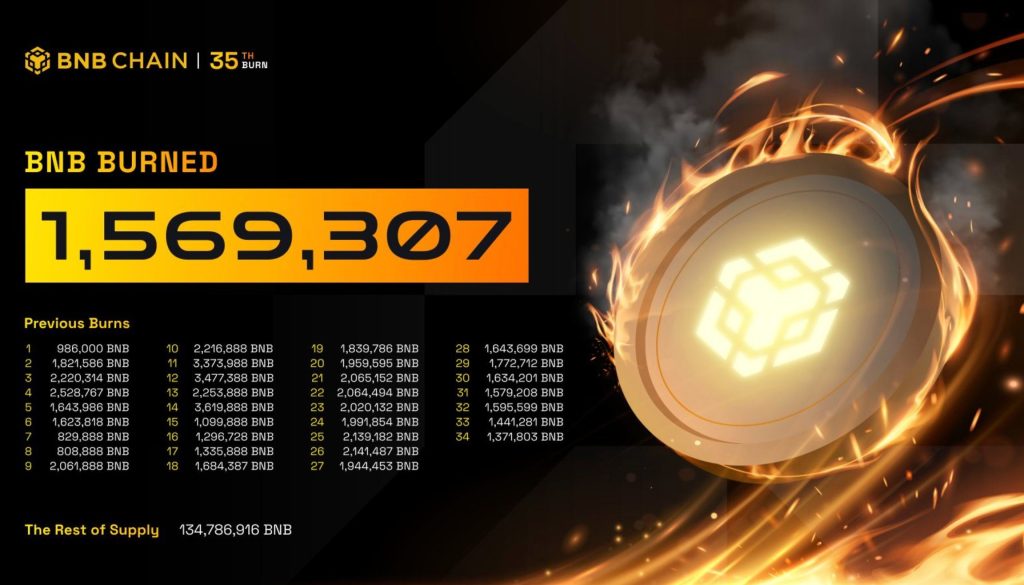
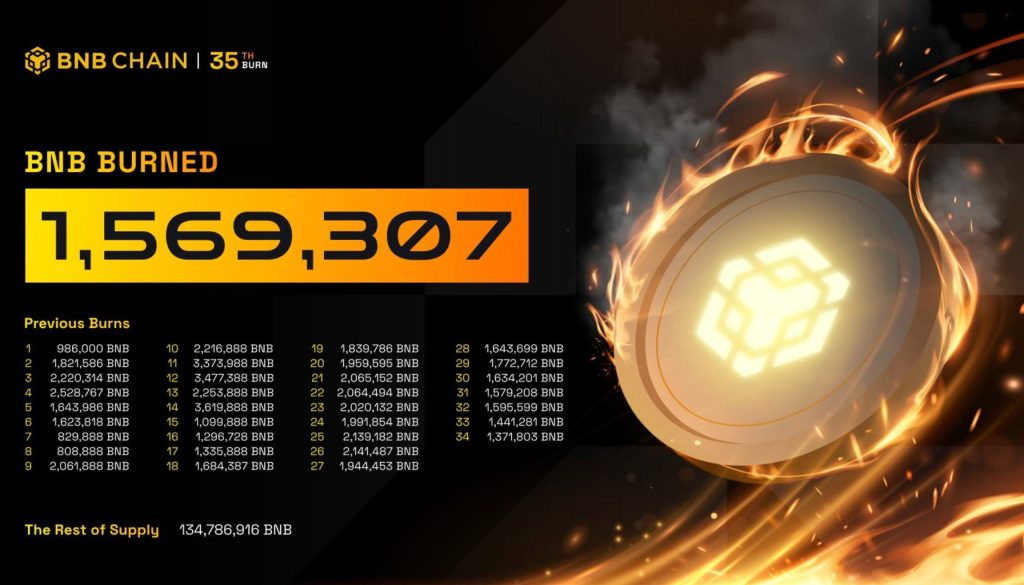
Binance executed its 35th quarterly BNB crypto burn on April 15, 2026, permanently removing approximately 2.14 million BNB, worth roughly $1.32 billion at prevailing prices, from circulation in one of the largest single deflationary events in crypto history.
BNB crypto is currently trading around $622, holding steady as traders digest the burn’s supply-side implications.
The burn was executed via Binance’s Auto-Burn mechanism, an on-chain formula that calculates destruction amounts based on BNB’s price and BSC block output, removing human discretion entirely.
The quarterly total also included approximately 4,500 BNB from the Pioneer Burn Program, which converts user wallet errors into deflationary events.
With this burn, Binance has now eliminated over 62 million BNB, surpassing 30% of the original 200 million supply, as the protocol targets a hard cap of 100 million tokens.
Former CEO Changpeng Zhao has consistently positioned the burn mechanism as BNB’s core value-accrual engine — and the numbers are starting to reflect that thesis in the supply curve.
The broader market is watching BNB closely amid consolidating altcoin momentum, with Bitcoin price action setting the tone for risk appetite across the top-cap space.
Whether this burn event catalyzes a breakout or simply confirms a range depends entirely on where BNB holds into the weekend.
Can BNB Crypto Price Hit $650 Before April Closes?
BNB is consolidating in the $621–$624 range, trading below both its 50-day and 200-day moving averages, a technical setup that signals neutral-to-cautious momentum rather than outright bullish conviction. RSI sits at 47.39, technically straddling the midline but leaning toward the soft side.
Volume has not yet confirmed a breakout.
Key resistance is clustered at $645–$651, with $651 representing the Bollinger Band upper boundary — a level MEXC analysts identify as the critical ceiling for an end-of-April target.
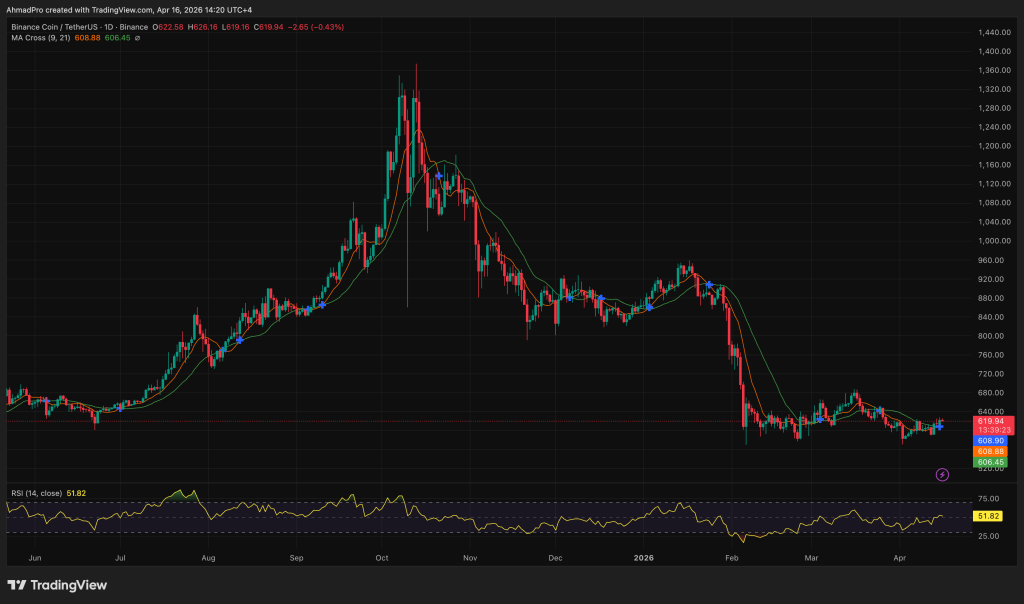
Support sits in the $581–$602 zone; a weekly close below $602 would likely trigger a more significant pullback toward the $560s.
BNB is sitting at that typical turning point where sentiment and structure need to align, because if the post-burn momentum actually brings volume back and price reclaims the 50-day average, that is where a move toward the $650 to $680 zone starts to look realistic.
Right now, though, it still needs confirmation, because without that reclaim, it is just a bounce, not a trend shift.
The key level below is $581, and if that breaks, the whole recovery idea weakens quickly, opening the door to $540 while the market waits for clearer regulatory direction.
Maxi Doge Targets Early-Mover Upside as BNB Tests Key Resistance
BNB at $621 is a solid hold, but with a market cap already deep in the tens of billions, the math for a 10x from here requires either a full bull-market rip or years of patient accumulation. Traders chasing asymmetric returns are increasingly rotating toward early-stage assets where the supply curve hasn’t yet been discovered. That rotation has a name right now.
Maxi Doge (MAXI) is an ERC-20 meme token built around a single, aggressively specific identity: a 240-lb canine juggernaut embodying the 1000x leverage-trading mentality.
“Never skip leg day, never skip a pump.” The presale is live at $0.0002813 per token, with $4,737,520.41 raised, momentum that signals genuine community traction, not a ghost launch.
Staking is available with a dynamic APY for holders, alongside holder-only trading competitions with leaderboard rewards, and a dedicated Maxi Fund treasury that manages liquidity and partnerships.
The meme-first marketing leans hard into gym-bro viral culture, which (whether you find it ridiculous or not) has a proven track record of moving retail capital at this stage of the cycle.
Presale tokens carry significant risk, liquidity, lock-up terms, and post-launch execution, all of which warrant independent due diligence before committing capital.
DISCOVER: 9+ Best High-Risk, High-Reward Crypto to Buy in 2025
The post Binance Just Burned $1.32 Billion Worth of BNB Crypto in a Single Day: Is a Break Above $650 Next? appeared first on Cryptonews.
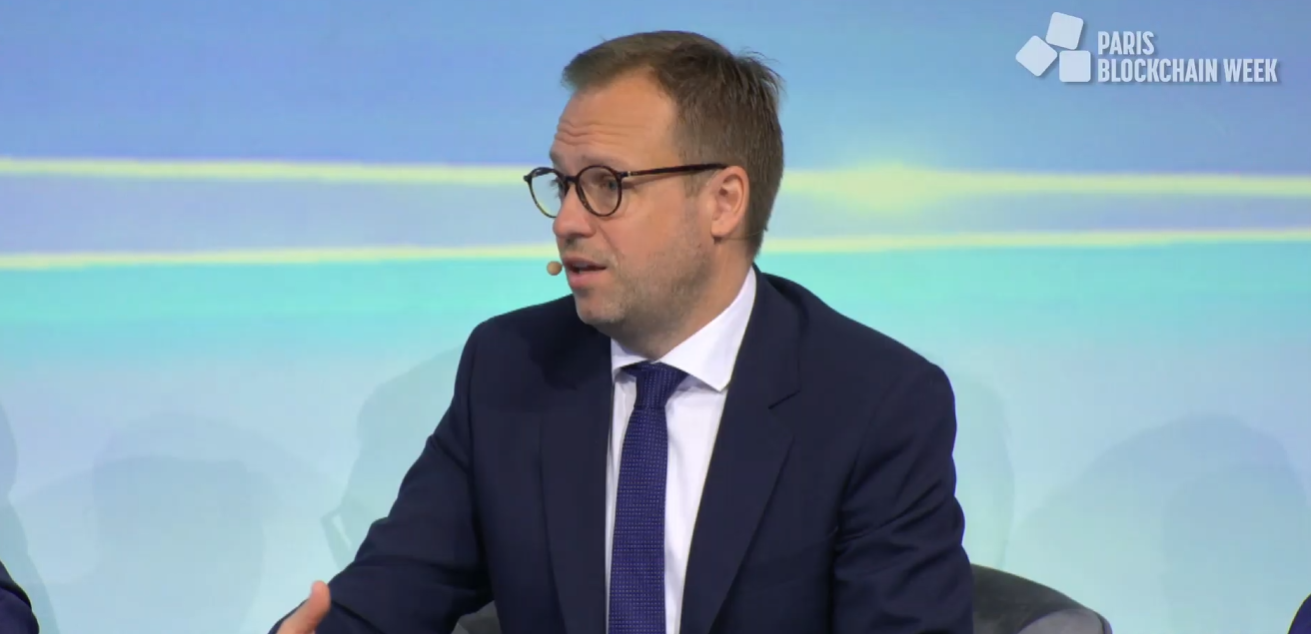
Jean-Didier Berger, minister delegate to the interior minister of France, said authorities are taking measures to protect cryptocurrency investors from the growing threat of crypto kidnappings and wrench attacks in the country.
Speaking at Paris Blockchain Week, Berger said his office has taken “preventative measures” against crypto wrench attacks, including launching a prevention platform that has drawn thousands of sign-ups. He added that he was working with Interior Minister Laurent Nuñez on what he described as a more serious plan in the coming weeks.
His comments come days after another reported crypto-linked abduction in France this week, where a mother and her 11-year-old child were reportedly kidnapped in Burgundy on Monday by four suspects who demanded a 400,000 euro ($471,000) ransom from the father, a crypto entrepreneur. Authorities caught the suspects and freed the victims on Tuesday morning, reported news outlet France24, citing the Paris prosecutor’s office.
France has become one of the most prominent centers for so-called wrench attacks, in which victims are threatened or assaulted to force the transfer of digital assets, and the government is now under growing pressure to respond.

Wrench attacks see alarming surge in France
Since the beginning of the year, there have been 41 reported crypto-related kidnappings in France, meaning that on average, a similar attack occurred once every 2.5 days in 2026, reported local news outlet RTL on Wednesday.
Wrench attacks increased by 75% in 2025 to 72 verified cases worldwide, according to cybersecurity platform CertiK. France saw the most incidents during 2025, with 19 confirmed wrench attacks, while Europe accounted for roughly 40% of global incidents.

In another incident, a French couple in their late 50s was robbed of $1 million worth of Bitcoin (BTC) by criminals posing as police officers, Cointelegraph reported on March 10.
Related: Suspected insider wallets rack up $1.2M betting on ZachXBT’s Axiom exposé
A month earlier, in February, French police arrested six people over the kidnapping of a magistrate and her mother in a crypto-linked ransom attack targeting the magistrate’s partner, a crypto entrepreneur.
Magazine: Coinbase hack shows the law probably won’t protect you — Here’s why
Felicity Huffman exiting “Doc” following that heartbreaking season 2 finale

‘The trans mafia won’t back down’

Solana Price Prediction: SOL Twitter Dropped XRP Bomb


-

 Politics6 days ago
US brings back mandatory military draft registration
-
 Sports6 days ago
Man United discover Nico Schlotterbeck transfer fee as defender reaches Dortmund agreement
-

 Fashion6 days ago
Weekend Open Thread: Veronica Beard
-

 Politics6 days ago
Malcolm In The Middle OG Turned Down ‘Buckets Of Money’ To Appear In Reboot
-

 Politics4 days ago
World Cup exit makes Italy enter crisis mode
-

 Business6 days ago
Tesla Model Y Tops China Auto Sales in March 2026 With 39,827 Registrations, Beating Cheaper EVs and Gas Cars
-

 Crypto World3 days ago
The SEC Conditionalises DeFi Platforms to Be Avoided for Broker Registration
-

 Crypto World3 days ago
SEC Signals Exemption for Crypto Interfaces From Broker Registration
-

 News Videos1 day ago
Secure crypto trading starts with an FIU-registered
-
 NewsBeat4 days ago
Pep Guardiola and Gary Neville agree over Arsenal title problem that benefits Man City
-

 Business6 days ago
OpenAI Halts Stargate UK Data Centre Project Over Energy Costs and Copyright Row
-

 Business5 days ago
Ireland Fuel Protests Enter Day 5 as Blockades Spark Shortages and Government Prepares Support Package
-

 Politics6 days ago
LBC Presenter Mocks Trump Over Iran War Failures
-

 Crypto World6 days ago
Federal judge blocks Arizona from bringing criminal charges against Kalshi
-

 NewsBeat2 days ago
Trump and Pope Leo: Behind their disagreement over Iran war
-

 Crypto World2 days ago
SEC Proposes Certain Crypto Interfaces Don’t Need to Register as Brokers
-
 NewsBeat4 days ago
JD Vance announces ‘no agreement’ with Iran over nuclear weapons fear
-

 Tech7 days ago
A version of Windows 10 released a decade ago is now eligible for additional security patches
-

 Business6 days ago
IMF retains floor for precautionary balances at SDR 20 billion
-

 Business5 days ago
Former Liverpool CEO eviscerates FIFA for World Cup ticket pricing
You must be logged in to post a comment Login