

Crypto World
Securitize Brings Hamilton Lane's HLSCOPE Private-Credit Fund to TRON in First Issuance on the Network



Securitize on Tuesday launched a tokenized version of Hamilton Lane's Senior Credit Opportunities Fund, known as HLSCOPE, on the TRON blockchain, the first asset the tokenization platform has ever issued on the stablecoin-heavy network, the two companies said in a joint announcement. The launch… Read the full story at The Defiant

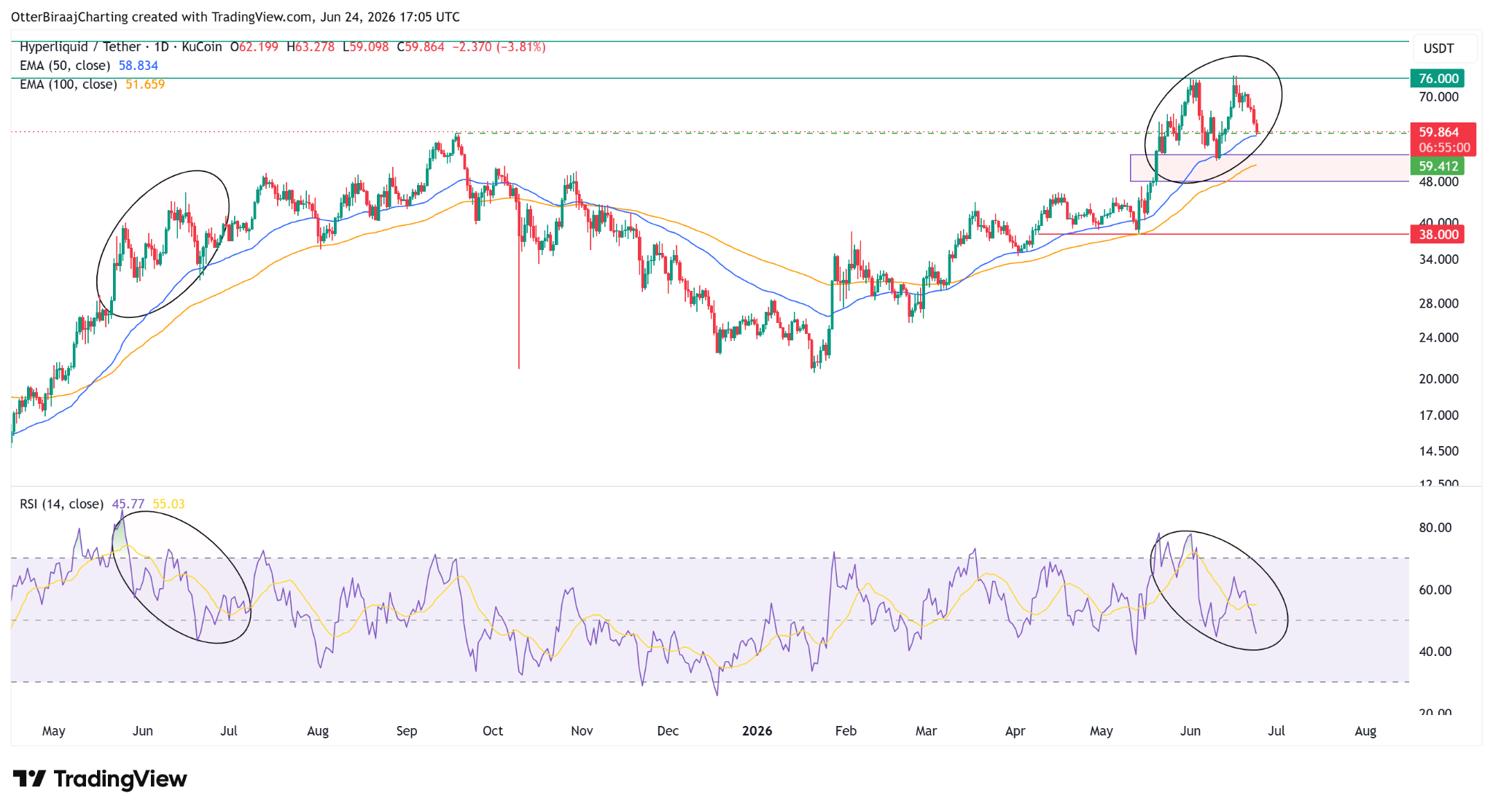
Hyperliquid’s HYPE token is down 22% from its $75 all-time high, bringing its 2026 uptrend to a key test of support. Market participation has cooled across the derivatives markets, while the spot flows show early signs of stabilization after strong selling pressure in early June.
The $50-$54 area now stands out as the most important support zone beneath current prices and the first major trend test since January.
Spot selling begins to ease for HYPE
HYPE fell below $60 on Wednesday after rejecting another retest of its all-time high near $76. The decline has pushed the price toward the 50-day exponential moving average, a level that has acted as trend support throughout the rally from March.
The recent pullback resembles HYPE’s consolidation in May 2025. At that time, the token printed a new high near $40 before entering a multi-week pause that cooled momentum without producing a bearish break on the daily chart.
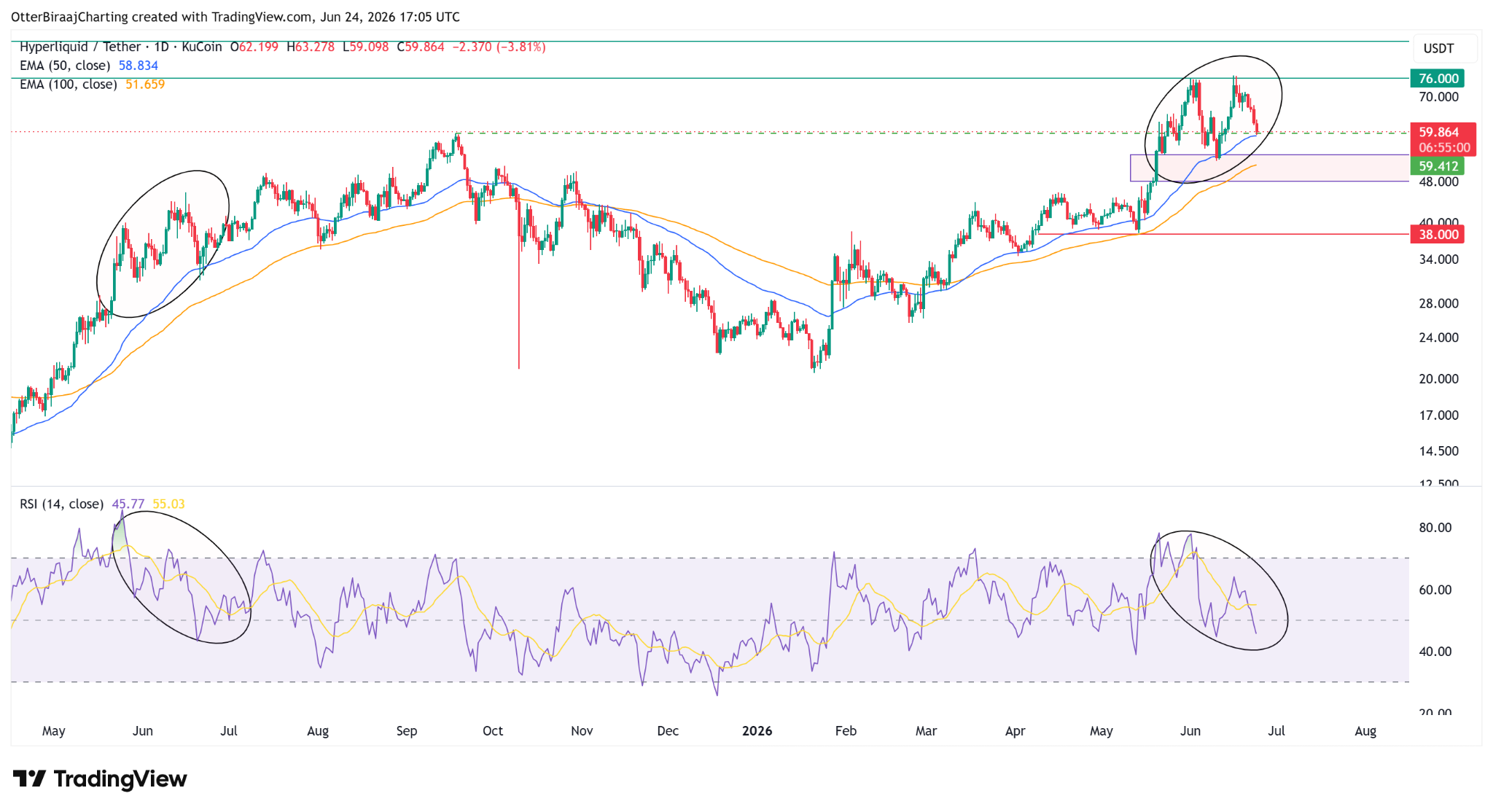
HYPE price comparison, July 2026 and May 2025. Source: Cointelegraph/TradingView
The relative strength index is following a similar setup, rolling over from overbought conditions while remaining above the levels typically associated with trend reversals.
However, onchain data paints a cautious picture. Aggregated spot cumulative volume delta (CVD), which measures net buying and selling activity in spot markets, has improved from recent lows during the correction. The recovery has reduced the earlier sell imbalance, though spot CVD remains deeply negative at nearly $95 million.
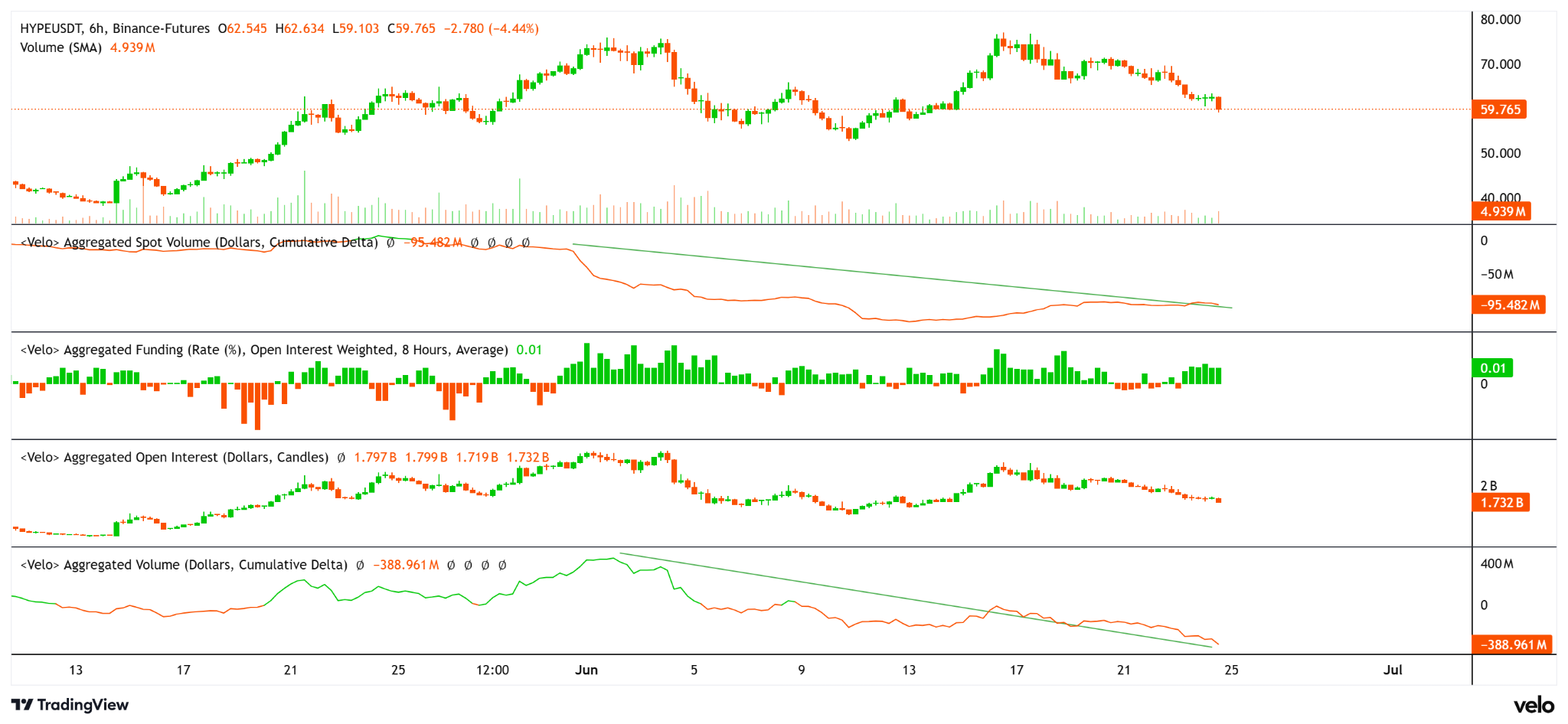
HYPE price, open interest, spot and futures CVD, funding rate. Source: Velo
The shift suggests selling pressure is easing rather than aggressive accumulation. Spot buyers have started absorbing supply near current levels, though the scale of demand remains modest compared to $110 million in selling recorded during HYPE’s decline from $76 in early June.
The derivatives activity continues to weaken. Open interest has fallen to $1.73 billion from $2.2 billion, while derivatives CVD has continued trending lower and now sits near negative $389 million, down from $400 million at the beginning of June. Currently, HYPE traders appear to be reducing exposure rather than opening new positions.
Related: Solana grabs 95% of tokenized equity as traders debate if SOL bottom is in
$50 support comes into focus
The next major test lies between $50 and $54, where the rising 50-day exponential moving average aligns with an unfilled daily fair-value gap. The zone represents the first significant support cluster below the current prices.
Holding above the region preserves HYPE’s sequence of higher highs and lows, which has remained intact since January. It also keeps the current pullback consistent with previous consolidations that developed within the broader uptrend.
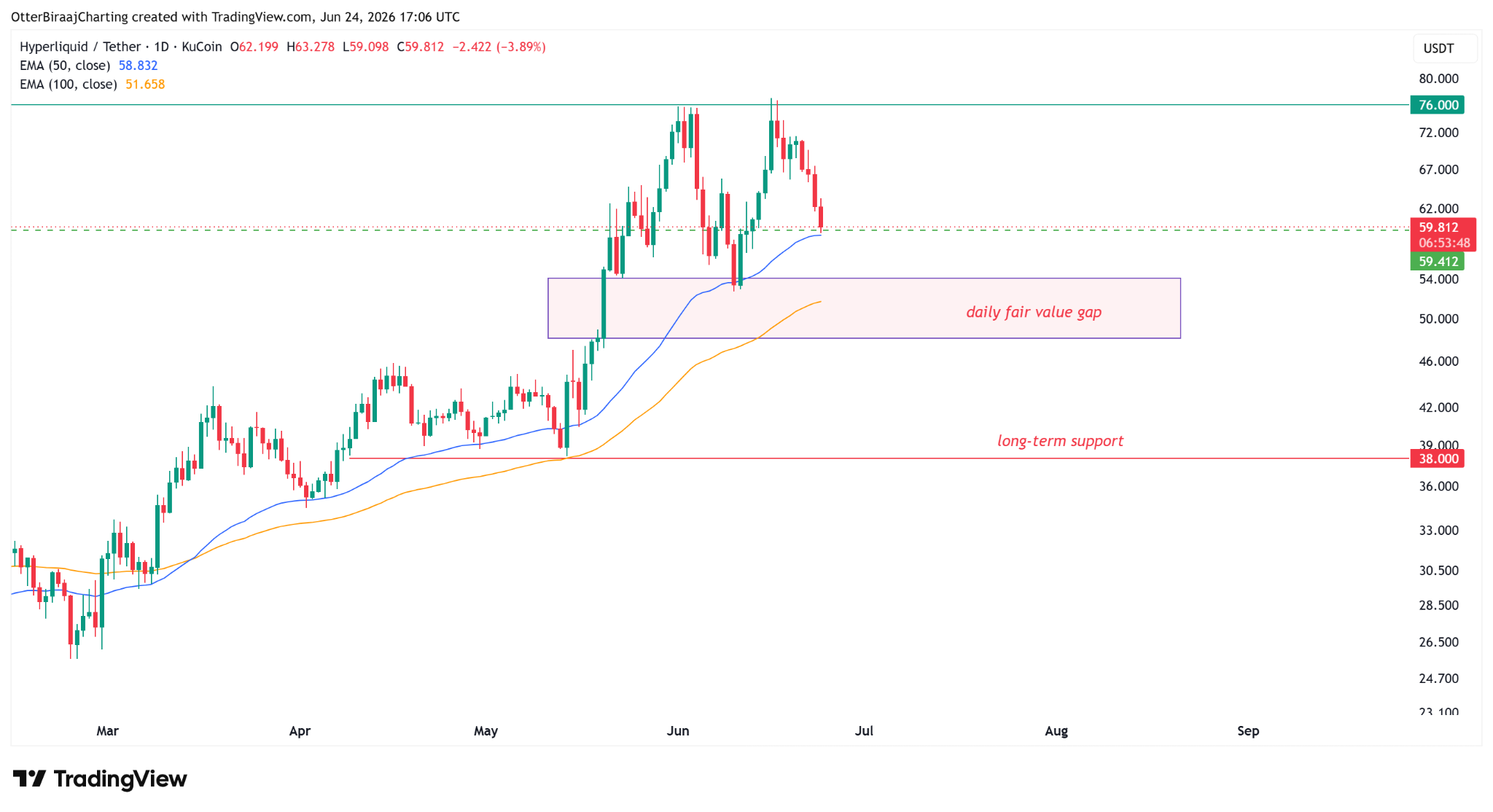
HYPE/USDT, one-day chart. Source: Cointelegraph/TradingView
A daily close below $53 would mark the first meaningful bearish shift on the daily chart this year. The 100-day EMA near $51.6 becomes the next support level, followed by the lower boundary of the fair value gap near $49. Below that, the next notable support area sits near $38.
For now, the most important signal is the gap between improving spot flows and declining participation across leveraged markets. The strength of demand around the $50-$54 support zone may offer the clearest indication of whether HYPE’s correction is nearing exhaustion or preparing for a deeper retracement.
Speaking in terms of accumulation, crypto trader Altcoin Sherpa said,
“HYPE, I think anywhere in the 55-64 area is a pretty good place to accumulate this one. I think it goes to $100 later this year personally and is still the best altcoin…but it’s going to also depend a lot on bitcoin IMO.
Related: Bitcoin crash to $60K opens new $530M demand zone: Will bulls buy in?

Memecoins were once largely confined to the internet: jokes turned into tokens, and trading played out on screens. But recent controversies tied to Solana’s Pump.fun suggest that memecoin promotion is increasingly reaching into real-world behavior—at times by rewarding people in crypto for promotional stunts.
The shift matters because it changes the incentives surrounding token launches and marketing. When attention becomes something participants can monetize directly, the line between entertainment, community engagement, and exploitation can blur—raising new ethical and regulatory questions for an industry already operating with uneven oversight.
Key takeaways
- Memecoin value is closely tied to visibility and social momentum, but Pump.fun-style bounty models intensify the competition for attention.
- Reports around creator bounties describe crypto rewards for attention-seeking behavior that can extend beyond online promotion.
- By lowering the barrier to token creation, platforms can move scarcity from “ability to launch” to “ability to stand out.”
- Supporters argue participation is voluntary, while critics warn that financial pressure and consent can be more complex than it appears.
- Regulators may struggle to classify bounty programs that combine promotion, compensation, and token-related incentives.
From meme culture to on-the-ground stunts
Memecoins have always been different from “serious” crypto narratives. Rather than relying on technical roadmaps or utility, they attract buyers through humor, absurdity, and a shared sense of internet culture. Traditionally, the biggest risk for participants was financial—speculators could lose money chasing hype without the memes themselves leaving the digital realm.
That boundary is increasingly being tested. Earlier coverage cited in Wired describes alleged Pump.fun controversies in which people reportedly accepted cryptocurrency payments for real-world actions such as shaving their heads, drinking large amounts of alcohol, and getting token names tattooed on their bodies. In some cases, promotion is not limited to content creation—it is framed as getting people to become “living advertisements.”
Whether these are best viewed as a new kind of community engagement or as a symptom of a more troubling attention economy remains contested, but the pattern itself is difficult to ignore. The more memecoin marketing resembles direct participation in high-risk public performances, the more it invites scrutiny beyond traders and into consumer protection, labor standards, and safety concerns.
Why attention remains the real “utility”
Memecoins do not require sophisticated technology to find an audience. Their market dynamics often come down to visibility: how many people are watching, sharing, and talking. As Wired notes in discussing memecoin culture and attention-driven markets, attention is treated like the scarce resource that feeds everything else—liquidity, trading activity, and renewed hype.
The attention cycle can be self-reinforcing. When a memecoin trends, it draws traders; when traders return, liquidity can improve; rising activity can generate more visibility; and that visibility can pull in still more market participants. The end result is that conversation becomes a primary driver of market survival.
This also helps explain why extreme promotion can become rational within the attention economy—even if it looks irrational from a distance. Online audiences move quickly, and what shocks viewers today may be forgotten tomorrow. To stay visible, creators often feel pressure to escalate, and audiences may amplify the spectacle by sharing screenshots and commentary rather than ignoring it.
Pump.fun’s launch model and the economics of standing out
One reason Pump.fun and similar systems caught on is that they make token creation faster and easier for nontechnical users. Earlier reporting described how such platforms turn launches into a near-instant process for many newcomers, lowering the initial barrier to participation.
But when token creation becomes cheap and fast, the bottleneck shifts. If almost anyone can launch a token, then differentiation depends less on technical effort and more on marketing reach. In attention-based markets, that often means competition for visibility becomes the central battleground—and promotion can become increasingly direct.
Wired’s earlier reporting on Pump.fun described how some platforms offered livestreaming features and faced criticism over promotional behavior used to attract investors and viewers. That reporting suggested a pattern in which competition led some creators to push boundaries to improve their odds of standing out. Eventually, livestreaming was suspended and later brought back with moderation measures, underscoring how platforms can respond once reputational or regulatory pressure rises.
Where creator incentives meet ethical risk
Supporters of crypto bounties often argue that participation is voluntary: people take part because they are paid, entertained, or both. The comparison to other entertainment industries is common—reality shows run stunts; influencers promote questionable products; athletes accept injury risks for income and visibility. Critics counter that the consent story can be more complicated when money and financial pressure are involved, especially if participants underestimate long-term consequences.
One widely shared example discussed in the source material involves a person in Tamil Nadu, India, who reportedly tattooed the ticker “$boutywork” on his forehead in an attempt to complete a bounty task. The episode highlights a core tension in attention-driven incentives: stunts designed to attract attention can turn into durable personal outcomes that outlast the moment that generated the token’s visibility.
Even when no permanent harm occurs, the incentive structure can still shape behavior. In markets where virality can function like currency, people may prioritize short-term rewards—financial gain, recognition, or both—over risks they might otherwise treat with more caution. The same dynamic can also keep controversial stunts in circulation: backlash and criticism can still generate engagement, which may encourage platforms and creators to chase bigger reactions.
Regulators face a hard classification problem
These developments raise complex questions for regulators because bounty programs don’t fit neatly into existing legal boxes. Depending on how tasks are structured, they can resemble marketing campaigns, promotional contests, work-like arrangements, high-risk reward systems, or forms of token-linked compensation that earlier laws were never designed to address.
Consumer protection authorities may ask whether participants understand the risks and potential consequences. Labor regulators may consider whether financial need and decision-making capacity should trigger stronger safeguards. Securities regulators, in turn, may be forced to examine whether token-based rewards change the legal character of promotion.
The source material emphasizes that answers will likely vary by jurisdiction. Without clearer standards, platforms may continue operating in a regulatory gray zone where enforcement is inconsistent and reputational consequences can outpace legal guidance.
For now, memecoin marketing’s direction remains uncertain. Investors and builders should watch for how platforms modify moderation rules, whether certain bounty categories are restricted, and whether communities begin rejecting exploitative tactics. The key question is whether the next escalation is met with clearer guardrails—or with a serious incident that forces more aggressive intervention.
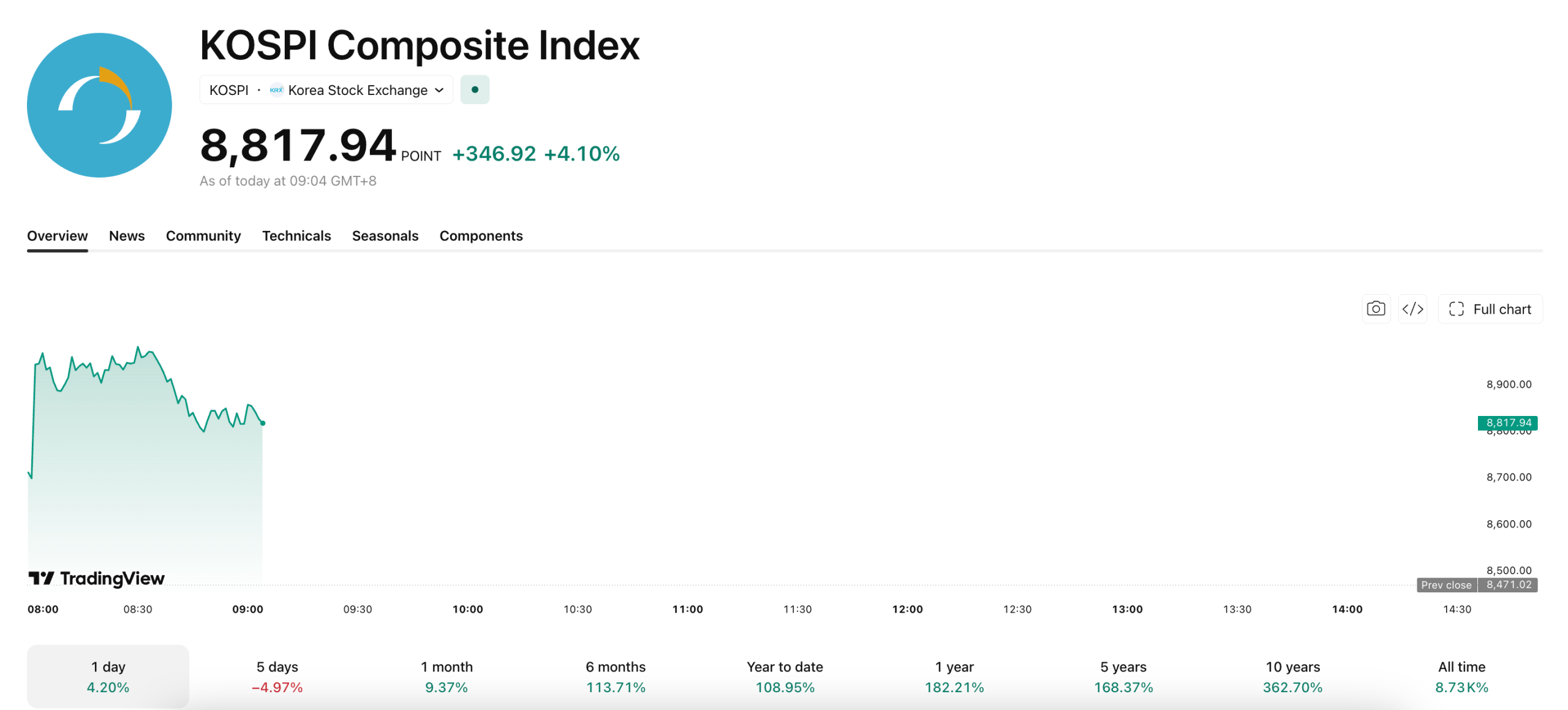
South Korea’s KOSPI surged more than 5% at the open on June 25, pushing back above 8,900 from 8,400 the prior session. Micron Technology’s fiscal Q3 2026 results, which well exceeded Wall Street expectations, drove the move.
The Korea Exchange (KRX) activated a buy-side sidecar shortly after the open, suspending program trading for five minutes. The mechanism triggers when the KOSPI 200 Futures index climbs 5% or more for at least one minute.
Micron Results Catalyze the Move
Micron reported fiscal Q3 2026 revenue of $41.46 billion, more than four times the $9.30 billion it posted in the same quarter a year earlier. Adjusted earnings per share came in at $25.11, well above the analyst consensus of around $20.78. The stock gained roughly 15% in after-hours trading following the announcement.

SK Hynix jumped more than 10% in early morning trading and triggered a static volatility interruption (VI) at the open, briefly switching to single-price trading for two minutes. After the VI lifted, the stock moved quickly back toward its prior level.
Samsung Electronics and SK Hynix reclaimed the 360,000 won and 2.8 million won levels, respectively. As BeInCrypto reported, SK Hynix recently surpassed Samsung in market cap for the first time since 2000.

K Hynix and Samsung Lead the Charge
By investor type, individuals net bought roughly 490 billion won and institutions added around 100 billion won. Foreign investors net sold approximately 600 billion won, extending a streak of net selling that has now totaled around 12.2 trillion won over the past five trading days.
The divergence mirrors the pattern seen after South Korea’s previous market rebound, when retail buyers absorbed foreign selling in the early session.
Han Ji-young, a researcher at Kiwoom Securities, pointed to a combination of macro tailwinds and Micron’s outperformance.
“In a favorable macro environment, including falling oil prices and the U.S. 10-year Government Bonds yield falling below 4.4%, Micron’s earnings surprise and the more than 5% strength in the KOSPI200 night futures combined to send the index surging at the open.” — Han Ji-young, Kiwoom Securities
The post KOSPI Spikes 5% on Opening, Riding Micron’s Surprise Earnings appeared first on BeInCrypto.


Exodus Movement has opened a tokenized-equities storefront inside its self-custody wallet, letting eligible users trade more than 200 tokenized stocks and ETFs on Solana. The product, Exodus Markets, runs on tokens issued by Ondo Finance and pushes a TradFi-style equity menu into an app where users… Read the full story at The Defiant


The Bank of England published its policy statement and draft Code of Practice for systemic stablecoin issuers on Monday, replacing the per-person holding caps it consulted on last year with an issuer-level issuance ceiling and a more generous reserve-asset mix. Industry feedback can be filed until… Read the full story at The Defiant


The U.S. Department of Justice has rejected warnings from four major law enforcement organizations, arguing that the CLARITY Act would not weaken criminal investigations and that claims about enforcement loopholes are factually incorrect.
Summary
- The DOJ rejected claims that the CLARITY Act would create enforcement loopholes, calling the criticism factually inaccurate.
- Four law enforcement organizations warned that Section 604 could reduce oversight and create opportunities for criminal misuse of digital assets.
- Senator Cynthia Lummis said the updated CLARITY Act text will be released on July 4 ahead of a planned Senate vote later in July.
According to the Blockchain Association, a DOJ spokesperson responded on June 24 to concerns raised by the National District Attorneys Association, National Association of Assistant U.S. Attorneys, International Association of Chiefs of Police, and National Sheriffs’ Association. The spokesperson said a recent letter from those groups “contains factual inaccuracies and mischaracterizes Administration policy.”
The dispute comes as lawmakers move closer to finalizing the CLARITY Act, a digital asset market structure bill that Senate negotiators are preparing to release for a final review period before seeking floor consideration later in July.
DOJ says criminal investigations remain unaffected
In a June 23 letter, the four law enforcement organizations urged the White House to reconsider parts of the legislation, including Section 604. The groups argued that certain exemptions could create regulatory blind spots that sophisticated criminal actors might exploit.
According to the letter, broad carve-outs could reduce oversight and accountability for some participants in the digital asset industry. The organizations also warned that the provision could interfere with enforcement structures currently used by investigators and prosecutors.
While raising those concerns, the groups stated that they were not opposed to software development or technological innovation. Instead, they said their objections centered on protections that could shield entities functioning as intermediaries from regulatory scrutiny. The letter also questioned provisions tied to the Blockchain Regulatory Certainty Act.
Pushing back against those arguments, the DOJ spokesperson said the legislation would not limit federal prosecutors or investigators. The spokesperson stated that law enforcement access to relevant information would remain unchanged under the proposal.
The DOJ further said the bill would not restrict its ability to investigate or prosecute criminal conduct involving digital assets, including drug trafficking, human smuggling, and terrorism financing.
Senate review advances as CBDC debate continues
As criticism from law enforcement groups draws attention to the bill, Senate negotiations have entered what lawmakers describe as the final drafting stage.
Senator Cynthia Lummis said negotiators plan to publish updated CLARITY Act text on July 4 after months of discussions involving lawmakers, industry participants, and banking representatives. According to Lummis, the release will allow one final round of feedback before Senate leaders pursue floor action later in July.
Lummis said negotiations have been underway since last Labor Day and have required thousands of hours of work on both the CLARITY Act and the GENIUS Act. She added that lawmakers have spent considerable time addressing concerns raised during the drafting process, including objections from parts of the banking sector.
At the same time, debate over federal digital asset policy continues elsewhere in Washington. President Donald Trump recently postponed signing the 21st Century ROAD to Housing Act, despite the measure passing Congress with 358 votes in the House and 85 votes in the Senate.
Although primarily focused on housing policy, the bill contains language that would prohibit the Federal Reserve from creating or issuing a central bank digital currency through 2030.
Trump said he would instead wait for Congress to advance the SAVE AMERICA Act, while Treasury Secretary Scott Bessent has separately stated that a U.S. CBDC is “off the table” under the current administration and has encouraged lawmakers to continue advancing digital asset legislation, including the CLARITY Act.
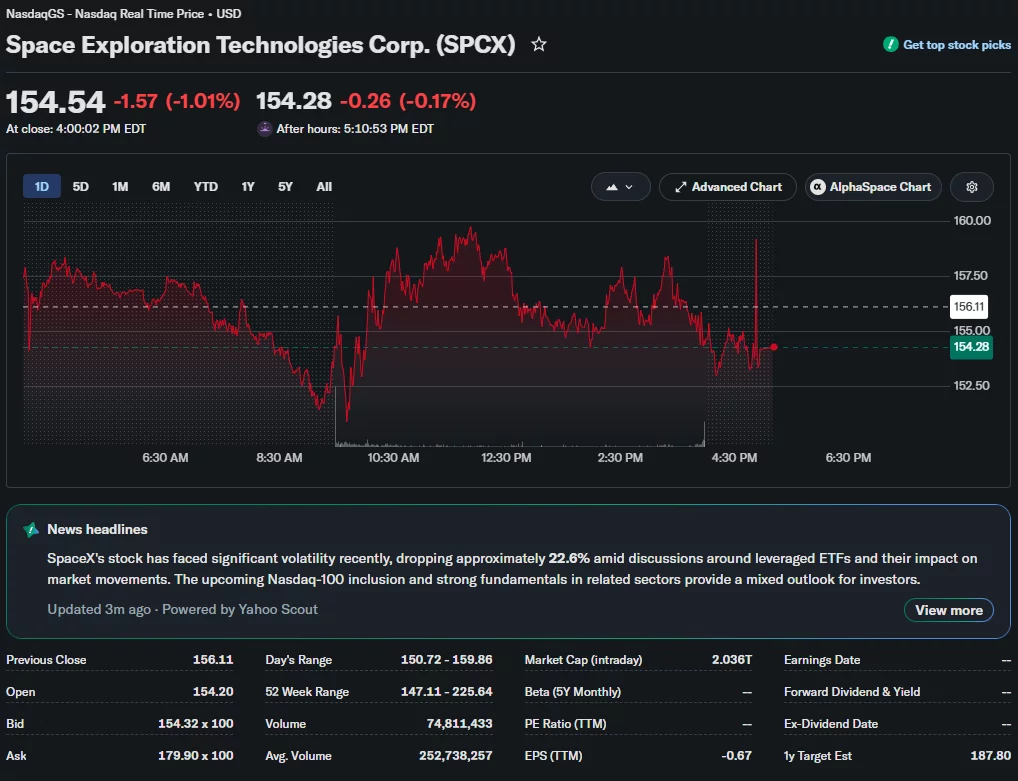
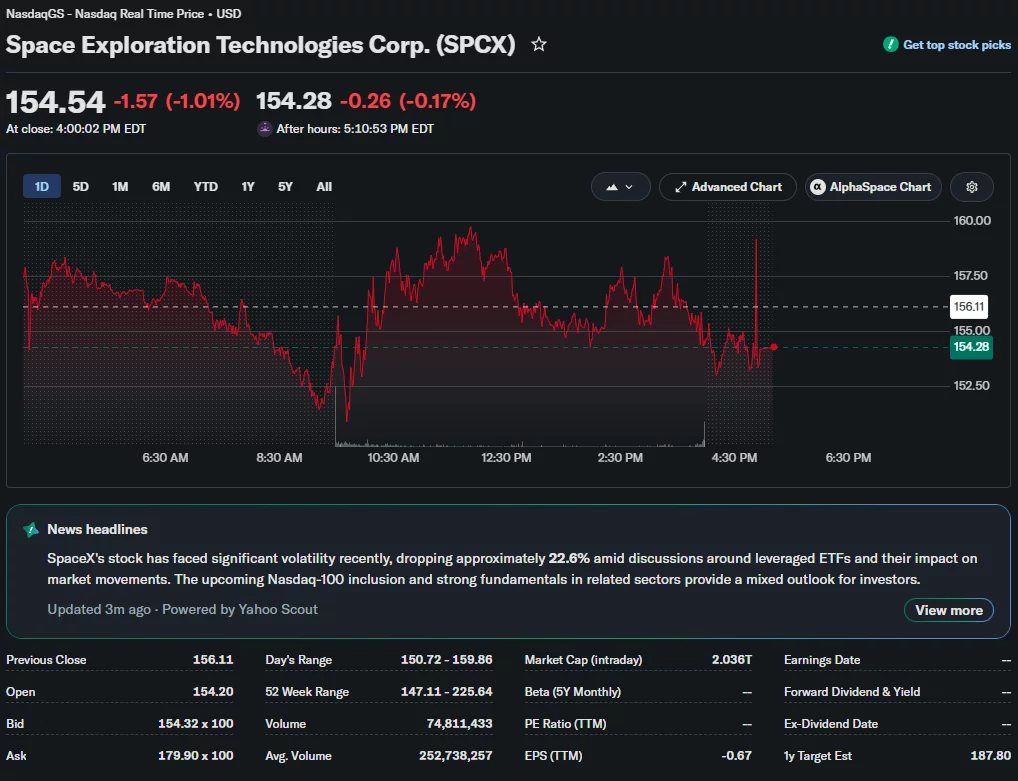
SpaceX shares have remained under pressure after short interest jumped to 13% of the publicly tradable float while the stock lost more than 25% over the past five trading sessions.
Summary
- Short interest in SpaceX has climbed to 13% of the public float as SPCX extends its post-IPO decline.
- Rising bearish bets have fueled debate over a potential short squeeze due to the stock’s limited tradable share supply.
- Susquehanna initiated coverage with a neutral rating, citing valuation concerns despite strong long-term growth drivers.
According to data from Ortex Technologies cited by Reuters, bearish bets against SpaceX have risen rapidly in recent days, pushing short interest from 8% in the previous session to 13% of the company’s public float. The increase comes as SPCX trades roughly 30% below its post-IPO high following a sharp rally after its market debut.
Reuters reported that Ortex co-founder Peter Hillerberg described the pace of short-selling activity as unusual for a company that has been public for only a few weeks.
Hillerberg attributed the move to a growing number of traders positioning for additional downside after the stock’s recent decline.
The selling pressure has coincided with profit-taking in newly listed stocks and a broader retreat across risk assets. Market participants who benefited from SpaceX’s early gains are now reassessing the company’s valuation after the stock’s rapid rise and subsequent pullback.
Limited float keeps short-squeeze risk alive
Despite the increase in bearish positioning, some market observers point to conditions that could make short positions vulnerable if buying demand returns.
Current market data shows approximately 83 million SpaceX shares have been sold short, while average daily trading volume stands near 270 million shares. Under those conditions, a sharp rally could force short sellers to repurchase stock to close positions, potentially accelerating gains through a short squeeze.
At the same time, concerns about future share supply have added another layer to the debate. Economist Peter Schiff argued that SpaceX’s strong first-day performance was partly supported by its relatively small public float. In recent comments, Schiff warned that the number of tradable shares could expand significantly over time.
According to Schiff, the public float may increase from roughly 640 million shares to 7.5 billion shares by Dec. 8, representing an almost twelvefold increase. He argued that a substantial rise in available shares could create additional selling pressure if demand fails to keep pace.
Analysts remain divided on valuation
Recent analyst coverage has highlighted the split between bullish long-term expectations and concerns about current pricing.
As crypto.news previously reported, Susquehanna initiated coverage of SpaceX with a neutral rating and a $170 price target. In a research note, the brokerage stated that the company’s valuation depends on aggressive growth assumptions and premium valuation multiples.
While Susquehanna said it would prefer to wait for a more attractive entry point before taking a more constructive stance, the firm also identified several factors supporting the company’s long-term outlook. Those factors include SpaceX’s dominant position in rocket launches, the growth potential of Starlink, early investments in artificial intelligence infrastructure, and the leadership of CEO Elon Musk.
Even with those strengths, Susquehanna cautioned that a significant portion of the expected growth may already be reflected in the current valuation.
Meanwhile, SPCX fell another 1% during the latest session to $154.54, extending its five-day loss to approximately 26%. Despite the recent decline, the company still carries a market capitalization of about $2.03 trillion.
Separately, the company has attracted investor attention after announcing plans to raise $20 billion through a bond offering, a move that adds another closely watched catalyst as traders debate whether the recent selloff has gone too far or not far enough.


Taiko's L2 bridge went dark early Sunday after an attacker used a signing key that had been left publicly exposed in the protocol's GitHub repository to forge withdrawal proofs and drain roughly $1.7 million from bridge contracts on Ethereum mainnet. The team urged all users to exit every bridge… Read the full story at The Defiant
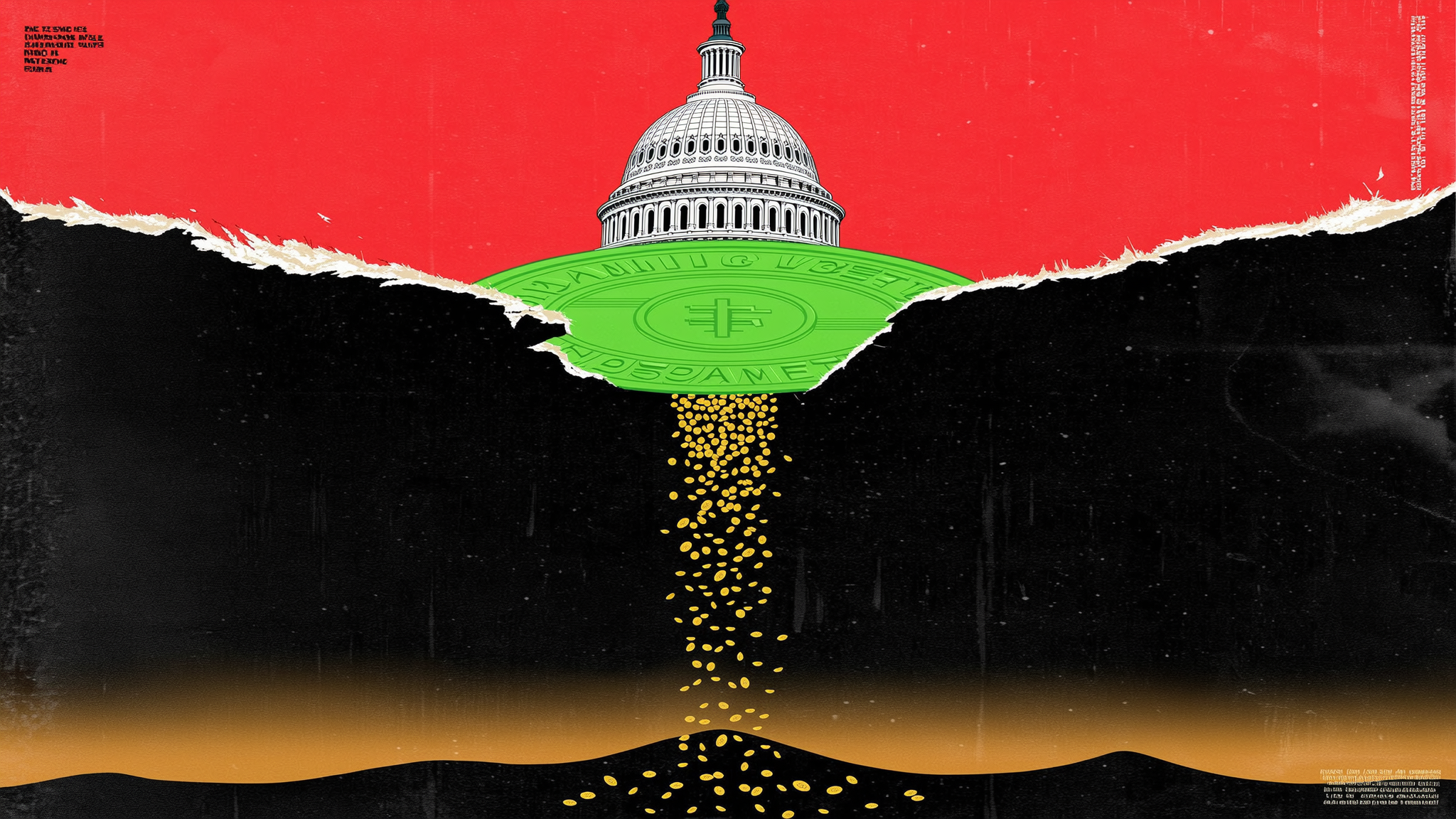
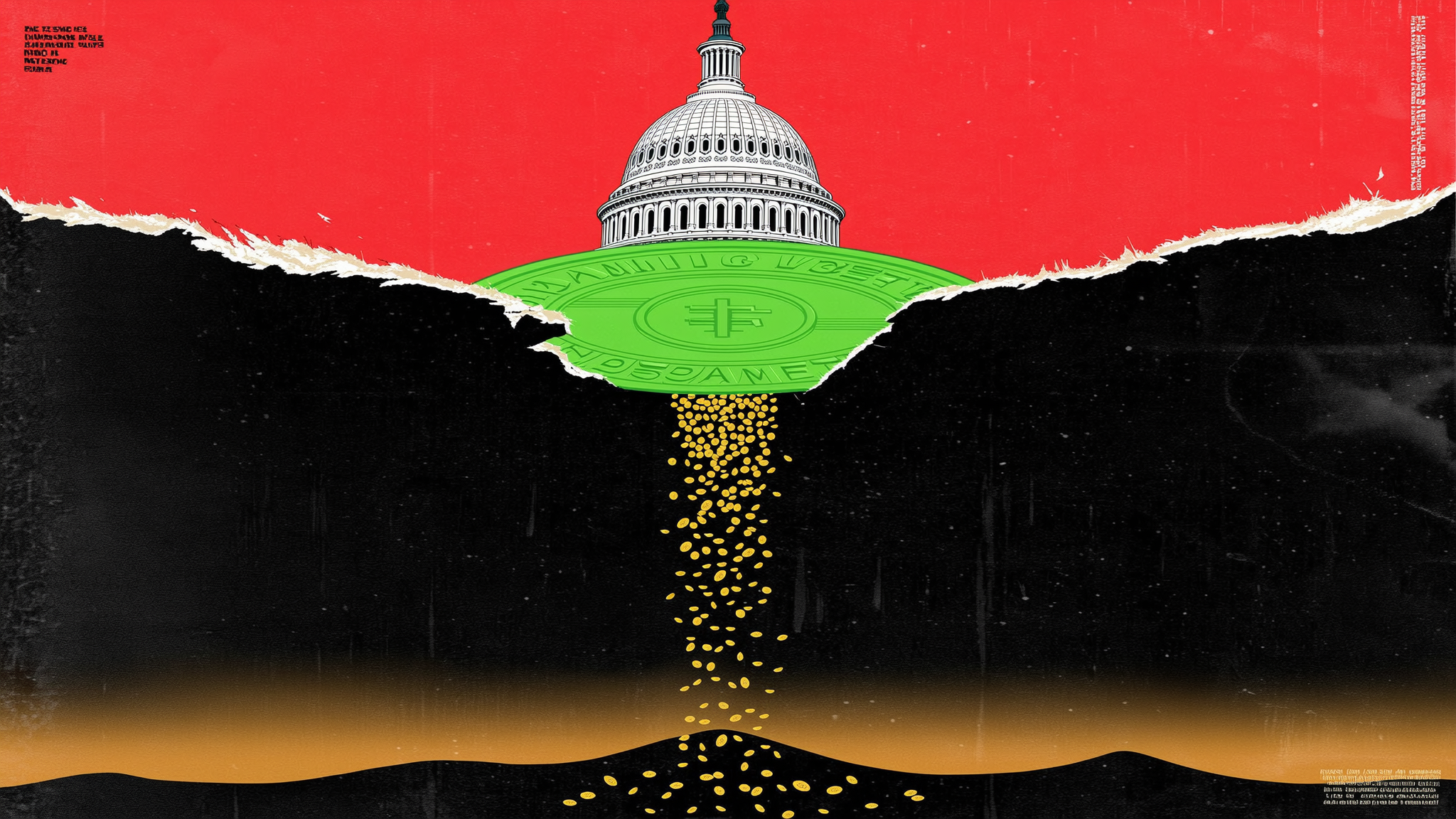
Five senior Senate Democrats sent a formal letter to Republican committee chairs Tuesday demanding immediate hearings into a reported $500 million transaction in which Abu Dhabi royalty acquired a stake in World Liberty Financial, the crypto firm tied to President Donald Trump, and into the federal… Read the full story at The Defiant


Binance is refusing to retreat from Europe after its Greek bid for a MiCA license collapsed. Multiple reports claimed European Central Bank President Christine Lagarde pushed Athens to reject the world’s largest crypto exchange.
The reversal leaves the company barely a week to find another route into the bloc before its temporary permissions lapse on July 1. Binance insists it has no intention of leaving.
How Binance’s MiCA Bid Unraveled in Athens
Binance filed its Greek application in January 2026 through a local subsidiary. Approval there would have unlocked passporting rights across all 27 member states under the Markets in Crypto-Assets (MiCA) framework.
Without it, unlicensed platforms must stop serving EU clients once the MiCA transitional deadline passes.
Binance had reportedly cleared key reviews before Greece’s approval process unraveled in mid-June. The same reports allege Lagarde told Greek Prime Minister Kyriakos Mitsotakis the exchange was not welcome.
None of the ECB, Greek officials, or Binance has confirmed this claim.
Reuters reported that regulators balked at Binance’s past penalties for money laundering, its sprawling structure, and what they viewed as a risk-taking culture.
In 2023, it pleaded guilty in the US to Bank Secrecy Act and sanctions breaches, paid $4.3 billion, and founder Changpeng Zhao (CZ) stepped down.
“Binance is not leaving Europe,” Gillian Lynch, Head of Europe and UK, reportedly told Reuters.
Follow us on X to get the latest news as it happens
Can the European Central Bank Keep Binance Out?
Reports tie the resistance to Binance’s dominant role in dollar-pegged stablecoin liquidity. The ECB casts such dollar tokens as a threat to monetary sovereignty and is advancing its own digital euro, which it hopes to issue by 2029.
Still, the central bank holds no formal veto over MiCA approvals. National regulators grant the licenses, so Lagarde’s leverage runs through political pressure rather than direct authority.
That structure cuts both ways:
- One approval passports across all 27 states, and Binance needs a single yes.
- Meanwhile, blocking it everywhere would require pressure in every capital it approaches.
Dozens of rivals have already cleared MiCA, including Kraken in Ireland, leaving the biggest exchange a holdout.
Binance contacted four or five regulators but filed only in Greece. France is the likely next test, where Binance has held an AMF registration since 2022 but also faces an aggravated money-laundering investigation by French prosecutors.
Overriding a second national regulator would carry a higher political cost, and Binance has abandoned EU markets before.
Compliance Culture, Not Headcount
Binance’s defense leans on scale, pointing to heavy investment and about 1,500 compliance staff.
Critics argue that it misses the point, because hiring thousands of compliance staff means little if those teams lack authority.
This is much like Binance’s 2022 clash with UK regulators.
“Let’s see how Binance plays the regulatory arbitrage game again…Regulators are ultimately evaluating outcomes, not organizational charts,” OKX CEO and vocal CZ critic, Star Xu, chimed.
Not everyone sees a cliff edge. Analyst Paul Barron called the July cutoff a priced-in consolidation, arguing the headline “90%” counts dormant shell registrations, not active venues.
The coming days will show whether Binance can secure a foothold elsewhere, and how far the ECB’s informal reach extends across the bloc.
The post EU Central Bank President Reportedly Blocked Binance in Greece, Will France Approve? appeared first on BeInCrypto.

Google releases new privacy controls for activity history, personalization

EX BLACKROCK EMPLOYEE JUST EXPOSED THE XRP RESET (THIS IS INSANE!)

GTA 6 pre-orders open now in UK – standard and ultimate edition prices confirmed


-

 Fashion5 days ago
Weekend Open Thread: Miami – Corporette.com
-

 Entertainment4 days ago
Renter of Home in Anne Heche Crash Denies Settlement With Son
-

 Tech3 days ago
Microsoft accidentally kills epic Outlook email threads
-
 Sports1 day ago
Two goals and an assist by sheer aura: Cristiano Ronaldo just entered the World Cup chat
-

 Business4 days ago
Soccer-U.S. defends Iran World Cup travel restrictions, says discussions ongoing
-
Crypto World23 hours ago
Bitcoin (BTC) Dips Below $62K, Ethereum (ETH) Plunges 6% Daily: Market Watch
-

 Politics5 days ago
Andy Burnham and the meaning of Makerfield
-

 Politics6 days ago
BBC Reporter Discusses Cross Party Criticism Of Trumps Iran Deal
-

 Crypto World20 hours ago
Securitize Wraps Roubini's SEC-Registered ETF as Dubai VARA Digital Security
-
Business1 day ago
Entergy settles forward sale agreements, raises $672 million in cash proceeds
-
 Business5 days ago
Wall Street Week Ahead: Investors see Micron earnings as pulse check of AI rally momentum
-

 NewsBeat5 days ago
Keir Starmer Allies Question His Chances For No 10
-

 Tech6 days ago
AWS enters the context layer race with a graph that learns from agents, not manual curation
-
 Crypto World5 days ago
Can Charles Hoskinson Really Rescue Cardano?
-

 Crypto World5 days ago
HIVE shares jump as $220M AI deal speeds Bitcoin mining pivot
-

 Crypto World5 days ago
Jake Chervinsky accuses CME of protecting derivatives monopoly
-
 Tech4 days ago
Signal’s Meredith Whittaker says AI chatbots ‘are not your friends’ and calls Copilot agents a backdoor
-

 Entertainment5 days ago
Jose Alvarado Wants Taylor Swift at More Knicks Games
-

 Tech2 days ago
Nearly 7,000 fake Amazon domains registered ahead of Prime Day 2026, researchers warn
-

 Business6 days ago
Brexit cost 6% of UK economy, Bank of England company data suggests
You must be logged in to post a comment Login