

Crypto World
SMX (SMX) Stock: Drops as Tightening Recycling Regulations Spotlight Verification Tech


Key Highlights
-
SMX shares declined 5.18% amid heightened recycling compliance demands.
-
Emerging state environmental regulations drive producers toward authenticated data systems.
-
SMX platform connects molecular markers with encrypted digital documentation.
-
Material authentication could facilitate regulatory reporting, audits, and sourcing decisions.
-
Tightening environmental standards may increase need for authenticated recycled-content documentation.
Shares of SMX (SMX) declined 5.18% to $14.45 amid growing focus on the company’s material verification platform as environmental regulations tighten. The stock retreated after briefly climbing above $15.20 during early trading, eventually settling near mid-morning levels. Concurrently, expanding state-level environmental mandates are driving increased demand for authenticated data throughout recycling and packaging ecosystems.
SMX (Security Matters) Public Limited Company, SMX
Environmental Regulations Intensify Compliance Requirements
California’s SB 54 mandates that manufacturers participate in packaging recovery initiatives and extended producer responsibility frameworks. Additional states have enacted recycled-content mandates and disclosure obligations covering packaging materials, containers, carrier bags, and similar items. Businesses now face requirements to substantiate material sourcing, recycled composition, processing methods, and end-of-life disposition.
New Jersey has implemented recycled-content mandates spanning multiple plastic, glass, and paper product segments. Maine, Oregon, Colorado, Minnesota, Maryland and Washington have similarly enacted packaging stewardship legislation. Collectively, these initiatives transfer greater recycling expenses and documentation responsibilities onto manufacturers.
This regulatory evolution presents operational hurdles for manufacturers, recycling facilities, consumer brands, and waste management entities. Organizations must substantiate every recycled-content assertion with documentation suitable for regulatory and third-party examination. Consequently, inadequate chain-of-custody frameworks may generate compliance vulnerabilities and brand integrity concerns.
SMX Focuses on Material-Embedded Authentication
SMX embeds an imperceptible molecular identifier within materials and links it to encrypted digital documentation. This framework can maintain information regarding provenance, chemical makeup, custody transfers, and processing history across a material’s entire journey. Consequently, organizations can monitor physical substances alongside their corresponding compliance documentation.
Recycling ecosystems typically encompass multiple intermediaries, processing facilities, and regulatory territories before materials re-enter commercial markets. Throughout this journey, documentation can become dispersed, contradictory, or challenging to authenticate. SMX seeks to address these vulnerabilities by anchoring data directly within the physical material.
The company’s solution could accommodate plastics, fabrics, and additional materials requiring authenticated recycled-content verification. Manufacturers might leverage authenticated data for sourcing decisions, public disclosures, compliance audits, and regulatory submissions. Nevertheless, market penetration will hinge on commercial appetite, implementation expenses, and regulatory recognition.
Plastic Authentication Demonstrates Commercial Applications
Plastic recycling presents a compelling application because recycled resins frequently traverse multiple supply-chain intermediaries. Authenticated material documentation could reinforce assertions regarding recovery rates, reprocessing, and recycled-content percentages. It might also assist manufacturers in satisfying evolving state disclosure mandates.
SMX further integrates authenticated recycled volumes with its Plastic Cycle Token infrastructure. The company engineered this mechanism to correspond with quantifiable industrial recycling operations. Thus, authenticated output might underpin plastic offset instruments, contractual arrangements, project financing, and additional commercial applications.
Wider market dynamics may also shape demand for recycled plastic authentication. Petroleum price volatility can affect virgin plastic economics and influence procurement strategies. As environmental mandates intensify, SMX might attract interest from organizations pursuing enhanced verification throughout material supply networks.




Disclosure: This article does not represent investment advice. The content and materials featured on this page are for educational purposes only.
XRPPower has launched a free AI-powered system designed to help BTC and XRP holders automate digital asset management and portfolio strategies.
Summary
- XRPPower launches free AI platform for BTC and XRP asset management with automated tools and global access.
- XRPPower emphasizes security and compliance using encryption, 2FA, and risk controls aligned with global standards.
- The platform reports global expansion across 189 regions and 3M users, focusing on secure digital asset services.
The 2026 FIFA World Cup ignited a global sporting frenzy, bringing fintech and digital assets back into the spotlight. With the cryptocurrency market remaining volatile, holders of digital assets like BTC and XRP are facing pressure from the downturn, and more and more users are looking for diversified asset management and profit-generating methods while holding digital assets.
In response to this market trend, XRPPower has launched a new free AI-powered intelligent system, providing users of mainstream digital assets such as BTC and XRP with a more convenient new model for digital asset profit generation.
Free registration with XRPPower: Start the digital asset profit-generating experience
1. Create an account
2. Choose a suitable profit plan
The platform offers various profit periods and contract plans. Users can freely choose a plan that suits their financial planning and needs, and review the profit rules and contract details before purchasing.
3. Activate contracts with cryptocurrency
After selecting a plan, users can use mainstream cryptocurrencies such as XRP, BTC, ETH, and USDT to complete the payment and successfully activate the corresponding yield contract.
4. Automatic daily profit settlement
During contract operation, the system will automatically settle profits to the account balance daily according to the contract rules. Users can choose to withdraw funds or continue to purchase other contracts, flexibly planning their digital assets.
5. Invite friends, share rewards
Invite friends to join XRPPower and participate in platform services to receive long-term referral rewards according to the platform’s referral reward rules. Eligible referral programs can enjoy a 3% + 2% reward mechanism, allowing sharing to bring more extra income.
XRPPower partial profit contract period details
- Investment Amount: $500, Contract Period: 5 days, Daily Profit: $6.4, Total Profit: $32, Principal $500 returned upon maturity.
- Investment Amount: $1000, Contract Period: 7 days, Daily Profit: $13.2, Total Profit: $92.4, Principal $1000 returned upon maturity.
- Investment Amount: $5,000, Contract Period: 15 days, Daily Return: $70.50, Total Return: $1,057.50, Principal $5,000 returned upon maturity.
- Investment Amount: $10,000, Contract Period: 20 days, Daily Return: $153, Total Return: $3,060, Principal $10,000 returned upon maturity.
Click to view more different AI smart contracts.
XRPPower security, compliance, and protection
Security and trust are at the core of XRPPower’s continued development. Headquartered in the UK, the platform consistently adheres to improving its technical protection, risk management, and compliance, committed to creating a safe, stable, and transparent digital asset service platform for global users.
The platform employs SSL/TLS data encryption, two-factor authentication (2FA), separate storage for cold and hot wallets, and multi-layered security mechanisms to comprehensively protect user accounts, transaction data, and digital assets. Simultaneously, combined with real-time monitoring and intelligent risk control systems, it continuously identifies abnormal behavior, constantly improving the overall security and stability of the platform.
Regarding compliance, XRPPower consistently references relevant international financial industry standards, continuously improves its internal management processes and risk control systems, and draws on risk assessment and internal control concepts widely adopted by international professional auditing firms such as PwC to continuously enhance the platform’s transparency, operational standardization, and long-term service capabilities.
About XRPPower
Currently, XRPPower’s business covers 189 countries and regions worldwide, with over 3 million users. In the future, the platform will continue to uphold the development principles of security, compliance, transparency, and stability, continuously improving its global service network and digital financial ecosystem to provide global users with a more reliable and efficient digital asset service experience.
For more information, visit the official website.
Disclosure: This content is provided by a third party. Neither crypto.news nor the author of this article endorses any product mentioned on this page. Users should conduct their own research before taking any action related to the company.
Polymarket confirmed Friday that hackers drained approximately $3 million from users through a compromised third-party vendor that injected malicious code into the platform's website, according to PeckShield. The prediction-market platform said it had contained the breach and would refund affected… Read the full story at The Defiant
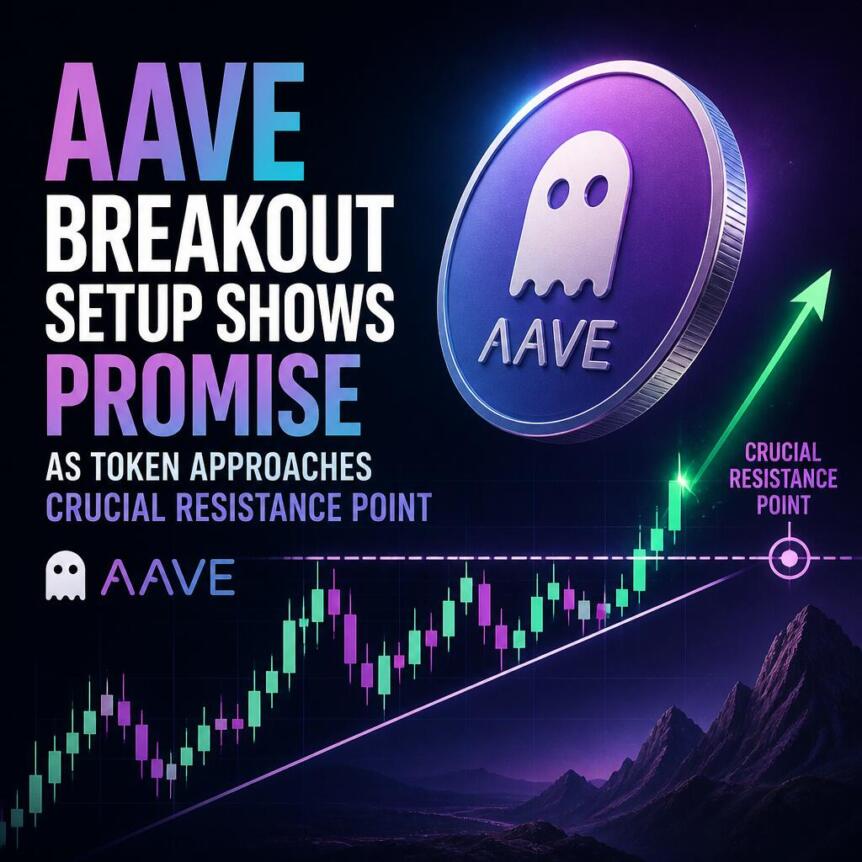
Testing Upper Resistance Levels Of Descending Channel As Bullish Momentum Gains Strength
AAVE is nearing a key technical resistance level, with a continued build-up of bullish momentum after the recent rally from June lows. The DeFi token has been trading within a descending channel for several months, and it is currently testing the upper resistance level of the same.
A descending channel has guided the price movements of AAVE since mid-2025, and it consists of lower lows and lower highs due to prevailing bearishness. Previously, all attempts at breaking above the descending channel have failed as buyers defended the upper trend line. However, there are indications that the latest breakout attempt could be more promising than previous ones.
Buyers Take Control After June Selloff
As reported by clifton_ideas, AAVE is once again testing channel resistance after rebounding from the lower end of the channel. This happened following a brief selloff as the broader market turned bearish in June.
The sell-off increased selling pressure, but buyers were quick to absorb all of the coins on offer without causing further damage to the price. The fast recovery signaled growing optimism and marked a shift in short-term momentum in favor of the bulls.
AAVE was last seen at $81.64, having gained about 7.48% in the daily session. Buyers used the rally to take back several short-term resistance levels, starting at $78 before going above $80. In the process, AAVE attempted to break out toward the $84-$85 region before profit booking started.
Increasing Volume Backs The Breakout Attempt
One of the most compelling bullish signals seen along with the recent move higher includes an impressive surge in volume. Daily volume for AAVE increased by well over 139% in the past 24 hours, signaling strong market participation.
Increased volume on the upside usually serves as a sign of increased investor confidence and helps build credibility around a possible breakout. An increased number of purchases is another factor that demonstrates growing market confidence in AAVE.
In addition to the technical aspects, AAVE shows impressive fundamental characteristics. The market cap for AAVE is around $1.25 billion, and the TVL for AAVE is currently close to $12.41 billion.
Technical Outlook Stays Focused On Confirming Breakout
As for the broader technical outlook, it is starting to show improvements as higher lows appear instead of the previous pattern of lower lows. This is generally an indication of increased demand from buyers and might be the first sign of reversing the prevailing trend.
At the same time, confirmation of any technical outlook is always necessary. Traders will be looking to see whether AAVE can achieve a decisive daily breakout from the descending channel’s resistance. A successful breakout would mean invalidating the bearish technical setup and establishing a new favorable long-term trend.
As seen in the technical projections presented in the chart below, if a decisive breakout from the resistance occurs and buying momentum continues, AAVE might move toward the $170-$190 price range. While it is too early to call these levels, they present possible upside targets in case of bullish developments.
For the moment, the focus stays on channel resistance. The next few trading days may reveal whether AAVE managed to make a breakout or failed once again near repeated price resistance.
Crypto World
Chainlink Launches Project Pangea With 50+ Banks Across 16 Countries for T+0 FX Settlement


Chainlink and a multinational banking consortium of more than 50 institutions across 16 countries launched Project Pangea at Point Zero Forum in Zurich on Tuesday, targeting T+0 atomic settlement for the $9.6 trillion-a-day global FX market. The initiative pairs Chainlink's oracle and… Read the full story at The Defiant

Base, the blockchain backed by crypto exchange Coinbase, has returned online after the network suffered nearly a two-hour outage due to a consensus issue that halted block production.
Base posted to X on Thursday after the outage that the network’s blocks “are being produced normally, and we have verified widespread recovery in the ecosystem.”
Base’s status page said it was investigating “unhealthy” block production at 4:03 pm UTC on Thursday. At 5:21 pm UTC the team said it “isolated a consensus problem that caused an invalid block to be sequenced. This prevented new blocks from being created.”
Base said in an update just before 6 pm UTC that it had “recovered healthy blockbuilding” and that ecosystem-wide infrastructure was able to sync, adding it had identified the issue and would investigate the root cause and share a full post-mortem.
The outage was a rare instance of downtime for a major blockchain like Base, the most used Ethereum layer-2 network, which last experienced a major outage in August 2025 when it went down for 33 minutes, according to its status page.

Source: Base Build
Base creator Jesse Pollack posted to X that all funds on the network are safe, “but a halt is not okay and we’ll use this to continue to level up base as a platform for global, 24/7 finance.”
Related: Coinbase lets users transfer stock portfolios as exchange expands beyond crypto
The downtime appeared to occur separately and just hours ahead of an upgrade for Base, dubbed Beryl, that was scheduled for 6 pm UTC.
The update aimed to reduce delays on withdrawals and introduce a new token standard for real-world assets and stablecoins.
Layer-1 blockchain Sui experienced two periods of downtime on back-to-back days in May, each causing a temporary halt in block production. Sui later said the downtime was caused by a network update that it knew had a low probability of causing a halt.
Magazine: Bitcoin slides to $58K, XRP hits $1 but onchain data promising: Market Moves

The Cardano network has seen a sharp increase in both network activity and online discussions, even as ADA has fallen to levels not seen since December 2020.
According to the latest findings by Santiment, daily active addresses and social dominance have surged for the second time this month, making Cardano one of the most discussed assets in the crypto market.
Cardano Network Activity
Data revealed that the number of active addresses on the network climbed to 29,025, as Cardano accounted for 0.33% of all cryptocurrency-related discussions. Santiment found that the rise in activity comes as ADA faces heavy price pressure and increased volatility. The increase in bearish sentiment has been linked to recent comments from Charles Hoskinson, who warned that more Cardano projects could fail.
His decision to reduce his public involvement and ongoing disagreements within the community over treasury funding have also added to concerns. Although sentiment remains weak, Santiment said that spikes in network activity combined with growing market concerns have historically preceded mild ADA rebounds.
The first occurred in late March to early April, when active addresses climbed to around 22,000, and social dominance rose above 0.40%. Another instance appeared in early June, with active addresses reaching roughly 32,500 and social dominance peaking near 0.38%. In both cases, the spikes in network activity and discussion levels were followed by a modest recovery in ADA’s price, according to the analysis.
Bull Trap For ADA?
At the time of writing, ADA is trading at $0.14 after suffering a decline of more than 3% over the past 24 hours. The crypto asset’s daily chart recently generated a TD Sequential buy signal, which may indicate a short-term price rebound. However, crypto analyst Ali Martinez warned that traders should remain cautious despite the bullish signal.
The warning comes after a security breach involving a Cardano-based wallet protocol that led to the theft of nearly 129 million ADA, worth around $20 million.
Martinez said any near-term recovery could turn into a bull trap, attracting buyers before the price resumes its decline. As such, any relief rally is likely to face resistance between $0.160 and $0.176. If ADA fails to break above this range, the price could move lower and establish new lows.
The post ADA Faces Heavy Pressure, But Cardano’s On-Chain Data Tells Another Story appeared first on CryptoPotato.


The world’s largest crypto exchange will suspend services for European Union users from July 1 after failing to secure a license under Europe’s new crypto rules. The headlines say Binance is leaving Europe. The reality is more precise, and more revealing: it was locked out, and the reason was not its paperwork but its past.
Summary
- From July 1, 2026, Binance will suspend most services for European Union residents, halting new orders, deposits, sign-ups, and staking products, after failing to obtain a license under the EU’s MiCA regulation by the June 30 deadline.
- This is a suspension, not a permanent exit: user funds remain safe and withdrawable, and Binance says it intends to secure an EU license and return in the coming months.
- Binance bet on Greece as its entry point, but on June 24, it withdrew its application one week after reports that the Greek regulator was preparing to reject it.
- The rejection reportedly turned on Binance’s past, not its paperwork, in particular its history of penalties and whether co-founder Changpeng Zhao could pass MiCA’s “fit and proper” test for owners and managers.
- The episode shows MiCA has teeth: of more than 3,000 crypto firms in Europe, only around 210 secured authorization, with rivals like Coinbase, Kraken, and OKX passing, while the largest exchange in the world was shut out.
On June 24, an email from Binance landed in the inboxes of millions of European users, and within hours, it had set off a wave of alarm across the continent’s crypto community. The message was blunt: starting July 1, the world’s largest cryptocurrency exchange would suspend much of its service for anyone residing in the European Union. The headlines that followed were predictably dramatic, declaring that Binance was shutting down in Europe, abandoning the region, or being expelled from the bloc.
The reality is both narrower and more revealing than any of those framings. Binance is not collapsing, it is not seizing anyone’s money, and it is not, in its own telling, permanently leaving Europe. What actually happened is that Binance failed to obtain the license it needed under the European Union’s new crypto regulation before a hard deadline, and as a result, it is being locked out of the EU market until it can secure that license somewhere else.
The distinction matters because the panic-inducing version of the story obscures both what users should actually do and the far more interesting question of why the largest exchange on earth could not get a license that its smaller rivals managed to obtain.
This piece lays out what actually happened, what changes and what does not, and what the episode reveals about the new rules now governing crypto in Europe.
The story is worth understanding precisely because it is a milestone, the moment when Europe’s comprehensive crypto framework showed that it would apply to everyone, including the biggest player in the industry, with no exceptions for size or market share. It is also a story with a specific and somewhat surprising cause, one that has less to do with Binance’s compliance systems or its application paperwork and more to do with the legal history of the company and its founder.
To make sense of it, this piece works through the precise facts of the suspension, the practical reality for users whose first instinct was to panic, the MiCA regulation and the deadline that forced the situation, the Greek gateway that collapsed, the deeper reason the application failed, Binance’s own account of events, the rivals who succeeded where it did not, the path Binance is now pursuing, and what the whole affair means for the future of crypto in Europe. The aim throughout is accuracy over drama, because the drama, while real, has obscured what is genuinely going on.
What actually happened
Strip away the alarmist framing, and the sequence of events is clear. Binance needed a license to operate legally in the European Union under a regulation called MiCA, the bloc’s new crypto framework, and the deadline to have that license was the end of June. Binance had pursued the license through Greece, filing its application there in January, but the process stalled, and in mid-June, reports emerged that the Greek regulator was preparing to reject the application.
Facing a likely formal rejection, Binance made a strategic choice on June 24: rather than wait to be formally refused, it withdrew its Greek application altogether, framing the move as a prudent decision to pursue authorization in another EU member state instead. Because withdrawing the application meant Binance would not hold a MiCA license by the June 30 deadline, it was obligated to stop offering regulated services to EU residents from July 1, and so it emailed its European users to tell them exactly that.
The crucial point that the dramatic headlines missed is what this suspension is and is not. It is a halt to Binance’s ability to offer new regulated services to EU residents, triggered by the absence of a license. It is not a shutdown of the company, a seizure of user assets, or, in Binance’s framing, a permanent departure from Europe.
Binance has stated clearly that it intends to remain in the European market, that it will seek a license through another member state, and that it expects to secure authorization in the coming months.
So the accurate description of what happened is this: Binance, unable to get the license it needed in time and facing a probable rejection in Greece, withdrew its application and is now suspending EU services until it can obtain a license elsewhere, while assuring users their funds are safe.
That is a serious setback and a significant moment for the industry, but it is a regulatory lockout with a stated path back, not the collapse or expulsion the headlines suggested.
What changes on July 1, and what does not
For the millions of European users who received that email, the most urgent question is intensely practical: what happens to their accounts and their money? Here, the gap between the panic and the reality is widest, and it is worth being precise, because the distinction between what stops and what continues determines what users should actually do.
What stops on July 1 is the set of active, regulated services that require a license. Binance will halt new spot trading orders for EU residents, stop accepting new deposits, end new sign-ups and onboarding, and suspend its yield-generating products such as staking and the various Earn offerings.
In effect, the ability to put new money in and to actively trade or earn on the platform as an EU resident comes to an end, because those are precisely the regulated activities MiCA requires a license to provide.
What does not change is just as important. User funds remain safe and accessible, and withdrawals stay active, which means no one’s assets are being seized, frozen, or automatically lost.
The orderly wind-down that EU rules require an exiting platform to provide is designed to guarantee exactly this: that users retain access to their assets and can move them elsewhere. Binance has said it is not instructing customers to remove their funds by a specific date and that user assets remain secure. To allow an orderly exit, it keeps certain features available in a limited form, such as a conversion function that can be used to sell positions so users can wind down in an orderly way.
The practical guidance that follows from this is the opposite of panic: EU users have time, their money is accessible, and the sensible course is to withdraw funds to another licensed platform or a self-custody wallet in an unhurried way, while being especially alert to scammers who exploit exactly this kind of confusion.
Binance has also said it will contact affected users directly with steps specific to their account and country, and that it will never call them by phone or ask for passwords or security codes, a warning worth heeding because moments of regulatory upheaval are prime opportunities for fraud.
The headline made it sound like an emergency. The reality is a wind-down with the safety nets that the regulation requires.
MiCA, and the deadline that forced this
To understand why any of this happened, you have to understand the regulation at the center of it, because the Binance situation is a direct consequence of a deliberate European policy choice.
MiCA, which stands for Markets in Crypto-Assets, is the European Union’s comprehensive framework for regulating crypto, designed to replace the patchwork of differing national rules that previously governed the industry across the bloc’s member states.
Before MiCA, a crypto company could operate in Europe by registering under the individual rules of various countries, and global operators often moved through the gaps and gray areas between those national regimes. MiCA ends that fragmented era by creating a single, unified system: to offer crypto services anywhere in the EU, a company must obtain authorization as a Crypto-Asset Service Provider, known as a CASP, from the regulator of one member state, after which a passport mechanism lets it operate across the entire bloc on the strength of that single license.
The deadline that forced the Binance situation is the end of a transition period built into the regulation. MiCA came into full effect at the end of 2024, but it included a grandfathering window that let firms operating under the old national registrations continue while they pursued a CASP license. That transition period closes on July 1, 2026, which is the hard enforcement date.
From that day forward, any firm offering crypto services in the EU without a CASP license is in breach of European law, and the prior national registrations that companies once relied on, in countries such as Spain, France, Italy, and Poland, carry no legal weight under the new framework. This is why the deadline was absolute for Binance: its old national registrations became void, and without a CASP license by June 30, it had no legal basis to serve EU customers.
The regulation makes no distinction between large exchanges and small ones; it distinguishes only between the licensed and the unlicensed. Binance, for all its size, fell on the wrong side of that line, and MiCA’s design left no room for a grace period or a special arrangement. The deadline was the deadline, and Binance did not meet it.
The Greek gateway that collapsed
Binance’s path to a license ran through Greece, and the choice was strategic rather than accidental. Because a single CASP license passport across the entire EU, a company can pick which member state to apply through, and the calculation involves speed, the competitiveness of the local process, and the regulator’s posture.
Binance filed its application with the Greek markets regulator in January, setting up a local holding entity to anchor its European operations there. The logic, by several accounts, was that Greece had granted few or no MiCA licenses at that point, which in principle might offer a faster and less crowded path than applying in a country like Germany or the Netherlands, which had already processed dozens of applications and built up queues.
Binance also cited the country’s local talent and other practical considerations, and it pursued the Greek approval for what it described as a lengthy engagement with regulators.
The plan collapsed. Although Binance filed in Greece, the application did not get reviewed in isolation, because under MiCA’s structure, the assessment was tracked alongside regulators in other member states, with authorities in Ireland and Latvia reportedly involved in the review, and oversight at the level of the EU’s central markets authority.
According to multiple press reconstructions, that joint review raised concerns about Binance’s legal history and its complex corporate structure, and in mid-June, reports indicated that the Greek regulator was poised to reject the application.
People familiar with the process described Binance making significant offers to win approval, including commitments to hire staff, open an office in Greece, and bring substantial investment into the country, the kind of inducements that signal how badly the company wanted the license and how much trouble it sensed.
None of it was enough. Faced with a likely formal rejection, Binance withdrew the application on June 24, pulling its bid before it could be officially refused. The Greek gateway, chosen for its supposed speed and openness, had become the place where Binance’s European ambitions stalled, and the reasons for the stall point to something deeper than any single country’s process.
The real reason: the fit and proper problem
Here is the heart of the matter, the part that the headlines about Europe and deadlines miss entirely: the rejection reportedly turned on Binance’s past, not its paperwork. MiCA, like most serious financial regulations, applies a standard known as the fit and proper test to the people who own and run a regulated firm, assessing whether an applicant’s management and significant shareholders are suitable to operate a licensed financial business.
This is where Binance ran into trouble, because the test put the spotlight on its co-founder and roughly 90% owner, Changpeng Zhao, and on the company’s documented history of legal problems.
According to people familiar with the review, the concerns that sank the Greek application centered on Binance’s anti-money-laundering controls and on whether Zhao could satisfy the fit and proper standard, given his record.
That record is substantial and a matter of public fact. In 2023, Binance pleaded guilty in the United States to anti-money-laundering and sanctions violations and paid penalties exceeding $4 billion, among the largest corporate penalties in American history.
Zhao himself stepped down as chief executive, pleaded guilty to a criminal charge, served a prison sentence of several months, and was later pardoned by the United States president in late 2025, though he retains his roughly 90% stake in the exchange.
Beyond the American case, Binance faces elevated pressure elsewhere in Europe: French authorities opened a judicial investigation into whether the company assisted money laundering, including possible links to drug trafficking and tax fraud, allegations Binance denies, and the exchange has been banned in the United Kingdom since 2021.
Stacked together, this history is exactly the kind of baggage that a fit and proper assessment is designed to scrutinize, and it gave regulators concrete grounds for concern about authorizing the firm and its dominant owner.
The significance of this cannot be overstated: Binance was not locked out because it filed a sloppy application or lacked the technical capacity to comply. By the available accounts, it was locked out because regulators looked at its past and the standing of the man who controls it and concluded they could not, in good conscience, hand it a license to operate across the EU. The obstacle was history, not paperwork.
Binance’s side of the story
Fairness requires giving Binance’s account, because the company disputes important parts of this narrative, and its perspective deserves a clear hearing.
Binance’s central contention is that its application was sound and that it never received a formal rejection. The company has stated that its understanding was that the Greek regulator completed its review and considered the application compliant with MiCA requirements, and that the application was also reviewed at the level of the EU’s central markets authority.
In Binance’s framing, it did not fail a clear test so much as run out of time within an ambiguous process: it received no formal decision before the deadline, and so it made what it called the prudent choice to withdraw the Greek application and pursue authorization in another member state rather than wait passively to be refused.
The company emphasizes that it engaged constructively with regulators for roughly eighteen months and believes it meets MiCA’s requirements, casting the outcome as a procedural and timing failure instead of a substantive rejection on the merits.
Binance has also worked hard to reassure users and to project continuity. It has stressed repeatedly that user funds remain safe and secure, that it is not instructing customers to rush their withdrawals, and that its ambition to operate in Europe under a clear and harmonized framework is unchanged. It has framed the entire episode as a setback on the path to a license instead of a defeat, expressing confidence that it will secure authorization in another EU member state in the coming months.
At the same time, the company’s handling of the situation has drawn criticism even from sympathetic observers, who argue that the weeks of ambiguity before the announcement, followed by an email that triggered panic, reflected poorly on a firm seeking to present itself as a mature, compliant financial institution.
Several commentators noted that a straightforward early acknowledgment of the Greek difficulty and a clear timeline could have spared users much of the confusion, and that in regulated finance, where transparency maps directly to trust, the murkiness of the process was itself a reputational cost.
Binance’s version, then, is of a compliant applicant caught in a slow and unclear process, choosing prudence over a formal refusal, while its critics see a company whose past caught up with it and whose communication compounded the damage.
The winners: who passed MiCA
Nothing illustrates the significance of Binance’s failure more sharply than the list of companies that succeeded, because the contrast turns the story from one exchange’s misfortune into a statement about the new shape of European crypto.
While Binance was being locked out, a number of its largest rivals secured the MiCA authorization it could not obtain. Major exchanges, including Coinbase, Kraken, OKX, and Crypto.com, all cleared the process and now hold licenses to operate across the bloc, giving them a significant competitive advantage heading into the second half of the year.
These are not minor players; they are among the most prominent exchanges in the world, and their success shows that the MiCA hurdle, while high, was clearable by serious firms willing and able to meet its standards. The fact that the largest exchange of all could not join them is what makes the moment so striking.
The broader numbers underline how selective the new regime is, and how much of an achievement a license represents. Of more than 3000 crypto firms operating across Europe, only around 210 secured full CASP authorization across roughly two dozen member states, a clearance rate in the single digits. Measured against the smaller universe of firms that had held national registrations before MiCA, the conversion rate was still well under a fifth.
In other words, the overwhelming majority of crypto firms that operated in Europe under the old patchwork did not make it through MiCA’s gate and were left to exit the market or scale back. This is the regime working as intended, filtering out firms unable or unwilling to meet a unified standard, and the licensed survivors now enjoy a meaningful moat.
Unsurprisingly, regulated rivals have moved quickly to capture the business Binance is vacating, with competitors publicly promoting their authorized status and their readiness to serve the users now looking for a licensed home. The competitive map of European crypto is being redrawn, and the redrawing favors those who got their license, with Binance, for now, on the outside looking in.
What comes next: the France gambit
Binance’s lockout is, by the company’s account, temporary, and the path it is pursuing back into the market is worth understanding, because it raises questions of its own.
Having withdrawn from Greece, Binance has signaled that it will seek a MiCA license through another member state, and according to reports citing people familiar with its plans, the chosen venue is France. This is a notable choice given that French authorities have an open judicial investigation into the company, which would seem to complicate an application there, and it suggests Binance believes it can satisfy the French regulator despite the scrutiny it faces in the country.
The more immediate problem is timing. Even if Binance applies promptly in France, any approval is likely to come after the July 1 deadline, which means there will be a gap, potentially of months, during which Binance remains locked out of the EU and unable to serve its European users with regulated services. The company’s confidence that it will secure a license in the coming months may prove justified, but the interim is real, and during it, the business migrates elsewhere.
The France gambit also surfaces a deeper tension within MiCA that the Binance affair has exposed. If Greece, working alongside regulators in Ireland and Latvia, found Binance unsuitable for a license, and France subsequently grants one, the episode would reveal inconsistencies in how different member states interpret and apply the same supposedly unified requirements.
That kind of divergence is precisely the regulatory arbitrage that MiCA was designed to eliminate, the practice of shopping for the most permissive regulator, and a high-profile instance of it involving the largest exchange in the world would raise uncomfortable questions about whether the framework is as harmonized as advertised.
Conversely, if France also declines, Binance’s path back into Europe narrows considerably, and the lockout could extend well beyond the coming months, the company has promised.
So the next chapter hinges on France: a relatively quick approval would vindicate Binance’s confidence while testing MiCA’s consistency, a slow process would prolong the lockout, and a refusal would turn a temporary suspension into something that looks more like a lasting exclusion. The one certainty is that the gap between July 1 and whatever comes next is a period in which Binance is genuinely shut out, and the European crypto market continues without it.
What it means: the end of crypto’s gray zone
Step back from the specifics, and the Binance affair marks a genuine turning point, the moment when Europe showed that its crypto regulation has real teeth and applies without exception.
For years, the crypto industry operated in a gray zone in Europe, with global exchanges moving through the gaps between national rules and the largest players seemingly too big and too important to be meaningfully constrained. MiCA was built to end that gray zone, to replace ambiguity with a single clear standard, and to subject every operator to the same requirements.
The fact that the framework’s first major casualty is the largest exchange in the world is the clearest possible proof that the regime means what it says. No firm, however dominant, is exempt from the fit and proper standard, the anti-money-laundering requirements, or the licensing process, and a company that cannot meet them is locked out regardless of its size.
That message will reverberate through the industry far beyond Binance, because if the biggest player can be shut out, everyone else is on notice that compliance is now the price of access to the European market.
The implications are double-edged, and an honest accounting acknowledges both sides. On one hand, the regime delivers what it promised: consumer protection, a level playing field of uniform rules, and the removal of operators unwilling or unable to meet serious standards, which many would call a healthier and safer market.
On the other hand, locking out the largest exchange carries real costs and risks. Liquidity and trading volume migrate, some of it to the licensed rivals who will consolidate the market, but some of it potentially to workarounds, as users turn to virtual private networks and offshore accounts to keep accessing Binance, which is exactly the kind of regulatory shadow activity that MiCA was meant to prevent.
The bloc may lose some of the investment, jobs, and tax revenue that a major exchange brings, a concern Binance itself has raised. And the France question hangs over everything, with the prospect that inconsistent application across member states could undercut the very harmonization MiCA was built to achieve.
What is not in doubt is that the era of crypto’s European gray zone is over. From July 1, the rule is simple and absolute: hold a license or do not operate, and even Binance is not big enough to be an exception.
That is what actually happened, and it matters far more than the headlines about an exchange leaving Europe, because the real story is that Europe decided who gets to stay, and for now, on its own terms, it said no to the biggest name in crypto.
Frequently Asked Questions
Is Binance actually leaving Europe?
Not permanently, despite headlines suggesting otherwise. Binance is suspending most regulated services for EU residents from July 1 because it failed to obtain the required MiCA license by the June 30 deadline. The company has stated clearly that it intends to remain in the European market, that it will seek a license through another member state, and that it expects to secure authorization in the coming months. So the accurate description is a regulatory lockout with a stated path back, not a permanent departure. Binance is being shut out until it can get a license elsewhere, not abandoning Europe by choice.
What happens to my funds on Binance if I am in the EU?
Your funds remain safe and accessible, and withdrawals stay active. Nothing is being seized, frozen, or automatically lost. What stops on July 1 is new activity: new spot trading orders, new deposits, new sign-ups, and yield products like staking and Earn. The orderly wind-down that EU rules require is designed to guarantee continued access to your assets, and Binance has said it is not instructing users to remove funds by a specific date. The sensible approach is to withdraw to another licensed platform or a self-custody wallet without panic, and to be alert to scammers, since Binance says it will never call you by phone or ask for passwords.
Why did Binance fail to get a MiCA license?
By the available accounts, the rejection turned on Binance’s past, not its paperwork. MiCA applies a “fit and proper” test to a firm’s owners and managers, and the concerns reportedly centered on Binance’s anti-money-laundering controls and on whether co-founder and roughly 90% owner Changpeng Zhao could satisfy that standard. Binance’s history includes a 2023 guilty plea in the United States to anti-money-laundering and sanctions violations with penalties over $4 billion, Zhao’s own criminal plea and prison sentence, an open French investigation, and a UK ban since 2021. Regulators looked at that record and the standing of its controlling owner and had grounds for concern.
What is MiCA and why does it matter?
MiCA, the Markets in Crypto-Assets regulation, is the European Union’s comprehensive framework for crypto, replacing the old patchwork of differing national rules with a single unified system. To offer crypto services anywhere in the EU, a firm must obtain authorization as a Crypto-Asset Service Provider from one member state’s regulator, after which a passport lets it operate across the bloc. MiCA came into full effect at the end of 2024 with a transition period that closes July 1, 2026, the hard enforcement date. After that, operating without a license breaches EU law, and prior national registrations carry no weight. It matters because it sets a single, serious standard for the entire European market.
Which exchanges did get a MiCA license?
Several of Binance’s largest rivals secured authorization, including Coinbase, Kraken, OKX, and Crypto.com, all of which can now operate across the bloc and hold a meaningful competitive advantage. The broader picture shows how selective the regime is: of more than three thousand crypto firms operating in Europe, only around two hundred ten obtained full authorization across roughly two dozen member states, a clearance rate in the single digits. The overwhelming majority did not make it through and must exit or scale back. That the largest exchange of all was locked out while these rivals passed is what makes the moment so significant for the industry.
Can Binance come back to the EU?
Yes, that is its stated plan, though the timing and outcome are uncertain. Having withdrawn from Greece, Binance intends to seek a license through another member state, reportedly France, and expects to secure authorization in the coming months. But any approval is likely to come after July 1, leaving a gap during which Binance remains locked out. France route also raises questions, both because French authorities have an open investigation into the company and because, if France grants what Greece would have refused, it would expose inconsistencies in how member states apply MiCA. A quick approval would bring Binance back; a refusal would turn the suspension into something more lasting.
This article provides information about a fast-moving regulatory situation, not legal or financial advice. Details of Binance’s licensing, the positions of regulators, and the timeline reflect reporting available as of June 26, 2026, and can change quickly as the situation develops. EU users with questions about their accounts should rely on official communications from verified sources and be alert to scams. Verify current developments through primary sources
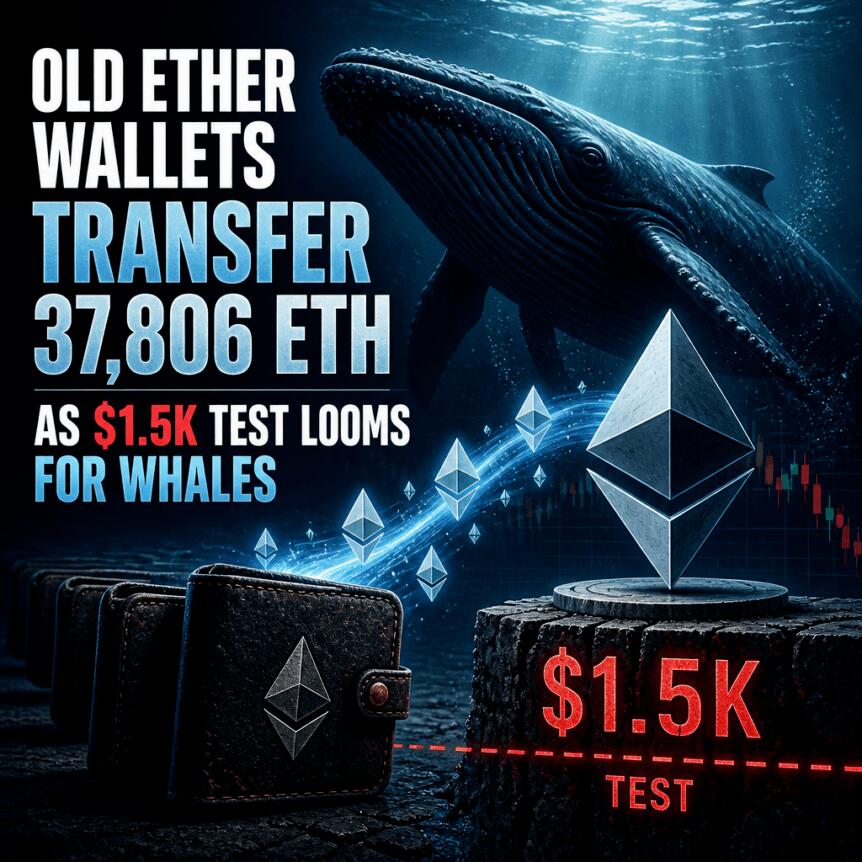
Ether (ETH) is trading just above the $1,500 level as a notable on-chain development draws attention to how long-term holders are behaving. Eight-year-old ETH addresses—dormant since 2017—have begun moving coins again for the first time in years, while other large investors continue to rotate capital into Ether.
At the same time, analytics tracking whale performance suggests a tougher backdrop for big holders: total long-term ETH whale profitability has slipped below zero for the first time since 2019, meaning major cohorts are broadly sitting on unrealized losses even as individual investors still accumulate selectively.
Key takeaways
- Lookonchain reports that 37,806 ETH from long-dormant addresses have recently become active after years of inactivity.
- One group of wallets originally received 37,602 ETH in 2017 and later sold 33,623 ETH after waking up, realizing roughly $27.4 million in profit.
- Other whales appear to be increasing exposure: one reportedly swapped 464 BTC (about $27.6 million) for 17,750 ETH, while investor Chun Wang acquired additional ETH and withdrew nearly 87,000 ETH from Binance over the past month.
- According to Darkfost, all major whale cohorts are showing negative unrealized profit ratios—first such reading since 2019.
- $1,500 is being treated as ETH’s critical support area by traders, but there’s disagreement on whether it will hold or lead to a deeper pullback into an early-2023 demand zone.
Long-dormant “OG” wallets re-enter the market
One of the most striking signals in the current cycle involves very old Ethereum holders. According to Lookonchain, four wallets that received a combined 37,602 ETH nearly eight years ago—at an average price of around $830—became active again after a long period of dormancy.
While those wallets were present throughout past market booms, including the 2021 and 2025 bull runs, the report says their unrealized gains at the peak exceeded $150 million. When the addresses woke up this week, Lookonchain reports that the wallets sold 33,623 ETH for roughly $52.5 million at around $1,560. The realized profit on that sale is estimated near $27.4 million.
This kind of “awakening” matters for market microstructure because it can change the balance between passive long-term supply and active selling. Even if the amounts are not large relative to total market liquidity, these transfers can influence short-term sentiment and highlight that not all long-held positions are being kept for a single cycle.
Whales split: profit-taking alongside ongoing accumulation
The picture is not one-sided. Alongside the reported revival of older wallets that sold, Lookonchain also flagged whale activity pointing to fresh accumulation. In one example, the tracker reported a whale swapping 464 BTC worth about $27.6 million for 17,750 ETH—an explicit rotation into Ether rather than a pure conversion into cash.
Another prominent investor, Chun Wang, was also reported to have acquired 9,937 ETH and 147 wrapped Bitcoin. Lookonchain further noted that over the past month Wang withdrew almost 87,000 ETH from Binance at an average purchase price of $1,749.
Separately, institutional-related activity continued in parallel. BlackRock transferred 41,996 ETH and 4,577 BTC to Coinbase Prime, a move commonly interpreted as custody or operational management rather than a confirmation of direct market selling.
Taken together, the mixed whale behavior suggests ETH demand is still being pursued by certain large players even as other long-held positions resume distribution—an imbalance that can produce choppy price action around key technical levels.
Why whale profitability turning negative changes the narrative
Beyond transaction-level activity, performance metrics are adding pressure to the story. Crypto analyst Darkfost said that Ether whales holding between 1,000 ETH and more than 100,000 ETH are all showing negative unrealized profit ratios. The analyst described this as the first time since 2019 that every major whale cohort has been underwater.
Darkfost also argued that in prior cycles, periods when ETH prices tested whale conviction often matched long-term bottom zones. In the current environment, however, the implication is more complex: while the “bottom zone” pattern suggests support could exist beneath current prices, the data also indicates larger holders are experiencing more consistent drawdown pressure heading into 2026.
For investors, this kind of shift is important because it can alter the expectations around who sells and when. Unrealized losses don’t automatically lead to capitulation, but they do reduce the number of holders sitting on easy paper gains—potentially affecting how quickly whales are willing to realize profits during rebounds.
Traders focus on $1,500 as support debates intensify
Price action is keeping the $1,500 area front and center. Ether was reported to have dropped to about $1,510 during Thursday’s sell-off, while avoiding a new yearly low even as Bitcoin slipped to fresh lows in 2026.
Trader Ardi highlighted $1,500 as Ether’s key long-term support, warning that daily closes below the level would undermine bullish assumptions that built up after the 2022 bear market. Another investor, Jelle, echoed the importance of a sustained break, saying it would likely send ETH back into a trading range last seen in early 2023.
Chart behavior since mid-2022 reportedly supports the support-zone thesis: ETH has defended $1,500 repeatedly during major corrections, making it one of the altcoin’s longest-standing technical floors.
However, not all participants view the outlook as uniformly constructive. Popular trader Cyclops pointed instead to a wider potential accumulation window between roughly $1,070 and $1,370, calling it a demand area established in early 2023. Cyclops also noted that a move into that range would place ETH below its multi-year ascending trendline—an event that could extend the bearish market structure and delay a durable recovery.
That divergence in positioning reflects a common market dynamic: near-term supporters are betting that the market will defend established levels, while more cautious traders are preparing for a deeper pullback that would reset technical conditions.
What to watch next for ETH
With long-dormant wallets beginning to move, whale profitability turning negative across major cohorts, and traders debating whether $1,500 will hold or fail, the next signal is likely to come from how ETH reacts around daily and weekly closes at that support area. If $1,500 breaks convincingly, attention may shift toward the lower demand band cited by traders; if it holds, the market will look to see whether accumulation continues to outweigh distribution.
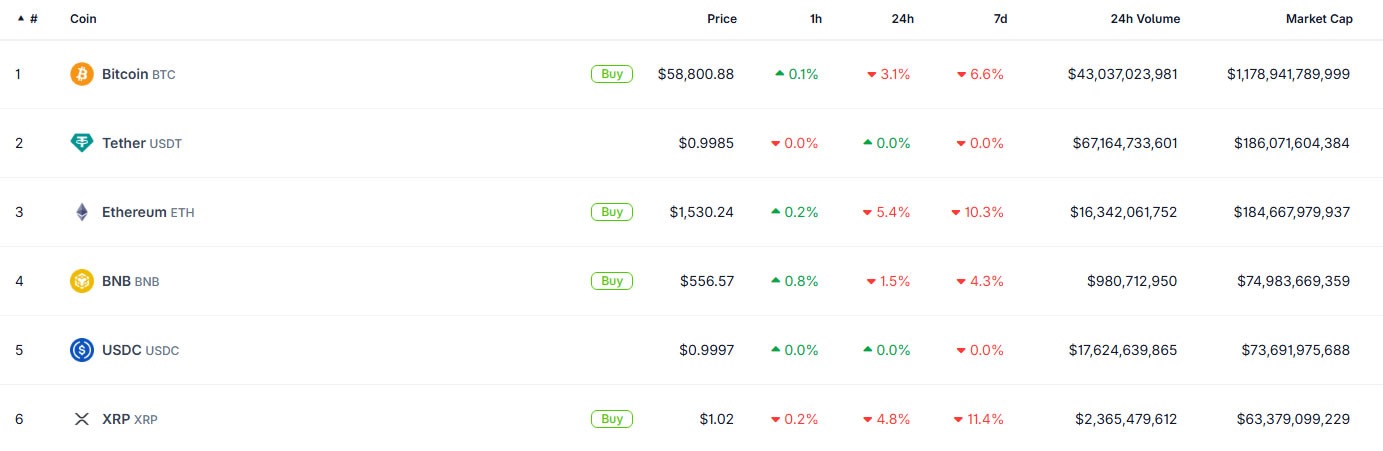
Tether stablecoin USDt has become the second-largest cryptocurrency by market capitalization as Ether fell to its lowest price of the year on Friday
Ether’s market capitalization dropped below $185 billion following a 5.2% price crash over 24 hours, sending the asset tumbling to $1,510 on Coinbase, according to TradingView. This allowed USDt, with a $186 billion market capitalization, to surpass the cryptocurrency.
“[The] stablecoin overtake really highlights how the market still favors stability over ETH’s volatility right now,” Andri Fauzan Adziima, research lead at Bitrue Research Institute, told Cointelegraph.
The development reflects accelerating stablecoin growth, which currently represents almost 15% of the entire crypto market capitalization. Stablecoin supply contracted more than 30% in the last bear market, but they’re hitting record highs this time, wrote 21Shares on Thursday, adding:
“To us, that is the strongest evidence yet that stablecoins are one of crypto’s defining use cases – demand that no longer depends on the cycle.”
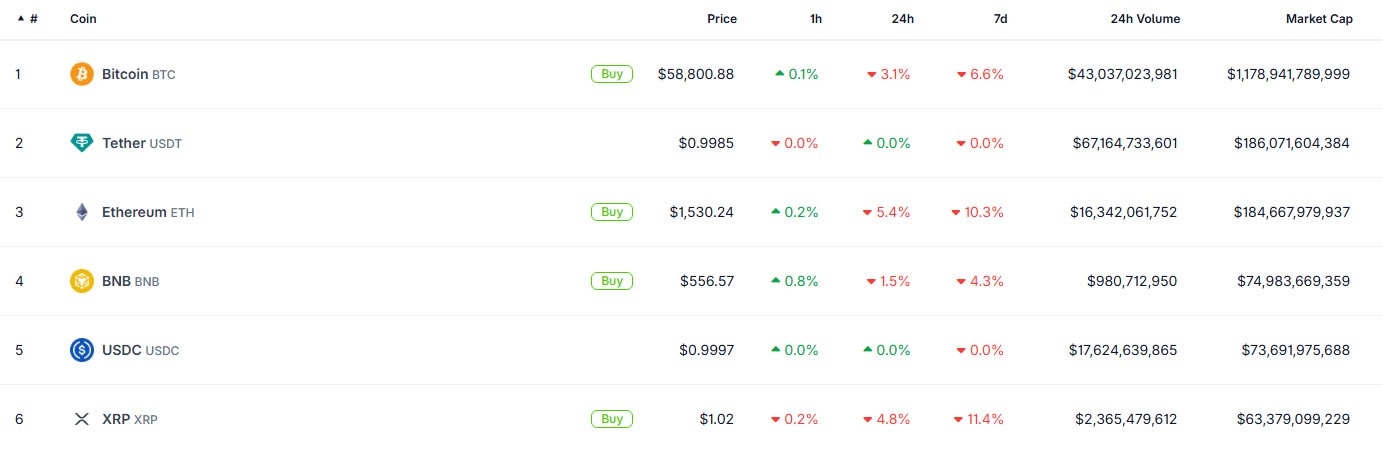
USDt flipped ETH in market capitalization. Source: CoinGecko
Alvin Kan, chief operating officer of Bitget Wallet, told Cointelegraph that the flip is a “notable milestone that highlights the explosive growth and dominance of stablecoins in today’s crypto ecosystem.”
“It demonstrates strong demand for reliable, liquid on- and off-ramps during periods of volatility, while serving as a reminder that ETH must continue delivering compelling utility and narrative momentum to maintain its position.”
Kan said the development is positive for the broader market, as deeper stablecoin liquidity supports higher trading volumes and ecosystem innovation.
Related: Sharplink buys ETH after 8-month pause as token hits 2026 low
ETH prices are back at crucial support levels last visited in October 2023 and April 2025.
The Ethereum ecosystem has also faced internal changes recently, following several executive departures and a 20% workforce reduction at the Ethereum Foundation.
However, a new nonprofit organization called Ethlabs was launched this week by key EF developers and researchers and backed by Ether treasuries Bitmine and Sharplink.
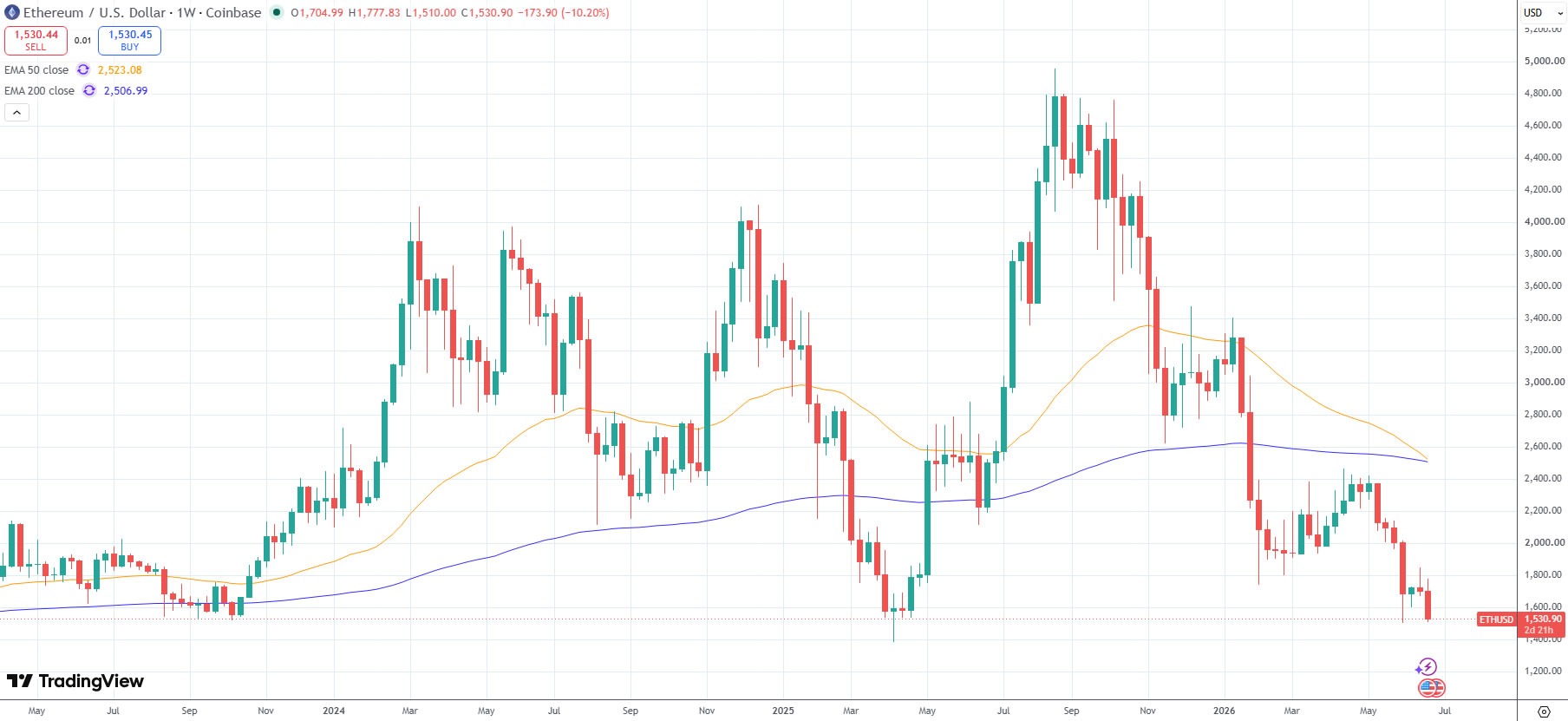
ETH prices are at a critical long-term support level. Source: TradingView
Not all are bearish
Some have taken Ether’s decline as an opportunity.
Ether treasury company Sharplink bought the dip, making its first purchase in eight months, scooping up 5,000 ETH on Thursday. Bitmine, chaired by Tom Lee, has also been accumulating at these low prices, adding a further 76,881 ETH last week.
Meanwhile, Circle’s USDC (USDC) also flipped Ripple’s XRP (XRP) in market capitalization as XRP fell back towards $1, its lowest level since November 2024, leaving XRP with a market capitalization of $64 billion compared with USDC’s $73.6 billion.
Magazine: AI is banking the unbanked in Africa… faster than crypto
SpaceX (SPCX) stock is sliding toward a make-or-break level as a selloff drags it more than 30% below its June peak, with the speculative heat that powered its record debut burning off fast.
Two weeks after its $75 billion IPO, the stock has round-tripped from euphoria to fragility. A fresh Starlink launch could not lift it, and cooling hype, weak space peers, and short-heavy positioning now point lower.
Hype Has Burned Out of the SpaceX Selloff
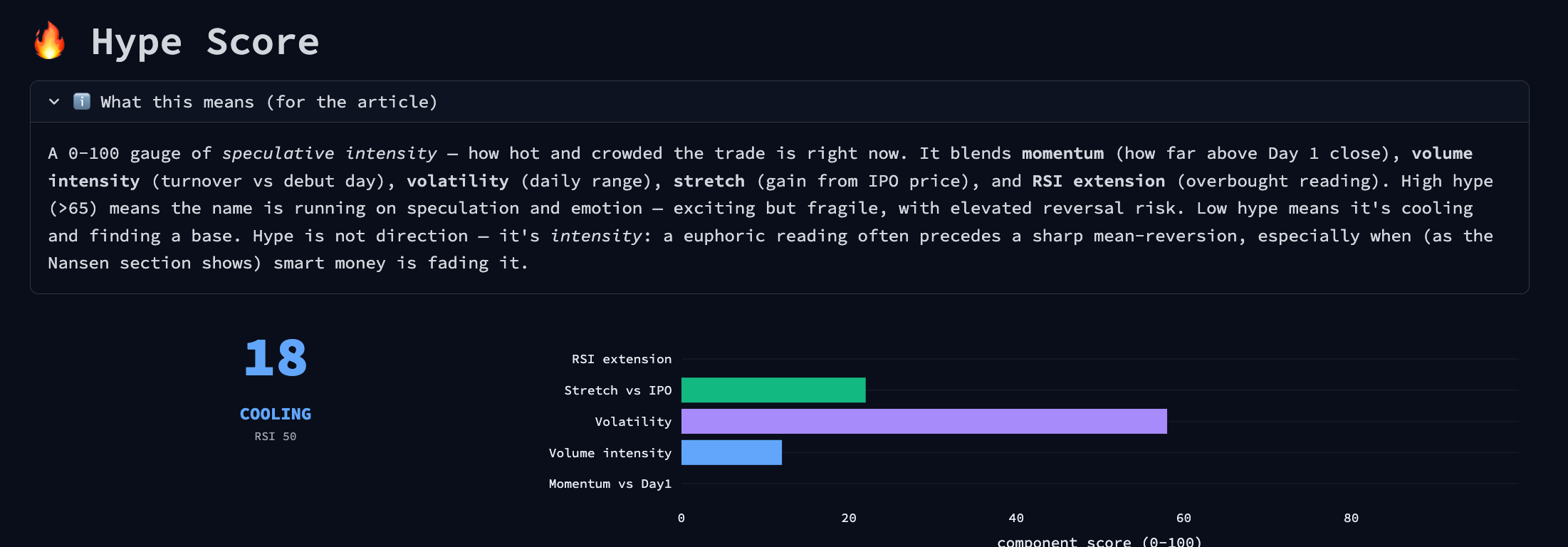
The SpaceX stock selloff has a clear tell, the hype is gone. A proprietary composite Hype Score, which blends momentum, volume intensity, volatility, and overbought readings into a 0 to 100 gauge of speculative intensity, has fallen to 18 and reads as cooling.

That marks a sharp reset from the debut. The SpaceX IPO share performance has flipped from a peak near $228 to slightly $150, at press time.
Want more insights like this? Sign up for Editor Harsh Notariya’s Daily Newsletter here.
A Falcon 9 Starlink launch from Vandenberg on June 25 did nothing for the tape yet, a sign the speculative bid has left. However, once the market opens it would be interesting to see if the Spacex stock price today reacts to the Starlink launch.
The same apathy shows up in volume as the decline grinds on. Buying and selling have both faded since June 23, leaving the stock range-bound for roughly 48 hours.

Underneath that quiet tape, money flow is split. Chaikin Money Flow (CMF), a proxy for buying and selling pressure, sits at a mild positive 0.10, yet price still trades below its volume-weighted average price (VWAP).

That mix matters because trading under VWAP means the average buyer since launch is now underwater. With even a rocket launch failing to lift it, the next clue is what SPCX actually moves with.
SPCX Trades Like a Space Stock, Not a Musk Stock
What SPCX moves with answers a defining question for the stock. Over 15-minute returns, it correlates 0.46 with space sector stocks like AST SpaceMobile (ASTS) and Rocket Lab (RKLB), but only 0.23 with Tesla (TSLA).

That gap makes the read clear. SPCX is trading on space-sector dynamics, not the Musk founder premium. That distinction matters because the sector is weak. Rocket Lab sits down roughly 44% month-on-month, and AST SpaceMobile has slid 45% in the same duration after a Q1 revenue miss.

SpaceX itself deepened that weakness, pulling capital out of smaller names and back into the giant on its debut. If a soft sector is setting the direction, positioning data shows who is leaning hardest into the move.
Smart Money Is Short, but Options Hold the Real Lever
Leaning hardest into the downside is the smart money. On Nansen data for the Hyperliquid perpetual that tracks SPCX, smart traders, whales and public figures are all net short, a rare unanimous stance.
That stance runs deep. Whales alone sit net short about $21.8 million, while the perp saw a net $140.6 million of selling over seven days, and the whale holder count fell about 24% in 10 days, which suggests distribution.

That positioning is a warning, not a trigger. The perpetual is oracle-priced and tracks the stock, so it reflects smart money positioning and sentiment but cannot by itself move the underlying.
What can move it is the options market, through dealer hedging. The debut set a single-stock record near 1.6 million contracts and sparked gamma squeeze talk toward $400, before at-the-money implied volatility fell from about 169% to the mid-80s.

That cooling has shifted the structure. The debut frenzy concentrated in short-dated calls struck at $210 to $250, well above the roughly $200 stock at the time, so with price now far below those strikes, dealer hedging can amplify declines rather than cushion them, just as Fidelity’s 15-day flipping penalty lapses around June 27 and frees up IPO supply.
SpaceX Stock Price Levels to Watch
It all comes down to one level. The SpaceX stock price today is holding above $148, the 0.786 Fibonacci level.
Hold it, and the range stays intact. Lose it on an hourly close, and the stock falls into a danger zone, opening the 1.0 retracement at $136 near the IPO price, with the 1.618 extension at $103 below.

Above it, buyers have work to do. They need to reclaim the 0.618 level at $157 to ease pressure, then $163 and $169. Even then, thin volume is the catch. A low-volume break can reverse fast, so SPCX support levels only carry weight on a closing basis.
The $148 line is make-or-break, separating a recoverable dip from a slide back toward the $136 IPO price and beyond.
The post SpaceX Stock Shrugs Off a Starlink Launch as $148 Becomes Make-or-Break appeared first on BeInCrypto.

The Dow May Finally Close Above 52,000. Fourth Time’s the Charm?

Helping BTC, XRP users earn stable daily income, with new users getting a $21 bonus

World Cup 2026: Thomas Tuchel defends full-back selection after Reece James injury


-

 Entertainment6 days ago
Renter of Home in Anne Heche Crash Denies Settlement With Son
-
 Sports3 days ago
Two goals and an assist by sheer aura: Cristiano Ronaldo just entered the World Cup chat
-

 Tech5 days ago
Microsoft accidentally kills epic Outlook email threads
-

 Business6 days ago
Soccer-U.S. defends Iran World Cup travel restrictions, says discussions ongoing
-

 Fashion7 hours ago
Weekend Open Thread: Staud – Corporette.com
-

 Politics19 hours ago
The House | Manchesterism won’t survive the painful trade-offs unless it gets citizens on board
-

 Politics7 days ago
Andy Burnham and the meaning of Makerfield
-

 Politics23 hours ago
Potential 2028er World Cup attendee leaderboard
-

 Tech1 day ago
A Look At A Gaggle Of Transputer Boards
-
Crypto World3 days ago
Bitcoin (BTC) Dips Below $62K, Ethereum (ETH) Plunges 6% Daily: Market Watch
-

 Business17 hours ago
Asia stock markets slide as tech shares slump
-

 Crypto World3 days ago
Securitize Wraps Roubini's SEC-Registered ETF as Dubai VARA Digital Security
-
 Crypto World1 day ago
Dell (DELL) Shares Tumble Over 5% Following Analyst Downgrade to Hold
-
Business3 days ago
Entergy settles forward sale agreements, raises $672 million in cash proceeds
-
 Crypto World7 days ago
Can Charles Hoskinson Really Rescue Cardano?
-
 Business7 days ago
Wall Street Week Ahead: Investors see Micron earnings as pulse check of AI rally momentum
-

 Sports4 hours ago
FIH Pro League: India defeat Pakistan 7-1, register biggest win of campaign | Other Sports News
-

 Entertainment7 days ago
Jose Alvarado Wants Taylor Swift at More Knicks Games
-

 Crypto World8 hours ago
RTX holders must register wallets before token distribution begins
-

 Crypto World7 days ago
HIVE shares jump as $220M AI deal speeds Bitcoin mining pivot
You must be logged in to post a comment Login