

Crypto World
SoftBank cuts OpenAI-backed loan target to $6B as lenders balk at valuation



SoftBank has cut a planned OpenAI‑backed margin loan from around $10 billion to roughly $6 billion after banks and private credit funds pushed back on the deal’s structure and the difficulty of valuing OpenAI, an unlisted AI unicorn.
Summary
- SoftBank Group is shrinking a planned margin loan backed by its OpenAI stake from about $10 billion to roughly $6 billion after lenders pushed back.
- Banks and private credit funds have raised concerns over how to value OpenAI, an unlisted company, and about the structure of the deal.
- The two‑year loan, extendable by one year, was meant to fuel SoftBank’s next wave of AI investments without selling down its OpenAI equity.
SoftBank Group is scaling back an ambitious financing plan that would have raised around $10 billion using its OpenAI shares as collateral, after lenders balked at both the structure of the margin loan and the private valuation underpinning the deal.
According to Bloomberg, cited by Reuters and other outlets, SoftBank and its arranging banks have floated a reduced target “as low as $6 billion” in recent discussions with prospective lenders, implying a 40% cut from the original size. U.S. News reported that the initial pitch “had investors concerned about the difficulty of reaching a valuation for an unlisted company like ChatGPT maker OpenAI.”
Lenders question private OpenAI valuation and structure
Bloomberg’s April scoop on the deal said SoftBank was seeking “a $10 billion loan secured by its shares in US artificial intelligence giant OpenAI,” structured as a two‑year margin loan with an option to extend by another year. Bloomberg said the facility would let the Japanese conglomerate “take on more debt for its push into AI” without selling down its OpenAI stake.
In practice, the mechanics are straightforward but risky: SoftBank borrows against its OpenAI equity, and if the value of that collateral falls, lenders can demand more margin or seize shares. The sticking point, lenders now say, is how to price that collateral. As the Economic Times summarized from Bloomberg’s reporting, “some creditors expressed concerns over how to value OpenAI, a privately held company,” which has missed some internal sales and user milestones in recent quarters. A separate breakdown on Chinese platform Futu noted that “the crux of the issue lies in lenders’ inability to determine a reasonable valuation” for OpenAI, calling the loan talks “a major setback” for SoftBank’s AI leverage strategy.
Those worries are layered on top of SoftBank’s already sizable AI financing stack. In March, Bloomberg reported that SoftBank had secured a $40 billion bridge loan to fund its OpenAI investment and general corporate needs, a deal backed by a syndicate of global banks and now being syndicated out to more lenders. Bloomberg said institutions such as HSBC, BNP Paribas and Intesa Sanpaolo were joining as sub‑underwriters, each asked to commit around $5 billion. Reuters, summarizing the same reporting, added that SoftBank “is pursuing a loan of as much as $40 billion” to support its OpenAI bet. Yahoo Finance echoed that figure, underscoring just how much leverage is already tied to the AI trade.
What the scaled‑back loan means for SoftBank’s AI push
The margin loan was meant to be another pillar in that structure: by borrowing against OpenAI shares rather than selling them, SoftBank can raise cash to expand its AI investments — potentially into infrastructure projects like the “Stargate” data‑center initiative — while preserving upside if OpenAI’s valuation continues to rise. TechFundingNews noted that the $10 billion margin loan was “just one part of SoftBank’s larger AI financing plan,” which reportedly includes commitments of more than $60 billion to OpenAI and related ventures through Vision Fund 2, the $40 billion bridge loan and other facilities.
Cutting the margin‑loan target to around $6 billion does not end that strategy, but it signals that creditor appetite for concentrated, private‑equity‑collateral risk is not unlimited, even in a market obsessed with AI. As Bloomberg put it in an earlier piece on the $40 billion bridge, the OpenAI exposure is already “one of the biggest tests yet of creditor sentiment toward the Japanese conglomerate’s debt-fueled push further into artificial intelligence.”
The latest downsizing suggests that, for now, banks and funds are willing to back SoftBank’s AI ambitions — but only up to the point where they can still convince their own risk committees that the collateral they are lending against can be valued with something more than vibes and secondary‑market whispers.

Crypto World
No Entry Fee, Share $600,000! Zoomex Launches the World’s First Zero-Cost Trading Competition: Let Skill Be Your Only Asset


Today, Zoomex, one of the world’s leading cryptocurrency trading platforms, officially announced the launch of the “2026 Zero-Cost Trading Competition.” This competition not only features a prize pool of up to $600,000 but also, through its “zero-cost” model, completely eliminates financial barriers, extending an invitation to traders worldwide: This time, let skill be the only factor that matters.
This competition not only provides participants with a professional trading experience at zero cost and zero risk but also embodies Zoomex’s consistent core values—fairness, impartiality, and transparency. On the Zoomex platform, every user starts from the same starting line; rankings are not influenced by capital size, and all rankings are determined solely by trading strategies and execution, ensuring that every participant can personally verify the platform’s transparency and fairness.
- Zero-Cost Participation, Zero Risk
Zoomex provides newly registered users with $100–$200 in bonus funds, allowing them to start the Individual Competition or Entertainment Challenge without making a deposit. Users can experience Zoomex’s user-friendly trading interface and streamlined workflow in a risk-free environment, making it truly easy to get started.
- Large Prize Pool, Opportunities for Everyone
- Individual Competition: Total prize pool of $100,000 USDT, split among the top 10 participants based on rankings determined by return on investment (ROI) and trading volume.
- Entertainment zone: Total prize pool of $500,000 USDT, featuring a combination of mystery boxes and lottery mechanisms—every trade gives you a chance to win big!
- Innovative Gameplay: Balancing Competition and Entertainment
The Individual Competition ranks participants based on a combination of total return (30%) and trading volume (70%), ensuring fair and transparent results. In the Entertainment zone, participants earn raffle entries through daily trading or check-ins—the more you trade, the higher your chances of winning—combining professional trading with fun interaction.
- Team Incentives: Easily Earn Extra Rewards
Invite friends to join and earn team trading volume rewards of up to $5,000 USDT. The more you trade, the greater your team’s earnings—effortlessly boosting community engagement.
Event Schedule
| Phase | Date (UTC) | Note |
| Early Bird Registration | May 12, 10:00 a.m. – May 14, 10:00 a.m. | Secure your spot early and enjoy exclusive benefits |
| Regular Registration | May 14, 10:00 a.m. – May 19, 10:00 a.m. | Register and complete the verification process to participate |
| During the Competition | May 19, 10:00 a.m. – June 1, 10:00 a.m. | The individual competition is now underway |
| Venue | May 12, 10:00 a.m. – June 1, 10:00 a.m. | Mystery box giveaways and check-in rewards are now available |
How to Participate
- Register for a new Zoomex account
- Submit your application and complete the risk control review
- Claim your bonus funds and start trading
- Compete in the individual or entertainment competitions
Spots are limited to 2,000 participants and will be filled on a first-come, first-served basis.
Since its establishment in 2021, Zoomex has adhered to transparent operations and strict regulatory compliance. We have not issued any platform tokens nor participated in any venture capital or incubation projects. The platform ensures the security of user funds, prohibits any misappropriation, and creates a trustworthy trading environment. This zero-cost competition is a concrete manifestation of Zoomex’s commitment to users: experience the thrill of real trading with zero capital on a fair, impartial, and transparent platform.
Zoomex has obtained authoritative security certifications from organizations such as Hacken, ensuring the platform’s secure, stable, and transparent operation, so users can participate with confidence.
Register for a new Zoomex account now, claim your bonus funds, and join the annual $600,000 USDT zero-cost trading competition to win big prizes with your skills!
About ZOOMEX
Founded in 2021, Zoomex is a global cryptocurrency trading platform with over 3 million users across more than 35 countries and regions, offering 700+ trading pairs. Guided by its core values of “Simple × User-Friendly × Fast,” Zoomex is also committed to the principles of fairness, integrity, and transparency, delivering a high-performance, low-barrier, and trustworthy trading experience.
Powered by a high-performance matching engine and transparent asset and order displays, Zoomex ensures consistent trade execution and fully traceable results. This approach reduces information asymmetry and allows users to clearly understand their asset status and every trading outcome. While prioritizing speed and efficiency, the platform continues to optimize product structure and overall user experience with robust risk management in place.
As an official partner of the Haas F1 Team, Zoomex brings the same focus on speed, precision, and reliable rule execution from the racetrack to trading. In addition, Zoomex has established a global exclusive brand ambassador partnership with world-class goalkeeper Emiliano Martínez. His professionalism, discipline, and consistency further reinforce Zoomex’s commitment to fair trading and long-term user trust.
In terms of security and compliance, Zoomex holds regulatory licenses including Canada MSB, U.S. MSB, U.S. NFA, and Australia AUSTRAC, and has successfully passed security audits conducted by blockchain security firm Hacken. Operating within a compliant framework while offering flexible identity verification options and an open trading system, Zoomex is building a trading environment that is simpler, more transparent, more secure, and more accessible for users worldwide.
For more info: Website | X | Telegram | Discord
The post No Entry Fee, Share $600,000! Zoomex Launches the World’s First Zero-Cost Trading Competition: Let Skill Be Your Only Asset appeared first on BeInCrypto.
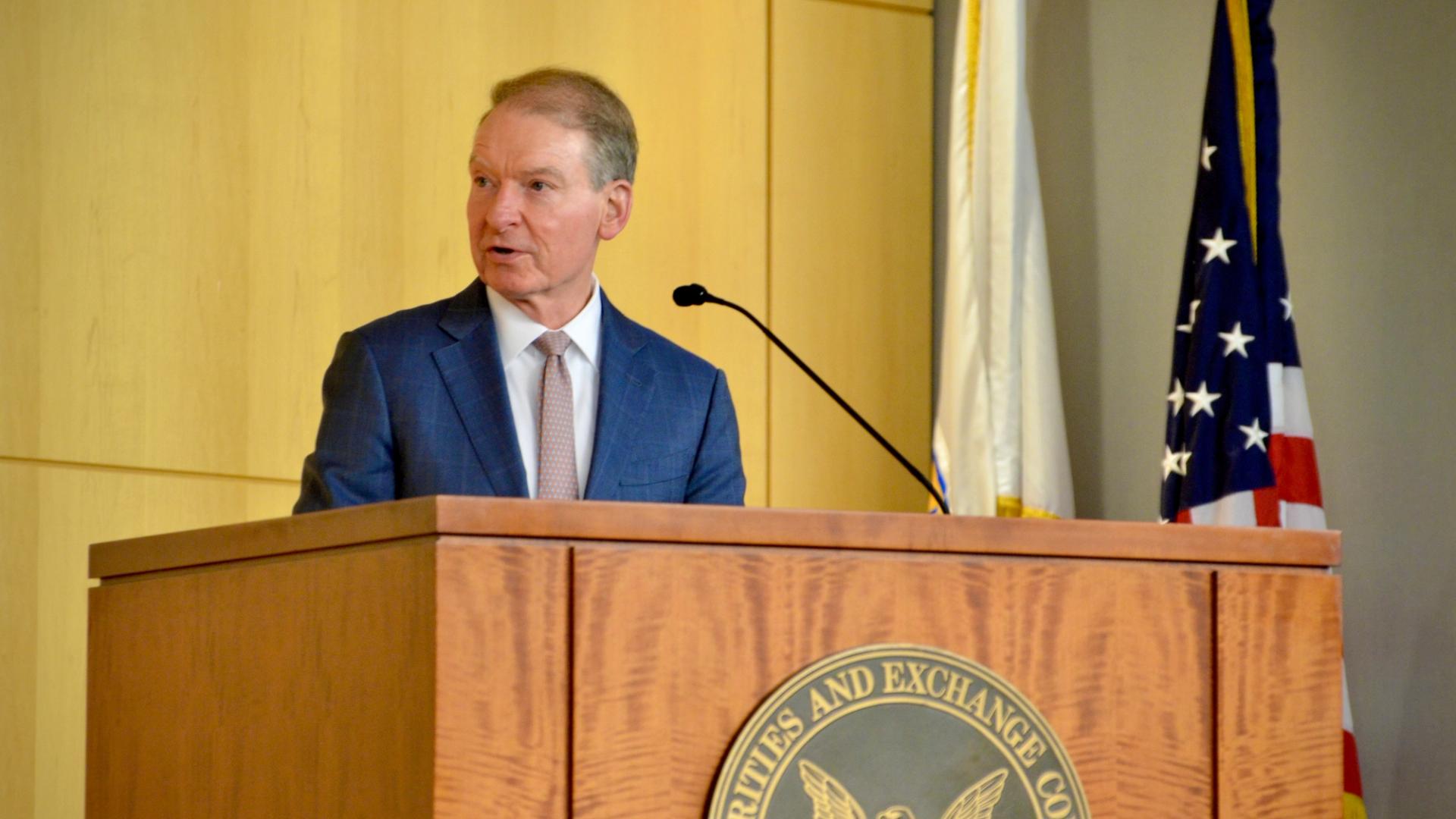
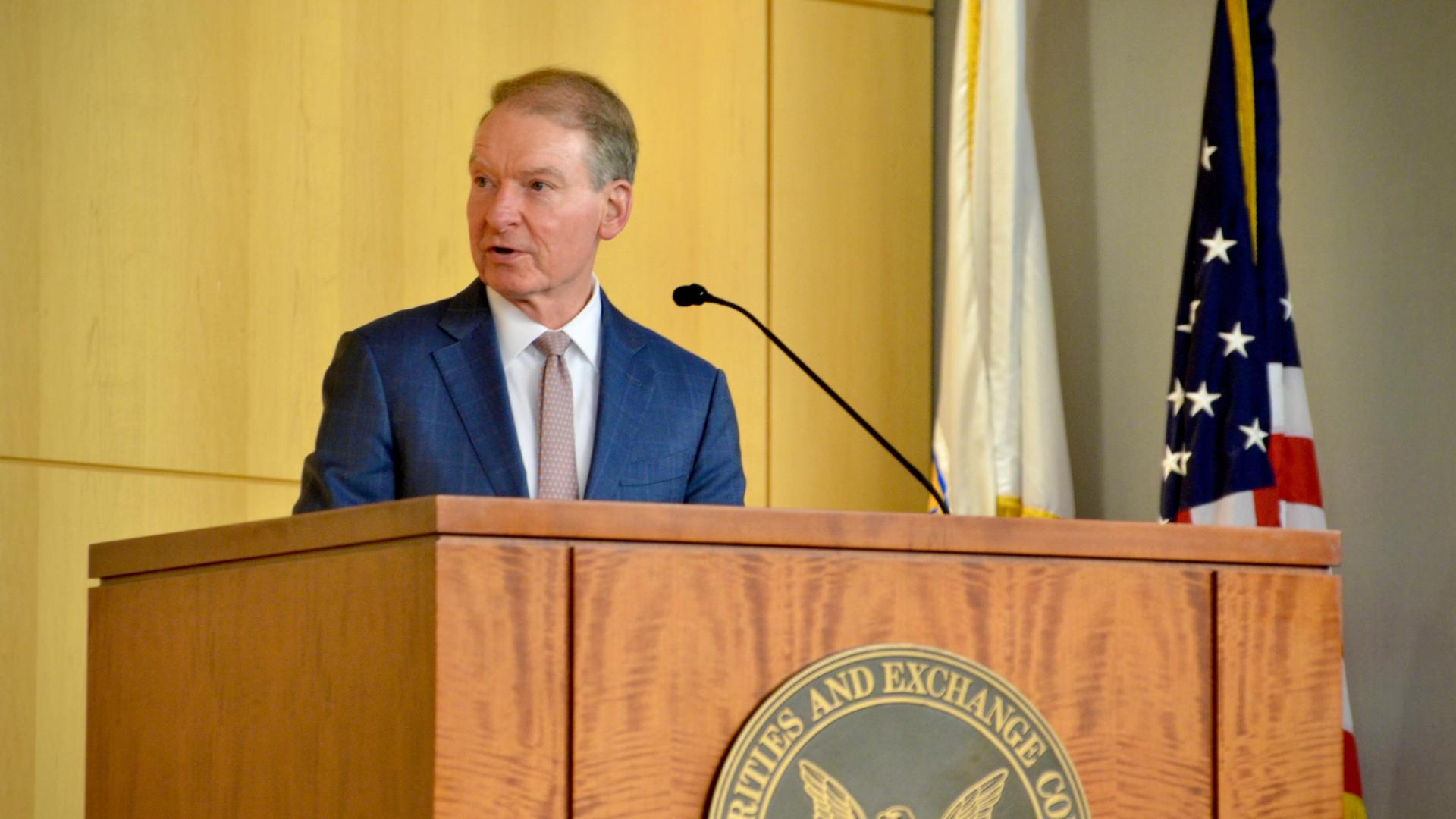
SEC Chair Paul Atkins said Friday the agency is considering changes to how securities regulations apply to blockchain-based financial markets and AI-powered financial applications, as digital asset firms increasingly move trading and settlement activity onchain.
Speaking at the AI+ Expo in Washington, Atkins said the SEC is considering formal rulemaking around onchain trading systems, blockchain settlement infrastructure, automated financial applications and crypto vaults that increasingly blur the lines between traditional players.
Existing securities rules were designed around traditional market intermediaries such as brokers, exchanges and clearinghouses, he argued, while newer blockchain systems often combine those functions into a single software protocol. Atkins’ predecessor, Gary Gensler, had held a similar view, though he focused more on centralized exchanges that the SEC argued provided those different functions under one roof at the time, mostly through lawsuits.
“A single protocol can execute a trade, manage collateral, route liquidity, execute trading strategies through vault structures and settle the transaction,” Atkins said.
“We should remember that onchain market structures today are often hybrid in nature, combining elements of what are often referred to as ‘traditional’ and ‘decentralized’ finance,” he said. “We should clarify how the Commission views the spectrum of models that may implicate our statutes through notice and comment rulemaking, using our exemptive authorities where necessary and prudent.”
Atkins’ remarks highlighted the latest step in the regulatory agency’s pivot away from the enforcement-heavy approach under former Chair Gary Gensler. Under President Donald Trump’s administartion, the SEC has issued crypto-related staff guidance, no-action reliefs and public statements aimed at reducing legal uncertainty for digital asset firms.
The chair framed the potential changes as part of a broader shift toward an AI-driven and automated financial infrastructure. He argued that artificial intelligence agents will increasingly participate in markets and financial decision-making at machine speed, while blockchain rails allow those systems to move value instantly.
The SEC, he said, should avoid locking emerging technologies into outdated rules.
“Our job is to set the rules of play and referee the game, not to pick the winning team,” Atkins said.
He also reiterated support for congressional efforts to pass crypto market structure legislation, including the CLARITY Act, which would establish a regulatory framework for digital assets shared between the SEC and Commodity Futures Trading Commission (CFTC).


TeraWulf’s Q1 2026 results show $21 million in AI/HPC hosting revenue versus under $13 million from Bitcoin mining, marking the first quarter where high‑performance compute has overtaken BTC as the company’s primary revenue driver.
Summary
- TeraWulf generated $21 million from high-performance computing (HPC) hosting in Q1, surpassing less than $13 million from Bitcoin mining for the first time.
- Total Q1 revenue was $34 million, roughly flat year-on-year, while net loss widened to $427.6 million due largely to a non‑cash warrant revaluation.
- The company is rapidly converting mining infrastructure into AI/HPC data center capacity, a trend mirrored by rivals like Riot Platforms as miners recast themselves as “compute infrastructure” providers.
TeraWulf’s latest earnings show its business model tilting decisively away from pure Bitcoin mining and toward rented compute for AI and cloud workloads.
In its first-quarter 2026 results, the company reported total revenue of $34 million, with HPC leasing income reaching $21 million and digital asset mining bringing in just under $13 million, according to its earnings release. That marks the first time HPC has overtaken Bitcoin as TeraWulf’s primary revenue driver and follows several quarters of ramp-up at its Lake Mariner facility in New York.
A summary from NS3.AI, cited by Binance’s news feed, noted that Q1 revenue was “relatively stable compared to the same period last year,” but emphasized that the revenue mix has flipped, with more than 60% now coming from HPC hosting. MarketBeat’s transcript of the company’s earnings call highlights the same shift, describing Q1 as “a business in transition from volatile Bitcoin mining revenue to stable, credit-backed, contracted HPC revenue streams.”
From volatile mining to contracted AI compute
Chief financial officer Patrick Fleury told analysts that TeraWulf is deliberately swapping out exposure to Bitcoin’s price cycle for multi‑year, fixed‑fee compute deals. “In summary, 1Q reflects a business in transition from volatile Bitcoin mining revenue to stable contracted HPC revenue,” he said on the call, adding that “mining continues to strategically support this transition” while the company brings more AI capacity online.
The shift is already visible in operations. TeraWulf disclosed that it has 60 megawatts of HPC capacity generating revenue at its Lake Mariner data center and plans to expand that footprint over the rest of 2026. A prior 2025 update said the firm had begun building “dedicated HPC data halls” and remained on track to deliver 72.5 MW of gross HPC hosting infrastructure to Abu Dhabi’s Core42 unit, underlining that its growth market is now AI infrastructure, not new ASIC halls.
Financially, the quarter still looked messy. MarketBeat data show that the company’s net loss widened to about $427.6 million, driven in large part by a non‑cash loss on warrant revaluation as its share price and capital structure shifted. But Fleury stressed that underlying cash generation is improving as more HPC contracts ramp, and that “with more than 50% of first quarter 2026 revenue derived from HPC hosting, and additional compute capacity expected to come online in the second quarter and throughout the remainder of the year, we expect our revenue mix to continue shifting toward stable, contracted HPC hosting revenues backed by investment-grade counterparties,” according to a preliminary statement.
Miners race to become AI infrastructure plays
TeraWulf is not alone in this pivot. Riot Platforms has already reported its own first-quarter 2026 results, showing $167.22 million in total revenue, including $33.2 million from data center operations tied to AI and cloud customers, according to a Yahoo Finance recap. Reuters recently reported that activist investor Starboard Value is pressing Riot to “speed up AI data center deals,” arguing that the company is “well‑positioned to capitalize on booming demand for artificial intelligence infrastructure” thanks to its cheap power and existing campuses.
Crypto.news has chronicled this evolution in a broader story on miners’ post‑halving strategies, noting that firms from TeraWulf to Riot and Core Scientific are increasingly describing themselves as “compute infrastructure” companies rather than simply miners. Another crypto.news story contrasted the economics of AI compute versus Bitcoin mining, pointing out that long‑term AI contracts can offer steadier returns than block rewards in a high‑hashrate, high‑difficulty environment.
TeraWulf’s Q1 numbers show that shift moving from pitch deck to P&L. If AI demand for power‑dense, low‑latency data centers keeps rising and BTC’s economics remain cyclical and margin‑compressed, more miners are likely to follow — turning the “hashrate arms race” into a broader fight for who controls the world’s cheapest and most scalable compute.

This story was originally published on CFO.com. To receive daily news and insights, subscribe to our free daily CFO.com newsletter.
Josh Greear didn’t expect to fall in love with the franchise industry when he accepted his first CFO role at Primrose Schools, an early childhood education franchise organization, in 2018. Hooked on the franchise model, Greear stayed with the company for almost eight years.
Greear came to Primrose Schools from restaurant chain Cracker Barrel, where he started as FP&A director in 2009 before being named vice president of strategy and development in 2013. Greear previously held finance positions at organizations that included a healthcare management company and a Home Depot-owned wholesale distribution company.
In September 2025, Greear remained in franchising by joining Authority Brands, which owns 15 home service franchise companies. As CFO, he oversees a finance and technology team of about 100 people serving more than 1,000 franchise owners.
Josh Greear
CFO, Authority Brands
First CFO position: 2018
Notable previous employers:
-
Primrose Schools
-
Cracker Barrel
-
HD Supply
-
The Home Depot
This interview has been edited for brevity and clarity.
SANDRA BECKWITH: You joined Authority Brands one month after the current CEO did and following a significant growth period. Why were you the right choice at that pivotal moment?
JOSH GREEAR: Authority Brands has historically grown by adding brands, and that will continue. But the real value is going to come from driving improved unit-level economics for our franchise owners.
In addition to my franchise industry experience, leadership was excited about my background leading operational initiatives, delivering margin expansion, supporting improvements for franchisees, spearheading development and growth and transforming businesses with data.
Your path to CFO ran through a vice president of strategy and business development role at Cracker Barrel – great experience for a CFO-to-be. Was that a deliberate career move? And what did it teach you that pure finance roles hadn’t?
It was absolutely intentional. Sandy Cochran, who hired me when she was CFO before being named CEO, and Larry Hyatt, the subsequent CFO, worked closely with me on my professional development. They eventually created the strategy and development role so I could get experience beyond the traditional finance disciplines.
I worked closely with the board to figure out how to grow the core business, which at the time was producing a lot of cash but had limited future growth options. We needed to determine exactly what the company needed to look like in the future.


- HYPE token gains driven by strong earnings and rising protocol revenue.
- HIP-3 growth lifts Hyperliquid’s open interest to about $1.43 billion.
- Hyperliquid price eyes $45–$50 if the support near $43.5 holds.
Hyperliquid (HYPE) is currently trading around $42.78, up roughly 1.6% in the last 24 hours, and has been showing resilience within a tight intraday range between $42.06 and $43.06.
Over the past week, HYPE’s price action has expanded slightly, with HYPE moving between $40.75 and $44.65, showing a gradual buildup rather than sharp volatility.
The uptick is coming from ecosystem growth, institutional involvement, and a steady rise in derivatives activity across the platform.
Earnings-driven momentum and ecosystem expansion
The HYPE price hike is closely tied to strong performance updates from Hyperliquid Strategies Inc., one of the largest holders of the token.
The firm reported a Q1 net profit of around $152.5 million, largely driven by gains linked to its HYPE holdings.
However, Hyperliquid Strategies has recorded a $165 million net loss over the past nine months, mainly due to unrealised valuation swings and tax adjustments.
This contrast highlights how closely its financial performance is tied to HYPE price action.
Despite the volatility in earnings, the company has remained consistent with its HYPE accumulation strategy.
The company continues to hold roughly 20 million HYPE tokens and has deployed more than $220 million into building its position.
Hyperliquid Strategies also maintains a debt-free structure with over $100 million in cash reserves, reinforcing long-term conviction rather than short-term trading behaviour.
At the Hyperliquid protocol level, activity has also been expanding.
The HIP-3 upgrade has pushed open interest to approximately $1.43 billion, with total derivatives open interest across the platform now estimated near $1.75 billion.
A large portion of this activity is coming from tokenised real-world assets such as oil, gold, and equities, showing that usage is not limited to crypto-native trading pairs.
Buybacks, burn mechanics, and institutional flows
One of the strongest structural drivers behind HYPE’s bullish stance remains its evolving token economy.
Across recent updates, more than 45 million HYPE tokens have been removed through buybacks and burns, tightening supply dynamics at a steady pace.
The upcoming HIP-4 upgrade is expected to further strengthen this structure by directing trading fees toward additional buyback and burn activity.
On the revenue side, the platform has been generating consistent traction.
Weekly protocol revenue has been reported at around $11.58 million, while total value locked stands near $5.42 billion, reflecting sustained capital participation.
HYPE technical analysis
From a technical standpoint, HYPE has been attempting to stabilise above a key breakout zone around $43.50–$43.60.
Holding this region is seen as important for continuation, while resistance remains positioned near $45.70–$45.80.

Momentum indicators remain supportive, with the Relative Strength Index (RSI) hovering around 57.61, suggesting strong but not overheated conditions.
At the same time, MACD trends remain positive, aligning with the broader upward bias seen over the past several sessions.
Hyperliquid (HYPE) price forecast
The short-term outlook for HYPE remains cautiously bullish, driven by a combination of earnings-backed narratives, rising derivatives activity, and ongoing token supply reduction mechanisms.
If HYPE holds above the $43.50 support zone, momentum could extend toward the next resistance at $45.70.
A clean breakout above this level would open the path toward the widely watched $50 price zone, which aligns with both technical projections and recent analyst expectations tied to expanding open interest and protocol revenue growth.
On the downside, failure to maintain support could trigger a pullback toward the $40–$42 range, where earlier accumulation has previously taken place.


Payward says the OCC national trust charter would complement Kraken’s banking arm, Kraken Financial.
Crypto World
Coinbase disruption tied to AWS outage draws criticism amid staff layoffs and Q1 losses
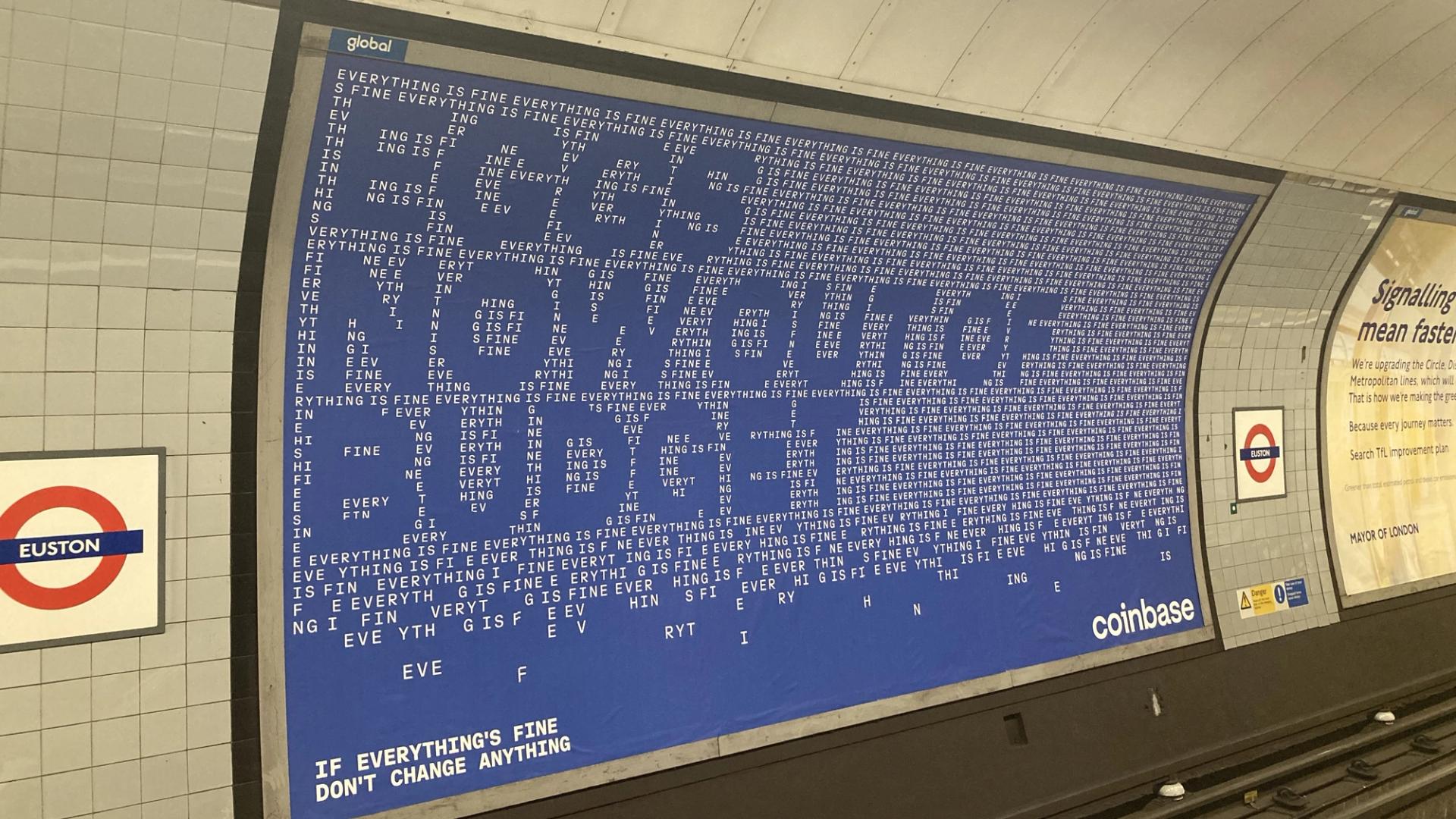
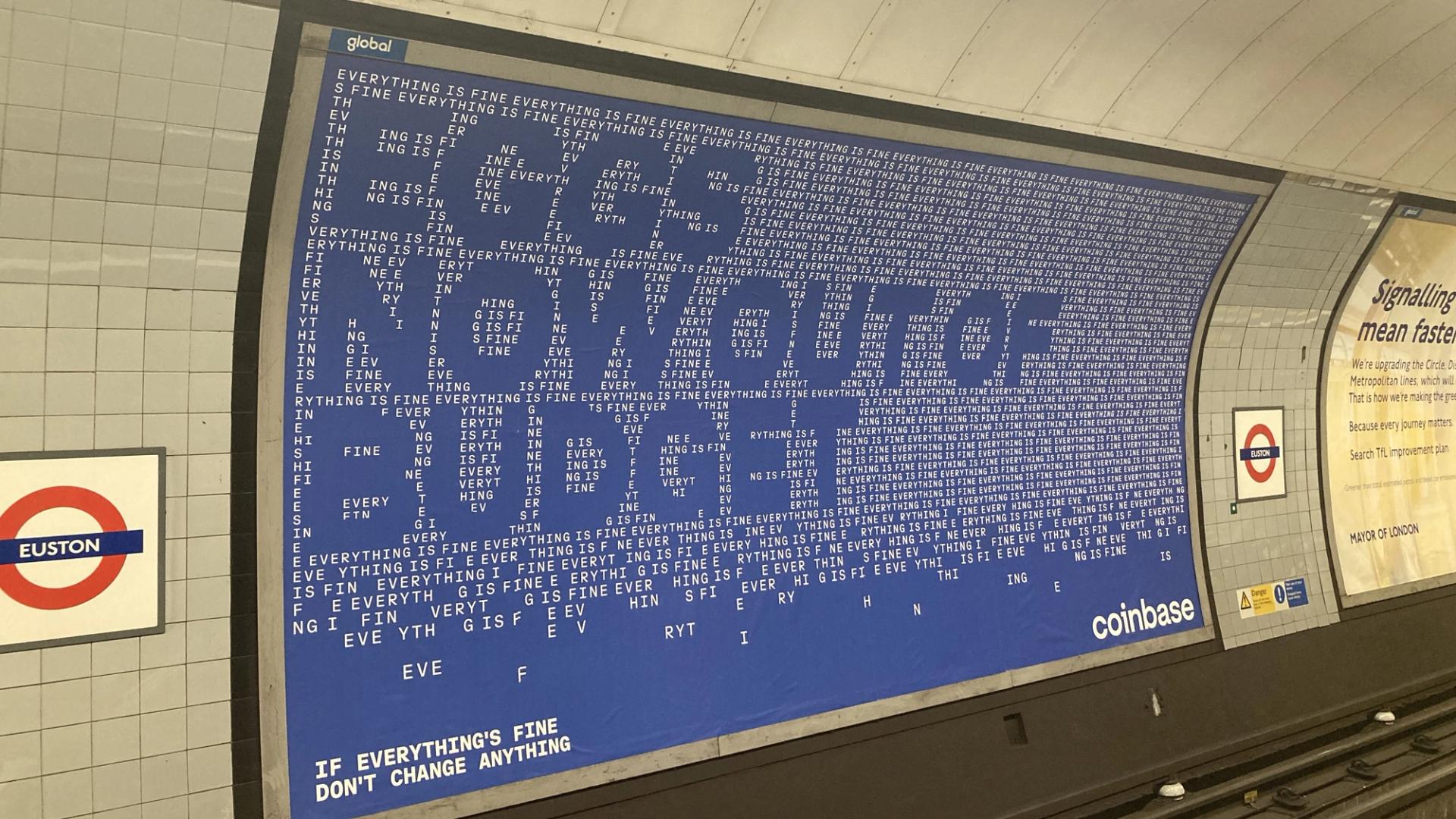
Coinbase (COIN) reported a multi-hour disruption to crypto trading on Thursday, which the Nasdaq-listed exchange attributed to an outage at Amazon Web Services. The incident drew criticism as Coinbase continues to grapple with declining trading activity, quarterly losses, and staff layoffs.
The crypto trading platform said users were unable to transact across web and mobile services after failures hit multiple AWS availability zones in the U.S. Eastern Region, located in Virginia.
“Coinbase experienced service disruptions due to increased temperatures in the affected AWS service,” the trading platform said in a status-page update. Trading was later restored after markets were briefly placed into a “cancel only” mode.
“This primary issue is now fully resolved – thank you for your patience,” said Coinbase on Friday in an X post, adding its team would investigate the incident. “Details may change as our investigation progresses and more information is received from AWS’s official retrospective, once published.”
In a separate statement on X, Coinbase said systems initially flagged “high error rates across multiple services,” and engineers traced the issue to failures in AWS infrastructure.
“Coinbase systems are designed to be resilient to a single zone outage,” the company said. “In this case, we observed failures impacting multiple AWS zones, which caused an extended outage of core trading services.”
However, the disruption drew criticism from software engineer Gergely Orosz, formerly at Uber and Skype, who has over 310,000 followers on X.
“Unfortunate optics for Coinbase to have an hours-long outage when customers could not trade, a few days after their CEO said how non-technical teams are shipping code to production,” Orosz wrote on Friday.
Coinbase has faced scrutiny in the past due to outages during periods of high market volatility and infrastructure stress. In 2020, Coinbase experienced a brief outage as the price of bitcoin crashed 10% from $9,500 to $8,100 in 30 minutes. Other U.S. exchanges, including Kraken, had reported all systems as operational during the same period. A week prior to that, Coinbase experienced a similar outage when bitcoin rallied 15% to $8,900.
For Coinbase, which, as of now, appears to be the only crypto exchange affected by the May 7, 2026, outage, the disruption comes at a time when the company is facing financial and operational challenges.
On Thursday, Coinbase shares fell more than 5% in after-hours trading after it reported weaker-than-expected Q1 2026 results as decreasing crypto prices affected trading activity, one of the firm’s main revenue streams. The company posted a loss of $1.49 per share, compared with analyst expectations for a $0.27 profit. Revenue came in at $1.41 billion, below estimates of $1.52 billion.
It also follows its May 5 decision to slash its workforce by 14% or roughly 660 employees in response to negative market conditions and AI challenges. CEO Brian Armstrong announced the cuts in an X post on Tuesday, citing the “two forces” that converged in his firm’s decision to slash staff.

Bitcoin is hovering at a crucial crossroads after a rapid ascent that brought the price into the low $80,000s. A spike in the daily RSI to overbought levels suggests momentum may be cooling in the short term, even as some market participants remain optimistic about a further upside run.
The rally, which climbed from a macro low near $60,000 to about $82,800 this week, has pushed key momentum indicators into territory that historically precedes pullbacks. Traders are parsing whether the current strength can be sustained or if a near-term correction is due as price tests nearby resistance around the 200-day moving average.
Key takeaways
- Bitcoin’s daily RSI advancing to the 70s amid an ~36% rebound from the macro low signals an overbought condition that has historically preceded meaningful corrections.
- A break below the $78,000 support could open downside toward the mid $70,000s, while a hold above this level keeps the potential for another push higher intact.
- Market dynamics point to an overheated MVRV and short-term holder Bollinger Band signal, with similar configurations last seen in November 2024 before a notable drop.
RSI heat and the near-term risk
On the daily chart, Bitcoin’s RSI rose to 70 as BTC tagged roughly $82,800, up from a March low near $39. The move brought BTC to the vicinity of the 200-day exponential moving average, a level analysts watch closely for how it may act as resistance.
As trader Jelle observed on X, the moment BTC touches the 200-day EMA in conjunction with overbought RSI “makes sense to find resistance here.”
“It makes sense to find resistance here.”
Commentary from observers underscores the potential for a short-term pullback if buyers don’t sustain momentum. Crypto Tice called the current signal “rare,” noting it has appeared only a handful of times over the past year and has historically led to pullbacks in the near term. He added:
“Overbought conditions on the daily don’t resolve sideways. They resolve with a flush.”
The discussion isn’t just about a single indicator. The market’s readers also weigh the Bitcoin price against longer-term context, including the current risk environment and macro drivers. Rekt Fencer highlighted the pattern’s history by pointing to prior occurrences where the same setup foreshadowed sharp declines, noting that “the last 2 times this happened, it dumped” by substantial margins.
Beyond RSI, the market is watching the balance between risk and reward in real-time indicators. The short-term holder (STH) MVRV metric recently entered an “overheated” zone, a signal that traders and analysts are using to gauge whether BTC is overvalued relative to on-chain profitability. FrankAFetter summarized the sentiment by noting that BTC last broke above the overheated threshold on STH Bollinger Bands in November 2024, a moment that preceded a retracement.
“Bitcoin breaks above the overheated level on the short-term holder Bollinger Bands for the first time since November 2024.”
Support, resistance, and what could unfold
For now, the chart is defining an important battleground around $78,000. Traders broadly agree that this level has become a meaningful anchor for BTC/USD. At the same time, the 200-day EMA sits higher up near $83,000, acting as a ceiling that could cap further upside in the near term.
Analyst Jelle weighed in again, noting that the $78,000 area represents the “first main area of interest” and urging that turning this into support could pave the way for another attempt at higher levels.
“Turn that into support and we can have another go at the MAs.”
Meanwhile, others see the potential for a decisive test around the same area. Tradermayne argued that holding the $78,000–$80,000 zone on lower timeframes would give bulls a clear bias for higher prices, whereas a break could tilt the risk balance toward downside bearest moves.
“Holding the support at $78,000–$80,000 on low time frames would give bulls a very easy bias level.”
Market liquidity, often a hidden driver of crypto price action, is also a focal point. Master of Crypto highlighted liquidity clusters around the current range. If buyers defend the $78k zone, the next leg could target the $82k–$83k area where substantial resting liquidity sits. But a breakdown could accelerate a move toward the mid-$70k zone.
“If buyers defend this area, the next move could be toward $82K–$83K where a lot of liquidity is sitting. But if this support breaks, Bitcoin could quickly drop to $75K–$76K.”
Market depth maps reinforce the risk-reward calculus. A Bitcoin liquidity heatmap shows that a drop below $78,000 could unleash more than $3.1 billion worth of leveraged long liquidations across major exchanges, potentially amplifying a short-term downturn.
What this means for traders and investors
The current configuration — rising price with an overbought RSI, a technically important support around $78,000, and overheated on-chain metrics — paints a nuanced picture. The near-term path likely hinges on whether BTC can defend the key support and how it reacts around $83,000 resistance. If the market sustains above $78,000 and bulls regain momentum, a move toward the $82,000–$83,000 band becomes plausible. Conversely, a break below $78,000 could open the door to a sharper correction, potentially testing the mid-$70,000s and inviting larger-liquidation scenarios on leveraged positions.
Investors should also monitor on-chain indicators that have historically provided warning signals in similar setups. The combination of MVRV readings and the Bollinger Band context for short-term holders has shown a tendency to precede corrective moves, especially when paired with a sustained price push into the 200-day EMA’s vicinity.
As always, external catalysts—ranging from macro data releases to shifts in risk sentiment—can alter the trajectory quickly. The current setup, however, emphasizes cautious positioning near key levels rather than a confident, one-way bet.
Readers should watch how BTC behaves around the $78,000 support and whether the price can sustain above or break below that level, which will largely shape the next leg of its journey toward the $82,000–$83,000 zone or a potential retreat into the mid-$70,000s.


The President of the European Central Bank spoke against EUR-pegged stablecoins at the inaugural Banco de España LatAm Economic Forum today.

TLDR:
- XRP flashed a fresh TD Sequential buy signal after a recent correction from the $1.46 high.
- Traders are monitoring $1.45 resistance as the first key level for bullish continuation.
- XRP’s long-term chart structure mirrors previous breakout cycles after extended consolidation.
- Analysts remain focused on the $1.80 zone as the next major breakout target for XRP.
XRP price prediction remains a major focus among traders after technical indicators signaled a possible rebound. Market participants are now assessing whether recent consolidation marks a temporary cooldown before XRP attempts another move toward higher resistance zones.
XRP Signals Fresh Momentum Shift
XRP has returned to the spotlight after printing a TD Sequential buy signal on the 4-hour chart. The indicator recently gained attention after accurately identifying a local top near $1.46.
That earlier sell signal came just before XRP corrected by 5.5% in 48 hours. As a result, traders are now treating the latest bullish signal with greater importance.
The recent pullback appears to have functioned as a short-term reset rather than a full trend reversal. Price action has gradually shifted into a tighter consolidation range following aggressive upside expansion.
Bearish momentum also appears to be weakening. Recent candles have printed smaller bodies, suggesting selling pressure may be losing strength. This behavior often signals exhaustion among short-term market participants.
In technical analysis, TD Sequential is designed to detect trend exhaustion after extended directional movement. The fresh “9” buy setup now suggests XRP could be preparing for a rebound phase.
The first key resistance now sits at $1.45. This level remains important because it previously marked the recent local high before the correction started.
If XRP reclaims this area decisively, short-term sentiment could shift quickly. Buyers would likely regain confidence as bullish continuation becomes the dominant narrative again.
Long-Term Structure Supports Breakout Thesis
Beyond short-term momentum, XRP’s broader chart structure is drawing increased attention. Analysts continue identifying similarities between the current setup and prior expansion cycles.
Historically, XRP has followed a repeating structure involving impulse rallies, prolonged consolidation, false breakdowns, and aggressive breakout phases. This pattern has appeared multiple times across previous cycles.
Between 2014 and 2017, XRP spent years inside a tightening structure while volatility declined sharply. Market participation weakened as price action remained stagnant near the apex.
After a false breakdown below support, XRP entered its historic 2017 rally. The asset then delivered one of crypto’s strongest expansions during that cycle.
A similar formation appeared again after the 2018 peak. XRP entered another multi-year consolidation defined by lower highs and gradually rising support levels.
Price later reclaimed structure following another breakdown beneath support. This sequence renewed bullish interest among long-term chart watchers.
Current technical projections suggest XRP may now be entering another continuation phase. Analysts are monitoring the $1.80 region as the next major breakout zone above nearby resistance.
If XRP clears that level with rising volume, momentum traders may return aggressively. This could strengthen the broader XRP price prediction narrative in the coming sessions.


Tess Daly And Vernon Kay Split After 22 Years Of Marriage

Cruz says Trump accounts for babies could reshape Social Security

No Entry Fee, Share $600,000! Zoomex Launches the World’s First Zero-Cost Trading Competition: Let Skill Be Your Only Asset

Manchester United reach agreement with Casemiro over contract clause amid transfer speculation

US brings back mandatory military draft registration

Steven Gerrard disagrees with Gary Neville over ‘shock’ Chelsea and Arsenal claim | Football


-

 NewsBeat5 days ago
Channel 5 – All Creatures Great and Small series 7 new post
-
 Crypto World9 hours ago
HarrisX Poll Found 52% of Registered Voters Support the CLARITY Act
-

 Crypto World1 day ago
Upbit adds B3 Korean won pair as Base token gains Korea access
-
 NewsBeat1 day ago
NCP car park operator enters administration putting 340 UK sites at risk of closure
-

 Tech4 days ago
Image AI models now drive app growth, beating chatbot upgrades
-
 Sports7 days ago
Paul Scholes issues Marcus Rashford reality check as agreement emerges over Man United star
-

 Entertainment7 days ago
Met Gala 2026 Rumored Guest List Is Turning Heads
-

 Entertainment7 days ago
Kylie Jenner Hit With Second Lawsuit From Ex-Housekeeper
-

 Sports7 days ago
Cavaliers vs. Raptors Game 6 live score, updates, highlights from 2026 NBA playoffs first-round series
-

 Entertainment7 days ago
Young and the Restless Next Week: Cane Arrested & Matt’s Deadly New Scheme!
-

 Entertainment6 days ago
Melissa Joan Hart and More Stars Attend 2026 Kentucky Derby
-
 Sports7 days ago
David Benavidez responds to team Canelo saying the fight will never happen
-
Entertainment6 days ago
New Netflix Movies in May 2026 — My Top 3 Picks to Stream
-

 Tech7 days ago
Mother’s Day 2026 Gift Guide: Audio to Upgrade Mom’s Lifestyle
-
 Sports7 days ago
IPL 2026: ‘Love you darling’- Hardik Pandya’s reaction to MS Dhoni steals the show |Watch | Cricket News
-
Crypto World6 days ago
Pi Network Mandates Protocol 23 Upgrade for All Mainnet Nodes Before May 15 Deadline
-

 Business6 days ago
Luka Doncic Injury Update: Doncic’s Hamstring Recovery Slows Lakers’ Hopes Against Thunder: Can He Run Yet?
-

 Business7 days ago
Can Victor Wembanyama Bring the NBA Ring to Spurs in 2026? Historic Playoff Run Fuels Title Dreams
-
Entertainment6 days ago
Anna Nicole Smith’s Daughter Attends 2026 Kentucky Derby
-

 Entertainment7 days ago
Jennifer Lawrence’s Infamously Raunchy, Extremely R-Rated Comedy Is Suddenly Topping Streaming Charts
You must be logged in to post a comment Login