

Crypto World
South Korea’s Mirae Asset completes acquisition of crypto exchange Korbit



Mirae Asset has completed its takeover of South Korean cryptocurrency exchange Korbit after securing regulatory approval, paving the way to raise its ownership stake to more than 97%.
Summary
- Mirae Asset has completed its acquisition of Korbit and plans to raise its ownership stake to more than 97%.
- Korbit said its services, customer assets, and personal data handling will remain unchanged following the ownership change.
- The deal adds to a wave of investments by financial firms and global crypto companies in South Korea’s regulated digital asset market.
According to an announcement from Korbit, Mirae Asset Consulting, an affiliate of Mirae Asset Financial Group, has become the exchange’s largest shareholder after completing the required regulatory reporting process for its acquisition of a controlling stake.
A revised regulatory filing submitted by Mirae Asset on Tuesday showed the firm also plans to acquire an additional 7.35 million Korbit shares worth about 7.2 billion won ($5.32 million), according to the Korea Herald. Once the purchase is completed, Mirae Asset’s ownership will increase from 92.06% to 97.15%. Yonhap News Agency reported that the additional transaction is scheduled to close on Friday.
Korbit told users that the ownership change will not affect its day-to-day operations. The exchange said the operating company, Korbit Co., Ltd., will remain unchanged, allowing customers to continue using login, trading, deposits, and withdrawals without interruption.
The exchange also said customer deposits and virtual assets will continue to be held separately from company assets under South Korea’s Virtual Asset User Protection Act. In the same notice, Korbit confirmed it will remain the controller of users’ personal information, with no changes to how personal data is processed or used, meaning customers do not need to take any action.
Earlier this month, South Korea’s Fair Trade Commission approved the acquisition, describing it as the country’s first case of an affiliate of a traditional financial group acquiring a cryptocurrency exchange, according to the Korea Herald.
Mirae Asset Consulting has previously said the acquisition is intended to secure future growth opportunities built around digital assets.
Traditional finance increases exposure to crypto
With the transaction now completed, one of South Korea’s largest financial groups has formally entered the country’s regulated cryptocurrency exchange sector as traditional financial institutions continue increasing investments in digital assets.
According to CoinGecko data, Korbit processed roughly $4.3 million in spot trading volume over the past 24 hours, making it South Korea’s fourth-largest cryptocurrency exchange. Market leader Upbit handled approximately $224.2 million during the same period.
The acquisition also follows a series of investments that have brought established financial institutions closer to the country’s crypto industry.
In May, OKX Ventures agreed to acquire a 19.6% stake in South Korean exchange Coinone through an 80 billion won ($53 million) investment, pending regulatory approval. Coinone said the investment, made alongside Korea Investment & Securities, would combine secondary share purchases with subscriptions for newly issued shares.
As part of that agreement, Coinone and OKX Ventures said they would exchange expertise in user protection, security systems, and risk management, while Korea Investment & Securities said it intends to pursue opportunities involving security tokens and stablecoins as South Korea continues discussions on digital asset legislation.
The Coinone investment came after Binance’s acquisition of rival exchange Gopax, adding to a growing list of global cryptocurrency firms expanding into South Korea’s regulated digital asset market.
Domestic financial institutions have also stepped up activity across the sector. Earlier this year, Samsung subsidiaries announced plans to acquire a combined 4% stake in Dunamu, the parent company of Upbit, while several major banks and payment companies, including KB Kookmin, Shinhan and NHN KCP, entered partnerships involving tokenized deposits and stablecoin payment infrastructure.
Korbit continues expanding partnerships
Before the ownership change, Korbit had already been expanding its blockchain partnerships.
In November 2024, the exchange partnered with Coinbase to integrate Base, Coinbase’s Ethereum layer-2 network, allowing users to deposit Ether on Ethereum and withdraw it through Base, or complete the process in reverse.
At the time, Coinbase said it would support Korbit through promotional campaigns, community events and initiatives tied to the Base ecosystem. The companies also said they planned to cooperate on developing on-chain technology in South Korea and expanding support for Base network functions.
Korbit Chief Executive Officer Oh Se-jin said the partnership with Coinbase would help the exchange develop services aligned with global industry trends and strengthen its competitiveness. Coinbase Vice President of Business Development Dan Kim said the company planned to work with Korbit on buildathons, hackathons, and educational community events designed to introduce more Korean users to the Base ecosystem.

In a recent interview, Hoskinson compared Cardano’s development trajectory to Anthropic’s path in the evolution of the artificial intelligence industry. He outlined that the firm is currently the leader of the pack despite entering the market later than existing powerhouses like Google and OpenAI.
Instead of chasing speed, he said that Anthropic is successful because it adopted a disciplined philosophy regarding its development practices from the get-go. He believes Cardano is now experiencing a very similar shift in perception. This comes as developers and investors are increasingly prioritizing security and governance over “speed to market.”
“Google initially had the big lead and then OpenAI had the big lead and then somehow this Anthropic thing came out and they were able to leapfrog everybody. […] They hadn’t fundamentally changed, they just had the right mindset,” Hoskinson said in the interview with CoinDesk.
He also added that the same principle could eventually benefit Cardano:
“People are starting to wake up, especially in the age of AI hacking, where everything is getting broken, where speed to market is not the most desirable way.”
.@IOHK_Charles compares Cardano’s strategy to Anthropic’s rise.
Google had the lead. Then OpenAI. Then Anthropic leapfrogged both, not by moving faster, but by building differently.
Hoskinson says the same lesson could apply to crypto in the latest episode of Markets Outlook… pic.twitter.com/h36GiShZYV
— CoinDesk (@CoinDesk) July 23, 2026
Security Incidents Strengthen Cardano’s Case
Hoskinson specifically referenced the most recent Kelp DAO exploit and the knock-on effects it had on Aave as examples of the risks, which are associated with prioritizing innovation over resilience.
In April, Kelp DAO suffered a massive exploit where $292 million was drained after attackers were able to forge cross-chain messages and withdraw unbacked rsETH through a misconfigured LayerZero bridge.
While Aave’s smart contracts were in no way compromised, the attacker deposited the fraudulent rsETH as collateral to borrow real assets. This essentially left the lending protocol with significant exposure to bad debt and triggered billions of dollars in TVL outflows before the team implemented recovery measures.
For Hoskinson, this particular episode demonstrated how vulnerabilities in one protocol can rapidly spread through the broader DeFi ecosystem and cause massive outflows and reputational damage:
“The recent AAVE thing and Kelp thing shows you how quickly you can lose your TVL (total value locked) and how uqickly you can lose your customer base. So, it works until it doesnt, and when it doesn’t, it’s catastrophic for the ecosystem.”
He argued that for stability to be lasting, this requires more than technically sound code:
“People want stability and it only comes from having a clear governance system, a clear software development system, and really goo dideas on how to develop a roadmap in a sustainable way.”
ADA’s Longstanding Underperformance
Hoskinson’s comments also come after a long time of built-up criticism from parts of the crypto community about how Cardano has prioritized academic research (arguably one of the protocol’s standout differentiators) at the expense of ecosystem growth.
Cardano remains one of the largest protocols by market capitalization. At the time of this writing, it’s at $6.2 billion, ranking as the 20th largest project in the industry – but that’s a far cry from where it used to stand, let alone from where proponents were hoping it would be. ADA is one of the worst performers of the past year, down 80% in the past 365 days. Ethereum, the smart contract platform Hoskinson often compares Cardano to, including in this interview, is down 48% in contrast. Bitcoin, the industry’s benchmark, is down 44%.
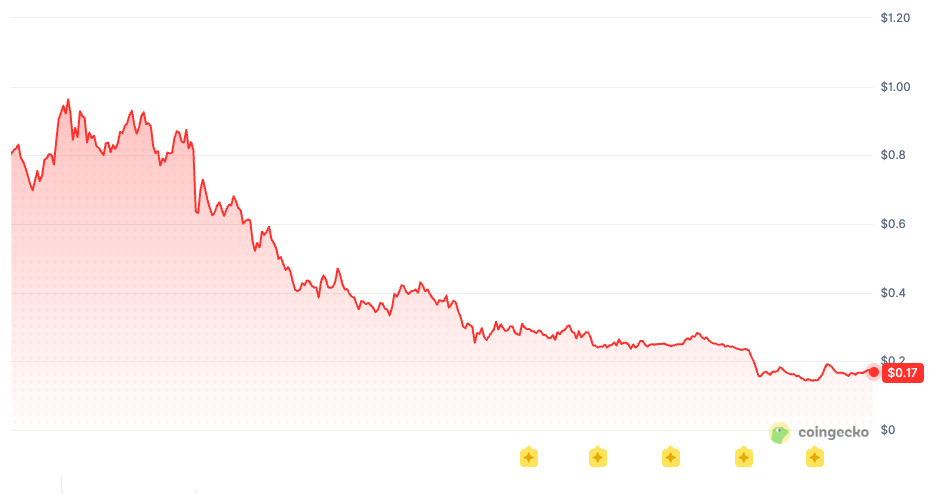
Hoskinson acknowledged that their decision-making hasn’t been flawless.
“It took us a long time to get here. A lot of mistakes were made, and I own the lion’s share of them as the leader.”
Nevertheless, he expressed confidence that the network is now positioned much better than in previous market cycles.
“Ultimately, I’m very happy with where wi sit, and I think we will grow very strongly over the next 12 to 24 months.”
Of course, it remains to be seen whether that prediction will come to fruition, but his broader argument also reflects an ongoing debate across industry proponents about whether the next phase of crypto adoption will come from protocols that come strong and move fast or those that prioritize security, governance, and long-term sustainability. Or perhaps both are not mutually exclusive?
The post Charles Hoskinson Compares Cardano to Anthropic, Says Slow Approach is Paying Off appeared first on CryptoPotato.


BitMEX has been hit with a proposed class action lawsuit in the United States accusing the cryptocurrency derivatives exchange of engineering customer liquidations that allegedly allowed it to retain hundreds of Bitcoin before its planned September shutdown.
Summary
- BitMEX has been sued in a proposed class action alleging it engineered customer liquidations to retain hundreds of Bitcoin.
- The plaintiffs are seeking the return of 622.66 BTC along with compensatory and punitive damages on behalf of eligible US traders.
- The lawsuit was filed on the same day BitMEX confirmed it will shut down its exchange operations in September.
Court filings in the U.S. District Court for the Southern District of New York show that BKX Services Inc. and trader David Namdar filed the complaint on Thursday, alleging they lost a combined 622.66 BTC through forced liquidations on BitMEX. BKX claims losses of at least 305.81 BTC, while Namdar alleges losses exceeding 316.85 BTC.
Filed on the same day BitMEX confirmed it would wind down its exchange business, the lawsuit revives allegations that have circulated around the platform’s liquidation system for years. The plaintiffs argue that the exchange’s internal trading operations gave it an unfair advantage over customers during periods of market stress.
Plaintiffs seek return of Bitcoin
According to the complaint, BitMEX offered leveraged trading of up to 100 times customers’ collateral but allegedly liquidated positions before all available collateral had been exhausted. The filing claims customers often lost their positions while the remaining Bitcoin collateral was still worth substantially more than the trading losses.
The plaintiffs allege the excess Bitcoin was transferred into BitMEX’s insurance fund instead of being returned to users, allowing the exchange to benefit financially from forced liquidations. They further claim an internal trading desk had access to non-public customer information and was able to continue trading during server outages that prevented ordinary users from managing or closing their own positions.
“BitMEX deliberately developed a system that profited from the liquidations,” the plaintiffs alleged in the complaint.
Alongside the return of the allegedly withheld Bitcoin, BKX Services and Namdar are seeking compensatory and punitive damages. The proposed class action also seeks to represent U.S. customers who traded Bitcoin perpetual swap products in transactions dating back to July 23, 2018.
The filing also points to an earlier class action brought in 2020 by Brett Messieh and other traders, who made similar allegations under the Commodity Exchange Act. Court records cited in the complaint show that case was voluntarily dismissed without prejudice on June 30, 2025, allowing similar claims to be brought again.
Lawsuit coincides with exchange closure
The legal action arrives as BitMEX prepares to end more than a decade of exchange operations.
Earlier on Thursday, HDR Global Trading, the owner and operator of BitMEX, announced that it had decided to close the cryptocurrency derivatives platform following a strategic review of both the business and the digital asset industry. The company said exchange operations will end at 04:00 UTC on Sept. 23.
BitMEX has already stopped accepting new account registrations. Beginning Aug. 26, traders will no longer be able to open new positions and will only be permitted to reduce existing ones. During the weeks leading up to the closure, the exchange said it will progressively close outstanding positions, while any remaining open positions at the final deadline will be liquidated automatically.
The company also said contracts with limited liquidity may be settled early under its existing settlement procedures, with advance notice provided to affected users where necessary.
Although trading services will end in September, BitMEX said customers will continue to have access to their accounts for withdrawals and to review wallet balances and transaction history. Users who leave funds on the platform after the shutdown will be charged either the equivalent of $50 per month or 1% annually, whichever is higher, with fees deducted monthly from verified accounts.
BitMEX also warned customers to remain alert for phishing campaigns attempting to exploit news of the shutdown. It said no priority withdrawal service exists and cautioned users against anyone claiming they could accelerate withdrawals. The company added that increased withdrawal requests and Bitcoin network confirmation times could occasionally delay processing during the wind-down period.
Separately, BitMEX said its reserves remain higher than customer liabilities and pointed users to its proof of reserves and liabilities data as evidence that customer assets remain fully backed.
Exchange closes after months of restructuring
The closure follows several months of internal changes at the exchange.
Earlier this month, BitMEX replaced chief executive Stephan Lutz as part of a management restructuring that also saw chief financial officer Ina Steiner and chief growth officer Raphael Polansky leave the company. Former chief operating officer and global general counsel Peter Wilkinson was subsequently appointed chief executive.
The leadership overhaul came while reports indicated the exchange had been exploring a potential sale. BitMEX has not announced a transaction since those reports emerged.
The company has undergone several executive changes since 2020, when founders Arthur Hayes, Ben Delo and Samuel Reed stepped down after U.S. authorities accused the exchange of failing to implement adequate anti-money laundering controls. BitMEX later pleaded guilty to those charges.
Alexander Höptner became chief executive in 2021 before Lutz took over during the cryptocurrency market downturn in 2022.
Founded in 2014, BitMEX became one of the earliest cryptocurrency derivatives exchanges and introduced the 100x leveraged perpetual swap, a product that later became widely adopted across the industry. In announcing its closure, the company said it had operated for more than 11 years without losing customer funds to hacks and thanked users for supporting the platform throughout its history.
The exchange’s shutdown announcement was followed by a sharp decline in its BMEX utility token, which fell by roughly 90% after the closure plans became public.

Although most of the cryptocurrency market is slightly in the red over the past 24 hours, some assets, such as Pi Network’s native token, have taken the retracement much worse than the rest.
What’s particularly worrying about PI’s performance is that it halted its rather impressive resurgence after the recent all-time lows, begging the question whether a new bottom is on the horizon.
Another Failed Attempt
July has been quite painful for the popular yet controversial token. It charted several consecutive ATLs, especially after it broke below the coveted $0.10 support. The latest record low came in the middle of the month when it tanked to just over $0.07.
This support level, though, finally provided the necessary help for the asset to rebound in the following days. At one point, PI became the market’s top performer, surging by 20% and challenging the same $0.10 level, but this time from the downside.
After several hours of trying to break through, the bears emerged victorious and halted its move north. In the following days, PI kept losing traction but gradually and managed to maintain above $0.09 for the most part. However, another breakdown has materialized in the past 24 hours as the token has slumped by more than 10% and now sits at around $0.082.
As such, PI continues to perform in a similar but very painful manner; it remains stable for a few months, then slumps hard to new record lows, bounces by double digits within days, only to be rejected again and chart a new lower low. This pattern has been observed for over a year now, and leads to new ATLs almost every time.
Same Problems
The fundamentals behind the project haven’t changed all that much, especially for the worse. The Core Team continues to announce new updates, protocol upgrades, product redesigns, and everything in between, but the effect is brief. Investors appear to have lost confidence, and the daily token unlocks rarely help.
From a technical perspective, $0.10 remains the key obstacle before a more profound recovery. Unless PI is able to reclaim that level soon, its situation could rapidly worsen, as we have seen it happen many times in the past year. If the $0.07 ATL support gives in, PI would enter another phase of price discovery with no historical support levels below.
If that happens, PI risks falling out of the top 100 alts by market cap. It has already gone down that ranking from the top 50 to outside the top 70 in just a few weeks.
The post Pi Network Price Falls Below $0.09 as PI’s Recovery Starts to Unravel appeared first on CryptoPotato.
Crypto World
CrypFine Joins Coinone’s Travel Rule Network, Further Expanding Its Compliant Digital Asset Infrastructure in South Korea


Global digital asset trading platform CrypFine announced that it has completed the Travel Rule protocol integration and related compliance review with Coinone, a leading digital asset exchange in South Korea.
CrypFine has officially been added by Coinone as a virtual asset service provider (VASP) supported by the CODE Travel Rule solution. This integration further enhances asset transfer capabilities between CrypFine and regulated virtual asset service providers in South Korea, marking another step forward in CrypFine’s compliance infrastructure development in the Korean market.
According to an official announcement released by Coinone, the newly added support officially took effect at 14:00 KST on July 20, 2026. From that time onward, when Coinone users withdraw virtual assets worth KRW 1 million or more to CrypFine, they can complete the required identity and transfer information verification through the CODE Travel Rule system, without separately registering an external wallet withdrawal address or applying for whitelist approval.
Improving Transfer Convenience Between the Two Platforms
The Travel Rule is an important part of the anti-money laundering framework for the virtual asset industry. After CrypFine was included in Coinone’s CODE Travel Rule support scope, the two platforms can verify relevant identity and transaction information through the CODE system, providing users with a smoother digital asset transfer experience.
When carrying out related transactions, users must ensure that their Coinone and CrypFine accounts are held by the same individual and that the names and identity information registered on both platforms are consistent. The specific supported assets, networks, deposit addresses and withdrawal status should be based on the real-time information displayed on the Coinone and CrypFine platform pages.
CrypFine Makes Further Progress in Its Korean Compliance Network
South Korea is one of the more mature markets globally in terms of digital asset regulation, with clear requirements for customer identity verification, anti-money laundering management and cross-platform asset transfers by virtual asset service providers.
CrypFine’s addition to Coinone’s CODE Travel Rule support scope represents a new milestone in the platform’s efforts to build a compliant virtual asset network in South Korea. It also further strengthens CrypFine’s connectivity with the local Korean digital asset ecosystem.
Kim, a representative of CrypFine, said:
“CrypFine’s inclusion in Coinone’s CODE Travel Rule support scope is an important step in the platform’s continued expansion of its compliant cooperation network in South Korea. This integration not only simplifies the process for eligible Coinone users to transfer virtual assets to CrypFine, but also reflects a smoother collaboration mechanism between the two parties in user identity verification, transaction information transmission and anti-money laundering risk control.”
“Going forward, CrypFine will continue to strengthen cooperation with compliant virtual asset service providers, Travel Rule infrastructure providers and compliance technology institutions in South Korea and around the world. We will continue to improve the security, transparency and convenience of cross-platform asset transfers.”
Continuing to Build a Multi-Layered Compliance and Risk Control System
CrypFine’s integration into Coinone’s CODE Travel Rule network is an important step in improving its global compliance infrastructure and deepening cooperation in the Korean market.
Looking ahead, CrypFine will continue to expand cooperation with virtual asset service providers, Travel Rule infrastructure providers and compliance technology institutions in South Korea and other countries and regions.
The platform will also continue to enhance its KYC, AML, on-chain transaction monitoring and cross-platform asset transfer capabilities, providing global users with safer, more stable, transparent and efficient digital asset services.
About CrypFine
CrypFine is a global cryptocurrency exchange offering secure and efficient spot and perpetual futures trading for major and emerging digital assets.
CrypFine has also established a dedicated 10 million USDT risk protection fund to strengthen user asset security. With innovation, security and compliance at its core, CrypFine is committed to building a trusted and professional global digital asset trading platform.
The post CrypFine Joins Coinone’s Travel Rule Network, Further Expanding Its Compliant Digital Asset Infrastructure in South Korea appeared first on BeInCrypto.


Strategy, BlackRock, Coinbase and six other companies have formed the Bitcoin Security Consortium to fund work on Bitcoin’s long-term security.
Summary
- Nine major firms pledged $15 million over three years to support Bitcoin security research worldwide.
- Post-quantum cryptography leads the consortium’s agenda, although no capable attack system currently exists anywhere.
- Members will fund chosen developers independently without directing Bitcoin’s protocol changes or its open-source community.
The founding members pledged a combined $15 million over three years for developers, researchers and organizations working on the network.
The other members are Anchorage Digital, ARK Invest, Block, Blockstream, Fidelity Digital Assets and Galaxy. Brink Executive Director Mike Schmidt will coordinate the group’s daily work as a volunteer. Each company will choose where to direct its own funding rather than pay into one shared pool.
Consortium targets Bitcoin’s long-term security
The consortium named post-quantum cryptography as its first area of focus. This field develops methods designed to resist attacks from classical and quantum computers. Bitcoin currently relies on elliptic curve cryptography to prove ownership and authorize transactions.
Large-scale quantum computers cannot break Bitcoin’s cryptography today. However, a powerful enough machine running Shor’s algorithm could derive a private key from an exposed public key. An attacker could then try to move funds from a vulnerable address. Researchers still disagree on when such a machine could exist.
“As long-term holders, we have every incentive to see Bitcoin remain secure for generations,” said Strategy CEO Phong Le.
BlackRock global head of digital assets Robert Mitchnick also said the member firms will make more funding available for Bitcoin Core developers and long-term security work.
Members will not control Bitcoin development
The group said it will not develop or direct Bitcoin’s protocol, endorse specific changes or speak for Bitcoin developers. The open-source community will continue to debate, test and approve any changes through Bitcoin’s existing process.
That limit matters because the consortium includes major companies connected to Bitcoin. BlackRock and Fidelity offer institutional Bitcoin products, while Coinbase and Anchorage Digital provide trading and custody services. Strategy holds Bitcoin as its main treasury asset. Blockstream and Block develop Bitcoin infrastructure and payment products.
Members will select developers, researchers and nonprofit groups independently. The consortium also plans to publish material about Bitcoin security for investors, the public and the media. It said those updates will track technical developments rather than establish policy for the network.
Quantum readiness work expands
The consortium arrived two days after Galaxy launched its separate Bitcoin Quantum Readiness Initiative. Galaxy committed up to $5 million in grants for post-quantum tools, wallet migration systems, signature research and security audits. It also formed an advisory council and research program.
Galaxy said no cryptographically relevant quantum computer exists today. Still, it warned that Bitcoin upgrades may require years of design, testing and adoption because the network uses decentralized governance. Galaxy is also a founding member of the consortium, but its separate grant program has its own review process.
As crypto.news reported, Coinbase’s independent advisory board urged Bitcoin developers to begin a quantum migration plan now. The board did not support a set policy for old or vulnerable coins. It called for technical preparation before the threat becomes practical.
Crypto companies have also started testing new tools. BitGo and Silence Laboratories completed a simulation using a post-quantum signing system in an institutional custody workflow. Developers are also discussing BIP-360, which would add a new Bitcoin output type designed to reduce future quantum exposure.
Estimates differ on exposed Bitcoin
Project Eleven’s Bitcoin Risq List estimated that 6,982,462 BTC sat in addresses with exposed public keys as of June 15. The figure includes coins affected by older address types and address reuse. The tracker does not claim that current hardware can steal those coins.
Other studies use narrower definitions. As previously reported, Glassnode estimated in May that 1.92 million BTC faced structural exposure because their output types reveal public keys by design. It placed another 4.12 million BTC in an operational category tied to address reuse and wallet practices.
Project Eleven’s 2026 quantum threat report placed its baseline estimate for “Q-Day,” when a quantum computer could break current public-key cryptography, in 2033. Its early scenario placed the date in 2030, while its later case extended to 2042. These estimates remain uncertain and depend on advances in hardware, error correction and algorithms.
The U.S. government has also accelerated its planning. A June executive order directed federal agencies to move high-value systems to post-quantum key establishment by the end of 2030 and post-quantum digital signatures by the end of 2031.
The consortium said it will publish further material and continue funding security work. It did not name grant recipients, list individual company contribution amounts or propose a deadline for a Bitcoin protocol upgrade.

Ripple has launched Ripple Mint, a platform that lets institutions mint, redeem, and manage Ripple USD (RLUSD) through one console.
The company also invested in Notabene, a compliance firm, to add identity checks and transaction authorization to its stablecoin network. Standard Custody & Trust Company, a New York-chartered trust firm, issues RLUSD under state financial regulation. Jack McDonald, an executive at the company, called the Notabene deal a step toward globally compliant stablecoin transfers.
“Bringing together $RLUSD, Ripple Payments & Notabene’s trusted institutional network to help scale compliant stablecoin payments,” McDonald said.
What Ripple Mint Changes
Ripple Mint replaces the platform-only setup institutions previously used for RLUSD operations. Users can choose a web console for manual oversight, or new application programming interfaces (APIs) for automated workflows.
The system tracks transactions in real time and sends webhook alerts for fiat receipt, minting, and onchain settlement. Consistent reference IDs tie every stage together, which simplifies reconciliation for exchanges and market makers.
The company operates RLUSD’s stablecoin business in Japan through SBI Group, and the platform extends that same institutional approach further.
Ripple’s Notabene Deal Adds Compliance
Ripple’s investment in Notabene targets a persistent regulatory concern, identity verification before a transaction settles. Notabene works with banks and virtual asset service providers (VASPs) to share compliance data before funds move.
Its network screens counterparties and authorizes transfers, mirroring demands facing firms tracked among digital asset compliance firms.
That pairing follows Ripple Payments’ recent Markets in Crypto-Assets registration in Europe. Compliance infrastructure now sits at the center of Ripple’s roadmap. Consequently, institutions gain one path for moving RLUSD and clearing it against sanctions rules.
XRP Price Reacts as RLUSD Expands
XRP (XRP), Ripple’s native token, traded near $1.11 on Monday, up more than 1% over the past week. XRP currently ranks 6th by market capitalization among all cryptocurrencies, according to that same data.
As Ripple’s partnership announcements continue to pile up, this major platform launch could provide a long-term catalyst for the token’s future growth.
RLUSD now bridges the XRP Ledger’s EVM Sidechain, Base, Optimism, Ink, and Unichain, widening its reach well beyond XRPL. Every transaction the XRP Ledger processes still burns a small amount of XRP as a network fee, tying rising RLUSD activity to XRP’s shrinking supply. Ripple maintains that this multichain spread reinforces the XRP Ledger over time, and traders may see that thesis play out as adoption grows.
With Ripple Mint now accessible to existing RLUSD users, the collaboration with Notabene creates a secure regulatory framework poised to spark fresh institutional volume while reinforcing current adoption; data over the coming months will reveal the impact of this network effect.
The post Ripple Just Made 2 Moves to Push RLUSD Into Institutions appeared first on BeInCrypto.
Fintech firm Ripple made two moves on Thursday aimed at growing its dollar-backed stablecoin, RLUSD, in a month when transfer volume across the token has dropped by 25%.
The first is Ripple Mint, a platform that lets institutional customers create, redeem, bridge and track RLUSD through a web dashboard or direct integration.
Until now, minting RLUSD — the process of issuing new tokens when a customer deposits dollars — generally meant arranging it directly with Ripple and waiting on a manual issuance process. The APIs let a firm trigger minting and redemption automatically from its own systems and track each transaction from dollar transfer to onchain settlement.
Ripple has also been extending RLUSD beyond the XRP Ledger and Ethereum onto the XRPL EVM sidechain, Base, Optimism, Ink and Unichain, widening the number of networks where the token can circulate.
Separately, Ripple announced late Thursday a strategic investment in Notabene. This compliance network places RLUSD inside its business-payments platform, putting the token in front of institutions positioned to send and receive it.
So, while Mint is designed to make RLUSD simple to create and manage, Notabene is built to get it moving through institutional payment rails.

Coinbase is rolling out new tools aimed at what it calls the “agentic economy,” extending its platform so businesses can receive stablecoin payments from autonomous AI agents. In a Thursday update posted on X, the exchange said Coinbase Business customers will be able to accept USDC payments made by AI agents using the x402 payment standard.
The announcement also points to a broader push beyond payments, with Coinbase describing AI-enabled trading functionality for monitoring and condition-based execution, alongside a software development kit (SDK) intended to help developers build agent-driven applications on top of Coinbase’s infrastructure.
Key takeaways
- Coinbase Business will support accepting USDC payments from AI agents via the x402 standard, originally introduced in May 2025 for HTTP-based stablecoin payments.
- Coinbase says it is adding AI trading tools that can pull live market data, monitor orders, and trigger actions based on predefined conditions.
- The company frames the rollout as infrastructure for an “agentic economy,” where AI systems handle payments and financial tasks on users’ behalf.
- Coinbase highlights a mismatch between today’s finance interfaces—built around human-driven actions—and the growing use of autonomous agents in web traffic and developer activity.
USDC payments for AI agents through x402
Coinbase’s latest move focuses on payments. According to the company’s X post, Coinbase Business customers will be able to accept USDC payments originating from AI agents through x402—an interface designed to let stablecoin transfers work over HTTP.
Coinbase previously introduced x402 in May 2025 as a way to make stablecoin payments more compatible with how agents and applications communicate on the internet, including via APIs. The Thursday announcement ties that standard directly to a new business-facing capability: merchants and enterprises can receive stablecoin payments initiated by AI agents, rather than requiring the usual human-in-the-loop flow.
For businesses, the practical significance is that payment execution can become easier to automate. Instead of routing transactions through manual steps, agent software can integrate directly with payment endpoints in a way that aligns with modern web-based communication patterns.
AI trading tools and condition-based execution
Beyond payments, Coinbase also described new AI trading tools. The company says these tools are designed to help users oversee trading activity and respond to market changes using predefined rules.
In its announcement, Coinbase said customers will be able to monitor orders, access live market data, and execute actions based on conditions that users set ahead of time. The details provided in the post position these features as an operational layer for agent-style workflows—where monitoring and decision logic can be packaged into automated routines rather than handled exclusively through manual monitoring.
While the post doesn’t specify which trading venues, asset types, or order types are included, it does clearly emphasize the “agentic” theme: enabling systems that can observe, interpret, and act according to rules.
A developer kit for building agent-powered finance
Coinbase also said it is releasing a software development kit to support the development of agent-powered applications. The SDK is presented as part of the same strategy that includes x402-based payment support and AI trading tooling, suggesting Coinbase wants to provide developers with building blocks that can be used to connect autonomous agents to financial actions.
That matters because many AI-agent use cases depend on reliable integrations—both for receiving funds and for taking actions in response to changing conditions. By bundling payments, market connectivity, and an SDK under one umbrella, Coinbase is attempting to reduce the amount of custom integration work developers typically face when trying to link agent software with crypto rails and trading interfaces.
Why Coinbase is leaning into autonomous agent infrastructure
Coinbase’s messaging places the rollout in the context of how it believes AI agent adoption is accelerating. The company said agent-generated traffic surpassed human traffic on its Base documentation pages for the first time last month, pointing to a shift in how developers and systems are interacting with blockchain-related documentation.
Coinbase also used the argument that the internet’s financial infrastructure was built around a single assumption: “a human clicking the button.” In the company’s view, that design choice has left businesses, developers, and users without tools tailored to AI agents that can initiate payments and execute tasks autonomously.
As stablecoins and blockchain-based payments are increasingly marketed as infrastructure for AI agents, the direction of Coinbase’s rollout fits a broader sector trend. The use case is being targeted by multiple exchanges and payment-focused companies, according to earlier coverage from Cointelegraph about the “autonomous agent economy,” as well as reporting on payment providers exploring AI-agent purchasing and payment flows.
In other words, Coinbase’s change is not just about adding a new payment feature—it’s an attempt to align crypto payment and trading interfaces with how autonomous systems are increasingly expected to operate: with fewer manual steps and more direct API-driven execution.
What to watch next
For users and builders, the key unknowns are how widely x402 support will roll out across Coinbase Business integrations, what the trading AI tools can cover in practice, and how developers will use the SDK to connect agent workflows to payments and execution. As agent adoption increases, the most important test will be whether these interfaces can reliably handle real-world automation at scale without forcing human intervention.
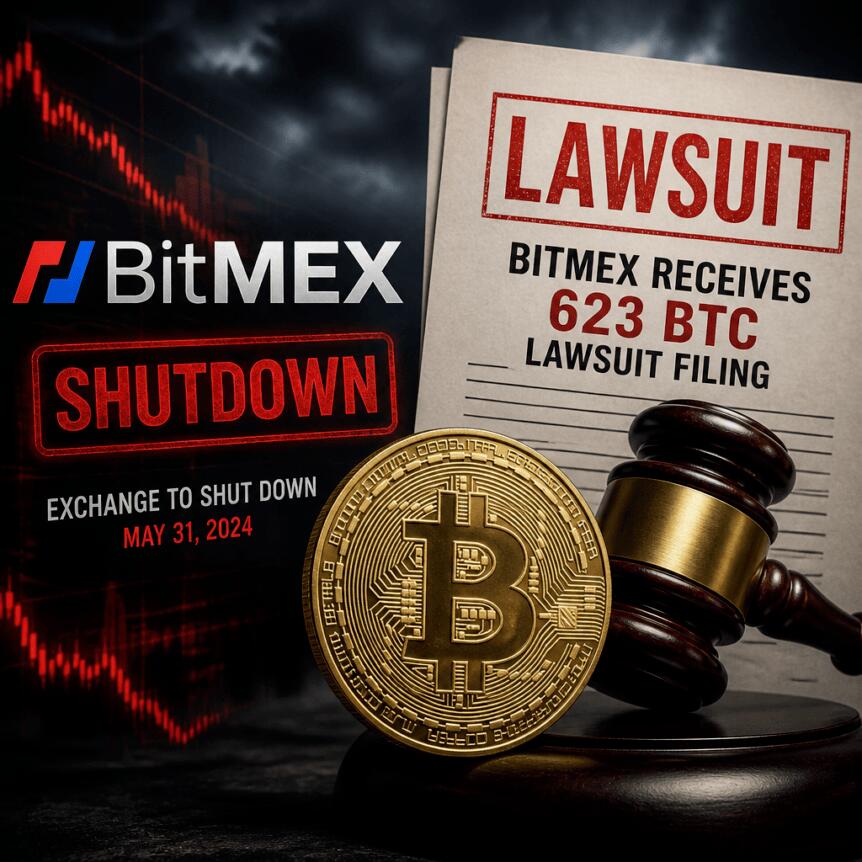
BitMEX has been hit with a new US class action lawsuit accusing the crypto derivatives exchange of fraudulently arranging liquidations to keep traders’ Bitcoin collateral. The complaint, filed in the US District Court for the Southern District of New York on Thursday, targets BKX Services Inc. and David Namdar as plaintiffs and is directed at BitMEX operator HDR Global Trading, according to the court filing.
The lawsuit comes at a sensitive moment for the platform: BitMEX has announced it will shut down after a strategic review by its owner, HDR Global Trading, with services scheduled to stop on Sept. 23. BitMEX also plans to prevent users from opening new positions starting Aug. 26.
Key takeaways
- The plaintiffs allege they collectively lost 622.66 BTC due to forced liquidations tied to BitMEX’s automated liquidation mechanics.
- BKX Services claims losses of at least 305.81 BTC, while David Namdar alleges losses exceeding 316.85 BTC, per the lawsuit.
- The filing asserts an internal trading operation could allegedly continue trading during server freezes that supposedly blocked ordinary users from managing positions.
- Customers are seeking return of the allegedly withheld Bitcoin, along with compensatory and punitive damages.
- The case follows a prior class action in 2020 that was dismissed without prejudice on June 30, 2025, and it is being filed as BitMEX prepares to close.
Allegations centered on liquidation design and collateral seizure
According to the complaint, BitMEX permitted customers to use leverage of up to 100 times their collateral and then automatically liquidated positions at prices the plaintiffs argue were set while collateral remained allegedly sufficient to cover the losses. The plaintiffs claim that collateral was still worth twice the losses they say were ultimately incurred during liquidations.
In the plaintiffs’ account, remaining BTC after liquidation was directed into BitMEX’s insurance fund. They argue that this structure allowed the exchange to profit from forced liquidations rather than limit losses strictly to what was necessary under liquidation rules.
Central to the fraud allegations is the plaintiffs’ contention that BitMEX “deliberately developed a system that profited from the liquidations.” The complaint further asserts that an internal desk had access to private customer information and could keep trading while ordinary users allegedly could not access or close positions during server freezes.
Cointelegraph contacted BitMEX for comment but did not receive a response before publication.
Who is suing, and what relief is being sought
The proposed class action seeks the return of allegedly withheld Bitcoin and requests compensatory and punitive damages. The plaintiffs aim to represent US customers who purchased BTC swap products in transactions dating back to July 23, 2018, according to the filing.
The complaint identifies the alleged losses by plaintiff: BKX Services Inc. is said to have lost at least 305.81 BTC, while David Namdar alleges losses exceeding 316.85 BTC. The lawsuit states that the combined total losses alleged across the named plaintiffs amount to 622.66 BTC.
Notably, the new case explicitly frames the dispute around how collateral was handled after liquidations and how access to trading tools may have differed between internal participants and regular customers during alleged service disruptions.
Background: earlier BitMEX class action and a renewed push
While the new filing revives longstanding scrutiny of BitMEX’s internal trading operations and liquidation engine, it is not the first time traders have attempted to pursue legal claims. The complaint references a class action filed in 2020 by Brett Messieh and other traders alleging similar conduct.
That earlier case, which included claims under the Commodity Exchange Act, was voluntarily dismissed without prejudice on June 30, 2025. The renewed lawsuit therefore raises the question of how plaintiffs plan to refine or reframe their allegations after that dismissal and what evidence they believe supports the renewed claims.
For BitMEX users, the shift matters because earlier proceedings ended without a final resolution on the merits. A refiled suit suggests plaintiffs believe they can proceed more effectively—whether by adjusting legal theories, assembling additional factual support, or both.
Filed as BitMEX moves toward shutdown
The lawsuit was filed the same day BitMEX announced it would close after 11 years in operation. In its shutdown plan, BitMEX said it would stop providing services on Sept. 23, following a strategic review by HDR Global Trading.
BitMEX has already stopped accepting new registrations. The exchange also plans to prevent users from opening new positions starting on Aug. 26, according to the announcement. The timing is likely to be closely watched by affected traders and counterparties, as the platform’s winding down could affect how quickly claims can be assessed and how remaining customer-related matters are handled operationally.
BitMEX’s closure announcement was also followed by sharp market moves in the exchange’s BMEX utility token, with Cointelegraph reporting a roughly 90% plunge after the shutdown news. While token volatility does not determine the legal merits of the allegations, it underscores the broader uncertainty and reputational pressure that frequently accompany shutdowns and litigation.
Earlier coverage from Cointelegraph noted that BitMEX had already begun delisting a large number of trading pairs and derivatives in July amid its exchange shutdown process.
What to watch next
As the case heads through initial US court steps, the key unknowns will be how the allegations are supported procedurally and factually, and whether BitMEX responds with challenges to the plaintiffs’ theory of fraud and the causal link between alleged liquidation behavior and the claimed Bitcoin losses. With BitMEX preparing to exit the market by Sept. 23, plaintiffs and users will also watch how the shutdown affects evidence access, user documentation, and the practical timeline for any potential recovery.


Korbit currently holds less than 1% of South Korea’s domestic crypto market, far behind giants Upbit and Bithumb. When asked directly about its strategy to compete, Mirae Asset stressed that the goal is not to overtake any other company or exchange, but to promote sustainable growth of the digital assets industry in South Korea.
“We intend to combine Mirae Asset’s extensive global investment expertise with Korbit’s digital asset capabilities to promote the sound and sustainable growth of the digital asset industry in Korea and globally.”
In other words, Mirae Asset isn’t trying to outdo Upbit or Bithumb, but to offer a one-stop shop that brings together institutional investment capabilities, research, education, and digital asset infrastructure under one roof.
The group also told CoinDesk it would strictly comply with AML, KYC, and fraud-detection standards across all areas, a signal that Digital X is being positioned for institutional clients as much as for retail traders.
Mirae Asset’s affiliate Mirae Asset Consulting recently increased its stake in Korbit to 97.15%, completing the acquisition after receiving regulatory approval from South Korea’s Fair Trade Commission.
“The acquisition was carried out through lawful procedures following a thorough review of the relevant laws and regulatory framework. Mirae Asset Consulting was selected as the acquiring entity after comprehensive consideration of each affiliate’s business purpose and role, as well as its potential synergies with the digital asset business,” the firm said.

Asian markets skid as Brent crude trades near $100

Strange New Worlds’ Newest Season Proves What Kind Of Star Trek Fan You Are
HSBC reiterates Buy on Intel stock, cites foundry execution gains


-

 Fashion7 days ago
Weekend Open Thread – Corporette.com
-

 Politics6 days ago
The House | The City of London can help the new chancellor deliver growth in every postcode
-

 Crypto World6 days ago
Ripple Payments Joins MiCA With 14 Firms, Does It Mean Anything For XRP?
-
 Crypto World7 days ago
Two July Windows Left: The CLARITY Act’s Senate Fight and What Failure Means
-

 Politics5 days ago
Democrats look to World Cup watch parties to register thousands of voters
-

 Crypto World6 days ago
Ripple wins EU-wide access as ESMA adds it to MiCA register
-

 Crypto World3 days ago
Grayscale Files For Worldcoin ETF, WLD Registers Sharp Rise
-

 NewsBeat4 days ago
Unregistered fitter used Gas Safe logo on business flyers
-

 Tech3 days ago
Sail Virtually Aboard The “Itanic” With IA-64 Emulator
-
 Tech3 days ago
Turtle Beach Command Series KB7 review: a nifty screen-equipped gaming keyboard
-

 NewsBeat7 days ago
Registration is now open for March for Men with Kev 2026
-

 News Videos5 days ago
Big Money Is Entering XRP
-
 Business2 days ago
New Jersey voter registration controversy explained: How 6,600 noncitizens got on the rolls, and what happens next
-

 Crypto World6 days ago
Kaspersky exposes OkoBot’s 20-module crypto wallet attack
-

 Business7 days ago
Airlines warn Sunshine Protection Act could disrupt flight scheduling
-
 Entertainment3 days ago
Johnny Depp’s R-Rated Gothic Cult Classic Gets New Release Ahead of Sydney Sweeney Remake
-

 NewsBeat6 days ago
Durham County Council to send out electoral registration emails
-

 Crypto World6 days ago
MiCA Licensing Faces Delays as ESMA Adds 14 CASPs to Register
-

 Crypto World1 day ago
Ethics, other provisions in crypto Clarity Act to be further discussed
-

 Crypto World6 days ago
Chip Stocks Enter Bear Market After Moonshot Ai Unveils Kimi K3 Model
You must be logged in to post a comment Login