
Crypto World
Stablecoin and Digital Pound for Cross-Border Payments


The Bank of England’s Digital Pound Lab is running a trade-finance experiment designed to test whether stablecoins and a potential digital British pound could work together inside the same cross-border payment flow.
In a project announced on Wednesday, NOBO Finance, Dun & Bradstreet and Polygon Labs said the trial links an exporter’s advance delivered via a stablecoin rail with a UK importer’s settlement using simulated digital pounds. The focus is on the practical mechanics of payments timing—particularly the point at which trade finance is released and how long settlement takes.
Key takeaways
- The Digital Pound Lab trial pairs a stablecoin payment to an exporter with simulated digital pound settlement by a UK importer in a single cross-border workflow.
- NOBO Finance, Dun & Bradstreet and Polygon Labs are combining payments testing with a separate effort to generate reusable credit profiles for small businesses.
- The project is explicitly using simulated systems: the Bank of England has not committed to issuing a digital pound and the lab uses no real customers or money.
- The work targets a long-standing trade finance problem where exporters may wait days after shipment to receive payment, tying up working capital.
- The broader initiative aligns with ongoing UK regulatory development for stablecoins and tokenized settlement models.
Trade finance, simulated digital pounds, and stablecoin rails
The Bank of England’s Digital Pound Lab experiment is centered on trade finance—an area where cash flow can be constrained by settlement delays between shipping goods and receiving payment. According to the announcement from NOBO Finance, Dun & Bradstreet and Polygon Labs, the test scenario involves an exporter receiving an advance through a stablecoin-based payment flow while a UK importer completes settlement using simulated digital pounds.
The companies did not describe the trial as a live market product; instead, it is positioned as an experiment within the lab’s research environment. The Bank of England has also emphasized that lab experiments designed by participants should not be treated as signals about future policy or as endorsements of any specific firm or technology.
For exporters—especially smaller businesses—payment timing can determine how much working capital is locked up. When funds arrive days after shipment, firms can face higher financing costs or reduced ability to take on new orders. By testing whether different digital payment components can operate in the same cross-border route, the lab project aims to assess whether tokenized settlement could reduce friction that slows trade.
Reusable credit profiles for small businesses
Beyond payments plumbing, the initiative includes a separate workstream aimed at helping small businesses access credit more efficiently. The plan, as described by the participating companies, is to create reusable credit profiles by combining transaction data, open-finance information and commercial risk data from Dun & Bradstreet.
Polygon Labs is providing the smart contract infrastructure for this part of the project. The practical idea is straightforward: instead of rebuilding risk assessments from scratch for each transaction, the system would attempt to turn available data into a standardized credit profile that could be reused in future trade finance arrangements.
If that approach works as intended, it could reduce the operational cost and time involved in underwriting and credit checks—an issue that often weighs more heavily on smaller firms than on larger counterparties with more established financing relationships.
Why this matters amid UK stablecoin and tokenization rulemaking
The trade-focused lab experiment lands as UK authorities continue building the regulatory structure for stablecoins and preparing the financial system for tokenized assets. In June, the Bank of England published draft rules for sterling-denominated stablecoins it considers systemic to the UK’s financial stability.
That proposal, according to the Bank of England, would allow systemic stablecoin issuers to hold up to 70% of their reserves in interest-bearing government debt. It also introduces a temporary issuance cap of 40 billion pounds (about $52.8 billion) per systemic stablecoin, replacing earlier suggestions that would have limited holdings at the level of individual participants and businesses. The Bank of England has said it aims to finalize those rules by the end of 2026, ahead of a planned 2027 rollout.
Under the framework, stablecoins deemed systemic—because their use could pose risks significant enough to affect financial stability—would fall under the Bank of England’s regime. Non-systemic stablecoins would remain under the Financial Conduct Authority’s oversight.
Meanwhile, tokenization is also being tested through updates to legacy settlement infrastructure. In May, the Bank of England proposed moving its Real-Time Gross Settlement (RTGS) and CHAPS systems toward near-24/7 operation, including weekends and extended daily hours, partly to support cross-border payments and new settlement models as tokenization develops.
Additionally, the Bank of England approved HSBC’s Orion platform to operate in the UK’s Digital Securities Sandbox. That sandbox is expected to support digital bond issuance, including the country’s planned Digital Gilt Instrument—another sign that regulators are exploring how tokenized assets might integrate with existing market infrastructure.
What to watch next in the Digital Pound Lab
Because the Digital Pound Lab trial uses no real money or customers and the central bank has not committed to issuing a digital pound, the near-term value for market participants is primarily methodological: seeing whether a stablecoin rail and a simulated digital pound can coordinate inside a realistic cross-border trade workflow. The next step is whether the lab’s findings inform practical designs for interoperability, settlement timing, and how credit and compliance data could be translated into reusable structures for small businesses.

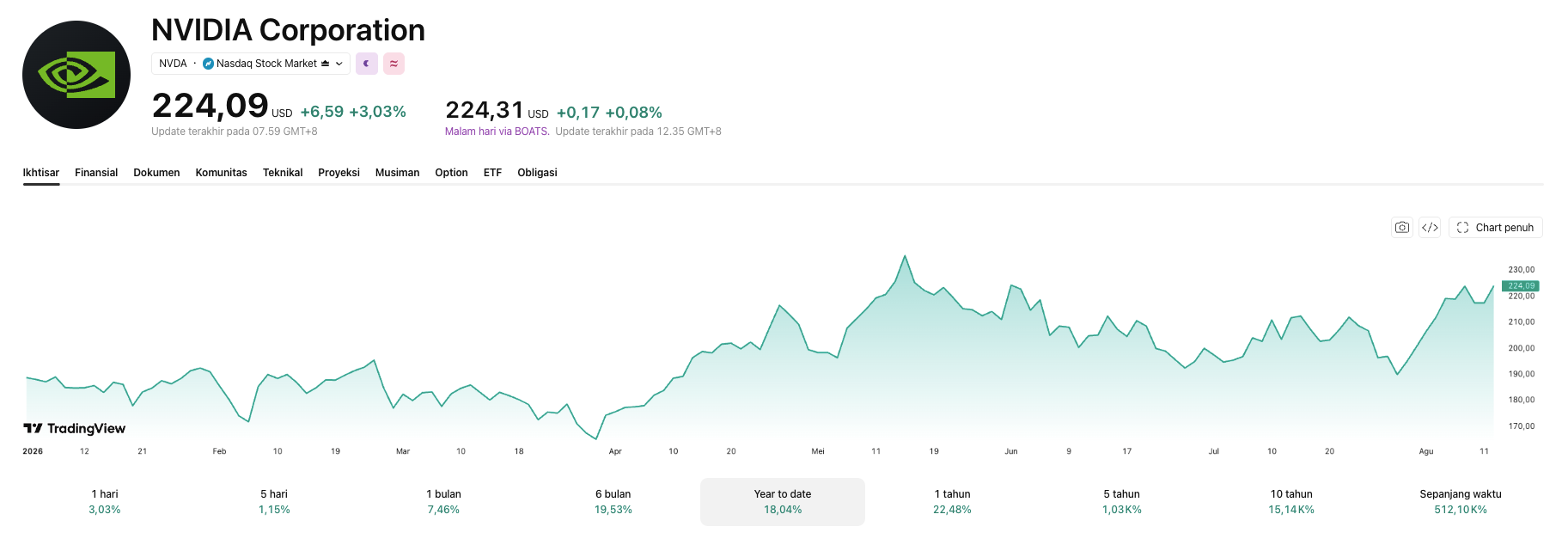
Michael Burry is warning that Wall Street’s longest calm streak in three decades is a red flag. The calm has held even as a small group of AI-linked mega-caps drives most of the market’s gains.
Burry predicted the 2008 housing collapse and is a known skeptic who often sees his calls come true. He says this streak echoes warnings he has made since November 2025.
A Record Streak Without a Selloff
BTIG technical strategist Jonathan Krinsky tracks a specific signal. He measures days when at least 80% of New York Stock Exchange (NYSE) volume comes from falling stocks.
Wednesday marked the 182nd straight session without one of those days. Historically, this is the longest streak in at least three decades, and nearly 50 sessions longer than the previous record.
Krinsky notes that every year in the past three decades has recorded at least five of these sessions. A full 2026 without one would mark a first.
“That sort of technical factor on its own is easy to ignore. However, I have been writing about fundamental reasons for something like this to happen since November of 2025.”
Why the Calm Might Be an Illusion
In contrast to broad-based rallies, a handful of AI stocks now drive most index gains. Burry has flagged concerns about Nvidia (NVDA), Micron Technology (MU), Caterpillar (CAT), Palantir Technologies (PLTR), and Tesla (TSLA).

He holds bearish positions against several of these companies, including Nvidia and Micron. Passive index funds also carry heavy weightings in these same AI names, amplifying the swings.
Burry has made similar warnings before. He compares today’s setup to his earlier 1987 crash warning and the dot-com peak. In both cases, narrow leadership eventually gave way to broader selling.
The Leverage Warning from Burry
However, Burry’s core message is not about timing the turn. It is about surviving it.
“The trick is to avoid stepping into someone else’s folly along the way. Avoid the leverage, and one is more likely to avoid the folly.” Burry said.
Large market cycles can take months or years to unwind, Burry says. Therefore, leverage becomes the real danger for investors waiting it out.
Situational Awareness, an AI-focused hedge fund run by Leopold Aschenbrenner, sold its public stock portfolio to Citadel last month. Meanwhile, steep losses on chip and data center stocks, including SK Hynix, forced the move.
Whether the calm breaks before the mega-caps do is the question Burry is betting on.
The post Michael Burry’s Latest Warning Comes as AI Mega-Caps Quietly Run the Market appeared first on BeInCrypto.
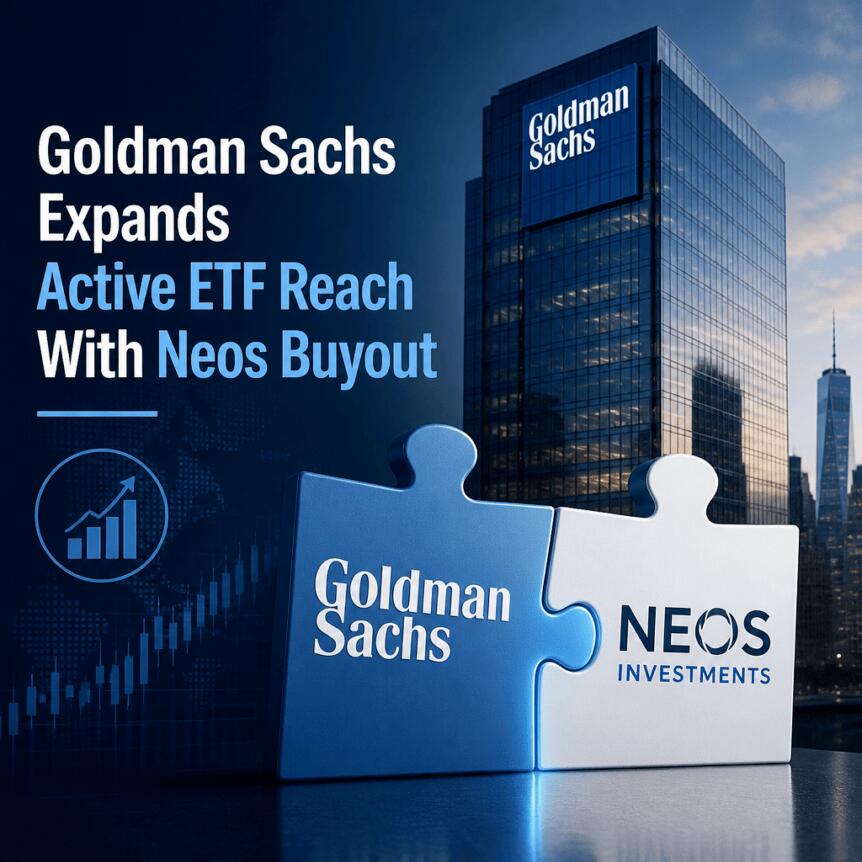
Goldman Sachs has agreed to acquire NEOS Investments in a deal worth up to $2.25 billion. The transaction combines cash and equity, and final terms depend on performance benchmarks. This move strengthens Goldman’s position in the fast-growing active ETF market.
Deal Structure And Expected Timeline
Goldman Sachs will pay through a mix of cash and equity for NEOS Investments. The final payout remains tied to service and performance commitments over time. Regulators must still approve the transaction before it becomes final.
The companies expect the deal to close during the first quarter of 2027. This timeline allows both firms to complete regulatory reviews and integration planning. Goldman will fold NEOS into its existing asset management structure once approved.
NEOS currently manages nineteen systematic options-based income ETFs for its clients. The firm held roughly $30 billion in assets under management as of June. Some reports suggest that figure has since grown closer to $32 billion.
Neos Brings Scale To Goldman’s Options-Based Fund Lineup
NEOS launched in 2022 and quickly built a reputation in options-income investing. Its strategies focus on generating steady income while managing market exposure. This approach appealed to both individual and institutional investors seeking balance.
This acquisition follows Goldman’s earlier purchase of Innovator Capital Management, another options-focused firm. Innovator specializes in defined-outcome and buffer ETFs for risk-conscious investors. Together, these deals show Goldman’s clear strategy of expanding options-based offerings.
Co-founders Troy Cates and Garrett Paolella will join Goldman Sachs Asset Management as partners. The broader NEOS team is also expected to transition into Goldman’s structure. Goldman’s leadership described the acquisition as complementary to its buffer, income, and outcome-based strategies.
Combined ETF Platform Surpasses $130 Billion In Assets
After the deal closes, Goldman’s total ETF platform will exceed $130 billion in assets. Active ETFs alone will account for roughly $80 billion of that total. This scale places Goldman among the largest active ETF providers in the industry.
Morningstar data ranks Goldman as the eighth-largest active ETF provider as of June. That ranking reflects steady growth across the firm’s broader asset management division. The NEOS acquisition should push Goldman further up that competitive ranking.
Options-based income ETFs have expanded rapidly across the wider market in recent years. The category now holds about $180 billion in total assets industry-wide. Annualized growth has topped seventy percent since 2021, according to Morningstar figures.
Broader Market Context And Industry Trends
Demand for options-income strategies has grown steadily among everyday and institutional investors alike. These products aim to generate income while limiting downside exposure to market swings. That balance has made them increasingly popular within traditional ETF structures.
Goldman’s acquisitions of NEOS and Innovator reflect a broader shift toward specialized ETF products. Large asset managers continue consolidating smaller, innovative firms to diversify their offerings. This pattern suggests further consolidation may follow across the active ETF sector.
Once the deal closes, Goldman plans to operate NEOS alongside its current ETF lineup. The firm aims to expand its overall product range and total assets under management. Goldman’s latest move signals continued ambition within the actively managed ETF space.


Four consecutive weeks of sales. A $102 million realized loss. An $8.2 billion quarterly write down. The company that made corporate Bitcoin treasuries a category is quietly rewriting the playbook it created.
Michael Saylor built his reputation on a single trade. In August 2020, MicroStrategy announced that it had converted $250 million of its corporate treasury into Bitcoin, becoming the first publicly traded company to adopt the cryptocurrency as its primary reserve asset. Over the next five years, the company, which renamed itself Strategy in 2025, accumulated more than 843,000 BTC through a combination of operating cash flow, convertible note offerings, at the market equity sales, and preferred stock issuances.
The accumulation was relentless. Through bull markets and bear markets, through the collapse of FTX and the SEC’s enforcement campaign, through Bitcoin’s decline from $69,000 to $15,500 and its subsequent recovery to $108,000, Strategy never sold. The position grew larger with each quarterly filing. Saylor became the public face of corporate Bitcoin adoption, and his company’s stock became a leveraged proxy for Bitcoin exposure, trading at a premium to its net asset value that reflected the market’s belief in the perpetual accumulation thesis.
That thesis ended in June 2026.
Strategy has now sold Bitcoin for four consecutive weeks. The most recent disclosure showed a sale of 1,637 BTC, reducing the company’s holdings to 842,138. A separate sale of approximately $218 million in BTC was made to cover preferred stock dividend obligations. The company’s quarterly filing recorded an $8.2 billion loss on its digital asset holdings. And on August 11, CEO Phong Le described Strategy as “the central bank of Bitcoin,” a description that, intended or not, carried the implication that central banks sometimes sell reserves.
The shift has been quiet. Strategy has not held a press conference to announce a change in strategy. It has not revised its public guidance on Bitcoin as a treasury reserve. The sales appear in SEC filings and on chain data, not in marketing materials. But the numbers are unambiguous, and their implications extend beyond a single company’s balance sheet to the Bitcoin market’s structural demand profile, to the corporate treasury movement that Strategy created, and to the question of whether leveraged accumulation strategies can survive the kind of drawdown that Bitcoin delivers in every cycle.
This piece examines what the sales mean for Strategy’s financial structure, for the Bitcoin market’s supply dynamics, and for the broader corporate treasury thesis that Saylor’s trade inspired.
The financial mechanics of the sell decision
Strategy’s Bitcoin sales are not arbitrary. They follow from the financial engineering that funded the accumulation. The company issued approximately $7 billion in convertible notes between 2020 and 2025, along with multiple tranches of preferred stock and billions of dollars in at the market equity offerings. Each instrument carries financial obligations: convertible notes require interest payments, preferred stock requires dividend payments, and equity dilution requires maintaining a stock price that keeps the premium to net asset value positive.
When Bitcoin’s price was rising, these obligations were easy to meet. The appreciation in the company’s Bitcoin holdings inflated its balance sheet, supported its stock price, and allowed it to issue new instruments at favorable terms to buy more Bitcoin. The flywheel worked as long as the price went up.
When Bitcoin’s price declined from $108,000 in January 2026 to $63,800 in August, the flywheel reversed. The value of Strategy’s holdings declined by approximately $37 billion. Its stock price fell, making new equity issuances more dilutive. Its convertible note holders began to calculate conversion values that made the notes less attractive as equity substitutes. And its preferred stock dividends became a cash obligation that the company’s software business, which generates approximately $500 million in annual revenue, could not cover without tapping the Bitcoin reserve.
The $218 million sale to cover preferred stock dividends is the most significant of the company’s recent transactions because it crosses a threshold that Saylor publicly committed to avoiding. For years, the company’s messaging was clear: Bitcoin is a permanent hold, not a source of liquidity for operational expenses. The preferred stock sale breaks that commitment. It is a sale driven by financial necessity rather than strategic choice, and it signals to the market that Strategy’s Bitcoin holdings are no longer a one way bet but a balance sheet asset that is subject to the same liquidity demands as any other corporate reserve.
The $8.2 billion loss and what it means under new accounting rules
The $8.2 billion loss in Strategy’s quarterly filing deserves contextualization because it reflects accounting treatment that has changed recently. Prior to 2025, companies that held Bitcoin were required to use impairment accounting, which meant they could write down the value of their holdings when the price declined but could not write it back up when the price recovered. Under the new FASB fair value rules that took effect in January 2025, companies mark their crypto holdings to market each quarter.
Strategy’s $8.2 billion loss reflects the decline in Bitcoin’s price from the start of the quarter to the end. It is a paper loss in the sense that the company still holds the Bitcoin and could recover the value if the price rises. But it is a real loss in the sense that it flows through the income statement and affects the company’s reported earnings, its tax position, and its attractiveness to institutional investors who screen for profitability.
The new accounting rules were supposed to make corporate Bitcoin holdings more attractive by allowing companies to recognize gains as well as losses. In practice, the first major test of fair value accounting for a large Bitcoin holder produced an $8.2 billion headline loss that dominated media coverage and reinforced the perception that corporate Bitcoin treasuries carry unmanageable volatility. The outcome may discourage other public companies from following Strategy’s lead, which is the opposite of the effect that the accounting standards update was designed to produce.
The realized loss on the $218 million preferred stock sale, reported at $102 million, adds a different dimension. This is not a paper loss. It is cash that the company paid to cover dividends that exceeded the proceeds from selling Bitcoin acquired at higher prices. The realized loss confirms that some of Strategy’s Bitcoin was purchased above the current market price, which means the company’s overall cost basis is above the current spot level for at least a portion of its holdings.
https://x.com/cryptodotnews/status/2087117570847699170
The ETF offset: why Strategy’s selling has not crashed the price
One of the most important dynamics in the current Bitcoin market is that Strategy’s selling has been absorbed by ETF inflows without producing a measurable price impact. This is not a coincidence. It reflects the structural change in Bitcoin’s demand profile that occurred with the launch of spot Bitcoin ETFs in January 2024.
Bitcoin spot ETFs held approximately $62 billion in assets under management by August 2026. The daily inflow rate has averaged approximately $150 million per day in 2026, with significant variation. On days when Strategy’s sales hit the market, ETF inflows have been sufficient to absorb the supply and prevent the kind of price cascade that a sale of this magnitude would have caused in prior cycles.
The arithmetic illustrates the point. Strategy’s 1,637 BTC sale at current prices represents approximately $104 million. A single strong day of ETF inflows can exceed $300 million. The sale is large by historical standards for a single corporate seller, but it is small relative to the daily flow of capital into Bitcoin through the ETF channel.
This dynamic creates a strange equilibrium. Strategy sells Bitcoin to meet financial obligations. ETFs buy Bitcoin as retail and institutional allocators add exposure. The net effect on price is approximately zero, which allows Strategy to continue selling without triggering the price decline that would make its financial position worse. The ETF channel is, in effect, providing liquidity for Strategy’s exit from a portion of its position without the market consequences that would normally accompany a sale of this scale.
The risk is that this equilibrium is fragile. If ETF inflows slow, whether because of a broader risk off event, regulatory uncertainty, or simply because the marginal allocator has already made their Bitcoin allocation, Strategy’s sales would land in a thinner market. The same volume of selling that produced no price impact in a strong ETF flow environment could produce a meaningful decline in a weak one.
The “central bank of Bitcoin” claim
CEO Phong Le’s description of Strategy as “the central bank of Bitcoin” was delivered during a public appearance on August 11. The phrase is provocative by design. Central banks hold reserve assets, issue currency, and conduct monetary policy. Strategy holds Bitcoin, has issued Bitcoin backed securities, and is now selling reserves. The analogy is closer than Le may have intended.
Central banks sell reserves when they face balance of payments pressures, when they need to defend a currency peg, or when they are conducting open market operations to manage liquidity. Strategy is selling Bitcoin for analogous reasons: to meet financial obligations that its operating business cannot cover from cash flow alone. The “central bank” framing inadvertently highlights the structural vulnerability of a corporate treasury strategy built on a volatile asset.
Saylor’s own public posture has shifted in subtle ways. While he continues to post on social media about Bitcoin’s long term value proposition, his messaging has moved from “we will never sell” to hints about future buying. A recent post reading “what’s next” was interpreted by the market as a signal that Strategy might resume accumulation, but no purchase has been announced since June.
The gap between the public narrative and the financial reality is the most important data point for investors who own Strategy stock as a Bitcoin proxy. If the company has transitioned from a permanent accumulator to a periodic seller, the premium to net asset value that justified a stock price well above the per share Bitcoin value loses its foundation. Strategy stock at a 50% premium to NAV makes sense if the company is always buying. It makes less sense if the company is sometimes selling.
https://x.com/cryptodotnews/status/2083085753832047073
What the corporate treasury movement looks like without its leader
Strategy’s shift from buyer to seller has implications beyond its own stock price. The company’s original accumulation inspired a wave of corporate Bitcoin adoption. Companies like Marathon Digital, Metaplanet, and dozens of smaller public firms followed Strategy’s lead, adding Bitcoin to their balance sheets and pitching their stocks as crypto exposure vehicles.
If the company that started the trend is now selling, the thesis that corporate treasuries provide a structural demand floor for Bitcoin needs revision. Strategy’s 842,138 BTC represents approximately 4% of Bitcoin’s circulating supply. The company’s transition from accumulator to seller removes a source of demand that the market has priced in since 2020.
The practical effect depends on whether other corporate holders follow Strategy’s lead. Marathon Digital, which holds a significant Bitcoin position of its own, was flagged by on chain analytics for large BTC transfers from its wallets in the same week as Strategy’s sales. The correlation may be coincidental, but it raises the question of whether the corporate treasury sector is experiencing a synchronized shift from accumulation to distribution.
If multiple corporate holders begin selling simultaneously, the ETF absorption capacity becomes the critical variable. The ETF channel can handle one large corporate seller. It may not be able to handle several, particularly if the selling occurs during a period of weak retail demand or negative macro sentiment.
The longer term question is whether the corporate Bitcoin treasury model survives Strategy’s change in behavior. The model depends on the assumption that Bitcoin is a permanent store of value that appreciates over time. Strategy’s sales do not invalidate that assumption, but they do show that even the most committed corporate holder can be forced to liquidate by the financial engineering that funded the accumulation. The lesson may be that corporate Bitcoin treasuries work, but only if the funding structure allows the company to hold through drawdowns without selling. Strategy’s convertible notes and preferred stock created obligations that Bitcoin’s volatility eventually made impossible to service without tapping the reserve.
https://x.com/cryptodotnews/status/2086030407217143941
The 100x claim and the math behind it
Phong Le made another claim during his August 11 appearance that requires examination. He stated that Strategy has achieved “100 to 200x scale” since its initial Bitcoin entry in 2020. The number refers to the growth in the company’s total enterprise value, which has expanded from approximately $1.2 billion in August 2020 to a peak above $120 billion in early 2026.
The arithmetic is correct on its face. A company that was worth $1.2 billion and grew to $120 billion did achieve roughly 100x appreciation in enterprise value. But the claim obscures the source of that growth. Strategy’s software business has grown modestly, from approximately $480 million in annual revenue to roughly $500 million. The overwhelming majority of the enterprise value increase came from the appreciation of its Bitcoin holdings and from the premium that investors assigned to the company’s accumulation strategy.
That premium was the market’s way of saying that Strategy’s ability to buy Bitcoin with leverage, through convertible notes and preferred stock, was worth more than simply holding the Bitcoin itself. A dollar of Bitcoin on Strategy’s balance sheet was valued at $1.50 or more by the stock market because the market believed Strategy would use that dollar to acquire more Bitcoin, which would appreciate, which would allow more issuance, which would allow more buying.
The premium is the flywheel, and the flywheel works only in one direction. When Strategy buys, the premium expands. When Strategy sells, the premium compresses. A 100x increase built on a buying premium can reverse faster than it accumulated if the market decides the buying is over. MSTR stock dropped as much as 8% intraday during the week when the most recent sales were disclosed, and the premium to NAV has been compressing steadily since June.
The 100x figure is historically accurate but forward looking investors should treat it as a record of what happened under the old regime, not as evidence of what will happen under the new one. The financial instruments that funded the accumulation now constrain it, and the premium that rewarded the buying will penalize the selling.
The opposing case: why the sales may be temporary
The bearish interpretation of Strategy’s sales, that the accumulation thesis is permanently broken, deserves scrutiny alongside the strongest version of the bull case. Strategy’s defenders argue that the sales are a short term response to a specific financial obligation, the preferred stock dividends, and that the company will resume buying once Bitcoin’s price recovers and the financial pressure eases.
This argument has some support in the data. Strategy’s software business generates positive operating cash flow, which means the company is not insolvent. Its Bitcoin holdings still exceed the total value of its debt obligations by a significant margin, even at current prices. And the convertible notes, while creating future obligations, do not mature for several years, giving the company time to wait for a price recovery before the next refinancing deadline.
Saylor’s continued public advocacy for Bitcoin supports the argument that the thesis has not fundamentally changed. His social media activity has shifted from triumphant accumulation announcements to hints about future plans, but it has not turned bearish. The simplest explanation may be that Strategy is managing a temporary liquidity need in a responsible way: selling a small fraction of its holdings to meet an obligation, preserving the vast majority of its position, and waiting for conditions to improve before resuming accumulation.
The market will ultimately judge this question by watching the 8-K filings. If Strategy returns to net buying within the next quarter, the sales will be remembered as a speed bump rather than a structural break. If the sales continue or accelerate, the thesis revision becomes permanent and the stock’s premium to NAV will compress toward parity.
What to watch
Weekly 8-K filings. Strategy discloses Bitcoin transactions in SEC filings. A return to net buying would signal that the financial pressure has eased. Continued selling would confirm the structural shift.
MSTR premium to NAV. The stock’s premium to its per share Bitcoin value is the market’s judgment on whether the accumulation thesis is intact. A compression below 1.0x would indicate that investors no longer believe the company adds value beyond holding Bitcoin.
ETF daily flow data. If ETF inflows slow below $100 million per day while Strategy continues selling, the absorption capacity weakens and price impact increases. Watch Bloomberg and BitMEX ETF flow trackers.
Marathon Digital and Metaplanet disclosures. If other large corporate holders begin selling, the single seller narrative becomes a sector wide trend with materially different implications for Bitcoin supply dynamics.
Convertible note maturity schedule. Strategy’s convertible notes have staggered maturity dates. The next maturity creates a deadline by which the company must either refinance, convert, or repay, each of which has different implications for its Bitcoin position.
Why is Strategy selling Bitcoin?
Strategy sold Bitcoin to cover preferred stock dividend obligations that its software business could not fund from operating cash flow. The $218 million sale was the first time the company sold Bitcoin to meet financial commitments rather than as a discretionary decision. Additional sales of 1,637 BTC were disclosed in weekly filings.
How much Bitcoin does Strategy still hold?
As of its most recent disclosure, Strategy holds 842,138 BTC, valued at approximately $53.8 billion at current prices. This represents about 4% of Bitcoin’s total circulating supply.
What was the $8.2 billion loss?
The loss reflects the decline in Bitcoin’s price during the quarter under the new FASB fair value accounting rules. It is a paper loss that flows through the income statement. The company also recorded a $102 million realized loss on Bitcoin sold to cover preferred stock dividends.
Why has Strategy’s selling not crashed Bitcoin’s price?
ETF inflows have absorbed Strategy’s selling. Bitcoin spot ETFs average approximately $150 million in daily inflows, which exceeds the volume of Strategy’s sales. The ETF channel provides liquidity that prevents the price cascade that would normally accompany a corporate sale of this magnitude.
What does “central bank of Bitcoin” mean?
CEO Phong Le described Strategy as the central bank of Bitcoin, drawing an analogy to central banks that hold and manage reserve assets. The comparison inadvertently highlights that central banks also sell reserves, which is what Strategy is now doing.
Are other corporate Bitcoin holders selling?
On chain analytics flagged large BTC transfers from Marathon Digital wallets during the same period as Strategy’s sales. The correlation has not been confirmed as sales, but it raises the question of whether the corporate treasury sector is experiencing a synchronized shift from accumulation to distribution.
Does this mean the corporate Bitcoin treasury model is broken?
Not necessarily. Strategy’s sales resulted from the specific financial engineering that funded its accumulation: convertible notes and preferred stock that created obligations Bitcoin’s volatility eventually made impossible to service. Companies that hold Bitcoin without leverage may not face the same pressure.
What would signal that Strategy has resumed buying?
A weekly 8-K filing showing a net Bitcoin purchase would be the first concrete signal. Saylor’s social media posts about future buying are not sufficient because they have not been accompanied by actual purchases since June 2026. This is educational analysis, not investment advice.
Disclosure: This article is for informational purposes only and does not constitute financial advice. Strategy (MSTR) is a publicly traded company. Investors should conduct their own due diligence before making investment decisions. Information is current as of August 11, 2026.


Goldman Sachs has agreed to acquire NEOS Investments for up to $2.25 billion, adding about $30 billion in assets and 19 options-based income ETFs to its asset management business.
Summary
- Goldman Sachs will pay up to $2.25 billion through a cash-and-equity transaction.
- NEOS managed about $30 billion across 19 ETFs as of June 30.
- The purchase will lift Goldman’s ETF platform above $130 billion in assets.
- NEOS co-founders will join Goldman Sachs Asset Management as partners after closing.
Goldman Sachs sets first-quarter 2027 closing target
Goldman Sachs said in an Aug. 12 announcement that the final payment will depend on performance and service commitments included in the acquisition agreement. The transaction is scheduled to close during the first quarter of 2027, subject to regulatory clearances and customary closing conditions.
Structured as a mix of cash and equity, the deal will bring NEOS’ investment products, staff, and client relationships into Goldman Sachs Asset Management. The bank did not provide a breakdown of the cash and stock portions or identify the regulators that must approve the purchase.
Based in Westport, Connecticut, NEOS has built a range of 19 systematic options-based income ETFs since its launch in 2022. Goldman placed the firm’s assets under management at approximately $30 billion as of June 30, while Bloomberg data cited by Reuters estimated that NEOS had reached about $32 billion.
Options-based income funds generally hold securities or index exposure while selling options contracts to collect premiums. The income can soften some losses or support regular distributions, although selling calls may limit how much of a strong market rally reaches shareholders.
NEOS applies such strategies across stock indexes, bonds, and other market exposures. Its products include funds tied to the S&P 500, Nasdaq-100, high-yield bonds, and U.S. Treasury securities, giving Goldman an established set of income-focused products rather than requiring the bank to build each strategy internally.
Reuters reported that the NEOS S&P 500 High Income ETF, one of the provider’s main funds, returned about 19% over the previous year and approximately 15% on an annualized basis since its launch. Any past performance, however, does not guarantee that investors will receive comparable returns in later periods.
NEOS deal takes Goldman Sachs ETF assets above $130B
Once completed, the purchase will take Goldman Sachs Asset Management’s total ETF assets beyond $130 billion, according to the bank. Approximately $80 billion of the combined amount will be held in actively managed ETFs.
Morningstar figures included in the announcement would place Goldman as the eighth-largest active ETF provider by assets as of June 30. Unlike passive funds, which normally follow an index, active ETFs allow portfolio managers or systematic rules to adjust holdings and derivatives positions according to the strategy described in the prospectus.
The NEOS transaction follows Goldman’s acquisition of Innovator Capital Management, a provider known for defined-outcome and buffer ETFs. Goldman agreed to pay about $2 billion for Innovator, which managed $28 billion across 159 ETFs when the purchase was announced in December 2025.
Innovator’s products use options to set defined ranges for gains and losses over specified periods. NEOS concentrates more heavily on recurring income, giving Goldman funds across income, buffer, and managed-outcome categories after both businesses are integrated.
Chairman and CEO David Solomon said NEOS had developed a strong position among different types of investors and described its investment process as complementary to Goldman’s existing capabilities.
“As investor demand for active ETFs grows, NEOS’ disciplined investment approach is highly complementary to our capabilities across buffer, managed outcome and income strategies.”
Co-founders Troy Cates and Garrett Paolella will become partners at Goldman Sachs Asset Management after the purchase closes. The remaining NEOS investment, client service, and operating teams are also expected to join Goldman, according to the transaction announcement.
Options-based income ETFs have reached $180B
Demand for derivative income ETFs has accelerated as investors use exchange-traded products to seek distributions and manage market exposure. Morningstar data cited by Goldman valued the category at about $180 billion, following annualized asset growth of more than 70% since 2021.
A covered-call strategy typically sells call options against an asset or related exposure. The option premiums generate income, but the fund may give up part of its potential gain when the underlying market rises beyond the calls’ strike prices.
Put options and option spreads can also be used to set buffers or predetermined outcomes. Performance depends on contract pricing, volatility, market direction, expenses, and the portion of the portfolio covered by the derivatives strategy.
Such trade-offs have also entered the U.S. crypto ETF market. In April, crypto.news reported Goldman’s filing for a Bitcoin Premium Income ETF that would seek current income while maintaining indirect exposure to Bitcoin.
According to the preliminary prospectus, the proposed Goldman fund may place at least 80% of its net assets in instruments providing Bitcoin exposure, mainly shares of U.S.-listed spot Bitcoin exchange-traded products. It would then sell call options against part of that exposure to collect premiums.
The filing shows how NEOS’ options experience could complement product areas Goldman was already pursuing before the acquisition, though neither company has said whether NEOS personnel will work on the proposed Bitcoin fund. Any such operational role would depend on Goldman’s decisions after closing and the terms of the relevant fund documents.
US investors gain more access to managed-income ETFs
For U.S. investors, the transaction will place more exchange-listed options strategies within one large asset manager. NEOS funds already trade on U.S. exchanges and remain accessible through ordinary brokerage accounts, subject to each platform’s product availability and investor requirements.
The acquisition itself does not change the objectives, fees, distribution policies, or tax treatment of individual NEOS funds. Any material changes would generally need to appear in updated prospectuses, shareholder communications, or regulatory filings.
Tax results can vary across income ETFs because option contracts, capital gains, return-of-capital distributions, and ordinary income may receive different treatment under U.S. rules. Investors must rely on each fund’s tax documents and their own circumstances rather than treating every monthly distribution as equivalent to interest or dividend income.
Competition in the category has also extended to cryptocurrency-linked products. As covered in June, BlackRock disclosed additional operating details for its Bitcoin income ETF, including options-clearing and custody arrangements involving Goldman Sachs, Coinbase Custody, and Anchorage Digital Bank.
BlackRock later listed its iShares Bitcoin Premium Income ETF on Nasdaq under the ticker BITA. A subsequent crypto.news analysis by BITA said the product targets a 15% to 25% annual yield by selling calls against part of its Bitcoin ETF exposure, while accepting a cap on some gains during strong Bitcoin rallies.
Outside the ETF platform, Goldman’s asset and wealth management division generated $4.6 billion in second-quarter revenue, up 20% from the same period in 2025, Reuters reported. The business oversaw approximately $4.04 trillion in assets at the end of June.
Goldman Sachs Global Banking & Markets is serving as the bank’s financial adviser on the NEOS transaction. Wachtell, Lipton, Rosen & Katz and Willkie Farr & Gallagher are providing legal advice to Goldman, while Barclays is acting as NEOS’ exclusive financial adviser and Ropes & Gray is serving as its legal counsel.


GSR shifted its Core3 model toward Solana on Aug. 12, raising SOL to 43.6% of the portfolio and making it the model’s largest allocation.
Summary
- GSR raised Solana to 43.6%, making SOL the largest allocation in its Core3 model portfolio.
- Bitcoin fell to 16.9% of Core3, while Ether’s allocation declined to 39.5% this week overall.
- Solana gained 2.98% over seven days, outperforming Bitcoin and Ether in GSR’s latest weekly comparison.
- Ether remained the strongest 30 day performer, rising 7.88% despite its reduced model portfolio weight.
- Core3 gained 5.30% monthly but still trailed the equal weight basket over longer measured periods.
Ether fell to 39.5%, while Bitcoin dropped to 16.9%, the smallest weight among the three assets.The firm said the change reflected a move in its relative alpha signals toward Solana as SOL showed stronger near term price momentum. GSR’s written commentary lists the Solana weight at 43.7%, while the accompanying allocation table shows 43.6%. This article uses the table figure.
Solana allocation jumps 7.1 points in one week
The latest allocation marks a sharp reversal from the prior week. On Aug. 5, GSR assigned 36.5% to Solana, 44.1% to Ether and 19.3% to Bitcoin. Solana therefore gained 7.1 percentage points in the model within seven days, while Ether lost 4.6 points and Bitcoin lost 2.4 points.
As crypto.news previously reported, the prior weekly allocation tilted toward Bitcoin as trading activity weakened and volatility eased. The Aug. 12 update reversed part of that move. GSR said its latest positioning reflected proprietary relative signals rather than a simple ranking of recent returns.
The distinction matters because Core3 is not presented as a live investment recommendation. GSR says the weekly publication is a model framework intended for professional investors and does not constitute advice or a recommendation to allocate to the three assets.
Solana leads weekly returns while Ether leads the month
Solana delivered the strongest seven day return in GSR’s latest table, gaining 2.98%. Bitcoin declined 1.02% over the same period, while Ether slipped 0.20%. Over 30 days, however, Ether remained ahead with a 7.88% gain, compared with 3.19% for Bitcoin and 2.44% for Solana.
The Core3 model itself returned 0.85% over one week and 5.30% over one month, ahead of the equal weight basket at 0.59% and 4.68%, respectively. Longer periods remain weaker. Core3 was down 35.58% year to date and 70.28% over one year, compared with losses of 32.22% and 63.44% for the equal weight basket.
Volatility also remained relatively subdued. GSR put 30 day volatility at 26.82% for Bitcoin, 39.75% for Ether and 35.26% for Solana. The firm said Solana trading volume had softened over both seven and 30 day periods, meaning its larger model weight did not coincide with stronger volume across those windows.
U.S. Solana access expands as GSR favors SOL
The model shift comes as U.S. investors gain more exchange traded routes to Solana exposure. Morgan Stanley Investment Management announced on July 28 that it had launched the Morgan Stanley Solana Trust, MSOL, on NYSE Arca alongside an Ether product. The release said MSOL carries a 0.14% expense ratio and seeks to track SOL while staking a portion of its holdings.
Morgan Stanley expanded its crypto ETP lineup after launching a Bitcoin product earlier in 2026. An SEC prospectus says the Solana trust may stake up to 100% of its SOL under normal market circumstances, subject to liquidity needs and legal or regulatory considerations. The filing also details risks tied to staking, custody and concentration in one digital asset.
Competition among U.S. products has also increased. A 21Shares filing dated July 27 said the issuer would waive TSOL’s 0.21% sponsor fee for one year beginning July 28. The company said the product can capture staking rewards, while warning that rewards can fluctuate and staking creates operational and liquidity risks.
Those product developments do not prove that U.S. investors share GSR’s preference for Solana. They do show that regulated U.S. exchange traded access to SOL has broadened and become more competitive while the Core3 model has shifted exposure away from Bitcoin and Ether.
What traders will watch next
GSR publishes the Core3 model weekly, making the next allocation an immediate test of whether the Solana overweight persists or reverses. Recent updates show how quickly the weights can move. Bitcoin rose from 9.2% on July 15 to 19.3% on Aug. 5 before falling back to 16.9% in the Aug. 12 model.
Volume, relative momentum and volatility will therefore remain useful measures to watch alongside the next model update. GSR has already cautioned that its opinions and estimates can change without notice as market conditions change.
The firm also warns against treating Core3 results as returns available from a live strategy. Its published figures are hypothetical, gross of transaction and management fees and exclude staking rewards. GSR further states that it may trade the assets for its own account and may hold positions that differ from the views expressed in its commentary.


Metaplanet CEO Simon Gerovich said no Bitcoin was sold after the company moved 5,014 BTC between custodial addresses for about $8 in fees.
GSR, a crypto market maker, cut Bitcoin’s (BTC) weighting in its Core3 model portfolio to 16.9%, the lowest of the three assets it tracks. The firm raised Solana’s (SOL) weighting to 43.6%, making it the model’s largest position.
Core3 is GSR’s weekly rebalanced signal portfolio. It shows where the firm’s trading desk sees relative strength across Bitcoin, Ether (ETH) and Solana. The model does not hold client funds. Instead, it turns GSR’s short-term market view into a weighting readers can track.
Solana Overtakes Ether as the Top Weighting
Ether’s weighting fell to 39.5%, and Solana took the largest position, a spot Ether held in GSR’s prior rebalance on Aug. 5. The shift tracks short-term price action rather than longer-term returns. Solana gained 2.98% over the past week. Bitcoin fell 1.02% and Ether slipped 0.20% over the same stretch, based on the performance data behind the rebalance.
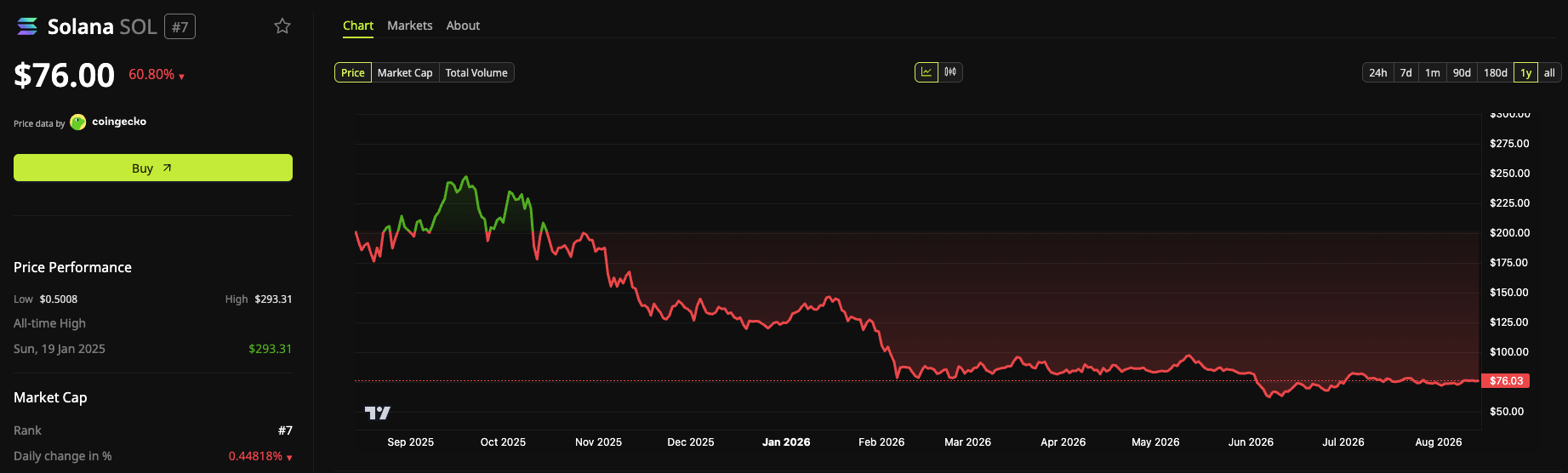
Solana remains the weakest performer of the three over a longer horizon. It is down roughly 36.69% year to date and 60.80% over the past year. That gap between short-term momentum and long-term losses reflects Core3’s design.
The model favors recent relative strength over trailing performance. That approach lets it raise exposure to the asset down the most for the year.

Bitcoin trades near $63,513, based on current pricing. Its 30-day volatility reading of 26.82% is the lowest of the three assets, a factor that usually favors a heavier Bitcoin weighting under a risk-adjusted model. GSR moved the opposite direction this week. The firm favored the asset with fresher upside momentum over the one with the calmer chart.
Solana trades near $76 on the Solana Markets page. Its 60-day volatility of 48.84% is the highest of the group, nearly nineteen points above Bitcoin’s 29.49%. That combination, the largest allocation paired with the highest volatility reading, makes Solana the swing factor in Core3’s near-term returns.
A Model That Trails Its Own Benchmark
The reweighting comes as Core3 trails a simple equal-weight approach to the same three assets. Core3 lost 70.28% over the past year, compared with a 63.44% loss for the equal-weight basket.
It is down 35.58% year to date versus 32.22% for the benchmark. GSR’s active tilts have added risk without adding return over that stretch. Whether the new Solana-heavy weighting closes that gap or widens it depends on whether this week’s momentum in SOL carries into the next rebalance.
The post Crypto Trading Model GSR Cuts Its Bitcoin Allocation to 17%, Bets Big on Solana appeared first on BeInCrypto.

Liquid cooled servers in an installation at the Global Switch Docklands data centre campus in London, UK, on Monday, June 16, 2025.
Bloomberg | Bloomberg | Getty Images
BEIJING — Yangtze Memory Technologies is rapidly gaining market share in a critical chip sector, according to Counterpoint Research.
The company, also known as YMTC, landed in third place by shipments globally in the second quarter, behind South Korea’s Samsung and SK hynix but beating out U.S. rival Micron and Japan’s Kioxia, Counterpoint data released Wednesday showed.
That’s when looking at the NAND memory segment, which contributes about one-fourth of Micron’s revenue. NAND chips retain data even when devices are powered off but are slower than DRAM memory chips, which operate more quickly — at a far higher cost, forming about three-fourths of Micron’s revenue.
YMTC reached third place with a 14% share, the report said. It narrowly beat Kioxia a year ago, but fell back behind in following months, Counterpoint Research Director MS Hwang said.
“YMTC is projected to pull further ahead in 2027 and 2028. From that perspective, YMTC achieving third place this quarter carries significant weight in the competitive landscape,” Hwang said.
He said a 15% market share is the minimum needed for a memory manufacturer to fund its own capital expenditures for future growth.
YMTC is preparing to go public in mainland China, following the blockbuster debut of DRAM-focused Chinese memory chip company CXMT last month.
CXMT held 7% of the DRAM market in the second quarter, in fourth place behind Micron, SK hynix and market leader Samsung, a separate Counterpoint report showed earlier this month.
Both DRAM and NAND memory chip markets have reached record sales, at nearly $100 billion and $46 billion, respectively, in the first quarter, according to Counterpoint.
Despite YMTC’s gains in shipments, the company still lagged behind Micron and Kioxia in terms of NAND chip revenue, the research firm said. It noted YMTC still sells more to consumer applications rather than data centers — a business expected to take half of all available NANDs by the end of 2026.
In order to ramp up NAND production, SK hynix is resuming investment at a facility in the Chinese coastal city of Dalian after a four-year pause, Korean media reported this week. SK hynix did not immediately respond to a CNBC request for comment.

Goliath Ventures and its CEO, Christopher Alexander Delgado, are facing action from two US financial regulators over the same alleged crypto Ponzi scheme.
The actions came two months after Delgado pleaded guilty to charges in the case.
Regulators Target Goliath
The Commodity Futures Trading Commission filed a complaint against the company and Delgado in the US District Court for the Middle District of Florida. The Securities and Exchange Commission filed separate charges on the same day.
The regulators allege that Goliath raised hundreds of millions of dollars from investors by promising to generate profits through crypto asset trading and liquidity pools. The CFTC said about 1,600 customers contributed at least $397 million, while the SEC put the amount raised at around $425 million from more than 1,300 investors.
According to the SEC, the company operated the scheme from at least January 2023 through January 2026 through an unregistered securities offering. Investors were told they could “partner” with Goliath to invest in crypto asset liquidity pools. They were promised monthly returns of 3% to 10% from fees paid by buyers and sellers trading crypto assets in those pools, in addition to the return of their principal.
The money, however, was not invested in the liquidity pools, the SEC claimed. Instead, funds from new and existing investors were allegedly used to pay promised returns to earlier investors. The CFTC also said customer funds were used to pay fictitious profits and support Delgado’s lifestyle.
The CEO took at least $51 million for personal use, including homes, luxury vehicles, a yacht, and travel, according to the filing. The company also hired sales agents to attract more investors and paid them commissions from investor funds. Account balances and investment performance figures were fabricated to make it appear that investors were earning profits and that their assets were invested in crypto pools, the SEC said.
Delgado Faces Permanent Bans
The defendants also issued false account statements and falsely guaranteed investment returns, according to the CFTC. By November 2025, Goliath could no longer bring in new money quickly enough to repay existing investors. It stopped monthly distributions, and the scheme collapsed.
The SEC charged Goliath and Delgado with violating several federal securities laws. Delgado has agreed to a bifurcated settlement, subject to court approval. He agreed to be permanently barred from violating the charged provisions, participating in certain securities transactions, and acting as or being associated with a broker or dealer.
The post $51M for Homes, Cars, and a Yacht: Regulators Target Goliath, CEO Delgado appeared first on CryptoPotato.


Futures positioning has rebuilt to levels last seen when dogecoin traded at three times today’s price, and more than three accounts are betting on a rebound for every one betting against.

Paris Orly Airport flights cancelled due to runway closure

New minister must change course on WA’s water security

Michael Burry’s Latest Warning Comes as AI Mega-Caps Quietly Run the Market


-

 Fashion5 days ago
Weekend Open Thread: Mattifying Sunscreen
-

 Fashion6 days ago
Frugal Friday’s Workwear Report: Cap-Sleeve Pointelle Crewneck Sweater
-

 News Videos5 days ago
Can Astrology Help Find Gold and Silver Trends? A Financial Astrology Guide
-

 Politics7 days ago
Reform UK And Greens Sink To Lowest Favourability Ratings To Date
-

 Tech5 days ago
Rinn Pharma & Biopharma to join NordicPharmaTrain network
-

 Business4 days ago
How to Start a Cleaning Business: A Step-by-Step Guide
-

 Business4 days ago
Datadog: Best Of Breed For Multiple Reasons
-

 Business4 days ago
BDC Weekly Review: Private BDC Q2 Numbers Are Strong
-
 NewsBeat1 day ago
Communication cards help banking customers access services or report scams
-

 Business6 days ago
Brightwater secures funding for WA-first dementia projects
-

 Tech6 days ago
Price Hikes May Be Coming for PC Motherboards Next
-
 Crypto World7 days ago
Galaxy Digital Stock Slides 14% as Crypto Prices Hit Earnings
-
 Business2 days ago
Oil Price Today (August 11): Crude oil rises to $88 after Trump’s compensation demand dents Hormuz opening. Here’s why
-

 Business7 days ago
SpaceX Shares Plunge 13.6% After First Public Earnings as AI Capex Surge and Lockup Spark Selloff
-

 Tech7 days ago
How to Use Your Phone as a Webcam on PC and Mac (2026)
-

 Entertainment7 days ago
This $29 One-Piece Looks Just Like Ashley Graham’s Swimsuit
-

 Tech7 days ago
Hackers just broke into America’s tap water. How scared should you be?
-

 Fashion5 days ago
Weekly News Update, 8.6.26 – Corporette.com
-

 Business6 days ago
Aussie shares lose steam to close record-breaking week
-

 Fashion7 days ago
Thursday’s Workwear Report: The Everyday Linen Shirt
You must be logged in to post a comment Login