
Politics
Why is Burnham blaming bookies for the death of the high street?

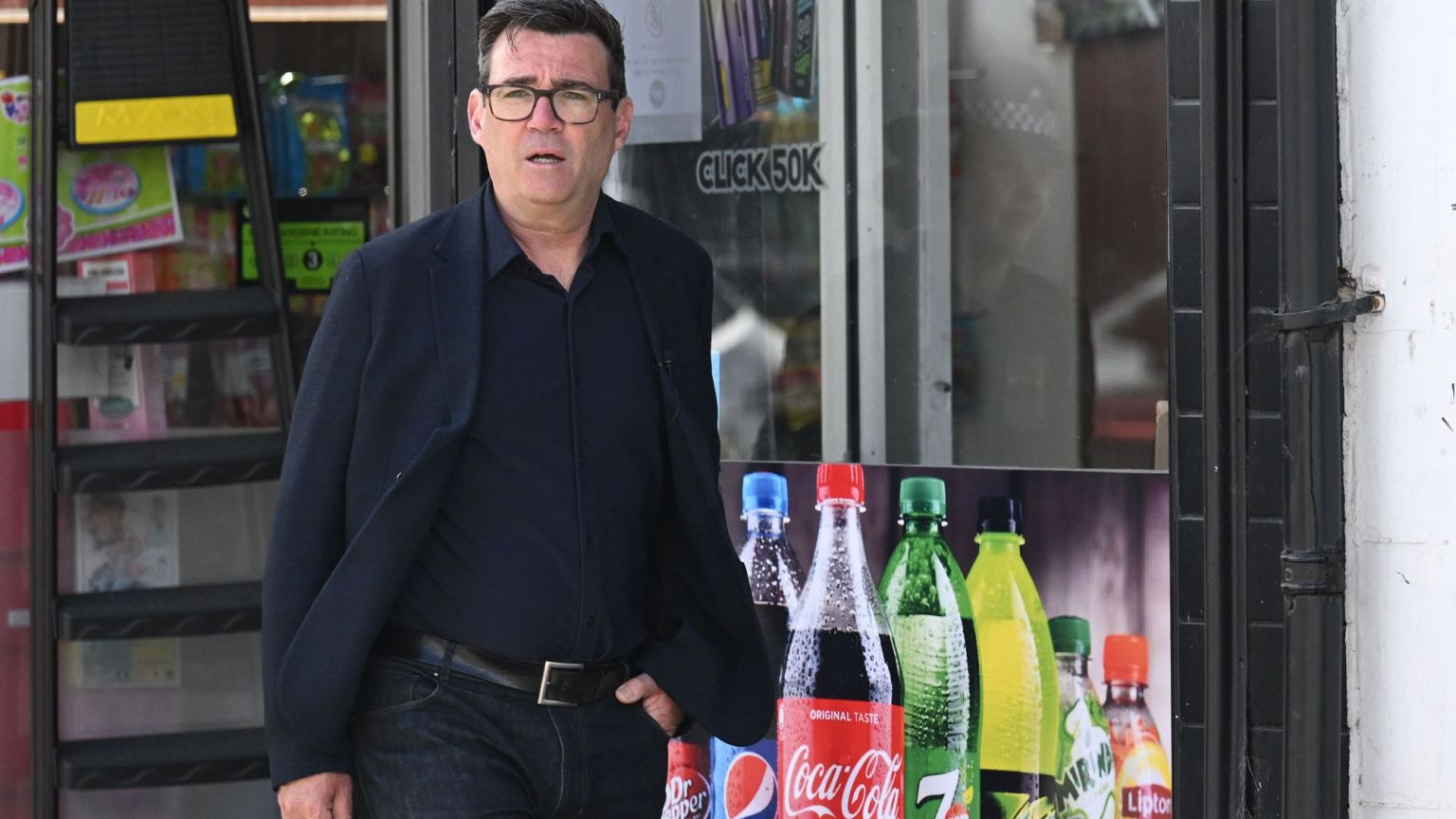
Bad news for all the people queuing up to open a betting shop in Burnham’s Britain. The prime minister is going to give local authorities more power to stop bookies and amusement arcades opening by abolishing ‘aim to permit’, an element of the 2005 Gambling Act that prevents local politicians from stopping a gambling company from operating just because they happen to disapprove of gambling.
In one sense, ‘aim to permit’ has never been more necessary. There are far too many puritanical, low-grade politicians who want to ban everything and they need reining in. In another sense, ‘aim to permit’ has never been less relevant because taxes and regulation have already stubbed out any prospect of growth in the sector. Dawn Butler MP says: ‘We have to stop this ridiculous proliferation of betting shops and adult gaming centres.’ But as you can see from the graphs below (using data from the Gambling Commission), the idea that there has been a ‘proliferation’ of either is laughable.
The number of bookies has been in free-fall since fixed-odds betting terminals were effectively banned in 2019. Hundreds more are closing their doors this year, thanks to the sharp hike in gambling taxes announced by Rachel Reeves last year. In both cases, the anti-gambling campaigners who lobbied for these changes insisted that there would not be significant shop closures as a result.
As for Adult Gaming Centres (aka amusement arcades), there are still fewer of them than before the pandemic, when their numbers were at a record low.
The idea that there has been unchecked growth in the betting sector is preposterous. This quote in the FT is one for the scrapbooks:
‘The Betting and Gaming Council rejected the suggestion that betting shops were spreading unchecked as “simply wrong” and criticised the government for lumping together “highly regulated, licensed” betting shops with rogue or criminal businesses.
‘Betting shop numbers have fallen by over a third since 2019. Around 3,000 shops have closed and over 15,000 jobs have already been lost.’
If the proliferation of bricks-and-mortar gambling premises is a figment of the political class’s imagination, the proliferation of vape shops and barbers is very real and there is no doubt that some of them are being used for money-laundering and other forms of poor behaviour.
As the BBC says:
‘BBC News has exposed organised crime on high streets across the country, revealing shops selling illegal cigarettes and vapes, selling cannabis and cocaine, enabling illegal working and suspected money-laundering.’
This is all highly illegal and yet it feels like the BBC has been doing more to catch the criminals than the authorities have. The inability of the British state to enforce the law even when law-breaking is going on in plain sight is one of the more obvious symptoms of this country’s decline.
Burnham’s answer is to create more laws. He wants local authorities to be able to give the go-ahead before a new hairdressers or vape shop is allowed to open. The details have not been published, but it is going to be difficult to define a vape shop (as opposed to a shop that sells vapes), and if the policy successfully prevents criminal gangs from using barbers as a front, it is easy to imagine them switching to coffee shops, bars and other retailers instead.
Yes, the authorities should have more power and resources to shut down illegal operators, but Keir Starmer gave them that in June. A government that was serious about tackling ‘dodgy vape shops’ would not be slapping a £3.60 tax on a £3 bottle of vape juice, as it will be doing in October. A government that was serious about helping legitimate retailers wouldn’t be planning to introduce a display ban and plain packaging for e-cigarettes, nor would it be planning a double tax rise on tobacco.
There is a more general point here. The high street as you knew it is gone forever. Burnham says that ‘for many people, the high streets they grew up with have become unrecognisable’ and that ‘the rise of vape shops, betting shops and rogue operators have replaced the shops, services, and community spaces that people are crying out for’.
This confuses cause with effect. Internet shopping (and, before that, supermarket shopping) has killed off many shops and they are not coming back. On the contrary, the closures will continue until the only businesses on the high street will be for things that people have to do in person, eg having a pint and having a haircut. A few pharmacies will survive, along with convenience stores and the odd butcher and grocer. Secondhand shops and antique shops could keep going, but the days of the high street being full of banks and shops selling books, electronics, newspapers and games are over.
As we have seen, there has been no ‘rise of betting shops’. If there is a perception that there are more betting shops, it is because high street rents collapsed and bookies came out of the side streets and became more visible to middle-class observers. Charity shops proliferated for the same reason (and because they get a huge discount on business rates). Why did rents fall? Because demand fell. There aren’t enough businesses to fill the high street any more. You can blame taxation and regulation – and they certainly aren’t helping – but social change is the underlying reason. The British public had the choice between using it and losing it, and they chose to lose it.
The idea that the high street can be revived by killing off the few remaining businesses that are able to operate on it is just silly. These companies are not taking up shopfronts that WH Smith (now TG Jones!) is desperate to use. They are on the high street because WH Smith has gone.
The high street of the future will have fewer shops and those shops will be devoted to services – pubs, coffee shops, key-cutters, ice cream parlours, repair shops, cafés and, yes, barbers. The rest should be turned into residential housing.
This is an edited version of an article that appeared on The Snowdon Substack.
Christopher Snowdon is director of lifestyle economics at the Institute of Economic Affairs and the co-host of Last Orders, spiked’s nanny-state podcast.

Politics
Anna Firth: Andy Burnham cannot preach devolution while centralising our police forces without public consent
Anna Firth is the former MP for Southend West and Leigh
The fundamental principle on which British policing is built is that of public consent.
Yet the Home Secretary is proposing the most radical shake-up of policing in a generation without first securing the consent of the people whose police forces she proposes to reorganise.
Central to the Government’s reforms is the merging of 43 county police forces into roughly 10 regional, “mega” forces alongside a new National Police Force.
There is no manifesto mandate for abolishing local police forces. Labour’s 2024 manifesto promised more neighbourhood policing, a named officer for every community – the very definition of localism – alongside stronger standards and greater collaboration in areas such as procurement, IT and shared services.
Nobody voting Labour in Essex in 2024 was told that they were voting for the disappearance of Essex Police and its replacement by a vast Eastern police force stretching from Shoeburyness to Norwich and from Lowestoft to Tring. Yet that is the scale of the change now being planned.
Bigger does not mean better when it comes to policing. The Metropolitan Police Force is the biggest police force in the Country, yet fails to solve 95 per cent of reported crimes and has serious problems with culture, leadership and accountability.
Astonishingly, however, there has been no nationwide public consultation regarding these reforms, nor is any planned.
That matters – not least because previous governments contemplating fundamental policing reform recognised the importance of consulting the public.
When Tony Blair’s Labour Government attempted to similarly merge police forces in 2005/06, Ministers explicitly declared that “consultation is a vital part of the process” and, once the new vast police forces were proposed, affected police authorities, forces and local authorities were given statutory periods in which to object. Not surprisingly, the proposals swiftly collapsed amid huge public opposition and concerns about cost and practicality.
Five years later, when David Cameron’s coalition government replaced police authorities with directly elected Police and Crime Commissioners, the Government also recognised the importance of public consultation. Its 2010 Policing in the 21st Century consultation was open to the public and a formal Government response was published before legislation proceeded.
Contrast that with this Labour government. No manifesto mandate, no public consultation on the Government’s white paper and, instead, a so-called “independent” review by Lord Bernard Hogan-Howe, a man whose views on police mergers are well known.
Yet where the public has been asked, there is precious little evidence of public consent.
Last week I held a packed public meeting in Leigh-on-Sea with Essex Police, Fire and Crime Commissioner, Roger Hirst.
The verdict was overwhelming. Resident after resident spoke about the importance of local knowledge, local leadership and local accountability.
One resident summed up the fundamental flaw in the proposals perfectly: “You don’t make poor-performing forces better by making good-performing ones worse. It will level them down rather than level them up.”
Another ex-senior Southend police officer asked the obvious question:
“If we’ve got a new Prime Minister who wants to decentralise government, why are we looking to centralise the police service?”
Why indeed? The evidence from across Essex tells the same story. A survey conducted by the Essex Police, Fire and Crime Commissioner received around 1,700 responses. Nearly 70 per cent opposed the creation of regional police forces, while 85 per cent said local, visible policing was important.
Police and Crime Commissioners up and down the Country have conducted similar surveys and all have shown overwhelming opposition to the Government’s plans.
There is, of course, a case for reforming parts of British policing. Some forces face serious difficulties. Modern crime crosses county and national borders. Counter-terrorism, serious organised crime and international criminal networks require national capabilities.
There is also a perfectly sensible Conservative case for forces sharing procurement, technology, specialist services and back-office functions where that saves taxpayers’ money.
But collaboration is not the same thing as centralisation and the existence of struggling forces does not justify abolishing successful ones.
Essex serves a population of around two million and is delivering strong results. Indeed, Hirst told our meeting that Essex’s crime solve rate is around twice the national average and more than three times that of London. He also highlighted significant reductions in knife crime and domestic abuse achieved through locally designed partnerships and interventions. Why jeopardise that?
But what problem would abolishing Essex Police actually solve?
Another resident spoke passionately about the importance of officers understanding the communities they police: “Keeping it local means we have people who understand the residents, who understand the area and the needs of that area.”
That local knowledge is not some sentimental attachment to county boundaries. It has practical consequences.
Southend is not Cambridge. Leigh-on-Sea is not Norwich. The challenges of policing our seafront on a hot summer bank holiday weekend are different from those facing rural Norfolk or central Peterborough.
Our residents rightly expect the people making policing decisions to understand those differences. As another resident observed: “It’s that small local knowledge that gets things done, and gets it done quickly.”
There is also the question of cost.
Hirst told the meeting that £500 million has been allocated over the current spending review period to policing reform, with estimates of the eventual cost of restructuring potentially reaching around £1.2–£1.3 billion, all coming out of existing budgets.
At a time when every police force is under financial pressure, taxpayers are entitled to ask a very simple question: how many police officers could that money put on our streets?
We have seen it before across the public sector: expensive consultants, new logos, new management structures, new headquarters and years of disruption – while the public wonders why the service they actually receive has not improved.
Where an individual police force is demonstrably too small or failing, there should be mechanisms allowing it to collaborate or voluntarily merge with a larger, more successful force.
But that is very different from imposing a one-size-fits-all restructuring on successful forces.
There was one other key question raised which ministers must answer.
“When are we going to have a full national consultation on it?”
Before ministers embark on one of the biggest restructurings of policing in generations, the public deserve to know precisely what problem is being solved, what evidence supports the proposed solution, how much it will cost and what safeguards will preserve genuinely local policing.
In Essex, residents have already given their answer.
They want visible police officers who know their communities. They want decisions taken locally. They want money spent fighting crime rather than rearranging bureaucracy.
And they do not want a successful Essex Police force levelled down in the pursuit of Whitehall centralisation.
Isabella Link is a Politics, Philosophy and Law undergraduate at the University of Warwick
Young women don’t vote Right anymore.
That’s a fact, and one that’s becoming increasingly difficult to deny. Among women aged 18 to 24, vote share for the Conservatives has collapsed into single figures, Reform UK remains marginal, and the Green Party have managed to capture by far the largest share. In comparison, Reform, and to a lesser extent, the Conservatives still capture notably more support from young male voters. So why exactly is it that right-wing parties cannot replicate this success with younger women, and how can this electorally damning issue be rectified?
Oddly enough, the answer to this question seems not to be found in policy, but instead in how party allegiance is socially perceived. To openly support the Greens as a young woman is seen as socially acceptable. As if one is choosing the moral and ethical stance.
But being an openly right-wing woman? That’s not so fashionable. Conforming to acceptable feminine politics means constantly reaffirming your support for Palestine, for transgender rights, for illegal immigrants to have their crimes overlooked, no matter what you truly believe. Express an opinion outside of the boundaries of acceptable, and you’ll get cancelled, alienated and attacked.
According to the supposedly progressive crowd, to be a woman with conservative beliefs is a form of betrayal to feminism, and to vote for a right-wing party is an act of misogynistic oppression. It’s all rather ironic, considering the Left can’t even define what a woman is.
Thus, women aren’t flocking to the Greens because they have brilliant policies, but instead because constant social pressure forces them to adopt such a position to remain politically virtuous. The Conservatives and Reform are portrayed as aggressors, poised to remove the rights and liberty of women, a narrative spread by influencers hoping to gain popularity with their righteous messaging.
This narrative, of course, is false. Over the last decade, it has been the Conservative Party that has championed campaigns to protect women and girls, creating legal protections against domestic abuse, sexual harassment and voyeuristic offences, whilst fighting for the right to single-sex spaces.
In comparison, the Greens want to legalise purchase and possession of GHB, commonly known as the date rape drug, for “recreational purposes.” Considering that the only “recreational” users of this drug are those who want to exploit vulnerable women, suddenly it seems that the Greens aren’t so feminist after all. In fact, the coercive undertones of their online propaganda subtly removes autonomy from young women to support whatever party they desire to, for fear of feminine excommunication.
Suppose the question then is why aren’t more young women aware that the Conservatives have a wealth of policies designed to better the lives of young women? Simply, it’s because the Conservatives haven’t managed to utilise the full potential of social media. Unfortunately, Reform have figured out how to exploit TikTok, Instagram and X to gain support, not just through the accounts of MPs and party HQ, but through an army of young Reform-aligned influencers, portraying Reform as the “cool” version of conservatism. These influencers range from young councillors equipped with just a phone and controversial views, to charismatic young men and glamorous, media-savvy women, prepped to convince the youth that Reform is simply the place to be.
In comparison, the Conservatives don’t have such a presence, which is where the cracks begin to appear. Younger voters aren’t willing to trawl through manifesto after manifesto, looking for a party which aligns the closest with their values, and so the few young women who are willing to break free of the “progressive” bloc are presented constantly online with information about Reform, and not the Conservatives.
In a society in which aesthetics continuously matter more, the visual appeal of a party is imperative to attracting younger voters, and that’s simply something that the Conservatives haven’t managed to perfect yet. Take for instance, the young women that Reform places at the forefront of their advertisement, such as Councillors Sienna Churcher, Charlotte Hill and Annie O’Neill. They’re well-spoken, photogenic and alter the narrative that Reform UK is purely a party full of older men. Although similar talent certainly exists in the Conservative party, they are far less visible online, thus fail to reach the same audience.
However, all hope isn’t lost, for a solution to this issue is clear and easily implemented. The Conservatives cannot rely purely on well-written policy to increase their share of young female votes, instead they must work to improve both culture and communication to adapt. Party-aligned influencers must be encouraged and supported, to challenge openly the social stigma associated with being a conservative woman, and demonstrate that Conservative policy holds the answers to fixing issues that truly matter to young women, such as safety, employment prospects, and protecting single-sex spaces.
If the Conservative Party wants to win back young female voters, it must demonstrate visibly that the party is willing to speak out for young women and make conservatism fashionable again. Kemi Badenoch’s leadership and transformation of the party has already done half of the work, and now all that is left to do is to exploit these vital avenues that prevent the Conservatives from reaching the audience they desperately need.
Social media is where political activity happens amongst the youth, and to ignore its power would be a fatal mistake.
Sir John, Lord Redwood is a former MP for Wokingham and a former Secretary of State for Wales.
Polling says that rail and water nationalisation are popular. Labour is rediscovering its inner drive for state control, throwing away the Blair years when free enterprise was largely accepted.
However, Ministers and their advisers should pause and think through the meaning of the recent mass cancellations and delays of train services rippling out from Manchester. They were caused by the failings of long nationalised Network Rail who were unable to provide a working back up system for a very short 90 second interruption to mains electricity.
Signals went to red and the railway came to an embarrassing, nationalised halt. It was particularly symbolic that the epicentre of the crisis was Manchester, the origin of Labour’s revived old thinking about the joys of public control.
There are three main problems with nationalisation. The first is that it usually creates or sustains a monopoly, meaning none of us have choice or can escape when they behave badly or fail to deliver. The second is that we, the taxpayers, stand behind them financially, so they can load onto us any amount of losses, waste and poorly guided capital spending and we are left to pay the bill.
The third is that the government are to blame for everything that goes wrong. However much they may seek to distance themselves from the bad decisions of senior managers, the public will hold Ministers accountable. Ministers, after all, could change anything to make it work better.
Free enterprise usually avoids all three of these difficulties.
It is true that there exist bad companies. There can be bad service, for instance a company can let you down or charge you too much. It is also true you do not have to put up with it. As long as there is competition, you can go elsewhere to get it fixed. Bad performance leads quickly to bad reputation. Failure to correct it leads to bankruptcy as the customers walk away. The losses incurred by bad businesses are paid by their shareholders and bankers – not by taxpayers. Government is not to blame and can come in from the outside to demand improvement, or to close them down, and to prosecute any law breakers.
The UK has avoided nationalising the supply of food and clothes. There is no bread shortage. Hot cross buns are not put on ration when many more people want them at Easter. There is no UK clothes shortage, no waiting list for popular trainers. There is a huge range of choices in food and clothing stores, with a wide range of prices, discounts, price promotions, loyalty cards and credit terms.
Contrast that with what happens where the state runs things. I am not proposing ending free healthcare under the NHS, but the current nationalised model of delivery means very long waiting lists and waiting times for care, a shortage of GP appointments and hospital beds. It has also meant a lot of worrying deaths, particularly of babies. There needs to be an improved model to deliver great free care.
Nationalised roads means regular congestion through inadequate provision. Some Councils are proud of their incompetence, and put up permanent signs warning you to expect delays. Imagine a supermarket which had, at the entrance, a permanent warning that you should expect them to be out of bread most of the time. The Highways Agency and Councils regularly shut main roads for work to be done when people wish to use them. They do not shut down the main runway at Heathrow for maintenance when fee paying planes wish to land. The road authorities allow utility companies to dig up the highways to put in pipes and wires and to mend them instead of requiring such works to be in submerged channels with access points for repairs and replacement, preferably not under main highways.
Nationalised Network Rail has been the main cause of train delays and cancellations for most of its years of existence. Nationalised HS2, under state control and with access to unbelievable amounts of taxpayer money, has failed to deliver a new railway line to budget and on time, with a likely overrun of more than a decade before the first trains can use it.
The nationalised Post Office got away with taking money off of its Postmasters for years based on a failed computer system which was stealing from these key staff. It put many of them in jail on false charges. It still lacks a business model which could deliver a profitable business, using the network of counters it still owns or rents.
The state prisons service fails to stop drug use in prisons, puts up with a high repeat offending rate from prisoners and closes down enough older prisons to ensure the many new prisons built on the instruction of the last government did not add to capacity.
It is true the water industry has failed to put in enough new reservoirs to handle the extra demand from a fast increasing population, and has failed to renew and expand enough pipes and treatment works to avoid dumping sewage in the rivers. The whole country is united in condemning this. The problems arise because these are heavily regulated monopolies, meaning you cannot change suppliers to enforce better conduct or get lower prices.One of the main influences preventing the additional provision needed was a Regulator controlling prices and saying No to some needed investment.
It does not mean a state owned monopoly would be better. Indeed, we know it was worse when we had one in the 1970s and 1980s. It did not even tell us how much sewage it was dumping in rivers and around our coast at sea. When the government started measuring the outfall we were called the dirty man of Europe for sewage defiled beaches. The Camelford water poisoning also occurred in the dying days of the nationalised industry.
Nationalising water would be an expensive way to make things even worse. The one thing privatisation as monopolies did achieve was to take all the large spending on better facilities away from the taxpayer and the national accounts. Given the tightness of current public finances, there is no room for the payments to shareholders to take over these businesses, nor for the large and increased expenses of putting in new reservoirs and pipes.
I wanted water privatisation to include competition to keep them honest and drive lower prices and better technology. That could still be done. I was told as we only have one pipe into the house there could not be competition. Most of us only have one gas pipe and one broadband cable into the house, but there is plenty of competition in those markets. Who is to say if one pipe only is best, when maybe there could be a pipe for drinking water to high standards, and another pipe for toilet flushing and garden water to a lower standard, or collected off the roof?
The government will run out of money before it can buy up all the water and energy companies it lusts after. Where it does succeed in gaining control, as it is doing with the railways, it will find it is not easy to get any improvement. On past form, it is more likely that it will end up making the inherited problems worse. Meanwhile, taxpayers will be asked to pay yet more money as they spray cash at badly run state concerns in the hope something will get better. HS2 shows that does not work.
If Labour is to get its nationalisation to achieve anything worthwhile it needs to train its Ministers to offer business leadership. The sad lack of progress at British Steel shows that the Ministerial blunder in not agreeing the take over with Jingye first might prove costly as the Chinese demand £1bn of compensation. It also shows that changing owners does not suddenly make an old works young, or create steel demand that did not exist before.
It does not suddenly bring costs down or allow charging much higher prices. The losses simply get worse and the poor old taxpayer has to pay all the bills. For how long will they manage to preserve the jobs? Government should not overclaim for what it can achieve when there is no-one else left to blame.
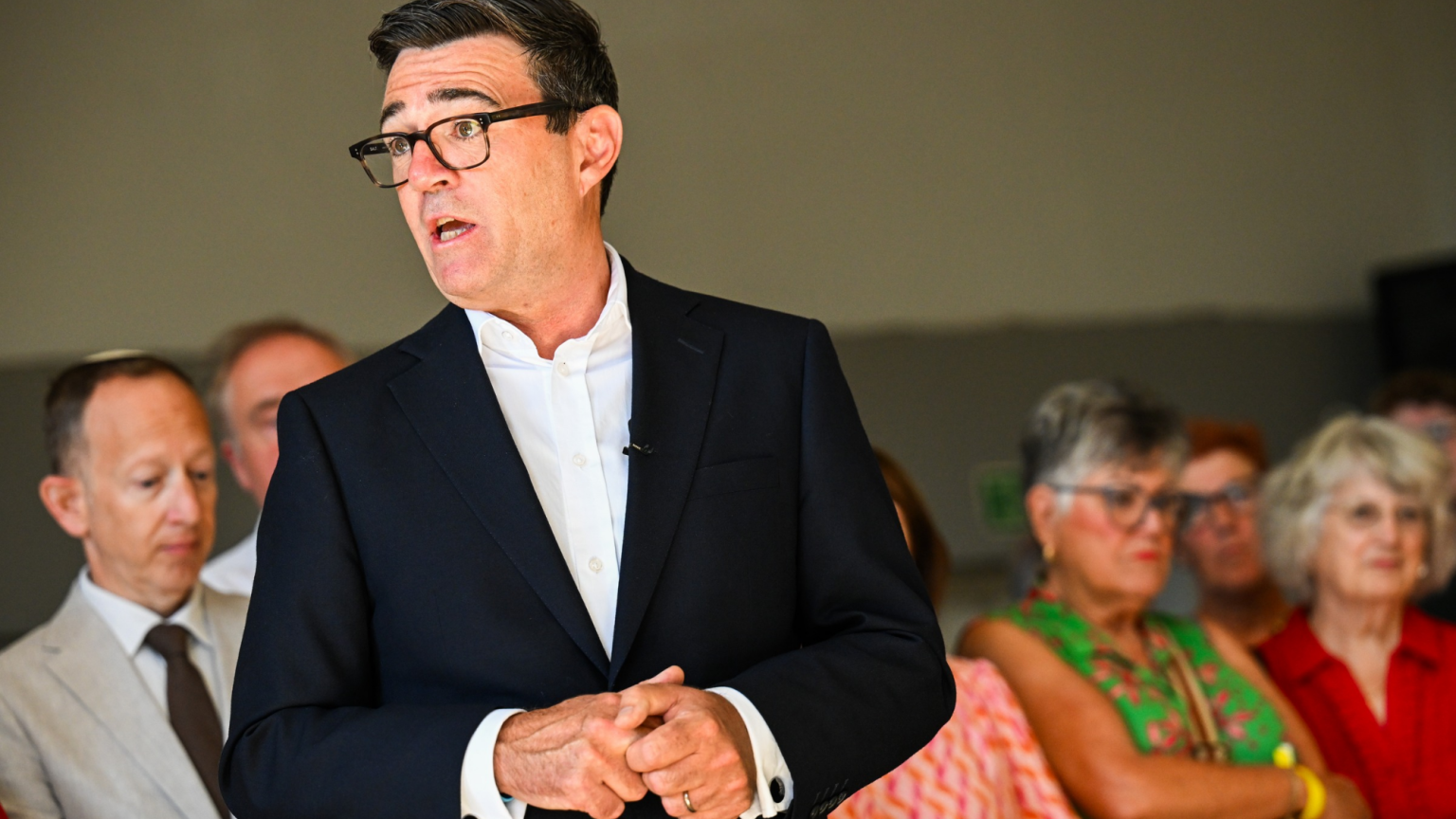
Andy Burnham’s ‘listening tour’ has got off to a flying start, with some comments about asylum that show just how deaf he is to the public’s fury over illegal migration.
Speaking to GB News, the prime minister said ‘we cannot have a situation where it’s only the poorest communities in the country that receive all of the dispersal of refugees and asylum seekers’, adding that ‘all parts of the country’ need to ‘play their part’.
He’s right on one score. Illegal migration – or asylum, as we’re apparently still compelled to call it – is a class issue. Some of our most neglected towns and cities have borne the brunt of the small-boats crisis, purely because the accommodation there is cheaper.
The injustice is stark. A Guardian analysis in 2021 found that almost one in four asylum seekers supported by the government were housed in just 10 local authorities, nine of which were among the most deprived in the UK.
Burnham knows this all too well. In 2018, as mayor of Greater Manchester, he threatened to block any more asylum seekers being housed in his patch, citing the ‘disproportionate’ burden on the area. Indeed, the north-west of England has more Home Office-supported migrants than almost any other region of the UK.
This has become a recipe not only for anger, but also for unrest. An awful pattern keeps on repeating itself. A community, already on its uppers, lumbered with migrant hotels or HMOs, goes up in flames following a crime committed by one of its newly arrived residents.
The post-Southport riots were like a heatmap of Home Office-imposed asylum accommodation. According to a private cabinet briefing, ‘15 out of the 20 primary disorder hotspots’ during those grim days in summer 2024 ‘are in the top 20 per cent of local authorities with the highest numbers of supported asylum seekers’.
But the answer is not bussing more Sudanese to Sevenoaks, or more Afghans to Alderley Edge. If anything, the chances of ending up in one of Britain’s more premier postcodes could become yet another one of those ‘pull factors’, making a £2,000 ‘mega-dinghy’ ticket look like even more of a sound investment.
The primary issue with illegal migration is clearly not the uneven distribution of illegal migrants. But rather than leave the ECHR, rip up the Refugee Convention and finally detain and deport those who violate our borders, Labour appears resigned to shifting the problem around.
There is a curious literal-mindedness to how the government is responding to public outrage over asylum. Protests outside of migrant hotels? Let’s move the migrants into HMOs, then! Oh, you don’t like the HMOs, either? Let’s stick them on some old military bases instead! It’s almost like they think we’re mugs.
If Burnham reckons any of this is going to placate the populace, he’s in for a shock. Indeed, the latest place to erupt over the asylum issue is well-to-do Piddington, a village in Oxfordshire, which is threatening to declare independence over plans to stick 1,250 male migrants in the nearby Bicester Garrison – a number almost four times larger than Piddington’s tiny population.
The British people are not heartless, migrant-bashing bastards. They can be incredibly generous to refugees when there is a pressing need, a sense of historical or moral obligation, and precious few concerns around crime or cultural compatibility. Which is why hundreds of thousands of Ukrainians and Hongkongers have settled here in recent years without anyone raising an eyebrow.
But they’re also not idiots. They know that allowing anyone to claim asylum, provided they can pay a people smuggler enough to ferry them across the Channel, is illegal migration by another name – not least given these people aren’t actually fleeing war, they’re fleeing France.
They also know that opening the door to men, and they are almost all men, about whom we know nothing, often from cultures with frankly medieval attitudes towards women, is unlikely to end well. The now daily stories about horrific sex attacks committed by illegal migrants, have revealed, once again, the wisdom of the masses and the wilful blindness of our virtue-signalling elites.
No one voted for mass and illegal migration. Voters don’t want the effects of it shared out more equitably across the income scale. They just want it to stop. One day they might get a government that is actually willing to listen.
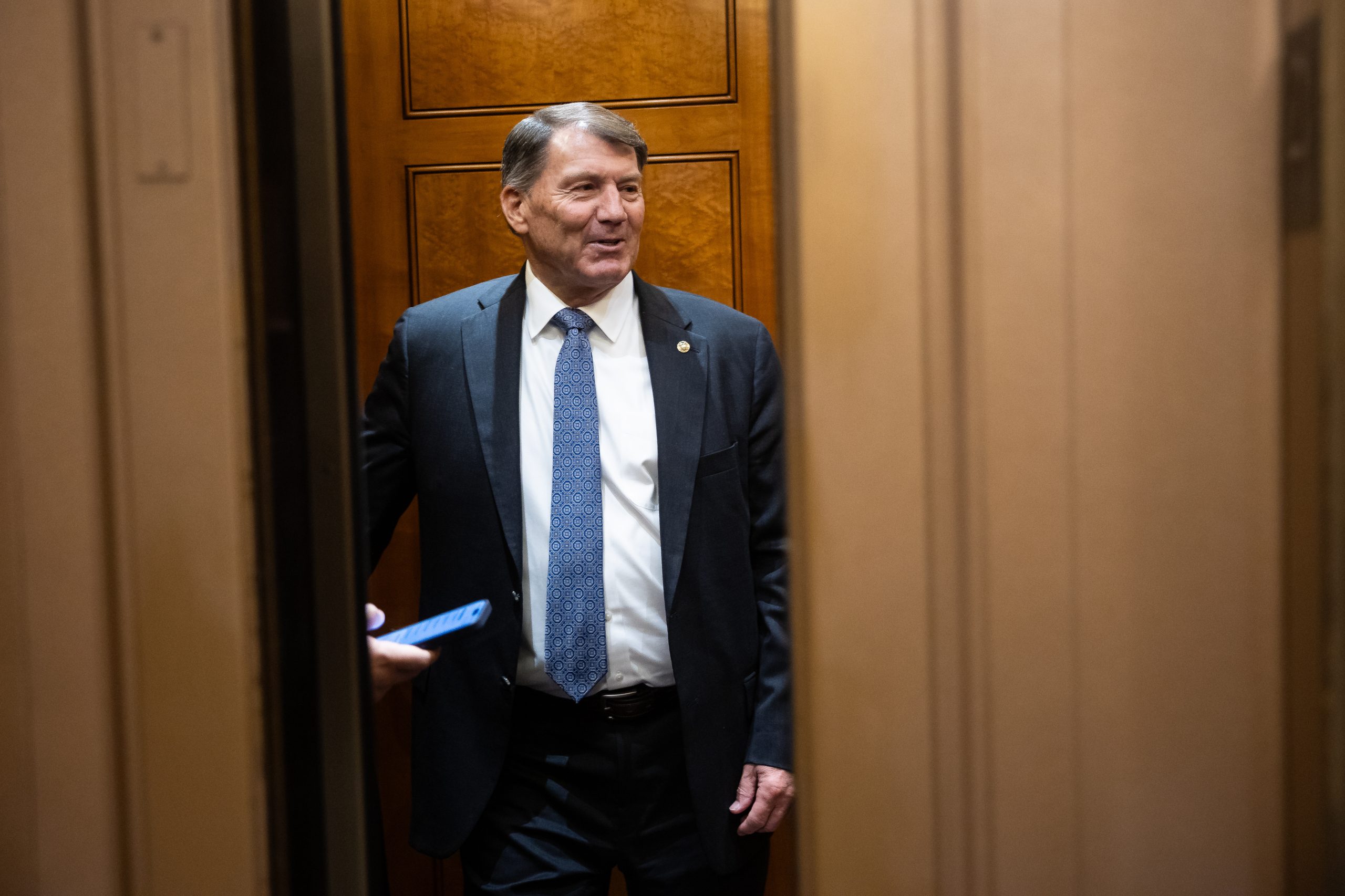

South Dakota Democratic Senate nominee Julian Beaudion dropped out of the race Tuesday, a move that comes following heightened pressure from within the party to clear the way for a stronger independent candidate, according to paperwork filed with the South Dakota Secretary of State’s office.
Beaudion’s decision comes on the same day as the deadline to withdraw, and just days after he told POLITICO he was not going to leave the race. Now, independent Brian Bengs will face a one-on-one battle with Republican Sen. Mike Rounds in November.
In a statement, Beaudion likened his decision to the failed Apollo 13 mission to the moon.
“It is with a tremendous amount of gratitude to everyone who has supported our campaign mission and a great amount of sorrow, that I say, ‘Houston, we have a problem,’” he wrote.
Beaudion is the third Democrat in a deep-red Senate race who has left in order to give independents — who have polled better and raised more money — a better shot at defeating Republicans. Already, Democrats in Idaho and Nebraska have dropped out and endorsed independents.
But Montana Democrat Alani Bankhead has steadfastly insisted she will not suspend her campaign for the better-funded independent Seth Bodnar in what otherwise could be the best shot for an independent candidate to knock off a red-state Republican this fall.
Bengs, a former Democrat who was crushed by Majority Leader John Thune when he ran for Senate in 2022, has touted internal polling showing a competitive race with Rounds — but only if Beaudion exited.

 lead image
Alarm bells are now ringing loudly over new prime minister Andy Burnham’s lack of any detailed vision for Britain. Yet amid the vague promises of ending the politics of division, and the usual platitudes that Burnham has somehow managed to rebrand as ‘doing politics differently’, he has offered one relatively clear new proposal. Namely, that the UK would have a second No10 in Manchester, and Whitehall’s power would be decentralised and dispersed across the regions. It is, in short, a vision of a devolved and federalised English state.
This is a peculiar prescription for the nation’s ills. No one has asked for such a radical constitutional shake-up. Nearly 30 years of national devolution in the UK have achieved little beyond emboldening regional nationalists who loathe England and Westminster intensely. And beyond Andy Burnham himself, few see local government as benevolent, and certainly don’t want to give it more power.
Indeed, local government is renowned among the British public for its inefficiency, unaccountability and pettiness. I speak daily to hundreds of members of the public in my job in broadcast media, and people certainly get vexed by, say, the senseless handing over of the Chagos Islands, or the appointment of Peter Mandelson as US ambassador. But it’s the issues that materially affect people’s day-to-day lives that really get people angry: infrequent bin collections, overzealous parking restrictions sold off to detestable third-party enforcers, 20mph zones, ULEZ, low-traffic neighbourhoods (LTNs) and being fined for pouring coffee down a drain. And yet it’s the bodies responsible for these policies that are to be given more control over our lives under Andy Burnham’s Labour.
I suspect that there are very few members of the general public who want to increase local-government power. Once people realise that Burnham’s devolution plans entail exactly that, they will soon run out of patience with a PM who promises to do things oh-so differently.
Burnham’s plans for English devolution will also further fragment the nation, one already struggling with regional disparities in industry, population, wealth and resources. The reasons why certain towns and areas are poorer than others are complicated, multifaceted and historic. It’s not clear how Burnham’s devolution vision will change this. What sets back Middlesbrough, Blackpool and Redcar now will not change when councils or regional mayors have the ability to tax local residents further.
Furthermore, the consultation process for councils to inform and ask the public what they think of the proposals is desperately wanting. Councils are not required to advertise the consultations, nor are they legally bound to follow the public’s findings. A broken local-media landscape means there will be even less accountability.
Britain is in trouble. The economy is seemingly endlessly stagnant, and sources of common national identity are increasingly thin on the ground. Devolution for Scotland and Wales, and the endless erosion of England’s institutions, mean there is even less to unite the regions today. Burnham’s ultra-regionalised national project will surely only make that situation worse.
The risks of these devolution plans are myriad. If MPs want to get a sense of them, they could do worse than look at the fate of the Federal People’s Republic of Yugoslavia over three decades ago. While Britain and England are very different historically, culturally and politically to Yugoslavia, the break-up of the latter during the 1990s should still serve as a partial warning.
In the mid-to-late 20th century, Yugoslavia faced some of the same problems that England faces today. As the Yugoslav economy struggled during the 1960s, Yugoslavia’s leader, Marshal Tito, set up a centrally planned federal wealth fund which slowly ate the country alive from the inside. Wealthier regions paid extra in taxes to give dispensation to the poorer regions. Over time, this simply increased the gap between the rich and poor. Moreover, the wealthier regions of Slovenia and Croatia began to resent the poorer eastern and southern provinces, where abject poverty persisted. By 1980, Tito was dead, and with him a belief in Yugoslavia, and its regional and federalised structure. He left a nation whose constituent parts were increasingly at odds with each other. The writing was on the wall, long before the bloody break-up of the 1990s.
And so a nation vanished, amid economic decline and a rapid deindustrialisation that the state could no longer support. The People’s Republic failed its people and gave way to a vicious ethno-nationalism.
Burnham, of course, is no Marshal Tito, and Britain and England are not Yugoslavia. But in an economically challenged nation, riven with regional disparities and tensions, Burnham’s plan for devolution is only likely to power those forces that would tear us apart.

There is one line in the Home Office fact sheet on this year’s figures for Prevent – the UK’s counter-radicalisation referral scheme – that is more informative than the rest of the report combined: referrals for ‘fascination with extreme violence or mass-casualty attacks’ peaked at 286 between April and June, before falling to 183 over the summer. The Home Office’s explanation? The schools broke up.
Nothing about the threat actually changed (unsurprisingly) with the fact that the sun comes out in July. All that happened is that children went home – and, with them, so did much of Prevent’s ability to see the threats in our midst.
I know this system from the inside. From 2015 to 2018, I worked as a Prevent practitioner in London and later as a counter-extremism coordinator. Prevent is often spoken about as if its figures provide an insight into extremist trends in the UK. That isn’t right, though: it’s a referral system that relies disproportionately on schools, as these are one of the few places where people encounter the state every day. In doing so, it misses the real Islamist threat the UK faces and paints a picture that the most radical people in our society are 11- to 15-year-olds.
Schools generated 34 per cent of Prevent referrals (3,496 in total) in the past year, more than any other source. Those aged 11 to 15 accounted for 36 per cent of all referrals and 37 per cent of cases taken on for deradicalisation through Channel, the government’s follow-up support programme for referred individuals.
So when the report says extreme right-wing concerns once again outnumber Islamist ones (just eight per cent of referrals were for Islamism), it reflects the machinery we’ve built to observe extremism, rather than the true picture of the country. Of course right-wing extremism is real and growing. Think of the neo-Nazi jailed last year for stabbing an asylum seeker or the attempts to burn down a Rotherham asylum hotel during the 2024 summer riots. But this is nowhere close to the majority of extremism cases. Indeed, MI5 says around three-quarters of its counter-terrorism caseload relates to Islamist terrorism. The government’s own counter-terrorism strategy, Contest, attributes 67 per cent of attacks since 2018 to Islamist terrorism, against around 22 per cent to the extreme right.
Schools miss a lot, and through fear or political sensitivity, avoid dealing with a lot more. Take the fact that, according to the latest figures, Islamist referrals peak among those aged 31 to 40. Incel referrals peak at 18 to 21. Left-wing referrals peak at 26 to 30. Extreme right-wing radicalisation, meanwhile, is picked up disproportionately among the young (and online) – where schools are, of course, most likely to encounter it.
Then there’s the issue of who gets referred. It isn’t exactly easy to refer a suspected Islamist, not least as Islamists are well versed in intimidating schools (as we’ve repeatedly seen in places like Birmingham). There is also a factor of white guilt: a white teacher may feel far more comfortable referring pupils for far-right sympathies than children from a minority-ethnic background for beliefs they claim are part of their faith.
Then there’s the fact that Islamist extremism is often concealed in the language of human rights or legitimate political activism, or in personal religiosity that people often feel should not be challenged, making it harder to recognise and harder for teachers to police. The average teacher is primed to notice far-right anti-migrant sentiment or white supremacism, but not to notice when Islam, an already unfamiliar faith, becomes politicised.
One thing the Prevent numbers miss completely, as there is no box for it, is anti-Semitism, which arguably should be measured in its own right. It is a hatred that unites Islamist, extreme right-wing and extreme left-wing ideologies, and may be easier for a teacher to spot than the ideology from which it stems. When anti-Semitism is at a record sustained high, and a Jewish person is more likely than any other minority to face violence for their faith, this is an unforgivable blind spot.
Some of the rising figures may also reflect better awareness of Prevent, rather than a rise in extremism as such. Referrals rose 39 per cent to 10,293, the highest on record. The proportion reaching a Channel panel went from 13 to 21 per cent, the proportion adopted for support went from 11 to 18 per cent against a long-run average of 13 per cent, and the number of people adopted more than doubled. Of closed cases, 85 per cent exited with no further radicalisation concern. Much of these rises reflect the aftermath of the Southport attack working through the system. The Home Office credits public awareness of Prevent after the attack, and Lord Anderson traced the record January quarter to publicity around Axel Rudakubana’s trial. There is some good news here. Infamously, Rudakubana was referred three times and his case was closed three times, with no ideology identified. That is the category the system used to ignore: referrals for fascination with extreme violence reached 818 this year, and adoptions by Channel in that category rose from 19 in late 2024 to 88 by mid-2025.
What we need is better training for schools on the ideologies they are missing, and other institutions trained to refer as readily as schools do – primary care, mental-health services and probation are all trained in spotting radicalisation, but not nearly as often. They are obvious places to increase support. If radicalisation doesn’t respect the school calendar, neither should our safeguarding system.
When schools refer an Islamist case, they need to know the government will do more than it has done when schools face extreme anti-blasphemy protests or anti-LGBTQ+ protests. With teachers still in hiding or without their jobs following these incidents, there is zero incentive to ensure such referrals are made.
This Prevent data release is not a map of the extremist threat but a map of the system and its vulnerabilities – it should be a wake-up call to upskill public-sector workers and improve what forms of extremism the risk list can identify. What it absolutely does not show is that the far right poses a greater threat than Islamism.

Nine hundred and eleven. That’s how many people have illegally intruded into our country since Sunday. Just shy of a thousand foreigners, mostly blokes, sailed on to our shores and met not so much as a cough of opposition from border guards. An unresisted tide of newcomers washing upon a sleeping nation. It is intolerable. It is a grotesque insult to the hard-won liberty of this kingdom that armadas of men from distant, regressive lands are permitted to come, week after week after week. For the love of God, stop these boats.
We are witnessing the fatal haemorrhaging of British sovereignty. That’s what the ‘small boats’ crisis speaks to: the deracinated state of British nationhood following years of technocratic rule. The brutish reduction of Britain to little more than an administrative zone, unmoored from its history by bloodless bureaucrats. This is why the public is enraged by the boats crisis – not because they’re ‘racist’, but because they are appalled at the reckless gutting of our sovereign integrity and the consequences it will have for their own liberty, dignity and security.
The gaslighting we have been subjected to over the boats crisis is extraordinary. Even now, even following the arrival on Monday of a mega-dinghy containing a record 230 people, they are waging psychological warfare against us. It was put to Angela Rayner, the housing secretary, that ordinary people will feel ‘rage’ over the government’s gutless unwillingness to defend the borders. ‘Well’, she said, puffing herself up with phoney virtue, ‘these are desperate, vulnerable people…’. They are often ‘women and children’, she said.
They’re lying to us. As I listened to Rayner trot out that knackered line about hard-done victims from overseas scrambling for the sanctity of our shores yada yada, I was looking at a photo of the mega dinghy. I saw man after man – fit, able, strong blokes from distant climes. Rayner’s doublespeak would make Orwell blush. ‘Women and children’, she yelps, as we all watch with our own eyes the arrival of yet more fighting-age men. They hold us in such depthless contempt they don’t even bother to make their bullshit believable.
Or look at the media coverage of the mega-dinghy. ‘Asylum seekers’, they’re all saying. Are we still playing this game? Are we still trying to dazzle and pacify the public with linguistic trickery? Every free-thinking soul knows that the twentysomething Eritrean fella who treks through safe country after safe country to get to Blighty is seeking not asylum but economic opportunity. It’s brazen. It’s undeniable. And yet you risk expulsion from polite society if you say it.
The elites thuggishly police our language on the immigration issue. You’re damned as racist if you use phrases like ‘illegal immigrant’, ‘swarm’ or ‘surge’, and you’re hailed as righteous if you propagate the establishment’s cherished untruths about ‘refugees’ and ‘women and children’. This muzzling of what we are permitted to say is fundamentally about controlling what we are allowed to think. It is a tyrannical effort to bury the truth about the elites’ craven surrender of our borders. It is an attempt to dress up treason as virtue.
It’s the fatalism on the boats crisis that is most galling. Consider Andy Burnham’s insistence this week that the leafier parts of Britain must start taking their share of these ‘refugees’. ‘We cannot have a situation where it’s only the poorest communities in the country that receive [them]’, he said. Now, it’s true that it has been ‘left-behind’ Britain that’s been forced to accept hundreds of foreign men into their local hotels, while the well-off ‘Refugees Welcome’ mob scurry back to their plush communities where the only migrant they ever meet is the Pole who fixes their plumbing. Yet the idea of ‘sharing out’ the burden of illegal immigration – Burnham is implicitly admitting it’s a burden – is predicated on the batshit belief that there is nothing we can do to stem the daily arrivals.
It is a toxic mix of ideological derangement and outright moral cowardice that leads the political class to think the daily breaching of our borders is a fait accompli. Drunk on the Kool-Aid of globalism, bewitched by the bourgeois cult of pooled sovereignty, our politicians fundamentally think our borders aren’t worth defending. Their fealty is less to the little people they rule over than to the high-minded international treaties Britain has signed up for. The concerns of working-class Brits count for shit in the face of the ‘refugee’ diktats issued by the soulless ghouls of globalist institutions.
Then there’s the spinelessness. We all know what must be done to defend a nation’s borders. We’ve known for centuries. Forces must be mobilised, rules strictly enforced, intruders sent packing. It’s not a lack of know-how that has let the sacred perimeters of our nation go to rack and ruin – it’s a lack of will. When the government fails to fight for its nation’s borders, what it’s saying is that there is nothing in the nation worth fighting for. Our identity, our history, our communities: it is their staggering disregard for the very lifestuff of Britain that leads them to abandon Britain’s perimeters.
All we get is deflection. Both Burnham and Rayner are blaming ‘criminal gangs’ for ferrying ‘asylum seekers’ across the Channel. Others blame the French for letting the boats set sail in the first place. But it is not France’s job to secure the sovereignty of the United Kingdom. The truth is that it is Britain’s own snivelling liquidation of its sovereign rights that entices foreign opportunists to encroach upon our lands. They know they will be provided with a hotel room and food and pocket money. They know they will not be deported. They know they will be permitted to disappear into the black economies of our self-ravaged half-nation. The criminal gangs who oversee the Channel crossings are merely parasites on the carcass of our own surrendered sovereignty.
The ‘racist’ libel won’t work anymore. The working classes are at breaking point and they won’t be silenced by a turbo-smug activist class that cynically derives both virtue and servants from out-of-control immigration. They are fuming about the border crisis, not because they hate foreigners, but because they love sovereignty and the things it protects: national identity, democratic rights, the social contract itself. They know the nation that can’t even prevent the arrival of 230 men is a nation in name only, one that prefers the suicide pact of globalism to the virtuous ideal of independence. Enough is enough – stop the goddamn boats.
Politics
Solar Eclipse 2026: The UK Is Seeing The Largest Solar Eclipse In 25 Years – Here’s How To See It

According to the experts at BBC Science Focus, we have around two solar eclipses per year. Which might sound staggering because from our perspective, they are incredibly rare, right? How many times in your life can you say you’ve seen one compared to lunar eclipses?
Dr Alistair Gunn, a radio astronomer at the Jodrell Bank Centre for Astrophysics at the University of Manchester, explained: “A lunar eclipse, when the Moon moves through the shadow of the Earth, is visible from wherever the Moon is above the horizon, which is over half of the Earth.
“However, when the Moon appears to move in front of the Sun during a solar eclipse, the shadow cast by the Moon is much smaller than Earth. It’s only about 480km (300 miles) wide when cast onto the Earth’s surface.
“Solar eclipses are therefore only visible from within a narrow path across the Earth, making it difficult to get to a location to see one. This is why they are visible less often from any given location.”
However, some parts of the UK are set to experience the largest solar eclipse in over 25 years on 12 August.
Where to see the August solar eclipse in the UK
The solar eclipse will be visible across the whole of the UK, according to the UK Health and Security Agency (UKHSA).
“People watching in the South West are likely to see the greatest proportion of the Sun covered by the Moon… this will be the most coverage seen from the UK and Ireland since the 1999 solar eclipse – which was total from most of Cornwall and Devon – making it a genuinely special occasion,” added the UKHSA.
In fact, the BBC states that people in Bristol, Somerset, Gloucestershire and Wiltshire are expected to see around 90% of the Sun obscured, while Cornwall and the Isles of Scilly should get some of the best views anywhere in the UK with 95%.
How to safely watch the solar eclipse
You can actually buy solar eclipse glasses! If you are looking to purchase these, the UKHSA advises ensuring the ones you buy have specially designed filters that meet the international safety standard ISO 12312-2:2015(E).
Alternatively, they advise, you can watch the eclipse indirectly without any specialist equipment at all. Safe options include:
- a pinhole viewer, which you can easily make at home
- viewing the Sun’s image projected through a colander or the gaps between tree leaves
- projecting the Sun’s image onto a sheet of paper using a simple pinhole projector.

ASX shareholder seeks court action against former directors

Australia vs Bangladesh 1st Test Live Updates And Live Cricket Score

Cracked Roads and Glowing Red, Xbox’s New Gears of War Controllers Arrive for Emergence Day


![When Does This End? [Bitcoin Hacks Just Keep Coming].](https://wordupnews.com/wp-content/uploads/2026/08/1786598044_maxresdefault-80x80.jpg)
-

 Fashion5 days ago
Weekend Open Thread: Mattifying Sunscreen
-

 Fashion6 days ago
Frugal Friday’s Workwear Report: Cap-Sleeve Pointelle Crewneck Sweater
-

 News Videos5 days ago
Can Astrology Help Find Gold and Silver Trends? A Financial Astrology Guide
-

 Politics7 days ago
Reform UK And Greens Sink To Lowest Favourability Ratings To Date
-

 Tech5 days ago
Rinn Pharma & Biopharma to join NordicPharmaTrain network
-

 Business4 days ago
How to Start a Cleaning Business: A Step-by-Step Guide
-

 Business4 days ago
Datadog: Best Of Breed For Multiple Reasons
-

 Business4 days ago
BDC Weekly Review: Private BDC Q2 Numbers Are Strong
-
 NewsBeat1 day ago
Communication cards help banking customers access services or report scams
-

 Business6 days ago
Brightwater secures funding for WA-first dementia projects
-

 Tech6 days ago
Price Hikes May Be Coming for PC Motherboards Next
-
 Crypto World7 days ago
Galaxy Digital Stock Slides 14% as Crypto Prices Hit Earnings
-

 Business7 days ago
SpaceX Shares Plunge 13.6% After First Public Earnings as AI Capex Surge and Lockup Spark Selloff
-
 Business2 days ago
Oil Price Today (August 11): Crude oil rises to $88 after Trump’s compensation demand dents Hormuz opening. Here’s why
-

 Tech7 days ago
How to Use Your Phone as a Webcam on PC and Mac (2026)
-

 Entertainment7 days ago
This $29 One-Piece Looks Just Like Ashley Graham’s Swimsuit
-
 Tech7 days ago
Hackers just broke into America’s tap water. How scared should you be?
-

 Business6 days ago
Aussie shares lose steam to close record-breaking week
-

 Fashion6 days ago
Weekly News Update, 8.6.26 – Corporette.com
-

 Fashion7 days ago
Thursday’s Workwear Report: The Everyday Linen Shirt
You must be logged in to post a comment Login