
Crypto World
Strategy Invests $2.57 Billion in Bitcoin as AJC Mining Launches New Bitcoin Cloud Mining Contracts

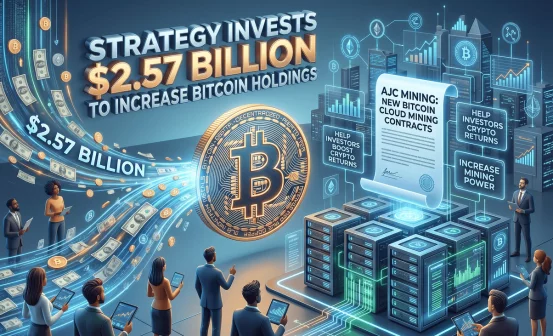
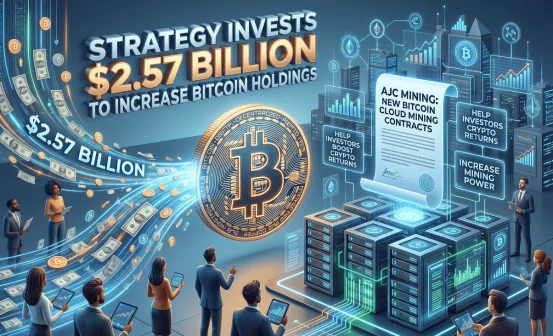
Entering 2026, the global cryptocurrency market remains highly active. Strategy’s $2.57 billion Bitcoin purchase once again highlights institutional investors’ continued interest in the long-term value of Bitcoin. It has also brought greater attention to Bitcoin Cloud Mining and Cryptocurrency Mining among global users.
As Bitcoin and crypto assets become more widely adopted, more users are looking for ways to participate in cryptocurrency mining. However, traditional mining usually requires purchasing mining machines, covering electricity costs, and having the technical ability to maintain equipment. For ordinary users, the entry barrier can be relatively high.
Against this background, Cloud Mining has become a more convenient way to participate. Users do not need to purchase physical mining machines. Instead, they can take part in the mining process of remote data centers through cloud-based hash power contracts. AJC Mining has officially launched a new cloud mining reward contract that supports BTC payments, helping users enter the Bitcoin mining ecosystem more easily.
AJC Mining: A Bitcoin Cloud Mining Platform for Global Users
AJC Mining is a cloud mining platform focused on providing Bitcoin Cloud Mining Platform services. The platform is committed to offering users a simpler and more efficient cryptocurrency mining experience. By combining AI hash rate optimization technology, green energy cloud mining models, and daily profit settlement mechanisms, AJC Mining provides a lower-barrier participation method for beginner and intermediate users.
Compared with traditional Cryptocurrency Mining, AJC Mining’s cloud mining model does not require users to purchase mining machines or deal with electricity, maintenance, cooling, and equipment management. Users only need to select a suitable cloud mining contract, and the system will automatically run the relevant hash power tasks and settle profits according to the contract rules.
Main Advantages of the AJC Mining Platform
AJC Mining offers several key advantages:
No hardware equipment required: Users do not need to purchase expensive mining machines or bear equipment maintenance costs.
Simple and convenient operation: After registering an account, users can select a contract and start cloud mining.
AI hash rate optimization technology: The intelligent system optimizes hash power allocation to improve operating efficiency.
Green energy mining model: The platform focuses on sustainable development and promotes a more environmentally friendly cloud mining approach.
Daily settlement mechanism: Users can view daily mining profits according to the contract rules.
Global service coverage: AJC Mining serves cryptocurrency users across multiple countries and regions.
As a Cloud Mining Platform, AJC Mining aims to provide users with a lower-barrier, automated, and more convenient Bitcoin cloud mining experience.
Why Is Bitcoin Cloud Mining Attracting More Attention?
Traditional Bitcoin mining usually requires professional mining machines, large-scale electricity resources, and continuous operation and maintenance capabilities. Therefore, it is more suitable for mining farms with capital, technical, and facility advantages.
By contrast, Bitcoin Cloud Mining uses a cloud-based hash power rental model, allowing ordinary users to participate in mining more easily.
The core advantage of Cloud Mining is that users do not need to directly manage mining machines or handle complex technical issues. The platform is responsible for machine operation, maintenance, electricity management, and profit settlement. Users participate by purchasing or activating cloud mining contracts.
For new users who want to enter the Cryptocurrency Mining industry, cloud mining provides a relatively simple entry method. Especially as the Bitcoin market continues to attract attention, choosing a stable, transparent, and easy-to-use Bitcoin Cloud Mining Platform has become increasingly important.
How to Join AJC Mining
The process of joining AJC Mining is relatively simple and suitable for new users with no mining experience.
Step 1: Register an Account
Users can register for an account via the official AJC Mining website. New users receive a $15 bonus upon registration.(Click here to register now and claim your trust bonus.)
Step 2: Choose a Cloud Mining Contract
The platform provides various short-term and long-term cloud mining contracts. Users can choose according to their budget, contract period, and profit plan.
Step 3: Start the Contract
After selecting a contract, the system will automatically run cloud-based hash power and settle daily profits according to the contract rules.
AJC Mining Cloud Mining Contract Reference
| Contract Name | price | Daily Profit | Number of Days | Principal + Total Return |
| New User Experience Contract | $100 | $4 | 2 Days | $100 + $8 |
| Avalon Miner A15 | $500 | $6.25 | 5 Days | $500 + $31.25 |
| Litecoin Miner L9 | $1000 | $13 | 10 Days | $1000 + $130 |
| Bitcoin Miner S21 XP Imm | $5000 | $70 | 25 Days | $5000 + $1750 |
| Bitcoin Miner S21e XP Hyd | $10000 | $150 | 35 Days | $10000 + $5250 |
| ANTSPACE HW5 | $50000 | $900 | 45 Days | $50000 + $40500 |
The aforementioned contracts represent the various computing power plans offered by the platform. Users may select a cloud mining strategy that best suits their individual needs. AJC Mining emphasizes fixed terms, daily settlements, and automated operations, aiming to provide users with a more convenient cloud mining experience.(Click here to view more cloud mining contracts.)
Does Cloud Mining Represent the Future of Cryptocurrency Mining?
As the blockchain industry continues to develop, cloud mining is becoming an important trend in the Cryptocurrency Mining sector. It lowers the barrier for users to participate in Bitcoin mining and allows more ordinary investors to access the mining market online.
The development advantages of Cloud Mining are mainly reflected in the following aspects:
1. No Need to Purchase Mining Machines
Traditional mining machines are expensive and require additional space, electricity, and maintenance costs. Cloud mining allows users to participate in mining through platform-based hash power, reducing the difficulty of entry.
2. Saves Time and Effort
A Cloud Mining Platform is responsible for technical maintenance, electricity management, and equipment operation. Users do not need professional mining knowledge.
3. More Flexible Contract Choices
Users can choose cloud mining contracts with different periods and scales according to their budget and risk preferences.
4. Supports Green Energy Development
More cloud mining platforms are beginning to use renewable energy to reduce carbon emissions and promote sustainable mining models.
Conclusion: Bitcoin Cloud Mining Provides Users with a More Convenient Mining Method
In 2026, as the Bitcoin market continues to gain momentum, Bitcoin Cloud Mining is attracting increasing attention from users. Compared with traditional mining, cloud mining requires no hardware equipment, no electricity maintenance, and no complex technical operation, providing ordinary users with a more convenient path to participate in cryptocurrency mining.
As a Bitcoin Cloud Mining Platform for global users, AJC Mining provides automated and lower-barrier Cloud Mining services through AI hash rate optimization, green energy cloud mining, and daily profit settlement mechanisms.
For users who want to enter the Cryptocurrency Mining field, choosing a stable, transparent, and easy-to-use Cloud Mining Platform is an important step in participating in Bitcoin mining.
Official Website: https://ajcmining.com/
Mobile App Download:https://ajcmining.com/download/
Disclosure: This content is provided by a third party. Neither crypto.news nor the author of this article endorses any product mentioned on this page. Users should conduct their own research before taking any action related to the company.


TLDR:
- Zcash (ZEC) surpassed $400 as analysts debate whether the rally has the structure to sustain further gains.
- Long-term ZEC holders have already moved their coins, with social media engagement dropping sharply since earlier highs.
- Alpha Price metric shows a $1,500 gap, suggesting ZEC is unlikely to reach that ceiling based on historical data.
- ZEC holds above the $315–$330 support zone, with a symmetrical triangle pointing to a possible move toward $405.
Zcash (ZEC) is drawing renewed attention from analysts as its price climbs past $400, raising questions about sustainability.
Two market observers have shared contrasting views on whether the current rally reflects genuine strength or a temporary phase of false optimism.
Their analysis covers on-chain data, social sentiment, and technical price structure, painting a complex picture for traders watching ZEC closely.
On-Chain Data and Sentiment Raise Caution Flags
Analyst Joao Wedson has flagged several warning signs surrounding ZEC’s recent price surge. He suggests the asset may be entering a complacency phase during what could be a false rally. Long-term holders, he notes, have already moved their coins earlier in the cycle and are no longer doing so now.
Social media activity around ZEC has also dropped sharply. This decline in retail attention is a notable shift from earlier in the rally when community interest was much higher.
Reduced social engagement often precedes a slowdown in buying pressure, which can weigh on price momentum.
Wedson also points to a metric known as Alpha Price, which he uses to estimate potential price tops. The current reading shows a gap of around $1,500 between ZEC’s price and that ceiling, suggesting the asset is unlikely to reach that level based on historical patterns.
Given these factors, Wedson advises extra caution for market participants. He also sees this as a possible window for remaining sellers to exit positions they have not yet closed, particularly those still holding coins from earlier in the move.
Technical Structure Still Points Toward Continuation
On the technical side, analyst Ardi offers a more constructive view of ZEC’s current positioning. He notes that the asset is holding above a key macro support zone between $315 and $330, which has acted as a strong base throughout this expansion phase.
From that low near $250, price action has compressed into what Ardi identifies as a symmetrical triangle formation.
This pattern typically resolves in the direction of the broader trend, and the series of higher lows forming within it adds weight to a continuation scenario.
However, Ardi is clear that confirmation still requires a close above $375. Without that, the setup remains unconfirmed, and traders should treat it as a developing thesis rather than a done deal.
The tight invalidation level just below current support gives the trade setup a well-defined risk structure. Should price hold and break higher, Ardi sees a move toward the $405 wick as the next logical target for ZEC.

TLDR:
- Over 76.82 billion XRP across 5.6 million accounts are currently exposed to potential quantum computing attacks.
- Dormant XRP wallets inactive for five-plus years face the highest risk with little chance of timely migration.
- XRPL supports key rotation and multi-signature wallets, offering a pathway toward stronger quantum-safe security.
- Experts like Bill Gates warn powerful quantum machines could arrive within three to five years, narrowing response time.
XRP faces a growing threat from quantum computing, based on new research from an XRP Ledger validator. The validator analyzed approximately 7.8 million accounts and identified 5.6 million as “quantum exposed.”
In total, nearly 76.82 billion XRP could be vulnerable to future quantum-based attacks. An account becomes exposed after signing a transaction, which reveals its public key on-chain.
Future quantum machines could then reconstruct private keys to access user funds.
Dormant Accounts and the Scale of XRP’s Quantum Exposure
The report was published by an XRPL validator known as “Vet,” who shared the findings publicly. The study drew widespread attention on social media, including posts from crypto commentators flagging the scope of the risk.
Key data showed that 96% of exposed XRP belongs to currently active accounts. The remaining 3.83%, however, sits in dormant wallets inactive for more than five years.
Dormant accounts, particularly those created around XRP’s 2013 launch, present the most serious concern. Their owners are unlikely to migrate funds to quantum-secure infrastructure before threats materialize.
These wallets could become easy targets as quantum computing capabilities expand over time. The concern is pressing because no active user may be monitoring or protecting these funds.
This situation creates a difficult choice for the broader crypto industry. Protecting inactive accounts may require centralized intervention that conflicts with decentralization principles.
Leaving them exposed, on the other hand, could allow quantum actors to drain them without resistance. There is currently no clear consensus on how to resolve this dilemma.
XRP is not the only blockchain facing this threat. Bitcoin carries even greater exposure, with 1.1 million BTC linked to Satoshi Nakamoto sitting untouched for years.
Research from Google also suggests that quantum computers could intercept Bitcoin transactions within minutes. So, the risk extends well beyond the XRP ecosystem.
XRPL’s Built-In Defenses and the Narrowing Window to Act
Despite the risks, the XRP Ledger has structural features that support a smoother security transition. Ripple notes that XRPL supports key rotation, allowing users to change keys without altering their addresses.
Deterministic key generation also makes migration easier to manage at scale. Multi-signature wallets add further protection, though they are not fully sufficient on their own.
Full protection, according to Ripple, requires combining multi-signature setups with ongoing key rotation practices. This approach offers a stronger defense against potential future quantum-based attacks.
However, applying this across millions of accounts remains a genuine practical challenge. Many users are unlikely to act until the threat feels immediate and real.
The quantum computing timeline is no longer a distant concern. Prominent figures like Bill Gates estimate that powerful quantum machines could emerge within three to five years.
That leaves the crypto industry with a narrow window to upgrade its security models. Approaching this as a future problem rather than a present one carries measurable risk.
As of writing, XRP is trading around $1.38, slightly down over the past week. Trading volume has also declined, reflecting reduced market activity.
These conditions point to a quieter period across the broader crypto sector. Still, the quantum computing threat continues to grow regardless of short-term price movements.
Consensus 2026 in Miami starts Tuesday. We’ve got a host of policy sessions — some of which this newsletter previewed a few weeks back. Here’s the full list of sessions you should attend. On the fence about going but you’ll be in Miami? Not too late to register. Can’t make it in person? Hit me up about a virtual pass.
You’re reading State of Crypto, a CoinDesk newsletter looking at the intersection of cryptocurrency and government. Click here to sign up for future editions.
The narrative
Consensus 2026 Miami kicks off! Be there or be square.
Why it matters
The thing I enjoy most about Consensus is meeting folks who are willing to walk me through the policy and regulatory issues they’re following. We’re putting many of those folks on stage for that reason. The goal is for these sessions to be as informative as they are entertaining, if not more so. Bring your notebooks.
Breaking it down
The following is a complete list of the policy sessions taking place this week.
Tuesday
Wednesday
Thursday
- 10:00 a.m. ET: We are kicking off the Policy Summit. The goal: Eight hours of informed discussion on key issues, starting with how decentralized finance can be regulated, especially given all the hacks that keep on happening.
- 10:30 a.m. ET: Former IRS officials Raj Mukherjee and Seth Wilks will discuss the 1099-DA and how the IRS’ approach to digital assets may evolve. This session is part of the Policy Summit.
- 10:55 a.m. ET: PayPal Head of Crypto Compliance Larry Wade and Crypto Council for Innovation CEO Ji Hun Kim will talk about how fintech firms are looking at the regulatory sector for digital assets. This session is part of the Policy Summit.
- 11:40 a.m. ET: Senator Ashley Moody and Digital Chamber CEO Cody Carbone will discuss the industry’s relationship with D.C.
- 11:40 a.m. ET: Executives at federally regulated banks will discuss how more and more crypto companies are seeking banking licenses, and what that means for both the banking and crypto industries. This session is part of the Policy Summit.
- 12:50 p.m. ET: World Liberty Financial co-founders Donald Trump, Jr. and Zach Witkoff will take the stage.
- 12:55 p.m. ET: Breadcrumbs analyst James Delmore will lay out how much money has been dedicated to the 2026 election from crypto companies, and how that may be spent. This session is part of the Policy Summit.
- 1:00 p.m. ET: Stand With Crypto’s Mason Lynaugh, Fellowship PAC’s Jesse Spiro and Sternhell Group’s Alex Sternhell will discuss how the crypto industry is engaging with the midterm. This session is part of the Policy Summit.
- 1:30 p.m. ET: DeFi Education Fund’s Gavin Zavatone and Blockchain Association’s Lindsay Fraser will lay out what might happen with crypto legislation and rulemaking in 2027, based on the different possibilities this November. This session is part of the Policy Summit.
- 1:55 p.m. ET: SEC Crypto Task Force Chief Counsel Taylor Lindman will discuss his role and the work he’s engaged in at the regulator. This session is part of the Policy Summit.
- 2:00 p.m. ET: Tether’s Bo Hines and Bridge’s Lindsey Einhaus will talk about the evolution of stablecoin regulations.
- 2:10 p.m. ET: Former CFTC Acting Chair and current Moonpay CLO Caroline Pham, Aleo’s Head of Policy Yaya Fanusie and Binance Global Policy Lead Steven McWhirter will talk about recent regulator proposals around stablecoin rules, and what these proposals may eventually turn into. This session is part of the Policy Summit.
- 2:40 p.m. ET: Coinbase Vice President Kara Calvert will talk about the White House negotiations that may ultimately lead to a deal on stablecoin yield in the Clarity Act. This session is part of the Policy Summit.
- 2:55 p.m. ET: And speaking of the Clarity Act, is it even happening? Experts keeping track will weigh in. This session is part of the Policy Summit.
- 3:30 p.m. ET: Everyone is talking about tokenization, including how the rules around that sector of the financial services industry may change. This session is part of the Policy Summit.
- 4:00 p.m. ET: We’ve spilled a lot of ink talking about federal regulatory efforts, but the U.S. also has 50 states with their own jurisdictions and approaches. Representatives working with these states as part of, or with the local governments will talk about those approaches. This session is part of the Policy Summit.
- 4:30 p.m. ET: Last, but certainly not least: Prediction markets. Are prediction market contracts federally regulated swaps? Or are they gambling products dressed up as a financial derivative? These questions are sitting before courts throughout the country, and will likely wind up before the U.S. Supreme Court before all’s said and done. A crack group of lawyers are going to preview what those arguments might look like to close out Policy Summit.
If you’ve got thoughts or questions on what I should discuss next week or any other feedback you’d like to share, feel free to email me at nik@coindesk.com or find me on Bluesky @nikhileshde.bsky.social.
You can also join the group conversation on Telegram.
See ya’ll next week!
TLDR:
- SanDisk reported Q3 earnings of $23.41 per share, beating the $14.50 estimate by a wide margin.
- Five AI companies signed $42B in multi-year supply deals, with over $11B already committed upfront.
- Data center revenue surged 233% to $1.47B, reflecting strong AI-driven demand for flash storage.
- SanDisk announced a $6B share buyback and forecast next-quarter revenue of up to $8.25 billion.
SanDisk’s stock has climbed over 4,000% in the past 12 months, driven by surging AI storage demand.
The company, spun off from Western Digital in 2025, reported third-quarter revenue of $5.95 billion, a 251% year-over-year increase. Earnings per share reached $23.41, well above forecasts.
CEO David Goeckeler secured $42 billion in multi-year contracts with AI companies, backed by $11 billion in upfront financial guarantees.
From Losses to Record Revenue in One Year
SanDisk’s financial turnaround has been one of the most dramatic on Wall Street. Just a year ago, the company was reporting a loss of $0.30 per share.
Now, it has posted earnings of $23.41 per share against an estimate of $14.50. Revenue also came in at $5.95 billion, surpassing the $4.70 billion forecast.
Data center revenue led much of this growth, rising 233% to $1.47 billion. AI companies are actively locking in storage supply to avoid potential shortages.
The demand surge reflects how critical flash storage has become in powering large-scale AI systems. SanDisk found itself at the center of that shift at the right time.
Five AI companies have signed binding multi-year supply agreements totaling $42 billion. Over $11 billion of that amount has already been committed as upfront financial guarantees.
As Bull Theory noted on X, “These are not purchase orders. These are guarantees.” That distinction matters because it removes uncertainty from SanDisk’s revenue pipeline for the near term.
Looking ahead, SanDisk is forecasting next-quarter revenue between $7.75 billion and $8.25 billion. That guidance comfortably exceeds Wall Street’s estimate of $6.49 billion.
The forward outlook reflects continued confidence in AI-driven storage demand. Management’s numbers suggest the momentum is not slowing down anytime soon.
Stock Performance and Capital Return Plans
SanDisk was the best-performing stock in the entire S&P 500 in 2025, posting a 729% annual gain. In 2026, it has continued that run, becoming the top-performing stock year-to-date.
The share price has moved from lows near $33 to close to $1,187. That trajectory places it among the most talked-about turnaround stories in recent market history.
The company also announced a $6 billion share buyback program at all-time highs. Buybacks at record prices are typically seen as a sign of management confidence in future value.
For SanDisk, this move signals that leadership believes the current valuation is still justified. Strong cash flow generation has made the program financially feasible.
Peers like Micron and Western Digital have also seen notable gains tied to AI storage demand. However, SanDisk’s scale of growth stands apart from the broader sector.
Its spinoff structure allowed it to move quickly and focus entirely on flash storage solutions. That independence appears to have worked in its favor.
Bull Theory’s post on X summed up the shift plainly: “The AI storage shortage did not just save SanDisk. It turned it into one of the most important companies in the world.”
Whether that status holds will depend on how long AI infrastructure spending continues at its current pace.


Michael Saylor indicated that Strategy will make no Bitcoin (BTC) purchases this week. The break comes two days before the firm reports first-quarter (Q1) 2026 earnings on May 5.
The pause lands during MicroStrategy’s first sharp quarterly Bitcoin drawdown of the cycle. The company is also shifting funding toward preferred equity rather than common-stock dilution.
MicroStrategy Bitcoin Pause Aligns With Earnings Window
The break ends a near-weekly cadence that has defined MicroStrategy’s 2026 accumulation. A 13-week buying streak snapped in late March.
Follow us on X to get the latest news as it happens
Strategy now holds 818,334 BTC worth $64.44 billion at an average cost of $75,532 per coin, a 4.23% unrealized gain.
Q1 still saw aggressive accumulation. MicroStrategy added roughly 89,600 BTC for $5.5 billion last quarter, the second-largest quarterly purchase in company history. Bitcoin fell more than 20% during the same period.
Earnings Will Test the STRC Pivot
Meanwhile, Wall Street expects Q1 revenue near $120 million and a GAAP loss driven primarily by mark-to-market Bitcoin accounting.
Zacks pegs consensus EPS at negative $3.41, while broader analyst aggregates show much deeper losses tied to the quarter’s drawdown, after MicroStrategy reported a $14.5 billion unrealized loss in its Q1 GAAP report.
“According to Zacks Investment Research, based on 1 analysts’ forecasts, the consensus EPS forecast for the quarter is $-3.41. The reported EPS for the same quarter last year was $-16.49,” Nasdaq reported.
Investors will track the Stretch (STRC) preferred share program. STRC has become the primary engine since Strategy stepped back from common-stock at-the-market offerings.
The shares pay an 11.5% dividend and recently traded below par. Critics including Peter Schiff argue the structure introduces dilution and refinancing risk if Bitcoin extends lower.
The May 5 call airs at 5 p.m. ET on Zoom, X, and YouTube. Investors will watch whether buying resumes next week or whether yield-focused discipline now takes priority.
The post MicroStrategy Pauses Bitcoin Buys Ahead of May 5 Q1 Earnings appeared first on BeInCrypto.
TLDR:
- BlackRock urges OCC to remove the cap on tokenized reserves under the GENIUS Act stablecoin draft rules.
- Firm argues that tokenized asset risk depends on liquidity, credit quality, and maturity rather than blockchain format.
- The BUILD fund scale of $2.6B tied to stablecoin reserves could be constrained by the proposed regulatory cap limit.
- BlackRock seeks ETF recognition as eligible reserves, pushing parity with government money market funds.
BlackRock Tokenized Reserve Assets emerges as a key regulatory debate within stablecoin policy development. The asset manager pushes for broader recognition of tokenized Treasuries and ETFs under evolving GENIUS Act reserve composition standards.
OCC Tokenized Reserve Cap Faces Institutional Pushback
BlackRock Urges is a response to draft rules under the GENIUS Act. The OCC proposal introduces a 20% ceiling on tokenized reserves for stablecoin issuers. However, BlackRock disputes this structural limitation.
Moreover, the firm argues that risk evaluation should remain consistent across all asset forms. Credit strength, liquidity, and maturity should define eligibility.
Therefore, blockchain representation should not influence regulatory treatment. This approach aims to maintain uniform financial standards across reserve systems.
In addition, BlackRock links the proposal to its tokenization strategy. The BUIDL fund holds around 2.6 billion dollars in tokenized Treasuries.
It also supports stablecoin reserves across multiple platforms. As a result, a cap could restrict institutional scale and operational flexibility.
Furthermore, BlackRock urges OCC to Drop 20% Cap on Tokenized Reserve Assets while industry feedback continues to accumulate.
Over 200 submissions are under review. Consequently, regulators are assessing how to balance innovation with financial stability in reserve frameworks.
ETF Eligibility and BUIDL Expansion Shape Reserve Debate
BlackRock is pushing for clearer ETF classification under reserve rules. The firm seeks confirmation that Treasury ETFs qualify as eligible reserve instruments when fully backed by approved assets.
Additionally, BlackRock calls for equal treatment between ETFs and government money market funds. Both instruments, it argues, share similar risk profiles.
Therefore, they should receive consistent regulatory recognition under safe harbor provisions within the GENIUS Act framework.
Meanwhile, the firm recommends expanding the list of eligible reserve assets. Treasury floating rate notes with short maturities are included in its proposal. These instruments offer stability and frequent resets, which support liquidity management in reserve portfolios.
The OCC is evaluating feedback from more than 200 stakeholders. As a result, final rules are expected to shape reserve standards before the 2027 compliance deadline.
In addition, regulators are examining how tokenized and traditional instruments should coexist within reserve structures.
This ongoing review may redefine stablecoin backing frameworks. Ultimately, ETF eligibility and tokenized reserve treatment remain central to the evolving regulatory direction.
TLDR:
- The NYSE proposal enables tokenised equities and ETFs to trade on the same order book as traditional shares.
- Tokenised securities must retain identical CUSIP, ticker, rights, and execution priority under filing.
- DTC pilot ensures clearing and settlement remain on a T+1 basis within the existing market infrastructure.
- SEC review aligns NYSE tokenisation framework with regulated exchange trading standards and rules.
The NYSE tokenised securities filing is a regulated framework where tokenised equities can trade alongside traditional listed shares.
The proposal integrates digital representation into existing exchange systems while preserving settlement rules, execution priority, and investor protections under current market infrastructure systems.
Unified Order Book and Tokenised Execution Framework
The filing sets a unified structure for trading tokenised equities within the same order book as traditional shares. This ensures both formats interact under identical execution rules. As a result, price discovery remains consistent across the exchange environment.
Moreover, the NYSE tokenised securities filing requires tokenised assets to retain the same CUSIP, ticker, and shareholder rights.
This ensures legal equivalence between digital and traditional forms. Therefore, market participants face no change in rights or instrument classification during trading. It also reduces operational discrepancies between digital and traditional settlement processes over time.
Furthermore, liquidity remains unified under a single order book structure. The NYSE tokenised securities filing avoids splitting trading venues. Instead, both tokenized and non-tokenised orders interact directly.
Consequently, fragmentation risk is reduced across institutional and retail participation. This structure supports deeper liquidity integration across institutional trading desks and market participants globally.
Execution mechanics remain unchanged under the NYSE tokenised securities filing. Orders follow identical matching rules on the exchange. Additionally, execution priority remains consistent for all participants.
This preserves existing market structure behaviour without introducing parallel trading systems. It also signals the gradual adoption of tokenised infrastructure within regulated markets globally over time.
DTC Pilot Settlement Design and Regulatory Review Path
DTC pilot settlement under the NYSE tokenised securities filing maintains the existing post-trade infrastructure. Trades continue to settle on a T+1 cycle. Therefore, tokenisation occurs at the execution layer only.
Custody and clearing remain within established financial systems, ensuring continuity across institutional workflows.
This approach ensures operational continuity across custodians and broker-dealer networks during the market operations cycle.
Additionally, the pilot spans three years under regulatory supervision. The NYSE uses this period to evaluate system efficiency and reconciliation processes. Market participants provide feedback through structured SEC channels during the review phase.
Moreover, SEC coordination ensures consistency across exchange frameworks. At the same time, traditional equity market rules remain unchanged, preserving stability within regulated trading environments.
Finally, the NYSE tokenised securities filing keeps tokenised trading separate from crypto-native systems. Instead, it operates within a regulated equity infrastructure.
As a result, market structure evolution remains controlled, with digital representation embedded into existing financial rails rather than replacing them.

Greg Abel, CEO of Berkshire Hathaway, speaks during the Berkshire Hathaway Annual Shareholders Meeting in Omaha, NE on May 2, 2026.
CNBC
OMAHA, Nebraska — In his debut running Berkshire Hathaway‘s annual meeting, Greg Abel delivered what many shareholders came to see: a steady hand, a firm grasp of the sprawling conglomerate and just enough of his own style to reassure investors the post-Warren Buffett era is on solid footing.
The reviews from longtime shareholders and professional investors were broadly positive, even as many acknowledged the notable absence of Buffett, whose wit, storytelling and investing acumen have long defined the event.
“Very solid. No misspoke words. Thorough answers,” said Steve Check, founder of Check Capital Management. “Nice guy, but we sure don’t have the laughs that we had with Warren and Charlie [Munger].”
“Greg and company delivered on content, examination of businesses and confidence in outlook,” Macrae Sykes, a portfolio manager at Gabelli Funds.
David Kass, a finance professor at University of Maryland and a decades-long Berkshire shareholder, said he grew more confident in Berkshire after seeing firsthand Abel’s performance. He pointed to the firm’s “deep bench” — including executives like vice chairman of Berkshire’s insurance operations Ajit Jain; Adam Johnson, president of Berkshire’s consumer products, service and retailing businesses; and BNSF Railway CEO Katie Farmer — as evidence that leadership continuity runs well beyond a single figure.
“Greg demonstrated the knowledge of and passion for running all of Berkshire’s businesses,” Kass said. “His main focus is that of operations. By contrast, Buffett focuses more on the investment side of Berkshire.”
Granular insights
That shift in emphasis was evident throughout the Q&A session, where Abel leaned into detailed discussions of Berkshire’s subsidiaries, a level of specificity that resonated with shareholders seeking reassurance about execution under new leadership.
“The answers were really good as they gave granular insights,” said Tilman Versch, a German shareholder and founder of investor community Good Investing. “Everybody misses Warren. His clear, consistent and funny answers are hard to replace. But with more practice, I hope Greg can find his own style.”
Abel opened the session with a near hourlong presentation walking investors through the inner workings of Berkshire’s major businesses. He drilled into performance and outlook across its railroad unit, energy operations, insurance arm and retail subsidiaries, offering a level of operational detail that shareholders said felt more akin to an investor day than the freewheeling, anecdote-driven format of past meetings.
Greg Abel and Ajit Jain speak during the Berkshire Hathaway Annual Shareholders Meeting in Omaha, NE on May 2, 2026.
CNBC
Leaning into tech
Artificial intelligence emerged as a central theme at the meeting. Abel said Berkshire is already exploring AI-driven tools to improve operations at BNSF Railway, and spoke fluently about technologies like large language models, emphasizing their potential to enhance the company’s existing businesses.
He also pointed to the surge in data center development as a major tailwind for Berkshire’s utility operations, with rising power demand creating a significant growth opportunity for its energy grid assets.
“He was clearly very comfortable with technology and AI, as opposed to Warren, who typically avoided technology-oriented investments outside of Apple and, more recently, Google,” said Adam Patti, chief executive of VistaShares and manager of an ETF tracking Berkshire’s largest holdings. “Perhaps that lends insight into how the portfolio may evolve over time.”
Buyback disappointment
Berkshire’s pace of share repurchases was a point of frustration for some shareholders.
The firm repurchased $235 million of stock in the first quarter, according to the earnings report. The company had already disclosed that it purchased $226 million in stock on March 4, so this means it only slightly increased its buying as the quarter came to a close.
“The only missing piece was any real guidance on additional buybacks,” Patti said. “I was hoping that they would get more aggressive about this.”
“I’m disappointed in the lack of significant buybacks,” Check said. “I guess they’re waiting for a lower price, but they bought much more at this valuation before.”
The crowd may still be adjusting to a Berkshire meeting without Buffett at center stage. But after this first outing, investors appear increasingly willing to give Abel the room and time to define the next chapter on his own terms.
“They really incorporated more of the businesses than they ever have because it used to always just be Warren answering Warren questions,” said Susan Chan, a longtime shareholder who along with her friend Wanda Lee decided to skip the meeting this year. They watched it from Chan’s home in New Jersey instead, and found that the new format instilled confidence in Berkshire’s future direction. “And now, it’s really more of a ‘Our shareholders are our family. And we’re going to show you exactly what we’re invested in, and what we’re doing.’”
“We made the conscious decision not to go this year,” Chan said. “But we just said to each other, ‘Let’s go next year.’”
TLDR:
- Founders Fund has rapidly deployed into AI and defense with $600M average checks
- Capital concentration grows as sovereign funds back mega rounds in Anthropic and Anduril deals
- Venture capital shifts toward mega-funds competing for limited AI infrastructure opportunities globally
- Prior $4.6B fund fully deployed in under 12 months, showing extreme late-stage funding velocity
Founders Fund, a $6 billion is a massive bet, rising ambition, and high-stakes AI deals reshape how money moves. This has stirred excitement, risk, and global attention across the technology investment landscape in the 2026 cycle.
Rapid Capital Deployment Across AI-Led Portfolios
Founders Fund $6 billion growth fund has reshaped late-stage venture deployment through concentrated AI exposure and oversized check writing. It deployed capital across a small set of frontier technology companies, including Anthropic and Anduril.
Average allocations near $600 million reflect a strategy focused on ownership scale rather than diversification across dozens of startups.
Funding speed increased as investors competed for early access before formal fundraising rounds began in the AI sector.
Capital deployment patterns show a shift toward preemptive investments executed ahead of traditional venture timelines.
This structure positions the Founders Fund $6 billion growth fund within elite global AI financing networks across the market layer.
Investment activity accelerated as sovereign funds joined private capital in large-scale AI funding rounds. These rounds often required billion-dollar commitments to secure meaningful ownership stakes in leading model developers.
The $6 billion fund structure enabled rapid participation in competitive deals involving multiple global technology players.
Co-investment activity increased alongside corporate participation from major platforms and sovereign-backed investment vehicles.
Portfolio concentration reflects a narrow focus on companies with infrastructure-scale artificial intelligence capabilities.
This approach continues to define how Founders Fund positions capital within late-stage venture competition globally across AI-driven markets and defense technology ecosystems, with sustained institutional allocation pressure rising globally
Market Shift Toward Mega-Funds and Concentrated Bets
The venture ecosystem continues to transition toward mega-fund structures as capital requirements in artificial intelligence expand rapidly.
Smaller venture vehicles face limitations in participating in billion-dollar AI financing rounds. Founders Fund, a $6 billion growth fund, reflects this structural evolution by concentrating capital into fewer but larger bets.
Investment focus remains centered on AI infrastructure providers, defense technology firms, and high-growth software platforms.
These categories attract sovereign wealth participation, as well as global technology corporations seeking strategic exposure.
Capital inflows continue to cluster around a limited number of frontier companies operating at scale. This pattern reinforces the concentration effect seen across the Founders Fund $6 billion growth fund portfolio.
Deal flow in late-stage venture markets increasingly involves preemptive allocation before public fundraising cycles begin.
This method allows investors to secure positions in high-demand companies before competitive auction-style rounds.
The Founders Fund, a $6 billion growth fund, deployed capital using this approach across multiple AI and defense names. Such execution compresses traditional venture timelines and accelerates capital concentration within select firms.
Global investors, including sovereign funds and corporate backers, continue to increase participation in these rounds. Market activity shows ongoing preference for fewer but larger allocations per portfolio company.
This trend aligns with deployment strategies observed in the Founders Fund $6 billion growth fund model structure
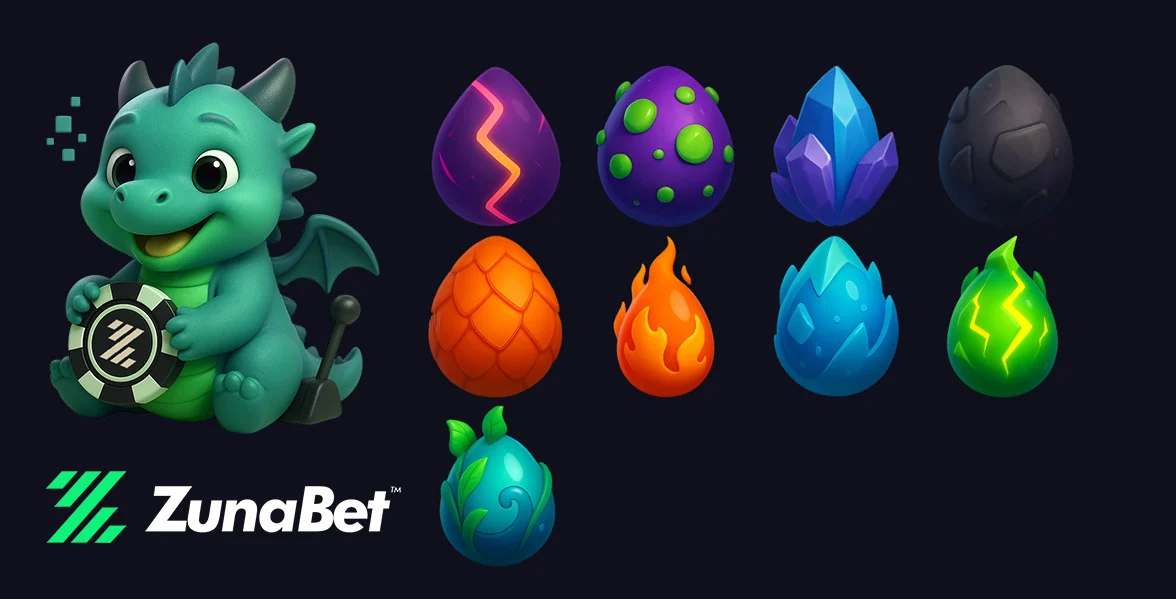
There is a predictable arc to how most people choose an online gambling platform. They hear a name — usually through advertising, a sports sponsorship, or a recommendation — they search it, they sign up. DraftKings and Bet365 are the two names that appear most often at the start of that arc. Between them they cover the US market and the international market and between them they have enough marketing spend and brand recognition to make themselves the obvious first answer to most gambling-related searches.
The question that is getting more interesting in 2026 is not where players start. It is where they end up after they have done more than accept the first answer. Players who compare platforms seriously — who look past brand recognition and into the specific dimensions that affect their daily experience as a gambler — are increasingly finding that the most recognised names are not the ones that score highest on the criteria that matter most to them.
ZunaBet launched in 2026 and is appearing at the end of that more thorough research process with growing frequency. This article follows that research process — examining what DraftKings and Bet365 offer, where they fall short for specific player types, and what ZunaBet delivers that brings those players to a different conclusion.
DraftKings: The Starting Point for Most US Players
DraftKings built its position in the US market through a combination of timing, existing brand equity, and genuine product investment. The daily fantasy sports audience it had built before state-by-state sports betting opened gave it a conversion base that competitors entering the market from scratch could not immediately match. By the time most international operators had navigated US licensing requirements DraftKings was already operational across multiple states with a user base that extended back years before their first legal sports bet.
The sportsbook that emerged from that foundation is genuinely well-built for its market. American sports culture is embedded in the product in ways that international operators find difficult to replicate — not just which leagues are covered but how the markets are structured, how the odds are presented, and how the betting experience aligns with the rhythms of the US sports calendar. The app is polished. The in-play product works. The live betting experience reflects years of iteration.
The casino product serves its purpose. A library of reasonable size from established providers, live dealer content, standard table game options. It is not exceptional by global casino standards but it meets the needs of the mainstream US player whose primary interest is sports betting.
The limitations surface when players start comparing beyond the initial impression. Fiat payment infrastructure means withdrawals take the time fiat banking takes — same-day through PayPal at best, several business days through bank transfer as standard. Bitcoin in select states is a limited concession to crypto demand rather than a genuine crypto infrastructure commitment. Dynasty Rewards points require navigation to extract real value and experienced players consistently find the effective return lower than headline tier descriptions imply. Geographic operation is restricted to licensed US states.
Bet365: The Starting Point for Most International Players
Bet365’s position in international markets was built over a much longer period than DraftKings’ US dominance. Founded in 2000, it has had time to develop relationships, infrastructure, and market coverage that newer platforms are still working toward. The sportsbook is the product of that investment — a breadth and depth of coverage that no competitor has fully replicated.
The range of markets is the headline achievement. Not just major global sports at full depth but minor leagues, niche sports, and events that other platforms do not price. In-play coverage runs on events that competitors close before the match begins. The live streaming service embedded in the platform lets players watch events as they bet on them — a feature Bet365 has offered long enough that it feels standard even though competitors have not consistently matched it.
The casino reflects similar investment in breadth. A large library from established providers, strong live dealer content, and a platform experience that is consistent and polished across devices. The product is broad and well-maintained.
The limitations are structural and significant for specific player types. Geographic restrictions eliminate the platform from the US market and several other jurisdictions entirely. The loyalty program is the most consistently criticised aspect for the general player base — an invite-only VIP structure that keeps meaningful rewards inaccessible to most players and provides no clear pathway for those who want to reach them. Crypto support is minimal. Fiat banking timelines apply.
ZunaBet: Where the Thorough Research Ends Up
ZunaBet launched in 2026 under Strathvale Group Ltd, operating under an Anjouan gaming license and registered in Belize. The team brings over 20 years of combined industry experience. It is not a US state licensed operator and it does not hold UK Gambling Commission certification. It is a crypto-first, internationally accessible platform built specifically around what a thorough research process reveals that DraftKings and Bet365 are not providing.
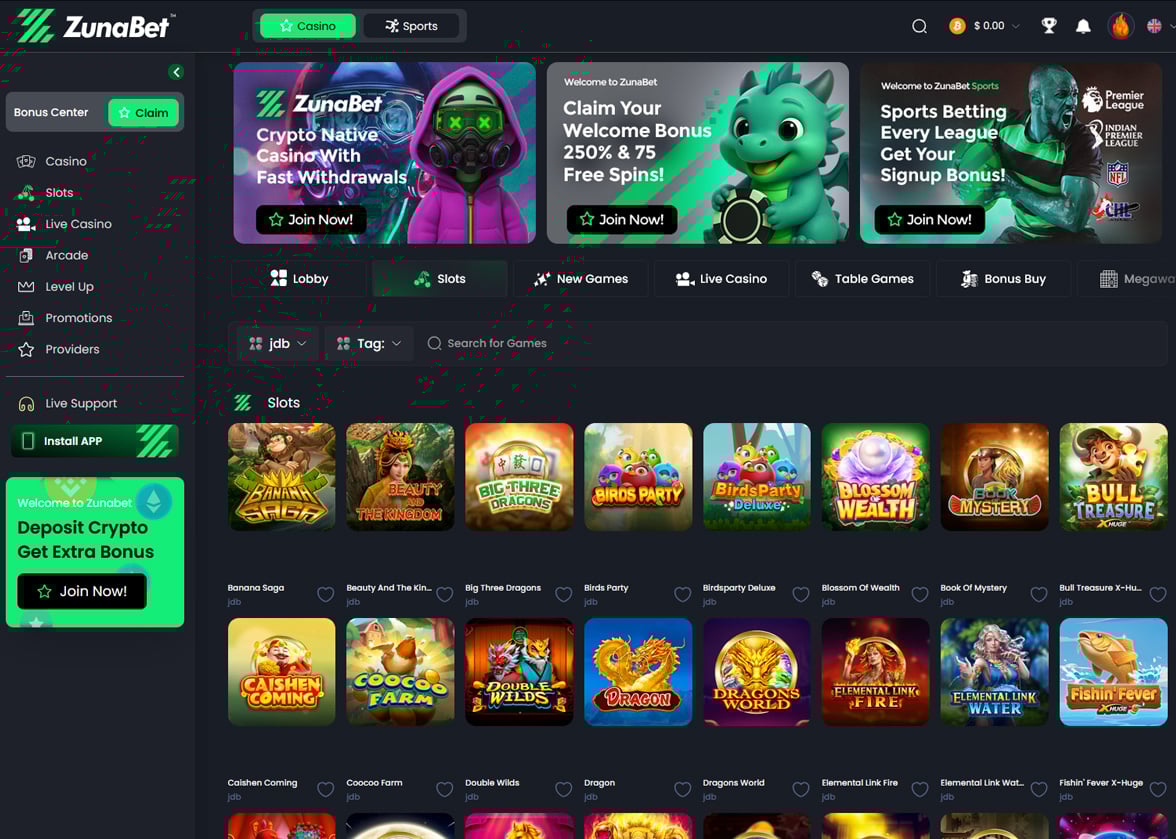
The game library makes the product’s opening statement. ZunaBet carries 11,294 titles from 63 providers. Neither DraftKings nor Bet365 approaches that combination of scale and provider diversity on the casino side. Evolution supplies the full live dealer catalogue. Pragmatic Play covers multiple categories. Hacksaw Gaming delivers the high-volatility slot mechanics that experienced players specifically seek out. Yggdrasil contributes its distinctive design philosophy. BGaming brings content whose aesthetic speaks directly to the crypto-native player. Sixty-three providers means 63 genuinely different creative approaches producing content with different mechanics, different volatility profiles, and different visual identities — not a large number built around a small pool of commercial relationships.
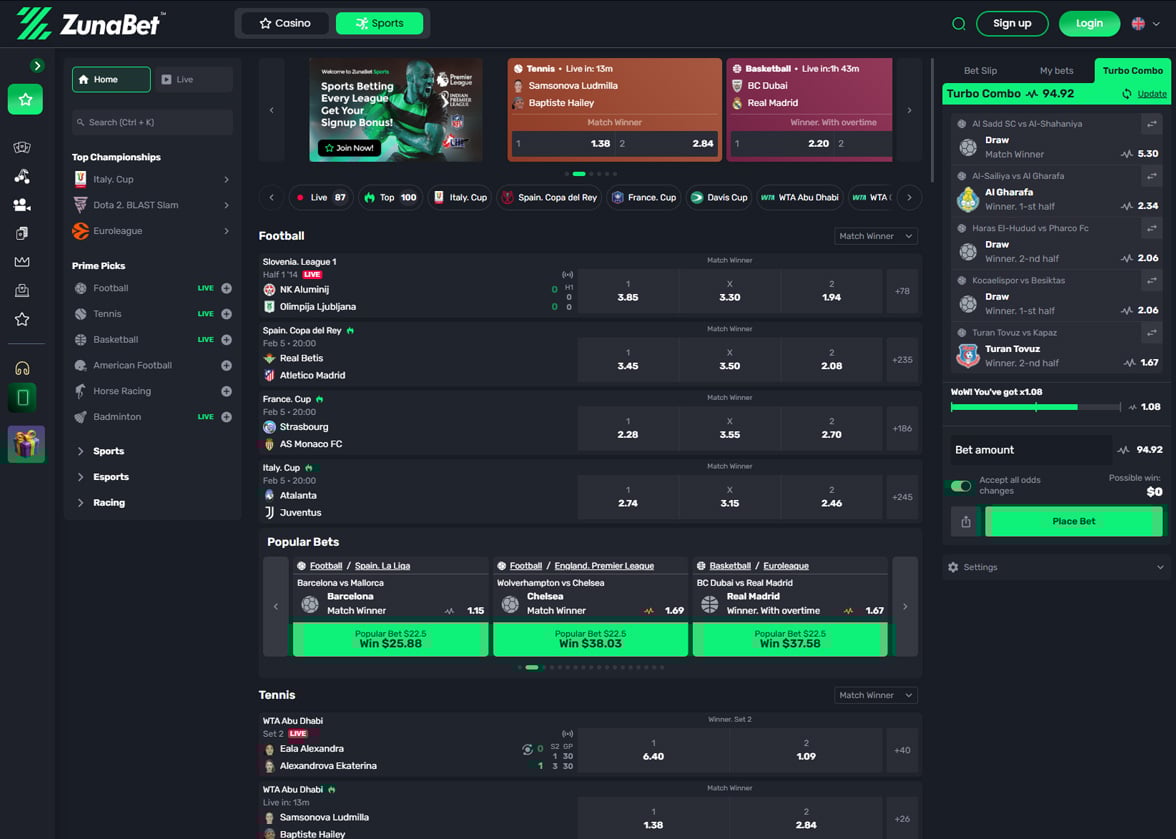
The sportsbook covers football, basketball, tennis, NHL, and other major global sports. The extension beyond both established platforms comes in esports — CS2, Dota 2, League of Legends, and Valorant as genuine primary markets rather than token inclusions. Virtual sports and combat sports complete a sportsbook built to serve the full range of what the modern player bets on.
Payment support covers more than 20 cryptocurrencies natively — BTC, ETH, USDT across multiple chains, SOL, DOGE, ADA, XRP, and others. No platform processing fees. Withdrawals settling in minutes. Apps across iOS, Android, Windows, and MacOS with 24-hour live chat support.
Payments: The Comparison That Changes Everything
Players who compare payments across all three platforms encounter a comparison that is qualitatively different from most feature comparisons. It is not a question of which platform does the same thing slightly better. It is a question of which platforms were built on fundamentally different infrastructure with fundamentally different outcomes.
DraftKings and Bet365 were both built on fiat banking infrastructure at a time when that was the only viable option. Their payment systems route through banks, card networks, and e-wallet processors. Improvements have been made over the years but the infrastructure has not changed. A withdrawal on DraftKings or Bet365 takes the time fiat banking takes — ranging from several hours at best to multiple business days at standard depending on method and jurisdiction.
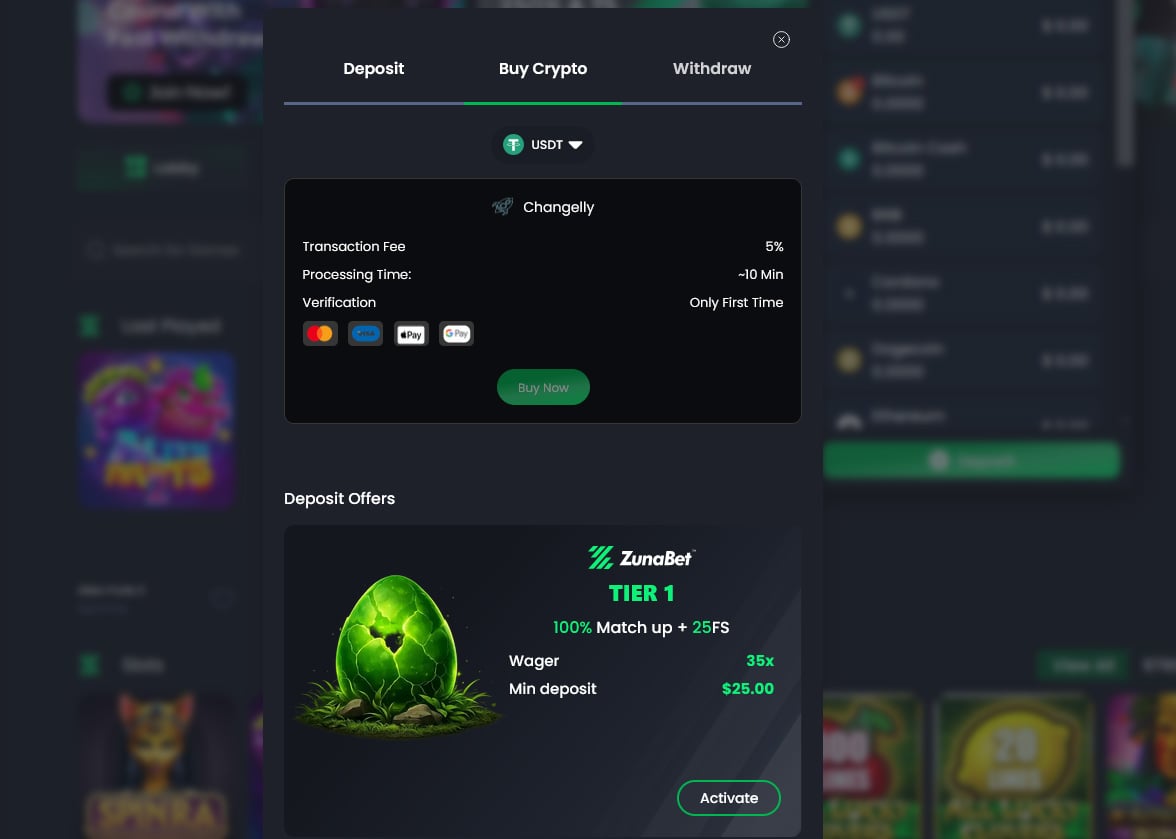
ZunaBet was built in 2026 on crypto infrastructure as the foundation rather than the addition. Withdrawals settle at network speed. In practice that means minutes — not hours, not the next morning, not after the weekend. The money moves when the player requests it because the infrastructure was designed to make that possible.
For a player who has used all three platforms and compared withdrawal experiences directly the difference is not a preference. It is a permanent recalibration of what acceptable looks like. Every subsequent platform evaluation includes the question of whether withdrawals are that fast. For most traditional platforms the answer is no.
Loyalty Programs: The Comparison That Frustrates Players on Traditional Platforms
The loyalty program research across DraftKings, Bet365, and ZunaBet illustrates three different relationships between platform and player.
DraftKings Dynasty Rewards gives players a points balance and tier position. The conversion from points to actual cash value requires navigation through a redemption structure that varies by option and game type. Players who calculate their effective return per dollar spent find a number that is lower than the headline tier benefits suggested. The system retains players but it retains them through habit as much as genuine satisfaction.
Bet365 gives most players a loyalty program that is effectively invisible. The invite-only VIP structure ensures that meaningful rewards flow to a small percentage of the player base while the majority operates without transparency about what their engagement earns them. The absence of a clear loyalty pathway is one of Bet365’s most consistently cited limitations among players who discuss it in gambling communities.
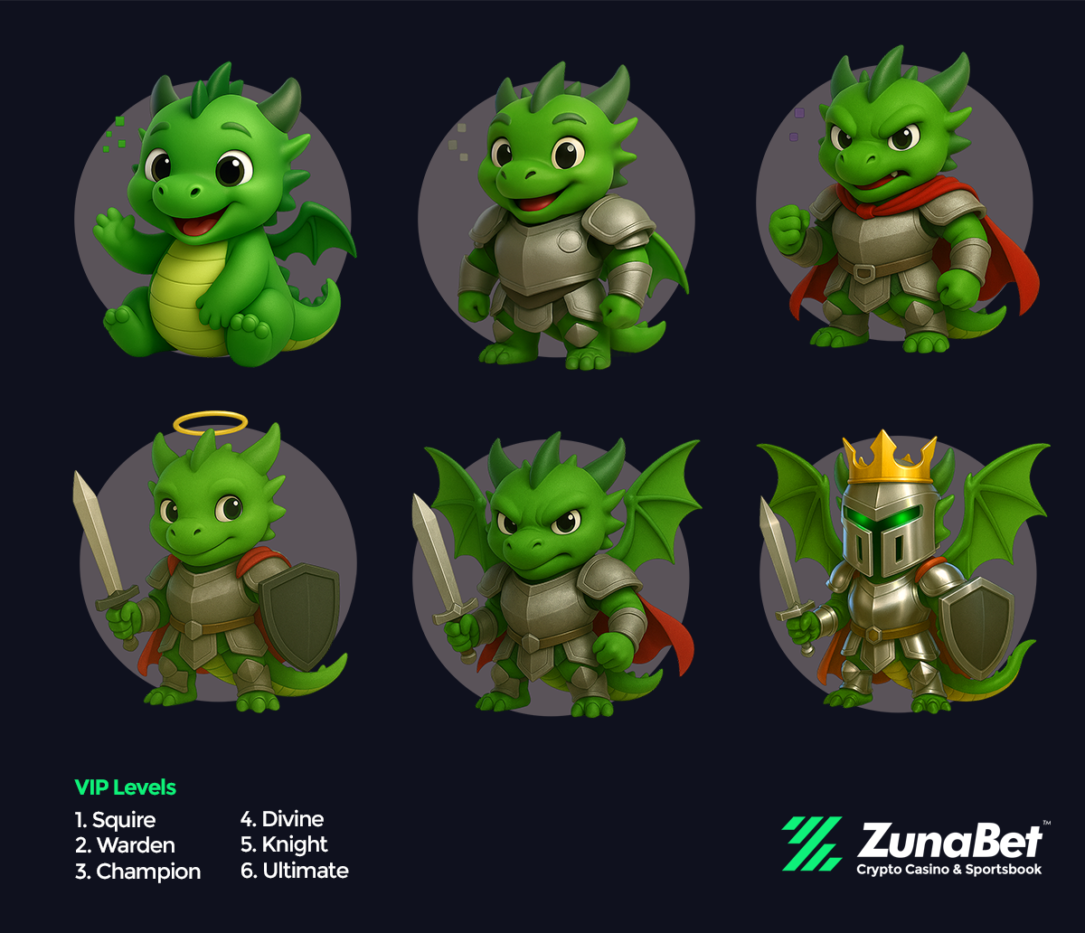
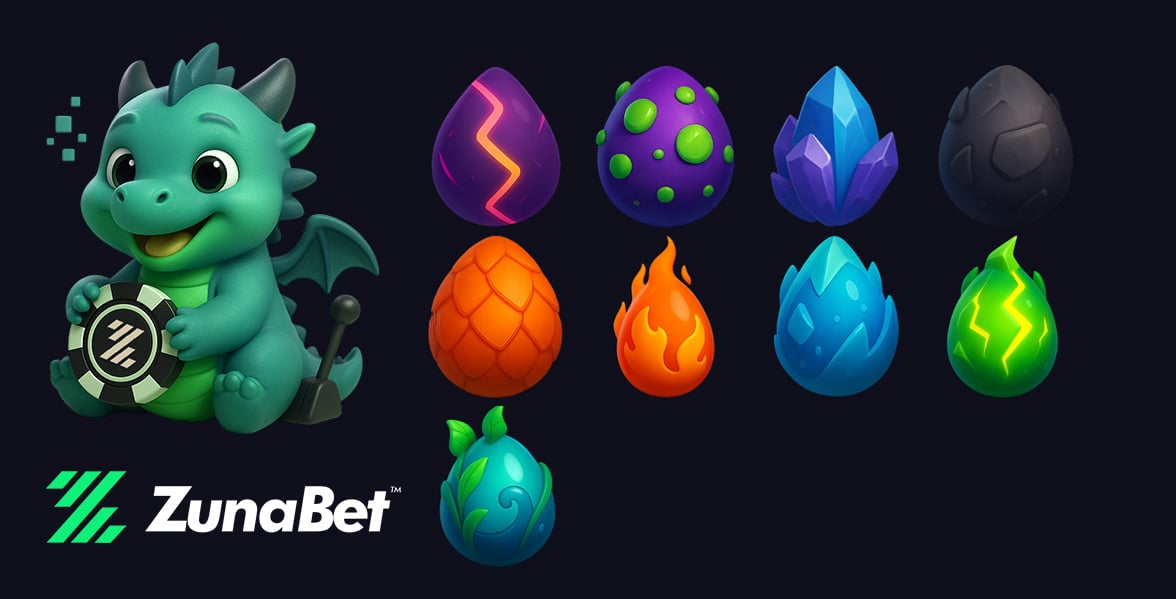
ZunaBet’s dragon evolution loyalty system gives players a precise, calculable answer before they join. Six tiers — Squire, Warden, Champion, Divine, Knight, and Ultimate — built around a gamified mascot called Zuno with direct rakeback rates of 1%, 2%, 4%, 5%, 10%, and 20%. All tiers accessible to all players. All rates applying to all activity on the platform — casino games and sportsbook bets alike.
Twenty percent rakeback at the Ultimate tier is a number that speaks for itself. A player putting consistent volume through the platform receives a fifth of that value back directly, every month, without a conversion process or a redemption decision. Additional tier benefits including up to 1,000 free spins, VIP club access, and double wheel spins build on a structure that is already generous and transparent.
The Welcome Bonus
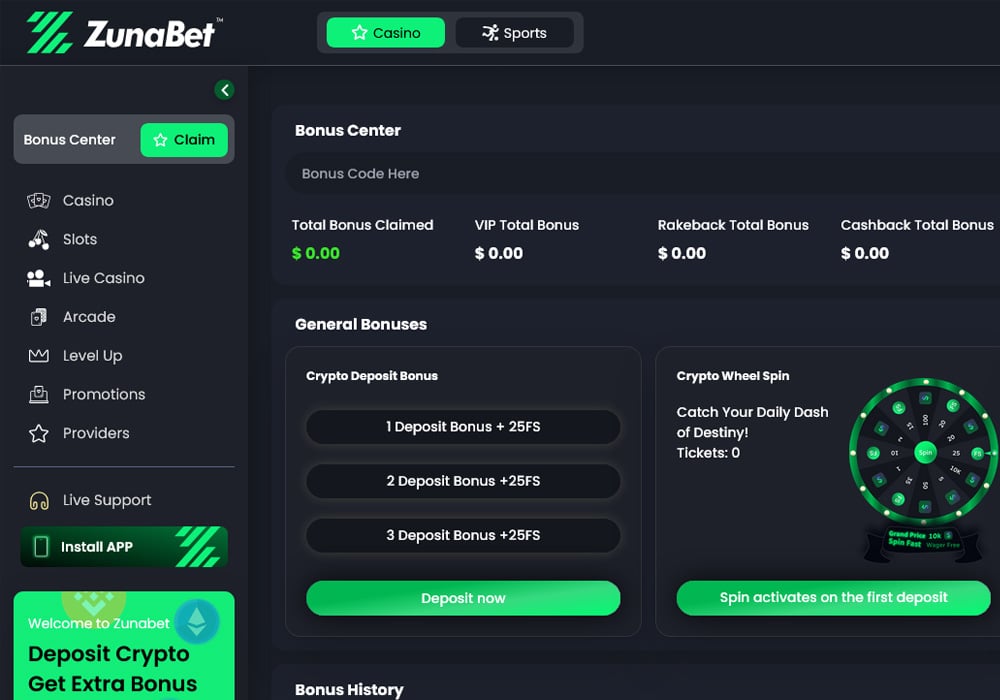
ZunaBet new players receive a bonus across three deposits totalling up to $5,000 plus 75 free spins. First deposit matched 100% up to $2,000 with 25 free spins. Second deposit matched 50% up to $1,500 with 25 spins. Third deposit matched 100% up to $1,500 with 25 spins. The three-deposit structure gives players time to explore a platform of 11,000-plus games and a full sportsbook properly before the promotional period ends.
DraftKings and Bet365 offer welcome promotions within their respective regulated markets. Current terms vary by jurisdiction and should be confirmed directly on each platform.
The Next Generation of Players and Where Their Research Leads
The player doing thorough research in 2026 is not the player the major platforms were built for. They are younger, more crypto-literate, more informed about what different platforms offer, and more willing to choose a less-recognised brand if that brand delivers better on the criteria they care about. They follow esports. They expect fast digital payments. They understand rakeback and will not accept points systems that obscure their value. They have access to comparison tools and review communities that make brand recognition less determinative than it was a decade ago.
For this player the research that starts with DraftKings and Bet365 does not always end there. It continues until the platform that actually meets their criteria is found. ZunaBet launched in 2026 as that platform — built for the player doing the research rather than the player who accepted the first answer.
ZunaBet’s operational track record is still being established. That is worth acknowledging honestly. A platform in its first year carries different trust credentials than one with a decade behind it and players should weigh that. But the product built for the thorough researcher is at ZunaBet — and in 2026 the thorough researchers are finding it.
Disclaimer: This is a Press Release provided by a third party who is responsible for the content. Please conduct your own research before taking any action based on the content.

Who Attended Jeff Bezos’ Pre-Met Party Despite Controversy

Robert Kiyosaki Reveals What’s Next Beyond Bitcoin and Crypto

Man charged after police called to Bury Road, Bolton

Manchester United reach agreement with Casemiro over contract clause amid transfer speculation

US brings back mandatory military draft registration

Steven Gerrard disagrees with Gary Neville over ‘shock’ Chelsea and Arsenal claim | Football
Robert Kiyosaki Reveals What’s Next Beyond Bitcoin and Crypto

Bajaj Finance Card Kaise Banaye 2026 | Bajaj Finance EMI Card | Bajaj EMI Card Online Apply 2026

Bitcoin (BTC): A Pivotal Moment For Bitcoin.. This Can Change Everything!
-

 Tech6 days ago
Register Renaming | Hackaday
-

 Politics6 days ago
Drax board avoid their own AGM, accused of greenwashing & environmental racism
-

 Tech6 days ago
Why Blue Badges Disappeared From Toyota Hybrids
-

 Tech6 days ago
Images of Samsung’s rumored smart glasses have leaked
-

 Fashion5 days ago
Kylie Jenner’s KHY Enters a New Era with ‘Born in LA’
-
 Tech2 days ago
Trump’s 25% EU auto tariff breaches Turnberry Agreement that also covers semiconductors and digital trade
-

 Business5 days ago
Most Commercial Energy Audits Miss the Real Losses
-

 Crypto World5 days ago
CFTC’s AI will review U.S. crypto registration applications, chairman tells CoinDesk
-

 Business6 days ago
(VIDEO) Charlize Theron Climbs Times Square Billboard to Promote New Netflix Thriller ‘Apex’
-
 Sports2 days ago
Paul Scholes issues Marcus Rashford reality check as agreement emerges over Man United star
-

 Business4 days ago
Barclay Brothers Avoid Bankruptcy: HSBC Drops High Court Petitions After IVA Deal
-
 Business4 days ago
Tesla Officially Registers Elon Musk’s Stock: What Investors Need to Know
-
 Entertainment6 days ago
Alicia Keys Calls Out Music Industry ‘Boys Club’
-

 Tech5 days ago
Get Ready for More Brain-Scanning Consumer Gadgets
-
Crypto World5 days ago
Robinhood Phishing Scam Exploits Gmail Dot Feature to Bypass Security
-

 Entertainment6 days ago
Sister Wives: Janelle Posts New Scary Warning
-

 Crypto World6 days ago
Gmail Dot Trick Underpins Robinhood Phishing, Sending Real-Looking Emails
-

 Business3 days ago
Two Powerball Tickets Split $143 Million Jackpot in Indiana and Kansas
-

 Tech6 days ago
The next iPhone moment might come from an AI company, not Samsung or Apple
-
 Crypto World6 days ago
Meme Coin Based on White House Shooter Conspiracy Rallies 320%
You must be logged in to post a comment Login