

Crypto World
Strategy’s ‘stable’ STRC spends a lot of time below its $100 target

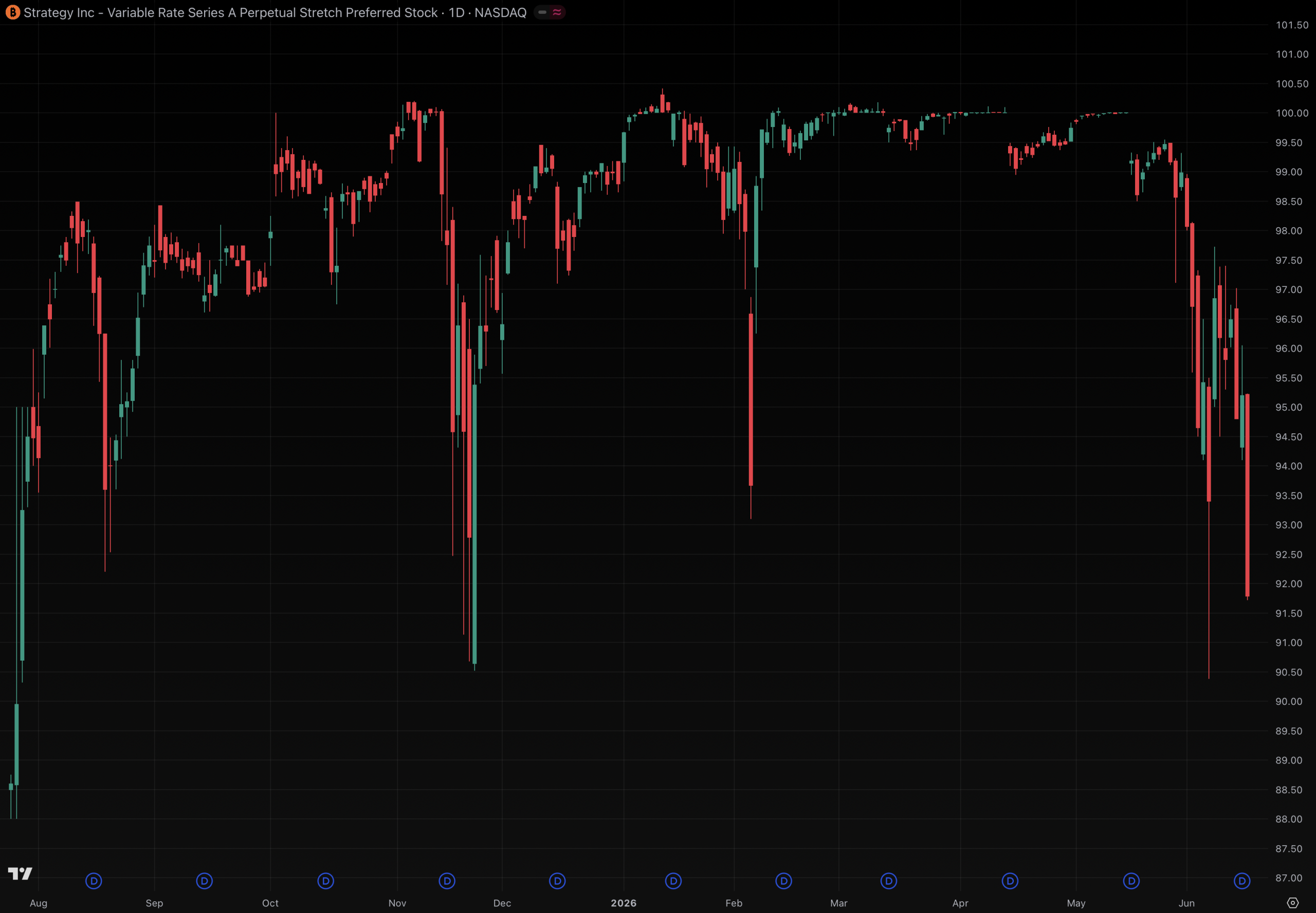
Most people holding Strategy’s 11.5% dividend-paying STRC, are making a strange bargain with the company; that on monthly snapshot days, the stock will trade near the company’s intended $100 share price.
In between those dates, however, STRC invariably wanders downhill. Indeed, it closed yesterday at $91.79, 8.2% below its target.
Strategy persuades buyers to take the bargain of downside possibility on their investment with an above-market yield of 11.5%.
Strategy, the bitcoin (BTC) treasury company built by Michael Saylor, markets STRC as a near-$100 instrument that strips away BTC’s volatility, providing ostensibly predictable payouts and a USD-stable target.
Anyone who holds STRC at the close of Nasdaq’s regular trading session on the dividend record “snapshot” date receives that payout.
Because Strategy pays a dividend on the full $100 par regardless of its price on Nasdaq, the company designed STRC to hold near $100 on its snapshot dates.
The actual chart of Nasdaq trades, unfortunately, says otherwise.
STRC had its IPO in July 2025 and didn’t even trade up to $100 until October. For over a trailing month as of publication time, STRC hasn’t traded at or above $100.
STRC crashes ex-dividend
The morning after its snapshot date, the stock trades “ex-dividend,” and holders earn nothing extra for maintaining their investment until another two weeks transpire and another snapshot occurs.
Predictably, the stock always rallies into these snapshot dates and immediately sells off afterward.
Historical prices bear this out across the security’s short life.
In August 2025, STRC dropped to $92.20 in-between its dividend snapshot dates.
In September, it drifted to $96.61. October was a similar $96.75. Then November frightened investors with a 9.5% drop from $100 to $90.52.
Although each month’s trading range is unique, this month is risking becoming on of its worst. Just yesterday, shares closed at $91.79.
Run-ups into the dividend snapshots are routine, but declines are just as routine.
Read more: Strategy shareholders approve twice-monthly STRC dividends
Semi-monthly dividends haven’t helped yet
Strategy’s talked shareholders into making the problem twice as frequent, albeit shorter in duration.
On June 8, holders approved a shift to semi-monthly dividends, with record dates on the 15th and the last day of each month. Its first semi-monthly dividend will occur next month.
Strategy CEO Phong Le said the change was designed to “stabilize price” for STRC, which definitely hasn’t happened so far.
Over its lifetime, STRC has traded as high as $100.42 and as low as $90.38. That is a band of more than $10 for a $100 stock that’s supposed to hug its par value.
With STRC trading 8.2% below its par as of yesterday’s close, Strategy has two obvious defenses available.
First, it could raise the dividend. STRC pays 11.50% a year now, a yield higher than most junk bonds, but there’s plenty of room to go higher if the company wants to burn cash faster.
Payouts started at 9% when the shares launched, and have climbed steadily to 11.5% today.
Second, Strategy could buyback shares. The company has never done this.
As Protos has documented, the cost of maintaining investor confidence in STRC keeps rising. For a security sold on the idea of stable income, STRC asks for a lot of faith between its semi-monthly record dates.
Got a tip? Send us an email securely via Protos Leaks. For more informed news and investigations, follow us on X, Bluesky, and Google News, or subscribe to our YouTube channel.



Illinois Governor JB Pritzker has signed SB 3019, the Digital Asset Privilege Tax Act, according to ChainCatcher via Bitget News, making the state the first in the country to impose a transaction-based tax on everyday digital-asset activity. The Crypto Council for Innovation, a global industry… Read the full story at The Defiant
Crypto World
BlockDAG Tops Trending Cryptos 2026 While Arbitrum, Internet Computer, And Kaspa Fight Market Resistance

The cryptocurrency market in June 2026 is defined by extreme structural shifts as massive capital blocks rotate out of speculative public exchanges. High frequency algorithmic trading and sudden regulatory actions have created a highly volatile environment, completely destroying retail profit margins. Portfolio managers are shifting their attention toward native utility platforms featuring isolated treasury contracts to protect their principal investments.
This ongoing market correction proves that standard open market trading is no longer a viable strategy for sustainable capital growth. Sidelined investors are aggressively seeking ecosystems that provide fixed financial guarantees rather than relying entirely on unpredictable daily trading volume.
BlockDAG Announces the Concluding Phase of Its Legacy Sale
When analyzing the top trending cryptos 2026, BlockDAG dominates institutional interest by announcing the final operational countdown for its legacy tier. This clean urgency play focuses on the fact that the promotional introductory tier is officially wrapping up, making this the absolute final window to secure these specific terms before standard price discovery begins. Participants can leverage the native direct swap dashboard to acquire tokens at the foundational rate of $0.00000044. Every allocation is securely locked into a guaranteed corporate buyback contract fixed at $0.10.
This hardcoded exit strategy eliminates the stress of chart monitoring and completely shields portfolios from sudden liquidity crunches. As the premier choice among trending cryptos 2026, BlockDAG is experiencing massive capital inflows as large scale asset managers drain the remaining treasury pool. Once the current allocation reaches maximum capacity, this fixed ten cent settlement will disappear permanently. Everyday buyers must execute their positions immediately before the closing bell rings on this historic wealth building vehicle.
Arbitrum Consolidates Near Historic Price Lows
Market data from mid June 2026 shows Arbitrum trading at a highly depressed value of $0.09. The network has experienced a massive 74.33% drop over the past twelve months, establishing an all time low of $0.06 earlier in the month. Despite handling significant decentralized application volume as a layer two scaling solution, the native asset continues to suffer from heavy token unlocks and institutional distribution.
While the token is often listed among trending cryptos 2026, actual price action remains deeply bearish. The $0.10 zone acts as heavy overhead resistance, constantly rejecting localized relief rallies. Until the core development team restructures the tokenomics to encourage long term holding, Arbitrum will likely remain trapped in this tight consolidation phase.
Internet Computer Fights Stagnant Market Momentum
Internet Computer continues to face significant market friction, trading near $8.45 during the second week of June 2026. The network has successfully expanded its cloud infrastructure capabilities, attracting enterprise developers looking for decentralized hosting solutions. However, this fundamental utility has failed to translate into meaningful token price appreciation.
The asset recently broke below its 50 day moving average, signaling increased bearish control over the short term. Support currently sits at $7.80, and a failure to hold this level could trigger a rapid descent toward the $6.50 range. While developers consider the platform functionally superior to older chains, retail investors searching for trending cryptos 2026 are heavily disappointed by the persistent lack of upward chart momentum.
Kaspa Faces Heavy Selling Pressure Below Moving Averages
Kaspa is currently navigating a tough technical landscape, with prices hovering around $0.14 in mid June 2026. After experiencing explosive growth in previous quarters, the proof of work network is now enduring a prolonged distribution phase. Large scale early miners are actively taking profits, creating a massive supply wall that suppresses new retail buying volume. The asset is currently testing critical structural support at the $0.13 zone.

A confirmed daily close below this baseline could invalidate the entire macro bullish structure. As portfolio managers evaluate trending cryptos 2026, Kaspa presents a highly risky setup. The lack of smart contract functionality limits the ecosystem’s ability to lock up circulating supply, leaving the token entirely dependent on constant spot market demand.
To Conclude
Evaluating the current digital asset sector highlights the extreme danger of holding highly speculative utility tokens. Arbitrum remains severely depressed at $0.09 following a massive yearly decline. Internet Computer struggles to clear technical resistance near $8.45, while Kaspa faces heavy miner distribution at $0.14.
In stark contrast, BlockDAG establishes itself as the ultimate leader among trending cryptos 2026. By utilizing the concluding legacy sale to secure a $0.00000044 entry, retail investors guarantee a fixed $0.10 corporate exit. This mathematically flawless framework provides total financial security, making BlockDAG the absolute best choice before the promotional vault closes permanently.

Disclaimer: This is a Press Release provided by a third party who is responsible for the content. Please conduct your own research before taking any action based on the content.

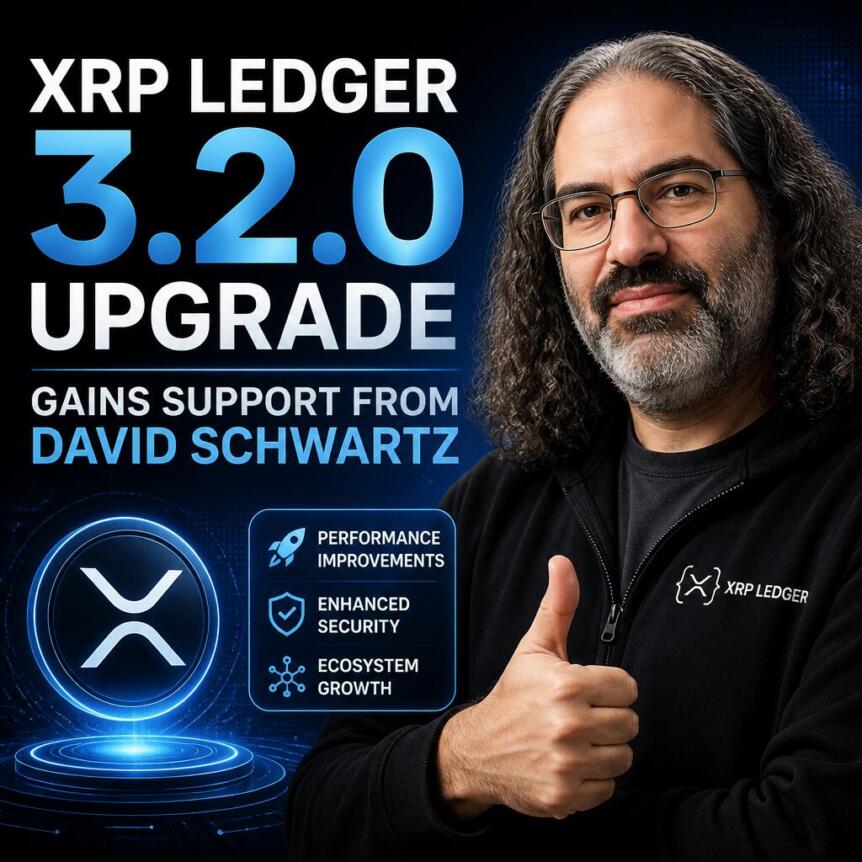
The XRP Ledger 3.2.0 upgrade has reached network operators, bringing infrastructure improvements and software changes across the ecosystem. David Schwartz, Ripple’s CTO emeritus and one of the original architects of the XRP Ledger, recently upgraded his independent hub server to the latest version after a short maintenance period.
Source: https://x.com/JoelKatz/status/2067004655021048252?s=20
The XRP Ledger 3.2.0 upgrade focuses on maintenance, cleanup, and reliability improvements. While the release does not introduce major new features, it strengthens existing systems and prepares the network for future development. As operators begin deployment, the update marks another step in the network’s ongoing technical evolution.
David Schwartz Completes Hub Upgrade
Schwartz announced on X that he temporarily took his hub offline to install the XRP Ledger 3.2.0 upgrade. He initially expected the process to take about ten minutes. However, the server required additional time to shut down safely before the installation could proceed.
Alongside the announcement, Schwartz shared performance data covering the previous month. He stated that the charts showed only “one real event,” which he described as an “unexplained burst of peer disconnections.” According to his comments, the disruption likely resulted from a nearby network outage rather than an issue within the XRP Ledger itself.
His hub serves as part of the broader peer-to-peer infrastructure that supports connectivity and data exchange across the network. Although the hub does not function as a validator replacement, it helps participants monitor network activity and maintain reliable connections.
Xrp Ledger 3.2.0 Upgrade Introduces Key Changes
The XRP Ledger 3.2.0 upgrade includes several technical improvements. Developers removed amendments that had remained active for more than two years. The release also continues the modularization of libxrpl, which supports long-term software maintenance.
In addition, the update introduces fixCleanup3_2_0. This package addresses issues affecting Single Asset Vaults, the Lending Protocol, permissioned decentralized exchange tools, Multi-Purpose Tokens, and permissioned domains.
The fixes improve precision, rounding processes, validation checks, and system invariants. As a result, operators gain a more stable software environment for running network services and supporting advanced blockchain functions.
Software Rename Marks New Network Identity
One of the most visible parts of the XRP Ledger 3.2.0 upgrade is the renaming of the core server software. Under XLS-0095, developers changed the server binary name from rippled to xrpld. They also renamed the default configuration file from rippled.cfg to xrpld.cfg.
The migration requires operators moving from version 3.1.3 to complete additional configuration steps. Network documentation advises operators to update systems promptly to avoid service interruptions.
Beyond technical changes, the new name creates a clearer connection to the XRP Ledger network. At the same time, the release supports broader development efforts, including lending tools and programmable escrow features that continue to expand the network’s functionality.
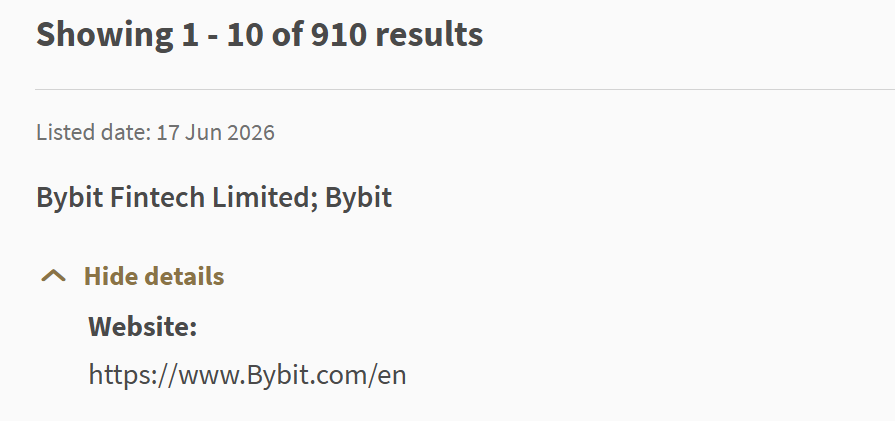
Crypto exchange Bybit has been added to the Monetary Authority of Singapore’s (MAS) Investor Alert List, a registry designed to warn consumers about entities that may be wrongly perceived as licensed or regulated by the financial watchdog.
Bybit Fintech Limited and Bybit appeared on the MAS alert list on Wednesday, although the regulator did not provide a specific reason for their inclusion.
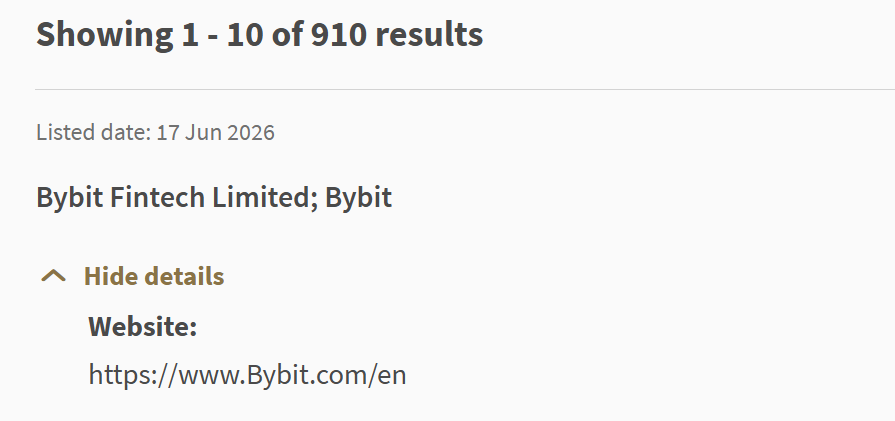
Bybit Fintech Limited, the corporate entity behind the exchange, appears on the MAS Investor Alert List website. Source: MAS
According to MAS, the Investor Alert List identifies entities and investment offers that may create the false impression of being licensed, authorized, regulated or registered by the authority, or whose investment offerings may be mistakenly viewed as having received MAS approval.
Based on publicly available information, Bybit is not licensed or regulated by MAS. Cointelegraph reached out to a Bybit spokesperson for comment but did not receive a response by the time of publication.
Although Bybit was founded by Singaporean entrepreneur Ben Zhou, the exchange does not operate in the city-state. Singapore is listed among the company’s “Service Restricted Countries” on its website, meaning users in the jurisdiction are not permitted to access its services.
Related: SBI Holdings targets majority stake in Singapore crypto exchange Coinhako
Singapore maintains strict oversight of crypto sector
Singapore has cemented its position as a leading crypto hub, ranking among the world’s top jurisdictions for decentralized finance and institutional digital asset services in Chainalysis’ 2025 Global Crypto Adoption Index. Retail crypto adoption, however, ranked significantly lower.
The MAS has continued to take an assertive approach to industry oversight. In May, the regulator revoked the Major Payment Institution license of crypto liquidity provider Bsquared Technology after uncovering what it described as serious regulatory breaches, including weaknesses in risk management and conflict-of-interest policies.
MAS also said the company had provided false or misleading information on multiple occasions, from its initial license application through a subsequent inspection.
Separately, Singapore police charged former Hodlnaut CEO Zhu Juntao in May with six counts of fraud for allegedly misleading customers about the crypto lender’s exposure to the 2022 Terra ecosystem collapse.
Hodlnaut, a Singapore-based crypto lending platform that once served tens of thousands of users, suspended withdrawals in August 2022 following the Terra implosion and was later ordered to liquidate.
The regulator placed Binance.com on its Investor Alert List in 2021, The Straits Times reported at the time. However, a search on Wednesday of the list did not show any mention of Binance among 910 records in the query.
Related: Singapore Gulf Bank adds stablecoin mint and redeem for 24/7 settlement
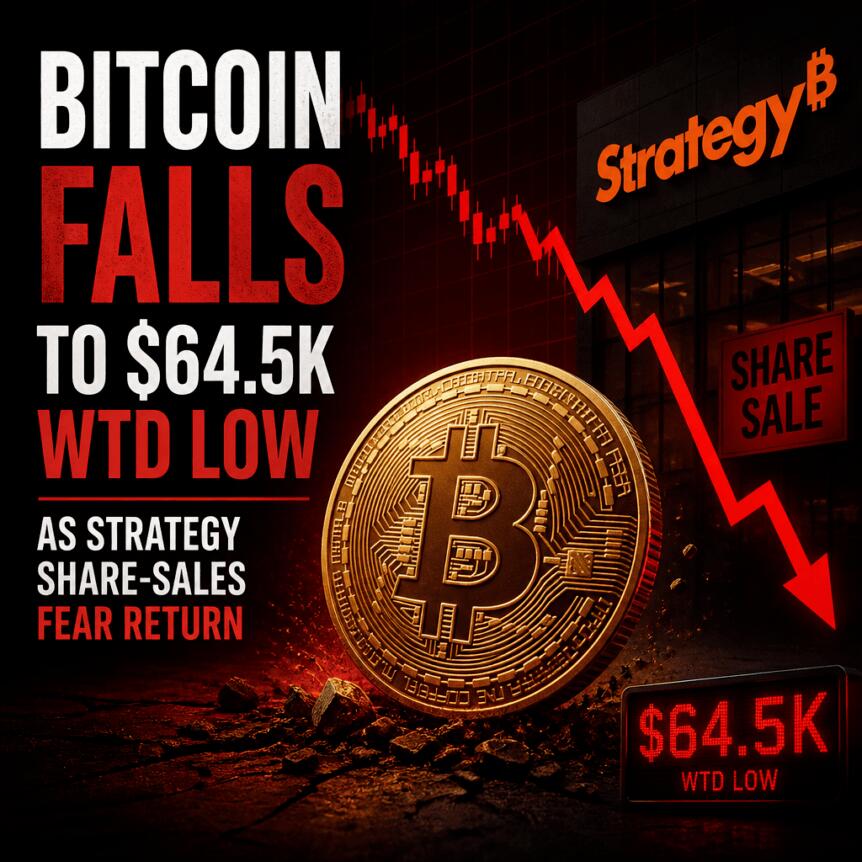
Bitcoin pulled back from its weekly lows as traders returned to watch a busy U.S. macro calendar, with the Federal Reserve’s Wednesday interest-rate decision arriving shortly after the Wall Street open. Still, analysts say the rebound has struggled to build momentum, pointing to a lingering, very specific drag tied to Strategy’s Bitcoin position.
QCP Capital’s latest Market Color argues that, despite broader risk appetite improving, BTC has not been able to fully participate. The firm highlighted concerns that Strategy could be forced to sell additional Bitcoin to fund dividend obligations, even after recent balance-sheet actions that were intended to extend its liquidity runway.
Key takeaways
- BTC/USD rebounded after dipping to about $64,500 on Bitstamp ahead of the Federal Reserve meeting.
- QCP says BTC’s underperformance versus broader markets is linked to worries about further Strategy Bitcoin sales for dividend funding.
- QCP frames Fed chair Kevin Warsh’s first rate decision as unusually difficult given the tension between inflation concerns and rate-cut expectations.
- CME Group’s FedWatch Tool data shows traders pricing in no rate cuts at the Wednesday meeting, with markets increasingly focused on the possibility of hikes later in the year.
Strategy’s liquidity plans keep a lid on BTC strength
TradingView data cited in earlier coverage showed BTC/USD trending higher after the asset marked a new low for the week around $64,500 on Bitstamp. The bounce followed a period of caution as investors braced for volatility around the Federal Reserve’s announcement, scheduled for 2 p.m. Eastern time.
As Cointelegraph previously noted, major central-bank events often bring downside risk for Bitcoin in the short term. However, QCP’s analysis suggests the issue is not solely about the Fed headline. In its Market Color, the firm wrote that BTC remained trapped below the $66,000 area while broader markets traded up on optimism across multiple fronts.
“While broader markets continue to trade higher on optimism across multiple fronts, BTC remains stuck below the 66k level,” QCP wrote.
The clearest culprit in QCP’s assessment was Strategy. The firm said market worries center on whether Strategy may need to sell more Bitcoin to support dividend payments—particularly after the company had already bought back $1.5 billion of its 2029 Convertible Senior Notes.
“The underperformance has been driven in part by concerns that Strategy may need to sell more Bitcoin to fund dividend payments,” QCP added.
QCP also pointed out that Strategy has taken steps to extend its liquidity runway following prior BTC sales. The analysis referenced that the company “extended its runway” after selling 32 BTC in May, and suggested that these contingency measures can reduce the immediate pressure. Yet the market is still focused on what comes next.
In QCP’s view, the overhang could keep Bitcoin from fully tracking macro optimism in the near term. Over time, as Strategy continues issuing shares and lengthening its runway, it expects sentiment to potentially improve—but for now, the firm argued BTC still has a specific hurdle to clear.
“In the short term, we think this overhang may continue to prevent Bitcoin from fully participating in the broader macro optimism,” QCP wrote.
Warsh’s first Fed meeting becomes a test of how the market should price rates
While BTC traders looked to the Fed for direction, QCP placed equal weight on the significance of who is delivering the message. The firm emphasized that Kevin Warsh takes the stage at his first FOMC meeting as chair.
“Warsh takes the stage at his first Fed meeting as Chair today,” QCP said in its analysis.
QCP noted that expectations had previously positioned Warsh as relatively dovish and more inclined toward rate cuts. But the economic backdrop, the firm argued, has shifted materially—raising the likelihood that Warsh will need to navigate competing pressures.
According to QCP, the meeting represents more than just the rate decision itself, especially with Jerome Powell stepping out of the role. The firm described Warsh’s task as establishing buy-in from Powell and the broader board while also proving he can operate as a credible and independent chair.
“Today’s meeting will therefore be about more than the rate decision,” QCP wrote. “It will be Warsh’s first opportunity to secure buy-in from Powell and the rest of the Board, while establishing himself as a credible and independent Fed Chair.”
FedWatch pricing: no cut now, uncertainty remains toward year-end
Market pricing for Wednesday’s decision offers a clearer picture of what traders are bracing for. Data referenced from CME Group’s FedWatch Tool showed no odds of the FOMC cutting rates at the meeting.
At the same time, commentary in the source material suggested that investors are increasingly looking ahead to possible policy tightening later in the year. Andre Dragosch, European head of research at Bitwise, said markets were moving toward expectations of a rate hike by year-end, which he warned could weigh on crypto and other risk assets.
Dragosch also pointed to an open question that may matter as much as the current decision: whether Warsh will ultimately lean hawkish or dovish in the face of rising inflation. In a post on X, Dragosch said there was still “a lot of monetary policy uncertainty” around how Warsh would be categorized, despite the inflation backdrop.
What traders should watch next
With BTC tied to both macro expectations and Strategy-specific selling anxieties, the near-term signal may come less from price alone and more from confirmation on policy path pricing and any updated clarity around Strategy’s liquidity planning. Investors should watch the Fed’s language closely for clues on the trajectory of rates, while also monitoring whether Strategy’s funding approach continues to reduce—or reignites—concerns about additional Bitcoin sales.

The primary cryptocurrency has staged a clear rebound from its multi-year low below $60,000 and is currently hovering around $65,000.
However, a number of analysts believe the cycle bottom has yet to be reached, projecting a plunge under $50,000.
Red Days Ahead?
Later today (June 17), the Federal Reserve will announce its decision regarding the interest rates in the United States. Given elevated inflation, it would be surprising if the central bank lowered the benchmark, as most expect the current 3.5%-3.75% range to remain unchanged.
Some analysts, though, have identified a consistent pattern in Bitcoin’s (BTC) reaction whenever the Fed releases its interest rate decision. The popular X user Ash Crypto told their over two million followers that the asset’s price has headed south after each FOMC meeting since July 2025. The biggest slump occurred in January this year when BTC lost more than 33% of its valuation. We have yet to see whether today’s disclosure will finally break the negative streak (at least for the bulls).
Other market observers who also made pessimistic predictions include X users bee and Crypto Lens. The former claimed that BTC is “on the verge of the final flush,” expecting a drop to $51,000-$52,000.
“After that, I expect a rebound to the 55k zone and a few weeks of sideways movement, with the potential for a break below 50k,” they added.
For their part, Crypto Lens envisioned a bearish rejection toward roughly $48,000 in the coming days, followed by a crash to $43,000 by August this year.
The Bullish Case
Despite pessimism from some analysts, certain indicators suggest BTC may be gearing up for a rally. The amount of coins stored on crypto exchanges, for example, recently dropped to a six-year low of around 2.56 million. This means that many investors continue to abandon centralized platforms in favor of self-custody solutions, thereby reducing selling pressure.
The whales’ actions are the next positive factor. Ali Martinez revealed that this cohort of investors has purchased more than 30,000 BTC (worth more than $1.9 billion) over the past seven days and now controls 4.27 million coins.
Such developments signal that whales are positioning for the next upward move, with some believing they might be acting on inside information that retail investors don’t have. In any case, their buying spree is closely monitored by smaller players who could mimic the move and distribute fresh capital into the ecosystem.
The post Bitcoin in Danger: Here’s Why BTC May Dump in the Short Term appeared first on CryptoPotato.

A former Goldman Sachs analyst just put a $1,000 price target on XRP by 2030. XRP is currently trading around $1.20, down 3.5% over 24 hours, but also the whole market as we wait for FOMC.
Dom Kwok, co-founder of Web3 education platform EasyA and a former Goldman Sachs analyst, told The Rollup podcast: “I think it could go over $1,000 in the next four to five years.”
His thesis centers on mass crypto adoption routing through XRP rather than Bitcoin or Ethereum, arguing that new retail entrants are priced out of the larger-cap assets and will default to cheaper, more practical alternatives.
This target sits orders of magnitude above the institutional consensus band of $3–$20. On-chain, wallets holding at least one million XRP now control 74.1% of the total supply, with those large holders adding 1.53 billion tokens over the past six months, accumulating at a scale.
Simultaneously, easing U.S.-Iran tensions lifted risk appetite, pushing Bitcoin toward the mid-$60,000s and pulling XRP along.
Discover: The Best Crypto to Diversify Your Portfolio
Can XRP Price Hit $1,000, Or Even $10, Before 2030?
At $1.20 with a weekly green candle of 8%. XRP is in a corrective phase, but the technical structure hasn’t broken down. RSI sits near 62, constructive, not overbought. A recent 3-day MACD bullish cross remains intact, and a decade-long rising trendline has not been violated.
Key support is clustered in the $1.10–$1.15 zone, with mid-term resistance flagged at $1.43–$1.55 by multiple technical frameworks (the asset has since broken above those levels, setting up a new range).

If the U.S. legislative progress via the CLARITY Act passes, XRP-linked ETF inflows will likely accelerate. Then, continued whale accumulation will tighten supply, and price will retest recent highs and push toward $2, consistent with Standard Chartered’s conditional $8 target.
The $1,000 call? That would require a market cap measured in the tens of trillions, a number that requires assumptions about global financial infrastructure adoption that are plausible in theory and extraordinary in practice. Kwok’s framing as an internet-era analogy is intellectually coherent.
Discover: The Best Token Presales
LiquidChain Eyes Early Infrastructure Positioning as XRP Tests Range
XRP’s bull case leans heavily on infrastructure maturation, the idea that real adoption follows useful applications built on top of accessible networks. That same thesis is driving early interest toward a different layer of the stack.
Even in a confirmed XRP uptrend, entry at $1.20 is entry into an asset with a $75 billion market cap. The asymmetry is compressed. Early-stage infrastructure is where that asymmetry still exists.
LiquidChain is always cooking something new. — LiquidChain (@getliquidchain) June 15, 2026

This is what happens when a great idea meets innovation.  pic.twitter.com/qYbth0impA
LiquidChain ($LIQUID) is a Layer 3 infrastructure project positioning itself as the cross-chain liquidity layer, fusing Bitcoin, Ethereum, and Solana liquidity into a single execution environment.
The architecture includes a Unified Liquidity Layer, Single-Step Execution, Verifiable Settlement, and a Deploy-Once model that lets developers access all three ecosystems without redeployment. The presale is currently priced at $0.0147, with $850K raised to date.
Research LiquidChain’s presale details here.
The post XRP Price Is Targeting $1,000 Says Ex Goldman Analyst appeared first on Cryptonews.
Stablecoin settlement infrastructure company Trace Finance has raised $32 million in a Series A funding round led by CoinFund.
Coinbase Ventures, Jump Capital and Paxos were among the investors that participated in the round, the company said Wednesday in a statement shared with Cointelegraph.
Trace Finance provides banking, foreign exchange and stablecoin settlement infrastructure for cross-border payments across Latin America. It claims to have processed more than $10 billion in transaction volume and plans to use the fresh capital to expand across LatAm, the US and Asia-Pacific markets.
The funding comes as stablecoin settlement increasingly moves into regulated financial infrastructure, with companies racing to connect blockchain-based payments to local banking systems and foreign exchange networks.
In 2022, Trace Finance raised $4.3 million in a seed round led by HOF Capital, with participation from Circle Ventures and Mantis VC, the venture capital firm co-founded by electronic music duo The Chainsmokers. HOF Capital also participated in the company’s Series A round.
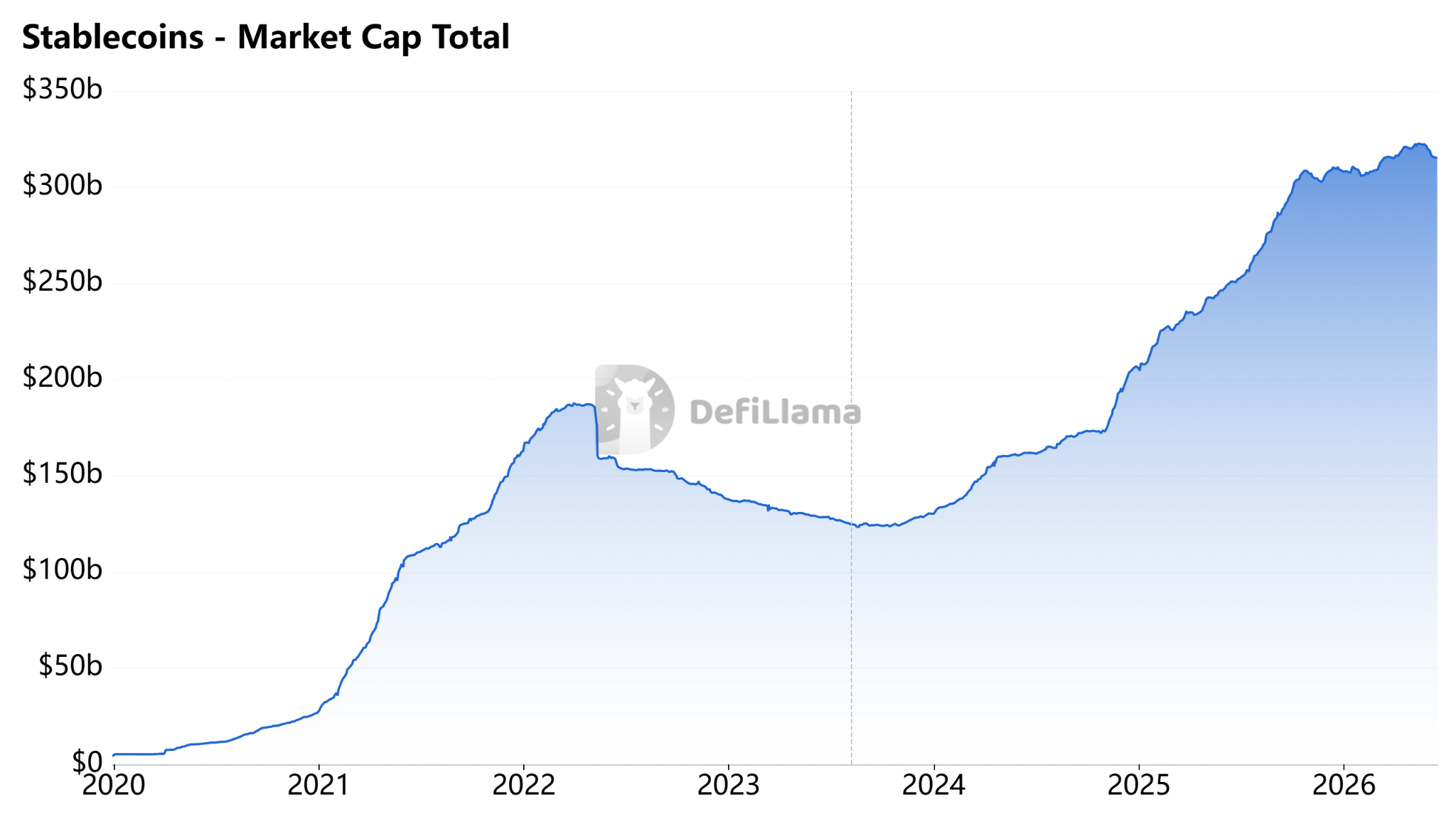
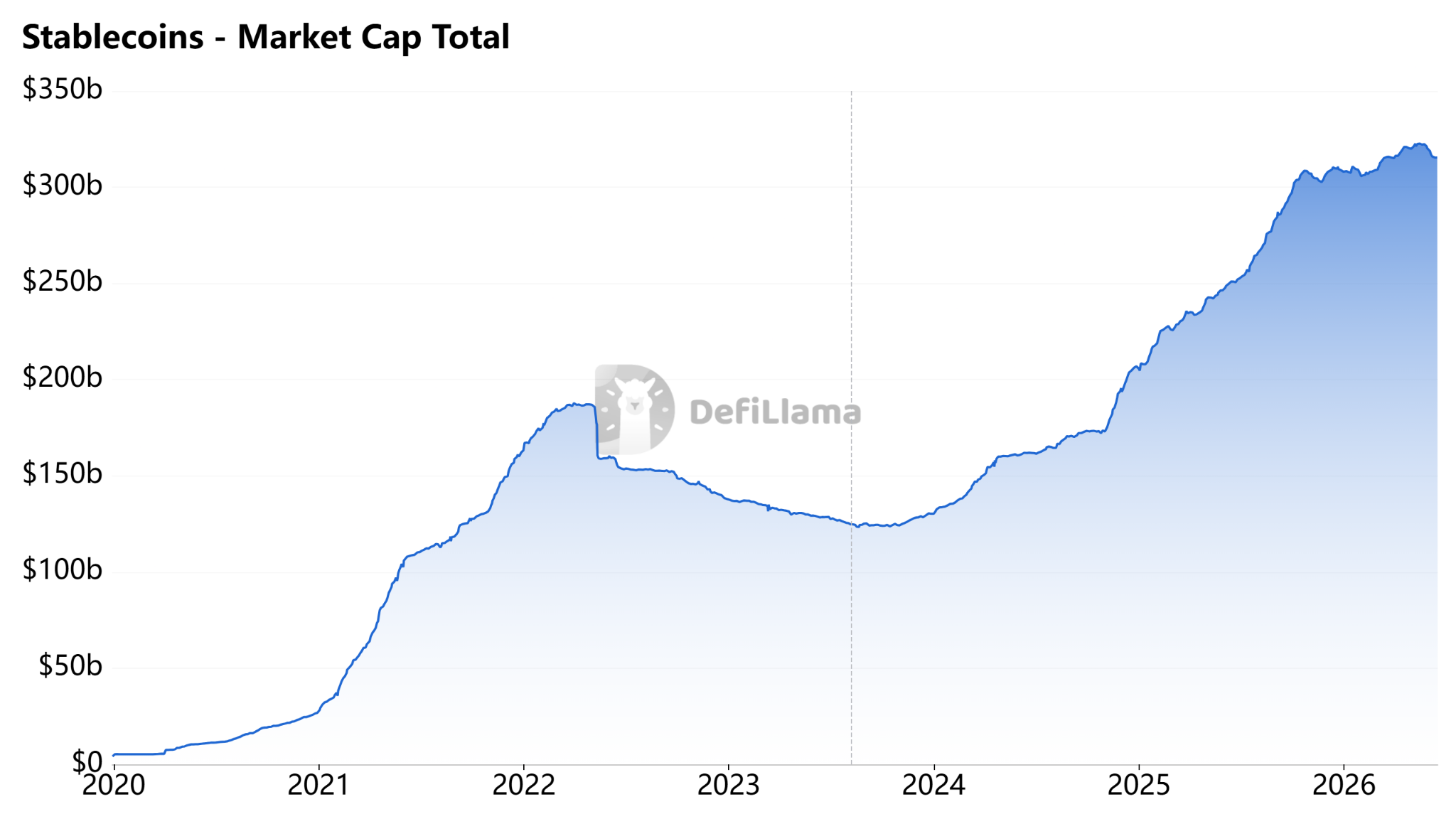
Stablecoin market capitalization stood at about $315 billion. Source: DeFiLlama
Stablecoin regulation drives cross-border payments push
Stablecoin policy discussions accelerated globally after US President Donald Trump signed the GENIUS Act into law in July 2025.
The legislation spurred discussions around stablecoin laws in jurisdictions developing their own digital asset strategies. Hong Kong implemented its Stablecoin Ordinance in August 2025 and has recently granted its first batch of licenses.
On Wednesday, People’s Bank of China (PBOC) official Wang Xin said authorities are closely monitoring how stablecoins could affect the international monetary system and cross-border payments.
Wang’s remarks were less critical than comments made by PBOC Governor Pan Gongsheng in October 2025, when Pan described stablecoins as high-risk and vulnerable to misuse for illicit cross-border transfers.
As stablecoin regulations advance globally, private-sector firms have also ramped up efforts to build infrastructure for cross-border payments.
Last Thursday, cross-border payout platform MassPay partnered with Coinbase to offer stablecoin-powered international payouts. The companies said the service would allow customers to move between fiat currencies, USDC and other digital assets while reducing costs and speeding up settlement times.
Other financial infrastructure providers have also expanded their stablecoin offerings. Stripe acquired stablecoin infrastructure startup Bridge in 2025, while Circle launched its Circle Payments Network in May 2025 to connect banks, payment companies and digital wallets for real-time cross-border settlement using stablecoins.

Aster DEX just handed its tokenomics a structural overhaul, and its crypto token rockets. The announcement redirecting 99% of daily platform fees into automatic ASTER buybacks sent the token up over 10% on the day.
Under the upgraded model, Aster executes TWAP buybacks across each day, settling on-chain to a public wallet. For every token repurchased, an equal amount is permanently burned from reserves, starting with team allocations.
[Tokenomics Update] $ASTER Buyback and Burn Steps Up to 198% — Aster
Aster is upgrading its buyback so the platform's own activity both rewards stakers and sets $ASTER on a deflationary path.
Starting from 12:00 PM UTC today, 99% of Aster's daily platform fees buy back $ASTER. An equal…
 (@Aster_DEX) June 17, 2026
All bought-back tokens flow directly into Loyalty Rewards, stacked atop the existing 300,000 $ASTER base pool and distributed proportionally to veASTER lock weight. The protocol has already completed over $214 million in cumulative buybacks, reclaiming more than 143.38 million ASTER (7.11% of supply) in under a month.
Aster has drawn consistent comparisons to Hyperliquid as institutional capital rotates toward on-chain derivatives infrastructure, making this tokenomics upgrade more than a housekeeping move. It’s a direct competitive signal.
Discover: The Best Crypto to Diversify Your Portfolio
Can ASTER Crypto Break $1?
Before the crypto announcement, ASTER was trading in a tight range, consolidating under $0.7 after a brief spike to $0.76 months ago, a level it failed to hold. The token broke a short-term downtrend line in the lead-up to the announcement, posting a 12% rally in less than 2 hours, but resistance near $0.75 has rejected the price twice.

Support is long gone; it was clustered in the $0.63 demand zone, where every sell pressure has been absorbed. The 30-period moving average sits near $0.65, acting as a short-term floor. RSI hovering near 61 signals moderate bullish momentum.
For its crypto holders, daily buybacks of $2–3 million would compress supply steadily, and unlock pressure from the locked airdrop wallet might be absorbed. If all those happen, ASTER could clear $1 to open a path toward $1.50 once again.
Discover: The Best Token Presales
Bitcoin Hyper Eyes Early-Stage Entry as ASTER Tests Structural Resistance
ASTER’s 10% pop on strong tokenomics news underscores a familiar dynamic: the market rewards supply-side discipline, but established tokens with billions of market cap face a different risk/reward than early-stage entries. At this market cap, the multiple is compressed. The asymmetry has already been partially priced. That’s exactly where traders with a different time horizon start looking elsewhere.
Bitcoin Hyper ($HYPER) is a Bitcoin Layer 2 presale building what it bills as the first-ever BTC L2 with Solana Virtual Machine (SVM) integration, targeting sub-second finality on top of Bitcoin’s security layer. The pitch directly addresses Bitcoin’s three structural constraints: slow throughput, high fees, and limited programmability.
Hard numbers: presale price sits at $0.0136, total raised has crossed $32.8 million, and staking carries a high APY for early lockers. The Decentralized Canonical Bridge handles native BTC transfers without custodial wrapping. The DEX token game might be too late to enter, and Bitcoin layer 2 could be the next narrative.
Research Bitcoin Hyper before the next stage closes.
The post Aster Crypto Explodes: Buyback and Burn News Sends Hyperliquid Rival Up 10% appeared first on Cryptonews.


Sam Bankman-Fried (SBF), the disgraced founder of FTX, is floating plans to launch a new crypto token after his release from prison. The former crypto magnate is currently serving a 25-year sentence after the catastrophic collapse of his exchange.
Here is what SBF reportedly said, why experts strongly dismiss the plan, and how the crypto community is now reacting.
SBF Has Ambitious Plans After Prison
SBF shared his future plans during a recent conversation with former inmate David Bunevacz. The revelation was later detailed in a New York Magazine feature. According to the report, his main goal is to return to the tech business right after his release from prison.
“Maybe he was joking, and probably no one will flock to him. But who knows,” Bunevacz said.
To build a real corporate structure, he reportedly needs initial capital between $50 and $100 million. Furthermore, the most striking part of his testimony focused on issuing a fully independent digital asset of his own design.
The former crypto figure expressed full confidence in the idea. According to the source, SBF said he will launch his coin, and everyone will come to it. The statement reignites scrutiny over his ambitions, despite his serious legal troubles.
Follow us on X to get the latest news as it happens
His legal record makes the comeback ambitions controversial. The 2022 FTX collapse exposed widespread fraud and misuse of client funds. Moreover, US courts categorically rejected the defense’s appeal to reduce the sentence.
The announcement also revives debate over how crypto handles repeat offenders. SBF was once celebrated as one of the most influential founders in the industry. However, his fall from grace became one of the most documented corporate scandals of the past decade.
Why Experts Strongly Dismiss SBF’s Crypto Comeback
The claims belong strictly to SBF’s personal wishes, according to industry experts. His release date is still far away, so the current market will not face any real or operational changes from comments made inside prison.
However, the episode shows that the former billionaire retains his ambition in full. His mindset has not changed despite the destruction of trust caused by the FTX collapse. The desire for financial redemption exposes the persistence of messianic crypto leadership.
Compliance regulations from supervisory bodies represent a major barrier to any return. Securities commissions across the West have strengthened background checks on token issuers in recent years. As a result, no legitimate bank or VC fund is expected to support his operations.
Still, crypto markets have shown short memories toward unethical conduct. Several controversial figures have managed relative success after launching new campaigns. That dynamic keeps a remote window open for the disgraced founder’s potential return in the long term.
How the Crypto Community Is Reacting to the News
Reactions across crypto forums and social media showed deep divisions. A majority of the community argues that SBF’s reputation has been permanently and irreversibly destroyed. For this group, it is impossible for the market to ever validate a platform they develop.
“Yeah mate, I’ll believe it when I see it, but honestly who’d line up for round two of that circus,” one user said on X.
On the other hand, some observers note that volatility and the search for quick returns often cloud traders’ judgment. There are precedents of digital assets gaining popularity based purely on the media notoriety of their creators.
That speculative dynamic feeds the remote possibility of a comeback for the polemic founder of the defunct trading platform. Whether the market ultimately rewards or punishes the attempt remains an open question that may unfold over the years.
“After going broke, SBF needs your money to rug you and start a wealthy life,” another user exposed.
In any case, the resolution of this story will be written under market conditions likely very different from today. The current institutional infrastructure punishes attempts to manipulate capital more severely. Time will determine whether SBF’s projections become reality or fade quietly into oblivion.
The post Sam Bankman-Fried Want’s to Launch a New Crypto After Prison appeared first on BeInCrypto.

Police name motorcyclist killed in M11 crash

Driving test wait time target will not be met until autumn next year

Illinois Enacts the Strictest Digital-Asset Tax in the US as Industry Group Urges Veto


-

 Business3 days ago
No Jackpot Winner as $257 Million Prize Rolls Over to $269 Million Monday Draw
-

 Crypto World6 days ago
Oppenheimer backs SpaceX as $70 billion retail frenzy builds
-

 Fashion5 days ago
Weekend Open Thread: Tuckernuck – Corporette.com
-

 Crypto World6 days ago
Markets Rally as SpaceX IPO Looms Amid Iran Tensions and Inflation Surge
-
 Crypto World3 days ago
Zimbabwe Requires Crypto Businesses to Register Annually Under New FIU Regulations
-

 Tech5 days ago
NanoClaw integrates JFrog registries to secure AI agent downloads
-

 Crypto World4 days ago
Bitget enters Argentina’s regulated crypto market through PSAV registration
-

 Tech5 days ago
This Week In Security: Microsoft On Microsoft, Register Your Domains, Linux On ARM, And FreeBSD Joins The File Cache Club
-
 Tech6 days ago
Dutton Ranch star claims they ‘didn’t see any disruption’ on set following Chad Feehan’s exit from Yellowstone spinoff fueled by Taylor Sheridan clash rumors
-

 NewsBeat6 days ago
El Nino has formed in the Pacific and could set records, forecasters say
-

 Politics6 days ago
Politics Home | Healey Resignation Is “Colossal Failure Of Government”, Says Former Labour Defence Secretary
-
 Entertainment6 days ago
Donnie Wahlberg & More Heat Up Las Vegas at Circa’s Barry’s Downtown Prime
-
 Tech6 days ago
Opendoor Ends India Operations, Fueling a Bigger Conversation About AI and Outsourcing
-

 Politics6 days ago
Belfast burns, while Met chief points finger at Iran and Russia
-

 Sports6 days ago
First Time Since 1971: Australia Register Historic Low In ODI Cricket
-

 NewsBeat5 days ago
FBI searches office of Ohio voter registration group
-

 Business6 days ago
AT&T: Verizon's 27% Outperformance Sets Up A Solid Entry Point
-
 Tech6 days ago
Anthropic is spending $150M to embed 1,000 AI fellows inside nonprofits. No degree required.
-

 Politics6 days ago
Modi thanks Trump for wishes as US attacks Indian seafarers
-
 Entertainment6 days ago
‘The Pitt’s Fan-Favorite Doctor Confirms Noah Wyle Gave His Blessing to Return [Exclusive]
You must be logged in to post a comment Login