

Crypto World
Tennessee and Georgia Activate Crypto ATM Bans and Restrictions


Crypto ATM availability is shrinking in the United States as new state laws designed to curb fraud and tighten consumer protections move into force. Tennessee and Georgia are the latest states to impose restrictions effective this week, following earlier actions in Indiana and upcoming enforcement in Minnesota.
The changes reflect a broader pattern: regulators and lawmakers across the US are targeting kiosks after scammers used them—often to trick vulnerable residents—into sending funds. For operators, the result is a more complex compliance landscape and, in some cases, an unsustainable business model.
Key takeaways
- Tennessee has implemented a statewide ban that prohibits the use and installation of crypto ATMs and kiosks.
- Georgia allows crypto ATMs to operate but introduces transaction caps, customer warnings, and reporting requirements, with provisions that can include refunds in certain fraud cases.
- Earlier state bans include Indiana (effective in March), while Minnesota is set to enforce a ban on Aug. 1.
- Regulatory pressure is already showing up financially, with Bitcoin Depot filing for Chapter 11 bankruptcy after signaling “substantial doubts” about its future.
Tennessee and Georgia tighten rules on crypto kiosks
Georgia and Tennessee each passed crypto ATM legislation that takes effect on Wednesday, but the approaches differ sharply. Tennessee’s law—signed by Governor Bill Lee in April—implements a complete prohibition on both installing and using cryptocurrency ATMs and kiosks.
Georgia’s law is more permissive while still aiming to reduce consumer harm. It requires operators to limit the amount of money sent by users, issue warnings to customers, and in some scenarios refund people who may have been defrauded.
Before Tennessee’s statewide ban took effect on July 1, CoinATMRadar data cited by CoinATMRadar’s Tennessee listing indicates there were 185 crypto ATMs and kiosks operating in the state.
Why lawmakers are moving from “local bans” to statewide action
The Tennessee and Georgia measures follow a wave of earlier regulatory efforts aimed at crypto ATM operators. Cointelegraph previously reported that multiple jurisdictions and municipalities have begun cracking down on kiosks, largely in response to scams in which victims—particularly older adults—were persuaded to send cryptocurrency through ATM-style machines.
Delaware and New Jersey, for example, have considered proposals that would impose complete bans, according to earlier coverage referenced in the original reporting. The direction of travel is consistent: lawmakers increasingly view crypto ATMs as high-risk access points for fraud rather than neutral on-ramps.
As these restrictions expand, operators face more than just reduced machine counts. Compliance obligations—such as monitoring transactions, handling fraud-related disputes, and meeting consumer protection requirements—can increase costs while limiting revenue options.
Regulation’s downstream effects: bankruptcy risk for operators
For the industry, the regulatory tightening is not only theoretical. The restrictions may have already contributed to at least one major operator’s distress.
In May, Bitcoin Depot filed for Chapter 11 bankruptcy. In the days leading up to the filing, the company disclosed that it had “substantial doubts” about its future amid a challenging regulatory environment and ongoing litigation.
Roshan Dharia, CEO of Echo Base and a restructuring adviser, told Cointelegraph after the Chapter 11 filing that Bitcoin Depot’s bankruptcy likely foreshadows broader pressure on the crypto ATM sector. Dharia argued that the traditional operator model relied on relatively high transaction spreads and fewer regulatory constraints, which helped offset the high costs of compliance, cash logistics, fraud remediation, and retail revenue-sharing arrangements.
That equation, Dharia said, is breaking down as states increasingly impose consumer-protection standards. Those standards can compress fees while increasing operator liability for scam-related activity and raising expectations for transaction monitoring and reimbursement—factors that can strain business viability, especially for operators with thinner margins.
Canada signals a wider policy debate
While the latest developments are focused on US states, Canada’s regulatory conversation is also moving toward harsher restrictions. Earlier, federal policymakers in Canada proposed a total ban on crypto ATMs across the country.
The proposal would still allow Canadians to buy digital assets from brick-and-mortar money services businesses, but it would remove the kiosk pathway. Officials described crypto ATMs as the “primary method” used by scammers to defraud victims and as a channel for criminals to put cash proceeds of crime into the digital asset ecosystem.
What to watch next
With Tennessee now operating under a full ban and Georgia enforcing limits and reporting, attention will likely shift to how quickly other states follow suit—particularly Minnesota ahead of its Aug. 1 deadline—and whether operators adjust by exiting certain markets or restructuring their compliance and fraud-handling processes.

The Bitcoin Power Law, the model physicist Giovanni Santostasi has championed for over a decade, is now peer-reviewed science. The new study argues Bitcoin’s (BTC) long-term price growth follows a predictable mathematical trend rooted in network adoption.
Elsevier’s journal Nonlinear Science published the study online on June 29. Analyst Benjamin Cowen quickly joined the congratulations.
From Reddit Post to Peer-Reviewed Science
Santostasi, a former physics professor who spent years researching gravitational waves, first sketched the idea in a 2014 Reddit post. He noticed Bitcoin’s price climbing along a strikingly straight line when plotted on logarithmic scales.
For years, the theory lived on social media and community charts, which Santostasi expanded into a 2024 Medium essay. Critics dismissed it as curve fitting, the same charge leveled at Bitcoin’s famous rainbow chart.
Academics had connected Bitcoin’s value to network size before. Timothy Peterson published a Metcalfe’s Law analysis in 2018, and a Royal Society study followed in 2019. However, both treated Bitcoin’s growth rate as a number fitted to data, not one the math itself predicts.
That gap is what Santostasi and co-author Stephen Perrenod claim to close. They defended the model before independent reviewers, and the journal accepted it.
“Achievement unlocked! Power Law paper published. Thank you for all your support and constuctive criticism along the way,” Santostasi wrote in a post on X.
Follow us on X to get the latest news as it happens
Cowen, a nuclear engineering PhD who founded analytics firm Into The Cryptoverse in 2019, publicly congratulated him days later.
What the Bitcoin Power Law Study Found
The paper analyzed 5,696 daily Bitcoin prices from July 2010 through February 2026. Across that stretch, one steady mathematical curve, known as a power law, explains about 96% of the price’s long-run variation.
The authors trace the pattern to two simple forces:
- New users join Bitcoin in accelerating waves.
The same growth shape documented in a 1989 study of the US AIDS epidemic.
- The network gains value as each newcomer connects with everyone already inside.
Multiplied together, those two effects predict almost exactly the growth rate Bitcoin has shown for 15 years. The prediction lands within 1.6% of the measured figure.
Speculation still matters, the authors argue. However, booms and busts wash in and out around the trend instead of driving it. The paper also lists conditions that would break the model, keeping the theory testable.
Can the Model Survive the Bear Market?
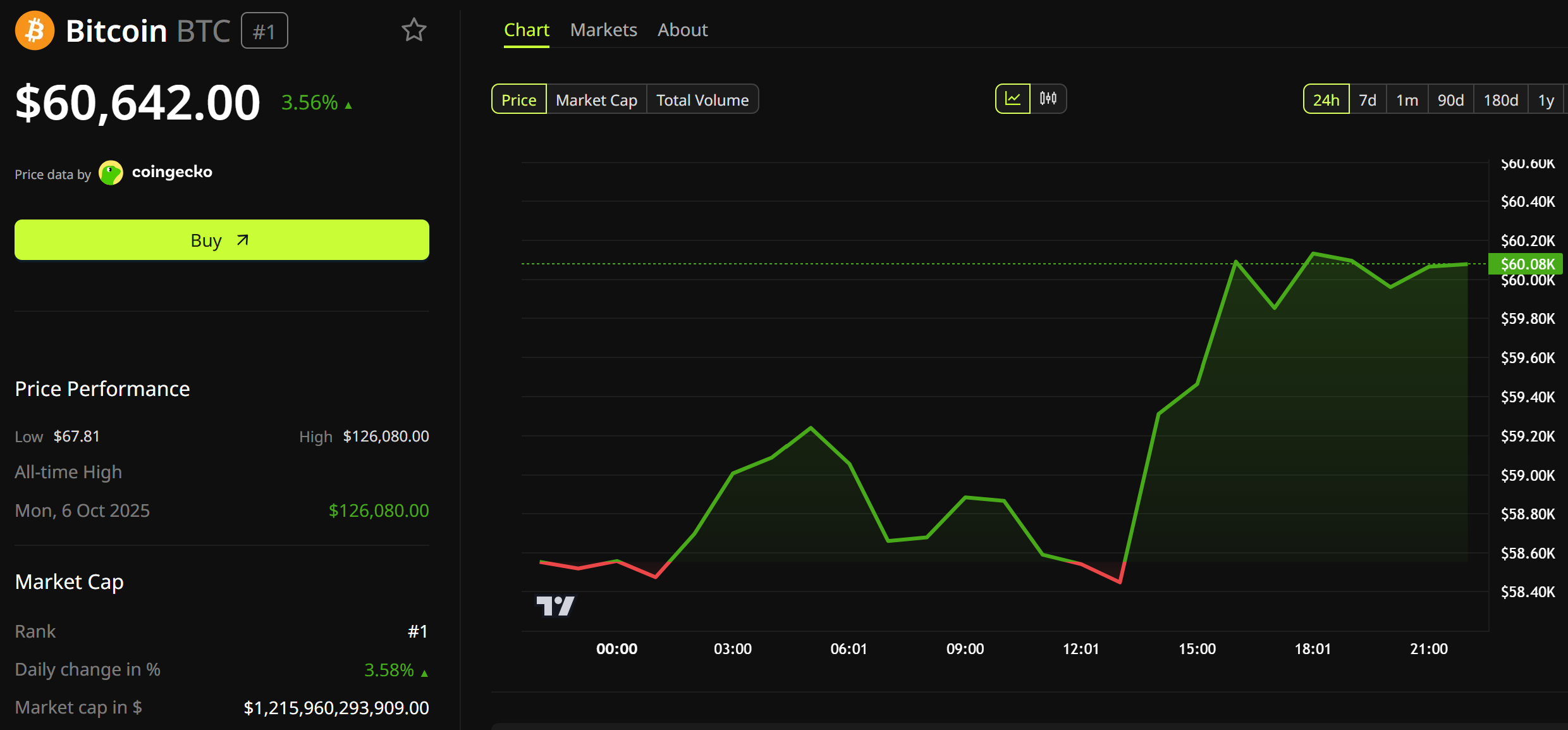
The timing adds intrigue. Bitcoin trades near $60,642, according to BeInCrypto Markets data. That is 43% lower over the past year and 52% below its October 2025 record of $126,080.

Other popular frameworks have struggled in this downturn. Stock-to-flow has broken down, while Standard Chartered and Galaxy Digital stake out floors of $59,000 and $40,000 in the Bitcoin bottom debate.
Cycle-based tools face similar questions. The 500-day halving rule still points to a buy window in November 2026, while Coinbase CEO Brian Armstrong defends the 4-year cycle.
The paper offers a direct answer to the survival question. Every earlier bear market stayed within the model’s normal range of swings. Stability tests found no structural breaks between 2011 and 2026.
The authors also identify five conditions that would break the trend, each with measurable early signs:
- Floor violation (F1) — price falls more than 3 standard deviations below the trend line and stays there over a year. In 2025 terms, that floor was roughly $10,000.
- Adoption collapse (F2) — address growth slows sharply below its cubic rate in rolling estimates, e.g., if a rival network starts absorbing Bitcoin’s marginal adopters.
- Exponent drift (F3) — the growth exponent drifts outside the 5.0–7.0 band over a multi-year period.
- Metcalfe breakdown (F4) — price and address count decouple (Metcalfe fit R² sustained below 0.7), meaning the market stops pricing Bitcoin as a network good.
- R² collapse (F5) — the rolling 3-year fit of the price power law drops below 0.80 for two consecutive years.
However, the study’s data ends in February 2026, leaving the latest slide outside it. A peer-reviewed trend line does not guarantee future returns, and the authors avoid price targets.
That gap makes this bear market the Bitcoin Power Law’s first live test as published science.
Subscribe to our YouTube channel to watch leaders and journalists provide expert insights
The post Bitcoin Power Law Goes Peer-Reviewed: Will the Model Survive the Bear Market? appeared first on BeInCrypto.

Key Highlights
- Amazon’s repositioned June Prime Day event (June 23–26) delivered record-breaking online sales totaling $26.4 billion, marking a 9% increase year-over-year
- Consumer electronics and clothing categories dominated sales, featuring promotional discounts reaching 24% and 20% respectively
- Buy now, pay later transaction volume climbed 10%, accounting for 6.6% of overall orders (approximately $2.1 billion)
- Goldman Sachs recommends accumulating hyperscaler stocks, including AMZN, ahead of the upcoming earnings cycle
- The hyperscaler index has retreated 17% from its June 1 peak, while AMZN maintains a consensus Strong Buy with analysts targeting $318.21 on average
Shares of Amazon (AMZN) advanced 1.68% during Tuesday’s trading session following confirmation that its June Prime Day shopping event achieved record-breaking online sales of $26.4 billion — representing a 9% year-over-year increase compared to 2025’s equivalent event.
The promotional event spanned four days, from June 23 through June 26, marking a departure from Amazon’s traditional July timing. Adobe Analytics monitored transaction data throughout the period, noting that final results aligned closely with industry projections.
Consumer electronics emerged as the standout category, benefiting from promotional discounts that reached as high as 24%, which fueled robust purchasing activity. Clothing items, home appliances, and children’s toys also performed exceptionally well, with price reductions extending up to 20%.
The buy now, pay later payment option continued gaining traction among shoppers. BNPL transaction volume during the Prime Day period increased 10% compared to the prior year, comprising 6.6% of total online transactions, which translates to approximately $2.1 billion in payment volume.
For context, Prime Day’s performance is rapidly approaching holiday shopping levels. The four-day event’s $26.4 billion in sales compares favorably against the $32.45 billion generated during the combined Black Friday and Cyber Monday period of the 2025 Thanksgiving shopping weekend.
Amazon strategically shifted its annual summer shopping event from July to June this year. This timing adjustment serves dual strategic objectives: accelerating revenue generation while simultaneously reducing warehouse inventory levels before entering the year’s second half.
Goldman Sachs Identifies Strategic Entry Point
In a separate development, Goldman Sachs issued a recommendation on July 1 advocating for strategic accumulation of U.S. hyperscaler stocks during the current pullback. The hyperscaler index has declined 17% from its June 1 peak, sliding from 122.89 down to 102.46.
Goldman’s investment thesis centers on sustained earnings momentum: fundamental profitability for these technology companies continues expanding. Should companies like Amazon demonstrate revenue acceleration linked to artificial intelligence infrastructure investments during forthcoming quarterly reports, analysts anticipate rapid multiple expansion and price recovery.
Amazon currently trades at a P/E multiple of 29.05x — representing a premium valuation justified by its GF Score of 94 out of 100. This composite metric reflects exceptional ratings across financial strength, profitability metrics, and growth characteristics.
Analyst Community Perspective
The analyst community maintains overwhelming conviction on Amazon shares. The stock holds a consensus Strong Buy designation based on ratings from 46 Wall Street analysts — comprising 45 Buy recommendations and one Hold rating issued during the most recent three-month period.
The consensus price objective of $318.21 suggests potential upside of approximately 20% from present trading levels.
One consideration for investors: company insiders have divested $51.6 million in AMZN shares during the previous three months, with no offsetting insider purchases recorded. While insider selling at major corporations often reflects portfolio diversification and personal financial planning rather than business concerns, the transaction volume warrants acknowledgment.
Amazon’s current market capitalization approaches $2.61 trillion. The company’s revenue composition shows retail operations generating roughly 74% of total revenue, with Amazon Web Services contributing 17% and the advertising segment adding 9%.
With second-quarter earnings reports on the horizon and Prime Day performance now confirmed, investor focus shifts to Amazon’s upcoming financial disclosure and management commentary on business momentum.

Crypto World
Bitcoin Price Prediction: An Analyst Just Called for Bitcoin to Drop to $40,000, And the Chart Is Not Helping the Bull Case

Bitcoin price is holding an uneasy line near $60,000, roughly 52% below its all-time high of ~$126,000 set late last year, and the prediction debate over what comes next is getting loud.
The question traders are actually asking right now isn’t whether a recovery is coming, but whether the bottom is already in or still $10,000–$20,000 lower. One number keeps surfacing in the bearish camp: $40K.
CNBC reported that Zacks strategist John Blank put a $40,000 downside target on BTC, framing the move through the lens of a prolonged crypto winter، a pattern-derived call that implies roughly 33% further downside from current levels.
Separately, cycle analysts tracked by Mudrex have flagged a $50,000–$55,000 window as the highest-probability cyclical low, expected in the Q3–Q4 2026 timeframe. The macro backdrop isn’t helping: BTC dropped ~18% in June alone, and weekly volatility has been sustained and punishing.

Macro conditions are shifting simultaneously، Supreme Court rulings on Fed independence, tech stocks near six-month highs, and a US-Iran ceasefire lifting risk sentiment، yet BTC is not participating. That divergence from traditional risk assets deserves a closer look.
Bitcoin Price Prediction: Can Bitcoin Price Hold $60K or Is a Flush to $40K Next?
Bitcoin price is trading near $60,000, down approximately 18% month-over-month with cycle analysts split on what comes next.
The immediate line in the sand is $58,000. A decisive close below it risks accelerated selling toward the mid-$50,000s, with $50,000 to $55,000 as the next structural support band.
On the upside, the 50-month EMA near $65,600 is what bulls need to reclaim. A monthly close above it represents meaningful trend repair. Until that happens the macro structure remains bearish. Resistance clusters around $65,000 are capping every relief rally.
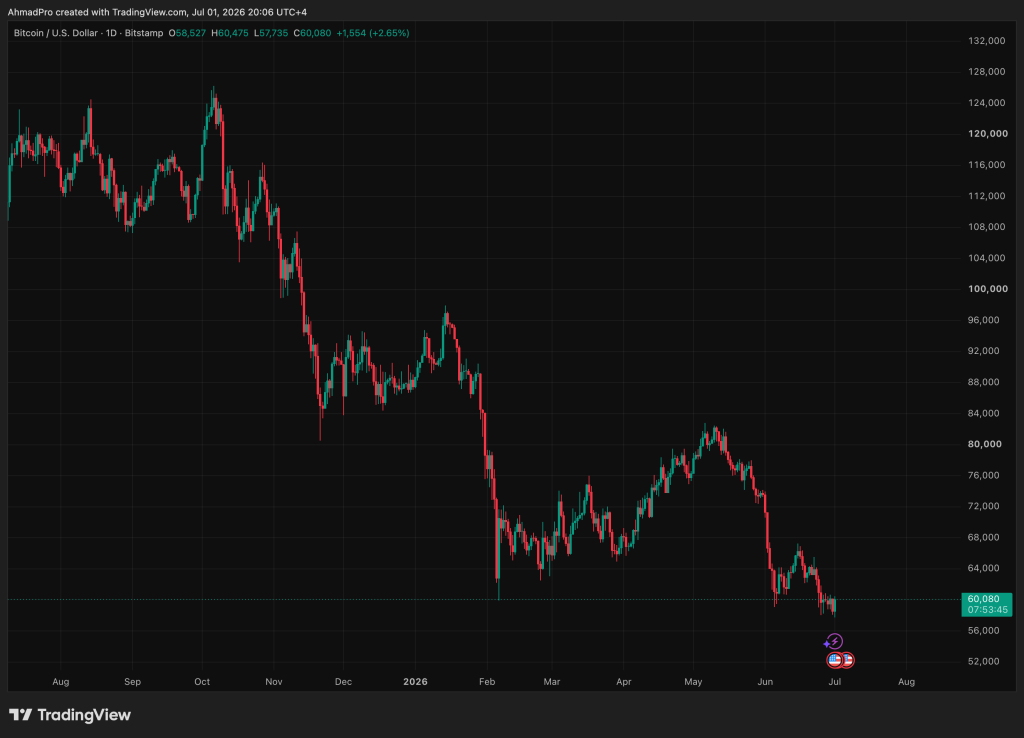
If $58,000 holds, ETF inflows accelerate, and BTC reclaims the $65,600 EMA, recovery targets reach $98,000 to $106,000 on the next leg.
If neither side takes decisive control, Bitcoin consolidates between $58,000 and $65,000 through Q3 2026, with a gradual bottoming process supported by corporate treasury demand and spot ETF capital. A break below $58,000 extends selling pressure toward the $40,000 to $50,000 range flagged by pattern analysts, pushing the cycle low into late 2026.
The Federal Reserve is the macro catalyst most likely to shift this range. A credible pivot toward rate cuts would be the single most supportive external variable for Bitcoin right now. ETF flow data in the coming weeks will signal whether institutional demand is absorbing this correction or stepping aside entirely.
Bitcoin Hyper Targets Early Mover Upside as Bitcoin Tests Key Levels
BTC at $60,000, down 52% from its peak, is a painful place to sit. Waiting for a confirmed bottom at $50,000 or below means holding unrealized losses or cash while the next cycle clock runs.
Some traders are rotating early-stage capital into infrastructure plays that have not been priced yet.
Bitcoin Hyper is one pulling attention in the current rotation. The project positions itself as the first Bitcoin Layer 2 with Solana
Virtual Machine integration, meaning smart contract execution at sub-Solana latency built directly on Bitcoin’s security layer. Bitcoin’s trust model combined with Solana-grade throughput is a technically meaningful combination that nothing else currently offers.
The presale has raised $32.9 million at a current price of $0.0136824. Staking is available for presale participants and a Decentralized Canonical Bridge handles native BTC transfers across chains.
Early-stage presales carry significant risk. Liquidity, execution, and token unlock dynamics all apply. But for traders doing their own research during a Bitcoin consolidation phase, Bitcoin Hyper is worth adding to the watchlist.
Visit Bitcoin Hyper HERE is worth adding to the watchlist.
The post Bitcoin Price Prediction: An Analyst Just Called for Bitcoin to Drop to $40,000, And the Chart Is Not Helping the Bull Case appeared first on Cryptonews.
World launched on July 1 as an onchain prediction market on Solana (SOL), live in Phantom Wallet and using Chainlink oracles to automatically settle trades in the CASH stablecoin.
Its debut adds a Solana-native challenger to a sector Polymarket and Kalshi already lead, where volumes have hit records.
How World Works Inside Phantom
World operates as a non-custodial protocol rather than a traditional exchange. It routes orders to liquidity providers on Solana and does not hold user funds or run the markets itself. Traders keep positions in their own wallets as tokens until they choose to cash out.
Settlement runs through Chainlink Data Streams and its runtime environment, which feed prices and resolve outcomes with limited human involvement. Winning positions redeem automatically in CASH, a Solana stablecoin.
At launch, World lists short-duration Bitcoin (BTC) up-or-down contracts and markets on the 2026 FIFA World Cup. The debut lands as Solana runs hot.
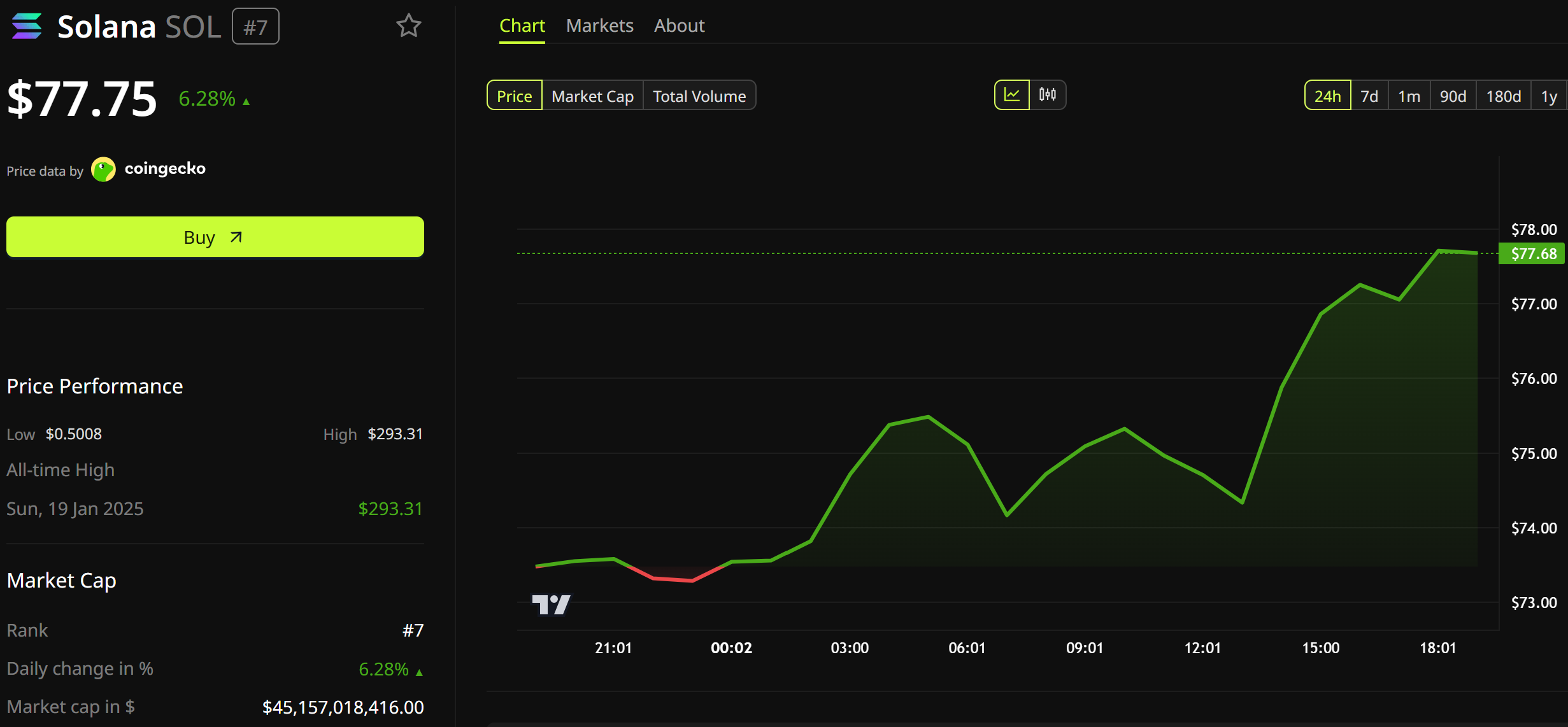
Solana’s SOL token rose more than 5% on the day and about 16% over the week, according to BeInCrypto data.

The team plans to add sports, politics, and macro markets through July.
World Replaces Kalshi in the Wallet
The launch is the public reveal of infrastructure that has quietly run for weeks. Phantom offered Kalshi-powered markets through a DFlow integration from December 2025. It then switched to World for all positions opened on or after June 1.
Under the old setup, traders redeemed winning positions themselves, whereas World settles them automatically once an event ends.
That switch matters because Phantom reaches roughly 20 million users, giving World immediate distribution without a separate app. Kalshi, meanwhile, remains a formidable rival and is reportedly weighing a $40 billion valuation.
Before the reveal, the project ran a stealth campaign built around a glowing globe and the tagline “Trade Everything.” It even told followers there was “no product.”
“Prediction markets are one of the most powerful applications you can build on a high-performance blockchain. World is designed to show what Solana makes possible: real-time markets, onchain settlement, and a user experience that meets people where they are,” Pedro Miranda, Head of Consumer at the Solana Foundation, said in the launch announcement.
Follow us on X to get the latest news as it happens
Can World take on Polymarket and Kalshi?
The incumbents carry moats World has not built. Polymarket proved the model in 2024, when more than $3 billion traded on its US presidential market. It has since expanded onto Solana through a February integration with Jupiter, contesting the same turf World now claims.
Their regulatory paths diverge sharply. Kalshi is a US-regulated exchange that beat the CFTC in court in 2024 to list election contracts. Polymarket took the opposite route, paying a $1.4 million CFTC penalty in 2022 that forced it offshore for years.
World sidesteps both, running as a permissionless onchain protocol with no license and no gatekeeper.
That freedom cuts two ways. The non-custodial model removes intermediaries, but it also forgoes the oversight and protections that anchor a regulated venue like Kalshi.
World has not published volume or liquidity figures, so its trading power stays unproven. Prediction markets reward deep books, which produce tighter spreads and steadier pricing. Distribution can pull in users fast, but that kind of depth takes time to build.
Sector momentum still helps, with prediction market open interest hitting a record $1.48 billion in June.
An unaffiliated memecoin using the World name sparked speculation on Pump.fun, though the team confirmed there is no link to it.

World’s case rests on distribution and instant onchain settlement, not proven scale. The World Cup becomes the first real test of whether embedded access inside Phantom turns into lasting liquidity.
The post Solana Prediction Market World Goes Live: Can It Take on Polymarket and Kalshi? appeared first on BeInCrypto.
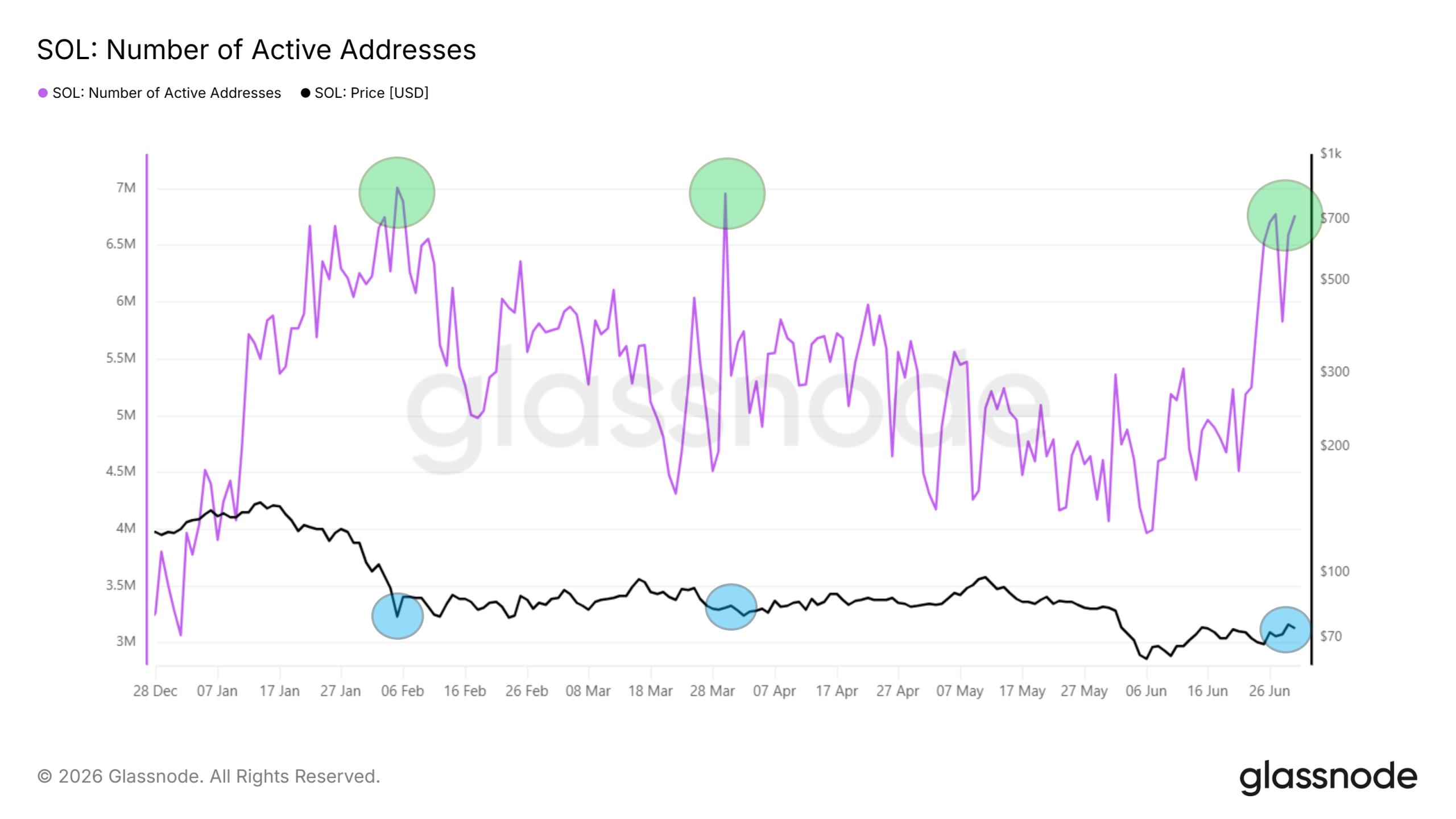
SOL trades near $77 after a 16% weekly bounce, yet it remains about 74% below its record high. On-chain activity is climbing toward yearly highs as the price attempts to bottom.
The contrast sets up a decisive month for SOL. A bearish price structure on higher timeframes now collides with some of the strongest network readings Solana has posted this year.
Solana Network Activity Tests Yearly Highs
On-chain data paints a healthier picture than price alone suggests. The number of active addresses is rising sharply and retesting yearly highs just below 7 million.

Transactions per second, measured on a seven-day average, are trending steeply higher toward 1,100. That reading is approaching a new all-time high for network throughput.
This creates a clear divergence. Network activity continues to grow while the token price sits near its lowest level in more than a year.

Much of the recent surge in throughput stems from meme coin launchpads and speculative airdrops on Solana. Sustained usage above these levels would strengthen the fundamental case for a price recovery.
Weekly Chart Keeps SOL in a Bearish Range
The weekly chart tells a more cautious story. SOL sits roughly 74% under its all-time high of $293 and trades at its lowest level since December 2023.
Price is currently defending the long-term 0.786 Fibonacci retracement near $73. That level marks the last major support before deeper downside opens up.
The first meaningful resistance sits at the 0.618 Fibonacci level around $120. A move back to that zone would require a gain of more than 55% from current prices.

Weekly volume continues to contract, which often signals accumulation and low volatility. However, the broader structure stays bearish until buyers reclaim higher levels. The recent leverage liquidations across the market underline how fragile sentiment remains.
Solana Price Prediction: $80 Line in the Sand
The daily chart offers the first signs of a possible bottom. SOL broke down from an ascending channel in June and hit its measured target near $63.
Price then bounced firmly off that support and now retests resistance just below $80. The Relative Strength Index has climbed toward 60, which indicates building momentum from buyers.
A daily close above $80 would strengthen the recovery case and open the path toward $100 and eventually $120. Failure to hold $73 would expose the $63 demand zone again.

The upcoming Alpenglow consensus upgrade could act as a catalyst if activation nears in the third quarter. Broader market weakness, seen in recent ETF outflows, remains the main risk. July now hinges on whether SOL can convert strong network fundamentals into a decisive break above $80.
The post What to Expect From Solana (SOL) in July 2026 appeared first on BeInCrypto.


Its launch comes as Ethereum’s support ecosystem undergoes a broader evolution, following the debut of EthLabs and amid ongoing efforts by the Ethereum Foundation to respond to community criticism over transparency, communication and its role within the ecosystem by encouraging more independent organizations to take the lead on adoption and ecosystem growth.
Vivek Raman, CEO of Etherealize, said on X that Ethereum Institutional is another example of Ethereum’s decentralized model in action.
“Ethereum is not built by or run by a single organization,” Raman wrote. “Ethereum is a network of independent nodes that collectively make the infrastructure inevitable. Ethereum Institutional will play a key role in amplifying and growing Ethereum. Could not be more excited for this launch.”
Joe Andrews, CEO of privacy developer firm Aztec Labs, told CoinDesk that the launch reflects the continued decentralization of Ethereum’s support ecosystem rather than the emergence of a single voice.
“Over the last two weeks, the Ethereum community has further added to the decentralisation of the network,” he said. “There are now three non-profits all advocating for adoption of Ethereum. It is natural that one of these entities is focusing on institutions, as the world needs a global settlement layer and Ethereum is the only credible option.”
Crypto World
BlockDAG’s Proprietary BDAG AI Pulls Buyers in Droves! Here’s Why the $0.00000044 Entry Beats LINK & TRON Today

The Chainlink price prediction reflects tension this week, as LINK trades near $7.37 while investors weigh short-term caution against optimism tied to its growing DeFi integrations. Meanwhile, the TRON price is in bullish territory, with the network processing nearly $2 trillion in stablecoin settlements, proving that steady utility can still turn heads even when the broader market feels uncertain.
Then there is BlockDAG, entering the radar of investors searching for the best crypto to buy now. It has just rolled out BDAG AI, bringing a fresh suite of artificial intelligence tools now live on its network, adding an estimated $500 million to its valuation overnight.
And with entry still sitting at a fraction of a cent against a $0.05 buyback offer, BDAG is quickly becoming the standout name this week. Let’s see which makes the most urgent entry case today.
Chainlink Price Prediction: Consolidation Continues
The Chainlink price prediction remains mixed as LINK trades around $7.37 with a $5.51 billion market capitalization. The token is still below its 50-day SMA of $8.66 and 200-day SMA of $9.92, while the Fear & Greed Index of 12 reflects extreme caution among investors.
However, the 14-day RSI of 32.44 suggests selling pressure may be easing. In the short term, holding above $7.07 support could pave the way for a move toward $7.75, while a break lower may push LINK closer to $6.80.
From a longer-term perspective, Chainlink price prediction remains optimistic thanks to the network’s expanding role in decentralized finance and its recent integrations across 10 blockchain networks. Forecasts suggest LINK could climb to $17 in 2026, $28.53 by 2029, and potentially $52.95 by 2032, provided adoption continues and overall crypto market conditions improve.
TRON Price Rises on Stablecoin Settlement Activity
The TRON price could continue benefiting from the network’s dominance in stablecoin payments if current usage trends persist. During the first quarter of 2026, TRON processed $1.96 trillion in stablecoin settlements while hosting roughly $85–86 billion in USDT, highlighting strong demand for low-cost transfers.
Network engagement also remains healthy, with daily active users climbing 16% over the past month to around 4.4 million. However, slower user onboarding, with active addresses easing to 15.8 million, suggests growth is being driven more by existing users than newcomers.

Meanwhile, total value locked has reached about $4.4 billion, although much of it remains tied to payment activity instead of DeFi applications. For the TRON price outlook to strengthen over the long term, the ecosystem will likely need broader DeFi adoption alongside continued growth in stablecoin settlement volumes.
BlockDAG: 45x Window Ends in 24 Hours!
BlockDAG is seeing a rush of buyer interest right now, and once you look at what’s happening across the network, it’s easy to understand why. Entry currently sits at just $0.00000044 per coin, and the network just launched BDAG AI, a new set of artificial intelligence tools now built into the platform.
That move alone added an estimated $500 million to the project’s valuation. On top of this, the BlockDAG Futures & Spot Exchange is set to arrive in two weeks, a development many expect will push the entry price much higher.
Plus, for the next 24 hours, entry is even more rewarding thanks to a $0.05 buyback offer, which could translate into 45x returns for anyone who buys now and sells back at that rate. The World Cup Bonus is also live, giving buyers 50% extra BDAG on their purchase, further expanding the ROI potential.

A profit opportunity like this is rare in the market, especially for a network seeing as much demand and adoption as BlockDAG. The BlockDAG Casino also proves that, continuing to see record activity, with more than 13,000 users and over $150 million wagered in its first 30 days.
The casino runs on a high-speed network, currently processing 5,500 transactions per second, and is set to increase to 7,000 within three days. Thanks to this scalability, ROI, and technological strength, BDAG is effectively outperforming many established cryptos today.
According to experts, whether someone wants to cash out through the buyback or hold for the long term, this might be one of the most impressive entry points crypto has offered in a while.
Which Is The Best Crypto to Buy Now?
LINK and TRON are worth watching, but neither offers urgency right now. The Chainlink price prediction points to a slow grind upward, with LINK needing to reclaim key resistance before its longer-term targets of $17, $28.53, and beyond come into focus. As for the TRON price, while the stablecoin volume makes it a solid utility play, future gains depend on whether DeFi adoption can catch up to TRON’s payment dominance.
BlockDAG, on the other hand, is not asking investors to wait around. With BDAG AI just added to the network, a $500 million valuation, and the Futures & Spot Exchange launching in two weeks, the fundamentals are impressive.
And the entry won’t stay low for long. Those seeking the best crypto to buy now have already rushed in to secure $0.00000044 and position for the buyback program. Plus, the 50% World Cup Bonus means higher ROI at no extra cost. Those who miss this window risk missing out on one of the biggest opportunities of the year.

Presale: https://purchase.blockdag.network
Website: https://blockdag.network
Telegram: https://t.me/blockDAGnetworkOfficial
Discord: https://discord.gg/Q7BxghMVyu
Disclaimer: This is a Press Release provided by a third party who is responsible for the content. Please conduct your own research before taking any action based on the content.


Solana Foundation announced Wednesday that onchain governance is live on the network, letting validators propose and vote on protocol-level decisions through a system called Solana Governance Proposals, or SGPs. The mechanism is fully onchain, stake-weighted and verified by Merkle proof, according… Read the full story at The Defiant
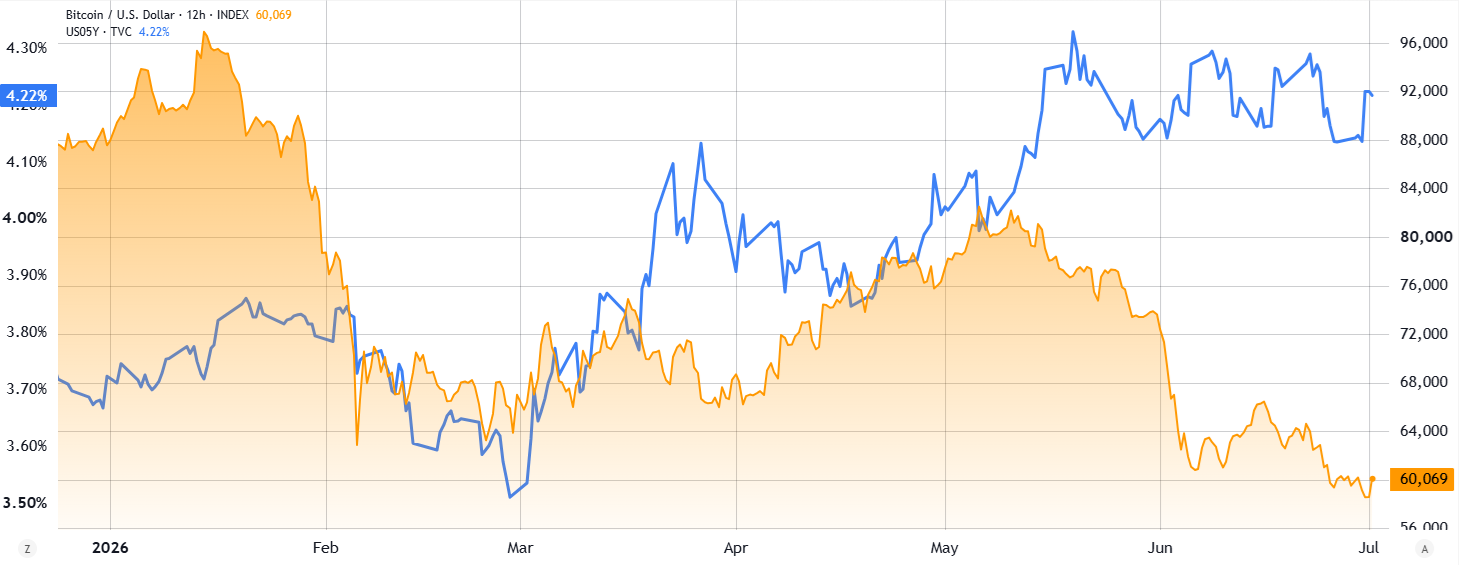
Key takeaways:
- Persistent spot Bitcoin ETF outflows and US dollar strength reduce the odds of a quick bounce to $65,000.
- Strong AI sector earnings momentum and higher fixed-income returns pull capital from Bitcoin and gold.
Bitcoin (BTC) reacted positively to US Federal Reserve Chair Kevin Warsh’s remarks on stubborn inflation. Despite the gains on Wednesday, traders fear that incentives for fixed-income investments and strong earnings momentum in tech stocks will continue to pressure non-yield-bearing assets like cryptocurrencies.
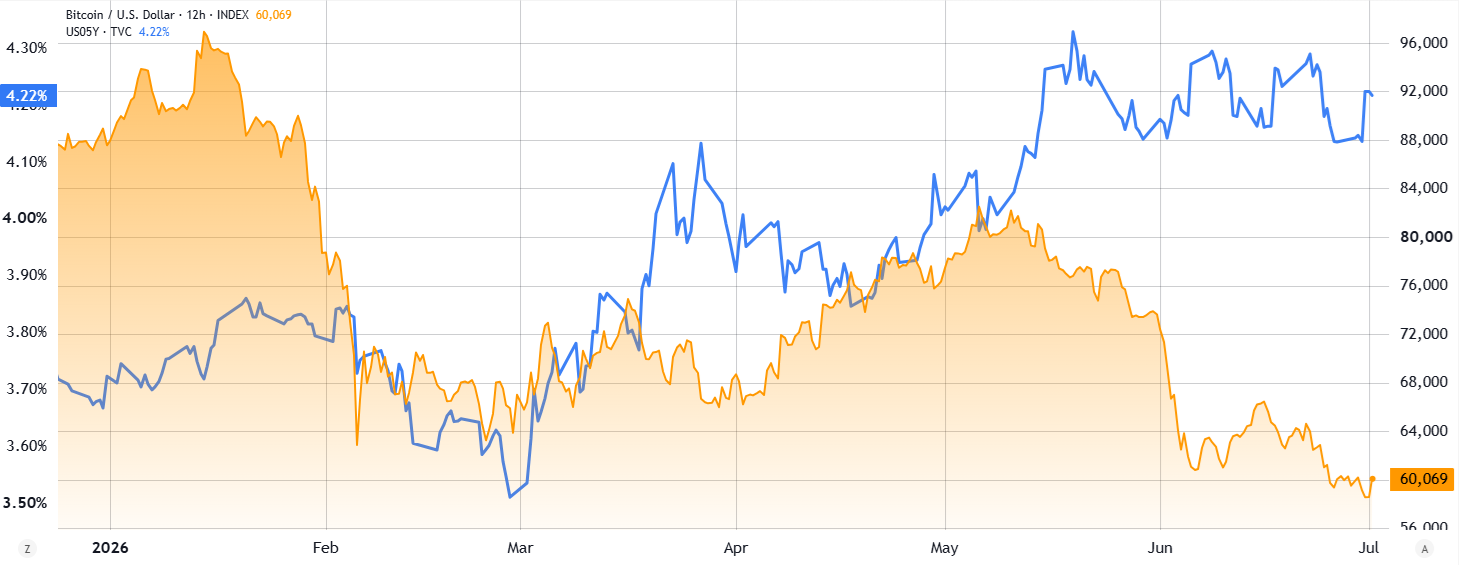
US 5-year Treasury yield (left) vs. Bitcoin/USD. Source: TradingView
The US 5-year Treasury yield jumped to 4.22%, meaning traders demanded higher returns to hold government bonds. Even as inflation eventually eases and WTI crude oil prices fell to a 4-month low, investors anticipate monetary expansion. Regardless of how the Fed manages interest rates and its balance sheet, the US Treasury dictates debt issuance trends.
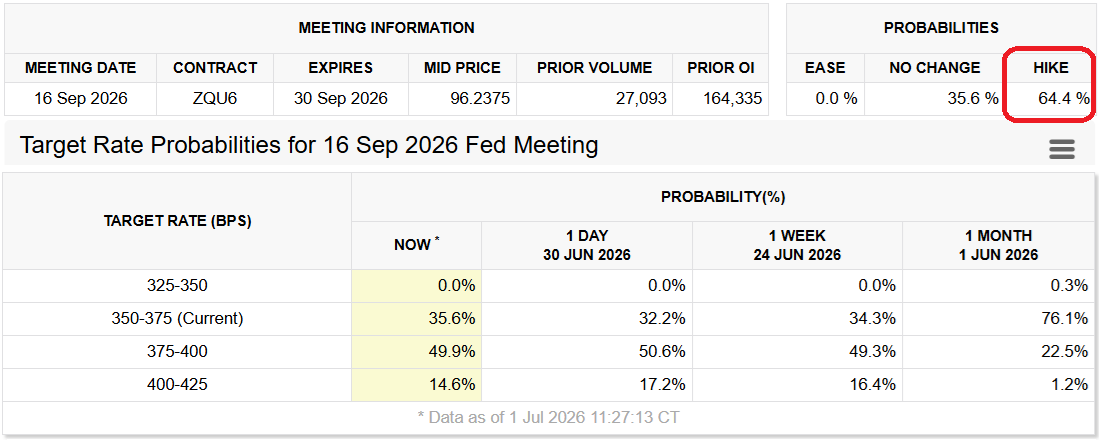
Implied odds of FED interest rates on Sept. 16. Source: CME FedWatch Tool
US government bond futures implied 64% odds of interest rate hikes by September, up from 23% one month prior. The higher expected return on fixed-income investments came as the US dollar strengthened against other major global fiat currencies, which is especially concerning for alternative hedges such as gold and Bitcoin.
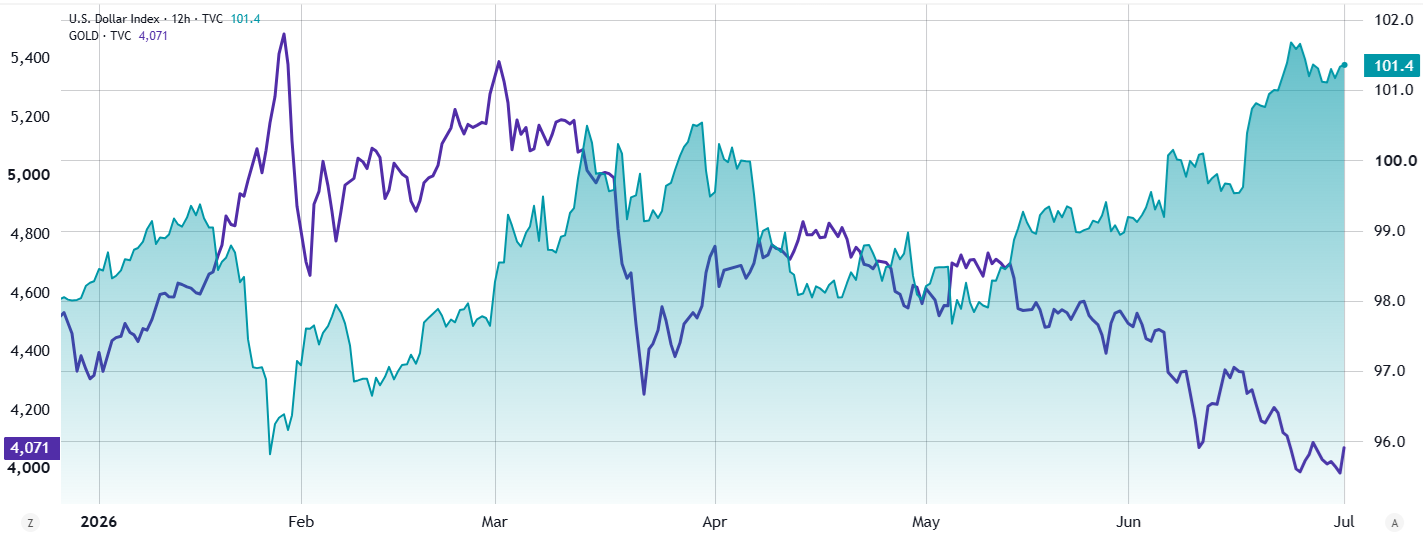
Gold/USD (left) vs. US dollar strength (DXY). Source: TradingView
Despite the gains on Wednesday, gold prices are down 12% in two months, while the US dollar strength (DXY) nears its highest mark in one year. This vote of confidence in the US economy partly stems from AI sector strength, evident in the 25% gains in the Nasdaq 100 index. However, some specific tech sub-sectors have recently signaled weakness, which could act as a catalyst for Bitcoin and gold.
Could the AI sector cool off act as a catalyst for Bitcoin?
Micron (MU US) and SanDisk (SNDK US) shares saw intraday losses exceeding 9% on Wednesday after competitors SK Hynix (000660 KR) and Samsung (005930 KR) announced plans to expand capacity. Still, the move can hardly be deemed a trend reversal as the iShares SOX Semiconductor Index ETF (SOXX US) gained 78% in three months.
Continued outflows from US-listed spot Bitcoin exchange-traded funds (ETFs) have shattered bulls’ hopes, reinforcing a negative price spiral as negative news gets amplified while positive events barely register.
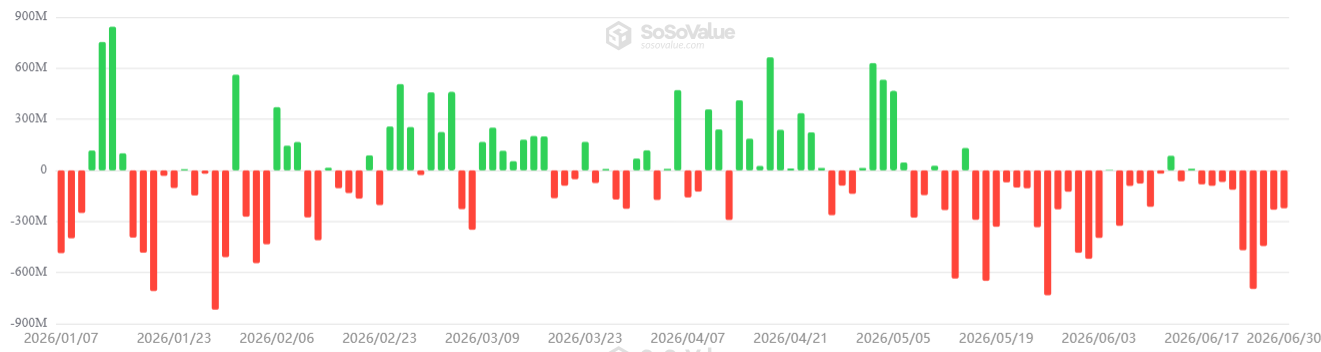
US-listed spot Bitcoin ETFs daily net flows, USD. Source: SoSoValue
Regardless of the rationale behind the sales, Bitcoin’s weakness, 53% below its all-time high, does not inspire confidence in the $60,000 support level.
Strategy (MSTR US) increased its cash position to restore a healthy 17 months of dividend coverage on Monday. However, Strategy’s variable-rate Stretch preferred stock (STRC US) continued to trade far from the $100 target required for additional issuances. The STRC dividend rose to 12% from 11.5%, which was apparently not enough to entice more buyers.
Related: Bitcoin just $5K away from ‘best investment opportunity’ of bear market
Bitcoin might have temporarily benefited from Fed Chair Warsh’s concerns about persistent inflation, but rising expectations for higher interest rates and strong earnings momentum in the AI sector may continue to exert negative pressure on Bitcoin. As a result, a sustainable rally to $65,000 could take longer.


Disclosure: This article does not represent investment advice. The content and materials featured on this page are for educational purposes only.
UmexGain offers traders access to multiple asset classes, market analysis, educational resources, and tools designed to support informed trading.
Summary
- UmexGain combines multi-asset trading, market analytics, and educational resources to support informed trading decisions.
- The platform offers diverse financial instruments, analytical insights, and learning tools for traders of all experience levels.
- It enhances trading with broad market access, educational content, and timely analytics for global investors.
When choosing a broker, traders consider the variety of assets, the quality of analytical support, the convenience of services, and the availability of learning materials. These elements offered by UmexGain are essential for making market participation both more comfortable and more productive.
The company provides a comprehensive approach to client support, combining a wide selection of instruments with up-to-date analytical resources. This format enables each user to select a suitable trading style, enhance their knowledge, and receive the timely information needed to make informed decisions.
Broad asset base
One of UmexGain’s key advantages is the extensive array of available assets. Clients can work with various financial instruments, including currency pairs, stocks, indices, commodities, and cryptocurrencies. Each tool features unique properties, allowing for versatile market applications.
The inclusion of digital assets, which continue to play a significant role in the global financial system, deserves special mention. This allows the company’s clients to use the ever-growing opportunities within modern financial markets and craft diverse trading strategies tailored to their preferences.
This broad selection of instruments helps UmexGain customers focus on areas of greatest interest. The ability to choose from various asset classes also adds flexibility to the trading process and opens up new avenues for executing individual strategies and effective portfolio diversification.
Analytics and education
High-quality information support is essential for success in financial markets. UmexGain provides clients with all the data necessary to make informed decisions in a timely manner. This includes learning materials, helping beginners master the fundamentals of trading while allowing experienced professionals to refine their strategies. This data is presented in a user-friendly format, offering an introduction to core trading principles, market specifics, analysis methods, and strategies for building a personal plan.
Timely analytics enables the assessment and comparison of different assets’ prospects. It helps users track key events, monitor the performance of various instruments, and gain insights to assess market conditions. This allows clients to quickly process current information and use the data to inform their next steps.
The combination of learning resources and analytical support creates an optimal environment where UmexGain customers can continuously expand their knowledge. This approach fosters confident skill development, regardless of the user’s experience level.
Seamless trading experience
A modern broker must provide a convenient environment for daily activities. UmexGain strives to make the trading experience as intuitive and streamlined as possible. A well-organized interface ensures that key features are easy to locate, allowing users to focus on market analysis and implementing deals.
The combination of diverse tools and comprehensive information support offers a significant advantage. This approach allows users to dedicate more time to identifying new opportunities, developing their strategies, and honing their practical skills. Regardless of experience level, every client gains access to resources that help them navigate financial markets with greater confidence.
Summing up
UmexGain is a broker that combines a wide range of assets, modern trading capabilities, and high-quality information support. A vast array of financial instruments, including cryptocurrencies, enables clients to utilize the expanding opportunities of modern financial markets and select the most promising areas for their activities.
A key advantage of the company is its comprehensive user support. UmexGain provides clients with the information needed to make well-informed decisions in a timely manner, offering learning resources to master key trading concepts and refine strategies, alongside up-to-date analytics for evaluating and comparing the prospects of various assets. The combination of a diverse range of instruments, learning materials, and current market analysis makes UmexGain an attractive choice for those seeking to expand their knowledge and confidently pursue their goals.
Disclosure: This content is provided by a third party. Neither crypto.news nor the author of this article endorses any product mentioned on this page. Users should conduct their own research before taking any action related to the company.

5 summer photos in and around York from Press Camera Club

Politics and Government: Impact on Business, Stability and Investment

Bitcoin Power Law Goes Peer-Reviewed: Will the Model Survive the Bear Market?





-

 Fashion5 days ago
Weekend Open Thread: Staud – Corporette.com
-

 Politics6 days ago
The House | Manchesterism won’t survive the painful trade-offs unless it gets citizens on board
-

 Crypto World2 days ago
Strategy authorizes up to $1.25B in Bitcoin sales under new capital plan
-

 Politics6 days ago
Potential 2028er World Cup attendee leaderboard
-

 Business6 days ago
Asia stock markets slide as tech shares slump
-

 News Videos3 days ago
MAJOR BITCOIN & MARKET UPDATE!!!! (MUST WATCH ASAP!!!)
-

 Tech6 days ago
A Look At A Gaggle Of Transputer Boards
-
 Crypto World6 days ago
Dell (DELL) Shares Tumble Over 5% Following Analyst Downgrade to Hold
-

 Crypto World4 days ago
Coinbase, Circle Deepen Crypto Stock Losses Despite Resilient S&P 500
-

 Business2 days ago
Australia treasurer says alleged access of prime minister’s bank data ’incredibly concerning’
-

 Crypto World5 days ago
Kraken's xStocks Opens Bending Spoons IPO Registration to EEA Retail
-

 Sports5 days ago
FIH Pro League: India defeat Pakistan 7-1, register biggest win of campaign | Other Sports News
-

 Crypto World6 days ago
Bitcoin Sparks $600M Hourly Liquidations With $65,000 Set To Become Resistance
-

 Tech4 days ago
Bluekit phishing kit adopts browser-in-the-middle for login theft
-

 Tech4 days ago
Russian hackers now target Signal backup recovery keys
-
 Crypto World5 days ago
Hyperliquid Named on Singapore MAS Investor Alert Register
-

 Crypto World5 days ago
RTX holders must register wallets before token distribution begins
-

 Crypto World7 days ago
Ripple and SBI launch RLUSD in Japan after JFSA approval
-

 Tech2 days ago
Anonymous researcher drops 0-day ‘exploitarium’ repo
-
 Business2 days ago
The AI boom won’t burst all at once. It will pop in ‘rolling bubbles’: Macquarie
You must be logged in to post a comment Login