

Crypto World
TeraWulf (WULF) jumps 13% as AI data center push lifts crypto mining stocks



TeraWulf (WULF) surged 13% early Tuesday as the company unveiled plans for a new large-scale AI and high-performance computing (HPC) campus in Kentucky.
The company said it acquired a hyperscale development site capable of supporting more than 1 gigawatt of AI and HPC infrastructure over time. The so-called Muskie Data Campus is expected to deliver an initial 500 megawatts starting in the second half of 2028, with another 500 megawatts targeted by 2030.
The firm said the Kentucky project underscores how access to electricity and transmission infrastructure has become one of the key battlegrounds in the AI boom.
“The defining constraint in this market is no longer computing hardware,” Prager said. “It is power, transmission infrastructure, and execution certainty.”
The rally also tracked the broader strength in AI-linked stocks, including bitcoin miners that have increasingly repositioned themselves as data center and AI infrastructure operators. The sector has become one of the hottest corners of crypto-linked equities over the past year as investors bet that the massive power needs of AI models could create a more lucrative long-term business line beyond mining tokens.
Hut 8 (HUT) climbed 7%, while Keel Infrastructure (KEEL), formerly known as Bitfarms, rose 6.5%. IREN (IREN) gained nearly 5%, and Cipher Mining (CIFR) advanced 5.5%.
Memory chipmaker Micron (MU) jumped 15% to fresh record highs above $870, as global investment bank UBS lifted its target to $1,625 citing strong AI demand for memory, while Advanced Micro Devices (AMD) gained 5%, also reaching new highs.

Crypto World
XRP Price is yet to Recover as RLUSD Breached $1.7 Billion Market Cap: Will XRP Follow?

Ripple’s RLUSD stablecoin just blew past a $1.7 billion market cap milestone, one of the fastest stablecoin ascents since its December 2024 launch, yet the XRP price stalls.
RLUSD’s expanding share of settlement activity on the XRP Ledger signals genuine adoption beyond early users. Yet analysts confirm that almost none of RLUSD’s growth is translating into buy pressure on XRP. The stablecoin’s rise and XRP’s sideways grind are, for now, two separate stories.

With compressed volatility, a symmetrical triangle tightening on the daily chart, and a critical resistance band dead ahead, XRP is approaching a true decision point.
Discover: The Best Crypto to Diversify Your Portfolio
Can XRP Price Break $1.45 This Week?
XRP price is wedged inside a multi-week consolidation corridor that has compressed price action into an increasingly tight range. The symmetrical triangle forming on the daily timeframe reflects a near-perfect equilibrium between buyers and sellers.
Immediate resistance clusters between $1.38–$1.42, with a stronger ceiling at $1.45 where the 100-day moving average converges with the upper boundary of a long-term descending channel. That confluence makes the $1.40–$1.45 zone the most consequential technical level on XRP’s chart right now.

Support is equally defined. The $1.30–$1.32 band has held as a floor through multiple tests, but a clean break below opens a direct path to $1.20, a level that would reset the structure bearishly.
Analysts tracking the consolidation note that low volatility environments like this historically precede sharp directional moves.
Discover: The Best Token Presales
Maxi Doge Targets Early Mover Upside as XRP Tests Key Levels
XRP’s stall at current levels raises an uncomfortable question for holders: how much upside remains in an asset with a $80 billion+ market cap that still can’t clear $1.45? Waiting for a breakout that may not arrive for weeks has a real opportunity cost, especially when early-stage assets are raising capital fast.
Maxi Doge ($MAXI) is one presale capturing attention in the current cycle. Built on Ethereum (ERC-20), it positions itself as the meme token for the 1000x leverage trading mindset, a 240-lb canine juggernaut embodying the relentless grind of bull market culture. The tagline says it bluntly: never skip leg day, never skip a pump.
The numbers are concrete. $MAXI is priced at $0.000282, with more than $4.7 million raised to date. The project also offers 65% APY staking, holder-only trading competitions with leaderboard rewards, and a Maxi Fund treasury earmarked for liquidity and partnerships.
Meme-first marketing with gym-bro viral energy rounds out the community engine.
Research Maxi Doge at the official presale.
The post XRP Price is yet to Recover as RLUSD Breached $1.7 Billion Market Cap: Will XRP Follow? appeared first on Cryptonews.


The United Kingdom has imposed sanctions on a group of cryptocurrency exchanges, payment firms and individuals accused of helping Russia evade Western restrictions and finance its war in Ukraine, including crypto exchange Huobi.
The sanctions package from the U.K. Foreign, Commonwealth & Development Office targets 18 entities and individuals linked to what officials described as Russia’s “illicit financial infrastructure used to move funds, procure goods, and sustain its war.”
Among them are Huobi Global S.A., operator of the HTX exchange, Rapira Group LLC, Aifory LLC, Arvix LLC and Bitpapa IC FZC LLC.
HTX is one of the world’s largest crypto exchanges, with roughly $3.3 trillion in trading volume last year, according to a blog post from blockchain analytics firm Elliptic.
Elliptic said the platform is suspected of providing services to both the A7 payments network and Garantex, a Russian crypto exchange previously sanctioned by Western authorities. Garantex rebranded to Grinex earlier in the year and last month halted its operations after a $13 million “state-backed” hack.
Britain also sanctioned Open Joint Stock Company “Virtual Asset Issuer,” a Kyrgyzstan-linked company behind the USDKG gold-backed stablecoin, along with several people accused of sanctions-evasion activity, including Sergey Mendeleev, Igor Gorin, Irina Akopyan and Israeli national Liran Cohen.
The measures mark one of the country’s strongest moves yet against Russia’s use of cryptocurrencies and alternative payment systems. For the first time, the U.K. applied Regulation 17A of its Russia sanctions regime to crypto exchanges, a tool previously used against sanctioned banks.
Under the rules, U.K. financial firms and crypto service providers cannot maintain correspondent relationships with the designated entities or process payments tied to them. Companies may also need to freeze funds and trace blockchain transactions linked to sanctioned platforms.
Elliptic said the rules could require firms to trace transactions across multiple blockchain “hops,” meaning compliance checks would extend beyond direct counterparties to wallets and exchanges appearing anywhere in a transaction chain.
A major focus of the sanctions package is the Kremlin-backed A7 payments network, which British officials say helped process proceeds from Russian oil sales and supported military procurement. The U.K. says the network moved more than $90 billion last year.
Elliptic said other regulators are likely to watch closely as Britain tests a new model for applying traditional financial sanctions rules to digital asset markets.
The sanctions took effect immediately. CoinDesk has reached out to Huobi for comment but did not hear back by press time.


A growing number of people see the Clarity Act, which intends to establish clear and enforceable guardrails for the U.S. crypto industry, as a sign that Washington has firmly closed the door on the “regulation-by-enforcement” approach seen under the Biden administration to a more structured framework for the crypto industry.
And look, on paper, it’s a major step forward. There is no doubt the Clarity Act offers clearer definitions and a more coherent regulatory perimeter for the industry.
But regulatory clarity does not automatically lead to adoption. Because even if Congress gets the market structure right, the U.S. crypto tax framework, in its current form, is still a bit messy and complicated.
Form 1099-DA is confusing for crypto investors
On paper, Form 1099-DA, which any business defined as a crypto broker must issue, is about transparency, standardized reporting and improved compliance.
The Form 1099-DA asks crypto users for the number of assets, acquisition date, sale and disposal date, as well as specific sections for aggregated transactions for stablecoins and NFTs.
However, it is becoming more counterproductive than intended. Crypto users are now receiving tax forms that often report proceeds without a reliable cost basis, fail to properly capture holding periods and excludes non-custodial activity entirely. The result is a fragmented and incomplete picture of a user’s actual tax position.
For retail investors, that means manually reconciling thousands of transactions across exchanges, wallets, bridges and DeFi protocols, often with conflicting data that does not align with what the IRS receives.
Even within the industry, the problem has become immense. When assets are moved between platforms, the cost basis often disappears. The receiving exchange has no reliable way to reconstruct historical purchase data. Yet, the system is designed as if crypto can be reported with the same precision as traditional securities held within a single brokerage account.
It cannot. So the burden falls back to the individual taxpayer. They are now expected to override, reconcile and reconstruct their entire transaction history, or risk audit exposure if they get it wrong.
The audit trail and record-keeping requirements in the Clarity Act represent a necessary trade-off for regulatory certainty under the CFTC, but the operational hurdles they impose can’t be ignored.
To the bill’s credit, the underlying intent of these strict mandates is a massive win for the industry. Forcing audit trails to definitively prove the absolute segregation of customer assets injects a level of trust and security that will protect retail users and prevent the catastrophic commingling of funds that defined early crypto collapses.
However, the technical challenges of implementing these systems remain daunting. While the bill wisely acknowledges that tailored, onchain tracking solutions are required rather than outdated legacy reporting stacks, the operational demands are steep. Because digital asset markets run 24/7, firms must build and maintain continuous audit trails capable of instantly matching real-time blockchain ledger data with off-chain communications.
Contradiction in U.S. policy becomes impossible to ignore
For small and mid-sized investors, especially, the compliance burden can exceed the economic benefit. And if the future of crypto depends on broad participation, that is a serious structural problem.
This is where the contradiction in U.S. policy becomes impossible to ignore.
On the one hand, the government is supporting innovation, market growth and domestic leadership in digital assets. On the other hand, it is implementing a tax reporting regime that treats decentralized networks as if they were traditional brokerage accounts with perfect data continuity.
Those two positions cannot both scale. We’ve already seen partial backtracking, particularly around how the regime applies to non-custodial or DeFi activity. That’s a start, but it only scratches the surface.
The deeper issue is yet to be solved. The IRS does not need to turn crypto exchanges into perfect, all-seeing record keepers to improve compliance. It needs a framework that acknowledges the reality of fragmented ownership and cross-platform asset movement.
Other jurisdictions are moving in that direction. The Organisation for Economic Co-operation and Development’s (OECD) Crypto-Asset Reporting Framework (commonly referred to as CARF), for example, leans toward standardized data collection across platforms without pretending that intermediaries can reconstruct a perfect cost basis history for every user.
Exchange reporting should not function as a definitive ledger. Its purpose should be to flag unreported activity, not to force millions of users into impossible reconciliation exercises based on incomplete institutional data.
Even within the U.S., there are early signs of recognition that the current approach is too blunt. Discussions around de minimis exemptions and targeted relief for small transactions suggest policymakers understand that friction matters.
While the act does provide a de minimis exemption to shield low-volume brokers and dealers from registering or maintaining these heavy systems, which will protect the smallest startups, it simultaneously creates a steep compliance cliff for the middle market.
While established industry giants can treat these real-time surveillance pipelines as an expensive upgrade, growing businesses caught just above the de minimis threshold face sheer engineering complexity and costs that could prove a massive barrier to entry.
Reform is still lagging behind rhetoric
But at the federal level, reform is still lagging behind rhetoric, and that gap is becoming harder to ignore.
Because if the U.S. continues to define “crypto-friendly” as regulatory clarity alone while ignoring the existing tax burden, adoption will not accelerate significantly.
It will stall at the edges. High-net-worth participants and sophisticated funds will continue operating. Builders will continue building. But mainstream retail participation, the layer that many argue is needed for true scale, will quietly opt out under the weight of compliance complexity.
The U.S. won’t need to ban crypto to slow its growth, but it may tax it into friction, while other jurisdictions design systems that make participation materially easier.
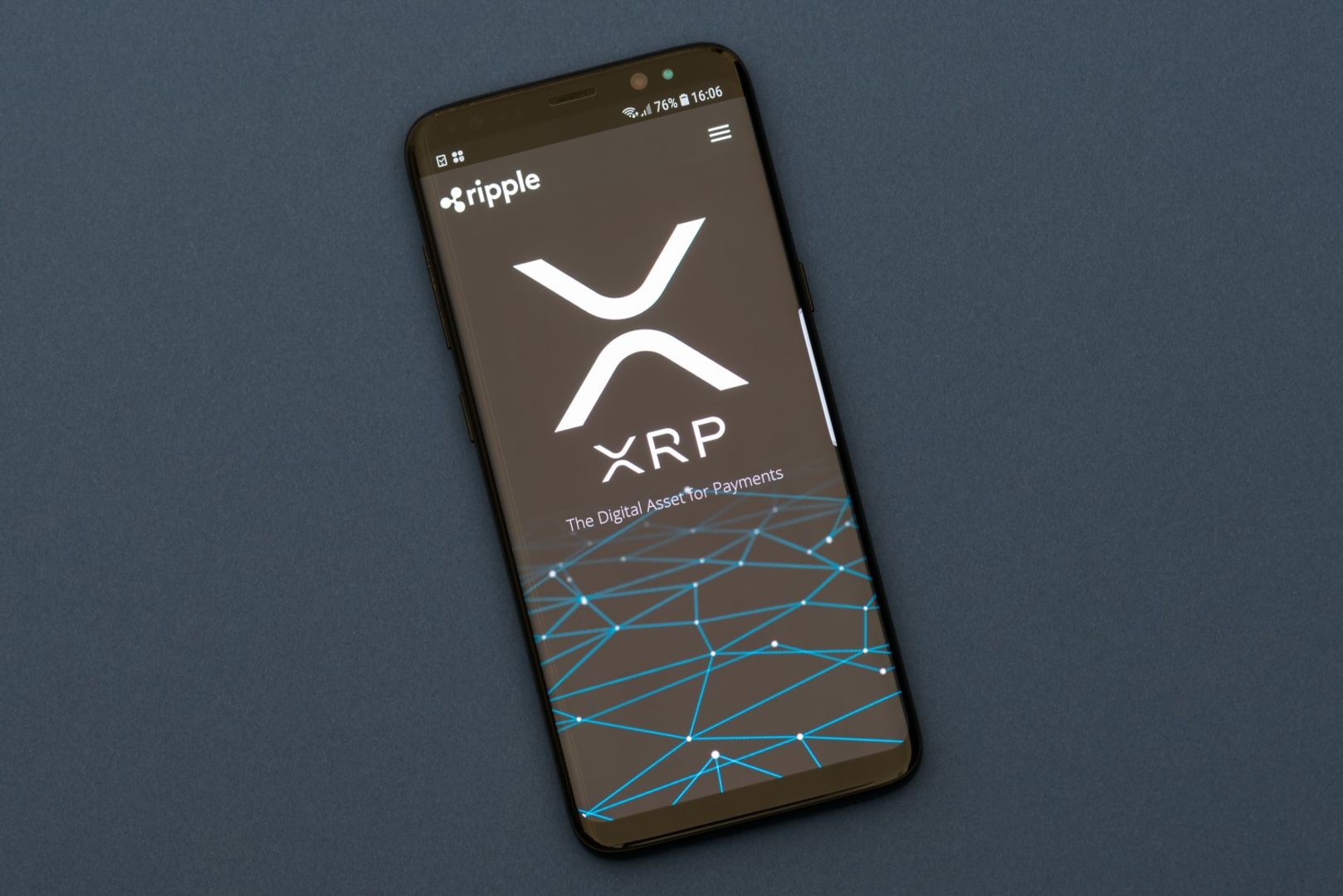
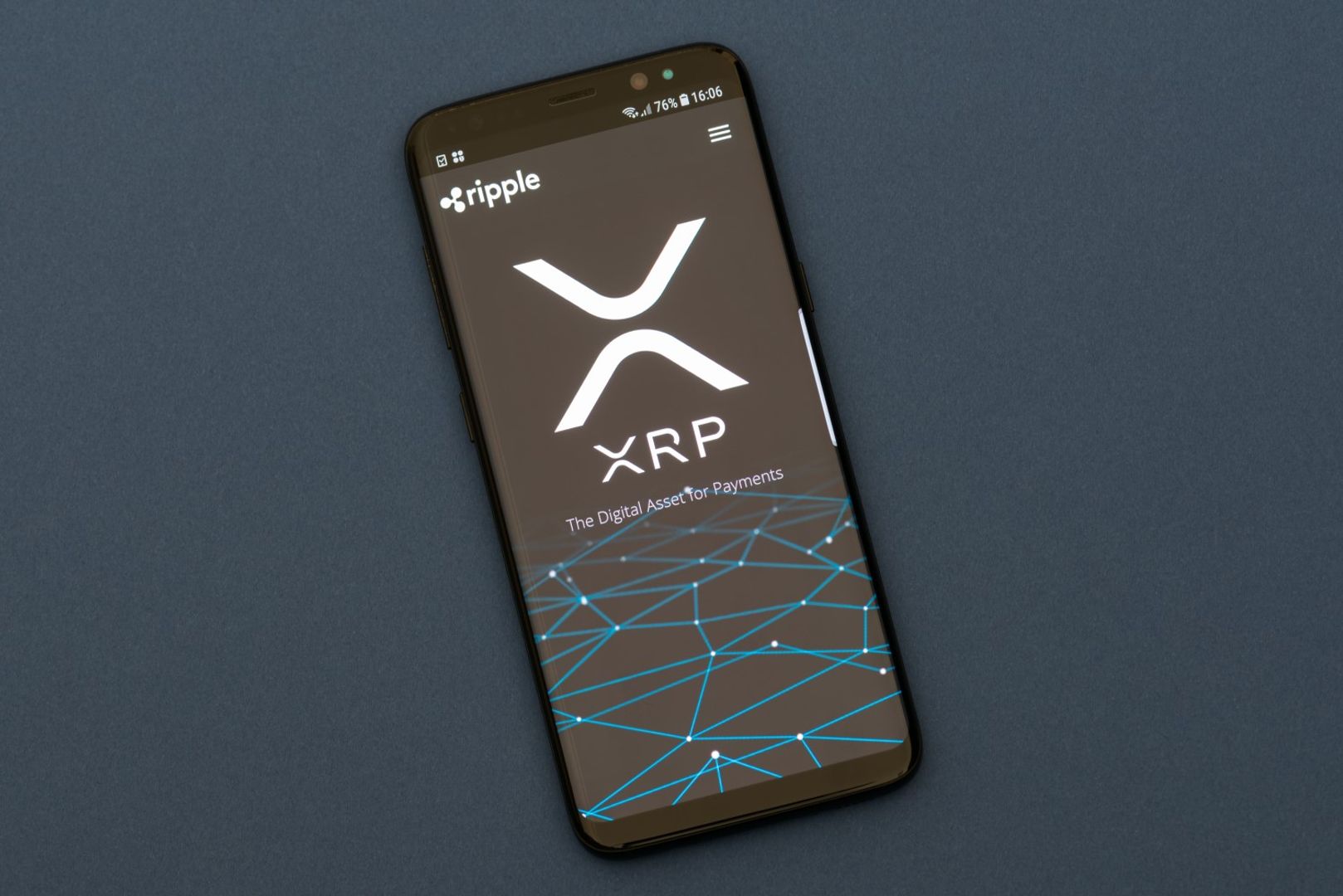
One of the XRP Ledger’s biggest weaknesses as a DeFi venue might be on its way out.
A draft amendment titled “AMM Swappable Curves” was filed on the XRPL standards repository Tuesday, proposing to extend the network’s existing automated market maker with three pluggable curve types — constant product, concentrated liquidity, and StableSwap.
A fourth, fully programmable curve type called Smart AMM is reserved for a follow-up specification. AMMs refer to automated market makers, a type of decentralized exchange where trades happen against a pool of deposited tokens rather than between buyers and sellers.
The proposal was authored by XRL core developers Denis Angell and Roman Thpt and would require a separate amendment vote before activation. For now it is still in draft.
What it would do is let liquidity providers on the XRPL choose how their pool prices assets. The current setup spreads liquidity uniformly across every possible price, which is fine for volatile pairs but burns capital for stablecoin pairs and correlated assets.
Concentrated liquidity lets liquidity providers (or users that supply their tokens to a protocol in exchange of capturing a share of fees) target a narrow band where most trades actually happen, which produces far more usable depth per dollar deposited. StableSwap is built for assets that trade near 1:1, like dollar-pegged stablecoins or wrapped representations of the same asset.
The XRPL has been quietly building institutional tokenization volume — over $3 billion in tokenized real-world assets currently sit onchain, including a Ripple-JPMorgan pilot earlier this month processing a tokenized U.S. Treasury redemption in under five seconds.
But moving institutional capital onchain is one leg of any financial strategy. Letting that capital earn yield, get borrowed against, or trade efficiently against other tokenized assets requires DeFi rails that actually work for the task.
Concentrated liquidity in particular has become the standard for capital-efficient AMMs across major DeFi ecosystems, with around 60% of AMM volume now running through some version of it, per the proposal’s own data citations. XRPL’s current AMM has been missing that since launch in 2024.
The amendment also keeps existing pools untouched. Pools created before the new curves activate stay on the constant product model with no migration required. Pool creators picking from the new menu would do so at creation time, with the curve type locked in for the life of the pool.
XRP traded at $1.34 in U.S. morning hours Tuesday. Whether the AMM upgrade lands in time to compound the institutional narrative depends on the amendment process, which can stretch for months and is not guaranteed to pass.


Craig Swan’s eyes light up, and his smile widens when he speaks of Bermuda’s ambitions to become the world’s first economy to go fully onchain, a move he is certain will create amazing new opportunities for the country’s citizens.
In an interview with CoinDesk in London, Swan, the CEO of Bermuda’s Money Authority (BMA), spoke of his tiny island nation’s huge plans.
“We carried out a huge event in Bermuda to educate our citizens on how to set up their crypto wallet, and we airdropped $100 in Circle’s stablecoin USDC, and showed them how to use it for purchases, transfer or send it to friends and family or convert it and even offramp it into fiat if they chose to,” Swan said.
The experiment was designed to onboard local vendors and the public simultaneously, Swan added. Attendees were able to immediately test the ecosystem at an on-site marketplace, using their newly minted stablecoins to purchase goods, while payment processors like MoneyGram provided immediate conversion back into paper currency.
Driving demand at the DMV
While the pop-up marketplace served as a sandbox, the BMA and the government of Bermuda are already scaling the infrastructure to prepare it for the blockchain. The island nation has amended its legislation to officially accept digital assets for public taxes, starting with its highest-volume public sector.
“We are starting at a high-volume area,” Swan explained. “Starting with the Department of Motor Vehicles, because most people have a car or licenses. We are going to cast that across the government itself.”
The financial migration represents the real-world execution of a roadmap first unveiled at the World Economic Forum in Davos, where the Bermudan government announced a partnership with Circle and Coinbase to build out the infrastructure for the world’s first fully onchain economy. Circle deployed its Circle Mint infrastructure to power the government’s digital treasury accounts, while Coinbase pledged its engineering rails to streamline institutional and consumer onboarding.
Bermuda also recently announced a third major partnership. This time with Stellar for the upcoming rollout of its official Bermuda digital dollar, a sovereign-grade stablecoin. Rather than compete with the traditional financial sector, Swan said he expects the onchain rails to coexist with legacy banks, which will continue to hold the fiat reserves backing the digital tokens and provide localized custody.
“The reliance on legacy payments infrastructure has left Bermudians paying high fees and hindered additional economic growth,” Premier E. David Burt noted following the Stellar announcement. By leveraging blockchain rails, Bermuda is attempting to bypass the expensive intermediary banking loops that chew up thin merchant margins, keeping capital circulating natively on-island.
However, moving a national economy onto a blockchain requires rewriting more than just banking rules, said Swan, noting that it requires changing the definition of property.
“When you look at contract law, and if you look at securities, in some cases, it’s not clear whether or not a smart contract satisfies a legal transfer of ownership,” Swan observed. “We have to look at the legislation to make sure that it’s aligned. I think there are a few tweaks the island needs to make around shares—the way legislation records a share register needs to be clear that it can exist in a digital form.”
Regulating the AI agent wave
Bermuda’s testing programs have historically yielded massive macroeconomic results, Swan said. The island currently ranks among the world’s top three largest reinsurance centers. The government is betting that its regulatory framework, the Digital Asset Business Act (DABA), can achieve the same global footprint for tokenized real-world assets (RWAs) and decentralized finance (DeFi).
To prove it, Swan said the BMA recently concluded a pilot program focused on embedding compliance directly inside smart contracts. The trial successfully demonstrated that protocols could automatically freeze a transaction if underlying collateral reserves fell below a specific threshold or block and exchange entirely if an address violated real-time anti-money laundering or sanctions screening.
To address these risks, Swan said the BMA is already looking beyond human traders to digital liquidity generated by automated machines. With that, he said, the BMA plans to roll out an AI payments hub to research and supervise transactional flows initiated entirely by autonomous software.
For larger G20 nations, scaling such an ambitious ledger remains a multi-year regulatory bottleneck. For Bermuda, its small population is its primary geopolitical advantage.
“Smaller jurisdictions with the resources will be able to follow us,” Swan concluded, offering advice to other sovereign states looking to digitize their financial architecture. “Larger jurisdictions would have to take a different train. But to attract companies that are serious, it’s best not to race to the bottom.”

TLDR
- Bitmine acquired 111,942 ETH during the previous week for approximately $237 million — marking its biggest single acquisition in 2026.
- Total company holdings have reached nearly 5.4 million ETH, representing approximately 4.47% of the entire Ethereum circulating supply.
- Tom Lee, the company’s Chairman, indicated that Ethereum’s price drop beneath $2,200 prompted the aggressive purchasing strategy.
- The company has staked more than 4.7 million ETH via its MAVAN platform, producing roughly $276 million in projected annual staking income.
- BMNR shares increased approximately 3.3% on Tuesday; the company anticipates enhanced liquidity following its Russell 1000 index addition next month.
Bitmine Immersion Technologies (BMNR) Shares Rally Following Record Ethereum Acquisition
Bitmine Immersion Technologies, Inc., BMNR
Bitmine Immersion Technologies executed its most substantial Ethereum acquisition of 2026 during the previous week, accumulating 111,942 ETH valued at approximately $237 million. The aggressive purchase represents a notable shift for an organization that had recently communicated intentions to moderate its acquisition strategy.
BMNR stock advanced roughly 3.3% during Tuesday’s session, most recently changing hands at $19.51. While posting gains for the day, shares remain down approximately 12% across the trailing month and have declined more than 38% over the preceding six-month period.
Tom Lee, serving as Chairman, disclosed the acquisition through a Monday statement. He attributed the purchase decision to Ethereum’s price decline from the $2,400 level observed in April and early May down to approximately $2,100.
“We view the recent pullback of ETH to below $2,200 as an attractive opportunity,” Lee said.
The acquisition timing proves noteworthy. Only weeks prior, during the Consensus 2026 conference in Miami, Lee had publicly stated the company’s plan to decelerate its weekly ETH accumulation strategy to avoid reaching its 5% supply objective prematurely.
This most recent transaction elevated Bitmine’s aggregate holdings to 5,390,404 ETH, positioning the company at roughly 4.47% of circulating supply — representing more than 88% progress toward the stated 5% target.
Lee indicated the organization anticipates surpassing that milestone “sometime in 2026.”
Generating Staking Returns
Bitmine’s strategy extends beyond simple Ethereum accumulation — the majority of holdings are actively deployed. The organization has staked over 4.7 million ETH, representing approximately 87% of total holdings, utilizing its proprietary validator infrastructure, the Made in America Validator Network (MAVAN).
Based on existing staking metrics, the company forecasts annualized staking revenue exceeding $276 million.
Total digital asset and cash positions stand at $12.3 billion. Bitmine additionally maintains 203 Bitcoin, $444 million in cash reserves, and equity stakes in Beast Industries and Eightco Holdings.
Russell 1000 Inclusion May Trigger Additional Demand
A significant near-term catalyst Lee highlighted involves Bitmine’s forthcoming Russell 1000 index inclusion, which monitors the 1,000 largest United States companies. The addition is scheduled for next month.
Lee projected that passive index funds and ETFs tracking the Russell 1000 could produce substantial automated BMNR purchases when portfolio rebalancing occurs.
Ethereum itself declined roughly 2% across the preceding 24 hours, trading near $2,078 on Tuesday. The digital asset remains approximately 58% below its record peak of $4,946, established in August.
Lee observed in his statement that Bitmine anticipates the broader cryptocurrency market will benefit from what he characterized as a “supercycle” fueled by Wall Street tokenization initiatives and agentic artificial intelligence adoption.

Crypto World
Will Pi Network (PI) Outperform AI Crypto Coins in 2026? ChatGPT Gives a Surprising Answer

Pi Network has always been one of the rather unusual stories in crypto. You see, unlike most tokens that first build liquidity and then search for users, Pi’s team spent years building a mobile-first community before actually opening itself to the broader cryptocurrency market through a token generation event.
That makes the question of whether Pi Network can outperform AI crypto coins, representing one of the strongest narratives in the industry at present times, particularly interesting.
With it in mind, we decided to ask ChatGPT for an answer, to see how an AI thinks about whether a viral altcoin can outperform AI-based cryptocurrencies. Let’s see what it had to say.
The Bull Case: A Contrarian View
As the subheading suggests, ChatGPT favors AI crypto coins, but it also presents a contrarian view where Pi emerges victorious. It explains that artificial intelligence remains one of the strongest narratives, not just in crypto, but in finance as well.
To be fair, there is a point to that. Just yesterday, we reported that DRAM became the fastest-growing ETF in history, and its prime focus is chip manufacturing for AI infrastructure development.
But the chatbot built a different bull case for Pi Network:
“It is not mainly about advanced technology. It is about community, distribution, and surprise. If PI gains stronger exchange listings, improves liquidity, and shows real ecosystem usage, the token could reprice quickly. because PI’s market cap is smaller than the broader AI crypto sector, it may have more room for a sharp percentage move if sentiment turns bullish.”
Of course, that does sound a lot like hopium, given that prominent exchange listings on platforms like Binance have been teased for many months now to no avail. That said, it’s interesting to see if PI can pull off a “surprise.”
Why AI Cryptos Have an Edge
Surprisingly or not, the AI-based system thinks that AI has an edge. That’s because these altcoins are associated with a global technology trend, as opposed to PI coin, which still needs to prove that its community can actually convert into a robust economy.
ChatGPT even gave some odds. It thinks there is a 15% chance of PI strongly outperforming AI cryptos, and it gives us a 25% chance of modestly outperforming some AI coins. It thinks that there is a 40% chance that AI will prevail.
Now, remember, this article leans on the speculative spectrum, and it’s intended for comparative purposes, not as financial advice. The objective truth is that PI coin is down 80% in the past year, and its performance has been quite disappointing. Still, it sits on a market cap of more than $1.5 billion, making it one of the larger altcoins.
The post Will Pi Network (PI) Outperform AI Crypto Coins in 2026? ChatGPT Gives a Surprising Answer appeared first on CryptoPotato.


Ripple has filed two new U.S. trademark applications covering its Triskelion design and word mark. The filings have drawn attention because they list several services tied to institutional finance, trading, treasury systems, and asset management.
Summary
- Ripple filed two new U.S. trademark applications covering its Triskelion design and word mark, with listed services tied to treasury, trading, risk management, and asset management.
- The filings show Ripple’s wider focus on institutional finance, including hedge fund management, securities lending, prime brokerage, clearinghouse functions, and brokerage services.
- Ripple Prime’s integration with EDX Markets and EDXM International supports its push to connect digital asset markets with traditional finance infrastructure.
According to reports shared on X, the applications suggest that Ripple is looking to expand its role beyond blockchain payments. The filings cover areas such as treasury operations, digital asset management, cash management, risk management, investment advisory services, and bank reconciliation.
Ripple expands institutional finance focus
The trademark applications also include services linked to hedge fund management, securities lending, prime brokerage, financial clearinghouse operations, and brokerage across equities, derivatives, fixed income, foreign exchange, and commodities.
Trademark filings do not always confirm future products. However, they often show where a company may seek brand protection. In Ripple’s case, the listed services point to a broader interest in institutional financial infrastructure.
Ripple has already moved deeper into traditional finance. In November 2025, the company secured $500 million from major Wall Street firms. The funding reportedly raised its valuation to about $40 billion.
The deal included investor protections, including exit rights. These terms allow investors to sell shares back to Ripple at a fixed return after three or four years. Such terms may affect how financial firms assess Ripple’s liquidity needs and risk profile.
The latest trademark filings appear to fit into Ripple’s broader institutional strategy. The company has continued to build services that connect digital asset markets with traditional financial systems. Ripple’s activity also comes as financial firms increase interest in regulated digital asset services. The company’s filings show that it may seek wider brand coverage across software, brokerage, clearing, and asset management tools.
Ripple Prime adds access to EDX markets
As previously reported by crypto.news, Ripple Prime recently integrated with EDX Markets and EDXM International. The move gave institutional clients access to EDX spot liquidity and EDXM International perpetual futures under one prime brokerage framework.
Ripple said the structure supports credit intermediation, net settlement, and collateral management across digital asset markets. Michael Higgins, International CEO of Ripple Prime, described the move as a market-structure upgrade for institutions.


The UK Foreign, Commonwealth & Development Office has sanctioned Huobi Global SA, which it suspects of “obtaining a benefit from or supporting the Government of Russia.”
The FCDO designation explains that Huobi has been “providing financial services, or making available funds, economic resources, goods or technology” to A7 LLC and GARANTEX Europe OU, both of which are “carrying on business in a sector of strategic significance to the Government of Russia.”
Both of the entities linked to Huobi Global were previously sanctioned by the FCDO, in 2025 and 2022, respectively.
Read more: Has Garantex-linked Grinex dodged sanctions to move $6 billion?
A7 LLC is the issuer of stablecoin A7A5 which, according to blockchain analysis firm Elliptic, is key to Russian sanctions evasion efforts. A7A5 has been used to process over $100 billion worth of transactions since launch in January 2025.
Garantex is a crypto exchange which the US Treasury’s Office of Foreign Assets Control (OFAC) claims processed over $100 million of transactions “associated with illicit actors.”
In March 2025, Garantex announced that “all USDT in Russian wallets is currently under threat,” after Tether froze $23 million of its stablecoin.
Read more: Crypto hack goes political as Grinex blames ‘Western special services’
Grinex is the Kyrgyzstan-based spiritual successor to Garantex and the main venue for A7A5 trading with USDT. It’s also under FCDO sanctions as of last August.
Grinex itself was hacked for $15 million in USDT in April, blaming “Western special services,” who it claims, intended on “causing direct damage to Russia’s financial sovereignty.”
In addition to being sanctioned by the FCDO, Huobi Global and HTX are embroiled in legal proceedings with the UK Financial Conduct Authority (FCA).
The filing, made in February, is related to the unauthorised communication of financial promotions. The FCA accuses HTX of “illegally promoting cryptoasset services to UK consumers.”
Got a tip? Send us an email securely via Protos Leaks. For more informed news and investigations, follow us on X, Bluesky, and Google News, or subscribe to our YouTube channel.
Weeks after announcing the launch of outcome-based markets, Hyperliquid has added macro events to its roster of tradeable predictions.
At the time of this writing, the platform supports two markets:
- May CPI year-over-year
- June Fed rate change
Both of these currently have minimal open interest, while the originally launched Bitcoin “above or below” daily market managed to attract around $140,000 in volume over the past 24 hours.

The move comes as HYPE’s price renews its rally, soaring by about 8% in the past couple of hours alone, currently trading at above $64.3 for a new all-time high. The token has remained one of the best-performing cryptocurrencies in the past weeks. It increased from below $40 to its current price this month, driven by skyrocketing institutional demand and overall excitement.
HYPE ETF flows were positive last week – a stark contrast to the broader industry, which saw over $1.5 billion in cumulative outflows.
Data from hl.eco shows that the cumulative outcome market volume has already topped $52 million – a far cry from Polymarket or Kalshi’s volumes, but it’s also worth pointing out that it’s an avenue launched merely weeks ago.
The post Hyperliquid Adds Macro Prediction Markets, HYPE Explodes Above $64 appeared first on CryptoPotato.

People issued urgent water safety warning after UK deaths

Corbus Pharmaceuticals Holdings, Inc. (CRBP) Discusses Clinical Data Update From Phase 1/2 Study of CRB-701 Presented at ASCO Transcript

XRP Price is yet to Recover as RLUSD Breached $1.7 Billion Market Cap: Will XRP Follow?


-

 Crypto World5 days ago
Blockchain.com files with SEC for U.S. IPO
-

 Fashion4 days ago
Holiday Weekend Open Thread – Corporette.com
-

 Business4 days ago
Dell Technologies DELL Stock Surges 15% on AI Server Momentum and Analyst Upgrades in 2026
-

 Crypto World4 days ago
Bitcoin Accumulation Weakens as BTC Realized Losses Hit $600M
-

 Crypto World4 days ago
Space X IPO Is ‘Bad News’ for Tech Stocks: But What About Bitcoin?
-

 Politics4 days ago
Makerfield: a tale of two social-media histories
-

 Crypto World3 days ago
Robinhood crypto COO Tanya Denisova exits
-

 Business2 days ago
NYT Strands Answers May 24 2026 Revealed for Puzzle No. 812 Theme Summer Essentials
-

 Crypto World5 days ago
MicroStrategy’s Saylor Says Miners No Longer Set Bitcoin Price, Another Force Has Taken Over
-

 Tech5 days ago
WhatsApp ads could make Irish debut after discussions with DPC
-

 Crypto World4 days ago
AI infrastructure race heats up as IREN pitches full-stack strategy, WhiteFiber lands $160M deal
-
 Tech4 days ago
A 0.12% parameter add-on gives AI agents the working memory RAG can’t
-

 Tech5 days ago
You Can Now Add ChatGPT To PowerPoint
-
 NewsBeat5 days ago
Charity run by Reform leader Malcolm Offord accused of ‘law breaking’ over Scottish registration
-

 Business4 days ago
Trump Invests $1M-$5M in Kura Sushi USA Chain With 27 California Locations
-

 Tech1 day ago
Microsoft’s quiet Claude Code retreat and the real cost of enterprise AI
-

 Sports5 days ago
2026 CJ Cup Byron Nelson leaderboard: Brooks Koepka finds putting stroke in Round 1
-

 Crypto World6 days ago
Exa Labs raises $250 million in funding led by a16z
-
Business4 days ago
Goldman Sachs reinstates Ageas stock coverage with neutral rating
-
 Crypto World4 days ago
Verus Bridge Hacker Returns $8.5M ETH, Keeps $2.8M as Bounty
You must be logged in to post a comment Login