

Crypto World
The Clarity Act won’t lead to adoption without crypto tax reform



A growing number of people see the Clarity Act, which intends to establish clear and enforceable guardrails for the U.S. crypto industry, as a sign that Washington has firmly closed the door on the “regulation-by-enforcement” approach seen under the Biden administration to a more structured framework for the crypto industry.
And look, on paper, it’s a major step forward. There is no doubt the Clarity Act offers clearer definitions and a more coherent regulatory perimeter for the industry.
But regulatory clarity does not automatically lead to adoption. Because even if Congress gets the market structure right, the U.S. crypto tax framework, in its current form, is still a bit messy and complicated.
Form 1099-DA is confusing for crypto investors
On paper, Form 1099-DA, which any business defined as a crypto broker must issue, is about transparency, standardized reporting and improved compliance.
The Form 1099-DA asks crypto users for the number of assets, acquisition date, sale and disposal date, as well as specific sections for aggregated transactions for stablecoins and NFTs.
However, it is becoming more counterproductive than intended. Crypto users are now receiving tax forms that often report proceeds without a reliable cost basis, fail to properly capture holding periods and excludes non-custodial activity entirely. The result is a fragmented and incomplete picture of a user’s actual tax position.
For retail investors, that means manually reconciling thousands of transactions across exchanges, wallets, bridges and DeFi protocols, often with conflicting data that does not align with what the IRS receives.
Even within the industry, the problem has become immense. When assets are moved between platforms, the cost basis often disappears. The receiving exchange has no reliable way to reconstruct historical purchase data. Yet, the system is designed as if crypto can be reported with the same precision as traditional securities held within a single brokerage account.
It cannot. So the burden falls back to the individual taxpayer. They are now expected to override, reconcile and reconstruct their entire transaction history, or risk audit exposure if they get it wrong.
The audit trail and record-keeping requirements in the Clarity Act represent a necessary trade-off for regulatory certainty under the CFTC, but the operational hurdles they impose can’t be ignored.
To the bill’s credit, the underlying intent of these strict mandates is a massive win for the industry. Forcing audit trails to definitively prove the absolute segregation of customer assets injects a level of trust and security that will protect retail users and prevent the catastrophic commingling of funds that defined early crypto collapses.
However, the technical challenges of implementing these systems remain daunting. While the bill wisely acknowledges that tailored, onchain tracking solutions are required rather than outdated legacy reporting stacks, the operational demands are steep. Because digital asset markets run 24/7, firms must build and maintain continuous audit trails capable of instantly matching real-time blockchain ledger data with off-chain communications.
Contradiction in U.S. policy becomes impossible to ignore
For small and mid-sized investors, especially, the compliance burden can exceed the economic benefit. And if the future of crypto depends on broad participation, that is a serious structural problem.
This is where the contradiction in U.S. policy becomes impossible to ignore.
On the one hand, the government is supporting innovation, market growth and domestic leadership in digital assets. On the other hand, it is implementing a tax reporting regime that treats decentralized networks as if they were traditional brokerage accounts with perfect data continuity.
Those two positions cannot both scale. We’ve already seen partial backtracking, particularly around how the regime applies to non-custodial or DeFi activity. That’s a start, but it only scratches the surface.
The deeper issue is yet to be solved. The IRS does not need to turn crypto exchanges into perfect, all-seeing record keepers to improve compliance. It needs a framework that acknowledges the reality of fragmented ownership and cross-platform asset movement.
Other jurisdictions are moving in that direction. The Organisation for Economic Co-operation and Development’s (OECD) Crypto-Asset Reporting Framework (commonly referred to as CARF), for example, leans toward standardized data collection across platforms without pretending that intermediaries can reconstruct a perfect cost basis history for every user.
Exchange reporting should not function as a definitive ledger. Its purpose should be to flag unreported activity, not to force millions of users into impossible reconciliation exercises based on incomplete institutional data.
Even within the U.S., there are early signs of recognition that the current approach is too blunt. Discussions around de minimis exemptions and targeted relief for small transactions suggest policymakers understand that friction matters.
While the act does provide a de minimis exemption to shield low-volume brokers and dealers from registering or maintaining these heavy systems, which will protect the smallest startups, it simultaneously creates a steep compliance cliff for the middle market.
While established industry giants can treat these real-time surveillance pipelines as an expensive upgrade, growing businesses caught just above the de minimis threshold face sheer engineering complexity and costs that could prove a massive barrier to entry.
Reform is still lagging behind rhetoric
But at the federal level, reform is still lagging behind rhetoric, and that gap is becoming harder to ignore.
Because if the U.S. continues to define “crypto-friendly” as regulatory clarity alone while ignoring the existing tax burden, adoption will not accelerate significantly.
It will stall at the edges. High-net-worth participants and sophisticated funds will continue operating. Builders will continue building. But mainstream retail participation, the layer that many argue is needed for true scale, will quietly opt out under the weight of compliance complexity.
The U.S. won’t need to ban crypto to slow its growth, but it may tax it into friction, while other jurisdictions design systems that make participation materially easier.

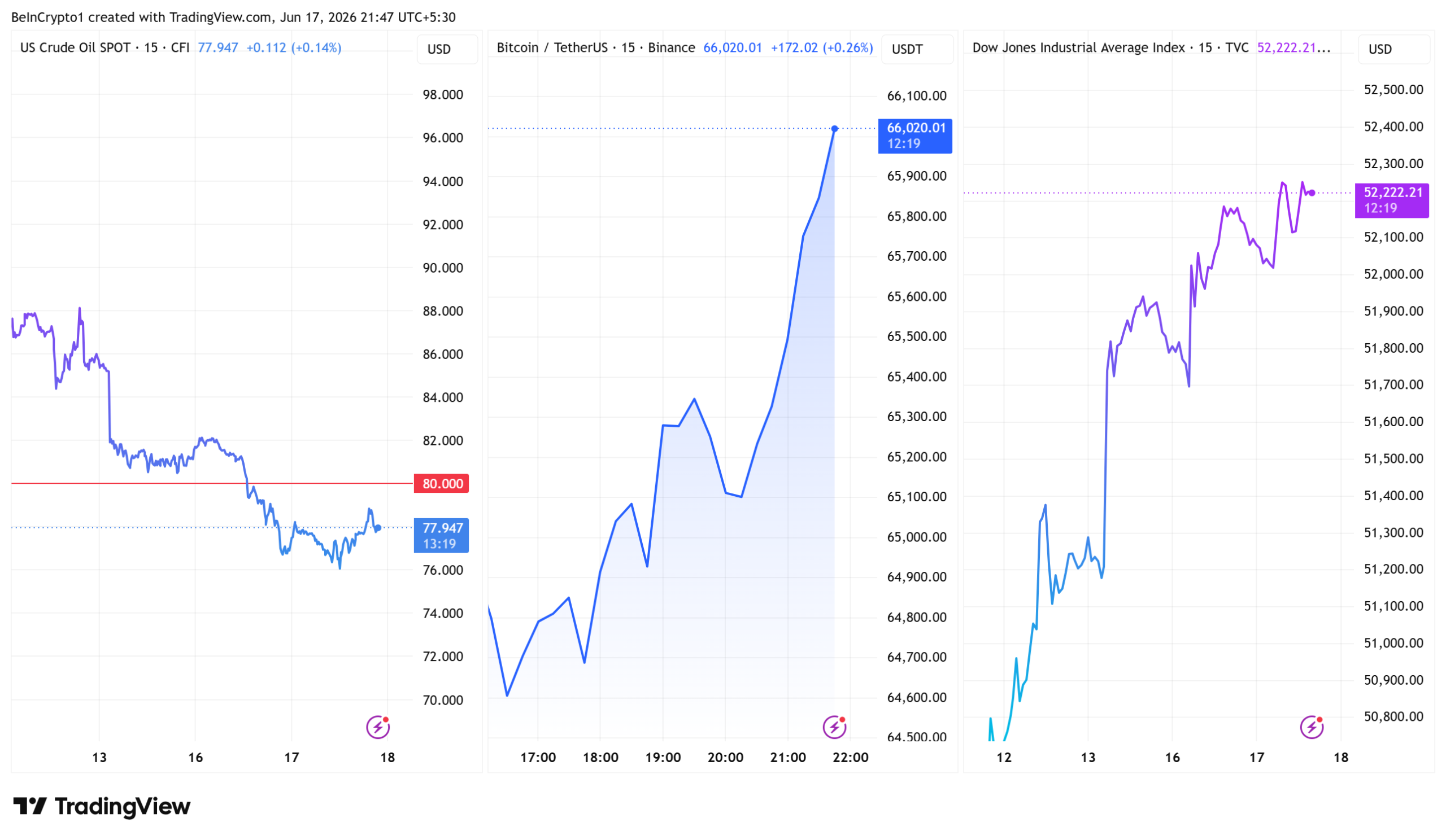
The Bitcoin price moved past the $66,000 threshold on Wednesday as US President Trump explained the Iran deal in his press address at G7 Summit.
Meanwhile, the oil price slid lower as Trump’s remarks shed more light on the US-Iran deal ahead of the formal signing in Switzerland.

Trump Addresses Iran Deal In G7 Summit Press
President Trump delivered a high-stakes update on the U.S.-Iran Memorandum of Understanding during the G7 summit press conference on June 17, 2026, driving immediate market moves across risk assets.
Trump confirmed the framework includes a ceasefire, full reopening of the Strait of Hormuz, limited sanctions relief, and Iran’s pledge against nuclear weapons.
A formal signing is expected soon in Switzerland.
“If Iran doesn’t honor the agreement, back to bombing them,” Trump stated bluntly. He added that some understandings remain unwritten and praised the impact of recent U.S. strikes: “Amazing what bombs can do.”
Follow us on X to get the latest news as it happens
President Trump also highlighted market surges tied to Iran peace signals during the G7 summit press conference.
“Every time we talked about possibility of peace, market shot up like a rocket ship,” Trump declared. “Never really went down. The stock market is more brilliant than anybody.”
He linked these rallies to the U.S.-Iran MOU, which includes a ceasefire, Strait of Hormuz reopening, and limited sanctions relief, while warning of renewed strikes if Iran fails to comply.
The “peace through strength” narrative, backed by explicit military leverage, has reduced short-term volatility premiums.
The post Trump G7 Summit Press Pumps Bitcoin as Oil Crashes appeared first on BeInCrypto.
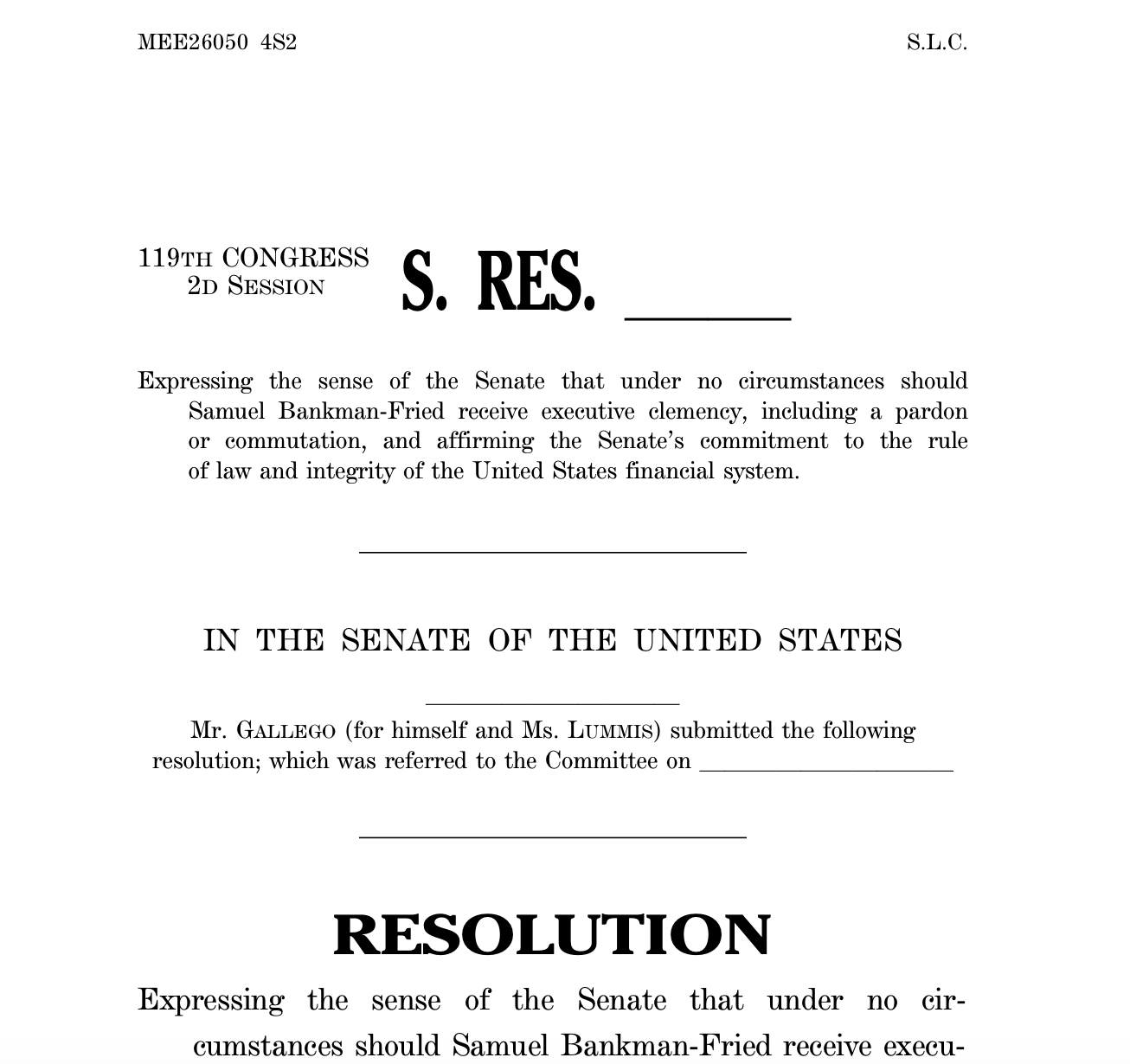
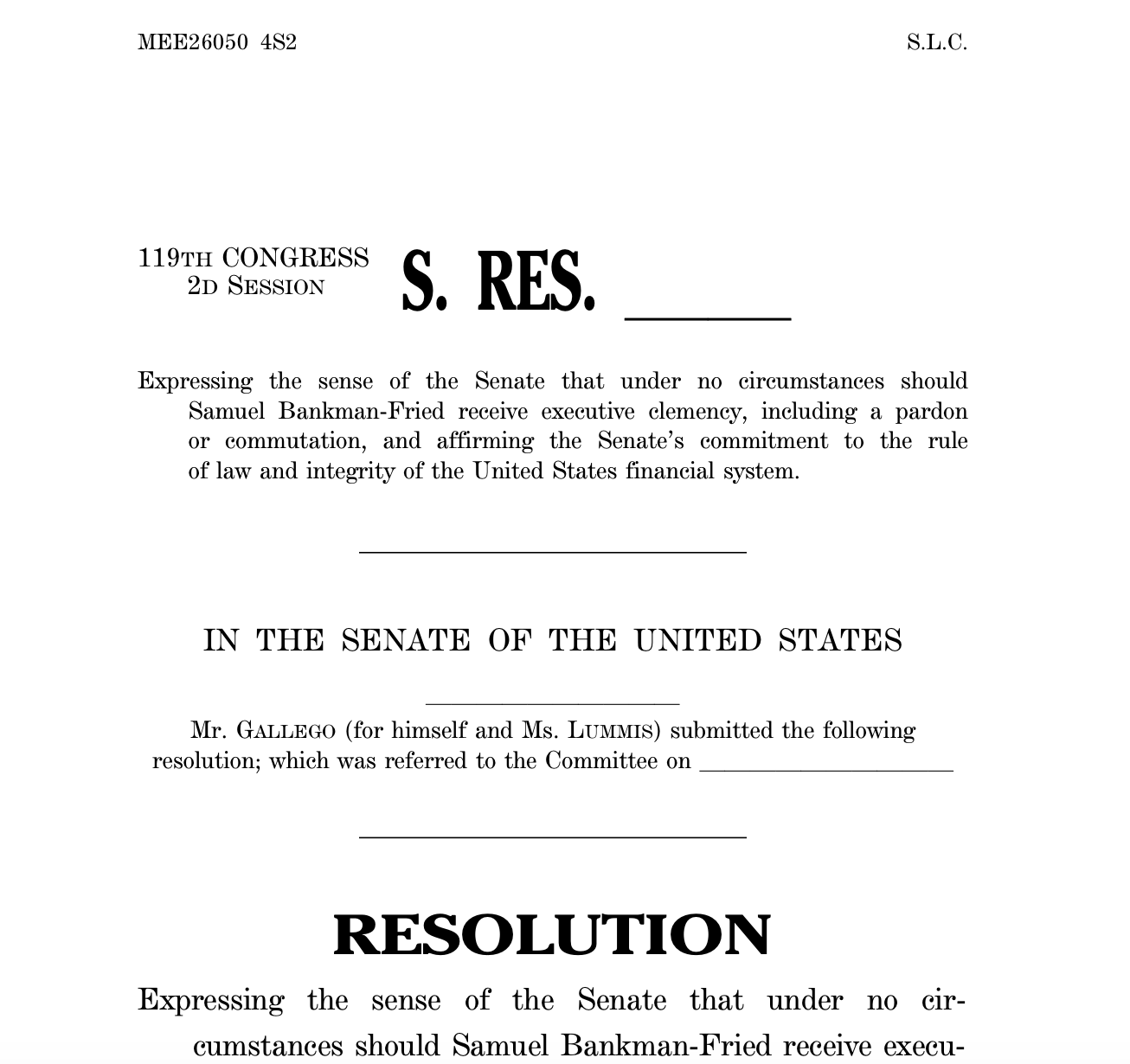
Two US lawmakers on opposite sides of the political aisle are backing a resolution that “under no circumstances should Samuel [SBF] Bankman-Fried receive executive clemency, including a pardon or commutation.”
In a resolution to be introduced Wednesday, Republican Senator Cynthia Lummis and Democratic Senator Rubén Gallego warned that should US President Donald Trump grant SBF’s request for a pardon, it would “erase [his] conviction […] weaken deterrence, and send a deeply damaging message that perpetrators of large-scale financial fraud can escape permanent accountability.” The resolution would be non-binding, as a US president’s pardon power is enshrined in the Constitution.
“[The US Senate] affirms that the 25-year sentence imposed upon Bankman-Fried reflects the extraordinary scale and deliberateness of his crimes, his lack of remorse, and the catastrophic harm inflicted upon millions of victims, and that such a sentence serves the interests of justice,” read the resolution.
Source: Senator Rubén Gallego
The resolution came after Bankman-Fried formally applied for a pardon from Trump of his conviction on seven felony counts related to the misuse of FTX user funds. Last week, a federal appeals court upheld that conviction and sentence, leaving his only legal path forward a presidential pardon or an appeal to the US Supreme Court.
Bankman-Fried was convicted in November 2023 following the collapse of cryptocurrency exchange FTX a year earlier, which resulted in investor losses totaling billions of dollars. He was later sentenced to 25 years in prison.
Related: Onchain, in court: What happened in crypto legal news this week
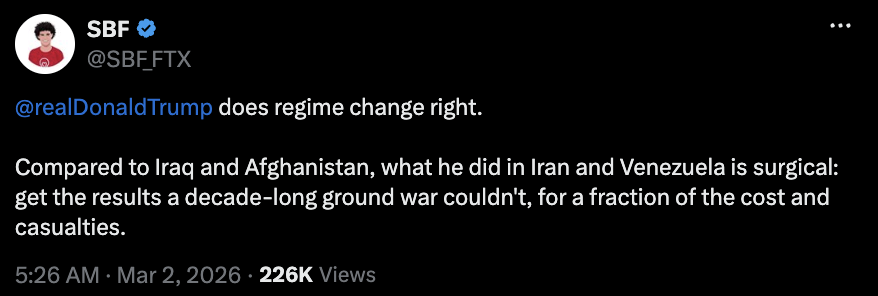
Following his sentencing in March 2024, the former CEO posted several messages to social media aligning with Trump’s political agenda, including US military actions in Venezuela and Iran. However, in a January interview with the New York Times, the president said he had no plans to pardon Bankman-Fried.
Source: Sam Bankman-Fried
Cointelegraph sought comment from Gallego’s office but did not receive an immediate response. A spokesperson for Lummis said that the senator “wants him to know that her and her colleagues think Mr. Fried is right where he belongs” by introducing the resolution.
Other FTX figures still serving time
Although some of the former executives of the defunct cryptocurrency exchange were sentenced to time served in exchange for their cooperation and testimony at SBF’s trial, one is still in federal prison, and another was released earlier this year.
Caroline Ellison, the former CEO of Alameda Research, received a two-year sentence in 2024 and was given an early release in January after 14 months. FTX former engineering director Nishad Singh and co-founder Gary Wang were both sentenced to time served. All testified against SBF at trial.
Ryan Salame, the co-CEO of FTX Digital Markets, was sentenced to 90 months in prison related to unlawful political contributions and conspiracy to operate an unlicensed money-transmitting business. His wife, Michelle Bond — though not an FTX employee — was recently indicted on charges related to her 2022 run for Congress allegedly financed with illegal campaign contributions from the crypto exchange.
Magazine: The end of anon? AI could unmask crypto’s hidden identities
Crypto World
Coinbase Stakes Out Brokerage Territory With SEC-Registered AI Advisor and Stock Options Push
Coinbase used its latest "System Update" on Tuesday to push deep into territory long held by retail brokerages, rolling out an SEC-registered AI investment advisor, stock and ETF trading on its professional platform, and options markets for both equities and crypto. The bundle moves the exchange's… Read the full story at The Defiant


After generating $5.5 billion in trading volume in two weeks, Kalshi is pushing to extend its CFTC-regulated perpetual futures beyond crypto into a wider range of asset classes. Kalshi's perpetual futures business crossed $5.5 billion in trading volume in its first two weeks, according to… Read the full story at The Defiant
Grayscale Research has named five decentralized finance tokens it believes offer real value as crypto markets reward revenue and cash flow over speculation.
The asset manager flagged Hyperliquid (HYPE), Aave (AAVE), Uniswap (UNI), Sky (SKY), and Maple (MAPLE) in a research report published June 16. Each shows strong relative value based on fundamentals.
Why Grayscale Sees Value in DeFi
Crypto markets have fallen since January. Grayscale argues in its report that investors can now value many tokens like financial assets rather than commodities.
The firm sorts tokens on a spectrum. Bitcoin trades like a commodity, while protocols with recurring revenue resemble cash flow businesses.
Since 2023, DeFi protocols have generated nearly $25 billion in cumulative fees from real users. That activity has driven rising on-chain fee revenue across exchanges, lending, staking, and derivatives.
Price multiples across DeFi lending have also compressed. Grayscale reads that as maturing business models now trading at attractive valuations.
Revenue Now Drives Token Value
Protocol revenue alone does not set token value. Grayscale says burns, buybacks, rebates, and staking decide how much reaches holders.
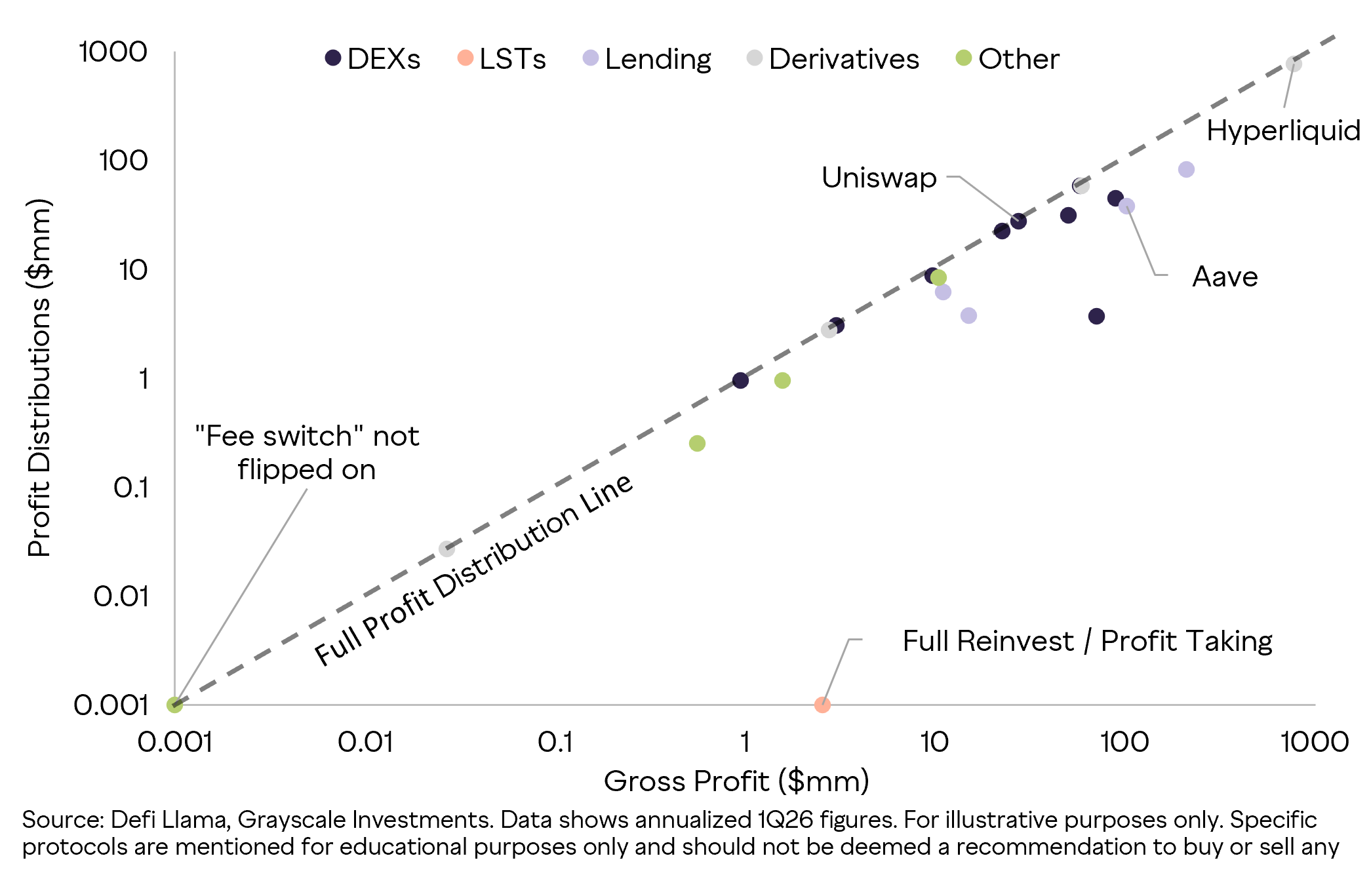
By that test, Uniswap and Hyperliquid stand out. The report says both return almost all earnings to holders through transparent DeFi payout models.

Hyperliquid routes trading fees straight into buying and burning HYPE. That model helped lift it into the top 10 by market cap this year.
Aave sits alongside them as the largest DeFi lender, after Grayscale called the AAVE token undervalued near $75.
How the Tokens Stack Up
HYPE trades near $72, ranking as the 10th-largest crypto and well ahead of its peers over the past year.
UNI sits around $3.30 after a 9% daily gain, with its value tied to fee distributions back to holders.
SKY trades near $0.06, where Grayscale says its onchain collateral-backed stablecoin keeps finding product-market fit.
Maple rounds out the list through institutional lending, which the firm says has delivered strong risk-adjusted returns.
“…crypto is repricing from narrative → fundamentals Protocols with real revenue, disciplined capital allocation, and transparent token economics are outperforming Grayscale flags HYPE, AAVE, UNI, SKY, and MAPLE as showing strong relative value on this basis,” Grayscale stated.
Follow us on X to get the latest news as it happens
The throughline is a market repricing from narrative to fundamentals.
Grayscale says protocols that turn real revenue into token value are pulling ahead.
The post Grayscale Names 5 DeFi Altcoins With Real Utility appeared first on BeInCrypto.


Ethereum's Glamsterdam hard fork reached its final devnet stage Tuesday, locking in the EIP bundle that core developers expect to carry the network through public testnets and on to mainnet activation in the second half of 2026. The release is being framed as the largest protocol change since the… Read the full story at The Defiant


Illinois Governor JB Pritzker has signed SB 3019, the Digital Asset Privilege Tax Act, according to ChainCatcher via Bitget News, making the state the first in the country to impose a transaction-based tax on everyday digital-asset activity. The Crypto Council for Innovation, a global industry… Read the full story at The Defiant
Crypto World
BlockDAG Tops Trending Cryptos 2026 While Arbitrum, Internet Computer, And Kaspa Fight Market Resistance

The cryptocurrency market in June 2026 is defined by extreme structural shifts as massive capital blocks rotate out of speculative public exchanges. High frequency algorithmic trading and sudden regulatory actions have created a highly volatile environment, completely destroying retail profit margins. Portfolio managers are shifting their attention toward native utility platforms featuring isolated treasury contracts to protect their principal investments.
This ongoing market correction proves that standard open market trading is no longer a viable strategy for sustainable capital growth. Sidelined investors are aggressively seeking ecosystems that provide fixed financial guarantees rather than relying entirely on unpredictable daily trading volume.
BlockDAG Announces the Concluding Phase of Its Legacy Sale
When analyzing the top trending cryptos 2026, BlockDAG dominates institutional interest by announcing the final operational countdown for its legacy tier. This clean urgency play focuses on the fact that the promotional introductory tier is officially wrapping up, making this the absolute final window to secure these specific terms before standard price discovery begins. Participants can leverage the native direct swap dashboard to acquire tokens at the foundational rate of $0.00000044. Every allocation is securely locked into a guaranteed corporate buyback contract fixed at $0.10.
This hardcoded exit strategy eliminates the stress of chart monitoring and completely shields portfolios from sudden liquidity crunches. As the premier choice among trending cryptos 2026, BlockDAG is experiencing massive capital inflows as large scale asset managers drain the remaining treasury pool. Once the current allocation reaches maximum capacity, this fixed ten cent settlement will disappear permanently. Everyday buyers must execute their positions immediately before the closing bell rings on this historic wealth building vehicle.
Arbitrum Consolidates Near Historic Price Lows
Market data from mid June 2026 shows Arbitrum trading at a highly depressed value of $0.09. The network has experienced a massive 74.33% drop over the past twelve months, establishing an all time low of $0.06 earlier in the month. Despite handling significant decentralized application volume as a layer two scaling solution, the native asset continues to suffer from heavy token unlocks and institutional distribution.
While the token is often listed among trending cryptos 2026, actual price action remains deeply bearish. The $0.10 zone acts as heavy overhead resistance, constantly rejecting localized relief rallies. Until the core development team restructures the tokenomics to encourage long term holding, Arbitrum will likely remain trapped in this tight consolidation phase.
Internet Computer Fights Stagnant Market Momentum
Internet Computer continues to face significant market friction, trading near $8.45 during the second week of June 2026. The network has successfully expanded its cloud infrastructure capabilities, attracting enterprise developers looking for decentralized hosting solutions. However, this fundamental utility has failed to translate into meaningful token price appreciation.
The asset recently broke below its 50 day moving average, signaling increased bearish control over the short term. Support currently sits at $7.80, and a failure to hold this level could trigger a rapid descent toward the $6.50 range. While developers consider the platform functionally superior to older chains, retail investors searching for trending cryptos 2026 are heavily disappointed by the persistent lack of upward chart momentum.
Kaspa Faces Heavy Selling Pressure Below Moving Averages
Kaspa is currently navigating a tough technical landscape, with prices hovering around $0.14 in mid June 2026. After experiencing explosive growth in previous quarters, the proof of work network is now enduring a prolonged distribution phase. Large scale early miners are actively taking profits, creating a massive supply wall that suppresses new retail buying volume. The asset is currently testing critical structural support at the $0.13 zone.

A confirmed daily close below this baseline could invalidate the entire macro bullish structure. As portfolio managers evaluate trending cryptos 2026, Kaspa presents a highly risky setup. The lack of smart contract functionality limits the ecosystem’s ability to lock up circulating supply, leaving the token entirely dependent on constant spot market demand.
To Conclude
Evaluating the current digital asset sector highlights the extreme danger of holding highly speculative utility tokens. Arbitrum remains severely depressed at $0.09 following a massive yearly decline. Internet Computer struggles to clear technical resistance near $8.45, while Kaspa faces heavy miner distribution at $0.14.
In stark contrast, BlockDAG establishes itself as the ultimate leader among trending cryptos 2026. By utilizing the concluding legacy sale to secure a $0.00000044 entry, retail investors guarantee a fixed $0.10 corporate exit. This mathematically flawless framework provides total financial security, making BlockDAG the absolute best choice before the promotional vault closes permanently.

Disclaimer: This is a Press Release provided by a third party who is responsible for the content. Please conduct your own research before taking any action based on the content.

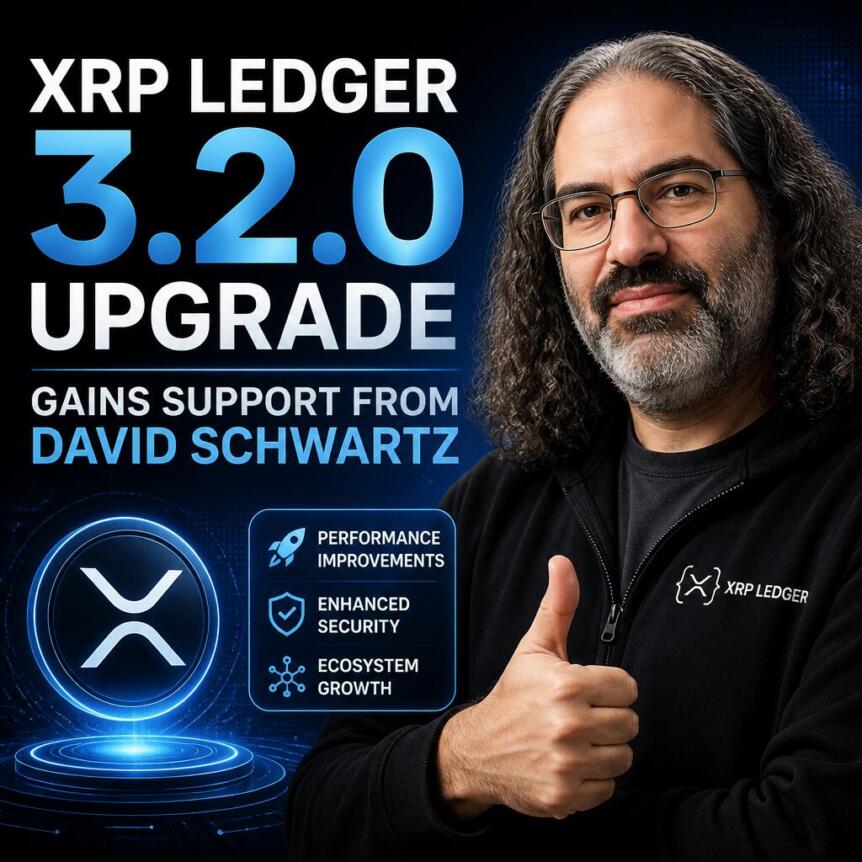
The XRP Ledger 3.2.0 upgrade has reached network operators, bringing infrastructure improvements and software changes across the ecosystem. David Schwartz, Ripple’s CTO emeritus and one of the original architects of the XRP Ledger, recently upgraded his independent hub server to the latest version after a short maintenance period.
Source: https://x.com/JoelKatz/status/2067004655021048252?s=20
The XRP Ledger 3.2.0 upgrade focuses on maintenance, cleanup, and reliability improvements. While the release does not introduce major new features, it strengthens existing systems and prepares the network for future development. As operators begin deployment, the update marks another step in the network’s ongoing technical evolution.
David Schwartz Completes Hub Upgrade
Schwartz announced on X that he temporarily took his hub offline to install the XRP Ledger 3.2.0 upgrade. He initially expected the process to take about ten minutes. However, the server required additional time to shut down safely before the installation could proceed.
Alongside the announcement, Schwartz shared performance data covering the previous month. He stated that the charts showed only “one real event,” which he described as an “unexplained burst of peer disconnections.” According to his comments, the disruption likely resulted from a nearby network outage rather than an issue within the XRP Ledger itself.
His hub serves as part of the broader peer-to-peer infrastructure that supports connectivity and data exchange across the network. Although the hub does not function as a validator replacement, it helps participants monitor network activity and maintain reliable connections.
Xrp Ledger 3.2.0 Upgrade Introduces Key Changes
The XRP Ledger 3.2.0 upgrade includes several technical improvements. Developers removed amendments that had remained active for more than two years. The release also continues the modularization of libxrpl, which supports long-term software maintenance.
In addition, the update introduces fixCleanup3_2_0. This package addresses issues affecting Single Asset Vaults, the Lending Protocol, permissioned decentralized exchange tools, Multi-Purpose Tokens, and permissioned domains.
The fixes improve precision, rounding processes, validation checks, and system invariants. As a result, operators gain a more stable software environment for running network services and supporting advanced blockchain functions.
Software Rename Marks New Network Identity
One of the most visible parts of the XRP Ledger 3.2.0 upgrade is the renaming of the core server software. Under XLS-0095, developers changed the server binary name from rippled to xrpld. They also renamed the default configuration file from rippled.cfg to xrpld.cfg.
The migration requires operators moving from version 3.1.3 to complete additional configuration steps. Network documentation advises operators to update systems promptly to avoid service interruptions.
Beyond technical changes, the new name creates a clearer connection to the XRP Ledger network. At the same time, the release supports broader development efforts, including lending tools and programmable escrow features that continue to expand the network’s functionality.
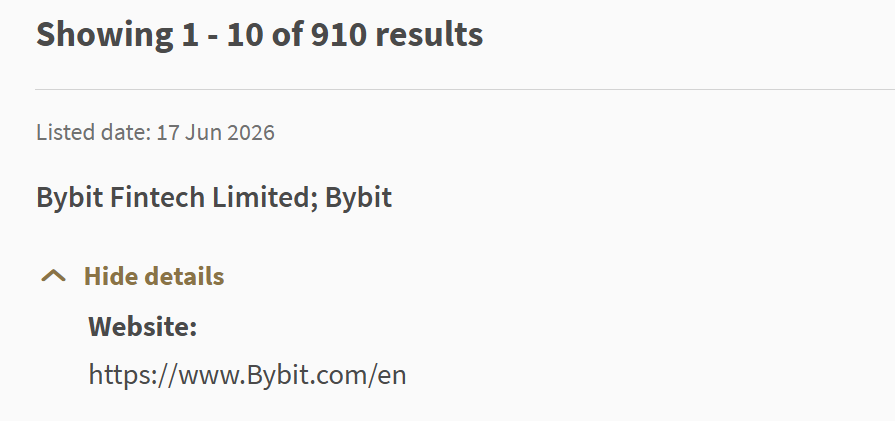
Crypto exchange Bybit has been added to the Monetary Authority of Singapore’s (MAS) Investor Alert List, a registry designed to warn consumers about entities that may be wrongly perceived as licensed or regulated by the financial watchdog.
Bybit Fintech Limited and Bybit appeared on the MAS alert list on Wednesday, although the regulator did not provide a specific reason for their inclusion.
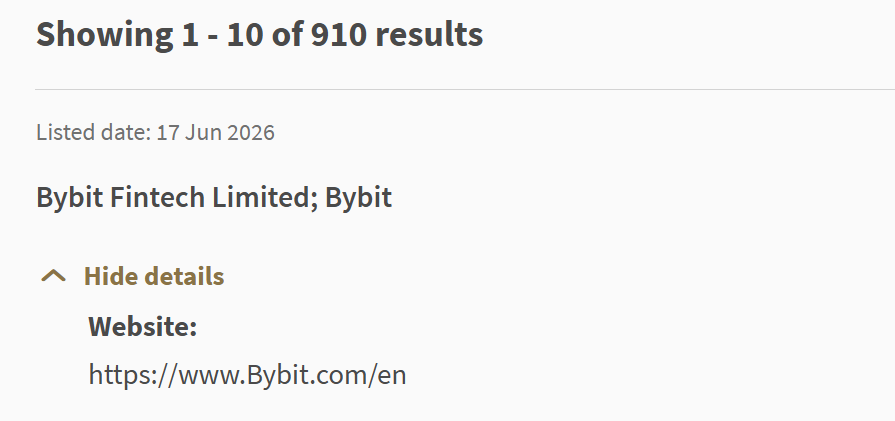
Bybit Fintech Limited, the corporate entity behind the exchange, appears on the MAS Investor Alert List website. Source: MAS
According to MAS, the Investor Alert List identifies entities and investment offers that may create the false impression of being licensed, authorized, regulated or registered by the authority, or whose investment offerings may be mistakenly viewed as having received MAS approval.
Based on publicly available information, Bybit is not licensed or regulated by MAS. Cointelegraph reached out to a Bybit spokesperson for comment but did not receive a response by the time of publication.
Although Bybit was founded by Singaporean entrepreneur Ben Zhou, the exchange does not operate in the city-state. Singapore is listed among the company’s “Service Restricted Countries” on its website, meaning users in the jurisdiction are not permitted to access its services.
Related: SBI Holdings targets majority stake in Singapore crypto exchange Coinhako
Singapore maintains strict oversight of crypto sector
Singapore has cemented its position as a leading crypto hub, ranking among the world’s top jurisdictions for decentralized finance and institutional digital asset services in Chainalysis’ 2025 Global Crypto Adoption Index. Retail crypto adoption, however, ranked significantly lower.
The MAS has continued to take an assertive approach to industry oversight. In May, the regulator revoked the Major Payment Institution license of crypto liquidity provider Bsquared Technology after uncovering what it described as serious regulatory breaches, including weaknesses in risk management and conflict-of-interest policies.
MAS also said the company had provided false or misleading information on multiple occasions, from its initial license application through a subsequent inspection.
Separately, Singapore police charged former Hodlnaut CEO Zhu Juntao in May with six counts of fraud for allegedly misleading customers about the crypto lender’s exposure to the 2022 Terra ecosystem collapse.
Hodlnaut, a Singapore-based crypto lending platform that once served tens of thousands of users, suspended withdrawals in August 2022 following the Terra implosion and was later ordered to liquidate.
The regulator placed Binance.com on its Investor Alert List in 2021, The Straits Times reported at the time. However, a search on Wednesday of the list did not show any mention of Binance among 910 records in the query.
Related: Singapore Gulf Bank adds stablecoin mint and redeem for 24/7 settlement

Ariana Biermann Defends Kim Zolciak Amid Her Divorce

How Are You Building Relationships at Work These Days?

Trump Still Won’t Say Putin Is To Blame For The Ukraine War


-

 Business3 days ago
No Jackpot Winner as $257 Million Prize Rolls Over to $269 Million Monday Draw
-

 Crypto World6 days ago
Oppenheimer backs SpaceX as $70 billion retail frenzy builds
-

 Fashion5 days ago
Weekend Open Thread: Tuckernuck – Corporette.com
-

 Crypto World6 days ago
Markets Rally as SpaceX IPO Looms Amid Iran Tensions and Inflation Surge
-
 Crypto World3 days ago
Zimbabwe Requires Crypto Businesses to Register Annually Under New FIU Regulations
-

 Tech5 days ago
NanoClaw integrates JFrog registries to secure AI agent downloads
-

 Crypto World4 days ago
Bitget enters Argentina’s regulated crypto market through PSAV registration
-

 Tech5 days ago
This Week In Security: Microsoft On Microsoft, Register Your Domains, Linux On ARM, And FreeBSD Joins The File Cache Club
-
 Tech6 days ago
Dutton Ranch star claims they ‘didn’t see any disruption’ on set following Chad Feehan’s exit from Yellowstone spinoff fueled by Taylor Sheridan clash rumors
-

 NewsBeat6 days ago
El Nino has formed in the Pacific and could set records, forecasters say
-

 Politics6 days ago
Politics Home | Healey Resignation Is “Colossal Failure Of Government”, Says Former Labour Defence Secretary
-
 Entertainment6 days ago
Donnie Wahlberg & More Heat Up Las Vegas at Circa’s Barry’s Downtown Prime
-
 Tech6 days ago
Opendoor Ends India Operations, Fueling a Bigger Conversation About AI and Outsourcing
-

 Politics6 days ago
Belfast burns, while Met chief points finger at Iran and Russia
-

 Sports6 days ago
First Time Since 1971: Australia Register Historic Low In ODI Cricket
-

 NewsBeat5 days ago
FBI searches office of Ohio voter registration group
-

 Business6 days ago
AT&T: Verizon's 27% Outperformance Sets Up A Solid Entry Point
-
 Tech6 days ago
Anthropic is spending $150M to embed 1,000 AI fellows inside nonprofits. No degree required.
-

 Politics6 days ago
Modi thanks Trump for wishes as US attacks Indian seafarers
-
 Entertainment6 days ago
‘The Pitt’s Fan-Favorite Doctor Confirms Noah Wyle Gave His Blessing to Return [Exclusive]
You must be logged in to post a comment Login