

Crypto World
This Group of Bitcoin (BTC) Investors Is Taking Over the Market


After a brutal June, Bitcoin (BTC) has started July on a stronger note, climbing about 7% from $58,000 to $64,000 in less than two weeks.
Amid what appears to be a modest recovery, Alphractal founder Joao Wedson observed that Bitcoin’s supply distribution is increasingly showing long-term investor conviction.
BTC Available Supply Shrinks
According to the fresh Alphractal data, Long-Term Holder Supply is now 5.2 times larger than Short-Term Holder Supply, while the amount of BTC held by short-term investors has dropped to its lowest level since 2016.
In fact, long-term holders now control 84% of Bitcoin’s total supply, which leaves just 16% in the hands of short-term participants. Such a trend indicates that most of the circulating supply is held by investors with a longer investment horizon, while the share available to shorter-term traders has become historically limited.
Wedson said this shift goes beyond a simple supply metric because it evidences growing conviction among holders. He added that if demand rises while this supply structure remains unchanged, the market could become more sensitive to fresh capital inflows.
Yet another notable trend identified by Alphractal was that nearly every Supply Age Band is shrinking, except for coins that have remained unmoved for six to 12 months. According to the HODL Waves chart, this group’s share of Bitcoin’s total supply is rising quickly, suggesting that a growing portion of coins acquired in recent months have not been sold despite periods of volatility, market corrections, and shifting sentiment.
The analytics platform stated that this could also reflect increasing investor conviction rather than simply aging supply. If these coins continue to remain untouched, they will gradually move into older age bands, which, in turn, would further strengthen Long-Term Holder Supply while reducing the amount of Bitcoin readily available for trading.
No Bottom Yet
Following the recent uptick, debate over whether the market has already bottomed has intensified. Some analysts argue that improving on-chain data and renewed ETF inflows point to stabilization. However, Doctor Profit believes that optimism around the crypto asset has become excessive.
According to the popular analyst, those trying to support bullish scenarios while simultaneously urging investors to buy will eventually be proven wrong by the market.
The post This Group of Bitcoin (BTC) Investors Is Taking Over the Market appeared first on CryptoPotato.

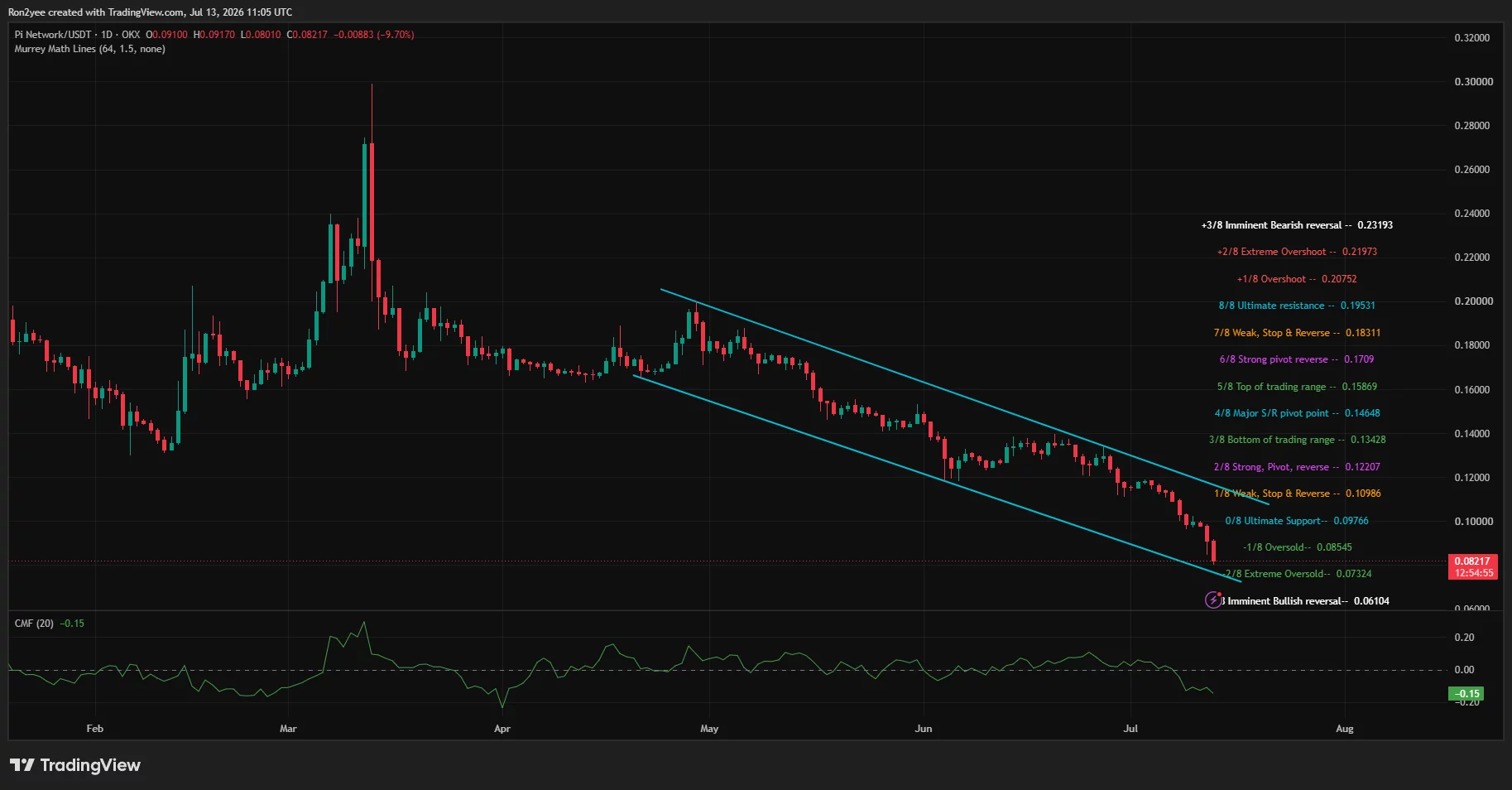
Pi Network has plunged nearly 15% on Monday as investors rushed to exit positions ahead of a major token unlock, extending the token’s slide to a fresh all-time low and reinforcing bearish sentiment across the market.
Summary
- Pi Network price plunged 15% as investors reacted to more than 100 million upcoming token unlocks.
- Falling open interest, negative funding rates, and a technical breakdown reinforced bearish momentum.
- A falling wedge offers long-term recovery potential, but macro risks and weak demand keep sellers in control.
According to data from crypto.news, Pi Network (PI) price fell to around $0.08 on Monday after breaking below the key $0.11-$0.12 support area that had contained sellers for weeks.
The decline comes as traders prepare for one of the network’s largest scheduled supply expansions, with 127.5 million PI tokens expected to enter circulation over the coming weeks per PiScan data. The prospect of a sharp increase in liquid supply has prompted holders to sell before the unlocks, overwhelming available exchange liquidity.
Derivatives data has also weakened alongside the spot market. CoinAnk data showed Pi Network’s open interest falling from more than $10.8 million to roughly $8.48 million in recent days as leveraged long positions were closed. Funding rates have remained deeply negative near -2.15%, underscoring that perpetual futures traders continue to favor short positions rather than betting on a recovery.
Geopolitical developments have added another layer of pressure. Renewed military tensions between the United States and Iran have pushed oil prices higher and revived inflation concerns, reducing appetite for speculative assets across crypto markets.
While Bitcoin and other large-cap cryptocurrencies have recorded comparatively smaller pullbacks, lower-liquidity tokens such as PI have experienced much steeper selling as traders rotate toward safer assets.
Massive token unlocks have intensified selling pressure
Pi Network’s latest ecosystem announcements have done little to offset concerns over supply. Recent Pi2Day updates introduced additional developer tools, storage improvements, and verification services, yet traders remain focused on the absence of a fully open mainnet, limited exchange availability, and relatively weak real-world payment adoption.
At the same time, community sentiment has deteriorated as upcoming monthly unlocks continue to outweigh optimism around ecosystem development. Without stronger demand to absorb the additional circulating supply, investors have questioned whether new product releases alone can stabilize the token.
According to trader Crypto With Gopal, however, the current structure may still offer a longer-term reversal setup despite the heavy selling.
“$PI is printing a falling wedge after an extended downtrend. Price is squeezing into the apex while sellers lose momentum and buyers continue defending the lower trendline.”
The analyst added that “a strong move above wedge resistance could spark a fast recovery as sidelined buyers step back in.”
Technical breakdown keeps bears in control
The daily chart shows PI trading inside a well-defined descending channel that has guided price lower since early May. Monday’s decline pushed the token below the channel’s lower boundary and beneath the 0/8 Murrey Math support near $0.0977, leaving the next downside levels around $0.0855 and $0.0732 as the nearest technical support zones. Price also remains below the 20-day, 50-day, and 200-day exponential moving averages, preserving the prevailing downtrend.
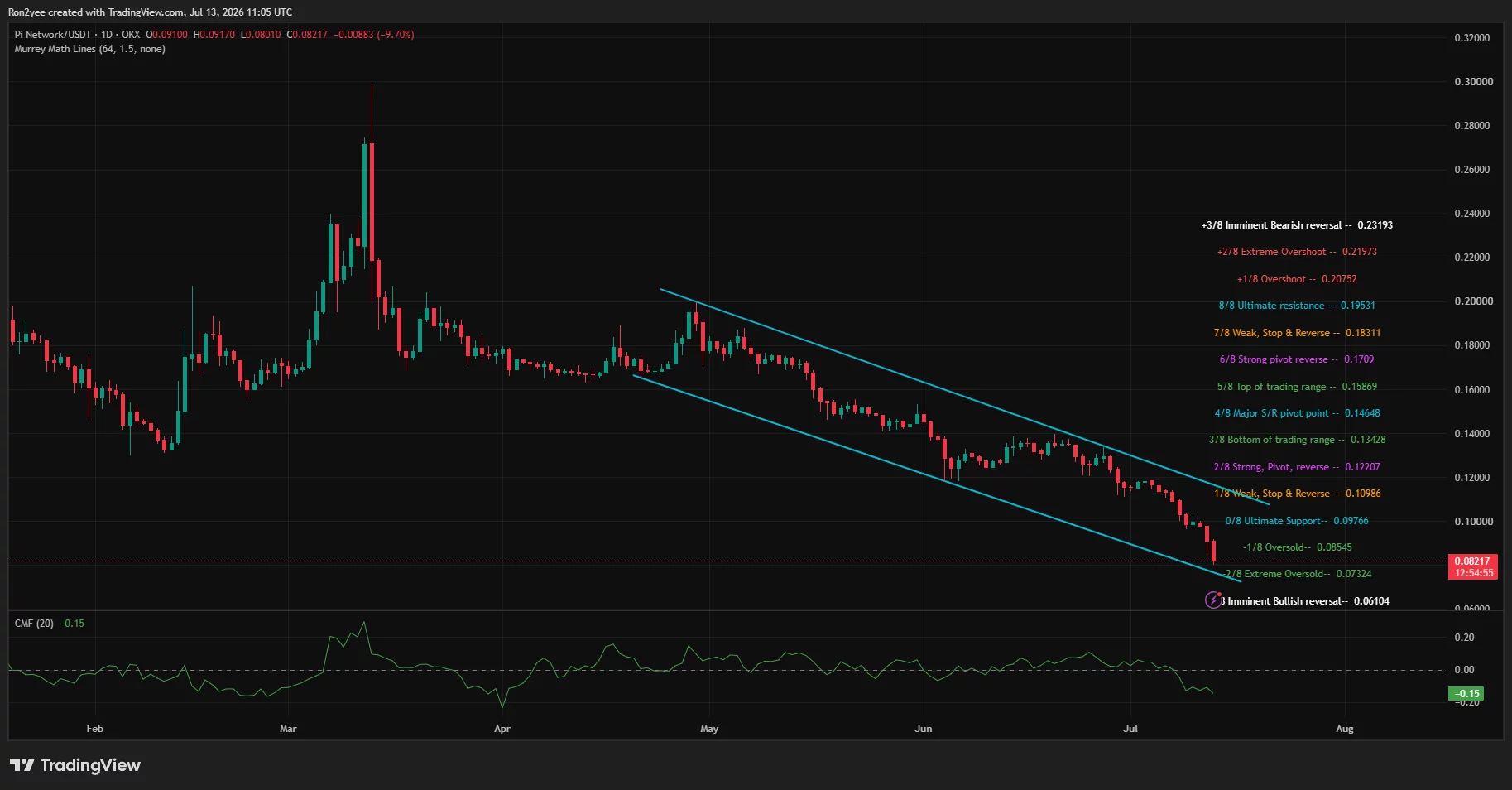
Chaikin Money Flow has slipped to around -0.15, showing sustained capital outflows from the asset. Any recovery would first need to reclaim the former support at $0.1099 before testing resistance near $0.1220, where previous breakdown levels and selling interest are likely to emerge.
Failure to defend the $0.073-$0.085 support area would strengthen the bearish case and could accelerate another wave of liquidation if token unlocks continue without a corresponding increase in demand.
Continued geopolitical uncertainty, persistent negative funding rates, and further declines in open interest would add to those risks, while a decisive breakout above the falling wedge and renewed buying volume would invalidate the immediate bearish outlook.
Disclosure: This article does not represent investment advice. The content and materials featured on this page are for educational purposes only.
Robinhood’s (HOOD) new blockchain has posted a strong debut, quickly emerging as one of the busiest networks for decentralized trading and reinforcing the broker’s strategy to expand tokenized financial products, Wall Street broker Bernstein said in a Monday research report.
Since launching its mainnet on July 1, Robinhood Chain has generated $3.1 billion in decentralized exchange trading volume over the past week, making it a top-five chain by DEX activity, the broker said. More than 65,000 users now hold around $13 million in tokenized stocks and $300 million in stablecoins on the network.
“Strong early adoption highlights the growing convergence of tokenized real world assets with the broader DeFi ecosystem, as industry participants continue to innovate across multiple business models for regulated asset tokenization,” wrote analysts led by Gautam Chhugani.
Robinhood launched the public mainnet of Robinhood Chain on July 1, an Ethereum layer-2 blockchain built on Arbitrum that’s designed for tokenized real-world assets and decentralized finance.
The network underpins the firm’s tokenized stock offering, enabling 24/7 trading, self-custody and onchain use cases such as lending and collateral, while supporting integrations with decentralized applications and liquidity providers.

Key takeaways
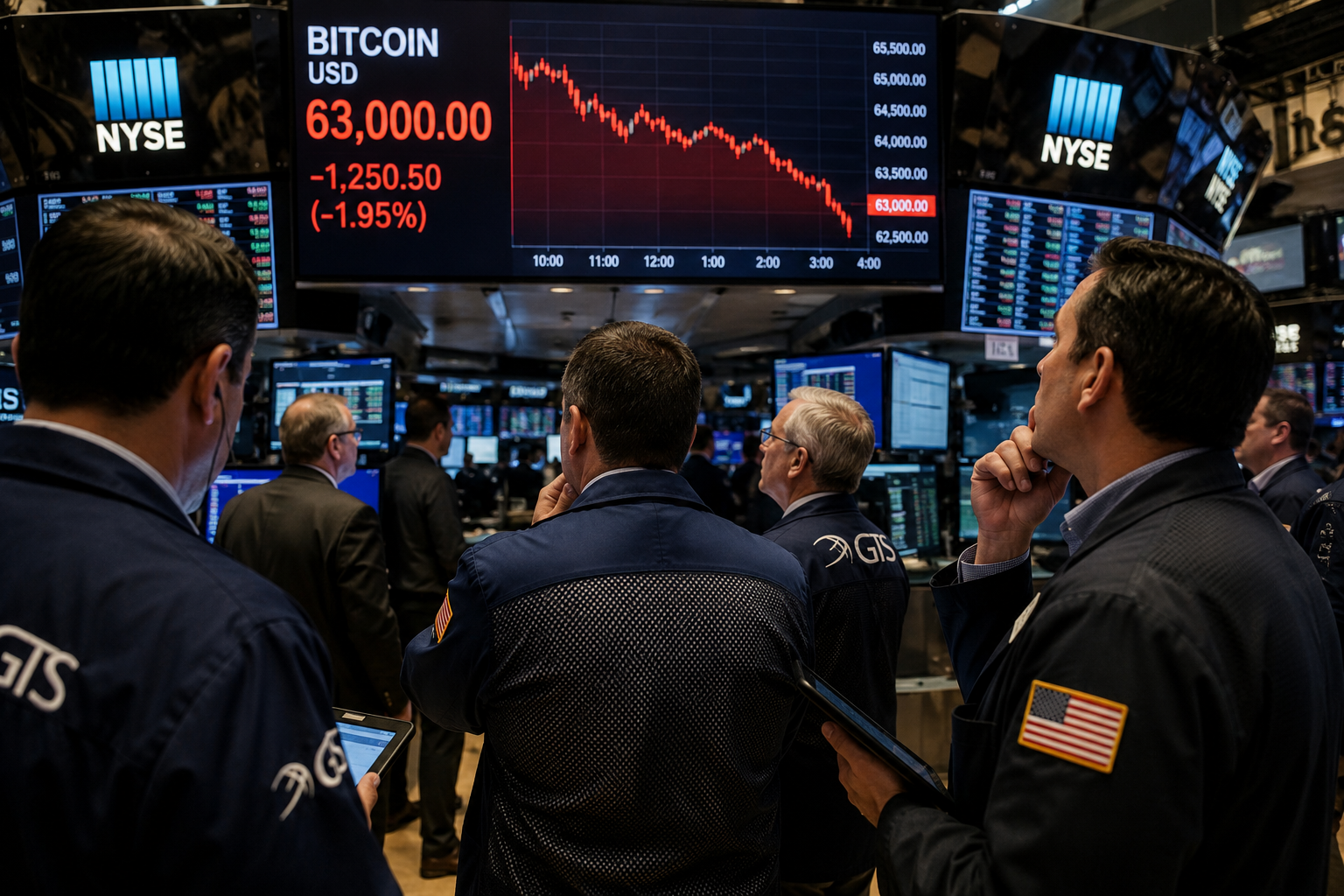
- Bitcoin fell to $63,000 after renewed geopolitical tensions in the Middle East weakened investor risk appetite.
- The U.S. military’s latest strikes on Iran and heightened tensions around the Strait of Hormuz boosted demand for safe-haven assets while pressuring cryptocurrencies.
- Spot Bitcoin ETFs recorded $197.4 million in weekly inflows, ending an eight-week streak of net outflows, but institutional buying failed to offset broader market uncertainty.
Bitcoin (BTC) traded below $63,000 on Monday as escalating geopolitical tensions in the Middle East weakened investor appetite for risk assets, overshadowing improving institutional demand through spot Bitcoin exchange-traded funds (ETFs).
Although Bitcoin ETFs recorded their first week of net inflows in nearly two months, renewed uncertainty surrounding the Strait of Hormuz kept bullish momentum in check.
Middle East escalation sparks risk-off trading
Market sentiment deteriorated after the United States launched fresh military strikes against Iranian targets on Sunday.
According to the U.S. Central Command (CENTCOM), the operation targeted Iranian air defense systems, coastal radar installations, missile and drone capabilities, as well as naval assets using fighter aircraft, warships, and both aerial and maritime attack drones.
Iranian media reported multiple explosions near Sirik, Bandar Abbas, Qeshm, and Jask—areas located close to key military infrastructure surrounding the Strait of Hormuz.
The situation intensified after Iran’s Islamic Revolutionary Guard Corps (IRGC) reportedly targeted another commercial vessel and announced the closure of the Strait of Hormuz, one of the world’s most important oil shipping routes.
The escalating conflict prompted investors to reduce exposure to riskier assets, driving West Texas Intermediate (WTI) crude oil above $75 per barrel while cryptocurrencies, including Bitcoin, came under renewed selling pressure.
Despite the broader market weakness, institutional demand showed signs of recovery.
According to CoinGlass, U.S. spot Bitcoin ETFs attracted $197.4 million in net inflows last week, ending an eight-week streak of consecutive outflows that began in mid-May.
The return of institutional buying suggests long-term investor confidence remains intact. However, the renewed geopolitical uncertainty limited the immediate impact of these inflows on Bitcoin’s price.
Bitcoin price analysis: Bears continue to defend $64,000
Bitcoin was trading around $63,055 at the time of writing, remaining below the critical $64,000 resistance level.
The cryptocurrency continues to trade beneath all of its major exponential moving averages (EMAs), highlighting the prevailing bearish market structure.
Key resistance levels include:
- 50-day EMA: $65,192
- 100-day EMA: $68,686
- 200-day EMA: $74,736
These technical barriers continue to form a strong overhead supply zone, limiting recovery attempts.
Momentum indicators suggest selling pressure may be easing, but a bullish reversal has yet to emerge.
The Relative Strength Index (RSI) remains just below the neutral 50 level, indicating that buyers have not yet regained control.
Meanwhile, the Moving Average Convergence Divergence (MACD) remains in positive territory, suggesting downside momentum has moderated.
However, the broader technical structure remains bearish as long as Bitcoin trades below key resistance levels.
The immediate resistance remains the $64,004 horizontal barrier, where recent rallies have repeatedly stalled.
If buyers successfully reclaim that level, attention will shift to the 50-day EMA at $65,192, the 100-day EMA ($68,686), and the 200-day EMA ($74,736).
A sustained breakout above these levels could open the door to a longer-term move toward the $84,410 resistance zone.

On the downside, Bitcoin lacks strong technical support immediately below current prices. If selling pressure intensifies, traders are likely to focus on the $60,000 psychological level, which could serve as the next major support area.
For now, Bitcoin’s near-term direction will likely depend on whether geopolitical tensions ease and whether improving institutional demand through spot ETFs can outweigh broader macroeconomic and geopolitical risks.
Crypto World
Kalshi launches ‘Pro’ product for users trading multiple markets at same time, perpetual futures

Illustration of the Kalshi logo.
Dado Ruvic | Reuters
Prediction market platform Kalshi is launching a product for its highly active traders on Monday, the company told CNBC.
Kalshi Pro, now available to the public, is designed for speculators who trade multiple markets at the same time and or move with speed during live events, according to a memo provided to CNBC. The platform is also designed to support those who run resting orders, trades that don’t execute until certain prices are met, the memo said.
CNBC reported in the beginning of June that Kalshi was working on a terminal for its high-end traders. Kalshi confirmed the product’s development at an event later that month. While publicly available, the Pro product remains in beta testing.
The platform also allows traders to see a continuous feed of all public trades, have a better view into individual contracts’ order books and provides a simpler way to examine multi-leg contract trades, the memo said.
The product is a response to the fact that many of Kalshi’s most active traders have created their own software and workflows to help manage their trades and gain an edge. Kalshi Pro is a product to create a more central platform for these speculators. It’s not clear whether Kalshi will seek to monetize the product at some point.
Kalshi Pro also will feature new utilities for those trading on the company’s perpetual futures, colloquially known as “perps,” product. That includes “terminal-grade” charting, and new ways to manage risks on traders’ perps positions, according to the memo.
“Kalshi’s active traders are already trading prediction markets and perpetuals like Wall Street trades equities and bonds,” said Andy Chang, the Kalshi Pro product lead, in a statement. “We built Pro to give them the cockpit they deserve.”
Disclosure: CNBC and Kalshi have a commercial relationship that includes customer acquisition and a minority investment.

Ethereum is holding near $1,800, and price prediction has become a tougher call than Eric Trump’s latest post. He declared ETH was pumping hard, but the chart nuked just an hour post his tweet.
ETH is still camped around a key support area instead of charging higher. Buyers have defended the level so far, but they have not shown enough strength to force a breakout. Volume has slipped from the previous session, which takes some shine off any bullish move. Price can climb without volume, but those rallies rarely age well.
Trump’s post arrived while Ethereum was already sitting at an important technical level. That makes the timing interesting, but not decisive. For now, ETH remains trapped between support and resistance. A break above the range could open the door for another push higher. If support gives way instead, traders may find out that tweets are easier to post than breakouts.
Don’t Miss Out on Our $1,000 USDT Airdrop on ByBit
Ethereum Price Prediction: Hold $1,750 Support or Face a Breakdown This Week?
Ethereum price prediction remains finely balanced as ETH changes hands near $1,800. After several days of steady trading, the market is still searching for a reason to leave its recent range behind. For now, patience appears to outweigh urgency.
During the past week, Ethereum has traded between $1,710 and $1,845. Each move toward either edge has faded before developing into a lasting trend. That hesitation suggests buyers and sellers are still weighing the next direction rather than forcing the issue.
The first area to watch sits around $1,800 to $1,820. If that support continues to hold, ETH could gradually return to the recent high near $1,845. A decisive break above that level would shift attention toward $1,900, where selling pressure may become more noticeable.

On the other hand, a loss of support could pull Ethereum back toward $1,750. Even so, that would still fit the pattern that has shaped trading over the past week. Markets often spend longer than expected moving sideways before finally making up their mind.
Attention also remains on spot ETH ETF flows and exchange activity. Steady inflows could reinforce buying interest, while larger exchange deposits may point to profit-taking. Meanwhile, the ETH to BTC ratio offers another clue as to whether Ethereum is beginning to lead or simply following Bitcoin’s path.
Discover: The Best Crypto to Diversify Your Portfolio
Maxi Doge Targets Early Mover Upside as Ethereum Tests Key Levels
Ethereum at $1,780, with a 463% gap to its all-time high, is still a compelling long-term hold, but at an above-$200 B market cap, the math on multiples gets harder to ignore. Early-stage assets carry a different risk-reward profile entirely, which is where rotation-minded traders tend to look when large-caps stall.
Maxi Doge ($MAXI) is an ERC-20 meme token built around a 240-lb canine juggernaut persona and a trading community centered on leverage culture. Think gym-bro energy applied to a chart, with holder-only trading competitions and leaderboard rewards keeping the community engaged beyond the meme.
The presale has raised somewhere close to $5 million at a current price of $0.0002828, with dynamic APY staking available and a Maxi Fund treasury allocated for liquidity and partnerships. Those are hard numbers from an active raise, not projections.
Standout features include the 1000x leverage trading mentality baked into the brand identity and viral meme-first marketing that has demonstrated organic reach.
For traders who’ve done the work, research Maxi Doge here before the current pricing tier moves.
Discover: The Best Token Presales
The post Ethereum Price Prediction: Price Drops As Eric Trump Bullposts a Tweet appeared first on Cryptonews.
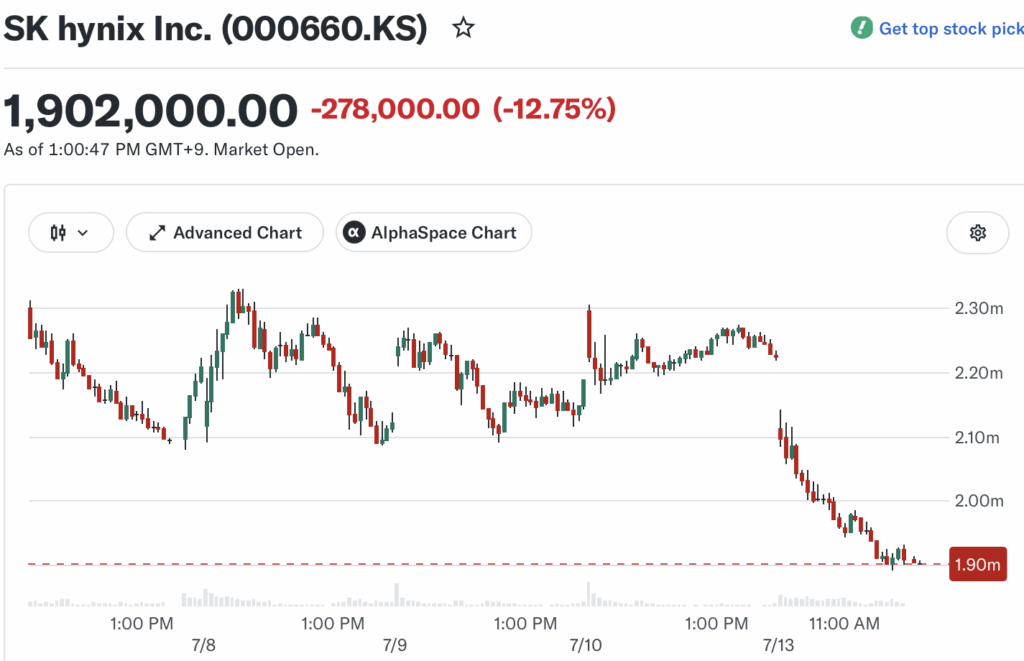
South Korean AI giant SK Hynix has already erased all of its 12.7% gains from its US debut last week.
Incredibly, the largest first-time US share sale by a foreign company sustained gains for less than one trading day before the math turned against every American who bought its American Depositary Receipt (ADR) listing.
The high-bandwidth memory chipmaker and one of Nvidia’s largest customers is becoming a household name due to its proximity to the AI investment mania.
Its ADRs rose 12.7% on the Nasdaq debut Friday, closing at $168.01. Meanwhile, its Seoul-listed common stock fell 12.7% by Monday afternoon, priming US markets for a dump before Nasdaq could even open for pre-market trading.
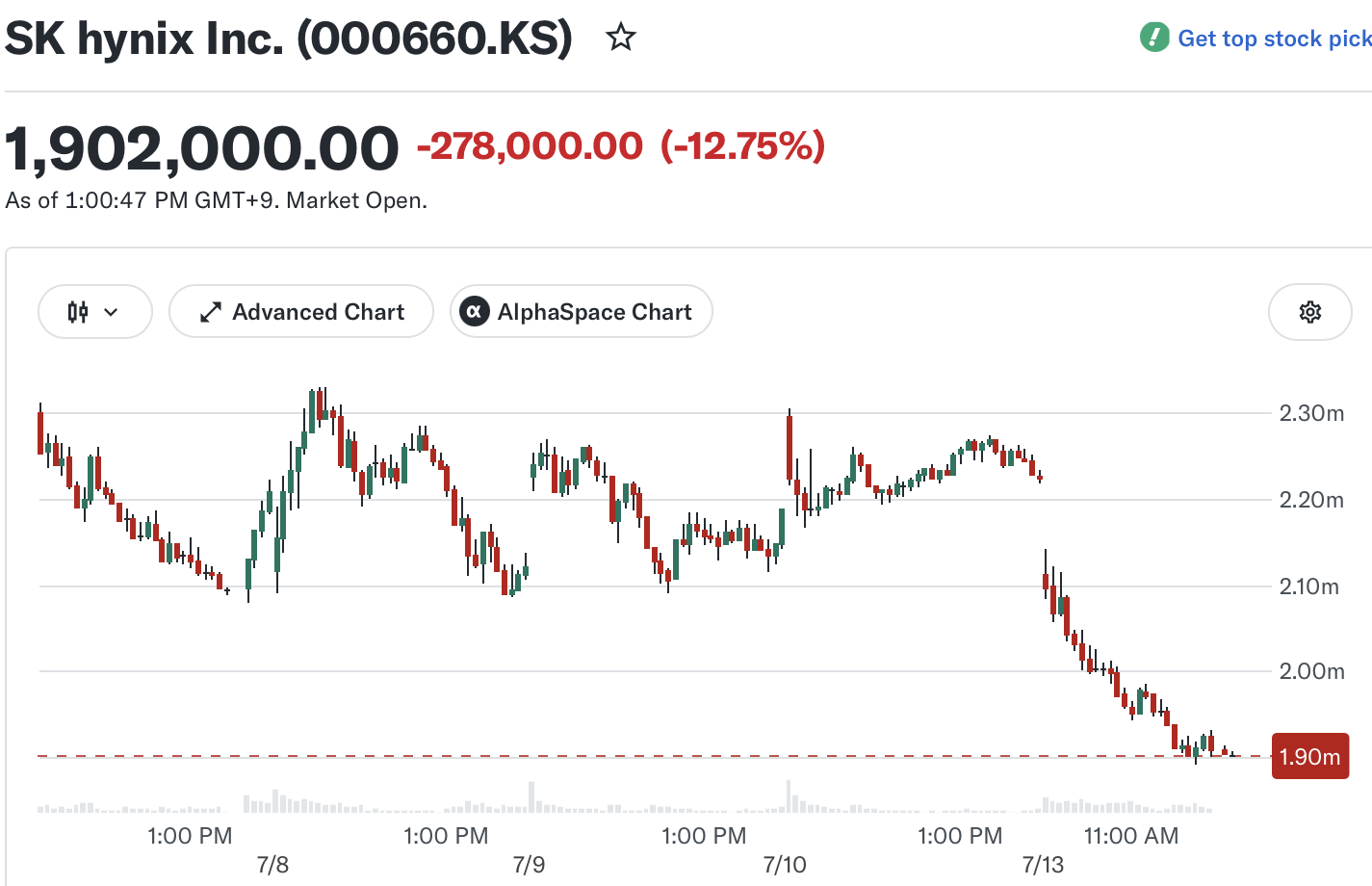
In other words, thanks to a record-shattering ADR listing, US money flowed into South Korea’s largest company on Friday, followed immediately by South Korean money dumping Monday by roughly the same percentage.
As of 1pm Monday in Seoul and inclusive of the one day boost from the ADR listing on Friday, shares in South Korea have actually lost 14% of their value.
Each American Depositary Receipt represents one-tenth of a real SK Hynix share. The ADR and South Korean stock are claims on the same company with a few, minor legal distinctions.
When Seoul reopened and dropped almost the same percentage as Friday’s gain in New York, it repriced the exact asset backing every ADR sold in New York two sessions earlier.
Read more: Crypto traders paid 8,700% annualized fees to bet on Anthropic
Friday’s premium reversed over the weekend
SK Hynix priced 177.9 million ADRs at $149 apiece on Thursday. The sale raised about $26.5 billion, comfortably topping Alibaba’s 2014 debut and ranking among the largest US ADR listings ever.
Bank of America, Citigroup, Goldman Sachs and JP Morgan ran the deal. The company’s primary listing remains in Seoul.
American enthusiasm did what American enthusiasm does best: Led to overpaying for the most popular names. The ADRs opened mid-day on Friday at $170, 14% above the offer price, and briefly touched $177.
By Friday’s close they traded at a premium of roughly 15% to the Seoul shares. By Monday afternoon in Seoul, those profits had obviously disappeared.
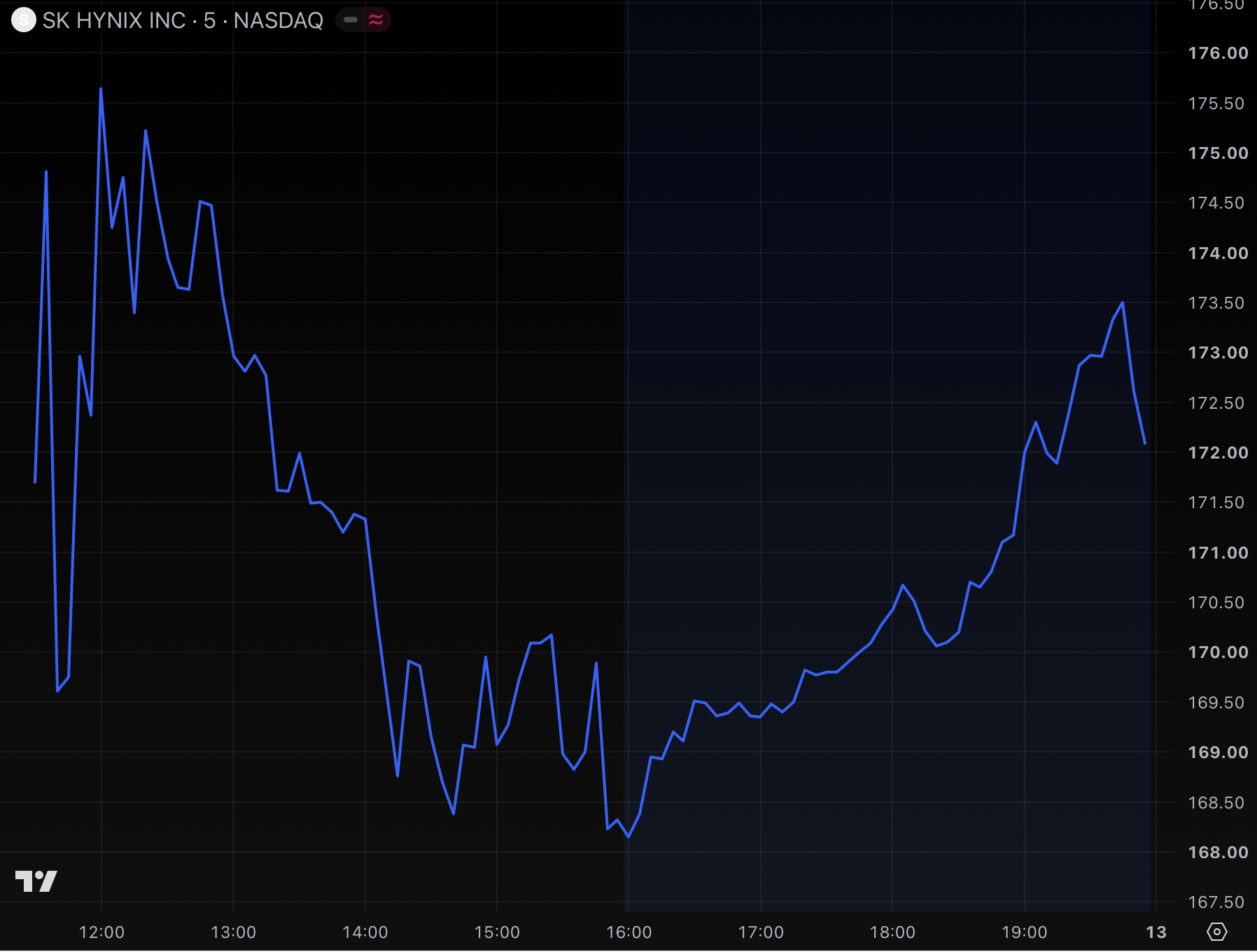
A buyer of Friday’s new ADR paid about 15% more than the Seoul market said the underlying share was worth. By Monday morning, Seoul bid 10% less at the start of the morning, with a worsening figure below 12% as the day went on.
Anyone who bought the ADR is now holding a cheaper asset that kept getting cheaper.
On Friday, SK Hynix’s spokesperson told CNBC, “It’s a kind of dream, and now it’s a dream come true.” He insisted the appetite for the company’s memory chips would persist from “structural” demand.
The ADR offering itself was more than seven times oversubscribed. There was no shortage of dollars willing to pay top dollar.
Unfortunately, for US buyers who chased the record-setting debut on its first day trading on Friday, the scoreboard has already flipped for a win across the Pacific.
The company US investors bought into on Friday is worth about the same amount less in South Korea as of Monday afternoon in Seoul.
Got a tip? Send us an email securely via Protos Leaks. For more informed news and investigations, follow us on X, Bluesky, and Google News, or subscribe to our YouTube channel.


The United Kingdom could add as much as 33 billion British pounds ($44 billion) to its annual economic output by 2035 by becoming a leader in tokenized financial markets, according to a government-backed industry task force.
The estimate appears in the first report from Wholesale Digital Markets Champion Chris Woolard, who was appointed by HM Treasury to help implement the government’s digital markets strategy.
Developed with an industry task force, the report sets out a 12-month plan to test blockchain in a financial transaction where securities are used to borrow cash. It also calls for the UK to issue its first tokenized government bond by the first quarter of 2027.
The industry task force brings together more than 50 companies from traditional finance and crypto, including BlackRock, Goldman Sachs, JPMorgan, Morgan Stanley, HSBC, UBS, Coinbase, Circle, Ripple, Kraken, DTCC and Euroclear.
The roadmap attempts to move UK tokenization beyond isolated pilots and into live markets where securities can be traded, settled and used as collateral. The report said the task was now to move “from pilots to scale” and “from ambition to action.”
Ripple, which is listed among the task force’s industry members, backed the initiative on Monday. “Onchain funds, bonds and repo aren’t experiments,” the company said, adding that such instruments are already proving “cheaper, better and faster than their legacy equivalents.”
UK builds on digital gilt and settlement initiatives
The digital government bond, or gilt, itself is not a new proposal. The UK first announced the Digital Gilt Instrument pilot in November 2024.
This was followed by a July 2025 update outlining plans for onchain settlement, over-the-counter trading and secondary-market development. On Feb. 12, the government appointed HSBC’s Orion platform to support the pilot.
The new report adds a timetable and expands the intended role for the financial instrument. Beyond calling for issuance, the report seeks subsequent digital-gilt offerings, live secondary-market trading and eligibility for use as central bank collateral.
The report said tokenized securities have limited value unless they can be traded or used to raise cash, and urged the Bank of England to accept digital gilts as collateral.
Related: UK politicians mull permanent crypto donation ban in wake of Nigel Farage scandal
The UK also has a blockchain-based wholesale payment infrastructure that could support such markets. In December 2023, London-based Fnality launched a sterling-denominated payment system tied to central bank reserves, designed to support real-time repo, tokenized securities settlement and cross-currency payments.
Magazine: Has Bitcoin bottomed for this cycle? Analysts say ‘not yet’


Startale Group used WebX 2026 in Tokyo to introduce two products aimed at different sides of onchain finance:
- 1. Startale Onchain Finance Kits, or Startale OFK, gives financial institutions and enterprises a software suite for onchain finance deployment;
- 2. Startale Card brings self-custodial Visa payments to consumers using assets in the Soneium ecosystem.
The launches extend Startale’s plan to bring financial activity onchain through enterprise software and consumer products. Institutions need tools to issue, settle, trade, and manage digital assets under regulated conditions, while consumers need easier ways to earn, hold, and spend assets in daily life.
OFK helps institutions launch onchain financial products, while Startale Card gives users a route from Soneium balances to everyday payments.
Startale OFK Gives Institutions a Faster Route Into Onchain Finance
Startale OFK is built for banks, financial institutions, and enterprises preparing to bring more financial products onto blockchain networks. The suite covers stablecoin systems, wallet systems, digital asset tools, privacy tools, developer tools, blockchain systems, and settlement systems.
The product builds on several years of Startale’s work with major enterprises, financial institutions, and ecosystem partners. Its existing projects include Soneium, the Ethereum L2 developed with Sony Group, Strium, a tokenized securities platform developed through SBI Holdings, Startale App, JPYSC, USDSC, and other enterprise blockchain deployments.
Through these projects, Startale has worked across institutional trading, bond issuance, privacy, developer tools, blockchain development, and stablecoins. OFK turns this experience into a deployment package for organizations entering production-stage onchain finance.
Startale plans to expand OFK with tokenization tools and Custody Wallet API products, adding further support for regulated onchain financial markets.
Startale Card Links Soneium Assets With Everyday Payments
The company also introduced Startale Card, a self-custodial Visa card built for users of the Soneium ecosystem. The card connects onchain balances to everyday payments at more than 150 million merchants worldwide where Visa is accepted.
Startale Card also marks the next stage of Startale App, which the company describes as the App for More than Money. Users can already earn, trade, explore Mini Apps, and unlock rewards across Soneium. With Startale Card and upcoming earning options inside Startale App, users will be able to deposit eligible assets into yield-generating vaults while spending against the same holdings.
This gives users a single financial app for saving, earning, and spending. Eligible assets can keep generating yield until payment, while cashback in USDSC is credited to the user’s account.
The card gives Soneium a consumer payment product connected to real-world merchant access. Ethereum L2 networks often focus on lower fees, faster execution, and application growth, while consumer adoption depends on repeatable use cases. Spending, earning, and cashback give Startale a route to make Soneium assets useful beyond crypto-native activity.
Startale Expands Its Onchain Finance Ecosystem
The Startale Card waitlist is now live in the Startale App ahead of public launch. Startale OFK is being introduced as institutions in Japan, the United States, and other key markets explore ways to bring financial services onto blockchain networks.
The launches show Startale building across the full path of onchain adoption. OFK gives institutions tools to create onchain financial products, while Startale Card gives consumers a way to use digital assets through familiar payment behavior.
The post Startale Brings Institutions and Consumers Into Its Onchain Finance Ecosystem appeared first on BeInCrypto.
Crypto World
SBI Holdings’ blockchain initiative pivots to Solana for tokenization, stablecoin issuance


Japanese asset giant SBI Holdings’ (8473) blockchain initiative is turning to Solana for its stablecoin and real-world asset (RWA) tokenization efforts.
SBI Solana Global, previously SBI R3 Japan, aims to use the network to connect Japan’s domestic market to global liquidity, according to a Monday post on its website.
The SBI Solana Global joint venture, which also counts Sumitomo Mitsui Financial Group (SMFG) among its shareholders, now includes the Solana Foundation, the Zug, Switzerland-based organization that oversees the layer-1 network.
“By creating a new market for Japan-originated digital assets, the collaboration aims to establish Japan as a core hub for onchain finance in Asia,” SBI Holdings said in the statement.
SBI Holdings lists supporting the issuance and distribution of stablecoins, supporting the structuring and distribution of tokenized RWAs and developing payment infrastructure for AI agents among the venture’s functions.
The blockchain initiative previously centered around Corda, the permissioned blockchain developed by R3.
SBI Holdings has been active in expanding its digital asset business in recent months, agreeing to buy Japanese cryptocurrency exchange Bitbank last month for around $289 million.
Crypto World
Robinhood Chain’s Gas Subsidy Is Closing the Gap With Base: Future of Ethereum On Horizon?
Ethereum News: Robinhood Chain processed 7.6 million daily transactions on July 10, just 11 days after its July 1 mainnet launch, closing sharply on Coinbase’s Base, which recorded 9.2 million over the same period.
The gap is narrowing faster than the Ethereum Layer 2 competitive landscape expected, and the mechanism driving it is straightforward: Robinhood is paying every user’s gas fee.
That transaction count matters less as a milestone than as a forcing function. Base built its position over multiple years with Coinbase’s exchange ecosystem, deep DeFi integrations, and first-mover liquidity.
Robinhood Chain has closed most of the gap in under two weeks, but through a promotional structure rather than organic demand. What happens in late September, when the subsidy expires, is the question the data cannot yet answer.
Discover: The Best Crypto to Diversify Your Portfolio
Ethereum News: Gas subsidy is doing the heavy lifting, and the math is stark
Robinhood’s 90-day gas subsidy eliminates transaction costs entirely for users through the end of September 2026. The effect on volume is direct: retail traders, DeFi participants, and memecoin activity all flow toward zero-cost execution when a credible alternative exists.
MSBIntel noted that despite processing 7.6 million transactions in a single day, Robinhood Chain generated only roughly $4,000 in daily protocol fees, a figure that reflects both the subsidy absorbing user costs and the early-stage fee structure of an Arbitrum-based rollup.
For context, Base users pay for every transaction. The cost asymmetry between the two networks during the subsidy window makes direct transaction-count comparisons analytically incomplete. A fairer comparison arrives in October, when Robinhood Chain competes on equal footing.
The network’s activity extends beyond simple transfers. Robinhood Chain surpassed $500 million in single-day volume on Uniswap deployments, taking the second position behind Ethereum mainnet by spot activity. That volume figure, cited in the primary source reporting, indicates that liquidity is accumulating alongside transaction throughput, not merely inflating raw counts through micro-transactions.
Separately, earlier analysis of Robinhood Chain’s DEX volume surge flagged memecoin-driven activity as a significant contributor to that $500M-plus DEX day, which adds a durability caveat to the volume headline.
Discover: The Best Token Presales
Tokenized equities and 23 million users as structural differentiation
Where Robinhood Chain makes a genuinely differentiated argument is in its distribution and product stack. The network launched alongside Robinhood’s tokenized equities platform, with Chainlink providing oracle pricing for 95 tokenized assets including Nvidia, Apple, and Alphabet, Uniswap supplying trading liquidity, and Morpho supporting lending.
Those tokenized equities are available in more than 120 countries, a reach that no other Ethereum L2 has built around a brokerage-native user base.
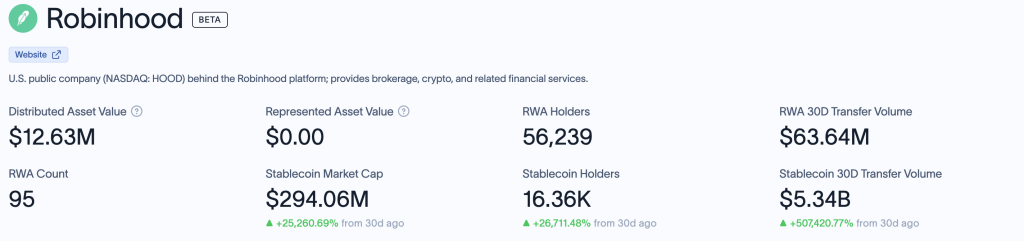
Robinhood enters with approximately 23 million pre-existing brokerage users, a distribution channel that Base and Arbitrum have gradually built toward through crypto-native onboarding.
If even a fraction of those users engage with on-chain products post-subsidy, the retention argument becomes credible. The network being built on Arbitrum Orbit technology also positions it within an established fee-sharing ecosystem, with 10% of chain fees directed back to the ARB ecosystem, a structural alignment with the broader L2 stack rather than a competitive break from it.
HOOD stock has already priced in some of this optimism. The initial Layer 2 announcement lifted shares roughly 10%, with a further gain of approximately 7% coinciding with the rollout of AI-powered agentic trading functionality, according to Yahoo Finance data cited in the source reporting.
Don’t Miss Out on Our $1,000 USDT Airdrop on ByBit
The post Robinhood Chain’s Gas Subsidy Is Closing the Gap With Base: Future of Ethereum On Horizon? appeared first on Cryptonews.

Horror machete fight between e-bike riders and car passengers caught on camera with two seriously injured

Middle East Conflict And Pressure On Chips Challenge Investors

Here’s why Pi Network price fell 15% today


-

 Fashion7 days ago
Open Thread: What Great Books Have You Read Recently?
-

 News Videos6 days ago
Whats Hidden Inside This Cash Register? #treasure #reselling #money
-

 Fashion4 days ago
Loro Piana Fall 2026 Enters Houston’s Art Scene
-

 Fashion3 days ago
Weekend Open Thread: Nutriplenish Leave-In Conditioner
-

 Crypto World7 days ago
$1,000 Credit Alert! BlockDAG X Exchange Pre-Registration Now Officially Open, Polkadot Dips & Zcash Rebounds
-
 Tech6 days ago
Anthropic’s new “J-lens” reveals a silent workspace inside Claude that mirrors a leading theory of consciousness
-

 News Videos7 days ago
Best Time to Enter Small Caps Right Now? Another Bull Run? | Financially Free
-

 Business7 days ago
AXT Shares Jump Nearly 14% as Semiconductor Materials Maker Rebounds on AI-Linked Indium Phosphide Demand
-

 Sports6 days ago
Joshua Pacio ‘more complete’ ahead of ONE rematch vs Malachiev
-
 Sports4 days ago
2026 Genesis Scottish Open Thursday TV coverage: Round 1
-

 Tech5 days ago
Anthropic brings Claude Cowork to mobile and web as usage data shows most users aren’t coding
-
 Crypto World7 days ago
SK hynix (000660.KS) Stock Dips as $28B Nasdaq ADR Offering Drives AI Memory Expansion
-

 Sports3 days ago
Super Eagles star Moses Simon opens up on Liverpool transfer regret
-
Sports6 days ago
We have punished the disrespect
-
 Crypto World6 days ago
Binance lists Strategy’s STRC stock as company expands Bitcoin funding
-

 Tech4 days ago
Character.AI enters the microdrama arena with its own productions, but there’s a twist
-
 Tech7 days ago
9 Best Keyboards (2025), Tested and Reviewed
-
 Crypto World6 days ago
Claude AI Created Something Anthropic Never Designed
-
 Business6 days ago
Enbridge: AI Tailwind Priced In (Rating Downgrade)
-

 News Videos6 days ago
“What’s going on?!” Carl Froch discusses Floyd Mayweather Jr financial issues
You must be logged in to post a comment Login