
Crypto World
Trump Administration Plans Ban on New Chinese AI Data Center Components: Report


The White House is reportedly preparing fresh restrictions targeting Chinese-made data centers as it seeks to secure the infrastructure powering the race for AI domination.
The new rules, reported by Reuters earlier today, would prohibit US imports of new models of Chinese optical transceivers used in AI data centers.
AI-Security Needs Increase
The Federal Communications Commission is developing the proposed restrictions and is expected to announce them later this year. If approved, they would block future imports of the network components, which transmit data through fiber-optic cables at extremely high speeds. They have a key role in connecting AI chips inside modern data centers.
Reuters further claimed that US officials are concerned that Chinese-made transceivers could be exploited to steal sensitive information, install malicious software, or disrupt operations inside the massive data centers that power some of the leading AI models.
Divyansh Kaushik, an AI policy expert in advisory firm Beacon Global Strategies, doubled down that “transceivers definitely pose a risk,” and warned that AI developers “want to make sure the data center supply chain is secure from the get-go.”
According to the report, the proposals come after some hard lessons learned by the US government from the Huawei fiasco, when Chinese telecommunications equipment became so deeply embedded into American infrastructure that replacing it became highly expensive and time-consuming.
Beijing Will Respond
Although the White House and the FCC failed to respond to Reuters’ queries, the Chinese embassy in Washington said Beijing had urged the US to “heed the objective and rational voices of the business communities in both countries and stop smearing Chinese companies and threatening them with sanctions.”
The officials added that China will “take all necessary measures” in response to whatever action is undertaken by the Trump administration.
The POTUS has frequently outlined in the past the significance of keeping the US as the leader in terms of artificial intelligence and cryptocurrency adoption and development.
The post Trump Administration Plans Ban on New Chinese AI Data Center Components: Report appeared first on CryptoPotato.

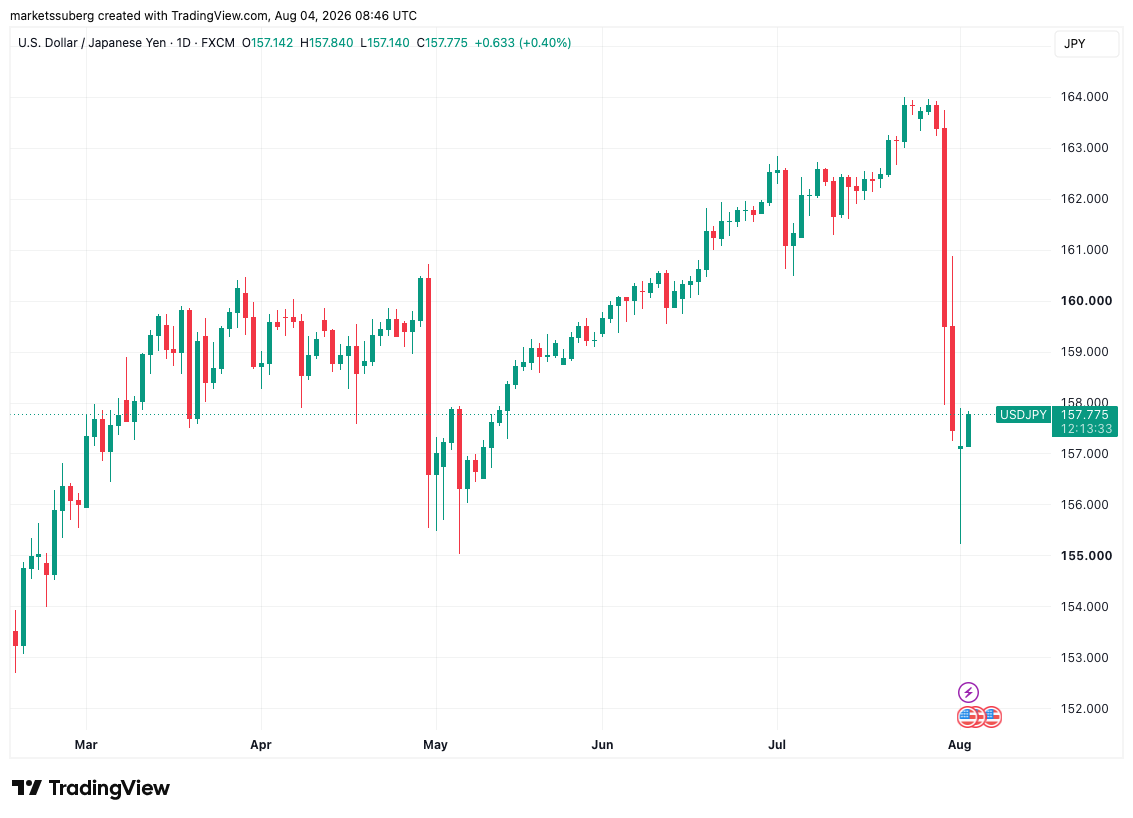
Joint currency interventions in the yen by Japan and the US could ultimately benefit Bitcoin and risk assets.
Key points:
- The first joint intervention in the yen between Japan and the US since the late 1990s could set a precedent for future moves.
- A liquidity crisis tied to the yen carry trade poses questions for Bitcoin (BTC) and risk assets as the two countries attempt a juggling act to stabilize the currency without impairing US Treasury markets.
- Japanese two-year bond yields rose above 1.57% on Monday.
Bessent signals new era of US yen involvement
Washington’s growing coordination with the Bank of Japan (BoJ) points to a potential boost in global dollar liquidity — even as it runs up against a yen carry trade unwind that could squeeze liquidity if it deepens further.
Last week, the US and Japan conducted a rare joint intervention to prop up the yen, which had slid to 40-year lows of 164 per dollar — the first of its kind since 1998. The New York Federal Reserve Bank sold euros, rather than dollars, on behalf of the US Treasury. The sales involved the Exchange Stabilization Fund, or ESF, a stockpile of foreign exchange reserves.
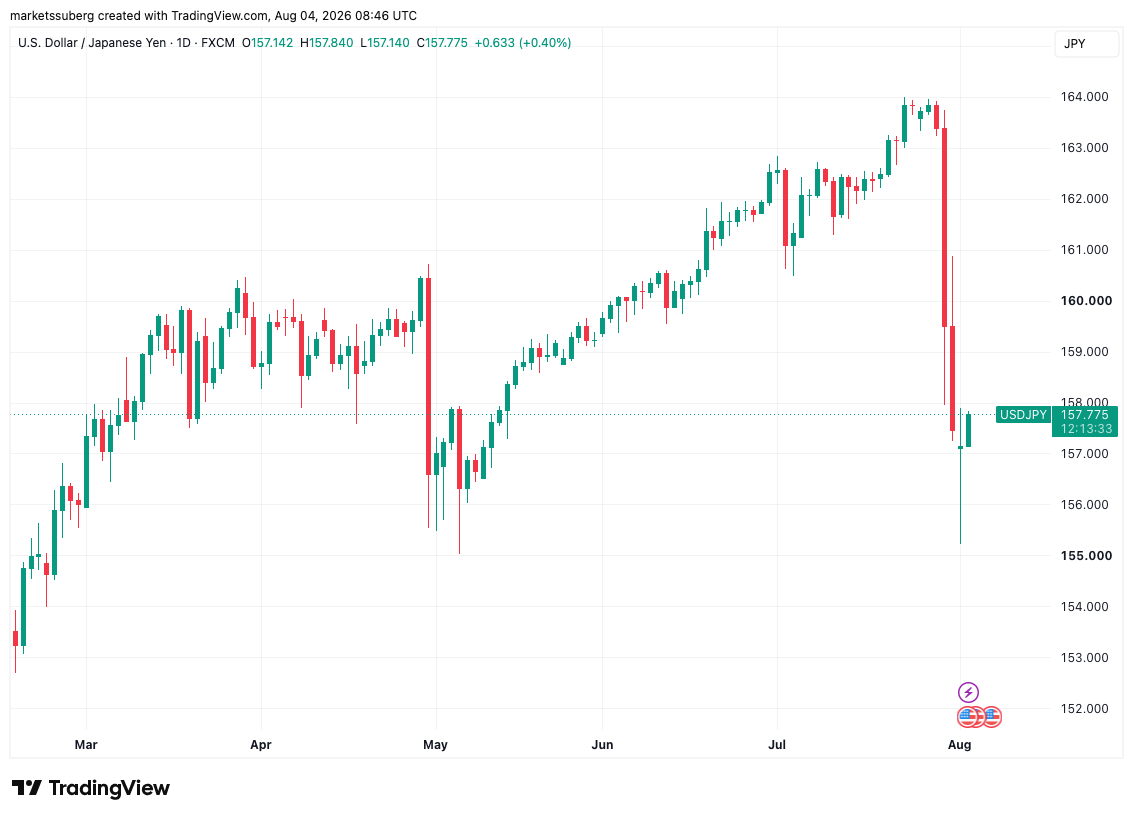
USD/JPY one-day chart for Tuesday. Source: Cointelegraph/TradingView
Subsequently, US Treasury Secretary Scott Bessent publicly placed emphasis on meeting with BoJ Governor Kazuo Ueda at the forthcoming G20 gathering of finance ministers in North Carolina at the end of August.
“Japan’s economy continues to perform well under Prime Minister Takaichi, Governor Ueda, and the Bank of Japan Board, which has demonstrated a strong commitment to monetary and financial stability. We continue to enjoy a strong relationship and close coordination,” he said.
The BoJ is one of the few central banks with access to the Federal Reserve’s Foreign and International Monetary Authorities (FIMA) repo facility, which allows access to dollar liquidity without selling US Treasuries. Japan, as the largest holder of Treasuries, could push up yields should sales accelerate, which would in turn increase borrowing costs for the US government, corporations and consumers alike.
In a subsequent post, Bessent drew attention to FIMA, calling for the facility to be expanded.
“The FIMA Repo Facility is an important backstop. We would encourage it to be upsized in the coming months. We strongly support Japan’s decisive market and monetary steps to correct the substantial undervaluation of the yen,” he continued.
FIMA use sees the Fed provide dollars to foreign institutions, which use Treasurys as collateral, with the result that the facility is positive for dollar liquidity, as it increases the supply of dollars outside the US.
Bitcoin may rise from the yen carry trade’s ashes
Reactions to the move were mixed, with economist Mohamed El-Erian noting that the US government was now bound into coordination with the BoJ going forward.
“Washington has now signed onto a strategy whose ultimate success doesn’t rest in its own hands. Instead, as discussed in previous posts, it hinges on a comprehensive policy alignment in Tokyo among the Bank of Japan, the Ministry of Finance, and the Prime Minister’s Office,” he said.
In Bitcoin circles, too, there were misgivings about the long-term implications of ongoing yen interventions — even if these inadvertently boosted the BTC bull case. Expectations have long anticipated the disintegration of the yen carry trade as the BoJ shifts away from past decades of low interest rates.
This outcome is being spurred on by other aspects of Japan’s own domestic fiscal policy. High government spending has helped government bond yields hit multi-decade highs, and this in turn makes yen funding mechanisms less attractive.
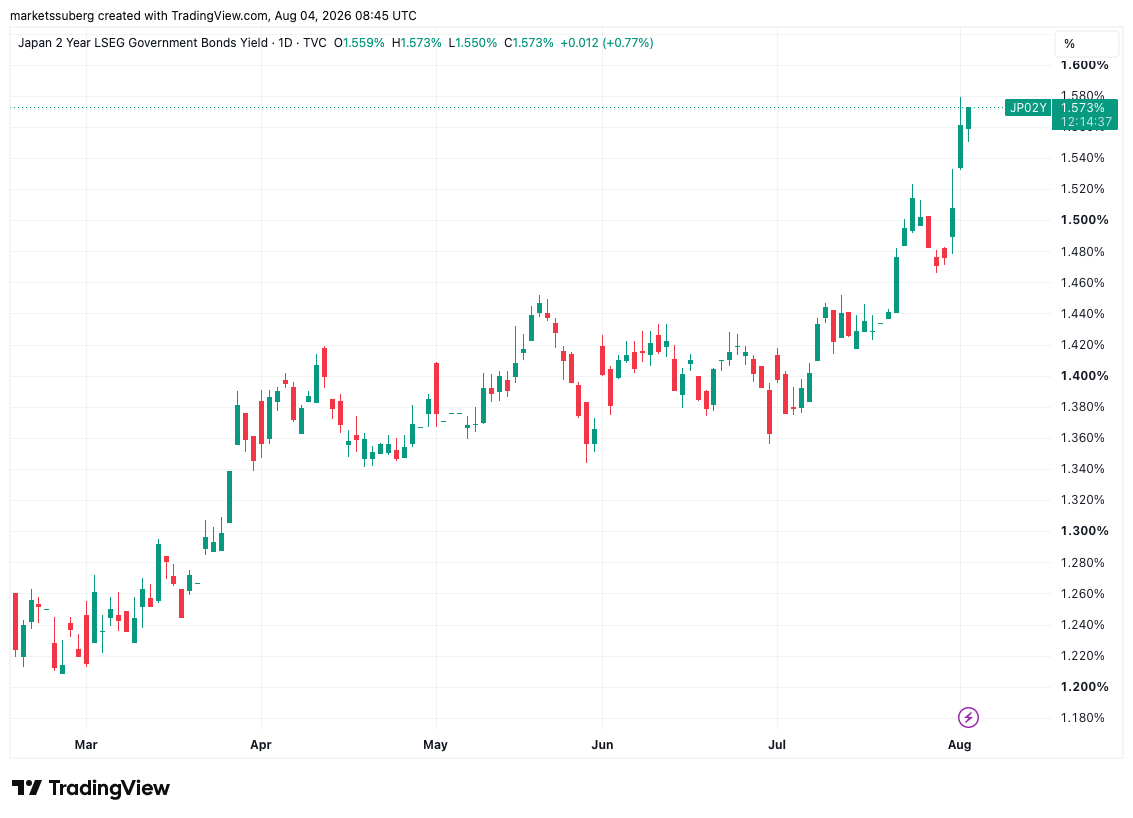
Japan two-year bonds, one-day chart. Source: Cointelegraph/TradingView
Japanese two-year bond yields rose above 1.57% on Monday, a signal that low-interest-rate conditions were coming to an end in advance of market expectations. Japanese investors repatriating capital to take advantage of this sea change in the domestic economy adds to the risk of the carry trade unwinding further.
Magazine: Here’s why the CLARITY Act’s ethics deal may be so hard to reach

Bitcoin may have already erased half of its market cap, but veteran crypto investor Michael Terpin says the asset still has further to fall before hitting rock bottom.
“We still have more pain to go,” Terpin tells Cointelegraph on the Trade Secrets show. Terpin believes that Bitcoin will ultimately fall “66%” from its October 2025 all-time high of $126,100. “I think that brings us down into the 40s, and I think that’s about where we’re gonna go,” Terpin says.
To be precise, a 66% drop from the ATH would see Bitcoin changing hands for $43,500, a price the asset has not seen since early February 2024. The 68-year-old investor, often referred to as the “Godfather of Crypto,” has seen Bitcoin plunge enough times to know what a true bottom feels like.
The ‘defining hallmarks’ of a Bitcoin bottom
Terpin doesn’t think markets have seen true capitulation yet. “One of the defining hallmarks of the bottom is that it doesn’t pop back,” Terpin says.

Michael Terpin spoke to Cointelegraph on the Trade Secrets show. Source: Cointelegraph
Terpin points out that greed is invariably why most traders fail to time market cycles correctly. He points to Bitcoin’s previous cycle top in November 2021, when the asset reached around $69,000 before entering an extended consolidation period. “You had quite a bit of time to get out over $60,000. But then everybody thought it was going to $100,000,” Terpin says, “remember the laser eyes?”
Terpin wasn’t confident back then that Bitcoin would reach $100,000. “I thought there was a possibility it could go to a hundred, but I thought the sweet spot was going to be eighty-five. And it obviously underperformed that because of all the bad macro,” Terpin says.
“We’ve had two cycles in a row now with bad macro. And you would have expected good macro from Trump, but the tariffs, and some of the other things that allowed a lot of manipulation,” Terpin says.
Bitcoin ultimately reached $100,000 in December 2024, just a month after Donald Trump won the US presidential election.
Terpin worked with Ethereum in its early stages
Terpin was an early investor in the crypto industry and is the founder and CEO of blockchain advisory firm Transform Ventures.
Through his company, he worked with several projects during their early development stages that went on to become major names in the industry, including Ethereum, Tether, and WAX. He was also an advisor to Mastercoin, the world’s first initial coin offering (ICO) in 2013. It later became known as Omni Layer.
Terpin claims he was the first crypto investor to relocate to Puerto Rico, which is known for its crypto-friendly tax policies. Since moving, he has also invested in and helped fund several startups based on the island.
Michael Terpin says four-year cycle is not over
He is convinced that Bitcoin is still following its traditional four-year cycle, despite the industry debate in 2025 that institutional adoption and the launch of spot ETFs may have changed the market’s usual boom-and-bust pattern.
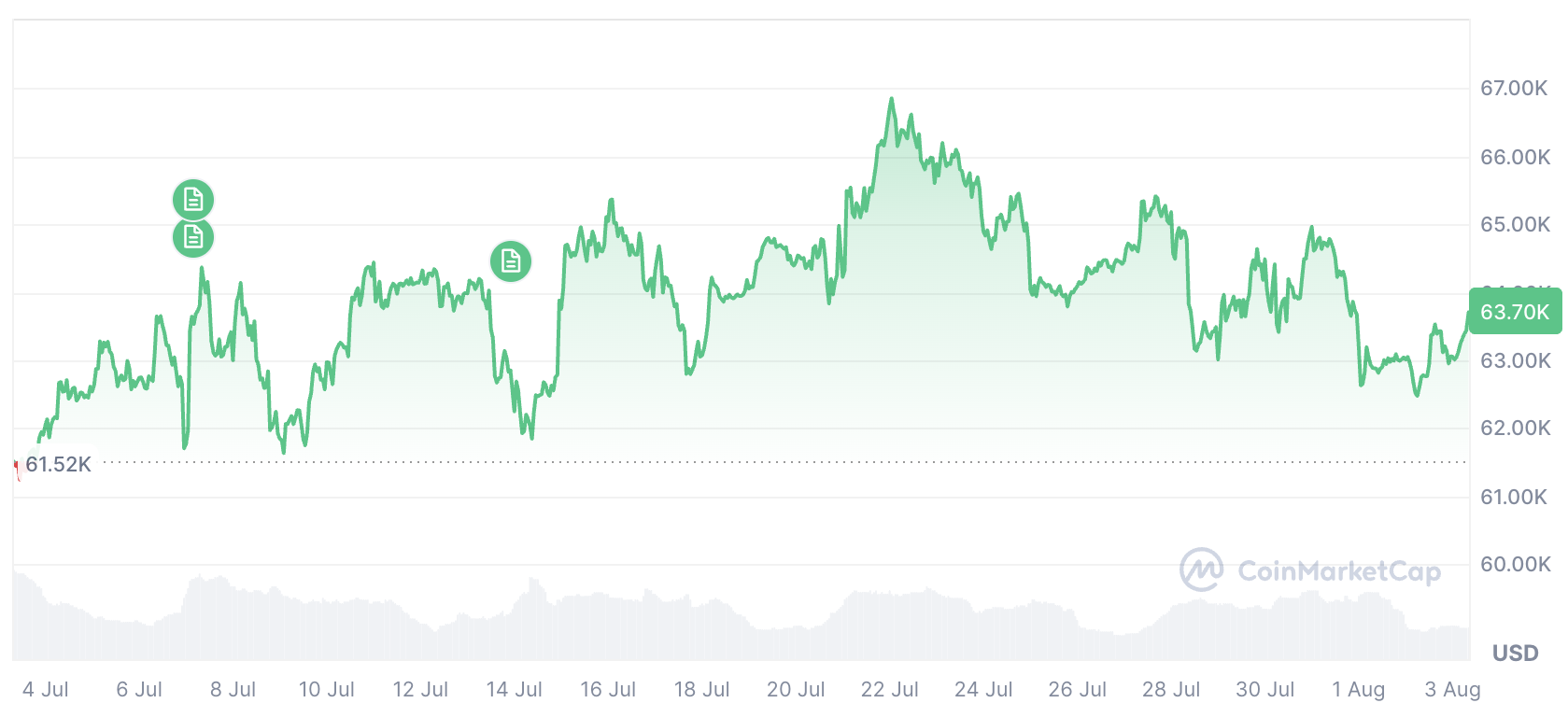
Bitcoin is up 1.67% over the past 30 days. Source: CoinMarketCap
“I think we’re still following the halvings. This whole argument that, you know, we’re only going up from here because institutions don’t sell is garbage, right? Institutions absolutely sell.”
Terpin is also cautious about companies built around Bitcoin exposure, including Strategy and its executive chairman Michael Saylor’s aggressive Bitcoin accumulation strategy.
Buying Strategy stock or Bitcoin?
While acknowledging Saylor’s success, Terpin says investors should understand the risks of investing in a corporate structure rather than owning the underlying asset.
“I mean historically, you’ve done better if you buy Strategy at the bottom and then sell it at the top than if you buy the Bitcoin,” Terpin says. “Whether he’s [Michael Saylor] able to keep that going, and you know, he avoided being wrecked in 2022 when he was actually underwater with his Bitcoin.” But Terpin would personally “rather bet on Bitcoin than a single company.”
And indeed, investors looking for a low maintenance approach should also bet on Bitcoin rather than chasing altcoins, which require far more active management.
“You only have to look at your portfolio like a couple times during the four-year cycle,” Terpin says.
“When we’re getting near the bottom, see if it’s time to buy. And when we’re getting near the top, see when it’s time to sell. And the rest of the time you can just be on the golf course. Whereas with altcoins, you gotta be, you gotta be on it,” Terpin says.
Cointelegraph publishes long-form journalism, analysis and narrative reporting produced by Cointelegraph’s in-house editorial team with subject-matter expertise. All articles are edited and reviewed by Cointelegraph editors in line with our editorial standards. Some articles contain affiliate links, from which Cointelegraph may earn a commission. These relationships do not influence which products we review or our editorial conclusions. Content published in here does not constitute financial, legal or investment advice. Readers should conduct their own research and consult qualified professionals where appropriate. Cointelegraph maintains full editorial independence.

A lot of ingredients for all kinds of drugs come from China and India, says Christian, who has spearheaded the development of a supply-chain monitoring tool for the U.S. Pharmacopeia. He has found that 41% of drugs’ key starting materials are made solely in China, meaning that the health of people around the world relies on Chinese companies continuing to make and provide those ingredients.
What’s the way forward?
At the moment, hospitals “are heavily incentivized to find any drug that is the cheapest upfront cost,” says Christian. “But there’s no real mechanism for hospitals to pay more to ensure greater resilience.” As the shortages prove, these drugs aren’t products where market dynamics lead to a consistent, reliable manufacturing system. “They should be cheap and high-quality,” says Scholtes. “They are essential.”
Generic drugs in general should be like water coming from the tap, he says. It’s a model that inspired a group of U.S. health systems to start a non-profit, U.S.-based drug manufacturer in 2018, which Scholtes, who co-authored a paper about it, calls a “health care utility.” The company, called Civica, is based in Petersburg, Va. and capable of manufacturing a small handful of generic drugs in a U.S. facility and ensuring consistent supply at a sustainable cost. But currently, Civica only produces certain medications—not including chemotherapy drugs. Few companies have similar models and missions, but one, called Phlow Pharmaceuticals, was founded in 2020 to produce active ingredients for drugs in the U.S. in order to mitigate reliance on overseas sources.


Key takeaways
- AAVE is holding above its 50-day EMA at $90.80 as its near-term recovery continues.
- Deposits in Aave V3 on Monad increased by more than $500 million over the past month.
- Aave V4 deposits reached a record high above $350 million.
Aave (AAVE) is extending its mild recovery on Tuesday, trading above the 50-day Exponential Moving Average at $90.80.
The recovery comes amid increased adoption of Aave’s lending protocols. Aave V3’s deployment on the Monad Layer 1 blockchain attracted more than $500 million in deposits over the past month, alongside more than $215 million in active loans.
Despite the rise in protocol activity, weak derivatives data and bearish momentum indicators continue to cloud AAVE’s price outlook.
Aave V4 deposits reach record high
Deposits in Aave V4 have surpassed $350 million, establishing a new record after increasing by more than $100 million over the past 30 days.
The growth suggests rising adoption and may be partly driven by an attractive USDC borrowing offer. Holders of cbBTC, WBTC, WETH and wstETH can reportedly access a borrowing rate of negative 0.2%.
The increase in deposits across Aave V3 on Monad and Aave V4 highlights growing use of the protocol, even as demand for the AAVE token remains subdued among retail traders.
AAVE is losing momentum in the derivatives market despite the growth in protocol deposits.
Futures open interest declined by more than 6% over the previous 24 hours to $302.15 million, according to CoinGlass. The drop reflects a contraction in the value of outstanding futures contracts and suggests traders are reducing their exposure.
AAVE’s funding rate also fell below zero to negative 0.0046%. Negative funding indicates a bearish tilt, with short-position holders paying traders holding long positions.
Meanwhile, the 24-hour long-to-short ratio declined to 0.9372, showing that active short positions outnumber longs and reinforcing the cautious market outlook.
AAVE technical outlook: Could the price fall to $70?
AAVE is hovering above $90 at the time of writing on Tuesday, maintaining a mildly constructive near-term position above its 50-day EMA at $90.80.
However, the token remains well below its 200-day EMA at $112.75, suggesting that its broader recovery potential remains limited.
The Moving Average Convergence Divergence indicator continues to decline below its signal line, reflecting persistent bearish momentum.
The Relative Strength Index stands near 49 and is trending lower while AAVE’s price forms a modest upward trend. This bearish divergence suggests that buying momentum is weakening despite the recent price recovery.

The 50-day EMA at $90.80 is the key immediate support level. A decisive daily close below this moving average could accelerate selling pressure and trigger a roughly 20% decline toward the June 18 low of $70.65.
The psychological $100 level represents AAVE’s first major resistance. This area sits close to the May 10 high of $103.51, creating a broader resistance zone between $100 and $103.51.
A sustained break above this region would strengthen the bullish case and could allow AAVE to target the 200-day EMA at $112.75.


Former FBI supervisory agent Patrick Steven Yaroch was charged with using internal systems to obtain credentials for cryptocurrency wallets linked to an adversarial country, which he used to transfer funds to his own crypto wallets.
Yaroch admitted to 10 unauthorized transfers between late 2024 and early 2025 that involved an estimated total of $1 million in digital assets, some of which he deposited into Suilend to earn yield, according to a Saturday US Federal court filing.
After self-reporting the incident, Yaroch was placed on administrative leave last Wednesday, terminated and then arrested on Friday. Agents retrieved devices, seed phrases and a Trezor wallet from his Virginia residence to access his accounts on Suilend and crypto exchange Kraken. With his cooperation, they transferred roughly $925,000 in funds to government-controlled wallets.
In May, Yaroch used ChatGPT for advice.
“If I had a million dollars, how would you suggest investing it/spending it to maximize profit and return,” he wrote in the AI prompt, according to the court filing. ChatGPT suggested “building a slower-living vineyard/agricultural lifestyle in places like Cilento or Portugal’s Dão region.”
Yaroch is the latest case of crypto theft involving a federal agent. In 2015, former DEA special agent Carl M. Force diverted about $700,000 in Bitcoin before pleading guilty and being sentenced to six and a half years in prison.
Former US Secret Service special agent Shaun W. Bridges stole about $350,000 in BTC back in 2015 before pleading guilty and facing a sentence of six years in prison. Both cases were tied to the investigation into dark net marketplace Silk Road.
Magazine: Inside the ‘fake police raid’ that forced a $1M Bitcoin transfer

Bitcoin has found itself at the center of a new wave of quantum-computing anxiety after Jim Cramer said he plans to sell his holdings. Speaking on a Friday episode of CNBC’s “Mad Money,” the former hedge fund manager pointed to remarks made the day before by IBM CEO Arvind Krishna, who suggested investors should treat quantum risk as something to be “paranoid” about within the next few years.
Cramer’s comments arrive as market conditions also appear to be softening. While Bitcoin traded above $63,500 at the time of the report—up 1.7% on Tuesday—it remained down roughly 27% year-to-date, according to TradingView data. At the same time, blockchain and exchange liquidity indicators cited in the report pointed to reduced activity and increased selling behavior among large holders.
Key takeaways
- Jim Cramer said he plans to sell all his Bitcoin, citing concerns about quantum computing risks raised by IBM CEO Arvind Krishna.
- Blockchain analytics referenced by Lookonchain show at least one large Bitcoin wallet moved roughly 16,400 BTC after a period of inactivity.
- Crypto liquidity signals cited from Kaiko data suggest spot trading activity on leading exchanges fell to about $15 billion last week—lowest levels of 2026 in the referenced dataset.
- Industry views remain split on when practical quantum threats to Bitcoin could materialize, with timelines ranging from “decades” to “3–5 years.”
Cramer turns quantum fears into a concrete portfolio decision
In his Friday “Mad Money” segment, Cramer said: “I’m going to sell mine [Bitcoin],” directly tying his decision to quantum computing concerns. The impetus was an earlier conversation with IBM CEO Arvind Krishna, who told Cramer to be “paranoid” about the potential threat quantum computing poses to cryptocurrencies over the next three to four years.
The significance for investors is less about whether Cramer personally controls market outcomes and more about how mainstream commentary can sharpen attention on long-term security assumptions. Quantum computing is widely discussed in crypto circles because it could, in theory, undermine certain cryptographic protections if the necessary computational capability becomes feasible.
Still, not all investors interpret quantum talk the same way. The report notes that some market participants leaned into the “inverse Cramer” meme—an investment philosophy that effectively bets against Cramer’s calls—suggesting that certain traders may view Cramer’s bearish stance as a contrarian signal rather than a risk indicator.
Large-holder activity surfaces as exchange liquidity cools
Separate from Cramer’s remarks, the report highlights whale wallet movement alongside weakening trading activity. According to blockchain analytics platform Lookonchain, a whale wallet labeled bc1qpt transferred its entire Bitcoin holdings of 16,400 BTC—worth about $1 billion—into a new address after seven months of inactivity.
Lookonchain’s report of the transfer was paired with a liquidity reference from crypto intelligence platform Kaiko, as shared by The Kobeissi Letter. The cited metric claims that daily cryptocurrency trading activity across the leading 44 spot exchanges fell to about $15 billion last week, described as the lowest level of 2026 in that dataset.
In a Tuesday X post, The Kobeissi Letter characterized the move as part of a broader liquidity contraction, stating it represented a roughly 70% decline from January peak levels and that “crypto market liquidity is drying up.”
For traders, the pairing matters: a wallet moving substantial funds after a long idle period can reflect many possibilities—risk management, restructuring, or trading plans—but when it coincides with lower liquidity, it can heighten sensitivity to price moves. Liquidity tends to influence how easily large orders can be absorbed without significant slippage.
Quantum timelines remain contested—what “risk” actually means
While Cramer focused on a near-term window (three to four years, based on Krishna’s remarks), the report underscores that the broader industry is not aligned on when quantum capabilities could become practically relevant for Bitcoin.
In November 2025, Blockstream CEO Adam Back reportedly said Bitcoin faces no meaningful quantum threat for at least the next 20 to 40 years. That perspective suggests a long runway for preparation, implying that immediate panic is likely unwarranted.
By contrast, the report cites an April report from Bernstein that argues Bitcoin could have roughly three to five years to prepare for a post-quantum security upgrade. That timeline compresses the decision window for developers and infrastructure operators and would support the idea that planning should not be deferred.
Adding another layer, the report includes an assessment from Bitget Wallet research analyst Lacie Zhang, who told Cointelegraph that Back’s view is “more accurate and measured,” and that practical quantum threats capable of breaking Bitcoin’s cryptography remain highly unlikely within the next decade.
What remains uncertain across all viewpoints is the translation from “theoretical vulnerability” to “real-world break.” Even when the cryptographic risk is discussed in terms of quantum computing, the market relevance depends on when systems capable of executing the necessary computations will be available, stable, and accessible at a scale that meaningfully threatens the security assumptions behind Bitcoin.
Why this story matters beyond headlines
Even if the exact timeline is disputed, the combination of high-profile mainstream comments and ongoing technical debate may increase investor attention on how Bitcoin and the wider ecosystem plan for a post-quantum world. The report references earlier coverage about Bitcoin’s quantum upgrade path and notes that discussions in the sector have already moved toward considering upgrade mechanisms, including what changes could be made and what would not.
For market participants, the immediate takeaway is twofold. First, quantum talk can influence sentiment even when implementation details are years away, so traders may watch for whether additional infrastructure or policy discussion emerges. Second, the liquidity backdrop described in the report suggests that even routine flows—like large wallet moves—could be more noticeable if trading depth continues to decline.
Going forward, investors should watch for updates that connect the debate to concrete milestones: technical proposals and timelines for post-quantum readiness, as well as whether exchange liquidity stabilizes or continues to drift lower alongside large-holder activity.


XAUt added to its bullion backing during gold’s worst quarter since 2013, as tokenized commodity holder counts continued to rise.


Disclosure: This article does not represent investment advice. The content and materials featured on this page are for educational purposes only.
New data shows individual investors still hold the majority of Bitcoin supply, outpacing institutions, corporations, funds, and government wallets.
Summary
- New data shows individuals still hold roughly two-thirds of Bitcoin, outweighing institutions and ETFs.
- Most Bitcoin is still held by private investors, with institutions controlling only a small share, data shows.
- Institutions may be buying Bitcoin, but individuals still account for the largest share of holdings.
The past few years have been filled with talk about how institutions have swallowed up the Bitcoin supply. Yet data shows that an overwhelming amount is still held by individuals.
Surprisingly, new data has shown that individuals still retain the most Bitcoin by market share. They hold significantly more than businesses, funds, and ETFS, and even Satoshi-era wallets. Over the past few years, there has been much speculation about the buy-and-hold tactics of corporations and institutions. Yet it may be individuals who are choosing to cling to their crypto.
Bitcoin’s current market segmentation
With the global geopolitical situation in turmoil, people have been flocking away from risk assets like cryptocurrency in droves. At the time of writing, Bitcoin price stands at $63,730. In the past five days, it has moved within a margin between $60,000 and $65,000, with little sign of breaching the upward curve. For many, this shows that people are not buying, but also not selling, creating stagnation. Yet it is those who hold cryptocurrencies that throw up the most surprises.
A recent study taken from public wallet data has shown that individuals hold 66% of the Bitcoin supply. Mapping wallets that are known to interact with exchanges, custodians, and large holders, it painted a picture of marginal institutional and corporate holdings. In contrast, only 7.8% was given over to businesses, with 7.2% in funds and ETFS. Satoshi-era wallets had 4.6%, while governments held only 2.1%.
Together, the entire institutional investment sector, incorporating businesses and trading bodies, only holds 15% of the supply. Accounting for the remainder, only 4.5% of Bitcoin is left to be mined. An estimated 7.7% of the remainder has been lost. That means 19% spans the other categories, with the rest, roughly two-thirds, held by private individuals.
The social media paradox
This also dispels a recent theory that a lack of social media chatter regarding Bitcoin and Ethereum has been driven by institutional adoption. In July, data was published that showed mentions of the two terms were at their lowest levels in two months on the platform X. Bitcoin mentions had dropped to around 130,000, while Ethereum had fallen to 40,000 per week.
Reports on the data highlighted this as a shift to institutional buying. In particular, many highlighted it as a regression to a time back in 2020, before the institutional era emerged. Yet the new data suggest that there may be other reasons at play, especially as institutions do not hold the amount that people believed.
Firstly, it could be that X is just losing users. This is a trend that has been ongoing, with 33 million users leaving between January 2024 and 2025. These people may have drifted to other places to discuss cryptocurrency. It could be on Reddit, or it could be on private messaging apps like Telegram.
It could also be that people are just going elsewhere for their information. With crypto more widely known about, people are more savvy. Regulatory announcements and the inflows and outflows of ETF products all provide better benchmarks than a speculator on X.
Lastly, crypto may not be as new and exciting as it once was. It has given way to talks about tokenization, and even AI has grabbed many of the headlines that it once promised as a harbinger of a brave new world. As it is no longer the coolest, newest cat in town, less is being spoken about it. By no means does this mean people have lost interest, but it simply signals that people are now accepting it.
How should this impact trading?
During periods of volatility, retail investors are often prone to more emotional trading. They can sell and buy fast, as opposed to companies that have to make long-term decisions, signed off by many people. This has mainly been the reason given for Bitcoin’s current stagnation.
Yet it seems that the opposite is true and that retail investors are actually building resilience. HODL is the sector name for “Hold on for dear life,” which means you keep hold of Bitcoin until it grows exponentially in value. Many investors have held on through tumultuous market cycles. In fact, whales who are private buyers who hold large amounts can often change market courses if they begin to buy up or even dump their cryptocurrency. This suggests that they still do play a huge part in the direction prices can take.
What this does show is that despite what media outlets and those in the crypto industry are saying, the field is still extremely decentralized. For all the hype of institutional adoption and government backing, Bitcoin, particularly, is still held by individuals. Those wanting to see how this changes in the near future must watch inflows and outflows to ETF products, as well as changes to government legislation, not just in the US but beyond.
Disclosure: This content is provided by a third party. Neither crypto.news nor the author of this article endorses any product mentioned on this page. Users should conduct their own research before taking any action related to the company.


Bitcoin miners with operations in Texas are not expected to be impacted by a moratorium on approval of data center projects connected to the state’s grid operator ordered by Governor Greg Abbott, Bernstein analysts said Tuesday.
Abbott on Monday directed the Public Utility Commission of Texas and the Electric Reliability Council of Texas (ERCOT) to audit all data centers seeking to connect to the state’s power grid. The duration of the audit was not specified and comes amid increasing public backlash to the pace of data center build-out across the state, The Texas Tribune reported.
Bernstein analysts told clients on Tuesday that as most of the Bitcoin (BTC) miners operating in Texas are under contract for approved electric capacity, those operations are unlikely to be impacted by the moratorium.
“However, we believe, this audit throttles speculative data center pipeline and makes genuine sites with development history more valuable,” the research team led by Gautam Chhugani said in their note. “Bitcoin mining sites are favorably placed with the longest gestation, self-funding infra and local community management,” they said.
They said that the local operations of Cipher Digital (CIFR), Core Scientific (CORZ) and CleanSpark (CLSK) could be the miners most exposed to future public opposition to data center expansion, particularly during ERCOT’s approval process to convert their pipeline assets into grid-connected power capacity.
“We believe with increasing political opposition to new data center projects and fresh capacity being throttled by moratoriums/state directives, the approved MWs become more valuable,” they said, highlighting the Texas mining operations of IREN (IREN), which is fully ERCOT grid approved, as are the operations of Riot Platforms (RIOT).
CIFR shares were down more than 7% in Tuesday’s premarket trading, according to Yahoo Finance data. The miner reported second-quarter results earlier Tuesday, posting a loss of $0.65 per diluted share, widening from last year’s loss of $0.12 per diluted share.
Related: Bitcoin may find bear market bottom in August: 10x Research

Migration is rarely the result of a single heat wave. It is the culmination of years of mounting losses that steadily erode income, health, and hope.
Consider Santuben Kantibhai, a farmer from Gujarat, India. Over the past two years, her family has endured a cascade of climate and economic shocks. A severe heatwave destroyed much of their standing crop, causing her family’s income to plummet. At the same time, her father—a co-earner who relied on farm labor and daily wage work—developed cataracts that gradually robbed him of his eyesight, making it increasingly difficult for him to help their family earn a living. When another heatwave struck in 2025, crop yields fell again just as his condition required surgery. For Santuben, the question is not whether heat is becoming more dangerous; she already knows it is. It is how many more failed harvests and lost workdays can her family absorb before staying becomes impossible.

The US-Japan yen intervention poses fresh liquidity concerns as bond yields spike

Ariana Grande Addresses Taking a ‘Step Back’ From Spotlight

Manchester’s lowest-ever election turnout results broken down


-

 Business6 days ago
Why Trees Belong on the Risk Register
-

 Fashion4 days ago
Weekend Open Thread: Wit & Wisdom
-

 Politics4 days ago
Meta enters AI-training agreement with far-right ‘propaganda rag’ Newsmax
-
 Entertainment7 days ago
‘Stargate’ Creator’s New Sci-Fi Series Returns for Season 3 Tomorrow
-

 Crypto World3 days ago
MicroStrategy Post-Earnings CLARITY Act Push Could Add New Catalyst for Its Stock
-

 Politics6 days ago
Reform UK betrays West Mids residents by running from party pledges
-

 Business6 days ago
Major shareholder moves on Canyon
-

 Crypto World3 days ago
XRP Ledger v3.3.0 brings five institutional features
-

 News Videos5 days ago
Bitcoin Enters the 3rd Stage of the Bear Market
-

 Crypto World7 days ago
Kraken Enables Retail Access to Jersey Mike’s IPO via Tokenized Shares
-

 Politics5 days ago
Luke Littler’s dominance sparks GOAT debate
-

 Sports5 days ago
Seema Kaliramna Wins Discus Throw Bronze, Takes India’s CWG Medals Tally To 17
-

 News Videos7 days ago
Claude: Build Financial Dashboards in Minutes (2026)
-

 Crypto World4 days ago
New York sues Kalshi over prediction market gambling
-

 Crypto World2 days ago
Crypto PAC spending tops $2M in Michigan House race
-

 Business7 days ago
Johnson & Johnson agrees to $5.5B settlement over talc cancer claims
-

 Politics2 days ago
Zack Polanski: an incitement to murder Nigel Farage?
-

 Business4 days ago
Trump Announces Hamas Disarmament Agreement as Iran Strikes Kuwait Air Base and US Attacks Pause Overnight
-

 Tech6 days ago
Gemini can now summarize the messiest comment threads in Google Docs
-

 Tech2 days ago
ESET tracks rise in malicious AI skills and adaptable malware
You must be logged in to post a comment Login