

Crypto World
Trump’s Postponement of Housing Bill Stalls Federal CBDC Ban Until 2030


Key Points
-
Presidential postponement leaves Federal Reserve digital currency prohibition uncertain.
-
Legislation would prevent Fed-issued digital dollar implementation until 2030.
-
Presidential signature contingent on passage of voter registration requirements.
-
Private stablecoin exemptions preserved within housing legislation framework.
-
Senate cryptocurrency regulatory proposals encounter additional legislative complications.
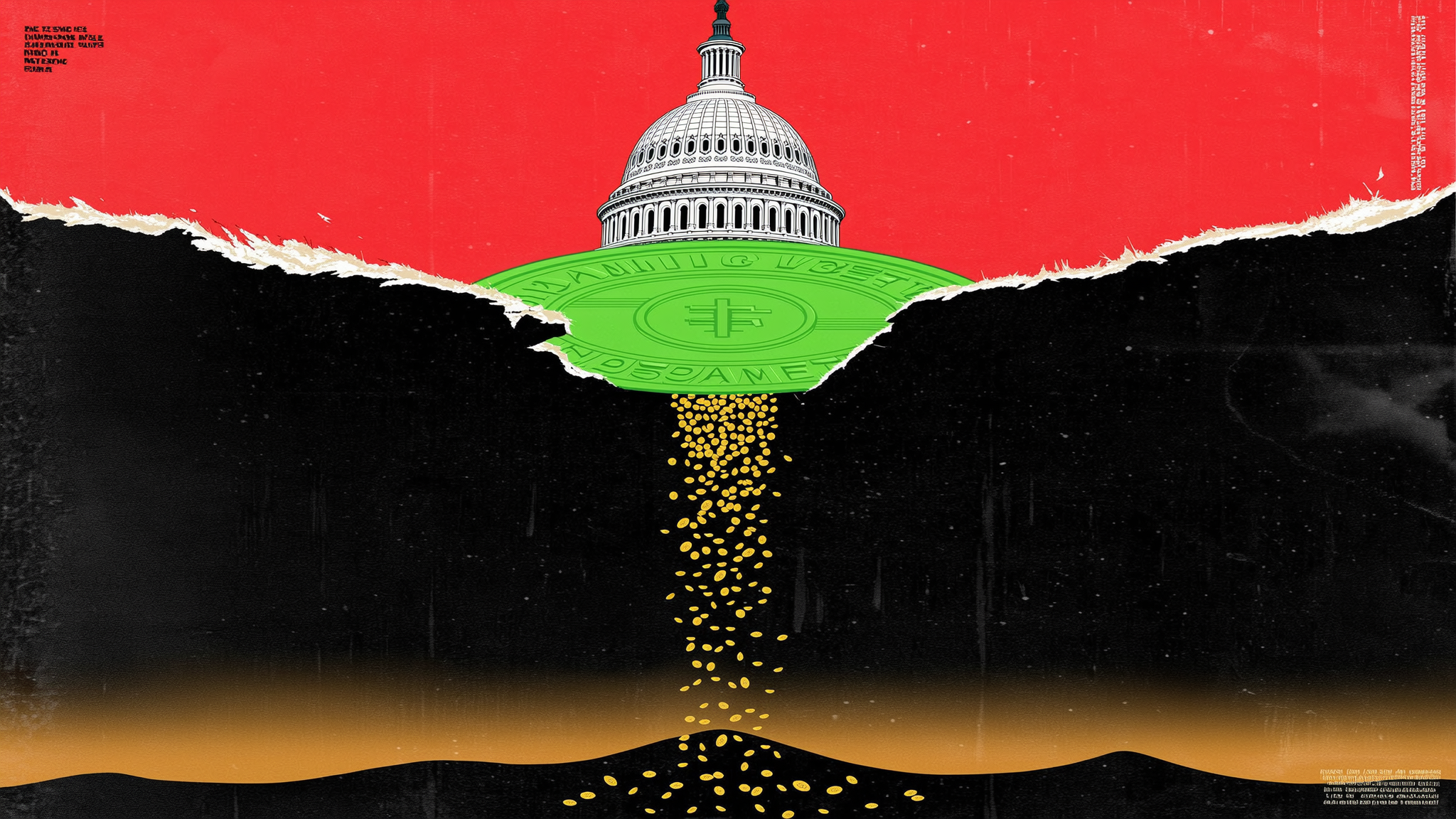
President Donald Trump has put a federal prohibition on central bank digital currencies in jeopardy after canceling Wednesday’s anticipated signing ceremony for a comprehensive bipartisan housing reform package. The measure would prevent the Federal Reserve from launching a retail central bank digital currency until the end of 2030. Trump’s decision ties the legislation’s fate to separate voter identification requirements.
Presidential Approval Conditional on Election Reform Measure
Through his Truth Social platform, Trump announced the ceremony cancellation moments before its scheduled commencement at the White House. He stipulated that congressional lawmakers must first approve the SAVE America Act, legislation mandating citizenship verification during federal voter registration. This maneuver threw both the housing reform package and its embedded CBDC prohibition into sudden legislative limbo.
The SAVE America Act mandates documentary proof of United States citizenship for individuals registering to participate in federal elections. Proponents characterize this requirement as essential election integrity infrastructure, while critics contend it creates unnecessary obstacles for legitimate voters. Trump has urged Republican senators to expedite the proposal despite minimal Democratic backing.
The housing legislation sailed through the House of Representatives with 358 affirmative votes against 32 negative votes, following Senate passage by an 85-to-5 margin. The bill consequently arrived at the executive branch with extraordinary bipartisan consensus. Trump nevertheless suspended the ceremony despite widespread support from congressional leadership in both chambers.
Digital Currency Prohibition Embedded Within Housing Reform
The 21st Century ROAD to Housing Act principally addresses housing inventory expansion, affordability challenges, mortgage lending protocols, and construction regulatory obstacles. Congressional negotiators, however, inserted provisions barring the Federal Reserve from developing or deploying a retail CBDC. This prohibition would maintain force through December 31, 2030.
The language additionally encompasses digital instruments exhibiting characteristics substantially similar to central bank digital currencies. Critically, it carves out private dollar-denominated assets functioning through transparent, permissionless, and decentralized infrastructure. This exclusion safeguards eligible stablecoins from the federal restriction.
Trump has previously issued executive guidance prohibiting federal agencies from establishing, deploying, or advocating for a United States CBDC absent explicit statutory authority. While the Federal Reserve has conducted exploratory research into digital currency possibilities, no digital dollar has been introduced. The congressional language would therefore codify existing executive policy through statutory law.
Legislative Postponement Complicates Cryptocurrency Regulatory Agenda
Trump retains the option to sign the housing package following congressional advancement of his preferred election legislation. Constitutional procedures also permit the measure to achieve legal status without presidential signature. Timing will depend on formal legislative presentation protocols and congressional scheduling dynamics.
This postponement may generate additional uncertainty surrounding the Digital Asset Market Clarity Act currently pending. That legislation would establish jurisdictional boundaries for digital asset oversight and allocate regulatory responsibilities among federal agencies. Trump has previously expressed support for establishing comprehensive market structure frameworks for the cryptocurrency industry.
The CLARITY Act awaits Senate floor deliberations, potential amendments, and conclusive voting. Simultaneously, legislators continue negotiating ethical guidelines concerning political figures’ participation in digital asset enterprises. The housing legislation dispute now injects another political prerequisite into an already congested Senate legislative schedule.
Trump has not issued explicit veto threats regarding the market structure legislation or other pending cryptocurrency proposals. Nevertheless, his refusal to advance unconnected measures may decelerate congressional progress across multiple policy domains. The CBDC prohibition consequently remains entangled with broader controversies involving housing policy, electoral procedures, and digital asset regulatory frameworks.


Five senior Senate Democrats sent a formal letter to Republican committee chairs Tuesday demanding immediate hearings into a reported $500 million transaction in which Abu Dhabi royalty acquired a stake in World Liberty Financial, the crypto firm tied to President Donald Trump, and into the federal… Read the full story at The Defiant


Binance is refusing to retreat from Europe after its Greek bid for a MiCA license collapsed. Multiple reports claimed European Central Bank President Christine Lagarde pushed Athens to reject the world’s largest crypto exchange.
The reversal leaves the company barely a week to find another route into the bloc before its temporary permissions lapse on July 1. Binance insists it has no intention of leaving.
How Binance’s MiCA Bid Unraveled in Athens
Binance filed its Greek application in January 2026 through a local subsidiary. Approval there would have unlocked passporting rights across all 27 member states under the Markets in Crypto-Assets (MiCA) framework.
Without it, unlicensed platforms must stop serving EU clients once the MiCA transitional deadline passes.
Binance had reportedly cleared key reviews before Greece’s approval process unraveled in mid-June. The same reports allege Lagarde told Greek Prime Minister Kyriakos Mitsotakis the exchange was not welcome.
None of the ECB, Greek officials, or Binance has confirmed this claim.
Reuters reported that regulators balked at Binance’s past penalties for money laundering, its sprawling structure, and what they viewed as a risk-taking culture.
In 2023, it pleaded guilty in the US to Bank Secrecy Act and sanctions breaches, paid $4.3 billion, and founder Changpeng Zhao (CZ) stepped down.
“Binance is not leaving Europe,” Gillian Lynch, Head of Europe and UK, reportedly told Reuters.
Follow us on X to get the latest news as it happens
Can the European Central Bank Keep Binance Out?
Reports tie the resistance to Binance’s dominant role in dollar-pegged stablecoin liquidity. The ECB casts such dollar tokens as a threat to monetary sovereignty and is advancing its own digital euro, which it hopes to issue by 2029.
Still, the central bank holds no formal veto over MiCA approvals. National regulators grant the licenses, so Lagarde’s leverage runs through political pressure rather than direct authority.
That structure cuts both ways:
- One approval passports across all 27 states, and Binance needs a single yes.
- Meanwhile, blocking it everywhere would require pressure in every capital it approaches.
Dozens of rivals have already cleared MiCA, including Kraken in Ireland, leaving the biggest exchange a holdout.
Binance contacted four or five regulators but filed only in Greece. France is the likely next test, where Binance has held an AMF registration since 2022 but also faces an aggravated money-laundering investigation by French prosecutors.
Overriding a second national regulator would carry a higher political cost, and Binance has abandoned EU markets before.
Compliance Culture, Not Headcount
Binance’s defense leans on scale, pointing to heavy investment and about 1,500 compliance staff.
Critics argue that it misses the point, because hiring thousands of compliance staff means little if those teams lack authority.
This is much like Binance’s 2022 clash with UK regulators.
“Let’s see how Binance plays the regulatory arbitrage game again…Regulators are ultimately evaluating outcomes, not organizational charts,” OKX CEO and vocal CZ critic, Star Xu, chimed.
Not everyone sees a cliff edge. Analyst Paul Barron called the July cutoff a priced-in consolidation, arguing the headline “90%” counts dormant shell registrations, not active venues.
The coming days will show whether Binance can secure a foothold elsewhere, and how far the ECB’s informal reach extends across the bloc.
The post EU Central Bank President Reportedly Blocked Binance in Greece, Will France Approve? appeared first on BeInCrypto.


World has expanded access to AgentKit, a framework that has enabled verified users to connect AI agents to their digital identities and prove those agents represent real people rather than automated bot networks.
Summary
- World has expanded AgentKit, allowing AI agents to operate on behalf of verified human users through World ID.
- The framework supports AI tools such as Claude Code, Codex, Cursor, Hermes, and OpenClaw.
- A recent sale of 500 limited-edition hats demonstrated how verified AI agents can complete purchases while enforcing one-person limits.
According to World, the rollout comes as AI agents take on a growing number of online tasks, increasing demand for systems that can distinguish between software acting for a specific individual and large-scale automated operations.
The project, backed by OpenAI CEO Sam Altman, said AgentKit allows users to delegate actions to AI tools while keeping identity verification and user controls in place.
The release follows a period of increased attention for the project after major U.S. crypto trading platform Robinhood listed the World token, bringing additional visibility to the ecosystem.
Verified identities allow AI agents to act for users
Details published by World show that AgentKit links supported AI agents to a verified World ID, enabling websites and applications to confirm that an agent is acting on behalf of a unique human user. The company said the system is designed to help businesses enforce user-level rules and reduce abuse associated with automated accounts.
To access the framework, World stated that users need a verified World ID, a World App account, and a compatible AI agent. Supported options currently include Claude Code, Codex, Cursor, Hermes, and OpenClaw.
Through World’s ToolRouter interface, users can create credentials and authorize their agents to interact with supported services. According to the company, this process allows individuals to assign tasks to AI systems without giving up identity verification tied to their accounts.
Rather than relying solely on account credentials, the framework adds proof that an agent represents a verified person, which World said can help online services distinguish legitimate activity from coordinated bot behavior.
Demonstration shows AI agents completing purchases
To showcase the technology, World recently organized a limited-edition sale of 500 “Human in the Loop” hats. According to the company, AI agents handled the entire purchase process for participating users.
World said the agents discovered the product launch, checked eligibility requirements, navigated the online storefront, and completed transactions without direct user involvement during the purchase flow.
Identity checks remained active throughout the event. According to the World, World ID verification ensured that purchase limits were enforced on a one-person-per-item basis, preventing users from bypassing restrictions through multiple automated accounts.
The company reported that all 500 hats were claimed by verified users located in countries including the United States, Germany, Japan, and the United Kingdom. World said the event demonstrated how businesses can permit AI agents to perform online actions while maintaining controls intended to reduce bot-driven abuse and automated farming activity.
As AI-powered software takes on more responsibilities across digital platforms, World said AgentKit provides a way to connect those agents to verified human identities, allowing organizations to verify who is ultimately behind automated actions carried out online.
Quick Summary
-
Kalshi launches legal action against Illinois over state prediction market licensing requirements.
-
New Illinois statute mandates state licenses for prediction market operators.
-
Platform argues existing CFTC regulation preempts state-level requirements.
-
Company requests injunction before July 1 implementation date.
-
Legal battle intensifies ongoing disputes over sports prediction market jurisdiction.
The prediction market platform Kalshi has initiated legal proceedings against Illinois officials, contesting recently enacted licensing legislation governing prediction markets and imposing fees on specific digital asset activities. The platform maintains that its event-based contracts fall under exclusive federal jurisdiction via the Commodity Futures Trading Commission. The company is pursuing court intervention to prevent the regulations from becoming operational on July 1.
Legal Action Targets State Licensing Framework
This week, Kalshi submitted its legal filing to the U.S. District Court for the Northern District of Illinois. The defendants include Governor JB Pritzker, Attorney General Kwame Raoul, and additional state officials. The case targets specific sections of SB3019, legislation that Pritzker approved as part of a comprehensive budget and revenue package.
Under the statute, operators of prediction markets must secure state authorization before conducting business with Illinois residents. Additionally, the legislation implements a 0.2% fee on designated digital asset transactions and associated services. Kalshi contends these mandates undermine a regulatory domain that Congress designated for federal oversight.
The platform functions as a designated contract market with CFTC registration under the Commodity Exchange Act. Kalshi maintains that Illinois lacks authority to establish an independent licensing framework for its federally supervised event contracts. The company asserts that such measures generate contradictory obligations and undermine consistent standards for nationwide derivatives platforms.
Jurisdictional Conflict Between Federal and State Regulators
According to Kalshi, the Commodity Exchange Act grants the CFTC sole jurisdiction over contracts executed on registered exchanges. State authorities, however, classify certain sports-related event contracts as gambling instruments subject to state gaming statutes. This fundamental disagreement has generated multiple legal confrontations between prediction platforms and state enforcement agencies.
The company indicates that adhering to state requirements would necessitate discontinuing specific sports contracts for Illinois customers. Such action could potentially violate federal uniformity standards applicable to products on designated contract markets. Kalshi would also incur significant expenses for geographic restriction technology, regulatory compliance infrastructure, and jurisdiction-specific product modifications.
A jurisdiction-by-jurisdiction regulatory approach could compel nationwide platforms to customize offerings based on individual customer locations. As a result, operators might require distinct licenses, contract portfolios, and access management systems across multiple states. Kalshi contends that Congress established federal derivatives oversight specifically to avoid such fragmented market conditions.
Platform Pursues Emergency Relief Before Deadline
Kalshi has filed for a temporary restraining order preventing Illinois from implementing the challenged provisions. The company also pursues preliminary and permanent injunctive relief pending resolution of its federal preemption arguments. The platform asserts that enforcement would inflict immediate business damage and generate irreversible operational costs.
This legal challenge emerges amid broader litigation concerning sports-focused prediction markets and federal regulatory jurisdiction. The CFTC has contested measures by nine states, including Illinois, while asserting its authority over registered exchanges. States maintain that local consumer safeguards and gaming statutes govern sports outcome contracts.
Illinois officials have previously stated their intention to uphold state authority and pursue consumer protection efforts within their borders. Neither Pritzker nor Raoul have provided immediate statements regarding Kalshi’s current legal filing. The judiciary must now determine whether federal derivatives legislation supersedes the newly established state licensing requirements.

U.S. President Donald Trump has halted the signing of a housing bill that includes a temporary ban on central bank digital currencies (CBDCs), citing a need to prioritize another piece of legislation he is pushing in Congress. The development adds uncertainty to the near-term U.S. regulatory path for digital assets, even as lawmakers move forward on separate crypto bills.
Trump said on Wednesday that he would cancel the signing ceremony for the “21st Century ROAD to Housing Act” and hold it “until such time as we pass the desperately needed SAVE America Act,” according to a post on Truth Social. The housing measure—already passed by both chambers—contains a CBDC restriction through the end of 2030, but also includes a carve-out for certain stablecoins.
Key takeaways
- Trump has delayed signing the 21st Century ROAD to Housing Act due to his insistence that Congress pass the SAVE America Act first.
- The housing bill bans the Federal Reserve from issuing or creating a CBDC (or a substantially similar digital asset) until the end of 2030, while allowing “dollar-denominated” stablecoins that are open, permissionless, and private.
- Trump’s stance raises uncertainty over how (and whether) he will handle other digital-asset legislation pending in the Senate.
- The Digital Asset Market Clarity (CLARITY) Act remains awaiting a potential Senate vote, and Trump has previously signaled support for codifying a “future-proof” market structure.
- If Trump vetoes related legislation, Congress could potentially override with a two-thirds vote in both chambers.
Housing bill stalled despite approval from both chambers
The “21st Century ROAD to Housing Act” passed the U.S. House on Tuesday and had previously cleared the Senate. While many observers expected Trump to sign the bill without delay, his Wednesday announcement suggests he may treat the SAVE America Act as a prerequisite for other legislation.
In his Truth Social post, Trump linked the cancellation directly to the need to pass the SAVE America Act. The bill he referred to is associated with changes to voting procedures, including a requirement that voters provide proof of U.S. citizenship in person to register—an approach that critics have argued could disenfranchise eligible voters.
This is not the first time Trump has floated a broader “no other bills” condition. Earlier this year, he said he would not sign other measures until the SAVE America Act is enacted, a position that now appears to be affecting the timeline for the housing package as well.
What the housing bill does on CBDCs—and where stablecoins fit
Supporters of the housing bill included a CBDC-limiting provision that would restrict U.S. central bank digital currency issuance. As reported in earlier coverage by Cointelegraph, the legislation bars the Federal Reserve from issuing or creating a CBDC or “any digital asset that is substantially similar” until the end of 2030.
At the same time, the bill includes a narrow exception for stablecoins. The text described in Cointelegraph’s coverage allows “dollar-denominated currency that is open, permissionless and private,” a carve-out designed to permit certain stablecoin models even under the broader CBDC restriction.
For crypto market participants, the carve-out matters because it frames how Congress could draw a line between CBDC-style instruments and private stablecoin systems. However, with Trump delaying signing, that legal boundary is not yet locked in—meaning the practical effect of the CBDC timeline could remain uncertain until the housing bill becomes law.
Regulatory ripple effects: CLARITY and the broader “market structure” debate
Trump’s insistence on prioritizing the SAVE America Act has also introduced questions about how he might act on crypto-related legislation that is still moving through Congress. As of Wednesday, the U.S. Senate was reportedly awaiting a potential vote on the Digital Asset Market Clarity (CLARITY) Act, a bill intended to reshape how regulators handle and enforce digital asset-related rules.
Cointelegraph previously reported that Trump said in May he intended to codify a “future-proof digital asset market structure,” which was widely understood as aligning with proposals like CLARITY. While the housing bill’s CBDC provision reflects Congress carving out limitations on central bank-backed digital currency efforts, CLARITY is aimed at defining regulatory roles and enforcement frameworks for the broader digital asset ecosystem.
Given the president’s stated approach of linking bill signings to passage of the SAVE America Act, the immediate risk for crypto policy timelines is straightforward: even if Congress passes measures, final enactment may still depend on executive scheduling and broader political leverage.
Lawmakers may still be able to override a veto
If Trump ultimately vetoes the housing bill or any other digital-asset-related legislation, Congress has a constitutional route to respond. As noted in the source coverage, lawmakers could override a veto by securing a two-thirds majority in both chambers.
That possibility means the outcome is not solely dependent on presidential action. Still, the delay itself can be meaningful for the market: regulatory certainty affects compliance planning, investment decisions, and how institutions allocate resources toward particular product or infrastructure strategies.
For now, investors and builders should watch whether the Senate brings CLARITY to a vote and, crucially, whether Trump’s SAVE America Act condition changes execution timelines for bills affecting the digital asset sector.
Cantor Equity Partners I has postponed its shareholder vote on a merger with Bitcoin Standard Treasury Company to July 2. The deal would list Adam Back’s firm, known as BSTR, on Nasdaq with 30,021 Bitcoin (BTC).
The special purpose acquisition company (SPAC), sponsored by a Cantor Fitzgerald affiliate, tied the delay to previously disclosed private placements. Shareholders were first due to vote on June 26.
BSTR Vote Slips as Treasury Stocks Fall
The companies first agreed to the merger in July 2025 and once aimed to close by late 2025. The postponement now arrives while digital asset treasury (DAT) companies absorb falling valuations.
Many trade near or below the value of the Bitcoin they hold, making fresh share sales dilutive. The strain is visible in Bitcoin’s recent price action.
Even Strategy (MSTR), the firm Michael Saylor turned into the template for corporate Bitcoin treasuries, has felt the squeeze. It remains the largest holder with 847,363 BTC. Yet its shares fell below $100 this week, the first time since March 2024.
Strategy has even slowed its buying, adding just 520 BTC recently while building a $1.4 billion cash reserve.
The Math Behind a Second-Place Bid
BSTR would arrive as the fifth-largest public Bitcoin treasury, about 13,000 coins shy of second place. Founders contribute 25,000 coins. Another 5,021 come from an in-kind raise paid in Bitcoin, which BSTR bills as a US SPAC first.
The listing would be Cantor Fitzgerald’s second Bitcoin treasury built through a SPAC. Its first, Cantor Equity Partners, created Twenty One Capital, a Tether-backed holder of 43,514 BTC. That company is one of the very treasuries BSTR now hopes to pass. Back has set a top-three treasury as his goal, naming it a target.

Back, who created Hashcash and co-founded Blockstream, is raising up to $1.5 billion to buy more Bitcoin. He recently denied a disputed Satoshi report from The New York Times. JAN3 chief executive Samson Mow estimated the full sum could add about 23,500 coins.
A full deployment would lift BSTR to roughly 53,500 BTC. That total would pass Metaplanet’s 40,177 BTC and Twenty One’s 43,514 BTC for second place, behind only Strategy. Mow says arriving late hands BSTR the lowest cost basis among large holders.
The outcome hinges on the July 2 vote and the level of redemptions before the June 30 deadline. Heavy redemptions would cut the cash BSTR can spend on Bitcoin, narrowing its path to the top.
The post BSTR Vote Delay Stalls Adam Back’s Push to Challenge Bitcoin Treasury Leaders appeared first on BeInCrypto.


Michelle Bond has lost her bid to dismiss criminal charges, with a federal judge setting her trial to begin on Nov. 9 after rejecting arguments tied to her husband Ryan Salame’s plea agreement.
Summary
- A federal judge has denied Michelle Bond’s bid to dismiss campaign finance charges and scheduled her trial for Nov. 9.
- Prosecutors allege Bond and Ryan Salame used about $400,000 in FTX funds to illegally finance her 2022 congressional campaign.
- Bond’s trial is among the final criminal cases tied to FTX’s collapse, while Sam Bankman-Fried continues pursuing post-conviction legal options.
According to an order from Judge George Daniels in the U.S. District Court for the Southern District of New York, Bond will face trial on four campaign finance-related charges in November. The ruling came one week after the court denied her request to throw out the indictment, which argued that federal prosecutors had agreed not to charge her if Salame pleaded guilty.
The case remains one of the last criminal proceedings connected to the collapse of cryptocurrency exchange FTX, which entered bankruptcy in 2022. Several former executives have already been prosecuted following the exchange’s failure.
Bond will face campaign finance charges in November
According to the August 2024 indictment, prosecutors allege that Bond and Salame illegally financed her 2022 campaign for the U.S. House of Representatives in New York’s 1st Congressional District.
Prosecutors claim Salame used about $400,000 originating from FTX through what they described as a sham payment to support the campaign in violation of federal campaign finance laws.
Federal prosecutors have charged Bond with conspiracy to cause unlawful political contributions, causing and receiving a straw donor contribution, causing and accepting excessive campaign contributions, and causing and accepting an unlawful corporate contribution. Each count carries a maximum prison sentence of five years.
The indictment further alleges that Bond tried to conceal the source of the campaign money by making false statements to a congressional committee and the Federal Election Commission. Bond has pleaded not guilty, and the allegations remain accusations that must be proven in court.
Earlier filings from Bond’s legal team argued that prosecutors had broken an agreement allegedly made during Salame’s plea negotiations by later bringing charges against her. Judge Daniels rejected that argument, allowing the prosecution to proceed toward trial.
Bond unsuccessfully sought the Republican nomination for New York’s 1st Congressional District in 2022, losing the primary election to Nicholas LaLota.
Most FTX criminal cases have already concluded
Meanwhile, Salame is serving a 90-month prison sentence after pleading guilty to conspiracy to make unlawful political contributions. After his sentencing, he attempted to withdraw his plea, arguing that prosecutors had misled him about whether Bond would face charges. He later abandoned that effort and reported to prison in October 2024, leaving the legal dispute to be addressed through Bond’s case.
Among senior FTX executives, Salame, former CEO Sam Bankman-Fried, and former Alameda Research CEO Caroline Ellison received prison sentences. Former FTX engineering director Nishad Singh and co-founder Gary Wang were sentenced to time served after cooperating with prosecutors and testifying during Bankman-Fried’s trial.
Apart from Bond’s upcoming proceedings, Bankman-Fried remains the only former FTX executive whose case was decided by a jury. He was convicted on seven felony counts and sentenced to 25 years in prison in 2024.
More recently, the Second Circuit Court of Appeals rejected Bankman-Fried’s appeal against his conviction and sentence. Court records leave a review by the U.S. Supreme Court or a presidential pardon as his remaining legal options. Bankman-Fried has also reportedly sought a pardon from President Donald Trump.
Crypto World
Crypto News, June 24: Crypto Chaos as BTC USD Tumbles with Chip Stocks, ETH Foundation Axes Staff, Rate Hike Looms

Crypto is stabilizing after BTC slid alongside the “AI darling” NVIDIA, while ETH USD continued its frustrating trend of underperforming expectations. Up until today, there has been no major crypto-specific disaster to blame. But the market is reminding us that Bitcoin and Ethereum are increasingly trading like high-beta tech assets, and the days of financial rebellion are long gone.
Wall Street’s AI obsession has linked crypto and semiconductor stocks into the same basket trade. Funds that piled into NVIDIA, AMD, and Bitcoin during the liquidity-fueled rally of the past two years are now trimming exposure as interest-rate fears return. That being said, BTC USD and ETH USD can sell off together with chip stocks even when nothing fundamentally changes inside.
— Coin Bureau (@coinbureau) June 23, 2026
 NOW: NVIDIA SINKS BELOW $5 TRILLION AS INSTITUTIONS DUMP AI AND TECH STOCKS$NVDA has fallen more than 3% today, slipping below a $5 trillion market cap as investors sell AI and tech names.
Tech focused index $QQQ is down 2.5%, while overall S&P 500 has dropped more than 1%. pic.twitter.com/0VyyhwmpjL
Following the prolonged bear market, the Ethereum Foundation unveiled a major restructuring, slashing 20% of staff and cutting its budget by around 40%. At the same time, we are once again debating if the Federal Reserve will deliver another rate hike after a hawkish June meeting.
So, how bad is the market situation today?
Discover: The Best Crypto to Diversify Your Portfolio
BTC USD Falls With Nvidia: Chip Stocks = Crypto Signal?
The latest decline in BTC USD happened almost in lockstep with weakness across semiconductor stocks, particularly NVIDIA and other AI-related names. However, looking closely, semiconductor companies are not driving Bitcoin prices directly. But both assets have become part of the same institutional “high risk, high reward” trade.
Crypto is maturing, and we can see that during periods of abundant liquidity and strong economic growth, money aggressively enters assets with high upside potential. Bitcoin, AI stocks, and semiconductor companies all fit the description. It’s good and bad for crypto. It brings institutional money, but weakens community power.

Don’t Miss Out on Our $1,000 USDT Airdrop on ByBit
ETH USD Reality Check as Ethereum Foundation Shrinks
The biggest Ethereum story of the day came from the Ethereum Foundation’s surprise restructuring. According to the Foundation, staffing will be reduced by 20%, while operational spending will be cut by 40%. This is designed to create a leaner organization focused on core research and protocol development.
Vitalik Buterin defended the changes, noting that Ethereum needs greater focus and execution efficiency. In comments shared this week, he emphasized that Ethereum’s mission remains unchanged and that resources should be directed toward areas with the highest impact.
Vitalik addressed it directly on X:“
This year, the EF is decreasing its budget by roughly 40%… I will not try to pretend this. I respect my EF colleagues far too much to pretend that there was not much that is lost. They are brilliant people… The Ethereum Strawmap is no small thing… In the longer term, I personally favor a ‘soft lean-and-done’ approach to Ethereum… the ecosystem is adapting… and I am confident that Ethereum is very well-positioned to succeed and thrive.”
Unlike previous bull markets, Ethereum has struggled to dominate headlines this cycle. Spot ETFs arrived, but the explosive rally people expected never fully materialized; the $10k or even $7K targets remain targets. Competition from faster chains, growing institutional interest in Bitcoin, and fragmentation across Layer-2 ecosystems have diluted the narrative that once made Ethereum the undisputed king of crypto alts.

Don’t Miss Out on Our $1,000 USDT Airdrop on ByBit
Yet some investors view the Foundation’s cuts as a positive development. A leaner organization may help Ethereum move faster, reduce bureaucracy, and focus on delivering upgrades that directly improve network competitiveness.
Discover: The Best Token Presales
Will Rate Hikes Crush BTC USD and ETH USD?
The other major concern hanging over markets is the Federal Reserve. While the Fed left interest rates unchanged during its June meeting, the tone was noticeably more hawkish than expected. Nine out of nineteen policymakers now expect at least one rate hike this year, compared with none in March projections. Officials have also “leaked” that a single rate hike in 2026 remains a realistic possibility.
Markets have become even more aggressive in their forecasts, with analysts now seeing meaningful odds of additional tightening as early as July or September. Bank of America has even floated the possibility of multiple hikes. For crypto, higher rates typically create a blockage because they reduce liquidity and, of course, make risk assets less attractive. That helps explain why BTC USD and ETH USD reacted negatively to the shift in expectations.
Still, investors should remember that projections are not promises. The Fed has changed course many times, as economic conditions have evolved, and several analysts continue to believe the next long-term move will eventually be a cut, and not another hike. The odds are small for a cut, but it’s not zero, and if people know there will be a hike, today might already be priced in.
Despite today’s weakness, institutional demand remains strong, spot ETFs continue attracting capital, and Bitcoin’s role as a scarce digital asset has not changed because semiconductor stocks had a bad day. If anything, sharp pullbacks driven by macro fears have historically created some of the most attractive entry points of a bull market.
The same argument can be made for ETH USD. Ethereum may not be delivering the explosive gains seen in previous cycles, but its ecosystem remains the foundation of decentralized finance, tokenization, and much of the on-chain economy. If inflation cools and rate fears fade, both Bitcoin and Ethereum could quickly return to being the market’s favorite risk assets.
Discover: The Best Crypto to Diversify Your Portfolio
The post Crypto News, June 24: Crypto Chaos as BTC USD Tumbles with Chip Stocks, ETH Foundation Axes Staff, Rate Hike Looms appeared first on Cryptonews.


Uniswap has added a no-code token auction tool to the Uniswap Web App, letting any team configure and launch an onchain token sale from a browser without writing code. The tool runs on Uniswap's Continuous Clearing Auction mechanism, which conducts price discovery entirely onchain. In a CCA, bids… Read the full story at The Defiant


Cathie Wood has dismissed mounting inflation fears despite U.S. headline CPI rising to 4.2% in May, arguing that underlying price pressures are close to disappearing.
Summary
- Cathie Wood says underlying inflation is near 0.5% despite headline U.S. CPI rising to 4.2% in May.
- The ARK Invest CEO cites productivity gains and Truflation data to argue inflation pressures are easing.
- Wood believes Fed Chair Kevin Warsh could support economic growth if inflation falls toward 0% to 1%.
According to the ARK Invest CEO, inflation fears dominated conversations during her recent investor meetings across Asia and Europe, where many participants questioned whether persistent price growth would force the Federal Reserve to tighten monetary policy further.
In a series of X posts, Wood said she was surprised by how strongly investors expected inflation to remain elevated, adding that she believes inflation could weaken sharply for reasons extending beyond lower oil prices.
The comments come as financial markets have increased bets that the Fed could raise interest rates by another 25 basis points in September after the latest inflation data. At the same time, Fed Chair Kevin Warsh has continued to stress the central bank’s commitment to returning inflation to its 2% target.
Labor costs and real-time data point to weaker inflation
Presenting a different view of price pressures, Wood argued that underlying inflation is already close to disappearing when measured through labor costs rather than headline consumer prices.
According to Wood, U.S. productivity increased roughly 3% year over year during the first quarter while compensation per hour rose about 3.5%. Using those figures, she said unit labor costs indicate underlying inflation of only 0.5% year over year, suggesting businesses are not facing meaningful cost-driven inflation.
Wood also pointed to alternative inflation measures that differ from official government statistics. Citing data from Truflation, she said the platform’s real-time inflation gauge has fallen from approximately 11% year over year in 2022 to 1.8%, while its core inflation reading has declined to 1.4%.
Based on those indicators, Wood argued that current inflation trends are considerably weaker than headline CPI figures suggest. She maintained that investors placing heavy weight on government inflation data may be overlooking signals coming from productivity and private-sector pricing measures.
Wood expects Kevin Warsh to support growth if inflation eases
Looking ahead, Wood said she believes Warsh understands the distinction between official inflation readings and conditions developing across the broader economy.
According to her assessment, productivity gains are helping reduce inflationary pressure, while existing government inflation measures contain methodological shortcomings that can overstate underlying price growth.
Wood added that if the U.S. economy continues expanding while inflation falls toward a range of 0% to 1% or below, she expects the Federal Reserve under Warsh to place more emphasis on supporting economic growth instead of maintaining restrictive monetary policy.
https://x.com/CathieDWood/status/2069817965369843959
Her outlook contrasts with current market positioning, where traders have increased expectations for another rate hike following the stronger-than-expected May CPI report. Even so, Wood argued that continued improvements in productivity and easing cost pressures could eventually reduce the need for tighter monetary policy.
Concluding her remarks, Wood said she expects the Fed’s policy stance to evolve once inflation weakens further, allowing the central bank to encourage economic growth rather than focus primarily on containing inflation.

Senate Democrats Demand Hearings on $500M Trump-UAE-World Liberty Financial Deal

Steve Clarke abandons post-match interview after just 23 seconds

Netflix’s Unhinged Puts Your Smartphone on the Hook in a Stormy First-Person Horror Tale


-

 Fashion5 days ago
Weekend Open Thread: Miami – Corporette.com
-

 Entertainment4 days ago
Renter of Home in Anne Heche Crash Denies Settlement With Son
-

 Tech3 days ago
Microsoft accidentally kills epic Outlook email threads
-
Sports1 day ago
Two goals and an assist by sheer aura: Cristiano Ronaldo just entered the World Cup chat
-

 Business4 days ago
Soccer-U.S. defends Iran World Cup travel restrictions, says discussions ongoing
-
Crypto World22 hours ago
Bitcoin (BTC) Dips Below $62K, Ethereum (ETH) Plunges 6% Daily: Market Watch
-

 Politics6 days ago
BBC Reporter Discusses Cross Party Criticism Of Trumps Iran Deal
-

 Politics5 days ago
Andy Burnham and the meaning of Makerfield
-

 Crypto World19 hours ago
Securitize Wraps Roubini's SEC-Registered ETF as Dubai VARA Digital Security
-
Business1 day ago
Entergy settles forward sale agreements, raises $672 million in cash proceeds
-
 Business5 days ago
Wall Street Week Ahead: Investors see Micron earnings as pulse check of AI rally momentum
-

 NewsBeat5 days ago
Keir Starmer Allies Question His Chances For No 10
-

 Tech6 days ago
AWS enters the context layer race with a graph that learns from agents, not manual curation
-
 Crypto World5 days ago
Can Charles Hoskinson Really Rescue Cardano?
-

 Crypto World5 days ago
HIVE shares jump as $220M AI deal speeds Bitcoin mining pivot
-

 Crypto World5 days ago
Jake Chervinsky accuses CME of protecting derivatives monopoly
-
 Tech4 days ago
Signal’s Meredith Whittaker says AI chatbots ‘are not your friends’ and calls Copilot agents a backdoor
-

 Entertainment5 days ago
Jose Alvarado Wants Taylor Swift at More Knicks Games
-

 Tech2 days ago
Nearly 7,000 fake Amazon domains registered ahead of Prime Day 2026, researchers warn
-

 Business6 days ago
Brexit cost 6% of UK economy, Bank of England company data suggests
You must be logged in to post a comment Login