

Crypto World
U.S.-Iran hostilities over Strait of Hormuz drag crypto lower after positive week: Crypto Markets Today

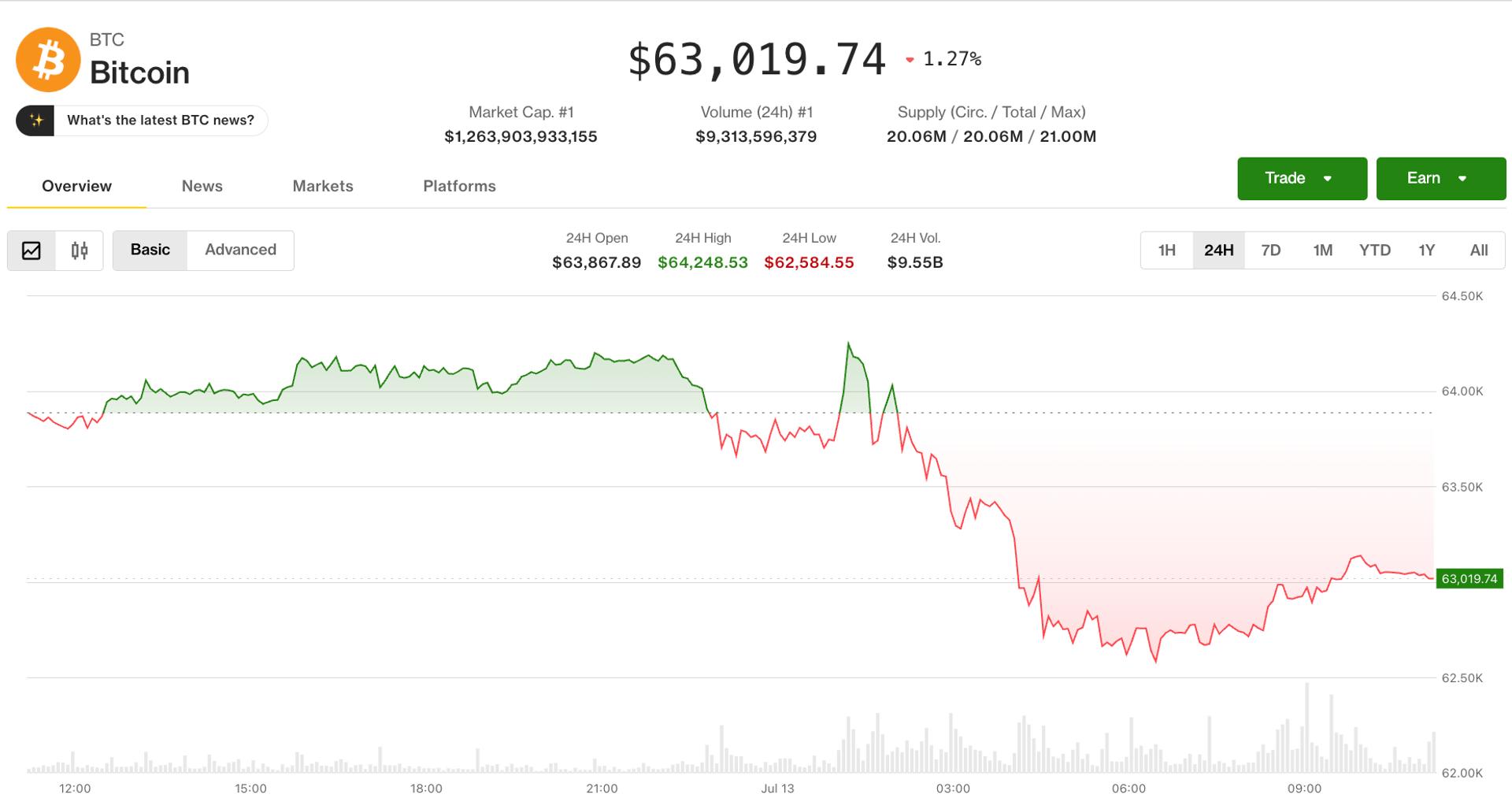
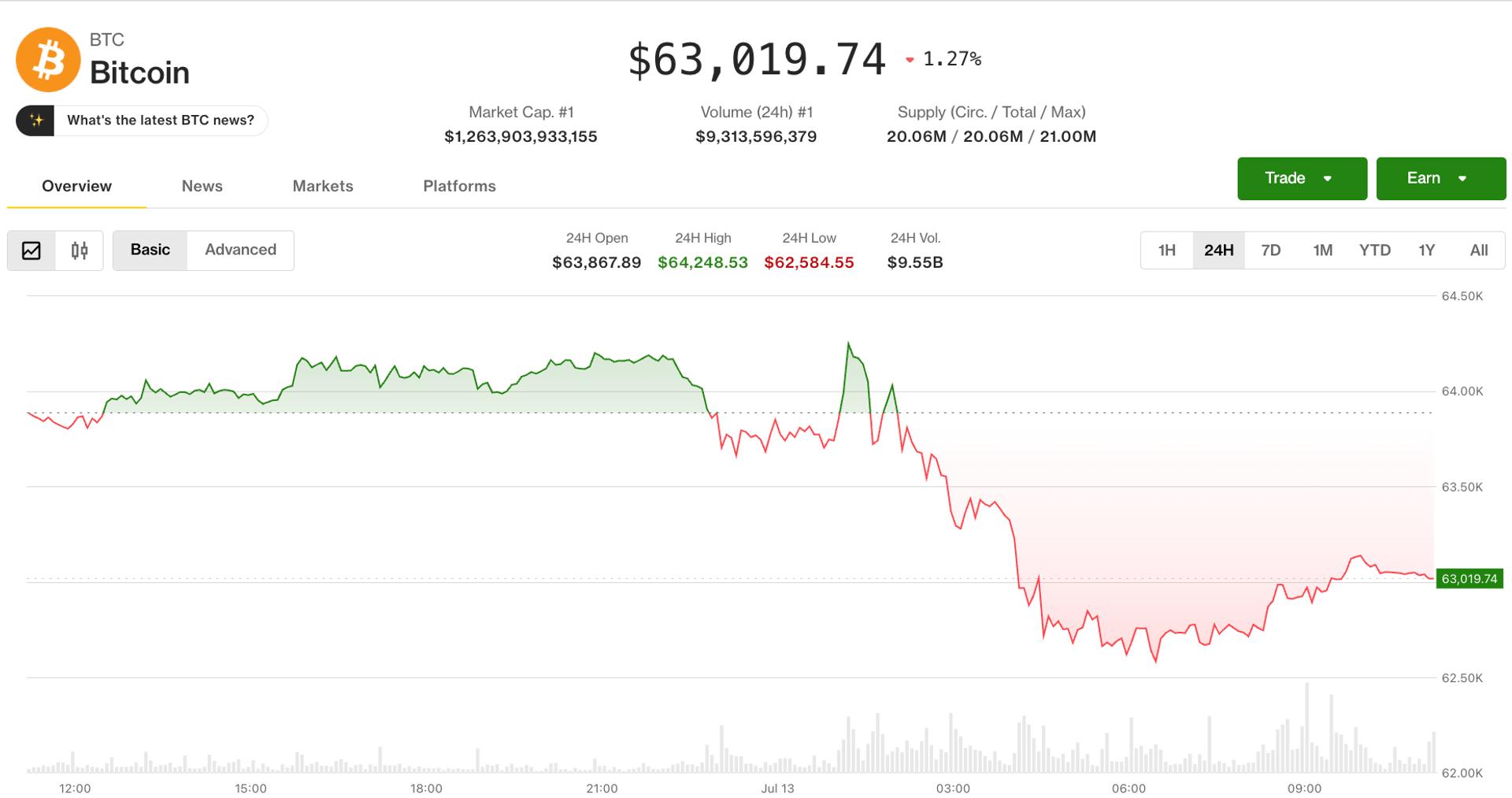
The crypto market pulled back during Asian and European hours on Monday, with bitcoin falling to $63,100 from above $64,300 at the weekly close at midnight UTC.
That’s a decline of about 1%. Steeper losses hit the altcoin market. Lighter (LIT) led the downside cascade, sliding 8% in its first major selloff since rallying by more than 200% over the past two months.
The exit from riskier assets was felt across equity markets, too. South Korea’s Kospi index lost 9.2% as SK Hynix, the memory-chip maker that went public in the U.S. on Friday, slumped 15%. Japan’s Nikkei and China’s SSE both fell more than 2%.
The drops reflected reignited tensions in the Middle East as Iran and the U.S. fought over control of the Strait of Hormuz, with both nations firing airstrikes against each other.
U.S. equities are also indicated to open lower, with Nasdaq 100 index futures and S&P 500 futures losing 0.9% and 0.25% since midnight, respectively.
It’s worth noting that going into the weekend bitcoin and the broader crypto market enjoyed a period of bullish price action, steering itself away from immediate danger, and Monday’s selloff could also be attributed to profit-taking.
Derivatives positioning
- Bitcoin derivatives positioning held steady this week. Open interest (OI) was steady at $17 billion, while the three-month annualized basis held at 3.8%.
- Funding rates were little changed to positive across multiple venues, with Bybit the notable exception at roughly -13% annualized on BTC perps. Stable OI alongside a firm basis and constructive funding suggests the market is holding its positioning without meaningful new leverage being added in either direction
- Options positioning has tilted bullish. The 24-hour put/call ratio sits at 64/36 in favor of calls, and while the one-week delta skew remains elevated at 16%, it has narrowed from 26% a week ago, suggesting call demand is easing off rather than building.
- The at-the-money term structure remains in contango, with the front end around 34%-35% and the long end at ~43% out to mid-2027, which implies traders see a calm longer-term volatility environment
- Coinglass data shows $253 million in 24-hour liquidations, with a 76-24 split between longs and shorts. BTC ($70 million) and ETH ($60 million) led in terms of notional liquidations.
- The Binance liquidation heatmap indicates $62,000 as a core liquidation level to monitor, in case of a price drop.
Token talk
- AI tokens FET and NEAR showed strength, rising by around 1.5% apiece despite the rest of the market suffering losses.
- Hyperliquid (HYPE) followed rival LIT down, dropping by around 3.3% to $65.1, its lowest point since July 2.
- CoinMarketCap’s “Altcoin Season” indicator reflects the recent volatility. The measure is reading 56/100 after rising from last week’s average of 50. This implies more risk-on sentiment from investors following months of heavy losses.
- One of the most volatile tokens of late has been , which suffered a grueling 39% downturn in June before bouncing by more than 40% at the start of July. It has since retraced that upshift, losing 19% since July 4.
- Solana-based decentralized exchange jupiter (JUP) has also struggled of late, losing more than 15% over the past week as daily trading volume dwindled to just $17 million, down from 2025 when it regularly topped $500 million.


The UK tax authority has announced plans to change how cryptocurrency lending and liquidity pool arrangements are taxed, moving toward a “no gain, no loss” treatment for certain disposals. The policy is designed to defer capital gains tax until a participant makes what HM Revenue & Customs (HMRC) calls an “economic disposal.”
In a notice released on Monday, HMRC said the approach would apply starting April 6, 2027. The move is aimed at aligning tax outcomes with the underlying economics of crypto lending and decentralized liquidity arrangements, where investors may not realize a profit in the usual sense until they dispose of their crypto exposure.
Key takeaways
- HMRC plans to apply a “no gain, no loss” approach to certain disposals tied to crypto loans and liquidity pools from April 6, 2027.
- The change is intended to defer capital gains tax on digital assets until an “economic disposal,” rather than taxing interim events.
- HMRC expects the update to affect around 700,000 individuals and trustees.
- The policy contrasts with earlier HMRC guidance for crypto lending and liquidity pools issued in 2022 after consultation.
- UK capital gains tax rates for 2025–2026 remain in the 18% to 24% range depending on the taxpayer’s rate band, but the timing of when gains are recognized would shift for covered arrangements.
What HMRC is changing for crypto loans and liquidity pools
HMRC’s announcement focuses on “certain disposals” related to cryptocurrency lending and liquidity pool participation. Under the new approach, HMRC says it will treat covered transactions under UK capital gains rules as “no gain, no loss” for situations including acquisition and disposal of an interest in a lending arrangement in exchange for the same type of asset.
The tax authority also indicated that its treatment would extend to cases involving borrowed assets acquired at market value, as well as arrangements operating under similar conditions using automated market makers.
Why “no gain, no loss” is meant to defer tax
HMRC’s stated rationale is that taxing these activities immediately could produce results that do not reflect when economic benefit is actually realized. The authority said the measure supports fairness in the UK tax system and “aligns the tax treatment more closely with the economics of these arrangements” by recognizing gains and losses “only when the participant makes an economic disposal of the cryptoassets.”
In practical terms, the policy is aimed at reducing instances where taxpayers might face capital gains tax consequences from events that are not, from an investor’s perspective, a final exit from their economic position.
Industry feedback and the move away from older guidance
HMRC described the change as significant and connected it to a broader consultation period that followed the authority’s 2022 guidance on crypto liquidity pools and lending. The notice indicates that the update is expected to affect roughly 700,000 people and trustees.
While the precise boundaries of HMRC’s “certain disposals” will matter to taxpayers planning their activities, HMRC’s direction is clear: it intends to reduce administrative pressure on taxpayers by adopting an approach that better matches how crypto lending and liquidity participation are commonly structured.
Aave founder and CEO Stani Kulechov said in an X post on Monday that “This is the right direction,” adding that industry feedback suggested alternative approaches would create “significant admin burden for the tax payer.”
Tax rates remain, but the timing could change
UK rules for 2025–2026 set capital gains tax rates for crypto at between 18% and 24%, depending on whether the taxpayer falls within the basic-rate or higher-rate band, according to UK income tax rate guidance. HMRC’s announcement does not change these headline rates.
Instead, the key difference is when gains and losses would be recognized for covered lending and liquidity pool transactions. By deferring capital gains tax until an “economic disposal,” HMRC is effectively shifting attention from intermediate events within an arrangement to the point at which the taxpayer’s exposure is actually disposed of.
For investors, traders, and liquidity providers, this can matter as much as the headline tax percentage: timing can affect cashflow, how gains line up with other income, and how accurately tax reporting corresponds to realized outcomes.
Separately: a Solana community leader files to run in UK by-election
While HMRC’s announcement reshapes crypto taxation policy, UK politics is also seeing a crypto-adjacent candidate enter the spotlight. Reform leader Nigel Farage will face challengers in a by-election in Clacton following his resignation last week, after reports tied him to donations connected to the crypto industry.
On Tuesday, Stephen Newnham, described as the leader of the Solana community group Superteam UK, said he will run as an independent candidate against Farage and others. The by-election is scheduled for Aug. 13 and, according to reporting that includes non-traditional candidates, will also include comedian and author Jon Harvey in costume as Count Binface.
Farage’s resignation triggered the by-election, and the political narrative around his campaign includes allegations and reporting about financial contributions. Earlier coverage cited a $6.7 million donation connected to crypto billionaire Christopher Harborne, which Farage described at different times as both a “reward” related to the UK’s exit from the European Union and later as a “gift,” and also referenced other assistance linked to George Cottrell, described in that coverage as a convicted fraudster associated with a crypto casino.
For crypto participants in the UK, the next watch points are how HMRC will define and operationalize “certain disposals” and what it will consider an “economic disposal” in practice. With the new framework set to begin in April 2027, taxpayers and platforms alike should prepare for reporting changes and monitor further guidance that turns today’s principle into day-to-day compliance.


Senator Thom Tillis has proposed new CLARITY Act language that would allow federal banking regulators to intervene if stablecoin yields trigger systemwide deposit flight from US banks.
Summary
- Thom Tillis proposes a CLARITY Act “circuit-breaker” to address stablecoin-related deposit flight.
- Banking groups continue pressing for stricter stablecoin rules despite an earlier compromise.
- Cynthia Lummis says the Senate expects to release the CLARITY Act text within days.
According to a report from Punchbowl, the North Carolina Republican has suggested adding a “circuit-breaker” provision to the Senate’s crypto market structure bill after concerns from banking groups continued to dominate negotiations over stablecoin rules.
The proposal would authorize regulators, including the Federal Deposit Insurance Corporation (FDIC) and the Office of the Comptroller of the Currency (OCC), to step in if they determine that stablecoin-related activity is causing deposits to leave the banking system at a broader level.
The latest proposal returns attention to one of the most contested sections of the CLARITY Act as lawmakers work toward releasing the Senate text before the chamber’s August recess.
It also comes after earlier negotiations led by Tillis and Senator Angela Alsobrooks produced a compromise allowing crypto firms to offer only activity-based rewards rather than unrestricted yield on stablecoins.
Banking groups continue pushing for tighter stablecoin language
Despite that compromise, banking organizations remain unconvinced that the latest draft adequately protects traditional deposits. As previously reported by crypto.news, several banking associations have argued that the bill’s current wording leaves room for stablecoin issuers to offer incentives that could encourage customers to move money away from bank accounts.
According to those banking groups, the language governing permissible rewards remains too vague and creates uncertainty over how regulators would interpret future stablecoin products. Community banks have been particularly vocal in warning that widespread migration of deposits into yield-bearing digital assets could reduce funding available for lending and other banking activities.
Tillis’ proposed circuit-breaker mechanism appears designed to address those concerns without completely prohibiting stablecoin rewards. Under the framework described by Punchbowl, regulators would receive authority to act only after identifying evidence of systemwide deposit flight rather than imposing an outright ban in advance.
The banking debate is unfolding alongside another dispute that continues to complicate Senate negotiations. Several Democratic lawmakers are pressing for ethics provisions tied to President Donald Trump’s crypto business interests before agreeing to move the legislation forward.
Earlier this week, Senator Elizabeth Warren urged colleagues to include ethics safeguards in the bill, a development that coincided with a decline in prediction market odds for the legislation’s passage.
Senate prepares to release legislative text
Fresh guidance on the bill’s timeline came during an interview on FOX Business, where Senator Cynthia Lummis said the Senate expects to introduce the CLARITY Act’s legislative text within the next few days.
Speaking during the interview, Lummis stated that the legislation is intended to strengthen consumer protections, help law enforcement combat illicit finance, and keep digital asset markets operating within the United States. She also reiterated that Senate leaders are working toward bringing the measure to the floor before lawmakers leave Washington for the August recess.
Her comments follow earlier reports indicating that Senate leadership is targeting a floor vote before the end of July if negotiations can be completed. Lummis noted, however, that the scheduling decision ultimately rests with Senate Majority Leader John Thune, who controls when legislation is brought before the full chamber.
While supporters continue to push for action before the recess begins, the final Senate text must still bridge disagreements over stablecoin regulation, banking safeguards and ethics provisions before it can secure the bipartisan backing needed to advance.
Shares of CleanSpark surged as much as 22% on Tuesday after the Bitcoin miner announced a 20-year data center lease in Georgia, reflecting its ongoing expansion into digital infrastructure beyond cryptocurrency mining.
CleanSpark said it signed a 20-year triple-net lease with an undisclosed investment-grade global technology company for a 175-megawatt data center at its Sandersville, Georgia, campus. The company estimates the deal will generate approximately $6.6 billion in contracted revenue over the initial term, increasing to $11.6 billion if the tenant exercises two five-year extension options.
Under the agreement, the tenant will install computing infrastructure at the site, with phased deliveries expected to begin in the fourth quarter of 2027.
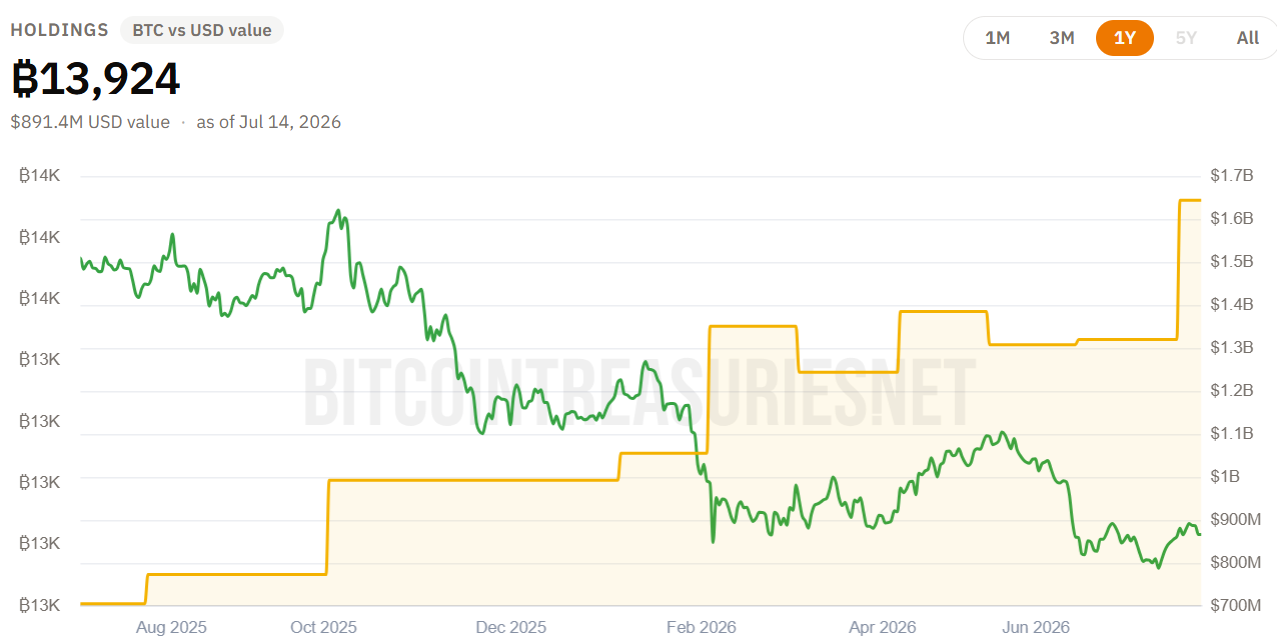
The agreement is the latest sign of CleanSpark’s push to diversify beyond its core Bitcoin mining business and capitalize on growing demand for AI and high-performance computing infrastructure. Despite the shift, CleanSpark remains one of the largest publicly traded Bitcoin holders.
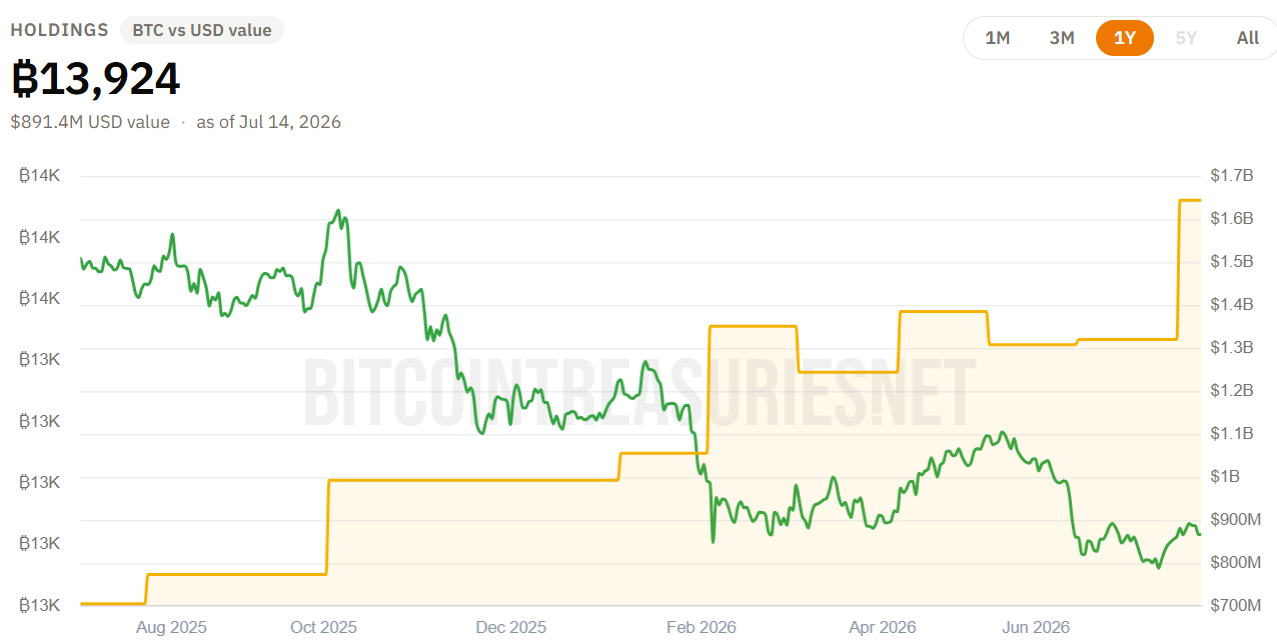
CleanSpark has gradually accumulated Bitcoin over the past year. Source: BitcoinTreasuries.NET
CleanSpark (CLSK) shares reached an intraday high of $15.10, before trimming some gains going in the US lunch hour. The stock was recently up about 11%, compared with a gain of less than 1% for the sector-tracking CoinShares Bitcoin Miners ETF (WGMI).
Related: Crypto Biz: Bitcoin maximalism meets the realities of capital markets
Bitcoin miners seek new revenue streams
CleanSpark’s expansion comes as Bitcoin miners face mounting pressure from weaker mining economics, including lower revenues and tighter profit margins following the 2024 halving. In March, the company reported a fiscal second-quarter net loss of $378 million, with nearly 60% of the loss attributed to a decline in Bitcoin’s price.
In February, the company sold a portion of its BTC holdings to help fund operations and growth initiatives.
The company has fared better than many of its peers, however. While several miners have sold significant portions of their Bitcoin reserves to shore up liquidity, CleanSpark has remained a net accumulator. As Cointelegraph reported, publicly traded miners sold roughly 15,000 BTC between October and the end of February.
It is expected to report fiscal Q3 results on Aug. 6, with analyst consensus for a loss of $0.25 per share compared to earnings of $0.79 in the comparable quarter last year, according to Yahoo Finance. It has missed Wall Street estimates in the last three consecutive quarters.
Related: CoreWeave shows how crypto-era infrastructure quietly became AI’s backbone
Ironically, some critics of the bill have pointed to recent reporting by the Wall Street Journal on the Hong Kong exchange CoinEx as evidence of the risk. CoinEx is actually a story of how to use a public ledger to track, trace, and disrupt nation state activity.
Investigators traced roughly 3.84 billion dollars in transactions tied to Iran, connecting wallets controlled by Iran’s central bank to sanctioned military networks and to funds stolen separately by North Korean hackers. That level of detail is knowable today because it happened on a public blockchain, the same visibility critics are treating as the risk.
What the Clarity Act actually contains
Clarity contains nearly twenty distinct provisions addressing anti-money laundering, sanctions, and law enforcement authority.
As the bill is currently drafted, digital asset service providers get brought fully under the Bank Secrecy Act for the first time, with risk assessments, internal controls, a compliance officer, training, audits, and suspicious activity reporting all required.
Real-time information sharing between exchanges and law enforcement gets written into statute as recognized practice — the Beacon Network model of real time interdiction, seizure and disruption — replacing voluntary industry coordination with a legal standard.
An independent working group gets tasked with developing AI-powered tools to detect and disrupt terrorist financing and money laundering in digital asset markets. Kiosk operators face wallet pinning, hold periods, and daily transaction caps for first-time users, paired with blockchain intelligence requirements to catch scammers before funds leave the platform.


After Wall Street saw preliminary earnings results for IBM, it panic sold it down 26%, vaporizing $72 billion of market value before noon. It was the worst single day for IBM since Black Monday in 1987 when its stock dropped 23%.
The 114-year-old Dow component, long a synonym for corporate stability, plunged after pre-announcing its second quarter.
Technically, it wasn’t scheduled to report full results for another week but for some reason, CEO Arvind Krishna wanted to let traders sell early.
This morning, IBM plunged below $214 per share, 26% lower than its Monday close of $290.23. Its market cap fell to $200 billion, down from $272 billion at the close of business yesterday.
By noon, trading volume had already surpassed 37 million shares — 3X its daily average.
Read more: SK Hynix wipes out US debut gain in one day of trading
IBM crashes as customers spend elsewhere
IBM released preliminary figures ahead of its July 22 earnings report, and they fell far below analysts’ estimates.
Revenue rose a meager 1% to $17.2 billion, short of the roughly $17.9 billion Wall Street expected. Infrastructure revenue fell a concerning 7%. GAAP diluted earnings failed to improve, slipping 2% to $2.27 per share.
The company also blamed a shortfall in its Z mainframe line and the transaction processing software that runs on it.
That mainframe stumble is a stark trend reversal. Just one quarter earlier, Z hardware revenue had surged 51% thanks to strong z17 demand. Apparently, however, demand didn’t persist.
The CEO admits to catastrophe
The preliminary numbers immediately jeopardize IBM’s full-year target. As recently as April, the company had reaffirmed guidance of 5% constant-currency revenue growth in 2026 that is now unlikely to transpire.
A statement from Krishna was, by the standards of corporate disclosure, a confessional.
“This quarter we faltered. We did not adapt and move quickly enough,” Krishna wrote. He conceded that “numerous large deals failed to close on the timelines we expected, driving the majority of our shortfall.”
The CEO blamed a “magnitude of the CapEx reprioritization” by customers, which is a fancy way of saying that customers didn’t allocate their capital expenditures to IBM.
Instead, according to Krishna, they were distracted by “industry-wide cybersecurity” concerns during the quarter. That’s another fancy way of describing AI displacing IBM’s services.
Another Jim Cramer pick crashes
Enterprise software and IT-services names slid in sympathy, with Accenture, Cognizant, and Infosys all falling. Traders treated one company’s missed deals as a warning for the whole sector.
Clients shifted capital toward AI, servers, and memory chips ahead of expected price increases, and IBM misjudged the scale and speed of those migrations.
Krishna attempted to highlight bright spots. IBM’s Red Hat revenue growth accelerated to 11%, and Distributed Infrastructure posted what he called its best quarter on record, up 37%. Investors took no consolation.
CNBC’s Jim Cramer had spent months championing the stock, telling viewers earlier this year that IBM was “inexpensive relative to its growth rate” and that Krishna was “top-notch.”
IBM will file its full second quarter 2026 earnings with the SEC on July 22. The company has already told everyone how it will go.
Got a tip? Send us an email securely via Protos Leaks. For more informed news and investigations, follow us on X, Bluesky, and Google News, or subscribe to our YouTube channel.
Crypto World
Crypto News, July 14: Telegram Registry Down, Bitcoin and Ethereum Price Eye Iran War Resolution

Telegram users woke up to broken t.me links after the platform’s short domain became unreachable, disrupting invites, public channels, and bot links across the web. At the same time, the Bitcoin and Ethereum price remains under pressure as we all wait for cooling signs on tensions between the US and Iran. Together, the outage and geopolitical uncertainty are being disruptive to crypto markets.
The problem centered on Telegram’s t.me domain after it entered serverHold status, preventing DNS resolution for web links. As of now, users trying to open channel invites or bot pages were met with browser errors, although the Telegram app continued working normally through direct connections.
It is reported that users can still search for channels inside the app or use full telegram.org links where available. However, so far, only Pavel Durov has asked for the registry to look into this, and neither Telegram nor the domain registry has explained the issue.
Hey @domainME, https://t.co/9z6UC2o37U links stopped working. Can you look into it?

— Pavel Durov (@durov) July 14, 2026
The disruption landed at an awkward time for crypto communities. Telegram remains the primary communication hub for many token launches, trading groups, and project announcements. When those links disappear, onboarding slows, announcements become harder to share, and community activity loses momentum. This added another layer of caution as investors already reacted to geopolitical headlines.
Discover: The Best Token Presales
Bitcoin price waits for Iran developments while markets stay defensive

Bitcoin price hovers around $62,500 after swinging between $61,800 and $63,200 since last night. Price action has been volatile as investors monitored reports surrounding the conflict between the US and Iran, with traditional markets also shifting into a defensive stance.
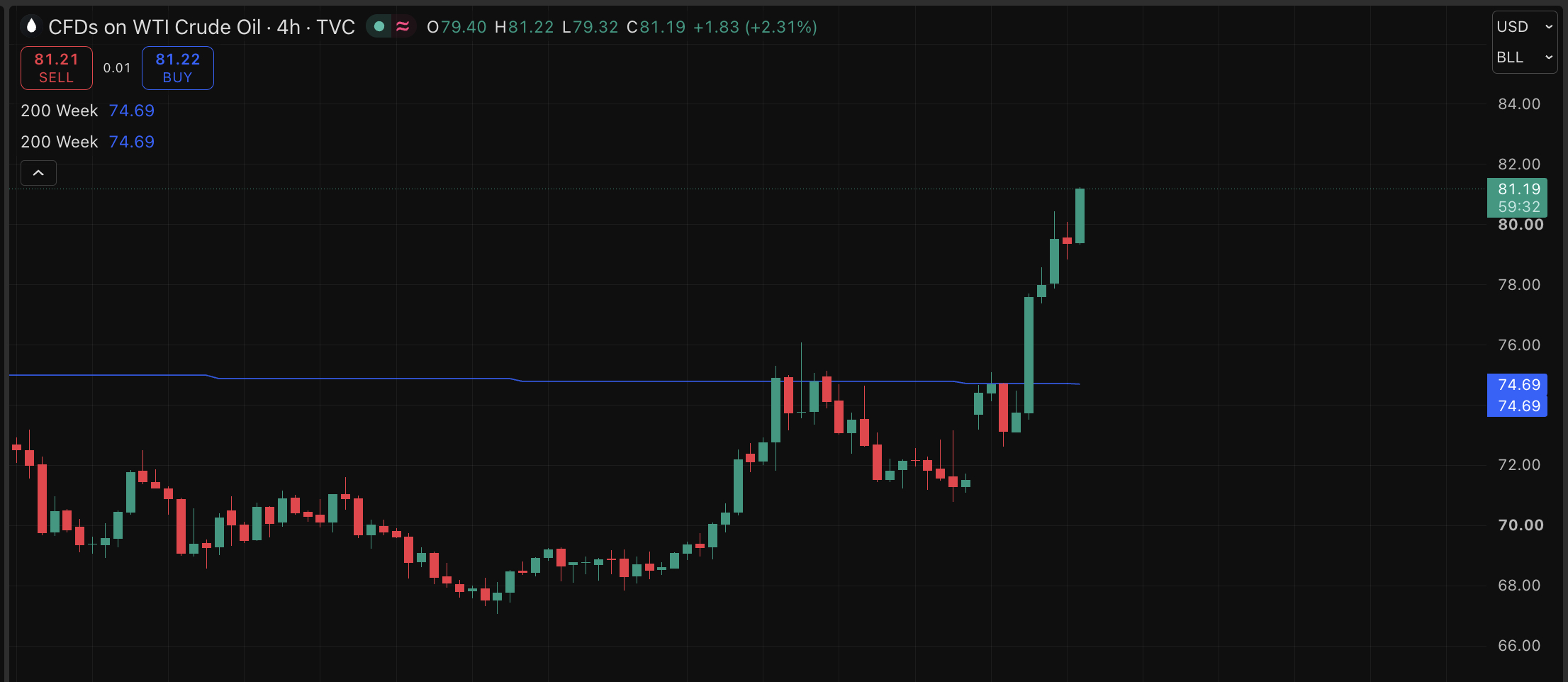
Risk assets weakened after fresh military developments fueled uncertainty across global markets. Oil prices climbed, the US dollar strengthened, and traders reduced exposure to higher-risk assets. The Bitcoin price briefly recovered during the session but struggled to build momentum as investors waited for clearer signals.
Markets also face another important test with the upcoming US inflation data. The results could reshape expectations for Federal Reserve policy and influence short-term demand for crypto. All while the US government transferred about $288 million in seized Bitcoin and Ether to Coinbase Prime, a routine move that still drew attention for its size.
Corporate positioning also remains in focus. Strategy has paused additional Bitcoin purchases while building a $3 billion cash reserve, giving the company flexibility if market conditions deteriorate further.
For now, the Bitcoin price continues to track both macroeconomic developments and headlines from the Middle East, leaving traders cautious ahead of the next major catalysts.
Don’t Miss Out on Our $1,000 USDT Airdrop on ByBit
Ethereum price shows resilience despite Telegram disruption
Ethereum price is cooling at $1,780, holding inside a relatively narrow range between $1,750 and $1,790. While market sentiment remained cautious, the Ethereum price showed slightly better stability than Bitcoin price during the latest round of volatility.
Part of that resilience comes from continued institutional interest. BitMine has expanded its Ethereum treasury to roughly 5.77 million ETH, while Robinhood Layer 2 network continues attracting activity using ETH as its native gas token. These developments support long-term demand even as short-term sentiment remains fragile.
Discover: The Best Crypto to Diversify Your Portfolio
The post Crypto News, July 14: Telegram Registry Down, Bitcoin and Ethereum Price Eye Iran War Resolution appeared first on Cryptonews.

Wisconsin prosecutors have filed a criminal complaint against Circle, alleging the USDC issuer intentionally disobeyed a court warrant to recover roughly 381,000 stolen tokens for a local scam victim.
The misdemeanor charge sharpens a dispute over how much responsibility stablecoin issuers bear for returning stolen funds.
“Circle is a regulated company that complies with sanctions, law enforcement orders, and court-mandated requirements, and has a strong track record of cooperating with law enforcement agencies across the United States and internationally. Regarding seizure requests, the legal structures that would authorize stablecoin issuers to act faster—while preserving due process and property rights—do not yet fully exist. As Circle’s Chief Strategy Officer Dante Disparte wrote in an April blog post on this topic, that is a policy gap, not a cooperation gap. Circle has filed a motion in the Walworth County, Wisconsin, proceeding, which is a matter of public record. We cannot comment further on that case or other legal proceedings,” a Circle spokesperson told BeInCrypto.
A Romance Scam Set the Criminal Complaint Against Circle in Motion
A Walworth County resident received an unsolicited text in May 2025 from a scammer calling herself Lenora. Posing as a romantic partner, she steered part of his savings into USD Coin (USDC), a dollar-pegged stablecoin, on a bogus investment platform.
According to the court filing, a county court ordered Circle to freeze the tokens last August, and it complied. In December, however, a judge ordered Circle to invalidate the tokens and reissue an equal amount to the sheriff’s office.
Circle reportedly refused, and prosecutors charged the $17 billion firm with a misdemeanor count of obstruction of justice, per the complaint. The company calls it meritless in a motion to dismiss, citing technical limits and a lack of jurisdiction.
“The tools that are at our disposal are not keeping up with the tools the criminals are using,” the report says, citing Walworth County prosecutor Thomas Binger.
Milwaukee County detective Scott Simons says Circle declined freeze requests or orders arrived too late in over a dozen cases.
The FBI logged a record $11.4 billion in crypto fraud losses for 2025. More than 18,500 victims lost over $100,000 each, even as detection lags AI-driven scams.
Why Tether Returns Stolen Funds While Circle Says It Cannot
Tether, whose USDT is the largest stablecoin, honors some law enforcement requests without a court order. The firm says it has frozen about $4.7 billion linked to crime.
Its software can also destroy or burn tokens in criminal wallets and issue replacements. Tether reportedly told ICIJ that the mechanism has returned $1.1 billion to victims.
Meanwhile, Tether’s T3 unit with TRON has frozen over $450 million. US prosecutors also seized illicit USDT funds worth $61 million in one case.
The gap reflects design and policy, not blockchain physics. Circle, which was listed on the New York Stock Exchange in June 2025, freezes tokens only under lawful process.
The policy is meant to prevent arbitrary or politically motivated interference. That caution has helped USDC gain ground in Europe under the EU’s Markets in Crypto-Assets (MiCA) rules.
In contrast, offshore Tether has embraced discretionary cooperation to rebuild its compliance reputation.
However, Joshua Cooper-Duckett of Cryptoforensic Investigators says Circle could update its token code to permit such burns. Circle policy chief Dante Disparte concedes the tools exist, writing in April that legal frameworks for faster action do not.
New York prosecutors see an incentive problem, too. A January letter to US Senators argued that Circle continues to earn interest on reserves backing frozen tokens. Blockchain researcher Yury Serov estimates that at least 119 million USDC have been frozen.
Circle counters that it recently reached an agreement with federal prosecutors on a victim compensation mechanism. The process would permanently freeze tainted tokens and reissue new ones.
Whether that mechanism ever reaches Walworth County may result in multiple misdemeanor charges. The case could define how far courts can go in requiring stablecoin issuers to make scam victims whole.
Circle did not immediately respond to BeInCrypto’s request for comment.
The post Circle Refused to Recover a Scam Victim’s USDC, Wisconsin’s Criminal Complaint Says appeared first on BeInCrypto.
The UK’s tax authority announced that it planned to treat “certain disposals” related to cryptocurrency lending and liquidity pools as transactions that would effectively defer the country’s capital gains requirements.
In a Monday announcement, HM Revenue and Customs (HMRC) said that starting on April 6, 2027, it would adopt a “no gain, no loss” approach to disposals involving crypto loans and liquidity pools. According to the tax authority, this measure would defer capital gains tax on digital assets “until an economic disposal.”
“This measure will support fairness in the tax system,” said the UK tax authority. “It aligns the tax treatment more closely with the economics of these arrangements by ensuring that gains and losses are generally recognized only when the participant makes an economic disposal of the cryptoassets.”
The measure, expected to impact about 700,000 individuals and trustees, would represent a significant change from the authority’s 2022 guidance on crypto liquidity pools and lending following a consultation period. Under UK law for 2025-2026, taxpayers pay between 18% to 24% for capital gains related to crypto transactions depending on whether they qualify as basic-rate or higher-rate.
Related: UK tokenization push could add as much as $44B to annual output by 2035: Report
According to the tax authority, it would treat crypto transactions as “no gain, no loss” under UK capital gains laws for the acquisition or disposal of an interest in a lending arrangement in exchange for the same type of asset, borrowed assets acquired at market value and similar conditions with automated market makers.
“This is the right direction, mainly driven by the industry feedback demonstrating that any other approach would cause significant admin burden for the tax payer,” said Aave founder and CEO Stani Kulechov in a Monday X post.
Crypto candidate enters Nigel Farage’s by-election race
In UK politics, Reform leader Nigel Farage will not stand completely uncontested in a by-election caused by his resignation last week amid reports of the politician receiving contributions from billionaires tied to the crypto industry.
On Tuesday, the leader of the Solana community group Superteam UK, Stephen Newnham, said he will run as an independent candidate against Farage and others. The by-election representing Clacton is scheduled for Aug. 13 and will include candidates like comedian and author Jon Harvey in costume as Count Binface, a self-described “independent space warrior” wearing a helmet in the shape of a trash bin.
Farage triggered the by-election with his resignation, saying that he wanted the people of Clacton to judge his actions. The Reform figure reportedly received a $6.7 million donation from crypto billionaire Christopher Harborne, which he described as a ”reward” for the UK’s exit from the European Union and later as a “gift,” and other financial assistance from George Cottrell, a convicted fraudster linked to a crypto casino.
Magazine: Strategy became a symbol of the dot-com crash: Could history repeat?
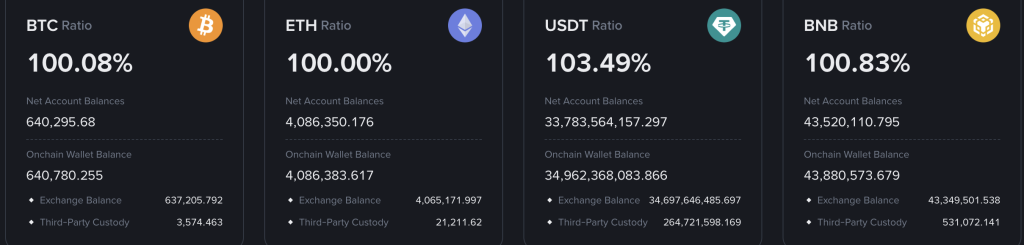
In the latest Bitcoin news, Binance customer Bitcoin holdings climbed to approximately 640,295 BTC in June, adding 7,715 BTC, a 1.22% gain, according to the exchange’s 44th proof of reserves report, which used a July 1 snapshot against a June 1 baseline.
That marks the third consecutive monthly increase in the platform’s reported BTC balance, extending a multi-month crypto accumulation pattern based on the latest consecutive monthly PoR updates. The divergence with ETH and USDT is where the more structurally interesting question sits.
Customer ETH balance fell 1.41% to roughly 4.086 million ETH, down 58,591 ETH over the month. That decline comes directly after a sharp 10.17% jump in May, when ETH holdings rose to approximately 4.14 million ETH, so the June pullback looks more like a partial reversal of a spike than the start of a structural exit from Ethereum.
The ETH/BTC dynamic embedded in these figures is consistent with ongoing capital rotation into Bitcoin, though on-chain data alone cannot confirm that thesis.
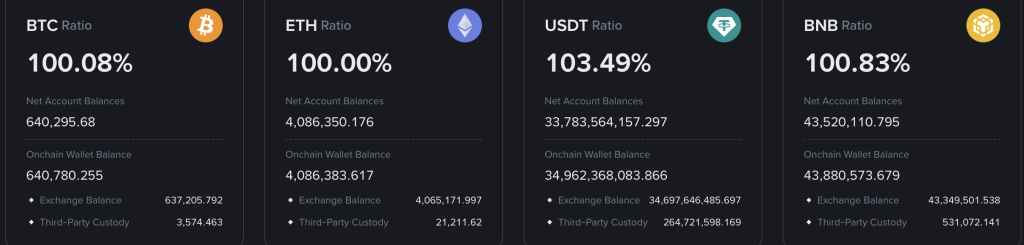
USDT balances fell for a second consecutive month, dropping 1.51% to approximately 33.7 billion USDT, roughly 510 million tokens lower than the June 1 reading of 34.3 billion.
The prior month had already shed about 460 million USDT. Two months of consecutive stablecoin drawdown across the platform’s largest reserve asset is a meaningful data point on available buy-side liquidity, even if the direction of those funds remains unconfirmed.
Discover: The Best Crypto to Diversify Your Portfolio
Bitcoin News: What the On-Chain Data Confirms, and What It Doesn’t
The report relies on a point-in-time snapshot methodology: exchange reserves are recorded at a specific date, then compared month-over-month.
Binance uses Merkle Trees and zero-knowledge proofs to let customers verify whether their account balances are included in the total liabilities reported for each report.
What that architecture cannot do is explain the behavioral drivers behind changes in balance, whether the BTC increase came from direct purchases, deposits from external wallets, asset conversions out of ETH or USDT, or internal transfers between Binance product silos.
This ambiguity matters for interpreting the signal. Rising BTC on an exchange can read as accumulation-in-progress, but it also places more supply closer to the market. The gap between rising aggregate balances and day-to-day incremental flow signals is not directly resolvable from the PoR snapshot alone.
A similar BTC-up, USDT-down pattern appeared in the most recent reserve snapshots from Bybit and OKX. That cross-exchange alignment suggests the rotation is not Binance-specific. It more plausibly reflects a broader shift in how active traders are allocated across the major spot venues heading into the second half of 2026.
Declining USDT holdings in the platform’s proof-of-reserves report reduce the visible pool of on-exchange dry powder. Thinner stablecoin reserves do not confirm buying flows or withdrawals, but they can still matter for how liquid the on-exchange balance sheet appears at the snapshot point in time. In low-volatility conditions, that may not matter. Around key price levels or macro catalysts, it can amplify moves in both directions.
Don’t Miss Out on Our $1,000 USDT Airdrop on ByBit
The post Binance Proof of Reserves Rock Bitcoin News Amid BTC Gains and Thin Stablecoin Depth appeared first on Cryptonews.
Cardano co-founder Emurgo has been forced to hand over the running of self-styled “world’s largest crypto event” TOKEN2049 to the Cardano Foundation, following the $20 million hack of its neo-finance platform SecondFi.
That’s according to Intersect, Cardano’s governance firm, which made the announcement on Tuesday.
Intersect stated that Emurgo “is unable to allocate the necessary resources to plan and execute Token2049.”
Emurgo added, “Following the recent SecondFi incident, we have confirmed that our priority right now must be solely the recovery of assets for all affected users.”
Read more: Cardano holders cancel own summit after rejecting $2M funding request
The Cardano Foundation said, “In addition to the Cardano booth, we are also organizing the side event CardanoxDraperxBitcoin funded by Draper and Cardano Foundation. More information will be available soon.”
Cardano users had already voted to cancel the Cardano annual summit in Singapore that was scheduled for October 2026.
The vote, held last month, also passed a proposal from Emurgo to attend and sponsor TOKEN2049 in Singapore this October.
SecondFi is eating into Emurgo’s responsibilities
Emurgo also stepped down last week from the “Pentad,” an executive body made up of multiple Cardano firms.
It said, “Our immediate priority is the @secondfiapp recovery process, and we are concentrating our resources where they are needed most.”
SecondFi was hacked for $2.4 million worth of ADA last June. Emurgo used emergency measures at the time to take $18.5 million worth of ADA from users as part of a mysterious white hat hack event.
The mystery stemmed from Cardano’s founder, Charles Hoskinson, who later relayed information that suggested the identity of the white hat hacker was unknown.
Read more: SecondFi is shutting down after Cardano wallet exploit
In early July, SecondFi claimed that these white hat hack funds “are currently protected and accessible,” and that they will “form part of the recovery effort to return assets to affected users.”
SecondFi also announced that it will shut down and dedicate its time to the recovery of stolen assets going forward.
Protos has reached out to Cardano Summit organizers for comment and will update this piece should we hear back.
Got a tip? Send us an email securely via Protos Leaks. For more informed news and investigations, follow us on X, Bluesky, and Google News, or subscribe to our YouTube channel.

Can You Make Money Taking Surveys #Shorts

Richard Osman Reveals How BBC Picks Celebrities For Strictly Come Dancing

Who Has Better Betting Odds to Score in Today’s France-Spain Semifinal?


-

 Fashion5 days ago
Loro Piana Fall 2026 Enters Houston’s Art Scene
-

 Fashion4 days ago
Weekend Open Thread: Nutriplenish Leave-In Conditioner
-
 Sports5 days ago
2026 Genesis Scottish Open Thursday TV coverage: Round 1
-

 Tech7 days ago
Anthropic brings Claude Cowork to mobile and web as usage data shows most users aren’t coding
-

 Sports4 days ago
Super Eagles star Moses Simon opens up on Liverpool transfer regret
-

 Tech5 days ago
Character.AI enters the microdrama arena with its own productions, but there’s a twist
-

 Tech14 hours ago
Get Your ESP32 Sunny Side Up With This Solar Dev Board
-

 News Videos6 days ago
Crypto Just Entered Its Most Important 6-Month Candle (Could Decide Everything!)
-

 Tech7 days ago
Keychron is stepping outside keyboards with a $349 Thunderbolt 5 dock aimed at power users
-
 Business7 days ago
ASX 200 Slides Over 0.6% as Rare Earths and Lithium Stocks Tumble Amid Global Semiconductor Sell-Off Today
-
 NewsBeat5 days ago
Major update after Huntingdon train attack as man enters plea
-
 Business7 days ago
Will Trent shares rebound after Q1 update triggers 13% crash? Here’s what technical charts indicate
-
 Tech7 days ago
OpenAI teams with Work Louder to launch Codex-native keyboard, weeks after CEO of Apps told staff ‘not to be distracted by side quests’
-

 Business7 days ago
SpaceX Shares Slide Nearly 6% Amid Post-IPO Volatility and Starship Test Focus
-
 Sports6 days ago
39-year-old Djokovic wins five-hour thriller to enter Wimbledon semis | Other Sports News
-

 Tech6 days ago
Entra passkey enrollment vishing targets Microsoft 365 users
-
 Tech1 day ago
Cloudflare Precursor Watches Your Mouse and Keyboard To Decide If You Are Human
-

 News Videos1 day ago
how to make coin bank box with cardboard #scienceproject #money #diy #shorts
-

 Crypto World6 days ago
DeFi Dashboard Zapper to Shut Down After 7 Years
-

 Tech5 days ago
Level Infinite Launches Gangstar Mirage City in India with Pre-Registrations
You must be logged in to post a comment Login