
Crypto World
U.S. Officials Partner With CrowdStrike to Disrupt Crypto-Theft Malware

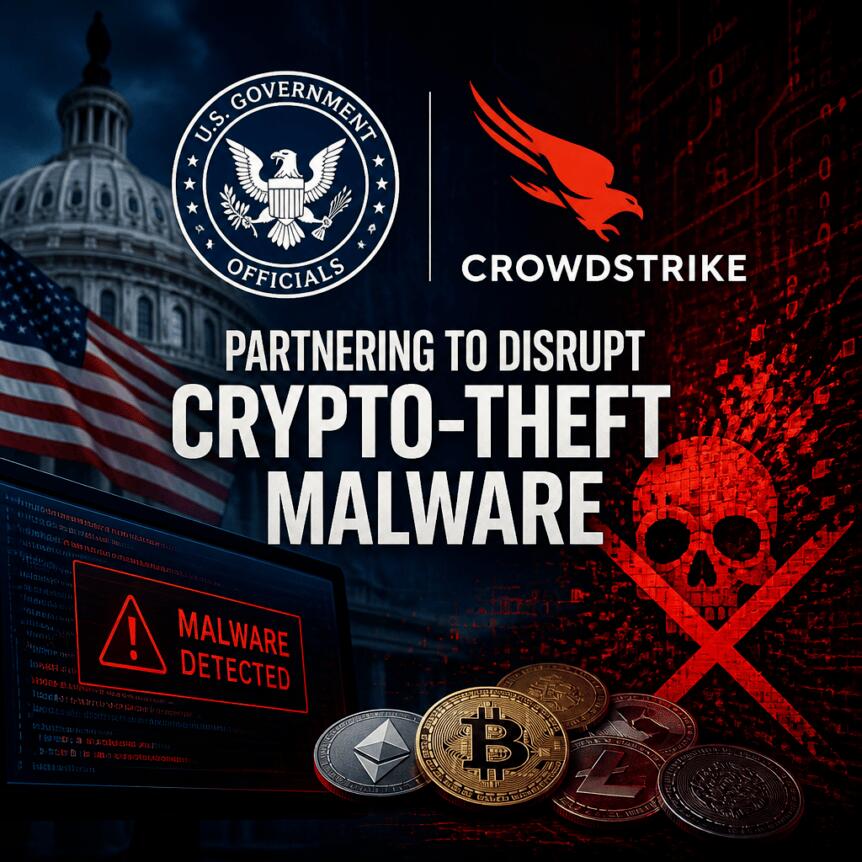
U.S. federal law enforcement says it has helped disrupt a long-running cybercrime operation tied to cryptocurrency theft, working alongside international partners and private-sector cybersecurity experts. The Justice Department announced that the Sality malware and its botnet infrastructure were targeted in an effort spanning multiple countries.
According to the U.S. Justice Department, the operation involved Bulgarian, Hungarian and Romanian authorities, as well as partners including CrowdStrike and the Shadowserver Foundation. The department said Sality was used to compromise devices and facilitate theft of digital assets, with activity traced back to 2003.
Key takeaways
- The U.S. Justice Department said it disrupted the Sality botnet and associated malware in an international takedown effort.
- CrowdStrike linked the scheme to clipjacking behavior that targets cryptocurrency wallet addresses copied to a clipboard.
- U.S. officials and CrowdStrike described a peer-to-peer botnet of roughly 15,000 infected computers checking connectivity every 40 minutes.
- CrowdStrike reported at least 12.1 million rubles (about $150,000) stolen over an eight-year period tied to “never-spent” digital assets, with a peak value around January 2025.
What the Justice Department says was targeted
In a Tuesday notice, the U.S. Justice Department stated that it had “disrupted the Sality botnet and malware” through a coordinated international operation. The department’s announcement names government agencies in Bulgaria, Hungary and Romania, while also citing private-sector support from CrowdStrike and the Shadowserver Foundation.
Officials said Sality malware was responsible for installing malicious code on compromised systems. They tied that activity to both cryptocurrency theft and broader cyberattacks. While the announcement frames the action as a disruption rather than a total elimination, the message is clear: the takedown interfered with the malware’s ability to coordinate with infected machines.
The announcement also underscores why botnets remain a key threat vector for the crypto sector. Malware operators can use compromised endpoints to manipulate users and move stolen assets, turning ordinary wallet operations—like copy-and-paste—into moments of vulnerability.
The clipjacking mechanism behind the crypto theft
CrowdStrike provided technical detail on how actors behind Sality allegedly harvested cryptocurrency payments. In a post describing the operation, the company said the criminals used EggJagger, described as a “clipjacking tool” that monitors a device’s clipboard for cryptocurrency wallet addresses.
The method is designed to be difficult for victims to notice. When a user copies a Bitcoin or Ethereum address to send funds, CrowdStrike said the malware can silently replace that address with one controlled by the attacker. In its explanation, CrowdStrike said that “funds are redirected” when the victim pastes the altered destination address into a payment.
This matters for investors and users because it highlights a persistent class of wallet-related risk: attacks do not always require users to install obviously malicious software. Instead, they can compromise normal device behavior and quietly reroute transactions.
Scale and operational details described by CrowdStrike
CrowdStrike said that in the eight years preceding the disruption, the operators behind Sality used EggJagger to steal at least 12.1 million rubles—about $150,000 in cryptocurrency—by redirecting copied wallet addresses. The company also reported that the value of the “never-spent” digital assets peaked at about $1.5 million in January 2025.
Officials and CrowdStrike described a network architecture built around peer-to-peer communication. In their account, around 15,000 infected computers formed a botnet that would check whether systems were online every 40 minutes. The operational cadence is notable: such periodic communication patterns often help attackers maintain control while keeping command-and-control traffic manageable.
As a result of the authorities’ efforts, CrowdStrike and U.S. officials said the criminals “lost the ability to communicate with infected machines.” That shift is a practical outcome of takedowns: even if some malware remains on endpoints, the attacker’s capacity to coordinate, update tactics, or manage automated theft can be severely reduced.
Why this takedown is significant for crypto security
Criminal ecosystems built around clipboard manipulation reflect a larger reality for the cryptocurrency space: user behavior and device integrity are often the weakest links. The Sality/EggJagger case demonstrates that even basic actions—copying addresses—can become an attack surface when malware is present.
For defenders, the episode reinforces the importance of hardening endpoints and monitoring for suspicious clipboard activity, not just traditional signs of malware infection. For crypto users, it strengthens the case for safer transfer practices such as verifying addresses through trusted channels and being cautious when transactions are prepared on potentially compromised systems.
From a broader market perspective, disruptions like this can reduce the flow of stolen assets—though the exact immediate impact is hard to quantify from public reporting alone. What is clear from the announcements is that law enforcement and security researchers were able to interfere with a mature cybercrime setup that had been active for years.
Looking ahead, readers should watch for two things: whether additional reporting clarifies how many victims were impacted in total, and whether security teams publish indicators or mitigation guidance connected to Sality and EggJagger techniques. As the ability to communicate with infected machines has been disrupted, the more enduring question is how quickly attackers will attempt to reconstitute similar clipboard-stealing capabilities elsewhere.


Coinbase has rolled out crypto derivatives trading in Canada, expanding access to both perpetual and dated futures tied to major digital assets including Bitcoin (BTC) and Ether (ETH). The move places more crypto-native contract products in front of Canadian users as US-based trading firms continue to widen their Canadian offerings.
The contracts are made available through Coinbase Financial Markets, a futures commission merchant registered with the US Commodity Futures Trading Commission and operating in Canada under foreign dealer and futures commission merchant exemptions. Coinbase says the launch includes 23 crypto perpetual and dated futures, five commodity futures, and the Coinbase 50 Index.
Key takeaways
- Coinbase says it is the first “major crypto-native” platform to offer direct native crypto futures in Canada.
- The Canadian offering includes 23 crypto perpetual and dated futures plus the Coinbase 50 Index, accessible to eligible customers only.
- Leverage is capped at up to 10x and contracts use nano-sized positions, according to Coinbase.
- The product rollout follows a broader trend of US trading platforms expanding into Canada.
- Regulatory developments in Canada—such as proposed restrictions on crypto ATMs and crypto political donations—are tightening the environment around some crypto activity.
What Coinbase is launching in Canada
Coinbase’s Canadian derivatives lineup is centered on futures contracts tied to large-cap cryptocurrencies. The company’s announcement specifies that users can trade both perpetual contracts and dated futures connected to BTC, ETH, Solana (SOL) and other assets.
Eligibility is not open to all retail customers. Coinbase restricts access to Canadian users that meet certain financial criteria, including having at least $5 million in net financial assets or being served through registered investment advisers and dealers. Coinbase also indicates the contracts are structured with nano-sized positions and provide leverage of up to 10x.
From an investor’s perspective, the most notable element is the “direct native” futures framing. Many crypto trading services historically offered exposure through different instruments or indirect arrangements; Coinbase is positioning this as a more traditional futures trading interface for major crypto assets within Canadian jurisdiction.
Why the timing matters: US platforms moving north
Coinbase’s Canada launch comes as other US-facing trading platforms expand crypto access in the country. On Monday, Webull extended crypto trading to Canadian customers, according to coverage cited by Cointelegraph. Webull said the change uses Coinbase’s infrastructure for trading and custody, adding digital assets alongside its existing range that includes stocks, ETFs, and options.
In that announcement, Webull pointed to rising crypto adoption in Canada. Cointelegraph’s report attributes that claim to Ontario Securities Commission research, saying crypto ownership in Canada climbed to 25% this year from 10% in 2023.
Robinhood also entered the Canadian market after acquiring WonderFi in a deal reportedly worth $180 million. The transaction resulted in Robinhood gaining control of Canadian exchanges Bitbuy and Coinsquare, and brought an estimated 300,000 funded customers along with WonderFi’s Canadian licenses and regulatory approvals, under Robinhood’s umbrella.
Taken together, these expansions suggest that Canada is becoming a more active market for multiple types of trading access—spot, custody-linked brokerage, and now derivatives. For traders, that can mean more venues and product variety, but also more complexity in how products are structured and regulated.
Canadian oversight tightening in parallel
While derivatives access is expanding, Canada is also moving to tighten oversight in other parts of the crypto ecosystem. In April, Ottawa proposed banning crypto ATMs due to concerns about scams and money laundering, according to prior reporting referenced by Cointelegraph.
Lawmakers have also been advancing legislation aimed at prohibiting cryptocurrency donations to political parties and candidates. These proposals reflect a broader regulatory push that targets certain high-risk use cases rather than all crypto activity outright.
For market participants, the juxtaposition matters: as mainstream trading access grows, policymakers are simultaneously attempting to reduce perceived abuse channels. That could shape where growth is allowed to concentrate—potentially favoring regulated trading and investment structures over less controlled points of entry.
What to watch next for Canadian derivatives users
Coinbase’s derivatives rollout will likely be most relevant to eligible institutional or high-net-worth traders looking for futures-based exposure with defined leverage and contract specifications. The key open question is how quickly liquidity and participation build around these Canadian products, and whether additional platforms follow with comparable direct futures offerings.
Regulatory developments will also remain central. As Canada continues to refine its approach to crypto—from enforcement around specific activities like ATMs and political donations to the supervision of trading products—market access could continue to evolve in both directions.
Crypto World
DOGE, SHIB, PEPE, or Something Else: Which Meme Coin Can Make History in September? (3 AIs Weigh In)

The meme coin sector was at the forefront of gains during the last bull cycle, but over the past several months, interest in such tokens has fallen sharply.
We asked three of the most popular AI-powered chatbots to assess whether any of the leading ones (or perhaps some overlooked names) have a realistic chance of staging a revival and turning into sensations this month. Here’s what they said.
Mixed Answers
According to ChatGPT, Dogecoin remains “the safest bet” for September because of its size, liquidity, and recognition in the crypto community. OpenAI’s platform noted that it is still the biggest meme coin, reminding that lately whales have purchased a significant amount of DOGE, thus potentially setting the stage for a price uptrend.
It also claimed that the token would be among the first altcoins to benefit from a further crypto recovery. Despite the latest correction, the market has been on a major upward move over the past two weeks, and we have yet to see whether September will deliver further gains.
ChatGPT argued that Shiba Inu (SHIB) offers more upside than DOGE but paid attention to its tremendous circulating supply, which remains a major obstacle to a price rally.
“Routine burns remove only a tiny portion of that amount, meaning sustained buying pressure matters far more than eye-catching changes in the daily burn rate,” it added.
The chatbot also touched on PEPE, describing it as the most speculative of the leading meme coins. In addition, it classified Pudgy Penguins (PENGU) as “the strongest alternative candidate.”
Perplexity presented a different answer, claiming that DOGE’s potential upside may be more steady than parabolic in the next four weeks. It claimed that PEPE is unlikely to experience a decisive breakout within that period, while Shiba Inu has the best chances:
“SHIB looks like the coin where price is still quiet, but the tape is screaming accumulation, right into a time of year when it has historically moved the most. That combination is why it’s the most likely to deliver a “history-making” September move.”
The Surprising Bet
Google’s Gemini picked the cat-themed Cash Cat (CASHCAT) as its choice for a meme coin that could stun the market with a shocking increase this month. It noted that the token is closely linked to Robinhood Chain, which means further ecosystem developments could directly benefit it.
At the same time, the chatbot warned that the meme coin’s potential rally in September may abruptly end with a brutal crash in October. As a matter of fact, tokens of that type are notorious for their enhanced volatility, and such a reaction will not be something new.
The post DOGE, SHIB, PEPE, or Something Else: Which Meme Coin Can Make History in September? (3 AIs Weigh In) appeared first on CryptoPotato.

Tokyo-listed Remixpoint sold every altcoin it held on September 1, 2026. The firm exited Ethereum, Solana, XRP, and Dogecoin in one trading session. It now holds only Bitcoin, completing a full shift to a pure Bitcoin treasury.
Ethereum and Solana Provide the Bulk of the Profit
The company disclosed the sale on September 2, 2026, through a formal filing. It offloaded 901.44 ETH and 13,920 SOL alongside its other holdings. Total proceeds across all four assets reached roughly ¥878.8 million, or $5.5 million.
Against a combined book value of ¥761 million, Remixpoint booked a gain of ¥117.8 million. That figure converts to about $737,000 in profit. Ethereum and Solana generated most of that gain.
The sale landed during a rough day for crypto markets overall. Bitcoin dropped below $77,000 after fresh U.S. military strikes sparked a risk-off move. Remixpoint still closed its altcoin book in the green despite the volatility.
XRP and Dogecoin Close the Altcoin Chapter
XRP contributed a modest gain to the overall total, and Remixpoint sold 1.19 million tokens. Dogecoin was the lone loser in the batch, and the company sold 2.8 million coins. That position closed about ¥3.25 million below its original cost.
The exit arrives at a notable moment for XRP in Japan. Lawmakers are advancing a bill to treat Bitcoin, Ethereum, and XRP like stocks. That change could cut crypto tax rates toward 20% for holders.
Other Japanese players are moving the opposite direction on XRP right now. SBI Holdings continues expanding its XRP-based payment rails nationwide. Gaming firm Gumi is adding both Bitcoin and XRP to its balance sheet.
Remixpoint’s move reads as one company’s choice, not a market signal. Its XRP exit reflects a single mid-cap treasury de-risking its holdings. It does not suggest Japan is turning away from the asset broadly.
Bitcoin Now Carries the Whole Treasury
Remixpoint holds approximately 1,506 BTC after completing the altcoin sales. Proceeds will fund grid-scale battery storage projects instead of new crypto purchases. The firm is directing capital toward energy infrastructure and shareholder value.
Bitcoin has also generated yield for the company through lending activity. Between February and August 2026, that lending produced 14.92 BTC. August alone added 2.48 BTC, worth roughly ¥31.15 million.
Ethereum and Solana staking added further income before the coins were sold. Combined staking rewards over the same window reached ¥29.87 million. Management now treats Bitcoin as both the reserve asset and the yield engine.
Remixpoint sits inside a wider wave of Bitcoin-only treasuries forming across Japan. Metaplanet, the country’s largest such firm, recently added 2,823 BTC to its stack. It also launched a U.S. vehicle called Superplanet and began deploying Bitcoin as collateral.
Smaller firms are joining the same trend from different angles. ANAP has entered the Bitcoin treasury space as a newer participant. Strategy, the largest global holder, authorized Bitcoin sales for credit and dividend purposes, though founder Michael Saylor says the firm remains a net buyer.
Not every treasury firm is selling off altcoins right now. SharpLink resumed Ethereum accumulation after pausing earlier in the year. Solana-focused DFDV resumed purchases too, as SOL climbed back above $100.
Remixpoint’s ¥117.8 million profit will book as revenue in its second fiscal quarter. That quarter ends September 30, 2026, under the company’s fiscal calendar. The firm now moves forward with a single-asset crypto strategy built entirely around Bitcoin.


Cornell University has found that Bitcoin ownership is highest in El Salvador, Venezuela, and Nigeria after surveying 25,880 people across 25 countries.
Summary
- El Salvador recorded the highest share of respondents who had owned Bitcoin, followed by Venezuela and Nigeria.
- Economic instability and limited dollar access were common factors in countries with high ownership.
- 58% of respondents did not know that Bitcoin’s maximum supply is capped at 21 million coins.
- U.S. ownership reached 24%, although knowledge of Bitcoin’s supply limit remained low.
Cornell University’s Bitcoin Adoption Index found that people in countries with unstable currencies, limited banking access, or difficulty obtaining U.S. dollars were more likely to use Bitcoin as a financial tool rather than solely as a speculative investment.
Researchers examined ownership, knowledge, trust, and usage across 25 markets. Morning Consult conducted the 125-question survey between Dec. 16, 2024, and March 10, 2025, collecting responses from 25,880 participants.
The study was commissioned by Cornell and developed with the Jeb E. Brooks School of Public Policy’s Institute for Technology Policy, the Cornell Bitcoin Club, the Human Rights Foundation, and the Reynolds Foundation.
Bitcoin adoption follows economic pressure
El Salvador led the ownership ranking, with 72% of respondents saying they had owned Bitcoin at some point, according to the Cornell Bitcoin Club’s published findings. Venezuela and Nigeria also reported high exposure despite facing different monetary and regulatory conditions.
According to the study, Bitcoin often works as a “pragmatic workaround” in economies where residents struggle to protect their savings, obtain dollars, or use reliable banking services. The researchers linked high ownership to local financial needs, including inflation, currency controls and limited access to international payment systems.
One Venezuelan respondent described Bitcoin as “faster, cleaner, and less risky” than other methods of obtaining U.S. dollars. Venezuela has long operated with an informal dollar market as residents seek alternatives to the bolívar and restrictions within the country’s financial system.
Separate data from TRM Labs supports the report’s description of digital assets as practical financial tools in Venezuela. TRM ranked the country 17th for retail crypto activity in the first quarter of 2026, estimating $17.9 billion in attributed volume. Its data showed that USDT accounted for 90.2% of active Binance peer-to-peer listings involving the Venezuelan bolívar in April.
While Cornell’s research focuses on Bitcoin ownership, the TRM figures show that dollar-linked stablecoins hold a larger role in current Venezuelan trading. TRM attributed the pattern to bolívar depreciation, capital controls, restricted banking access and the country’s established informal exchange markets.
In Nigeria, one participant told Cornell researchers that Bitcoin had reduced the financial difficulties of traveling across Africa.
“I’ve visited six African countries and felt no worries because I knew I could spend Bitcoin,” the respondent said.
The index also found differences between ownership groups. Men were more likely than women to own Bitcoin in every surveyed country, while people aged 30 to 44 were the most consistent owners across the sample.
Income produced a less-than-expected result. In 23 of the 25 countries, lower-income respondents reported the highest ownership rates. People with more formal education led adoption in every market except Lebanon, according to the study.
El Salvador ownership differs from daily Bitcoin use
El Salvador’s position at the top of Cornell’s ranking follows more than five years of government support for Bitcoin. The country introduced the cryptocurrency as legal tender in September 2021 and launched the Chivo wallet with a $30 Bitcoin incentive for users.
An El Salvadoran participant told Cornell researchers that “no one controls Bitcoin, which means we all own it,” capturing the decentralization argument behind some support for the asset.
However, the Cornell ownership data measures whether respondents have ever held Bitcoin, not whether they continue to use it for payments. The distinction matters in El Salvador because recent local surveys have recorded low transaction use even after the government distributed Bitcoin through Chivo.
In August, crypto.news reported declining Bitcoin payments in El Zonte, the coastal community known as Bitcoin Beach. Bitcoin Core contributor Jon Atack said one restaurant received its first Bitcoin payment of the month when he paid for lunch, although he described the encounter as anecdotal rather than evidence of nationwide activity.
A Universidad Centroamericana survey cited in the report found that 8.1% of Salvadorans used Bitcoin to buy goods or make payments in 2024, down from 25.7% in 2021, 21% in 2022, and 12% in 2023. Another poll by Universidad Francisco Gavidia found that 7.5% used it for transactions during 2024.
Cornell’s figures can coexist with those results because a respondent who received the Chivo incentive or previously bought Bitcoin would count as an owner even if that person later stopped using it. The index found that former owners outnumbered current owners in 18 of the 25 surveyed countries.
El Salvador also changed its Bitcoin rules after reaching a 40-month, $1.4 billion financing agreement with the International Monetary Fund in February 2025. Under the revised framework, private businesses can choose whether to accept Bitcoin, taxes must be paid in U.S. dollars, and the government no longer guarantees conversions between the two assets.
Bitcoin knowledge remains low despite high awareness
Ownership did not always come with an understanding of Bitcoin’s core features. The report found that 58% of respondents were unaware that the protocol limits the total supply to 21 million coins.
Cornell’s country-level data showed a similar gap in the United States. About 85% of Americans said they had heard of Bitcoin, and 38% considered themselves knowledgeable about it, yet only 6% knew that its supply is capped at 21 million. The survey also found that 24% of U.S. respondents had owned Bitcoin at some point.
Across all 25 countries, respondents gave Bitcoin an average trust score of 4.67 out of 10. Traditional assets, including gold, real estate, and national currencies, generally received higher trust ratings, while 45% of participants viewed Bitcoin as carrying a level of risk comparable to stocks.
Financial pressure was associated with higher ownership and trust in several markets, according to the research. In 22 of the 25 countries, respondents who distrusted their government were more likely to own Bitcoin. Distrust of financial institutions was also linked to higher ownership in 16 countries.
Japan stood at the other end of the adoption table. Some 88% of Japanese respondents said they had never owned Bitcoin, while 7% reported current ownership. Cornell’s findings placed Japan among the stable, high-income economies where established payment systems and access to financial products reduced the need for Bitcoin as an alternative.
U.S. ownership outpaces understanding of Bitcoin supply
For U.S. readers, the survey separates market participation from technical knowledge. Nearly one-quarter of American respondents reported owning Bitcoin at some stage, but only a small share understood its fixed issuance limit.
The results also show that U.S. adoption follows a different pattern from El Salvador, Venezuela, and Nigeria. Cornell linked ownership in financially constrained markets to inflation, banking access and the need to move money, while U.S. participants have access to regulated exchanges, spot Bitcoin exchange-traded funds and established dollar-based payment services.
Institutional interest does not necessarily translate into official monetary adoption. A June 2025 survey covered in a Bitcoin reserve report found that only 3% of participating central banks expected to build a strategic Bitcoin reserve within the following decade. Around 10% planned to increase exposure to digital assets, with most interest directed toward tokenized securities rather than cryptocurrencies.
Cornell’s research project received $1 million to study how people living under authoritarian governments use Bitcoin and stablecoins to pursue financial security. Alongside the 25-country survey, researchers conducted about 250 interviews with users, including business owners, remittance senders, and political activists.

The August 19 monetary pivot from the US Treasury Department led to some major changes in the cryptocurrency markets, including how investors view and operate with the spot ETFs tracking BTC and the largest altcoins.
However, another investor shift came on Friday after the hawkish speech by Fed Chair Kevin Warsh. Some crypto ETFs have fallen out of grace, but others remain strong. Interestingly, the winner on Tuesday was neither of the two largest cryptocurrencies.
Who Won The Monday Battle?
Before we get to who stood out as the clear victor in terms of net inflows, let’s ensure that we know who didn’t. The first funds to go live on Wall Street, those tracking the performance of the market leader, were the only ones in the red on Monday. Investors pulled out $236.46 million, according to data from SoSoValue. As such, the Monday inflows of $216.70 million were dwarfed, and the week has turned red, even though there are three more business days left.
The ETFs tracking SOL, ETH, and XRP were all in the green. The Solana ETFs attracted $10.19 million, which was significantly higher than the Monday inflows of just $925,000.
The spot Ethereum funds fared slightly better, gaining $10.95 million on Tuesday. However, their Monday numbers were a lot more impressive, standing at $87.68 million. The ETH-tracking financial vehicles have been on a green-only streak for weeks, with no red days since August 11.
As the title of this article suggests, the winner on Tuesday was XRP. The exchange-traded funds tracking the cross-border token gained $14.38 million, which was nearly 3x higher than Monday’s $5.64 million. The funds have been on an even more impressive streak, as their last red day was August 5. Moreover, they have seen just two days with more outflows than inflows since July 2.
Naturally, the vast XRP Army was quick to celebrate the September 1 win.
US Spot ETF Flows Sep 1
XRP: +$14.38M
BTC funds saw net outflows while XRP, ETH and SOL ETFs all posted inflows a clear rotation signal despite the broader market being down 4% today. https://t.co/uK0Bs00Of0 pic.twitter.com/lUV9v4LHma
— 𝗕𝗮𝗻𝗸XRP (@BankXRP) September 2, 2026

XRP Fails to Capitalize
Although the spot XRP ETFs have become a fan favorite once again in recent weeks, the underlying asset has failed to continue its run. The token exploded in mid-August from $1.00 to $1.70 within 72 hours, but was rejected there and pushed south hard.
It lost a few key support levels, including $1.40 earlier this week. It now struggles below $1.35 after a 6% weekly decline. Nevertheless, analysts remain confident that its actual bull phase is around the corner, outlining some major targets of $7 and beyond.
The post The Crypto ETF Battle: How Ripple (XRP) Won September’s First Fight appeared first on CryptoPotato.

Full Sail, a decentralized finance (DeFi) protocol built on the Sui blockchain, says it is shutting down after a security incident tied to an oracle provider. In a public update on Tuesday, the team announced it would disable new deposits and stop liquidity provider (LP) reward claims as part of its wind-down process, with the priority focused on compensating affected users.
According to Full Sail, the decision follows losses stemming from issues in the protocol’s automated vaults. The team linked the incident to a suspected compromise of Switchboard’s oracle infrastructure, which is responsible for feeding price and other data into on-chain systems.
Key takeaways
- Full Sail is winding down permanently and has disabled new deposits and LP reward claims immediately.
- Withdrawal-only mode will follow after the protocol completes final security checks.
- Full Sail attributes the incident to Switchboard oracle infrastructure after a suspected oracle compromise affected automated vaults.
- User compensation is the stated priority, with remaining protocol liquidity intended to cover refunds and the team seeking to address any shortfall.
A shutdown triggered by oracle-linked vault problems
The wind-down comes after a sequence of updates beginning with Full Sail’s first disclosure on Saturday. In an X post, the protocol said it had confirmed that funds were lost and paused deposits and withdrawals while investigations were underway.
Full Sail later clarified that an attacker removed roughly $91,000 from three of its vaults. The incident was associated with its automated vault system—an architecture that typically relies on oracle inputs to operate correctly and safely.
At the time, Switchboard also addressed the issue. In its own X post on Saturday, Switchboard said it was investigating a potential compromise of its Move-based implementations and that it had halted its network on Aptos, Sui, IOTA, and Movement. That multi-chain pause suggests the suspected issue was broader than a single deployment, increasing the likelihood that multiple oracle-consuming applications could be impacted.
Broader collateral stress seen in connected lending markets
While Full Sail reported losses in its own vaults, other ecosystem activity indicated the risk may have spilled beyond one protocol. Virtue, a stablecoin lending platform connected to the IOTA ecosystem, said it experienced separate losses—reporting about $455,000 and stating that the backing of its VUSD stablecoin had been impaired.
These reports matter for DeFi users because stablecoin lending and collateralized borrowing can be highly sensitive to oracle correctness. If oracle feeds are manipulated—or become unreliable—vaults and lending positions may not behave as expected, potentially leading to rapid loss of collateral value or exploitable liquidation conditions.
Even where a protocol does not directly hold the impacted chain’s liquidity, an oracle-linked failure can still propagate through the DeFi stack via shared infrastructure assumptions.
Immediate actions: deposits frozen, rewards paused, then withdrawals
In Tuesday’s announcement, Full Sail outlined concrete steps for winding down operations. The protocol said it would:
- Disable new deposits right away.
- Stop LP reward claims immediately.
- Move regular pools to withdrawal-only mode after completing final security checks.
This approach is typical for protocols attempting to prevent further damage during incident response. By freezing new inflows and halting reward distribution, teams reduce the surface area for exploitation and lower incentives for users to interact with a system whose safety assumptions may still be under review.
Full Sail also stated that it expects to publish detailed withdrawal and claim instructions within the coming days. For users, those instructions will likely determine how compensation will be processed and how remaining assets will be allocated—especially important when a protocol has suffered partial losses or when multiple user classes may be involved.
Compensation plan and remaining uncertainty
Full Sail said it will use remaining protocol-owned liquidity to compensate users. It also indicated that the team will cover any shortfall so community depositors are repaid first.
While that statement is intended to reassure affected users, the final outcome depends on several variables that readers should watch closely: the total amount recoverable from compromised vaults, whether any portion of the removed funds can be retrieved, and how the protocol’s remaining liquidity compares to users’ claims.
As with many DeFi incident responses, the next milestone will be operational transparency. Full Sail’s promised withdrawal and claim instructions should clarify timelines, eligibility, and the mechanics of repayment—elements that often determine whether users can recover capital smoothly or face extended delays.
More broadly, the incident underscores a recurring industry tension: oracle providers sit at a critical junction between on-chain logic and real-time data. When an oracle infrastructure compromise triggers cross-chain actions—as Switchboard described by halting on several networks—protocols that depend on those feeds may face emergency shutdown decisions even if the core smart contract code is unchanged.
For now, users should focus on Full Sail’s next update for withdrawal and claim procedures, while monitoring further disclosures on the suspected Switchboard compromise and any downstream effects on other oracle-dependent protocols.


SEC Chair Paul Atkins has said the CLARITY Act could advance through the Senate within two weeks as lawmakers prepare for a key procedural vote on Sept. 15.
Summary
- The Senate has scheduled a Sept. 15 cloture vote on the CLARITY Act.
- Atkins expects lawmakers to advance the bill and eventually send it to President Donald Trump.
- The SEC is preparing separate crypto rules that could operate with or without the legislation.
- Kalshi traders place the bill’s chance of becoming law in 2026 at 49%.
Atkins expects CLARITY Act movement within two weeks
SEC Chair Paul Atkins said in a post that he hopes the Senate will move the CLARITY Act forward within the next two weeks, giving the delayed crypto market structure bill another chance to reach President Donald Trump’s desk.
Speaking about the agency’s work on digital asset rules, Atkins said the SEC is preparing a framework that could operate alongside the legislation. The proposal includes exemptions for certain fundraising and other crypto activities, with the agency collecting public comments before deciding on final rules.
Atkins said the SEC can use its existing authority under federal securities laws if Congress fails to complete the bill. Legislation would offer a firmer legal base, however, because a future commission could find it harder to reverse rules grounded in an act of Congress.
“Our goal is to get them adopted, to get them taken up by the industry,” Atkins said.
The SEC chair added that “what we really do need though is statutory grounding,” presenting congressional action as the more durable route for setting U.S. crypto rules.
Atkins’ comments come before a scheduled cloture vote on Sept. 15. According to the official Senate schedule, the motion involving H.R. 3633 will ripen at 2:15 p.m. ET.
A cloture vote is not a final vote on the legislation. Instead, senators will decide whether to end the procedural delay and move toward floor debate, amendments and eventual passage. The motion needs 60 votes, requiring support from both parties in the closely divided chamber.
Senate Majority Leader John Thune filed cloture on the motion to proceed before lawmakers left Washington for their August recess. Failure to secure 60 votes would prevent the chamber from moving directly to a final vote under the current schedule.
CLARITY Act faces a narrow congressional timetable
Questions over the bill’s prospects have continued despite Atkins’ two-week estimate, as Congress approaches a period in which the midterm elections could take up more of the Senate calendar.
SALT CEO John Darsie said he remains doubtful that lawmakers will finish the measure this year.
“Personally, I’m somewhat bearish on the CLARITY Act passing,” Darsie said, citing the political timetable before the midterm elections.
Kalshi traders placed the probability of the legislation becoming law in 2026 at 49%, leaving the prediction market almost evenly divided. The contract represents traders’ expectations rather than an independent assessment of the bill’s legal or political prospects.
Earlier delays have already narrowed the available window. The House passed the legislation by a 294-134 vote in July 2025, while the Senate Banking Committee advanced its version 15-9 in May 2026. Two Democrats joined the committee’s 13 Republicans, according to the committee’s official record.
As crypto.news previously reported, Republicans hold 53 Senate seats but cannot reach the cloture threshold alone. Opposition or uncertainty among several Republican senators would require party leaders to secure more Democratic votes than the two received during the Banking Committee stage.
The bill’s path became more difficult in August when senators left Washington without holding a floor vote. Senate leaders instead placed the procedural motion on the September calendar, keeping the legislation alive while leaving little room for another delay.
Prediction-market estimates have varied sharply during the year. Polymarket traders gave passage an 82% chance in February, but the figure had dropped to about 16% by early August after the Senate adjourned without acting on the bill, according to earlier passage estimates.
Kalshi’s more recent 49% figure points to a different assessment among users of that platform. Neither contract determines how senators will vote, and prices can change as negotiations continue.
The bill would split SEC and CFTC authority
The CLARITY Act would establish federal rules for deciding when a digital asset falls under the SEC or the Commodity Futures Trading Commission. It would also create registration requirements for crypto companies and apply anti-money laundering obligations to covered businesses.
Under the proposed structure, the SEC would retain authority over digital assets treated as securities and investment contracts. The CFTC would receive authority over qualifying digital commodities and parts of the spot market that currently sit outside its traditional derivatives mandate.
For U.S. investors and crypto businesses, the division would affect which regulator oversees token trading, disclosures, exchange registration, and customer protections. The framework could also give companies a defined process for showing when a blockchain network has reached the conditions needed for a token to move from securities oversight to commodity treatment.
The current legislative framework separates digital assets into categories that include commodities, investment contract assets, and payment stablecoins. It also contains standards covering customer asset segregation, conflict disclosures, and compliance by trading platforms.
Several disputes remain unresolved. Senators have debated whether companies should be allowed to pay rewards or interest to stablecoin holders, how the bill should protect decentralized finance developers, and whether federal ethics rules should cover public officials with crypto holdings or business interests.
A revised Senate Banking Committee draft permitted rewards linked to customer activity while restricting passive yield paid solely for holding a stablecoin. The same version did not contain the ethics language sought by some lawmakers, according to a May draft review.
Banking groups and crypto companies have taken different positions on the stablecoin provisions. Some banks have argued that reward-bearing stablecoin products could draw deposits away from regulated lenders, while crypto firms have said activity-based rewards should remain available.
SEC prepares a regulatory fallback
Alongside the congressional negotiations, the SEC has continued working on rules that do not depend on the CLARITY Act becoming law. Atkins said the commission can pursue exemptions and other measures using powers already available under securities legislation.
The SEC proposed Regulation Crypto Assets on Aug. 18, including a $5 million exemption for startups, a $75 million fundraising exemption, and a safe harbor that could allow certain tokens to leave securities status after meeting specified conditions, according to a comparison of both frameworks.
Agency rules would not carry the same permanence as legislation. A later SEC leadership team could amend or remove them through another rulemaking process, which is why Atkins has called for congressional backing.
The CFTC is preparing its own response to a possible legislative failure. CFTC Chair Michael Selig said the agency would continue developing crypto market rules regardless of the CLARITY Act’s outcome, including work within the commission’s existing authority.
At the SEC, a separate tokenization exemption could also return within weeks. The proposal would allow approved platforms to test blockchain-based securities products under limited relief from existing requirements, although legal questions about the commission’s authority previously delayed the measure.
The agency has also proposed updating transfer-agent rules written before blockchain-based share records became possible. The planned changes would address cybersecurity, operational safeguards, and the use of distributed ledgers to maintain ownership records and process securities transfers.


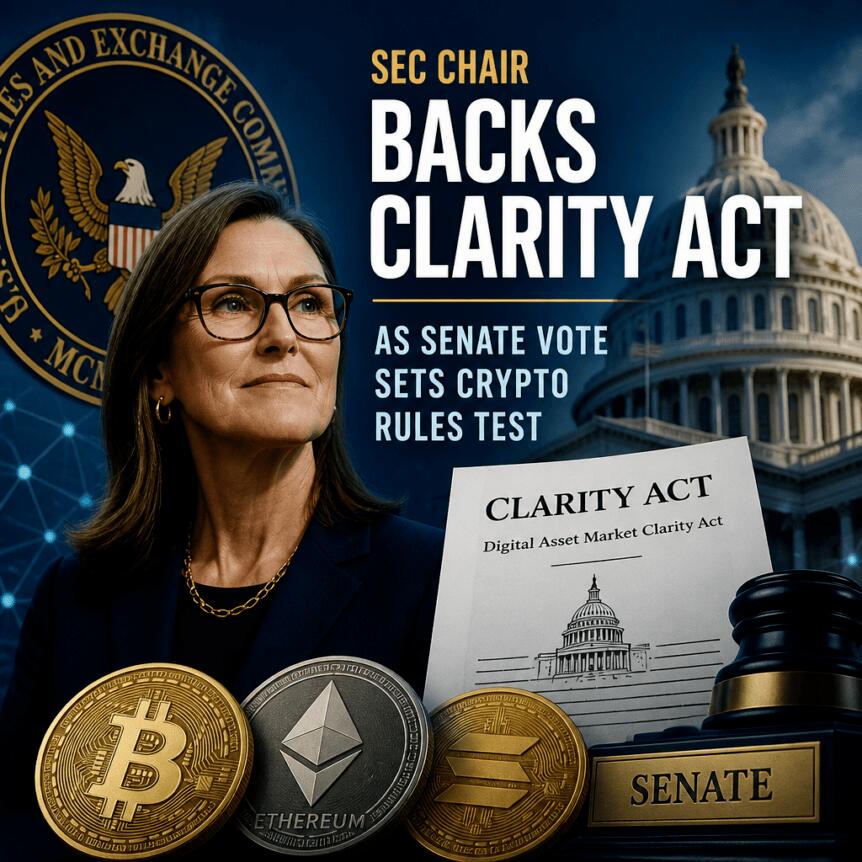
A Senate vote could shape US crypto regulation as SEC Chair Paul Atkins backs the CLARITY Act. Atkins expects lawmakers to advance the bill this month, despite delays and pressure from the approaching elections. The Senate plans a September 15 cloture vote, which could clear the way for debate and final action.
Atkins said the SEC is preparing rules that could work alongside the legislation. The agency is collecting comments on exemptions covering fundraising and digital asset activities. Meanwhile, Atkins said the SEC could use existing securities laws if Congress fails to establish a new framework.
The SEC chair supports the legislation because it could create a lasting legal structure for digital assets. Such rules could reduce uncertainty because future SEC leaders would face statutory boundaries. Consequently, the bill could shape how regulators approach crypto markets beyond the current administration.
Senate Vote Sets Up Clarity Act Test
The September 15 cloture vote represents an important procedural test for the market structure bill. A successful vote could end debate and allow senators to consider the legislation. However, lawmakers face limited time before election activity could reduce legislative momentum.
The CLARITY Act previously passed the House and later advanced through the Senate Banking Committee. An earlier attempt to bring the measure before the Senate failed to gain support. Therefore, the upcoming vote has become a measure of whether lawmakers can revive the bill.
Industry reactions also show mixed expectations about the legislation’s path through Congress. SALT CEO John Darsie has questioned whether lawmakers can finish the measure before the political calendar tightens. Prediction market Kalshi has placed the chance of enactment this year near 49%.
Clarity Act Defines Crypto Oversight
The proposed law would establish clearer responsibilities for the SEC and Commodity Futures Trading Commission. It would also create registration requirements for crypto companies and introduce anti-money laundering obligations. Those provisions would give digital asset firms a defined route.
The legislation still faces disputes over stablecoin rules and other policy issues. One debate concerns whether stablecoin holders should receive interest from their digital asset holdings. Lawmakers also discuss ethics rules involving public officials with digital asset interests.
The bill forms part of wider US asset regulation. Atkins has indicated that the SEC could introduce a tokenization innovation exemption soon. Additionally, the agency has proposed updated transfer agent rules for blockchain securities and digital share transfers.
Sec Advances Parallel Crypto Rules
The SEC’s separate initiatives could reshape market practices while Congress considers the CLARITY Act. Its exemptions address fundraising and other activities facing securities law requirements. Public comments could influence the final structure of those changes.
Atkins has argued that agency action can provide immediate relief under existing securities laws. However, legislation would give those changes legal support and could make them harder for future leaders to reverse. Hence, congressional action remains central to creating a durable framework for the crypto industry.
The vote will show whether lawmakers can overcome delays and move the bill forward. If the measure advances, negotiations could continue toward final congressional approval and presidential action. If it stalls again, the SEC may continue developing rules under its authority.


Thailand is tightening oversight of crypto transfers, including transactions involving self-custodial wallets, as it moves to align with global Anti-Money Laundering (AML) standards.
Thailand’s Securities and Exchange Commission (SEC) issued new Travel Rule regulations requiring digital asset operators to collect information about parties involved in crypto transfers, the regulator announced Wednesday.
The rules will take effect on Feb. 27, 2027, giving crypto businesses nearly six months to develop systems for transmitting, receiving and monitoring transaction information.
Thailand joins a growing global push to track who sends and receives crypto, as the Financial Action Task Force (FATF) estimated that 83% of surveyed jurisdictions had passed Travel Rule legislation as of 2026.
Self-custodial wallets face ownership checks
Under the new framework, Thai digital asset operators must verify the ownership or control of self-hosted, or self-custodial, wallets when customers send crypto to or receive it from those wallets.
Unlike wallets managed by centralized exchanges (CEXs) or custodians, self-custodial wallets give users direct control over the private keys needed to access their crypto.
Operators must also retain information accompanying every digital asset transaction for at least five years and make the records available for regulatory examination.
The requirements put more responsibility on crypto companies to identify the parties behind transfers, including those involving self-custodial wallets. Pornanong Budsaratragoon, secretary-general of Thailand’s SEC, said the rules aim to “reduce the risk of digital asset operators being used for money laundering and terrorist financing.”
Thailand moves from consultation to final rules
The final rules follow two rounds of public consultation this year, starting with proposed principles in March and a draft notification in June. The SEC said most stakeholders supported the proposals.
The Travel Rule comes as Thailand considers expanding access to other regulated crypto products. On Monday, the SEC proposed allowing intermediaries to offer retail investors access to certain crypto derivatives traded on regulated overseas exchanges.
Days earlier, the regulator advanced draft rules for spot Bitcoin and Ether exchange-traded funds (ETFs), while also seeking feedback on requirements for foreign digital asset custodians used by funds investing in crypto.
Magazine: Thailand’s 0% crypto tax. Bitcoin Red Team forced to use Chinese AI: Asia Express

Ridley Scott’s New Sci-Fi Movie Struggles at the Box Office Ahead of Rumored Alien Franchise Return

Is This What the Future of Crypto Investing Looks Like? Shyft Finance

Car smashes into garden after dramatic police chase through Fife as man arrested





-

 Fashion5 days ago
Weekend Open Thread: Maeve – Corporette.com
-

 Crypto World6 days ago
Bitcoin’s 22% rally now needs real demand to outlast Treasury liquidity boost
-

 Business6 days ago
Apple Confirms September 9 Keynote and Reveals Its Full Pre-Order Schedule
-

 Business6 days ago
Salesforce Stock Soars 19% as Blowout Earnings and Agentforce AI Growth Silence Software Skeptics
-

 Business5 days ago
Onto Innovation Stock: AI’s Next Bottleneck Is Yield (NYSE:ONTO)
-

 Crypto World7 days ago
NVIDIA revenue hits $96.2B as AI demand doubles
-

 Crypto World5 days ago
Bitcoin price tests $82K resistance as Brandt stays long
-
 Tech4 days ago
Hugging Face built a $4.5 billion empire on free AI models. Now Nvidia is buying it for $12.9 billion
-

 Business5 days ago
iPhone 18 Pro Pre-Orders Could Shift to Saturday as Apple Reportedly Avoids September 11 Anniversary
-

 Tech7 days ago
Claude Cowork gets its own browser that doesn’t touch your tabs, bookmarks, or saved passwords
-

 Crypto World6 days ago
Truflation calls for Fed rate cut after PCE forecast
-

 News Videos4 days ago
Charlie Munger on Robinhood: No one should believe that Robinhood’s trades are free
-

 Crypto World7 days ago
GENIUS Act missed its deadline as OCC writes rules anyway
-

 Tech5 days ago
PaperCut releases second emergency patch for exploited flaws
-

 Tech6 days ago
The fix for the AI agent that hijacked a company’s DNS: it can propose the change, but it can’t approve it
-
 Entertainment6 days ago
‘Adults’ Creators Break Down Season 2’s Most Shocking Moments and Tease a Potential Season 3
-

 Tech4 days ago
Tamagotchi Ring Takes the 30-Year Digital Pet and Places it on Your Finger
-

 Tech4 days ago
As the influencer economy drives retail sales, Seattle startup raises $22M to play matchmaker
-
 Business7 days ago
AI Assistant Startup Instinct Rockets to $2.5 Billion Valuation in Weeks Amid Investor Feeding Frenzy
-
 NewsBeat4 days ago
Trump posts AI video of ‘Lake America’ being protected by an army of bequiffed ‘Donald Ducks’
You must be logged in to post a comment Login