

Crypto World
Verus Bridge Exploiter Returns $8.5M, Keeps $2.8M as Bounty Reward


The exploiter who drained the Verus-Ethereum bridge of over $11 million has returned $8.5 million to the project’s team, while keeping $2.8 million as a white-hat bounty.
This comes barely a day after the Verus community and its developers offered the reward in exchange for the hacker meeting a set of terms.
Hacker Accepts $2.8 Million Bounty
The incident took place on May 17, with the hacker taking advantage of a missing validation step on one of its cross-chain bridge contracts, which allowed them to drain approximately 103.6 tBTC, 1,625 ETH, and 147,000 USDC. Following the hack, the project’s team decided to stop its block-producing nodes to prevent further transfers and issued an emergency patch.
Verus later said on social media that it was offering the Ethereum bridge exploiter a 1,350 ETH bounty in exchange for returning 4,052 ETH within 24 hours, adding that it would stop any investigations and not pursue charges if the conditions were met.
“If you return a total of 4052.4 ETH to the address 0xF9AB…C1A74 within 24 hours specified above, we will understand that as your agreement to these terms, and we will uphold our stated agreement to cease further investigation of you,” wrote the team.
Blockchain security firm PeckShieldAlerts has since reported that the hacker transferred 4,052 ETH back to the team’s address, recovering 75% of the stolen funds while retaining a 25% bounty of 1.350 ETH. However, Verus has yet to issue a formal acknowledgment of the recovery on their platforms as stipulated in their initial statement.
Developer Flags Possible AI Use in Hack
The update comes as the crypto sector is dealing with a rise in the number of bridge exploits, with the Verus incident being the eighth of this kind this year. According to PeckShield, attackers have made off with a total of $328.6 million from several cross-chain protocols like THORchain, ZetaChain, KelpDAO, HyperBridge, CrossCurve, Squid Router, and IoTeX.io as of Mid-May.
But the Verus case is notable because the complexity of the exploit suggests hackers are using AI to help execute it. The protocol’s lead developer, Mike Toutonghi, explained in an article how the technology might have helped them understand the system’s rules closely enough to design transactions that bypassed checks and tricked the Ethereum contract into accepting the malicious cross-chain transfer.
Elsewhere, Vitalik Buterin shared insights on how AI can still be used to strengthen security instead of breaking it. Responding to community concerns about the technology creating non-stop exploitation opportunities, the Ethereum co-founder countered by saying that AI-assisted formal verification could be used as a strong defense against security failures in the crypto industry.
The post Verus Bridge Exploiter Returns $8.5M, Keeps $2.8M as Bounty Reward appeared first on CryptoPotato.


NEAR Protocol (NEAR) showed notable strength on Friday, jumping 34% in a single day to around $2.32 as AI-focused tokens lead a broader rally tied to NEAR’s upcoming network upgrades and Nvidia’s bullish revenue outlook. The token is about 50% higher than seven days ago and roughly 115% up over the last 90 days, with trading volume briefly exceeding $1 billion in the session.
The move comes as NEAR unveiled a slate of upgrades aimed at AI integration, privacy enhancements and scalable performance—steps investors see as signaling deeper utility for developers and users within the NEAR ecosystem. In tandem, Aurora, the Ethereum-compatible layer built on NEAR, pushed an update to its Aurora Intents Widget, integrating ADI Chain as a new entry point to streamline cross-chain swaps, deposits and application flows for users.
Key takeaways
- NEAR surged about 50% over the past week, reaching six-month price highs near $2.34.
- Upgrades centered on privacy, AI integration and scaling boosted investor confidence and helped push NEAR’s 24-hour trading volume above $1 billion.
- A breakout from a multi-year wedge pattern sets a target near $5.75 if NEAR can clear resistance in the $2.60–$3.00 zone.
- AI-oriented tokens were broadly supported by market momentum, with Nvidia’s AI leadership and upbeat earnings outlook underpinning the sector’s strength.
NEAR price rallies amid upgrade program
Data from market observers show NEAR’s rebound accelerating earlier in the week, with the price climbing from a low near $1.48 to a peak around $2.34 on Friday—a gain of roughly 58% from that trough. The surge was accompanied by a surge in liquidity, with daily volume jumping to about $1.15 billion, reflecting intensified buying pressure and broad interest in the ecosystem.
The move also triggered notable short liquidations as traders positioned for a break above key levels, with liquidations surpassing $9.85 million when NEAR rallied through the $2.30 region. The upward move aligns with NEAR’s ongoing upgrade path, which places renewed emphasis on privacy protections, AI integration and scalable throughput—the kinds of enhancements investors have cited as catalysts for asset demand within the NEAR network.
At the same time, Aurora announced enhancements to its cross-chain experiences. The Intents Widget update adds ADI Chain as a new entry point, designed to enable smoother cross-chain swaps, deposit flows and application orchestration for users moving assets or building on NEAR’s platform.
AI tokens riding the broader momentum
The NEAR ascent is part of a wider revival in AI-themed crypto assets. Tokens such as Grass (GRASS), OpenServe (SERVE) and Artificial Superintelligence Alliance (FET) registered meaningful intraday gains—up more than 27%, 21% and 11%, respectively—mirroring the sector-wide enthusiasm for AI-enabled ecosystems. Collectively, the market capitalization of AI and big-data crypto projects rose about 8% over the past 24 hours to roughly $21.44 billion, signaling renewed investor interest in AI-native narratives alongside traditional market drivers.
That sector-wide bounce sits against a backdrop of Nvidia’s continued dominance in the AI accelerator market. Industry observers note Nvidia’s control of a substantial share—roughly 81–90% in this space—and the company’s ongoing earnings narrative. In its latest results, Nvidia reported robust Q1 2026 profits and projected a revenue opportunity reaching $1 trillion through 2027, reinforcing the viability of compute-heavy AI ecosystems that rely on NEAR’s growing AI-oriented capabilities and developer-friendly environment.
Historically, Nvidia-driven events have tended to coincide with upside for NEAR. Notably, a rally in February followed Nvidia’s earnings release, when NEAR surged more than 50% in a short span. The current sequence echoes that pattern: a favorable Nvidia backdrop combined with NEAR’s technical breakout and upgrade-driven catalysts contributing to broader upward momentum for the token.
What could drive NEAR higher from here?
From a technical standpoint, NEAR has just emerged from a multi-year falling wedge pattern. The immediate hurdle sits in the $2.60–$3.00 area, a zone that includes several moving averages on the weekly chart. A clean break above this resistance would open a measured ascent toward the wedge’s implied target near $5.75, which would be roughly 160% above the current price. The relative strength index has moved into the mid-60s, signaling building upside momentum but not yet extreme overbought pressure.
Market observers like Michael van de Poppe have highlighted NEAR as exhibiting one of the market’s more bullish charts, noting that as long as the $1.40 level remains a floor, the path toward higher resistance levels remains plausible. The consensus among analysts cited in market commentary is that a sustained hold above the $2 level could cement the larger-term breakout, while a failure to clear the $2.60–$3 band could reintroduce consolidation risks.
investors should watch not only the price action but the ecosystem’s ongoing upgrade cadence. If privacy, AI integration and cross-chain usability continue to advance without major delays, NEAR could see sustained demand for block space and services, translating into higher activity, bookings and a longer-term re-rating of the token’s utility value.
Looking ahead, traders will want to see whether NEAR can sustain momentum through upcoming supply zones and whether the broader AI-narrative continues to attract capital into both NEAR and related ecosystems such as Aurora. The next crucial inflection will likely hinge on whether buyers can decisively clear the $2.60–$3.00 resistance corridor and maintain a constructive weekly trend that validates the breakout thesis.
What remains uncertain is how macro market dynamics, regulatory developments and the pace of AI-adoption across chains will interact with NEAR’s upgrade trajectory. Nonetheless, current data points and the Nvidia backdrop suggest the headline driver remains the confluence of technical breakouts, upgrade-driven utility, and a widening AI-focused investment appetite that could keep NEAR and its peers in the spotlight in the near term.
Readers should monitor NEAR’s price not in isolation but in the context of ecosystem progress, including cross-chain flow efficiency, privacy-improvement milestones and the broader risk-on sentiment that has re-emerged in crypto markets as AI narratives re-accelerate.
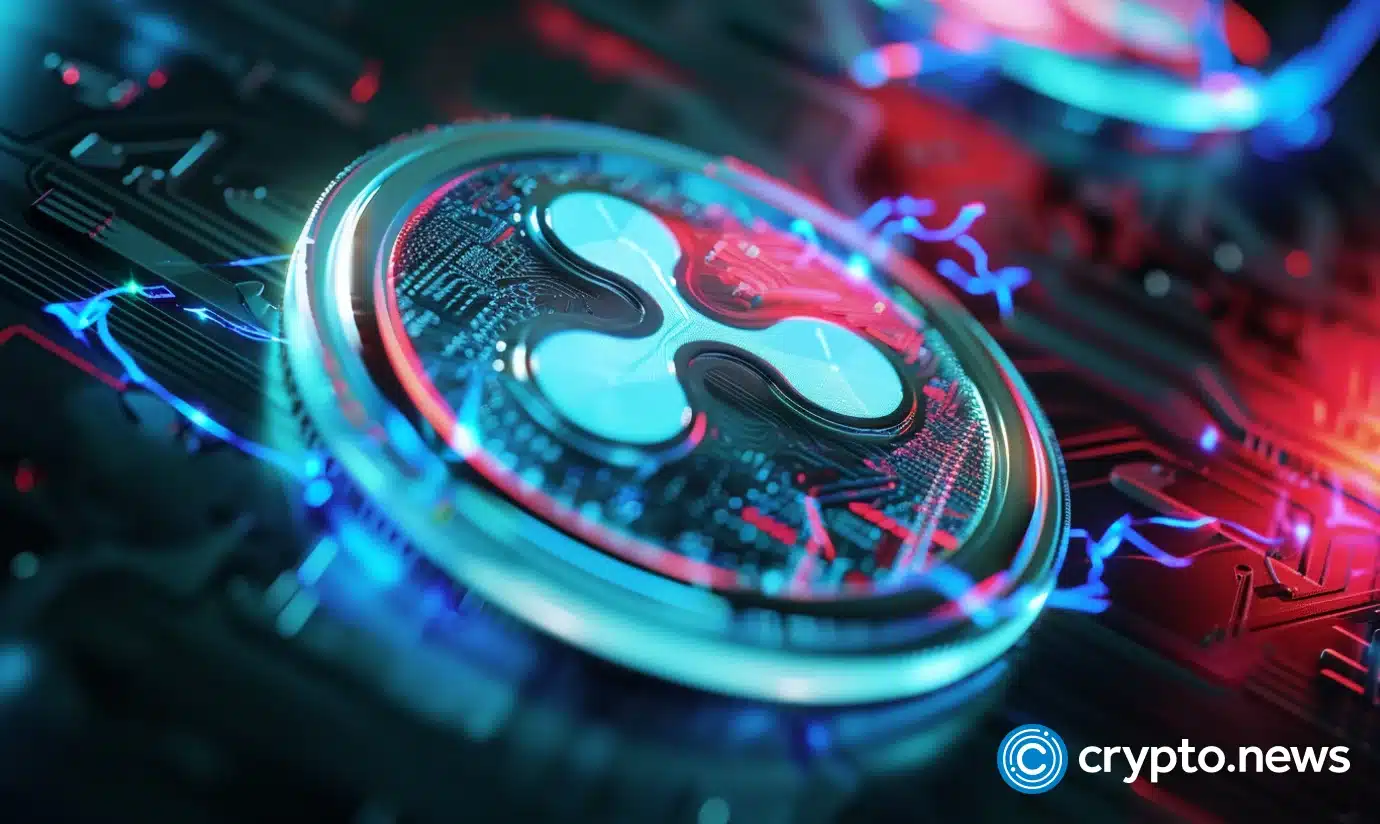
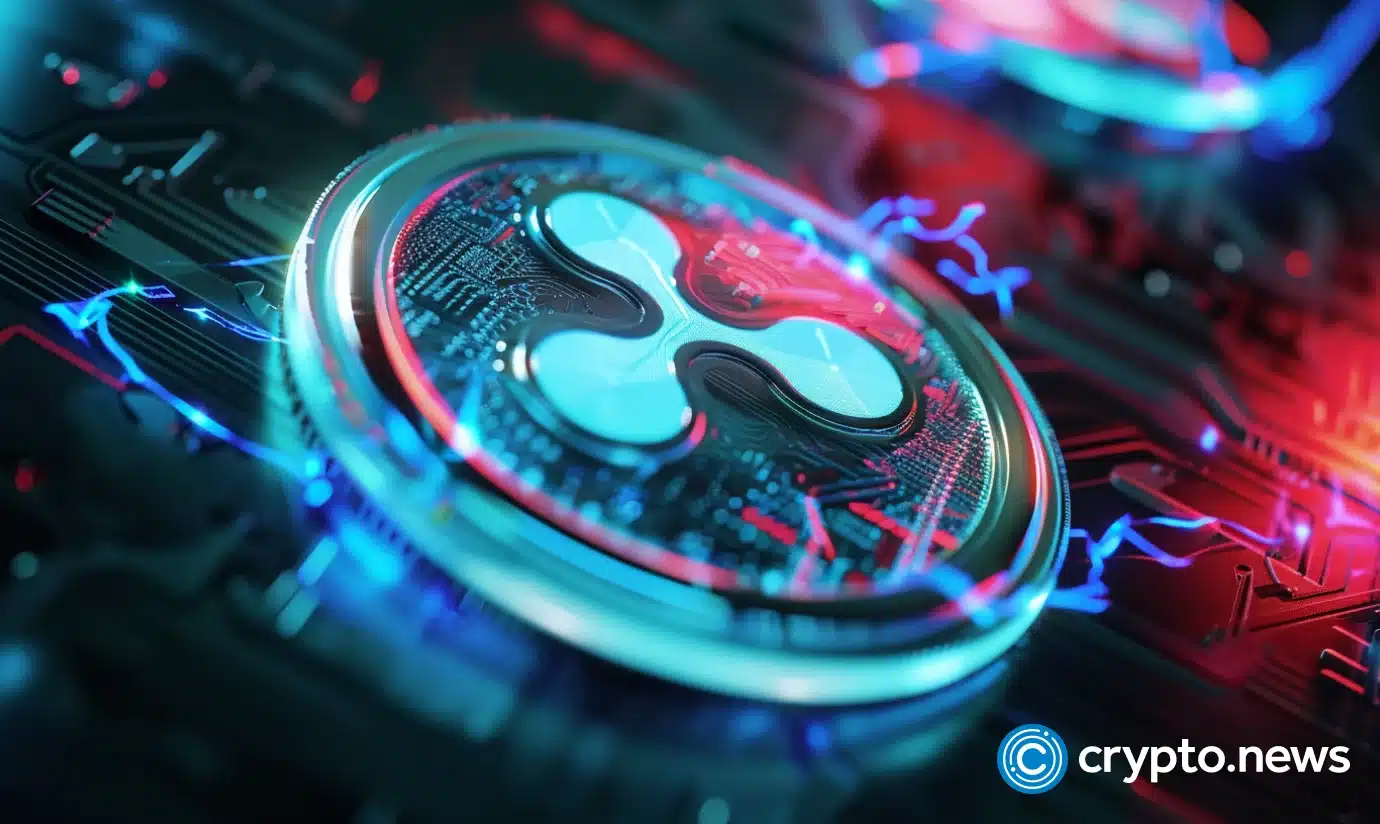
Ripple joined a $6M funding round for cross-chain infrastructure platform Squid.
Summary
- North Island Ventures led the $6M strategic round, with Ripple, Dialectic, and Borderless also participating.
- Squid has routed over $6 billion in volume through more than 4 million transactions since its January 2023 launch.
- The new funding brings Squid’s total raised to $13.5 million and will fund consumer-facing product expansion.
Cross-chain platform Squid raised $6 million in strategic funding to build new consumer-facing products that simplify how users move assets across blockchains. North Island Ventures led the round, with Ripple, Dialectic, Borderless, Scenius Capital, Altos, and Arche Capital also participating.
Angel investors including Axelar co-founder Georgios Vlachos, Enso Finance founder Connor Howe, and Constructive founder Dan Lynch joined as well. Squid’s pseudonymous co-founder Fig declined to disclose the valuation or round structure.
What Squid does and why Ripple invested
“The vision is to make directly accessing whatever you need in crypto as simple as the cross-chain swaps Squid already handles today,” Fig told The Block.
Squid’s application allows users to move assets across fundamentally different blockchain ecosystems, including Bitcoin, Ethereum, Solana, Cosmos, and the XRP Ledger, in a single transaction. Squid serves as the official bridge partner for the XRP Ledger and operates a validator on the network, making Ripple’s investment a natural extension of an existing relationship.
Since launching in January 2023, Squid has processed over $6 billion in volume through more than 4 million transactions across over one million users. Its execution layer, Squid Intents, uses market makers to fill cross-chain transactions and settles them through trusted execution environments rather than requiring smart contract deployments on every chain. That architecture lets the platform support more than 100 networks.
The round brings Squid’s total funding to $13.5 million, following a $3.5 million seed round in 2023 and a $4 million strategic round in 2024. The team currently has around 20 people and is not hiring.
Ripple’s participation fits a broader pattern of infrastructure investments around the XRP Ledger. As crypto.news reported, JPMorgan, Mastercard, and Ripple recently tested tokenized Treasury settlement on XRPL. Separately, the XRP Alliance launched earlier this month to build yield products for XRP holders.
Squid expects to share more about its consumer roadmap in the coming months.

The International Holding Company (IHC) executed a 110 million dirham ($30 million) transaction using the DDSC stablecoin on ADI Chain. The company described the transfer as one of the largest disclosed stablecoin transactions executed in the United Arab Emirates.
The transaction follows recent approval from the UAE central bank for the dirham-backed stablecoin ecosystem launched by IHC, First Abu Dhabi Bank and Sirius International Holding.
DDSC operates on ADI Chain, a layer-2 blockchain developed by ADI Foundation. According to the announcement, the system is designed for institutional use cases including cross-border payments, treasury operations and trade settlement.
The IHC said the transaction was intended to demonstrate that DDSC and ADI Chain can support institutional-scale financial activity, with future plans focused on payment corridors linking the Middle East with global markets.
First Abu Dhabi Bank is the largest bank in the UAE by assets, while IHC is one of the country’s largest listed investment companies.
The announcement comes as UAE financial institutions and digital asset companies expand regulated stablecoin infrastructure. In January, Universal Digital launched USDU, which it described as the first US dollar-backed stablecoin registered by the Central Bank of the UAE under the country’s Payment Token Services Regulation framework.
Related: Trump denies knowledge of Abu Dhabi royal’s $500M stake in WLFI
Crypto companies expand regulated UAE operations
The UAE has continued attracting global crypto exchanges and financial institutions seeking regulated access to the regional market as the country expands licensed digital asset services tied to payments, custody and institutional trading.
Earlier this month, Crypto.com received a Stored Value Facilities license from the central bank allowing residents to pay Dubai government fees using cryptocurrencies through the company’s platform. The approval allows the company to support payments under Dubai’s broader cashless government payments strategy.

Crypto.com secures SVF license. Source: Crypto.com
Meanwhile, BNY partnered with Finstreet and ADI Foundation in May to develop institutional digital asset custody services in Abu Dhabi, with initial support for Bitcoin (BTC) and Ether (ETH) and plans to later expand into stablecoins and tokenized assets.
On Thursday, Kraken said it received preliminary approval from Dubai’s VARA regulator as part of its planned expansion in the UAE. The company said the approval would support UAE dirham funding, margin and over-the-counter trading, along with institutional services through Kraken Prime.
Magazine: ETH bears growling, Tom Lee’s buying, XRP to ‘explode’: Market Moves

- OKX and ICE have partnered to launch perpetual oil futures based on Brent and WTI benchmarks.
- The new contracts will allow continuous trading without expiration or physical delivery of oil.
- OKX plans to offer the products to its 120 million users in licensed jurisdictions.
- ICE will supply pricing data to support accurate and trusted oil market benchmarks.
- The initiative builds on a broader partnership focused on blockchain and tokenized trading systems.
Intercontinental Exchange Inc. (ICE) and OKX announced a partnership to launch perpetual oil futures contracts. The products will use ICE’s Brent crude and West Texas Intermediate benchmarks. OKX said the offering will expand access to energy markets for its 120 million users.
The new contracts will not expire, allowing continuous trading without physical delivery. Both firms said the move connects traditional commodity markets with crypto-based trading systems. The rollout will target regions where OKX already offers regulated perpetual futures.
OKX to Expand Perpetual Futures With ICE Oil Benchmarks
ICE will provide pricing data for Brent crude and WTI to support the new contracts. These benchmarks are widely used in global oil markets.
Trabue Bland, senior vice president at ICE, said the products will broaden access to energy benchmarks. He stated the contracts will reach OKX’s large retail trading base.
OKX confirmed the contracts will be available only in licensed jurisdictions. The exchange said compliance remains a key requirement for the rollout.
Haider Rafique, global managing partner at OKX, said oil markets are critical to the global economy. He added that integrating ICE benchmarks meets demand from market participants.
Perpetual futures allow traders to speculate on price movements without expiry dates. Traders do not need to handle physical oil or renew contracts.
Crypto and Traditional Finance Converge in OKX Deal
ICE and OKX signed a prior agreement in March to develop blockchain-based trading systems. The partnership includes tokenized securities and crypto-linked futures products.
ICE also made a strategic investment in OKX, valuing the company at $25 billion. The firms aim to expand access between traditional finance and crypto platforms.
The move follows growing interest in perpetual futures tied to commodities. Hyperliquid recently reported $1.6 billion in daily trading volume for similar oil contracts.
Open interest in Hyperliquid’s oil products exceeded $1.3 billion, showing strong demand. These contracts also operate without expiration dates.
Regulators in the United States have started reviewing perpetual futures markets. Michael Selig, chair of the Commodity Futures Trading Commission, said oversight will increase.
Most perpetual futures currently trade on offshore crypto exchanges. These platforms often operate under different rules than traditional exchanges like ICE and CME Group.
ICE and OKX said the new oil contracts will follow regulatory frameworks in approved markets. The companies confirmed availability will depend on local licensing conditions.
The announcement marks the latest collaboration between crypto and traditional finance firms. Both companies continue developing infrastructure linking blockchain and established markets.
The firms did not disclose a specific launch date for the contracts. They confirmed deployment will begin in regions where OKX already offers perpetual futures.



Kalshi and Polymarket lost bids to block gambling cases in Nevada and Washington.
Summary
- A Ninth Circuit panel denied emergency motions from both platforms to halt state-level gambling enforcement actions.
- The judges ruled that federal derivatives oversight does not automatically shield prediction markets from state gaming laws.
- The decision deepens a growing legal split over whether sports event contracts are federally regulated swaps or gambling products.
A three-judge Ninth Circuit panel denied emergency motions from both Kalshi and Polymarket to block lower court rulings, sending gambling enforcement cases in Nevada and Washington back to state courts. The orders came down on Thursday.
The judges concluded that raising a defense under the Commodity Exchange Act does not create federal jurisdiction that would move the cases out of state courts. “The CEA preemption defense is an affirmative defense, which cannot by itself give rise to federal question jurisdiction,” the panel wrote.
Why this matters for prediction market regulation
The court also rejected Polymarket’s argument that it was operating under federal direction through its compliance with CFTC oversight requirements. “Polymarket’s actions merely demonstrate its own compliance with federal law, which cannot alone show that it is acting under a federal officer,” the judges stated.
Nevada’s cases center on both platforms’ lack of state gaming licenses. Washington’s lawsuit focuses on whether Kalshi offers illegal gambling products through its sports event contracts.
The ruling adds to a growing split among federal courts over prediction market jurisdiction. The Third Circuit sided with Kalshi in an earlier case, upholding a preliminary injunction against New Jersey gambling regulators. That divergence could eventually push the question to the Supreme Court.
All three judges on the panel, Ryan Nelson, Bridget Bade, and Kenneth Lee, were appointed by President Trump during his first term. The decision came the same day Kalshi launched Americans for Fair Markets, a new advocacy group aimed at countering the gaming lobby’s campaign against prediction markets.
Kalshi, Polymarket, and Washington’s attorney general did not immediately respond to requests for comment. Nevada’s gaming control board declined to comment, citing pending litigation.

Key Takeaways
- Bloomberg reports Uber is considering a complete acquisition of Delivery Hero, a major European food delivery player
- Uber disclosed earlier this week it owns a 19.5% stake in Delivery Hero, with an additional 5.6% through options
- Investment bank Morgan Stanley assisted Uber in rapidly accumulating its position through derivative instruments
- Uber shares declined approximately 1.9% following the announcement; rival DoorDash climbed 1.9%
- Delivery Hero’s stock has surged almost 110% in Frankfurt during the last half-year, reaching a market capitalization of approximately €10.2 billion
According to a Friday Bloomberg report, Uber has entered preliminary discussions regarding a potential full acquisition of Delivery Hero, the Frankfurt-traded food delivery powerhouse.
The strategic initiative is designed to strengthen Uber’s competitive position against DoorDash in markets beyond American borders.
Following the report’s release, Uber’s stock price fell roughly 1.9%. Meanwhile, DoorDash—considered a primary competitor in global delivery markets—saw its shares rise 1.9% on the same information.
Just days ago, Uber revealed it had swiftly accumulated a 19.5% ownership position in Delivery Hero, complemented by options representing another 5.6%. The stake was built with assistance from Morgan Stanley, which leveraged derivative products to facilitate rapid execution.
Bloomberg’s sources indicate that Uber has been engaging in conversations with additional Delivery Hero shareholders regarding its potential acquisition interest.
Uber’s Official Position
In an official submission to German financial regulators, Uber declared it presently has no plans to increase its ownership to 30% or beyond—a key threshold that would normally require a mandatory takeover bid under European regulatory frameworks.
Nevertheless, the company acknowledged that it regularly evaluates its investment portfolio and remains open to acquiring additional shares should favorable circumstances emerge.
Uber further clarified it has no intentions to modify Delivery Hero’s capital framework or seek to influence board member selections beyond exercising standard shareholder voting privileges.
The company may still require regulatory clearance from antitrust authorities before exceeding specific ownership levels across European jurisdictions.
Delivery Hero’s Current Position
Delivery Hero’s stock has surged approximately 110% on the Frankfurt exchange during the previous six-month period, bringing its total market capitalization to around €10.2 billion.
The organization provides food and grocery delivery operations throughout numerous international markets excluding the United States, positioning it as a valuable strategic acquisition target for any platform seeking international expansion.
With support from financial advisory firms, Uber is carefully evaluating various approaches to expand its ownership stake, according to Bloomberg’s reporting.
Discussions remain in progress, though sources emphasized that no guarantee exists that negotiations will culminate in a completed transaction.

Popular on-chain sleuth ZachXBT warned earlier today that an admin address of Polymarket appeared to have been compromised on the Polygon blockchain.
At first, he noted that the stolen amount was around $520,000. However, follow-up updates from Bubblemaps and Lookonchain explained that the actual amount might have surpassed $600,000.
2/ @zachxbt was the first to share the exploit and identify that it was a Polymarket UMA CTF adapter contract.
The attacker has already split the funds across 15 addresses.
More updates soon.
Attacker address: https://t.co/G9sNVvunkT
— Bubblemaps (@bubblemaps) May 22, 2026
The attacker split the funds across 15 addresses after exploiting Polymarket’s UMA CFT adapter contract.
Polymarket’s Shantikiran Chanal acknowledged the attack on X, saying that the team is “aware of the security reports linked to rewards payout” before adding that “user funds and market resolutions are safe.”
Chanal also explained that the team is investigating whether any other internal secrets may have been affected and that they are rotating their backend services.
The post Polymarket Admin Wallet Exploited on Polygon, Says ZachXBT appeared first on CryptoPotato.

Ethereum (ETH) has shed nearly 30% of its market value so far this year. Despite numerous recovery attempts, its market performance throughout May remained weak. Growing fear and frustration around the asset have become increasingly visible across social media and market activity.
According to Santiment, the downturn has not been driven by a single major negative event, but rather by several bearish narratives building at the same time.
Bearish Narratives Spiral
One of the clearest signs highlighted by the firm was the rise in Ethereum’s social dominance even as prices continued falling. While higher social dominance can often signal strong bullish attention during rallies, Santiment noted that Ethereum’s discussion volume surged after its April 17 local top precisely when the asset began losing momentum.
Instead of conversations centered around optimism or new highs, social media discussions were increasingly focused on disappointment, frustration, and concerns about further downside. Santiment also flagged a steady deterioration in sentiment ratios on social media platforms.
During late April, Ethereum maintained relatively strong sentiment levels, as it recorded more than two bullish comments for every bearish one. However, that ratio gradually declined throughout May until bullish and bearish commentary became nearly equal. The firm said this kind of sentiment erosion typically indicates weakening trader confidence in an asset’s short-term outlook.
Ethereum’s weak price performance itself has been one of the biggest contributors to the negative mood. Many traders have increasingly viewed ETH as “dead money” compared to assets that have shown stronger momentum during 2026, Santiment said in its latest post.
While Bitcoin has continued attracting institutional confidence and newer ecosystems have drawn speculative interest, Ethereum has struggled to regain the market leadership role it held in previous cycles. ETF flows also added to bearish sentiment. Several Ethereum exchange-traded funds reportedly recorded continued outflows throughout May, including significant withdrawals from BlackRock-related funds.
Santiment added that days with more than $50 million in net inflows, once relatively common for Ethereum ETFs, have not occurred for almost three weeks. Although ETF flows often follow sentiment rather than predict it, retail traders frequently interpret outflows as evidence that institutions are losing confidence in the asset, which further adds to fears already created by falling prices.
Negative headlines surrounding the Ethereum Foundation also contributed to the change in market mood. Reports about researcher departures and ongoing exits from the ecosystem spread widely across social media. Many traders see them as signs of instability within Ethereum’s leadership and development community.
At the same time, viral rumors claiming prominent Ethereum figures, such as David Hoffman, were reducing or exiting their ETH holdings further fueled uncertainty, even when some reports lacked full context. Santiment said such narratives can spread rapidly in crypto markets, especially when traders begin fearing that insiders are abandoning positions before the broader market reacts.
Contrarian Setup?
Competition from other blockchain ecosystems has also intensified pressure on Ethereum’s reputation. Data showed Ethereum still leads the crypto industry in raw development activity, as it generates millions of GitHub events and maintains one of the largest developer communities in the sector.
However, retail traders have increasingly prioritized short-term price performance over long-term development strength, while ecosystems such as Solana and BNB Chain continue to attract speculative enthusiasm. On-chain activity has weakened as well, with both daily active addresses and network growth declining from the high levels seen during Ethereum’s strongest rallies in 2024 and 2025.
Despite the overwhelmingly bearish environment, the firm said extreme pessimism can sometimes point to exhaustion among traders and potentially emerge near major market turning points.
“Growing bearishness may eventually become constructive from a contrarian perspective. Historically, markets tend to punish the crowd when consensus becomes too one-sided. Ethereum is now reaching a point where social media discussion has become overwhelmingly focused on reasons to abandon the asset. “
The post Has Ethereum (ETH) Reached Peak Pessimism: Or Is More Pain Coming? appeared first on CryptoPotato.
Bitcoin’s seemingly stable and dull price moves over the past couple of days came to an end hours ago as the asset initiated a notable leg down that drove it to a new multi-week low of well under $76,000.
The latest rejection came just hours after Kevin Warsh officially became the seventeenth Chairman of the United States Federal Reserve.
He was sworn in on Friday at the White House for the four-year role. US President Donald Trump said he expects Warsh to “go down as one of the truly great Chairmen of the Federal Reserve that we have ever had, I really believe that.”
The POTUS also added that Warsh will be “totally independent,” which was rather contradictory to some of his previous statements regarding the former Fed Chair, as Trump urged Powell countless times to cut the rates and called him different names in the past year and a half.
“I will lead a reform-oriented Federal Reserve, learning from past successes and mistakes, both escaping static frameworks and models and upholding clear standards of integrity and performance,” Warsh said.
As mentioned above, bitcoin’s price started to nosedive shortly after the ceremony concluded, and dropped from almost $78,000 to $75,500 minutes ago, which became its lowest level since April 30.
Many altcoins have followed suit, with ETH dumping toward $2,050, XRP losing the $1.35 support, and SOL dropping below $85. The total value of wrecked positions is up to $485 million according to CoinGlass, with more than $430 million coming from longs.

The post Bitcoin Price Crashes Below $76K as Kevin Warsh Sworn In as Next Fed Chair appeared first on CryptoPotato.

BitGo and Galaxy Digital are continuing their courtroom battle over the collapse of a $1.2 billion acquisition agreement that was once expected to become the largest merger in the crypto industry.
During proceedings this week in Delaware Chancery Court, BitGo argued that Galaxy backed out of the transaction in 2022 and is now seeking at least $100 million in damages, according to Bloomberg.
Bitter Legal Showdown
The crypto custody firm claims Galaxy failed to make reasonable efforts to complete the merger and also hid information about investigations by US authorities that may have affected their ability to obtain regulatory approval for the deal. Galaxy founder and CEO Michael Novogratz disputed those allegations in court. He argued that the probes did not involve Galaxy and had no effect on the approval process tied to the merger.
The acquisition was first announced in May 2021. Under the proposed agreement, BitGo co-founder and CEO Mike Belshe was expected to join Galaxy as deputy CEO and take a seat on the company’s board. The combined entity also planned to list shares on the Nasdaq, which required approval from the US SEC.
However, the deal began facing obstacles as crypto markets weakened in 2022 and regulators increased scrutiny on the sector.
As per the testimony in court, both companies eventually became concerned that the SEC, which was then chaired by Gary Gensler, would not approve the transaction. In an attempt to avoid SEC-related hurdles and move the deal forward, Novogratz said Galaxy even explored restructuring the merger through Canada, where the company was already publicly listed.
Missed Audit Deadline
Galaxy terminated the acquisition in August 2022. At that time, it stated that BitGo had failed to provide audited financial statements for 2021 by a July 31 deadline outlined in the merger agreement. The company said at the time that the missed deadline meant it was not required to pay a termination fee.
BitGo, on the other hand, has repeatedly denied those claims and maintained that the necessary documents had been delivered. During testimony earlier this week, Belshe said Galaxy’s public explanation for ending the deal was “incredibly damaging” as it created an impression that the company was unable to complete an audit.
The post Galaxy Digital and BitGo Clash in Court Over Failed $1.2 Billion Crypto Merger appeared first on CryptoPotato.

*NEW* FASTEST Forza Horizon 6 MONEY GLITCH – Easy Unlimited Credits & XP Method

Iraina Mancini review: Brand new retro is a force to be reckoned with

Euronet Worldwide, Inc. (EEFT) Analyst/Investor Day Transcript

US brings back mandatory military draft registration

Steven Gerrard disagrees with Gary Neville over ‘shock’ Chelsea and Arsenal claim | Football

Register Renaming | Hackaday
*NEW* FASTEST Forza Horizon 6 MONEY GLITCH – Easy Unlimited Credits & XP Method

Crypto Gold Live Trading| 22 MAY #vinbullindia #livetrading #vinbulllive #live #trading

Misaligned Core MINT ERROR on this Toonie! #coin #coinrollhunting #money #coins #canada
-
 Crypto World7 days ago
BloFin War of Whales 2026 Grand Prix opens registration for $5M trading championship
-

 Sports7 days ago
Napoleonic enters 2026 Doomben 10,000 field via Abounding withdrawal
-

 Tech7 days ago
Google reimburses Register sources who were victims of API fraud
-
 Crypto World7 days ago
Bitcoin Battles US Bond Nerves With BTC Price Dip Toward New May Lows
-

 Fashion5 hours ago
Holiday Weekend Open Thread – Corporette.com
-

 Fashion6 days ago
On the Scene at Gucci’s Cruise Show in New York City: Mariah Carey, Kim Kardashian, Lindsay Lohan, Iman, and More!
-
 Crypto World7 days ago
Wall Street’s Boldest Gold Prediction Has Russians Rushing to Buy
-

 Crypto World7 days ago
IREN closes $3 billion convertible notes deal amid AI infrastructure expansion
-

 Fashion6 days ago
Trending Western Style Vests Perfect for Summer
-

 Politics7 days ago
Watch: far-right flag-fanatics run over victim, attack locals – Setup By the Left wing for your entertainment
-

 Crypto World1 day ago
Blockchain.com files with SEC for U.S. IPO
-

 Fashion6 days ago
Amazon Sundays: Memorial Day Hosting
-

 Entertainment6 days ago
Off Campus Easter Eggs Explained: Characters, Stories, More
-
 Crypto World7 days ago
BeInCrypto 100 Institutional Awards Nomination: KuCoin for Leader in Digital Asset Adoption and Best Trading Infrastructure
-

 Business7 days ago
Strategies for Australian Businesses Entering Southeast Asian Markets
-
Business6 days ago
Australia defends property tax changes designed to fix ‘broken’ housing
-
 Crypto World6 days ago
Intesa Sanpaolo’s crypto holdings jump to $235M as XRP enters
-

 Politics6 days ago
Anti-Zionists attacked in Jerusalem as ethnofascists chant race-hate
-
Crypto World4 days ago
Revolut Launches Dogecoin Debit Card Across UK and EU
-

 Tech24 hours ago
WhatsApp ads could make Irish debut after discussions with DPC
You must be logged in to post a comment Login