The flight from Hurghada, Egypt, to Luton made an urgent landing
22:19, 22 May 2026Updated 22:38, 22 May 2026
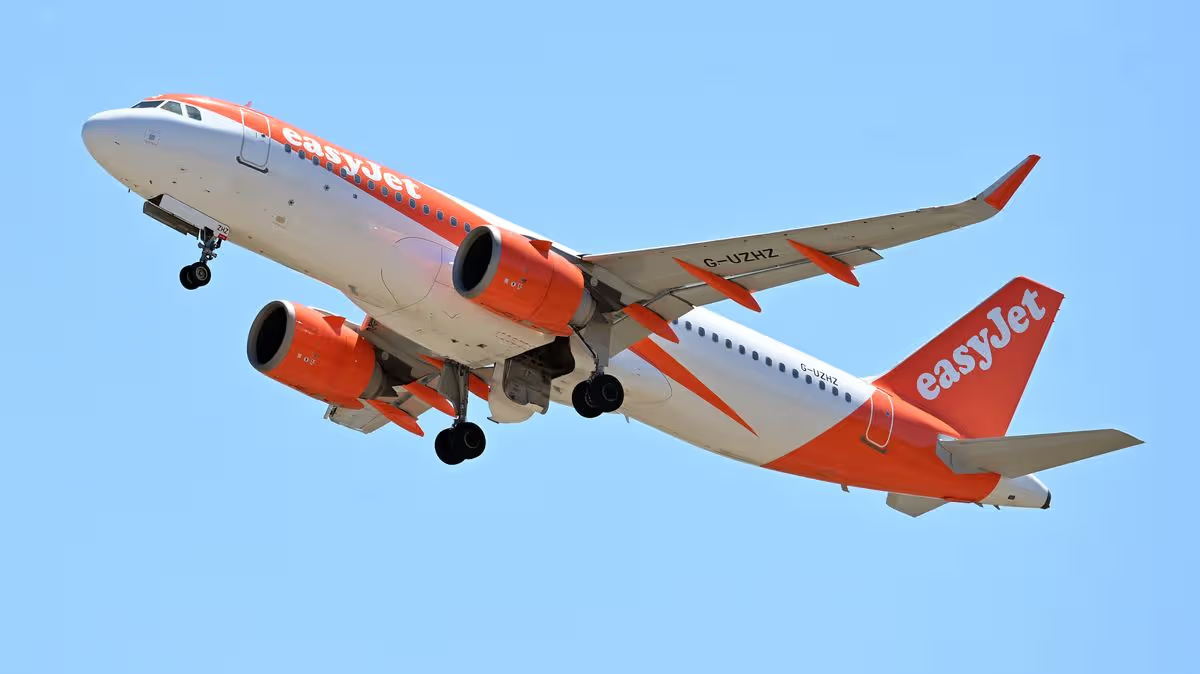
An EasyJet flight from Egypt to Luton was forced to make an urgent landing after the crew were informed a power bank was charging in luggage. According to reports, passengers onboard were in a state of panic when the captain said: “There’s something we shouldn’t have in the hold.”
The plane was forced to land in Rome at 11.30pm on Tuesday. According to reports, word got round that a woman told a stewardess about her powerbank — and the flight was diverted due to fire risks.
EasyJet told The Sun : “Flight EZY2618 from Hurghada to Luton on May 19 diverted to Rome Fiumicino as the crew were informed a power bank was charging in luggage.
Advertisement
“The captain then diverted as a precaution in line with safety regulations. Safety is our highest priority.
“We would like to apologise to all passengers for any inconvenience.”
Passengers were put up in hotels or slept in the terminal as the carrier’s next Rome to Luton flight was 2pm on Wednesday, according to reports.
The ongoing saga of the Beckham family rift took another turn this week, as Harper was left standing on her brother’s doorstep
21:44, 13 Jun 2026Updated 21:44, 13 Jun 2026
Brooklyn Beckham has offered an explanation after he failed to answer the door when his sister came to visit.
The whole Beckham clan was in Los Angeles, as Sir David was honoured with a star on the Hollywood Walk of Fame.
Just a short drive away from Hollywood Boulevard and Vine Street is where brother Brooklyn and his wife, Nicola Peltz-Beckham, live and Harper, the family’s youngest child, attempted to visit her older brother at his home.
Advertisement
However, attempts at a reconciliation fell flat as Brooklyn and his wife, Nicola Peltz, were nowhere to be seen, and the youngest Beckham did not go inside.
Now Brooklyn appears to have explained why he didn’t answer the door to his younger sister.
Taking to Instagram just hours after, he re-shared a post on his Instagram Story, showing him out for a run around New York – meaning he is miles away from his Californian home.
For years, the Beckhams have been plagued by family rifts, with wannabe chef Brooklyn snubbing his family.
Advertisement
Earlier this year, Brooklyn famously slammed his family, alleging that they had attempted to “ruin” his relationship with Nicola.
He also stated on his Instagram page that he had no desire to rekindle his relationship with his family and had instructed his parents to contact him only through lawyers.
But in a bid to heal the rift, Harper was seen arriving at Brooklyn’s home not long after the ceremony in Hollywood.
Advertisement
In pictures obtained by Page Six, Harper was seen walking to the gates alone, still wearing her pink silk dress from the ceremony. Insiders said Harper arrived ‘unannounced’ and she was the only one of the family to make the trip.
A spokesperson for Brooklyn told Page Six: “That photographers were in place as the letter was hand-delivered says it all — this was choreographed for the cameras.”
The Mirror reported how Brooklyn has struggled to keep a relationship with his sister while the row with his parents rumbled on. The 27-year-old is currently not talking to David and Victoria, or his brothers Cruz and Romeo, all of whom he has blocked on social media.
However, the situation is “very different” when it comes to his 14-year-old sister, who it’s understood Brooklyn has tried to shield from the family fallout.
But a source admits that the “fundamental logistics of his little sister living under the same roof as his parents…. makes things very hard, contact-wise”, and the two are not as close as they once were.
Brooklyn’s distance from his family only deepens further, as he didn’t make time for his father’s Walk of Fame celebrations earlier on Friday. In an interview prior to the ceremony, David refused to discuss the feud with Variety.
Advertisement
He said: “To be honest, I’m sorry to stop you there, but that’s a private matter. That’s the one thing that I don’t want to talk about.”
Earlier this year, Brooklyn furiously said: “I do not want to reconcile with my family. I’m not being controlled, I’m standing up for myself for the first time in my life,” following claims he was being controlled by his wife.
Last month, Raducanu reunited with Andrew Richardson, who worked with her during her fairytale run in New York five years ago, when she entered the tournament as a qualifier and left with the trophy.
Since that moment, her career has been plagued with injury and fitness issues including surgery on both wrists and an ankle, and most recently the after-effects of a viral illness that she contracted ahead of the W250 final in Cluj in February.
The clay season might not have gone to plan with first-round exits in Strasbourg and Roland Garros but Raducanu’s attacking game is more suited to grass, and she showed the best of it in west London.
Advertisement
As she wrote “Made it to Sunday, Funday!” on the camera to sign off reaching the final, it was clear how much this moment meant to her.
“Any Brit would love to win the title here,” she said. “Me and my team have stuck together through some tough moments the last few months so I would like to thank them for getting me through.”
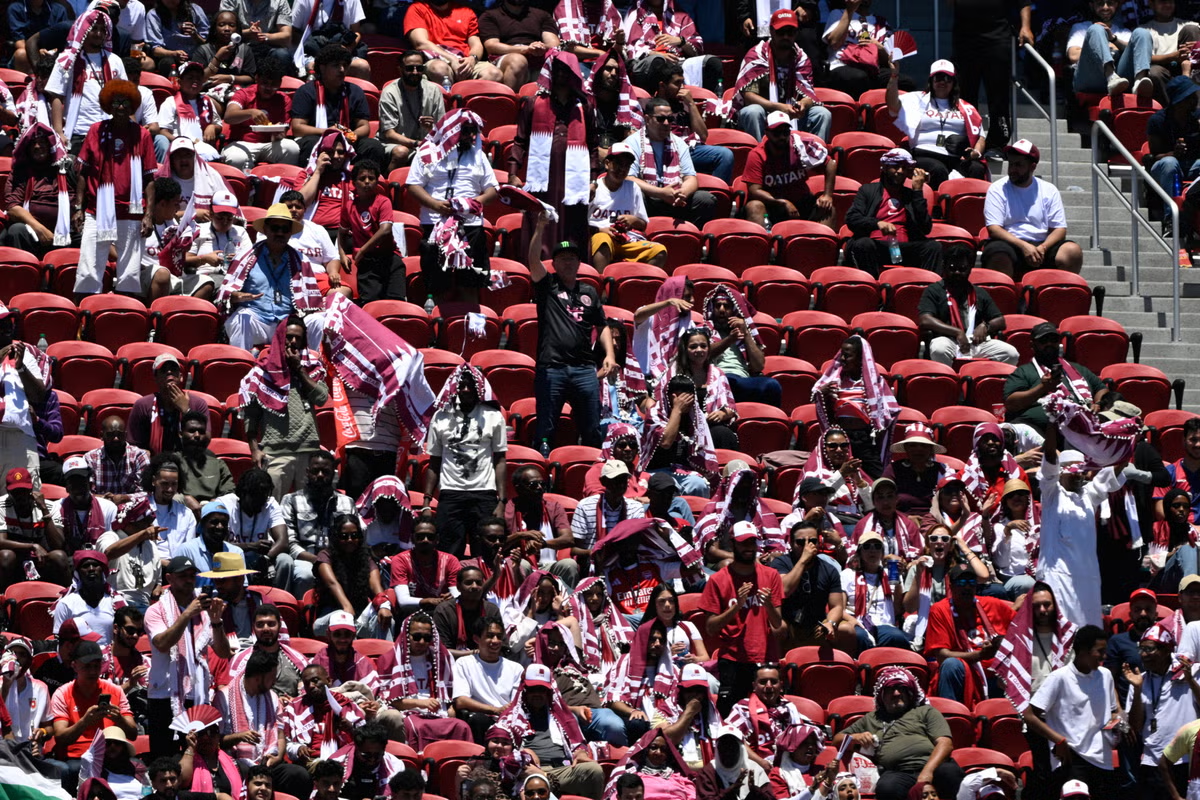
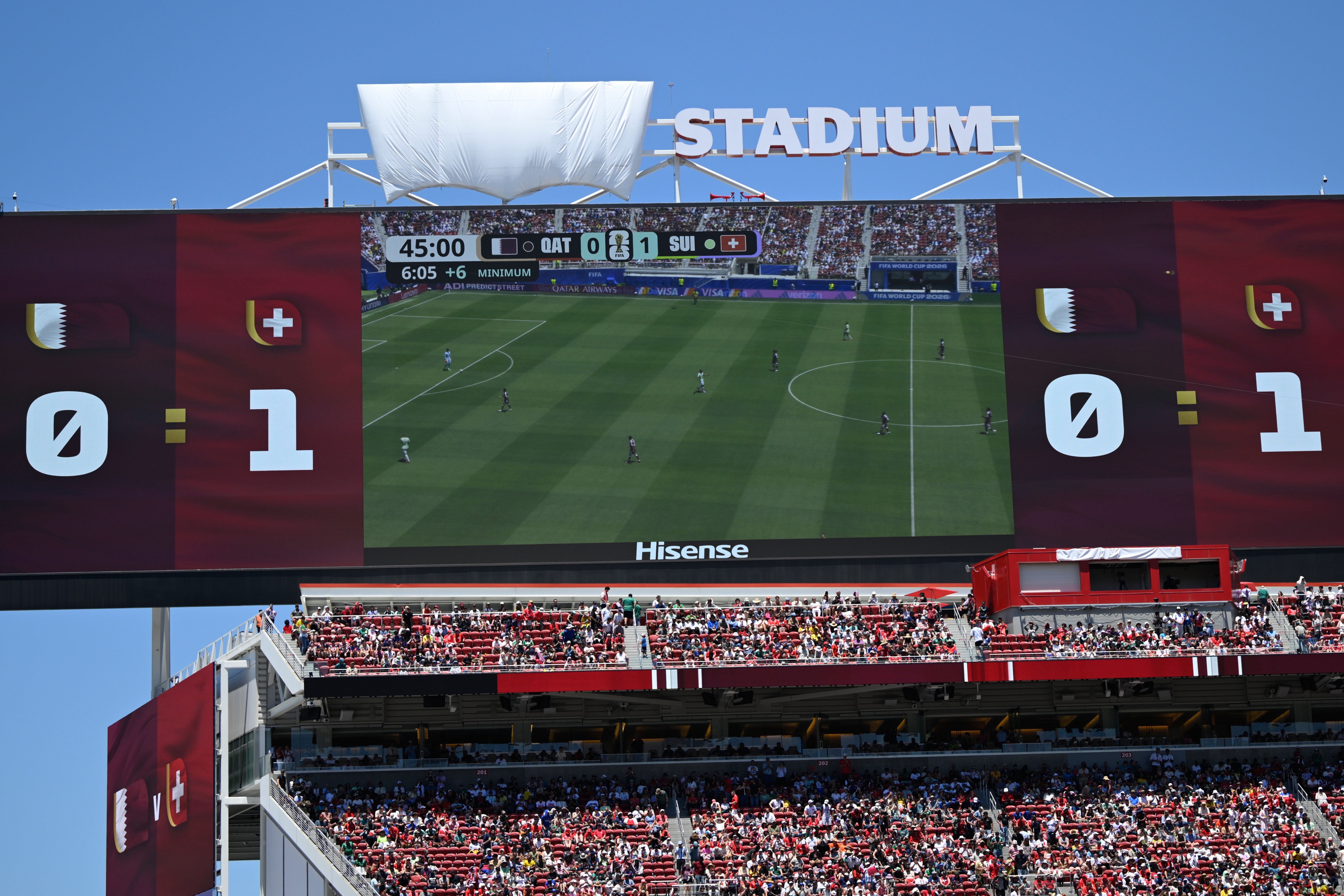
The World Cup 2026 match between Switzerland and Qatar played out in front of hundreds of empty seats to raise further questions about Fifa’s ticket prices for the tournament.
The Group B clash at the 70,000-capacity Levi’s Stadium in San Francisco on Saturday was the first game to be staged in the United States not involving the co-hosts and it failed to sell out.
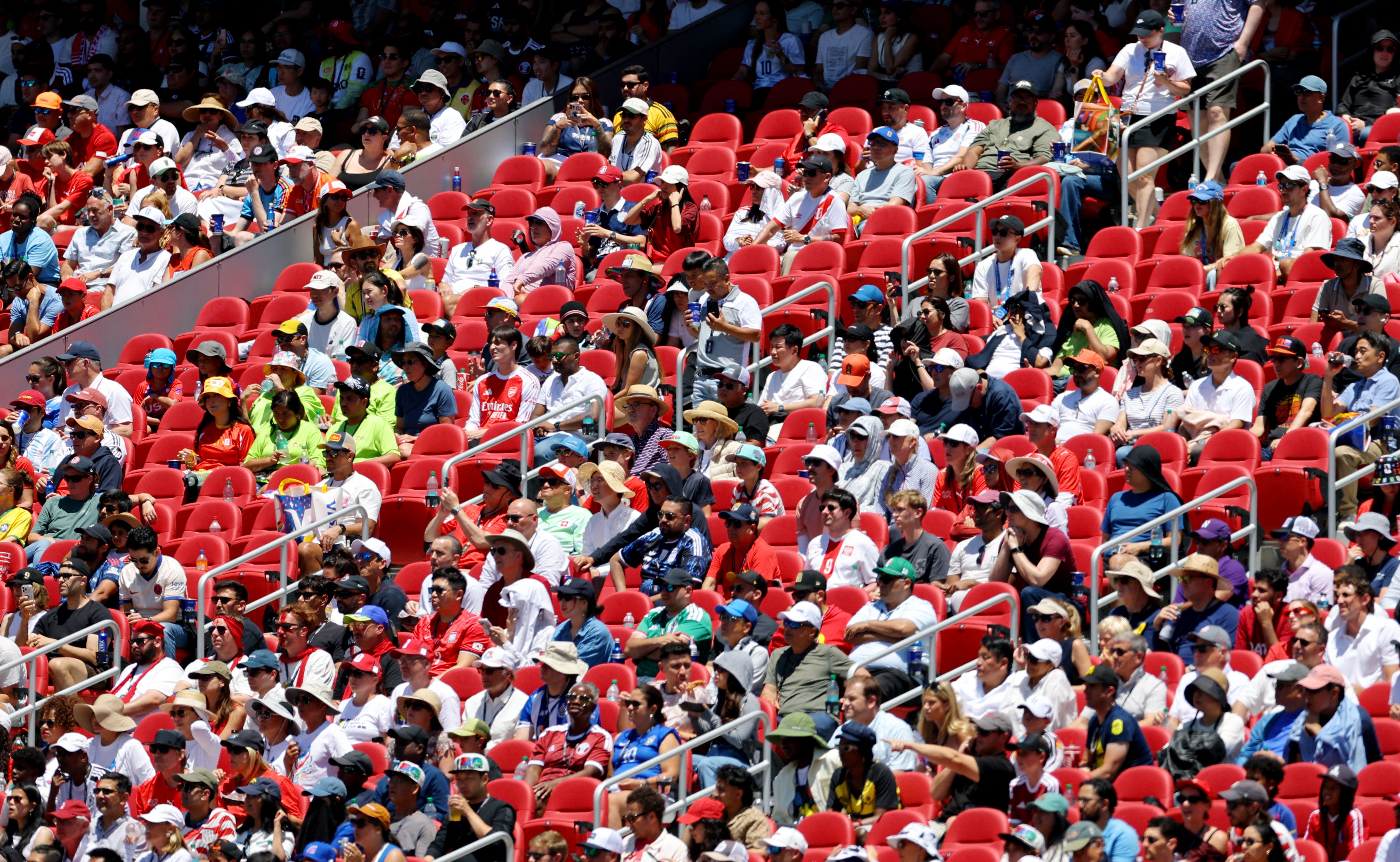
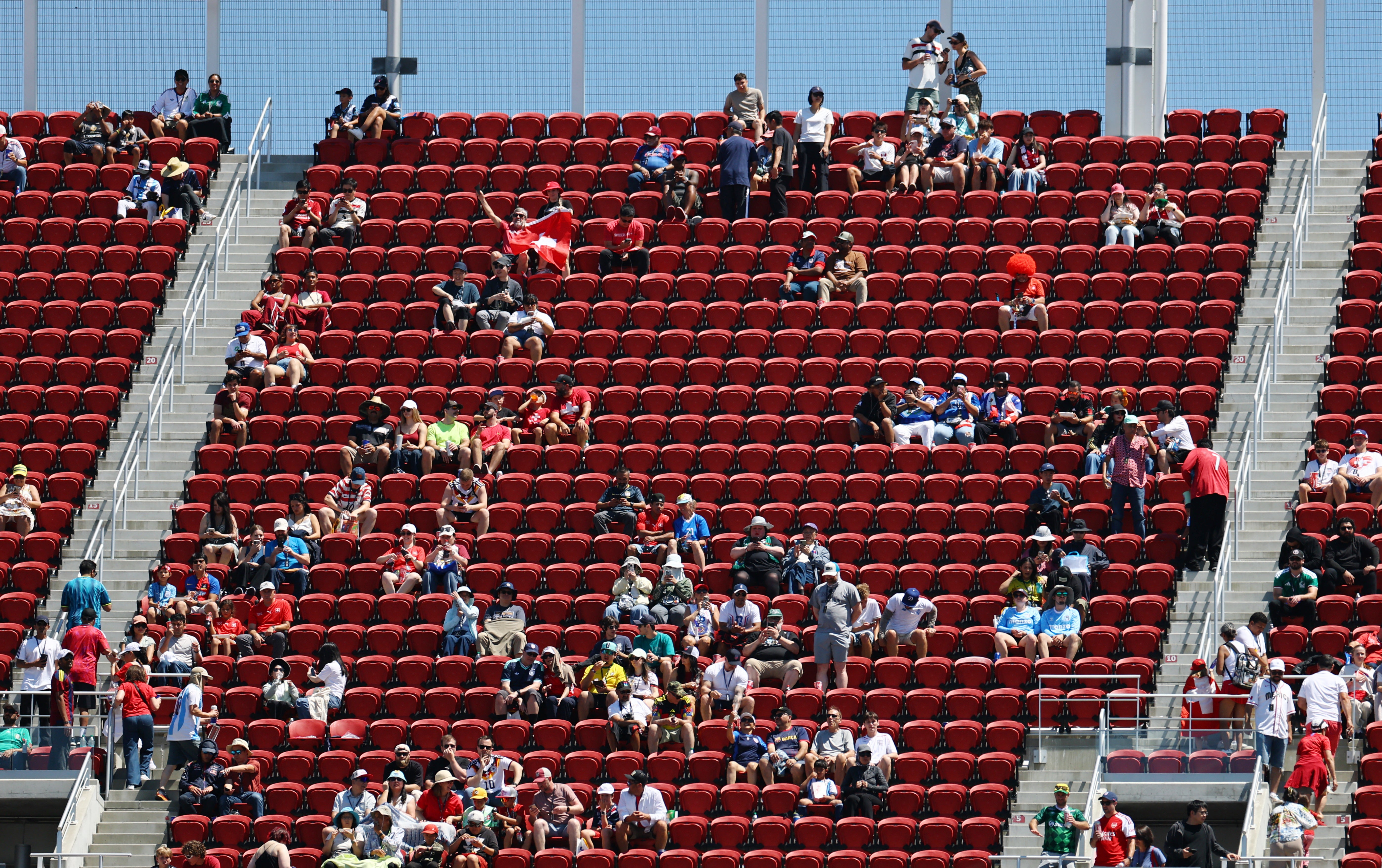
While the fixture was always unlikely to be considered ‘in-demand’, pockets of empty seats could be seen clearly throughout the stadium. A 12pm kick-off local time and sweltering temperatures won’t have helped, with Fifa’s go-to excuse of fans being on the concourses rather in their seats potentially having some validity.
Plenty of empty seats were visible in the stadium (Reuters)
Seats were also slow to fill before the match (Reuters)
Tickets remained on sale in the hours before kick-off, although Fifa’s own ticketing website displayed a ‘limited availability’ message when entering the portal on Saturday.
The cheapest tickets on sale were for $450 in the Category 1 tier and were located in the lower-bowl of Levi’s Stadium and towards the corners.
Fifa, meanwhile, released a statement defending the swathes of empty seats in South Korea’s opening-day win against the Czech Republic by insisting that some fans “stood in concourses rather than in their assigned seat.”
Parts of the upper tiers in Qatar v Switzerland were sparsely populated (AP)
“Official attendance figures reflect the number of tickets scanned and spectators present within the stadium footprint, rather than visual assessments of seating occupancy at any given moment during the match,” a Fifa spokesperson said.
“Fifa works closely with stadium authorities and ticketing teams to ensure all published figures are based on verified operational data. Please note that, during last night’s match in Guadalajara, several ticketed fans could be seen standing in concourses rather than staying in their assigned seats throughout the match.”
Only 29 matches had sold out before the start of the World Cup on Thursday, with tickets still available on Fifa’s ticketing website for 75 matches in the days before the opening match, despite Fifa president Gianni Infantino’s claim that demand has been “unprecedented”.
Advertisement
It comes as ticketing practices for the 2026 World Cup are to be investigated by chief legal officers in the United States. The attorneys generals of New York and New Jersey insist Fifa must answer questions after allegations of “artificially inflating prices” and “misleading fans” over the sale of match tickets, with world football’s governing body subpoenaed to provide information.
Supporters have reported they were “misled” about the location of seats, including through the creation of more expensive ‘front’ category tickets released after the initial sales.
It is also alleged variable pricing through various phases and subject to demand had allowed Fifa to raise prices for about 90 of the 104 fixtures by an average of 34 per cent. Fifa has also been able to hold back seats before releasing them later, driving up pricing by increasing scarcity.
Advertisement
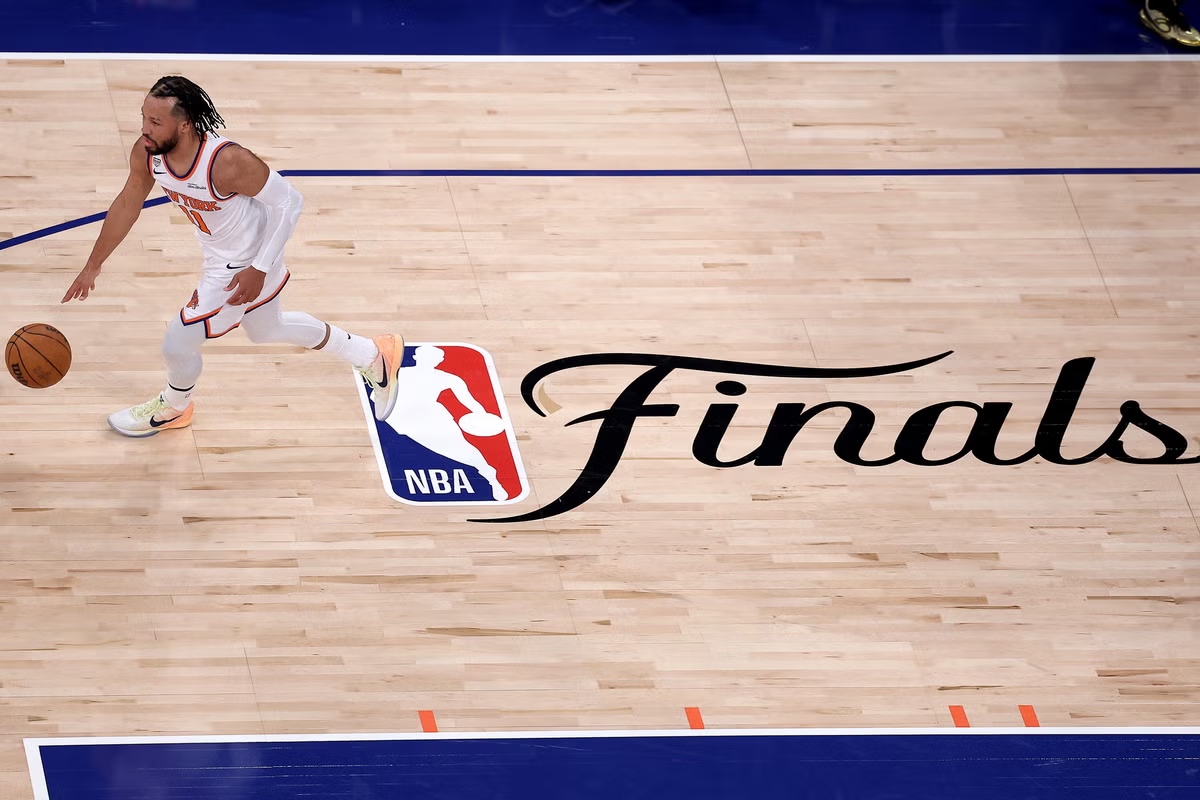
Infantino defended the price of World Cup tickets on the eve of the tournament, pointing towards the exorbitant cost of attending play-off matches in US sports, such as the NBA Finals between the New York Knicks and San Antonio Spurs, and stating the World Cup is a bigger event.
The pricing of the World Cup has been a hugely controversial issue since tickets were first released in November, with the initial sales drop revealing £3,000 tickets for the World Cup final and fans with a £5,000 bill to follow their teams right through to the final. The 2026 World Cup is estimated to be up to five times more expensive than the last World Cup in Qatar, with Infantino targeting unprecedented revenues of $13bn from the tournament.
Many first-time visitors say “Rus-warp” when referring to the village, but locals know the correct pronunciation is actually “Russ-up”, with the “w” remaining completely silent.
Located less than two miles from Whitby, Ruswarp has become a destination in its own right, attracting walkers, cyclists and families looking for a quieter alternative to its famous coastal neighbour.
Ruswarp (Image: ALL TRAILS)
Often described by visitors as a “hidden gem”, “peaceful” and “far less crowded than Whitby”, the village combines railway heritage, scenic countryside and riverside charm.
One of Ruswarp’s most recognisable landmarks dominates the skyline.
Advertisement
Stretching across the River Esk valley is the village’s impressive railway viaduct, a 120ft-high structure built from more than five million bricks.
Constructed to carry trains on the Scarborough-to-Whitby railway line, the viaduct remains one of the most striking sights in the area.
Although the railway closed in 1965, the route has found a new lease of life as The Cinder Track, a popular walking and cycling trail connecting Whitby and Scarborough.
Visitors regularly describe the viaduct as one of the highlights of a trip to Ruswarp.
Advertisement
But Ruswarp’s appeal extends beyond its railway history.
Despite being only minutes from one of Yorkshire’s busiest tourist destinations, Ruswarp has retained much of its village character.
Visitors often comment on the slower pace of life, with independent businesses such as Jackson’s of Ruswarp, Colin Duck Grocer and the Bridge Inn helping to maintain its traditional feel.
The village’s railway station, served by the Esk Valley Line, continues a transport connection that has shaped Ruswarp for generations, linking it with Whitby, Middlesbrough and communities across the Esk Valley.
Advertisement
Many online reviews describe Ruswarp as the perfect base for exploring the North Yorkshire coast, offering easy access to Whitby while avoiding some of the crowds.
One visitor wrote: “It’s got everything you need for a day out – river walks, history, great views and somewhere to relax afterwards.”
And while visitors may still occasionally get its name wrong, those who discover “Russ-up” often find themselves returning again and again.
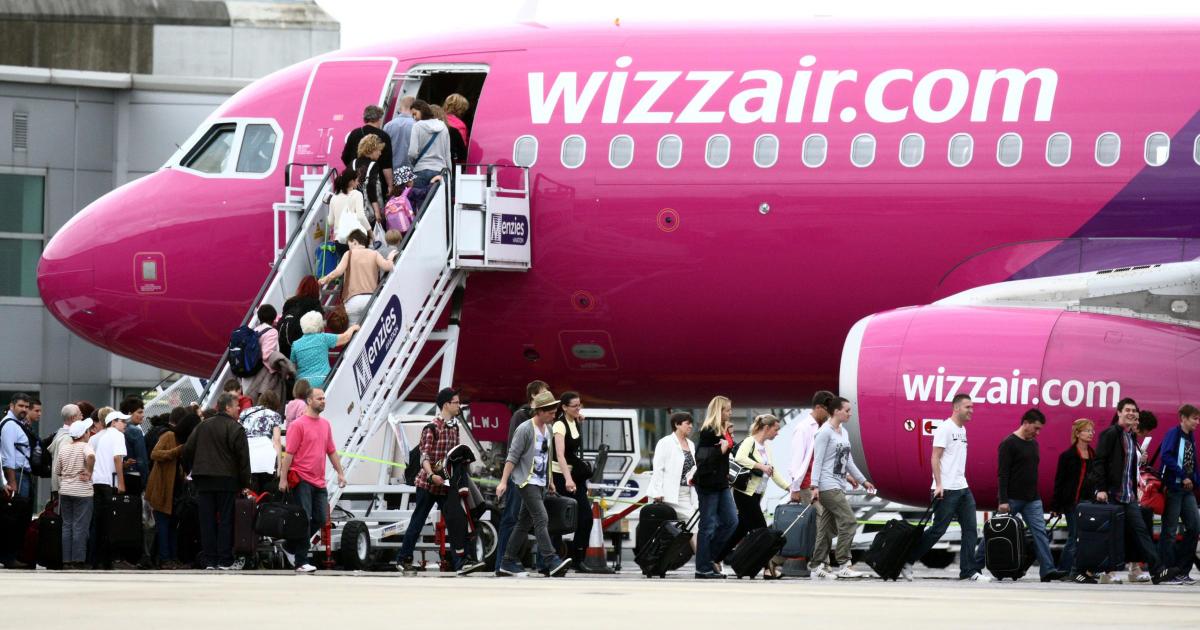
The budget airline issued the warning as it assesses the impact of the rising air passenger duty (APD) on demand and profitability.
APD, a tax imposed by HMRC and paid by airline passengers, reached a record high in April and is set to rise again next year in line with inflation.
Chief executive of Wizz Air, József Váradi, speaking in The Telegraph, said: “We are evaluating the impacts of those measures to see how they would play out, so that would affect our capacity in the UK.
“Nothing is ever engraved in stone.
Advertisement
“We have to evaluate how exactly that plays out on our network, our customer base and our financial performance and make decisions accordingly.”
Mr Váradi said Wizz Air is “committed to the UK”, but added that “if the cost of business is going up, that will result in capacity rationalisation if you are unable to pass it on to customers.”
Wizz Air boss issues update on fare prices
Despite increasing fuel prices driven by the conflict in Iran, Mr Váradi said the airline aims to keep fares stable this summer.
He said he had no concerns about fuel supplies, with good visibility until the middle of August, although some countries have begun tapping into strategic reserves.
Advertisement
Earlier this year, Wizz Air cancelled flights to Tel Aviv and other Middle Eastern destinations following the outbreak of conflict in the region.
These cancellations, along with suspended routes to Cyprus, cost the airline an estimated €50 million (£43.1 million).
Wizz Air fare prices look set to remain stable this summer, despite the conflict in the Middle East. (Image: Getty Images)
Flights to Tel Aviv resumed at the end of May, and the airline shifted its summer offerings to other destinations, including Spain, Italy, Croatia, and Albania.
British Airways and Ryanair among other major airlines to have cut flights
Several other airlines have been forced to cut flights, increase fares, or axe UK routes in 2026.
Advertisement
UK airline Skybus announced back in April that it had ceased all flights between Cornwall and London due to “the huge rise in the global cost of fuel” and “a significant drop in new passenger bookings”.
Due to the “ongoing uncertainty” caused by the conflict in the Middle East and airspace restrictions, British Airways (BA) was also forced to cancel or suspend flights to various destinations, including Dubai and Doha, in March.
All flights to Amman, Bahrain, and Tel Aviv have also been cancelled until October.
BA has also confirmed it is reducing its Doha schedule to one daily flight, set to resume from August 1, according to Time Out.
Ryanair has also been forced to make several major changes in 2026.
In April, the budget airline revealed it would be closing its Berlin base as of October 24, reducing the number of flights it operates out of the German capital by 50% (for its upcoming winter schedule).
Ryanair also announced it will close its Thessaloniki base and reduce capacity at Athens Airport for the 2026 winter season.
Advertisement
This closure will result in:
12 routes being cut
The loss of 700,000 seats
A 45% reduction in passenger capacity
Suspension of operations in Chania and Heraklion
The airline said both these cuts were due to high airport costs.
All the cuts made by Ryanair recently due to rising costs have resulted in flights being cut from 19 airports across the UK and Europe, according to The Sun:
United Kingdom
London Stansted
Manchester
Ireland
Germany
Berlin Brandenburg
Cologne Bonn
Hamburg
Italy
Portugal
Belgium
France
Poland
Hungary
Romania
Bulgaria
Spain
Travellers flying to or from these airports are being urged to check their schedules before flying to ensure their bookings are still going ahead.
Advertisement
Have you got any flights booked with Wizz Air in 2026? Let us know in the poll above or in the comments below.
The Derry native has slammed the FAI’s decision to move Ireland’s UEFA Nations League match against Israel to a neutral venue
21:07, 13 Jun 2026Updated 21:14, 13 Jun 2026
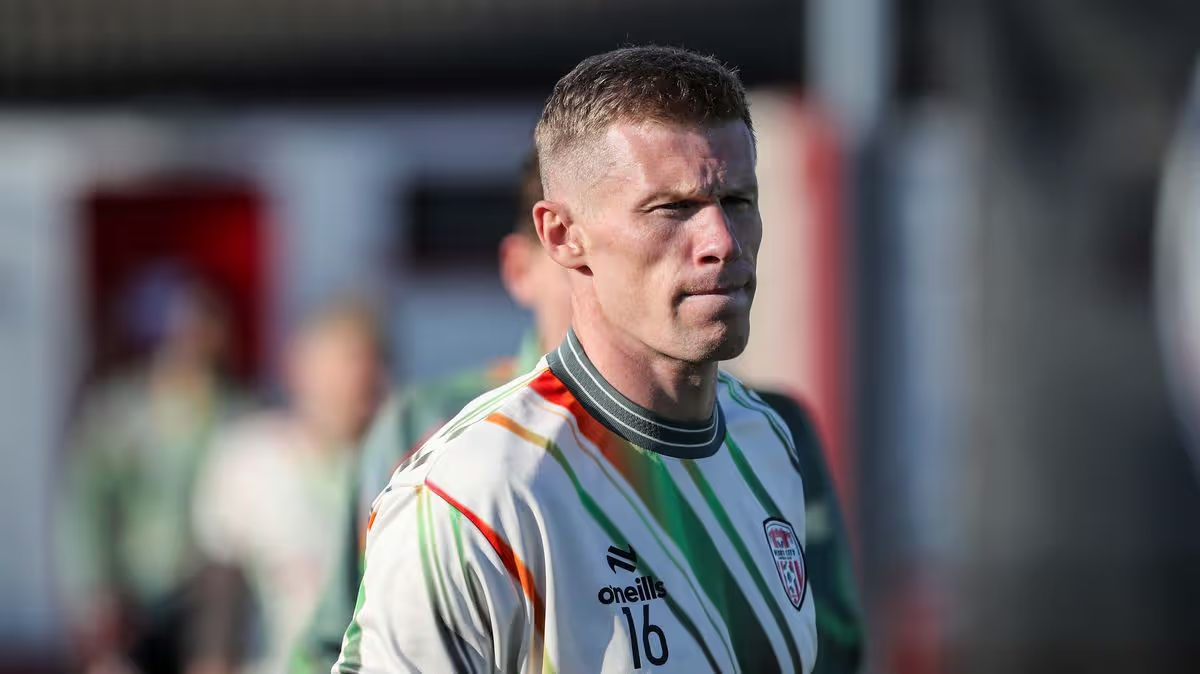
James McClean has slammed the FAI’s choice to relocate Ireland’s fixture against Israel to a neutral location.
The Derry native has argued that the organisation missed a chance to “stand on the right side of history” by refusing to play the match, describing the decision as a “cowardly move”.
Earlier this week, it emerged that Ireland’s UEFA Nations League encounter with Israel would take place at a neutral ground instead of the Aviva Stadium in Dublin.
Advertisement
But, McClean, who earned 103 caps for the Republic of Ireland, has condemned the organisation for not taking a stance on the continuing situation in Gaza.
Speaking to RTE Sport on Saturday evening, the Derry City player said: “I think we’ve missed a massive opportunity here.
“I think the decision to move to a neutral venue behind closed doors, of all the decisions we could have made, is by far the worst one.
“The FAI have missed a massive opportunity to stand on the right side of history.
Advertisement
“If you’re going to go ahead with the game, at least have the courage to face the backlash that was going to come with it being played in Dublin.
“But to move it away is a cowardly move. If there’s one country that can relate to the oppression and famine and what’s going on in Gaza, it’s the people of this country.
“I think the decision-makers have kind of forgotten that, to be honest.”
On Saturday, the FAI published an extensive statement outlining the reasoning behind relocating the Israel match to a neutral venue.
Advertisement
“The Football Association of Ireland (FAI) confirms that UEFA has approved a request to host the 2026-27 UEFA Nations League fixture between Ireland and Israel on October 4 overseas, at a neutral venue and behind closed doors,” the statement read.
“Following consultation with various stakeholders, the Association is of the view that operational challenges could impact the delivery of the game on home soil, and therefore the fixture will be played away from the Aviva Stadium.”
“The Association thanks An Garda Síochána for their support and advice over recent months and states that the decision to relocate to a neutral venue is one that has been considered an appropriate course of action by the FAI Board, with the support of UEFA.
“The Association understands and respects the views expressed by players and staff, supporters, its members, campaigners, members of the public and the Irish footballing community in relation to this fixture.
Advertisement
“In recent months, the Association has been in communication with the Palestinian Football Association regarding the fulfilment of the fixtures and they have shared the following statement:
“‘The Palestinian Football Association expresses its appreciation for the principled positions taken by the Football Association of Ireland in support of the rights of the Palestinian people and Palestinian athletes.
“‘The Palestinian Football Association also affirms its respect for the decision made by the Football Association of Ireland within the framework of its sporting and international obligations, in a manner that enables it to continue fulfilling its noble mission of serving football and promoting the values of justice, solidarity and mutual respect.’
“The Association is deeply conscious of the suffering and devastation being endured by civilians in Gaza and continues to reflect the sentiment of the motion that was proposed and voted in favour of by members of the FAI General Assembly in November 2025. This motion was to issue a formal request to the UEFA Executive Committee for the immediate suspension of the Israel Football Association from UEFA competitions for a breach of UEFA statutes.
Advertisement
“While the Association submitted that motion to UEFA and has consulted with UEFA officials for almost two years on this issue, it also recognises the UEFA competition rules and regulations to which it has agreed. These outline that if an association refuses to play a match, that fixture will be forfeited and further disciplinary measures may follow, including potential disqualification from the competition.
“In February 2026, Ireland were drawn into Group B3 of the 2026-27 UEFA Nations League alongside Austria, Israel and Kosovo. The Association stated at the time that the Ireland team would proceed with all scheduled fixtures and maintains this position, given that any alternative would have a profound impact on Irish football as a whole.
“If the Association opted not to fulfil the fixtures, the immediate result would be:
“Beyond the sporting implications, there would be broader consequences for Irish football, including a reduced capacity to support clubs and leagues through critical services such as safeguarding, educational programmes and player development opportunities.
Advertisement
“There could also be implications for Ireland international teams, including the withdrawal of underage teams and a reduction in the level of support and services provided to players and staff.
“The Association will engage with its members at a forthcoming Extraordinary General Meeting, but reminds its members that it is the responsibility of the FAI Board to protect the future interests of football in Ireland and therefore remains committed to fulfilling each of its 2026-27 UEFA Nations League fixtures.
“While the FAI Board appreciates that its decision to fulfil this fixture affects many stakeholders, it would ask that consideration also be given to the players and staff.
“The Association acknowledges the impact the change of venue will have on its loyal Season Ticket holders and Club Ireland members. Once all details surrounding the fixture on October 4 have been finalised, the Association will update its 2026 FAI Season Ticket holders and Club Ireland members on the appropriate ticketing arrangements, which may include compensation or the possibility of an additional home fixture in 2027.
Advertisement
“The FAI Board would like to reiterate that its decision to fulfil the fixture has been made in the interests of Irish football.”
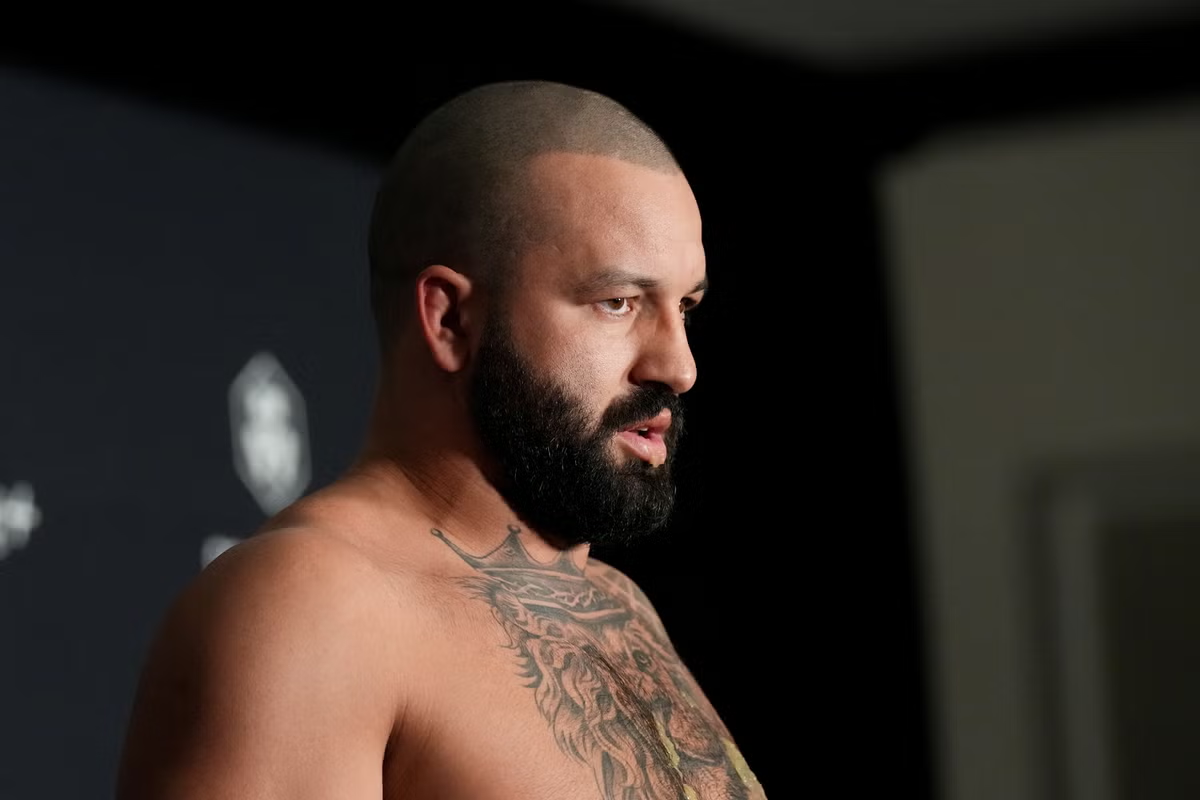
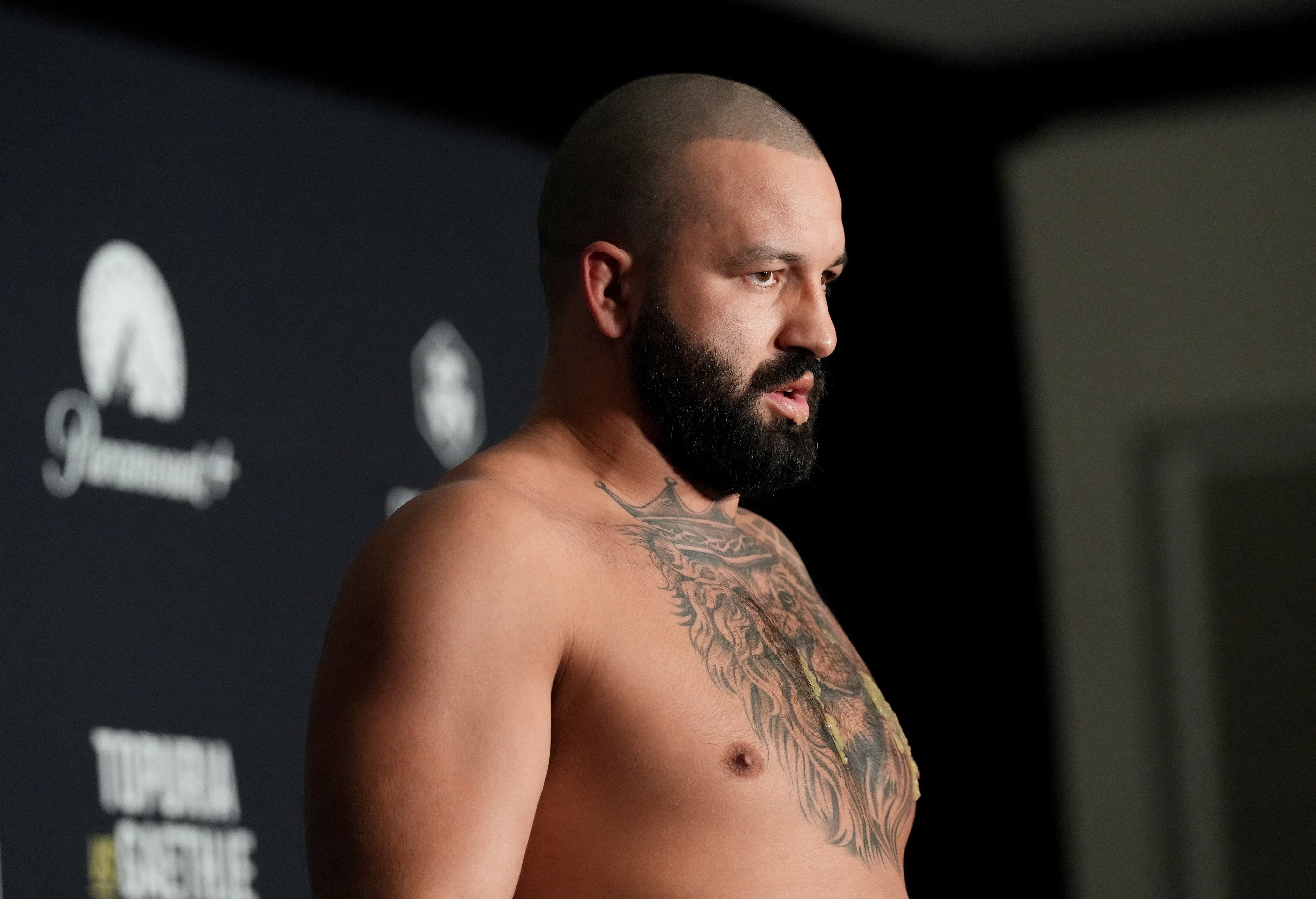
Ahead of Sunday’s remarkableUFCWhite House fight event, Josh Hokit stole the show at the Saturday morning weigh-in, having done the same at Friday’s press conference.
And on Saturday morning, as the fighters weighed in before a crowd of media personnel, Hokit seemingly pretended to throw up, as he dribbled a sick-coloured liquid from his mouth.
Heavyweight Josh Hokit on the scales before UFC Freedom 250 (Reuters)
“So what? Maybe I was drinking last night,” the American heavyweight told those in the room. “Who wouldn’t be?
“I’ve got a giant man who wants to knock me out. He has the most knockouts in UFC history,” Hokit added, referencing his opponent Derrick Lewis.
Advertisement
Hokit, 28, also appeared to be on unsteady legs as he walked into the room, took to the scale, and exited. However, this also seemed to be part of his act.
Hokit has made a name for himself in recent months by playing different characters. At Friday’s press conference, he continually referenced “The Incredible Hoke”, while he spoke nervously about all of the fighters at the event.
Hokit, who weighed in at 231lb on Saturday morning, will join his fellow athletes in performing a ceremonial weigh-in on Saturday evening, at the Ellipse park near the White House. That gives each fighter one final chance to face off with their opponent before Sunday’s unprecedented fight card on the South Lawn.
Advertisement
Hokit vs Lewis was added to UFC Freedom 250 at the request of Donald Trump, after the US President watched from cageside in April as Hokit won an instant classic with Curtis Blaydes.
Derrick Lewis facing off with Hokit at Friday’s press conference (Getty)
By the end of the night, UFC president Dana White – a close friend of Trump – had paired Hokit with fellow American Lewis, who is Trump’s favourite fighter.
Lewis, 41, tipped the scales at 265lb on Saturday morning. The veteran is the betting underdog for his contest with Hokit.
At a launch press conference for UFC Freedom 250 in May, Hokit had insulted Topuria – as well as co-main-event fighter Alex Pereira – and was escorted off stage by security.
Police have released a photo of a man accused of attacking a 17-year-old after a Knicks game in an assault that left the teen in a coma.
The New York Police Department shared a photo of the suspect in an X post Friday and urged the public to come forward if they recognized him.
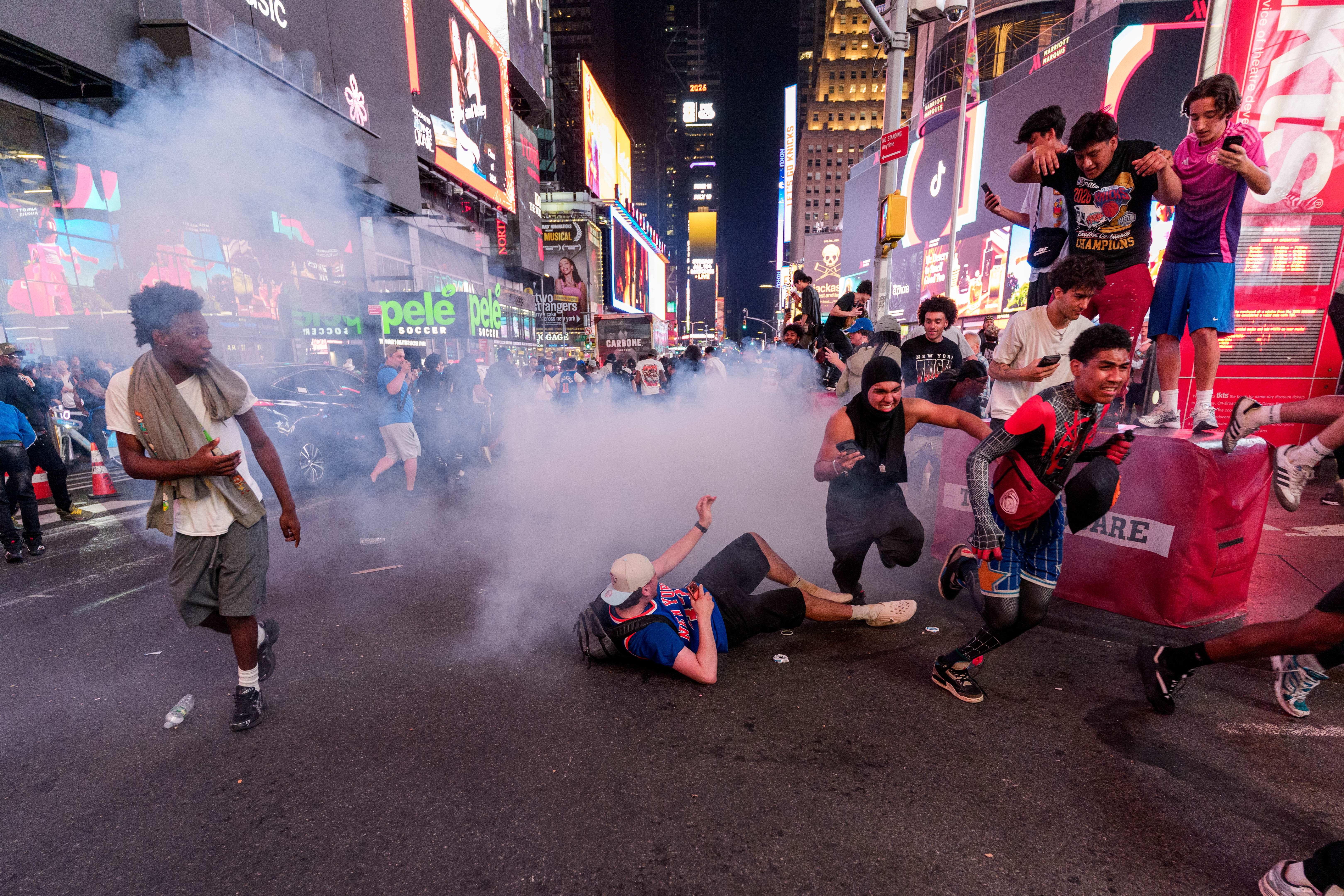
The unidentified man is wanted for gang assault after allegedly punching and kicking the teen victim on West 35th Street near Madison Square Garden after Wednesday night’s game, the NYPD said.
The victim had a seizure and was left in a coma, according to police. The department didn’t elaborate on his condition further.
Advertisement
Celebrations after Game 4 turned violent leading to repeated calls by NYPD for peaceful gatherings (Getty Images)
“I have no words for him,” the victim’s mother, Shiomara Arce, told The New York Post. “Right now my son comes first. This person needs to pay for what he’s done.”
She described the victim, Johnny Aumuller, as a Knicks fan who is “always playing basketball in the neighborhood.”
He was no longer in a coma as of Friday but was still listed in critical but stable condition at the hospital, The Post reported.
The search for the suspect comes as the Knicks seek their first NBA championship in 53 years. They took a 3-1 lead in the best-of-seven series with a 107-106 victory against the San Antonio Spurs in Game 4 of the NBA Finals.
“Once again, there were large crowds of people who engaged in incredibly reckless and dangerous behavior last night both during and after the game,” the NYPD wrote in a statement Thursday. “This demonstrates exactly why the NYPD has increased our presence in and around Madison Square Garden.”
Game 5 is Saturday night in San Antonio, Texas. If necessary, Game 6 will be at Madison Square Garden on Tuesday night.
Despite the team’s absence from Madison Square Garden Saturday, thousands of Knicks fans are expected to descend on the area surrounding the Manhattan arena.
The team has organized an official watch party for up to 3,000 supporters outside MSG, requiring advanced registration and police screening. Additional viewing events are planned for Radio City Music Hall and Wollman Rink in Central Park, catering to the overwhelming demand.
The DWP has released new figures showing the scale of State Pension underpayments due to historic National Insurance HRP errors, with thousands of pensioners potentially owed back payments
Thousands of pensioners throughout the UK may still be entitled to State Pension back payments as the DWP works to rectify longstanding errors relating to National Insurance records.
Advertisement
Newly published figures from the DWP reveal that mistakes involving Home Responsibilities Protection remain the leading cause of State Pension underpayments, with both the department and HMRC engaged in a substantial exercise to identify those affected and issue arrears. According to the DWP’s most recent Fraud and Error in the Benefit System report, HRP-related errors account for roughly £6 in every £10 underpaid as a result of National Insurance contribution mistakes.
HRP was a scheme operating between 1978 and 2010, designed to safeguard the State Pension entitlement of parents and carers who took time away from employment to look after children or disabled family members.
However, certain eligible years were not correctly recorded on National Insurance records, leaving numerous individuals receiving lower State Pension payments than they were rightfully due.
Based on DWP guidance and the groups most frequently affected by Home Responsibilities Protection (HRP) errors, there are five key categories of people who may be owed State Pension back payments, reports the Express :
Advertisement
Women who claimed Child Benefit before May 2000 and whose National Insurance number was not correctly linked to their claim.
Parents whose partner claimed Child Benefit instead of them, meaning HRP may not have been credited to the correct person’s National Insurance record.
People receiving Income Support while caring for someone who was sick or disabled.
Unpaid carers who looked after a disabled or seriously ill person and met the HRP criteria.
Foster carers and eligible kinship carers (particularly between 2003 and 2010) who may have qualified for HRP but never received it.
The DWP stated: “Some people have not had all eligible years of HRP recorded on their National Insurance records and so have an incomplete record affecting their State Pension entitlement.”
As part of an ongoing rectification scheme known as the Legal Entitlements and Administrative Practice (LEAP) exercise, HMRC has already dispatched more than 370,000 letters urging individuals to check whether they may have been affected.
Officials are cross-referencing National Insurance records to identify those who may have qualified for HRP between 1978 and 2010 but have no corresponding credits on file.
The most recent figures reveal that State Pension underpayments remained at approximately £390 million in the year to April 2026, with National Insurance contribution errors continuing to account for a considerable proportion of cases.
Those who believe they may have missing HRP years are able to review their National Insurance record and State Pension forecast online via GOV. UK.
Advertisement
Individuals can still apply to have missing HRP added to their record even after reaching State Pension age.
The DWP and HMRC have confirmed they will press ahead with reviewing cases, correcting records and issuing back payments to those found to have received less State Pension than they were rightfully owed.
The FM has joined thousands of Scotland fans for a Boston takeover ahead of our first World Cup match in 28 years.
Fionnuala Boyle and Ryan McDougall, Claire Hayhurst and Ben Mitchell, Press Association
20:32, 13 Jun 2026
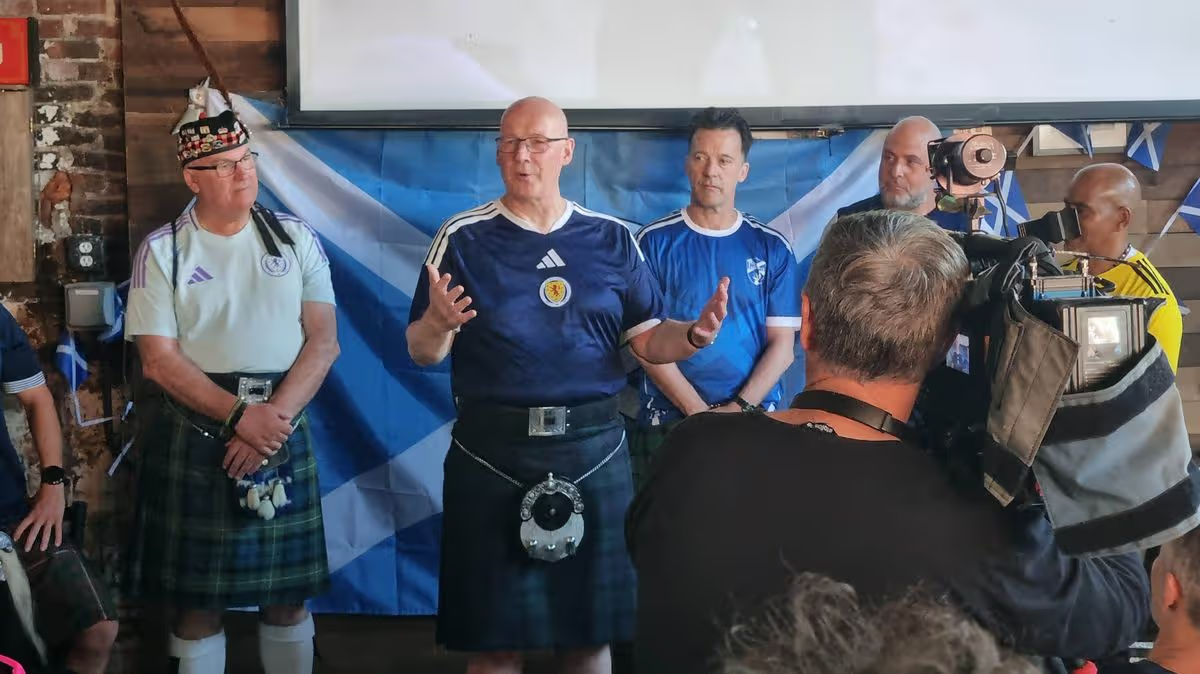
John Swinney has praised the “electric” atmosphere in Boston as the Tartan Army gather in huge numbers ahead of the country’s first World Cup Match in 28 years.
The First Minister is in the US city to watch Steve Clarke’s men take on Haiti in their opening fixture of the 2026 tournament which kicks off at 2am UK time on June 14.
The SNP leader has been joined by famous faces including Gerard Butler and Gordon Ramsay in the Massachusetts capital alongside an estimated 40,000 Scotland fans who have also made the trip.
Advertisement
Speaking to the Press Association, Swinney said: “The atmosphere is electric here in Boston, it has been since we arrived.
“There are thousands and thousands of Scotland fans who have made the journey and the atmosphere is lively, it’s positive.
“It’s great weather and people are having a great time and engaging with the local community here in Boston. Everyone has had such a warm welcome from the Boston community, so its a fantastic situation to be part of.”
Advertisement
Mr Swinney added that Scotland’s 28-year absence at the World Cup made it “particularly precious” to be in Boston and supporting the team.
He was speaking at The Haven, a Scottish pub in Boston, for an event by the Tartan Army Sunshine Appeal, which aims to donate to children’s charities in every country in which the Scotland team plays matches.
A spokesman for Meet Boston – a tourism organisation in the city – told the Press Association that the Scottish fans were bringing “palpable” joy. He said: “To say the impact has been significant would be a major understatement.
“The Tartan Army is omnipresent across town and their energy and joy is so palpable.”
Advertisement
The spokesman described scenes posted on social media of Scotland fans celebrating ahead of the match as “absolute fire”.
He said many people had been trying to estimate the overall number of visitors from Scotland, which was about 40,000 but “could be higher”.
The Dubliner Boston, an Irish pub which has been popular with fans, had gone through 30 kegs of Tennent’s lager by Thursday, he added.
Advertisement
On Friday night, Mr Swinney attended events in Boston alongside celebrities including Gerard Butler – star of the movie 300 – who wore a kilt and football shirt.
Baby Reindeer creator Richard Gadd also sported a kilt, with actors Martin Compston and Tony Curran, former footballers James McFadden and Darren Fletcher and broadcaster Gordon Smart, also in attendance.
Get Daily Record Premium for just £1 per month in exclusive offer to celebrate the world cup. Click HERE.
Get more Daily Record exclusives by signing up for free to Google’s preferred sources. Click HERE.
















































You must be logged in to post a comment Login