





Connect with us

Crypto World

Why an Early Bitcoin Holder Burned $1M: Mystery Explained

Published

on

Crypto Breaking News

In March, an almost-dead Bitcoin wallet suddenly resurfaced and moved about $1 million worth of BTC through a large centralized custodian—only for nearly the same amount to be sent back three weeks later. Less than two months after that brief “round trip,” the same stash was intentionally destroyed by sending it to an unspendable address.

The episode sits within a broader puzzle highlighted by blockchain researchers: multiple BTC-burning transactions in May, totaling 107 BTC (worth roughly $8.5 million at the time). New wallet-cluster analysis suggests the burn-related addresses were likely controlled by the same individual, raising the question of why someone would deliberately destroy coins that represent long-held value.

Key takeaways

  • One dormant wallet moved 20.00010537 BTC through an unidentified major custodian and then received 20.00006037 BTC back about three weeks later—an outcome difficult to square with typical trading.
  • Five separate wallets later burned their BTC, and Chainalysis reported “strong indicators of common ownership” linking them.
  • Most of the funds behind the burn can be traced back to Mt. Gox-era origins, suggesting an early adopter connection.
  • Researchers cannot confirm why the coins were destroyed; even CoinShares-class level of onchain forensics can’t determine intent from transaction history alone.
  • A possible clue emerges from repeated transfers clustered around similar dollar values (about $10,400), hinting at a planned approach—but not fully explaining the March round trip.

A dormant wallet returns—and immediately interacts with a custodian

Blockchain educator Bennet described a wallet that lay dormant for nearly 12 years before suddenly moving 20.00010537 BTC to “a custodian of some kind,” according to his analysis. Three weeks later, almost the entire balance returned, minus only a very small difference (about $3). Bennet characterized the pattern this way: the full balance went out to what appeared to be an exchange hot wallet and nearly the same amount came back three weeks later; then, seven weeks after the return, the funds were burned.

What makes the sequence notable is its symmetry. Burning is irreversible on-chain, but the “round trip” suggests the private keys behind the dormant wallet were actively used—not merely to let funds sit, but to interact with custodial infrastructure, retrieve the coins, and then choose a terminal outcome.

Bennet’s observation aligns with a timing link to a wider narrative of BTC destruction. Earlier coverage connected the broader mystery to 107 BTC burned in May, described as worth approximately $8.5 million at the time. The March event may be part of the same story, even though the chain of custody is obscured once the coins enter custodian systems.

Advertisement

Chainalysis: the burn wallets point to one controller

Chainalysis analysis, as summarized by Bennet and repeated in the coverage, indicates that five wallets ultimately responsible for destroying BTC show “strong indicators of common ownership.” In other words, the on-chain behavior suggests the same party controlled these addresses at some point.

The wallets were reportedly funded on the same day in April 2014. From there, each address sent BTC to the same deposit address at a large centralized exchange. Researchers also noted a rotational pattern: one address would transmit BTC to the exchange until its activity paused, then another would take over with transactions of similar cadence and dollar-equivalent value.

Chainalysis further reported that most of the funds could be traced back to Mt. Gox, implying an early Bitcoin holder background. While the connection suggests origin, it does not prove the coins were withdrawn directly from Mt. Gox at the time it ceased trading in February 2014—because the five wallets were funded in April. Bennet argued it’s plausible the owner was among those who managed to get their coins out before the collapse.

Equally important: the custodian remains unidentified. Chainalysis confirmed it is a large centralized exchange, but it does not publicly disclose the names of the services it identifies. Bennet’s interpretation is that the deposit address behaves like a static customer address within a custodian—one that doesn’t maintain a meaningful balance itself because deposits are swept and consolidated internally using an omnibus wallet approach. That design makes the coins’ subsequent fate hard to follow on the public blockchain.

Advertisement

The “$10,400” pattern—and why it may still be incomplete

One of the wallets involved in the burn later sent 19.6 BTC in 60 separate transactions to the same custodian between 2022 and 2024, according to the mempool-linked reference in the reporting. The BTC amounts varied widely—from roughly 0.15 BTC to 0.62 BTC—but when translated into dollars at the time of each transfer, the transactions were strikingly consistent.

Specifically, 58 of the 60 transfers were within 10% of approximately $10,400 per transaction. That implies the controller cared more about dollar totals than fixed BTC amounts. Bennet suggested the behavior could reflect a planned liquidation strategy.

However, the pattern has limits. The blockchain cannot prove whether those dollars were realized through a sale, held, or moved onward, because once funds hit a custodian they are mixed with many other inputs and consolidated internally. Researchers also noted that while the payment size was broadly constant, transaction frequency was not; transfers arrived in clusters rather than a perfectly regular automation schedule. Bennet viewed that as more consistent with sending a fixed-dollar amount when conditions required it, rather than a purely automated periodic process.

Still, even if the “$10,400” behavior hints at strategy, it doesn’t close the gap around the March event—particularly the fact that the wallet sent almost exactly the same amount out and got almost the same amount back shortly afterward.

Advertisement

The $1 million “round trip” doesn’t fit a simple trading explanation

After remaining untouched for roughly 12 years, the dormant wallet moved its entire balance of 20.00010537 BTC and received 20.00006037 BTC back—leaving a tiny difference of about 4,500 satoshis (around $3). The returned Bitcoin was split into three transactions of 7 BTC, 7 BTC, and 6.00006037 BTC, sent over three consecutive days.

Bennet argued that the use of round numbers may align with custodial withdrawal limits. More importantly, the coins did not just reappear somewhere else—they returned to the same address that had sent them to the custodian.

The transaction history also suggests the same private key holder controlled the wallet before and after the round trip. Bennet noted that using the BTC in March would have required the private key to authorize the custodian movement, and burning it in May required the key again. That shared key linkage makes the sequence particularly difficult to interpret as a straightforward exchange workflow where funds simply change hands.

The central tension is clear: if the activity were primarily about trading or liquidation, the near-identical “go out, come back” outcome appears unusually tight, especially given the custodial mixing that otherwise obscures on-chain details.

Advertisement

So what was the point of a deliberate burn?

Multiple explanations have been floated, but the available evidence doesn’t neatly select one. The liquidation theory helps rationalize earlier patterns—especially the “$10,400” clustering and the apparent rotational funding to the same custodian—but it does not readily explain why the controller would send roughly $1 million through the same infrastructure in March and then retrieve virtually all of it.

One alternative possibility is that the controller was testing an old custody setup or wallet—verifying that after a long dormancy, coins could still be moved through a major custodian and returned successfully. Yet that still leaves the subsequent decision to destroy the BTC.

Tax or compliance narratives could also be imaginable: someone might reorganize assets through recognized custody channels for record-keeping. But the reporting notes there is no evidence tying these actions to any specific regulatory or tax event.

Privacy is another candidate. Sending BTC through a custodian that sweeps deposits into an omnibus wallet can make on-chain tracing more difficult after the point of deposit. Still, privacy alone doesn’t clarify why the coins later ended up burned rather than merely secured.

Advertisement

Bennet also suggested a more personal motive: someone without heirs might have chosen to permanently reduce Bitcoin’s circulating supply by burning rather than destroying private keys. He also emphasized that this hypothesis is not provable purely via blockchain analysis.

Chainalysis, as cited in the coverage, effectively summed up the current limitation: it does not have a clear explanation for why the owner would move a long-dormant stash through a custodian, retrieve roughly the same amount, and then burn it deliberately.

In other words, the blockchain records the “what” with unusual clarity, but not the “why.”

The next thing to watch is whether more tracing work identifies the custodian involved in the March round trip and in the May burn-linked transfers, or whether additional wallet-cluster research finds consistent behavioral links across other dormant-to-active Bitcoin movements. Without that, the most important unknown remains intent—and intent is the one variable onchain forensics can’t conclusively measure.

Advertisement

Risk & affiliate notice: Crypto assets are volatile and capital is at risk. This article may contain affiliate links. Read full disclosure

Source link

Continue Reading
Click to comment

You must be logged in to post a comment Login

Leave a Reply

Crypto World

Brian Armstrong: ‘Incumbents’ Are Trying to Kill Crypto Competition

Published

on

Coinbase CEO Brian Armstrong has accused “entrenched incumbents” of lobbying against the CLARITY Act, arguing that established financial players are trying to stop crypto companies from competing in US financial services.

His comments frame the fight over the bill as a contest between traditional firms protecting their position and crypto businesses seeking clearer rules.

Armstrong Puts Competition at Center of CLARITY Fight

Armstrong said the Trump administration came to power after millions of Americans felt “disenfranchised” by the previous administration’s approach to crypto.

He pointed to Donald Trump’s 2024 campaign promise to remove former SEC Chair Gary Gensler, recalling the reaction when Trump said at a Bitcoin conference that he would fire Gensler “on day one.”

Advertisement

He then ran through what he sees as progress since Trump took office: an executive order calling for clearer crypto rules, the appointment of SEC Chair Paul Atkins and CFTC Chair Mike Selig, and passage of the GENIUS Act for stablecoins. The CLARITY Act, Armstrong said, is the next piece.

“Make no mistake, there are people out there actively fighting against this,” Armstrong said. “There are entrenched incumbents who don’t want competition from crypto companies that would provide better financial services.”

He went further, alleging that some of those firms are “actively lobbying against it, trying to kill it.” The Coinbase chief also singled out Senator Elizabeth Warren, saying she is among those seeking to stop the legislation. His argument comes as the bill approaches a September 15 Senate vote on a motion to proceed.

As CryptoPotato reported previously, Armstrong had earlier said on August 21 that regulatory clarity was coming either through Congress or through action by the SEC and CFTC. He pointed to September 15 and 16 as possible dates for that development.

The Senate needs 60 votes for cloture, while Republicans hold 53 seats. That means if all of them support the measure, it would still leave them needing at least seven additional votes from Democrats or independents.

Advertisement

Furthermore, the bill still faces disputes over ethics rules, anti-money laundering provisions, and whether crypto companies can offer rewards on customer stablecoin holdings.

Banks Remain a Point of Tension

The banking industry’s concerns over stablecoin rewards sit close to Armstrong’s competition argument. The provision has drawn resistance from traditional lenders, who say such products could pull deposits away from banks.

That dispute helps explain why the CLARITY debate is about more than deciding which regulator handles crypto. The legislation would establish federal rules for digital assets, including how tokens are classified and where SEC and CFTC responsibilities begin and end.

With all that going on, Armstrong’s message is direct: the bill should pass because consumers and crypto firms need clearer rules, while established financial companies should not be able to block competitors through lobbying.

Advertisement

“It’s time to get the Clarity Act, which will protect consumers, over the finish line,” he wrote on X. “There’s something in it for everyone: banks, law enforcement, crypto companies, and most importantly the American people.”

The post Brian Armstrong: ‘Incumbents’ Are Trying to Kill Crypto Competition appeared first on CryptoPotato.

Source link

Continue Reading

Crypto World

BeInCrypto Partners with TOKEN2049 Singapore 2026

Published

on

BeInCrypto Partners with TOKEN2049 Singapore 2026

BeInCrypto is attending TOKEN2049 Singapore as an official media partner, and this year we are bringing The NewsDesk to the main venue. Our team will be at Marina Bay Sands for both days of the conference, October 7-8, interviewing executives and industry leaders from across digital assets and finance.

About TOKEN2049 Singapore 2026 

TOKEN2049 Singapore is expected to bring together more than 25,000 attendees, 7,000 companies, 300 speakers and 500 exhibitors across 160+ countries, with more than 60% of attendees holding C-level positions. 

Alongside the broader Singapore programme, 1,000 side events will be featured throughout the week. Other major gatherings taking place in Singapore that week include Digital Asset Summit Asia, Sui Basecamp, the Network State Conference, the Milken Institute Asia Summit, and the Forbes Global CEO Conference, all against the backdrop of the Formula 1 Singapore Grand Prix.

This year’s agenda features tracks on institutional capital integration, with traditional financial leaders such as Nasdaq’s Adena Friedman and Franklin Templeton’s Jenny Johnson discussing capital flows and regulatory developments. At the same time, industry leaders including Binance CEO Richard Teng, Hyperliquid Labs CEO Jeff Yan, and Polymarket founder Shayne Coplan will explore exchange liquidity, on-chain derivatives, and decentralised prediction markets. 

Advertisement

The speaker’s lineup also features other financial heavyweights such as Joseph Lubin, Co-founder of Consensys, Vlad Tenev, CEO of Robinhood, and Amy Oldenburg from Morgan Stanley, among others.

BeInCrypto NewsDesk at TOKEN2049 Singapore

Our NewsDesk will be located at the main venue in Marina Bay Sands where our journalists will be speaking to industry leaders and covering all the latest announcements and product launches as it happens.

Follow BeInCrypto for coverage across both days, and check token2049.com for the full speaker lineup and agenda as more of the programme is announced.

BeInCrypto is part of the BeInNews Group, an independent media group covering the convergence of finance and digital assets. We help professionals act with confidence in a complex and fast-changing industry through our newsroom, research reports, events, expert councils and multimedia studio.

Advertisement

The post BeInCrypto Partners with TOKEN2049 Singapore 2026 appeared first on BeInCrypto.

Source link

Continue Reading

Crypto World

Bitcoin Price Faces $80,000 Test As Technical And On-Chain Signals Diverge

Published

on

Crypto Breaking News

The Bitcoin price is getting ready for another critical test near the $80,000 level, although there seems to be a confusing environment on the charts. The technical picture looks a bit weak in the short term, while on-chain metrics remain stable. That keeps the trading range for BTC quite narrow, from $77,000 to $80,000.

Key Takeaway

  • Bitcoin is heading toward an important resistance point at $80,000; a breakout here can take the price closer to $88,000-$90,000.
  • Near-term momentum looks weak as BTC trades close to key support levels at $77,000-$78,000.
  • There are no major developments on the chain front, with active addresses holding steady close to 680,000 and transactions ranging from 550,000 to 600,000 per day.
  • Below $77,329 could add more pressure to the bearish side, while failure to hold above $70,000-$71,000 may worsen the outlook.

Bitcoin Price Faces Resistance Near $80,000

Bitcoin recently rejected at the 50-week moving average, according to crypto analyst Ted Pillows. But Bitcoin managed to close above its 50-week exponential moving average (EMA), meaning the overall technical setup is not in breakdown territory just yet.

In his analysis, Pillows indicated that regaining control of the 50-week moving average might pave the way for Bitcoin toward $88,000-$90,000, while giving up the 50-week EMA may cause the price of Bitcoin to fall toward $74,000.

The weekly chart puts the 50-week simple moving average (SMA) around $80,326.65, while the 50-week EMA sits near $77,329.10. That makes the current area particularly important. Bitcoin is trading between the two averages, with the 50-week EMA acting as nearby support and the 50-week SMA sitting just above $80,000 as resistance.

There is also a larger support zone below the market. The Bull Market Support Band is currently around $70,102-$71,052. A drop toward this area would mean a deeper pullback, while a weekly close below $70,102 would be a more serious warning for the broader bullish structure.

Daily Chart Shows Bitcoin Losing Some Momentum

The daily chart tells a similar story, with Bitcoin stuck between short-term support and key resistance levels. BTC is currently trading at $78,287, while the 9-day EMA is at $77,330. As long as it continues to trade above this moving average, short-term support holds up. The situation could change quickly if BTC closes below the 9-day EMA, which could put $75,000 back in focus, followed by the $70,000 area if selling pressure continues.

Advertisement

For the bulls, however, $80,000 remains the level to watch. Bitcoin’s daily Relative Strength Index (RSI) is around 70.34, putting momentum close to the traditional overbought zone. The RSI is still below its upper band near 75.95, though, so there is room for momentum to increase if Bitcoin manages to break higher. A move above the upper RSI band alongside a clean break above $80,000 would strengthen the bullish case.

The 4-hour chart is less encouraging in the short term. Bitcoin is trading below its 9-period EMA at $78,143, and the RSI is at 46.81. Also, the RSI is trading below its signal line at 48.72, implying bearish momentum in the short term.

However, the first level that needs to be watched is $77,900. Should the price find support at $77,900, there would be hope of pushing toward $80,000 once again. Breaking down from $77,900 would make a move toward $75,000 and $72,000 possible. Retaking $78,143 on the other side would improve the near-term picture.

Bitcoin On-Chain Activity Remains Steady

While the charts are showing some short-term weakness, Bitcoin’s network activity tells a different story. The analysis puts Bitcoin’s market capitalization at around $1.61 trillion, with BTC trading near $78,000. Despite recent consolidation, market capitalization has remained relatively stable.

Advertisement

That suggests Bitcoin’s overall valuation has not experienced a major breakdown while the price has moved sideways. Active addresses are also holding up relatively well. The provided Glassnode data shows around 680,000 active addresses, with activity generally fluctuating between approximately 640,000 and 680,000.

This is worth watching because a sharp and sustained decline in active addresses could point to weakening network participation. So far, however, there has not been a major drop of that kind.

Transaction activity also remains fairly healthy. Daily transactions generally sit between 550,000 and 600,000, although there have been periods where activity jumped toward 750,000-$900,000. In other words, Bitcoin’s price may be struggling to push higher, but the network itself is still seeing meaningful activity.

Bitcoin Price Outlook: $70,000 And $80,000 Are The Key Levels

Put everything together, and Bitcoin is essentially stuck between two major zones. On the other hand, bulls should aim for $80,000, and once a break above that level is seen, eyes will be on the next targets of $84,000, $87,000, and ultimately $90,000. Breaking above the 50-week moving average on a weekly chart at $80,326 again will send a positive signal to the market.

Advertisement

On the downside, the critical levels start with the 50-week EMA at $77,329. A breach of this level will add more downward pressure, with $75,000 becoming relevant. Beneath that is the range of $70,000-$71,000, which becomes increasingly more crucial. A close beneath $70,102 will weaken the overall bullish setup, putting Bitcoin back into the support zone of $63,400-$61,800.

For now, Bitcoin is caught in a tug-of-war. Short-term technical indicators are showing signs of weakness, but on-chain activity remains relatively stable. This means the upcoming move is very significant. Breaking out above $80,000 would help rekindle bullish sentiment toward the $90,000 area, whereas breaking down below the support levels would weaken the bullish setup significantly.

Disclaimer

This analysis is based on market trends and does not guarantee future results. It should not be treated as financial advice. Cryptocurrency investments involve risk, so always do your own research (DYOR) before investing.

[contact-field label=”Name” type=”name” required=”true”/][contact-field label=”Email” type=”email” required=”true”/][contact-field label=”Website” type=”url”/][contact-field label=”Message” type=”textarea”/][/contact-form>

Advertisement

Risk & affiliate notice: Crypto assets are volatile and capital is at risk. This article may contain affiliate links. Read full disclosure

Source link

Advertisement
Continue Reading

Crypto World

Bitcoin Gained 26% in August, But Fed’s Kevin Warsh Says It Could Be Over

Published

on

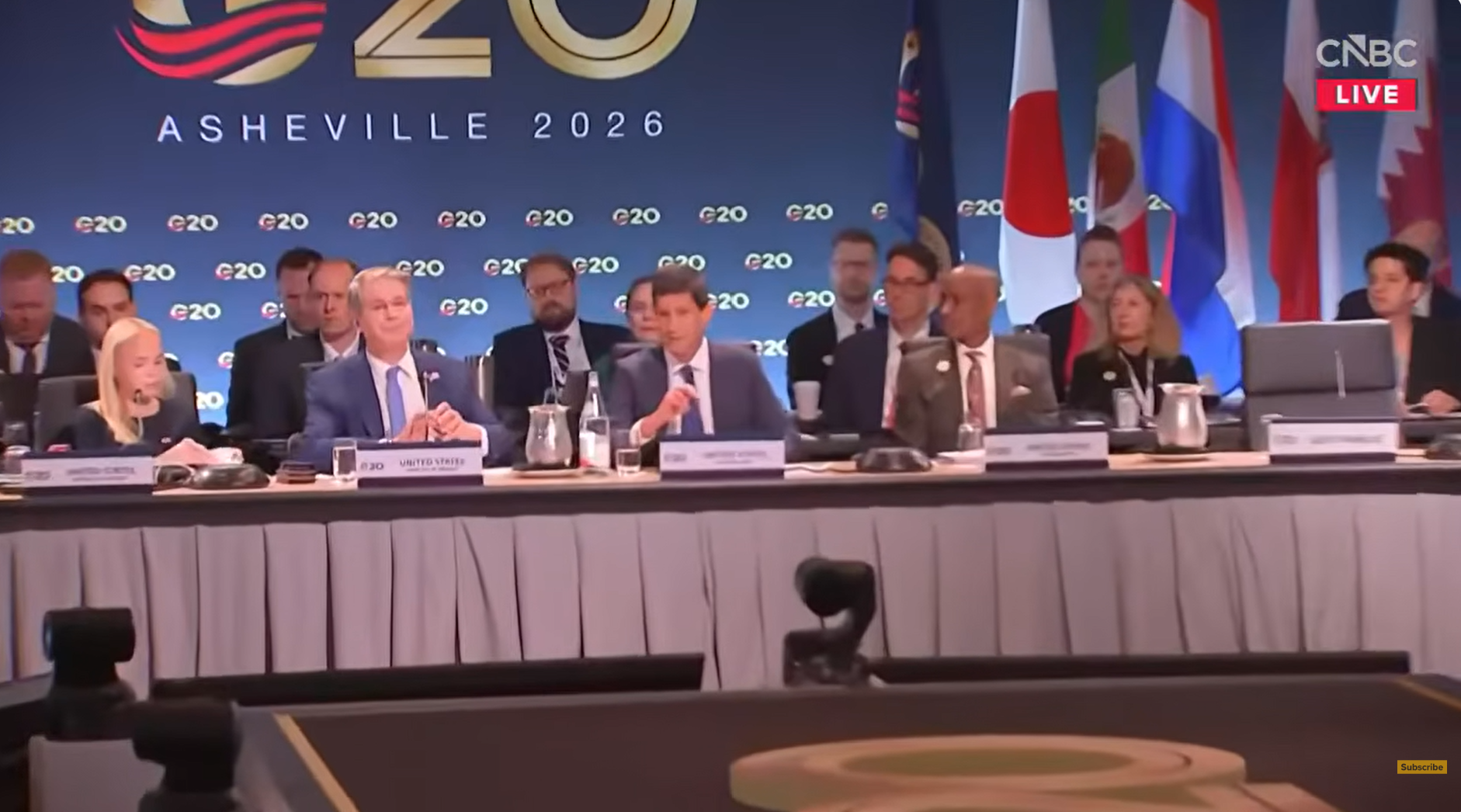
Treasury Secretary Bessent and Fed Chairman Kevin Warsh speak at G20 meeting. Source: CNBC

Bitcoin gained about 26% in a month. Federal Reserve Chairman Kevin Warsh just told the world’s finance chiefs why that run may be ending.

Cheap money is over, he argues. Growth is picking up, and cash is chasing new projects. That pushes interest rates up, not down.

Warsh Says the Easy Money is Gone

Warsh has run the Fed for 100 days. He spoke on Monday at the Group of 20 (G20) meeting in Asheville, North Carolina. It gathers finance ministers and central bankers.

For years, economists blamed too much idle cash and too few good projects. That kept borrowing cheap. Warsh says that world is finished. He made the same case at Jackson Hole on Friday.

Advertisement

“It wasn’t so long ago … when economists and policymakers were speaking of secular stagnation and a global saving glut,” said Warsh.

Money is now pouring into artificial intelligence, he said. He cannot call today’s conditions tight. Inflation still runs at 3.7% a year.

Bessent Says He Cannot Fight It

Treasury Secretary Scott Bessent sat beside him on Monday in Asheville. On August 19, Bessent doubled the size of Treasury’s bond buybacks to at least $4 billion each. A buyback means the government buys back its own long-term debt.

Critics said the real goal was to push borrowing costs down. Bessent denies it.

Treasury Secretary Bessent and Fed Chairman Kevin Warsh speak at G20 meeting. Source: CNBC

“I don’t think I can change the equilibrium price. My job is to slow things down … and make sure that the market doesn’t get disorderly,” he said on Monday’s panel.

However, the market is not listening, with the 30-year Treasury yield reaching about 5.26% the same day, to mark a 19-year high. The 10-year yield also surged to 4.76%.

Advertisement
10-year and 30-year US Yields and Bitcoin Price Performance. Source: TradingView

Stanley Druckenmiller has seen this film before. He ran the 1992 bet that broke the Bank of England. Britain was defending a price it could not hold. Bessent worked at Soros Fund Management then. Druckenmiller says he is repeating the mistake.

Bessent addressed the row directly on Monday. He said he has spoken with Druckenmiller since the op-ed ran, and suggested the timing cost his former mentor money in the market.

Why Bitcoin Holders Should Care

Investors bought hard assets in August because they expected the dollar to keep losing value. Warsh describes the opposite world. Stronger growth lifts interest rates. Savers then get paid to wait. Bitcoin pays nothing.

Both gold and Bitcoin retreated after his Jackson Hole speech. The bigger risk is Warsh, not Bessent, as a risky September market pattern sits ahead too.

Advertisement

The post Bitcoin Gained 26% in August, But Fed’s Kevin Warsh Says It Could Be Over appeared first on BeInCrypto.

Source link

Continue Reading

Crypto World

SLB Stock Surpasses Buy Point On AI Data Center Deal

Published

on

SLB Stock Surpasses Buy Point On AI Data Center Deal

SLB (SLB), one of the largest providers of oilfield support services, is expanding its data center services business after acquiring a provider of cooling systems. The stock climbed above a new buy point Monday morning. In a deal valued at $4.1 billion, SLB is acquiring Kelvion from funds managed by investment firm Apollo (APO). Kelvion is a global provider of…

Copyright ©2026 Investor’s Business Daily, LLC. All rights reserved. 87990cbe856818d5eddac44c7b1cdeb8

Source link

Continue Reading

Crypto World

How to Reduce Food Waste in Your Kid’s School Lunch

Published

on

How to Reduce Food Waste in Your Kid’s School Lunch

Collect everything the average American kid throws away in the school cafeteria over a single year, pile it on a scale, and you’d be looking at roughly 39 lbs of food. That’s about what a typical 4-year-old weighs.

Multiply that across the country, and school food waste adds up to an estimated 530,000 tons every year—an alarming amount of uneaten sandwiches, rejected fruit, and unopened snacks. 

That makes food waste difficult to dismiss as somebody else’s problem. “If you eat food, you’re part of this whether you like it or not,” says Lauren Click, founder of the nonprofit Let’s Go Compost, which runs food-waste programming in more than 600 schools, libraries, and community centers. The flip side is that you’re also in a position to waste less—starting with a packed lunch, one of the few pieces of the food system a family fully controls. 

Here’s how experts recommend packing a school lunch that produces less trash—and stands a better chance of getting eaten.

Advertisement

See what comes home

Before you overhaul your lunch-packing routine, spend a couple weeks paying attention to what returns at the end of the day. Which foods are untouched? Is the bologna sandwich always missing exactly one bite? What never even made it out of the wrapper?

After a few days, you’ll probably start to notice a pattern. “If you pack based on what actually comes home, not what seems balanced on paper, you can track it each week and adjust over time,” says Lizzie Horvitz, founder and CEO of Finch, a platform that evaluates products for sustainability.

You don’t have to keep tabs on the lunchbox all year. August and September are when parents are still figuring out what—and how much—their kids will eat. “If you’re really paying attention to ‘what’s my kid eating?’ and ‘what’s my kid consistently bringing home?’” Horvitz says, “there really shouldn’t be any waste after a couple of weeks.”

Advertisement

Ask your kid what happened

Seeing what comes home is only half the job. You also need to find out why—and good luck guessing correctly.

Click has heard every version of this story: A kid suddenly stops eating apples, and their parent assumes they don’t like the fruit. The real problem? A classmate declared apples uncool. “You can’t make assumptions, because you’ll never guess what’s going on in the mind of a 5-year-old,” she says.

Keep the conversation curious, not accusatory. Ask your kid who they sit with, how much time they have to eat, and what their friends bring. Maybe the orange takes too long to peel, or they can’t open one of the containers without help. Maybe their friend brings two sandwiches and shares one every day—in which case, congratulations, you can stop making a sandwich.

Advertisement

Save new foods for dinner

The school cafeteria isn’t exactly an ideal tasting room. Lunch periods are short, cafeterias can be loud and chaotic, and no one is sitting nearby encouraging your kid to give that unfamiliar vegetable one more chance. (Rutabaga, anyone?)

“Maybe this isn’t the time to have a really balanced, try-new-things meal,” Horvitz says. “Let’s save that for meals at home.” That’s not an argument for packing nothing but cookies. It means lunch should mostly consist of foods you already know your child will eat; save the experiments for dinner, when you’re there to encourage them.

Choose the food before the lunchbox

Advertisement

Compartmentalized bento boxes are adorable. They’re also built for a very specific amount (and shape) of food, which may not match what—or how much—your kid eats.

Lindsey Schoenfeld, a registered dietitian nutritionist, chef, and co-author of To Your Taste: How to Eat Well and Feel Better for Your Whole Life, suggests starting with the food instead. Ask your kid what they ate all summer and which lunches they loved last year. Then choose containers that fit those foods. The folded half-sandwich that nestled perfectly into one tiny compartment in second grade might not cut it for a middle-schooler.

Before splurging on new gear, check your cabinets. “There’s so many containers that we have around the house,” Schoenfeld says. “Maybe they don’t have a lid right now. Maybe we need to dig through a few shelves.” You might need a new lunchbox, but you probably don’t need every container inside it to be new too.

Reusable containers only reduce waste if you use them over and over, so make cleanup as painless as possible. Many silicone bags and food containers can go straight into the dishwasher—check the manufacturer’s instructions—and you don’t need to scrub them spotless first. “The dishwasher’s job is to make them completely spotless,” Horvitz says.

Advertisement

Pack the amount your child actually eats

An oversized container practically begs to be filled, Schoenfeld says—and parents often respond by packing more than their kid will eat.

As a rough starting point, she suggests about half a cup of fruit, or one small piece of whole fruit, for younger elementary-school kids, in addition to a quarter- to half-cup of vegetables and one serving of grains, such as a slice of bread or a 6-inch tortilla. Middle-schoolers might need the higher end of those ranges, while high-schoolers may eat a full cup of produce and two servings of grains.

But kids aren’t measuring cups. “They grow at different times, and their activity is very different,” Schoenfeld says. One child might spend all day running around on the playground or practicing with the marching band, while another might take medication that suppresses their appetite at lunchtime. If the same amount keeps returning, try sending less before deciding your child has rejected the food altogether.

Advertisement

Find out what time lunch starts

Plenty of parents don’t know what time their kid eats lunch. It’s worth checking: Because schools stagger lunch by grade, some are sitting down with their sandwiches at 10:30 a.m.

That can explain a lot. A child who ate breakfast at 7 might not be hungry three and a half hours later, even though they’re ravenous when they get home. Pack a little less for an early lunch, Schoenfeld suggests, and have a substantial snack ready after school. She likes options that include a real food group, such as cheese and whole-grain crackers, fruit, or carrot sticks.

“It’s good to capture these kids when they’re hungry and you have something good ready,” she says.

Advertisement

Send last night’s dinner

One of the easiest ways to waste less is to pack food you already made—and already know your child likes.

Jessica Randhawa, the chef and recipe developer behind The Forked Spoon, has used vacuum-insulated stainless-steel containers for her son’s lunch since preschool. In the morning, she reheats leftovers—vegetables, meat, whatever is in the fridge—and transfers them to the insulated container. In winter, she sends leftover chicken soup, one of his favorites, in a larger container with a handle. A reusable metal spork goes in with it.

Her larger point: The container matters far less than whether the food gets eaten. “The best low-waste lunch system is one that the child actually eats,” Randhawa says. “Reusable containers aren’t helpful if the food inside is repeatedly wasted.”

Advertisement

Open the lunchbox before the pantry

When a hungry kid walks through the door, take a look inside their lunchbox before handing over a new snack. Schoenfeld does this automatically. “I’m known for saying, ‘Oh, you’re hungry?’” Schoenfeld says. “I just open the lunchbox back up. ‘Look, it’s perfect. It’s ready to go.’”

Of course, food safety gets the final say. Shelf-stable foods—crackers, a sealed pouch, an unopened bag of chips—can go back into the pantry or be eaten later. Perishable food is a different story: If it didn’t stay cold during the school day, toss it.

Don’t automatically rule out single-serve packages

Advertisement

An individually packaged snack isn’t always an environmental villain. If your kid brings home an unopened package of crackers, it can go straight back into the pantry. “It’s like it never came to school,” Horvitz says.

Loose crackers can be saved too, of course, but people are often more willing to toss food that’s already been opened and portioned out. Buying in bulk and using reusable containers still produces the least packaging—but a single-serve snack that gets eaten another day can be better than food that lands in the trash.

“If we’re assuming a kid is eating everything in their lunchbox, we of course want to stray from individually packaged food,” Horvitz says. But if your child is unpredictable about what they’ll eat, a sealed package that comes home isn’t necessarily a failure. The best option is to buy in bulk and portion food into reusable containers; after that, a packaged snack that gets eaten another day can be better than loose food that lands in the trash.

The same general rule applies to drinks: A reusable bottle is best, and pouring juice from a large jug creates less packaging than sending an individual box. If you do pack a can, don’t crush it afterward; Horvitz notes that intact cans are easier for recycling facilities to sort.

Advertisement

Consider a secondhand lunchbox

There’s no rule that says a lunchbox has to be new. Click suggests checking Facebook Marketplace, Poshmark, and eBay, where last year’s enthusiasm for a particular cartoon character is now available at a discount. “They have every character you can think of,” she says.

Just don’t try to replace every disposable item in one frantic back-to-school shopping trip. Pick one change, get used to it, and then consider another. “Don’t try to go zero-waste in one day, because you’re gonna get frustrated,” Click says. “It’s like saying you’re gonna lose 50 lbs in one month.”

Be skeptical of “compostable” packaging

Advertisement

“Compostable” packaging usually needs more than a trash can—or even a backyard compost pile. Many products break down only in commercial composting facilities. Yet a 2025 national analysis found that just 18.1% of the sampled U.S. population had access to a curbside or drop-off program that accepted food scraps and at least some forms of compostable packaging. If your local program doesn’t accept these products, they’ll probably end up in a landfill.

“The word compostable doesn’t mean it will compost,” Click says. She recommends choosing reusable items first. If you do buy compostable products, make sure you have a realistic way to compost them—either at home, if they’re certified for home composting, or through a local service that accepts and processes them.

Show kids where the trash goes

The most effective tool for cutting lunch waste isn’t a product. It might be a field trip.

Advertisement

Click takes children to landfills, where the hard hats, safety vests, and enormous trucks are a hit. But the adults tend to leave with the bigger revelation. “You start to see the birds there eating trash,” she says. “You’re really faced with this reality of, like, you contribute to this.”

Many recycling facilities offer free tours, and county extension offices around the country run gardening and composting programs for kids. The point isn’t to make children feel guilty about every granola-bar wrapper. It’s to help them see where their trash ends up—and why small changes matter.

“There’s not a magical product that you can order online and have it shipped with two-day shipping that will solve this,” Click says. “It really comes down to healthy daily habits that you build over time.”

Source link

Advertisement
Continue Reading

Crypto World

Bitmine Gains 53,500 ETH, Lifts Stake to 4.9% of Ethereum Supply

Published

on

Crypto Breaking News

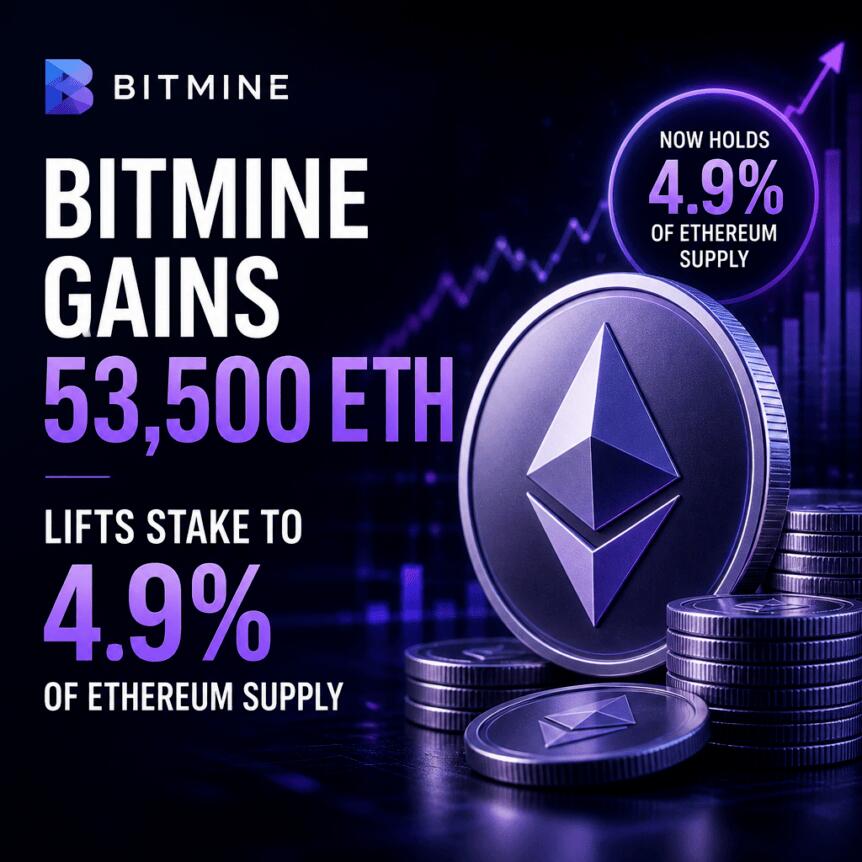
Bitmine Immersion Technologies has kept adding to its Ether stash, extending a buying streak that now stretches 65 consecutive weeks. The company purchased an additional 53,501 ETH last week, a move that arrives as a broader market rebound has supported the value of its digital-asset portfolio even as earlier-cycle drawdowns continue to weigh on reported results.

According to the latest figures cited in DropsTab data, Bitmine’s holdings now total more than 5.9 million ETH. Based on an Ether reference price of $2,511 as of Sunday, the stake is valued at roughly $14.8 billion—placing the company at about 4.9% of Ethereum’s 120.7 million circulating supply and keeping it close to its publicly stated goal of reaching a 5% ownership level.

Key takeaways

  • Bitmine added 53,501 ETH last week, maintaining a 65-week consecutive Ether accumulation streak.
  • The company’s ETH holdings are now above 5.9 million ETH, roughly $14.8 billion at a $2,511 reference price.
  • Bitmine controls about 4.9% of Ethereum’s circulating supply, narrowly below its goal of 5%.
  • DropsTab estimates Bitmine is still down about $5.1 billion in unrealized losses on its Ether position.
  • Chairman Tom Lee highlighted ETH’s strong relative performance versus major crypto assets since June 30.

Buying streak continues as Ether’s price recovery lifts portfolio marks

Bitmine’s latest acquisition brings a steady cadence of purchases through a period that has been challenging for the asset. The company’s accumulation began during a downturn that started in the fourth quarter of last year, when Ether and the wider crypto market moved sharply lower.

While the new purchases increase the number of ETH held, the impact on investor perception depends on what happens next to Ethereum’s price. The portfolio’s marked value has benefited from the recovery referenced in the report, but the balance sheet still reflects substantial drawdown from earlier purchases.

Using DropsTab’s estimates, Bitmine is currently sitting on approximately $5.1 billion in unrealized losses tied to its Ether holdings. Those paper losses underscore a key dynamic for long-term accumulation strategies: even if weekly buying continues unabated, improvements in market prices may take time to erase declines from the earlier portion of the cycle.

Advertisement

How close Bitmine is to a 5% ownership target

With more than 5.9 million ETH in its treasury, Bitmine is nearing a milestone that it has framed as a strategic objective. The report says the company owns around 4.9% of Ethereum’s 120.7 million circulating supply. That implies only incremental future purchases may be needed to cross its 5% target, assuming circulating supply estimates remain comparable.

For investors, this matters because large, persistent holders can influence how the market interprets supply distribution—especially in a network where the narrative often centers on scarcity and long-term demand. Although Bitmine’s purchases are not described as an attempt to influence short-term price, approaching a specific ownership threshold can become a reference point for sentiment as more institutions evaluate exposure to Ethereum.

Even so, the degree of closeness to the goal should be watched alongside two moving pieces: Ethereum’s circulating supply figures and the pace of Bitmine’s continuing weekly buying. Any changes in either could shift how quickly a 5% stake is reached.

Tom Lee points to relative strength since late June

Bitmine’s chairman, Tom Lee, linked the company’s accumulation narrative to performance across major cryptocurrencies. He said Ether, Bitcoin (BTC), and Solana (SOL) have been the three best-performing major assets since June 30, with ETH leading the gains.

Advertisement

In remarks included in the report, Lee argued that this relative outperformance could encourage institutions to add crypto exposure, especially after the broader market demonstrated strength versus other macro assets during the third quarter.

That framing is relevant for readers because it ties Bitmine’s continued strategy to a macro-to-crypto rotation thesis: if crypto outperforms “other macro assets,” institutions that had been cautious may find it easier to justify increasing allocations. Still, the longer Bitmine sustains its weekly purchases through volatile price periods, the more it may reinforce a perception of conviction—whether or not market observers agree with the timing.

Shares move, but unrealized losses remain a central marker

Following the latest Ether purchase, Bitmine’s NYSE-traded shares (BMNR) were reported up about 1.3% on Monday morning, trading at $24.09, according to Yahoo Finance data. The same source was cited as suggesting the stock is positioned for an almost-40% increase by month-end.

Even with that near-term stock momentum, the report’s emphasis on unrealized losses provides a reminder that equity performance does not directly translate to the economics of the underlying crypto position. A share price can move on expectations about future valuation, while the treasury’s reported gains or losses depend on Ether’s price relative to historical acquisition costs.

Advertisement

That gap between market expectations and treasury accounting is often where volatility can show up for investors in crypto-linked public companies. If Ether continues its rebound, the scale of unrealized losses could narrow; if it falters, the losses could widen again—even as the weekly buying streak continues.

Earlier coverage from Cointelegraph highlighted Bitmine’s push toward the 5% ownership concept and referenced Ether breaking above key levels in the context of the company’s extended purchasing pace. The current update continues that same storyline, but with more concrete progress on total ETH held and the latest week’s accumulation.

As Bitmine remains in the market every week, the next things investors should watch are whether Ether’s price holds above the recent recovery range and how quickly Bitmine closes the remaining distance from 4.9% to its 5% target—alongside any changes in the size of its unrealized loss estimate from week to week.

Risk & affiliate notice: Crypto assets are volatile and capital is at risk. This article may contain affiliate links. Read full disclosure

Advertisement

Source link

Continue Reading

Crypto World

Russian Crypto Trading to Bring $46B to Regulated Exchanges After Legalization

Published

on

Russian Crypto Trading to Bring $46B to Regulated Exchanges After Legalization

Cointelegraph is committed to providing independent, high-quality journalism across the crypto, blockchain, AI, and fintech industries.

All news, reviews, and analyses are produced with full journalistic independence and integrity. For more details on our standards and processes, please read our Editorial Policy.

Source link

Advertisement
Continue Reading

Crypto World

Strive Acquires 1,800 Bitcoin for $143M, Ranks No. 5 Among Firms

Published

on

Crypto Breaking News

Strive, a publicly traded asset manager and Bitcoin treasury company, has accelerated its Bitcoin accumulation by adding 1,800 BTC to its balance sheet over the week of Aug. 24–Aug. 28. The purchases, totaling about $143 million including fees and expenses, pushed the company deeper into the ranks of the largest publicly traded corporate Bitcoin holders.

CEO Matt Cole confirmed the acquisition on Monday, describing the buys as part of an ongoing strategy. According to the company’s reported figures, Strive paid an average of $79,431 per Bitcoin for the latest tranche.

Key takeaways

  • Strive bought 1,800 BTC for roughly $143 million between Aug. 24 and Aug. 28, including fees and expenses.
  • Holdings rose to 23,156 BTC, up from 21,356 BTC a week earlier.
  • The latest week’s accumulation accelerated gains: an adviser to Saturn Credit said the increase represented about 8.4% in five business days.
  • Strive moved up the corporate holder rankings, overtaking Bullish to become the fifth-largest publicly traded corporate Bitcoin holder, based on industry tracking.
  • Broader buying aligns with market rebound after a US Treasury policy update supported risk assets and helped Bitcoin recover.

Strive’s rapid accumulation lifts corporate ranking

The most recent week’s purchases raised Strive’s total Bitcoin holdings to 23,156 BTC, compared with 21,356 BTC just a week earlier. This continues a pattern of quicker ramp-ups rather than steady, slower additions.

Earlier coverage from Cointelegraph noted that Strive had already bought 1,110 BTC the previous week for roughly $81.5 million, at an average price of $73,409 per coin. Taken together, the two consecutive weeks show the company increasing its weekly pace while Bitcoin’s price moved higher.

Industry adviser Adam Livingston, an adviser to Saturn Credit, said the latest acquisition lifted Strive’s Bitcoin holdings by approximately 8.4% within five business days. That rate matters because it indicates Strive is not only adding to its treasury, but doing so at a speed that changes its relative position among other public corporate buyers.

Advertisement

Strive’s latest tranche also appears to have improved its standing in the corporate Bitcoin ecosystem. According to bitcointreasuries.net, the purchase helped Strive move ahead of Bullish, placing it among the world’s five largest publicly traded corporate Bitcoin holders.

What the timing suggests: policy-driven rebound and risk appetite

Strive’s buying comes during a period when Bitcoin and broader digital asset markets have been rebounding. Cointelegraph reported that the market recovery accelerated after the US Treasury Department announced plans to double the size of certain long-term bond buybacks on Aug. 19. That development helped push Treasury yields lower and supported risk assets.

In that context, Bitcoin rallied more than 23%, reaching a recent high above $81,000, as cited by Cointelegraph’s market coverage. For corporate buyers, such macro shifts can influence both funding conditions and the perceived opportunity cost of waiting for a better entry point.

Strive’s latest purchases—executed across Aug. 24–Aug. 28—therefore landed while the market was already regaining momentum rather than during a deep drawdown. However, the company still averaged $79,431 per BTC for the week, which reflects the ability of treasury-focused firms to deploy capital amid volatility and changing sentiment.

Advertisement

Strive isn’t the only corporate buyer: Strategy resumes after a pause

Strive’s acceleration is part of a wider wave of corporate Bitcoin activity. Cointelegraph noted that Michael Saylor’s Strategy, the largest publicly traded corporate Bitcoin holder, announced Monday that it resumed buying BTC for the first time since June.

Strategy said it purchased 4,603 Bitcoin at an average price of $80,318. The acquisition reportedly lifted its holdings back above 845,000 BTC following four Bitcoin sales since May.

For investors watching corporate treasuries, this is an important contrast: some companies reduce exposure through sales to fund operations or manage balance-sheet priorities, while others treat market dips and rebounds as opportunities to rebuild or expand reserves. Strategy’s decision to restart buying after a sales period aligns with the broader market recovery narrative, while Strive’s continued buildup suggests it is prioritizing steady expansion of its treasury.

Why the corporate race matters for the market

The competitive dynamics among publicly traded Bitcoin holders are more than a ranking exercise. When large buyers increase their reserves, it can reinforce confidence in Bitcoin as a reserve asset and add an additional layer of demand that is not directly tied to short-term retail sentiment.

Advertisement

At the same time, the data shows how quickly positions can change. Livingston’s estimate that Strive’s Bitcoin holdings rose by about 8.4% in five business days illustrates how capital deployment pace can quickly alter relative standings. Strive went from holding 21,356 BTC to 23,156 BTC in roughly a week, a magnitude that’s large enough to shift it up the corporate leaderboard.

Still, readers should note that these developments don’t necessarily reveal Strive’s longer-term target or whether the firm plans to keep increasing its pace. The filings and purchase windows in the reporting provide a snapshot of current behavior, but the sustainability of the acceleration depends on future balance-sheet capacity, financing decisions, and how management responds as market conditions evolve.

With Bitcoin back above key levels cited in recent reporting, and corporate buyers reactivating or accelerating purchases, the next thing to watch is whether Strive maintains this speed of accumulation in the weeks ahead—and whether other major publicly traded treasuries follow Strategy’s lead in restarting or extending buy programs.

Risk & affiliate notice: Crypto assets are volatile and capital is at risk. This article may contain affiliate links. Read full disclosure

Advertisement

Source link

Continue Reading

Crypto World

US Gov Lost $4.7 Billion By Selling FTX’s Anthropic Shares Early

Published

on

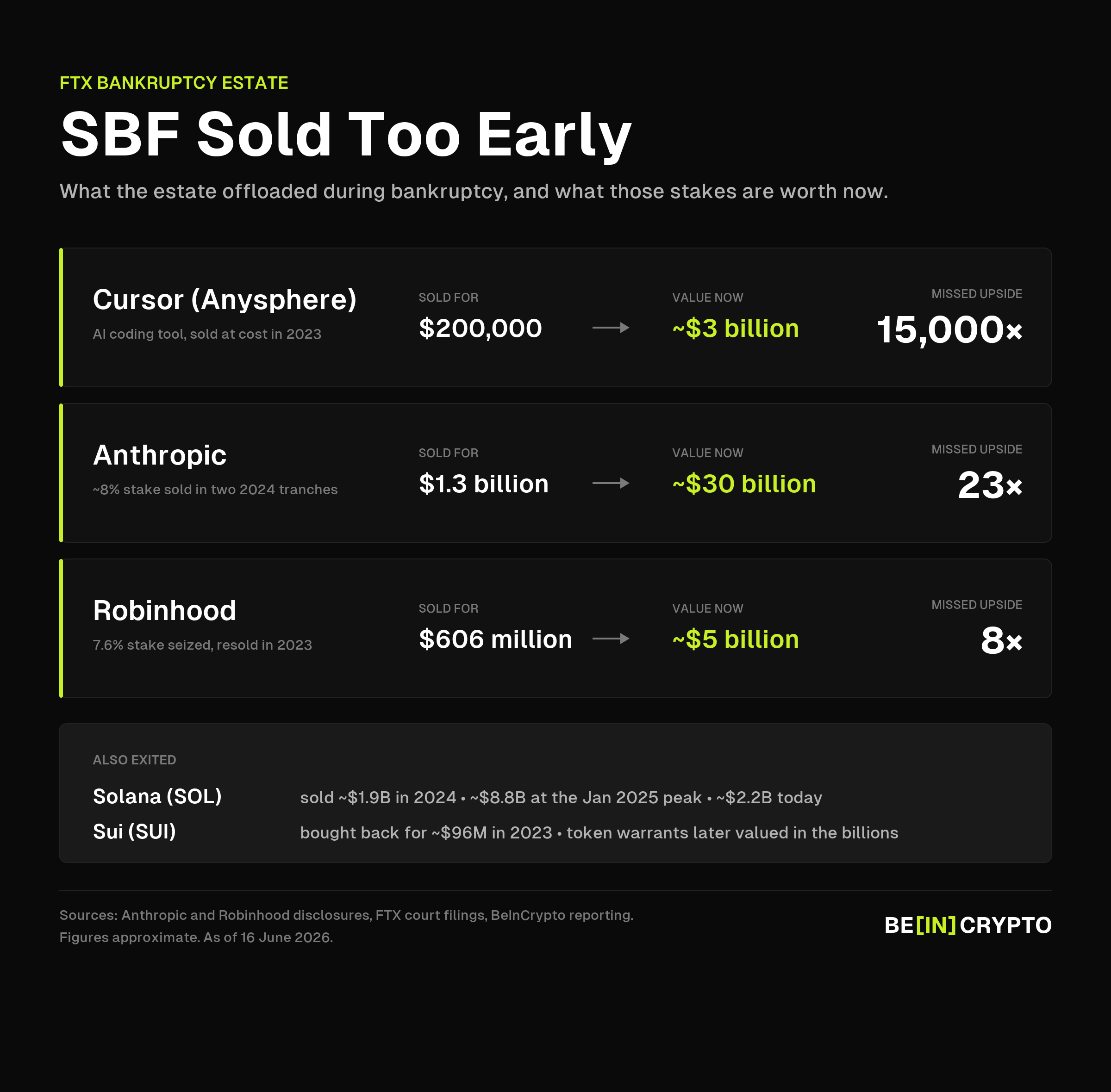
SBF Sold Too Early: These Exited Bets Later Turned Into Multi-Billion Winners

The US Marshals Service sold Anthropic shares seized from two FTX executives during 2025. Anthropic tripled in value that same year.

Caroline Ellison and Nishad Singh invested $50 million in the company in 2022. Both of them directly helped FTX funnel customer funds through a backdoor and into private investments. A judge stripped them of the stake after they pleaded guilty.

The Year Anthropic Tripled

Ellison paid $10 million while Singh paid $40 million, and both ended up holding Series B preferred stock. A federal judge signed Ellison’s final forfeiture order on February 18, 2025, court records show.

Singh’s followed in April, and the Marshals then sold both blocks to investors already on Anthropic’s cap table.

Advertisement

Timing mattered enormously, because Anthropic closed a round at a $61.5 billion valuation on March 3, 2025. Six months later, it closed another round at $183 billion.

Nobody outside government knows which side of that jump the sale landed on. The price, the buyers, and the date all remain secret.

The US government’s move to sell Anthropic shares saw them miss out on significant gains, much like what SBF did with several shares of multiple companies, including Anthropic itself.

Advertisement
SBF Sold Too Early: These Exited Bets Later Turned Into Multi-Billion Winners

“Sam Bankman-Fried is the greatest investor of all time…That means if he weren’t in jail today and still owned all this equity, he’d be worth ~$100 billion… He’d be top 20 richest people in the world,” stated Alex Finn, Founder/CEO of Henry Intelligent Machines PBC.

What FTX Victims Know and What They Do Not

Anthropic raised again in May 2026 at a $965 billion valuation. Four days later, it confidentially submitted a draft IPO registration to the SEC. Analysts at PitchBook and UCLA now value the forfeited stake between $2.6 billion and $5 billion.

The FTX estate made a comparable exit first. Its lawyers sold two-thirds of the company’s Anthropic position in March 2024. The price was $884 million, one of several bets they exited early.

That deal was public, with a court filing naming every buyer, from Jane Street to an Abu Dhabi sovereign wealth unit. No such list exists for the Marshals sale.

“It’s a very opaque process… It’s completely at the discretion, by law, of the attorney general of the United States,” Duncan Levin, a white-collar defense attorney who teaches forfeiture at Harvard Law School, reportedly told Business Insider.

Nevertheless, seized money can still be recovered, as seen when Robinhood bought Sam Bankman-Fried’s confiscated shares from the government for $605.7 million in 2023.

Advertisement

The estate has since kept paying creditors down. No Anthropic entry had surfaced by the end of June 2026.

The Justice Department calls victim compensation a priority and the sale details confidential. For now, only the buyers know what they got.

The post US Gov Lost $4.7 Billion By Selling FTX’s Anthropic Shares Early appeared first on BeInCrypto.

Advertisement

Source link

Continue Reading

Trending

Copyright © 2025