

Crypto World
Why Changpeng Zhao Said Most AI Firms Will Go Bust



Binance founder Changpeng Zhao (CZ) argued on Friday that most artificial intelligence (AI) companies will go bust, even as Anthropic closed in on a $1 trillion valuation and OpenAI moved toward its initial public offering (IPO).
His warning landed during one of the busiest stretches in AI fundraising history, with two private firms now collectively valued near $1.8 trillion and several smaller startups still struggling to convert heavy spending into profit.
CZ Predicts an AI Shakeout Despite Sector Growth
Zhao posted on X that AI itself “will stay and grow exponentially,” but said the current crop of AI firms is far too crowded to survive. He added that even the eventual winners will see “huge price fluctuations” and face fresh competition from new entrants.
“AI will stay and grow exponentially. But most AI companies will go bust. There are just too many. Even survivors will see huge price fluctuations. There will be new survivor entrants too. Same as any other new industry, really,” CZ posted.
CZ framed the situation as a normal pattern in early-stage industries, where a flood of capital tends to produce only a small number of long-term winners. He has previously argued that AI agents need tokens in only a narrow set of cases, signaling broader skepticism about much of the current AI build-out.
His comments come as capital continues to pour into a handful of frontier labs at a record pace.
Anthropic announced a $65 billion Series H round on Thursday at a $965 billion post-money valuation, almost tripling its $380 billion mark from February, according to CNBC. The round was led by Altimeter Capital, Dragoneer, Greenoaks, and Sequoia Capital, lifting the firm above rival OpenAI in implied worth.
The company also reported a $47 billion annualized revenue run rate, up from $30 billion earlier this year and $10 billion in full-year revenue last year. Recent reports peg Anthropic’s implied pre-IPO valuation on Jupiter prediction markets above the pre-IPO trillionaire mark, placing it alongside SpaceX and OpenAI.
OpenAI sits one rung lower, valued at $852 billion after its March mega-funding round. The ChatGPT maker is now preparing a confidential S-1 filing with Goldman Sachs and Morgan Stanley, targeting a public market debut as soon as September at a price analysts expect to push past $1 trillion.
Uber’s AI Bill Shows Why Profit Still Lags Spend
The optimism around Anthropic and OpenAI sits uneasily next to the experience of corporate AI buyers. Earlier in May, Uber CEO Dara Khosrowshahi told analysts that the ride-hailing firm was slowing hiring to absorb its AI investments, while struggling to show clear returns from the spend.
Uber CTO Praveen Neppalli Naga disclosed in April that the company had burned through its entire 2026 budget for Anthropic’s Claude Code and developer tool Cursor in only four months. The COO also publicly questioned whether higher AI token usage was actually improving consumer products, saying that link “is not there yet.”
The pattern is not isolated. National Bureau of Economic Research data published in February showed 90% of firms reported no measurable AI impact on workplace productivity. OpenAI itself has guided to annual losses through at least 2028, including $74 billion in operating losses that year alone, even as it commits to $1.4 trillion in datacenter spending over eight years.
Concerns over hyperscaler revenue loops have intensified, with Anthropic and OpenAI alone underwriting more than half of the roughly $2 trillion in future cloud commitments held by Microsoft, Amazon, Google, and Oracle.
Whether Zhao’s call ages well depends on how quickly AI revenue catches up with AI cost. Anthropic is on track for its first operating profit this quarter, but most of the sector still spends faster than it earns. The next real test arrives when OpenAI’s S-1 reveals what a trillion-dollar AI company actually looks like on a balance sheet.
The post Why Changpeng Zhao Said Most AI Firms Will Go Bust appeared first on BeInCrypto.



Every crypto trade comes down to a choice between two basic order types: take the price now, or name your price and wait. Understanding the difference, and the stop-loss and slippage that come with it, is the foundation of trading without losing money to your own mistakes.
Summary
- Market orders prioritize immediate execution, while limit orders execute only at a user specified price.
- Slippage can affect trade execution prices, especially in volatile or low liquidity markets.
- Stop loss orders help cap potential losses by automatically exiting a position when a preset price level is reached.
Placing a crypto trade comes down to a deceptively simple question: do you want to buy or sell right now at whatever the market price is, or do you want to set your own price and wait for the market to come to you? Those two choices are the market order and the limit order, the two fundamental building blocks of every trade on every exchange, and understanding the difference between them is the foundation of trading crypto deliberately rather than blindly.
Most beginners click “buy” without knowing which order type they are using or what tradeoff they are making, and that ignorance quietly costs them money, in worse prices, in orders that fill at the wrong moment, and in missed protection against losses.
This guide explains the two core order types in plain terms: what a market order is and when to use it, what a limit order is and what it gives you, the crucial concept of slippage that connects them, and the stop-loss order that protects you from large losses. It also covers how these tools fit together in practice and the order-book mechanics underneath them, so you understand not just which button to click but why.
None of this is complicated once explained clearly, and learning it is the difference between being a trader who controls their entries and exits and one who is at the mercy of the market and their own haste. Whether you ever trade actively or simply buy and hold, knowing how orders work makes every transaction you place a more informed one.
The order book: what you are actually trading against
Before the order types make sense, you need a picture of what is happening when you place a trade, and that means understanding the order book.
Every exchange matches buyers and sellers through an order book, a live list of all the orders people have placed but not yet had filled. On one side are the buy orders, people offering to buy at various prices, and on the other are the sell orders, people offering to sell at various prices. The highest price a buyer is currently willing to pay is the bid, the lowest price a seller is currently willing to accept is the ask, and the small gap between them is the spread.
The current market price you see quoted is essentially where the most recent trades happened, sitting between the best bid and the best ask. When you place a trade, you are interacting with this book, either taking an order that is already sitting there or adding your own order to it and waiting, and which of those you do is exactly what the choice between a market order and a limit order determines.
This matters because the order book is not infinitely deep at any single price. There might be only so much crypto offered for sale at the current ask, and more available only at higher prices, and the same in reverse for buyers. A small order can be filled entirely at or near the current price because there is enough sitting there to match it, but a large order may have to eat through multiple price levels to fill completely, getting progressively worse prices as it consumes the available orders. This depth, or lack of it, is what produces slippage, the concept that ties the order types together, and it is why the same kind of order can behave very differently for a small trade and a large one. Keeping the order book in mind turns order types from abstract options into a concrete picture of what your trade is actually doing.
The market order: take the price now
The market order is the simplest and most common, and it answers the question “how do I just buy or sell this immediately?”
A market order executes immediately at the best price currently available in the order book. When you place a market buy, the exchange fills it against the lowest-priced sell orders sitting on the book, starting with the best ask and working up if needed until the order is filled; a market sell does the reverse, hitting the highest-priced buy orders.
The defining feature of a market order is certainty of execution: it will fill, and it will fill right away, because it simply takes whatever prices are available until the order is complete. This is what you want when getting the trade done matters more than getting a precise price, when you want to own an asset now, exit a position now, or act on a decision without waiting. For most ordinary buying and selling, especially in smaller amounts on liquid assets, the market order is the natural, sensible choice.
The tradeoff is that a market order gives you certainty of execution but not certainty of price. You accept whatever prices the order book offers, and in a fast-moving or thin market, that can be meaningfully different from the price you saw a moment before you clicked. For a small trade on a heavily traded asset like Bitcoin, the difference is usually negligible, because there is plenty of volume sitting at or near the current price to fill your order cleanly.
But for a large trade, or on a thinly traded asset with little depth, a market order can fill at a noticeably worse average price than expected as it eats through the book, which is the slippage problem. The market order’s simplicity and reliability are its strengths, and for most beginner-sized trades they outweigh the price imprecision, but understanding that you are trading price certainty for execution certainty is what lets you use it wisely.
The limit order: name your price and wait
The limit order answers a different question: “what if I do not want to pay the current price, but a specific price of my own choosing?”
A limit order lets you set the exact price at which you are willing to buy or sell, and the order executes only if and when the market reaches that price. A limit buy at a price below the current market sits on the order book waiting, and fills only if the price falls to your level; a limit sell at a price above the market waits and fills only if the price rises to meet it.
The defining feature of a limit order is control over price: you will never pay more than your limit on a buy or accept less than your limit on a sell, because the order simply will not execute outside your specified price. This is what you want when the price matters more than immediacy, when you believe an asset is currently a little overpriced and would rather buy lower, or when you want to sell at a target you have set and are willing to wait for.
The tradeoff is the mirror image of the market order: a limit order gives you certainty of price but not certainty of execution. If the market never reaches your specified price, the order never fills, and you may sit waiting for a level the market simply does not visit, missing the trade entirely while the price moves away from you. A limit buy set too low may never trigger as the asset rises without you; a limit sell set too high may never trigger as the asset falls.
So the limit order trades the guarantee of getting the trade done for the guarantee of getting your price, which is the exact opposite of the market order’s bargain. Limit orders are the tool of the deliberate trader who cares about entry and exit prices and is willing to wait or to miss a trade instead of accepting a price they do not want, and they become more valuable as you grow more precise about the levels at which you want to act.
Slippage: the concept that connects them
Slippage is the idea sitting underneath both order types, and understanding it explains why the choice between them matters and when each one bites.
Slippage is the difference between the price you expected and the price you actually got. It arises from the order book’s limited depth and from price movement between the moment you place an order and the moment it fills. A market order is exposed to slippage by design, because it accepts whatever prices the book offers: if your order is large or the book is thin, it eats through multiple price levels and fills at a worse average price than the quote you saw, and if the price moves in the instant your order executes, you get the new price, not the old one.
This is why a market order on a large amount or an illiquid asset can surprise you with a fill noticeably worse than expected, while the same order on a small amount of a liquid asset fills cleanly with negligible slippage. The depth of the order book is what determines how much slippage a market order suffers.
A limit order is the tool that protects you from slippage, because by naming your price you refuse to accept anything worse than it. The limit order will not slip past your specified level, which is precisely its value in volatile or thin markets where a market order could fill at a bad price. The cost of that protection is the execution risk already described: the order may not fill at all.
So the relationship between the two order types and slippage is clean: market orders accept slippage in exchange for guaranteed execution, and limit orders eliminate slippage in exchange for accepting that the order might not execute. Knowing this lets you choose deliberately, reaching for a market order when you want certainty of getting filled and the asset is liquid enough that slippage will be small, and for a limit order when you want to control your price and protect against slippage in a volatile or thin market, accepting that you might wait or miss the trade.
The stop-loss: protecting yourself from large losses
Beyond the two core order types is a third tool every trader should understand, because it is the main defense against a position going badly wrong.
A stop-loss is an order that automatically sells your position if the price falls to a level you set in advance, designed to limit your loss on a trade that moves against you. You decide, when you enter a position, the price at which you would want to cut your losses and exit, and you place a stop-loss at that level; if the market drops to it, the stop-loss triggers and sells, capping your loss rather than letting it deepen while you watch or hesitate.
The value of a stop-loss is that it removes emotion and inattention from the most dangerous moment in trading, the falling market, by deciding your exit in advance and executing it automatically, so you are not relying on yourself to act decisively while a position is collapsing and your instinct is to hope it recovers. For anyone holding a position they could not afford to see fall much further, a stop-loss is the standard protective tool.
Stop-losses come with their own nuances worth knowing. A basic stop-loss typically triggers a market order when the level is hit, which means it sells immediately but is exposed to slippage, potentially filling below your stop price in a fast crash, while a stop-limit version triggers a limit order, protecting your price but risking that it does not fill if the market gaps straight through your level.
In very fast or volatile moves, a stop-loss can fill worse than the set level because of slippage, which is the same order-book reality that affects market orders. And a stop-loss set too tight, too close to the current price, can be triggered by normal volatility and sell you out of a position that then recovers, while one set too loose offers little protection. Used thoughtfully, with the level chosen to reflect how much you are willing to lose and the normal swings of the asset, a stop-loss is one of the most important risk-management tools a trader has, and it is the practical application of the order types to the problem of protecting capital.
How it fits together in practice
With the tools defined, the practical question is when to use each, and a few clear principles cover most situations.
Use a market order when execution matters more than precision: when you want to buy or sell now, the asset is liquid enough that slippage will be small, and you would rather guarantee the trade than chase a perfect price. This covers most ordinary buying and selling, especially in smaller amounts on major assets, and it is the right default for a beginner who simply wants to own or exit a position.
Use a limit order when price matters more than immediacy: when you have a specific level at which you want to buy or sell, you are willing to wait or to miss the trade rather than accept a worse price, or you are trading a large amount or a thin asset where a market order would slip badly. The limit order is the tool of deliberate entries and exits and of protecting yourself against slippage. And use a stop-loss whenever you hold a position you want to protect from a large loss, setting the exit level in advance so that a falling market triggers your sale automatically instead of depending on your judgment in the moment.
These tools combine in real trading. A common pattern is to enter with a limit order at a price you find attractive, then immediately set a stop-loss below your entry to cap the downside if you are wrong, and perhaps a limit sell above to take profit at a target, so that both your exit on a loss and your exit on a gain are defined in advance and execute without you having to watch the market constantly. A beginner does not need to run elaborate setups, but understanding that orders can be combined to control both entry and exit, and to protect against the worst outcomes, is what separates trading deliberately from clicking buy and sell on impulse. The order types are the vocabulary of trading, and fluency in them lets you express a plan rather than merely react.
The foundation of every trade
Every crypto trade, however simple or sophisticated, is built from a small set of order types, and understanding them is the foundation of trading without being undone by your own haste. A market order takes the current price and guarantees execution, accepting slippage as the cost, and it is the right tool when getting the trade done matters most and the asset is liquid.
A limit order names your price and guarantees you will not do worse than it, accepting that the order may not fill, and it is the tool of deliberate entries, exits, and protection against slippage. Slippage, the gap between expected and actual price, is the concept that connects them and explains when each one matters. And the stop-loss applies these mechanics to the essential job of limiting losses, deciding your exit in advance so a falling market cannot depend on your nerve.
The deeper point is that order types turn trading from a reaction into a decision. The beginner who clicks buy without knowing the order type is accepting whatever the market gives, exposed to slippage they did not anticipate and with no plan for when to exit, while the trader who understands these tools chooses their price when it matters, protects against slippage when it could hurt, and defines their losses before they happen, not after.
None of this requires advanced skill or constant attention; it requires knowing the handful of order types and what each one trades away. Learn them, and every transaction you place, whether a one-time purchase or an active trade, becomes something you control, not something that controls you. That control, more than any prediction or strategy, is the real foundation of trading crypto sensibly.
Frequently Asked Questions
What is the difference between a market order and a limit order?
A market order executes immediately at the best price currently available, guaranteeing the trade gets done but accepting whatever price the order book offers. A limit order lets you set a specific price and executes only if the market reaches it, guaranteeing your price but not that the order fills. In short, a market order gives certainty of execution at the cost of price control, while a limit order gives price control at the cost of certain execution.
When should I use a market order?
Use a market order when getting the trade done matters more than getting a precise price: when you want to buy or sell immediately, and the asset is liquid enough that slippage will be small. For most ordinary buying and selling in smaller amounts on major assets like Bitcoin, a market order is the simple, sensible choice. It is the right default for a beginner who simply wants to own or exit a position without managing the timing or price.
What is slippage in crypto trading?
Slippage is the difference between the price you expected and the price you actually got. It happens because the order book has limited depth and prices move between placing and filling an order. Market orders are exposed to slippage because they accept whatever prices are available, so a large order or one on a thinly traded asset can fill at a worse average price. Limit orders protect against slippage by refusing to execute beyond your set price.
What is a stop-loss order and how does it work?
A stop-loss automatically sells your position if the price falls to a level you set in advance, limiting your loss on a trade that moves against you. You decide your exit price when entering, and if the market drops to it, the stop-loss triggers and sells. It removes emotion and hesitation from a falling market by deciding the exit ahead of time. Note that a basic stop-loss can still fill below your level due to slippage in a fast crash.
Which order type is better for beginners?
For most beginner situations, a market order is the simpler and more practical choice, because it guarantees the trade fills and, on a liquid asset in a small amount, slippage is negligible. Limit orders become valuable as you grow more deliberate about the prices at which you want to buy or sell, or when trading larger amounts or thinner assets where slippage matters. Learning both, plus the stop-loss for protection, gives you the full beginner toolkit.
Can I use these order types together?
Yes, and experienced traders routinely do. A common pattern is to enter a position with a limit order at an attractive price, set a stop-loss below the entry to cap the downside if the trade goes wrong, and place a limit sell above to take profit at a target. This defines both the loss exit and the gain exit in advance, so they execute automatically without constant monitoring. Beginners do not need elaborate setups, but knowing the tools combine lets you trade to a plan.
This guide is educational information, not financial or trading advice. Trading crypto carries real risk of loss. Order types manage how trades execute but do not eliminate market risk, and you should only trade with money you can afford to lose.
Aztec Network has been hit by another $2 million hack, its second this week.
Following Sunday’s $2.2 million loss from Aztec Connect, Aztec’s Private Rollup Bridge has now been drained of a similar amount.
The firm stressed, in both cases, that the affected contracts are “immutable” and were “deprecated” in 2022 and 2023.
Today’s incident brings the tally of bridge-related exploits this year to 14, with over $340 million lost in total.
Read more: Bridge hacks back in vogue as Verus exploit brings 2026 total to $329M
Security researcher Vishal Singh was first to flag the loss, which targeted the escapeHatch function of Aztec’s Private Rollup Bridge. The escapeHatch is an emergency measure which allows users to withdraw assets held on the rollup directly from Ethereum.
Yu Xian, founder of blockchain security firm SlowMist lists three suspicious transactions draining the Private Rollup Bridge. In all, around $2.15 million was drained as 1,158 ether, 150,000 DAI and 0.5 renBTC.
He explains that, during the brief windows the hatch was “open,” anyone could trick the escapeHatch function into releasing the RollupProcessor-held funds by setting specific proofId and publicOutput parameters.
Read more: Rough weekend for DeFi: Four hacks, three outages, one warning
Double trouble
According to analysis from BlockSec, both Sunday’s and Thursday’s incidents, while not identical, were caused by “public input binding issues.”
Read more: Raydium’s old liquidity pools exploited for $1.3 million
The attack targeted Aztec’s RollupProcessorV3 contract, draining approximately $2.15 million of assorted crypto tokens.
DeFi protocols have faced a worrying tidal wave of attacks in recent months.
The hit rate appears to have dropped off somewhat in recent weeks, but the community braced itself for Anthropic’s Mythos release last week.
In the end, it turned out the model’s cybersecurity capabilities had been heavily “nerfed.”
Got a tip? Send us an email securely via Protos Leaks. For more informed news and investigations, follow us on X, Bluesky, and Google News, or subscribe to our YouTube channel.


Malta’s financial regulator is exploring how decentralized finance (DeFi) could fit within the European Union’s Markets in Crypto-Assets (MiCA) framework, focusing on governance, accountability and the meaning of “full decentralization.”
The Malta Financial Services Authority (MFSA) said that while MiCA excludes cryptocurrency services provided in a “fully decentralised manner without any intermediary,” many DeFi projects retain centralized features such as administrator keys, governance concentration, protocol upgrade rights and control over user-facing interfaces, in a discussion paper published Wednesday.
The regulator is seeking feedback on whether decentralization should be assessed as a spectrum rather than a binary concept and whether a standardized framework should be developed to determine when a protocol falls outside MiCA’s scope.
DeFi is something of a grey area under the EU’s framework for regulating crypto, as it excludes services provided in a fully decentralised manner, but lacks a clear description of when a protocol or platform meets that threshold.
MSFA’s paper also asks whether regulated crypto firms should be required to conduct smart-contract audits, governance reviews and risk assessments before integrating DeFi protocols into their services.
Crypto World
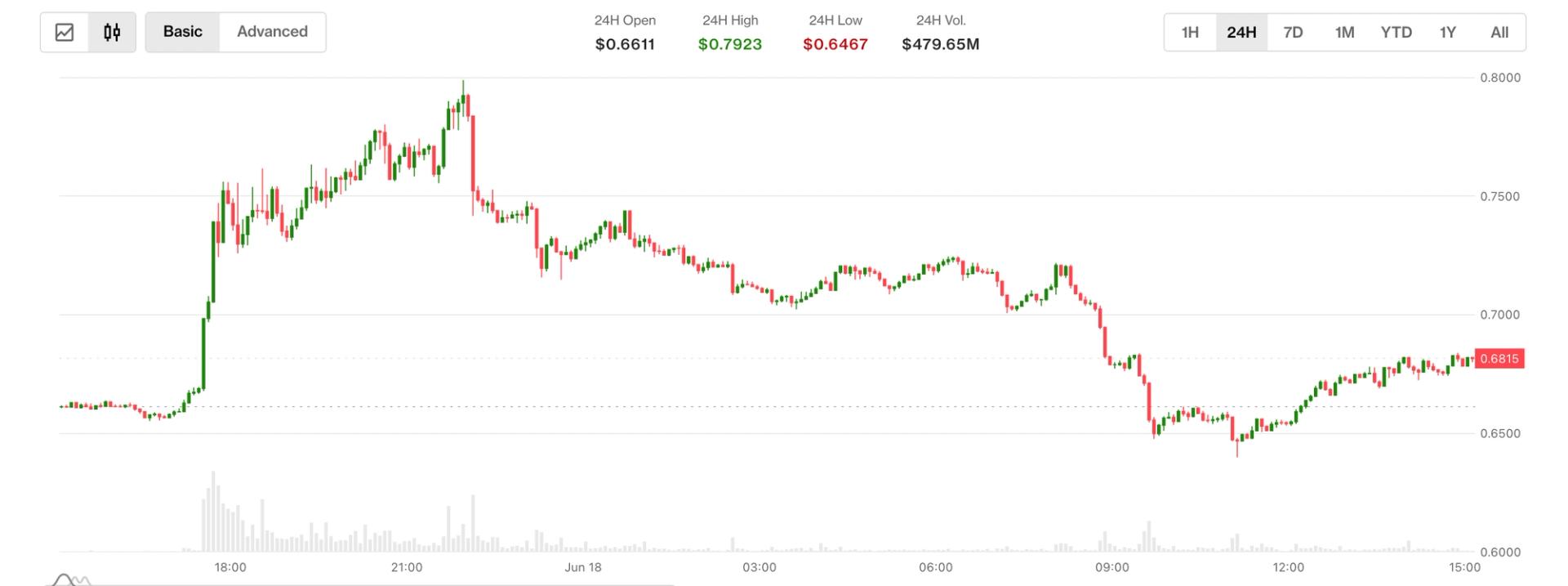
Aster (ASTER) popped over 10% on radical ‘buyback and burn’ upgrade. But gains were short-lived
The upgrade marks a shift away from the protocol’s previous linear vesting model, in which tokens were auto-released to market regardless of demand, and it concluded earlier this year, in January 2026.
“Aster’s tokenomics upgrade puts the platform’s own activity to work,” the protocol noted, highlighting that the new rewards are settled on-chain with “no discretionary reserve.”
The token’s bullish price action, however, was short-lived as the Federal Reserve’s hawkish turn sent the dollar higher and weighed on risk assets, including cryptocurrencies.
As of writing, ASTER traded near 68 cents, down 5% on the day.
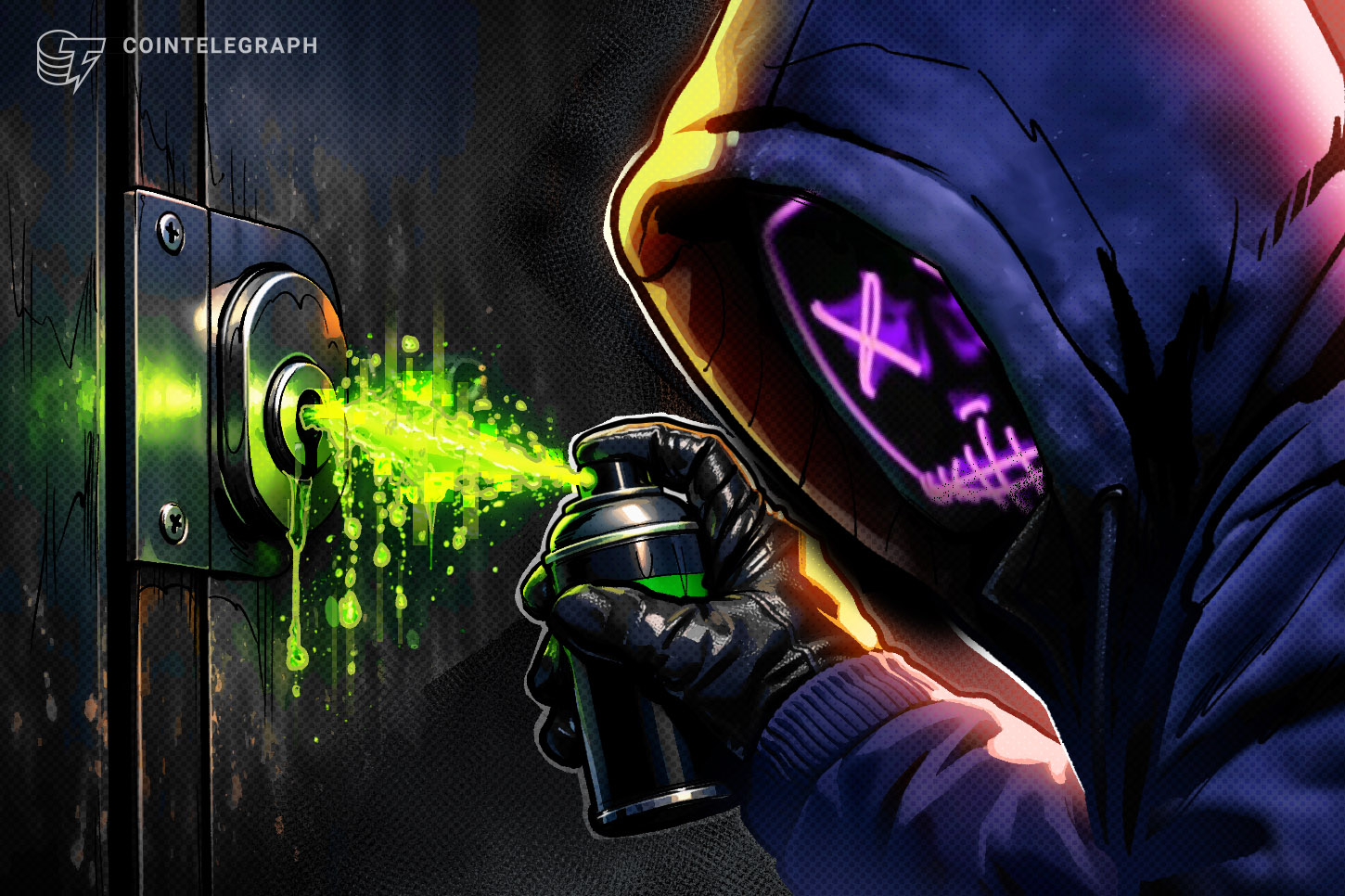
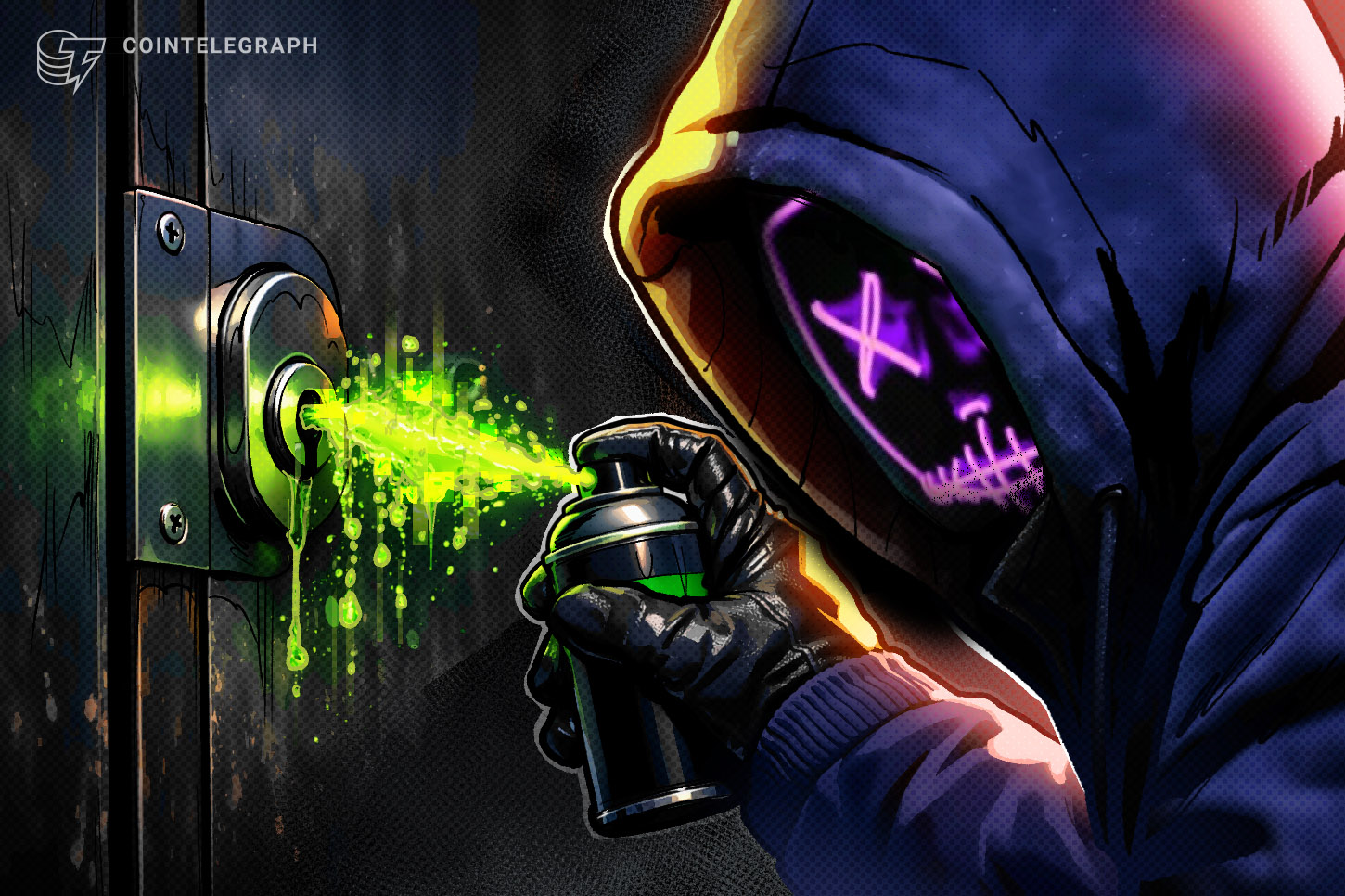
Security researchers warn that deprecated smart contracts can remain vulnerable long after projects stop maintaining them.
Crypto World
Bitcoin market cap rebound to take '5-10 years' after dropping 10 places since mid-2025


Bitcoin could be absent from the world’s top five assets by market cap until 2036, despite an estimate seeing the BTC bear market being nearly 70% complete.

Key Takeaways
- Shares of Tesco declined more than 2% following Q1 UK like-for-like sales growth of only 1.8%, below market expectations
- Total group like-for-like sales reached £16.83 billion, with UK food sales advancing 2.6% and fresh food climbing 3.6%
- The Booker wholesale division struggled with like-for-like sales declining 3.2%, worse than the anticipated 2.4% drop
- Company reaffirmed full-year outlook: adjusted operating profit between £3–£3.3 billion and free cash flow of £1.5–£2 billion
- Chief Executive Ken Murphy attributed the weakness to challenging weather-related comparisons versus the prior year period
Shares of Tesco tumbled over 2% during Thursday’s trading session, hovering near 445p, following the release of first-quarter results that showed sales expansion trailing market forecasts for Britain’s leading grocery retailer.
For the 13-week period concluding May 30, UK like-for-like sales advanced 1.8%. This figure fell at the lower boundary of consensus estimates and trailed Visible Alpha projections by approximately 50 basis points, representing a notable deceleration from the previous year’s growth trajectory.
Chief Executive Ken Murphy moved swiftly to downplay concerns. During a media briefing, he emphasized that weather patterns played a significant role in the outcome, noting that the comparison period from last year benefited from “outstanding” climatic conditions that unusually elevated performance.
“I wouldn’t be reading too much into it,” Murphy stated.
Overall group like-for-like sales similarly increased 1.8%, totaling £16.83 billion. Within the UK market, food sales posted a 2.6% gain, while fresh food categories delivered a stronger 3.6% uptick.
Analysts at Bernstein echoed Murphy’s assessment, characterizing the deceleration as likely seasonal and transitory. The firm identified moderating food price inflation, more difficult year-over-year comparisons, and weaker non-food category demand as primary drivers — rather than any fundamental deterioration in Tesco’s market standing.
Wholesale Division Struggles
The Booker wholesale operation emerged as an additional area of concern. Like-for-like sales in this segment contracted 3.2%, falling short of analyst projections for a 2.4% decrease.
Core retail sales within Booker declined 1.5%, partially attributable to the loss of a significant national customer account. The catering segment experienced a 3.3% downturn, which management linked to adverse weather conditions and Easter calendar timing.
Notwithstanding the top-line shortfall, Tesco maintained its full-year financial guidance. The company continues to project adjusted operating profit in the £3 billion to £3.3 billion range, alongside free cash flow between £1.5 billion and £2 billion for fiscal 2026/27.
Positive Developments Emerge
Beyond UK borders, Tesco’s Republic of Ireland operations delivered like-for-like growth of 3.3%, surpassing analyst expectations. Central European markets contributed 0.8% growth. Digital sales throughout international markets surged 17.4%.
Customer sentiment indicators also showed improvement. Tesco’s UK net promoter score advanced six points on a year-over-year basis. The retailer expanded its Aldi Price Match program into convenience store locations as part of its value-focused competitive strategy.
Management noted that Middle East geopolitical tensions have not materially impacted operations to date, though acknowledged the situation could potentially contribute to inflationary headwinds in subsequent quarters.
Regarding capital allocation, Tesco has executed £341 million in share repurchases since initiating its £750 million buyback program in April.


The recent market volatility, mostly prompted by the Federal Reserve’s FOMC meeting and the hawkish tone of the new Chairman, liquidated roughly 100,000 traders yesterday, with one of them being the famous social media personality and former boxer, Andrew Tate.
In this quick-bits article, we will also explore Arthur Hayes’ recent bullish pivot toward the second-largest cryptocurrency by market cap.
Tate Wrecked Again
CryptoPotato reported yesterday that Andrew Tate had returned to crypto futures trading. Although his track record was quite painful, as Lookonchain stated he had been liquidated 107 times in the past, he opened a long BTC position. More specifically, his long was for 57.36 BTC (valued at around $3.76 million at the time) and had a liquidation price of $65,216.
As mentioned above, BTC experienced significant volatility before and after the FOMC meeting, which included a few drops below Tate’s wipe-out price. The cryptocurrency dropped further after the hawkish press conference by the new Fed chair, dumping below $64,000 earlier today.
Lookonchain updated that his success rate only worsened, as he was liquidated 8 times in the last 16 hours. He flipped between longs and shorts, but was still wrecked, the analysts said. As of the time of their post, he was left with just $14,219.
Andrew Tate (@Cobratate) has been liquidated 8 times in the past 16 hours.
He got liquidated on a $BTC long, then flipped to a $BTC short and got liquidated again.
His account now has only $14,219 left.https://t.co/2bAiThkXwS pic.twitter.com/ySSUWhFIYV
— Lookonchain (@lookonchain) June 18, 2026
Hayes Buys More ETH
In an accumulation piece from yesterday, we informed that Arthur Hayes has turned bullish on ETH, purchasing 1,400 tokens. This came after the intense backlash he faced for shilling and then dumping some popular altcoins, such as HYPE, NEAR, ZEC, and WLD.
This time, though, he hasn’t sold ETH the next day, as some critics claimed below the post. Instead, Lookonchain said he doubled down on his Ethereum bet by buying another 1,500 ETH for $2.63 million. Thus, he has acquired 2,900 ETH (worth over $5 million at current prices) in just a couple of days.
Arthur Hayes(@CryptoHayes) just bought 1,500 $ETH($2.63M)!https://t.co/gau6egd7Vm pic.twitter.com/mZVUAIialo
— Lookonchain (@lookonchain) June 18, 2026
The post Andrew Tate Liquidated 8 Times in 16 Hours, Arthur Hayes Buys More ETH: Quick Bits appeared first on CryptoPotato.

Ethereum is trading under pressure, with spot prices clustering at $1,750 price level as its chart prediction tumbles bearish. But if we look closer at what’s building off-chain, it’s not so bearish after all; it’s coiling.
Stablecoin net inflows to Binance are now averaging $138M per day over the past week, a figure running 289% above the three-month baseline. That’s dry powder ready to be deployed.
The supply side of the equation is tightening simultaneously, too. Exchange-held ETH continues to drain, compressing the available float at precisely the moment when bid-side liquidity is accumulating.
As of now, the current weakness is “cautious” after the Federal Reserve decision, as traders are parking capital in stablecoins and not committing to spot.
Discover: The Best Crypto to Diversify Your Portfolio
Ethereum Price Prediction: $2,000?
ETH is currently sitting near the lower band of a defined range. We place the trading corridor at $1,730–$1,920, with short-term technicals tilting bearish. The nearest structural support levels are $1,740 and $1,700, with each progressively getting uglier for finding a floor.
Resistance stacks at $1,830, then $1,900, and a clean break above that opens the conversation toward $2,200. That’s a meaningful reclaim, but it requires a catalyst. The stablecoin inflow data is the most credible candidate on the table right now.

With the hawkish Fed signal, the macro catalyst is clocked, and the drop is likely priced in. If a percentage of the stablecoin dry powder is deployed into spot ETH, the price could reclaim $1,800, targeting the $1,900 prediction.
ETH’s response to the FOMC remains the single most important short-term variable. Stablecoin positioning means the move, when it comes, could be fast and violent.
Discover: The Best Token Presales
Bitcoin Hyper Targets Early Mover Upside as Ethereum Tests Key Levels
ETH sitting at $1,750 with 289% above-average stablecoin inflows means capital is looking for somewhere to go. The stablecoin buildup confirms appetite, but the hesitation is about the entry point, not conviction.
For traders who see limited near-term upside in large-caps at current valuations (ETH would need to more than double from here just to retest its 2025 high), early-stage infrastructure plays offer a different risk-reward profile entirely.
Bitcoin Hyper is positioning as the first Bitcoin Layer 2 with Solana Virtual Machine (SVM) integration, meaning it brings fast, programmable smart contracts to Bitcoin’s base layer without sacrificing Bitcoin’s security model.
The project has raised $32.8 million at a current presale price of $0.0136, with staking available during the raise. The core technical pitch, sub-second finality on a Bitcoin-secured L2, a decentralized canonical bridge for BTC transfers, and SVM-speed execution, addresses Bitcoin’s three structural gaps.
Research the project at the Bitcoin Hyper presale page before the presale ends.
The post Ethereum Price Prediction: Stablecoins Dry Powder as Exchange Supply Shrinking appeared first on Cryptonews.


Anthropic’s AI models have lost another major banking user group in Hong Kong after JPMorgan restricted employee access to Claude under the company’s licensing terms.
Summary
- JPMorgan has restricted employee access to Anthropic’s Claude models in Hong Kong, following a similar decision by Goldman Sachs.
- The reported restriction stems from Anthropic’s licensing terms, which exclude usage across Greater China, including Hong Kong.
The Financial Times reported that JPMorgan Chase employees in Hong Kong can no longer select Anthropic’s Claude models from the bank’s internal list of approved large language models.
Three people familiar with the matter told the publication that the restriction stems from language in Anthropic’s licensing agreement. One person familiar with the decision said JPMorgan based the move on terms governing where the models can be used.
The development follows a similar decision by Goldman Sachs earlier this year. The Financial Times previously reported that Goldman blocked bankers in Hong Kong from using Anthropic models after determining that Anthropic’s terms of service exclude usage across Greater China, including Hong Kong.
Anthropic has not issued an official statement, but the company has previously told The Financial Times that Claude had never been officially supported in Hong Kong. JPMorgan declined to comment.
Hong Kong access faces new constraints
Western AI companies have generally restricted direct access to their most advanced models in mainland China. OpenAI’s ChatGPT and Anthropic’s Claude are unavailable there because of a combination of company policies and China’s internet controls.
Hong Kong has historically operated with fewer internet restrictions than mainland China. International firms have often obtained access to frontier AI models through global enterprise agreements and infrastructure hosted outside China.
The Financial Times reported that access limitations at major financial institutions have renewed concerns about Hong Kong’s ability to remain competitive as AI tools become more deeply integrated into software development, research, and financial services workflows.
Anthropic’s approach to geographic restrictions comes as U.S. AI companies face increasing scrutiny over how advanced models are used outside the United States. Industry observers and policymakers have expressed concerns that foreign users could employ frontier systems to accelerate domestic AI development through a process commonly known as model distillation.
Anthropic navigates multiple challenges
The banking restrictions arrive less than a week after Anthropic suspended access to its newly released Fable 5 and Mythos 5 models.
Anthropic announced on June 13 that it had disabled both systems after receiving a U.S. government export-control directive. The company said authorities instructed it to block access to the models for all foreign nationals, including foreign-national employees working within the United States.
Anthropic stated at the time that officials were concerned about a potential jailbreak technique that could allow the models to identify or repair software vulnerabilities. The company disputed the significance of the reported issue and said it believed the government action may have resulted from a misunderstanding.
Only two days later, Anthropic became the target of a proposed class-action lawsuit filed in the U.S. District Court for the Northern District of California. The complaint alleges that subscribers to the company’s $100-per-month Max 5x and $200-per-month Max 20x Claude plans received substantially less usage than marketing materials led customers to expect.
Plaintiff Karl Kahn seeks class-action status on behalf of customers who paid for Anthropic’s premium Claude subscriptions since April 2024. The filing argues that usage limits imposed on subscribers did not match the multipliers promoted for the plans.
Those disputes emerged shortly after Anthropic publicly called for stronger regulation of frontier AI systems. In its June 11 “Policy on the AI Exponential” proposal, the company urged governments to establish testing requirements, independent evaluations, cybersecurity standards, and enforcement mechanisms for the most advanced AI models.
Anthropic argued in that proposal that frontier systems can introduce biological, cybersecurity, and operational risks that require closer oversight as AI capabilities continue to advance.

How colour can improve a disabled person’s life and why it matters

June FOMC Statement: Contrarian Perspective On The Expected Rate Hike

How to actually place a crypto trade


-

 Business4 days ago
No Jackpot Winner as $257 Million Prize Rolls Over to $269 Million Monday Draw
-

 Fashion6 days ago
Weekend Open Thread: Tuckernuck – Corporette.com
-

 Crypto World7 days ago
Oppenheimer backs SpaceX as $70 billion retail frenzy builds
-

 Crypto World7 days ago
Markets Rally as SpaceX IPO Looms Amid Iran Tensions and Inflation Surge
-
 Crypto World3 days ago
Zimbabwe Requires Crypto Businesses to Register Annually Under New FIU Regulations
-

 Crypto World5 days ago
Bitget enters Argentina’s regulated crypto market through PSAV registration
-

 Tech5 days ago
NanoClaw integrates JFrog registries to secure AI agent downloads
-

 Tech6 days ago
This Week In Security: Microsoft On Microsoft, Register Your Domains, Linux On ARM, And FreeBSD Joins The File Cache Club
-

 NewsBeat7 days ago
El Nino has formed in the Pacific and could set records, forecasters say
-
 Tech7 days ago
Dutton Ranch star claims they ‘didn’t see any disruption’ on set following Chad Feehan’s exit from Yellowstone spinoff fueled by Taylor Sheridan clash rumors
-

 Politics7 days ago
Politics Home | Healey Resignation Is “Colossal Failure Of Government”, Says Former Labour Defence Secretary
-
 Entertainment7 days ago
Donnie Wahlberg & More Heat Up Las Vegas at Circa’s Barry’s Downtown Prime
-

 Sports7 days ago
First Time Since 1971: Australia Register Historic Low In ODI Cricket
-
 Tech7 days ago
Opendoor Ends India Operations, Fueling a Bigger Conversation About AI and Outsourcing
-

 Politics7 days ago
Belfast burns, while Met chief points finger at Iran and Russia
-

 Business7 days ago
AT&T: Verizon's 27% Outperformance Sets Up A Solid Entry Point
-

 NewsBeat6 days ago
FBI searches office of Ohio voter registration group
-
 Tech6 days ago
Anthropic is spending $150M to embed 1,000 AI fellows inside nonprofits. No degree required.
-

 Politics7 days ago
Modi thanks Trump for wishes as US attacks Indian seafarers
-
 Entertainment6 days ago
‘The Pitt’s Fan-Favorite Doctor Confirms Noah Wyle Gave His Blessing to Return [Exclusive]
You must be logged in to post a comment Login