
Crypto World
Will Crypto Go Up in April? Pepeto Goes Viral as Altcoins Set Up for Breakout Season

April could be the month where the crypto market turns from panic to momentum, and the clues are piling up faster than most people notice. Bitcoin reclaimed $70,000 on April 6 after squeezing $196 million in shorts as ceasefire reports surfaced, per CoinDesk, and the Fear and Greed Index is sitting at 9, a level that has marked the bottom before every major rally in crypto history.
When BTC stabilizes and starts climbing, altcoins chase it with larger moves every time, and the question of will crypto go up in April is shifting from whether to which tokens catch the biggest wave when it happens. For anyone still asking will crypto go up in April, three projects stand out, and the first one already raised $8.82 million while everyone else is still figuring out whether to move.
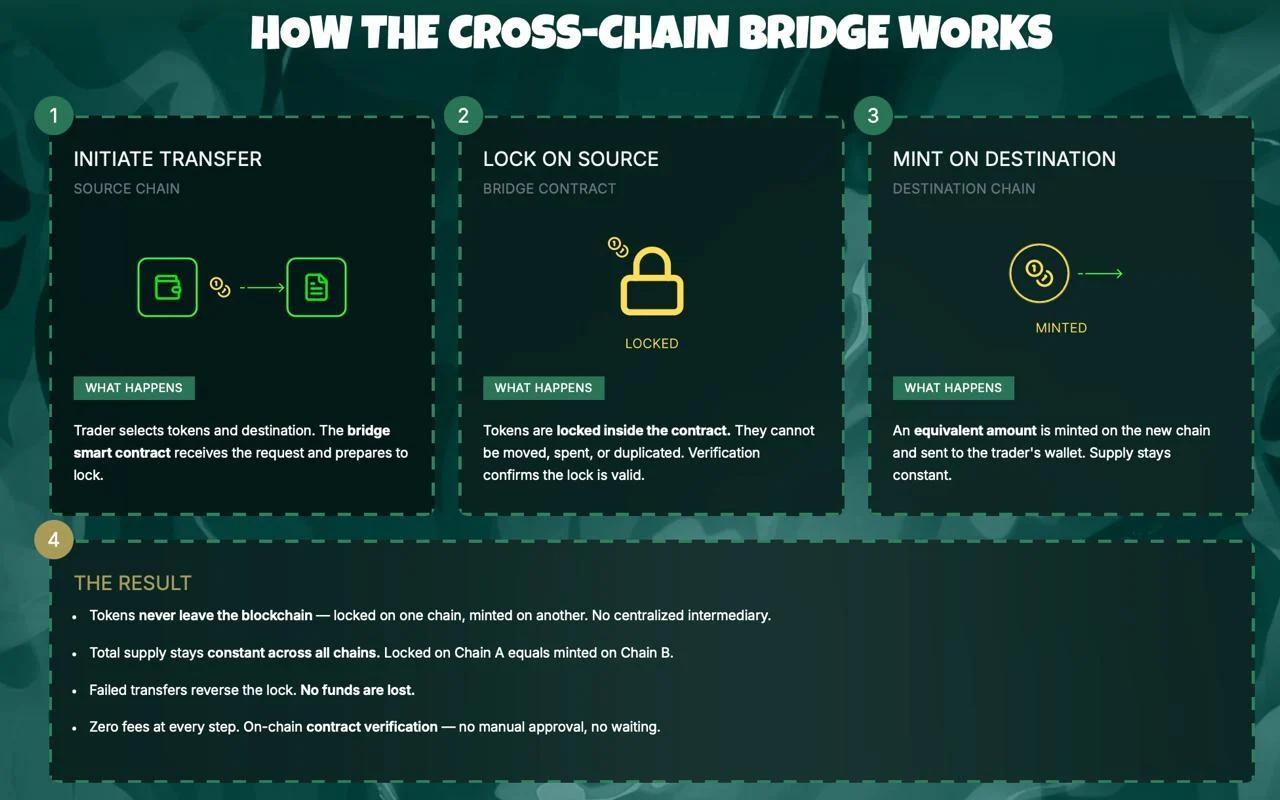
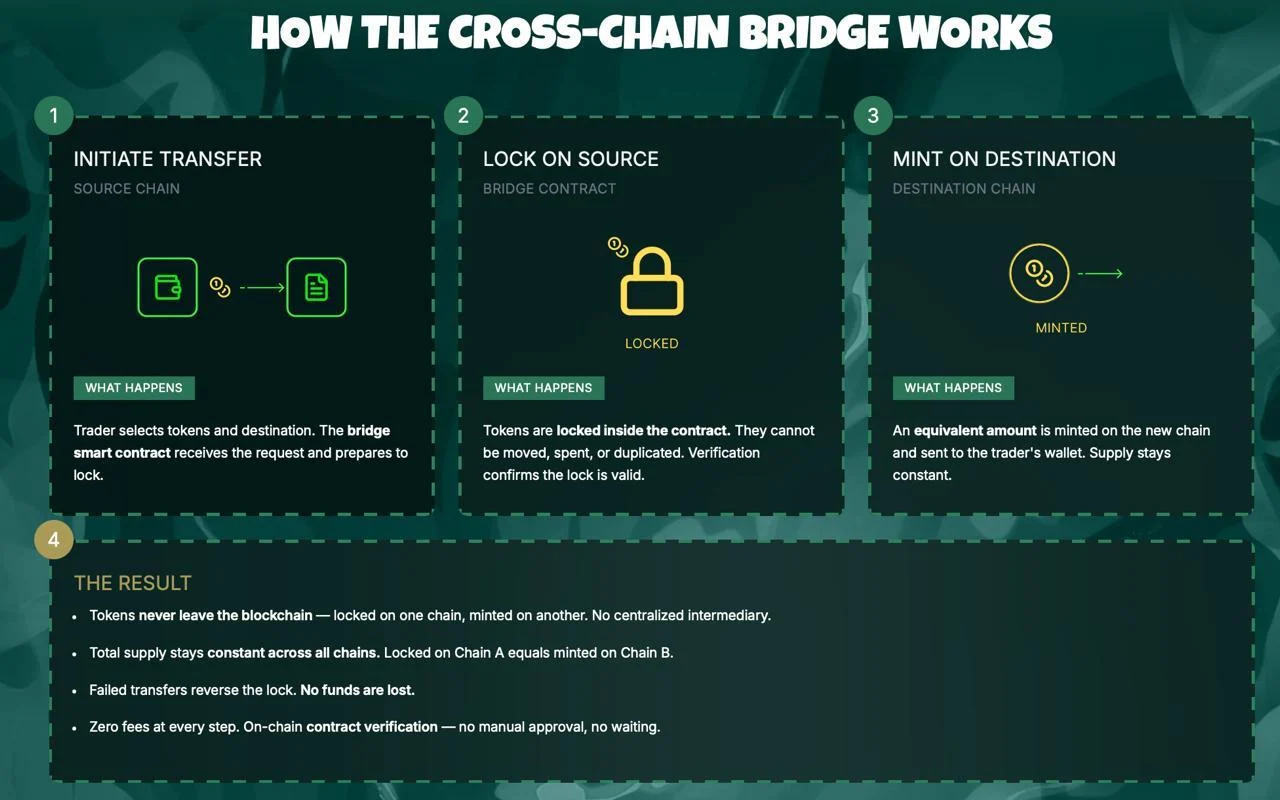
The exchange covers every cryptocurrency across Ethereum, BNB Chain, and Solana through a single verified system, getting rid of the scattered apps that overcharge and make traders pay double for every cross-chain move. Pepeto puts cross-chain swaps, token bridging, and full portfolio tools into one place.
The exchange handles every tradable coin across the full crypto market, not just memes, so every trade and every bridge fills the same pipeline and pushes organic demand into the token.
Both SolidProof and Coinsult audited every contract, the founder behind the original Pepe coin is running the project, and the staking numbers alone answer will crypto go up in April for anyone doing the math. Put $10,000 in and stake at 186% APY and that position earns you $18,600 per year, which breaks down to roughly $1,550 every single month going straight back into your bag while the exchange prepares to go live and multiply every position you locked in early.
Each presale round sells out quicker than the last and the floor price jumps the instant the current window closes, so today’s entry is the lowest price this token will ever carry.
XRP Eyes Breakout as CLARITY Act Vote Hits the Senate
Anyone asking will crypto go up in April should watch what XRP is doing right now, because the chart is about as clear as it gets. The Senate Banking Committee is targeting a late April markup of the CLARITY Act, and Senator Moreno warned that if the bill does not reach the floor by May it is dead until after midterms.
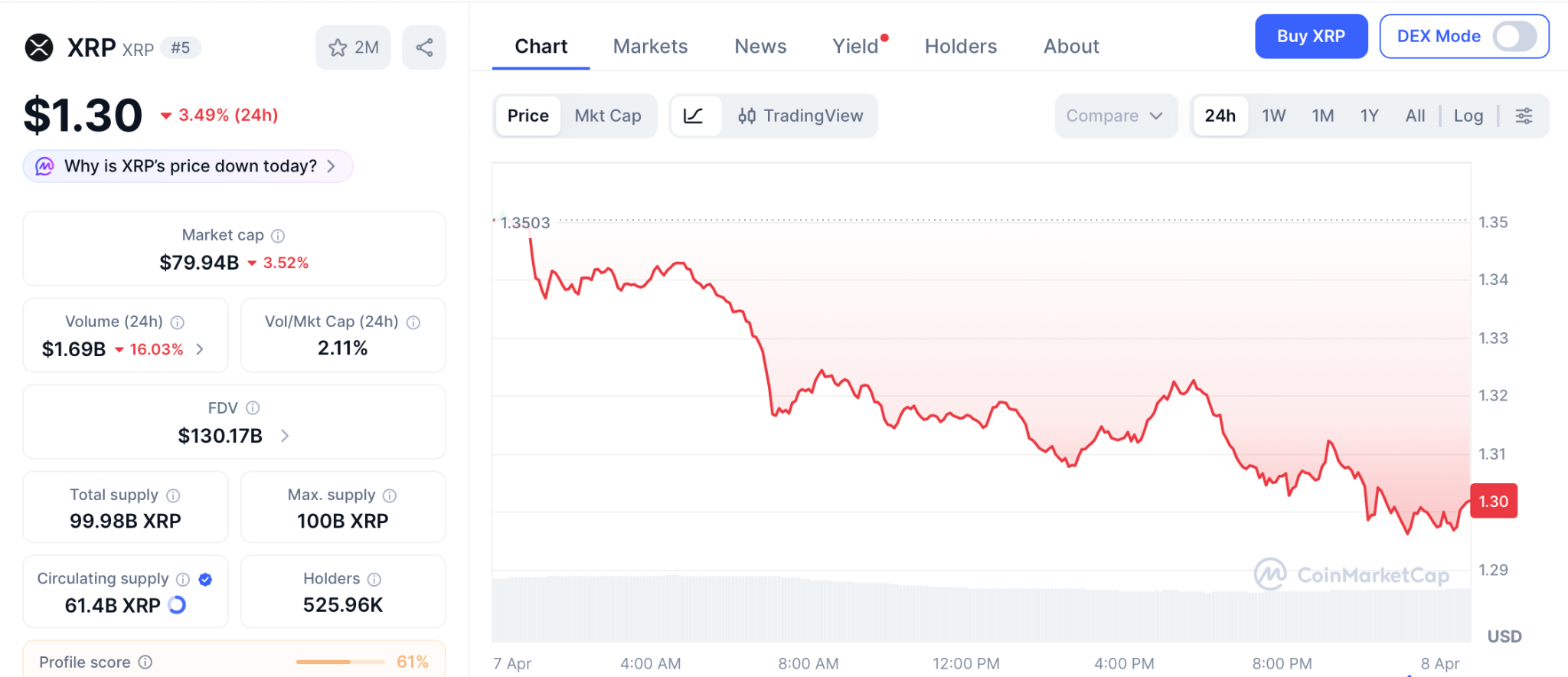
Analysts project $2.60 for XRP this cycle if CLARITY passes, giving the token a 2x from $1.30 according to CoinMarketCap. That is a decent return for XRP holders, but Pepeto at presale with $1,550 monthly staking income on $10,000 and a Binance listing ahead delivers what large caps at multi-billion valuations cannot, and Cardano completes the trio.
Cardano Builds Strength as Whales Buy 220 Million ADA in One Week
Cardano whales bought 220 million ADA worth $53 million in a single week while retail panicked, pushing large wallet holdings to 13.84 billion coins, per Santiment. Stablecoin supply on the network doubled year over year and the Midnight mainnet launched with Monument Bank already running tokenized deposits.
Analysts see $2.20 as the top end this cycle if recovery builds into Q2. For long-term holders that is a strong 8x from $0.24, and it answers will crypto go up in April with a clear yes. But the largest gains are not hiding in coins that already reflect their recovery, they are waiting in presale entries with working tools and staking that is already compounding.
The Verdict
Will crypto go up in April? Every data point says yes, and XRP and Cardano are both lined up to ride the wave with 2x to 8x gains. But $8.82 million raised, two independent audits, and 186% APY staking turning $10,000 into $1,550 per month is the kind of entry that moves with or without the broader market.
Visit the Pepeto official website and secure your entry now, because the wallets that get in at presale always become the ones everybody else regrets not following.
The names that turn into legends in crypto never come from the tokens everyone already owns, they come from the presale nobody expected, and Pepeto at $0.0000001863 is writing that story right now.
Click To Visit Pepeto Website To Enter The Presale

FAQs
Will crypto go up in April 2026?
Will crypto go up in April looks likely as BTC reclaimed $70,000 squeezing $196M in shorts and Fear and Greed hit 9. XRP, Cardano, and Pepeto are set for the biggest gains.
How does Pepeto staking work for early buyers?
Stake $10,000 at 186% APY to earn $18,600 per year or roughly $1,550 per month. Rewards grow daily while the exchange launch approaches.
Disclaimer: This is a Press Release provided by a third party who is responsible for the content. Please conduct your own research before taking any action based on the content.



Fresh on-chain data indicates Bitcoin may be carving out a new phase of supply dynamics, with long-term holders expanding their wallets and fewer coins circulating on exchanges. By early April 2026, the total amount held by accumulating cohorts surpassed 4.37 million BTC, reflecting a sustained shift of supply into HODL-oriented addresses even as the price hovered below previous all-time highs.
The pattern coincides with a notable uptick in network activity and a stubborn drawdown in active short-term participation, painting a nuanced picture for traders and investors alike as the market contends with shifting liquidity and potential price implications.
Key takeaways
- Accumulating cohorts now hold about 4.37 million BTC as of April 7, with long-term wallets continuing to absorb supply into Q2 2026.
- Retail-investor accumulation added roughly 857,000 BTC, while accumulating-pattern wallets expanded by about 1.29 million BTC—both contributing to the broader growth in long-term holdings.
- Exchange inflows have cooled markedly, averaging roughly 300,000 to 350,000 BTC—far below the 1.2–1.5 million BTC ranges seen during prior expansion phases in 2023–2024.
- The Bitcoin network activity index climbed to about 3,600, up from 3,320 on March 22, moving above its 365-day moving average for the first time since December 2024 and entering a bull-phase classification for the first time since April 2025.
- Active-address momentum slumped to -0.25 on April 6, the lowest reading since 2018, suggesting diminished short-term participation and a market dominated by long-term holders.
Long-term wallets expand holdings, reshaping liquidity
According to CryptoQuant data, the cohorts that accumulate BTC in regular, capped-out flows have continued to grow in the first quarter of 2026. The total BTC held by these accumulating cohorts reached 4.37 million BTC as of April 7, a substantial rise from the 2 million BTC level observed in early 2024. This acceleration points to a deliberate shift of BTC away from liquid markets into long-term storage or strategic accumulation pockets.
Breaking down the composition, retail-investor-linked accumulation addresses added about 857,000 BTC, while accumulating-pattern wallets—defined as entities that steadily add BTC at recurring intervals with minimal outflows—expanded by roughly 1.29 million BTC. Collectively, these movements illustrate a persistent absorption of supply by patient holders, even as the price lingered below the $70,000 mark through Q1 2026.
By contrast, inflows from centralized exchanges and highly active addresses have cooled. In 2023–2024, inflows during expansion phases often exceeded 1.2–1.5 million BTC. In the latest period, inflows have averaged around 300,000–350,000 BTC, signaling a meaningful shift in how coins move between on-chain activity and exchange wallets.
Network activity metrics corroborate the macro shift
The CryptoQuant Bitcoin network activity index rose to about 3,600, up from 3,320 on March 22, underscoring a broad rebound in on-chain usage signals. The index, which aggregates transaction counts and network throughput, pushed above its 365-day moving average—the first time since December 2024 that it crossed that threshold and the first appearance in a “bull-phase” classification since April 2025.
Meanwhile, Bitcoin’s active addresses momentum slipped to -0.25 on April 6—the lowest level since 2018. The metric tracks the rate of change in active addresses, with negative readings indicating waning user participation. CryptoQuant notes that the low activity levels echo a period in 2024 that preceded a roughly 35% price correction, suggesting the market may be experiencing a period of consolidation or a longer-term rebalancing rather than immediate selling pressure.
Analysts have interpreted the data as signaling a market increasingly driven by long-term holders rather than short-term participants or “tourists.” Gaah, a CryptoQuant analyst cited in the data notes that the pattern reflects a sector where long-term accumulation dominates network activity, potentially reducing near-term sell pressure even as on-chain usage fluctuates.
Implications for investors: what changes, and what remains uncertain
The divergence between rising long-term holdings and cooling exchange inflows presents a nuanced risk-reward picture. If the trend toward accumulating wallets persists, liquidity available for rapid selling could tighten, potentially supporting a floor for BTC during periods of price hesitation. Historically, large pockets of long-term holding have coincided with periods of price resilience during broader market uncertainty.
However, the current combination of rising on-chain activity and thinning short-term participation warrants a careful read of price dynamics. While the data suggest that the market is gradually shifting away from high-frequency turnover, the actual price trajectory will still depend on macro factors, sentiment, and the pace of new adoption or regulatory developments. The latest readings imply a potential for renewed price stability or gradual upside, contingent on continued supply absorption and sustained on-chain engagement.
For market watchers, the next few quarters will be telling. Will long-term wallets continue the inflow that’s reshaping the liquid BTC supply, and will the lower frequency of exchange inflows translate into firmer price support? How new regulatory or macro developments influence retail participation and exchange flows remains an open question, even as the on-chain metrics point toward a more durable, holder-led regime.
Looking ahead, readers should monitor whether accumulation momentum maintains its pace into Q2 and beyond, and whether the network activity index can sustain its newly regained footing above the 365-day average. If the long-term holder community continues to swell while on-chain usage remains constructive, Bitcoin could see a gradual decoupling from the most frenetic short-term trading cycles—an outcome that would carry meaningful implications for both traders and long-term investors.
Crypto World
Caroline Ellison made a ‘fatal mistake’ that triggered the total collapse of FTX, Zhao says


Binance founder Changpeng Zhao (CZ) says Sam Bankman-Fried asked him for “a couple of billion dollars nonchalantly, as if he were asking for a bologna sandwich” during the phone call that preceded Binance’s attempt to acquire FTX in November 2022, and that he never had any intention of going through with it.
“I didn’t have any interest in owning FTX. I also wasn’t that interested in helping SBF,” Zhao writes in his memoir Freedom of Money, released Tuesday. “But we may have to step in to protect the users and the industry.” He signed the non-binding Letter of Intent, he says, purely as a formality: “I was explicit that we were not making any commitment. Our team would simply assess the numbers and then decide.”
On the collapse itself, Zhao is clear about where it unraveled. When Alameda CEO Caroline Ellison publicly offered to buy Binance’s FTT holdings at $22 each — an attempt to stabilize the market — Zhao says she made “a fatal mistake.”
“She had just revealed her floor price,” he writes. Professional traders immediately shorted FTT through that level. The token fell to $15, then $10, then $5. Within 72 hours, $6 billion had exited FTX.
Zhao also discloses the existence of “Exchange Collaboration,” a Signal group set up by FTX’s Zane Tackett during the Terra/LUNA collapse earlier that year, which included Zhao, Bankman-Fried, Brian Armstrong of Coinbase, Jesse Powell of Kraken and others. The group later attracted scrutiny from DOJ and SEC investigators. “They were keen to find any possible hint of collusion or market manipulation between the exchanges,” Zhao writes. “Of course there was no such thing in this case.”
By Nov. 9, Binance had walked away from the deal. Binance’s own FTT holdings — worth $580 million at their peak — had become “basically worthless,” Zhao writes, echoing the company’s $1.6 billion LUNA wipeout six months earlier.
The aftermath brought a bank run on Binance, with $7 billion withdrawn in a single day on Dec. 14. Zhao says he spent that evening at dinner with friends. “I was not worried,” he writes. “All user funds were in our reserves.” Within a month, he says, users had deposited it all back — and more.
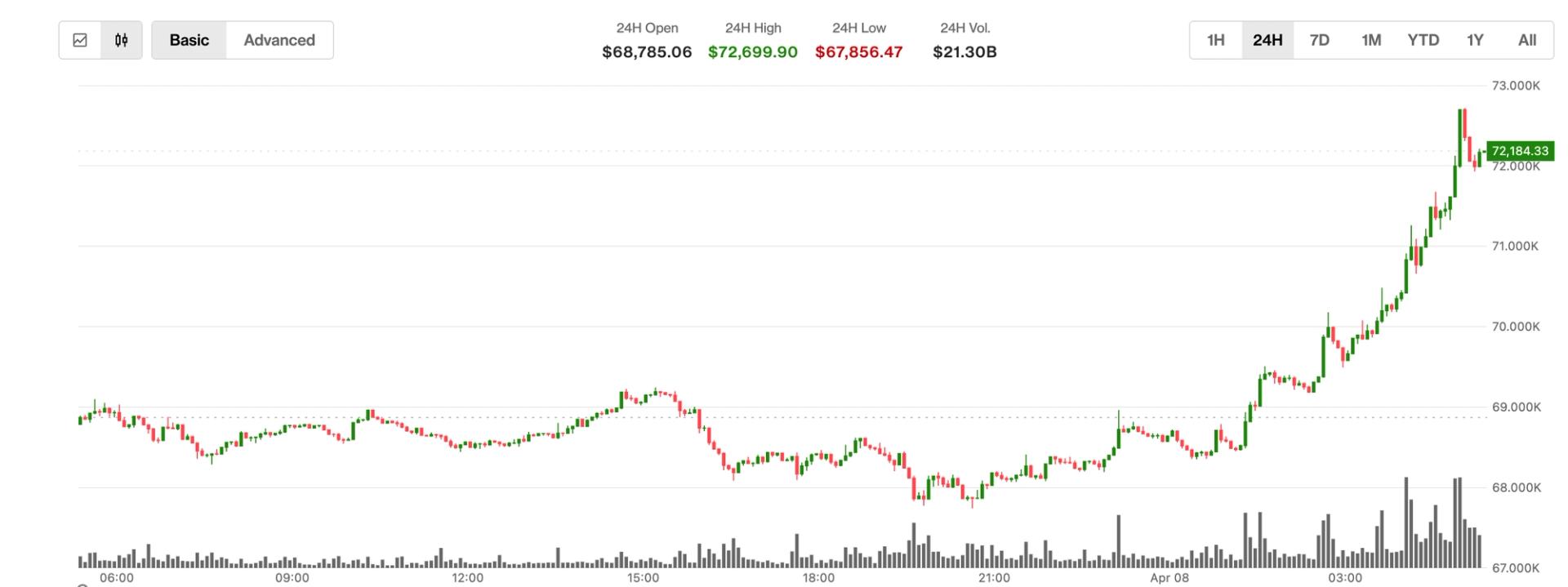
Bitcoin and U.S. stock futures surged Tuesday evening while oil prices collapsed after President Donald Trump confirmed a two-week ceasefire between Iran and the U.S. via Truth Social.
BTC, the leading cryptocurrency by market value, rose to a high of $72,699, up 5% in 24 hours, according to CoinDesk data. The broader market followed suit with the CoinDesk 20 Index jumping 5% to 2,034 points. Futures tied to the S&P 500 climbed 1.9%, while those linked to the tech-heavy Nasdaq popped 2.2%. Dow Jones futures jumped roughly 1.8%.
Meanwhile, the per-barrel price of West Texas Intermediate (WTI) crude collapsed more than 10% to $95 alongside a similar decline in Brent oil.
The risk-on action followed a two-week suspension of a planned widespread bombing campaign against Iran.
“I agree to suspend the bombing and attack of Iran for a period of two weeks,” Trump wrote in a post to Truth Social Tuesday evening, just before his 8 p.m. ET deadline.
“This will be a double sided CEASEFIRE! The reason for doing so is that we have already met and exceeded all Military objectives, and are very far along with a definitive Agreement concerning Longterm PEACE with Iran, and PEACE in the Middle East.”
Iran confirmed the ceasefire, saying that t “if attacks against Iran are halted, our Powerful Armed Forces will cease their defensive operations.” It added that oil tankers could safely transit the Strait of Hormuz for two weeks via coordination with Iran’s armed forces and with due consideration to technical limitations.
“Iran also confirms a two-week ceasefire. But the reopening of the Strait of Hormuz is somewhat muddled, with a warning of “technical limitations” and the need of “coordination” with the Iranian military. Still, it re-opens the flow of oil and LNG,” Javier Bias, Bloomberg’s opinion columnist covering energy and commodities, said on X.
For over a month, uncertainty tied to the Iran war kept risk assets under pressure. While bitcoin mostly traded choppy, its upside was persistently capped by the resulting oil rally, and inflation fears while spurring traders to seek bearish positioning in futures market.
The the latest upswing in prices has seen exchanges liquidate nearly $600 million in leveraged crypto futures positions. Of that amount, over $400 million came from bearish short bets.
This implies strong bullish momentum and a squeeze against short‑sellers, reinforcing upward pressure on the price as traders scram to cover their losing positions.


The latest AI news China Iran artificial intelligence military US bases geopolitics story escalated on April 5 when an ABC News exclusive revealed that the US Defense Intelligence Agency has confirmed Iran’s Islamic Revolutionary Guard Corps is actively using AI-enhanced satellite imagery from a Chinese firm called MizarVision to identify, prioritize, and target US military installations across the Middle East.
Summary
- MizarVision, a partially state-owned Chinese geospatial AI company, has been publishing AI-annotated high-resolution satellite imagery of US military bases on open-source platforms, with automated detection of aircraft, Patriot missile batteries, fuel depots, radar systems, and troop concentrations — capabilities once limited to classified national intelligence agencies
- DIA officials assess that the IRGC is actively using these datasets to refine missile and drone strike planning, compressing what previously required days of intelligence analysis to minutes; one intelligence official characterized the activity as a Chinese company “we believe maliciously, providing intelligence on an open-source platform”
- MizarVision posted at least six detailed analyses of Saudi Arabia’s Prince Sultan Air Base between February 24 and 27, identifying Patriot positions and aircraft locations; the base was struck less than 48 hours later, and one US service member later died from injuries sustained in the attack
The latest AI news China Iran artificial intelligence military US bases geopolitics threat took concrete form on April 5 when ABC News first reported that the US Defense Intelligence Agency had assessed Iran’s IRGC as actively exploiting satellite imagery datasets from MizarVision — a Chinese geospatial AI firm with approximately 5.5% Chinese government ownership — to improve the precision and tempo of missile and drone strikes against US and allied forces.
MizarVision’s platform integrates machine learning trained on military signatures, automatically classifying aircraft types, radar arrays, hardened shelters, fuel depots, command centers, and naval vessels based on shape, thermal patterns, and contextual indicators. The AI adds geospatial metadata tags that can be directly integrated into targeting software and command-and-control systems. Its stated mission is to “democratize and universalize geospatial intelligence” — a goal that US defense officials now say Iran has operationalized for warfare.
Traditional targeting intelligence collection, processing, analysis, and dissemination cycles take days. MizarVision’s AI reduces that to minutes by automatically generating tagged, geolocated target packages from commercially available satellite imagery. For Iran’s IRGC — which lacks the classified satellite constellation and imagery analysis units of a major power — this represents asymmetric capability: outsourcing targeting intelligence from a commercially accessible platform while maintaining operational plausibility.
DIA officials told ABC News that Iran is using these datasets not just to identify targets but to conduct pattern-of-life analysis, tracking deployment routines and periods of maximum vulnerability. That allows the IRGC to shift from broad saturation attacks toward selective strikes against air defense radars, maintenance shelters, and fuel storage facilities — the specific nodes that reduce US air combat effectiveness.
The Prince Sultan Air Base Sequence
The most alarming evidence centers on Prince Sultan Air Base in Saudi Arabia. MizarVision published detailed posts identifying Patriot missile battery positions on February 24, and aircraft parking locations on February 27. On March 1, satellite imagery showed smoke rising from damaged sections of the base following an Iranian strike. US intelligence later confirmed one service member was seriously wounded and subsequently died.
The Geopolitical Dimension
MizarVision has also published imagery of Diego Garcia, Israeli positions, Australian naval movements, and TSMC’s semiconductor plant construction, extending the concern from conflict intelligence to strategic industrial surveillance. China officially maintains a neutral position on the Iran war. The firm operates within a Chinese government framework that analysts describe as providing Beijing “plausible deniability” — the ability to assist regional partners while avoiding direct military involvement.
As crypto.news reported, Iran has already struck tech and energy infrastructure across the Gulf as part of its asymmetric response strategy. As crypto.news noted, each confirmed escalation in the conflict has produced immediate crypto market sell-offs, with the AI targeting dimension now adding a new layer of unpredictability to any de-escalation timeline.
“Future wars will be shaped as much by who can interpret and weaponize data fastest as by who fields the most advanced missiles, aircraft, or air defense systems,” one GDC analyst assessed — a conclusion the MizarVision case has now made difficult to dispute.
Spot Bitcoin ETFs recorded their strongest daily inflows since February on Monday despite ongoing geopolitical tensions.
Crypto markets retreated on Tuesday as President Donald Trump’s self-imposed deadline for Iran to reopen the Strait of Hormuz drew closer, dampening risk appetite across global markets.
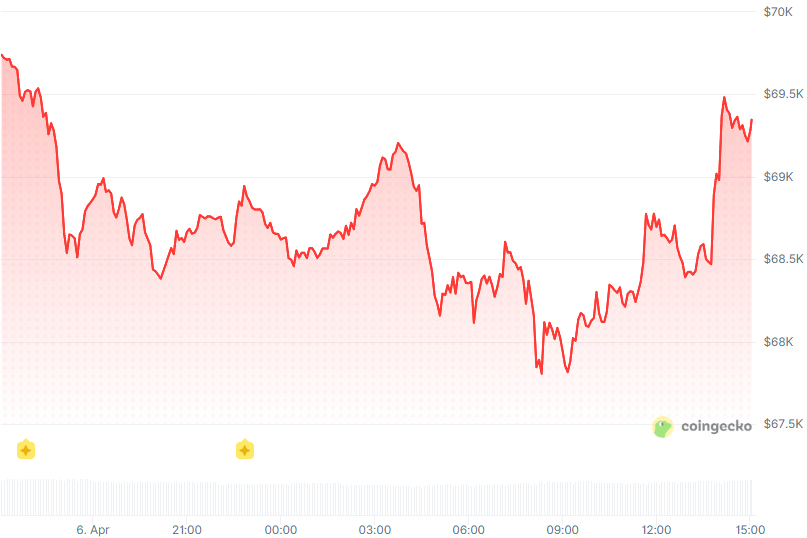
Bitcoin is trading at $69,200, according to CoinGecko, recovering from an intraday dip below $68,000 but still well off Monday’s brief push above $70,000. Ethereum is changing hands at $2,112, while Solana trades at $82. XRP fell 1.6% to $1.32.

The total cryptocurrency market capitalization stands at approximately $2.45 trillion, down less than 1% in the past 24 hours.
Among the top 100 tokens by market cap, Rain (RAIN) led gainers with a 9.8% rise, followed by Zcash (ZEC), up 8% to $276. On the downside, Algorand (ALGO) dropped 7%, and Avalanche (AVAX) fell 6.2% to $8.75.
Iran Deadline Dominates Sentiment
Trump escalated his rhetoric early Tuesday, posting on Truth Social that “a whole civilization will die tonight” if Iran fails to comply with demands to reopen the critical shipping lane that handles roughly one-fifth of global oil and gas flows. Vice President J.D. Vance said the military objectives of the war in Iran have been achieved, but the administration’s ceasefire demands remain unmet.
U.S. equities ended the day mostly unchanged, while West Texas Intermediate crude held above $110 per barrel as fears of continued supply disruption weighed on energy markets.
Traders widely expect the Federal Reserve to hold rates steady at its April meeting, reflecting the view that wartime inflation will keep the central bank sidelined.
ETF Inflows Defy Risk-Off Mood
Despite the geopolitical turmoil, spot Bitcoin ETFs posted $471 million in net inflows on Monday, the largest single-day intake since Feb. 25, according to SoSoValue.
The figure sits well below January’s peak flow regime, when multiple trading days topped $700 million, but marks a notable acceleration after BTC and ETH ETFs reversed a multi-week outflow streak in late February. March saw $1.32 billion in total net inflows, coinciding with Bitcoin’s first green monthly candle in six months.
Liquidations and Derivatives
Bitcoin alone accounted for roughly $92 million in liquidations over the past 24 hours, according to CoinGlass. Liquidations were almost equally shared between long and short positions amid choppy trading.
The Crypto Fear & Greed Index sits at 11, deep in extreme-fear territory and near the lowest sustained readings since the Terra collapse in mid-2022.
Looking Ahead
The immediate catalyst for market direction is the 8 PM ET Iran deadline. Trump has repeatedly extended similar ultimatums in recent weeks, blunting their market impact, but the scale of rhetoric suggests tonight could break the pattern in either direction.
Bitcoin has been range-bound between $62,000 and $75,000 since early February. A resolution in the Strait of Hormuz standoff would likely trigger a relief rally across risk assets.

TLDR
- The number of Cardano whale wallets holding over 10 million ADA has reached a four-month high.
- Whale activity increased by 5.2% over the past nine weeks, despite ADA’s price remaining depressed.
- ADA’s price is 11% higher than its lowest point in February, but has not shown significant upward movement.
- Cardano’s network processed over 4 billion ADA in transactions, amounting to over $1 billion in on-chain volume.
- Large holders accumulated 220 million ADA in March, bringing their total holdings to nearly 14 billion tokens.
The number of wallets holding over 10 million ADA tokens has reached a four-month high of 424. According to Santiment, this marks a 5.2% rise over the past nine weeks, even though Cardano’s price remains subdued. Despite the increased whale activity, ADA continues to trade below its previous highs.
Cardano Whale Activity Shows Strong Accumulation
Recent data from Santiment reveals that ADA’s price is 11% higher than its February 5 low this year. However, the rise in whale activity has not led to an immediate price surge. Santiment suggests that if the accumulation persists while the price remains low, it could eventually lead to a bullish divergence.
Analytics platform TapTools reported a 4 billion ADA transaction volume over the last five days, equating to over $1 billion. This shows that the increased activity among whales is paralleled by rising network usage. Despite this, the price of ADA has not yet reacted positively, remaining stuck below key resistance levels.
ADA’s Struggles Continue Amid Increased Whale Holdings
Whale interest in Cardano has been noticeable for weeks, with analysts like Ali Martinez highlighting that large holders accumulated 220 million ADA in late March. These whales now hold nearly 14 billion ADA, making up around 37% of the total supply. However, ADA’s price continues to remain stagnant, trading at $0.24, a 42% decline in the past three months.
Even with the accumulation trend, ADA’s price remains 92% lower than its all-time high of over $3. Cardano’s recent performance in terms of trading volume also lags behind competitors like Solana and XRP, which processed $2.6 billion and $1.5 billion in transactions, respectively, over the same period. This shows that while whale activity is increasing, ADA’s broader market performance remains underwhelming.
Bearish Trend Persists Despite Growing Whale Interest
Despite the uptick in whale holdings, ADA continues to trade below its 50, 100, and 200-day exponential moving averages. This keeps the broader trend bearish, regardless of the accumulation. On Twitter, user gnarleyquinn raised concerns, suggesting that Cardano’s market dominance, which has dropped from 4.5% in 2021 to around 0.3% today, may lead to a decline in the coming years.
The ongoing price struggles show that Cardano has not decoupled from the broader altcoin market. While whales continue to accumulate, ADA’s future price movements remain uncertain. It remains to be seen whether the increasing accumulation will ultimately lead to a change in price dynamics for Cardano.
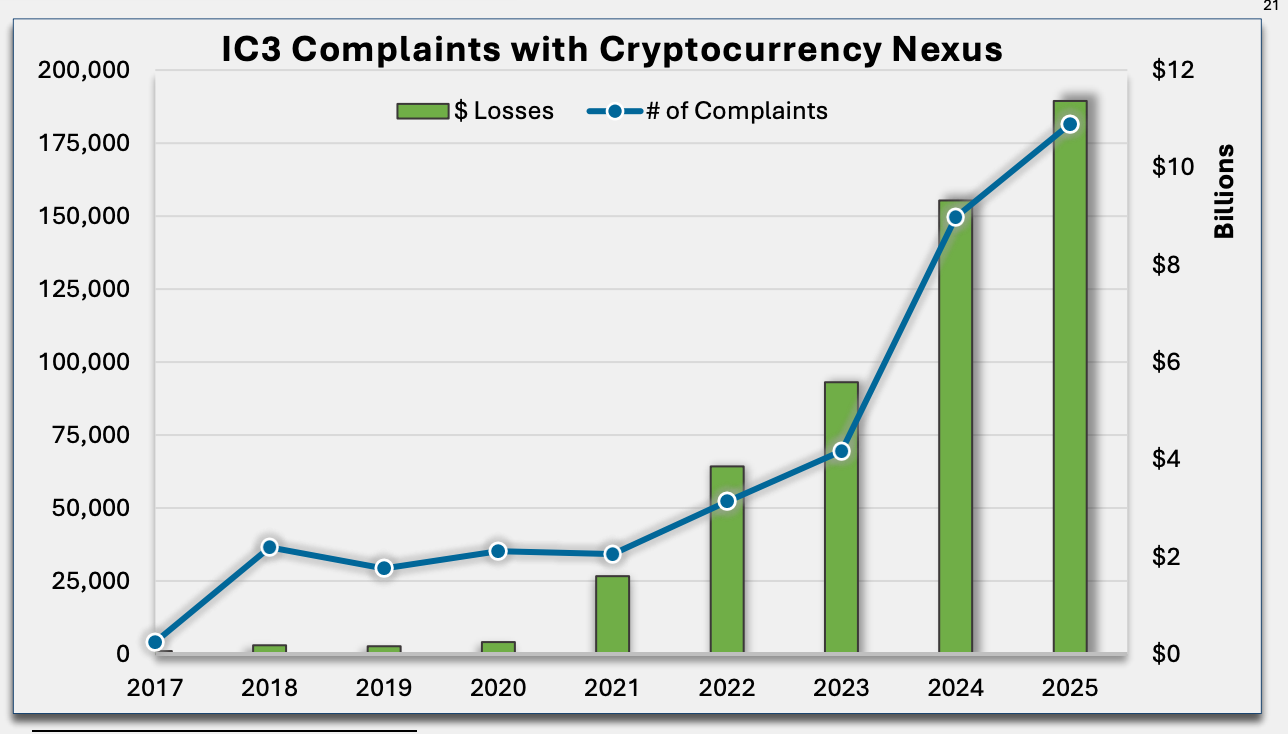
According to the bureau, a large number of minors aged 17 and younger were included in complaints related to crypto or crypto ATMs, resulting in more than $5 million in losses.
The US Federal Bureau of Investigation (FBI) reported that Americans’ losses from crypto-related scams increased to more than $11 million in 2025.
In its annual internet crime complaint report released on Monday, the FBI said that cryptocurrency and AI-related scams were “among the costliest” for Americans in 2025, with 181,565 complaints totaling more than $11 billion. According to the bureau, it received more than one million complaints in 2025 reporting losses of about $21 million due to cyber-enabled crimes.

The FBI’s Internet Crime Complaint Center reported that investment scams resulted in the highest percentage of victims reporting losses in crypto as opposed to cash, debit cards, gift cards and other media of exchange. In addition, about 10% of the 13,168 complaints involving cybercrimes targeting minors aged 17 and younger were related to crypto or crypto ATMs, resulting in more than $5 million in losses.
The complaints the FBI received were despite the bureau’s efforts to “identify and notify people who are currently falling victim to cryptocurrency investment fraud” through its Operation Level Up in 2024. Globally, blockchain analytics platform Chainalysis reported in March that illicit addresses received $154 billion in 2025, driven in part by sanctions evasions.
Related: Cambodian lawmakers propose severe prison time for crypto scammers
Scammers use Tron blockchain token to con users using FBI
According to the FBI report, there were 32,424 complaints involved in impersonation of government officials, resulting in about $800 million in losses. However, the report did not mention bureau officials issuing a March notice warning Americans that a token on the Tron blockchain was impersonating the FBI with the goal of obtaining personal information.
Tron users reported receiving a token with the FBI logo claiming that their wallet was “under investigation.” The users were then prompted to enter personal information under the guise of an FBI anti-money-laundering verification to avoid their accounts being frozen.
Magazine: Are DeFi devs liable for the illegal activity of others on their platforms?
A fresh wave of online backlash is now building around Pakistan’s request to extend Trump’s Iran deadline, with users questioning whether the move was genuinely independent.
The speculation centers on the edit history of Prime Minister Shehbaz Sharif’s post on X. History shows an earlier version of the message, followed by a more detailed “draft” version that explicitly calls for a two-week extension and reopening of the Strait of Hormuz.
Some users claim this suggests coordination behind the scenes. The theory is simple: if the US agrees to extend the deadline, framing it as a response to Pakistan’s request allows Washington to avoid appearing to back down under pressure.
There is no evidence supporting this claim. Neither the White House nor Pakistani officials have indicated any coordinated messaging strategy.
Still, the timing has fueled suspicion. The post appeared just hours before Trump’s deadline, as negotiations intensified and markets reacted sharply.
In volatile geopolitical moments like this, narratives form quickly. Right now, this one is being driven by inference, not confirmation.
The post Internet Questions Pakistan’s Role in Trump’s Iran Deadline Twist appeared first on BeInCrypto.
TLDR
- Charles Schwab outlines two approaches for integrating cryptocurrencies into investment portfolios.
- The return-based approach focuses on expected returns, volatility, and asset correlations.
- Schwab recommends modest allocations to bitcoin and ether based on expected returns.
- The risk-based approach focuses on managing overall portfolio risk from crypto exposure.
- Schwab warns that even small allocations to crypto can significantly raise portfolio risk.
Charles Schwab, the leading U.S. brokerage firm managing over $12 trillion in assets, recently outlined two approaches for integrating cryptocurrencies into investment portfolios. The firm emphasized that while there is no fixed method for crypto allocations, investors should carefully consider their risk tolerance and long-term objectives. Schwab’s research highlights the potential for diversification, though it warns that even small allocations to crypto can significantly increase portfolio risk.
Return-Based Approach to Crypto Investments
In its white paper, Charles Schwab detailed a return-based approach to crypto investing, which is rooted in expected returns. This method examines the anticipated returns, volatility, and correlations with traditional assets like stocks and bonds. Schwab suggests that if investors expect a return of 15% per year from Bitcoin, a conservative portfolio might allocate around 1%, while a more aggressive one could allocate up to 8.8%.
The firm noted that ether, due to its higher volatility, would warrant smaller allocations. For example, a conservative portfolio might allocate just 0.1% to ether, while a more aggressive portfolio might allocate up to 2.5%. Schwab also stressed that if returns for either bitcoin or ether fall below 10%, it might not justify any allocation, even for more risk-tolerant investors.
Risk-Based Approach to Crypto Exposure
Charles Schwab also presented a risk-based approach to crypto allocation, where the focus shifts from returns to managing overall portfolio risk. In this approach, the crypto exposure is determined by the amount of total portfolio risk that comes from cryptocurrencies. For instance, in a conservative portfolio, a 1.2% allocation to bitcoin or 0.9% to ether could represent 10% of the total portfolio risk.
For moderate to aggressive portfolios, Schwab suggests allocating up to 4% in bitcoin and nearly 3% in ether to achieve similar risk levels. Schwab explained that this risk-based method is particularly useful for investors who want to understand how crypto fits into their broader asset mix. While crypto may offer diversification benefits, Schwab cautioned that increasing exposure comes with heightened portfolio concentration risk.
Charles Schwab’s Crypto Exposure Options
As Schwab moves forward with its new crypto offering, Schwab Crypto, it has also been providing exposure through various products like crypto-related stocks and exchange-traded products. Schwab has introduced a waitlist for clients interested in buying and selling bitcoin and ether directly. For now, the brokerage firm offers crypto exposure through over-the-counter trusts and futures for approved clients.
Despite initially dismissing cryptocurrencies as “purely speculative” in 2019, Schwab has evolved its stance on digital assets over time. The firm now encourages investors to carefully evaluate the role that crypto could play in their portfolios, keeping in mind the elevated risks associated with even a small allocation.
Crypto World
Next Crypto to Explode as Bitcoin Stands Firm Above $68K and Solana ETFs Hold $1.5 Billion, but Pepeto Is the Entry That Defines This Cycle
The crypto market is heating up, and the prices sitting in front of you right now will not be here when the rally kicks in. Bitcoin held $68,317 on April 7 after Iran rejected the ceasefire, per CoinDesk, and Solana ETFs kept $1.5 billion in total inflows despite SOL crashing 57% from its peak. Every indicator that marks the start of a rally is lighting up.
But the next crypto to explode is never the coin everybody already holds at a trillion-dollar valuation. It is the presale where listing day creates the gain and exchange revenue locks it in. Here is which one ticks every requirement.
Bitcoin sat at $68,317 on April 7 after absorbing Iran.s ceasefire rejection, per CoinDesk, while BTC ETFs pulled $471 million on April 6. The Fear and Greed Index sits at 9, and altcoins bounced broadly.
The market is shifting bullish, and the traders who connect those dots are searching for the breakout alt at presale cost before the listing turns cheap entries into the bags everybody else spends the cycle regretting.
The Next Crypto to Explode Sits Below the Rally While Large Caps Grind
Pepeto: Revenue Sharing That Pays From Every Trade, at a Price the Bull Market Will Erase
Bull runs pay the people who bought during panic. The wallets that loaded Pepeto during the crash are now watching the market prove them right. Revenue sharing gives every presale holder a lasting share of trading fees based on position size, confirmed by Business Insider. BTC, SOL, and XRP generate zero income for holders. Pepeto earns on every single transaction.
SolidProof cleared the contract before the presale opened, and a former Binance executive is leading the listing plan for the exchange with its cross-chain bridge, zero-cost swaps, and token risk scoring. The $8.82 million raised came from wallets that checked every alternative and picked this one. The founder who took the original Pepe coin to $7 billion is channeling that same viral pull into tools that generate actual revenue.
At $0.0000001863, the gap between presale and listing gives a floor that no large cap can offer. 186% APY staking adds to your position while the listing gets closer, but that is just the extra.
The real payoff comes when a revenue-earning exchange token hits live bull market trading, and every bag at this price turns into supply that post-listing buyers have to purchase from you. The next crypto to explode door is closing quicker than anyone expects.
Solana: $1.5 Billion in ETF Inflows but SOL Stuck at $79
SOL trades near $79 with $1.5 billion in cumulative ETF capital proving institutional belief even as the price dropped 57% from its high, per CoinGecko. A break above $86 could push toward $100 as the broader market builds.
Strong base, but from $79 the upside is capped for anyone searching for the next crypto to explode that transforms a portfolio.
Bitcoin: Holding $68K With $80,000 as the Next Major Target
BTC held $68,317 on April 7 per CoinMarketCap and $74,500 is the final resistance before a clean run to $80,000. The $471 million in ETF capital on April 6 proves institutional appetite, and analysts keep their sights above $150,000 by December 2026.
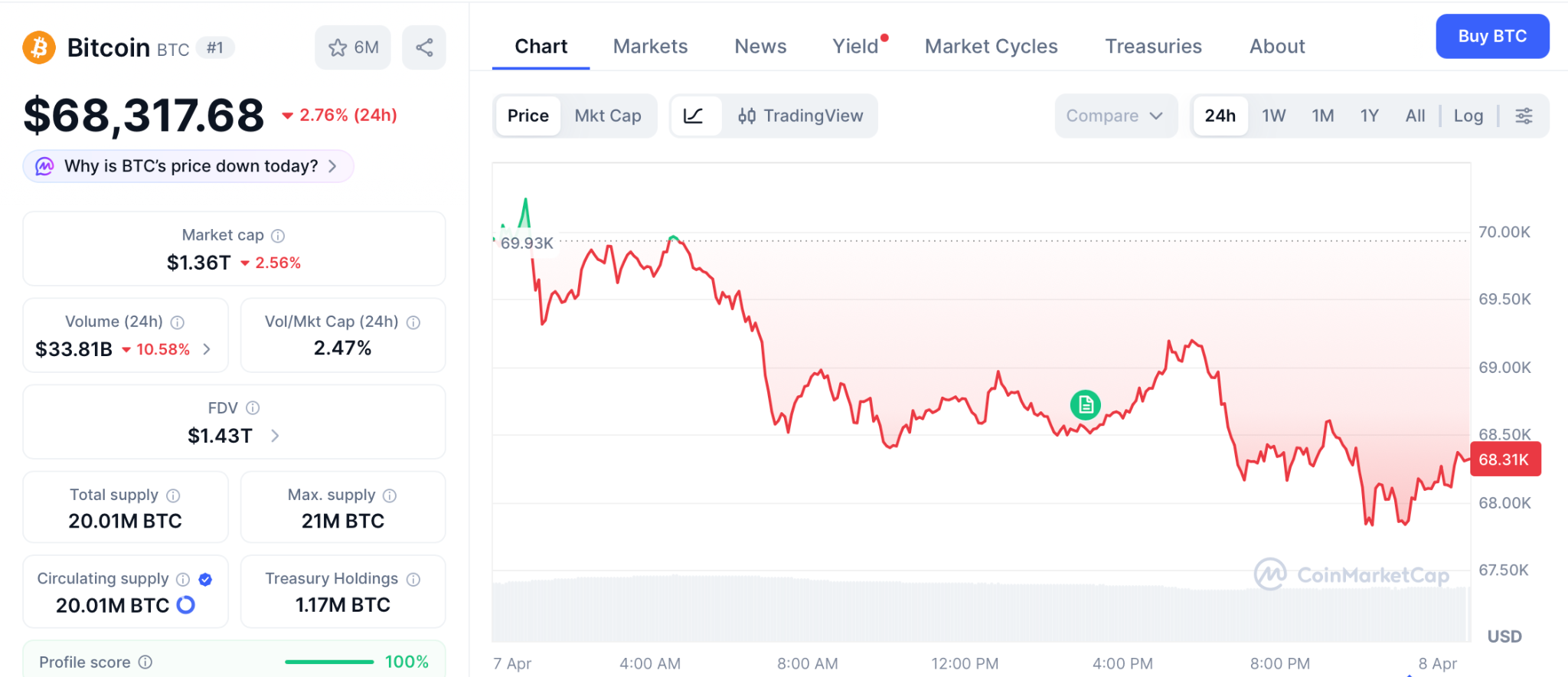
Bitcoin is out front with clear strength, but the next crypto to explode requires numbers that go past what a $1.3 trillion coin can deliver.
The Bull Market Is Here and the Entry That Defines It Is Still Open
Step back and the whole picture becomes clear. The market tips bullish, Bitcoin refuses to break, institutions keep arriving, and Pepeto is sitting in the setup that appears once per cycle: permanent revenue sharing, SolidProof audit, a founder who generated $7 billion in demand, and exchange tools the Binance listing switches on.
Every massive crypto winner follows one pattern: a few wallets entered first, everyone else found out after, and the cheap price was gone. That sequence is playing out right now, and once the listing drops the presale cost disappears forever. Visit the Pepeto official website and make the move that puts you on the side that caught this cycle instead of the side that watched it happen. The next crypto to explode never waits for the crowd to agree, it moves while they debate, and Pepeto at $0.0000001863 is already moving.
Click To Visit Pepeto Website To Enter The Presale

FAQs
Why is the crypto market turning bullish right now?
Bitcoin held $68,317 after Iran rejected ceasefire, ETFs pulled $471 million on April 6, and Fear and Greed at 9 historically marks the bottom before major rallies.
Where can I find the next crypto to explode before listing?
Visit the Pepeto official website at $0.0000001863 with 186% APY staking and exchange tools ready for bull market volume.
Disclaimer: This is a Press Release provided by a third party who is responsible for the content. Please conduct your own research before taking any action based on the content.

Michigan Senate candidate El-Sayed declines to disavow Hasan Piker’s past comments

NFL Players from Central H.S. (Cheyenne, WY)

Iranian hackers are targeting American critical infrastructure, US agencies warn


-

 NewsBeat5 days ago
Steven Gerrard disagrees with Gary Neville over ‘shock’ Chelsea and Arsenal claim | Football
-

 Business5 days ago
No Jackpot Winner and $194 Million Prize Rolls Over
-

 Fashion4 days ago
Weekend Open Thread: Spanx – Corporette.com
-

 Crypto World6 days ago
Gold Price Prediction: Worst Month in 17 Years fo Save Haven Rock
-

 Business2 days ago
Three Gulf funds agree to back Paramount’s $81 billion takeover of Warner, WSJ reports
-

 Business4 days ago
Expert Picks for Every Need
-

 Sports3 days ago
India men’s 4x400m and mixed 4x100m relay teams register big progress | Other Sports News
-

 Business6 days ago
Login and Checkout Issues Spark Merchant Frustration
-

 Tech3 hours ago
How Long Can You Drive With Expired Registration? What Florida Law Says
-
Business3 days ago
No Jackpot Winner, Prize to Climb to $231 Million
-
Crypto World7 days ago
Bitcoin stalls below key resistance as technical signals skew bearish
-

 Tech5 days ago
Commonwealth Fusion Systems leans on magnets for near-term revenue
-

 Politics7 days ago
Starmer’s centre has collapsed, and the left was right all along
-

 Crypto World6 days ago
Ripple rolls out enterprise crypto treasury platform for corporates
-

 Fashion2 days ago
Massimo Dutti Offers Inspiration for Your Summer Mood Board
-

 Crypto World6 days ago
Why It’s Partnering, Not Issuing
-

 Business3 days ago
Akebia Therapeutics, Inc. (AKBA) Discusses Pipeline Progress and Strategic Focus on Kidney Disease Treatments at R&D Day – Slideshow
-

 Tech6 days ago
Drawing Tablet Controls Laser In Real-Time
-

 Tech7 days ago
Solo Leveling: Ranking All Sung Jinwoo Shadows by Power
-

 Fashion7 days ago
Debenhams Occasion Dresses for Girls 2026 Collection
You must be logged in to post a comment Login