

Crypto World
XRP Price Forecast: Could XRP Reach $15 Within Five Years?

Quick Overview
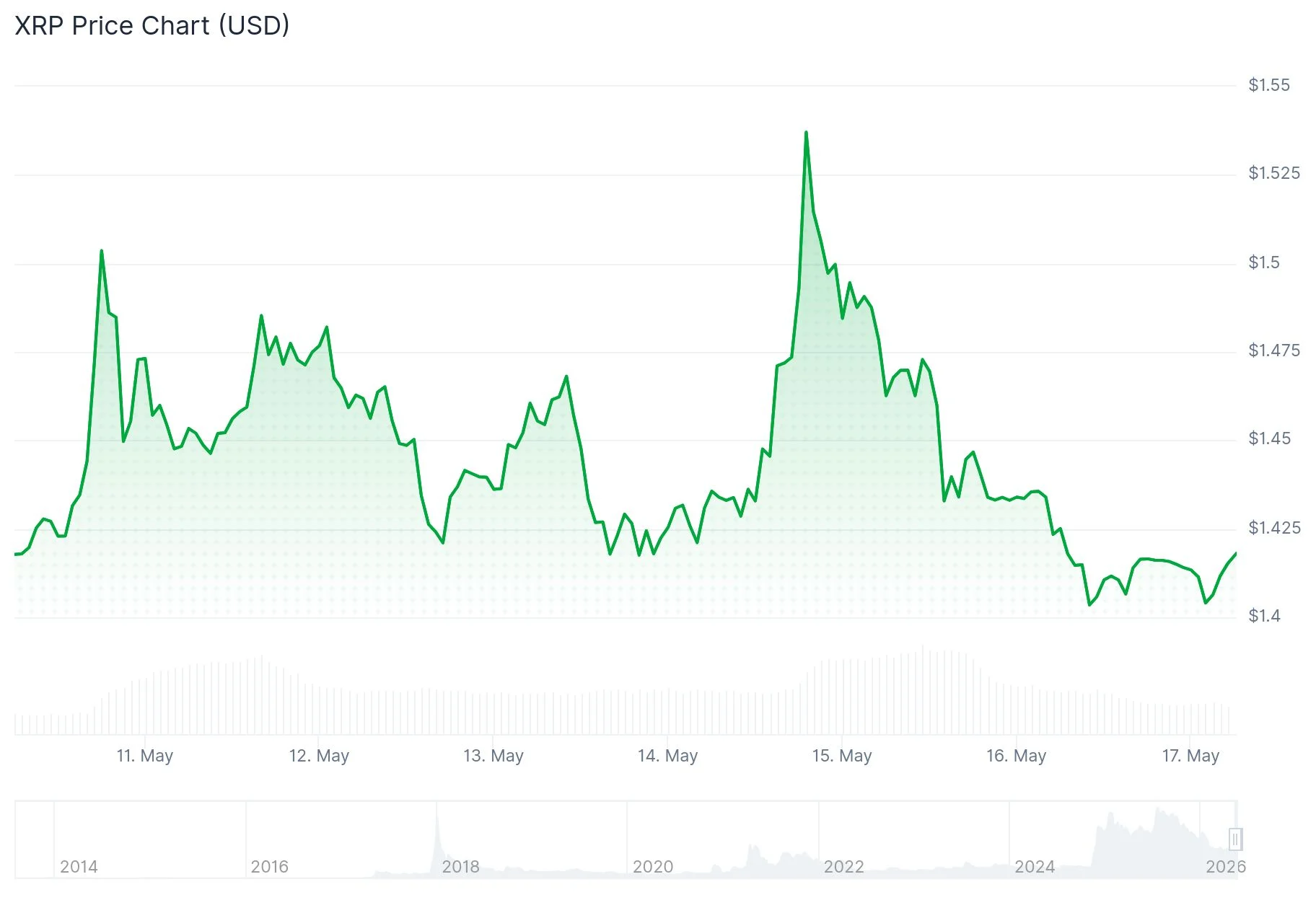
- Current XRP valuation hovers near $1.40 with approximately $87 billion in total market capitalization
- Baseline projection estimates XRP reaching $4–$6 by 2031 through overall crypto market expansion
- Optimistic scenario sees $10–$15 potential if XRP achieves widespread institutional settlement adoption
- Pessimistic outlook forecasts $0.70–$1.20 should financial institutions favor stablecoins or proprietary blockchain solutions
- Weighted probability analysis suggests approximately $5.80 as a realistic five-year target
XRP remains among the cryptocurrency sector’s most debated digital assets. Supporters view it as a compelling candidate for mainstream financial adoption. Critics question its reliance on Ripple’s ecosystem and whether major banking institutions will embrace XRP for large-scale operations.
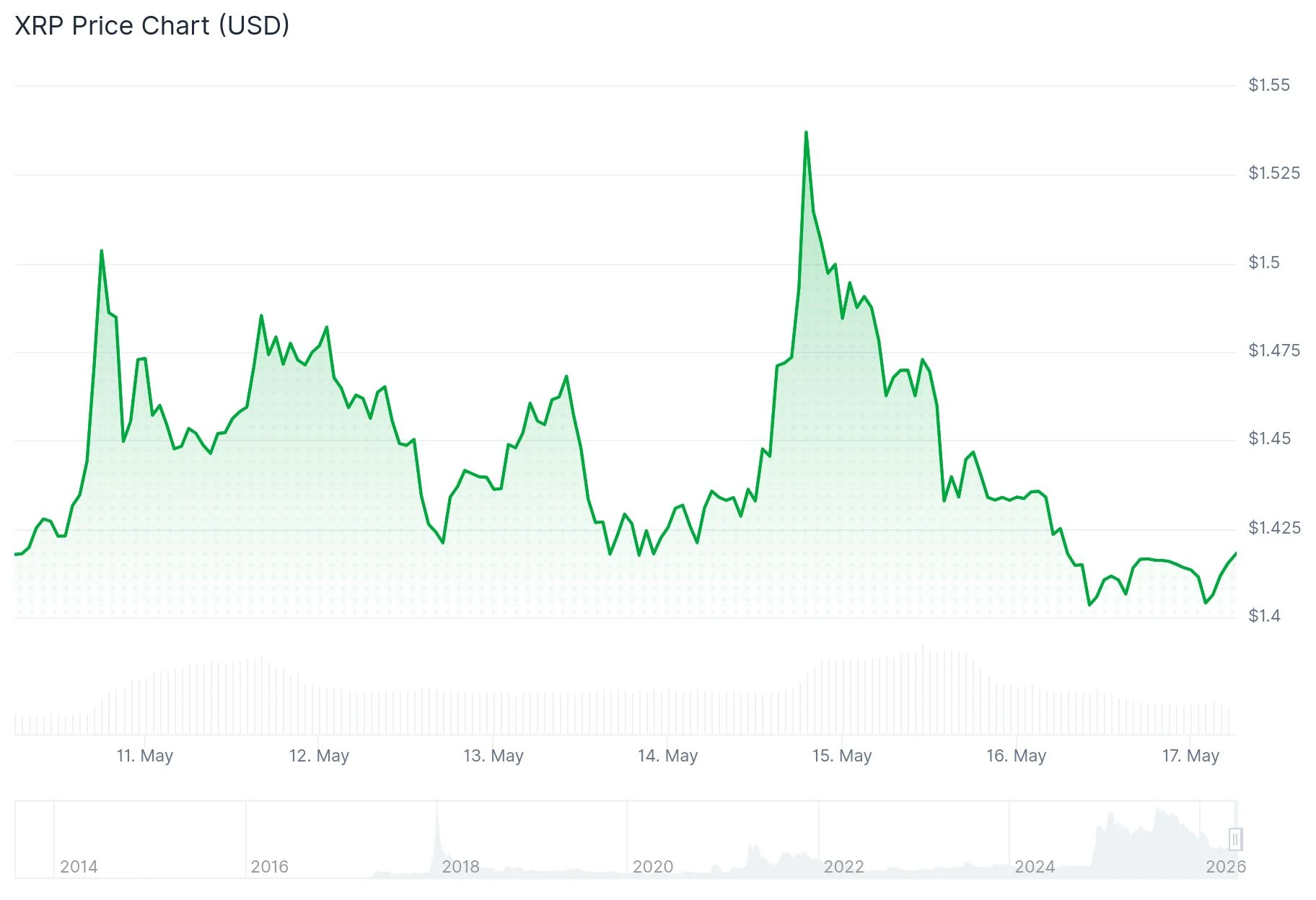
Currently valued at approximately $1.40 per token, XRP commands a market capitalization approaching $87 billion with roughly 61.8 billion tokens in circulation. The critical question facing investors is whether XRP can evolve into an essential component for payment systems, settlement infrastructure, and institutional cryptocurrency holdings over the next half-decade.
Market researchers have outlined three distinct trajectories for XRP‘s potential valuation by 2031.
Baseline Projection: $4 to $6 Range
The most probable outcome positions XRP within the $4 to $6 corridor by 2031. Such pricing would translate to a total market capitalization ranging from approximately $250 billion to $375 billion.
This projection assumes XRP expands proportionally with the broader cryptocurrency ecosystem. Institutional capital gains entry through exchange-traded funds and compliance-focused investment vehicles. The XRP Ledger maintains consistent transaction activity. Regulatory frameworks become clearer across major financial jurisdictions.
Under this scenario, XRP would maintain its position beneath Bitcoin and potentially Ethereum by market value. Nevertheless, it would represent substantial growth from present levels.
Three critical elements must align for this outcome: favorable regulation, genuine network utilization, and sustained investor interest.
Optimistic and Pessimistic Scenarios
The optimistic projection presents a more ambitious outlook. Reaching the $10 to $15 price zone would require XRP’s market capitalization to exceed $600 billion, potentially approaching $900 billion.
This scenario demands XRP establishing itself as a primary settlement mechanism across payment networks, tokenized asset platforms, and international money transfer systems. Substantial exchange-traded fund capital inflows combined with meaningful expansion of Ripple’s commercial ecosystem would be essential.
The pessimistic scenario paints a contrasting picture. Should banking institutions gravitate toward stablecoins, proprietary blockchain infrastructure, or government-issued digital currencies, XRP might languish between $0.70 and $1.20.
Lackluster ETF adoption or stagnant XRP Ledger transaction metrics would similarly constrain price appreciation.
Balancing all three scenarios with probability weightings produces an approximate $5.80 target for 2031.
Critical Factors Influencing Outcomes
Institutional acceptance represents the paramount consideration. Exchange-traded products and corporate treasury allocations could unlock substantial new capital flows.
Regulatory development follows closely. XRP requires definitive legal frameworks across major economies before significant institutional capital commits.
Actual network utilization carries substantial weight. Market participants will scrutinize whether XRP Ledger transaction volumes, tokenization implementations, and settlement throughput demonstrate meaningful expansion.
Competitive pressure constitutes the primary downside risk. Ethereum, Solana, stablecoin networks, and proprietary payment systems all vie for the identical institutional market segment XRP pursues.
The probability-adjusted five-year valuation target stands at $5.80, calculated using current circulating supply figures and achievable market capitalization projections.




Jump Crypto’s Firedancer has entered production on Solana mainnet and is now producing blocks, according to a CoinDesk report.
Summary
- Firedancer has started producing Solana mainnet blocks after years of development by Jump Crypto engineers.
- Jump Crypto says validators should not switch at scale before full security audits are completed.
- The rollout adds client diversity to Solana while keeping caution around production network risks.
The validator client has been one of Solana’s most watched infrastructure projects because it aims to add another independent software path for validators.
Founding engineer Ritchie Patel said the client has processed tens of millions of transactions in production.
However, the team does not want validators to switch at scale yet. Patel said the rollout will remain gradual until full security audits are complete.
Solana gains another validator path
Firedancer is a new validator client for Solana built by Jump Crypto. Its public GitHub page describes it as fast, secure, and independent. The project says the client was written from scratch to support client diversity and reduce supply-chain risk.
The same repository says Frankendancer, a hybrid version that uses parts of Firedancer and Agave, is available on Solana testnet and mainnet-beta. The full Firedancer client remains separate from that hybrid version.
In addition, Jump Crypto’s Firedancer page describes the project as a Solana validator client written in C and built for high performance. It also describes Frankendancer as an intermediate milestone that enables testing and deployment before the full Firedancer system is complete.
The cautious launch follows a public audit contest with a $1 million bug bounty pool. The message from the team is clear: production use has started, but broad validator migration needs more security work before it becomes safe at network scale.
Wider Solana infrastructure work continues
The Firedancer rollout comes as Solana developers and infrastructure teams continue to work on speed, security, and validator systems. Crypto.news recently reported that Anza and Firedancer added early Falcon versions to prepare Solana clients for possible future quantum risks.
Separate coverage also reported that DoubleZero launched Edge beta, giving Solana validators and data users a faster block data route through a private fiber network. That service launched with 379 validators publishing shreds, covering about 43% of Solana’s stake at the time.
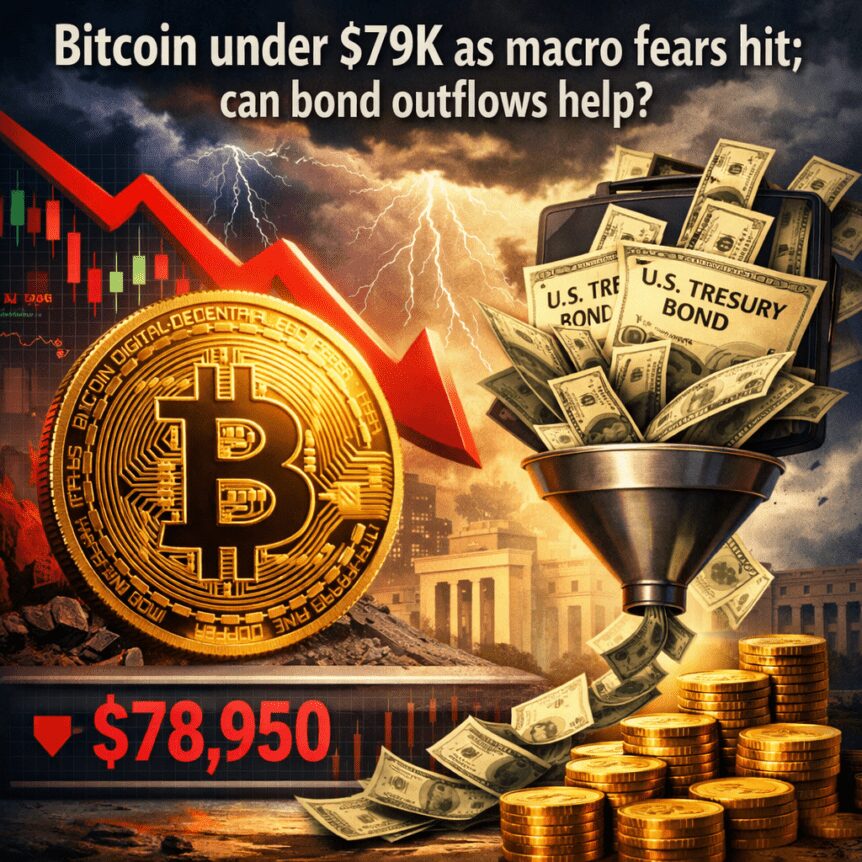
Bitcoin (BTC) declined sharply on Friday after failing to sustain a push above $82,000 the day prior, with price action echoing the behavior of US small-cap equities and signaling macro forces as the dominant driver of BTC’s moves toward sub-$79,000 levels. The retreat comes amid a broader risk-off mood in markets, where concerns about liquidity, growth, and geopolitical risk have weighed on assets across risk spectrums. As noted in market coverage, BTC has recently traded in a pattern that resembles and reacts to the same macro cues seen in the small-cap universe. nosedive below $79,000 has been highlighted as a reference point for the latest pullback.
Analysts have suggested that the anxiety translating into fixed-income selling could paradoxically lay groundwork for liquidity-driven upside in Bitcoin over the medium term. While the near-term price action appears fragile, some market participants view the current environment as a potential setup for a bounce should risk appetite stabilize and liquidity conditions improve.
Key takeaways
- Bitcoin’s short-term moves remain tightly linked to US small-cap equities, signaling macro risk sentiment rather than a traditional hedging narrative driving BTC’s price action.
- Bitcoin perpetual futures funding rates flipped deeply negative on Thursday and stayed near 0% on Friday, indicating tepid demand for bullish leverage rather than broad-based accumulation.
- Fixed-income outflows, paired with rising global yields and higher oil prices, contribute to a fragile macro backdrop that could influence BTC’s trajectory in the weeks ahead.
- Market mood cooled after the latest US-China summit in Beijing, with Nasdaq 100 reaching an all-time high only to retreat amid mixed signals on tariff talks and policy direction.
- Oil prices climbing toward $106 a barrel and the sharp move in long-dated yields underscore inflation concerns and the potential for continued macro-driven volatility in crypto markets.
Macro signals and BTC’s risk-on alignment
The broader market narrative remains dominated by macro drivers, a theme BTC has echoed in recent sessions. The Russell 2000, a US small-cap index known for higher earnings risk and thinner balance sheets, has shown a tendency to move in tandem with BTC during this stretch. By design, small caps are more sensitive to shifts in the cost of capital and interest-rate expectations, which in turn shapes risk appetite across asset classes. In this environment, Bitcoin is less a hedge and more a correlated risk-on instrument, reacting to the same liquidity and growth signals that move equities higher or lower.
Crucially, crude oil has surged, with Brent crude trading around the mid-$100s per barrel, lifting inflation expectations and pressuring fixed-income valuations. Long-dated government bonds, including the 10-year yields in several regions, have advanced to multi‑year highs, amplifying concerns about the interplay between inflation, growth, and monetary policy. The ensuing macro volatility feeds through to crypto markets, where traders weigh the odds of further drawdowns versus the potential for a liquidity-driven rebound.
On the equity side, tech-led strength helped the Nasdaq 100 notch fresh highs on a prior session, but sentiment cooled as markets parsed the outcome of the latest US-China discussions. While officials signaled intentions to accelerate farm goods exports in the near term, no concrete tariffs-related deals were announced, leaving investors wary of longer-term policy signals. This dynamic underscores the challenge of reading crypto through a single lens: even as equities showed resilience, the underlying macro uncertainty persists and often correlates with BTC’s intraday swings. The Guardian’s summary of the Beijing talks captures the cautious tone surrounding policy progress as markets digest the potential longer-term implications.
Leverage, liquidity, and the funding backdrop
One of the more telling signals for BTC’s near-term path has been the state of the crypto futures funding landscape. Bitcoin perpetual futures funding rates flipped deeply negative on Thursday and hovered near zero on Friday, a pattern that implies traders have been relatively reluctant to shoulder meaningful long exposure. By convention, a neutral or positive funding rate (above a 6% annualized baseline) tends to indicate healthier bullish leverage demand, whereas persistent negative readings reflect skittish sentiment and a scarcity of sustainable upside bets. This environment aligns with the broader sense of caution as BTC attempts to navigate the macro crosscurrents without a strong, corroborating liquidity impulse from leveraged buyers. Bitcoin perpetual futures funding rate has trended away from aggressive upside leverage in recent weeks, even as prices flirt with key resistance near $82,000.
The macro mix—tightening financial conditions, elevated oil, and rising yields—helps explain why traders have yet to exhibit a strong appetite for new BTC long exposure. At the same time, some observers argue that the liquidity squeeze in fixed income could ultimately push capital into other assets, including Bitcoin, if and when risk appetite improves or if trading dynamics shift in a way that resolves some of the near-term uncertainty.
To contextualize the bigger picture, a measure of historical market risk shows stock valuations approaching levels last seen near the dot-com era. The 10-year inflation-adjusted price-to-earnings ratio for the S&P 500, often cited as a gauge of valuation pressure, has risen toward the upper end of the long-run range, suggesting that the market’s appetite for risk could be sensitive to any further macro shocks or policy pivots. The data point is commonly cited using Shiller’s framework and, as of the latest readings, sits near the peak territory observed during the late 1990s bubble era, according to Multpl’s series. This backdrop underscores why BTC, while still a volatile asset, is vulnerable to outsized moves when macro risk intensifies and liquidity conditions tighten. Shiller P/E ratio (inflation-adjusted, 10-year) remains a useful backdrop for evaluating the risk tenor of equity markets in relation to crypto markets.
What to watch next
Looking ahead, BTC’s fate will likely hinge on the evolving balance between macro risk sentiment and liquidity dynamics. If fixed-income outflows reverse and liquidity returns to risk assets, Bitcoin could benefit from renewed appetite for leveraged bets and from a broader reallocation into crypto as a high-beta asset. Conversely, persistent macro fragility, elevated yields, or a renewed escalation in geopolitical tensions could keep BTC tethered to its risk-on correlations and limit upside in the near term.
Key developments to monitor include any shifts in oil prices and inflation expectations, central bank signals on liquidity support, and policy progress from ongoing US-China and regional discussions. For traders watching BTC levels, the near-term focus remains on whether the price can reclaim the $82,000 resistance and how it behaves near the $79,000 support zone as macro headlines unfold.
In sum, BTC’s recent moves reflect a market in which macro forces have taken center stage. The immediate path forward will be shaped by liquidity flows, credit conditions, and geopolitical developments, with BTC potentially benefiting if sentiment improves and liquidity re-enters the market, while remaining vulnerable to renewed risk-off pressure if those conditions deteriorate.

TLDR:
- The 30-year Treasury bond surpassed 5%, raising borrowing costs and pressuring stretched equity valuations across U.S. markets.
- The S&P 500 trades at 21.3x forward earnings, well above its 16x long-term average, leaving stocks exposed to a yield-driven selloff.
- First-quarter corporate profits rose nearly 28% year-over-year, with AI infrastructure spending emerging as a key growth driver.
- A prolonged Strait of Hormuz closure could unleash a new inflation regime that equity markets have not yet priced in fully.
Bond yield spike concerns are growing among investors as U.S. stock markets appear unprepared for rising inflation risks.
Despite strong first-quarter earnings and AI-driven productivity gains, geopolitical tensions tied to the Iran conflict are pushing energy prices higher.
The 30-year Treasury bond crossed 5%, while the 10-year benchmark topped 4.5% last week. Analysts warn that equity valuations remain stretched, leaving markets exposed to a potential sharp correction.
Elevated Valuations Meet Rising Treasury Yields
The S&P 500 has climbed more than 17% from its late-March low, posting a year-to-date gain above 8%. However, the index trades at 21.3 times forward earnings estimates, well above its long-term average of 16.
Rising bond yields tend to pressure these valuations by increasing borrowing costs for companies and consumers alike.
Peter Tuz, president of Chase Investment Counsel, captured the mood plainly. “I do think there is a real fear that inflation is kind of embedded in the economy going forward,” he said.
“You don’t see any signs of it going down right now, and that is a real fear, and it will drive the market down if it continues.”
Paul Karger of TwinFocus described a divided outlook among his ultra-high-net-worth clients. “Breakfast, lunch and dinner: the question is always about how to make sense of the fact that this is such a divided outlook,” he said.
He has adopted a “barbell” strategy — holding heavy positions in cash, gold, and commodities while keeping exposure to mega-cap growth stocks.
Jack Ablin at Cresset Capital pointed to the Strait of Hormuz closure as a critical variable. Even a few months of disruption to oil and LNG shipments, he warned, could trigger “a brand new inflation regime for which investors just aren’t prepared.”
Earnings Strength Masks Geopolitical Fault Lines
Corporate earnings have been a key support for equity markets through this period of uncertainty. First-quarter profits are tracking roughly 28% above year-ago levels, the strongest growth since late 2021. AI capital spending on data centers and chip infrastructure has been a major driver of that growth.
Jeremiah Buckley of Janus Henderson noted that the AI spending boom is already showing results. “We’re seeing the impact of the AI spending boom and increase in productivity,” he said, adding that momentum could carry into 2027.
Yet elevated valuations in AI-related sectors are drawing caution from some analysts who see a pullback as possible.
Tim Murray of T. Rowe Price explained why traders remain reluctant to turn bearish. “Traders don’t want to turn bearish if there is a possibility — as many think — that the Strait of Hormuz situation could be cleared up in just a few weeks’ time,” he said. That hesitation is keeping markets supported even as risks build beneath the surface.
John Higgins of Capital Economics warned clients Thursday that equity markets are not pricing in inflation risk the way Treasury markets already are.
Matthew Gertken of BCA added that “the Iran crisis has the potential to reshape the trajectory of the markets” for the rest of the year.
TLDR:
- Monero reached a fresh all-time high near $798 in January 2026, confirming strong privacy sector leadership.
- Zcash uses zk-SNARK cryptography and carries a fixed 21M supply, mirroring Bitcoin’s scarcity model closely.
- XMR enforces mandatory privacy by default, while ZEC’s optional model leaves most transactions fully transparent.
- Zcash recently recorded daily trading volume spikes near $900M, pointing to growing high-beta speculative interest.
The privacy coin sector is seeing renewed debate as analysts compare Monero (XMR) and Zcash (ZEC) head to head. Both assets offer distinct privacy approaches, attracting different investor profiles.
Monero trades around $391.37, while Zcash sits at $519.04 as of this writing. With regulatory scrutiny on the rise, the question of which coin offers a stronger long-term position continues to generate discussion across the crypto community.
Monero Builds Case on Mandatory Privacy and Real-World Use
Monero holds a market cap of roughly $7.5 billion with over $115 million in daily trading volume. The coin recently reached a fresh all-time high near $798 in January 2026, demonstrating strong sector leadership.
Its privacy model relies on ring signatures and stealth addresses, making all transactions private by default. There are no optional transparency settings, which strengthens fungibility across the entire network.
Crypto analyst Dami-Defi shared a breakdown on social media, noting that XMR carries “one of the most loyal holder bases in crypto.”
Real-world usage remains a key strength, particularly in peer-to-peer and darknet payment networks. Monero’s tail emission model also keeps miners consistently incentivized, supporting long-term network security. These factors combine to give XMR a reputation as the “Bitcoin of privacy coins” within the sector.
On the downside, Monero faces serious regulatory headwinds. Multiple centralized exchanges have delisted the asset due to compliance concerns.
Its unlimited supply model also creates hesitation among newer investors unfamiliar with the tail emission structure.
Despite these challenges, the community behind XMR remains ideologically committed and largely resistant to external pressure.
The combination of proven resilience and mandatory privacy architecture makes Monero a high-conviction hold for many privacy-focused investors.
It has survived repeated regulatory attacks without losing its core user base. That track record matters, especially in a sector facing increased government attention globally.
Zcash Attracts Attention With Scarcity Model and Volatility Potential
Zcash uses zk-SNARK technology, which is widely regarded as one of the most advanced cryptographic privacy systems available. Its market cap recently reached around $9.5 billion, with daily volume spiking near $900 million.
The coin still trades far below its all-time high of $5,941, leaving significant recovery room if privacy narratives regain momentum. That gap draws traders looking for high-beta exposure in the privacy sector.
Dami-Defi noted that “whale activity and low liquid float dynamics have created violent upside moves recently” for ZEC. Optional privacy makes Zcash more exchange-friendly and easier for regulators to tolerate.
A fixed supply of 21 million coins also mirrors Bitcoin’s scarcity model, appealing to a different investor demographic. These traits position Zcash as the more institutionally accessible option between the two.
However, optional privacy remains a structural weakness. Most Zcash transactions occur on the transparent chain, not the shielded one.
This weakens overall network anonymity and reduces fungibility compared to Monero. Ecosystem adoption also trails Monero by a considerable margin, limiting its organic usage base.
For traders prioritizing explosive upside and institutional compatibility, Zcash presents a compelling speculative case.
For those focused on proven privacy infrastructure and real-world utility, Monero remains the stronger foundational asset in the privacy coin space.
Intesa Sanpaolo more than doubled its crypto exposure in the first quarter of 2026, according to a report citing Criptovaluta.it data.
Summary
- Intesa Sanpaolo more than doubled crypto exposure to $235 million during the first quarter.
- The bank added Ether and XRP positions while expanding Bitcoin ETF exposure through listed products.
- Intesa nearly exited Solana, cutting its Bitwise Solana Staking ETF stake sharply during Q1.
The Italian banking group’s crypto-linked holdings rose from about $100 million at the end of 2025 to about $235 million by March 31.
The increase came mainly from larger Bitcoin ETF positions. Intesa added to its ARK 21Shares Bitcoin ETF and BlackRock iShares Bitcoin Trust holdings. Crypto.news had earlier reported that the bank disclosed nearly $100 million in Bitcoin ETF exposure at the end of 2025.
Ethereum and XRP enter the mix
The report said Intesa gained Ethereum exposure for the first time through BlackRock’s iShares Staked Ethereum Trust. That move widened the bank’s crypto book beyond Bitcoin and Solana-linked products.
Intesa also added XRP exposure through the Grayscale XRP Trust. The position was valued at about $26 million in the report. The bank has not said whether the holding supports only proprietary trading or also connects to products for professional clients.
Moreover, the bank moved away from Solana during the same quarter. Its Bitwise Solana Staking ETF position reportedly fell from 266,320 shares to only 2,817 shares, marking a near-total exit.
That shift shows a more selective approach to crypto exposure. Intesa increased Bitcoin positions and added Ether and XRP, while almost removing Solana from its disclosed ETF portfolio.
European banks keep moving into crypto
The latest filing builds on Intesa’s earlier Bitcoin activity. In January 2025, Reuters reported that the bank bought 11 BTC worth about €1 million in its first proprietary Bitcoin trade. CEO Carlo Messina called the move “a test” and said, “We won’t become a bitcoin player.”
Intesa’s wider digital asset links also include custody infrastructure. Crypto.news previously noted that the bank had worked with Ripple Custody, formerly Metaco, for tokenized asset custody.
Other European banks are also building crypto services and settlement tools. Crypto.news reported that a 12-bank group led by Qivalis selected Fireblocks to support a MiCA-compliant euro stablecoin planned for the second half of 2026.
Crypto World
A Lawsuit Just Demanded Tether Hand Over $344 Million in Frozen Iranian Funds, Could This Rewrite Stablecoin Law?
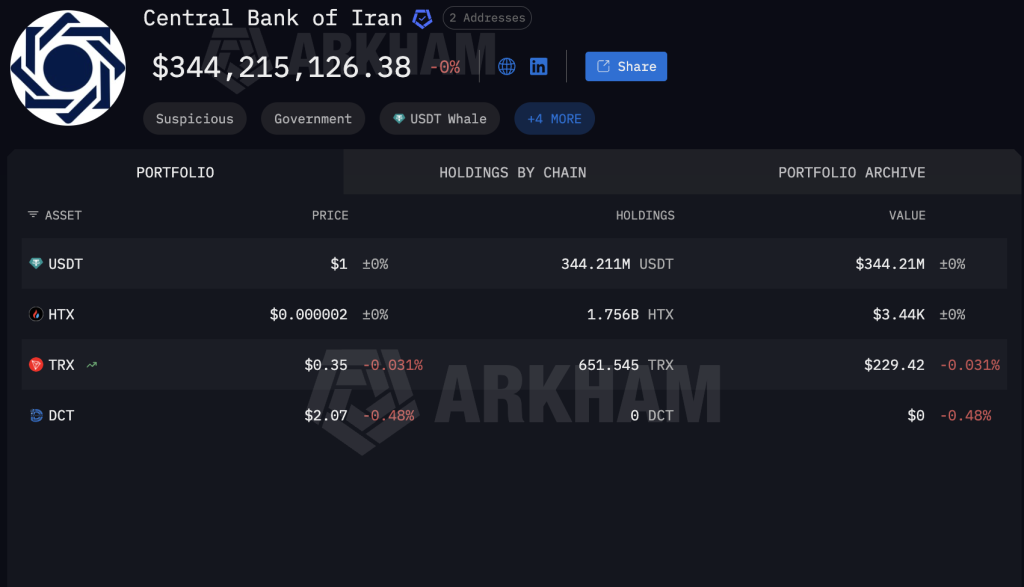
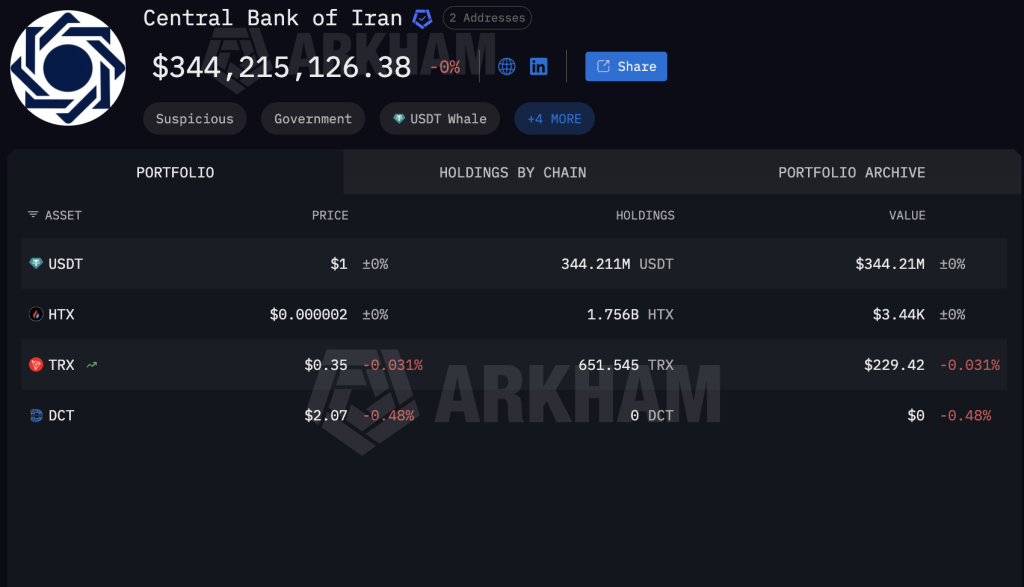
Attorney Charles Gerstein filed a claim in Manhattan federal court Thursday seeking to force Tether to transfer 344,149,759 USDT, roughly $344 million, frozen at two Tron wallet addresses designated by OFAC as belonging to Iran’s Islamic Revolutionary Guard Corps.
The plaintiffs, are asking the Southern District of New York to compel Tether to zero out the blocked wallets and reissue an equivalent amount of USDT to a wallet controlled by their counsel.
The filing is a direct expansion of Gerstein’s earlier litigation targeting frozen funds in the North Korea-linked Arbitrum case and separate claims against Railgun DAO.
Bearish signal for stablecoin issuer confidence. If courts accept this liability theory, Tether’s administrative freeze controls, designed for sanctions compliance, become a litigation target in every jurisdiction where judgment creditors hold unpaid terrorism awards.
Discover: The best crypto to diversify your portfolio with
How the Liability Theory Works Mechanically, and Why Tether Freeze Function Is the Fulcrum
The mechanism here is worth understanding precisely. Unlike bitcoin or ether, USDT includes issuer-level administrative controls: Tether can freeze wallets, blacklist addresses, zero out balances, and reissue tokens to a new destination address.
Gerstein’s filing argues that because Tether already immobilized the funds in response to OFAC’s sanctions designation of the two Tron addresses, the company has demonstrated both the technical capability and the practical willingness to act unilaterally on those holdings.
The chain of events runs as follows. OFAC designated the two Tron wallet addresses as IRGC property. Tether froze the 344,149,759 USDT held there.
The plaintiffs, holders of billions of dollars in unpaid U.S. court judgments tied to Iranian-backed terrorism, now argue that the frozen USDT constitutes blocked property of a state sponsor of terrorism, making it subject to execution under federal law.
The ask is not a seizure of Tether’s own reserves. It is a court order compelling Tether to use controls it has already used, directed at a different destination address.
That distinction matters analytically. Tether has already frozen $4.2 billion in USDT across more than 5,000 wallets linked to criminal activity and assisted the DOJ in seizing over $6 million connected to a Southeast Asian fraud scheme.
The plaintiffs are arguing Tether is not being asked to do something unprecedented, only to redirect an existing freeze toward judgment creditors rather than leaving the funds in limbo.
The legal precedent being constructed here is that administrative control over an asset is functionally equivalent to possession, and that possession creates liability to judgment creditors under the right statutory framework.
Discover: The best pre-launch token sales
The post A Lawsuit Just Demanded Tether Hand Over $344 Million in Frozen Iranian Funds, Could This Rewrite Stablecoin Law? appeared first on Cryptonews.
Crypto World
Hyperliquid HYPE Logs Net Daily Inflation of 3,087 Tokens Even as Spot ETF Hits $12.64M AUM
TLDR:
- HyperCore bought back 23,679.72 HYPE on May 16 but distributed 26,766 HYPE to stakers and validators.
- At current pace, HYPE’s net inflation could add over 1.11 million tokens to circulating supply per year.
- The 21Shares spot HYPE ETF recorded positive net inflows on every single day of its first trading week.
- Closing with $12.64M AUM, the ETF now holds 0.12% of HYPE market cap, a figure rising each day.
Hyperliquid’s HYPE token recorded net inflation on May 16, 2026, even as a new spot ETF drew steady investor interest throughout its debut week.
Buyback Activity Falls Short of Staking Rewards
On May 16, 2026, HyperCore repurchased 23,679.72 HYPE tokens at an average price of roughly $41.62. However, the protocol distributed 26,766 HYPE to stakers and 24 validators on the same day. The difference left a net addition of 3,087 HYPE to the circulating supply.
According to data shared by Hyperliquid Hub on X, this pace points to a daily net inflation of 3,087 HYPE. Extrapolated further, that translates to approximately 92,610 HYPE monthly and around 1.11 million HYPE annually. For context, Solana’s staking mechanism inflates its supply by roughly 25.19 million SOL per year.
The buyback mechanism is directly tied to price movement. When HYPE trades higher, fewer tokens can be repurchased with the same protocol revenue.
Conversely, lower prices allow the system to buy back and burn more tokens. This creates a natural counterbalance across different market conditions.
Long-term, the protocol’s growth depends on wider HIP-3 adoption. More trading activity generates more revenue, which in turn funds larger buybacks. That cycle is central to Hyperliquid’s supply management strategy going forward.
21Shares HYPE ETF Closes First Week With Consistent Inflows
Away from the inflation data, the newly launched 21Shares spot HYPE ETF wrapped up its first week on a positive note. BSCNews reported on X that the product recorded net inflows every single day since its launch earlier this week. By May 15, it had pulled in a net inflow of $3.1 million for the day alone.
The ETF closed the week with a total AUM of approximately $12.64 million. It now holds around 0.12% of HYPE’s total market cap, and that share continues to grow steadily. These numbers reflect early but consistent demand from investors seeking regulated exposure to HYPE.
The inflow-only streak during the debut week is a notable data point for a newly listed crypto product. Many ETFs experience mixed flows in their first days as the market discovers pricing and liquidity. That did not happen here, which points to pre-existing demand among institutional and retail investors alike.
The product’s AUM growth, while still early, adds another layer of buying pressure on HYPE at a time when the protocol is working through its inflation mechanics.
Both developments together offer a fuller picture of where HYPE stands heading into the latter half of May 2026.


VanEck and Grayscale filed new amendments for their proposed spot BNB exchange-traded funds, adding fresh attention to the race for the next U.S. altcoin ETF.
Summary
- VanEck and Grayscale filed new BNB ETF amendments as altcoin ETF competition moves faster.
- Both BNB ETF proposals plan direct token exposure but keep staking out at launch.
- Canary’s TRX filing takes a different route by placing staking inside the fund structure.
The filings came as asset managers continue to test how far the SEC may move beyond Bitcoin and Ethereum products.
VanEck filed Amendment No. 5 for the VanEck BNB ETF on May 15. The fund is expected to list on Nasdaq under the ticker VBNB, subject to approval. Its filing says the trust would hold BNB directly and trade under Nasdaq’s commodity-based trust share rules.
Grayscale keeps BNB plan alive
Grayscale also filed an updated registration statement for its own BNB ETF plan. The Grayscale BNB ETF was formed as a Delaware statutory trust on Jan. 8, 2026, and its stated purpose is to hold BNB tied to the BNB Smart Chain.
The filing says the trust would seek to reflect the value of BNB held by the fund, less expenses and liabilities. It also includes conditional language around staking, but that does not mean staking will be active at launch. That part remains tied to regulatory and operational conditions.
In addition, the BNB filings show caution around staking. Both proposals focus on direct BNB exposure, while keeping staking outside the main launch plan. That approach reflects ongoing questions around how staking rewards fit inside regulated U.S. ETF products.
Canary Capital is taking a different path with its Canary Staked TRX ETF. Its May 15 amendment describes a fund that would hold TRX and include staking as a secondary investment objective. The filing names the product as Canary Staked TRX ETF and lists it as Amendment No. 1 to Form S-1.
Altcoin ETF queue keeps expanding
The filings come as the wider altcoin ETF queue grows. Crypto.news recently reported that Grayscale added TRX, HYPE, TON, ENA, and other assets to its Q2 2026 list of digital assets under review for future products. The same report said Grayscale had also filed for a spot HYPE ETF.
Another crypto.news report said analysts expect altcoin momentum to depend partly on ETF approvals, with several proposed products still under SEC review. The report said proposals tied to SOL, XRP, HBAR, LTC, and TRX remain part of the broader review cycle.
Crypto World
Intesa Sanpaolo’s Crypto Portfolio Hits $235M as Italy’s Biggest Bank Goes Deeper Into Digital Assets
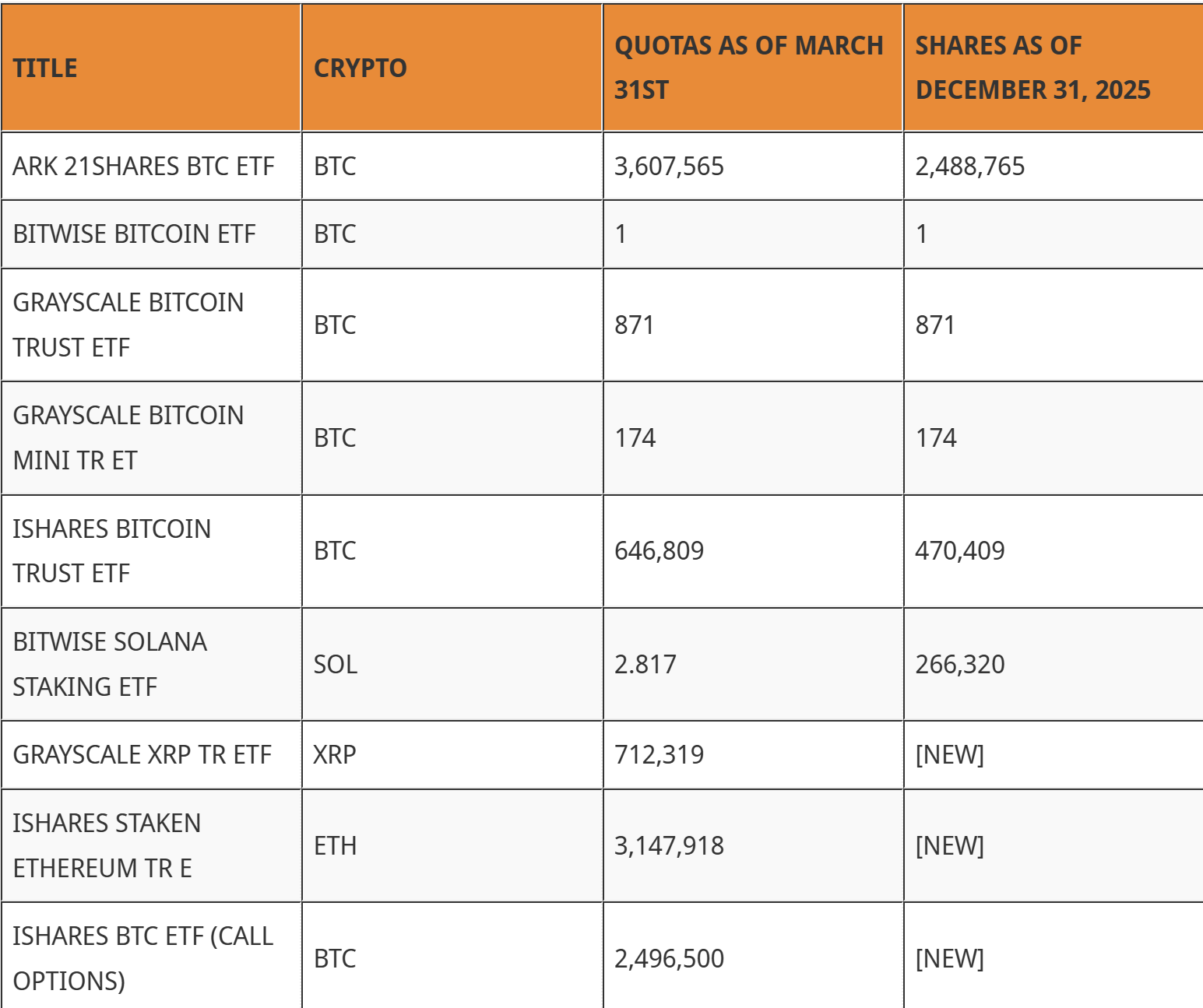
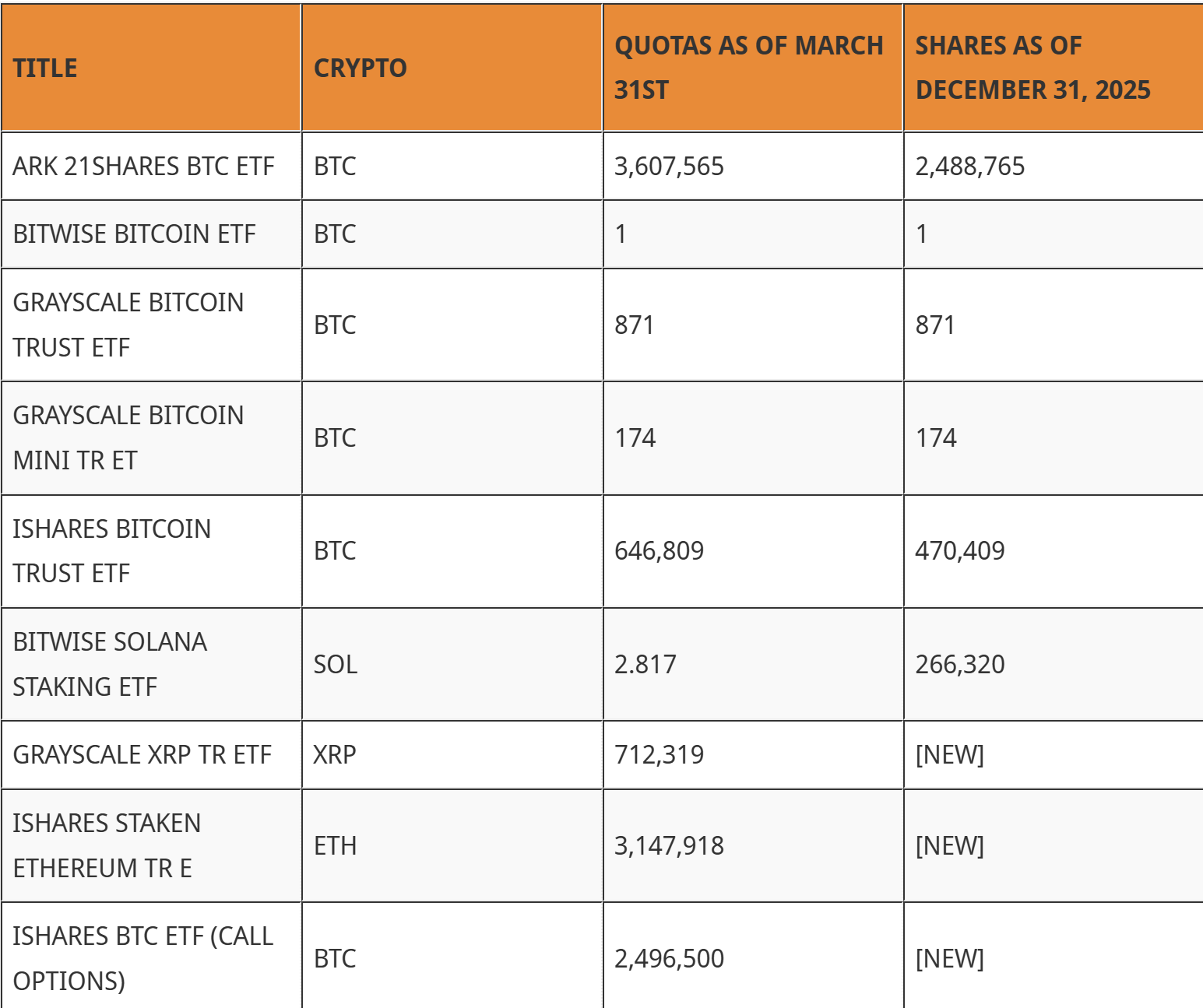
Intesa Sanpaolo, Italy’s largest bank, more than doubled its crypto exposure in the first quarter of 2026, with holdings climbing from approximately $100 million at the end of 2025 to around $235 million as of March 31.
The growth was driven by expanded Bitcoin positions, with the bank adding to positions in both the ARK 21Shares BTC ETF and BlackRock’s iShares Bitcoin Trust ETF. It also entered Ethereum for the first time through BlackRock’s iShares Staked Ethereum Trust, and picked up a fresh stake in Ripple’s XRP via the Grayscale XRP Trust ETF, worth approximately $26 million, according to a report by local crypto outlet Criptovaluta.it.
Intesa also opened a new position in iShares Bitcoin Trust call options, its first derivatives play in the space. The bank previously confirmed to Criptovaluta.it that its crypto positions are held for proprietary trading purposes, though it has not disclosed whether any of the assets are also used to hedge products offered to professional clients, the report said.
Source: Criptovaluta.it
On the other hand, the bank reduced its Solana holdings, which had featured prominently in the prior quarter. Its position in the Bitwise Solana Staking ETF slashed from 266,320 shares to just 2,817, a near-total exit.
Related: Banking Circle Joins Europe’s Stablecoin Settlement Race
Intesa adds BitGo, dumps Bitmine
On the equities side, the bank made several adjustments to its crypto stock holdings. It added 165,600 shares of BitGo for the first time, while dumping the Bitmine position. The bank also closed out its put options on Strategy and trimmed its stake in Cantor Equity Partners II, the vehicle through which tokenization firm Securitize is set to list. Coinbase shares also increased from 1,500 to 10,357.
The moves come as Intesa deepens its ties to the digital asset sector. Last month, Ripple announced it would offer its custody services to the Italian banking group.
Intesa shares closed at 5.74 euros on Friday, down 1.56% on the day and off 3.14% year-to-date, according to Yahoo! Finance.
Related: Europe Bitcoin Treasury Model Won’t Mirror Strategy: PBW 2026
European banks expand crypto offerings
More European banks are moving into crypto, with Spain’s BBVA, France’s BPCE and Belgium’s KBC among those already live with retail trading services. BBVA became the first major Spanish bank to offer 24/7 Bitcoin and Ether trading through its mobile app, while BPCE launched in-app crypto trading via regulated subsidiary Hexarq, targeting 12 million customers by 2026.
At the infrastructure level, a consortium of 12 major European banks, including BNP Paribas, ING, UniCredit and Deutsche Bank, formed Qivalis to issue a MiCA-compliant euro-backed stablecoin, targeting a launch in the second half of 2026.
Magazine: Guide to the top and emerging global crypto hubs — Mid-2026
Crypto World
SUI Price Holds at $1.06 as Chart Base and Whale Accumulation Signal a Potential Reversal
TLDR:
- SUI is trading at $1.0651, sitting 17.6% below its 200-day moving average resistance level of $1.2873.
- RSI has recovered from extreme oversold levels to a neutral 51, leaving room for price to move in either direction.
- MACD has not crossed bullish yet, but the narrowing gap between lines signals building momentum below the surface.
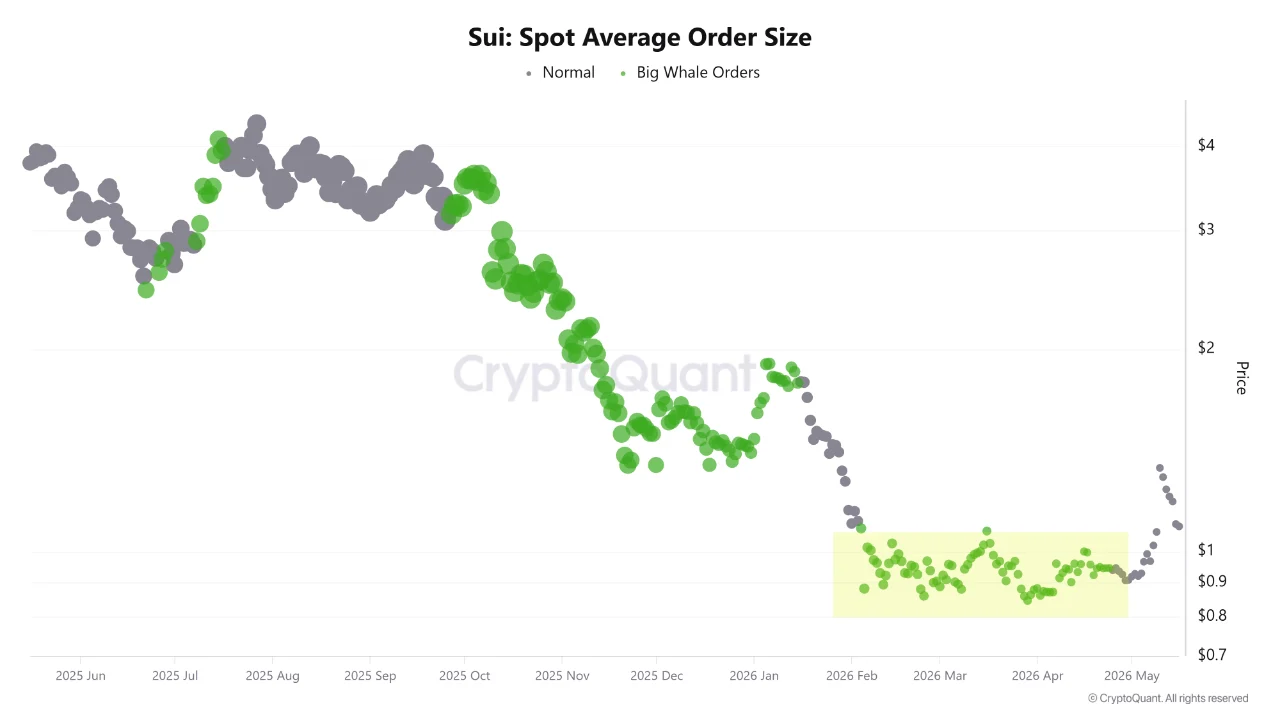
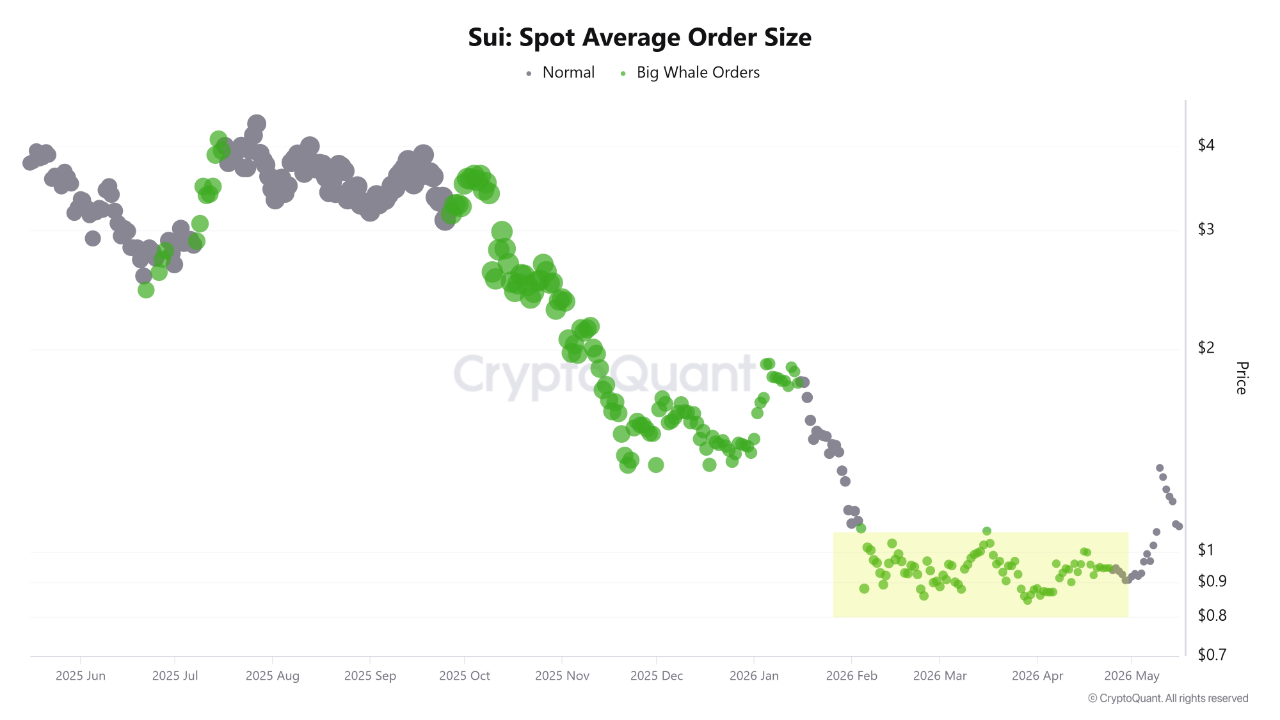
- CryptoQuant data shows large orders clustering at $0.90–$1.00, pointing to whale accumulation ahead of a potential rebound.
SUI is trading at $1.0651, sitting 17.6% below its 200-day moving average of $1.2873. The token dropped from $4.00 to $0.50 over four months before stabilizing.
Technical analysts are now watching closely as momentum indicators show early signs of recovery. Meanwhile, on-chain data from CryptoQuant points to large-order accumulation near key support zones. The chart structure tells a more layered story than the price decline alone suggests.
Technical Indicators Point to a Market in Transition
SUI printed a capitulation bottom near $0.50 in late 2025. Volume spiked sharply at those lows, which typically marks seller exhaustion rather than continued distribution. That kind of price action usually separates a dying asset from one completing a base.
Since that bottom, the Relative Strength Index has climbed from extreme oversold territory back to 51. That reading is neutral — not extended to the upside, and not under further selling pressure. It gives the chart room to move in either direction.
Analyst account @2xnmore noted that the MACD has not crossed bullish yet, but the gap between the MACD line and the signal line is narrowing.
The momentum engine is building without having triggered a confirmed buy signal. That is an important distinction.
The 200-day moving average at $1.2873 remains the key structural line. A high-volume daily close above that level would shift the chart from bearish to neutral.
A MACD crossover on top of that would then move the structure from neutral to bullish. Neither has happened yet.
Whale Order Data Suggests Accumulation at the $0.90–$1.00 Zone
On-chain researcher Rei Researcher referenced CryptoQuant’s Spot Average Order Size data to track large-player behavior.
The data shows large-volume orders clustering around the $0.80–$1.00 range during market lulls, without pushing price lower. That pattern has preceded rebounds before.
Source: Cryptoquant
The $0.90–$1.00 zone appears to function as a solid support band. When large orders repeatedly fill at that level without breaking it, it suggests institutional positioning rather than exit. That behavior contrasts with panic-driven retail selling at cycle lows.
If SUI corrects back toward that range and large-order activity increases, analysts consider it a bullish signal for the next move higher. The re-fill pattern at that level is what traders are now watching for on future dips.
The broader picture is that SUI remains in a technical rebuild phase. Price is below the 200-day MA, but the base structure and whale footprint both suggest the selling pressure has already been absorbed at lower levels.

Ripon Town Hall handed to council to unlock its ‘potential’

Israel Q1 GDP shrinks 3.3% annualised as Iran war weighs

Firedancer quietly hits Solana mainnet, but validators must wait

Manchester United reach agreement with Casemiro over contract clause amid transfer speculation

US brings back mandatory military draft registration

Steven Gerrard disagrees with Gary Neville over ‘shock’ Chelsea and Arsenal claim | Football


-

 Crypto World1 day ago
BloFin War of Whales 2026 Grand Prix opens registration for $5M trading championship
-

 Fashion2 days ago
Weekend Open Thread: Theory – Corporette.com
-

 Crypto World2 days ago
E-Estate Announces 1 Year Live: Washington DC Summit as Real Estate Tokenization Enters Its Next Phase
-

 Fashion6 days ago
Coffee Break: Travel Steam Iron
-

 Fashion6 days ago
What to Know Before Buying a Curling Wand or Curling Iron
-

 Politics6 days ago
What to expect when you’re expecting a budget
-

 Tech2 days ago
Tech Moves: Microsoft AI leader jumps to OpenAI; former AI2 exec joins Meta; and more
-

 Tech6 days ago
GM Agrees To Pay $12.75 Million To Settle California Lawsuit Over Misuse Of Customers’ Driving Data
-
Crypto World4 days ago
Bitcoin Suisse expands with Digital Asset License and Investment Business Act Registration Approval in Bermuda
-

 Tech5 days ago
GM agrees to $12.75M California settlement over sale of drivers’ data
-

 Politics5 days ago
Pakistan to enter Chinese capital market as war inflation bites
-

 Crypto World4 days ago
Bitcoin Suisse expands with Digital Asset License and Investment Business Act Registration Approval in Bermuda
-
 Crypto World3 days ago
Google’s Gemini AI Predicts Incredible Solana Price by the End of 2026
-

 Business2 days ago
H&R Real Estate Investment Trust (HR.UN:CA) Q1 2026 Earnings Call Transcript
-

 Tech1 day ago
Google reimburses Register sources who were victims of API fraud
-
 Entertainment7 days ago
Prime Video’s Forgotten but Brilliant 2-Part Horror Anthology Is a Perfect Binge
-
 Entertainment6 days ago
‘Rivals’ Season 2 Is Bigger, Better, and Raunchier Than Ever
-
 Tech6 days ago
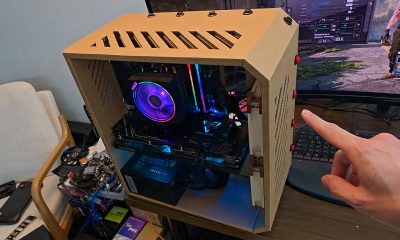
Over-Engineered Cardboard PC Case Houses a Full Computer Without Compromising Style or Performance
-
 Tech6 days ago
University of Michigan’s $20M early OpenAI investment now worth $2B as Musk trial documents reveal endowment bet
-

 Fashion5 days ago
The Best-Kept Makeup Secret for a More Defined Face
You must be logged in to post a comment Login