

Entertainment
10 Forgotten Action Movies That Are Amazing From Start to Finish

Forgotten action movies make me angrier than forgotten prestige dramas, honestly, because action is still treated like disposable adrenaline by people who should know better. A great action film is tempo, body language, camera trust, star presence, stunt design, comic timing, propulsion, and that beautiful old-movie confidence that one hard premise plus the right lead can carry you for two hours if everybody involved actually knows what they are doing.
And when these films fall out of circulation, it is usually not because they failed. It is because the genre conversation got lazy and kept circling the same sacred cows while a whole second canon sat there grinning with broken teeth. That second canon is where the real pleasure lives sometimes. The bruised, nasty, weird, charming, overclocked stuff. These ten are not honorable mentions. They are the kind of action movies you show someone when you want to remind them the genre used to have texture.
10
‘Remo Williams: The Adventure Begins’ (1985)

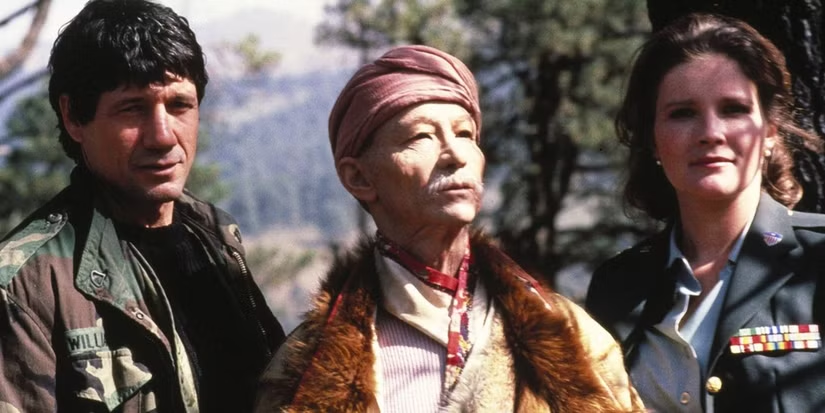
I have such a soft spot for Remo Williams because it feels like the kind of movie Hollywood used to make when it still believed a star vehicle could be built out of pure nerve and oddness. The premise is gloriously pulpy: a dead-on-paper cop gets recruited into a secret government operation and trained into this quasi-superhuman assassin by a master who treats reality like something flexible if your mind and body are disciplined enough. That already rules.
But what really makes the film memorable is its tone. It never completely settles. It is espionage spoof, action adventure, comic-book nonsense, urban paranoia, martial-arts fantasy, all of it pushed together with enough confidence that the seams become part of the fun. And Remo Williams (Fred Ward) is a huge reason it works. Chiun (Joel Grey) is also obviously the thing people remember most, and with good reason. He gives the film its strangest and funniest energy. It is such a specific 1980s action artifact, playful, cocky, odd, a little ramshackle, but fully alive.
9
‘Shoot to Kill’ (1988)

What I love about Shoot to Kill is how cleanly it shifts registers without losing its pulse. It begins like a city thriller, a brutal killer, a witness on the run, federal pursuit mechanics clicking into place, and then it takes that tension into the mountains and turns into something harsher and more physical. Suddenly this is not just a manhunt. It is a survival movie, a wilderness chase, a culture clash between urban law-enforcement force and a guide who understands terrain in a way no badge can fake. That is such a satisfying structural move.
Jonathan Knox (Tom Berenger) and Warren Stantin (Sidney Poitier) are terrific together because they are doing different things and the movie knows it. Knox gives you the loose, mountain-man confidence, all instinct and outdoors precision, while Stantin brings authority, intelligence, and impatience sharpened by the fact that he is chasing evil through terrain that refuses his usual methods. It is one of those thrillers that remembers action gets better when the landscape becomes a real participant instead of a postcard.
8
‘Blue Thunder’ (1983)

This movie absolutely understands that hardware can be erotic in action cinema without swallowing the human story whole. The helicopter in Blue Thunder is not just a cool toy. It is surveillance power made seductive, terrifying, and horribly useful. That is what gives the film its edge. It is a machine built for law-and-order fantasy and civil-liberties nightmare at the same time, and the movie is smart enough to know those two things are often separated by one paranoid official and a weak excuse. That political anxiety gives the action real charge.
Frank Murphy (Roy Scheider) is perfect for this kind of role because he never looks like he trusts the movie’s power fantasies all the way. He looks like a man who has seen enough state violence to know toys like this never stay toys. Then the film gives you the exact kind of action escalation it should: urban aerial pursuit, technical maneuvering, pilot skill becoming drama, city space reorganized by what a machine in the sky can suddenly do. The movie still has that wonderful 1980s mixture of sleekness and grime too. It feels both engineered and nervous. A lot of tech thrillers age into irrelevance. Blue Thunder just keeps feeling more suspicious.
7
‘Extreme Prejudice’ (1987)

This movie has one of the greatest “how is this not more famous” vibes in the genre. Walter Hill takes border-war crime material, old western bloodlines, military testosterone, cartel violence, and male rivalry, and he does not sand any of it down into neat studio digestibility. The result is lean, ugly, and weirdly mythic. You can feel the western skeleton under the modern-action flesh the entire time in Extreme Prejudice.
Childhood loyalties curdled into opposite sides of violence. Men who understand each other too well. A landscape that does not forgive sentiment. It is all there. And then the movie starts layering in one of my favorite kinds of action-film insanity: the unofficial military-operations subplot that makes the whole border conflict feel even more poisoned. Jack Benteen (Nick Nolte), Cash Bailey (Powers Boothe), and Major Paul Hackett (Michael Ironside), this cast is full of men who look like they could break the air just by entering a room, and Walter Hill knows how to use that. Nobody is softening their edges. Nobody is apologizing for the movie’s hardness. Extreme Prejudice feels like a film that knows American action can be half-noir, half-western, half-death march if it wants to. Yes, that is three halves. It earns them.
6
‘Rapid Fire’ (1992)

This one matters because Brandon Lee should have had a much longer action legacy than he got, and Rapid Fire is one of the clearest pieces of evidence for that. He had speed, charm, athletic grace, and that great action-star quality of seeming almost too alive for the frame around him. The movie gives him a strong setup too, art student, accidental witness to mob murder, suddenly trapped between law enforcement and organized crime, which lets him play both fish-out-of-water vulnerability and furious physical retaliation. The tension is not just “can he fight?” Of course he can fight. It is watching somebody young and unwilling get dragged into a genre engine that wants to harden him fast.
And the film really moves. Dwight H. Little has helmed it all with the right kind of old-school efficiency, letting the fights breathe and letting Jake Lo (Lee)’s movement do expressive work instead of drowning it in coverage. The chemistry with Mace Ryan (Powers Boothe) helps a lot too, because Ryan brings that sardonic veteran authority that makes the whole cop-crime structure feel less generic. So what I like most is that Rapid Fire still belongs to the era when action could be glossy and dirty at the same time. It has style, but it still looks like bruises hurt. Brandon Lee deserved a dozen movies built around this exact balance.
5
‘Ricochet’ (1991)

Ricochet is one of the most entertainingly deranged studio thrillers of the ’90s, and I mean that with love. It starts with Nick Styles (Denzel Washington) as a rising cop and public hero, and then Earl Talbot Blake (John Lithgow), a humanized nervous breakdown with criminal intelligence attached, and the whole movie becomes this sweaty revenge machine where reputation, race, media image, political ascent, and personal violation all get twisted together. It is not subtle. It should not be subtle.
This kind of action-thriller lives or dies on how gleefully it turns somebody’s successful life into a trap, and Ricochet commits. It is one of those thrillers where the villain’s plan is so personally diseased that the whole film feels feverish. That is a compliment
.
4
‘Stone Cold’ (1991)

I will always go to bat for Stone Cold because it is one of the purest specimens of action-movie excess ever smuggled into a studio release with a straight face. Joe Huff (Brian Bosworth) as an undercover cop infiltrating a white-supremacist biker gang led by Chains Cooper (Lance Henriksen) should already tell you the movie understands bigness as a moral principle. But what makes it genuinely great, not just a camp curio, is how fully it commits to its own comic-book brutality. Nobody is hedging. Nobody is trying to make the movie respectable. It is all in on leather, explosives, prison-break theology, biker cult energy, and men staring at each other like America itself might detonate if they blink wrong.
And the thing is, it works. Huff has exactly the right block-of-granite quality for the role. He is not delicate, not psychologically overworked, just a slab of undercover hostility dropped into a gang already vibrating with apocalyptic nonsense. Cooper, meanwhile, is exquisite because he understands villainy here is charisma, ideology, and end-times pageantry fused together. The action scenes are not shy either. Bar fights, bike mayhem, public shootouts, whole chunks of the movie feel like they were designed by someone angrily sketching on the back of a denim vest. That is why Stone Cold rules. It is too much in exactly the way action sometimes needs to be.
3
‘The Long Kiss Goodnight’ (1996)

This movie gets better every year — Shane Black’s writing just keeps revealing how much hurt and wit he could fit inside action structure when he was really cooking. Samantha Caine / Charly Baltimore (Geena Davis) beginning as this suburban amnesiac schoolteacher and slowly turning back into Charly Baltimore is already a terrific hook, but the film is doing more than memory-thriller mechanics. It is about identity as buried violence, femininity as both camouflage and explosive force, and the humiliating possibility that the self you lost might be much more dangerous than the self you built to replace it.
That is rich material for an action movie. Geena Davis is astonishing in it. She genuinely makes Samantha and Charly feel like different distributions of the same person’s life force. And then Mitch Henessey (Samuel L. Jackson) shows up and makes the whole thing sing. Together they turn the movie into this incredible mix of Christmas action, conspiracy nonsense, personal rediscovery, and black-comic mayhem. It has one of the best “oh this movie knows exactly how good it is” energies in the genre.
2
‘The Last Boy Scout’ (1991)

This movie is pure toxic-brilliant Shane Black alchemy. It feels like an action film written by someone who thinks America is a strip-lit nervous breakdown and jokes are what people say while bleeding out morally. Joe Hallenbeck (Bruce Willis) and Jimmy Dix (Damon Wayans) should not work together as well as they do, and that is exactly why they work. Joe Hallenbeck is already spiritually broken when the movie begins, a washed-up private detective with that wonderful Willis combination of contempt, exhaustion, and just enough stubborn competence to keep the world from entirely swallowing him. Jimmy Dix is flash, grief, ego, and damage from a different social tier. Put them together inside sports corruption, murder, and media sleaze, and the movie becomes a symphony of rotten banter.
What makes it great is the pressure. The script is full of killer lines, obviously, but the lines are not floating free. They come from a movie where everybody seems to have already been spiritually smogged by money, violence, sex, celebrity, and institutional rot. The action scenes hit harder because the world around them already feels corrupt enough to deserve destruction. The Last Boy Scout is ugly in all the right places.
1
‘Drive’ (1997)

This is number one because it is the one I most want to shove into people’s hands and say, no, seriously, watch this. Steve Wang’s Drive has that magical B-movie-transcendence quality where a mid-budget action setup suddenly starts moving with so much charm, speed, invention, and pure handcrafted pleasure that you stop thinking in terms of budget or status at all. Toby Wong (Mark Dacascos) is phenomenal in it.
The film does something a lot of action movies forget to do: it becomes genuinely fun without getting stupid in the dead way. The buddy dynamic with Malik Brody (Kadeem Hardison) is a huge part of that. Their rhythm gives the movie this loose comic current that keeps the fights from becoming repetitive and keeps the whole experience buoyant even when the plot is just a delivery system for pursuit and combat. But the fights are why it lasts. They are so clear, playful, fast, and physically expressive. You can feel the filmmakers delighting in momentum. Drive is not a forgotten action movie because it lacks quality. It is forgotten because the world is unfair and the genre conversation is lazy. It should be a cult staple at minimum. For me, it is better than that. It is one of the secret pure pleasures of ’90s action cinema.

Drive
- Release Date
-
August 6, 1997
- Runtime
-
100 minutes
- Director
-
Steve Wang
- Writers
-
Scott Phillips
-
Kadeem Hardison
Malik Brody
-

-

Brittany Murphy
Deliverance Bodine
-

John Pyper-Ferguson
Vic Madison

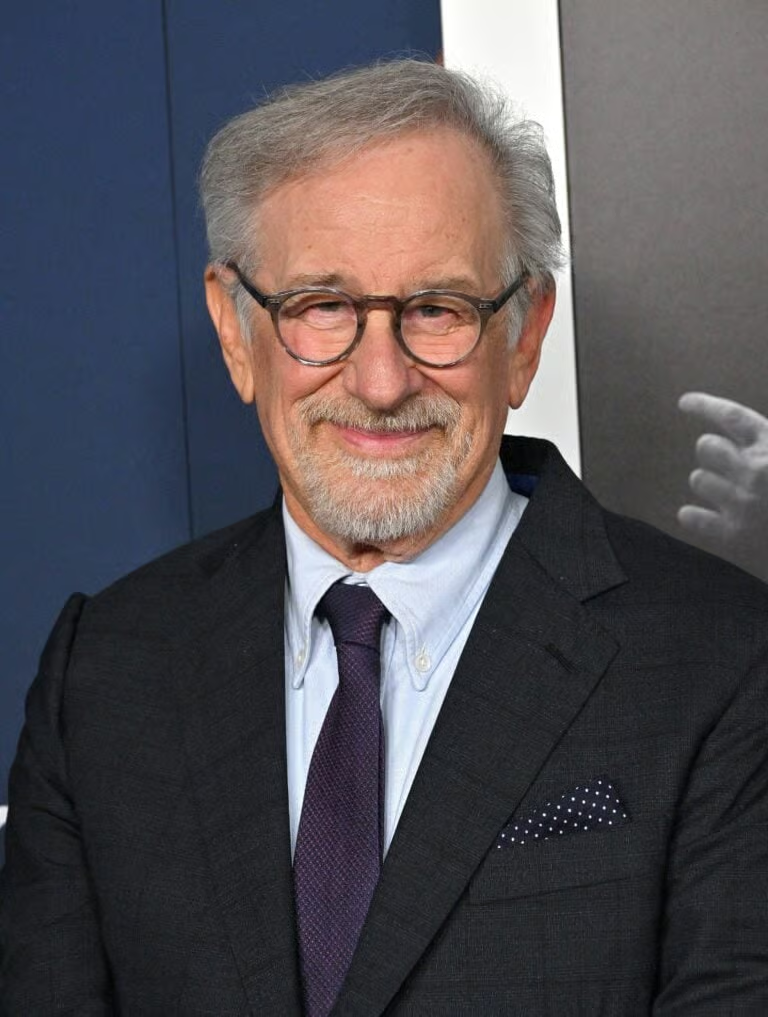
Steven Spielberg is one of Hollywood’s most celebrated filmmakers, known for directing some of the most iconic films in his decades-long career. Despite his extensive success and numerous accolades, the director has revealed that he was repeatedly rejected from directing James Bond movies, something that he strongly wanted to do at one point. Now, Spielberg is sharing how he would respond if he were approached to direct a James Bond film.

In an episode of “The Rest is Entertainment” podcast, Steven Spielberg sat down with Richard Osman and Marina Hyde to talk about his latest movie, “Disclosure Day,” as well as answer some fan questions.
One asked, “Were you ever approached to make a Bond film? Do you have any regrets about not doing that?” Spielberg made it clear that he was never approached to direct a Bond film. Instead, he was the one who approached the late Albert “Cubby” Broccoli, the James Bond franchise’s lead producer.
The director said he had always wanted to direct a Bond film since seeing 1962’s “Dr. No,” and after the success of “Jaws” in 1975, he approached the producer. “I called Cubby Broccoli after ‘Jaws’ and volunteered. I said, ‘If you need a director, I would love to direct one.’ And he said no,” Spielberg revealed.
The Director Attempted To Strike A Deal With Cubby Broccoli
That wasn’t the last time Spielberg was rejected. Years later, Broccoli contacted Spielberg and asked for a favor. After the release of his 1977 sci-fi movie “Close Encounters of the Third Kind,” Broccoli asked for his permission to use the famous five-note sequence that was played throughout the film. The producer wanted to use the notes for “Moonraker,” the James Bond film released in 1979.
Spielberg used that opportunity to offer a proposal to the producer. “I said, ‘I’ll make you a deal. I’ll give you permission to use the five notes if you let me direct a Bond film.’ And he said no.” Despite not agreeing to his proposed deal, the director still allowed Broccoli to use the sequence.
“So they consistently turned me down. He never explained why he wasn’t letting me into the Bond family,” Spielberg said.
Steven Spielberg Confided In George Lucas
Spielberg confided in his fellow filmmaker and friend, George Lucas, after facing another rejection from Broccoli in 1977. The two were in Hawaii after the release of “Star Wars: A New Hope,” and upon hearing the director’s woes, Lucas said he had “something better” for Spielberg.
Lucas then told him about a character he conceived named Indiana Smith (later changed to Jones), an archaeology professor and daring treasure hunter. The Indiana Jones franchise has since had five feature-length films, four of which Spielberg directed. He served as executive producer for the fifth installment.
“He told me the premise of the Indiana Jones series, and that’s how I got that job. So if they ever asked me to make a Bond film now, my answer would be, ‘You can’t afford me,’” Spielberg said in jest.
James Bond Wasn’t The Only Franchise The Director Was Interested In
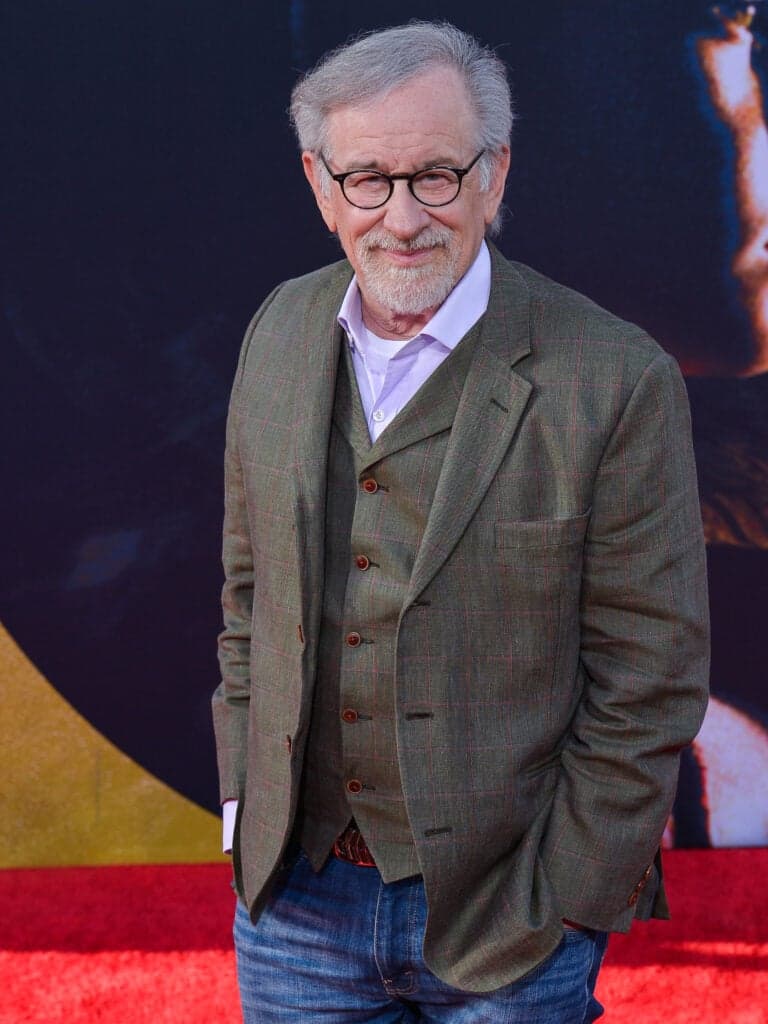
The acclaimed director is also a gamer, as his son, Max, revealed in 2024. According to Max, Spielberg loves the first-person shooter video game series “Call of Duty” and plays it on a computer using a keyboard and mouse. “He loves gaming. He’s the one that got me into it. He plays games. He’s a big PC gamer and so that’s kind of our bonding point as well,” Max shared.
In 2015, Activision Blizzard, the company behind the “CoD” franchise, launched a film and TV division to make a live-action “Call of Duty” cinematic universe. While the first attempt was scrapped, the project was resurrected in partnership with Paramount, and a movie is in the works.
Spielberg reportedly wanted to direct the film, but Paramount and Activision turned him down because he wanted complete control over production and marketing. Instead, Pete Berg was chosen to helm the project, which is scheduled for release in 2028.
Steven Spielberg’s Illustrious Career

Spielberg is regarded as one of the most influential filmmakers, with a career spanning more than five decades. Throughout the years, the director has directed some of the most iconic films across different genres, including “E.T. the Extra-Terrestrial,” “Jurassic Park,” “Schindler’s List,” and “The Color Purple,” just to name a few.
He has earned three Academy Awards, including two for Best Director for “Schindler’s List” and “Saving Private Ryan,” and one for Best Picture for “Schindler’s List.”
Spielberg’s latest project, “Disclosure Day,” a sci-fi film starring Emily Blunt and Josh O’Connor, will be released in U.S. theaters on June 12.
By Chris Snellgrove
| Published
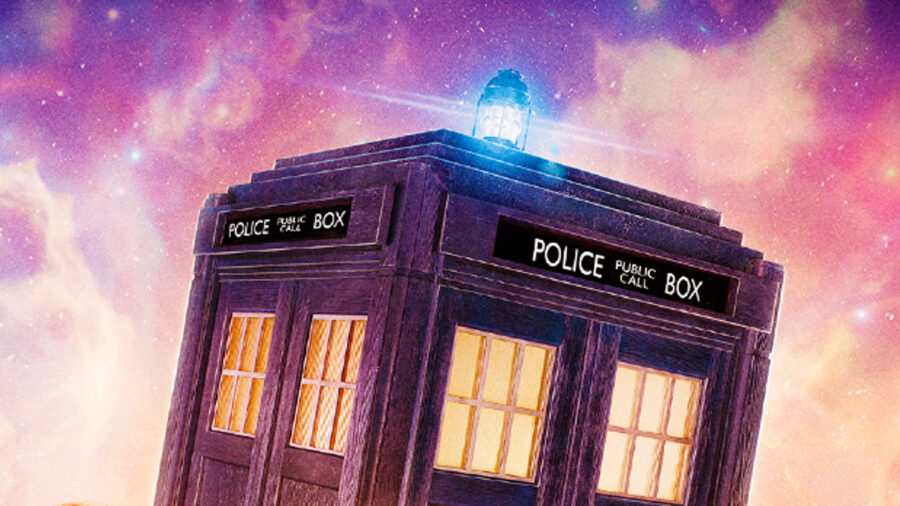
Every fandom has its wildly polarizing figures. In Star Trek, for example, many fans revere William Shatner as an acting legend, but others see him as an egomaniac who’d phaser his costars in the back if it meant getting an extra minute or two of screentime. In Doctor Who, very few of the actors are quite as polarizing (not counting John Barrowman and his alleged problematic sexploits onset), but the same can’t be said about the showrunners. When the show goes off the rails, the fandom tends to blame the man at the top, which is why Chris Chibnall gets so much heat for Jodie Whittaker’s subpar seasons as the Doctor.
Historically, Russell T. Davies was one of the most beloved showrunners. He was in charge during the first four seasons of the 2005 Doctor Who revival, essentially turning this venerable ‘60s franchise into something hip and sexy enough to win over younger fans. But Davies became significantly more controversial when he returned to Doctor Who nearly two decades later, and his run was canceled after two bad seasons that barely anyone watched. That was bad enough, but fans are now ready to take out their pitchforks because Davies took to Instagram and confirmed that he had been lying about working on a Christmas special, which was, seemingly, also a complete fabrication!
A Timey Wimey Rise And Fall
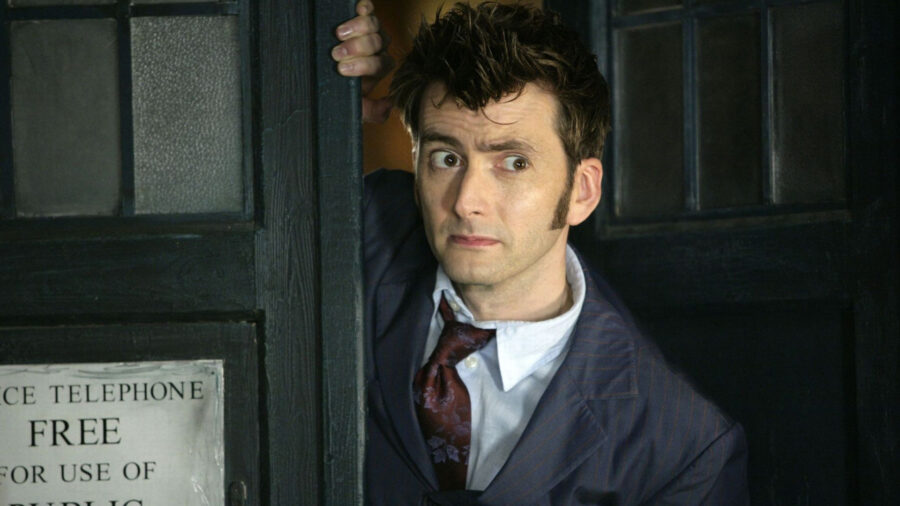
Once upon a time, Russell T. Davies’ return to Doctor Who was hailed as a return of the king. The original series had fizzled out in 1989, and an attempt to bring it back as a made-for-TV movie in the ‘90s was dead on arrival. Davies was the showrunner for the 2005 reboot, which was an unqualified success: with exciting stories and beloved actors like David Tennant, NuWho filled the sci-fi TV void that was left by the early cancellation of Star Trek: Enterprise. He eventually left the franchise, leaving it in the capable hands of Steven Moffat, a showrunner who added a distinctly movie-like feel to almost every episode.
When Moffatt left the franchise in 2017, the series got a new showrunner: veteran Doctor Who writer Chris Chibnall. Unfortunately, things went downhill, as fans were divided on new Doctor actor Jodie Whittaker and controversial changes to franchise lore. Eventually, the BBC threw a Hail Mary, partnering with Disney and bringing back Russell T. Davies as showrunner. Sadly, the new show failed to gain much of a viewership and was canceled after two seasons. Davies previously mentioned writing a script for an upcoming Christmas episode that fans hoped would tie everything together. Incredibly, though, Davies hopped onto Instagram to verify that he made up the Christmas special and had never written anything for it!
Everything Falls Apart
While Russell T. Davies’ Instagram post was long-winded, it got to the point relatively quickly. He verified that he was saying “GOODBYE” to Doctor Who and that the BBC is “putting the show out to tender.” After that, Davies clarified that “there won’t be a Christmas Special–we only cooked that up to guarantee a future when no one knew what would happen, but now we do know, there’s no need for it.” Following on the heels of that rather stunning admission about the Christmas Special, he added, “For the record: there was no script, I never wrote it, and no actor was ever approached to play the next Doctor.”
Fans were salty about Davies’ admissions for several different reasons. First, he had claimed to be writing the script in December of 2025, a claim that had seemingly been backed up by Doctor Who composer Murray Gold. Taking his Instagram post at face value, we can’t help but wonder why Davies was comfortable just straight-up lying to fans about this Christmas special. Even more incredibly, it seems he is saying that the special was never in any level of active development and was simply announced as a last-ditch attempt to keep the franchise alive.
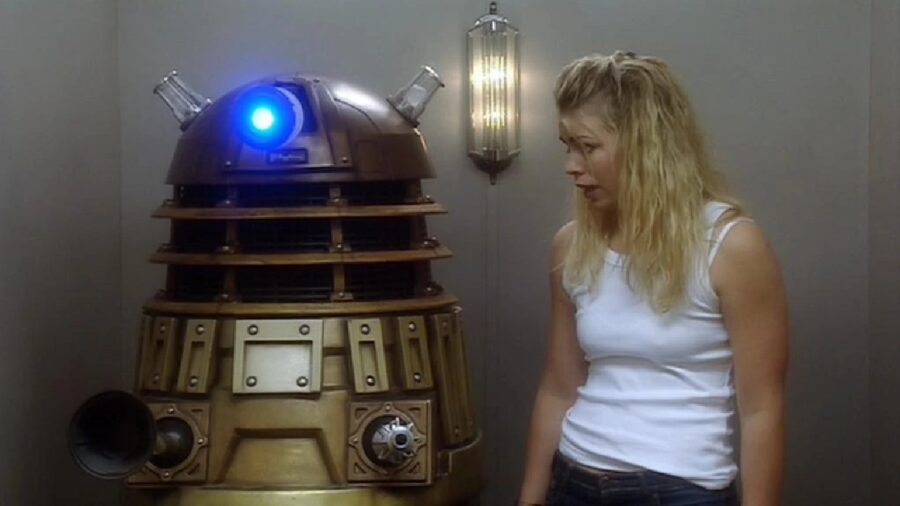
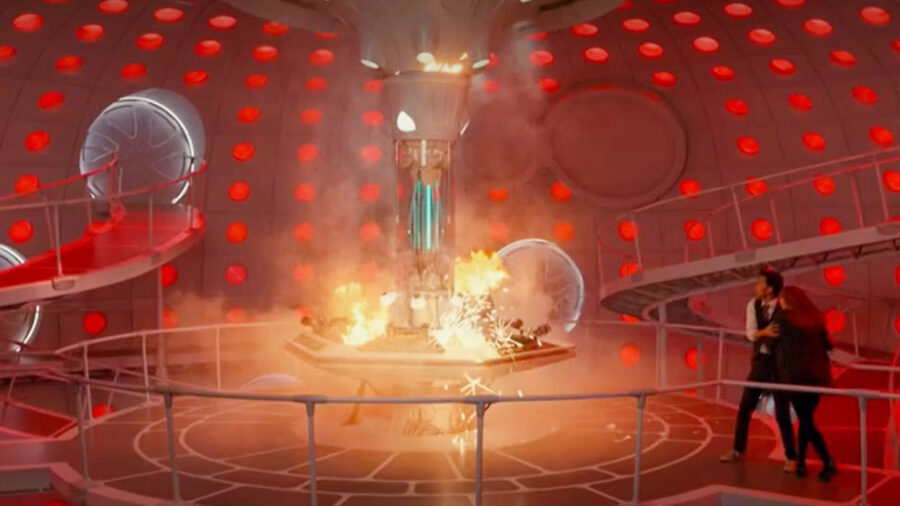
Adding insult to injury, no script development and no attempt to cast a new lead means that even Davies (the man in charge!) had no idea how to wrap up the cliffhanger in which Ncuti Gatwa’s Doctor somehow regenerated into the body of Billie Piper’s Rose Tyler, a former Companion. When the episode aired, some cynical fans thought that bringing this sexy, beloved actor back was a last-ditch attempt to save the show. Now, that theory seems accurate, given that Rose was apparently plonked back into the franchise with no real idea of how to use her character. Now, that will be a problem for another showrunner, assuming that Doctor Who ever comes back.
The Crankiest Doctor Is Now Validated

Amid the hate spurred on by Russell T. Davies’ Instagram posts, more and more Doctor Who fans came to a simple conclusion: Christopher Eccleston was right! Eccleston played the Doctor for the first season of the 2005 revival; when fans asked why he left the show, the actor responded that he had concerns about how the crew was treated and that he was told to ignore these concerns. After leaving, he claimed that he had lost all trust in Davies. More recently, when Eccleston was asked at a fan convention what it would take for him to return to Doctor Who, he bluntly responded, “Sack Russell T Davies…and I’ll come back.”
For a long time, it was easy to dismiss some of Eccleston’s claims as sour grapes. Now, though, Davies returned to Doctor Who only to run it into the ground, and on his way out, he gloated about lying to fans about a Christmas special that will never come to be. In the rest of his Instagram post, he alternates between being weirdly defensive and mildly snarky. Now, it seems increasingly clear that Eccleston was right about the other man. However, we’re left with one silver lining: with Davies now sacked, Eccleston is one step closer to returning to the franchise that made him a household name!
By Chris Snellgrove
| Published

Star Trek: The Next Generation brought back some of the most famous bad guys from The Original Series, including the Klingons and the Romulans. This beloved spinoff also introduced some memorable new villains, including the Cardassians, the Nausicaans, and the Borg. While all of those new baddies resonated with fans, none struck a chord with the fandom quite as much as Q, the godlike being played by John de Lancie. He appeared in both the very first and very last episode of The Next Generation and several episodes in between, and he was always the perfect chaos agent to get under Captain Picard’s skin.
Over time, Q became less of a villain and more of an antagonistic ally: by the end of TNG, he was helping Picard to literally save all of humanity. Originally, though, he was written to be a recurring Big Bad, a kind of ultimate foe who can’t be overcome by advanced Starfleet technology. When did he begin his transformation from evil villain to the unexpected savior of mankind? It all started with “Deja Q,” an episode where Q was written to be a manipulator who merely lied about losing his powers. But Gene Roddenberry insisted he actually lose his powers, causing the former villain to discover humanity he didn’t even know he had.
Naked And Afraid

“Deja Q” is the memorable Next Generation episode in which Q shows up on the Enterprise, completely naked. He reveals that the Q Continuum decided to punish him for because he frequently torments lesser beings; subsequently, they stripped all of his powers, effectively leaving him at the mercy of previous alien victims such as the Calamarain. They attack Q when he is adjusting to life as a human, and he freaks out when he sees how the aliens hurt his new buddy, Data. Q tries to sacrifice himself to the Calamarain so the Enterprise crew would be safe, and his altruistic behavior is rewarded when the Q Continuum give him his powers back.
It’s a very heartwarming episode that quite literally humanizes Q, who was, up to this point, the scariest villain in Star Trek: The Next Generation. As recorded in Captains’ Logs: The Unauthorized Complete Trek Voyages, “Deja Q” was originally written as an episode where Q was lying about losing his powers. Showrunner Michael Piller said that Q spun “a whole story about how we were about to come into a war with the Klingons,” with the big reveal being that the godlike being “was just playing with us and pulling our strings just so that he could make himself a hero, become an officer and prove his value.”
Til Death Do Them Part

Such an elaborate ruse would be perfectly in line with the mustache-twirling villain that we saw in earlier episodes like “Encounter at Farpoint” and “Hide and Q.” So, why did the plot for “Deja Q” change so dramatically? This was because Star Trek creator Gene Roddenberry decided to effectively redeem TNG’s most iconic villain. According to Piller, Roddenberry “threw cold water” on him and the other producers with a very straightforward storytelling note: “If you’re going to do a story–Godlike and brought to Earth–then do it. Do a story about what it’s like to lose everything that you are and having to discover your own Humanity.”
It turned out to be great advice, and “Deja Q” became one of the best episodes of the entire series. This humanization of Q set up some important later arcs for the character, including him helping Picard save humanity in the TNG finale “All Good Things.” The godlike being also returned in Picard Season 2 to help give his oldest frenemy some closure. Sadly, Roddenberry didn’t live to see any of this; he died in October 1991, one year after the original broadcast of “Deja Q.” Fortunately, he had time before his death to help redeem his favorite villain, one named for a passionate Star Trek fan.
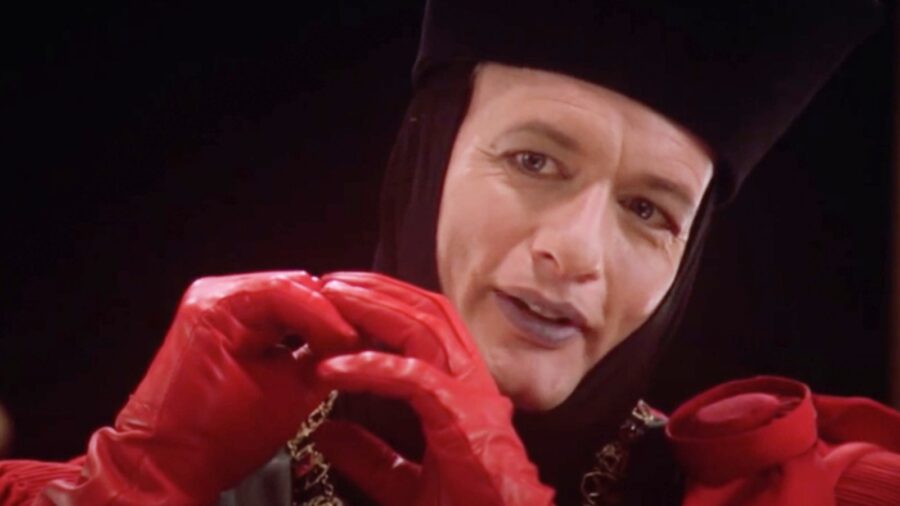
Obviously, Gene Roddenberry wasn’t a perfect storyteller, and some of the Season 1 TNT episodes under his tenure were pretty bad (“Code of Honor,” anyone?). But he always had good instincts when it came to his characters. He knew how to write Q as one of the greatest and most menacing villains in television history, but he also knew exactly when and how to transform that bad guy into one of Star Trek’s most unexpected heroes. He also gets the coolest hero-to-villain glow-up, ever. After all, how many do-gooders have you seen that have their own mariachi band?
Entertainment
The cast of “Who's the Boss?”: See Tony Danza, Alyssa Milano, and their costars, then and now
:max_bytes(150000):strip_icc():format(jpeg)/Whos-The-Boss-WATN-060226-907407257b3b47d8a154bde9eba990cc.jpg)
Danza and Milano led this warmhearted ABC sitcom across eight seasons.
Entertainment
Sydney Sweeney responds to “Euphoria” 'cast drama' rumors after heavily maligned final season
:max_bytes(150000):strip_icc():format(jpeg)/euphoria-sydney-sweeney-alexa-demie-barbie-ferreira-041125-3eb29f087bc341c9a9c0535d3b8b125b.jpg)
The actress also spoke about narratives about herself that she’d like to clear up: “They want the easy clickbait.”
Entertainment
Taylor Swift brings out Oscar-winning legend for rare, emotional “Toy Story” performance that might make you cry
:max_bytes(150000):strip_icc():format(jpeg)/taylor-swift-2-d17a56335b8949e5a0662b180928ab24.jpg)
Swift brought out “Toy Story” theme song icon Randy Newman for a moving rendition of “You’ve Got a Friend in Me.”

Meghan Markle has been compared to one of the most controversial figures in royal history, Anne Boleyn, amid ongoing debate about her departure from royal life alongside Prince Harry.
The comparison was made by author Catherine Mayer, who argued that both women were viewed as outsiders and faced intense hostility after entering the royal fold. The remarks come as reports suggest Harry and Meghan are considering spending more time in Australia following their warmly received visit to the country earlier this year.
Meghan Markle has been linked to controversial royal predecessor Anne Boleyn, who served as Queen Consort during her marriage to King Henry VIII.
On the surface, the two women appear to have little in common. Meghan lives in Montecito with Prince Harry and their two children, while Anne met a notorious end in 1536 after being accused of treason.
However, while promoting her new book, “Divide and Rule: Royal Women and Their Battles,” author Catherine Mayer suggested that Meghan’s “brutal” departure from royal life mirrors Anne’s experience in several ways, particularly as both women were viewed as cultural outsiders.
“Critics hold [Anne] solely responsible for her own downfall. If you assume this to be a description of Meghan, you’re right – but here’s the thing: the same details apply, word for word, to Anne Boleyn,” Mayer wrote in the book, per Sky News.
Meghan’s Reputation Was ‘Damned,’ Author Claims

Mayer went on to describe Meghan as the least popular royal “except for Andrew Mountbatten-Windsor,” who lost his royal patronages and military affiliations following scrutiny over his association with Jeffrey Epstein.
According to Mayer, Meghan’s reputation may have been “damned” by a palace culture she characterized as hostile toward outspoken women.
“To those who clamour for Meghan to be expunged from public life like a latter-day Anne Boleyn, I’d ask one question: what exactly has she done to earn such hostility?” Mayer added.
Meghan Markle Continues To Face Online Criticism

Meghan has frequently found herself at the center of online criticism, so much so that she once claimed she was the “most trolled person in the world” during the past decade.
Whether through products released under her As Ever lifestyle brand, her Netflix series “With Love, Meghan,” or her social media activity, critics have regularly questioned the Duchess’s decisions.
Most recently, Meghan marked Princess Lilibet’s birthday by sharing photos of herself and Harry with their daughter. Days earlier, she posted images from a family outing that included Archie and Lilibet.
The posts sparked criticism from some social media users, who argued that sharing images of her children conflicted with her advocacy for child safety and online privacy.
Duchess Defends Sharing Family Photos
The criticism eventually prompted a response from Meghan’s camp, which argued that sharing family moments while protecting children’s identities is entirely consistent with her message on online safety.
“The Duchess has always been clear that there is a distinction between sharing moments from her life and exposing her children to public scrutiny,” a representative told Newsweek.
They continued, “By obscuring their faces, she is demonstrating the very principle she advocates for: giving children privacy, agency, and protection in an increasingly digital world.”
“Far from being contradictory, by concealing their faces she is actually reflecting the message she delivered in Geneva: that parents can choose to share family experiences while still taking deliberate steps to protect identities, privacy, and digital footprint,” the spokesperson added.
Harry Reportedly Wants Meghan Markle Back In Australia

After a challenging few years in the United States, reports suggest Harry and Meghan may be exploring Australia as a potential fresh start.
The couple spent four days in the country in April on what many described as a quasi-royal tour, receiving a warm welcome while participating in charity engagements and private events.
According to reports, Harry has become particularly fond of the country and is eager to return with Meghan and their children.
“He can’t wait to get back with Meghan and the kids,” an insider claimed. “Harry would love to spend an extended amount of time there. It’s no secret they’re looking to make a fresh start somewhere, and Harry seems to think Australia can offer that.”
The Sussexes previously toured Australia in 2018 during an official royal visit while Meghan was pregnant with Prince Archie. They have not undertaken a similar royal tour since stepping back from official duties in 2020.
By Chris Snellgrove
| Published
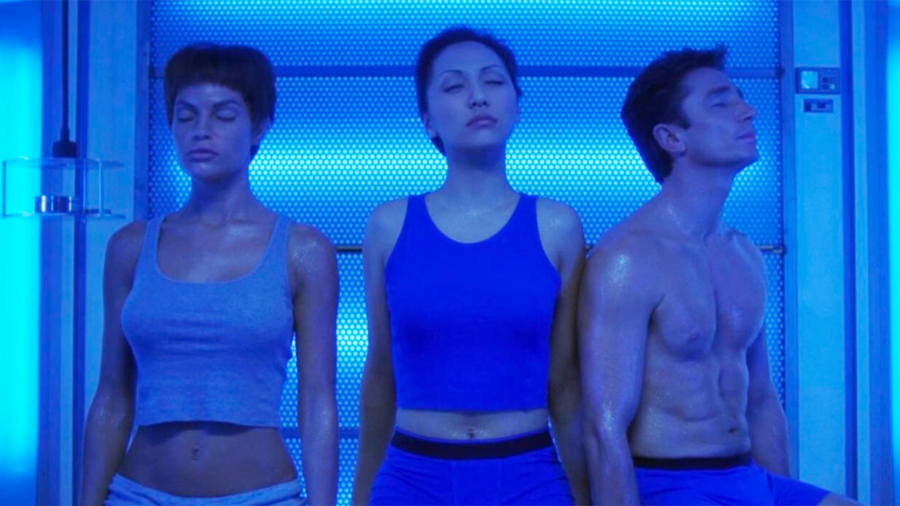
From the very beginning, Star Trek has been a franchise about exploring strange new worlds. Often, that’s literal, with our intrepid crews learning about new life and new civilizations on one planet after another. More often than you might think, however, the most interesting explorations were more metaphorical, as our characters discovered new facets of their own humanity. However, there was one final frontier this franchise never explored for decades: nudity!
Until its more recent pivot to streaming, Star Trek had always premiered on network television. That meant that it had to abide by certain broadcast standards and practices. As you might imagine, there are plenty of restrictions regarding nudity, most of which focus on how much skin can be shown. That’s why, when Q showed up naked in The Next Generation episode “Deja Q,” we only see so much: one cheek, no crack, and (perhaps most importantly) no genitals. No matter how much they wanted it otherwise, fans could only see so much of Q actor John de Lancie’s body. The actors, however, saw everything because de Lancie stripped completely naked on set!
The Naked Now
“Deja Q” is the Next Generation episode where Q loses all of his godlike powers and is rendered human. He is being punished by the Q continuum for abusing those powers to torment various alien beings who can’t fight back. Aboard the Enterprise-D, Q is attacked by an alien race that he had preyed on before (the Calamarain), and they end up damaging Data. Realizing that he is putting the entire crew at risk, Q steals a shuttle and tries to sacrifice himself to the aliens to keep everyone else safe. Impressed by altruism, the Q Continuum ultimately restores all of Q’s powers.
In previous appearances, Q had always made himself look imposing by dressing like a judge, a soldier, and even a Starfleet captain. To visually underscore that his powers had been stripped, the Star Trek: The Next Generation producers stripped him, and Q showed up completely nude on the bridge. To make that happen, John de Lancie was given a g-string to protect his modesty. According to visual effects supervisor Dan Curry, de Lancie decided to forego the g-string, and nobody else knew until the actor showed up on set.
Star Trek Icon Bares It All

As recorded in Star Trek: The Next Generation 365, Curry said, “The script said ‘Q appears nude.’ We planned to have John de Lancie lay on a wooden board that couldn’t be seen due to Patrick Stewart’s position in the shot.” However, things soon went off-kilter in the most hilarious way. “As we were prepping the shot, John showed up on the set with his bathrobe on. When we were ready to go, he dropped his bathrobe, and he was stark naked. That caused… ummmm… a bit of a stir.”
Curry didn’t elaborate further, so we can only imagine what costars like Patrick Stewart and Brent Spiner felt about seeing the full de Lancie. However, the visual supervisor did note that despite (or perhaps because of) the actor’s unexpected antics, the scene went exactly as planned. “It’s one of the few shots we’ve done that came out looking exactly like the storyboard. I’d picked the spot for the camera in advance, and the scene played out just as I drew it.”

In Star Trek: The Next Generation, Q is a chaotic trickster god, and you never know exactly what he’s going to do next. Now, you know that John de Lancie has the same temperament as his omnipotent onscreen alter ego. While the actor doesn’t, sadly, have his character’s fantastic cosmic powers, he did demonstrate one astonishing ability on the set that day: just like that, he transformed “Deja Q” into a special after-hours rerun: “The Naked Now.”
:max_bytes(150000):strip_icc():format(jpeg)/Bruce-Willis-Julia-Roberts-and-Noah-Wyle-on-Friends562-05292026-1718837371b74a0a86e6e5649df0cfb1.jpg)
Some of Hollywood’s biggest names bumped into the gang at Central Perk, while others were even invited up to their apartments.
Entertainment
Kathy Griffin slams longtime friend Adam Carolla for attacking her over Karen Bass interview: 'Go f— yourself'
:max_bytes(150000):strip_icc():format(jpeg)/kathy-griffin-2-f264c0f1bba348f8827f9c83be894fde.jpg)
Griffin hit back at Carolla after he called her a “red-haired, pasty” person.

BlackRock’s income-paying bitcoin ETF nears launch at a fee that undercuts rivals

‘The Fraud’ author to investigate how Labour Together shaped parliament

How to dial in your putting stroke before every round



-

 Fashion6 days ago
Weekend Open Thread: Evereve – Corporette.com
-
 Crypto World6 days ago
Jensen Huang Approves Samsung, SK Hynix, and Micron for NVIDIA (NVDA) HBM4 Memory Supply
-
 Entertainment4 days ago
The Best Mystery Series of All Time Is Surging on Streaming 30 Years After It Ended
-

 Crypto World3 days ago
Anatomy of the June crypto crash: Fed, Iran, Saylor
-

 NewsBeat3 days ago
Alexander Zverev wins the French Open to finally earn a 1st Grand Slam title
-

 Tech5 days ago
Suspicious Polyfill login prompts pop up on Toshiba, Muji websites
-
 Crypto World5 days ago
Senator Cynthia Lummis Calls CLARITY Act the Most Consequential Financial Legislation of This Generation
-

 Tech4 days ago
Microsoft unveils seven homegrown AI models in new bid for ‘long term self-sufficiency’
-

 Tech6 days ago
Microsoft launches MXC, an OS-level sandbox for AI agents, with OpenAI and Nvidia already on board
-

 Business6 days ago
(VIDEO) Justin Bieber Delivers Surprise Happy Birthday Serenade to Diners at Los Angeles Mexican Restaurant
-
 Business4 days ago
The Pain Points Taking a Fragile Tech Rally Down a Notch
-
 Crypto World3 days ago
Eli Lilly (LLY) Stock Surges 4% Following Breakthrough Sleep Apnea Trial Results
-

 Business3 days ago
High Stakes for Wembanyama as New York Pushes for 3-0 Lead
-

 Tech5 days ago
Von der Leyen’s AI envoy pick draws conflict-of-interest fire
-
Crypto World6 days ago
LBank Surpasses 25 Million Users Worldwide as AFA Partnership Continues to Drive Global Growth
-

 Tech5 days ago
Hackers now exploit SolarWinds Serv-U flaw to crash servers
-

 Tech6 days ago
Meta steals a tactic from Tesla and builds data centers in tents
-

 Crypto World4 days ago
Trump’s AI Ownership Plan Could Benefit Anthropic at OpenAI’s Expense
-
 Sports2 days ago
Bangladesh beat Australia after 20 years in ODIs, register only their second win over six-time world champions | Cricket News
-
 NewsBeat4 days ago
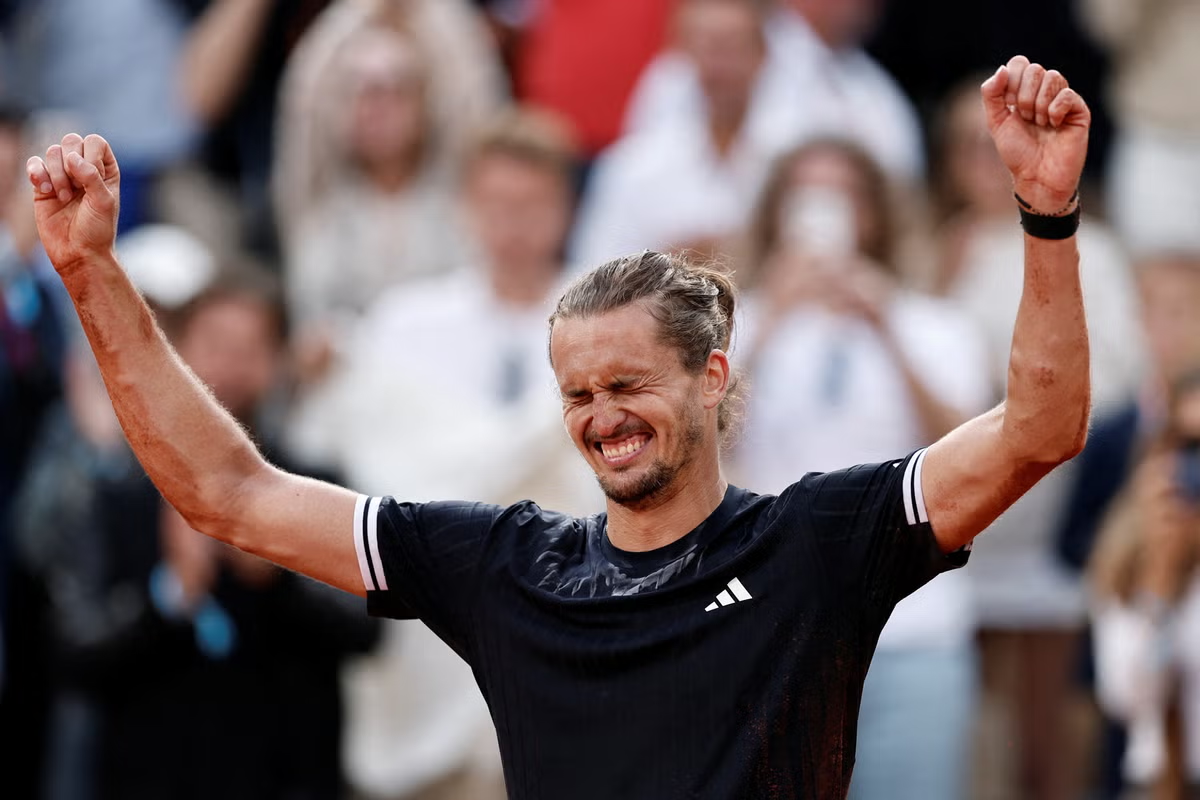
Alexander Zverev conquers demons and outlasts Flavio Cobolli to win French Open for first major title
You must be logged in to post a comment Login