

Related: J. Smith-Cameron Wants to Do More ‘Hacks’ Episodes: ‘A Dream Come True’
Advertisement



Thrillers get ranked too neatly when people talk about them. As if there is one obvious answer and the rest are just honorable mentions orbiting below it. I do not buy that for a second. The greatest thrillers do radically different things to your nervous system. Some tighten one room until it feels like the whole world is trapped inside it. Some weaponize curiosity. That is why the best thriller ever argument never really ends, and thank God for that.
What matters is not only quality. It is a specific kind of possession. The movie that keeps you leaning forward even when you know the turn. The one where every rewatch makes the setup feel more ingenious or the dread feel more intimate. The one whose images have stopped being scenes and turned into permanent furniture in your mind. These ten all qualify. I could absolutely imagine somebody planting a flag on any one of them and saying, no, this is it, this is the greatest thriller ever made. And honestly, on the right day, I might agree with them.

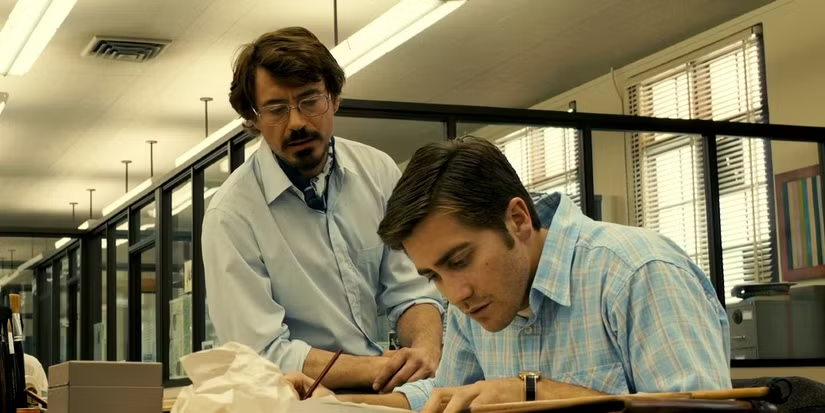
What makes Zodiac worthy of this conversation is that it understands obsession as suspense. That sounds simple until you really sit with what David Fincher is doing. The killer is terrifying, yes. The murders matter, yes. But the movie’s deepest hook is that the case becomes a slow spiritual infection in the lives of the men trying to understand it. Robert Graysmith (Jake Gyllenhaal) does not just get curious. He gets claimed. The further he moves into the case, the more the movie stops being about crime-solving in the ordinary sense and starts becoming about the terrifying human need to force pattern onto chaos before chaos humiliates your whole idea of order.
That is why it gets better every time. The basement scene is famous for obvious reasons, though the movie’s real power lies in how mundane obsession can look while it is eating a life. Offices, paperwork, handwriting samples, phone calls, awkward home-life deterioration, long stretches where nothing thrilling in the conventional sense is happening, yet the movie keeps tightening. That is a rare skill. Zodiac proves a thriller can be procedural, melancholic, and almost anti-climactic on purpose.

Pain is what gives Memories of Murder its place in this conversation. It starts with the shape of a serial-killer procedural, rural detectives, women being murdered, clues half-grasped, mounting panic, incompetent local policing trying to become adequate under pressure. The cops are often foolish, brutal, improvisational, vain, out of their depth. That is the point. Evil has entered a world not prepared to meet it, and the unpreparedness becomes part of the horror.
The reason somebody could call this the greatest thriller ever is that it never treats the murders as isolated mystery beats. They alter the moral atmosphere of the town, the investigators, the weather, even the fields. Rain starts feeling cursed. Darkness starts feeling like accomplice terrain. Detective Park Doo-man (Song Kang-ho) becomes the movie’s central wound, a man who begins with arrogant instinct and gradually discovers instinct is useless against certain kinds of absence. It is a thriller about the unbearable emptiness after the thrill should have ended.

There are thrillers that twist. Then there are thrillers that take your sense of emotional safety out back and beat it with a hammer. Oldboy is in the second category. The premise is already bizarre enough to hook anyone, a man imprisoned for years without explanation, suddenly released, then thrown into a revenge mystery where every answer seems designed to make the question worse, but that only explains the skeleton. What makes the movie genuinely great is the way revenge mutates from purpose into poison here. Oh Dae-su (Choi Min-sik) moves through the story like a person whose whole identity has been distorted by captivity and hunger and the need to know why.
That is what gives the film its terrible rewatch power. The corridor fight is spectacular and brutal and deservedly iconic, but the real violence in Oldboy is architectural. The villain has built a psychological space for Dae-su to suffer inside long before the two men meet face to face. Every encounter, every clue, every erotic beat, every tenderness, all of it has been contaminated in advance. That is why someone could argue it is the greatest thriller of all time. Very few thrillers are this formally alive and this emotionally cruel at once. It is not content to surprise you. It wants to leave your soul feeling rearranged.

Control alone would give The Silence of the Lambs a place in this argument. It is almost offensively precise. Not a wasted scene. Not a wasted gesture. Not a wasted piece of information. Clarice Starling (Jodie Foster)’s journey works because the film understands from the start that suspense becomes more charged when it is running through a character who is not just trying to solve a case but trying to move through rooms built to diminish her. That is the first genius. Clarice is always reading menace on more than one level, literal violence, sexual scrutiny, institutional condescension, male pathology dressed as intellect, and Foster makes all of that visible without ever turning Clarice into a symbol instead of a person.
Then there is Hannibal Lecter (Anthony Hopkins), obviously, but what makes him unforgettable is not mere creep-show brilliance. It is that the film uses him as a different kind of threat than Buffalo Bill (Ted Levine). Lecter attacks psychologically, aesthetically, conversationally. He makes insight feel invasive. The movie becomes extraordinary because Clarice has to move between two distinct nightmares, the cultivated one that wants to know her and the chaotic one stalking women’s bodies in literal space. That is why the climax works so hard. The basement sequence, in particular, is the whole movie cashing its emotional checks at once. Gender, vulnerability, darkness, training, fear, instinct. It all converges. If someone called this the greatest thriller ever made, I would not fight them much.

Disease is what gives Se7en its claim. Fincher here does not just stage a murder investigation. He creates a whole city where moral decay seems to have turned into weather. Rain, grime, cramped apartments, fluorescent fatigue, everyone in the movie looks like they have already been sleeping badly for ten years. That matters. John Doe’s (Kevin Spacey) crimes do not feel like intrusions into ordinary life but like a monstrous logic emerging naturally from a world already halfway broken. That is what makes the film so sickeningly persuasive.
The structure is brilliant because it keeps the two detectives from becoming simple archetypes. William Somerset (Morgan Freeman) is not only weary wisdom. David Mills (Brad Pitt) is not only a hotheaded youth. They are two different reactions to living in a world that keeps forcing the soul into uglier and uglier shapes. Their conversations matter because the movie is really asking whether despair is intelligence or surrender. Then once John Doe enters physically, the whole film changes temperature without losing momentum. That is hard to do.

This may be the purest movie ever made about the way suspense and spectatorship are secretly married. Rear Window gives you L.B. Jeffries (James Stewart) stuck in his apartment with a broken leg, looking out at windows across the courtyard, watching strangers live pieces of their lives, and then slowly starting to believe he has seen evidence of murder. That setup is one of Alfred Hitchcock’s most beautiful acts of cruelty.
It makes the audience complicit immediately. Watching becomes the movie. Curiosity becomes danger. Distance becomes intimacy. You are not just seeing Jeff be trapped. You are trapped inside the same act of looking. What makes the film universal is that it understands voyeurism as something almost embarrassingly human. You do not need to be bad to start looking too long. You only need time, proximity, fragments, boredom, imagination, and a slight suspicion that what you are seeing may add up to something awful. Lisa Fremont (Grace Kelly) and Stella (Thelma Ritter) are incredible additions because the suspense gains extra emotional texture once Lisa starts entering the danger physically while Jeff remains forced to watch. That helpless-watchfulness is the whole genius of the movie.

Elegance is what lets North by Northwest make its case. Hitchcock takes Roger Thornhill (Cary Grant) mistaken for a nonexistent spy and turns the whole American landscape into a running misidentification nightmare. Thornhill is witty, vain, poised, and then slowly forced to discover that poise is not protection once the plot stops caring who you think you are. That gap between style and vulnerability becomes part of the movie’s rhythm, and it is one of the reasons the film remains so easy to fall into.
The set pieces are immortal, the crop duster, the auction, Mount Rushmore, all deservedly, but they are not iconic just because they are well staged. They are iconic because the movie knows how to isolate a person inside open space. Vastness can be as claustrophobic as a locked room if the threat is organized correctly. Eve Kendall (Eva Marie Saint) matters enormously too, because the romance is not decorative. It is part of the trap and part of the thrill. North by Northwest makes suspense feel sexy, funny, and expansive without ever going soft. That is almost impossible.

Jaws is such an unbeatable contender for thrillers too and precisely because of primal fear. The shark matters, obviously. The attacks matter. The beach dread matters. But the film is perfect suspense because it never relies on the creature alone. It gives you town politics, masculine pride, public denial, class arrogance, economic cowardice, parental terror, sea-myth bravado, and one of the best dramatic escalations ever built in studio filmmaking. Chief Martin Brody (Roy Scheider) becomes the center of that escalation because fear enters through the shark and then infects the whole social body around him.
Once the movie leaves the shore and goes onto the Orca, it becomes almost impossibly good. Brody, Quint (Robert Shaw), and Matt Hooper (Richard Dreyfuss) are three different relationships to fear, knowledge, and masculinity locked on a boat with a force of nature that does not care about any of them. By the end, the water is no longer setting. It is judgment. That is why Jaws sits near the very top of this argument.

This is such a radical piece of thriller storytelling that even now, after decades of imitation, Psycho still feels like the genre realizing how much it can get away with. The film begins as one movie, stolen money, guilt, escape, Marion Crane (Janet Leigh) making increasingly bad choices while the audience gets pulled into the nervous momentum of her attempted reinvention, and then Hitchcock tears that movie apart midstream and replaces it with something much stranger and more destabilizing. That move alone would secure Psycho’s place in the canon forever.
But the reason somebody could call it the greatest thriller ever is that the film keeps getting better even after the famous shock. Norman Bates (Anthony Perkins) is the reason for that. He is unsettling not just because he is off, but because he is recognizable. Lonely, eager to please, trapped inside family poison, awkwardly boyish, desperate to seem gentle. That is what makes the horror inside him so effective. The Bates house, the motel, the stuffed birds, the swamp, the conversations, all of it feels like a complete psychological landscape. And the shower scene is not only iconic because of violence. It is iconic because the film has taught you to care about Marion’s panic before it destroys her. That is the deepest thriller trick of all: take away the future you had already started projecting. Psycho still does that better than almost anyone.

This is number one because Vertigo feels like the thriller genre dreaming about itself and then waking up sick with desire. It is not the most propulsive film on this list. It is not the most overtly violent. It is not even the one with the most conventional suspense clock. What it has, and what almost no other thriller has in this exact measure, is obsession as atmosphere. Everything in the movie bends toward fixation, Scottie Ferguson (James Stewart)’s fear, Madeleine Elster/Judy Barton (Kim Novak)’s performance, Gavin Elster (Tom Helmore)’s scheme, San Francisco’s dreamlike geography, color, repetition, mistaken identity, the impossible fantasy that love can be preserved by remaking the object of love until it becomes what your grief and desire demand. That is extraordinary thriller material because it makes looking itself dangerous.
Every rewatch deepens the wound too. The first half plays like haunted romantic mystery. The second becomes one of the cruelest studies of male obsession and erotic control ever put on film. Stewart is astonishing. Scottie’s weakness is the movie’s engine. It makes Steward a man whose acrophobia, yearning, vanity, and susceptibility make him usable by the plot long before he understands he has been used. Novak has one of the hardest jobs in cinema and delivers something uncanny, split, vulnerable, manufactured, and heartbreaking all at once. Vertigo is the greatest thriller ever, or close enough that the argument barely matters, because no other thriller on this list fuses suspense, romance, pathology, and visual hypnosis with this much power.

May 28, 1958
128 minutes
Alec Coppel, Samuel A. Taylor

James Stewart
Det. John ‘Scottie’ Ferguson

Kim Novak
Madeleine Elster / Judy Barton
By Chris Snellgrove
| Published

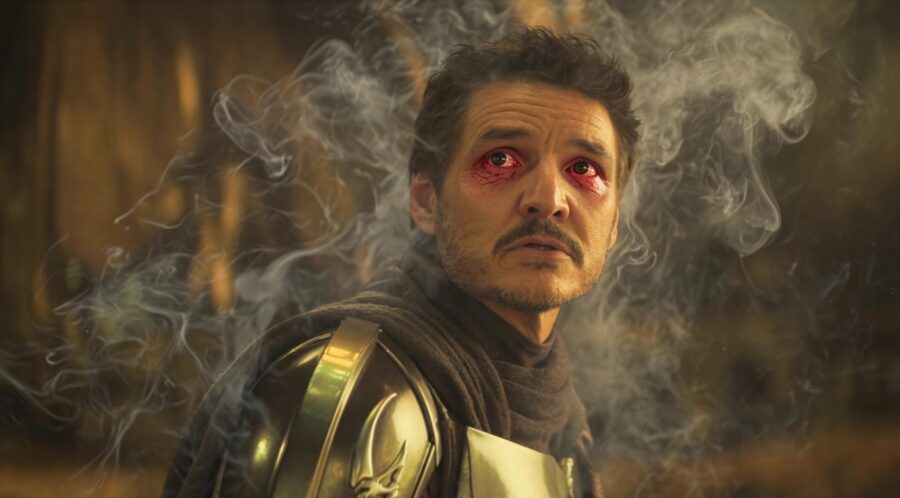
When The Mandalorian and Grogu came out, it offered several surprises for Star Wars fans. This included Mando getting a new Razorcrest (a big upgrade over that old Naboo starfighter) and finding a new purpose: hunting down sleazy Imperial warlords on behalf of the New Republic. Plus, it was undeniably cool to see Sigourney Weaver suit up and hop in an X-Wing (in space, no one can hear her enemies scream!). However, the biggest surprise is that Rotta the Hutt didn’t speak in his native language. Instead, he spent pretty much the entire film speaking English (or Galactic Basic, if you want to be technical), which was jarring whenever he was onscreen.
Many fans thought the sight of a Hutt speaking their own language was more than a bit surreal. Still, it made a kind of sense. Rotta was voiced by The Bear star Jeremy Allen White, and it would have been pretty stupid to hire him just to have the acclaimed actor make Hutt noises. However, what really weirded out the Star Wars fandom is that White didn’t really sound like himself throughout The Mandalorian and Grogu. According to fans all over the internet, he sounded more like another very famous actor: everyone’s favorite carefree stoner, Seth Rogen!

Who is Rotta the Hutt, exactly? In this famous galaxy far, far away, he’s the son of infamous crime lord Jabba the Hutt, and someone Din Djarin ends up helping out in The Mandalorian and Grogu. In our own galaxy, it’s more accurate to say that this Hutt is Dave Filoni’s baby. He included Rotta as a nasty, farting Huttling in the 2008 Clone Wars movie and brought him back for this latest Star Wars movie. Rotta is all grown up now and can speak for himself (which is a big step up from being a burbling monster). Unfortunately, every single thing that comes out of his slimy mouth is insanely distracting.
Why is that? Rotta the Hutt is voiced by Jeremy Allen White, which seemed like an insane bit of stunt casting. Nonetheless, the actor has a fairly distinctive voice in The Bear, so Star Wars fans kept an open mind about his performance. However, even superfans of the actor ended up being disappointed because White sounds nothing like himself in The Mandalorian and Grogu, presumably because Disney put some kind of filter over his voice. That would have been bad enough, but according to countless fans on social media, White’s voice sounds distractingly like Seth Rogen!

The problems with White’s voice acting are compounded by the fact that Rotta the Hutt sounds so weirdly human. He doesn’t sound like Seth Rogen doing an alien voice or anything, which would make more sense for someone voicing one of the most fearsome creatures in the galaxy. No, The Bear star sounds almost exactly like Rogen in his various stoner comedies like Knocked Up and Pineapple Express. Because of this, fans have transformed already-bad lines like Rotta’s “I’m my own man” into hilarious memes, underscoring the fact that The Mandalorian and Grogu is one big joke.
So far, it’s not entirely clear why Disney wanted their stunt-cast actor to sound like the world’s biggest stoner. Was this meant to make him more relatable compared to his frog-eating slaver of a father, or were they counting on his lines being turned into funny TikToks and Reels? Whatever the reasoning (if there was any real reason at all), this decision was fairly insane. It could be worse, though. In The Clone Wars, we meet Ziro the Hutt, Rotta’s great-uncle, who sounds exactly like Truman Capote. That was even more distracting than Jeremy Allen White’s performance, turning what could have been an interesting new Star Wars character into a weirdly offensive gay stereotype.
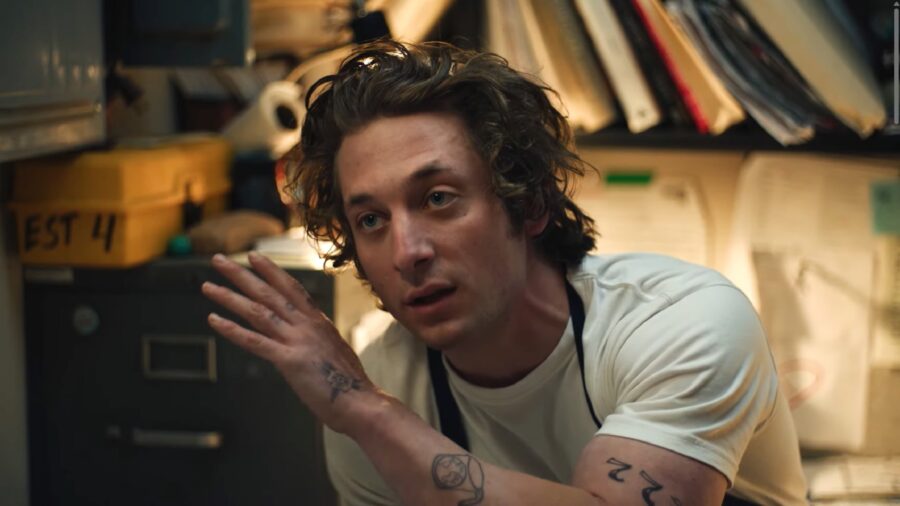
Chances are, we’ll never know why Disney hired Jeremy Allen White to voice Rotta the Hutt and then made the actor sound like the most famous stoner in the world. It’s a decision that makes the film memorable in all the worst ways, and one of the biggest criticisms of The Mandalorian and Grogu is that Rotta’s voice is so distractingly weird and human. Honestly, I just kept expecting him to ditch Mando and go buy a Hutt-load of spice from an alien voiced by James Franco.
At the very least, we’re already getting funny memes out of this. If the rehabilitation of The Phantom Menace shows us anything, it’s that Star Wars fans can meme themselves into thinking that anything is good. In the meantime, you’ve got a ready-made punchline whenever you watch The Mandalorian and Grogu with your friends. Just wait for Rotta to open his mouth for the first time, make eye contact with your closest buddy, and drop this banger on them: “somehow, Seth Rogen returned.”
The crime genre has always been far and away one of television’s most prolific, popular, and acclaimed. After all, it’s not just any genre that could be able to produce revolutionary classics of the stature of The Sopranos, The Wire, and Breaking Bad. But even with the genre’s outstanding track record, the last five years in particular have represented a bit of a golden age for crime television, with the release of several gems bound to go down in history as some of the genre’s best.
Whether it’s a miniseries like Mare of Easttown, a new chapter in a big franchise, like Dexter: Resurrection, or a new show that promises to provide some of the best televisual content in the coming years, like MobLand, the crime genre is one that has flourished beautifully in the 2020s. Five years have been enough to prove that there’s no time like the present to be a fan of crime television.

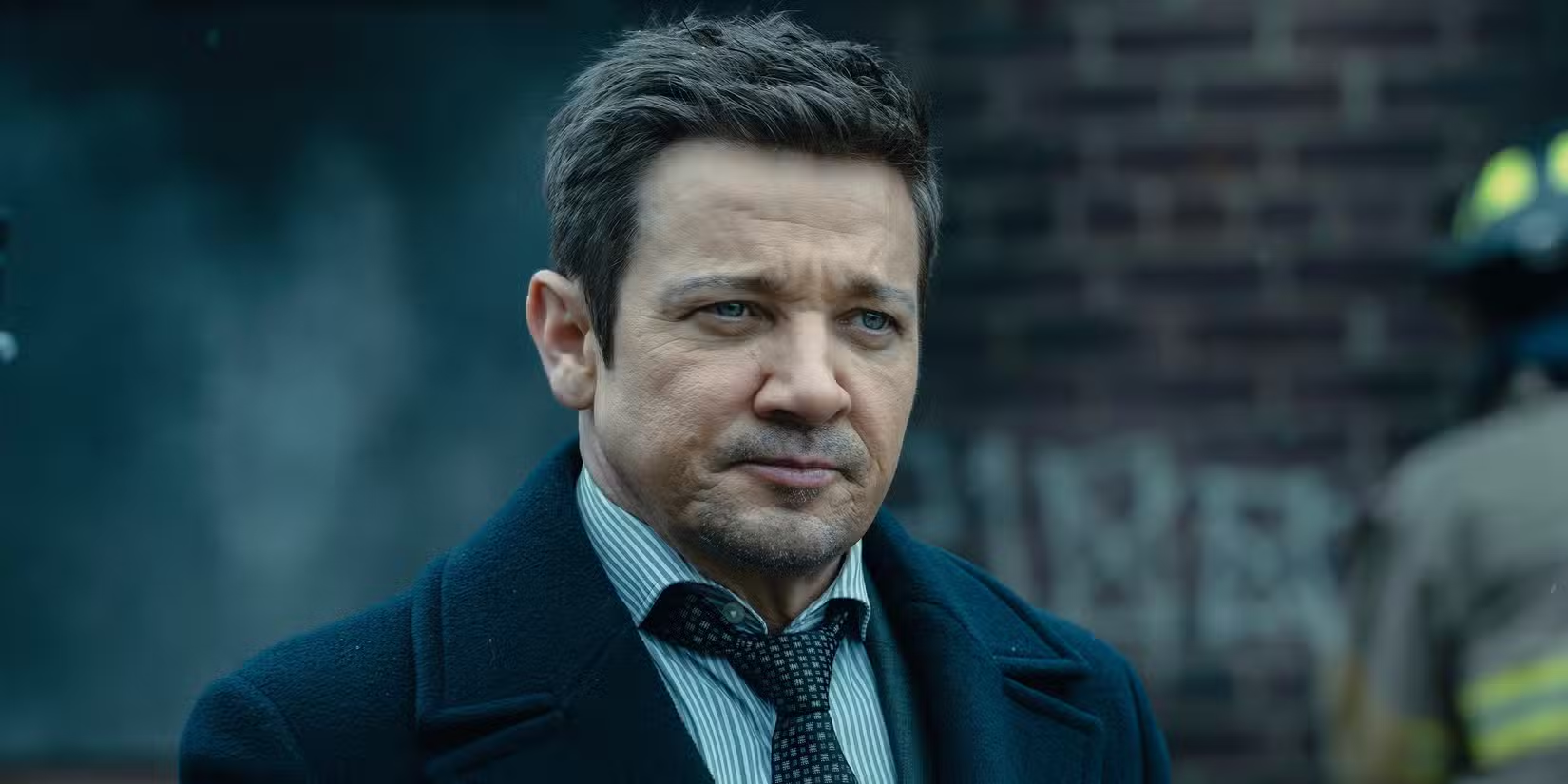
Ever since the creation of Yellowstone back in 2018, Taylor Sheridan has become one of the most prolific voices in modern television. The writer and producer, who began his career as the screenwriter of films like Sicario and Hell or High Water, has created a whopping nine TV shows since Yellowstone. His third was Mayor of Kingstown, and fans are lucky that it’s still on the air.
It’s one of Sheridan’s highest-rated shows on IMDb, and for good reason. Though critics disliked the first two seasons, viewers have been there all along, singing the praises of this enthralling crime melodrama that’s bolstered by one of Jeremy Renner‘s strongest performances to date. It’s also a show that definitely gets better as it goes on, making it so that there’s even more of a reason to check it out today.

Anchored by a jaw-dropping cast that features the likes of Tom Hardy, Pierce Brosnan, and Helen Mirren, MobLand is only one season in, yet it already shows the potential to become one of the most beloved crime shows of modern times. It’s executive-produced by filmmaker Guy Ritchie, and all those who enjoy the director’s unique energy and sophistication are guaranteed to love MobLand.
The series doesn’t really reinvent the mobster genre in any significant way, but it never needs to. It executes all of the genre’s tropes with such panache that it’s difficult to resist, and its sense of suspense makes it one of the most intense crime shows in recent memory. Gritty, violent, darkly humorous, and delectably character-driven, it’s a must-see for anyone who loves Guy Ritchie.

Having aired its pilot in 2014, Bosch is one of the best police procedurals that the small screen has seen at any point during the 21st century. After fans thought that the show had come to its natural conclusion following its seventh season, Bosch: Legacy—described by Titus Welliver himself, the show’s star, as a bona fide eighth season of Bosch—came into the picture.
It’s an incredible return to form, one of those Prime Video thrillers that are totally unpredictable. Though rising production costs and platform changes led Prime to cancel the series after its third season, fans’ love for it will never die. Intense, impeccably plotted, and tweaking the original series’ formula in all the right ways, it’s easily one of the greatest American crime shows of the 2020s so far.

It’s not just the United States. Korea, too, has offered some of the best crime series of the last five years, but it’s easy to pick the best of the bunch: It has to be Mouse. One of the best K-dramas with the most plot twists, Mouse follows a detective and a rookie officer who work together to hunt down a serial killer. It’s a familiar enough concept, but the things that this K-drama does with it are constantly surprising.
This cat-and-mouse game should prove to be a gripping watch for all those who enjoy dark murder mysteries, even a tiny little bit. Popular thanks to its intense twists, its morally grey characters, and its mind-bending and psychologically-charged mind puzzles, it’s a grim and intricately plotted televisual crime masterpiece.

Dexter started out as one of the most beloved serial killer crime shows ever made, but things led all the way to a finale that’s universally hated by fans. Dexter: New Blood was created as a way to explicitly course-correct the original’s controversial ending, but it ended up having just as widely-disliked a conclusion itself. Dexter: Resurrection is the second course-correction that the franchise has put out, and so far, it seems like things will finally turn out well this time.
It’s one of those thrillers whose every episode is a masterpiece, at least so far. One season in, this rediscovery of everything that made the original magical in the first place is obviously a must-see for fans, but also so great that it should motivate anyone who hasn’t seen Dexter to jump aboard the train ASAP. With Michael C. Hall at his best and a healthy dose of campy absurdism, Resurrection is everything that fans had been waiting for years.

At launch, CD Projekt Red’s action RPG Cyberpunk 2077 was nothing short of a disaster; but with time, the various improvements and updates delivered by the developer turned the game into something that can only be called a masterpiece. Along with this reappraisal came Netflix’s Cyberpunk: Edgerunners, a prequel to the video game that didn’t need any live service in order to get great.
Right off the bat, this miniseries proves to be one of the best cyberpunk anime of all time. With a level of visual flair and of stylish action that you don’t often see in many cartoons these days, Edgerunners is a relentlessly wild ride that never lets up. Perfectly paced and perfectly written, it’s perfect for all those who love not just the game that inspired it, but the cyberpunk genre in general.

HBO has put out some of the greatest miniseries of the 2020s as a whole, and Mare of Easttown is right up there as one of the studio’s best. It’s one of those detective shows that are perfect from start to finish, bolstered by one of the greatest performances of Kate Winslet‘s career. It’s ambitious, mysterious, impeccably written, and absolutely mesmerizing.
It’s not just a twisty, irresistibly suspenseful murder mystery, but also a gripping character study with a raw emotional heart. The way it explores themes of grief and trauma is anchored in some surprisingly solid world-building, making for a drama that’s impossible to take one’s eyes off of at any point. It’s grounded, perfectly paced, and psychologically complex in ways that all fans of the crime genre should be able to appreciate.

Who would have expected Star Wars, of all franchises, to produce one of the best crime series of the 2020s? That is, indeed, what Maul — Shadow Lord is: a crime show through and through, following the Sith Lord’s attempt to escape an Empire-occupied planet following the Clone Wars. It has only been one season, and yet this is already one of the best Star Wars shows thus far.
Maul has been one of the franchise’s most fascinating characters since Dave Filoni brought him back in Star Wars: The Clone Wars, and all Shadow Lord does is further expand the complexity and emotional resonance of the villain with the help of Sam Witwer‘s visceral performance. Action-packed to the core, this Clone Wars sequel runs at a breakneck pace that all fans of the genre are pretty much guaranteed to enjoy.

Netflix’s Adolescence is far more than just one of the best miniseries of the 2020s so far. It’s a gripping four-episode dissection of incel culture and how modern society is failing its young boys by allowing them to fall victim to it. Boosted by Stephen Graham‘s masterful performance and especially Owen Cooper‘s star-making work, it may be a relatively short drama, but it’s one with a ton of staying power.
Each episode of Adolescence is done in a single shot, and that’s far more than just a simple gimmick: It’s a stylistic foundation that allows the series to tell its engrossing story visually as often as it does verbally. It’s true televisual perfection, a thematically sharp miniseries where every element works in perfect conjunction with the others to deliver a harrowing story that feels awfully timely.

Matt Reeves‘ The Batman became one of the most beloved depictions of the Caped Crusader in history as soon as it came out in 2022, and fans immediately started to clamor for more content set in this particularly fascinating version of Gotham City. That’s where The Penguin came in, and somehow, it managed to not just live up to expectations, but significantly surpass them.
It’s one of the most perfect HBO shows of the last 10 years, because instead of sticking by the same kinds of tropes that have made superhero shows and movies feel stale during the 2020s, it’s a gritty crime drama first and foremost. With Colin Farrell and Cristin Milloti‘s powerhouse performances and the writing team’s incredible work, it’s a crime saga with as much pathos and gravitas as it has heart.
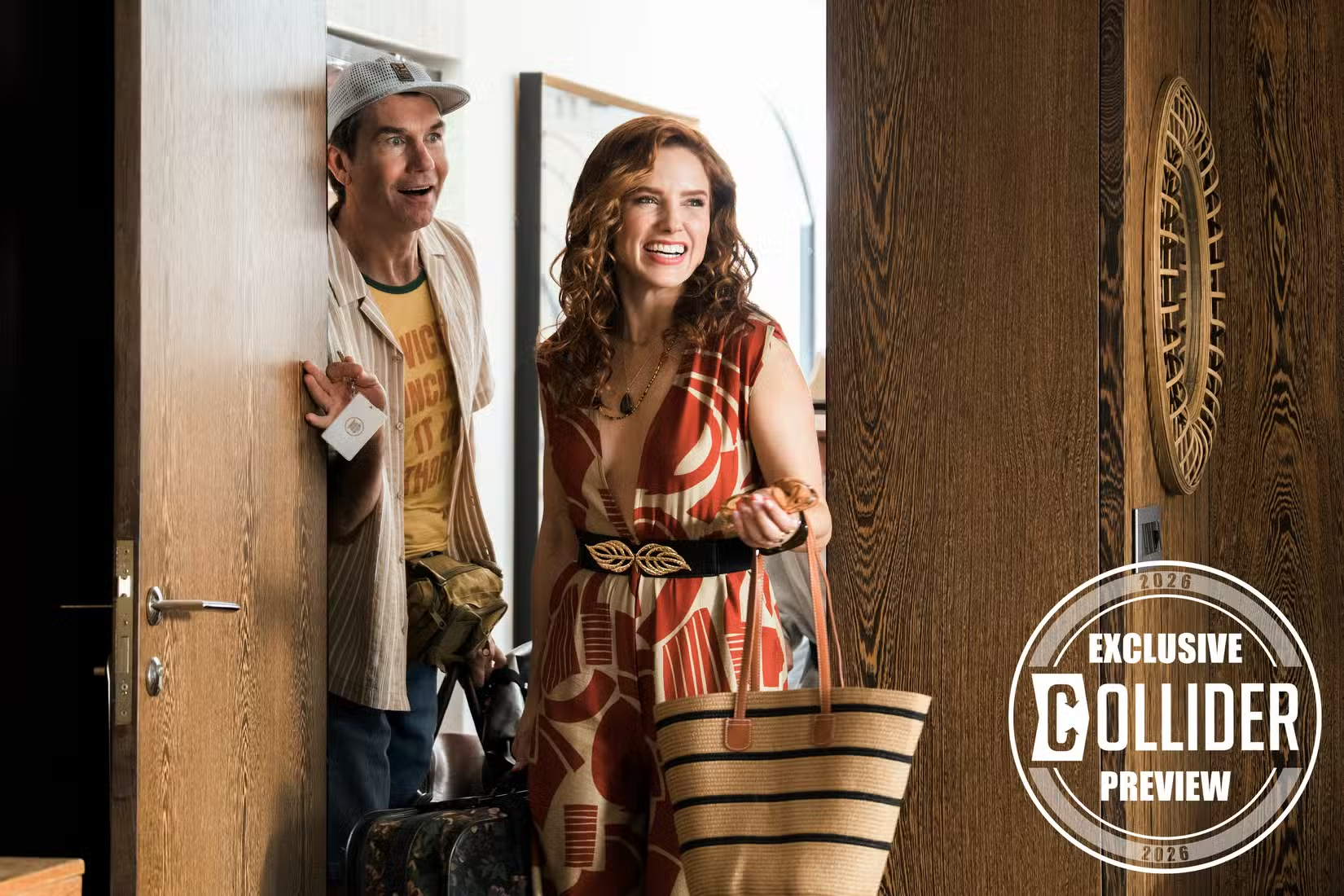
Ahh, who doesn’t love the summer? Summer vacation is when we all get to loosen up a little, schedules fall away, rules get bent — and a little bit broken — and no matter who you are, you’re supposed to be able to unwind a little bit. Of course, that’s easier said than done when your family vacation goes completely off the rails.
As part of Collider’s Exclusive Preview event for the summer’s hottest movies and TV shows, we’re debuting a new exclusive image from Summer’s Last Resort, a new comedy set to stream exclusively on Tubi later this year. The image gives fans a first look at Sophia Bush (One Tree Hill) and Jerry O’Connell (Star Trek: Lower Decks) arriving with full vacation energy. Though you wouldn’t know it from our exclusive image, this isn’t going to be the dream getaway they’ve been hoping for.
Summer’s Last Resort follows Summer (Violet McGraw), a high-strung teen whose vacation takes a very unfortunate turn when she gets trapped with her free-spirited mom’s try-hard boyfriend. Oh, hold on, it gets worse because he also happens to be her vice principal. Determined to end the relationship before things get any more embarrassing, Summer puts together a secret breakup plan, only for the whole thing to spiral into a week of utter chaos.

In addition to Bush as Milly, O’Connell as Glenn, and McGraw as Summer, Summer’s Last Resort also stars Tim Rozon (Schitt’s Creek) as Captain Otto. Glenn is Milly’s very well-meaning boyfriend, who is afflicted with that darned golden retriever energy and the dreaded cargo shorts-heavy style. Not the cargo shorts! Captain Otto, meanwhile, is a flip-flop-wearing wannabe pirate with movie-star swagger, but he has interests that are, in a manner of speaking, crime-adjacent. Probably not the most trustworthy guy in the world, but maybe a useful ally nonetheless. Behind the camera, Summer’s Last Resort also delivers a Wynonna Earp reunion with a script written by Emily Andras, directed by Melanie Scrofano (Heartland). The film is produced by Blue Ice Pictures, with Lance Samuels and Andras serving as executive producers.
“With Summer’s Last Resort, we’re further expanding our slate of young adult originals and bringing together an exceptional team of talent to deliver a character-driven comedy that speaks to Gen Z viewers and their families,” says Tubi chief content officer Adam Lewinson. “Sophia Bush, Jerry O’Connell, and Violet McGraw bring a perfect blend of humor and heart to this relatable comedy about growing up, letting go, and surviving the world’s most awkward family vacation.”
Summer’s Last Resort will premiere on Tubi this summer. Stay tuned for more at Collider as we close out our exclusive summer preview.
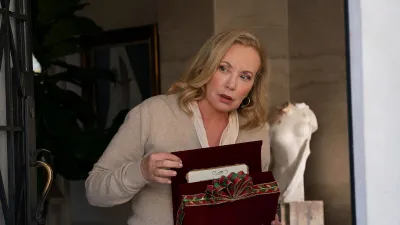
Hacks came to an end after five epic seasons — and the series finale was anything but predictable.
“I want to go out on top,” Deborah Vance (Jean Smart) told Ava Daniels (Hannah Einbinder) in the final episode, which premiered on Thursday, May 29.
The final episode allowed Hacks to end the same way it started — with just Deborah and Ava.
“I had a little bit of an idea of how it was going to end, but I just thought it ended absolutely perfectly,” Smart told Variety of the last episode. “I don’t think it hit me until I just watched that last scene. The relationship between the two of them was always at the heart of the show.”
She added, “I mean, the only thing that we missed at the end was that we weren’t with the whole cast and the whole crew.”
Keep scrolling for a full recap of the Hacks series finale:

J. Smith-Cameron is hopeful that she’ll return to Hacks as Kathy Vance should the opportunity arise. “It was a dream come true,” Smith-Cameron, 66, exclusively told Us Weekly on Tuesday, June 4, while promoting her partnership with Jif for its Jif Peanut Butter & Chocolate Flavored Spread campaign. “I had been a fan of the […]
No, but she is sick. The show’s penultimate episode had Deborah getting a cancerous mass removed. However, the finale revealed that the cancer had spread and the comedian would not be undergoing chemotherapy.
“The purpose of having her be sick was for the ultimate redemption, the idea of the comedy and writing together saving her life,” Hacks cocreator and executive producer Lucia Aniello told Variety following the finale. “We wouldn’t have had her die. There’s no reason for her to be sick, except to tell the story of how, in the end, she is saved by her want to continue to write.”
Deborah and Ava go to Paris, but mainly for Deborah to visit an assisted suicide facility. The duo do all the touristy things before Deborah realizes that her illness might just lead to a new comedy special.
Cocreator Jen Statsky told Variety that they wanted “a very hopeful ending for Deborah and Ava.” There was no other way to end the show.
Statsky explained, “The show ends with them together, because ultimately the show was always about them coming together and cracking each other open and making each other better.”
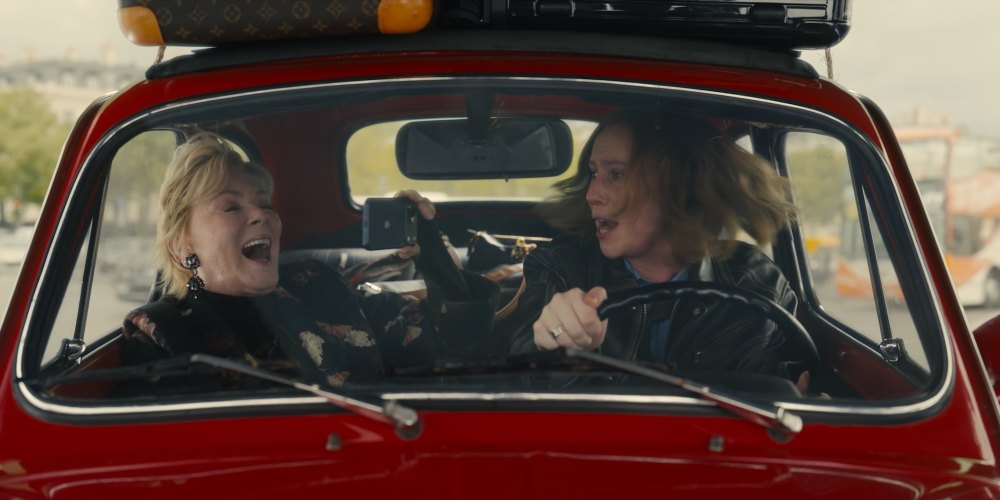
Einbinder told Variety that she thought the finale was “perfect as ever.”


“Every time we have a finale of any season, I feel like it leaves off in like such a beautiful place, and I think what we get to see in this finale is representative of the entire arc of the series,” she added. “It is representative of the depth of their love and the depth of their connection.”
Smart agreed.
“It was kind of magical being in Paris,” she said. “In a way I think that felt right, because they were out of their element, they weren’t at home, and they were just trying to figure out what was going on.”
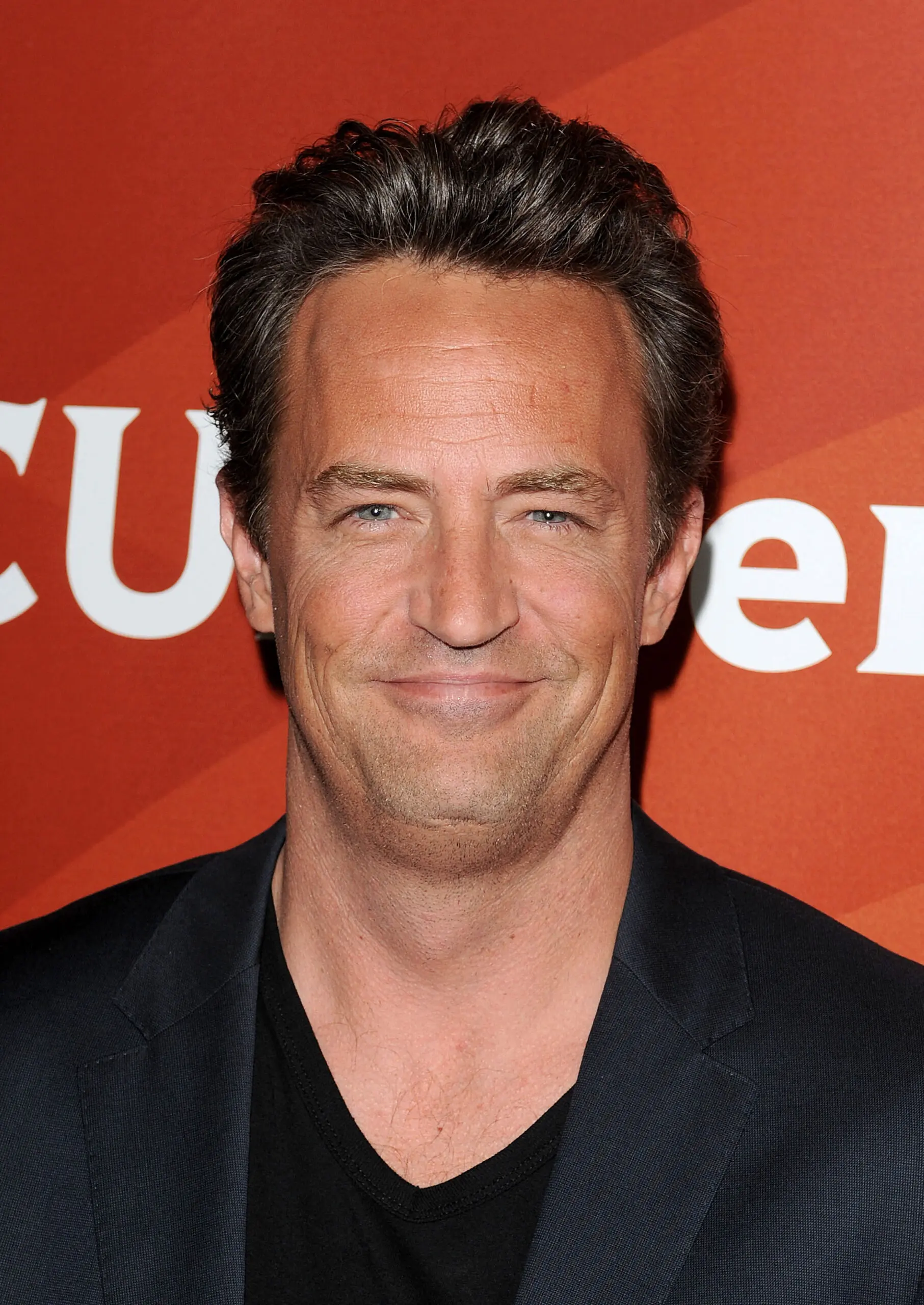
Matthew Perry may be gone, but fans will soon have the chance to hold onto a meaningful piece of the actor who made millions laugh as Chandler Bing. From handwritten scripts and worn tennis rackets to “Friends” memorabilia and personal keepsakes, a collection of Perry’s belongings is heading to auction, all in support of a cause deeply tied to the late actor’s own journey. The emotional sale will benefit the Matthew Perry Foundation, which helps people battling addiction, a struggle Matthew Perry openly faced throughout much of his life.
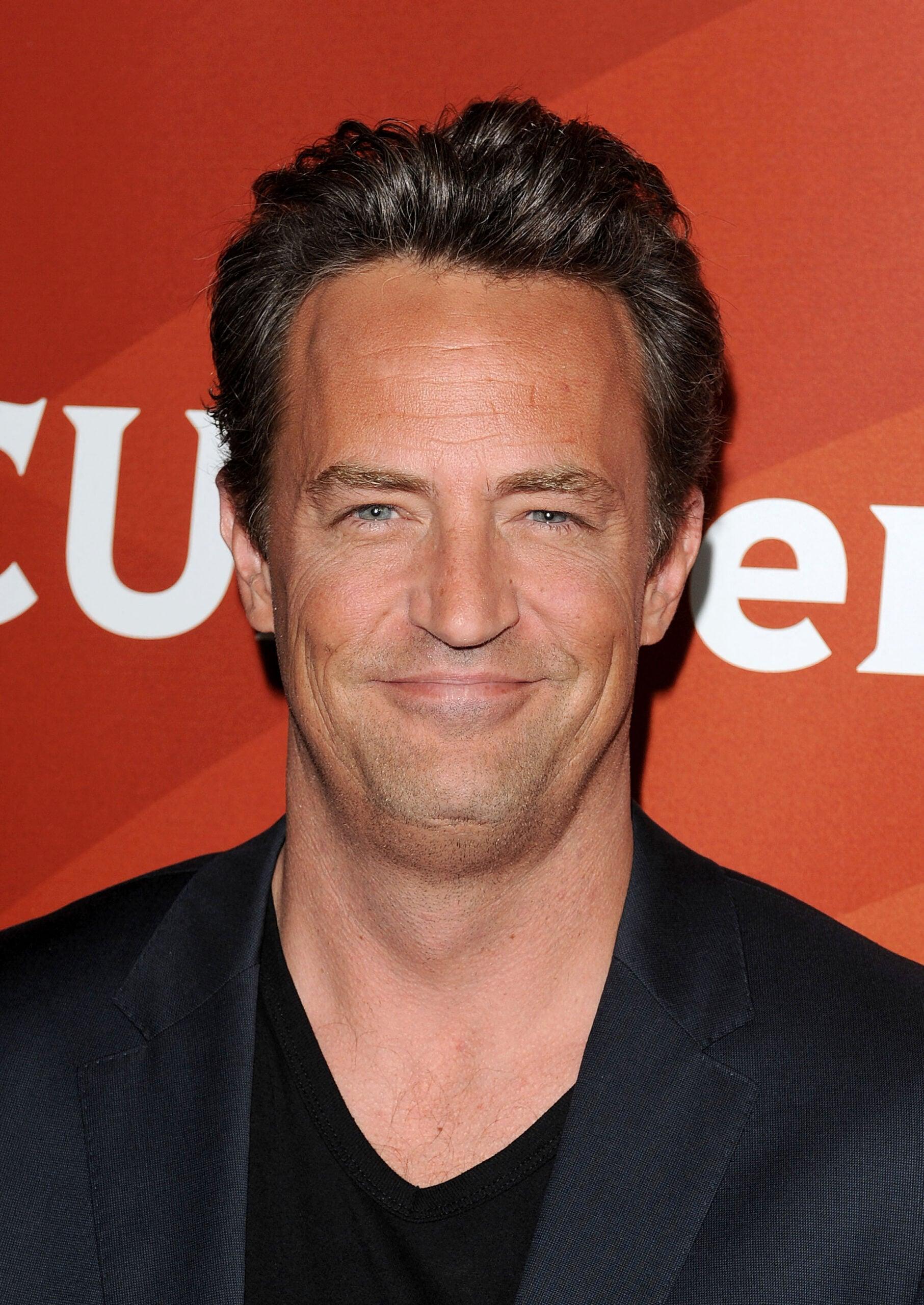
On June 5, Heritage Auctions will offer fans the chance to purchase a range of Matthew Perry’s personal items at its Dallas, Texas headquarters. The collection features everything from scripts scribbled with notes to “Batman” memorabilia, pre-worn suits, tennis rackets, magazines from the height of “Friends” fame, and even a famed Banksy artwork.
According to Brian Chanes, Heritage Auctions’ Senior Director of Hollywood & Entertainment, the response surrounding Perry’s collection has been deeply emotional. “The outpour of enthusiasm and support and adoration for Matt has been amazing.,” Chanes told Daily Mail.
For many fans, the auction represents more than just memorabilia, but it offers a connection to an actor whose humor and honesty touched millions.
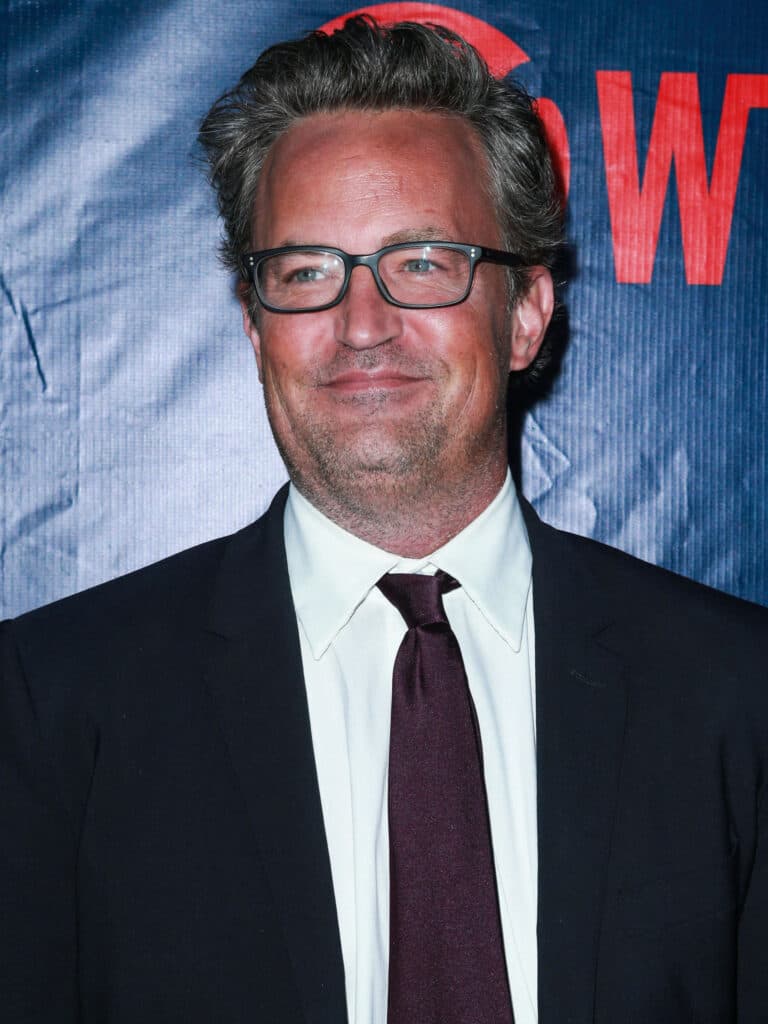
Among the standout items is a rare script outline from “Friends” before the iconic sitcom even had its famous name. Originally titled “Six of One,” the document gives fans an early glimpse into the beloved show that would eventually make Perry a household name.
“This was the name of ‘Friends,’ ‘Six of One,’ before it became ‘Friends,’ but this is a basically an outline, basically ‘From the creators of ‘Cheers’ and ‘Frasier’, you know, ‘Six of One,’” Chanes explained. “’Six single people living in New York is about friends and lovers, IKEA furniture, cappuccino, bad date, Spanish soap operas, and Mr. Potato Head,’ but anyway, it just gives the rundown of it, and then here is a pilot.”
Warner Bros. also donated an autographed “Friends” script that has already reportedly reached bids of $16,000.
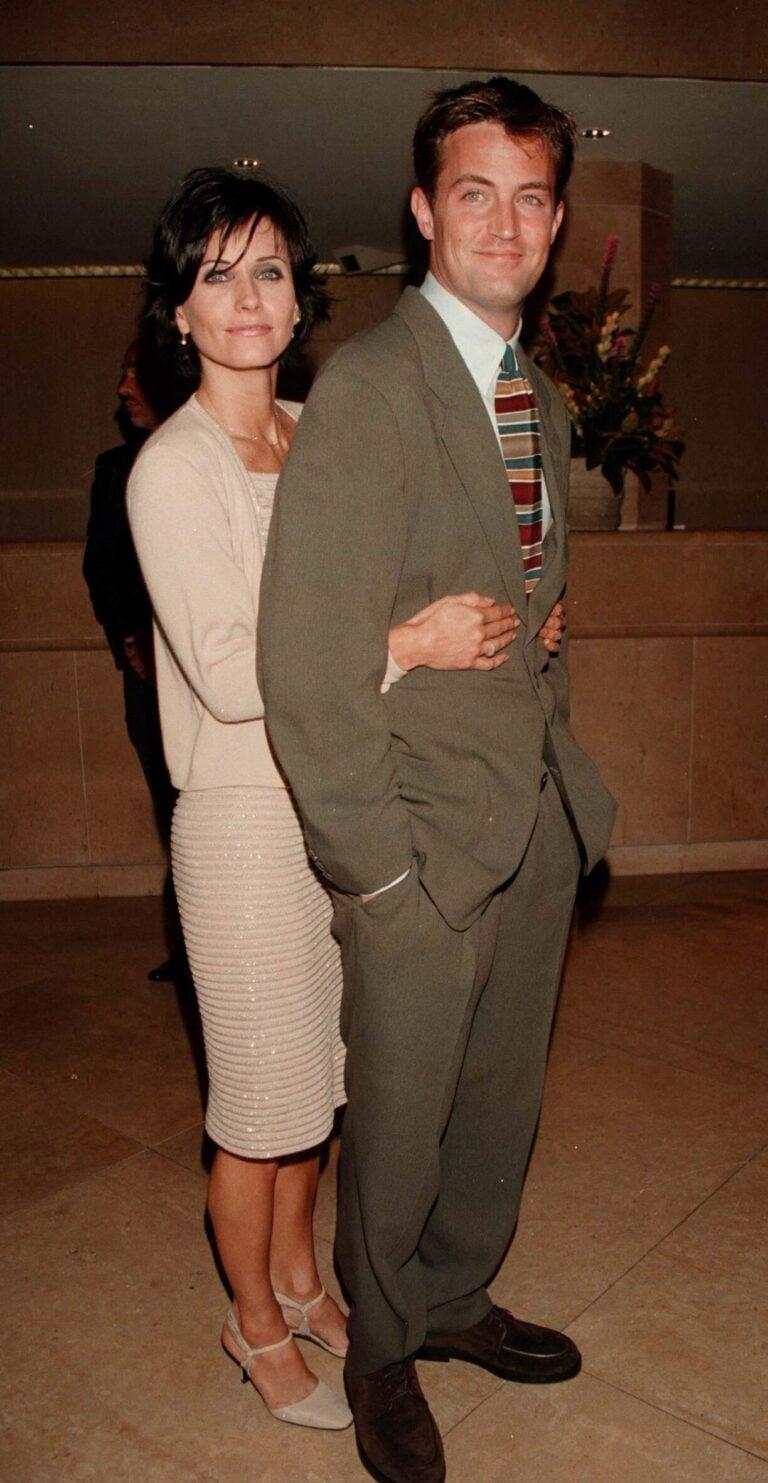
Outside of Hollywood, Perry had another major passion: tennis. The actor played competitively growing up and was heavily inspired by tennis legend Jimmy Connors, even dreaming of a professional career before pivoting to acting.
Some of Perry’s well-worn rackets, complete with broken strings from years of use, are now among the items up for auction. “Obviously well-worn, you can see the gut strings are popped on a couple of them,” Chanes said. “He was heavily influenced by sports, especially tennis,” Chanes added. “He loved hockey too ’cause he was from Ottawa, but he felt particularly motivated by his idol Jimmy Connors.”
According to Chanes, Perry practiced relentlessly as a child. “He would play up to 10 hours a day when he was a kid,” he said, explaining Perry competed in tournaments in Canada before moving to Los Angeles.

While some of the higher-end pieces, including Banksy artwork, are expected to fetch six or even seven figures, auction organizers say there will also be affordable options for everyday fans. “One thing I want to make clear for people is that we have things for just a few $100 and we have things that are going to sell for maybe a million or more, that Banksy over there, the girl with the balloon,” Chanes explained.
Among the more accessible items are Perry’s personal VHS tapes from Warner Bros., which were reportedly sitting at around $330 in bidding. “We have his set of VHS tapes that were from Warner Brothers,” Chanes said. “It was like his master VHS of the final… It’s from his collection.”
“Right now, I think the bidding is at $330, and so you can have something of his that’s a good commemorative morsel, if you will,” Chanes continued. “And for [a] relatively small amount, and of course, knowing that the funds are going to his favorite cause is the real kicker.”
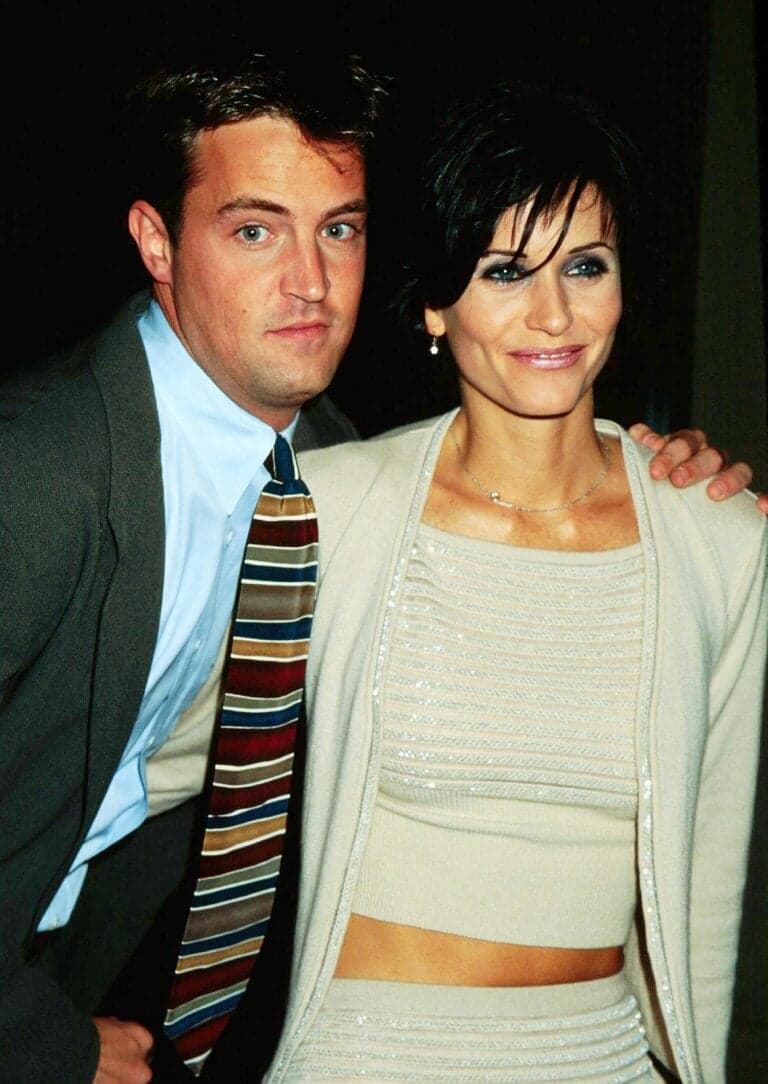
Perry famously battled addiction throughout much of his life, including during the height of Friends, when he starred alongside Jennifer Aniston, Courteney Cox, Lisa Kudrow, Matt LeBlanc, and David Schwimmer. He later opened up about his struggles in his 2022 memoir, “Friends, Lovers, and the Big Terrible Thing,” offering a raw and honest look at the challenges he faced behind the scenes.
Perry died in October 2023 at age 54 after drowning in a jacuzzi at his Los Angeles home following a ketamine overdose. Now, even after his passing, the actor’s legacy continues through the Matthew Perry Foundation, with proceeds from the auction helping support those facing addiction, a cause that remained deeply personal to him.
By TeeJay Small
| Published

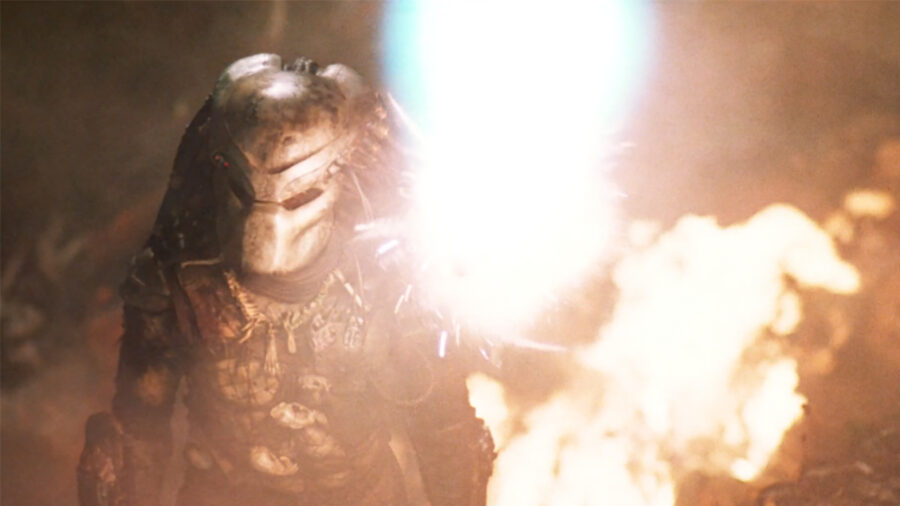
Action movie fans have been tuning in to see the Predator tear through television tough-guys like wet tissue paper since 1987. In that time, we’ve gotten nine films ranging from genre-defining classics to embarrassing missteps. Along the way, we’ve seen crossover specials, graphic novels, fan-films, and more, highlighting the unstoppable killing power of the Yautja hunters.
With so many films to choose from, it might be dizzying for new fans looking to find a point of entry. I’m here to solve that. These are the Predator films, ranked worst to best.

Shane Black’s The Predator offers a bold new take on the franchise. The film asks such questions as “what if the Predator were 11 feet tall and fully made of bad CGI,” and “wouldn’t it be hilarious if the Predator acted like Bugs Bunny?” The answer to that last question is… I guess? But only if you don’t mind watching Shane Black spit in the face of each previous Predator movie.
The Predator feels more like a Scary Movie version of the 1987 classic than an earnest attempt at a sci-fi slasher. It features bizarre gags such as a Yautja dog that owes its loyalty to anyone who shoots it in the head with a shotgun, a man blowing his own head off with a shoulder cannon because he glanced 90 degrees to the side, and an Iron Man suit that was meant to take this franchise into borderline anime territory, if further explored. At one point the Predator rips off a man’s arm, fashions the hand into a thumbs up, and angles it through an open window.
To give Black some credit, The Predator experienced massive studio interference, and suffered from numerous reshoots. If he had received full creative control, we probably wouldn’t have gotten such a tonal disaster. Still, as it currently stands, this is the most embarrassing film in the entire franchise.

Clocking in with a paltry 12 percent score on Rotten Tomatoes, we’ve got 2007’s Aliens Vs. Predator: Requiem. This is a sequel to the critically panned crossover event which brought the Yautja hunter face to face with alien Xenomorphs on the big screen for the very first time. It’s by far the darkest film in the series, as evidenced by scenes where the movie monsters tear through a maternity ward, killing a bunch of infants and pregnant women. It’s also the darkest movie in the franchise, literally, so you’ll have to crank the brightness settings on your TV to enjoy even a fraction of it.
The filmmaking duo behind this one had a background exclusively in VFX before helming the would-be blockbuster, so they didn’t handle things like scripting or budgeting with the grace they required. The result is a film that’s been artificially darkened and smothered with movie rain to hide imperfections in the Alien and Predator CGI. The humans are also Degrassi characters, for all intents and purposes, and completely insufferable to watch. I give this one style points for the Alien/Predator hybrid, but I really wouldn’t recommend watching it unless you’ve exhausted every other film on this list, and then some.

Now we’re getting into some controversial ranking. Some people swear by Prey, and cite it as the best that the franchise has to offer. While I obviously don’t share this opinion, I can certainly understand the appeal. This is the first film in the franchise directed by Dan Trachtenberg, and highlights a Native American woman attempting to prove herself to her patriarchal tribe by taking down a massive murderous space alien.
Trachtenberg did such an amazing job with this film that it was nominated for two Academy Awards, and he’s been effectively running the franchise ever since. The best sequence in the movie sees the Predator fighting a grizzly bear in one of the rawest and most intense fight scenes ever committed to film. The only reason this movie isn’t higher on my list is because there’s some seriously stiff competition elsewhere in the franchise. Plus, admittedly, a few of the following entries will be getting bonus points for nostalgia, and Prey didn’t come out until I was already 25 years old.

This is the point in the list where you tell me I’m an idiot with bad taste, and I tell you to shut up and give Alien Vs. Predator another chance. This film was panned by critics as a mindless action flick, and shunned for abandoning the horror roots of the original 1987 outing. While those critiques are accurate, they don’t detract from the fact that Alien Vs. Predator is about as badass as an action movie can be.
This one follows a group of archaeologists exploring an underground pyramid in Antarctica, where they accidentally awaken a Xenomorph queen. Doing so causes a Yautja ship to send down a trio of Predator hunters, who hack and slash their way through the dig site. Also, the pyramid walls shift to create new rooms and trap explorers every ten minutes. Paul W. S. Anderson might not be lauded by snooty critics for his silly action outings, but he was channeling something in Alien Vs. Predator that I want injected directly into my veins.

Predator: Badlands is the latest film in the franchise, and the third outing from Dan Trachtenberg. This one does the most to expand on the Predator lore, taking the action off-planet and onto a pair of distant alien locales, complete with sentient plant life and giant monsters. People had mixed reactions to the trailer, especially since this is the first Predator movie to center a Yautja hunter as the main protagonist. Luckily, once Badlands arrived in theaters, audiences quickly changed their tune.
Today, this film touts an impressive 86 percent critic score on Rotten Tomatoes, with a 95 percent audience score to match. It also features a crossover plot with the Alien franchise that blends much more cleanly than either of the AVP movies, so we might have a shot at rebooting that element of the franchise if Trachtenberg sets his mind to it. More importantly, Predator: Badlands features no human characters (save for a set of Weyland-Yutani droids), so there’s no need to suffer through any teen drama or rom-com elements. Just good old-fashioned science fiction, and a few Baby Yoda-inspired alien critters.

Critics hate Predator 2 because they are dumb and annoying. If you watch this film with a fresh set of eyes, you’ll see that it actually rules. It’s a big departure from the rumble in the jungle we experience in the first movie, but transporting the Predator to an urban environment and setting it loose in the midst of a gang war is absolutely brilliant. Danny Glover spends over an hour chasing, fighting, and sweating like a stuck pig as a lone Yautja parades through the streets, stringing up gangsters and terrifying old ladies.
This film is also the first to legitimize the concept of a crossover with the Alien franchise, since it features a giant Xenomorph skull in the background for a single scene. While 1987’s Predator can be credited with kickstarting this whole series, Predator 2 set the tone for everything that would come later by daring to reinvent its premise. In another timeline, we could be stuck with a Rambo-style rehash, where we get six Predator films that serve as needless retreads of the same played-out story. Maybe I’m letting a bit of nostalgia take the wheel, but I could never be convinced that Predator 2 isn’t at least a 4 out of 5 star movie.

When I first heard that Dan Trachtenberg was making an animated Predator film, I thought it was a bizarre choice. The entire franchise up to this point had been shot in live action, and the best entries have all relied heavily on practical effects. Taking things into animated territory seemed like an ill-advised venture that would only serve to separate the action from the realistic brutality we’d all like to see.
Then, when I fired up Hulu and watched Killer Of Killers, I quickly realized the true reason the film is animated: making this movie in live action would require a production budget of $500 billion. This movie seamlessly leaps from Viking times to feudal Japan to World War 2 to a futuristic Predator home planet without giving you whiplash, and it does so while being absolutely badass at every turn. The ending also ties the entire franchise together in an Avengers: Endgame style crossover, which made me nerd out for hours while breaking it down with my fellow Predator fanatics. There’s a real argument to be made that this is the best that the franchise has to offer, but I personally have the following films tied for my all-time favorite.
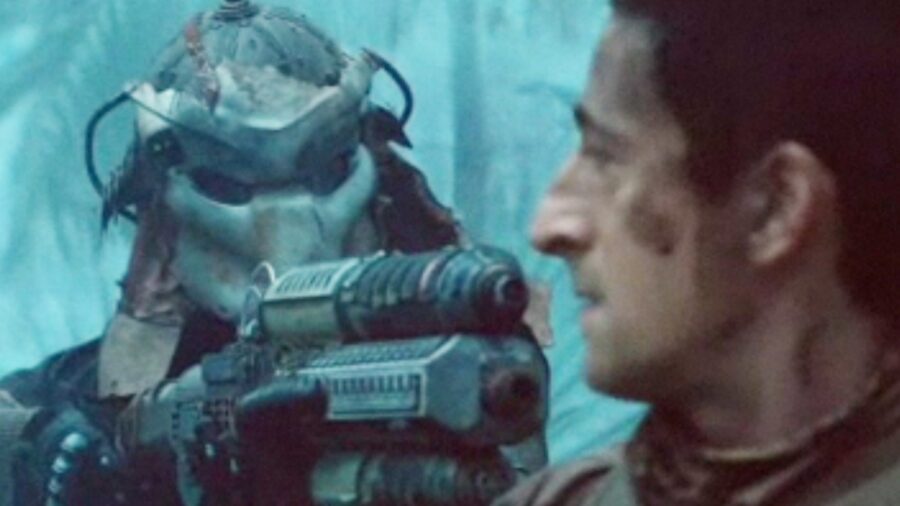
Long before Trachtenberg was taking the Predator franchise to bold new places, we had 2010’s Predators. This movie is still one of the most ambitious outings in the series, centering on a group of ultra-dangerous killers from across the globe who wake up disoriented in a Yautja game preserve somewhere among the stars. Everyone brings their A-game performance-wise; the environments feel uncannily real, and the ever-present threat of Yautja hunters is more terrifying than ever when the humans are away from their home turf.
If ever there were a Predator outing that demanded a follow-up, it’s this one. I’ve even written for this very site about the cliffhanger ending, and how fans deserve a proper resolution. Now that Trachtenberg is doing big things with the Predator lore, maybe we’ll finally get some closure in the coming years. For now, be sure to give Predators a spin, and enjoy some of the most innovative and interesting ideas in the entire franchise.

Finally, closing out our list, we’ve got the one, the only, the original 1987 Predator. It might be a little anticlimactic, but sometimes you just cannot beat a classic. This film has everything, from bodybuilder commandos with belt-fed Gatling guns to realistic jungle environments and practical effects to silly accents screaming “get to da choppah!” Arnold Schwarzenegger is the perfect cigar-chomping, war-paint-clad action hero to face off against the unseen alien hunter, and he puts on a career-best performance doing so.
Since 1987, Schwarzenegger has loomed over this franchise like a ghost. He has reprised his role in video games, and his character has returned in other mixed media, but we’ve never seen Dutch in any of the other eight films. That’s not for lack of trying, either. Schwarzenegger has been slated to appear in numerous Predator sequels, but each time it’s fallen through due to his other commitments, which included a stint as governor of California.

For my viewing pleasure, 1987’s Predator is a perfect movie. It blends action, science fiction, and horror into one harmonious masterpiece, accented by one of the most iconic movie soundtracks I’ve ever heard. I would watch this movie every day if I could. If you’re looking to get into this franchise for the first time, you can’t go wrong by diving in right at the very beginning.
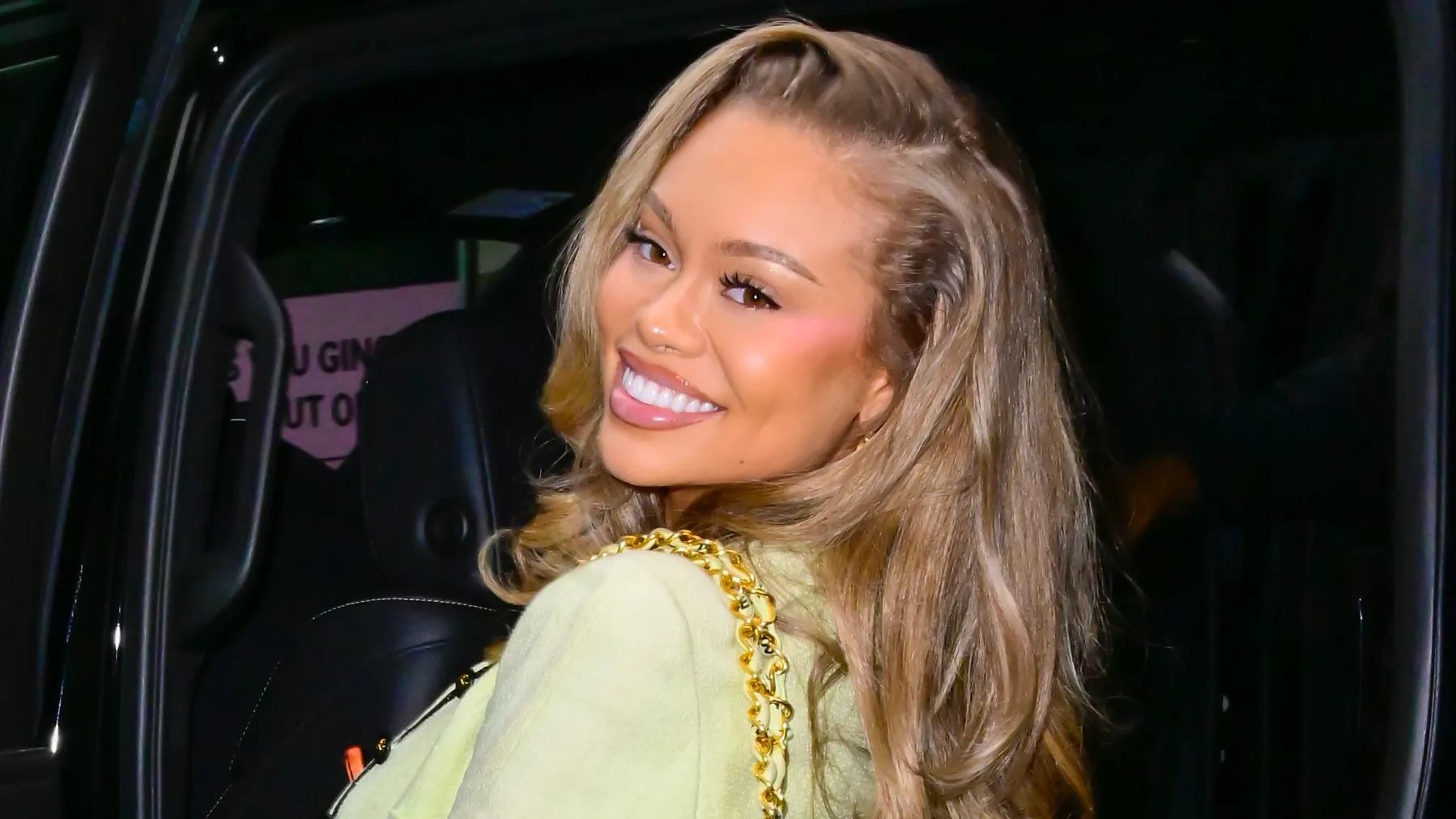
Latto is opening up about the moment she found out she was pregnant, her viral retirement tweet, and more in her first interview since giving birth.
On Friday, May 29th, Latto released her fourth studio album, ‘Big Mama,’ alongside her first interview since giving birth. The rapper sat down with Nadeska Alexis for a 40-minute-long conversation released via Apple Music’s YouTube channel. Initially, their conversation centered on the experience of breastfeeding and dealing with the subtle effects of postpartum depression.
Around the six-minute mark, the conversation shifted to the moment the rapper found out she was pregnant.
“My baby was very much planned. I just don’t know if I was committed to the plan,” she humorously explained. “We looked down, and I was just like, ‘Oh!’ and there were tears, and anxiety was through the roof. But it’s what I wanted. But I was just like, ‘Wait, is this real life? Like, am I really ready?’”
Ultimately, Latto explained that her anxiety was over the lifestyle change and the impact on her career. However, she realized she needed to “do something for Alyssa.” Furthermore, she explained that it was the “biggest blessing in disguise” because she chose herself.
Around the 15-minute mark, the conversation then shifted to Latto previously announcing that ‘Big Mama’ would be her retirement album. As The Shade Room previously reported, Latto shared the mesage in early May.
While speaking with Nadeska, Latto shared that the tweet was sparked by somber postpartum feelings.
“I kind of underestimated it. So yeah, that was just one of those days where I was at home and overwhelmed with the album… I was overwhelmed. I was experiencing motherhood… I was dropping my last album that I owe the label. So I was going through it that day,” Latto explained.
Ultimately, Latto explained that she’s still “going through it” and is unsure of what her final decision is.
Around the twenty-two-minute mark, Latto was asked whether she would open up and share more of her personal life with the world. In turn, she explained that because she created something “so beautiful,” she would like to show it off. However, she thinks she will keep her “life” and her baby girl “private to a certain extent.”
Seemingly, as for her relationship, Latto stated:
“…With female rappers, it be: our personal life, who we f*****g, all this s**t — and I feel like, I’m too talented for that to be the forefront of my brand or my name, so I started falling back,” she stated.
Around the 33-minute mark, Latto shared that she “wanted a girl so bad” and waited until she gave birth to learn the gender of her baby. She seemingly revealed that she was aware of her pregnancy on her 27th birthday, which was December 22, 2025. However, on that day, she decided that since she wasn’t anxious to find out her baby’s gender prematurely, she would wait out her entire pregnancy.
Watch the full interview below.
What Do You Think Roomies?
This article covers a developing story. Continue to check back with us as we will be adding more information as it becomes available.
The next few years promise a lot of blockbuster releases for fantasy enjoyers of all kinds. For those looking for a mythical epic, Christopher Nolan‘s The Odyssey is the event of this summer to look forward to, bringing the director back to theaters to bring to life one of the most famous literary adventures from across history, with Matt Damon in the lead role. Laika is finally releasing their latest effort after over a decade of development, too, in the form of the gorgeous stop-motion film Wildwood in October. Next year, meanwhile, will see the return of two classic series with Greta Gerwig‘s much-anticipated Narnia: The Witch’s Nephew bowing in theaters in February and The Lord of the Rings: The Hunt for Gollum arriving on December 17, 2027. For those looking to return to a certain long-dormant fantasy video game world this year, however, the wait just got a bit longer.
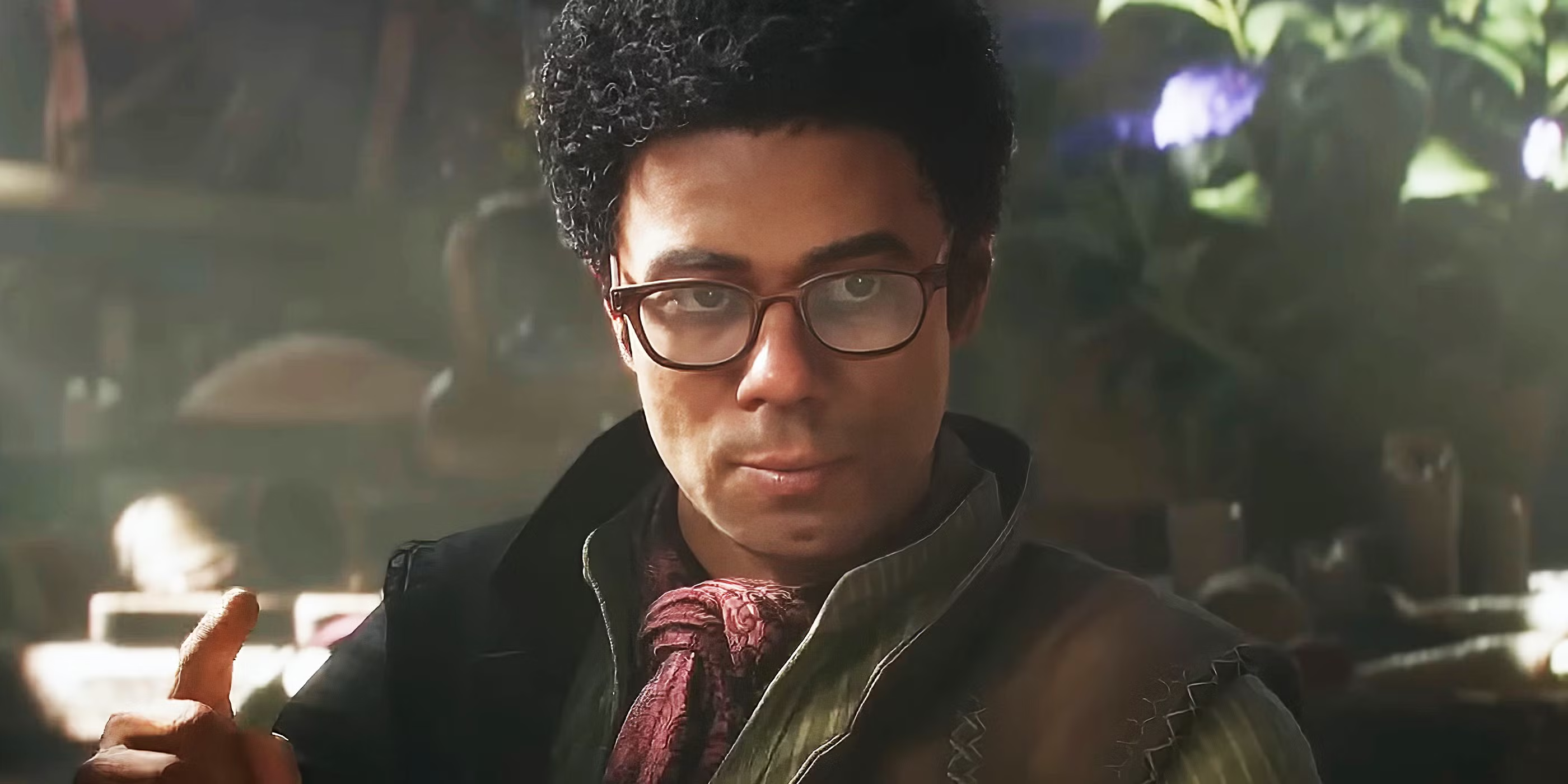
Fable, the much-anticipated reboot of the beloved Xbox fantasy action RPG series, has been delayed from its late 2026 release window. A social post from the official Xbox account confirmed on Friday that the date for the latest adventure to Albion has now been moved to February 2027, where it will have a bit of breathing room away from the company’s other big releases this year. The official statement indicated that the move was less about the state of the game itself and more about ensuring the long-awaited return of the series, 17 years after its last mainline entry, has “the dedicated moment it deserves.” Although it wasn’t explicitly said, the goal may be to specifically avoid Grand Theft Auto VI, which is sure to dominate the conversation when it launches on November 19.
The delay does mean that developers Playground Games will have a bit more time to polish up the reboot before its arrival, after just delivering the acclaimed Forza Horizon 6 this month. It’s not all grim news for those awaiting their next fantastical adventure, though. Xbox also confirmed that Fable will be featured heavily as part of the upcoming Xbox Games Showcase on June 7. Fans are expected to get their most extensive look yet at the game since it was confirmed at the 2020 showcase, though it will also be joined by other hotly anticipated titles like Halo: Campaign Evolved, Gears of War: E-Day, Call of Duty Modern Warfare 4, Control Resonant, and Star Wars: Galactic Racer.
This article covers a developing story. Continue to check back with us as we will be adding more information as it becomes available.
:max_bytes(150000):strip_icc():format(jpeg)/billy-joel-della-rose-Alexis-Roderick-052926-44c9797abbfb478395125994b80dec74.jpg)
“Amazing things are in store for this girl,” the singer said after Della Rose’s milestone moment.
By Joshua Tyler
| Published

The 1990s belonged to Steven Spielberg. Having established himself as the most bankable director in Hollywood with movies like Raiders of the Lost Ark and E.T. in the 1980s, the now-iconic filmmaker entered the decade with the cachet needed to do just about anything he wanted.
What he wanted more than anything else was a lavish production adapting Peter Pan, the most iconic children’s story ever written. So he went to work creating, building, and crafting. By 1991, his passion project was complete and set for release as the year’s biggest Christmas entry. Then it all went horribly wrong.
Spielberg, used to endless success, found himself targeted and mocked. As the sharks circled, his movie became an endless punching bag for people who thought he needed to be knocked down a peg. Worst of all, none of that negativity was deserved.
This is why Hook failed.

Steven Spielberg had been obsessed with Peter Pan since before he was the guy who made blockbusters. As a kid, he staged his own backyard version of the story. As an adult, he kept trying to turn that fascination into a movie, and kept failing to find the angle.
At first, that led him to Michael Jackson. Like Spielberg, Jackson was obsessed with Peter Pan. Michael saw himself as the boy who never grew up, and it’s why he named his sprawling compound Neverland Ranch. So, with Spielberg actively working on a way into the world of Peter Pan, Michael Jackson approached him with a pitch, and Steven Spielberg was into it.

The project reportedly moved far enough along that there were serious creative discussions about songs, tone, and scale. But it kept stalling for the same reason every other Peter Pan version stalled for him: it didn’t solve the biggest story problem inherent in any Peter Pan project. That story problem is this: Peter Pan never changes.
Main characters need an arc; they need to grow and develop as people. Yet, the entire point of Peter Pan is that he doesn’t grow; he doesn’t change. It’s why Wendy is the main character of J.M. Barrie’s book, and not Peter Pan.
But Spielberg wanted to make a movie about Peter Pan. To do that, he had to find a way to give Peter Pan room for growth. His solution was a script called Hook.
His Michael Jackson version was abandoned, with some of its best elements working their way into what Hook became. The bright theatrical sets, the heightened performances, even the occasional musical energy, they’re leftovers from that version of the movie that never got made. Instead of trying to preserve the Peter Pan myth as Jackson wanted, Steven Spielberg built a story about what happens when that myth breaks down.

Spielberg landed on Robin Williams as his Peter because he needed duality. Williams could play both the burned-out adult and the manic child underneath, all in one movie. The movie wouldn’t work without that, and there’s never been another actor who could pull that off the way Williams could.
Next, he brought on Dustin Hoffman as Captain Hook, disappearing so completely into the role that early crew members reportedly didn’t recognize him in costume.

To preserve the magic and wonder of the Peter Pan myth, everything about the movie was built the old-fashioned way: massive practical sets, constructed almost entirely on soundstages at Sony Pictures Studios. Neverland was built piece by piece, out of wood, paint, and sheer scale, with sprawling pirate ships and the Lost Boys’ hideout physically constructed.
The result is one of the most beautiful movies ever filmed, but it took forever and cost a fortune. The production became notoriously long and expensive, pushing past $70 million, a huge, huge number for the time.
Behind the scenes, it wasn’t exactly smooth sailing either. Julia Roberts, cast as Tinker Bell, earned tabloid attention for reported on-set tensions and was infamously labeled “Tinkerhell” in the press, while Spielberg himself later admitted he felt creatively adrift during filming, unsure if he was making a kids movie, a dark adult allegory, or something awkwardly in between.

Stress and tension, combined with something deeply personal and meticulously crafted, sometimes makes magic. That’s exactly what happened with Hook.
Peter Pan grew up. That’s the story. That’s Spielberg’s solution to his unsolvable problem.
The movie begins with the story of Peter Banning, a man who is everything Peter Pan was never supposed to become: a corporate lawyer, glued to his phone, too busy to notice his own kids slipping away. Then his kids actually do slip away, literally. They’re snatched out of their beds and dragged to Neverland by Captain Hook, who’s tired of waiting for his old enemy to grow up and finally does it for him.

Peter Banning follows, but the problem is he’s forgotten he was ever Peter Pan. He can’t fly, can’t fight, and barely remembers who he used to be, which makes him useless in a place built on belief.
The Lost Boys don’t buy him; their current leader, Rufio, flat-out rejects him, and Hook toys with him like a washed-up relic. What should have been a rescue mission turns into a midlife crisis with swords, as a man grapples with what really matters to him in the world.
To save his kids, Peter has to relearn imagination, rediscover joy, and essentially undo adulthood long enough to become the thing he abandoned. That’s exactly the kind of character development Spielberg spent decades looking for.
Renewed, revitalized, and with the welfare of his kids as his focus instead of empty corporate networking, the movie’s grand finale is Peter Pan versus Hook, round two, and this time it’s for everything. It’s a perfect story for every adult facing down the stress of middle age, while also a family story filled with all the magic and wonder kids need to fire up their own imaginations.

Though it’s now often regarded as a masterpiece and regularly defended as one of the 90s’ best fantasy movies, that’s not what happened to Hook when it was released. The budget, the production problems, it all loomed large over everything. Because of that, pundits treated it like a flop, a failure, when in reality it wasn’t at all.
Everyone expected a juggernaut. This was Steven Spielberg at the peak of his powers. The powers that be demanded another E.T. Instead, released in December 1991, Hook opened solidly but not spectacularly, pulling in about $13 million its first weekend.
It faced immediate competition from Beauty and the Beast, which was surging on word of mouth and becoming a cultural event, siphoning off the family audience Hook was counting on.
Smelling blood in the water, everyone pounced. Reviews at the time painted it as overstuffed, sluggish, and strangely joyless for a movie about rediscovering childhood. Many pointed out that Steven Spielberg, usually so precise, seemed lost in his own production, delivering something visually extravagant but emotionally unfocused.
Critics refused to accept Robin Williams as a serious actor, making cracks about Mork from Ork and dismissing him as not worthy of standing against Dustin Hoffman. All of it was ridiculous, especially given that Williams had already proven himself as an actor with Dead Poets Society.

Domestically, Hook went on to earn around $119 million, with a worldwide total landing in the $300 million range. On paper, that looks like a hit.
In reality, the film’s production budget, hovering around $70–80 million, huge for the time, combined with marketing costs meant the margin wasn’t nearly as impressive as the raw numbers suggest. This wasn’t E.T. money. It wasn’t even Indiana Jones money. It was a step down, and for Spielberg, that was framed as a miss.
Framing it that way was especially easy to do because of how Hook earned its money. It eventually turned a profit because the movie kept playing in theaters as word of mouth prompted more and more repeat viewing.
I was thirteen years old, and remember seeing it at least six times, going over and over again with the families of friends who’d heard it was good and decided they’d check it out. “I think we are going to go see Hook, I’ve heard it’s good,” someone would say. To which I’d respond, “I love Hook, count me in!”
Hook never had that BIG box office weekend that gets people talking. It just kept playing, kept being seen and enjoyed, as people showed up and watched.
That’s Hook in a nutshell. Lavish, beautiful, and deeply personal. The kind of movie you love, cherish, and keep to yourself until you’re ready to share it with someone you love.

Now most of the ludicrous condemnation of the movie has vanished. It’s a respected family classic, one people get excited about showing to their kids.
Hook is a high-water mark in 1990s family filmmaking excellence, the kind of lavish production that Hollywood is no longer capable of producing and wouldn’t want to try to make, even if it could.





NYT Strands Answers May 24 2026 Revealed for Puzzle No. 812 Theme Summer Essentials


Bridgerton Season 5: Cast, Release Date And Everything We Know So Far


Robinhood crypto COO Tanya Denisova exits


Microsoft’s quiet Claude Code retreat and the real cost of enterprise AI


Selena Gomez Reportedly Upset Over Benny Blanco’s Comments on Her ‘Terrible’ Diet

Micron Crosses $1 Trillion Market Cap as AI Demand Reshapes Memory Sector


BTS Sells Out Four Las Vegas Shows at Allegiant Stadium for ARIRANG World Tour
The Samsung pay deal is the moment Korean unions changed register


Westone Audio and Etymotic Acquired by Fidelity Collective in Major IEM Market Move


Waymo dominates autonomous vehicle registrations as Tesla trails behind

Millions of AI agents imperiled by critical vulnerability in open source package

Nvidia (NVDA) CEO Calls on Super Micro to Strengthen Export Controls Amid Smuggling Probe

China assigns ID codes to 28,000+ humanoid robots
SpaceX’s $2 Trillion IPO: Why Tech Giants Nvidia (NVDA), Apple (AAPL), and Microsoft (MSFT) May Face Pressure


NASA taps Blue Origin to deliver lunar rovers for Moon Base initiative

‘Breaking Bad’ Star’s Easy-to-Binge 6-Part Crime Series Spin-Off Is Finally Heading to Free Streaming
Brian Armstrong Outlines Crypto Vision for the Future Financial System


Yatra Online, Inc. 2026 Q4 – Results – Earnings Call Presentation (NASDAQ:YTRA) 2026-05-25


Spain blocks prediction markets Polymarket Kalshi


Israel says it has killed new Hamas military leader in Gaza City airstrikes


You must be logged in to post a comment Login