Related: J. Smith-Cameron Wants to Do More ‘Hacks’ Episodes: ‘A Dream Come True’
Advertisement



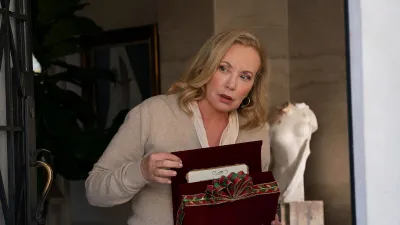
Hacks came to an end after five epic seasons — and the series finale was anything but predictable.
“I want to go out on top,” Deborah Vance (Jean Smart) told Ava Daniels (Hannah Einbinder) in the final episode, which premiered on Thursday, May 29.
The final episode allowed Hacks to end the same way it started — with just Deborah and Ava.
“I had a little bit of an idea of how it was going to end, but I just thought it ended absolutely perfectly,” Smart told Variety of the last episode. “I don’t think it hit me until I just watched that last scene. The relationship between the two of them was always at the heart of the show.”
She added, “I mean, the only thing that we missed at the end was that we weren’t with the whole cast and the whole crew.”
Keep scrolling for a full recap of the Hacks series finale:

J. Smith-Cameron is hopeful that she’ll return to Hacks as Kathy Vance should the opportunity arise. “It was a dream come true,” Smith-Cameron, 66, exclusively told Us Weekly on Tuesday, June 4, while promoting her partnership with Jif for its Jif Peanut Butter & Chocolate Flavored Spread campaign. “I had been a fan of the […]
No, but she is sick. The show’s penultimate episode had Deborah getting a cancerous mass removed. However, the finale revealed that the cancer had spread and the comedian would not be undergoing chemotherapy.
“The purpose of having her be sick was for the ultimate redemption, the idea of the comedy and writing together saving her life,” Hacks cocreator and executive producer Lucia Aniello told Variety following the finale. “We wouldn’t have had her die. There’s no reason for her to be sick, except to tell the story of how, in the end, she is saved by her want to continue to write.”
Deborah and Ava go to Paris, but mainly for Deborah to visit an assisted suicide facility. The duo do all the touristy things before Deborah realizes that her illness might just lead to a new comedy special.
Cocreator Jen Statsky told Variety that they wanted “a very hopeful ending for Deborah and Ava.” There was no other way to end the show.
Statsky explained, “The show ends with them together, because ultimately the show was always about them coming together and cracking each other open and making each other better.”
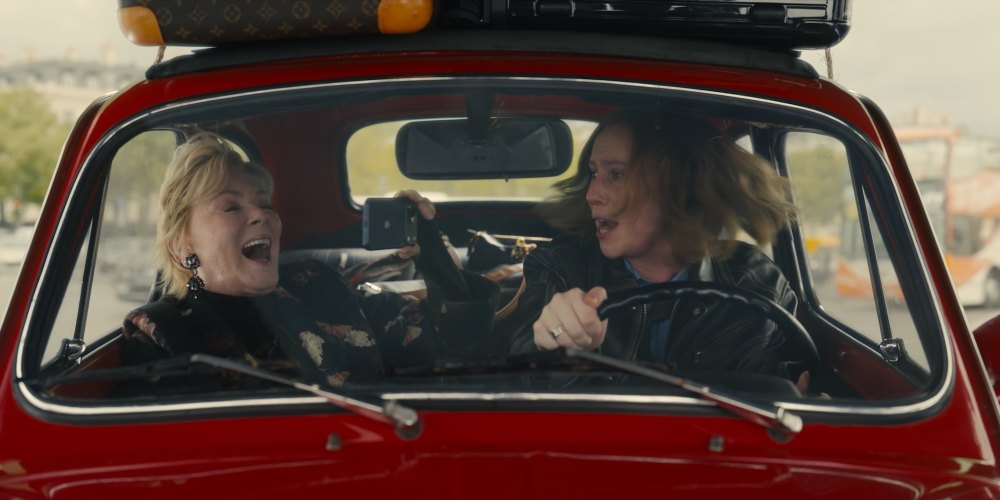
Einbinder told Variety that she thought the finale was “perfect as ever.”


“Every time we have a finale of any season, I feel like it leaves off in like such a beautiful place, and I think what we get to see in this finale is representative of the entire arc of the series,” she added. “It is representative of the depth of their love and the depth of their connection.”
Smart agreed.
“It was kind of magical being in Paris,” she said. “In a way I think that felt right, because they were out of their element, they weren’t at home, and they were just trying to figure out what was going on.”
The $6 million Patek Philippe Grandmaster Chime Shawn “Jay-Z” Carter wore to the Met Gala is still causing online raves.
Some internet users questioned the staggering price, while others argued it should not be an issue for the Roc Nation founder, given his billionaire status.

Money may not be able to buy time, but for Jay-Z, it can seemingly buy one of the most complex and expensive ways to track it.
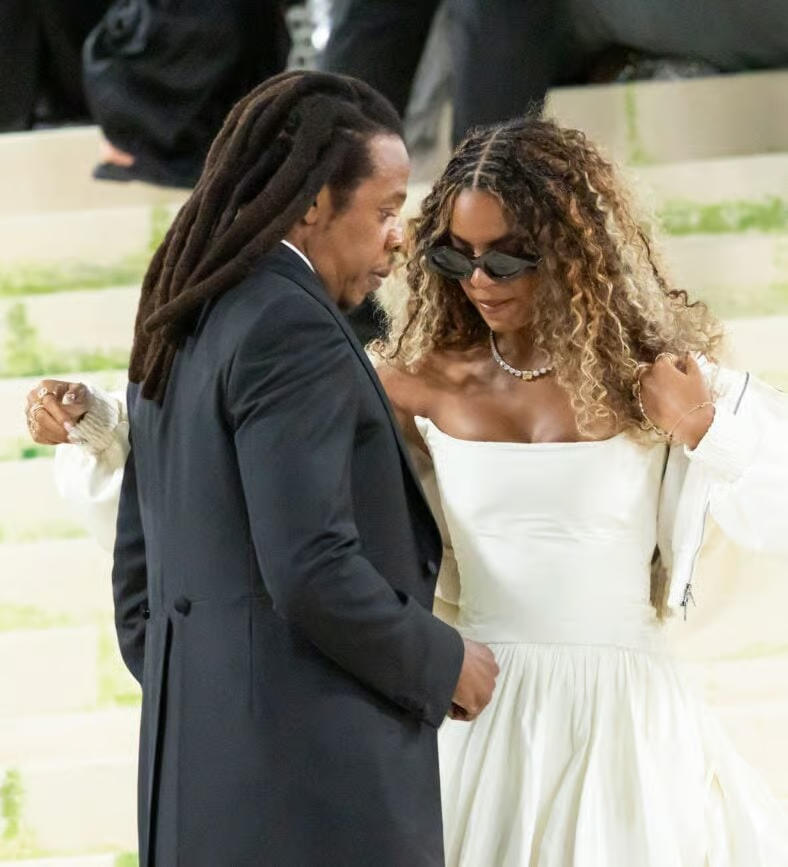
The “Young Forever” rapper, who attended the 2026 Met Gala alongside his wife Beyoncé and their daughter, Blue Ivy, went viral for the stunning Patek Philippe Grandmaster Chime watch strapped to his wrist.
The timepiece reportedly cost upwards of $6 million, showing how the music mogul is not afraid to break the bank for his style. According to GQ, the watch is Patek’s “most complicated,” even though it has a rather understated appearance.
Despite it being weeks since Jay-Z walked the red carpet at the fashion convergence wearing the hyper-expensive watch, fans seemingly still can’t fathom how dazzling and expensive it is.
“A 6m wrist watch better pause time and start it whenever I want,” one user wrote on X, with another one adding, “That better be working in another dimension.”
In the same thread, another fan argued there could only be sinister motives behind such an expensive accessory.
“Money laundering. System built for the rich to stay rich and [in] power,” the fan wrote.
The sentiment was not too dissimilar on Reddit.
“A watch that costs that much should come with someone to wear it and follow you around so he/she can tell you what time it is when you want to know,” one user argued.
Someone else penned, “It isn’t worth $6.5M. It cost $6.5M. There’s a difference.”
Jay-Z first debuted the stunning masterpiece at Sean “Diddy” Combs’ 50th birthday bash in 2019 and wore it again at the 65th Grammys in 2023.
The watch was crafted in 2014 to mark Patek Philippe’s 175th anniversary, with reports suggesting it took eight years to make. Its technical detail also leaves one marveling in awe, as it is built from 1,366 individual parts, 214 components, and 20 complications.
The “Drunk In Love” collaborator boasts an enviable watch collection, including a $5 million Hublot Big Bang, a one-of-a-kind Vintage Rolex considered priceless, a $3 million Richard Mille RM 56-01 Tourbillon Sapphire, and a $2.5 million Richard Mille 56-01 Custom “Blueprint.”

Jay-Z’s style has definitely evolved over the years, but he remains a fashion icon in Hollywood, often making loud statements with his appearances and accessories.
However, one person who used to doubt how cool he was is Blue Ivy, whose debut at the Met Gala at just age 14 caused a stir online.
In a previous interview, the rapper said she now asks him for fashion advice after previously questioning his coolness, per CBS News.
“She used to be frontin’ on me a little bit,” he said when asked if she thinks he’s cool. “But 1782062832 I catch her. I catch her in the corner, you know? Now she asks me, you know, if this is cool, if her sneakers [are cool].”
King then clarified, “She wants your advice?” to which he responded, “Yeah, yeah, yeah.”

The “Holy Grail” rapper also gave a peek into one occasion when she wasn’t so impressed with him.
“There was a time when she was like, ‘Daaaaad,’” he teased, doing an impression of Blue covering her face in embarrassment.
“I’m cool. I don’t know what you sayin’,” Jay-Z recalled explaining to her. “I’m cool! You got cool parents! At your house, your parents [are] cool.”
That all seems to be in the past now, however, as Blue has been seen smiling proudly in public when she is with her famous parents.
She has not only followed in their fashion footsteps with her appearance at the Met Gala but has also taken a liking to performing, joining Beyoncé to dance and perform on her 2023 “Renaissance World Tour.”
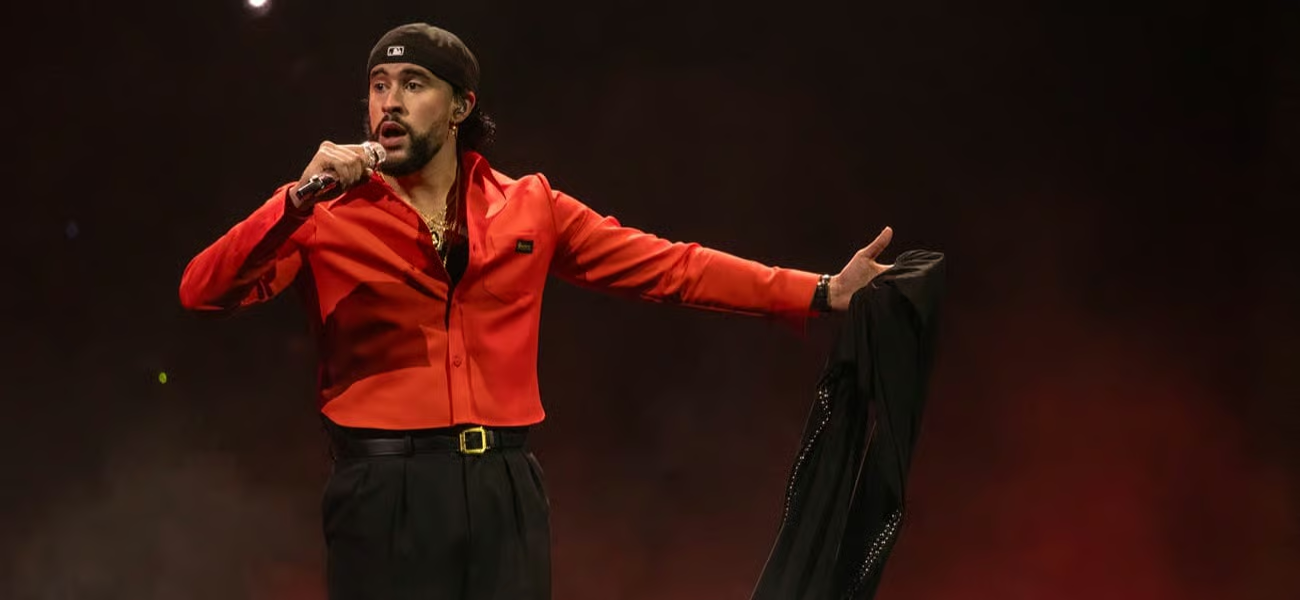
Bad Bunny has reached a major new milestone in his music career.
The singer, whose real name is Benito Antonio Martínez Ocasio, has become the first Latin artist to gross $1 billion in career touring revenue.
The achievement is especially notable because the singer reached the mark without touring in the United States, further highlighting the global appeal he has built over the years.
The total was accumulated across multiple tours, with the latest contribution coming from his ongoing Debí Tirar Más Fotos World Tour, which has already grossed $360 million and continues to add to its tally.
If there was ever any doubt about Bad Bunny’s status as one of the defining Latin music stars of the 21st century, his latest achievement has only strengthened that argument.
Amid his ongoing Debí Tirar Más Fotos World Tour, the Puerto Rican superstar has surpassed $1 billion in career touring revenue, becoming the first Latin artist to reach the milestone, per Billboard.
The accomplishment caps off a remarkable run that stretches from his early tours between 2017 and 2019 to his current global trek, which continues to draw massive crowds. Even more impressive is that he achieved the feat while performing primarily in Spanish.
Only a small group of artists in music history has ever crossed the billion-dollar threshold in touring earnings, placing Bad Bunny in exceptionally rare company that includes Taylor Swift, Coldplay, The Rolling Stones, Ed Sheeran, and Beyoncé.
Reaching the milestone at this point would not have been possible without Bad Bunny’s latest tour.
The Debí Tirar Más Fotos World Tour began in December last year and is scheduled to conclude in July.
During that span, it has grossed $360 million and sold 2.4 million tickets across its first 41 shows, according to Billboard Boxscore.
Interestingly, none of those concerts were held in the United States, making it the highest-grossing and best-selling tour in Boxscore history without a single U.S. date.
Meanwhile, the tour has also become the highest-grossing and best-selling European run ever by a Latin artist, despite being only 14 shows into its scheduled 29-date European leg.
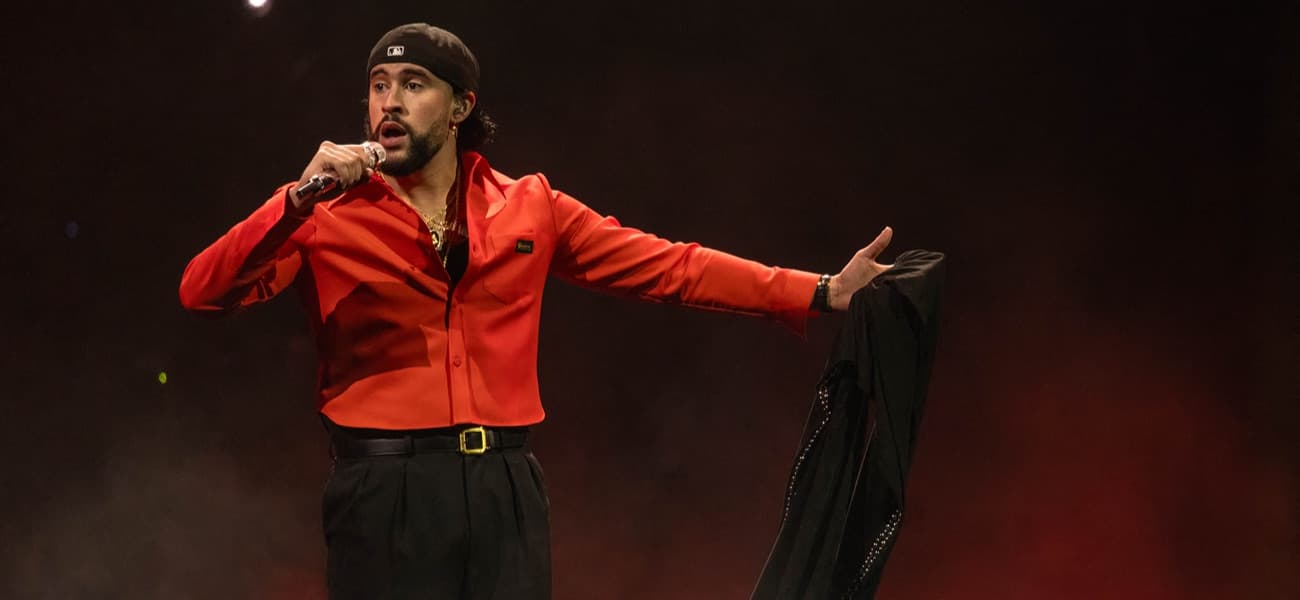
At present, Bad Bunny’s career touring total stands at $1.08 billion from 6.4 million tickets sold across 260 reported shows.
With another 15 dates still to be reported before the tour concludes on July 22, his Debí Tirar Más Fotos World Tour is on track to finish with gross earnings of around $450 million, if not more.
His next stops will take him across several parts of Europe, beginning at the Merkur Spiel-Arena in Düsseldorf, Germany.
The artist will also perform in Arnhem, Netherlands; London, United Kingdom; Marseille, France; Stockholm, Sweden; Warsaw, Poland; and Milan, Italy. The tour will then conclude in Brussels, Belgium, with a final show at King Baudouin Stadium.

Earlier in the year, the album that inspired Bad Bunny’s current tour won Best Música Urbana Album at the 2026 Grammy Awards.
While the victory did not come as a surprise, given the album’s strong performance since its release, the Puerto Rican superstar’s decision to use his acceptance speech to call out U.S. Immigration and Customs Enforcement caught many off guard and drew a standing ovation from the star-studded crowd.
“Before I say thanks to God, I’m going to say ICE out. We’re not savage, we’re not animals, we’re not aliens. We are humans, and we were Americans,” Bad Bunny said, per USA TODAY. “Also, I will say to people, I know it’s tough to know not to hate these days. So please, we need to be different if we fight, we have to do it with love.”

Bad Bunny’s reference to ICE comes amid the Trump administration’s intensified crackdown on immigration enforcement across the United States.
The agency’s actions are also the main reason why the “DtMF” crooner chose not to include the United States on his ongoing tour.
“There were many reasons why I didn’t show up in the U.S., and none of them were out of hate—I’ve performed there many times,” Bad Bunny told i-D Magazine in September. “But there was the issue of—like, f–king ICE could be outside [my concert]. And it’s something that we were talking about and very concerned about.”

Godzilla movies are fun, except for when they’re not. The fun times are when he’s fighting other monsters and destroying buildings and causing explosions. But the bad times are when we’re supposed to focus on the human characters who are always within viewing distance of said destruction…or, that one time when Godzilla was a T. rex (and yes, that is the correct abbreviation) in New York. The biggest drag of any Godzilla movie—or, any Kaiju movie in general—is that the star of the movie is the giant monster on the poster and you can’t make a feature-length movie of monsters fighting or causing mayhem the entire time. That would get excessive and boring after a while, so there has to be a human element that the audience can identify with to give the film a structured narrative to follow.
Unfortunately, no matter how hard the writers or the actors try, that’s always the weakest part of the movie. The first Godzilla film in years to make its human characters genuinely interesting was Godzilla: Minus One, blending a family dynamic with post-war drama in a monster movie, and surprisingly…it worked great. But before that, Toho released 2016’s Shin Godzilla, which made the innovative and seemingly obvious choice of just dropping the human drama aspect altogether and make it about the monster.
Directed by Hideaki Anno and Shinji Higuchi, the film follows a mysterious creature that emerges out of Tokyo Bay and begins to evolve and grow, threatening to destroy Tokyo. It’s then up to the Japanese government to stop it before it can wreak total havoc…and that’s it. That’s literally the entire plot synopsis of a two-hour-long movie described in two sentences.
Brevity is the key term here, because the movie starts with a weird occurrence and a giant monster coming out of said occurrence, and then painstakingly goes into the minutiae of how the government will deal with it. This isn’t the government depicted in a ’90s Michael Bay movie where characters are yelling, everyone’s sweaty with their ties undone, people are haphazardly running from rooms with jumbles of paper, and Stanley Anderson is the President. No, this is people sitting in taupe-colored rooms (which is allegedly very soothing), and dryly going over what information they have on the anomaly and what options they have to resolve the problem.
Does that sound fantastically boring? Because by all accounts, it absolutely should be, but the dry, methodical process demonstrates what would have to be done with a fantasy monster appearing, almost like a natural disaster, actually adds to the tension and hysteria. The characters even acknowledge the amount of bureaucracy that goes into making simple decisions: “So much red tape. Every action requires a meeting.” That’s like the thesis of the entire movie!
Attack helicopters can’t just be brought into a highly populated area to attack the monster, and a military presence can’t just be called to assist. The proper legal channels have to be gone through, and the necessary officials have to sign off on it. This should be so crushingly dull and tedious, but it surprisingly adds to the anxiety of the predicament by cross-cutting with the destruction that Godzilla is causing. Knowing that the longer the process takes, the higher the risk of more people dying in the delay really shows how dire the situation is. The procedural nature of the government scenes also makes Godzilla even scarier, since they don’t try to make him a realistic monster. They make him over-the-top scary by making him as overpowered as possible, and contrasting that with the realistic world that the people inhabit makes the threat feel appropriately overwhelming.

That’s where the lack of a human element makes the film feel so much more streamlined. The story takes an omniscient perspective and consistently cuts to wherever the information is that’s vital to the audience. Godzilla isn’t a hidden monster, and we don’t see everything from the point of view of one person. The movie follows wherever the action is, where world-building is necessary, and where vital information is learned. The story has a protagonist named Haguchi (Hiroki Hasegawa), but he’s very deliberately left underwritten, and is more a focal point, so the audience can keep up with the flood of details and information that’s always flowing in.
His motivation isn’t saving a pregnant wife, or to protect his family—if he even has one, since he never mentions any loved ones, or at least none that come to mind—his entire motivation is the same as everyone else’s: Save Tokyo, and potentially, the world. We don’t need him to have kids that he’s estranged from, that he can hug when they survive, or a love interest to kiss at the very end. The desire not to die and also to prevent the deaths of potentially millions of others (or more) is a clear motivation that anybody can get behind.
From a Hollywood perspective, Shin Godzilla defies what Western audiences would expect in a kaiju movie. There are no themes of family or character arcs—there’s barely a main character—all it is, really, is a large group of people realistically going about their business and doing their jobs in a time of unrest. It just so happens that that time of unrest is because of a giant monster that popped out of the ocean, but it’s the most procedural version of that premise that could be done, and that’s what makes it unique and so compelling.

July 29, 2016
120 minutes
Hideaki Anno, Shinji Higuchi
Hideaki Anno
Kazutoshi Wadakura, Taichi Ueda, Masaya Shibusawa, Yoshihiro Sato

Hiroki Hasegawa
Rando Yaguchi : Deputy Chief Cabinet Secretary
Yutaka Takenouchi
Hideki Akasaka : Special Advisor to the Prime Minister
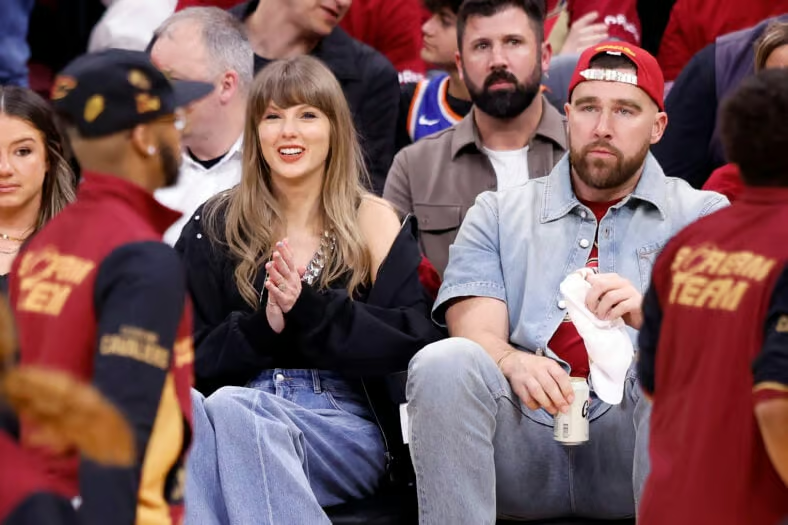
After getting engaged in August 2025, Taylor Swift and Travis Kelce appear to be inching closer to the altar, and fans are convinced the celebrations may have already begun. New speculation erupted this weekend after fireworks lit up the sky near Taylor Swift’s Rhode Island estate, while Travis Kelce was spotted enjoying a night out with some of his closest friends on the opposite coast.
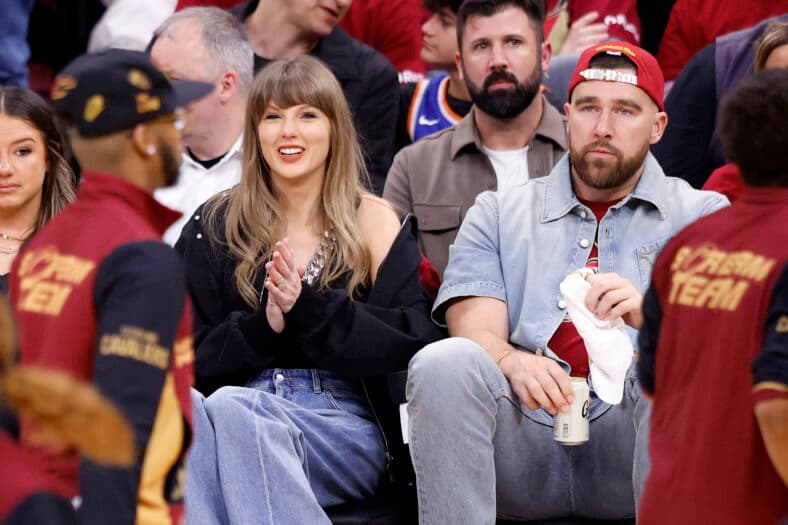
Taylor Swift and Travis Kelce are fueling even more wedding speculation after separate gatherings on opposite coasts had fans convinced the couple may be celebrating their final days before saying “I do.”
The latest buzz began over the weekend when fireworks were spotted lighting up the sky near Swift’s sprawling Rhode Island estate, a property long associated with the singer’s star-studded summer gatherings.
According to TMZ, witnesses reported seeing a fireworks display near the Watch Hill mansion late Saturday night, prompting new questions about what may have been taking place behind the gates of the waterfront compound.
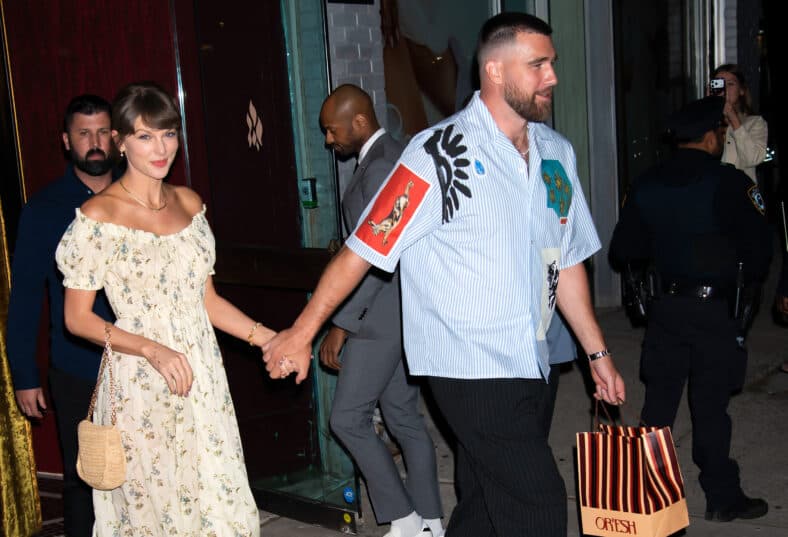
The fireworks display came after several days of activity at Swift’s Rhode Island home. Photos and video obtained by TMZ showed numerous guests arriving at the property throughout the week, with many fans speculating the singer may have been hosting a bachelorette celebration ahead of her upcoming wedding to Kelce.
Adding to the intrigue, a small group of women was reportedly spotted on one of the estate’s rooftop balconies on Wednesday afternoon. Most were dressed in black, while one woman appeared in white, further fueling speculation about a possible pre-wedding gathering. Later that day, Swift’s longtime friend Abigail Anderson Berard was also seen on the property carrying her toddler.
While neither Swift nor her representatives have commented publicly on the gathering, fans quickly began connecting the dots online.
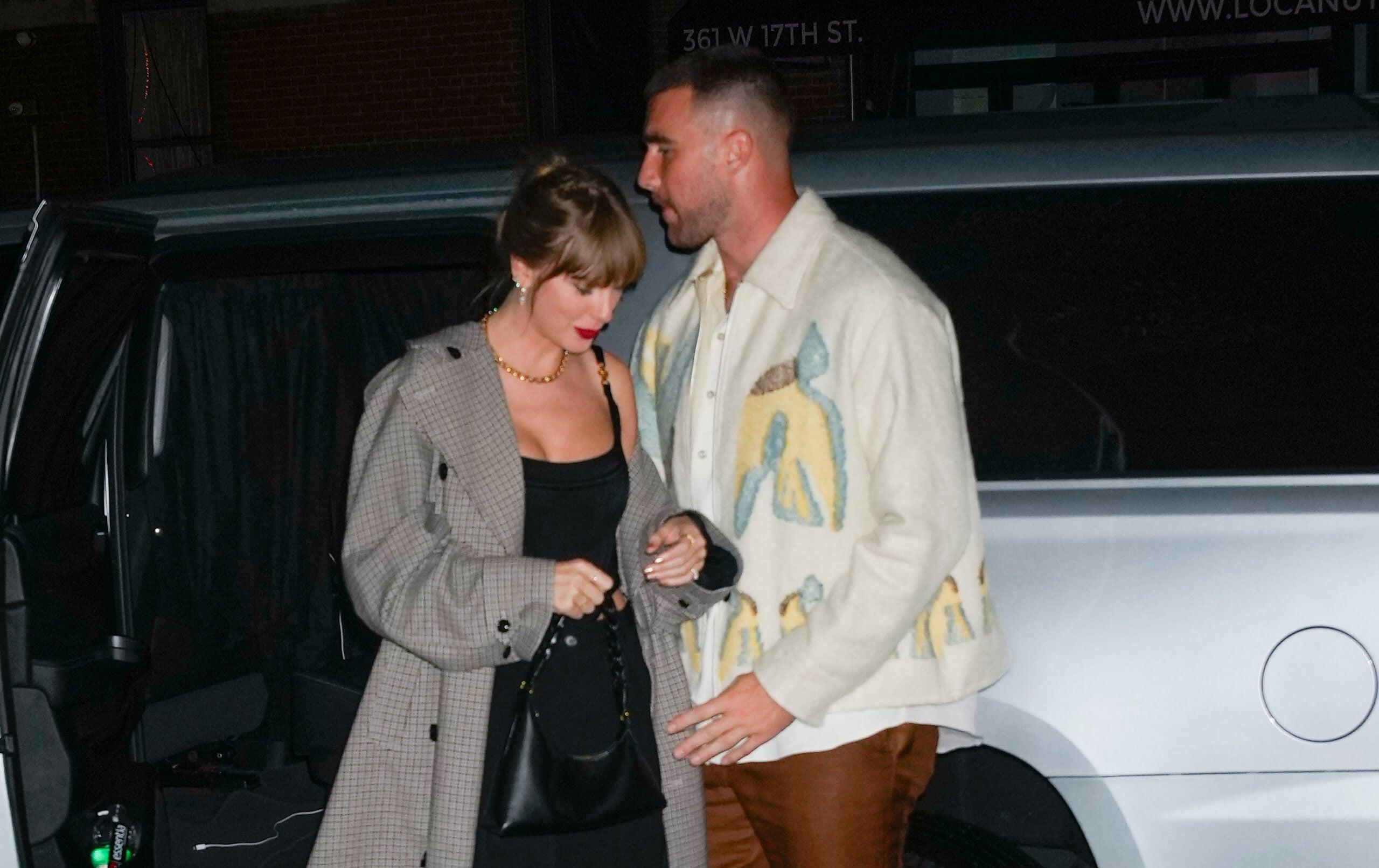
Meanwhile, across the country, Kelce was spending time with some of the most important men in his life. According to Page Six, the Kansas City Chiefs star gathered with close friends and family at the exclusive Bird Streets Club in West Hollywood on Wednesday night.
Kelce reportedly arrived first before being joined by his brother, Jason Kelce, and former Chiefs teammate Ross Travis. The intimate group spent several hours together before wrapping up the evening shortly after midnight, with Travis and Jason among the last to leave.
The outing immediately sparked speculation that Kelce may have been enjoying a low-key bachelor celebration of his own.

Speculation about Swift and Kelce’s wedding has been running high ever since the couple announced their engagement last year.
Swift revealed the news on Instagram on August 26, 2025, sharing a series of photos from the intimate proposal at Kelce’s Kansas City-area home. “Your English teacher and your gym teacher are getting married,” she captioned the post, sending fans into a frenzy.
The proposal reportedly took place in the backyard of the NFL star’s mansion and quickly became one of the most talked-about celebrity engagements of the year.
Adding to the excitement, Page Six Style later reported that Kelce played a hands-on role in designing Swift’s engagement ring. The stunning brilliant-cut diamond was rumored to carry a seven-figure price tag.

While neither Swift nor Kelce has publicly confirmed any wedding details, rumors surrounding the couple’s big day have been circulating for months.
Early reports claimed the pair were planning to tie the knot on June 13 at the luxurious Ocean House in Watch Hill, Rhode Island, not far from Swift’s famed seaside estate. The speculation even included claims that the singer was determined to secure that particular date and allegedly compensated another bride who had already reserved the venue.
However, subsequent reports suggested that the couple ultimately opted for a different location to accommodate a larger guest list.
Despite the ongoing speculation, Swift and Kelce have remained tight-lipped about their plans, keeping exact details about their wedding date, venue, and guest list firmly out of the public eye.
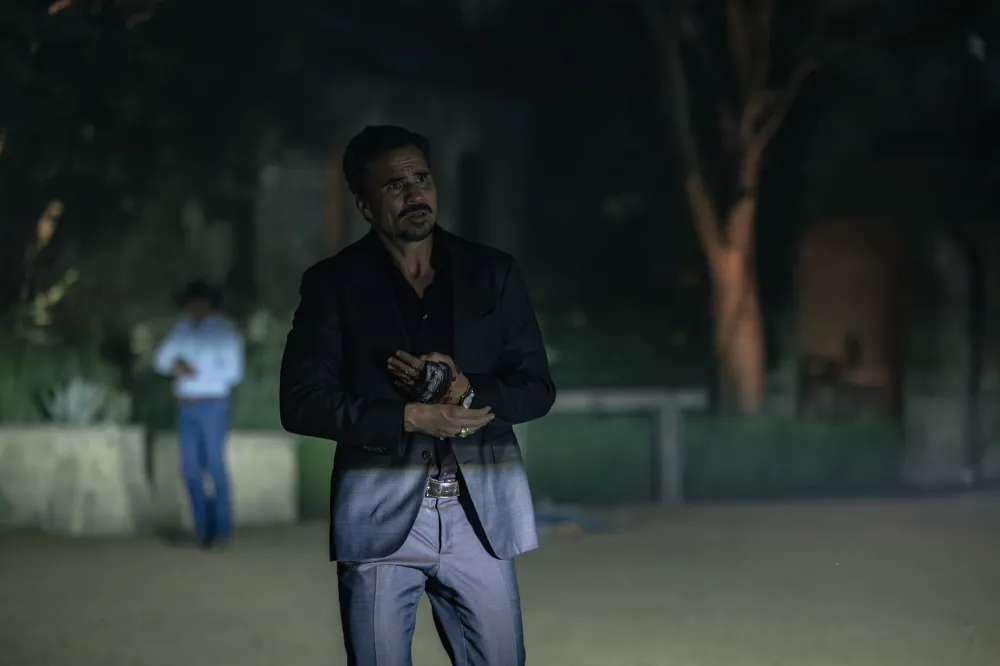
Yellowstone‘s spinoff Dutton Ranch has everyone on their toes — with some cast members being certain that they were getting killed off.
“Look, I think that — except for Beth and Rip — [should be worried]. At least right now, nobody knows,” Juan Pablo Raba, who plays Joaquin, exclusively told Us Weekly.
Raba, 49, recalled the moment he was worried about his future on the show.
“When I got episode 6 and I opened the page and I see Chet walking to me with a gun, my first thought was, ‘Well, it was nice while it lasted,’” he quipped. “I was like ‘God, it was so short. But why didn’t they call me? That’s rude.’”
He continued: “You hope for the best and you hope it’s going to be a long run. But you really don’t know. I really hope we can really work this for many seasons because I think there’s so much story to tell.”
Raba isn’t the only one who was concerned about whether they would stick around on Dutton Ranch. During an exclusive interview with Us, Marc Menchaca weighed in on whether the deadly twists on the show had him worried about his character Zachariah’s fate, saying, “It’s always a possibility — and I have a pretty good track record of saying bye bye on a show.”
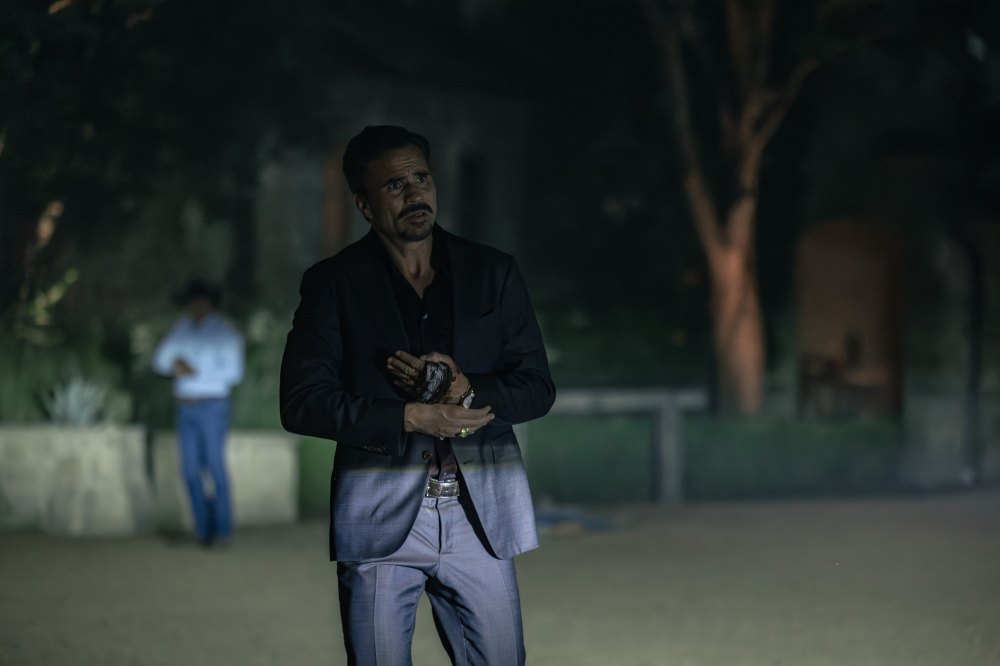
Yellowstone initially introduced viewers to the Dutton family in 2018. The Paramount Network show came to an end in 2024, expanding its universe with Luke Grimes‘ CBS show Marshals and Dutton Ranch, which premiered in May.
Dutton Ranch has introduced some new characters played by Annette Bening and Ed Harris. Other newcomers include Jai Courtney, Natalie Alyn Lind, J. R. Villarreal — and Raba’s Joaquin.
“I love this about Taylor Sheridan and the universes that he creates where it’s really hard to say that somebody’s good or bad. We have our heroes, of course but if you go back — in retrospective —some of the things they’ve done I would not consider to be very good,” he noted. “But they’re still our heroes and you understand them. I hope I can do same with Joaquin — no matter what direction he takes.”
Raba had high hopes for his journey, adding, “I hope that I get the chance to really expose what can happen to someone who has been stripped of everything — even hope.”
The actor pointed to the newest episode where Joaquin learned he was no longer next in line to run 10 Petal Ranch.
“Imagine if you work all your life toward one goal and you don’t have a family and you don’t care about romantic relationships. You have this one single goal in your head and they tell you no,” Raba told Us. “You ask yourself, ‘But why? I’ve done everything right.’ It has to be the most heartbreaking moment in his life.”
Raba continued: “What’s going to happen now is definitely going to spiral something in Joaquin that we hadn’t seen before — and he’s just in a place where for the first time he can’t fix it. He doesn’t know what to do so he’s just going to use anything — all the resources possible — to keep that to keep what he believes it’s rightfully his.”
Dutton Ranch airs Fridays on Paramount+.

By Chris Snellgrove
| Published

Thanks to the new trailer for Brand New Day, fans are more hyped up for Spider-Man than they have been for a good, long time. It looks like the movie is going to make some major changes to the character, giving him (either temporarily or permanently) organic web shooters. By the end of the movie, he may very well gain new powers and lose others. One power that isn’t going away, though, is his spider-sense, which the latest trailer implies is strong enough (possibly due to the mutating DNA) to keep a villainous telepath out of his mind.
Historically, spider-sense has worked as a kind of ESP, allowing Spider-Man to, say, jump out of the way right before a gun goes off. So, how the heck would an enhanced danger sense be enough to ward off the mind bullets of one of the world’s greatest telepaths? It makes no sense, but that’s only fitting because spider-sense has never made any sense, going all the way back to the beginning. You see, this Marvel icon’s most famous ability was only created because Stan Lee couldn’t figure out how to fix his own sloppy writing!
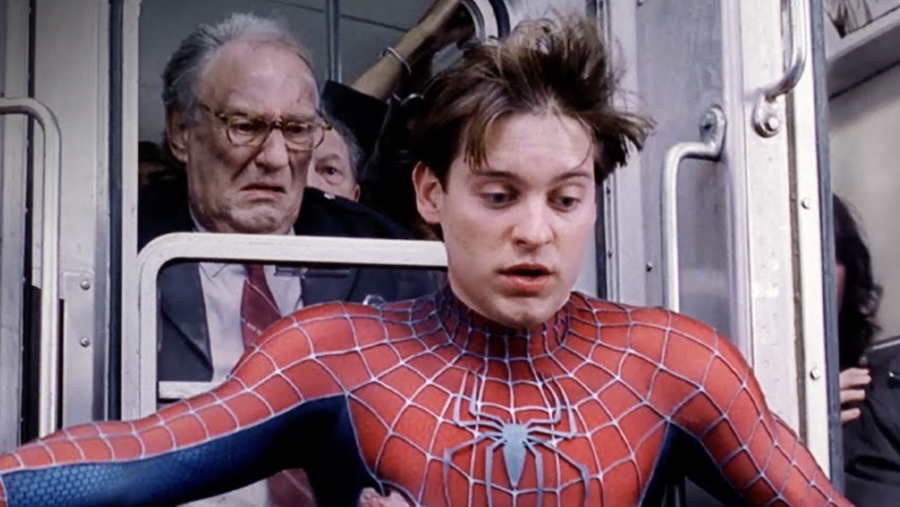
This story goes back to almost the very beginning of Spider-Man’s Marvel comics history. I say “almost” because the character was first introduced in Amazing Fantasy #15; that comic was already doomed to cancellation, but the introduction of Spider-Man made it one of Marvel’s best-selling issues. Accordingly, the company gave the hero his own comic book, The Amazing Spider-Man, which quickly became its best-selling series. The first issue fleshed out many of Spider-Man’s fantastic abilities. This included spider-sense, but it was only added due to Stan Lee writing himself into a corner.
Back then, Lee did the writing and editing, and Steve Ditko provided art while still helping with the plot. In that first issue, Spider-Man must fight the Chameleon, someone whose powers make it very easy for him to hide himself. Eventually, Spider-Man tracks down the villain, who had been hiding in a darkened room. When reviewing the comic, though, they noticed a problem. According to Ditko, Lee turned to him and asked, “How, in the darkened room, does (Spider-Man) know where the Chameleon is?” Thinking fast, Ditko drew some squiggles over the hero’s head and said that he had a special “spider-sense” that, as with bats, allowed him to detect hidden things.

Stan Lee liked the idea, so they went back through the issue and drew more squiggles and occasional thought bubbles about spider-sense. Since then, this has been one of Spider-Man’s major powers, and it has mostly morphed into a kind of enhanced danger sense. Incidentally, it never stopped morphing, and various writers have tweaked this ability to represent things like Spider-Man’s connection to a multiverval web of life. In other stories, he loses and then regains his spider-sense. Heck, a little over two weeks ago, Marvel changed this ability yet again, giving Spider-Man the anime-esque ability to fight on pure instinct using only his spider-sense.
Long story not very short? Spider-sense was only added to Spider-Man’s ability because of Marvel legend Stan Lee’s sloppy writing. Afterward, decades of writers have continued to tweak this ability, transforming it from a general danger sense to, honestly, whatever the story needs it to be. Spider-Man: Brand New Day continues this trend, with spider-sense being enough to ward off a foe’s insanely powerful psychic attacks. If that foe really is Jean Grey, it’s enough to make you wonder if Spider-Man would be immune to Professor Xavier, someone whose powers are that much stronger.
If not, he’ll have to do what the rest of us do: clutch our noggins and scream, “Get out my head, Charles!” as loudly as possible.
The 1990s represented a new peak for war filmmaking. The era saw a myriad of filmmakers masterfully balancing a sweeping sense of scale with some of the grittiest, most realistic portrayals of military combat that the genre had ever seen. Add to that shifting moral complexities, added philosophical depth, and even the occasional dramedy that satirized the concept of war in ways that not many movies ever had before, and you get one of the best-ever decades for war cinema.
It takes something truly special in order for a film to be truly perfect from start to finish, however; and as such, only a precious handful of ’90s war movie masterpieces can genuinely be praised as flawless. Of course “flawlessness” as it relates to movie analysis is a highly subjective thing, but there’s no denying that these eight ’90s gems are about as close as cinema can ever possibly come to perfection.

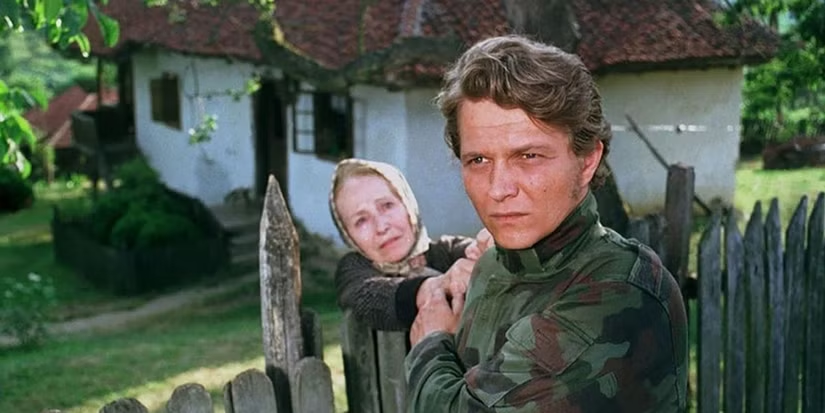
The ’90s didn’t just see an increase in the quality of war films from Hollywood, but also in war films from the rest of the world. However, as often happens with smaller international productions, many of those masterpieces have faded into oblivion as the years have passed. That’s a particularly egregious crime when it comes to the Yugoslav masterpiece Pretty Village, Pretty Flame. Directed by Serbian filmmaker Srđan Dragojević, it’s a drama set during the Bosnian War, telling the story of two childhood friends who were forced to become enemies by the tragic circumstances of the conflict.
It was understandably a film festival sensation back in 1996.
It’s one of the most near-perfect 20th-century war movies nobody remembers, and it was understandably a film festival sensation back in 1996. It’s one of the most powerful anti-war movies of the ’90s, incredibly bold in its dark humor and political satire, as well as absolutely harrowing in its emotional core. Its complex exploration of its deeply nuanced characters is paired with an almost hallucinatory sense of surrealism, a perfect way of highlighting the madness and irrationality of war and violence.

John Woo is best remembered as the father of gun fu and one of the greatest action filmmakers in history, which makes Bullet in the Head stand out all the more in his already stacked filmography. Another one of the most tragically forgotten war masterpieces of the ’90s, this one is a Hong Kong action epic and melodrama about three close friends who escape from Hong Kong to wartime Saigon in order to start living a criminal life. Soon, though, they all go through a harrowing experience which shatters their friendship forever.
It’s one of the best Vietnam War epics ever made, anchored by an exceptional cast and a transcendental understanding of the action genre, blending Woo’s signature explosive gunplay with the devastating psychological horror inherent to Vietnam War movies. Far more than just a tale of brotherhood and camaraderie, it’s a harrowing descent into greed, nihilism, and moral corruption the likes of which the genre hasn’t seen since.

Theo Angelopoulos was not only the greatest Greek filmmaker in history, but also one of the most important and hugely influential European filmmakers of his generation. He made several masterpieces over the course of his career, one of the most notorious being Ulysses’ Gaze, one of the most essential Harvey Keitel movies. It’s a psychological drama following an exiled filmmaker, who returns to his home country where former mysteries and afflictions come back to haunt him.
It’s one of the film’s with the most astonishing difference between critics’ and audiences’ ratings on Rotten Tomatoes, with a 27% from critics and an 89% from audiences. Couple that with the film’s 7.6/10 rating on IMDb and 4.2/5 on Letterboxd, and you get an undeniable case of critics being wrong on a movie. Poetic, hypnotic, and full of the same kind of patient long takes that Angelopoulos is known for, it’s a deeply moving and thought-provoking reflection on 20th-century Balkan history, the nature of political borders, and the power of cinema as cultural memory.

As further proof that the ’90s produced some of the greatest international war movies in history, ones which have mostly become tragically forgotten as the years have passed, there’s also the Chinese masterpiece To Live. Directed by Zhang Yimou, it’s one of those must-watch forgotten romantic movies, tracing the Xu family’s survival through the Chinese Civil War, Great Leap Forward, and Cultural Revolution between the ’40s and ’70s.
It’s everything that a historical epic should aim to be: Sweeping in scale, yet wonderfully intimate and profoundly human in scope, celebrating the heroism inherent in survival. Though the film spans four decades with just a little over two hours of runtime, it never feels overly dense or ambitious. Instead, it comes remarkably close to absolute perfection, with some flawless performances and a subtle humanist focus instead of overt political critique.

There are plenty of great movies from countries that no longer exist, and Yugoslavia is a former nation with a particularly strong filmography. Directed by Emir Kusturica, perhaps the greatest Yugoslav filmmaker in history, Underground is yet another of the ’90s’ most awfully underappreciated masterpieces, following two underground black marketers selling weapons to the Communist resistance in wartime Belgrade.
Part absurdist dark comedy, part three-hour-long war epic, Underground is the crowning achievement of Kusturica’s illustrious career and the peak of what ’90s European war cinema had to offer. Blending a surreal sense of humor with a devastating political tragedy, the film captures the soul of former Yugoslavia in a way that earned it the Cannes Film Festival’s 1995 Palme d’Or. It’s also a masterful work of magical realism, however, a universally timeless gem full of thought-provoking sociopolitical satire.

Terrence Malick is one of Hollywood’s most divisive filmmakers, with an arthouse-coded style that favors abstract spiritual experiences over conventionally plot-driven storytelling. Those who don’t enjoy that kind of film aren’t likely to love The Thin Red Line, but arthouse cinema fans should consider it essential viewing. It’s one of the most perfect war movies of the last 40 years, an epic about the contrast between the horrors of human conflict and the transcendental beauty of nature.
It’s one of the most effective and powerful anti-war statements that cinema has ever delivered, an essential ’90s classic of the genre of unparalleled emotional impact. Not everyone will consider it perfect, but patient cinephiles will find its profound philosophical meditation and absolutely drop-dead gorgeous cinematography irresistibly moving. Highly existential and boosted by one of Hans Zimmer‘s richest, most haunting scores, it’s a war film fully worthy of its fame.

Steven Spielberg is the father and king of blockbusters, and as such, he has repeatedly proven his versatility by making box office hits belonging to every genre under the Sun. Case in point: the war action epic Saving Private Ryan, perhaps the Spielberg film that was most infamously robbed of the Best Picture Oscar. It’s perhaps best-known for having one of the greatest opening sequences in film history, Spielberg’s recreation of the D-Day landings in Normandy, but everything that follows is every bit as great.
It’s one of the most tremendous cinematic masterpieces of the 1990s, regardless of genre. Its action sequences, for one, proved absolutely revolutionary for the genre, adding unprecedented technical realism and brutality to war movie action. Then there’s the exceptional cinematography, the star-studded ensemble cast, the stunning sound design, and the riveting-yet-harrowing third act. What else could the combination of such elements be if not one of the biggest war movie masterpieces ever?

Spielberg hasn’t really been the same throughout most of the 21st century, but he was at the very top of his game during the ’90s. Surprisingly, however, it just so happens that the best film he’s ever made is not a spectacular popcorn blockbuster at all, but rather one of the most serious and emotionally devastating war epics of the era: Schindler’s List, which is also one of the best biopics of all time.
It’s a sprawling, profoundly compelling depiction of the work of Oskar Schindler during World War II, celebrating his heroic acts without ever shying away from his many moral layers and darker bits of nuance. Supported by an exceptional cast led by Liam Neeson and Ralph Fiennes, one of John Williams‘ most emotionally stirring scores, and some of the most striking black-and-white cinematography of the 1990s, Schindler’s List is undoubtedly the most perfect war movie of the decade, and one of the most perfect of all time.
One month after celebrating moms around the world, it’s time for dads to get their due.
Father’s Day is this Sunday, June 21, and Watch With Us wants to celebrate by recommending a movie genre near and dear to all dads’ hearts – war films.
Streamers like Netflix, Prime Video and Tubi have tons of action-packed movies to watch, which is why we narrowed down our selections that cover a specific historical event – World War II.
From Tom Cruise trying to kill Adolf Hitler in the thriller Valkyrie to Clark Gable battling Japanese submarines in Run Silent, Run Deep, these WWII films are guaranteed to make pops happy on his special day of the year.
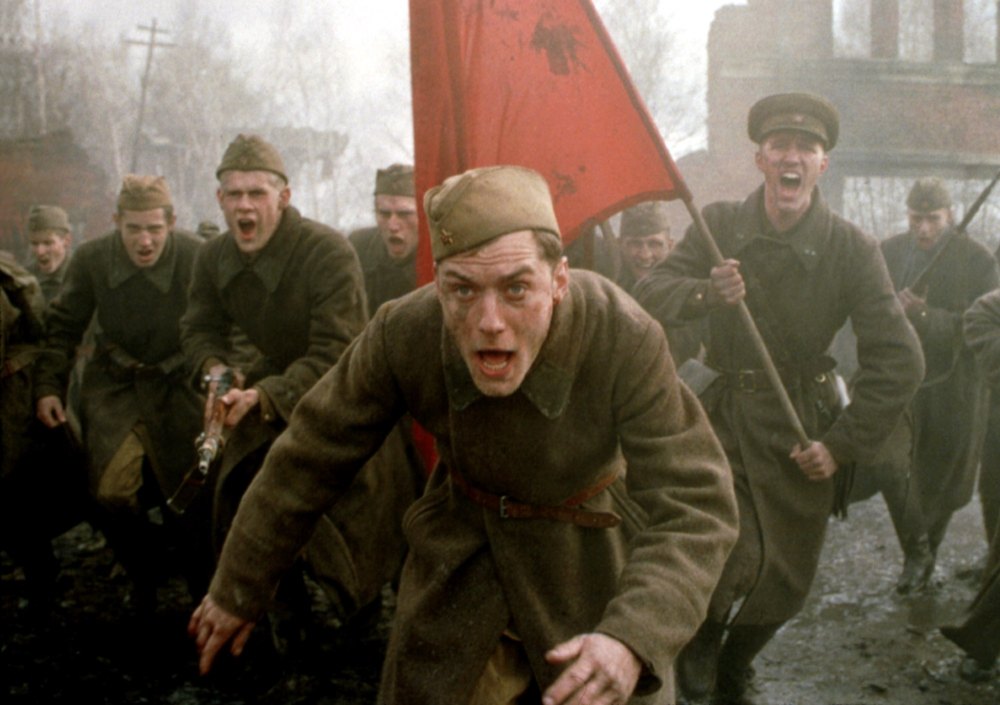
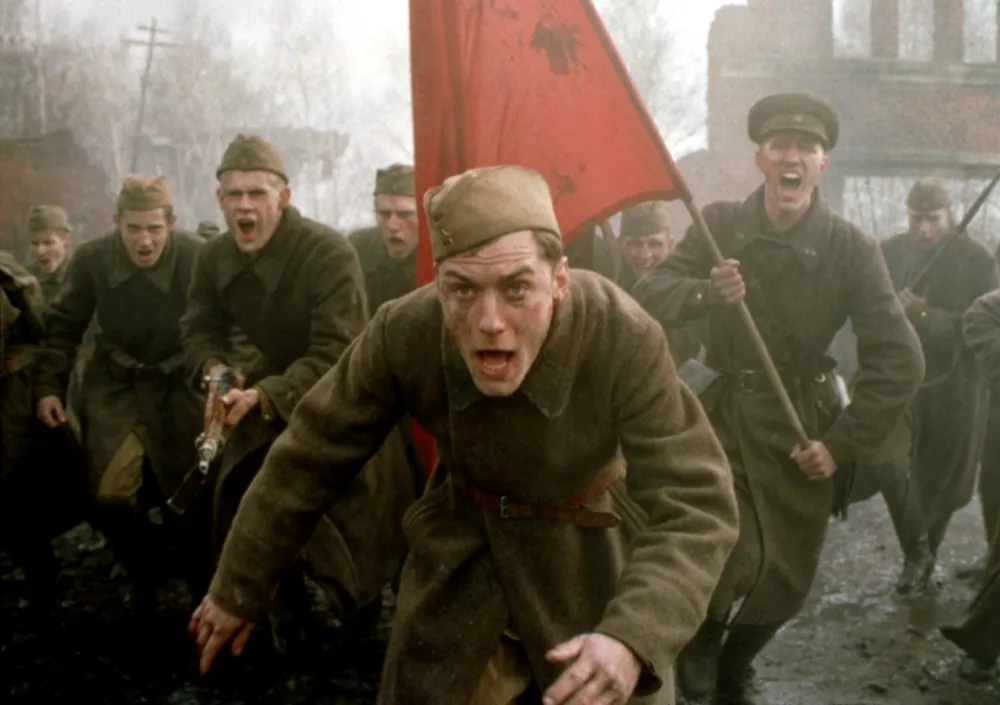
In the middle of World War II, everyone needs a hero, including the Soviets. They get one with Vassili Zaitsev (Jude Law), a Red Army sniper who is renowned for his incredible marksmanship, which has taken out many of the invading German army. He becomes friends with his supervising officer, Danilov (Joseph Fiennes), but the two men soon face a bump in their bromance – they both love Tania (Rachel Weisz), a private with a knack for translating German. They’ll have to set aside their rivalry when the Germans send Erwin König (Ed Harris), a sniper who is even better than Vassili, to take out his rival and any Soviet soldier who crosses his path.

With each year, there are fewer people who lived or fought through World War II. When they pass, films will be one of the only media keeping their stories alive for new generations to discover. Watch With Us recently rounded up the seven best World War II movies and ranked them by their Rotten Tomatoes […]
While the love triangle at the center of Enemy at the Gates is a bit unbelievable, the film makes up for it with its outstanding battle scenes and the climactic sniper-on-sniper duel between Vassili and Erwin. Hollywood doesn’t make many WWII movies with Russian and German protagonists, and the film’s depiction of the Battle of Stalingrad is truly impressive.

If you want a war movie that doesn’t take itself too seriously, watch The Ministry of Ungentlemanly Warfare. Based on the nonfiction book Churchill’s Secret Warriors by Damien Lewis, the movie stars Henry Cavill as real-life war hero Gus March-Phillipps, who led a covert mission to destroy an Italian supply ship near a Spanish-controlled island. Gus can’t do it alone, so he assembles a dirty half-dozen of rogue officers like Anders Lassen (Alan Ritchson) and Marjorie Stewart (Eíza Gonzalez) to help him.
Director Guy Ritchie plays fast and loose with some of the facts, including adding several gunfights and explosions that never actually happened. Still, if watching former Superman Cavill gun down some Nazis and Reacher star Ritchson break some Axis Power heads, then hang out with The Ministry of Ungentlemanly Warfare.
With World War II still raging, submarine commander P.J. Richardson (Clark Gable) only has one thing on his mind – revenge. The Japanese destroyer Akikaze has sunk four American subs, including P.J.’s last ship, and he wants to stop it from doing it again. He gets his chance when he is assigned to command the USS Nerka, but the Navy forbids him to go after the Akikaze. P.J. ignores their orders and trains his crew to hunt and destroy his Japanese enemy, but he encounters resistance from one man on board – Lieutenant Jim Bledsoe (Burt Lancaster), who thinks P.J.’s obsession will doom them all to a watery grave.

War movies have been around for almost as long as Hollywood has been making films. And each generation of filmmakers has been adding their own sensibilities to the genre. There are now so many war movies that even some of the best in the genre have gotten lost in the shuffle. That’s why Watch With […]
Two dudes battling it out on a submarine? If Run Silent, Run Deep sounds a little like the 1995 Cold War thriller Crimson Tide with Gene Hackman and Denzel Washington, you’re right. Both movies feature two stars locked in a battle of wills while torpedoes are being shot at them thousands of feet underwater. But Run Silent, Run Deep is even more intense, with crisp back and white cinematography lending a patina of realism to its purely fictional story. At the tail end of his career, Gable gives one of his best performances ever as an officer who is no gentleman. His obsession with getting even jeopardizes his colleagues, and Gable is surprisingly convincing at showing P.J.’s growing desperation.

What happens after war ends and the enemy needs to be punished? That’s the question Nuremberg grapples with as it depicts the beginning of the Nuremberg trials in 1945. Hitler’s second-in-command, Hermann Göring (Russell Crowe), is accused of mass murder, and the prosecution needs to determine if he’s mentally fit to stand trial. After U.S. Army psychiatrist Douglas Kelley (Rami Malek) examines him, he doesn’t quite believe a man so civil to him – and caring for his family – could commit such atrocities. But as the trial proceeds and evidence is shown to the public, Kelley grapples with Göring’s true nature.
Unlike classic WWII movies like Saving Private Ryan and Das Boot, Nuremberg focuses on the aftermath of war and the battles waged in the courtroom and in public opinion. The Nuremberg trials were, for many, the first real look at what the Germans had done to their Jewish prisoners, and the film convincingly conveys this dawning horror through Kelley’s perspective. Crow gives his best performance in years as a monster cosplaying as a family man who thinks that by denying what he did, he can make it go away. Nuremberg shows how wrong he was and the need for public accountability for private misdeeds.
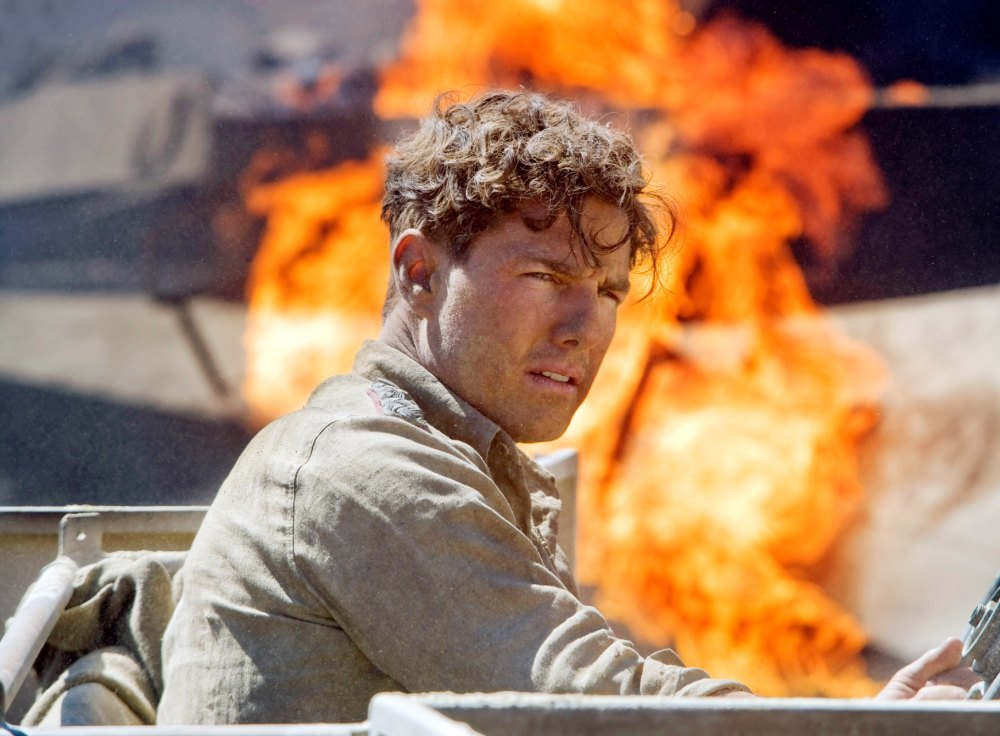
Tom Cruise as a Nazi? Yeah, it happened – kinda – in 2008’s Valkyrie, which sees the Top Gun star play a German soldier, Claus von Stauffenberg, who is fed up with Hitler (David Bamber) and his cronies. He decides to do something about it by leading a resistance effort to assassinate the German leader so he can take over the military and end the war. That sounds simple, but to get close enough to Hitler, Claus has to make sure everything goes right – and nobody finds out what his real intentions are.

HBO Max is letting its freak flag fly high for the month of June. The Warner Bros.-owned streamer just added an eclectic lineup of new movies that cross all types of genres and boundaries. Thank You! You have successfully subscribed. Subscribe to newsletters Enter your email Please enter a valid email. Subscribe By signing up, […]
Directed by Bryan Singer, Valkyrie is an excellent thriller that retells a moment in history few people know about. There really was a Claus von Stauffenberg, and he almost pulled off an act that would have saved millions of lives. (It shouldn’t be a spoiler to reveal that Claus was not successful in assassinating Hitler.) Cruise is miscast as an eye-patch-wearing German officer, but he’s also oddly right at home spying on others and staging daring acts of subterfuge. He’s surrounded by a top-notch cast of British character actors, like Kenneth Branagh, Bill Nighy and Terence Stamp, and they’re all terrific as Claus’ fellow soldiers who want to off their big boss.
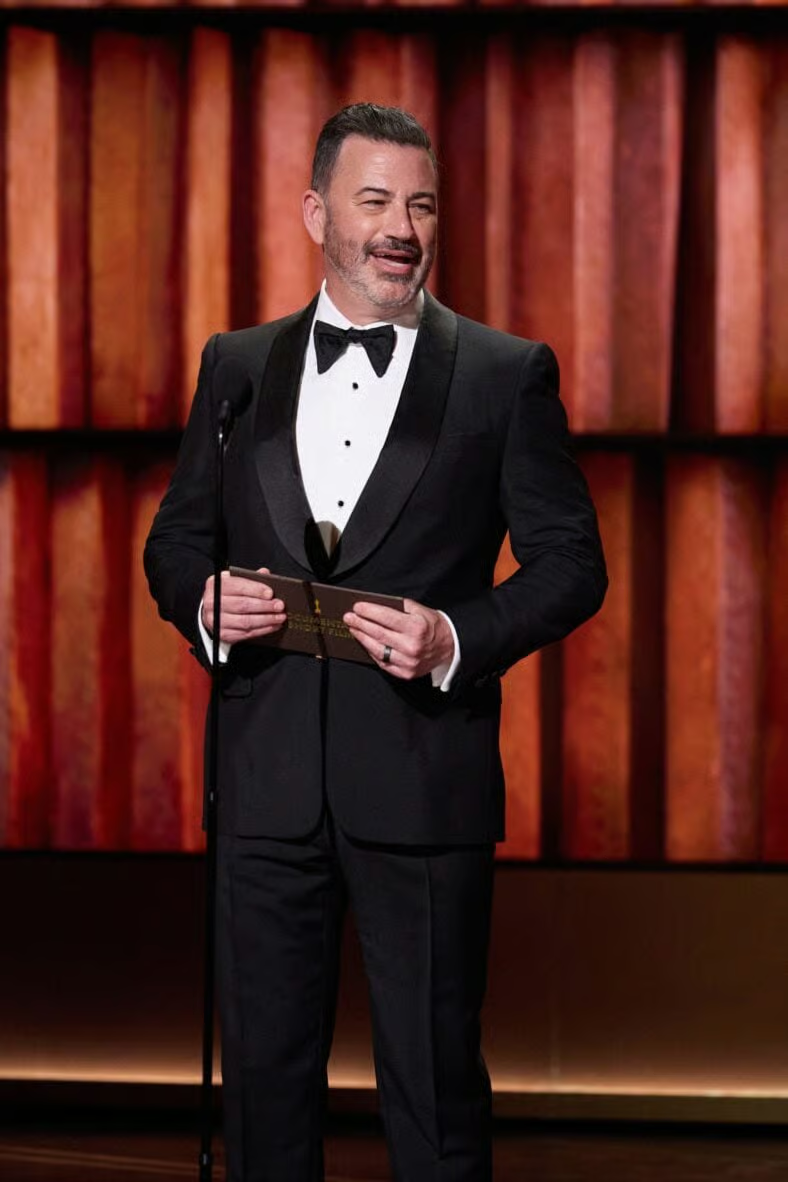
Jelly Roll is adding another impressive credit to his growing résumé. The country music superstar has been tapped as one of several celebrity guest hosts set to take over “Jimmy Kimmel Live!” while Jimmy Kimmel takes a two-month summer hiatus. Kimmel made the announcement during Thursday night’s show, revealing a lineup that includes Tiffany Haddish, Colman Domingo, Anthony Anderson, and more. Jelly Roll is no stranger to the late-night spotlight, having previously guest-hosted two episodes of the ABC program in 2025.

Another notable addition to Kimmel’s guest-host roster is Rosie O’Donnell, who will make her debut behind the “Jimmy Kimmel Live!” desk. Kimmel joked that he had invited one of President Donald Trump‘s “all-time favorites” to fill in for him, a reference to O’Donnell’s decades-long public feud with the president.
While unveiling his temporary replacements, Kimmel joked about stepping away from the show. “I will be taking the next two months off, this time voluntarily,” the comedian said, a playful reference to the controversy surrounding his show in late 2025, when “Jimmy Kimmel Live!” was briefly suspended following backlash over comments he made regarding conservative activist Charlie Kirk‘s death.
Kimmel is expected to return to the late-night desk following Labor Day.

The hosting announcement arrived during a highly publicized week for Jelly Roll and his wife, Bunnie XO. On the same evening Kimmel announced his guest-host lineup, Bunnie released a candid podcast episode discussing major changes in their relationship.
“We stopped communicating together, um, in the past year and a half,” Bunnie said. “And I think it’s safe for me to say that I always loved my husband a little bit more than he loved me.”
Bunnie went on to describe herself as “the glue” that held the marriage together, explaining that she and Jelly Roll often approached relationships differently. “He’s the runner, I’m the chaser,” she said.
According to Bunnie, tensions came to a head following an argument on Mother’s Day. While she stressed that infidelity played no role in their breakup, she admitted that frustration led her to tell Jelly Roll to file for divorce.
“I was so fed up,” she recalled, noting that she never expected him to actually move forward with the paperwork. “Was I blindsided? Was this divorce mutual? No. It was not mutual. Even though I told him to file the divorce papers, I was speaking out of anger and just frustration.”

Later in the episode, Bunnie emphasized that she and Jelly Roll remain committed to one another. “My husband and I are ending this marriage on the best possible terms that you could ever have a divorce,” she explained.
She also shared that the couple continues to pursue their long-discussed IVF journey after spending nearly two years navigating the process.

Later that same night, Jelly Roll addressed the situation during a concert in New York, telling fans that everything Bunnie discussed on her podcast was “the truth.” The singer also used the moment to express his appreciation for his wife.
“Bunnie, I love you, baby. Thank you for those 10 years. They were incredible,” he told the crowd. “Thank you for the next 10 years of friendship and 20 beyond that.”
Jelly Roll additionally shut down online speculation surrounding infidelity rumors. “Nobody cheated on nobody,” he said, though Bunnie XO did confirm the singer is already open to dating. “He is ready, raring and ready to go,” Bunnie noted while speaking at length about the divorce on her podcast. “He’s all hopped up on testosterone, let me tell you. He’s even started dating.”
In fact, Bunnie encouraged interested fans to shoot their shot, joking that the country star’s social media inbox is fair game. “His DMs are open,” she told listeners, adding that she’s happy to see him embrace whatever comes next. “I love that.”
“Daddy Roll is probably in his finest season, right? Like, I mean, the man looks great. He’s feeling himself. He looks so good. He is healthier than he’s ever been,” Bunnie added.

Us Weekly has affiliate partnerships. We receive compensation when you click on a link and make a purchase. Learn more!
I hate to admit it, but I spend hours aimlessly scrolling through Reformation looking at all the gorgeous dresses. I never end up buying anything, though — I just can’t bring myself to spend over $200 on a sundress. Luckily, Amazon carries a ton of styles similar to the ones on Reformation, and for a lot less money. I’m talking hundreds of dollars less for a near-identical look.
I sifted through thousands of options on Amazon and found 17 dresses that look like they came from Reformation. And honestly, they’re so good that no one has to know you didn’t grab the real thing. Feel like your most confident self — on a budget! — by shopping these summer-friendly styles.
1. Floral and Feminine: There’s something so soft and elegant about a dress with a bustier bodice and flowy skirt. This one comes in 20 gorgeous colors, including a variety of floral patterns.
2. Vintage Barbie: Remember the world’s first Barbie with its black and white bathing suit? This form-fitting polka dot dress brings those retro vibes into the 21st century.
3. So Romantic: Puffy sleeves and floral patterns are a winning, whimsical combo on this midi dress. It’s the perfect piece for summer weddings.
4. Extra Ruffles: What sets this flowing floral midi apart from other dresses is the cascading ruffles down the front that give it more movement. Get ready to twirl!
5. Seaside Dreams: Heading to the coast? This strapless striped maxi dress takes the nautical trend and makes it much more chic.

I have a bad habit of opening Amazon for one thing, and somehow ending up with a cart full of dresses. This time, I stumbled across the retailer’s under-$40 dress edit and immediately started shopping for pieces that look far more expensive than their price tags. From breezy maxis to throw-on-and-go shirt dresses, there are […]
6. Secretly Comfy: If you want to look like a supermodel, this billowing tank dress is the design to buy. It’s extra stretchy, morphing to your curves and cinching you in all the right places.
7. High Fashion Queen: The asymmetrical neckline on Zesica’s pleated maxi is a simple design choice that makes a big impact. You’ll be the most stylish person in the room whenever you wear it.
8. Bombshell Energy: This affordable mini dress features a vibrant floral pattern, ruffled hem and a fun scarf that makes it a must-have for any tropical vacation. The look is begging to be worn while dancing on tables.
9. Extra Trendy: Gingham patterns are inescapable this year. Instead of going for red, opt for this yellow gingham maxi that feels like a breath of fresh air. (Plus, it has pockets!)
10. Match Made in Heaven: Lace and polka dots may be the best dress pairing of all time, especially in navy and white. That’s why I’m adding this cap-sleeved stunner to our cart STAT.
11. Flirtiest of All: So many corset and bustier-style dresses are maxi length. Shake things up with this adorable A-line mini, which is available in five enchanting floral patterns.
12. The Most Flattering: If you want to feel supported (and look absolutely phenomenal), scoop up this halter dress. The top lifts your chest while the long bodice cut makes you look taller and leaner.
13. Let’s Get Meshy: Mesh dresses have gotten an upgrade; what used to be made for clubbing now appears elegant and classy. I’d totally wear this floral print mesh dress to a posh brunch or wedding.
14. Flowy and Fine: Empire waist dresses are my favorite to wear to meals because they leave a ton of room for your stomach to expand. This striped maxi has already become my summer staple for big celebrations.
15. So Versatile: Not only is this strapless boho dress ridiculously affordable, but it can also be worn as a beach cover-up or for fancier occasions.
16. Ruched to Perfection: I used to be self-conscious about wearing skin-tight dresses, but the ruching on this floral number conceals my stomach instantly to boost my confidence
17. Swing, Swing: The most unexpected summer trend? Bubble dresses. This polka dot pick reminds Us of our favorite ones from childhood, but with an updated halter neckline.




Weekend Open Thread: Miami – Corporette.com

Zimbabwe Requires Crypto Businesses to Register Annually Under New FIU Regulations

Wall Street Week Ahead: Investors see Micron earnings as pulse check of AI rally momentum

Matt Damon’s Viral Sci-Fi Thriller Has Taken Over HBO Max


HIVE shares jump as $220M AI deal speeds Bitcoin mining pivot


Anthropic staff to meet White House officials next week, Axios reports

Bitcoin could crash to $48,000, if this historical pattern is triggered

what doctors are seeing in ebike crashes

Warning of disruption as Cardiff Crossrail works to start

Tributes to former deputy head teacher at Cambridge school among death and funeral notices

Kate Middleton Glare Goes Viral After Kids Booed At Royal Event


“Israel’s” ban on ICRC visits ruled illegal, but Knesset moves to stop them permanently


XRP ETFs Outperform As Bitcoin And Ethereum Funds Extend Outflow Trend


Over 400 Arch Linux packages compromised to push rootkit, infostealer


Financial Accounting | Last Day Revision Strategy and Booster | CMA Inter – June 2026


Dick Advocaat’s Curacao scores first-ever World Cup goal against Germany


Invesco Quality Income Fund Q1 2026 Commentary


Singer Oliver Tree dies aged 32 in helicopter crash in Brazil


The Adder At The Heart Of Intel’s 8087 FPU

Microsoft Updates Six Windows’ Apps. ‘Photos’ Gets Watermarks for Copilot Images (Off by Default)




You must be logged in to post a comment Login