

Entertainment
10 Underrated Spy Movies That Can Be Called Masterpieces

Spy cinema gets reduced to tuxedos, gadgets, rooftop chases, and clean victories way too often. And Men in Black’s popularity is probably to be blamed for it. The deeper corner of the genre, however, is much colder than that. It is people lying for countries that will deny them, loving people they might have to use, and carrying secrets that slowly turn their own faces unreadable.
These films deserve louder respect because they understand espionage as pressure on the soul. Some are dry and bitter. Some are romantic in a way that feels dangerous. Some are almost cruel in how calmly they watch people disappear into missions, causes, rooms, and files. If you’re about uncovering that deeper end of espionage, scroll down slowly.
10
‘The Tailor of Panama’ (2001)

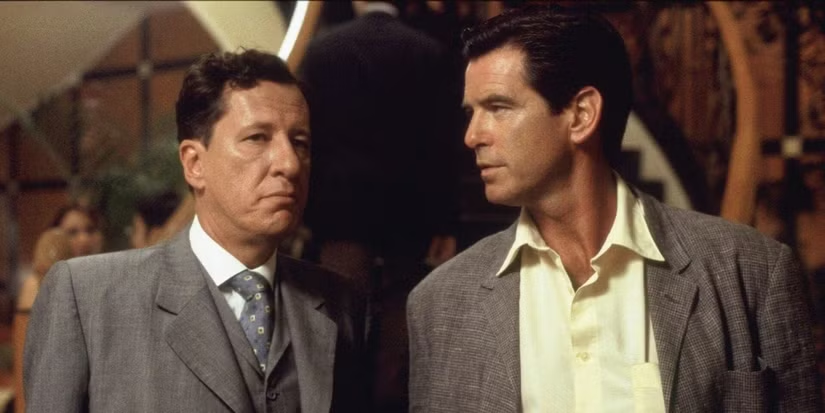
The Tailor of Panama follows Harry Pendel (Geoffrey Rush), who is a charming British tailor in Panama, dressing politicians, bankers, diplomats, and crooks while quietly drowning in debt. Then Andrew Osnard (Pierce Brosnan), a disgraced MI6 operative with sweat, ego, and appetite written all over him, realizes Harry’s access can be turned into intelligence. Harry panics, invents sources, invents plots, and suddenly his little survival stories start moving governments.
That is the nasty brilliance of the film. It treats espionage as a marketplace where bad information becomes valuable once the right men want it. Rush makes Harry lovable and pathetic in the same breath, a man lying partly from fear and partly from the strange thrill of being listened to. Brosnan is even sharper as Osnard, and uses a Bond-like charm. Panama, in this film, therefore, becomes a place where colonial arrogance, money, sex, and fantasy all start feeding the same machine. The masterpiece angle sits in that ugly joke: a fake spy story can still create real damage.
9
‘Confessions of a Dangerous Mind’ (2002)

A game-show host claiming he lived a secret life as a CIA assassin sounds like a drunk Hollywood dare, which is exactly why Confessions of a Dangerous Mind has such a strange pull. Chuck Barris (Sam Rockwell) creates trashy television, chases fame, cheats on the woman who loves him, and keeps insisting that behind the silliness of The Dating Game and The Gong Show sat a second life of covert killings. The film never asks the viewer to relax into one clean truth.
That uncertainty gives the whole thing its sting. Rockwell makes Chuck restless and needy, someone who wants attention so badly that even guilt starts looking like another spotlight. George Clooney’s CIA recruiter slips into his life with deadpan menace, while Penny (Drew Barrymore) keeps representing the ordinary love Chuck is too damaged and self-mythologizing to receive properly. The spy material has guns, hotel rooms, dead drops, and paranoia, yet the deeper mystery is Chuck himself. Maybe he killed people. Maybe he turned fame, shame, and self-loathing into the most dramatic story he could tell about his own emptiness.
8
‘The Ipcress File’ (1965)

The Ipcress File follows Harry Palmer (Michael Caine) who feels like the spy who got stuck doing paperwork after everyone else took the glamorous assignments. He is working-class, sarcastic, near-sighted, and surrounded by British intelligence offices that look more like miserable civil-service rooms than fantasy headquarters. When kidnapped scientists begin returning with their minds damaged, Palmer gets pulled into a case involving brainwashing, interdepartmental politics, surveillance, and a word that sounds harmless until it starts breaking people: IPCRESS.
The pleasure here comes from how stubbornly unromantic the film is. Palmer cooks, shops, complains, watches, listens, and survives through attention. And yes, that was a thing before Kingsmen: The Secret Service. The canted angles, cramped rooms, tape recorders, files, handlers, and office rivalries make espionage feel like a job where boredom and danger share the same desk. The brainwashing material gives the story its sci-fi edge, but the lasting flavor is pure Cold War fatigue. Every superior seems to know half the truth, and Palmer has to keep his own mind intact while men above him trade human beings like departmental assets. This film is definitely underrated.
7
‘The Spy Who Came in from the Cold’ (1965)

The Spy Who Came in from the Cold circles the story of Alec Leamas (Richard Burton). He is a British agent burned out by years on the Berlin front, then Control sends him into one last operation designed to make East German intelligence believe he is ready to defect. Liz Gold (Claire Bloom), a young communist librarian who cares about him, gets pulled into the machinery of the plan, and that is where the film starts becoming genuinely painful.
Alec looks exhausted before the mission even properly begins, which tells you almost everything about this world. Alec drinks, snaps, waits, and lets himself look broken because the performance needs to convince enemies and allies alike. The genius is how little romance the movie gives to sacrifice. Spycraft here is meetings, traps, staged disgrace, ideological theater, and people used as pressure points. It’s an excellent watch.
6
‘Decision Before Dawn’ (1951)

Decision Before Dawn is the kind of war-spy film that sneaks up on you because its heroism feels so frightened and human. Near the end of World War II, American intelligence recruits German prisoners to go back behind enemy lines and gather information. One of them, nicknamed Happy (Oskar Werner), is a young German soldier who has lost faith in the Nazi cause and chooses to risk his life against the country that raised him.
That premise gives the film a moral tension most wartime thrillers would simplify. Happy is useful to the Allies, distrusted by almost everyone, and walking through Germany with the face and language of the enemy while carrying a choice that could get him killed from either side. The ruined streets, checkpoints, uniforms, false papers, train movements, and whispered contacts make the danger feel practical and the film never lets bravery feel easy so that whole thing is a nice hook.
5
‘The Deadly Affair’ (1967)

The Deadly Affair makes betrayal look middle-aged, tired, and humiliating. That sounds familiar until you zero-in and realise that most spy films make betrayal look exciting. It foll;ows Charles Dobbs (James Mason) as a British intelligence officer investigating the supposed suicide of a Foreign Office official, and the case drags him through old acquaintances, Cold War suspicion, and a private life that is already hurting him. His wife Ann (Harriet Andersson) is emotionally elsewhere, and Dobbs keeps chasing professional truth while his own home life keeps telling him things he does not want to hear.
That bruised domestic pain gives the mystery its real texture. Mason carries Dobbs with a quiet sadness that feels heavier than anger. He is intelligent enough to read lies in a case file and wounded enough to miss or tolerate lies in his marriage. The investigation moves through interviews, theater-world connections, old ideological loyalties, and people whose manners keep covering rot. The color-grading too, has this gray, drained feeling, as if the spy game has sucked glamour out of every room. Its greatness sits in how personal the coldness becomes. Dobbs solves pieces of the case while losing the comfort of thinking truth will make him whole.
4
‘The Kremlin Letter’ (1970)

The Kremlin Letter feels like espionage with the lights turned off and the rulebook burned. That’s epic. The premise basically is that a secret letter threatens to expose a dangerous arrangement involving American and Soviet intelligence, so a group of operatives is assembled to retrieve it from Moscow. They are less a noble spy team than a collection of specialists, predators, survivors, and compromised people who know exactly how filthy this work can get.
The film’s power comes from how little moral oxygen it gives anyone. The film is helmed by John Huston and he builds this world of blackmail, seduction, coded loyalty, torture, double-crossing, and professional cruelty where every conversation sounds like someone testing the floor for traps. The characters use charm, sex, language, family ties, and fear as tools, then look almost bored by what those tools do to other people. That emotional dryness is the point. The spy genre often sells control as elegance. This film sees control as contamination. Once people enter the operation, they start becoming part of a system that can digest almost any conscience and still ask for another favor.
3
‘Army of Shadows’ (1969)

Resistance stories often get polished into clean courage, and Army of Shadows refuses that comfort at every turn. That identity is what gives it a hook. That identity is why it sits at #3 on this list. In this film, Philippe Gerbier (Lino Ventura) is part of the French Resistance during Nazi occupation, moving through arrests, escapes, safe houses, coded messages, and missions where a single mistake can destroy an entire network. His comrades are brave, but their bravery lives inside dread, secrecy, exhaustion, and decisions that would ruin a person in any normal life.
The film hurts because every act of loyalty seems to demand another sacrifice. Gerbier’s escape is tense, yet the quieter scenes stay even longer: men waiting in rooms, a traitor being executed by people who hate that the task has fallen to them, Mathilde (Simone Signoret) carrying impossible responsibility while knowing the Germans can reach her through her daughter. These people fight fascism without the luxury of feeling heroic all the time. They simply keep moving, and the cost gathers in their faces.
2
‘Lust, Caution’ (2007)

Image via Focus Features
Lust, Caution is exactly what the title is. The first time Wong Chia Chi (Tang Wei) understands how deeply she has entered the role, the film becomes almost unbearable. She begins as a student in Japanese-occupied China, drawn into a resistance plot to assassinate Mr. Yee (Tony Leung Chiu-wai), a powerful collaborator. Her assignment is to pose as a married woman, get close to him, and help lure him into a position where the group can kill him. The mission depends on performance, and the performance begins eating her life.
Wong is asked to use desire as a weapon, yet Mr. Yee is also a man trained by danger to distrust every tenderness offered to him. Their encounters are disturbing because power, fear, attraction, and suspicion keep changing places. The mahjong rooms, jewelry shop, resistance meetings, brutal intimacy, and occupied-city atmosphere all press on Wong until the mission stops feeling separable from her body. This is spy cinema at its most devastating because the secret operation does not merely risk death. It asks a young woman to become someone else so completely that returning to herself may no longer be possible.
1
‘Tinker Tailor Soldier Spy’ (2011)

You can feel the silence of this movie watching people back. Tinker Tailor Soldier Spy follows George Smiley (Gary Oldman) as a retired British intelligence officer brought back after Control’s failed operation suggests a Soviet mole has been living near the top of the Circus, the British Secret Service. The suspects are senior men with old loyalties, old resentments, and enough history with Smiley to make every glance feel loaded. Nobody runs through the street shouting secrets. They sit in rooms and let decades of betrayal rot the air between them.
That restraint is exactly why the film is so gripping. Smiley listens more than he speaks, and Oldman makes that stillness feel active, almost predatory in its patience. Peter Guillam (Benedict Cumberbatch)’s sacrifice, Ricki Tarr (Tom Hardy)’s doomed romance with Irina, Jim Prideaux (Mark Strong) carrying the wound of the botched mission, Control’s paranoia, and Bill Haydon (Colin Firth)’s charm all feed into a mystery about friendship as much as treason. The mole hunt is brilliant, but the ache underneath it is even sharper. These men gave their lives to institutions that trained them to distrust love, then acted shocked when betrayal learned to speak their language.

Tinker Tailor Soldier Spy
- Release Date
-
September 16, 2011
- Runtime
-
127 minutes
- Writers
-
Bridget O’Connor, Peter Straughan, John le Carré

Continue Reading
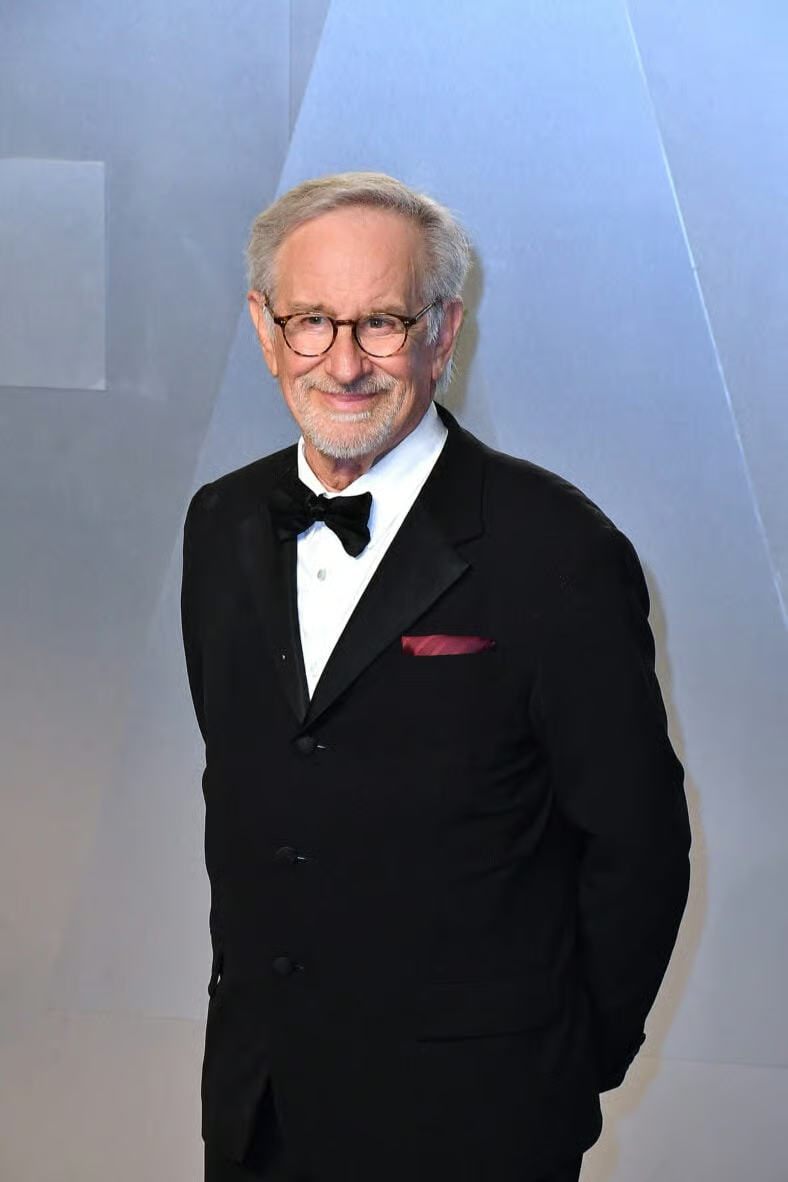
Steven Spielberg’s latest UFO blockbuster is generating debate far beyond extraterrestrials and government secrets.
“Disclosure Day,” which has already attracted more than two million moviegoers, centers on a world-changing release of classified UFO files and the fallout that follows.
However, while the film explores whether humanity is alone in the universe, it also tackles a more controversial question: what happens to religious belief if proof of alien life finally arrives?
That premise has sparked renewed discussion among Christians, UFO researchers, and disclosure advocates alike.
Spoiler Alert: This article contains major plot details and ending revelations from Steven Spielberg’s “Disclosure Day.”

Unlike many alien-themed films that focus primarily on science or invasion scenarios, Steven Spielberg’s “Disclosure Day” directly confronts the question of how the confirmation of extraterrestrial life could affect Christianity.
The story unfolds after the Donald Trump administration releases previously classified UFO files containing new evidence that humanity is not alone.
One of the movie’s central figures is Jane Blankenship, a former nun played by Eve Hewson, who fears the revelation could fundamentally challenge her understanding of faith.
Blankenship worries that the disclosure might force believers to reconsider everything they know about God, Jesus, and the Bible.
According to UFO investigator Chris Ramsay, the film touches on a genuine fear shared by many Christians who believe confirmation of alien life could raise difficult questions about creation, humanity’s role in the universe, and God’s relationship with other intelligent beings.
‘Disclosure Day’ Is Built Around A Former Nun’s Crisis Of Faith
Blankenship’s struggle becomes one of the film’s emotional anchors. She is the girlfriend of cybersecurity whistleblower Dr. Daniel Kellner, played by Josh O’Connor, who joins efforts to expose decades of hidden evidence about extraterrestrial life.
After the couple become targets of the mysterious WARDEX corporation for leaking classified information, Blankenship seeks refuge at her former convent. There, she reconnects with Sister Maura, played by Elizabeth Marvel.
Rather than reinforcing Blankenship’s fears, Sister Maura encourages her to adopt a broader perspective about faith and the universe. As the story progresses, the main character begins to reconsider her assumptions.
Instead of viewing extraterrestrial life as a threat to religion, she ultimately concludes that a vast universe filled with life could strengthen belief in a creator rather than weaken it.
Steven Spielberg Addresses Concerns Shared By UFO Researchers
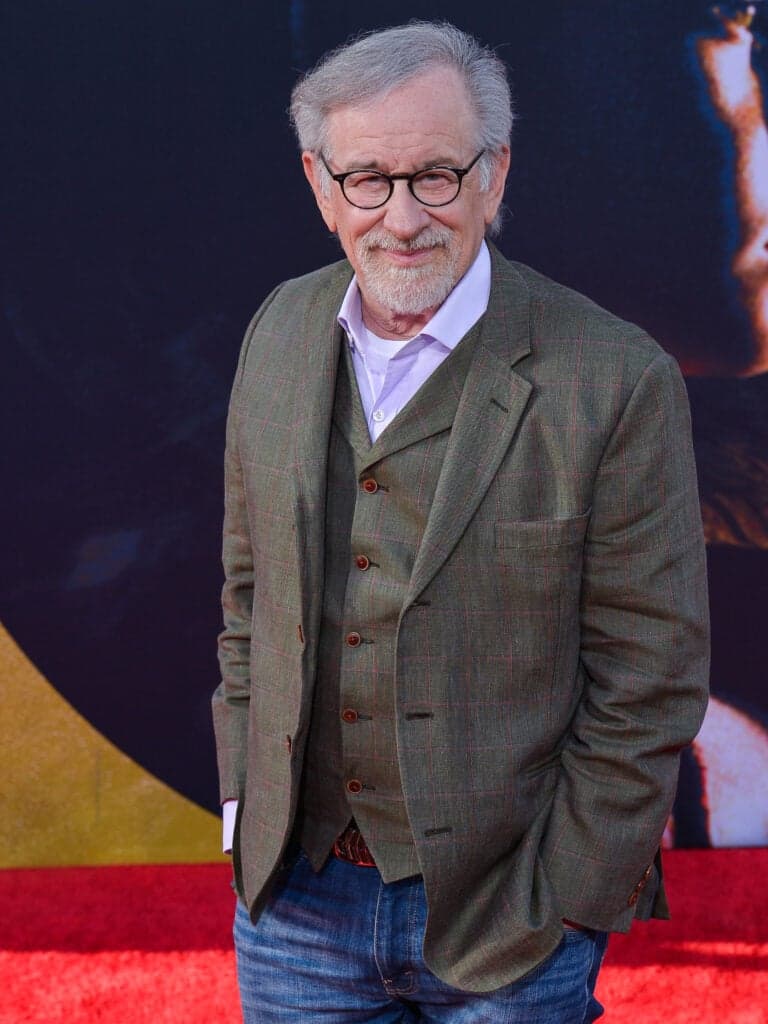
Ramsay praised Steven Spielberg for tackling a subject many disclosure advocates have discussed for years.
“If you’re faced with this brand new truth… that here are other beings, it puts into question a lot of the things that people may have read in the Bible,” he told the Daily Mail.
The issue has gained attention from politicians and commentators alike. Some have suggested that concerns about religious disruption are among the reasons governments have been reluctant to fully release UFO information.
Ramsay believes Spielberg intentionally included the faith-based subplot because many Americans could view disclosure as an existential challenge.
“He obviously understands that a vast majority of the American population, specifically being Christians, might see disclosure as this existential sort of problem that they have to inevitably face,” Ramsay revealed.
The researcher argued that the filmmaker’s message was ultimately one of reassurance rather than conflict.
“I think that was Spielberg’s way of softening the blow,” Ramsay continued, adding, “Just because there might be life out there, or even visiting us, doesn’t mean God doesn’t exist. He would have created them too, right?”
Spielberg Packs Decades Of UFO Lore Into ‘Disclosure Day’

Beyond religion, Ramsay was impressed by the sheer scope of UFO topics covered in “Disclosure Day.” “I think it was an absolutely Herculean task which was set before him,” he said.
The researcher noted that Steven Spielberg incorporated ideas spanning nearly 80 years of UFO history, including crash retrieval claims, alien contact reports, psychic phenomena, remote viewing, and telepathy.
Remote viewing, which gained notoriety through the Cold War-era Stargate program, is also referenced in the film. Ramsay appreciated that Spielberg acknowledged government interest in psychic research, even if the abilities were dramatized for Hollywood audiences.
The film also explores the world of UFO experiencers, individuals who claim direct encounters with non-human intelligence.
Ramsay pointed to scenes involving unusual animals and alleged psychic aftereffects as examples of concepts frequently discussed within UFO communities.
‘Disclosure Day’s’ Most Chilling Scene Left Researchers Talking
One sequence in particular stood out to Ramsay. The scene follows Emily Blunt’s character, Margaret Fairchild, as she trails a series of animals through a snowy forest toward what appears to be a comforting home.
As she gets closer, the illusion suddenly vanishes, revealing a sterile white room where a child lies on a floating metallic slab under the watch of a gray alien.
“When that transition happened, I got the chills through my whole body,” Ramsay said, further noting, “I thought that they landed that was very, very accurate [to reports].”
He also pointed out Fairchild’s sudden psychic abilities after her encounter. She begins speaking Russian, appears capable of reading minds, and experiences episodes resembling clairvoyance.
“That’s something that’s actually been documented quite extensively with experiencers,” Ramsay told the Daily Mail.
Although he questioned Spielberg’s portrayal of extraterrestrials communicating through clicking sounds rather than telepathy, Ramsay left the theater impressed.
The film concludes with media clips featuring unexplained sightings and conspiracy theories, leaving him wishing the 79-year-old had gone one step further.
“How amazing of an opportunity would that have been for disclosure? For people gathered in the theater, eating popcorn and being told… this movie features footage from a real, live, non-human crash retrieval. For me, that would have been disclosure – and in the most American way,” he said.
Entertainment
JD Vance addresses on “The View” controversial 'childless cat ladies' insult that Taylor Swift responded to: 'Boneheaded'
:max_bytes(150000):strip_icc():format(jpeg)/JD-Vance-The-View-061626-7-0da1bfd9793e4cd38d4763a89008da3c.jpg)
“Did that comment actually shed light on something and start a discussion? Or did it just close people down?” Vance asked on “The View.”
Entertainment
10 Years Later, Prime Video’s All-Star Western Is So Good, You’ll Wish You Found It Sooner
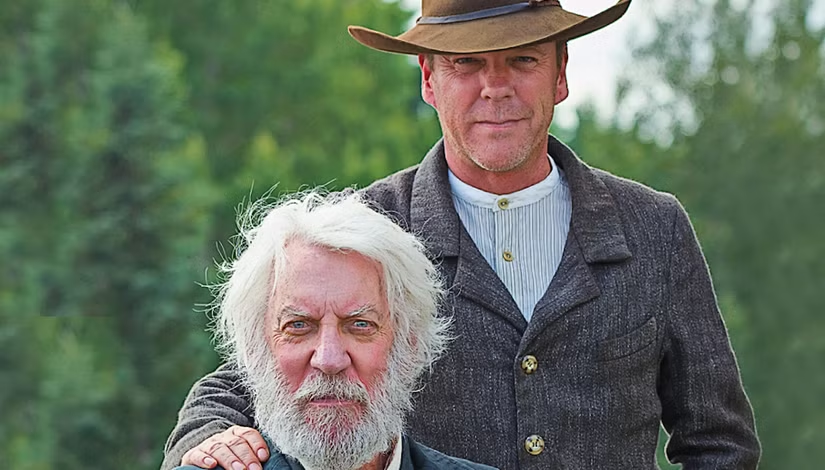
Jon Cassar’s no-frills western drama, Forsaken, follows John Henry Clayton, played by Keifer Sutherland, a former hot-shot gunfighter, who returns home seeking redemption and reconciliation. However, upon his arrival, Clayton quickly realizes things aren’t quite like he left them. An old love lost to time, new ruthless land-grabbing antagonists, and his estranged father force this homeward-bound cowboy to question whether he can truly leave his violent past behind. Ten years later, Prime Video’s well-loved western picture is still celebrated by critics and audiences alike.
Many say the film benefits from the expertly cast on-screen pair of real-life father and son, Donald and Kiefer Sutherland. Additionally, the film includes a further star-studded cast, including but not limited to: Demi Moore as Clayton’s forlorn old flame Mary Alice Watson and Brian Cox as an unscrupulous land baron and Clayton’s primary antagonist. This, combined with the classically riveting grit of an old western, makes for a truly incredible watch.
‘Forsaken’ Embraces Traditionalism for Unadulterated Western Fun

To state it plainly, this film makes no attempt at reinventing the wheel, per se. However, within it’s traditional western attributes belies its defining strengths. Take the premise itself, for example. How many old, warn out, morally-grey-hero-returning-home flics have audiences seen? More likely than not: infinity. Tons of so-called reinventions of this classic premise have been slapped across silver screens worldwide. However, Forsaken digs into this cliche with reckless abandon. In fact, the script even begins with a classic: “Well, well, well…” Upon Clayton’s fateful return.
John Henry Clayton, a lone gunman, attempts to leave his life of violence behind in hopes of appeasing his preacher father, Reverend Clayton. As he returns home, he is met with an unexpected threat. A railroad is coming, and a ruthless property developer, by the name of James McCurdy, expects each townie in its wake to close up shop and ditch the place. To say the very least, he’s willing to resort to just about anything to make it happen. As McCurdy and his gang begin to resort to violence, Clayton finds it increasingly difficult to let sleeping dogs lie, as his violent past creeps its way to the present. This, combined with the wonderful depth captured between each of the lead characters, allow the film to rise from a boring remake, to a classic benchmark.

The 15 Best Western Movies of the 2020s So Far, Ranked
“A rock and a hard place is what we call Monday.”
The Characters that Truly Make ‘Forsaken’

In a film such as Forsaken, expert characterization and portrayal are each essential qualities for success. In each respect, this picture did not disappoint. In particular, both Moore and Cox’s performances struck as rather convincing and, more than that, truly entertaining.
Despite how little screentime was afforded to Demi Moore’s character, her portrayal of Mary Alice Watson was poignantly modest and understated in a highly believable manor. The essence of her character is her wistful, barely there, almost ghostly presence. She is a past love, whose flickering flame still seems to haunt Clayton, with whom she has wonderful chemistry with. Flowers are certainly deserved in respect to her bittersweet realism. And despite her “B-plot” title, it woudlve been nice to see more of her. Cox, on the other hand, is perfect in opposition to the almost translucent quality of Watson. Cox provides a truly menacing presence to the screen. And that very realistically grounds both the film and the town’s defining threat. His authoritative control and humorous, hammy, depiction push the film even further into the classic southern archetype. He creates a truly palpable tension on screen through his sharp conviction and pure villainy.
In summary, Jon Cassar‘s Forsaken is a film for those looking to indulge in cliche western entertainment. The unrelenting revisiting of classic tropes makes for a truly fun watch, and the expert portrayals of each player involved ground the film expertly. This terribly underrated western is often forgotten and left out of conversations for one possible reason. The genre of western dramas has become so convoluted, audiences have lost touch with classics. Filmmakers are throwing far too many overly modernized twists at what could already be considered enough respectively. Forsaken digs into the beauty of sticking to what the genre knows, and executes it perfectly.

- Release Date
-
September 16, 2015
- Runtime
-
90 minutes
- Director
-
Jon Cassar
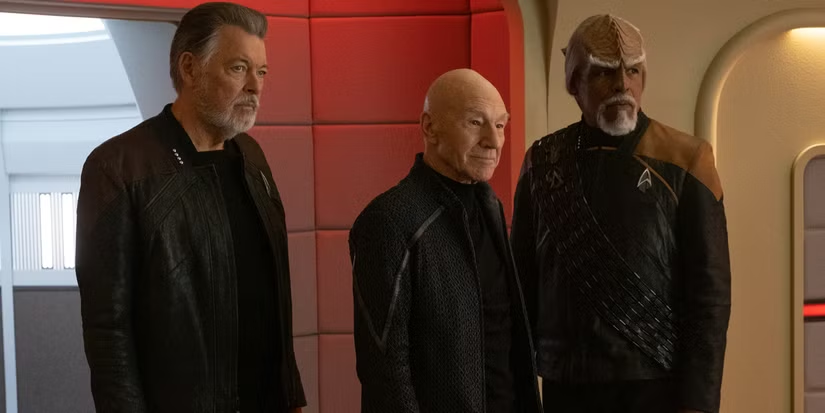
2026 marks the 60th anniversary of Star Trek, yet the iconic franchise is approaching a crossroads. The trailer for Season 4 of Star Trek: Strange New Worlds is a grim reminder that the series is slated to end next year. Star Trek: Starfleet Academy, a series meant to carry the Star Trek franchise into the future, is being cut short after two seasons. While Paramount has said it intends to keep the franchise going on the silver screen, Star Trek‘s future on television is looking fairly bleak. There is one creative voice who could help steer the ship in the right direction, and it’s a figure who has a long and surprising history with Star Trek.
That figure is Terry Matalas, who shouldn’t be a stranger to Trekkies. Matalas got his start in television working on Star Trek: Voyager and Star Trek: Enterprise, and cited Star Trek: The Next Generation as one of his all-time favorite television shows. His biggest claim to fame, though, is serving as showrunner on Seasons 2 & 3 of Star Trek: Picard, which remains one of the most beloved entries in Star Trek’s modern era. But there’s another aspect of Matalas’ work on Star Trek: Picard that makes him a perfect fit for the franchise, especially as Paramount is undergoing a major shift in priorities.
Terry Matalas Can Deliver a ‘Star Trek’ Show That Doesn’t Break The Bank for Paramount

Those not in tune with the major business decisions behind Hollywood’s major studios probably don’t know that Paramount was recently acquired by Skydance Media, leading to a major shift in what movies and TV shows are being made. That shift was deeply felt after the cancellation of The Late Show with Stephen Colbert, but other television ventures across Paramount’s vast library have been feeling a financial squeeze. Chief among them is Star Trek, as sets are being dismantled and even sold off. Any future show would have to work on a reduced budget, which is where Terry Matalas comes in.
During his tenure as showrunner on Star Trek: Picard, Matalas was responsible for Seasons 2 and 3 filming back-to-back in order to help with cost control and cast schedules. That approach also shaped Season 3’s story, which saw Jean-Luc Picard (Patrick Stewart) reuniting with the former cast of the U.S.S. Enterprise-D. Despite the first two seasons of Picard introducing a whole new cast of characters, Matalas had to write them out to accommodate the legacy characters, which he admitted was a hard decision.
“I think probably it’s a bit more difficult to go to the studio and say, ‘Great, we’re doing this, we need to make deals now with all of these legacy characters, and financially what can we afford and what does that mean for some of the new cast?’ I think that was probably the hardest thing is that we just don’t have infinite cash or run time to do justice to the characters.”
Should Matalas take up another creative position on a Star Trek project, he’d more than likely have to deal with similar constraints due to Paramount’s potential acquisition of Warner Bros. Discovery. Should this merger be finalized, it means that Paramount will have to cut even more costs…and that’s not even considering the fact that Paramount+ and HBO Max could merge, leading to yet another seismic shift in programming. Yet Matalas managed to deliver a season of Picard that was both a hit with audiences and critics, proving that you don’t need a blockbuster-sized budget to tell a good story.
Terry Matalas’ Work on ‘Star Trek: Picard’ Set Up The Perfect ‘Star Trek’ Spinoff
While a common criticism of current Star Trek shows is that they haven’t been able to attract new viewers or exclusively cater to longtime Trek fans, the final season of Star Trek: Picard offers a solution to both problems. Throughout the season, Picard learns that he has a son, Jack (Ed Speelers) and must deal with the resurgence of the Borg. In the series finale, “The Last Generation,” Jack becomes an officer on the U.S.S. Enterprise-G, which is captained by Seven of Nine (Jeri Ryan); he’s also visited by the extradimensional being Q (John de Lancie), who frequently appeared to torment Picard during Star Trek: The Next Generation. This all but hints at a potential spinoff, which fans have dubbed Star Trek: Legacy and cast members have said they’d love to be a part of.
Getting Matalas back to helm Star Trek: Legacy would be tricky, as he’s currently working on a wealth of genre projects. In addition to the upcoming VisionQuest, Matalas is also developing a Magic: The Gathering animated series for Netflix and a remake of the sci-fi classic Enemy Mine. Still, if Paramount is looking to give Star Trek a new lease on life, it should reach out to Matalas.

- Release Date
-
2020 – 2023
- Network
-
CBS All Access, Paramount+
- Directors
-
Jonathan Frakes, Hanelle M. Culpepper, Akiva Goldsman, Joe Menendez, Lea Thompson, Michael Weaver, Terry Matalas, Deborah Kampmeier, Dan Liu
- Writers
-
Matt Okumura, Kiley Rossetter, Christopher B. Derrick

Jon Bernthal is on a ride this year. 2026 started for the fan-favorite with Netflix’s His & Hers, a murder mystery where he stars opposite Tessa Thompson. The miniseries proved a big hit for the streamer as it broke into its all-time top 10 list with 98.2 million views. Then he inflicted some emotional damage with The Bear’s surprise prequel, Gary, which he co-wrote with co-star Ebon Moss-Bachrach.
With one episode, the emotional framework for The Bear’s final season changes as we get to see more of Mikey’s (Bernthal) internal state and his friendship with Richie. The 100% Rotten Tomatoes-rated special will tug at your heart and give a glimpse of the character that casts a long shadow on Carmy (Jeremy Allen White) and the restaurant. In the same week, Bernthal also came out with the highly anticipated MCU Special Presentation, The Punisher: One Last Kill.
While we have been on a journey with The Punisher since his Netflix days, his standalone MCU entry meant a lot for longtime fans. Frank Castle was first introduced in Daredevil: Born Again Season 1, but The Punisher: One Last Kill gives him a fresh start before we meet him in Spider-Man: Brand New Day. Just like how Gary gave us a peek into Michael’s troubled life, the MCU entry gives a Bernthal character a chance to heal with Frank Castle. One Last Kill finds Frank after he has avenged his family, but as it happens, grief takes its own course, and in the end, vengeance leaves you empty. The special brilliantly showcases a Frank who finds a reason to keep going after he has fulfilled his long-term goal, and with him, fans too move on. The R-rated, pared-down, no-holds-barred actioner was something both fans and the character needed to make an impression in the MCU.
‘The Punisher: One Last Kill’ Has Cemented Itself on Streaming Charts
And indeed, The Punisher: One Last Kill has wowed the fans worldwide as it has cemented itself on Disney+ top 10 charts for over 30 days, as per FlixPatrol. While many new and old movies keep finding and losing the spot over the last month, Punisher has maintained its position, which is a testament to fans’ love. Bernthal will soon reprise Punisher in the upcoming Spider-Man: Brand New Day, dropping on July 31. But before that, both Tom Holland and Bernthal will share screen space in The Odyssey, coming out July 17.
Meanwhile, The Punisher: One Last Kill is streaming on Disney+.

- Release Date
-
May 12, 2026
- Directors
-
Reinaldo Marcus Green

Tom Holland is gearing up for the release of “Spider-Man: Brand New Day,” marking the fourth time he will appear as Peter Parker’s alter ego in a solo film. The actor has weighed in on who should take over the role, mentioning an Emmy-winning actor as his potential replacement.

Tom Holland was in his late teens when Marvel Studios cast him as Spider-Man, and at 30, he is thinking about potential actors who could take his place in the future.
In an interview with Esquire, Holland said Owen Cooper would be an “awesome” Spider-Man. “Obviously, he’s super talented and the talk of the town right now,” the actor said.
Cooper, a 16-year-old British actor, gained fame for portraying accused killer Jamie Miller in the Netflix series “Adolescence.” He made history in 2025 by becoming the youngest male actor to receive a Primetime Emmy Award at just 15, winning the Outstanding Supporting Actor in a Limited or Anthology Series category.
Holland said he would love to be involved in the franchise’s next stages as a mentor. “In the way that Robert Downey was such a mentor for me in my first three movies, I would love to be that person for whoever is next,” he shared.
The Actor Was Hesitant To Go Back To The Role
Elsewhere in the interview, Holland said he was “on the fence” about returning to his Spider-Man role, adding that the contract he signed at 18 years old expired after the third movie, “Spider-Man: No Way Home,” released in 2021.
In fact, in an interview that year, the actor famously said, “If I’m playing Spider-Man after I’m 30, I’ve done something wrong.” He’s now looking back at his statement, saying it was “really stupid.” He changed his tune after his 30th birthday. In early June, he told GQ, “I think the point of it is that I would love to pass the baton on, and I haven’t achieved that yet… So maybe I need to change the quote to 37.”
“Spider-Man: Brand New Day” director Destin Daniel Cretton spoke about Holland, saying that while some actors become “jaded” with the filmmaking process after playing a character several times, “Tom is the opposite.” Cretton added that they had a lot of fun filming that it “almost seems criminal.”
Tom Holland Was Heavily Involved In The Fourth Movie

According to the actor, he was more involved in the making of the fourth movie, including the pre- and post-production stages.
Holland shared that he spent hours scouring the internet, watching videos, and listening to podcasts to learn what the fans wanted to see in the next installment. For instance, Spider-Man’s new suit was redesigned to take into account viewers’ thoughts from past Spider-Man movies.
Moreover, he was able to pitch his ideas. As he told Empire, he was given the chance to share his thoughts with the writers. He went with what he called “Spider-Puberty,” raising the question, “What happens if Peter Parker is losing control and things are changing?”
Holland said the studio didn’t like his “Spider-Puberty” tagline, but was intrigued with the idea, which later evolved into the plot of “Brand New Day.”
The Actor Delayed The ‘Spider-Man’ Filming

The original filming schedule of “Spider-Man: Brand New Day” coincided with Holland’s other film, “The Odyssey,” directed by Christopher Nolan. The actor said he had an “uncomfortable conversation” with Sony after asking them to delay filming so he could work with the legendary director. The studio agreed, but Holland said, “Any other director, it might have been a slightly different conversation.”
It all worked out in the end, as the Spider-Man franchise had extra time to develop and improve the script. The actor believes the fourth installment is the “best version” yet, adding, “While it was a tough pill to swallow for Sony, I think in hindsight, they’re very grateful that it happened.”
Tom Holland On Playing The Superhero
While Holland is already thinking about who should replace him as the web-slinging superhero, that doesn’t mean he has closed his doors on portraying Spider-Man. As he told GQ, “I think the truth is that playing Spider-Man has been the joy of my life. I now kind of stand on the plinth of like, I’ll do it for as long as they’ll have me.”
“Spider-Man: Brand New Day” is slated for release on July 31.
:max_bytes(150000):strip_icc():format(jpeg)/amy-poehler-1-57717640882a406988643bc5ecb7abe6.jpg)
The actress and comedian appeared on season 34 of the sketch comedy series while heavily pregnant, and famously missed an episode when she went into labor before showtime.

The Real L Word star Francine Beppu’s cause of death has been revealed following her death at age 43.
According to a report by the Honolulu Medical Examiner, with details published by TMZ on Tuesday, June 16, Beppu died by suicide on February 17.
The examiner’s office also conducted toxicology testing which indicated “the presence of amphetamine and alcohol” in her system when she died.
Beppu, who starred on season 2 of the Showtime reality TV show in 2011, was confirmed dead by a spokesperson for her family who spoke to People several days later. “It is with a heavy heart that we share the passing of our beloved Francine ‘Naoko’ Beppu,” a statement from the family obtained by the outlet read at the time. “The outpouring of care and concern from her friends and colleagues is a testament to the tremendous impact she had on everyone around her. We are deeply grateful to know how cherished she was and how brightly she will continue to shine through all who knew her.”

Bethenny Frankel is mourning the death of her mother, Bernadette Birk, who died on Friday, April 19, at the age of 73 following a battle with lung cancer. The Real Housewives of New York City alum, 53, posted photos and a touching tribute on Instagram, opening up about her complicated relationship with her mom. “She […]
The family added that they had appreciated “the many gestures of love for Francine” while requesting privacy and they navigated “this unimaginable loss and honor her memory.”
The Real L Word was a spin off of The L Word, a Showtime drama series that followed a group of lesbian and bisexual women who lived in West Hollywood, California. It ran from 2004 to 2009 before The Real L Word explored further characters, including Beppu, in L.A. and New York City.
Beppu only featured in the show for one season, alongside her then-girlfriend Claire Moseley, as cameras filmed her coming out as a lesbian to her mom.


The cause of death for RuPaul’s Drag Race star James Lee Williams, a.k.a. The Vivienne, has been confirmed. The drag artist’s family told BBC News that they died from cardiac arrest caused by use of the powerful anesthetic drug ketamine. The Williams family have confirmed plans to work with a substance abuse charity, Adferiad, on […]
During a 2022 interview for The Hawai’i Herald, Beppu said that coming out was far from easy, despite taking the news well while cameras rolled. “There were some tears but at the end of the day, my mom wants what’s best for me,” she told the outlet at the time. “My parents are great. They’ve been very accepting. I’m really lucky to have them.”
While her cast inclusion was brief, Beppu’s advocation for LGBTQ+ rights endured. She served as a chairperson for the Hawai’i LGBT Legacy Foundation, an organization that focuses on “empowering individuals and communities through education, cultural enrichment and advocacy … to create a world where MVPFAFF/LGBTQIA individuals can thrive, free from discrimination and prejudice,” according to its website.
If you or someone you know is struggling or in crisis, help is available. Call or text 988 or chat at 988lifeline.org. https://988lifeline.org/

Mean Girls is among the new millennium’s most influential movies. From the comedic genius of Tina Fey, the film stars a who’s who of future movie stars, including Lindsay Lohan, Rachel McAdams, Amanda Seyfried, and Lizzy Caplan. Especially with the Mean Girls musical reboot, there is no better time than the present to get into the glamorous and cutthroat mood that Mean Girls and other teen films so effectively provide.
Endlessly quotable, hilarious, and infinitely rewatchable, Mean Girls is a generation-defining film and one of the best teen movies in American cinema. Fans of the movie might want to watch other similar films, and, luckily for them, there’s no shortage of options. From films with similar themes to the dark comedies that inspired it, these movies are perfect companions for Mean Girls.
20
‘Mean Girls’ (2024)

As far as films that recapture and fully embrace the type of slick, pop energy of Mean Girls, it’s difficult to find something more similar than the musical remake that came out in 2024. Adapted from a stage musical that was adapted from the original 2004 film, this modern interpretation of Mean Girls features a new cast and the same distinct energy and style that made the musical such a hit. It mostly follows the same story and beats as the original film, yet updated for a modern audience.
While it’s easy to be harsh on modern remakes due to usually not being able to compare in quality to the original film, the 2024 Mean Girls‘ musical angle helps distinguish itself as a separate experience from the original film. At the same time, the film features a lot of the same inherent strengths and qualities of the original story, such as the dynamic between Cady and the Plastics and the array of quotable lines.
19
‘The Clique’ (2008)

2008’s The Clique is based on the eponymous series of teen novels. The plot concerns Claire Lyons, a young girl who desperately attempts to join the most popular girls in her new school, the Clique, doing increasingly questionable things to sneak into the group. The film’s plot and characters find a great deal of inspiration from films like Mean Girls, but instead of simply attempting a blatant copy of the formula, The Clique has a genuine understanding of the important themes and messaging of Mean Girls.
The Clique might as well be middle-school Mean Girls. The plot is similar, visiting the same themes of the dangers of popularity and sacrificing individuality to fit in with the “cool” crowd. However, The Clique is charming enough to warrant a watch, especially for fashionistas; the film is a worthy heir to the Gossip Girl legacy of stunning preppy fashion.
18
‘Legally Blonde’ (2001)

One of the most defining romantic comedies of the era, Legally Blonde follows the story of sorority girl Elle Woods, who in an attempt to win back her ex-boyfriend, plans to follow in his footsteps and attend Harvard Law School. However, she soon finds herself taking a liking to the judicial process and decides to prove to her peers that she goes against the nasty stereotypes surrounding preppy blondes like herself.
While not as directly tied to the trends and cliques of high school as portrayed in Mean Girls, Legally Blonde shares a connection with the film through their shared love and importance placed upon female empowerment. Elle is a character who fits perfectly within the style and world of Mean Girls, almost acting as a kind-hearted, perfect version of a preppy plastic-type, combined with Reese Witherspoon‘s signature performance, making her an incredible main character to watch.
17
‘Wild Child’ (2008)

Emma Roberts became a teen icon with her explosive performance in the 2008 comedy Wild Child. The plot centers on Poppy Moore, a wealthy and rebellious girl who gets sent to a prestigious English boarding school to correct her attitude. However, things don’t go as planned when Poppy brings her unique brand of disruptive energy to the school.
Wild Child is a star vehicle for Roberts, who shines in a role similar to her future iconic turns in American Horror Story: Coven and Scream Queens. Wild Child is a great companion for Mean Girls, with both films focusing on young and rebellious girls who learn valuable lessons without sacrificing their individual fabulousness. However, the major difference and focus is the more character study-styled singular focus on Poppy, as opposed to a more generalized story about all of high school.
16
‘Plan B’ (2021)

One of the core facets that makes Mean Girls such an effective teen comedy is its focus on female camaraderie and friendship, themes that are greatly felt throughout Plan B. The film follows straight-laced high school student Sunny, who, after a regrettable sexual encounter at a party, finds herself on a wild road trip across the countryside with her best friend Lupe in search of an elusive Plan B pill. Their journey sees them facing off against numerous unexpected hurdles and strange characters as the duo reevaluates their friendship and forms a tight-knit bond in the process.
Plan B features an effective blend of raunchy, R-rated comedy, likable female leads, and effective themes of coming-of-age friendship that are sure to make it a hit with fans of Mean Girls. This film is greatly elevated by its inherent charm and execution, getting a great deal of comedic mileage and earnest emotional moments thanks to the tone and style that it creates for itself. As far as modern teen films go, Plan B is one of the best when it comes to having as much wild fun as it has a great emotional core.
15
‘Can’t Hardly Wait’ (1999)

Can’t Hardly Wait follows the stories and events surrounding a massive graduation party, consisting of nearly every student at Huntington Hills High. In each student’s attempt to have the best night of their lives, they each find themselves overcoming a number of unexpected obstacles and changes, resulting in a night that will surely go down in history. While the plot may initially seem completely different, Can’t Hardly Wait shares a lot of DNA with Mean Girls when it comes to its satire and commentary on the trends of then-high school cliques and stereotypes.
Can’t Hardly Wait makes a major effort when it comes to blurring the lines between the archetypes of high school students, with the lines between jocks, nerds, and popular students fading away by the end of the film. It’s also a laugh riot throughout its runtime, as the film’s simple party-centric premise allows for a wide variety of different stories and characters that constantly blend in with one another throughout the runtime. Much like Mean Girls, the film embraces the clichés and trends of the teen movie genre to create its own original story, reflecting upon the clichés themselves.
14
‘Election’ (1999)

Teen movies lend themselves perfectly as avenues for greater satires and social examinations of greater societal structures, something that Mean Girls greatly excelled at as one of the defining satires of the early 2000s. However, before Mean Girls took the world by storm, Election would provide a similar level of using high-school drama as an avenue for its adult satire, telling a hilarious story of abuse of power and elections. The film follows the chaos and infighting surrounding a student election, in which bright-eyed Tracy Flick (Reese Witherspoon) is running unopposed, to the major dismay of teacher Jim McAllister (Matthew Broderick).
What makes films like Election and Mean Girls stand out from the variety of other teen movies of the era is their distinct use of cynicism and dark comedy to excel their satirical themes and messaging. This style of humor and storytelling lends itself to the high school setting perfectly, creating an effective balance of petty drama and surprisingly high stakes that makes for highly memorable cinematic experiences. Even 25 years after its release, Election is still widely regarded as one of the best teen movies of the era, in the same vein of legacy and status as Mean Girls.
13
‘Do Revenge’ (2022)

Netflix’s wickedly funny teen comedy Do Revenge stars Camila Mendes and Maya Hawke. Inspired by Alfred Hitchcock‘s classic Strangers on a Train, the plot follows two students at a prestigious Miami school who team up to get revenge against the people who wronged them. However, as several twists and turns come with their newfound popularity, their original plans prove themselves to be falling apart at the seams.
Campy, self-aware, and endlessly funny, Do Revenge is a pastel-colored teen nightmare elevated by a pair of committed performances from Mendes and Hawke. More than simply acting as a modern retread of classic teen movies, the film finds massive inspiration and growth from the original formula, acting as the perfect modernization of this style of film. The film features a genuinely clever twist that separates it from other teen efforts, and its distinctive visual style and intelligent screenplay echo the heights achieved by Mean Girls.
12
‘Cruel Intentions’ (1999)

Ryan Phillippe, Sarah Michelle Gellar, and Reese Witherspoon cemented their legacies as ’90s teen icons with 1999’s Cruel Intentions. An updated adaptation of Pierre Choderlos de Laclos’ seminal epistolary novel Les Liaisons Dangereuses, the film follows two scheming step-siblings who make a bet concerning a newly-arrived virginal student.
Cruel Intentions is a sexy and surprisingly witty update to a literary classic. Powered by a wicked turn by a never-better Sarah Michelle Gellar and with a memorable ending that ranks among the all-time best finales in the teen genre, Cruel Intentions is a scandalous thriller that fans of Mean Girls will undoubtedly enjoy.
11
’13 Going on 30′ (2004)

One of the quintessential coming-of-age experiences of the early 2000s, 13 Going on 30 stands head and toe alongside Mean Girls as a hilarious examination of teenage life that defined the era. The film follows the story of Jenna, a teenage girl who is tired of the painful social structures of teenage life and wishes that she could simply be an adult and skip these painful teenage years. She suddenly gets her wish when she wakes up as a 30-year-old woman, complete with a stable career and full life, yet it doesn’t take long before Jenna learns that adulthood isn’t what it’s cracked up to be.
13 Going on 30 employs a similar style of coming-of-age comedy and humor as Mean Girls, with its focus simply placed on the contrast between teenage culture and adult life as opposed to entirely focusing on teenage life. Jennifer Garner gives a standout performance throughout the film, having to bring out the inherent optimism and beauty for the world in the eyes of a child, and elevating the entire experience as a result. Even despite there differing plots, there is an undeniable parallel in the tone and execution of Mean Girls and 13 Going on 30 that makes them complement one another perfectly.

Stephen Colbert may have signed off from “The Late Show” with one final joke, but it turns out the gag came with real-world consequences for CBS.
Nearly a month after the comedian playfully suggested that a musical stunt during his show’s finale could cost the network money, a licensing agreement has now been confirmed.
The situation, which began as a tongue-in-cheek moment involving one of television’s most recognizable tunes, ultimately led CBS to strike a deal with the company that controls the rights to the beloved music.
During the final episode of “The Late Show with Stephen Colbert” on May 21, the longtime host appeared to knowingly flirt with copyright trouble while discussing legal disputes surrounding music from the classic “Charlie Brown” television specials.
The segment focused on recent enforcement efforts involving the “Peanuts” franchise and the iconic music composed by Vince Guaraldi.
As Colbert spoke about lawsuits tied to unauthorized use of the music, he reminded viewers that the rights holders take the matter seriously.
“Peanuts is a powerful brand and corporation in and of itself. Anyone illegally using that music is going to have to pay through the nose,” Colbert said during the broadcast.
The warning set up what would become one of the show’s final comedic moments.
Colbert Called Out His Own Band Mid-Segment

As Stephen Colbert continued speaking, bandleader Louis Cato and “The Late Show” house band, the Great Big Joy Machine, began playing Guaraldi’s instantly recognizable “Linus and Lucy” theme in the background.
The host immediately drew attention to the music, pretending to realize what was happening in real time.
“Louis, Louis! Is the band right now playing the same Peanuts music I just said people were being sued for, for using without permission? Is that what you’re doing?” he asked.
Moments later, Colbert delivered the joke that would later prove surprisingly prophetic. “Oh no, I hope this doesn’t cost CBS any money!” he joked.
At the time, the line appeared to be just another playful jab during his farewell episode.
Weeks later, however, it became clear there was more truth behind the joke than viewers realized.
Stephen Colbert’s Musical Bit Led To A Licensing Agreement

According to the Daily Mail, Lee Mendelson Film Productions, Inc., the company that oversees Vince Guaraldi’s musical catalog, has now confirmed that CBS entered into a licensing agreement covering the use of “Linus and Lucy” during the finale.
According to the company, the performance required formal licensing approval after the episode aired. While the financial terms of the agreement were not disclosed, the arrangement officially resolved the use of the famous Peanuts tune featured during the broadcast.
The licensing agreement also produced an unexpected charitable benefit. Lee Mendelson Film Productions announced that all proceeds generated through the CBS licensing deal will be donated to World Central Kitchen, the nonprofit founded by celebrity chef José Andrés.
The organization is known for providing meals to communities affected by humanitarian crises, natural disasters, and conflicts worldwide.
The donation carries additional significance because World Central Kitchen had already played a role in the final days of Colbert’s program.
During the penultimate episode of “The Late Show,” Colbert and the show presented a $2.5 million donation to the organization and Andrés.
Stephen Colbert’s Final CBS Gag Earns Praise From Rights Holders

Rather than expressing frustration over the unauthorized use of the music, Lee Mendelson Film Productions embraced both the humor and the outcome.
Jason Mendelson, the company’s chairman, praised the segment while explaining the broader purpose of the organization’s enforcement efforts.
“LMFP found the music’s use on The Late Show funny and entertaining, and is proud to support World Central Kitchen’s mission,” Mendelson said in a statement.
He also emphasized that protecting the music remains an important part of the company’s work.
According to him, “A principal goal of our enforcement actions is to educate individuals, businesses, and government entities about the need to obtain written license agreements to use music in a commercial setting.”
Colbert Takes Aim At CBS During Surprise Hosting Return

Last month, Stephen Colbert made an unexpected return to television less than a day after ending his 11-year run on CBS’ “The Late Show,” stepping in as guest host of Michigan public-access program “Only in Monroe.”
As The Blast reported, the comedian used the appearance to poke fun at his former network, joking, “It’s been an excruciating 23 hours without being on TV, so I am grateful to be able to be here on Monroe Community Media before they also get acquired by Paramount.”
Colbert also mocked CBS’ approach to streaming, telling viewers they could watch online through technology and adding, “which I promised not to learn about while I was on CBS. And evidently CBS also decided not to learn about it.”
Ultimately, the surprise hosting stint became a talking point among fans, as it also featured appearances by Jeff Daniels, Jack White, Steve Buscemi, Eminem, and Byron Allen.
Tech2 seconds ago
This Ceiling-Mounted Crane Robot Tackles Household Clutter From Above

NewsBeat2 minutes ago
Will There Be A Rivals Season 3?

Business3 minutes ago
ClearBridge Appreciation Fund Q1 2026 Commentary

Crypto World4 weeks ago
Blockchain.com files with SEC for U.S. IPO

NewsBeat3 weeks ago
Israel says it has killed new Hamas military leader in Gaza City airstrikes

Business3 weeks ago
NYT Strands Answers May 24 2026 Revealed for Puzzle No. 812 Theme Summer Essentials

News Videos15 minutes ago
#StockMarket #ShareMarket #Investing #Trading #StockMarketTelugu #Money #Finance #BeginnerInvestor #

News Videos21 minutes ago
That is certainly one way to handle a problem #funny #money #shopping #budget #shorts

News Videos29 minutes ago
One of the most dangerous sentences in the world of finance is:“Maybe he’s just that good.”
-

 Business3 days ago
No Jackpot Winner as $257 Million Prize Rolls Over to $269 Million Monday Draw
-

 Crypto World6 days ago
Oppenheimer backs SpaceX as $70 billion retail frenzy builds
-

 Fashion5 days ago
Weekend Open Thread: Tuckernuck – Corporette.com
-

 Crypto World6 days ago
Markets Rally as SpaceX IPO Looms Amid Iran Tensions and Inflation Surge
-
 Crypto World3 days ago
Zimbabwe Requires Crypto Businesses to Register Annually Under New FIU Regulations
-

 Tech4 days ago
NanoClaw integrates JFrog registries to secure AI agent downloads
-

 Tech5 days ago
This Week In Security: Microsoft On Microsoft, Register Your Domains, Linux On ARM, And FreeBSD Joins The File Cache Club
-

 Crypto World4 days ago
Bitget enters Argentina’s regulated crypto market through PSAV registration
-
 Tech6 days ago
Dutton Ranch star claims they ‘didn’t see any disruption’ on set following Chad Feehan’s exit from Yellowstone spinoff fueled by Taylor Sheridan clash rumors
-

 NewsBeat6 days ago
El Nino has formed in the Pacific and could set records, forecasters say
-

 Politics6 days ago
Politics Home | Healey Resignation Is “Colossal Failure Of Government”, Says Former Labour Defence Secretary
-
 Entertainment6 days ago
Donnie Wahlberg & More Heat Up Las Vegas at Circa’s Barry’s Downtown Prime
-
 Tech6 days ago
Opendoor Ends India Operations, Fueling a Bigger Conversation About AI and Outsourcing
-

 Politics6 days ago
Belfast burns, while Met chief points finger at Iran and Russia
-

 Sports6 days ago
First Time Since 1971: Australia Register Historic Low In ODI Cricket
-

 Business6 days ago
AT&T: Verizon's 27% Outperformance Sets Up A Solid Entry Point
-

 NewsBeat5 days ago
FBI searches office of Ohio voter registration group
-
 Tech6 days ago
Anthropic is spending $150M to embed 1,000 AI fellows inside nonprofits. No degree required.
-

 Politics6 days ago
Modi thanks Trump for wishes as US attacks Indian seafarers
-
 Entertainment5 days ago
‘The Pitt’s Fan-Favorite Doctor Confirms Noah Wyle Gave His Blessing to Return [Exclusive]
You must be logged in to post a comment Login