
Entertainment
Perfect Stephen King Adaptation Is Also John Cusack’s Best Thriller

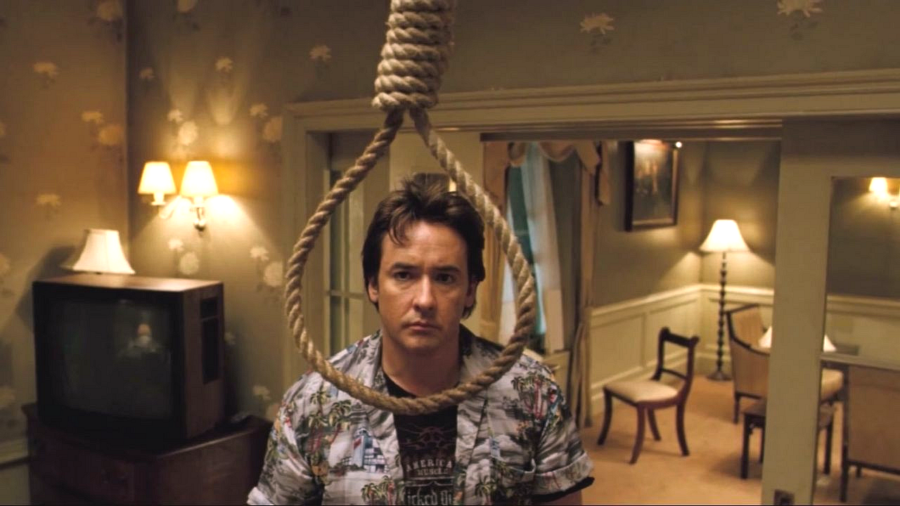
By Robert Scucci
| Updated

Here’s some insight into just how stupidly my brain is wired. I love John Cusack. Grosse Pointe Blank (1997) is one of my favorite comedies of all time, and Hot Tub Time Machine (2010) always gets by on its ridiculousness. I also love Stephen King, his philosophy on writing, and most adaptations of his work. However, I never watched 2007’s 1408 for just about the dumbest reason imaginable: somebody I trust said it wasn’t very good. I barely put any thought into it. It was probably a five-second conversation nearly 20 years ago, and then poof, the thought of checking out the movie left my head forever.
The moral of the story is to trust no one, because 1408 is not only one of John Cusack’s best thrillers (though I’m partial to his collaboration with Nicolas Cage in 2013’s The Frozen Ground), it’s also up there with some of the best Stephen King adaptations of all time.

It’s based on the 1999 short story of the same name, but takes on a life of its own. Visually, it makes some baffling choices, but the story itself is so baffling that it feels more like a feature than a bug. If you’re looking for a haunted escape room experience with one of the most expressive leads for the job, John Cusack’s performance in 1408 is worth your time, and not a single minute is wasted thanks to its constant escalations.
A Classic Setup That Goes Hog Wild

1408 has such a simple setup that the only thing it can really do after establishing its characters is to keep escalating. John Cusack’s Mike Enslin is an author whose writing centers on debunking supernatural phenomena. While promoting his latest book, he receives a tip about a supposedly haunted New York City hotel known as The Dolphin. The note he receives says, “Don’t enter 1408,” so naturally, he decides to do just that. He packs his bags, grabs his little tape recorder, and heads to the hotel to see the room for himself.
He’s met with resistance from the hotel’s manager, Gerald Olin (Samuel L. Jackson), who’s overtly cautious about the haunted room but otherwise seems like a reasonable man. Gerald initially refuses Mike access to the room, but when he’s threatened with a lawsuit, the best he can do is warn him about the previous 56 guests who stayed there, all of whom died within less than an hour of checking in.

From this point forward, the haunted room simply does haunted room stuff with exponentially increasing intensity, pushing Mike to the edge of sanity as he comes to terms with the fact that he’s finally found the real deal. Not only does he come face-to-face with the room’s previous tenants, but he also sees visions of his deceased daughter Katie (Jasmine Jessica Anthony) and his terminally ill father (Len Cariou).
While the alarm clock on the bedside table slowly ticks down from 60 minutes, Mike has to plot a daring escape, not just from the room trying to swallow him whole by any means necessary, but also from the trauma of reliving his worst memories on a constant loop while navigating the very real physical threats waiting behind every corner.
If One Ending Doesn’t Satisfy, You Have Options

Aside from the film’s theatrical cut, 1408 has three alternate endings, all of which offer a different fate for Mike. I’m not going to spoil any of them for you, but they’re all solid in their own right depending on your mood and the kind of vibe you’re going for. While I prefer the theatrical ending to the alternates, they all provide satisfying conclusions.
You can rest assured, though, that John Cusack absolutely kills it in 1408, and I can’t think of many movies that have been cast more perfectly. His ability to shift from bored cynicism to terrified bewilderment is unmatched, and as all hell breaks loose in his hotel room, he leans fully into the physicality of the role as he’s confronted by ghouls, disasters, and one of the peskiest thermostats you’ll ever see somebody try to adjust.

As of this writing, 1408 isn’t available through any regular streaming subscriptions, but it can be rented or purchased on demand through Amazon Prime Video, YouTube, Apple TV+, and Fandango at Home.


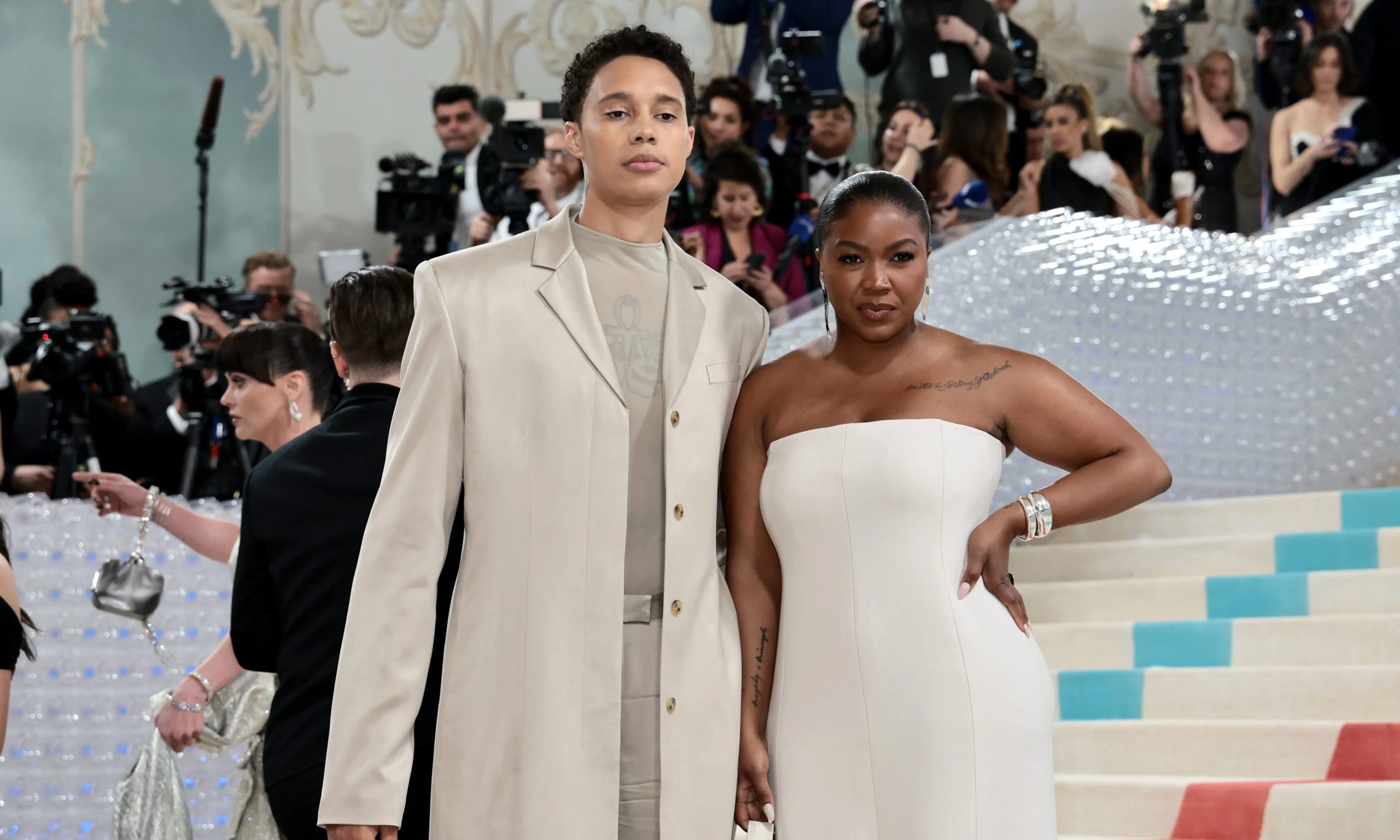
Brittney Griner is calling it quits on her marriage just weeks after a reportedly loving social media dump. The WNBA player filed her divorce petition on Thursday (July 30) in Fulton County, Georgia. Cherelle Griner has not reacted to the filing on her social media as of early Friday afternoon.
RELATED: Whew! Jelly Roll’s Daughter Says Internet Will “Crumble” The Day She Shares Reason For Her Dad & Bunnie XO’s Divorce
Brittney Griner Says Marriage To Cherelle Is “Broken”
Documents reportedly obtained by PEOPLE say that Brittney Griner and Cherelle have been separated since July 24. Page Six reports that they first met while attending Baylor University in Texas and got married in June 2018.
The report doesn’t detail what exactly went down in the marriage, but Brittney listed it as “irretrievably broken.” Also, Brittney Griner’s petition mentions their two-year-old son, Bash Raymond Griner, who was conceived through IVF and carried to term by Cherelle. The WNBA star wants joint legal custody of him. Griner has not opened up on social media or made any public statements about the divorce.
Remember When Cherelle Griner Fought For Brittney’s Release?
Back in 2022, Cherelle Griner had a fanbase riding behind her as she advocated for Brittney’s release. She was detained after attempting to enter Russia with cannabis oil vape cartridges in her luggage in February 2022. Officials locked her up on a drug smuggling charge, and six months later sentenced her to a nine-year prison sentence. It took another four months before Brittney was released from the Russian prison and back in Texas with her wife in December 2022.
During her time imprisoned, Brittney’s wife kept the public informed of her mental health and what the time in jail was costing them. She advocated to President Biden. Also, she made media appearances on programs like CBS Mornings and Good Morning America, calling for her wife’s release. In July 2024, they welcomed their first child together, Bash.
Cuteness Overload! Brittney Griner & Wife Cherelle Share The First Look At Their Son (PHOTOS)
Brittney’s Been Divorced Before
Cherelle Griner was not Brittney’s first wife. Her first marriage to WNBA player Glory Johnson ended with Griner filing for an annulment 28 days after getting married in May 2015. It was finalized a year later in June 2016. Brittney and Glory also had children during their marriage, welcoming twins Ava and Solei through IVF.
RELATED: Cuteness Overload! Brittney Griner & Wife Cherelle Share The First Look At Their Son (PHOTOS)
What Do You Think Roomies?


Christian influencer and former reality TV star Sadie Robertson is opening up about her and her husband’s decision to forego a physical relationship before getting married. During a new episode of her “WHOA That’s Good” podcast, the former “Duck Dynasty” star said that she and her husband, Christian Huff, decided together to live differently than they had in the past to honor God.
Robertson, 29, said that when she first got together with her husband, they decided together to pursue purity. She explained that they also got really candid with each other about what physical boundaries they were setting.
“Honestly, we kind of went a different route than just having like…if you’re talking about physical boundaries, which we can talk about other boundaries too,” she said. “I guess there’s a lot of different boundaries, but physically speaking, we didn’t say like we’re not going to do this, this and this, and we are going to do this, this and this. Like, here’s the boundary.”
Sadie Robertson Wanted To Follow ‘God’s Plan’
According to Robertson, it was important to clarify what they were doing and why because if they didn’t, she felt it would be easy for them to go right up to the boundary line before crossing it.
Robertson, a mother of three, said that she and Huff were adamant about following “God’s plan” for their lives. “God’s plan is purity and God’s plan is one-man and one-woman for marriage,” she said. “And I will say, that wasn’t what our past looked like. But we had an opportunity when we came together for our future to look different than people we dated in the past.”
Robertson went on to say that she and Huff both wanted the best for each other and wanted to follow God’s will.
“We wanted to pursue that. And so together we made a decision, ‘Hey, we’re going to do that.’ And that looks like purity and that looks like this,” she preached.
Sadie Robertson Got Engaged To Huff In 2019
Robertson and Huff got engaged in 2019 on her family’s farm in Louisiana. Huff popped the big question after nine months of dating, and according to Robertson, it was a total surprise. “I did not know it was coming. It was the most perfect thing ever,” she said, per PEOPLE.
Prior to the engagement, Robertson and Huff were planning a joint birthday bash with their closest family and friends. According to Robertson, after Huff got down on one knee, it made their night together that much better.
“From that moment, it was just like the most special engagement ever. He had letters from all of my family and all of his family and my Bronco waiting on me. And so when I got in the car, there were all these letters everywhere and our favorite song was on,” she said.
Another Christian Influencer Opened Up About Pursuing Purity After Living A ‘Double Life’
According to a previous report from The Blast, Madison Prewett, known for her Christian-themed podcast and season of “The Bachelor,” also opened up about pursuing purity after living a “double life.”
She previously told “Full House” star Candace Cameron Bure that she had become addicted to pornography at a young age by a friend and that it eventually consumed her. “And on the outside, it looked like everything was fine. But behind closed doors I was living this double life of living in constant secret sexual sin and not confessing it to anybody,” she said.
The reality star said that it wasn’t until college that she opened up about her struggles with someone else and was able to get “free” from it.
Prewett Is Learning To Not Be So Hard On Herself
Prewett went on to say that she learned after that moment that she had to not only be honest with herself, but with God.
“That was really what that journey was like for me,” she said. “Even to this day, having moments of shame popping back up, immediately just confess it and get it into the light and share it with a friend.”
Some movies have a lot of promise, but shoot themselves in the foot by taking themselves too seriously. They get dark and dour where they should have stayed lighthearted, straining for profundity when simply being entertaining would have sufficed. This problem is particularly acute when it comes to many recent superhero and blockbuster movies.
The titles below are object lessons in the opposite approach. They are great precisely because they remain fun (and perhaps a little goofy) the whole way through. These movies never feel like they’re trying to prove anything beyond fulfilling their entertainment quota, which is why we love them even more. It doesn’t make them meaningless or unimportant; it just makes them enjoyable.
‘Kiss Kiss Bang Bang’ (2005)

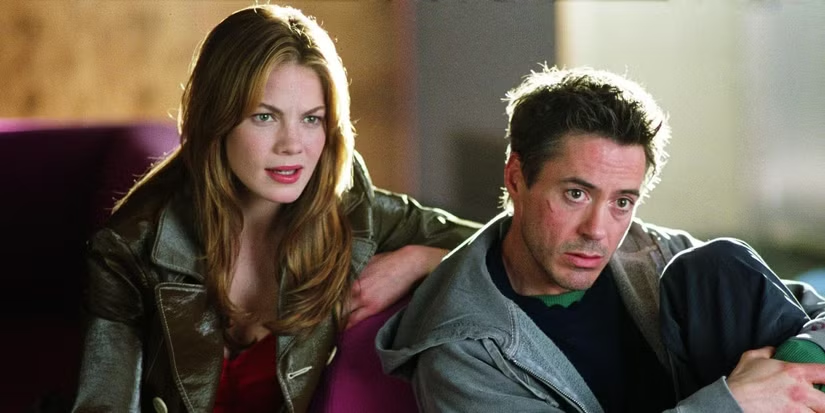
“Who taught you math?” This crime comedy was Shane Black‘s directorial debut, and it remains delightful more than two decades since it came out. In it, small-time thief Harry Lockhart (Robert Downey Jr.) accidentally lands a Hollywood screen test before becoming entangled in a murder investigation alongside sarcastic private investigator Perry van Shrike (Val Kilmer) and aspiring actress Harmony Lane (Michelle Monaghan). The increasingly convoluted mystery serves as the perfect playground for Black’s razor-sharp dialogue and relentless self-awareness.
Kiss Kiss Bang Bang strikes a great balance between mocking the conventions of noir thrillers while also being suspenseful and compelling. Crucially, every joke feels like part of the narrative rather than a distraction from it. Not to mention, the easy chemistry between the leads does a lot of heavy lifting, taking moments from simply funny to outright hilarious. Fast, stylish, and endlessly quotable.
‘Big Trouble in Little China’ (1986)

“It’s all in the reflexes.” Although a box office flop, Big Trouble in Little China was charming enough to have a second life on home video, eventually establishing itself as a cult classic. Frequent John Carpenter collaborator Kurt Russell takes on a different kind of role here as truck driver Jack Burton, a swaggering hero who is also frequently confused, frequently outmatched, and frequently rescued by more capable people around him.
When his friend Wang Chi’s fiancée is kidnapped by an ancient sorcerer beneath San Francisco’s Chinatown, Jack stumbles into a world filled with martial arts masters, monsters, magic, and centuries-old conspiracies. It’s all very ridiculous, but Carpenter embraces that. The fight scenes are impossible, characters fly around ridiculously, and the madness relentlessly escalates. Every outrageous beat is delivered with complete confidence, ensuring we come along for the ride.
‘Hot Fuzz’ (2007)

“The greater good.” The entire Cornetto Trilogy is an example of a cast and crew turning lack of seriousness into high art. Hot Fuzz, in particular, begins as a fish-out-of-water comedy before exploding into one of the funniest action films ever. London’s most accomplished police officer, Nicholas Angel (Simon Pegg), is reassigned to the seemingly idyllic village of Sandford after making his colleagues look bad. However, this sleepy hamlet quickly becomes an unlikely battleground after a series of mysterious murders.
The visual gags and physical comedy are off the charts here, producing countless iconic moments, like the chanting hooded conspirators, the runaway swan, the sea mine, the church steeple impalement, and “Ever fired two guns whilst jumping through the air?” As with Kiss Kiss Bang Bang, this is a movie that celebrates its genre while also poking fun at its excesses, and it radiates pure joy from beginning to end.
‘Guardians of the Galaxy’ (2014)

“We are Groot.” Just as the DCU was getting a little too grim and gritty, Marvel pivoted in the opposite direction with Guardians of the Galaxy, proving once again that superhero movies can embrace complete absurdity without sacrificing any emotional punch. Here, a thief (Chris Pratt), an assassin (Zoe Saldaña), a genetically enhanced raccoon (Bradley Cooper), a walking tree (Vin Diesel), and a revenge-obsessed warrior (Dave Bautista) reluctantly join forces after becoming caught in an intergalactic struggle over an immensely powerful artifact.
The setup sounds like the start of a bad joke, but James Gunn turns it into one of the most charming blockbusters of the 2010s. The constant jokes never diminish the genuine relationships developing between the characters and, perhaps most important of all, the soundtrack plays a crucial role in establishing the film’s playful personality. This recipe resonated, carrying Guardians to a $773m box office haul.
‘The Princess Bride’ (1987)

“As you wish.” Boasting one of the finest scripts of all time, The Princess Bride immerses us in a fairytale world of adventure, love, wit, danger, sword fights, and killer one-liners. Buttercup’s (Robin Wright) romance with the farmhand Westley (Cary Elwes) quickly evolves into an extraordinary journey involving pirates, revenge, kidnappings, miracle workers, giants, and one of cinema’s most colorful collections of supporting characters.
Practically every scene is iconic and practically every conversation is quotable, whether it’s Inigo Montoya (Mandy Patinkin) confronting his enemies or Vizzini (Wallace Shawn) repeatedly declaring situations “inconceivable.” Quirkiness aside, the movie is deeply in love with storytelling itself, and that shines through from the first scene to the last. Although it’s clever, meta, and weirdly postmodern, The Princess Bride ultimately places heart over artifice. It’s no mere empty exercise in style or pastiche.
‘Raiders of the Lost Ark’ (1981)

“It’s not the years, honey. It’s the mileage.” With Raiders, Spielberg made cinematic alchemy out of the boys’ adventure serials that had charmed a previous generation. Harrison Ford turns in his most beloved performance as the whip-wielding archaeologist racing against the Nazis to recover the legendary Ark of the Covenant, traveling from South America to Nepal, Cairo, and beyond. These are world-hanging-in-the-balance stakes, yet the movie never becomes self-important.
The feeling of fun is inexhaustible, with the movie serving up one marvelous set piece after another, from the opening temple escape to the truck chase across the desert. While these sequences are grand and intense, Indy himself is no invincible superhero; instead, he’s someone who continually improvises his way through disasters with equal parts courage, luck, and sheer determination. His frequent mistakes make him feel wonderfully human.
‘The Big Lebowski’ (1998)

“The Dude abides.” The Big Lebowski is one of the greatest stoner noirs, spinning a quotable comedy around a bizarro mystery and the most laid-back protagonist imaginable. Jeffrey “The Dude” Lebowski (Jeff Bridges) is mistaken for a millionaire sharing his surname and becomes unwillingly entangled in a kidnapping plot involving nihilists, pornography, artists, bowling tournaments, and increasingly surreal misunderstandings. Rather than solving the situation through brilliant deduction, the Dude mostly stumbles from one strange encounter to another, somehow surviving through sheer persistence.
Through it all, the Coen brothers delight in treating absurd situations with complete sincerity. Indeed, the film itself is as easygoing as its central character, which is why it works so well. The Big Lebowski is so totally committed to its oddball wavelength that it somehow succeeds against all odds, and it’s now one of the most enduring movies of the 1990s.
‘Back to the Future’ (1985)

“Roads? Where we’re going, we don’t need roads.” Back to the Future is a masterclass in fusing high-concept sci-fi with infectious humor. Teenager Marty McFly (Michael J. Fox) is accidentally transported from 1985 to 1955, where he must ensure that his parents fall in love while finding a way to return home before he accidentally erases his own existence.
Crucially, unlike most time-travel stories, the movie never gets bogged down in scientific explanations, instead focusing on memorable characters and stellar comedic timing. Sure, the mechanics of the time-travel don’t really make sense, but when the script is so cleverly constructed and the performances are so lovable, who cares? Not to mention, there’s an irresistible optimism to Back to the Future, making it a feel-good gem to return to again and again. Like the DeLorean, it transports us back to a simpler time.
‘Burn After Reading’ (2008)

“What did we learn?” The Coen brothers strike again. Although not as druggy and hazy as The Big Lebowski, Burn After Reading is arguably more unhinged in its own way. When a disc containing supposedly classified information falls into the hands of two dim-witted gym employees (Brad Pitt and Frances McDormand), they attempt to blackmail its owner (John Malkovich), triggering a chain reaction of misunderstandings involving intelligence agencies, paranoid ex-spouses, cosmetic surgery, and increasingly catastrophic decisions.
Here, the Coens derive enormous comedy from the gap between the characters’ confidence and their actual intelligence. Nearly everyone believes they are participating in an elaborate conspiracy when, in reality, they’re just… not. In addition to the phenomenal writing, the stacked cast gives us wonderful performances, from Pitt’s dim-witted cheerfulness to McDormand’s delusional entitlement to Malkovich’s volcanic frustration.
‘In Bruges’ (2008)

“You’re an inanimate f—ing object!” Finally, we have In Bruges, which might still be Martin McDonagh‘s masterpiece. After a botched hit leaves him emotionally shattered, young hitman Ray (Colin Farrell) is ordered to lie low in the picturesque Belgian city of Bruges alongside his older partner Ken (Brendan Gleeson). But Ray grows increasingly restless, and their temporary exile spirals toward tragedy, absurdity, and violence.
In Bruges is a remarkable balancing act between humor and darkness, depth and ridiculousness. Somehow, even when touching on genuinely powerful ideas, it still feels light and nimble. The stars practically sing McDonagh’s colorful dialogue (it’s like Tarantino, had he been born in Ireland and read too much existentialism), and Ralph Fiennes nearly steals the film with his explosively funny supporting performance as mob boss Harry. What a classic.

Inside “The Vortex,” the secluded Malibu estate that was chasing energy, wellness, and connection two decades before the real estate industry gave it a name.
The status symbol just changed, and nobody built a car for it

For years, the ultra-wealthy signaled arrival with horsepower and square footage. That math is breaking down. Demand for wellness-focused real estate has more than doubled over the last five years, and buyers are now paying a real premium, 10 to 25 percent above standard luxury pricing, for homes designed around how they make you feel rather than how they photograph. Longevity, recovery, and a sense of place have become the new bragging rights.
Which is what makes one secluded property on the western edge of Malibu feel less like a coincidence and more like it was waiting for the rest of the market to catch up.
A house that picked up nicknames instead of an address

Locals and past guests never really called it 9980 Houston Road. Over the years it’s been The Vortex, The Music Mansion, The Sun House, depending on who was standing in it and what they were there to do. None of the names tell the whole story on their own. Together they start to.
Before sound bowls had a name

The design phase started back in 2000, years before wellness retreats, sound bath ceremonies or a global pandemic reshaped what people wanted from a home. Architect Raul Roggero wasn’t working off a trend report. He was chasing a feeling he described as a “radical creative state,” a space built around freedom, honesty and an unfiltered connection to nature, with the architecture and the art meant to fuse into one thing rather than compete for attention.
At the time, some of the celebrities who’d eventually walk through the house were still kids. Airbnb wasn’t a company yet. Sound bowls and electronic music hadn’t become the cultural moments they are now. Roggero couldn’t have designed for healing retreats, yoga groups, or musicians using the place to max out their creative limits, because none of that existed in a mainstream way yet. He built for a feeling instead, and the uses found the house later.
Architecture designed around the horizon

Completed in 2007, the estate spans roughly 5,932 square feet on nearly an acre of elevated coastline, hidden above Deer Creek Road with uninterrupted views running from the Santa Monica Mountains out across the Pacific. The lines of the house stay deliberately understated. Floor-to-ceiling glass dissolves the wall between indoors and out, so the landscape does most of the talking. Mahogany flooring runs beneath soaring ceilings, giving the main living spaces a sense of volume that works as well for a full house of guests as it does for a single person sitting in silence.
Chef’s kitchen

The kitchen sits at the center of the home, outfitted with Viking Professional appliances, positioned to look out over both the entertaining spaces and the ocean beyond. Even the most functional room in the house doesn’t turn its back on the view.
Resort living, elevated

Outside is where the property really shows its hand. The infinity edge pool appears to spill straight into the Pacific, one of those details that photographs well but hits differently in person. Multiple terraces wrap the grounds, each catching a different slice of light depending on the hour, with lounge areas, alfresco dining and dual outdoor kitchens that pull every gathering outside almost by default.
Evenings on Houston Road

The house changes character at night. Architectural lighting reflects off the water, the coastline fades out, and what’s left is stars overhead and the glow of the ocean stretching to the horizon. It’s the kind of setting that explains why sound bowl circles and quiet retreats found their way here long before the property had a market category to sit in.
Privacy as the ultimate luxury

Set beyond Neptune’s Net and wrapped in protected hillside, this stretch of Malibu doesn’t put its luxury on display the way the beachfront addresses do. There are no visible neighbors, no through traffic, nothing pulling attention away from the house itself. Guests get immediate access to some of Malibu’s most celebrated hiking and equestrian trails while staying just minutes from Pacific Coast Highway, an unusual balance of being close to everything and reachable by almost no one.
Why the industry is finally speaking the house’s language

What reads today as a wellness real estate case study was, in 2000, just a feeling Roggero was chasing. The market has spent the last several years building vocabulary for exactly that instinct. The Global Wellness Institute’s 2026 real estate research describes buyers seeking homes that actively support recovery and nervous system regulation as part of daily life, not as a weeklong escape but as a permanent condition of where they live. Sotheby’s puts it more bluntly: forget the sports car, the new status symbol is a longer, healthier life, and increasingly people are trying to buy a home that supports that.
That’s precisely the appeal that turned this Malibu property into an unofficial gathering place for meditation and yoga retreats, sound bowl ceremonies, and the kind of celebrity guests who wanted somewhere private enough to actually unwind rather than perform. It’s also what made it work as “The Sun House,” a beloved short-term rental for years before wellness residences had a category of their own on Sotheby’s balance sheet.
Twenty-five years later, the Vortex is still running

The deer were already showing up on the property before the house existed. The friendships that would define its guest list were still forming. The desire for freedom, creativity and connection that Roggero built the place around didn’t have a market report behind it yet, just a sense that this particular stretch of Malibu held something worth protecting.
Real estate trends tend to catch up to instinct eventually. This one just took twenty-five years.
The listing is held by Tai Savet of Agents of LA.

A community is mourning after an autistic teen, Adonis Jarvis tragically died. Now, prosecutors have charged his mother, Geneva Jarvis, and grandmother, Denise Jarvis, with murder after Adonis allegedly starved to death.
RELATED: Prayers Up! 1-Year-Old Reportedly Dies After 14-Year-Old Mom Allegedly Crashes While Driving Under The Influence
Investigation Leads To Murder Charges Against Mother & Grandmother
The NYPD arrested 62-year-old Denise Jarvis and 36-year-old Geneva Jarvis in connection with the March death of 16-year-old Adonis Jarvis. Officers rushed to Lincoln Hospital on the night of March 19 after receiving a report of a “suspicious death.” When they arrived, they found Adonis’ body showing signs of severe malnourishment. The city’s Chief Medical Examiner later ruled his death a homicide. Authorities said Adonis weighed about 60 pounds when he died. His twin brother, who also has autism, arrived at the same hospital under similar circumstances and reportedly barely survived.
What’s Next For Denise & Geneva Jarvis?
On Thursday, July 30, police charged Geneva Jarvis and Denise Jarvis with murder in connection with Adonis’ death. The two women also reportedly face assault and other charges tied to the treatment of his surviving twin brother. Bronx District Attorney Darcel Clark said in a statement that women failed the twins, who allegedly had sore covering their legs and bodies. “These two women failed in their duty and responsibility to care for these boys. One child has died. The other faces a lengthy recovery,” Clark said. The New York Post later shared footage of NYPD officers taking Denise and Geneva into custody. When asked why they allegedly failed to feed the boys, neither woman responded.
The Internet Shares Heartbreak & Outrage Following Adonis Jarvis’ Tragic Death
Instagram user @ford_kann wrote, “This is truly heartbreaking 😢💔 Someone who was supposed to love and protect this poor baby!!!”
Instagram user @haziniya wrote, “The 2 ppl who should’ve protected him the most sad💐💜🫶🏽😔”
While Instagram user @education_useonly wrote, “RIP my condolences 💐”
Then Instagram user @itzjustquiiii wrote, “Hits different when u actually know these twins smh.”
Another Instagram user @jazzy2757 wrote, “If he was in school, why didn’t anyone report it?”
Instagram user @whosthedj wrote, “It is so sad at the age of 16 they have starved him wow.”
Then another Instagram user @michelletubbs2019 wrote, “SICKENING 😡😡”
Finally, Instagram user @juliazeth wrote, “Poor kid… these people shouldn’t be having babies if they can’t take care of them!!!!”
RELATED: Florida Teacher Arrested & Charged For Allegedly Putting Autistic 3-Year-Old In A Chokehold
What Do You Think Roomies?

Chrisean Rock is tired of being tied to rumors surrounding the death of her ex-boyfriend, Ronny Doe. She recently went off on social media while addressing suggestions she might’ve been involved. Rock didn’t hold back, admitting that she didn’t feel anything when he died. Ronny previously claimed that Rock’s son, Chrisean Jesus, was his. Blueface has made the same paternity claims online, including in recent weeks.
RELATED: Claressa Shields Appears To Advise Chrisean Rock To Stay Away From Blueface After They Link Up For Boxing Training (VIDEO)
Chrisean Rock Asks To Be Left Out Of Ronny Doe Conversations
In a livestream, Chrisean Rock talked for at least two minutes about why Ronny Doe’s death has nothing to do with her. She said an open investigation doesn’t mean she’s connected. Rock alleged that Ronny was linked to her because he made his life about her. She accused him of being desperate and “high” at the time on Percocets, Molly, Lean, and alcohol. “Nobody was holding Karon accountable, falsely claiming my son,” Chrisean Rock said, using Ronny’s real name, Karon Cann. She added that no one was trying to save her ex before he died, before making drug trafficking allegations. It’s unclear who exactly her message is targeting, people close to Ronny or local law enforcement.
“Y’all keep trying to put this narrative out and I’ve then I keep being quiet because I lowkey loved Karon and I got respect for his family,” Chrisean Rock said. She claims police told her, “We know you didn’t do it, we got his phone.”
RELATED: Chrisean Rock Reflects On Memories Of Ex-Boyfriend Ronny Doe With Heartfelt Throwback Moments (VIDEOS)
She added that the conversation with law enforcement was recorded. Additionally, she emphasized that Ronny Doe is dead and at the time he passed she had already stopped loving him. She said she had no feelings in her body when he passed because he was trying to “kill” her before he died.
“He really was. He was trying to diminish my character, my image. He was trying to clout chase off of my son that I love the most. People be doing stuff and don’t know what be actually the after effort. All of y’all sound dumb…and that’s what I’m saying bro. There’s a lot of evil attack me at one time and I don’t f**k with it.”
Ronny Doe Previously Claimed To Be Father Of Rock’s Son
As previously reported, Ronny Doe was fatally shot in February 2025 in Severn, Maryland. Despite being transported to a nearby hospital, he passed away. Earlier this week, the Anne Arundel County PD confirmed to TMZ that the investigation into Ronny’s death “is an open and active investigation.” The agency refused to provide any additional details.
As Chrisean Rock alluded, Ronny Doe wasn’t letting up on her just months before his death. In December 2024, he accused Rock of trying to “put charges” on him to swerve a DNA test on her son. Also, he claimed he was in the room when Chrisean Jesus was born. Just before that, he confronted Chrisean Rock while she was mall shopping with her son. She asked why he was “stalking” her and angrily called her weird and responded, “That’s my f**king son.” She also warned she would call the police.
Blueface Alleges Chrisean Was Involved In Ronny’s Death
Blue has suggested a few times that Ronny Doe is the biological father of Chrisean Jesus, including at least three times this year. In March, Blueface said on X that Chrisean Jesus is not his son and that Ronny Doe is his father. “I can no longer continue the plot it doesn’t feel right as a present father in all my kids life to be discredited as a absence father to a child that is not biologically mine,” he wrote on X, adding that continuing this plot didn’t “feel right.”
Months later, in May, he doubled down on the paternity denial during an interview on ‘The Jason Lee Show.’ He said being the child’s dad was a narrative he and Rock cooked up to capitalize financially from the internet. He also accused Rock of being a “set-up” artist. He continued to deny Chrisean Jesus throughout the rest of May.
Recently, Chrisean Rock went viral for confronting Blueface about denying the child. He laughed her off. Later, he appeared to suggest that a photo shared on his account came from Chrisean Rock and not him. He also seemed to accuse her of deleting his maternity photos with his pregnant boo, Nevaeh Akira.
RELATED: Oop! Blueface Alleges Chrisean Rock Posted Message Calling Chrisean Jr. His Son As Nevaeh Akira Reacts To Their Cozy Link-Up
What Do You Think Roomies?
Entertainment
Forget ‘Game of Thrones,’ Netflix’s Near-Perfect 5-Season Epic Is the Ultimate Weekend Binge

As House of the Dragon Season 3 gears up towards its finale, fans will no doubt be looking for a new show to fill the void the fantasy series leaves behind. While Game of Thrones could quench some of that thirst, finding something new to binge instead might be the best option. Thanks to its huge impact on the zeitgeist, there are now many fantasy and medieval-inspired shows around, but few are as good and underrated as The Last Kingdom. With five near-perfect seasons and one movie, this hidden Netflix gem adapts one of the most celebrated historical fiction book series, following protagonist Uhtred of Bebbanburg (Alexander Dreymon) as he takes part in some of the defining moments of English medieval history.
‘The Last Kingdom’ Adapts Bernard Cornwell’s Classic ‘Saxon Stories’ Book Series
As beloved as it is, the chief criticism of Game of Thrones and House of the Dragon is how much it veers off from George R.R. Martin‘s source material. This was never too much of a problem for The Last Kingdom, which adapts Bernard Cornwell‘s classic book series, The Saxon Stories, a story that is guided by historical events. Each season adapts two books of the 13-entry saga; there are plenty of changes from the original story towards the end, but it’s ultimately for the best.
The story follows Uhtred, the son of a Saxon nobleman who is captured and raised by Danes during the Viking invasions. Aware of his birthright as heir to Bebbanburg in Northumbria, but also of his own affection and respect for the people who became his family, he is caught in the middle of the conflict between these two cultures and peoples — Saxon kingdoms fighting for survival and Viking armies seeking to expand. Uhtred’s internal dilemma is the plot’s emotional anchor, as he struggles to figure out his place in such turbulent and violent times.
The Last Kingdom wraps up in Season 5, but Uhtred’s story comes to an end in The Last Kingdom: Seven Kings Must Die, a movie released by Netflix in 2023 to wrap up the adaptations of Cornwell’s books. Given the timing of each release, the series was never ahead of the books in terms of story, so even with a few deviations from the book, everything was ultimately tied up neatly. Right now, The Last Kingdom holds 95% audience approval rating on Rotten Tomatoes, a testament to how well developed it was.
‘The Last Kingdom’ Shares Many Similarities With ‘Game of Thrones’

While there obviously is no magic in The Last Kingdom, it’s easy to see why it really is the perfect Game of Thrones replacement. Instead of fantasy, it excels in portraying the fractured and fragile state of what is currently known as England in the Middle Ages. Simply put, it has lots of backstabbing and great battles, things that everyone loves from Westeros. The Last Kingdom‘s portrayal of Medieval England isn’t that different, as it was a time when many kings and lords often plotted against each other and sought to come out on top. Game of Thrones itself was highly inspired by the War of the Roses, so delving into medieval history might not be as outlandish as it seems.
With all of that plotting and scheming, the whole country is also under threat from the Vikings. This adds another layer of complexity to the story, as the invaders serve as a unifying factor for the multiple English kingdoms. Numerous as they may be, they still have a lot in common, including culture and religion, while the Vikings essentially mean the end of this way of life should they win. With the Vikings serving as a unifying force for the kingdoms, it is easy to draw a parallel between the Danes and the White Walker threat from Game of Thrones. But while Game of Thrones turns the White Walkers into straightforward villains, The Last Kingdom gives the Danes more depth and complexity.
Obviously, The Last Kingdom is not a one-to-one replacement for Game of Thrones. As Bernard Cornwell once pointed out, his work “is rooted in reality,” and sees similarities to Game of Thrones going only as far as both having “brutal men in chain mail and leather beating the sh*t out of each other.” George R.R. Martin, on the other hand, has been a huge fan of The Last Kingdom for a while, despite its “notable lack of dragons and magic.”
There Has Never Been a Better Time To Binge ‘The Last Kingdom’
Game of Thrones isn’t the only show in recent memory that features a frustrating ending, nor the only adaptation of a great literary series that has to deal with the uncertainty of running out of source material. In this sense, The Last Kingdom is the diametrical opposite to the HBO fantasy series. The Last Kingdom is a rare case of a series with a beginning, middle, and ending, as well as compelling characters and stories that aren’t dropped or forgotten as the story progresses season after season.
With House of the Dragon about to wrap up Season 3, it might be a while before Westeros is back on TV; Season 4 is still far away, and A Knight of the Seven Kingdoms is just about to wrap up filming for Season 2. The Last Kingdom, however, is available via Netflix at least until the end of the year. Its similarly structured seasons and thematic parallels make for a seamless transition, and, as a whole, the series ultimately proves that history can be every bit as gripping as fantasy.
The Last Kingdom is available to watch on Netflix.

Alaskan Bush People stars Gabriel and Raquell Brown have reportedly separated after seven years of marriage.
TMZ reported on Friday, July 31, that Gabriel, 36, and Raquell quietly chose to end their marriage this past spring and have been living apart ever since. Per the outlet, the couple faced financial pressure as well as differences over Gabriel’s priorities. (They share two daughters and a son.)
Us has reached out to Gabriel for comment.
Alaskan Bush People chronicled Gabriel and Raquell’s courtship once they were introduced by Gabe’s sister Rain Brown in 2018. The former couple tied the knot privately in 2019 and later filmed a second reception to air on Alaskan Bush People the following year.
In that 2020 wedding episode of Alaskan Bush People, Gabriel reflected on what it meant to exchange vows with Raquell in front of the extended Brown family.
“It’s just a wonderful moment. This feeling, it’s everything I ever dreamed of,” he said at the time. “This day is going to go down in the history books as one of the best days of my life.”
As his bride walked down the aisle, the episode cut away to Gabriel explaining, “All of my nervousness, the pre-wedding jitters and all of that, it just stopped as soon as I saw Raquell walking down the aisle. It was like I was coming through a storm on a dark night and all of a sudden I pulled into a nice, safe harbor.”
Gabriel and Raquell frequently charmed fans throughout their marriage with their sweet couples content via social media.
Months after their private wedding, Gabriel penned a loving tribute to his bride, writing, “When two people meet, and two souls touch. In one look, love is felt. As time goes on, and that love grows into something more, becoming hard to describe I call that blessed. That’s what I feel for Raquell. If you have someone like that in your life cherish them, and never give up on them. If not not just hold on. Love will come to you. God bless us all.”
Raquell shared own ode to Gabriel in November 2024 with a heartwarming video where she promised their love would be “always” and “forever.”



Raquell and Gabriel Brown Courtesy Instagram / Raquell Brown
Gabriel’s reported separation from Raquell is occurring at the same time as his brother, Noah Brown, is going through a contentious divorce from his wife, Rhain Brown. Us exclusively reported on July 21 that Noah and Rhain’s divorce proceedings have been plagued with disputes over financial difficulties and child custody disagreements. (Noah, 31, and Rhain, 34, share two children — Elijah, 7, and Adam, 4.)
The family also suffered a tragic loss when Noah and Gabriel’s brother, Matt Brown, was found dead at age 43 in May after going missing in Washington days earlier. The family appealed for the public’s help in locating Matt before Bear Brown confirmed that Noah had identified their sibling’s body when it was pulled from the Okanogan River.
“I would ask people to please, please be respectful to my family and to my mom. Please watch the comments that you leave, guys,” Bear, 39, asked at the time. “Sometimes words can hurt more than fists can … In one of [Matt’s] last videos, he was talking about how negative people were on his posts. You guys should keep in mind that people on the other side of your screen, people you are watching a video of, are real people too.”
The Troubles is among the most significant conflicts in 20th-century European history, but it has been notoriously difficult to turn into compelling dramatic material. While there are plenty of films, particularly in the ‘90s, that used the Irish Republican Army as a plot device or contained them to an inciting incident, studios have been hesitant to take a side in what remains a very controversial era in modern history, and one that still has repercussions today. Say Nothing is a nuanced crime thriller that explores the entire history of the Troubles, using point-of-view characters to offer a personal slant. Although it is by no means an easy series to watch, Say Nothing is also quite affirming, as it acknowledges the human lives that were lost, erased, and profoundly harmed as a result of the violence.
Say Nothing is based on the nonfiction book of the same name by Patrick Radden Keefe, a brilliant writer who has authored several historical texts that have inspired dramatic interpretations. Say Nothing drew inspiration from The Belfast Project, a historical research initiative that interviewed many survivors and participants of the conflict. The Troubles may often be associated with the 1970s, but Say Nothing spans into the ‘80s and ‘90s, using a dual narrative format to explore the lives of characters as they later recount their history. In many ways, Say Nothing is an inverted coming-of-age story; although many of the young IRA members joined at a time before they had matured, they made decisions that would have significant ramifications on both their lives and others.
‘Say Nothing’ Is an Inventive Take on Historical Events
Say Nothing benefits from some of the best performances in recent television history, as the series centers its emotional drama on the relationship between two sisters, Dolours and Marian Price. The Price sisters joined the IRA in 1971 and were involved in several key resistance activities, including the 1973 Old Bailey bombing and the hunger strikes by detained paramilitary members that followed; Dolours is played by both Lola Petticrew and Maxine Peak, and Marian is portrayed by both Hazel Doupe and Helen Behan. The interweaving structure is instructive because it shows the regrets felt by the Price sisters later on in life alongside the enthusiasm and desperation of their youth. It offers a more mature consideration of their actions and how they were coerced; instead of painting the Prices as restless agitators, Say Nothing examines why the IRA was so seductive, and why it was so successful in convincing young people to join its ranks.
Say Nothing offers an even-handed portrayal of history because the series explores the cyclical nature of violence, in which aggression and vengeance only pile up to create a conflict in which there is no reasonable solution. The show offers a visceral recreation of the 1969 Northern Ireland riots, in which Civil Rights activists advocating greater Catholic representation were brutally attacked by the police force, which largely consisted of Protestants. It’s a painful depiction because it doesn’t explore the wider context of the ethnonationalist conflict as it developed over the course of history, and opts to primarily focus on the rage and desperation that compelled so many young people, like the Prices, to get involved in resistance movements. The series is similarly respectful in showing how violence escalated in the coming years as the generational hatred grew stronger; since this wasn’t a formal war held on battlefields, much of the action was done in the shadows, adding more intensity to the depiction of espionage activities.
‘Say Nothing’ Is the Definitive Depiction of The Troubles
Say Nothing doesn’t pull any punches in reflecting upon the consequences of The Troubles, and the series is very critical of Gerry Adams, who is portrayed by both Josh Finan and Michael Colgan. Adams is a critical leader within the early development of the IRA who still holds a significant degree of influence today, having served as the president of Sinn Féin and Member of Parliament for the Belfast West constituency. Although Adams has officially denied his involvement in the case of “The Disappeared,” a group of 17 individuals who were lost and presumably executed by the IRA, the series makes strong implications about his role in the deception and radicalization of the movement. The haunting title cards at the end of each episode, which list Adams’ denials, are another reminder of how justice has been evaded, and how the nuances of history are lost.
Say Nothing is an immersive work of storytelling because it is as emotionally impactful as it is informative, and makes formal choices that help crystallize the most important moments of this era. The story is too narratively complex to be told in a traditional documentary style, but far too dense to have been confined to a single film; Say Nothing‘s nine episodes tell a complete narrative arc that leaves room for the viewer to develop their own takeaways. There will never be just one work of media that can encapsulate a historical moment as vast and complicated as The Troubles, but Say Nothing is worthy of examination, with an interpretation that is as valid as it is riveting.
Entertainment
The Supernatural Horror Movie Stephen King Called the Best of All Time Is Officially Streaming for Free

Iconic author Stephen King has no shortage of opinions on pretty much anything, some more controversial than others. But it’s his opinions on pop culture — television shows, movies, books, and so on — that tend to have more weight, even if they don’t always jibe with popular opinion. Still, when Stephen King speaks on such topics, it’s best to take heed. And one great resource for his top picks is a 2017 interview with BFI, where King listed off his ten favorite films. One entry on that list earned King’s praise as the best supernatural horror of all time, and it’s available now to stream, for free, on Tubi: 1980’s The Changeling.
As King said in the interview: “For supernatural horror, I like Peter Medak’s film The Changeling, starring George C. Scott in perhaps his last great screen role. There are no monsters bursting from chests; just a child’s ball bouncing down a flight of stairs was enough to scare the daylights out of me.”
A Vengeful Spirit Seeks Justice in ‘The Changeling’

Widowed composer John Russell (Scott) finds himself in Seattle, after a cross-country move designed to put distance between himself and New York, where he witnessed his wife and daughter get struck and killed by an oncoming semi. He rents an old mansion from Claire Norman (Trish Van Devere), agent of a local historical society. The house has been vacant for twelve years, she assures him, only that may not be entirely true. Shortly after moving in, John becomes subject to strange occurrences: loud banging; water taps turned on; a shattering window that reveals the existence of a hidden attic; and the discovery of a music box that plays the same tune he played on the piano the night before. Most disturbingly, he sees the visage of a drowned boy in a bathtub.
John and Claire do a search on the mansion’s history, and chalk up the disturbances to the spirit of a young girl, who died on the grounds in 1909. He brings in a husband-and-wife team of mediums to hold a seance, which is recorded on audio tape. The seance is eventful, to say the least, but over the course of it, they find out who the spirit is: not a girl, but Joseph Carmichael. Who is Joseph Carmichael? John uncovers a horrible truth: Joseph was a crippled, sickly six-year-old, murdered in 1906 by his father. Joseph — and his father, by extension — would inherit an enormous fortune upon turning 21, an age he was unlikely to reach. So, in order to gain the inheritance, he replaced Joseph with a local orphan – the “changeling” – and claimed that his maladies had been cured by an extended stay in Europe.
Now determined to bring peace to Joseph, John digs deeper. Literally, by digging a hole on property once owned by the Carmichael family, where he uncovers the skeleton of Joseph, along with an incriminating christening medal buried along with him. John confronts “Joseph Carmichael,” now a U.S. Senator, with the revelation, only for the senator, caught off guard by seeing the medal (identical to the one his adoptive father gave him), to send Police Captain DeWitt (John Colicos) to John’s home. DeWitt attempts to intimidate John into relinquishing the medal, but is forced to leave and obtain a search warrant after John refuses to let him in. Only DeWitt never makes it back, with his vehicle mysteriously overturning en route, killing him. It’s clear that Joseph won’t give up until he gets justice… but can John find it for him?
Stephen King Is Right, and Wrong, About ‘The Changeling’
Stephen King is right, and wrong, about The Changeling. It is an unconventional, excellent, and gripping supernatural horror, but it also stands as a brilliant, detective-style thriller, with an emotional depth that is a rarity in either.
As a horror, the film makes use of its eerie, secluded mansion setting, where the disturbances seem almost expected. It’s largely devoid of jump scares and gore, instead building the horror through unsettling moments and clever camera angles — though the red rubber ball falling down the stairs, landing at John’s feet, or the old, dusty wheelchair that comes to life and chases Claire down the stairs are two of the more prominent examples of the former.
And, in a beautiful, yet disquieting sequence, the camera shifts to the point of view of Joseph, looking down on the seance from above and coming down to make his presence known, a perfect example of the creative eye of director Peter Medak. As a thriller, John and Claire’s work in uncovering the hidden secrets linked to Joseph’s death is engaging, a true mystery with an unexpected twist.
But it’s that emotional depth that sets The Changeling apart. John has no attachment to the mansion. He’s leasing it, and no one would blame him for packing his bags and leaving; it’s even implied that many before him have done the same. Only he’s still grieving the loss of his wife and daughter, so he recognizes something in Joseph’s actions, a plea for help, and finds a kindred spirit – no pun intended – whose agony over his untimely death melds with John’s grief. Ultimately, Joseph finds the justice he was looking for; and in bringing justice to him, John, in one of Scott’s best performances, finds a reason to live. It’s that justice, though, that leads to a bigger question: should Senator Carmichael, who knew nothing of the elder Carmichael’s machinations, have to pay for the father’s sins? The fact that (SPOILER) he ultimately does might just be the most horrifying thing about The Changeling. That, and the possibility that it’s based on a true story.
The Changeling is streaming for free on Tubi.
I’m A Cancer Doctor. My Friend’s Diagnosis Exposed A Blind Spot.

Man United team vs Atletico Madrid predicted as Shea Lacey starts and JJ Gabriel call made

Here’s How Car Safety Ratings Are Determined By The NHTSA & IIHS


-
 Sports5 days ago
Commonwealth Games boxing: Jadumani Singh seals dominant 5-0 win over Pakistan’s Sumama Rehman to enter quarter-finals | Commonwealth Games News
-

 Business2 days ago
Why Trees Belong on the Risk Register
-

 Fashion13 hours ago
Weekend Open Thread: Wit & Wisdom
-

 Politics10 hours ago
Meta enters AI-training agreement with far-right ‘propaganda rag’ Newsmax
-

 Tech5 days ago
Intel is reversing course and bringing hyper-threading back to its server chips
-

 Crypto World7 days ago
Ripple bought a bank in pieces. The $4 billion audit
-

 Politics5 days ago
Luke Littler dismantles Gerwyn Price to retain title in Blackpool
-

 Politics4 days ago
The Part of the Electric Transition Nobody Wants to Discuss
-

 News Videos5 days ago
BITCOIN JUST ENTERED THIS CRITICAL ZONE…
-
 Entertainment3 days ago
‘Stargate’ Creator’s New Sci-Fi Series Returns for Season 3 Tomorrow
-

 Crypto World6 days ago
XRP Ledger adds $2.6B as RWA inflows rank second
-

 Business3 days ago
Major shareholder moves on Canyon
-

 Politics6 days ago
Spain sweeps the board at 2026 World Cup with individual awards
-

 News Videos2 days ago
Bitcoin Enters the 3rd Stage of the Bear Market
-

 Entertainment6 days ago
Sara Gilson Killed By Husband After Viral “Pedophile” TikTok Video
-

 Crypto World3 days ago
Kraken Enables Retail Access to Jersey Mike’s IPO via Tokenized Shares
-

 Tech4 days ago
New macOS Sequoia & Sonoma security updates for older Macs
-

 News Videos3 days ago
Claude: Build Financial Dashboards in Minutes (2026)
-

 Politics2 days ago
Luke Littler’s dominance sparks GOAT debate
-

 Crypto World6 days ago
Upbit expands KRW market with two major DeFi token listings
You must be logged in to post a comment Login