From the moment that he popped up as Spider-Man in Captain America: Civil War, Marvel fans have absolutely loved Tom Holland. It’s hard not to, really: his Peter Parker is a humble, stumbling geek when he’s not thwipping his way through one supervillain fight after another. Offscreen, Holland always comes across just as affable as his onscreen persona, and he has more charisma than Spidey has web-fluid. So much charisma, in fact, that he managed to transform Zendaya, his onscreen love interest, into his real-life fiancée. But would you believe that Marvel’s most wholesome hero has a secret dark side?
No, I’m not talking about the Venom symbiote, which has yet to become a going concern in the MCU. But Tom Holland showed off his inner supervillain recently when he was confronted with an old, explosive quote of his: “If I’m playing Spider-Man after I’m 30, I’ve done something wrong.” Now that the actor is 30 years old, he admitted that he had a “strategy to create fear” among Sony executives so that he could get more money from the studio!
A Hero Is (Re)Born
Back in 2021, Tom Holland gave an interview to GQ Magazine. There, he made a very shocking statement: “If I’m playing Spider-Man after I’m 30, I’ve done something wrong.” What made the quote so shocking was the very idea that someone as young as Holland would voluntarily walk away from the biggest cinematic universe ever created. At the time, Marvel still had a well-earned reputation as a money-printing machine, and Holland was playing its most beloved superhero. While many thought he was foolish to toy with the idea of throwing it all away, some thought it was a sign of integrity that Holland might potentially turn away millions upon millions of dollars to avoid being typecast.
Everything came full circle when he gave a more recent interview to GQ. When asked about his old quote, he said that he had recently been “trying to remember what I meant” and clarified that his main point was “that I would love to pass the baton on.” Acknowledging that he should shift his Spider-Man retirement age to 37 instead of 30, he then threw out another possible motivation for his controversial quote. “I could also have been trying to leverage Sony and scare them into thinking I wasn’t going to do ‘Spider-Man 4’ now that I had a new deal on the horizon,” he said. “It could’ve been part of a strategy to create fear.”
In His Villain Era
Tom Holland isn’t confirming this was his plan. Still, what he threw out is hilariously sinister coming from Marvel’s most wholesome actor. At the time, everyone thought that he was either really brave or really stupid to act like he was too good for a role most actors would kill to have. Now, he just casually admitted that this might have been a plan to land himself a bigger paycheck for Spider-Man: Brand New Day, which is coming out this summer. When he and Zendaya finally tie the knot, he might be able to treat her to an extravagant honeymoon, all because he secretly bullied Sony into giving him more money!
Now, though, the not-so-young man is past playing head games with the studio. In his most recent GQ interview, he admitted that “playing Spider-Man has been the joy of my life…I’ll do it for as long as they’ll have me.” That’s likely good news for Kevin Feige, as most assume Holland’s Spider-Man will be a central MCU character after Avengers: Secret Wars reboots this cinematic universe. After all, he’s still much younger than other Marvel stars like Hugh Jackman, who would probably never mouth off to the studio. In fact, if Jackman is still playing Wolverine when he’s 90, he’ll have done something very, very right!
The war movie genre has boasted some impressive, memorable, and complicated films over the years, going as far back as 1898 with the controversial propaganda picture Tearing Down the Spanish Flag. Genre classics such as Apocalypse Now, Saving Private Ryan, Full Metal Jacket, and All Quiet on the Western Front tend to dominate war movie conversation, and oftentimes, newer installments to the genre rarely add something new and wind up feeling repetitive.
The moving 2023 WWII movieOne Life, which has a 91% on Rotten Tomatoes, not only managed to inject an incredible amount of heartfelt emotion into the genre, but did so with minimal action. Through the fantastic performances of Anthony Hopkins and Jonathan Pryce, who effortlessly convey their characters’ complicated pasts, the movie provides a relevant message about the power of human decency that feels incredibly necessary in today’s world.
Advertisement
What Is the War Drama ‘One Life’ About?
With how expansive and destructive World War II was, there are likely hundreds of tales of bravery and extraordinary moments that have flown under the radar. One Life‘s narrative is one of those moments that is truly hard to believe. It explores the true story of Anthony Hopkins’ Nicholas Winton who, in his old age, looks back at when he arranged the evacuation of over 600 children from Czechoslovakia during Nazi occupation — almost single-handedly — while trying to find a home for his scrapbook that details his heroism. The way One Life focuses on Winton’s humility — as he has never been truly recognized for his achievements yet never wishes for them — makes Winton an instantly lovable hero, and Hopkins plays it perfectly. His soft demeanor, with a quiet, shuffling body language, conveys a sincerity that reflects his younger self.
The film switches between a young Winton (Johnny Flynn) and him in the present day, just as it does Ziggy Heath and Jonathan Pryce, who play Winton’s friend Martin Blake, the one who initially invites Winton to Prague to assist with humanitarian efforts. Whereas Flynn and Ziggy Heath play their younger versions with more urgency, due to the stakes, Pryce and Hopkins give their characters slower, more thoughtful deliveries, conveying the weight of their past and how they must have thought about this a thousand times.
Advertisement
‘One Life’ Challenges the Audience and Proves How Powerful Human Decency Can Be
Other war films, such as Hacksaw Ridge, explore how much difference one person can make. In the case of that movie, Desmond Doss (Andrew Garfield) is committed from the start to simply save whoever he can, and the high-intensity action almost makes the decision for him on how he must act. Instead, One Life is a snowball effect, as Winton only slowly begins to put the pieces together of how difficult saving these children actually will be, and yet his drive to do the right thing shows how anything can be overcome or made possible. Whether it is the British government being incredibly unhelpful in providing visas for children to use to escape, or the Nazis providing a more sinister and urgent threat, Nicholas Winton is constantly told there is no hope, and he must rely on sheer relentless effort to save lives. In today’s world, where institutions fail people consistently, One Life shows how we should believe in making the world a better place one step at a time with our own actions, whether the systems in place are there to help us or not.
Nicholas Winton almost refuses to take credit for his heroism, insisting that he was only doing the right thing and that anyone would have done the same in his shoes. Even when faced with one of the most hateful, destructive threats the world has ever experienced, Nicholas Winton never backed down. He didn’t want money or fame, and he didn’t necessarily think his efforts would win the war and stop evil for good. He just believed it was simply the right thing to do, and there are very few war movies that truly embody this message as well as this one does. One Life is a war movie you don’t want to miss out on.
Nearly 40 years after it debuted, The Brave Little Toaster is available to stream on Disney+. For generations, the animated classic was lost media. The last time it was released for home media was in 2003, with a bare-bones DVD release, but before you congratulate Disney on restoring a lost classic, you should know, it’s their fault that it was locked away for decades. In 1987, most kids first came across the film on Disney VHS or on the Disney channel, but it’s not actually a Disney movie. Well it is, but … it gets complicated.
Millennials Can Rejoice: The Brave Little Toaster Is On Streaming
The Brave Little Toaster follows a group of appliances, a toaster, a blanket, a radio, a lamp, and a vacuum cleaner, as they leave a summer cabin to find their young master, Rob, who hasn’t come by in years. Going through forests, down a waterfall, and since it was the 80s, into swampy quicksand, they risk life, limb, and low battery to reach their master. What they don’t know is that it’s been so long that the now college-bound Rob and his girlfriend are trying to find them.
If it had been made 10 years later, The Brave Little Toaster wouldn’t be as traumatic a story as it is. Other appliances come across as deranged, starting with the air conditioner, voiced by Phil Hartman, that sets itself on fire, and culminating with a repair shop of old, busted appliances. A literal nightmare sequence of the Toaster includes insane clown firefighters and a giant tub of water. Not even the catchy musical numbers can fully offset the deranged nightmare visuals. Even then, it’s a favorite of Millennials for a reason, and you will have to wipe off a tear at the ending.
Disney Kept The Toaster In The Vault For Decades
Which raises the question, if The Brave Little Toaster is such a great, beloved film, why has Disney kept it trapped in the vault for decades? John Lasseter, the man who helped create Toy Story, wanted to turn the film into the first fully 3D CGI animated feature, over a decade before Buzz and Woody. The pitch was received so well by Disney executives that they fired Lasseter.
That gave an opening for two Disney employees, Tom Wilhite and Willard Carroll, to take over the film at their new company, Hyperion Pictures. Disney owned the rights to the film, and co-financed it alongside CBS and TDK (an electronics company), with a total budget of only $5.6 million, which was very, very low for a full animated feature.
Traumatize A New Generation
Disney had the home video and television rights, which is why they purposely moved the Disney Channel debut of the Brave Little Toaster to before its opening weekend in theaters. You think the movie release window is small now in the age of streaming, this was simply unheard of. If Disney wasn’t going to see any money from theaters, it wasn’t going to let anyone get money from a wide release.
On May 26, 2026, Disney finally released The Brave Little Toaster onto Disney+, and immediately, it landed in the top ten on the service. Those who were raised on Toaster and friends can now share the adventure with their own kids, or, and this is truly painful to type, grandkids. It’s one of the best animated films of the 80s and once you see it, you’ll know exactly where John Lasseter got the idea for Toy Story.
Advertisement
The Brave Little Toaster is finally streaming on Disney+.
The sequels have been streaming for years, but we don’t talk about those.
When it comes to Star Wars, most fans agree that Darth Vader is the scariest guy in the entire galaxy far, far away. However, what’s scarier than this Dark Lord of the Sith? Simple answer: whatever scares Vader is scarier than Vader. Since he has access to an entire Empire and the Dark Side of the Force, there are few people he actually fears. One of the only people is Grand Moff Tarkin, who serves as the real Big Bad of the first Star Wars movie.
Sure, Tarkin didn’t look like a robot samurai, and he didn’t wield magical powers. But he’s the one guy, aside from the Emperor, who bosses Vader around. Leia is telling the truth later on: Tarkin really does hold the Sith Lord’s leash. If that sounds a little kinky for Star Wars, you don’t know the half of it. One relatively unknown Star Wars story makes it clear that Grand Moff Tarkin had a secret love affair with the Stormtrooper whose armor Luke Skywalker steals. Oh, and they send booty call messages with that little mouse droid from the Death Star!
Like A Moff To The Flame
Ok, this is a pretty weird tale, even by the standards of Star Wars. It begins with “Of MSE-6 and Men,” one of the short stories in the anthology book From A Certain Point Of View. Written by Glen Weldon, this story takes place on the Death Star and mostly focuses on two people: MSE-6-G735Y (the adorable mouse droid that Chewbacca roars at) and TK-421, a Stormtrooper. The trooper begins a gay relationship with an unnamed, high-ranking officer, whom the author later admitted was supposed to be Tarkin. Their secret, passionate affair ends when Luke Skywalker blasts the Stormtrooper, taking his armor and hiding the body in a crawlspace aboard the Millennium Falcon.
So, how do we know the unnamed officer is supposed to be Grand Moff Tarkin? “Of MSE-6 and Men” drops some heavy-handed hints, including the fact that this guy has Alpha One security clearance and a super-swanky office aboard the Death Star. Oh, and he has an even swankier penthouse back on Coruscant. Mostly, though, we know because of author Glen Weldon’s posts on X. He has frequently responded with shrugging memes when people ask if the officer is Tarkin and posted smirking Cersei Lannister pictures alongside his own internet search for “tarkin gay.” Weldon also posted a picture of Tarkin and TK-421 side by side and called it a “couples costume idea.”
He’s Here, He’s Queer
While people more interested in culture wars than Star Wars might freak out about this short story, Grand Moff Tarkin being gay doesn’t really change anything people like about the character. He’s still just as intimidating, thanks in large part to a masterful performance by Peter Cushing. The same is true for Darth Vader: knowing his sexuality doesn’t make him any less of a scary robot man. Although knowing that he was regularly bumping uglies with Natalie Portman before she died of sadness and his penis burned off in lava admittedly goes a long way towards explaining why he’s so angry all the time.
However, as with many of the short stories in From A Certain Point of View, “Of MSE-6 and Men” does force you to look at several aspects of A New Hope through fresh eyes. It’s wild to think Tarkin was on the down low with a random Stormtrooper (one who puts on a fake hick accent, no less) and sending texts via a droid. When Chewbacca yelled at this little droid, was he secretly c*ckblocking the scariest guy in the galaxy? As for Tarkin, did he refuse to evacuate the Death Star because he was obsessed with killing the Rebel hero who murdered his rough trade sidepiece in cold blood?
Advertisement
There’s a lesson here, Star Wars fans: when you’re celebrating Pride Month this June, don’t forget Grand Moff Tarkin. Thanks to this bonkers short story, he’s now the most prominent gay icon in a galaxy far, far away, if only because Lucas and Disney just keep C-3PO in the closet. On the topic of Pride, though, “Of MSE-6 and Men” does leave me with one lingering question: do you think the Empire makes a big deal about their rainbow PFPs on social media in June, or do they keep everything gunmetal grey, all year long?
The success of HBO’s Chernobyl and Netflix’s The Queen’s Gambit a few years ago reignited mainstream interest in Cold War-era politics. This interest was no doubt fueled further by Christopher Nolan‘s Oppenheimer, which revisited the tense years spent creating the world’s first atomic weapons, and ended up grossing nearly $1 billion worldwide. The Cold War was over, but Russia was once again emerging as a popular antagonist on the geopolitical stage. This streak continued last week with Star City, an austere spin-off to Apple TV’s For All Mankind, which takes place in an alternate history where the Space Race never ended. Star City presents the Soviet perspective of the contest, brimming with political intrigue and intense paranoia.
The Space Race remains perhaps the most well-known soft power showdown between the two warring nations and their allies during the Cold War. It was framed as though the nation that made the greatest advances in aerospace would gain an edge over the other. Other proxy battles were famously held in the arena of video games and sports. The Soviet ice hockey team emerged as the greatest in the world at the time. The Soviets also dominated the world of chess for the entirety of the Cold War, with grandmasters such as Anatoly Karpov and Garry Kasparov picking up from where Mikhail Tal and Boris Spassky left off. However, there was one notable exception in the history of chess where an American emerged as the world champion — the sole non-Soviet player to hold the world title in around five decades.
Advertisement
Advertisement
Collider Exclusive · Oscar Best Picture Quiz Which Oscar Best Picture Is Your Perfect Movie? Parasite · Everything Everywhere · Oppenheimer · Birdman · No Country
Five Oscar Best Picture winners. Five completely different visions of what cinema can be — and what it can do to you. One of them is the film that was made for the way your mind works. Ten questions will figure out which one.
🪜Parasite
🌀Everything Everywhere
☢️Oppenheimer
Advertisement
🐦Birdman
🪙No Country for Old Men
Advertisement
01
What kind of film experience do you actually want? The best movies don’t just entertain — they leave something behind.
Advertisement
02
Which idea grabs you most in a film? Great films are driven by a central obsession. What’s yours?
Advertisement
03
How do you like your story told? Form is content. The way a story is shaped changes what it means.
Advertisement
04
What makes a truly great antagonist? The opposition defines the protagonist. What kind of opposition fascinates you?
Advertisement
05
What do you want from a film’s ending? The final note is the one that lingers. What do you want it to sound like?
Advertisement
06
Which setting pulls you in most? Where a film takes place shapes everything — mood, stakes, what’s even possible.
Advertisement
07
What cinematic craft impresses you most? Every great film has a signature — a technical or artistic element that makes it unmistakable.
Advertisement
08
What kind of main character do you root for? The protagonist is the lens. Who you choose to follow says something about you.
Advertisement
09
How do you feel about a film that takes its time? Pace is a choice. Some films sprint; others let tension accumulate slowly, deliberately.
Advertisement
10
What do you want to feel walking out of the cinema? The best films leave a mark. What kind of mark do you want?
Advertisement
The Academy Has Decided Your Perfect Film Is…
Your answers have pointed to one Oscar Best Picture winner above all others. This is the film that was made for the way your mind works.
Advertisement
Parasite
You are drawn to films that operate on multiple levels simultaneously — that begin in one genre and quietly, brilliantly migrate into another. Bong Joon-ho’s Parasite is a film about class, desire, and the architecture of inequality that manages to be darkly funny, deeply suspenseful, and genuinely shocking across a single extraordinary running time. Your instinct is for cinema that hides its true intentions until the moment it’s ready to reveal them. Parasite is exactly that — a film that rewards close attention and punishes assumptions, right up to its devastating final image.
Advertisement
Everything Everywhere All at Once
You want it all — and this film gives you all of it. The Daniels’ Everything Everywhere All at Once is one of the most maximalist films ever made: action comedy, multiverse sci-fi, family drama, existential crisis, and a genuinely earned emotional core that sneaks up on you amid the chaos. You are someone who responds to ambition, who doesn’t want cinema to choose between being entertaining and being meaningful. This film refuses that choice entirely. It is overwhelming by design, and its overwhelming nature is precisely the point — because the feeling of being crushed by infinite possibility is exactly what it’s about.
Advertisement
Oppenheimer
You are drawn to cinema on a grand scale — films that understand history not as a backdrop but as a force, and that place their characters inside that force and watch what happens. Christopher Nolan’s Oppenheimer is a film about the terrifying gap between what we can do and what we should do, told with the full weight of one of the most consequential moments in human history behind it. You want your films to feel important without feeling self-important — to earn their ambition through sheer craft and the gravity of their subject. Oppenheimer does exactly that. It is enormous, complicated, and refuses easy comfort.
Advertisement
Birdman
You are drawn to films that foreground their own construction — that make the how of the filmmaking part of the what it’s about. Alejandro González Iñárritu’s Birdman, shot to appear as a single continuous take, is cinema examining itself through the cracked mirror of a fading actor’s ego. You respond to formal daring, to the feeling that a film is doing something that probably shouldn’t be possible. Michael Keaton’s performance and Emmanuel Lubezki’s restless camera create something genuinely unlike anything else — a film that is simultaneously about creativity, relevance, self-destruction, and the impossibility of ever truly knowing if your work means anything at all.
Advertisement
No Country for Old Men
You are drawn to cinema that trusts silence, that refuses to explain itself, and that treats dread as a form of meaning. The Coen Brothers’ No Country for Old Men is a film about the arrival of a new kind of evil — implacable, arbitrary, and utterly indifferent to the moral frameworks we use to make sense of the world. It is one of the most formally controlled films ever made, and its controlled restraint is what makes it so terrifying. You want your films to haunt you, not comfort you. You are not interested in resolution if resolution would be dishonest. No Country for Old Men is honest in a way that most cinema never dares to be.
Advertisement
Advertisement
Here’s Where You Can Watch the Cold War-Era Sports Thriller for Free
He claimed the title in a legendary Cold War-era face-off against Spassky. This face-off was dramatized in a movie directed by Edward Zwickand released in 2014. The movie in question, Pawn Sacrifice, stars Tobey Maguireas the legendary Bobby Fischer and Liev Schreiber as Spassky. Both Fischer and Spassky were being used as pawns for their governments, which put immense pressure on them to secure prestige for their countries. Pawn Sacrifice underperformed commercially, grossing just $5 million worldwide. It now holds a “Certified Fresh” 73% score on the aggregator website Rotten Tomatoes, where the consensus reads, “Anchored by a sensitive performance from Tobey Maguire, Pawn Sacrifice adds another solidly gripping drama to the list of films inspired by chess wiz Bobby Fischer.” The movie is currently streaming for free in the U.S. on Tubi. Stay tuned to Collider for more updates.
A good, long-running show is perfect to sink your teeth into when you want a big commitment. There are shows with multiple seasons I ended up watching and binging late in the game, like Lost and Hannibal. But if you just so happen to have a free week or night, you might be looking for a short and sweet miniseries to entertain you from start to finish.
Netflix has tons of miniseries from which to choose, including quality ones that run only four, five, or six episodes long. Basically the length of a movie double-feature, you can grab a bowl of popcorn, a blanket, and relax with these miniseries, watching right through to the conclusion.
Advertisement
10
‘His & Hers’ (2026)
Jon Bernthal and Tessa Thompson sitting next to each other in ‘His & Hers’Image via Netflix
Though it received mixed reviews, His & Hers is a twisty mystery thriller that you’ll find impossible to watch any other way than binging all six episodes at once. Building suspense and intrigue, it’s the story of Anna (Tessa Thompson), a former news anchor who has withdrawn from her life but perks up when she hears there was a murder in the small town where she grew up. When she arrives, Anna runs into her estranged husband, Detective Jack Harper (Jon Bernthal), who is suspicious about why she has returned. Anna starts to wonder if secrets and truths from the past play a role in what happened.
There’s a lot going on in this totally unpredictable story based on the 2020 Alice Feeney novel, an exploration of hidden truths and buried pasts. The Collider reviewer notes that the series doesn’t necessarily “reinvent the wheel” as far as murder mystery shows go, but the twisty story will “tug at your heartstrings” and leave you wondering if there’s anyone you can actually trust.
Advertisement
9
‘The Perfect Couple’ (2024)
Tag (Liev Schreiber) and Greer (Nicole Kidman) are not the perfect husband and wife they appear to be in The Perfect Couple.Image via Netflix
The Perfect Couple is another in the murder mystery genre, set in Nantucket at the lavish wedding of the son of a wealthy family. All seems great until someone winds up dead. The six episodes from there explore the investigation to find out who is behind the murder and why. There are twists, turns, secrets revealed, and family fractures that begin to split open as the reality of the not-so-perfect life behind the scenes starts to peek through.
Earning mixed reviews, The Perfect Couple has a great cast including Nicole Kidman, Liev Schreiber, Eve Hewson, Meghann Fahy, and Dakota Fanning. It’s not quite at The White Lotus level in terms of quality and intrigue. But as a short story based on a novel, it’s a guilty pleasure that will keep you guessing right through to the end.
Advertisement
8
‘Alias Grace’ (2017)
Nancy Montgomery, played by Anna Paquin, looking down with Thomas Kinnear, played by Paul Gross, in the background to the right smiling at her, in Alias GraceImage via Netflix
There’s so much attention around The Handmaid’s Tale and The Testaments, two series based on the writings of Margaret Atwood, that it’s easy to forget there was another popular one. Alias Grace is based on her 1996 novel of the same name and is about the true story of domestic servant Grace Marks (Sarah Gadon), a 16-year-old woman convicted of killing her boss and his pregnant housekeeper alongside farmhand James McDermott (Kerr Logan). While McDermott is sentenced to death, Grace is spared and sent to prison.
Through six episodes, the show explores the nuances of the case, including whether Grace was a cold-blooded killer or a victim of abuse. Hers was one of the most notorious cases of the 19th century and the series sets out to explore Grace’s mental state and themes of class, gender, and power dynamics through conversations with psychiatrist Dr. Simon Jordan (Edward Holcroft). A Canadian drama, Alias Grace was picked up for Netflix two years after it originally aired on CBC and became a streaming hit.
Advertisement
7
‘Sirens’ (2025)
Image via Netflix
A juicy and quick five-episode watch, Sirens is a story about trauma and reinvention, leaving a sorrowful past behind. Simone DeWitt (Milly Alcock) tries to do this by moving onto a beach estate with her eccentric billionaire boss Michaela “Kiki” Kell (Julianne Moore). But her troubled sister Devon (Meghann Fahy) is convinced there’s something weird about Kiki and her sister might be in a cult, so she travels to the estate to find her. Naturally, conflict occurs as the rough-around-the-edges Devon doesn’t quite fit in and Simone is desperate to hide her past.
The perfect miniseries you can binge in a night takes you through the story never really knowing who to trust, who has ulterior motives, and if Kiki really is brainwashing people or just kooky. Once Kevin Bacon arrives as Kiki’s husband Peter Kell, the story takes more turns. The female-led dark comedy has laughs, heartwarming moments, and culminates in an explosive end.
Advertisement
Collider Exclusive · Horror Survival Quiz Which Horror Villain Do You Have the Best Chance of Surviving? Jason Voorhees · Michael Myers · Freddy Krueger · Pennywise · Chucky
Advertisement
Five killers. Five completely different ways to die — if you’re not smart enough, fast enough, or self-aware enough to avoid it. Only one of them is the villain your particular set of instincts gives you a fighting chance against. Eight questions will figure out which one.
🏕️Jason
🔪Michael
💤Freddy
🎈Pennywise
Advertisement
🪆Chucky
Advertisement
01
Something feels wrong. You can’t explain it — you just know. What do you do? First instincts are the difference between the survivor and the first act casualty.
Advertisement
02
Where are you most likely to find yourself when things go wrong? Setting is everything in horror. Where you are determines which rules apply.
Advertisement
03
What is your most reliable survival asset? Every survivor has a quality the villain didn’t account for. What’s yours?
Advertisement
04
What kind of fear is hardest for you to fight through? Knowing your weakness is the first step to not dying because of it.
Advertisement
05
You’re with a group when things start going wrong. What’s your role? Horror movies are brutally clear about who survives group situations and who doesn’t.
Advertisement
06
What’s the horror movie mistake you’re most likely to make? Honest self-assessment is a survival skill. Denial is not.
Advertisement
07
What’s your best weapon against something that can’t be stopped by conventional means? Every horror villain has a weakness. The survivors are always the ones who find it.
Advertisement
08
It’s the final scene. You’re the last one standing. How did you make it? The final survivor always has a reason. What’s yours?
Advertisement
Your Survival Odds Have Been Calculated Your Best Chance Is Against…
Your instincts, your strengths, and your particular way of thinking under pressure point to one villain you actually have a fighting chance against. Everyone else — good luck.
Advertisement
Camp Crystal Lake · Friday the 13th
Jason Voorhees
Jason is relentless, but he is also predictable — and that is the gap you would exploit.
He moves in straight lines toward his target. He doesn’t strategise, doesn’t adapt, doesn’t outsmart. He simply pursues.
Your ability to keep moving, use the environment, and resist the panic that freezes most victims gives you a genuine edge.
The Crystal Lake survivors were always the ones who stopped running in circles and started thinking about terrain, water, and distance.
You think like that. Which means Jason, for all his indestructibility, would face someone who simply refused to be where he expected.
Advertisement
Haddonfield, Illinois · Halloween
Michael Myers
Michael watches before he moves. He is patient, methodical, and almost impossible to detect — until it’s too late for anyone who isn’t paying close enough attention.
But you are paying attention. You notice the shape in the window, the car parked slightly wrong, the silence where there should be sound.
Michael’s power lies in the invisibility of ordinary suburbia — the fact that nothing ever looks wrong until it already is.
Your spatial awareness and instinct to map every room, every exit, and every shadow before you need them is precisely the quality Laurie Strode had.
You are not a victim waiting to happen. You are someone who already suspects something is wrong — and acts on it.
Advertisement
Elm Street · A Nightmare on Elm Street
Freddy Krueger
Freddy wins by getting inside your head — using your own fears, your own memories, your own subconscious as weapons against you. That strategy requires a target who can be destabilised.
You are harder to destabilise than most. You’ve faced uncomfortable truths about yourself and you haven’t looked away.
The survivors on Elm Street were always the ones who understood what was happening and chose to face it rather than flee from it.
Freddy’s greatest weakness is that his power evaporates in the presence of someone who refuses to give him the fear he feeds on.
Your psychological resilience — the ability to stay grounded when reality itself becomes unreliable — is exactly the quality that keeps you alive here.
Advertisement
Derry, Maine · It
Pennywise
Pennywise is ancient, shapeshifting, and feeds on terror — but it has one critical vulnerability: it cannot function against someone who genuinely stops being afraid of it.
The Losers Club didn’t survive because they were braver than everyone else. They survived because they faced their fears together, and faced them honestly.
You ask the questions others avoid. You look directly at what frightens you rather than turning away.
That directness — the refusal to let fear fester in the dark — is Pennywise’s worst nightmare.
It chose the wrong target when it chose you. You are exactly the kind of person whose fear tastes like nothing at all.
Advertisement
Chicago · Child’s Play
Chucky
Chucky’s greatest advantage is that nobody takes him seriously until it’s already too late. He exploits the gap between how something looks and what it actually is.
You don’t have that gap. You take threats seriously regardless of how they present — and you never make the mistake of underestimating something because of its size or appearance.
Chucky relies on surprise, on the delay between recognition and response. You close that delay faster than almost anyone.
Your instinct to treat every unfamiliar thing with appropriate scepticism — rather than dismissing it because it seems absurd — is the exact quality that keeps you breathing.
Against Chucky, not laughing is already winning. You are very good at not laughing.
Advertisement
6
‘Apple Cider Vinegar’ (2025)
Kaitlyn Dever in Apple Cider VinegarImage via Netflix
Advertisement
Telling the true story of wellness guru Belle Gibson, who used her platform to promote alternative medicine with no real proof as to its efficacy, and her dealings with another popular guru, Milla Blake, Apple Cider Vinegar is based on the book The Woman Who Fooled the World by Beau Donelly and Nick Toscano. In the tragic story, Belle (Kaitlyn Dever) convinces her followers that she has cancer. She leverages the success of Milla (Alycia Debnam-Carey), a wellness influencer who publicly discusses her real battle with cancer and decision to pursue alternative medicine. Milla is thought to be inspired by the real-life Jessica Ainscough.
The story goes down a dark rabbit hole with these two women, a cautionary tale about the online community and how influential it can be, even when there’s no science or credibility behind claims. A story of snake oil influencers, Apple Cider Vinegar will infuriate you and break your heart at the same time. The Collider reviewer notes that while it’s slow moving, only really ramping up towards the end, the series is as much a story about consequences as it is about crime.
5
‘Griselda’ (2024)
Sofia Vergara in Episode 5 of GriseldaImage via Netflix
Advertisement
Sofía Vergara impressed in the role of Griselda Blanco in Griselda, a six-episode tale of the life and crimes of the Colombian drug lord, who ruled the drug underworld in Miami in the 1980s and is widely considered to be the “Godmother of Cocaine.” It’s gritty and emotional, the normally comedic actor shedding her goofy skin to portray this dark and ominous character.
Beyond the entertainment value and the depiction of a woman’s rise to power at a time when women didn’t generally receive respect in that world, Griselda also highlights the dangers of that life, the dire consequences, and the emotional toll. “The Netflix series offers a fascinating look into a figure both controversial and intriguing,” says the Collider reviewer, reminding readers, as the show does in its opening scene, that Blanco was the only person notorious drug lord Pablo Escobar ever said he feared.
4
‘When They See Us’ (2019)
Korey and Kevin stand in suits, in a courtroom, in ‘When They See Us’Image via Netflix
Advertisement
In the famous 1998 Central Park jogger case, five Black and one Latino young men are falsely accused of raping and assaulting a young white woman in the New York City park. Following the trials, they were each convicted and sentenced to the maximum terms. But a few years later, another man confessed to the crimes, exonerating these young men and prompting them to file a lawsuit against the city. When They See Us tells their story.
The crime drama is not a docuseries, but it uses actors and a dramatized version to explore the lives of the five juvenile men and how this case and the accusations upended them. The four episodes begin with the arrest and move swiftly through the interrogations and alleged pressures on the young men to confess and turn on one another, their troubling time in a juvenile facility, and their lives after release. It’s a gripping true story that will make you question the justice system and the concept of being innocent until proven guilty.
3
‘Unorthodox’ (2020)
Esther Shapiro and another man walk the street in UnorthodoxImage via Netflix
Advertisement
A heartbreaking tale based on a true story, Shira Haas plays Esther “Esty” Shapiro, a young woman who escapes from her Orthodox community right after an arranged marriage. She yearns for a life outside of her community, desperate to break free from the religious confines of the secular community. When her husband learns that she is pregnant, however, he rushes to Berlin, where she has traveled to find her and try and bring her home.
Unorthodox is one of the greatest four-episode miniseries, a German drama told mostly in Yiddish with English subtitles. But the story is universally understood about a young woman who feels oppressed and forced into beliefs and a life she does not want. The series is based on the real-life experiences of Deborah Feldman, who herself escaped from her Hasidic Jewish community in Brooklyn. Haas is electrifying in the role, bringing a sense of innocence and curiosity, but also fierceness, to this young woman who is finally standing up for herself and what she wants, not what’s mapped out for her.
2
‘Bodyguard’ (2018)
A man in a suit escorts a woman with a binder into a car in a scene from Bodyguard.Image via BBC
Advertisement
If you love The Night Agent, you’ll appreciate Bodyguard as well, as both rank among the best political thriller shows. The British BBC political thriller that streams on Netflix centers around British army war veteran David Budd (Richard Madden) who is suffering from PTSD. After thwarting a train attack, he is assigned as personal protection for Home Secretary Julia Montague (Keeley Hawes) where his allegiances and views on politics are tested.
The story ramps up, however, when David is thrust into the middle of a terrorist plan and he, his family, and innocent citizens are in danger. It’s an intense ride through the six episodes, Madden electrifying in the role. Beyond the action, Bodyguard also dives into the topic of government surveillance and private citizen information.
1
‘Adolescence’ (2025)
The darling series of 2025 that earned tons of attention and accolades, Adolescence is a tough watch, a cautionary tale about youth, social media, and incel culture. When Eddie (Stephen Graham) and Manda (Christine Tremarco) are awoken in the middle of the night by police looking to arrest their 13-year-old son Jamie (Owen Cooper) for the murder of his classmate, their lives will never be the same. The story, told across four episodes as one of the best miniseries from the last five years, follows the heart-wrenching experience as they deal with the fallout and the reality that their son might actually be guilty.
Advertisement
The most difficult episodes to watch include Jamie’s conversation with forensic psychologist Briony Ariston (Erin Doherty), where the damage from online influence becomes apparent and the final episode as his parents reflect on signs they missed and what they might have done wrong. It’s a parent’s worst nightmare, a chilling tale that any parent of a pre-teen or teenager should watch and use as a step-off point for having difficult but important conversations with them.
Safe is streaming for free on Pluto this month, giving viewers another chance to catch the action thriller you’ve never actually heard of. The movie follows Luke Wright, a former cage fighter whose life has fallen apart after crossing the Russian mob. When he meets a young girl being hunted by multiple criminal factions, he becomes her only chance of survival. The pair goes on the run together and, wouldn’t you know it, heads get smashed, faces get punched, and quips get quipped.
The cast includes Jason Statham (The Transporter) as Luke Wright, Catherine Chan (A Kid Like Jake) as Mei, Robert John Burke (RoboCop 3) as Captain Wolf, James Hong (Everything Everywhere All at Once) as Han Jiao, Anson Mount (Star Trek: Strange New Worlds) as Alex Rosen, Chris Sarandon (The Princess Bride) as Mayor Tremello, and Reggie Lee (Grimm) as Quan Chang.
Advertisement
Advertisement
Collider Exclusive · Sci-Fi Survival Quiz Which Sci-Fi World Would You Survive? The Matrix · Mad Max · Blade Runner · Dune · Star Wars
Five universes. Five completely different ways the future went wrong — or sideways, or up in flames. Only one of them is the world your instincts were built for. Eight questions will figure out which dystopia, galaxy, or desert wasteland you’d actually make it out of alive.
💊The Matrix
🔥Mad Max
🌧️Blade Runner
Advertisement
🏜️Dune
🚀Star Wars
Advertisement
01
You sense something is deeply wrong with the world around you. What do you do? The first instinct is often the truest one.
Advertisement
02
In a world of scarcity, what resource do you guard most fiercely? What we protect reveals what we believe survival actually requires.
Advertisement
03
What kind of threat keeps you up at night? Fear is useful data — if you’re honest about what you’re actually afraid of.
Advertisement
04
How do you deal with authority you don’t trust? Every dystopia has a power structure. Your approach to it determines everything.
Advertisement
05
Which environment could you actually endure long-term? Survival isn’t just tactical — it’s physical, psychological, and very much about where you are.
Advertisement
06
Who do you want in your corner when things fall apart? The company you keep is the clearest signal of who you actually are.
Advertisement
07
Where do you draw the line — if you draw one at all? Every survivor eventually faces a moment that tests what they’re actually made of.
Advertisement
08
What would actually make survival worth it? Staying alive is one thing. Having a reason to is another.
Advertisement
Your Fate Has Been Calculated You’d Survive In…
Your answers point to the world your instincts were built for. This is the universe your temperament, your survival instincts, and your particular brand of stubbornness were made for.
Advertisement
The Resistance, Zion
The Matrix
You took the red pill a long time ago — probably before anyone offered it to you. You’re a systems thinker who can’t help but notice the seams in things.
Advertisement
You’re drawn to understanding how the system works before figuring out how to break it.
You’d find the Resistance, or it would find you — your instinct for spotting constructed realities is the machines’ worst nightmare.
You function best when you have access to information and the freedom to act on it.
The Matrix built an airtight prison. You’d be the one probing the walls for the door.
The Wasteland
Mad Max
The wasteland doesn’t reward the clever or the well-connected — it rewards those who are hard to kill and harder to break. That’s you.
Advertisement
You don’t need comfort, community, or a cause larger than the next horizon.
You need a vehicle, a clear threat, and enough fuel to outrun it — and you’re good at all three.
You are unsentimental enough to survive that world, and decent enough — just barely — to be something more than another raider.
In the wasteland, that distinction is everything.
Los Angeles, 2049
Blade Runner
You’d survive here because you know how to exist in moral grey areas without losing yourself completely.
Advertisement
You read people accurately, keep your circle small, and ask the questions others prefer not to answer.
In a city where humanity is a legal designation rather than a feeling, you hold onto something that keeps you functional.
You’re not a hero. But you’re not lost, either.
In Blade Runner’s world, that distinction is everything.
Arrakis
Dune
Arrakis is the most hostile environment in the known universe — and you are precisely the kind of person it rewards.
Advertisement
Patience, discipline, and political awareness are your core strengths — and on Arrakis, they’re survival tools.
You understand that the long game matters more than any single victory.
Others come to Dune and are consumed by it. You’d learn its logic and earn its respect.
In time, you wouldn’t just survive Arrakis — you’d begin to reshape it.
A Galaxy Far, Far Away
Star Wars
The galaxy far, far away is vast, loud, and in a constant state of violent political upheaval — and you wouldn’t have it any other way.
Advertisement
You find meaning in being part of something larger than yourself — a cause, a crew, a rebellion.
You’d gravitate toward the Rebellion, or the fringes, or whatever pocket of the galaxy still believes the Empire’s grip can be broken.
You fight — not because you have to, but because standing aside isn’t something you’re capable of.
In Star Wars, that willingness is what makes all the difference.
Advertisement
Was ‘Safe’ a Success?
This wasn’t one of Statham’s memorable movies, unfortunately. It’s not like it was an all-time disaster, but it grossed about $40.6 million worldwide against a reported $30 million budget, which means it barely cleared its production cost once all the marketing and distribution numbers were included, and adjusted for today, that’s roughly $55 million worldwide on a budget of about $40 million, so theatrically, this was a pretty underwhelming result.
Critically, there was a mixed response too. Rotten Tomatoes has it sitting at 59% with the consensus saying that, although it’s hard-hitting and quite violently inventive, the whole plot was just too formulaic to stand out from the majority of the action schlock kicking around the world these days. But it’s okay, because Statham didn’t let this one miss derail his momentum. In fact, it almost propelled him to greater heights, as soon afterwards, he joined the Fast and Furious franchise and then, the rest was history.
One of the biggest draws of cinema has always been its escapism, and no film genre fulfills that need quite as well as fantasy. With their imaginative worlds, endearing characters, and larger-than-life stories, fantasy movies have entertained and inspired audiences for generations. But while there have been a lot of great fantasy films released over the decades, the best of them all are the films that truly transformed the genre, pushing it to heights never before seen.
These are the films that didn’t just entertain audiences; they completely changed the game, becoming benchmarks and inspirations for all subsequent generations. The fantasy genre (and cinema in general) would be a vastly different world altogether without them, so it’s only right that we give these films the acclaim they deserve. Read on to discover our handpicked selection of fantasy movie masterpieces that are so great they became the blueprint for the genre.
Advertisement
1
‘The Lord of the Rings: The Fellowship of the Ring’ (2001)
Image via New Line Cinema
Directed by Peter Jackson, The Lord of the Rings: The Fellowship of the Ring is an adaptation of J. R. R. Tolkien‘s classic high fantasy novel of the same name and the first part of Jackson’s The Lord of the Rings trilogy. Set in the fantastical world of Middle-earth, the story follows young hobbit Frodo Baggins (Elijah Wood) and his eight companions as they set out on a dangerous quest to destroy the One Ring, an evil artifact tied to the Dark Lord Sauron. The film’s ensemble cast also includes Ian McKellen, Liv Tyler, Viggo Mortensen, Sean Astin, Cate Blanchett, John Rhys-Davies, Billy Boyd, Dominic Monaghan, Orlando Bloom, Christopher Lee, Sean Bean, and more.
Universally acclaimed and immensely successful at the box office, Peter Jackson’s The Lord of the Rings movies have had as profound an impact on fantasy filmmaking as Tolkien’s novels did on fantasy literature. The first film, arguably the best of the trilogy, is widely recognized as one of the greatest movies ever made, and it earned several honors, including four Academy Awards out of thirteen nominations. Its influence can be seen in practically every high fantasy film made since its release, making it the definitive movie of its subgenre and one of the greatest of all time.
Advertisement
2
‘The Wizard of Oz’ (1939)
The Wizard of OzImage via Warner Bros.
Adapted from L. Frank Baum’s iconic 1900 novel, The Wizard of Oz is a musical fantasy film produced by Metro-Goldwyn-Mayer and directed primarily by Victor Fleming. The movie stars Judy Garland as Dorothy Gale, a young girl from Kansas who finds herself transported to the magical land of Oz and embarks on a quest to meet the titular wizard in order to return home. Besides Garland, the film also stars Frank Morgan, Ray Bolger, Jack Haley, Bert Lahr, Billie Burke, and Margaret Hamilton.
A masterpiece of technical innovation, The Wizard of Oz was acclaimed in its time for its music, characters, plot, and visual effects, especially its brilliant use of Technicolor. Though it didn’t make a profit initially, the film earned three Academy Awards out of five nominations and has since become one of the most celebrated fantasy movies of all time. Easily one of the most iconic films in the history of cinema, The Wizard of Oz is a cultural touchstone that has been an inspiration to generations of filmmakers both within the fantasy genre and beyond.
Advertisement
3
‘Spirited Away’ (2001)
Chihiro holding a hair tie in Spirited AwayImage via Studio Ghibli
Written and directed by Hayao Miyazaki, Spirited Away is a Japanese fantasy anime film animated by Studio Ghibli and produced by Toshio Suzuki. The movie follows a young girl named Chihiro (Rumi Hiiragi), who accidentally enters the spirit world and takes a job working for a witch while trying to find a way back to the human world. The film’s voice cast also includes Miyu Irino, Mari Natsuki, Takashi Naito, Yasuko Sawaguchi, Tsunehiko Kamijō, Takehiko Ono, and Bunta Sugawara.
One of the most universally acclaimed and commercially successful anime films of all time, Spirited Away is a landmark of Japanese animation and one of the most influential animated films of all time. The movie has earned praise over the years for its hand-drawn animation style, emotionally deep storytelling, and imaginative world. Widely regarded as one of the greatest animated films of all time, the movie is also notable for being the first hand-drawn, non-English-language animated film ever to be awarded the Oscar for Best Animated Feature.
Advertisement
Collider Exclusive · Middle-earth Quiz Which Lord of the Rings Character Are You? One Quiz · Ten Questions · Your Fate Revealed
Advertisement
The road goes ever on. From the green hills of the Shire to the fires of Mount Doom, every soul in Middle-earth carries a destiny. Ten questions stand between you and the truth of who you are. Answer honestly — the One Ring has a way of revealing what we most want to hide.
💍Frodo
🌿Samwise
👑Aragorn
🔥Gandalf
Advertisement
🏹Legolas
⚒️Gimli
👁️Sauron
🪨Gollum
Advertisement
01
Advertisement
You are handed a responsibility that could destroy you. What do you do? The weight of the world falls on unlikely shoulders.
02
Advertisement
Your closest companion is heading into terrible danger. You: True loyalty is revealed not in comfort, but in crisis.
03
Advertisement
Enormous power is within your reach. Your instinct is: Power corrupts — but only those who reach for it.
04
Advertisement
What does “home” mean to you? Where we long to return reveals who we truly are.
05
Advertisement
When a battle is upon you, your approach is: War reveals what we are made of — whether we like it or not.
06
Advertisement
Someone comes to you for advice in their darkest hour. You: Wisdom is not knowing all the answers — it’s knowing which questions to ask.
07
Advertisement
How do you see yourself, honestly? Self-knowledge is the most dangerous kind.
08
Advertisement
Which of these best describes your relationship with the natural world? Middle-earth speaks to those who know how to listen.
09
Advertisement
You encounter a wretched, pitiable creature who has done terrible things. You: How we treat the fallen reveals the height of our character.
10
Advertisement
When the quest is over and the songs are sung, what do you hope they say about you? In the end, we are all just stories.
The Fellowship Has Spoken Your Place in Middle-earth
Advertisement
The scores below reveal your true character. Your highest number is your match. Even a tie tells a story — the Fellowship was never made of simple people.
💍 Frodo
🌿 Samwise
Advertisement
👑 Aragorn
🔥 Gandalf
🏹 Legolas
⚒️ Gimli
Advertisement
👁️ Sauron
🪨 Gollum
You carry something heavy — and you carry it alone, even when you don’t have to. You were not born for greatness, and that is precisely why greatness chose you. Your courage is not the roaring, sword-swinging kind; it is quiet, stubborn, and terrifying in its refusal to quit. The Ring weighs on you more than anyone can see, and still you walk toward the fire. That is not weakness. That is the rarest kind of strength there is.
Advertisement
You are, without question, the best of them. Not the most powerful, not the most celebrated — but the most essential. Your loyalty is not a trait; it is a force of nature. You would carry the person you love up the slopes of Mount Doom if it came to that, and we both know you’d do it without being asked. The world needs more people like you, and the world is lucky it has even one.
You were born to lead, and you have spent years running from it. The crown is yours by right, but you know better than anyone that right means nothing without the will and the worthiness to back it up. You are tempered by loss, shaped by long roads, and defined by a code of honour you hold to even when no one is watching. When you finally step forward, the world shifts. Because it was always waiting for you.
Advertisement
You have seen more than you let on, and you say less than you know — which is exactly as it should be. You are a catalyst: you do not fight the battles yourself, you ignite the people who can. Your wisdom comes not from books but from an age of watching what happens when it is ignored. You arrive precisely when you mean to, and your presence alone changes what is possible. A wizard is never late.
Graceful, perceptive, and almost preternaturally calm under pressure — you see things others miss and act before others react. You do not need to make a scene to be remarkable; your presence speaks for itself. You are loyal to those you choose to stand beside, and that choice is not made lightly. You have lived long enough to know that the most beautiful things in this world are also the most fragile, and that is why you fight to protect them.
Advertisement
You are loud, proud, and absolutely formidable — and beneath all of that is one of the most fiercely loyal hearts in Middle-earth. You don’t do anything by half measures. Your friendships are forged like iron, your grudges run as deep as mines, and your courage in battle is the kind that makes legends. You came into this fellowship suspicious of everyone and ended it willing to die for an elf. That is not a small thing. That is everything.
You think in centuries and act in absolutes. Order, dominion, control — not because you are cruel by nature, but because you have decided that the world left to itself always falls apart, and you are the only one with the vision and the will to hold it together. You were not always this. Something was lost, or taken, or betrayed, and the version of you that stands now is the answer to that wound. The tragedy is that you’re not entirely wrong — just entirely too far gone to course-correct.
Advertisement
You are a study in contradiction — pitiable and dangerous, cunning and broken, capable of both cruelty and something that once resembled love. You are defined by loss: of innocence, of self, of the one thing that gave your existence meaning. Two voices war inside you constantly, and the tragedy is that the better one sometimes wins, just not often enough, and never at the right moment. You are a warning, yes — but also a mirror. We are all a little Gollum, given the right ring and enough time.
Advertisement
4
‘Snow White and the Seven Dwarfs’ (1937)
Snow White sings to a blue bird that is sitting on her finger in Snow White and the Seven Dwarfs.Image via Walt Disney Studios Motion Pictures
Advertisement
Produced by Walt Disney, Snow White and the Seven Dwarfs is an animated adaptation of the Brothers Grimm fairytale and the first animated feature film produced in the United States. Adriana Caselotti stars as the voice of Snow White, a gentle and kind young princess who hides from her evil stepmother, the Queen (Lucille La Verne), with the help of seven dwarves, voiced by Roy Atwell, Pinto Colvig, Otis Harlan, Scotty Mattraw, Billy Gilbert, and Eddie Collins. Harry Stockwell, Moroni Olsen, and Stuart Buchanan voice other supporting roles.
Easily one of the most influential Disney films of all time, Snow White and the Seven Dwarfs is a landmark of cinematic history that has entertained generations of fans with its music, animation, and timeless moral story. The film was a massive success in its day and has continued to win praise from worldwide audiences over the subsequent decades, making it one of the most enduring works of fantasy animation ever made. Not even Disney could make a better retelling of the classic fairy tale, and they tried!
5
‘Star Wars: Episode IV – A New Hope’ (1977)
Luke Skywalker and Obi-Wan Kenobi in ‘Star Wars: Episode IV – A New Hope’ (1977).Image via Lucasfilm
Advertisement
Written and directed by George Lucas, Star Wars: Episode IV – A New Hope is an epic space opera that’s the first movie of the Star Wars film franchise and the fourth chapter in the franchise’s Skywalker Saga. Set in a fictional galaxy far, far away controlled by the tyrannical Galactic Empire, the film stars Mark Hamill as Luke Skywalker, a young farmboy from the desert planet Tatooine who sets out to rescue the kidnapped leader of the Rebel Alliance, Princess Leia (Carrie Fisher), and help the rebels destroy the Empire’s ultimate weapon, the Death Star. The film also stars Harrison Ford, Peter Cushing, Alec Guinness, David Prowse, and James Earl Jones in notable roles.
The first Star Wars movie was a massive, unexpected blockbuster when it first premiered in 1977, igniting the imaginations of a whole generation of fans and laying the foundations for what would eventually become one of the biggest global franchises of all time. An entertaining blend of science fiction and fantasy, A New Hope had a transformative impact on the genre, both in terms of its worldbuilding and the many filmmaking techniques it pioneered, including the original use of sound effects, props, models, and special effects. Today, the movie is widely regarded as a cinematic masterpiece and a major cultural landmark that’s adored by legions of fans around the world.
6
‘The Dark Crystal’ (1982)
Image via Universal Pictures
Advertisement
Directed by Jim Henson and Frank Oz, The Dark Crystal is a live-action dark fantasy film that’s most recognized for its extensive use of puppets and animatronics, featuring no human actors at all. Set in the magical world of Thra, the movie follows two young Gelflings, Jen and Kira, as they embark on a quest to overthrow the evil Skeksis by restoring a shattered crystal. The film’s voice cast includes Stephen Garlick, Lisa Maxwell, Billie Whitelaw, Percy Edwards, and more.
The Dark Crystal had a pretty mixed reception when it first premiered in 1982, largely because of its dark tone, but the film has since grown into a cult classic that’s widely praised for its imaginative worldbuilding, unique production, and original story. The movie raised the bar for practical effects and creature design, pushing the art of puppetry to new heights, and it has been an inspiration to filmmakers and designers ever since. A prequel series, The Dark Crystal: Age of Resistance, was released on Netflix in 2019.
Written and directed by Guillermo del Toro, Pan’s Labyrinth is a Spanish‑language dark fantasy film set in Spain in the summer of 1944, not long after the end of the Spanish Civil War. Ivana Baquero stars as Ofelia, a young girl whose mother has recently married a ruthless Civil Guard officer, and the film follows her attempts to complete a quest that blurs the lines between myth and reality. Sergi López, Maribel Verdú, Doug Jones, Ariadna Gil, and Álex Angulo star in key supporting roles.
Pan’s Labyrinth premiered at the 2006 Cannes Film Festival to critical praise, receiving the longest standing ovation in the festival’s history. Universally acclaimed for its visual style, emotional depth, and layered narrative, the film was an exceptional success at the time of its release, earning numerous accolades, including three Academy Awards and three BAFTAs. The movie is arguably Guillermo del Toro’s greatest film, a fascinating blend of wondrous fantasy and historical tragedy that is widely regarded as one of the best films of the 21st century so far.
8
‘The Princess Bride’ (1987)
Image via 20th Century Studios
Advertisement
Directed and co-produced by the late Rob Reiner, The Princess Bride is a fantasy adventure comedy written by William Goldman and adapted from Goldman’s own 1973 novel. The film stars Cary Elwes as farmhand-turned-swashbuckler Westley, who seeks to rescue his true love, Princess Buttercup (Robin Wright), from the villainous Prince Humperdinck (Chris Sarandon), with the help of his quirky companions. Mandy Patinkin, André the Giant, Christopher Guest, Wallace Shawn, Peter Falk, Fred Savage, Billy Crystal, and Carol Kane star in supporting roles.
A true pop culture landmark, The Princess Bride is a timeless classic that has earned the praise of generations of critics and viewers with its combination of wit, romance, and swashbuckling action. Full of quotable dialogue, genre subversions, and entertainingly eccentric characters, the film was not a very big success at the box office when it first came out, but it has since grown into one of the most widely loved adventure movies of all time. A perennial cult classic, the film’s legacy was officially recognized in 2016 when it was selected by the Library of Congress for preservation in the United States National Film Registry.
The epics of Hollywood’s Golden Age are unlike anything the industry produces today. The enormous set pieces, colorful costumes, powerful performers, and iconic tales of deeply human drama that transcend the time periods in which they’re set — and Ben-Hur sets a high bar. You may not know that Ben-Hur was based on the novel Ben-Hur: A Tale of the Christ by Lew Wallace, which was first published in 1880. According to the U.S. National Endowment for the Humanities, it was second to the Bible itself in sales for decades until Margaret Mitchell‘s Gone with the Wind usurped the title. But while Ben-Hur is set in first-century Roman-occupied Judea, its roots go all the way back to the Wild West era of American expansion.
‘Ben-Hur’ Was Written By Governor Lew Wallace on the American Frontier
The famed 1959 Charlton Hestonadaptation of Ben-Hur — which was first adapted as a silent picture in 1907, followed by a 1925 adaptation, a 2003 animated film, and a 2016 remake — is not only one of the most impressive technical marvels to find its way to the big screen, but easily among the most profound. Yet, the source material that sparked such a powerful epic was penned and published by author Lew Wallace while he served as Governor of the New Mexico Territory. Wallace had fought in both the Mexican-American War and the American Civil War, and at the tail end of the latter, even served on the commission investigating the assassination of President Abraham Lincoln. After the war, he pursued politics, ultimately backing the Republican abolitionist Rutherford B. Hayes in the 1877 presidential race. It was Wallace’s earnest support for Hayes that earned him his governorship of New Mexico, and in 1878 he arrived in Sante Fe just after the worst of the famed Lincoln County War.
Although Wallace was tasked with settling the dispute, which some believe carried on as long as 1981 when Sheriff Pat Garrett reportedly killed outlaw and former “Lincoln County Regulator” Billy the Kid (aka William H. Bonney), it didn’t stop him from continuing his research into first-century Judea, nor from finishing his biblically-inspired epic. As noted by the General Lew Wallace Study & Museum, “[Wallace] completed the final chapters of the novel, especially those dealing with the crucifixion of Christ, while he was serving as Governor of the New Mexico Territory.” This means that Ben-Hur was in the works at the same time that Wallace met with the Kid in hopes to use his testimony against the corrupt officials involved in the Lincoln County War.
Although Bonney agreed to Wallace’s request, he only did so on the condition of a full pardon for the three murders he was charged with during the conflict. The governor agreed to the terms and the Kid testified, but the local district attorney refused to honor the deal, leading to Bonney’s eventual escape. Wallace was forced, then, to sign Billy the Kid’s death warrant, which was one of his final acts as governor. While Ben-Hur is the farthest thing from a traditional Western, Lew Wallace’s classic novel is undoubtedly a product of his time on the American frontier.
Advertisement
‘Ben-Hur’ Was Lew Wallace’s Literary Masterwork
Five months after Ben-Hur: A Tale of the Christ was published, Wallace resigned from his post. His weary attitude toward the West came just in time as, only a few years later, Ben-Hur became a source of great wealth and success for the former governor and general. He left behind politics altogether by 1885. Although Wallace hadn’t visited the Holy Land before writing the book, the National Endowment for the Humanities notes that he spent nearly a decade researching the Ancient Near-East and diligently studying the period. So, when he finally made it to Jerusalem in 1882, he was pleased with how well his work represented what he saw.
These days, Western audiences likely remember Lew Wallace as the governor who “betrayed” Billy the Kid. Fictional depictions of Wallace have appeared in movies like Pat Garrett and Billy the Kid and Young Guns II, as well as television shows like Death Valley Days. (His work on Ben-Hur was briefly noted in the MGM+ seriesBilly the Kid.) For the most part, Wallace’s literary contributions have been largely been divorced from his time in the Old West. Even so, Ben-Hur remains a powerful tale that transcends his brief governership on the frontier.
Seven dangerous fellas, zero interest in subtlety, and pretty horses. That’s this particular Western in a nutshell, because it does nothing quietly. It takes the bones of a classic story and then throws it into the body of a louder and bloodier action movie for modern times. It’s dusty, yes, and violent as well, but it’s the exact kind of movie that you’ll be looking for when you need something to stream late at night on the weekend.
The Magnificent Seven is streaming for free on Pluto this month, giving viewers another chance to revisit the brutal Western reimagining from Antoine Fuqua. The film is set in a desperate town that hires a group of outlaws, gamblers, bounty hunters, and gunslingers to protect them from a ruthless industrialist who wants their land. What could possibly go wrong? That setup is classic Western material, but it’s tinged with the revenge thriller aspect too, and it’s easy to see the Yellowstone comparison in its land-war setup, while the body-count-heavy action gives the whole thing a bit of John Wick energy, only with horses, dust, and fewer pencils.
The cast includes Denzel Washington (Gladiator II) as Sam Chisolm, Chris Pratt (Guardians of the Galaxy) as Josh Faraday, Ethan Hawke (The Lowdown) as Goodnight Robicheaux, Vincent D’Onofrio (Daredevil: Born Again) as Jack Horne, Byung-hun Lee (G.I. Joe: The Rise of Cobra) as Billy Rocks, Manuel Garcia-Rulfo (The Lincoln Lawyer) as Vasquez, and Peter Sarsgaard (Shattered Glass) as Bartholomew Bogue.
Advertisement
Advertisement
Collider Exclusive · Sci-Fi Survival Quiz Which Sci-Fi World Would You Survive? The Matrix · Mad Max · Blade Runner · Dune · Star Wars
Five universes. Five completely different ways the future went wrong — or sideways, or up in flames. Only one of them is the world your instincts were built for. Eight questions will figure out which dystopia, galaxy, or desert wasteland you’d actually make it out of alive.
💊The Matrix
🔥Mad Max
🌧️Blade Runner
Advertisement
🏜️Dune
🚀Star Wars
Advertisement
01
You sense something is deeply wrong with the world around you. What do you do? The first instinct is often the truest one.
Advertisement
02
In a world of scarcity, what resource do you guard most fiercely? What we protect reveals what we believe survival actually requires.
Advertisement
03
What kind of threat keeps you up at night? Fear is useful data — if you’re honest about what you’re actually afraid of.
Advertisement
04
How do you deal with authority you don’t trust? Every dystopia has a power structure. Your approach to it determines everything.
Advertisement
05
Which environment could you actually endure long-term? Survival isn’t just tactical — it’s physical, psychological, and very much about where you are.
Advertisement
06
Who do you want in your corner when things fall apart? The company you keep is the clearest signal of who you actually are.
Advertisement
07
Where do you draw the line — if you draw one at all? Every survivor eventually faces a moment that tests what they’re actually made of.
Advertisement
08
What would actually make survival worth it? Staying alive is one thing. Having a reason to is another.
Advertisement
Your Fate Has Been Calculated You’d Survive In…
Your answers point to the world your instincts were built for. This is the universe your temperament, your survival instincts, and your particular brand of stubbornness were made for.
Advertisement
The Resistance, Zion
The Matrix
You took the red pill a long time ago — probably before anyone offered it to you. You’re a systems thinker who can’t help but notice the seams in things.
Advertisement
You’re drawn to understanding how the system works before figuring out how to break it.
You’d find the Resistance, or it would find you — your instinct for spotting constructed realities is the machines’ worst nightmare.
You function best when you have access to information and the freedom to act on it.
The Matrix built an airtight prison. You’d be the one probing the walls for the door.
The Wasteland
Mad Max
The wasteland doesn’t reward the clever or the well-connected — it rewards those who are hard to kill and harder to break. That’s you.
Advertisement
You don’t need comfort, community, or a cause larger than the next horizon.
You need a vehicle, a clear threat, and enough fuel to outrun it — and you’re good at all three.
You are unsentimental enough to survive that world, and decent enough — just barely — to be something more than another raider.
In the wasteland, that distinction is everything.
Los Angeles, 2049
Blade Runner
You’d survive here because you know how to exist in moral grey areas without losing yourself completely.
Advertisement
You read people accurately, keep your circle small, and ask the questions others prefer not to answer.
In a city where humanity is a legal designation rather than a feeling, you hold onto something that keeps you functional.
You’re not a hero. But you’re not lost, either.
In Blade Runner’s world, that distinction is everything.
Arrakis
Dune
Arrakis is the most hostile environment in the known universe — and you are precisely the kind of person it rewards.
Advertisement
Patience, discipline, and political awareness are your core strengths — and on Arrakis, they’re survival tools.
You understand that the long game matters more than any single victory.
Others come to Dune and are consumed by it. You’d learn its logic and earn its respect.
In time, you wouldn’t just survive Arrakis — you’d begin to reshape it.
A Galaxy Far, Far Away
Star Wars
The galaxy far, far away is vast, loud, and in a constant state of violent political upheaval — and you wouldn’t have it any other way.
Advertisement
You find meaning in being part of something larger than yourself — a cause, a crew, a rebellion.
You’d gravitate toward the Rebellion, or the fringes, or whatever pocket of the galaxy still believes the Empire’s grip can be broken.
You fight — not because you have to, but because standing aside isn’t something you’re capable of.
In Star Wars, that willingness is what makes all the difference.
Advertisement
How Successful Was ‘The Magnificent Seven’?
In a manner of speaking, it did well, but it wasn’t a massive smash. It grossed about $162.4 million worldwide, including $93.4 million domestically, against a reported $90 million production budget, so that gives it about 1.8x its production budget. That’s a decent amount, but when marketing and advertising costs are factored in, the movie probably made a small loss. It opened well, though, with $34.7 million in North America and topped the box office that weekend. Critically, it was more mixed. Rotten Tomatoes lists it at 64%, with critics praising the cast and action but saying it didn’t really reinvent the Western as a genre. Collider’s review of the movie was absolutely not one of the positive ones as it slammed it for taking one of the finest Westerns ever made and turning it into a rote action movie. Why would you want to watch this if the original film or Seven Samurai are sitting right there?
The Magnificent Seven is streaming for free on Pluto this month.
One of the most interesting Star Wars supporting characters is Asajj Ventress, the murderous Sith who frequently tormented the Republic during the Clone Wars cartoon. She initially served as Anakin Skywalker’s dark counterpart, one who trained under Count Dooku just as the young Jedi trained under Obi-Wan Kenobi. Eventually, her story took some weird twists and turns: after being betrayed by Darth Sidious and Count Dooku, she tries to find a home with the Nightsisters and even some sleazy bounty hunters, including Boba Fett. Eventually, she has a face turn, ultimately helping to save Obi-Wan Kenobi and Ashoka, two Jedi who were once her sworn enemies.
While Asajj Ventress benefited from good writing, it was her voice actor, Nika Futterman, who really brought this complex villain to life. Futterman is an accomplished actor who has voiced some of the genre’s best characters, including Hawkgirl and Catwoman. However, what even the biggest Star Wars fans don’t realize is that Futterman helped connect their favorite franchise to one of the most beloved and most controversial bands of the ‘90s. You see, long before she voiced a Sith apprentice, Futterman sang the “give it to me baby” part of the hit Offspring song “Pretty Fly (For a White Guy).”
Nothing Ventress, Nothing Gained
Like many voice actors, Nika Futterman has had a very unconventional career. Since the mid-90’s, she has voiced characters in just about every geeky franchise under the sun. This includes Marvel, DC, Ninja Turtles, Scooby-Doo, and so many more. In 2008, she voiced Star Wars character Asajj Ventress in the Clone Wars movie, a role that carried over to the Clone Wars television show. Her casting was a pleasant surprise, as Ventress had been previously voiced by Grey DeLisle in the earlier, 2D Clone Wars show. Futterman has gone the distance in a galaxy far, far away and continued voicing Asajj Ventress in the Star Wars shows Tales of the Underworld and The Bad Batch.
Early in Futterman’s career, she dabbled in music. Her most notable achievement in this arena included performing in the hit 1998 Offspring song “Pretty Fly (For a White Guy”). Futterman doesn’t sing along with the band, exactly; instead, she provides the iconic refrain “give it to me, baby!” that arguably makes the song so memorable. While the song proved to be immensely popular, some found it offensive because most of its humor was based on race. Specifically, the song is filled with tongue-in-cheek references to the titular white guy desperately trying (and failing) to be cool by doing things like buying Vanilla Ice records and cruising around in a Pinto.
Give It To Her, Baby!
The song was a breakout hit for The Offspring, a band that made a name for itself with vulgar lyrics that celebrated aggressive behavior and mocked everything from poser culture to authoritarian posturing. As such, they were considered highly offensive by conservative critics of the ‘90s, which, in retrospect, isn’t really fair. If you can get past the foul language and songs about sex, drugs, and rock’n’roll, you are left with a successful band that simply helped make punk attitudes and aesthetics mainstream. In terms of punk, these guys are infinitely less offensive than, say, hardcore punk legend GG Allin.
Whether you hate or celebrate The Offspring, their connection to Star Wars is wonderfully surreal. One year before The Phantom Menace hit theaters, the woman who would ultimately voice the prequels’ coolest spinoff character was singing an infectiously catchy, hilariously suggestive refrain for the most vulgar bop of the decade. In its own way, that song was even prophetic when it comes to the Chosen One of a galaxy far, far away: Anakin Skywalker. This angry young man might never have been granted the rank of Master, but even the stodgiest members of the Council can agree on one thing: he is pretty fly, for a white guy!



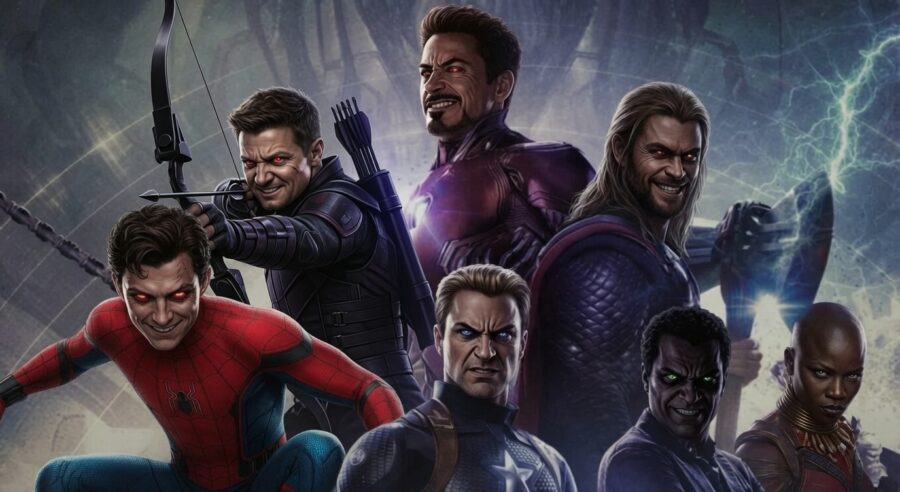

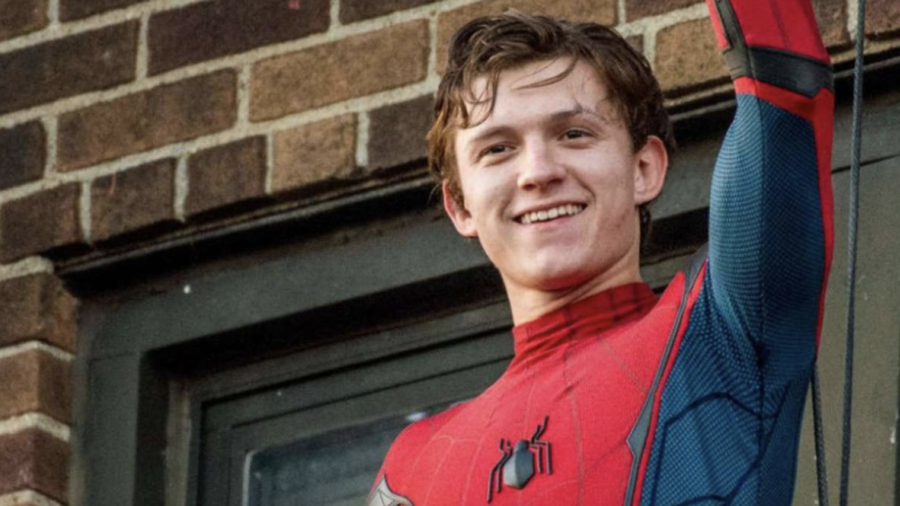
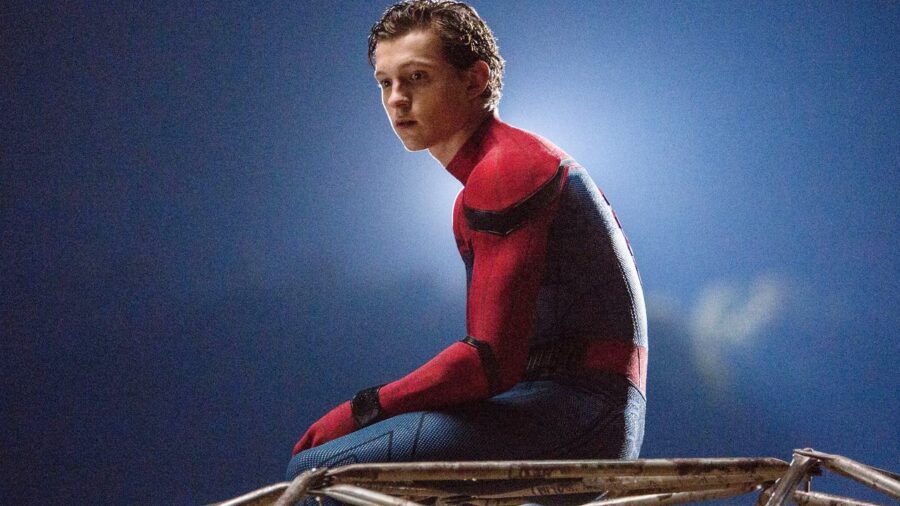

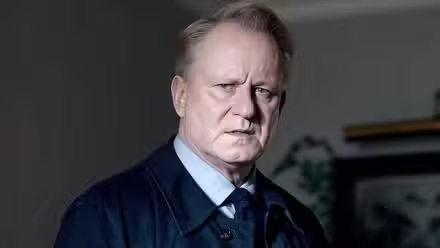





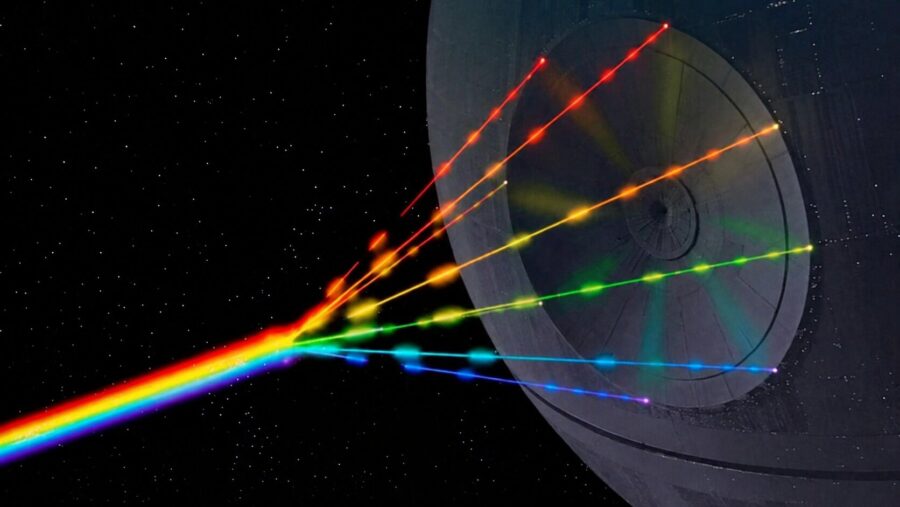

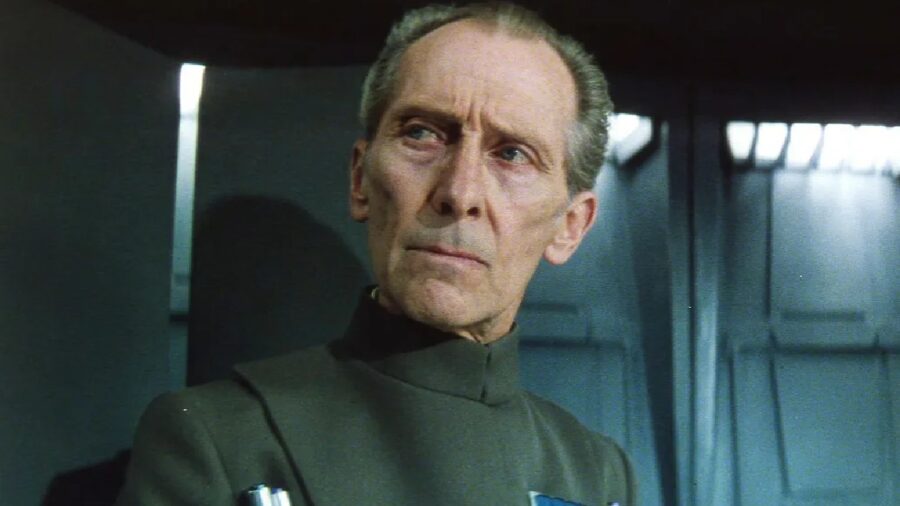
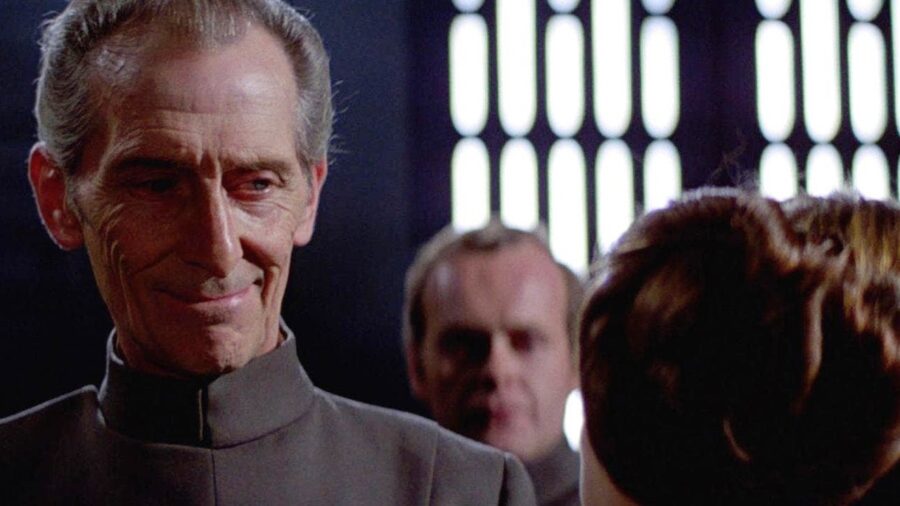



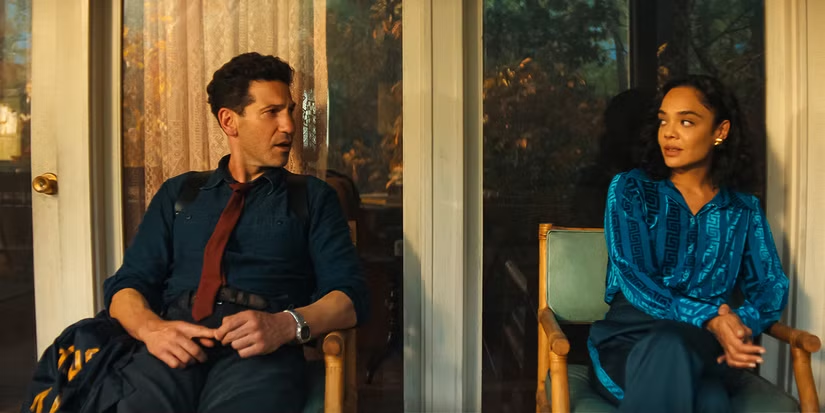


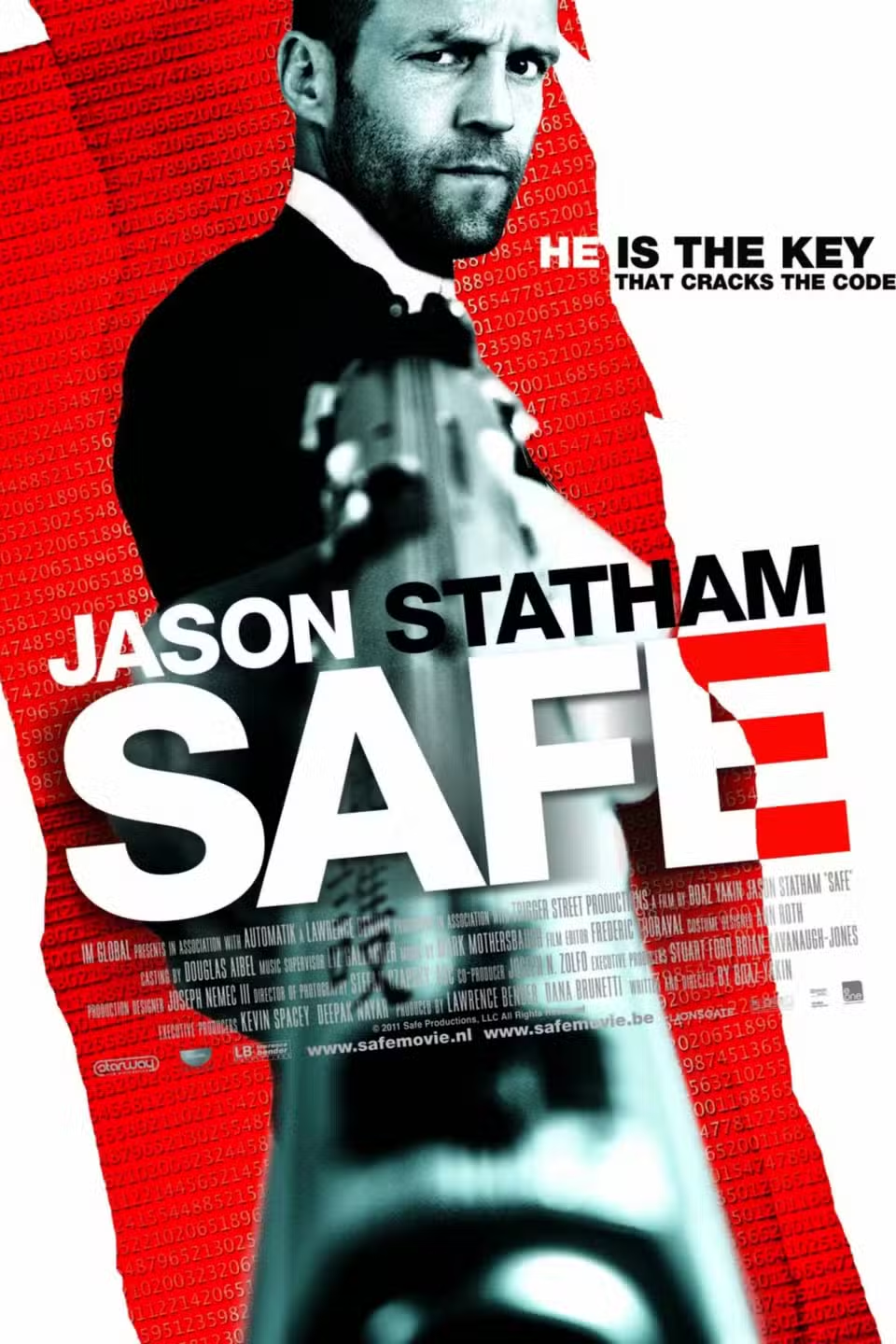

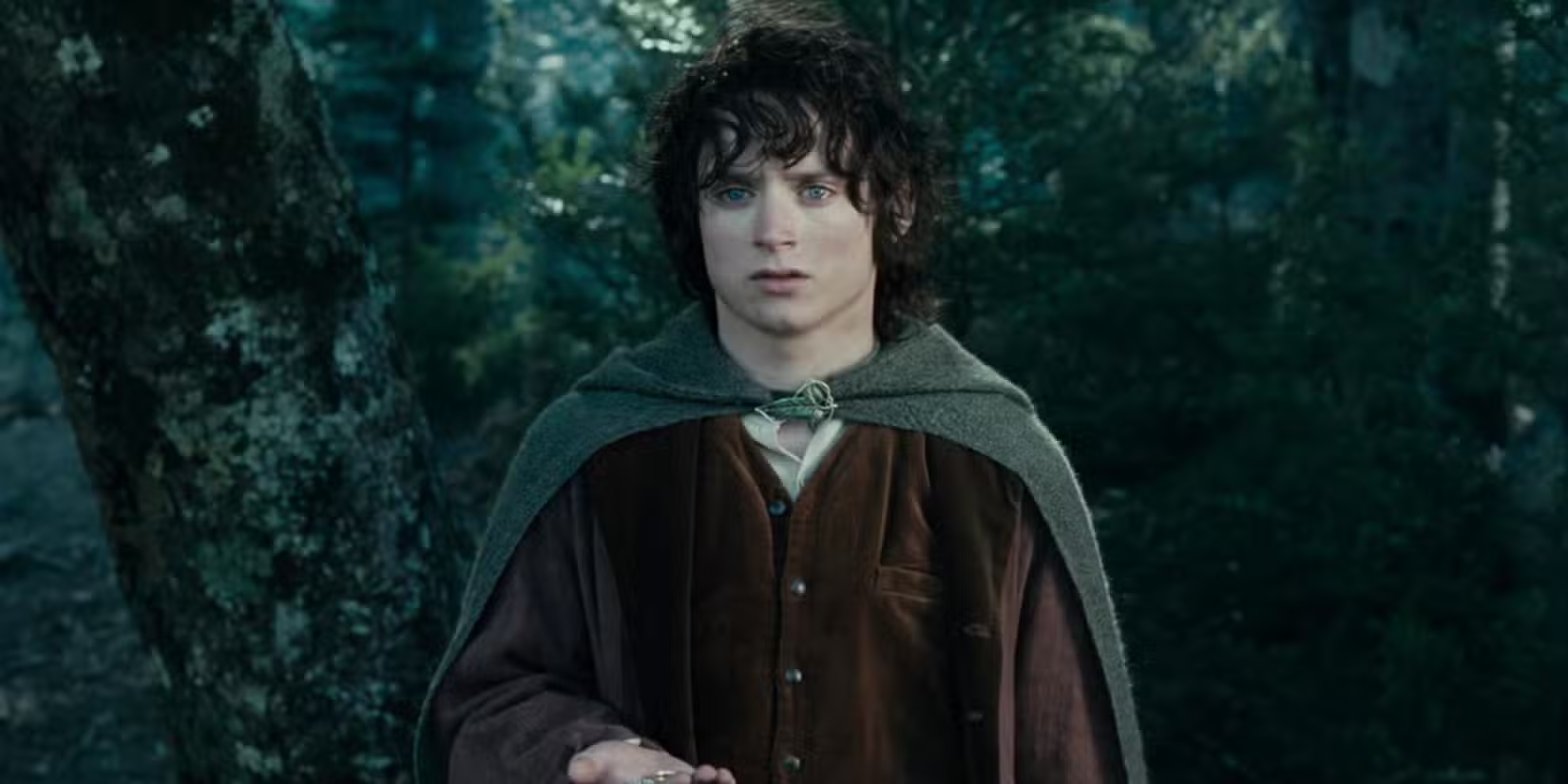



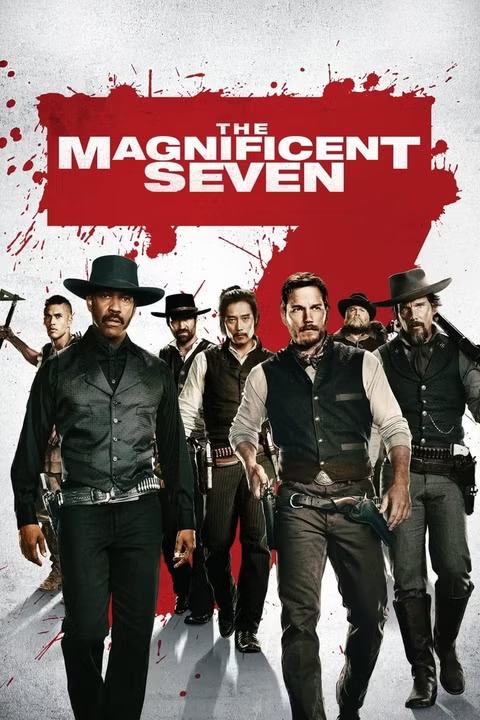

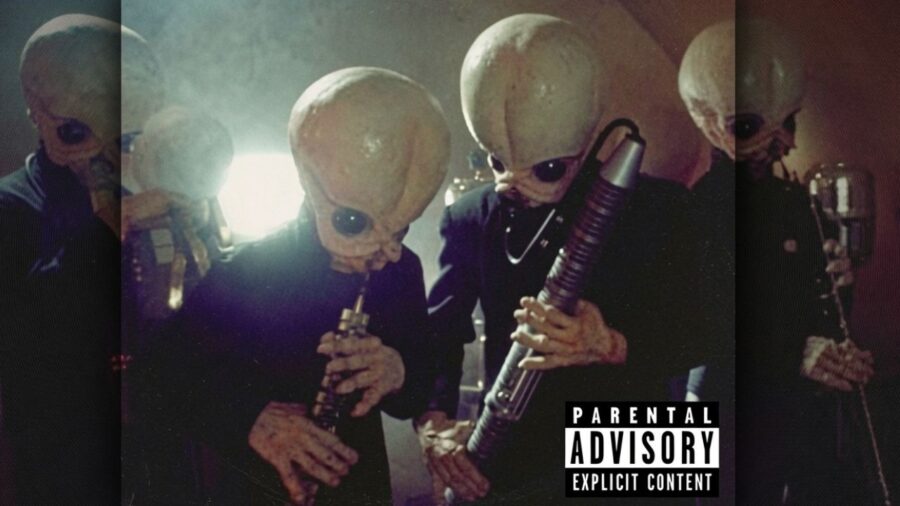

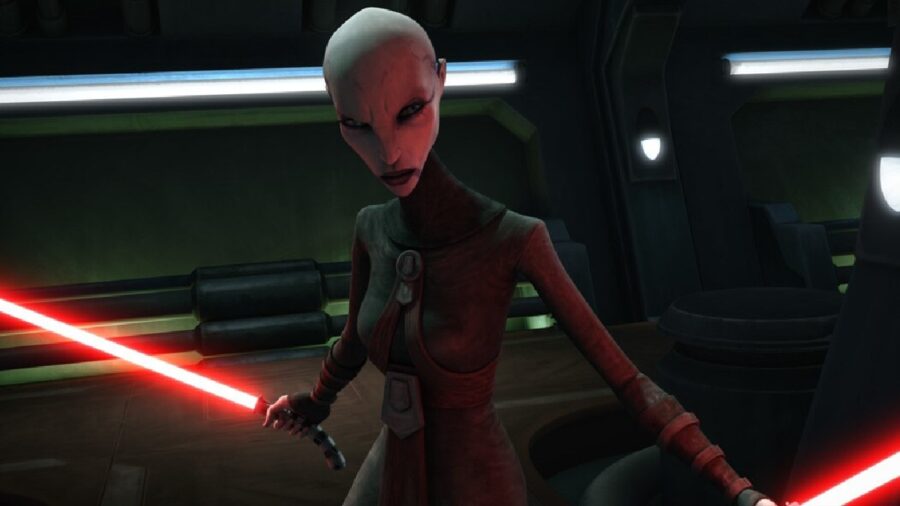
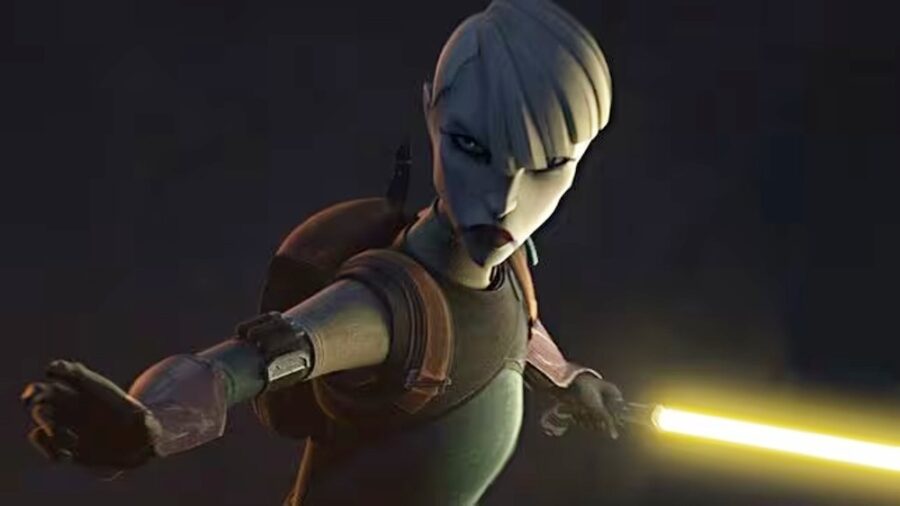


































You must be logged in to post a comment Login