

Entertainment
The Singer’s Parents and Sibling

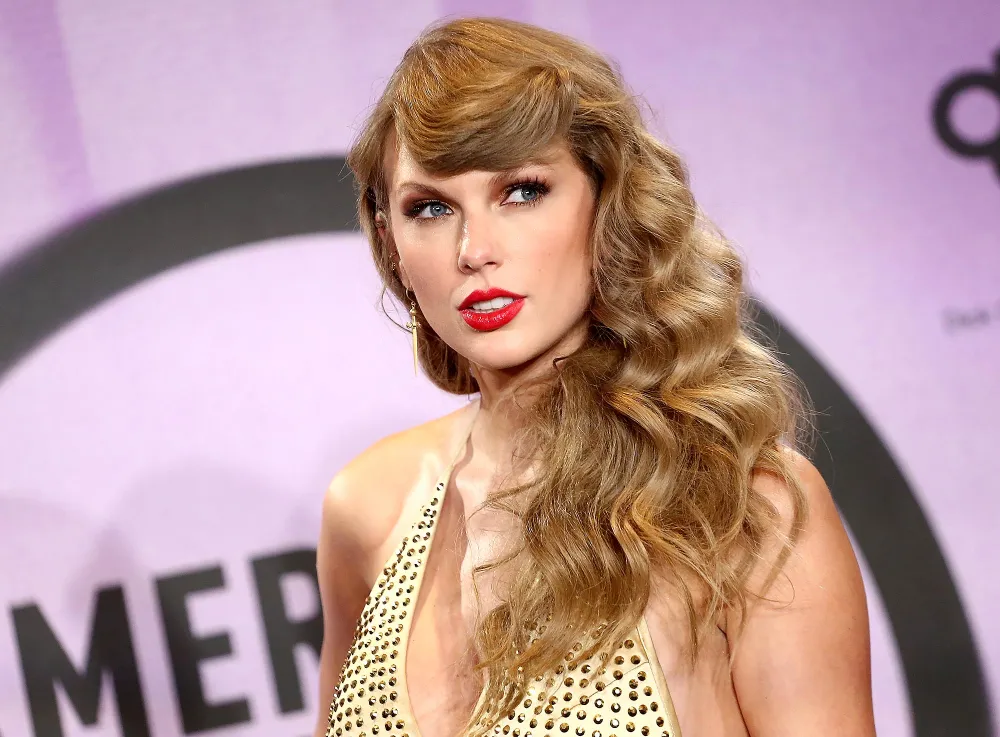
Taylor Swift Tommaso Boddi/WireImage
Taylor Swift’s family may not be as famous as she is — but they’re pretty close to it.
The singer’s parents, Andrea and Scott Swift — who got married in 1988 — have become key members of the Swiftie fandom, while her brother, Austin Swift, is making a name for himself in Hollywood.
Taylor, for her part, referred to her parents as “unbelievable” for supporting her career during an interview with CBS Sunday Morning in 2019. Her family uprooted their lives in Pennsylvania and moved to Tennessee all in support of Taylor’s singing career.
“I buy them lots of presents,” Taylor joked when discussing how she thanks her family and brother.
Andrea, for her part, recalled the Swift family’s move to Tennessee, noting that it wasn’t about Taylor “making it” in the music industry.
“What a horrible thing if it hadn’t happened, for her to carry that kind of guilt or pressure around,” Andrea told Entertainment Weekly in 2008. “We’ve always told her that this is not about putting food on our table or making our dreams come true. There would always be an escape hatch into normal life if she decided this wasn’t something she had to pursue.”
Of course, that wasn’t at all the path that Taylor took. Various Grammy Award wins and multiple sold out tours later, the “Cardigan” singer has reached an untouchable level of fame — and her family is still by her side.
Keep scrolling to learn more about the Swift Family:

Andrea Swift
Andrea used to work as a marketing manager at an advertising agency but has always been Taylor’s No. 1 fan. Now, she’s often spotted backstage during her daughter’s sold out tour dates and often interacts with fans.
Over the years, Taylor has written multiple songs about her mom — “The Best Day” and “Soon You’ll Get Better.” The latter is about Andrea’s cancer battles. Taylor first revealed her mom’s cancer in 2015, writing a letter to her fans on Tumblr. Andrea’s second cancer diagnosis came years later in 2019 and a year later, Taylor revealed that her mother had been diagnosed with a brain tumor.
“Everyone loves their mom; everyone’s got an important mom,” Taylor told Variety in 2020. “But for me, she’s really the guiding force. Almost every decision I make, I talk to her about it first. So obviously it was a really big deal to ever speak about her illness.”

Scott Swift
Scott originally worked as a stockbroker and eventually became Vice President for Merrill Lynch. He definitely has the supportive (and embarrassing) father role on lock. In March 2023, Taylor shared a photo of the backstage pass” that Scott had designed himself.
“D.O.H. Pass (Dad of Headliner),” his lanyard read. Taylor posted a picture on Instagram, writing, “Made my Dad’s tour credential. We are a small family business.”

From cowboy boots to Jimmy Choos! Taylor Swift has come a long way since her days as Nashville’s teen queen. Since moving to the Big Apple in March 2014 and embracing the city’s trendy style, the “Blank Space” singer became more fashion-forward than ever. See the pop singer’s amazing red carpet transformation through the years!
Scott has also been through a cancer battle as well.
“Both of my parents have had cancer, and my mom is now fighting her battle with it again,” Taylor told Elle in 2019. “It’s taught me that there are real problems and then there’s everything else.”


Austin Swift
Austin graduated from the University of Notre Dame in 2015 and has a budding career in the entertainment industry. Not only has he acted in a few TV and movie roles — I.T., Breaking for Whales and We Summon the Darkness, among others — but Austin is often listed as a producer on some of his sister’s projects.
“It is a singularly beautiful thing to see magic right in front of your eyes. After nearly three decades of that happening time and time again, the effect hasn’t worn off,” Austin wrote on Instagram of Taylor in December 2018. “I have always had a best friend, a role model, and a caring, tireless, dedicated champion in my corner. You have pulled me out of fires and carried me up mountains. The gift of getting to witness you become the wonderful person you are today has been the greatest privilege and honor of my life.”
When Taylor married Travis Kelce in 2026, Austin served as her “Man of Honor” in lieu of a formal bridal party.

Continue Reading
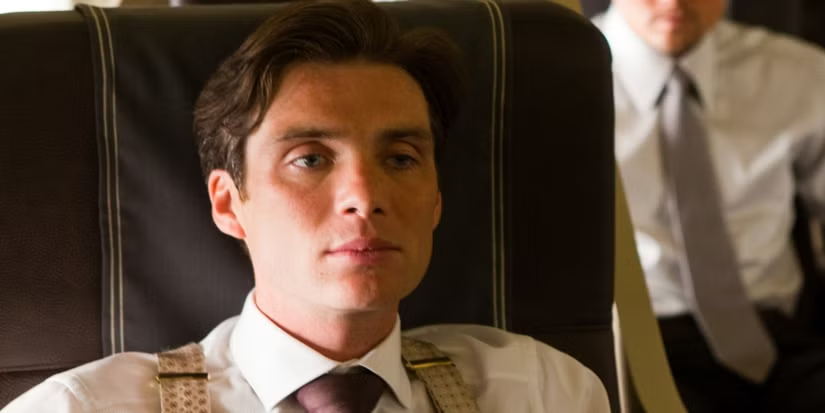
Cillian Murphy is undoubtedly one of the greatest actors of our generation. The role he’s arguably most iconic for is Thomas Shelby from Peaky Blinders. Murphy was insanely charming as the troubled gang leader with a moral code, and it’s hard to imagine the character becoming such a cultural phenomenon if anyone else had played him.
But long before he was walking the streets of Birmingham in a flat cap, Murphy had already built one of the most impressive filmographies in modern cinema. For more than two decades, he has been one of the most compelling screen presences on the big screen, and his body of work is the kind that film students will likely be studying for years to come. In this list, we’re taking a look at the Cillian Murphy movies that stand as true masterpieces and showcase exactly why he’s considered one of the finest actors working today.
‘Inception’ (2010)

Ask someone what their favorite movies are, and there is a very good chance the list includes Inception. Christopher Nolan‘s 2010 sci-fi thriller became a genuine cultural phenomenon and one of those rare films that an entire generation of moviegoers claims as their own. The film follows a team of specialists who use experimental technology to enter their targets’ subconscious minds and steal or plant information directly in their dreams. Murphy plays Robert Fischer, the heir to a corporate empire whose mind becomes the team’s most ambitious target.
Nolan takes a concept that should be impossible to follow and makes it not only comprehensible but thrilling at every turn. The rules of dream architecture, the ticking clock of the sedative, the way each dream level runs on a different time dilation. Most filmmakers struggle to make audiences care about exposition scenes, but Nolan somehow turns those scenes into the most fascinating parts of the movie. It’s a cerebral masterpiece that consistently blows minds on first, fifth, and even tenth viewing.
’28 Days Later’ (2002)

Before 28 Days Later, zombies were usually slow, undead creatures that shuffled around waiting to be avoided. They were creepy and grotesque to look at, sure, but they rarely felt like a real threat. Danny Boyle completely changed that in 2002. The infected in 28 Days Later sprint at terrifying speeds with manic agility, and just one drop of their blood entering the body is enough to turn someone. That simple creative choice made zombies infinitely more threatening and set a whole new standard for the zombie genre going forward.
The entire film was also shot on consumer-grade Canon DV cameras on a shoestring budget, which gave the film this dirty, murky feel that polished studio horror simply couldn’t replicate. And at the centre of it all is Murphy’s Jim, a bicycle courier who wakes up in an abandoned London hospital 28 days into the outbreak. The character became such a fan favorite that audiences would repeatedly call for Murphy to return whenever a new sequel was discussed. More than two decades later, the franchise finally gave audiences what they had been asking for by bringing Murphy back in 28 Years Later: The Bone Temple.
‘Dunkirk’ (2017)

Nolan is no stranger to playing with film structure, and he does something similar in Dunkirk. Set during World War II, the movie takes place across three timelines running simultaneously at different speeds. The Land storyline follows soldiers stranded on the beach over the course of a week. The Sea storyline follows a civilian boat crossing the Channel over a single day. And the Air storyline follows Spitfire pilots locked in aerial combat over the course of a single hour. And in the end, all three converge in one breathtaking sequence.
Murphy plays a shell-shocked soldier rescued from the Channel by the civilian vessel, and his performance is a masterpiece of restraint. There is almost no dialogue for his character, but you understand everything about his state of mind from the way he sits and stares and flinches. The film is a war movie that almost completely refuses to show you combat in the conventional sense. The enemy is an unseen, faceless force represented by constant aerial bombings, sniper fire, and torpedo attacks, and yet it is one of the most anxiety-inducing films ever made.
‘Oppenheimer’ (2023)

Many consider Oppenheimer to be the magnum opus of Nolan’s career so far, and it is very hard to argue against that. The film stars Murphy as J. Robert Oppenheimer, the theoretical physicist who headed the Manhattan Project and oversaw the creation of the first atomic bomb. When Oppenheimer came out, it was a global cultural event in a way that rarely happens with serious, character-driven historical films. People who normally wouldn’t even go for this kind of dense, dialogue-heavy cinema lined up on opening weekend, and it went on to become the highest-grossing biopic of all time.
And the entire film is almost single-handedly carried by Murphy. His portrayal of Oppenheimer was a masterclass in internalized agony; in every scene, you could see the guilt clawing at him just from his eyes. The Academy recognized it accordingly, and Murphy took home his long-overdue Oscar for Best Actor.
‘Steve’ (2025)

Steve is a heavy, slow-burn character study that follows Murphy as Steve, a head teacher at a reform school who is trying to hold his students together while quietly falling apart himself. The students are difficult to deal with. The institution is underfunded. And the movie does not offer tidy resolutions or redemption arcs tied up with a bow. It just lies down with the messiness of being human and lets you feel it alongside its characters.
Murphy is especially extraordinary in it. He has always been good at playing men who keep everything locked inside, but here he takes that quality further than he ever has because there are moments in Steve that feel genuinely private, like you are watching someone at their most unguarded. If you’re a fan of artsy, heavy movies like The Banshees of Inisherin or The Holdovers, Steve should be at the top of your watchlist.

Entertainment
‘House of the Dragon’ Is Quietly Setting Up Another Major Reveal About Aegon’s Prophecy
Prequels often suffer from a lack of suspense, since the audience knows where the story is headed in the end. Back in its first season, House of the Dragon had an explosive solution for this issue — it confirmed for the first time that House Targaryen had prophesized the Long Night and the return of the White Walkers, and that prophecy had guided their actions for generations leading up to Game of Thrones. It was a long-time fan theory, but by confirming it, House of the Dragon showed that Westeros has many mysteries left to uncover, and they could come from any spinoff media. Now, with the series hurtling towards its end, fan theorists have many ideas about what other revelations might be coming before the Dance of the Dragons is over. One tantalizing possibility concerns Aegon’s prophecy, House Stark, and the future king of Westeros.
It’s been nearly four years since House of the Dragon revealed that Aegon the Conqueror dreamed of the White Walkers in a prophecy he called the “Song of Ice and Fire.” In that time, fans have teased out many of the implications this might have on the story — characters who passed it down, characters who were influenced by it, and characters who failed to get the message. In all that digging, many fans feel that House Stark must have known about the prophecy, and likely cooperated with House Targaryen because of it in some cases. Evidence for that theory is mounting, but the real question is if or when it might be confirmed. It would make sense to put another monumental lore dump at the end of House of the Dragon, and the show itself is giving us some hints about what’s coming.
‘House of the Dragon’ Says ‘Winter is Coming,’ Though It’s Still Summer

There are plenty of clues to support the theory that House Stark knew about Aegon’s prophecy and passed that knowledge down in secret — too many to include in this article. What’s important is how House of the Dragon is drawing attention to those clues, and perhaps setting up a grand revelation towards the end of the series. Northmen have only appeared in a few scenes scattered throughout the series so far, but that’s about to change, as we’ve already seen with Roderick Dustin’s (Tommy Flanagan) dramatic entrance into the Riverlands this season.
“We have come to die for the dragon queen,” he said bluntly in the season premiere. This stellar line is taken straight from George R.R. Martin‘s book Fire & Blood, and it’s not just melodramatic wording. Lord Dustin leads a force known as the “Winter Wolves,” who are all old, gray-bearded warriors from throughout the North. They do not expect to survive the war whether they win or lose — it’s part of a brutal custom in the North where old men risk their lives in battle or hunting expeditions around the time the seasons change, knowing they’ll likely die. This way, they leave their community with one less mouth to feed through the winter.
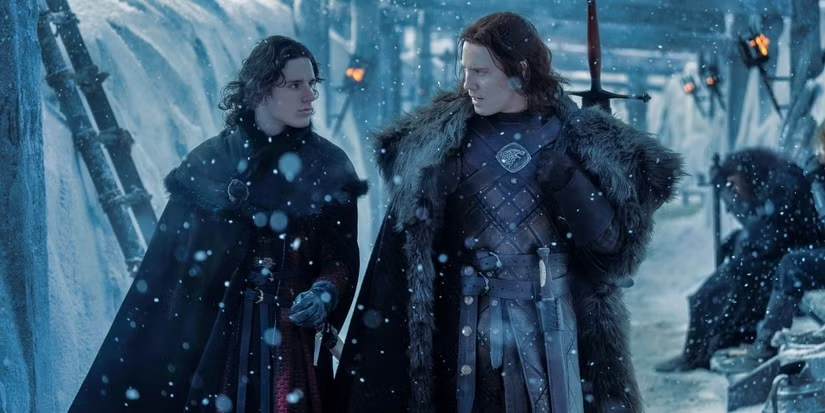
House of the Dragon is not shying away from this fatalistic aspect of Northern culture — if anything, the show is calling attention to it. In Season 2 Episode 1, the show depicted Jacaerys Targaryen (Harry Collett) meeting with Lord Cregan Stark (Tom Taylor) on the Wall, rather than at Winterfell. Lord Stark claimed that he could not send all his forces south to war because he would need them in the winter to guard the Wall. He asked Jace, “Do you think my ancestors built a 700-foot wall of ice to keep out snow and savages?” According to Cregan, the Wall is really there to keep out “death.” However, the Lord of Winterfell rarely visits the Wall, allowing the Night’s Watch to operate independently. Cregan’s personal interest in the Wall might be a hint that he knows something we don’t.
Cregan’s focus on the Wall and the Winter Wolves’ willingness to die are both surprising, since House of the Dragon has given us no real indications that winter is coming to Westeros. This fantasy world is defined by its irregular seasons, but there is usually quite a bit of warning of the onset of winter. Characters in the south have not complained about unusual cold or storms, and the maesters of the Citadel have not sent out their albino ravens to herald the changing seasons. It’s possible that Cregan, Roderick, and other Northmen can sense a different kind of winter coming on. Cregan might even have knowledge of Aegon’s prophecy passed down to him, and he may believe there are signs that the White Walkers’ attack is imminent.
Prophecies Could Completely Recontextualize ‘Game of Thrones’
In general, Game of Thrones did not examine the magical elements of Westeros very closely — especially toward the end, when it mattered most. For years, fans and critics have speculated that spinoffs like House of the Dragon will try to vindicate the main series, and in some ways, it looks like they’ve been right. House of the Dragon has magic centered in its story, from the haunting mysteries of Harrenhal to Helaena’s (Phia Saban) clear psychic abilities. Prophecies and telepathy are arguably more important to this franchise than dragons and ice monsters, and we should expect to see more of them in the back half of House of the Dragon.
So far, dreams and visions in this show have already shown us glimpses of important things coming in the main series. In Season 2, Episode 8 Alys Rivers (Gayle Rankin) leads Daemon (Matt Smith) to the Weirwood tree, where he sees the White Walkers, and Daenerys hatching dragons in the desert. He even sees Brynden Rivers, a.k.a. Bloodraven, the future Targaryen who will become a Greenseer and eventually teach Bran Stark (Isaac Hempstead Wright) to do the same. Bloodraven is an important character in the books, though his presence was downplayed in the TV adaptation. The younger version of him on House of the Dragon is played by Joshua Ben-Tovim, while on Game of Thrones he was played by Struan Rodger, then recast as Max von Sydow.
Readers know we should never take a vision of Bloodraven lightly. It’s possible that we’ll see him again in House of the Dragon as more characters interact with the Weirwoods and the bloodshed of the war awakens the trees. However, it’s possible this show will go one step farther by showing us Bloodraven’s successor, Bran Stark. We know that Bran can use his powers to reach backward in time to influence people and events — he did so when he commanded Hodor (Kristian Nairn) to “hold the door,” and in the books, it’s implied that he can reach other characters as well.
If Bran appears in a vision, it would be a fitting magical climax for House of the Dragon, and it would mirror some of the other tie-ins we’ve seen in the show so far. Some fans and critics would inevitably call it cheap, but it’s a move that would definitely appeal to HBO executives and creators who want to keep this franchise alive. In the long run, Easter eggs like that could become a central feature of Game of Thrones spinoffs, further complicating the web of causes and effects around the wars in Westeros.
‘House of the Dragon’ Has Just as Much Ice as Fire
House of the Dragon is ostensibly about a civil war among House Targaryen’s dragon-riders, yet the show has dedicated a surprising amount of time to the other end of Westeros’ magical spectrum — the old gods and the Weirwood trees, which are strongest in the North. The show has given us two glimpses of the mythical “Green Men,” and shown an immense amount of Greenseer magic at play around Harrenhal and the God’s Eye lake. According to Game of Thrones, this same branch of magic was responsible for the creation of the White Walkers in the first place, so it makes sense that the prequel is still highlighting this connection.
In some ways, Fire & Blood tells us where these Weirwood-heavy plots are headed, but because of the book’s unique nature, there’s a lot of ambiguity in the upcoming parts of the story. We’ve already seen connections that fans didn’t expect, such as Helaena’s intrusion on Daemon’s Weirwood vision, implying that dragon-dreamers and Greenseers have access to the same astral plane. We should expect a carefully-planned show like this to save some of its best spectacles for the end, so it’s not unreasonable to imagine a fully-realized King Bran appearing by the series finale. Alternatively, revealing that House Stark was also acting on Aegon’s prophecy could serve as one final revelation without the need for magical dreams.
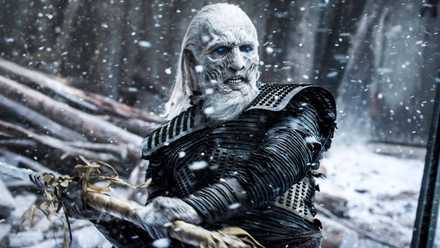
Of course, the creative team will want to be careful not to overdo it with Easter eggs and lore drops. They could also be wary of delving into the lore without the involvement of Martin. The author is not pleased with this prequel, and doesn’t seem to be as closely involved as he was in Season 1. It’s possible that he already agreed to another big revelation when the show first started, but it’s also possible that the creators won’t want to rock the boat now that he’s not closely involved anymore.
At the time of this writing, there are only 14 episodes left of House of the Dragon — assuming showrunner Ryan Condal fulfills his plan of finishing the series with four seasons. That doesn’t leave much time for new information to sink in, so we should have our eyes peeled for any more big clues coming our way. Season 3 continues on Sunday nights at 9 p.m. ET on HBO and HBO Max. Martin’s books are available now in print, digital, and audiobook formats.

- Release Date
-
August 21, 2022
- Network
-
HBO
- Showrunner
-
George R.R. Martin
- Directors
-
Clare Kilner, Geeta Patel
- Writers
-
Gabe Fonseca
-

-
Fabien Frankel
Ser Criston Cole
Entertainment
Where is the cast of “House” now? See what became of the stars of Fox's hit medical drama
:max_bytes(150000):strip_icc():format(jpeg)/House-062526-b09bb7abeee346e99dc4d2d9091a567d.jpg)
Hugh Laurie and his costars have continued to dominate TV since the series ended in 2012.
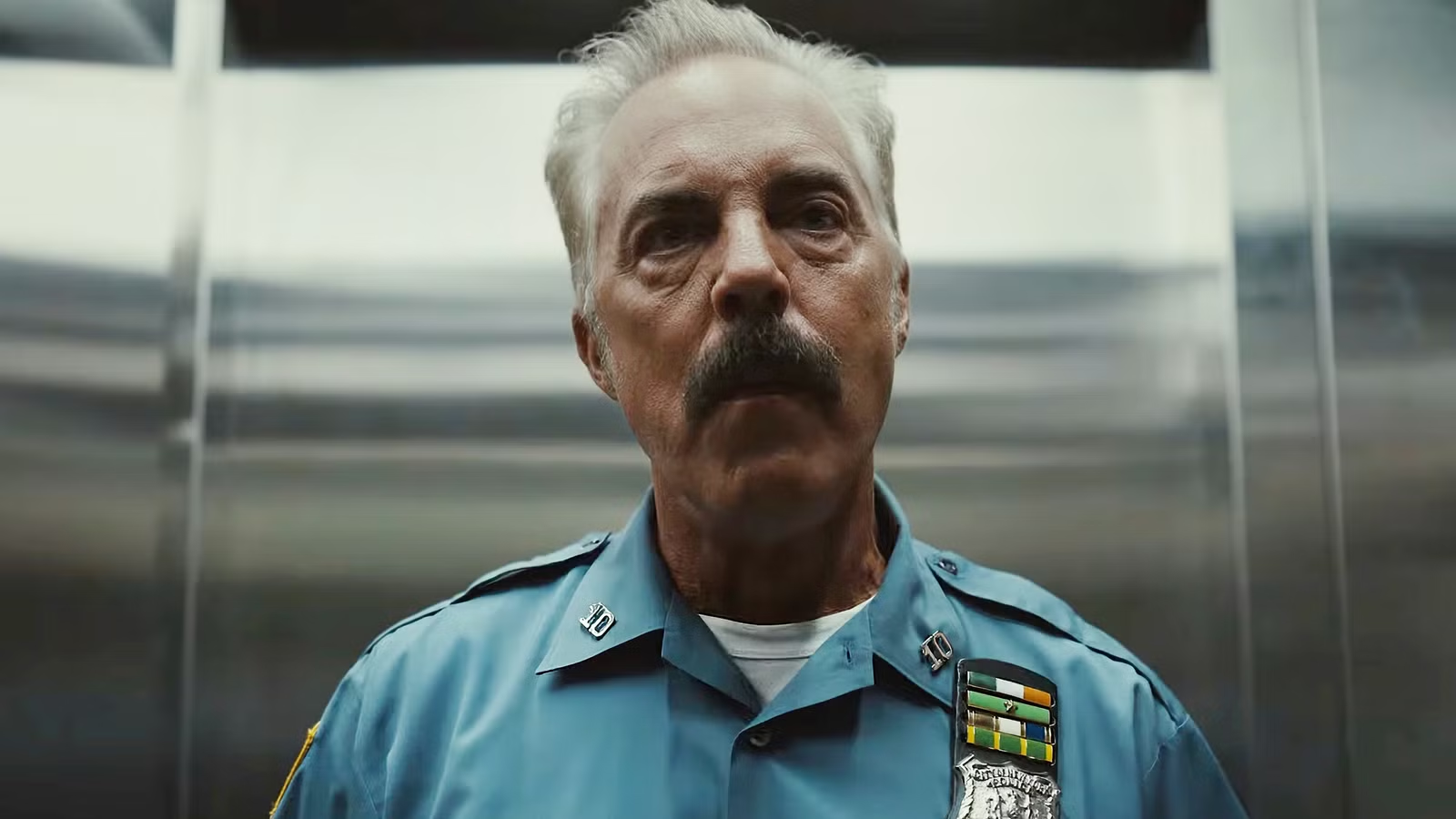

After a generational run as a jazz-loving modern-day gumshoe in the blockbuster Prime Video series Bosch, Titus Welliver will soon return to the small screen in a new series with massive potential. He is joined as the new show’s lead by the Oscar-winning J.K. Simmons. They play two childhood friends who drifted in different directions: one became a police officer and the other a gangster. Their paths collide in 1980s New York. It’s like Mystic River meets The Sopranos, and it’ll be released soon on MGM+ — the same streaming service that delivered the only well-liked Robin Hood adaptation of the last two decades earlier this year.
Welliver’s new series was created by Chris Brancato and Michael Panes. Brancato is best-known as the co-creator of the hit Netflix series Narcos and its spin-off, Narcos: Mexico. Panes transitioned, like the very successful Taylor Sheridan, from an acting career to writing, and worked on Brancato’s writing team for the Epix-turned-MGM+ series Godfather of Harlem. Their new show with Welliver also features Tom Brittney, a relative newcomer who made headlines recently for reportedly being in the running to play Batman in the DC Universe.
Here’s When Titus Welliver’s New Show Premieres
We’re talking about The Westies. The crime drama series will debut on MGM+ on July 12. The show’s official logline reveals that the narrative unfolds in Daredevil’s backyard, Hell’s Kitchen, amid rising tensions between the Irish and the Italian gangs. Welliver is coming off the third season of Bosch: Legacy, a spin-off to the wildly successful Prime Video original, based on the novels of Michael Connelly. The original series ran for seven seasons, from 2014 to 2021, with the spin-off debuting on Amazon Freevee in 2023, airing a sophomore season in 2024, and concluding with a third season in 2025. Welliver also reprised his role as Bosch in another spin-off, Ballard, which has aired two seasons so far and has been renewed for a third. A prequel series featuring Cameron Monaghan in the lead role, titled Bosch: Start of Watch, will be released on MGM+. Simmons has a considerable body of work on television as well, having recently starred in shows such as Die Hart and Defending Jacob. In August, he will star as George Schultz in the Cold War drama film The Brink of War. Stay tuned to Collider for more updates.

- Release Date
-
July 12, 2026
- Network
-
MGM+
Supernatural horror gets weaker the moment the ghost becomes the whole point. The perfect supernatural horror, however, knows that. It knows the haunting is usually tied to something people were already carrying: grief, guilt, family damage, buried crime, childhood fear, national trauma, or the terrible need to know what really happened.
The six films on this list stay frightening because their ghosts do not feel random. They have history. They have emotional logic. They turn houses, videotapes, children’s rooms, abandoned buildings, family stories, and old photographs into places where the past refuses to stay polite. Each one is controlled from the first uneasy sign to the last emotional consequence. And that’s how these films remain perfect from start to finish.
6
‘The Changeling’ (1980)

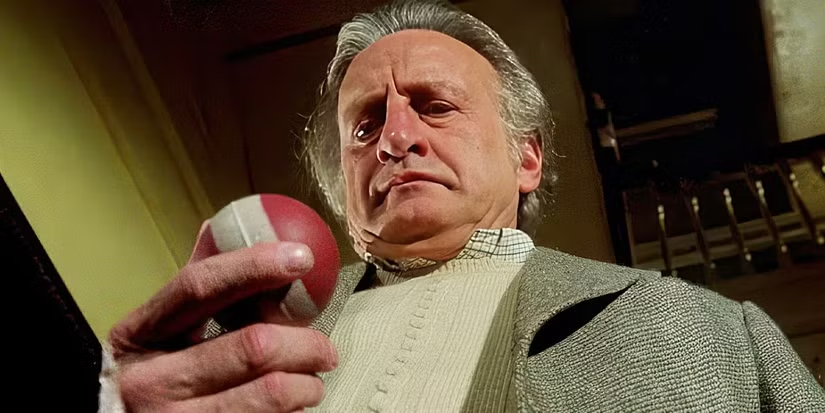
Grief gives The Changeling its first chill before the house does anything. John Russell (George C. Scott) loses his wife and daughter in a car accident, then moves into a large old mansion in Seattle to continue his work as a composer. He carries a quiet heaviness that makes the silence around him feel personal. He is not a thrill-seeker. He is not chasing a mystery for fun. He is a broken man trying to live in rooms that keep answering him back.
The genius of the film is its patience. A bouncing ball, a locked attic, a child’s wheelchair, a séance, a hidden room, and a decades-old crime slowly turn the mansion into a place where grief and injustice speak the same language. The horror never feels cheap because John’s loneliness gives every sound weight. The film also understands that a ghost story becomes more powerful when the dead are not the only guilty ones. Political respectability, family secrets, and stolen identity make the haunting feel earned rather than decorative.
5
‘The Devil’s Backbone’ (2001)

Guillermo del Toro’s orphanage is frightening before Santi (Junio Valverde) ever appears in The Devil’s Backbone. The film follows the Spanish Civil War and sits around the boys like an adult disaster they inherited without permission, and the unexploded bomb in the courtyard tells you exactly what kind of world they are living in. Carlos (Fernando Tielve), a new boy at the orphanage, has to learn its rules, its cruelties, its rivalries, and its hidden grief while the ghost of a murdered child keeps pulling him toward the truth.
The supernatural material hurts because the living are already dangerous. Jacinto (Eduardo Noriega)’s resentment, Carmen (Marisa Paredes)’s compromised authority, Dr. Casares (Federico Luppi)’ tenderness, Jaime (Íñigo Garcés)’s fear, and the boys’ fragile alliances give the story a human tension that would work even without the ghost. Santi’s presence is tragic rather than flashy. He is not there to perform scares on schedule. He is a child who was betrayed, abandoned, and left to become part of a building full of other abandoned children. The film is perfect because the ghost story, war story, and coming-of-age story all wound each other in the same place.
4
‘Noroi: The Curse’ (2005)

Noroi: The Curse is a found-footage horror and while most found-footage horror films want you to believe the camera caught something scary. Noroi makes you feel like the footage itself should never have been organized in the first place. The film follows paranormal researcher Masafumi Kobayashi (Jin Muraki) through interviews, TV clips, home videos, missing-person material, strange rituals, dead pigeons, psychic disturbances, and the name Kagutaba, which keeps gaining force the more the pieces connect.
The terror comes from accumulation. A woman hears impossible baby sounds. A child behaves as if something has already touched her life. A foil-hat psychic seems ridiculous until the movie makes his panic feel horribly rational. The editing style looks dry and investigative, which only makes the supernatural pattern more disturbing. Nothing in Noroi rushes to comfort the viewer with clean answers. It lets dread build through repetition, distance, and the awful sense that every clue has been waiting for the others. The ending is terrifying because the movie has trained you to fear context itself. Once enough information is gathered, ignorance starts looking safer.
3
‘The Orphanage’ (2007)

This is one of the rare ghost stories where the emotional devastation is as strong as the scares. The Orphanage circles Laura (Belén Rueda) returning to the orphanage where she grew up, hoping to reopen it as a home for children with disabilities. Her son Simón (Roger Príncep) begins talking about invisible friends, and what first seems like childhood imagination slowly becomes tied to the building’s past, Laura’s memories, and a mystery that punishes every delay.
The film is terrifying because Laura’s love keeps pushing her further into fear. She gives the performance a desperation that never feels exaggerated. She is a mother trying to solve something no one else can fully believe with her. The game of knocking on walls, the sack-masked child, the seaside cave, the old woman, the medium’s visit, and the reopening of childhood wounds all carry a sadness that makes the horror sharper. The film never treats motherhood as a simple virtue shield. Laura’s love is powerful, but it is also frantic, mistaken, stubborn, and late to understand the truth. That complexity is why the film stays lodged in the chest.
2
‘A Tale of Two Sisters’ (2003)

Image via Cineclick Asia Big Blue Film
A Tale of Two Sisters feels delicate until you realize how much pain is hiding inside every room. Su-mi (Im Soo-jung) comes home from a psychiatric hospital with her younger sister Su-yeon (Moon Geun-young), and the house immediately feels hostile: their stepmother Eun-joo (Yum Jung-ah) is cold and theatrical, their father is withdrawn, and the domestic space seems organized around something nobody wants to say clearly. The supernatural signs are disturbing, but the family tension is worse because it has already shaped how everyone breathes around each other.
Kim Jee-woon turns the house into a place of memory, denial, and punishment without losing the emotional thread. Su-mi’s protectiveness, Su-yeon’s vulnerability, Eun-joo’s cruelty, and the father’s silence keep shifting meaning as the truth becomes harder to avoid. The wardrobe, the dinner scene, the bedroom terror, the stepmother’s behavior, and the sisters’ bond all gain new pain once the film reveals what the family has been circling. The scares are beautifully staged, yet the real damage is psychological and familial. It is a ghost story where grief has rearranged the entire home.
1
‘Lake Mungo’ (2008)

No film on this list understands the loneliness of a family after death more precisely than Lake Mungo. Sixteen-year-old Alice Palmer (Talia Zucker) drowns, and the documentary-style structure follows her parents and brother as they try to understand what remains of her. Photographs, home videos, interviews, alleged sightings, and family secrets build a portrait of a girl who becomes more unknowable after death, not less.
That is what makes the film so upsetting. The Palmers are not simply asking whether Alice’s ghost is real. They are confronting how little they may have known her while she was alive. The supernatural evidence feels eerie, but the emotional fear is worse: a dead child can leave behind mysteries no parent gets to solve cleanly. The phone footage at Lake Mungo is one of modern horror’s most devastating moments because it combines dread with an unbearable sense of recognition. The film never uses the afterlife as a cheap answer. It turns haunting into grief, grief into investigation, and investigation into the awful knowledge that love does not guarantee understanding.


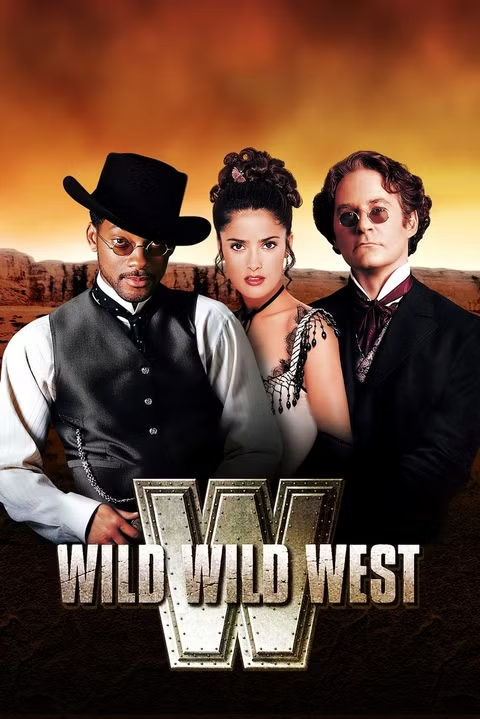
The first Star Wars movie in seven years, The Mandalorian and Grogu, was effectively wiped out at the box office by the massively successful horror hits Obsession and Backrooms. The two horror movies cost less than $1 million and $10 million, respectively, and have grossed more than $300 million worldwide each. In fact, The Mandalorian and Grogu is poised to ultimately finish its theatrical run as the lowest-grossing film of the three, even though it cost a reported $165 million to produce and millions more to market. The new Star Wars movie also happens to be the lowest-grossing installment of the legendary franchise, and has virtually no chance of outgrossing Solo: A Star Wars Story, which made around $390 million worldwide in 2018. However, an even bigger sci-fi Western bomb was released back in 1999, and is now streaming for free.
The movie in question cost a reported $170 million and grossed around $220 million worldwide. It was headlined by Will Smith, who infamously passed on The Matrix to star in it. Smith had recently been crowned the biggest star of the 1990s, thanks to hits such as Bad Boys, Men in Black, and Independence Day. The 1999 movie reunited him with his Men in Black director Barry Sonnenfeld, and also features Kevin Kline, Salma Hayek, and Kenneth Branagh.
Here’s Where You Can Watch Will Smith’s Sci-Fi Western
We’re talking, of course, about Wild Wild West. The movie was inspired by a television series from the 1960s, and written by three pairs of writers. Wild Wild West was heavily marketed by Warner Bros., but it opened to extremely poor reviews. The movie now holds a 16% score on the aggregator website Rotten Tomatoes, where the consensus reads, “Bombastic, manic, and largely laugh-free, Wild Wild West is a bizarre misfire in which greater care was lavished upon the special effects than on the script.” Smith later expressed regret about choosing the movie over The Matrix, which was critically acclaimed and massively successful at the box office. In a YouTube video, Smith admitted that he isn’t proud of underestimating the Wachowskis and said, “If I had done it — because I’m Black — then Morpheus wouldn’t have been Black because they were looking at Val Kilmer. I was going to be Neo and Val Kilmer was going to be Morpheus. I probably would’ve messed The Matrix up, I would’ve ruined it. So I did y’all a favor.” You can watch Wild Wild West on Tubi, and stay tuned to Collider for more updates.

- Release Date
-
June 30, 1999
- Runtime
-
106 minutes
- Writers
-
Brent Maddock, Jeffrey Price, Peter S. Seaman, S.S. Wilson, Jim Thomas, John Thomas
- Producers
-
Jon Peters
A perfectly written trilogy has to do something brutal: make three separate films feel satisfying on their own while also making the whole thing richer when viewed as one long design. The first film cannot feel like a pilot. The second cannot exist only to delay resolution. The third cannot just tidy the room and call it closure.
The best trilogy writing creates pressure across years. A line gains new meaning later. A character’s early flaw becomes their punishment. And more. These eight trilogies understand long-form cinema at the deepest level, and the writing in each one has a different kind of perfection. Lock in and I’ll explain why.
8
‘The Koker Trilogy’ (1987–1994)

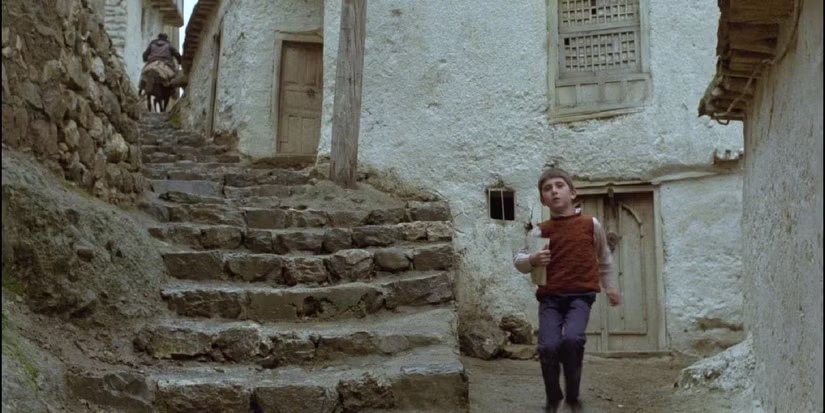
A boy returning a notebook should not be enough to carry an entire film, yet Where Is the Friend’s House? turns that tiny act into one of cinema’s purest moral adventures. Ahmad (Babak Ahmed Poor) knows his classmate may be punished if the notebook stays with him, and that single responsibility sends him through adult indifference, village routines, repeated refusals, and the frightening loneliness of being a child who understands urgency better than the grown-ups around him.
Then Abbas Kiarostami expands the idea of responsibility in ways that feel almost impossible on paper. And Life Goes On follows a filmmaker searching for the children from the first film after the 1990 earthquake, turning the earlier fiction into a doorway toward real devastation and survival. Through the Olive Trees then folds cinema back into life again through Hossein (Hossein Rezai)’s quiet pursuit of Tahereh (Tahereh Ladanian) during a film shoot. The trilogy’s writing keeps asking how stories continue after the camera leaves. It finds drama in duty, curiosity, persistence, and unanswered feeling.
7
‘The Cornetto Trilogy’ (2004–2013)

The joke with this trilogy is that people remember the jokes first, which is fair, because the jokes are absurdly precise. The greater writing achievement is how Edgar Wright and Simon Pegg build three comedies where the punchlines, genre mechanics, character immaturity, and emotional payoff all keep feeding each other. Shaun of the Dead uses Shaun (Simon Pegg)’s zombie rules to expose his refusal to grow up. Hot Fuzz turns Nicholas Angel (Simon Pegg)’s action-movie obsession into a story about friendship, community rot, and one man learning to loosen his grip. The World’s End weaponizes nostalgia against Gary King (Simon Pegg) and the exact people who keep pretending the past was their best self.
Every film has comic architecture that rewards rewatching. Throwaway lines become plot devices. Pub names, background details, repeated phrases, and awkward social habits all return with purpose. Gary’s tragedy in The World’s End cuts so sharply because the trilogy has already trained viewers to laugh at arrested development before showing the damage underneath it. Shaun, Nicholas, and Gary are very different men, yet all three are trapped by a version of themselves they mistake for identity. That is brilliant comic writing: the laugh gets there first, then the ache follows.
6
‘Back to the Future Trilogy’ (1985–1990)

Time-travel stories usually collapse under their own rules once sequels start stacking complications. Back to the Future somehow turns complication into pleasure. Robert Zemeckis and Bob Gale write the first film with near-perfect cause and effect: Marty McFly (Michael J. Fox) changes one night in 1955, endangers his own existence, forces his parents toward each other, and learns enough about courage to change the family he returns to. The plot is tight, funny, emotional, and ridiculously efficient.
The sequels take that original design and keep remixing it without losing the audience. Part II makes the first movie’s timeline feel like a playground and a trap at once, using alternate 1985, future Hill Valley, and the 1955 overlap with almost comic mathematical confidence. Part III shifts to the Old West and gives Doc Brown (Christopher Lloyd) the romantic test Marty already had in another form: the temptation to break time for love. The trilogy is so satisfying because the writing understands repetition as variation. Clocks, cars, photographs, bullies, dances, accidents, family shame, and personal courage keep returning in new shapes until Marty’s final growth feels cleanly earned.
5
‘The Dark Knight Trilogy’ (2005–2012)

Batman has been rewritten so many times that another origin story could have felt pointless. Batman Begins solves that by treating Bruce Wayne (Christian Bale)’s mission as a set of ideas under construction: fear, justice, theatricality, discipline, symbol-making, and the danger of becoming too useful to one’s own pain. The script gives Bruce a reason for every piece of Batman, then surrounds him with people who challenge different parts of the myth: Alfred (Michael Caine)’s love, Gordon (Gary Oldman)’s decency, Rachel (Katie Holmes)’ moral line, and Ra’s al Ghul (Liam Neeson)’s extremism.
The Dark Knight is the trilogy’s writing peak because it turns Batman’s symbol into a public crisis. The Joker (Heath Ledger) attacks rules, stories, institutions, and self-image. Harvey Dent (Aaron Eckhart) becomes the clean hope Bruce wanted the city to choose instead of Batman, which makes his fall more than a villain turn. The Dark Knight Rises has rougher plotting, but its core idea still completes the written arc: a man who built his life around sacrifice has to learn the difference between dying for a symbol and living beyond it. The trilogy earns its place because its best writing treats superhero mythology as an argument with consequences.
4
‘The Apu Trilogy’ (1955–1959)

The writing in The Apu Trilogy has an almost dangerous amount of trust in ordinary life. It’s like the Indian version of Boyhood but spread over three films and much better and fleshed out. Pather Panchali does not hurry childhood into a clean lesson. Apu (Subir Banerjee) watches Durga (Uma Dasgupta), his mother Sarbajaya (Karuna Banerjee), his father Harihar (Kanu Banerjee), their aging relative Indir (Chunibala Devi), the village, the rain, the trains, the hunger, and the small pleasures that make poverty even more painful because beauty still keeps appearing. The film’s story grows through observation, which is harder than plot mechanics and far rarer.
Aparajito understands the cruelty of becoming yourself. Apu’s education gives him a future, but that future costs his mother the nearness she needs. The writing never turns either side into a villain. That emotional fairness continues in Apur Sansar, where Apu (Soumitra Chatterjee)’s unexpected marriage to Aparna (Sharmila Tagore) becomes tender through small adjustments, shared embarrassment, and domestic discovery. When loss breaks him, the trilogy refuses easy nobility. Apu fails as a father before he can return as one. Satyajit Ray and his collaborators write a life, not a résumé of events. Childhood, ambition, love, grief, guilt, and reconciliation all unfold with devastating simplicity.
3
‘The Lord of the Rings Trilogy’ (2001–2003)

Adapting J.R.R. Tolkien could have gone wrong in a thousand directions. The writing team of Fran Walsh, Philippa Boyens, and Peter Jackson had to condense an enormous literary world without reducing it to lore delivery. Their greatest decision was emotional prioritization. Every kingdom, object, battle, creature, and prophecy is filtered through a character need: Frodo (Elijah Wood)’s burden, Sam (Sean Astin)’s loyalty, Aragorn (Viggo Mortensen)’s fear of inheritance, Boromir (Sean Bean)’s weakness, Gollum (Andy Serkis)’s divided self, Éowyn (Miranda Otto)’s hunger for dignity, Faramir (David Wenham)’s need for his father’s love, Théoden (Bernard Hill)’s return to courage.
The trilogy keeps giving each storyline its own moral test. Frodo’s mercy toward Gollum later becomes the only reason the quest can succeed. Sam’s plainspoken devotion grows from comic warmth into the trilogy’s strongest expression of grace. Aragorn’s reluctance has to become responsibility rather than pose. Even smaller choices carry weight because the scripts keep linking private character decisions to the fate of the world. The writing also knows when to let language feel old and when to keep it direct. For a trilogy this huge, the emotional logic stays shockingly clear. Middle-earth survives on structure, sacrifice, and character payoff more than scale.
2
‘The Before Trilogy’ (1995–2013)

The terrifying thing about writing The Before Trilogy is that there is almost nowhere to hide. No mystery plot rescues a weak exchange. No spectacle interrupts a false line. Jesse (Ethan Hawke) and Céline (Julie Delpy) have to talk, and the writing has to make every digression feel like attraction, defense, curiosity, flirtation, philosophy, fear, memory, or resentment. Before Sunrise captures the way young people perform intelligence while accidentally revealing themselves. They are sincere and ridiculous at once, which is exactly why the romance feels real.
Before Sunset is even more precise because every sentence carries the ghost of the conversation they failed to continue for nine years. Jesse and Céline talk about marriage, work, politics, sex, memory, and disappointment while slowly admitting that Vienna never ended for either of them. Before Midnight is the bravest writing of the three. It lets the same verbal chemistry curdle into marital combat, then keeps enough tenderness alive to make the damage frightening. Richard Linklater, Hawke, and Delpy write love as conversation across time. The trilogy is nearly perfect because the words change age with the people speaking them.
1
‘The Three Colours Trilogy’ (1993–1994)

No trilogy on this list has a more elegant writing challenge than Three Colours: three films inspired by liberty, equality, and fraternity, each separate, each emotionally complete, each quietly connected. Krzysztof Kieślowski and Krzysztof Piesiewicz never treat those ideals like slogans. They test them inside grief, humiliation, loneliness, sex, pride, chance, music, law, and human connection until each concept becomes painfully personal.
Blue gives Julie (Juliette Binoche) the freedom she thinks she wants after losing her husband and child, then shows how impossible total detachment becomes when memory, music, and unfinished love keep returning. White treats equality through Karol (Zbigniew Zamachowski)’s wounded masculinity after divorce, turning humiliation into a bitter, funny, morally complicated revenge story. Red is the trilogy’s miracle because Valentine (Irène Jacob) and the retired judge (Jean-Louis Trintignant) create a bond built from attention rather than romance, and the film’s coincidences feel emotional instead of mechanical. The ferry ending ties the trilogy together without reducing its mysteries. This one, therefore, is a top-notch, perfectly written trilogy filmmaking because the design is visible only after the feelings have already reached you.

Three Colors: Blue
- Release Date
-
September 8, 1993
- Runtime
-
98 minutes
- Director
-
Krzysztof Kieślowski
- Writers
-
Krzysztof Piesiewicz
Quantity is not more important than quality when talking about great television, especially when thrillers are concerned. Too many shows extend past their natural length and become bloated with unnecessary subplots and storylines, meaning that they become harder to recommend because of the significant time commitment required. Alternatively, shows that are short and pointed have the opportunity to age even better because they feel like standalone works of art.
Television has begun to resemble films, more and more, and a short-run show or miniseries can have the auteur-led artistic qualities of a cinematic release, yet also have the length to tell its story to the best of its abilities. It’s a medium that has become more exciting as this current era of prestige television continues, as it seems to be what attracts the most A-list talent to do their best work. For viewers looking for gripping stories that never overstay their welcome, these thriller shows with 20 episodes or fewer deliver unforgettable suspense from beginning to end.
10
‘The Curse’ (2023–2024)

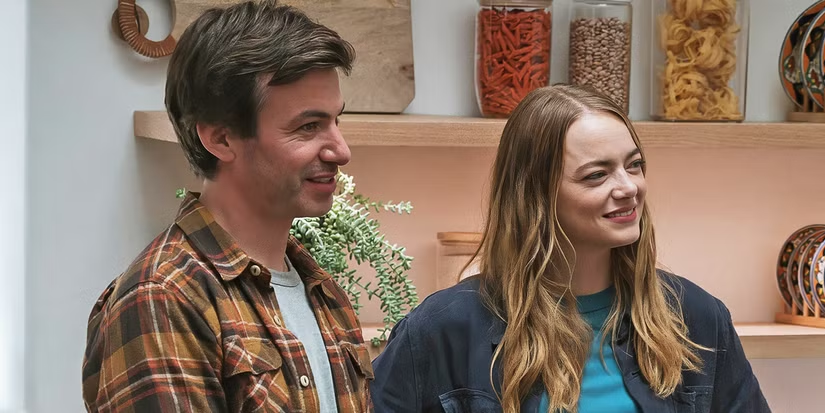
The Curse is a fascinating psychological thriller that was conceived by Nathan Fielder and Benny Safdie, two brilliant creatives who have nonetheless taken very different approaches to their careers. Fielder also stars in the series alongside Emma Stone as a couple that hosts an HGTV-style reality home-flipping show and begins to experience paranoia about a curse after getting involved in building a sustainable living business in a Hispanic community.
The Curse finds the right mix of dark comedy and social commentary, as it explores the plasticity of reality television, the delusion of white progressivism, the threat of gentrification, and the interiority of a disturbed marriage. The series is a favorite of Christopher Nolan, who claimed that the show’s mind-blowing finale was among the greatest things he had ever seen on television, a belief that is shared by those who have experienced the wild turn that The Curse takes.
9
‘Lonesome Dove’ (1989)

Lonesome Dove is perhaps the greatest Western ever made, and certainly holds up when compared to any of the classic films made in the genre. Based on the beloved novel of the same name by Larry McMurtry, the show stars Robert Duvall and Tommy Lee Jones as two aging cowboys who take on one last drive, which forces them to consider their lives and rethink their personal relationships.
Lonesome Dove was made at a time in which “event television” was still a novelty, and it was exciting to see such a full-bodied, articulate Western made on such a grandiose scale. Even for those who aren’t traditionally fans of the Western genre, Lonesome Dove is made with such care and moves at such a propulsive pace that it is hard not to be completely swept up in the spirit of adventure.
8
‘Escape at Dannemora’ (2018)

Escape at Dannemora is a brilliant miniseries directed in its entirety by Ben Stiller before he would go on to flex his muscles as a dramatic storyteller with the Apple TV science fiction series Severance. Escape at Dannemora stars Paul Dano and Benicio del Toro as two inmates at a high-security prison who plot an escape, all while conducting a relationship with a facility worker played by Patricia Arquette.
Escape at Dannemora does a better job of showing the integrity of a life behind bars than nearly any other show, and manages to continue heightening the tension as it questions the ethics of the characters and their relationship. The series finale runs for 100 minutes in length, and stands alone as Stiller’s finest work as a director and one of the most nerve-inducing works of electrifying TV in recent memory.
7
‘Ripley’ (2024)

Ripley is the most recent adaptation of the popular Patricia Highsmith novel The Talented Mr. Ripley, and it’s unique when compared to the other versions because it ages up the characters and is shot in black-and-white. The stunning visuals of the series, which were created by the Oscar-winning cinematographer Robert Elswitt of There Will Be Blood fame, allowed it to become a moody noir where the audience is able to get inside the mind of a psychopathic killer.
Andrew Scott is nothing short of remarkable as Tom Ripley, as he is able to draw out the repulsive side of the character whilst also making his journey fascinating to watch. The series is a perfect adaptation of the first of Highsmith’s novels, but there is always room for expansion if Scott and showrunner Steven Zaillian want to make their version of some of the sequel novels.
6
‘The Dropout’ (2022)

The Dropout is based on the stranger-than-fiction true story of Elizabeth Holmes, an entrepreneur whose seemingly game-changing medical technology company came burning to the ground when it was revealed to be entirely based on fraudulent claims and misconstrued medical research. The Dropout is a thriller about her dramatic rise and fall, and explores how a whistleblower in the case revealed a secret that caused all of her high-profile sponsors to question their investments.
The Dropout is worth watching as a feat of education because it so thoroughly deconstructs a scandal that should scare everyone, but it also features Amanda Seyfried in what may be the best role of her career, as she completely captures all of Holmes’ mannerisms in an almost eerie way. The entire cast is stacked with great actors, including Ebon Moss-Bacrach as the reporter who broke the story.
5
‘Something Very Bad Is Going to Happen’ (2026)

Something Very Bad Is Going to Happen is a terrific miniseries produced by the Duffer brothers that is bound to become a Halloween favorite in the years to come. Although there are some aspects of psychological thrillers that are present in Stranger Things, the series for which the Duffer brothers became most famous, This Is Going to Hurt is a spooky work of folk horror that succeeds by fleshing out a mythology behind a secret family history.
Something Very Bad Is Going to Happen isn’t just creepy because of the graphic blood and gore that is featured, but because it has a disturbing depiction of what a nightmarish situation of meeting a partner’s family looks like. Although weddings are often used as the center point for feats of horror, Something Very Bad Is Going to Happen ends with a shocking sequence that is one for the ages.
4
‘The Little Drummer Girl’ (2018)

The Little Drummer Girl is an adaptation of the popular Cold War spy novel by the brilliant author John le Carré, and it was directed in its entirety by the legendary South Korean filmmaker Park Chan-wook. Set in 1979 during the aftermath of the Black Monday attacks, the series follows an Israeli spymaster (Michael Shannon) and a Mossad agent (Alexander Skarsgård) as they recruit a left-wing theater actress (Florence Pugh) to go undercover to infiltrate a dangerous terrorist cell that could be putting innocent lives in danger.
The Little Drummer Girl mines all the complexity of Cold War-era espionage to be completely riveting, all whilst exploring complex themes about the nature of identity and the burdens of holding a double life. Although it is completely satisfying as a thriller, The Little Drummer Girl is also a loaded piece of political commentary that features terrific performances from its three leads.
3
‘This Is Going to Hurt’ (2022)

This Is Going to Hurt is a brilliant British miniseries based on the true story of the OBGYN doctor Adam Clay, who also created the series that was based on his own memoir. Ben Whishaw stars as Clay during a particularly difficult period in his career, where he was attempting to deal with internal investigations from the medical board whilst protecting the physical and emotional health of his staff, many of whom were under serious duress.
This Is Going to Hurt offers a propulsive look at what being in an emergency room looks like, and does for Great Britain what The Pitt did for the United States. Although Whishaw is an actor who always gives great performances, This Is Going to Hurt has a clever framing device in which he breaks the fourth wall and speaks directly to the audience, making it even more personal.
2
‘Under the Banner of Heaven’ (2022)

Under the Banner of Heaven is a true crime masterpiece that explores one of the darkest chapters in the history of America’s extremist religious crimes, as it is based on a shocking massacre committed by a fundamentalist sect of the Church of Jesus Christ of Latter-day Saints. While the series could have come off as completely anti-organized religion, it is able to have a fleshed-out perspective because it follows the point of view of a Mormon police officer, played by Andrew Garfield in one of his best roles, who questions the fundamentals of his faith in the wake of shocking truths.
Under the Banner of Heaven is meticulously crafted as a character drama and takes an unflinching look at the abuses carried out in the name of God, making it a timely work of historical recreation that deserves to be recognized among the best in the genre’s recent history.
1
‘1883’ (2021–2022)

1883 is the best show that Taylor Sheridan has ever made and serves as a prequel to the entire Yellowstone saga by exploring the journey to settle what would become Dutton Ranch. Although it has the snappy dialogue that is to be expected of Sheridan at this point, 1883 is a full-blooded Western in the classical sense and makes use of its lavish settings to create a grand and sweeping adventure.
1883 is the most personal and constrained of Sheridan’s shows, and the intimate focus on a small group of characters shows the dexterity of his writing. Although it has a setup that establishes what would become the defining narrative in 1923, 1883 also functions as a standalone adventure epic that can be enjoyed by anyone, regardless of how familiar they are with the trappings of the broader Yellowstone franchise.

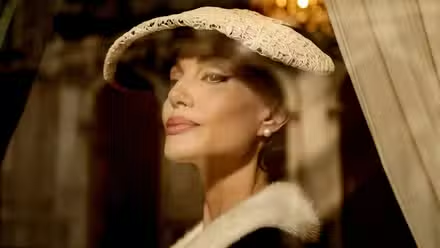
Miranda Priestly probably wouldn’t tolerate Angelina Jolie’s character from Couture, a new drama set in the world of high fashion that premiered at the Toronto International Film Festival in 2025. Jolie plays Maxine, an indie filmmaker who’s been hired to bring her brand of transgressive edginess to a promotional short for Paris Fashion Week. With neither the patience nor the experience for promotional work, Maxine can barely mask her contempt for her new gig — and that’s before a call from her doctor flips her world upside down.
Couture couldn’t be further removed from the glossy world of this summer’s fashion world-set blockbuster The Devil Wears Prada 2. And while that movie makes excuses for the same industry that Couture wants to dress down, director Alice Winocour’s attempt to offer a ground-level perspective of an industry that has been glamorized for far too long turns out dull, directionless, and mildly delusional.
What Is ‘Couture’ About?
Maxine has a lot on her plate at the film’s start: she’s going through a divorce that has alienated her teenage daughter from her, and most of her attention is devoted to her new movie, a passion project that’s barely a month away from entering production. She also has bills to pay. While she’s risen through the ranks of independent genre cinema and hit a creative peak with a gritty vampire movie, there’s obviously not enough money in the film festival Midnight Madness sections that she has seemingly been dominating. It’s a clever decision to not cover up Jolie’s many tattoos; they give Maxine a necessary edge that communicates more about her than three pages of expository dialogue could. Despite describing the fashion industry as “useless but necessary,” Maxine is determined to perform her duties at Paris Fashion Week and continue her real career with a much-needed financial infusion.
Her problems transform when her doctor informs her that she has breast cancer and that she needs to undergo surgery immediately. As if her disdain for the vanity surrounding her hadn’t hit a boiling point already, Maxine is given a new reason to question the choices that have led her to Paris in the first place.
Jolie is unsurprisingly very good in the lead role, injecting Maxine with emotional maturity that she herself has seemingly developed during the course of a life that unfolded in public. Even when Maxine is hit with the devastating revelation about her health, she doesn’t spiral in the way you’d think. Jolie’s talent and experience are perhaps the only things that save her from falling into the holes that the script insists on digging around her.

The Oscar-Nominated Angelina Jolie Biopic No One Watched Is Becoming a Sleeper Hit on Streaming
The film is available to stream on Netflix.
‘Couture’ Short-Changes Its Protagonist and Supporting Characters

Maxine isn’t the only character not given the depth she deserves by the script. Couture surrounds its protagonist with a handful of other young women trying to get by in the ruthless field they’ve chosen. The problem is that none of these underwritten supporting characters are given much to do, other than to serve as a stereotype of some kind. There’s a woman from South Sudan (Anyier Anei) who’s handpicked by Maxine to star in the promotional film; there’s also a seamstress (Garance Marillier) who wields her scissors with the seriousness of a samurai with a katana, and a makeup artist (Ella Rumpf) trying to sell a tell-all about the fashion industry. As if Winocour hadn’t overpopulated her movie already, she throws Louis Garrel into the mix as Maxine’s cinematographer, who is tragically reduced to an object who makes himself available for sex whenever Maxine needs it. Each of them barely have any interactions with Maxine, which leaves you with the impression that you’re watching characters who’ve stepped out of other movies into this one.
They’re also done no favors by a weak screenplay. While a significant chunk of Couture is set in French, the English-language portions can’t help but feel as if they were translated poorly, a situation that becomes more obvious in the scenes that Jolie isn’t involved in.
A Failed Critique of Two Industries

Couture wants to have its gown and wear it, too. Well-known as many of its supporting cast members are — Raw breakout Marillier is knowingly written into another scene that involves blood — let’s not forget that the film’s protagonist is played by perhaps one of the most famous people on the planet. The decision to cast a movie star can never be limited to their talents as a performer; they bring their own baggage to every role, and that’s partially what filmmakers are hiring them for. In movies like Couture, the parallels are all too obvious.
Couture poses as a rare character drama centered on a middle-aged woman. But while Maxine is a complex character, Couture isn’t a character study. Instead, Winocour (who has made memorable movies about complex women before) goes for a critique of the fashion and film industries that ultimately has little to say about either. Both its halves seem to work overtime to undermine each other. Maxine, on the other hand, seems to exist in a universe of her own, isolated by both the film and her fate. She wouldn’t describe the movie as entirely useless, but it most certainly isn’t necessary either.

- Release Date
-
June 26, 2026
- Runtime
-
106 minutes
- Director
-
Alice Winocour
- Writers
-
Alice Winocour
- Producers
-
Angelina Jolie, Charles Gillibert, William Horberg, Zhang Xin
Pros & Cons
- Angelina Jolie delivers an emotionally restrained, mature performance as a filmmaker dealt a terrible blow.
- Much of the dialogue is jarring, unnatural, and expository.
- The movie spreads itself too thin by introducing more characters that it can service.
- It has little of worth to say about either the fashion or film industries.
- All attempts at cultural commentary come at the cost of character development.
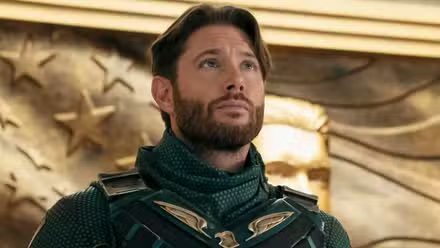
When Supernatural finally ended after 15 seasons, it was a bit bittersweet. On one hand, the show had actively run its course on The CW. The series had sort of lost itself near the end, concluding with a standalone hunt that kills off Dean (Jensen Ackles) and gives us a glimpse at Sam’s (Jared Padalecki) future. On the other hand, Supernatural is the type of show that feels like it could (from a creative standpoint) live forever if only it refocused on what made it great in the first place. Indeed, not only do fans want the Winchester brothers to return for more, but many of the cast members (main and recurring alike) are still jonesing for more after all this time — there’s only one thing getting in the way.
The ‘Supernatural’ Cast Wants To Return for More
For years now, Ackles and Padalecki have made it clear that they are looking for ways to bring Supernatural back. You don’t have to go very far to find some convention clip or interview quote of the pair (or any of the show’s long-time guests) waxing poetic about what they would like to see if the Winchesters came back for more. But if there’s one thing that’s consistent about their thoughts on a Supernatural return — besides their shared desire for a shortened episode count and Ackles’ hopes that the Winchesters will come back True Detective-style — it’s that it has to be the right time and the right way.
“If and when Supernatural comes back, it’s going to be a labor of love, and we’re gonna put every hour in to make sure that it’s as true to the canon and to the fandom and to the story and to the characters as possible,” Padalecki told Collider back in 2024. “I just don’t know when I’m available. I don’t know when he’s available. But again, my answer is yes.” Of course, since then, the pair have reunited on not one but two television projects, appearing opposite Misha Collins on The Boys for an impromptu Supernatural reunion and again as themselves on a recent episode of The Rookie. At this point, all Supernatural is lacking is a clear direction and a little bit of time. As Ackles told Collider last summer in an in-depth profile:
“It sounds like Amazon’s going to have to come up with an idea on that one, because they’re controlling my schedule right now. But look, we’ve talked about our love for the show. We continue to talk about it. We continue to do conventions and fan appearances and stuff, and talk about it. I feel like it’s one of those things where, if it happens, then let’s go.”
Busy schedules are certainly the main factor here. Padalecki had been focused on The CW’s Walker for several years there before it was axed in 2024, and Ackles’ schedule is currently managed by Amazon. Aside from his recent work on both The Boys and the short-lived Countdown, he’s now headlining the former’s prequel series Vought Rising. It’s clear that the Supernatural stars are itching to work together again and reunite on the small screen as Sam and Dean. Right now, the closest thing we’ve gotten to a genuine Winchester revival is the recent Dynamite Entertainment comic series set during the first season.
Could Prime Video Find a Way To Resurrect ‘Supernatural’?
While the stars of the hit horror/dark fantasy series are primed and ready for more, whether there is more Supernatural is ultimately up to the folks at Prime Video. Aside from needing to clear Ackles’ schedule, the program’s new streaming home could be the perfect place to bring the Winchesters back for a limited run, maybe in the same vein as The X-Files‘ shortened revival seasons. Given that series creator Eric Kripke already has a shorthand with the streamer, perhaps a pitch from the man who brought them The Boys would spark some interest. Back before the superhero deconstruction ended, Kripke had expressed to Collider his interest in seeing more Supernatural:
“Of course, I’d want to see it. Whether I’m a part of it depends on, could I find something fresh about it that I have never seen before? Obviously, I’ve told a lot of those stories, but if there was something out there that really surprised me, I love that universe, and I’d be interested in looking at that. It’s tricky to find what story in that universe hasn’t been told, but if someone can find one, I’m all in, baby.”
While Supernatural itself is owned by Warner Bros. Television, this wouldn’t be the company’s first collaboration with Amazon. After all, Batman: Caped Crusader is a DC/WB property that has found its way to Prime Video, so there is certainly some precedent there. Of course, Warner Bros. Discovery was recently purchased by Paramount, which could complicate things, though perhaps Paramount+ — which is already home to the supernatural thriller series Evil — could be a good place for Supernatural as well. However you slice it, Kripke knows what Padalecki and Ackles have already revealed: the right story would have to present itself.

‘The Boys’ Officially Returns With Bone-Crunching First ‘Vought Rising’ Trailer
Jensen Ackles and Aya Cash lead the new series.
Though if you ask this author, maybe the best way to bring the Winchesters back is by returning to the show’s initial horror roots, emphasizing their exploration of American urban legends, and pushing the world-ending stakes aside — you can’t really get bigger than Chuck (Rob Benedict), after all. Whether that means following alternate universe versions of Sam and Dean or finding some clever way to explain away their brief reunion so as not to contradict the series finale, that’s up to the writers to decide… As Dean once said, “Let’s get to work.”
NewsBeat2 minutes ago
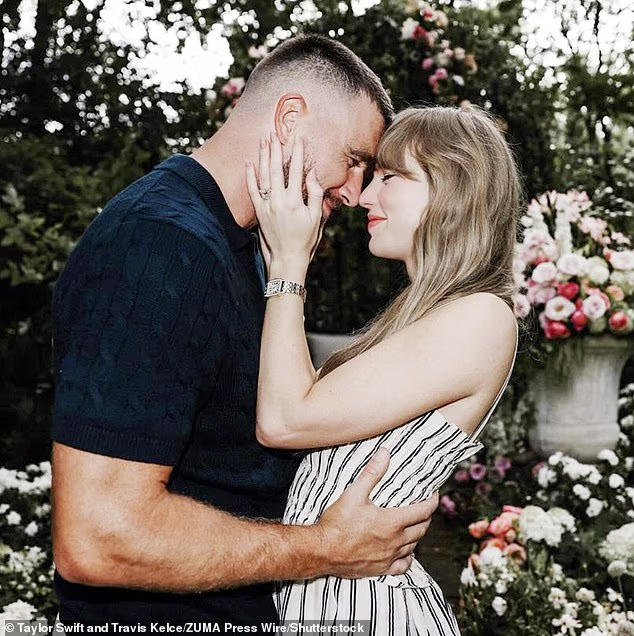
‘It was like living in the internet!’ Taylor Swift’s 1,000 guests share their post-wedding recaps as they reveal they danced all night and mingled with their superstar heroes before suffering ‘the world’s greatest hangover’

Business3 minutes ago
Blue Owl Capital: A 4.6% Relief After A 40% Stress Test (NYSE:OWL)

Crypto World4 minutes ago
How big banks plan to capture a quadrillion-dollar market


-

 Fashion2 days ago
Weekend Open Thread: High Hopes
-

 Politics2 days ago
The House | “Reframing the debate from a binary discussion of winners and losers”: Yuan Yang reviews ‘We Are Not Machines’
-

 Crypto World5 days ago
Strategy authorizes up to $1.25B in Bitcoin sales under new capital plan
-

 News Videos7 days ago
MAJOR BITCOIN & MARKET UPDATE!!!! (MUST WATCH ASAP!!!)
-

 Tech6 days ago
Anonymous researcher drops 0-day ‘exploitarium’ repo
-

 News Videos5 days ago
How to Build INSANE Live Financial Dashboards With Claude
-

 Business5 days ago
Australia treasurer says alleged access of prime minister’s bank data ’incredibly concerning’
-
 NewsBeat10 hours ago
Taylor Swift and Travis Kelce wedding staffer hilariously struggles to keep her cool while checking in megastars
-
 Business6 days ago
The AI boom won’t burst all at once. It will pop in ‘rolling bubbles’: Macquarie
-

 Sports4 days ago
Broncos roster: OL Ben Powers (No. 74) entering final year of contract
-

 Crypto World3 days ago
Binance stock trading tops $1B in first month after launch
-
 NewsBeat5 days ago
Presenter Caroline Flack’s brother Paul Flack dies aged 55
-

 Crypto World3 days ago
Alibaba-affiliate Ant Group enters the humanoid robot market with 12 deals
-
 NewsBeat3 days ago
New exhibition reflects five decades of movement between island of Ireland and GB
-
 Crypto World4 days ago
Airdrop Registration Becomes Key Focus For Remittix As RTX Launch Updates Approach
-

 Business4 days ago
Meta Platforms Stock Jumps 7% Today as Bloomberg Reports Company Plans to Enter the Cloud Business
-

 Business2 days ago
What a 10 Percent Drop Means for Buyers, Sellers and Renters
-

 Crypto World3 days ago
Binance Re-Enters Philippines As EU MiCA Rules Restrict Access
-

 Crypto World2 days ago
Standard Chartered Secures MiCA License as ESMA Adds 37 New Crypto Firms
-

 Tech6 days ago
The attack that hijacked Claude Code came through Sentry. Datadog, PagerDuty, and Jira have the same exposure.
You must be logged in to post a comment Login