
Entertainment
Where are Michael Jackson's kids now — and how do they feel about his new biopic?

:max_bytes(150000):strip_icc():format(jpeg)/Prince-Paris--Bigi-Jackson-042426-dda8a4ce886c4aa5a7ec46e11774d4e2.jpg)
Jackson’s eldest son, Prince, served as an executive producer on “Michael.”

Continue Reading
Running Point returned for season 2 and dedicated the newest installment to Niko Mijailovic.
Episode three of the hit Netflix series featured a tribute card for Mijailovic, which read, “In Loving Memory of #6 Niko Mijailovic.” Mijailovic was a varsity volleyball player who died in 2025 at 15 years old.
Mijailovic, who attended a private school in Los Angeles, suffered from sudden cardiac arrest (SCA) in April 2025. During his memorial service, it was mentioned that the last show Mijailovic watched with his family before his death was Running Point, which follows Kate Hudson as a reformed party girl, Isla, who gets the chance to prove herself when she is left in charge of her family’s pro basketball team.
The student’s older sister Mila spoke out about Mijailovic’s shocking death.

Hollywood mourned the deaths of some of its most legendary stars in 2026. The year started off with Broadway performer and influencer Bret Hanna-Shuford’s death at age 46. At the end of the month, comedy acting icon Catherine O’Hara died at age 71. In February, Designing Women’s Camilla Carr died at age 83, Dawson’s Creek […]
“There was no warning, and as far as we knew, he was completely healthy,” she wrote via Instagram in April while showing support for the Huddle For Hearts initiative. “He was always active and played sports his entire life. He loved volleyball the most, playing both on his high school varsity team as a freshman, as well as playing club.”
Mila reflected on her bond with her brother, adding, “He was there for every single part of my volleyball career, always supporting me.”
She continued: “As an athlete, he had a lot of drive and a lot of big goals. He also wanted to play Division I volleyball one day, and I always looked forward to seeing him achieve that. He also just has always been a really bright and happy person. He always made people feel comfortable and included. He was my number one supporter.”


Mila got emotional about weathering the major personal loss.
“He was my brother, but also my best friend,” she concluded. “Losing him has been the hardest thing I’ve ever gone through, but what makes it harder is that we didn’t know anything was wrong. There weren’t any signs that something like this was going to happen, until the one morning I got the phone call that he just didn’t wake up.”
Mijailovic’s school Campbell Hall paid tribute by retiring his jersey, writing via Instagram, “Niko was a true light within our community. Niko joined Campbell Hall in Kindergarten and grew into a beloved and thriving member of our varsity boys’ volleyball team. Beyond his incredible athletic talent, Niko was known for his quiet confidence, kind heart, and deep love for his friends and family. 🕊️💙💛.”

Epic films survive for a different reason than most classics. While scale gets them in the door, it’s never alone enough to keep them alive. And therefore, the ones people keep carrying with them are the ones that take all that size, war, history, landscape, spectacle, and then pin something painfully intimate inside it: grief, vanity, sacrifice, obsession, revenge, survival, the terrible cost of wanting to become larger than an ordinary life.
That is the real thrill of the best epics. They let private emotions detonate across giant canvases. A man loses a family and topples an empire. A woman clings to love while history keeps burning down the room around her. A visionary crosses a desert and slowly starts believing the myth of himself. These ten films make the human heart look tiny against history, then somehow turn it into the biggest thing on the screen.
10
‘Braveheart’ (1995)

Braveheart grabs people so fast since it does not begin with strategy or nationhood in some abstract sense. It begins with theft. Wallace (Mel Gibson) loses his father as a boy, grows up under occupation, finds a sliver of peace with Murron (Catherine McCormack), and then watches that peace get ripped from him with public cruelty meant to humiliate the entire village into obedience. That is the emotional lock. The rebellion does not rise from rhetoric first. It rises from grief curdling into rage after the one private life Wallace wanted gets crushed under a system built to make ordinary tenderness impossible.
That is why the big speeches land. They come after the film has already shown what English rule looks like on the ground: fear, violation, the stripping away of dignity. Wallace turns personal devastation into a national cause, and the movie understands how intoxicating that can feel. Each victory feeds the fantasy that courage and moral clarity might actually outmuscle corruption. Then the betrayals arrive, and the film gets even stronger. Wallace becomes larger in death than he ever was alive, which is exactly the fantasy epic audiences love to hand over to when a story earns it. It lets one wounded man stand in for a people refusing to kneel.
9
‘Doctor Zhivago’ (1965)

Doctor Zhivago devastates people since it traps a delicate emotional life inside a historical earthquake that has no patience for delicacy. The film follows Yuri (Omar Sharif) as a poet, a doctor, a man drawn toward feeling and beauty even while Russia is turning into a landscape of ideology, deprivation, shifting allegiances, and brute survival. That alone gives the film its ache. He is the wrong kind of soul for the century he is living through, and the movie never stops punishing him for that mismatch.
Then Lara (Julie Christie) enters, and the story locks into something even more painful. Their connection never gets the luxury of a clean beginning or a stable middle. It keeps forming in fragments while marriages, war, class upheaval, and political terror keep cutting across it. The scenes between them hurt precisely since they are so restrained. The film does not rush toward romantic release and keeps showing how history can force two people to live in the shadow of a life they can glimpse and never properly claim. By the final stretch, with Yuri reduced, exhausted, and spiritually hollowed out, the entire movie feels like one long argument with loss. People stay haunted by it. Doctor Zhivago understands a particularly cruel form of heartbreak: not losing love quickly, but watching the world slowly make it impossible and that’s why it’s so loved.
8
‘Titanic’ (1997)

Titanic stayed lodged in people’s nervous systems since James Cameron built the first half like a seduction and the second half like a nightmare you cannot stop trying to outrun. Rose (Kate Winslet) is introduced in a gilded cage, dressed in wealth, moving through first-class spaces like a possession being prepared for permanent display. Jack (Leonardo DiCaprio) crashes into that arrangement with the exact energy the story needs, not polished, not strategic, simply alive in a way nobody around her is allowed to be. Their early scenes matter so much since the film makes freedom feel tactile: running through steerage parties, standing at the bow, drawing, laughing, choosing feeling over decorum one reckless moment at a time.
Then the iceberg hits, and the romance changes function. It stops being fantasy and becomes the emotional mechanism that carries Rose through terror. The ship’s sinking works so brutally since the movie has spent so much time mapping its spaces. When the tilt grows steeper, when corridors flood, when families separate, when musicians keep playing and the wealthy keep bargaining for a little more privilege against the cold, the disaster gets personal in every direction. Jack dying, with that final transfer of life, drags her into a version of herself that survives him. That is why the ending has wrecked people since forever. Although the film’s themes of cheating are controversial, Titanic is one of the most widely loved epics.
7
‘Ben-Hur’ (1959)

Ben-Hur follows Judah (Charlton Heston) and Messala (Stephen Boyd) as boyhood friends, which is the detail that makes everything afterward feel poisoned in a richer way. Messala returns to Jerusalem carrying Rome inside him, all appetite for order, loyalty, and domination. Judah still believes some part of their former bond might survive the uniform. Then one act of political suspicion, one refusal to betray his own people, and the film starts crushing him piece by piece. His mother and sister are taken. He is sent to the galleys. Friendship becomes state violence in the space of a few scenes.
That emotional break powers the whole film. The sea battle, the adoption by Quintus Arrius (Jack Hawkins), the chariot race, all the spectacle lands with force since it is tied to a very specific wound: Judah wants to confront the man who converted intimacy into punishment. The chariot race is legendary on its own terms, though it lasts in the mind since it is not just action. It is years of humiliation, survival, hatred, and memory slamming into the arena at full speed. Then the film does something even more enduring. It refuses to let vengeance be the final spiritual answer. By the time suffering circles back through his family and into contact with Christ’s crucifixion, the movie starts pulling Judah out of rage toward something more difficult, the release of carrying it.
6
‘The Bridge on the River Kwai’ (1957)

The Bridge on the River Kwai gets under the skin since it turns discipline into a form of madness so gradually that the viewer can feel it happening and still get trapped in its logic. Colonel Nicholson (Alec Guinness) begins as a prisoner of war determined to protect the dignity of his men against Saito (Sessue Hayakawa)’s abuse. On that level, he is admirable. He refuses humiliation, invokes military rules, takes punishment rather than surrender authority.
Then once Nicholson gains control over the bridge project, pride begins feeding on itself. Building the bridge well starts to feel, in his mind, like proof that British order and competence cannot be broken even in captivity. That rationale is insane, though terrifyingly understandable in the moment. He needs purpose, superiority, and the illusion that his suffering has shape. Meanwhile, Shears (William Holden) and the commandos move through a completely different war movie, one grounded in survival, exhaustion, and practical sabotage. The collision between those plotlines is why the film hits so hard. Few epics cut this deep into the human need to find meaning inside captivity, even when that meaning starts eating your judgment alive.
5
‘Gladiator’ (2000)

Gladiator 2 was good. Gladiator remains catnip for audiences since its revenge engine is so clean and its emotional wound is so raw. Maximus (Russell Crowe) is introduced as a man tired of war and ready to return home. That matters. He is not craving conquest. He wants his wife, his son, his farm, the ordinary life battle delayed. Then Marcus Aurelius (Richard Harris) names him protector of Rome’s future, Commodus (Joaquin Phoenix) murders his father, and Maximus rides home only to find his family butchered and hanging where his future used to be. The movie earns every ounce of his fury before it ever asks the audience to cheer for blood.
From there, it keeps layering power into the obvious revenge structure. Slavery strips him down. The arena rebuilds him. Each fight becomes more than survival since it lets Maximus weaponize spectacle against the empire that destroyed him. Commodus is a perfect epic villain for one reason above all: he is starving for love he cannot command, so he keeps reaching for domination instead. That makes every confrontation between them feel personal and political at once. It’s the OG story of a grieving man who keeps moving through degradation without surrendering the part of himself that loved home more than power.
4
‘Gone with the Wind’ (1939)

Gone with the Wind endures in part since Scarlett O’Hara (Vivien Leigh) is such a thrillingly difficult person to sit with for this long. She is vain, selfish, manipulative, resourceful, terrified, magnetic, and almost impossible to reduce to one moral note. The movie’s emotional grip starts with her refusal to accept that the world she knows is about to disappear. At Twelve Oaks, desire still feels flirtatious and petty, Ashley (Leslie Howard) still feels like the prize she can organize her life around, and the whole Southern social order still imagines itself permanent. Then war arrives and starts tearing the fabric apart faster than she can emotionally process it.
The Atlanta sections are where the film really hooks people. Scarlett claws through it. She survives childbirth, hunger, ruin, and the burning city with her fear exposed and her will hardening in the same motion. “I’ll never be hungry again” lands so hard. Then romance becomes tangled with appetite, status, and the refusal to be powerless again. Her relationship with Rhett (Clark Gable) works so explosively. This film is a grounding tragedy about mistaking obsession for destiny while history remakes the ground under your feet.
3
‘Schindler’s List’ (1993)

Schindler’s List does not belong to the same emotional category as crowd-pleasing epics, and that is exactly why its place this high feels right. The film starts in moral grayness. Oskar Schindler (Liam Neeson) here is opportunistic, stylish, socially agile, a businessman reading war as a ladder. He sees occupied Poland, sees cheap Jewish labor, sees profit.
That beginning is crucial since the film’s power depends on watching human conscience form under pressure rather than arrive prepackaged. Schindler changes scene by scene as the machinery around him gets more impossible to look away from. The liquidation of the Kraków ghetto, though, is where the movie sears itself into people. Chaos floods every corner, families are split in seconds, hiding places fail, old people are shot where they sit, and the whole apparatus of extermination stops being a distant fact and becomes a series of immediate violations. From there, Schindler’s relationship to his workers deepens from utility into responsibility, then into desperate protection. Then Steven Spielberg lands the knife with Schindler’s breakdown at the end. It’s an epic epic.
2
‘The Lord of the Rings: The Return of the King’ (2003)

The perfect film to circle around after The Hunt for the Gollum got announced. The Return of the King works on the soul in a way very few blockbusters even attempt. Now in LOTR’s journey, by this point, the story has earned every ounce of scale. Frodo (Elijah Wood) is no longer an eager hobbit on an adventure. He is spiritually worn down, suspicious, physically failing, and carrying the Ring like a wound that keeps deepening inside him. Sam (Sean Astin) has become the emotional backbone of the whole trilogy, not through grand speeches alone but through action after action that proves love can remain practical under impossible conditions.
He cooks, carries, defends, pleads, refuses to leave. That matters. The film’s biggest emotional triumph is that amidst armies, kings, and collapsing cities, its deepest bond is still the friendship crawling one step at a time toward Mount Doom. Then everything around that central journey starts cresting. Aragorn (Viggo Mortensen) accepts the kingship he once hesitated to claim. Théoden (Bernard Hill) rides toward almost certain death with the dignity of a man choosing courage over survival. Éowyn (Miranda Otto)’s confrontation with the Witch-king lands with such force since the whole film has kept showing her caged by the dismissals of men who cannot read her hunger to matter. And then the ending keeps going, wisely and at the end, what hits me the most is that victory often does not ensure a ditto restoration as old times.
1
‘Lawrence of Arabia’ (1962)

Lawrence of Arabia sits at the top since almost no other epic understands greatness as a seduction this dangerous. T.E. Lawrence (Peter O’Toole) enters the film already restless inside conventional military life, brilliant, insolent, impossible to fully contain. The desert first offers him scale, freedom, and self-invention. Crossing the Nefud, rescuing Gasim (I. S. Johar), winning over Sherif Ali (Omar Sharif), orchestrating Aqaba, all of it feels like a man discovering the version of himself ordinary structures could never hold. The film lets that transformation feel exhilarating. That is crucial. You have to understand why Lawrence falls in love with the myth of Lawrence before you can feel the horror of what that myth starts doing to him.
And it does start doing something terrible. Violence changes flavor. Public triumph makes him bolder, stranger, more detached from ordinary limits. He moves between British interests and Arab hopes, between genuine idealism and narcissistic intoxication, until the two become inseparable. The scene in Deraa cracks him open. The massacre at Tafas finishes exposing how badly the role has corroded him. By the end, Lawrence is still legendary and already spiritually ruined, a man who touched the sublime and came back unable to live inside ordinary humanity again. That is epic cinema at its highest level: not just vast, not just beautiful, but deeply alarmed by the human craving to become bigger than the self can safely survive.

Lawrence of Arabia
- Release Date
-
December 11, 1962
- Runtime
-
228 minutes
- Director
-
David Lean
- Writers
-
Robert Bolt, Michael Wilson
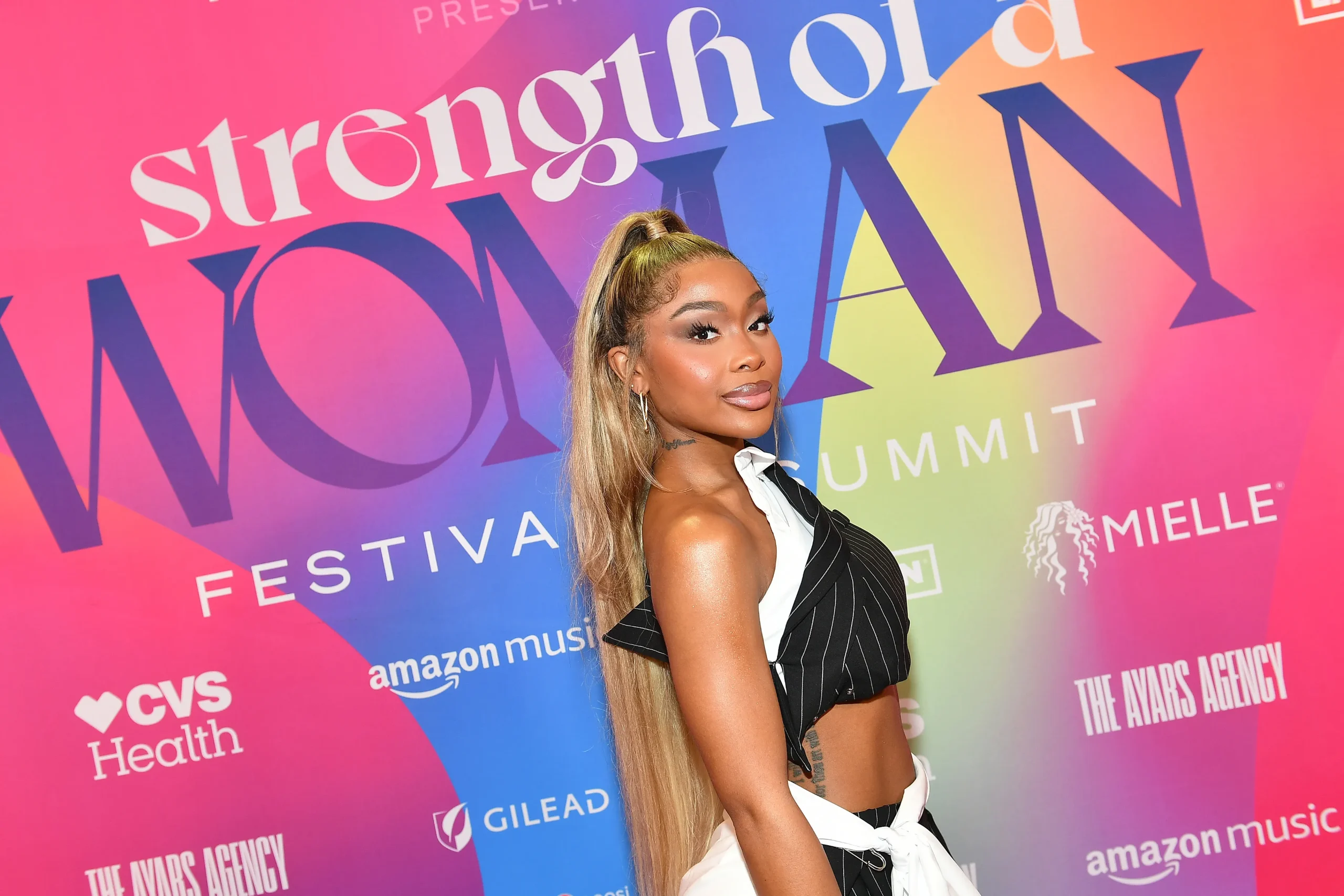
Emotions are running high online as a recent moment involving Jayda Cheaves has people paying close attention—and her name is now being mentioned alongside conversations about loyalty, boundaries, and real friendships. While fans are used to seeing her highlight the highs of life, this time, a more vulnerable side is taking center stage. The candid moment has quickly sparked reactions, with many trying to understand what may have led up to it.
RELATED: Yikes! Emily Huff’s Apparent Social Media Account Alleges Jayda Cheaves Jumped Her Three Times (VIDEO)
Jayda Cheaves Breaks Down, Speaks On Fake Friendships
In a video that appears to have been recorded in her car, Jayda Cheaves becomes visibly emotional as she opens up about her current relationships. Wearing a white headband and speaking directly into her phone, she reflects on how some connections feel more like keeping score than genuine support. She admitted that she often gives a lot because of her kind nature, but feels that people take advantage of that. Fighting back tears, she took accountability for her experiences, saying, “I fault myself 100% because I allowed these things to continuously happen,” a statement that resonated with many viewers online.
You Already Know The Internet Had Something To Say
Folks ran straight to The Shade Room’s Instagram comment section with plenty to say, and the reactions were all over the place. Some said they understood exactly where Jayda Cheaves was coming from, while others offered advice on setting boundaries and moving differently in future friendships. And of course, a few users kept it light with jokes, saying they’d never take their tears to the internet.
One Instagram user, @cliffvmir, commented, “Jayda I feel you FR“
This Instagram user, @noushiex3, added, “Being nice doesn’t mean being passive , and lacking boundaries. That’s what I had to learn.”
And, Instagram user @danielwho91 claimed, “No matter how tough life get I will never hit record and start crying”
While Instagram user @dominiquechinn shared, “Just do you, you don’t have to explain yourself to people that aren’t supportive.“
Then, Instagram user @diamwilson added, “I know Jada girl , it’s that time of the month for me too 🥹”
Finally, Instagram user @__tiffanirose__ said, “My Favorite Saying…. ‘Stop Expecting You In Other Ppl’…..“
Jayda Cheaves Claps Back At Critics After Emotional Video Goes Viral
RELATED: Lemons Into Lemonade! Jayda Cheaves Jokes About Being The Birthday “Piñata” Following Viral Club Altercation (WATCH)
What Do You Think Roomies?

Taylor Rousseau Grigg’s widow, Cameron Grigg, has found new love 18 months after her shocking death.
“Our nightly Bible study turned into a night I’ll never forget,” Cameron’s fiancée, Kalli Kodet, wrote via Instagram on April 16, announcing their engagement following a romantic picnic. (Cameron popped the question via a Post-It note hidden in her Bible.)
Kodet, 25, added, “Growing up I used to ask my mom, ‘How will I know when I meet the one?’ She always told me, ‘Find someone you can struggle with — because you can be happy with anyone. But when life gets hard and you pick each other up, that’s how you know you’ll make it.’”

Cameron Grigg. Courtesy of Kalli Kodet/Instagram
The Texas resident, who is a content creator, called her relationship with Cameron, 25, the “type of love I’ve waited my whole life for.” She added, “I promise to choose you forever. Thank you God for this answered prayer.”
Kodet added, “You are the very best of me Cameron Allen🤍.”
Cameron got down on one knee less than two years after his late wife, Taylor, died in October 2024 at the age of 25. (Taylor built up a following on social media and also owned online boutiques Geaux Savage and Beauty, which many of her followers shopped.)

Cameron Griggs, Kalli Kodet. Courtesy of Kalli Kodet/Instagram
“No one ever expects to have to deal with this kind of pain and heartache, especially at our age,” Cameron wrote via Instagram at the time. “This past year Taylor has dealt with more pain and suffering than most people do in a lifetime. And in spite of that she still has been such a light and always brought joy to everyone around her.”
He explained that Taylor — whom he married in August 2023 — had been dealing with undisclosed medical issues prior to her death.
Taylor’s cause of death was revealed later that month, with a family spokesperson telling Today that the TikTok star died after suffering complications from asthma and Addison’s disease.

Several of the internet’s most famous faces took the next steps in their relationships in 2026. The year kicked off with influencer and former Playboy model Amanda Cerny saying yes to Serhant real estate agent Johannes Bartl. Weeks later, influencer Halley Kate McGookin announced that Reed Williams popped the question to her while on vacation […]
Addison’s disease is also referred to as adrenal insufficiency, which occurs when the body doesn’t create enough of certain hormones, according to Mayo Clinic. It can occur when a person’s body’s adrenal glands make too little cortisol and too little aldosterone, which is an additional hormone. The disease can be treated by taking hormones to replace missing ones, however, it can also be life-threatening and affect anyone.
“While her earthly body is still here waiting to give the gift of life, we know her spirit is in heaven dancing in the streets made of gold with all her beauty and grace,” Cameron added in October. “Her endless shoe/boot collection. And her rhinestones and turquoise jewelry. She’s no longer in pain, but her body has been made whole in Jesus name.”
Cameron, who hasn’t posted on Instagram since before his wife’s death, has kept his private life out of the public as much as possible.
The exact date of when he met his new bride-to-be is unknown, however, Kodet posted a bouquet of roses from a mystery suitor via Instagram in April 2025, which many fans think was sent from Cameron.
Kodet became Instagram official with Cameron three months later. “It’s a big old beautiful world 🏝️,” she captioned a photo of the couple snorkeling in Florida.
In November 2025, Kodet shared a series of professional photos with Cameron taken in a field. “Answer to all the prayers I’ve prayed, it was always you,” she captioned the romantic shoot.
Entertainment
How did Michael Jackson die? Revisiting the singer's 2009 death — and his doctor's conviction
:max_bytes(150000):strip_icc():format(jpeg)/michael-jackson-5-7201994bbba84332adda2dc5336a1fca.jpg)
Jackson’s personal physician was found guilty of involuntary manslaughter.

Before the MCU branched into television and captured viewer attention with shows like Loki and Wonder Man, any answer to the question “what’s your favorite Marvel TV show?” would most likely have included Daredevil, Jessica Jones, and other shows from the Netflix era of Marvel television. After Avengers: Endgame, any foray into TV on Disney+ needed a flagship project, and Marvel certainly found it with WandaVision, which launched a completely new era for the Marvel Cinematic Universe on the small screen. With a unique premise that leads to a constantly shifting format, it’s a compelling binge that gets better with every episode.
What is ‘WandaVision’ About?
As the title suggests, WandaVision follows everyone’s favorite witch/synthezoid couple, Wanda (Elizabeth Olsen) and Vision (Paul Bettany), who have moved into a seemingly perfect suburban neighborhood called Westview — but from the beginning, something is clearly not right, not least because of the dramatic irony. Since Vision died in Avengers: Infinity War, the immediate question WandaVision raises is just how he has been resurrected. The tension only increases in the first episode, as strange, spooky occurrences hint that Westview isn’t all it appears to be. An early dinner with their neighbors quickly goes awry, and Vision directly confronts Wanda about where they are and what is really going on.

As the first post-Endgame project, WandaVision represented a massive step for the MCU. Not only did it lend credence to Marvel’s move into television with a more subtle and cinematographically distinctive approach, but it also solidified Wanda as one of the most fascinating, powerful, and dangerous superheroes in the MCU. By delving into her past, her tragic relationship with Vision, and her reality-warping powers, WandaVision finally explores the depths that fans had only glimpsed in Avengers: Age of Ultron and other projects where Wanda was a supporting character. Watching her character evolve over nine episodes, as she descends deeper into an obsessive need to protect her loved ones, makes it clear why she was such a pivotal figure in Doctor Strange in the Multiverse of Madness and why fans have remained eager for Olsen’s Scarlet Witch to return.
‘WandaVision’s Shifting Format With Every Episode Makes it a Consistently Entertaining Binge
A great binge isn’t just determined by whether a story is good or not. It needs to be dynamic to make the viewer desperate to learn what happens next. WandaVision takes this strategy beyond the twists and turns of Westview and its dark origins, and applies it to its overall visual language. Each of WandaVision‘s episodes is based on a different era of TV, from the 1950s to the present day. The premiere takes a page from series like The Dick Van Dyke Show, for example, while a later episode embodies 1990s sitcoms such as Malcolm in the Middle.
For the viewer, this means that binging WandaVision not only pushes the narrative forward but also freshly reinvents the series with every new episode. As the story develops, more typical MCU elements appear outside Westview, but because they arrive later, contrasting what occurs inside the town, they successfully add another layer to WandaVision‘s mystery rather than overshadowing the series’ unique style. Binging WandaVision isn’t like watching one season of television; it’s more akin to flipping through several different shows that somehow all tie together. With VisionQuest seemingly finally on the way to answer more lingering questions, now is the perfect time to refresh your memory with the series that kicked off a whole new era for the MCU.

- Release Date
-
2021 – 2021-00-00
- Network
-
Disney+
- Showrunner
-
Jac Schaeffer
- Directors
-
Matt Shakman
- Writers
-
Cameron Squires, Megan McDonnell, Laura Donney
-

Wanda Maximoff / Scarlet Witch
-

Grey DeLisle
Commercial Announcer (voice) (uncredited)

Chile! Marijuana is back in the spotlight as a major shift out of Washington has people talking — and this time, Donald Trump’s name is right in the middle of it. A move tied to his administration is quietly changing how cannabis is viewed at the federal level, sparking conversation across both medical and political spaces. While it’s not full legalization, the update is already being seen as a significant step that could reshape how marijuana is handled moving forward.
RELATED: Wait, What?! Donald Trump Speaks Out After Sharing Picture That Appeared To Depict Him As Jesus Christ (PHOTO + VIDEO)
On Thursday, acting Attorney General Todd Blanche signed an order reclassifying state-licensed medical marijuana from a Schedule I drug to Schedule III — a category considered less dangerous and more widely accepted for medical use. For years, marijuana sat alongside drugs like heroin under the strictest federal classification, but this shift now opens the door for expanded research and fewer restrictions for scientists studying cannabis. Officials say the move delivers on Trump’s push to expand access to medical treatment options, while also allowing doctors to gather more reliable data on its safety and effectiveness.
Federal Shift Eases Rules For Marijuana Businesses, Research Expands
The change doesn’t legalize marijuana at the federal level, but it does bring major impacts — especially for businesses and researchers. State-licensed medical marijuana companies can now deduct business expenses on federal taxes, and researchers no longer have to go through the intense process required for studying Schedule I drugs. At the same time, federal officials say they’re preparing for broader discussions around marijuana policy, with hearings set to begin in June to explore potential reclassification beyond just medical use.
Roomies Go Off As Marijuana Move Raises Eyebrows
Folks ran straight to The Shade Room’s IG comment section and went IN as the news dropped. Some joked they’ve been smoking regardless of what the government says, while others weren’t so convinced and side-eyed the move as some kind of setup. Either way, the comments were full of mixed reactions, with people debating what this really means moving forward.
This Instagram user @ashl.eyynichole commented, “i was doing it anyways ofc 😂😂😂😂”
Likewise, Instagram user @justcoleman6 added, “Somebody tell the government idc if it’s illegal or not 😂”
And, Instagram user @k2s.kell shared, “late asf 4/20 been over with“
However, Instagram user @erica_lovespink said, “Yall better stay woke! They bout to start fuxxn with yall weed now 🤦🏽♀️”
While Instagram user @10thst_mackk claimed, “This so they can draft you easier, they not slick! 😂”
Lastly, Instagram user @iamshanirose wrote, “Stay focused y’all the midterms are coming.“
RELATED: Grandpa Gotta Go! Candace Owens Claps Back After Trump Calls Her Out Over Iran War Stance (PHOTO)
What Do You Think Roomies?
Us Weekly has affiliate partnerships. We receive compensation when you click on a link and make a purchase. Learn more!
There’s a reason Parisian rich moms always look so chic. It’s all about sharp tailoring, billowy fabrics and pieces that appear mega expensive. These 19 European-style finds bring the same Parisian energy, minus the boutique-level spend. Psst, some are even in the single-digit price range.
Classy blouses, billowy dresses, slide sandals, you name it, these rich-looking pieces cover every wardrobe need (or want, which is just as valid). From errands to weddings, these dreamy finds make you look like the upper class whenever you wear them. Scroll on!
19 Parisian-Style Rich Mom Pieces
Parisian-Style Blouses
1. Our Favorite: Swiss dots, ruffle details and lantern sleeves give this year-round blouse a Left Bank feel. It’s pure boutique energy.
2. Flattering Find: Simple stripes can feel flat without the right details. This crisp, tailored-looking blouse nails it with a collar that frames your face beautifully.
3. Sassy Stunner: Petal sleeves give this printed top a fun and feminine silhouette. At under $9, it’s already in the cart.
4. Center of Attention: Bold florals are a Parisian staple, and this bright spring number understands the assignment. The print is vibrant without being overwhelming.
5. Celeb Style: Kate Middleton and Jennifer Garner keep reaching for bow-neck blouses, and this elegant style captures the same energy. It’s impossibly polished.
6. Quiet Luxury: Oversized ruffles and bell sleeves elevate this solid-color blouse beyond basic territory. Without seasonal prints, it’s versatile enough for everyday wear.
7. Polka Dot Princess: Every French woman has a polka dot piece in her rotation. This polka dot top lets you join the club for just $11.

Nothing says Zimmermann style quite like, well, Zimmermann. The billowy fabrics, gorgeous prints, effortlessly flattering silhouettes . . . it’s no wonder A-listers wear the label nonstop. Thankfully, you don’t have to drop four figures to nail the style. These 19 wedding guest dresses look eerily similar to the designer brand, yet start at just […]
Parisian-Style Dresses
8. Our Favorite: A delicate floral print against a pink backdrop makes this whimsical maxi dress feel like a painting you can wear. It’s a dress that people will stop to ask about.
9. Loose and Luxe: If fitted dresses aren’t your thing, this billowy maxi style is your answer. It skims the body everywhere for a relaxed, effortless silhouette.
10. Zimmermann Vibes: This midi dress radiates Zimmermann energy, thanks to the colorful print. It’s bold, unique and undeniably European.
11. Wrapped Up: Snatch your waist without even trying in this universally flattering wrap dress. It cinches at the middle and drapes everywhere else.
12. With Pockets: A cute dress with pockets shouldn’t be so hard to find, yet here we are. This A-line midi dress has plenty of room for your phone, keys and cards.
13. Oh-So Crisp: A shirtdress can look frumpy without the right structure, but this striped version solves it with a tie waist. You’ll wear it from in-office mornings to afternoon picnics.
Parisian-Style Pants and Skirts
14. Our Favorite: Stroll through a farmers’ market in these airy gauze pants, and you’ve nailed the French countryside look. They’re light as air.
15. Extra Breezy: A smocked waist gives these flowy trouser pants a comfortable feel — no elastic band needed. The wide-leg shape adds an instant cool factor.
16. Bye, Jeans: This floral maxi skirt is your warm-weather replacement for jeans. The cute print channels a distinctly Parisian vibe that denim just can’t match.
Parisian-Style Shoes
17. Our Favorite: If you’re tired of stylish sandals that destroy your feet, these rich mom slides will rock your world. They look like raffia, but are soft and comfortable enough to wear for hours of walking.
18. Model Status: Stilettos on cobblestones? Non, merci. These block-heel sandals bring height and stability on all kinds of terrain. Plus, the elegant gold embellishments further elevate the look.
19. Sporty Chic: Parisian women live in sneakers, but never boring ones. These printed Adidas shoes add personality to any outfit while keeping your feet happy.

You want a high-end aesthetic, but not the price tag that comes with it. I can understand that. Luckily, I find great deals for a living, and these 13 markdowns are seriously rich mom-coded. I’m talking deals on classy sandals, Zimmermann-style dresses and spring blouses that go with everything, all from just $4. Whether you’re […]
Entertainment
Robert Wagner hasn't aged a day in new selfie celebrating son-in-law Barry Watson's birthday
:max_bytes(150000):strip_icc():format(jpeg)/Robert-Wagner-Barry-Watson-042426-ff9fc4d2a0b04cc1a252c82a4a1d2d7f.jpg)
Meanwhile, the Hollywood icon turned 96 in February.
Pattie Boyd threw her support behind her ex-husband, Eric Clapton, more than three decades after their divorce.
Taking to Instagram on Friday, April 24, Boyd, 82, shared a photo of Clapton, 81, on stage during a live performance in England earlier this week.
“Fabulous to see Eric in the relatively intimate G-Live venue in Guildford on Monday evening,” Boyd captioned the photo.
She added, “Great to hear ‘Old Love,’ ‘Layla’ and ‘Wonderful Tonight’ (amongst others) live again.”

When most people think of romantic mess and The Beatles, they usually recall the persistent — and false — rumor that John Lennon’s second wife, Yoko Ono, was responsible for the band’s split. The lesser-known drama, however, concerns Ringo Starr and George Harrison, and the latter’s affair with the former’s wife. Shortly after Starr joined […]
The songs “Layla” and “Wonderful Tonight” have long been rumored to have been penned about Boyd, when Clapton was pining for her during her marriage to his friend, The Beatles’ George Harrison.
Boyd was first married to Harrison after they crossed paths on the set of The Beatles’ movie A Hard Day’s Night. The pair tied the knot in Surrey, England in January 1966 but their marriage was later plagued with infidelity and they divorced in 1977.
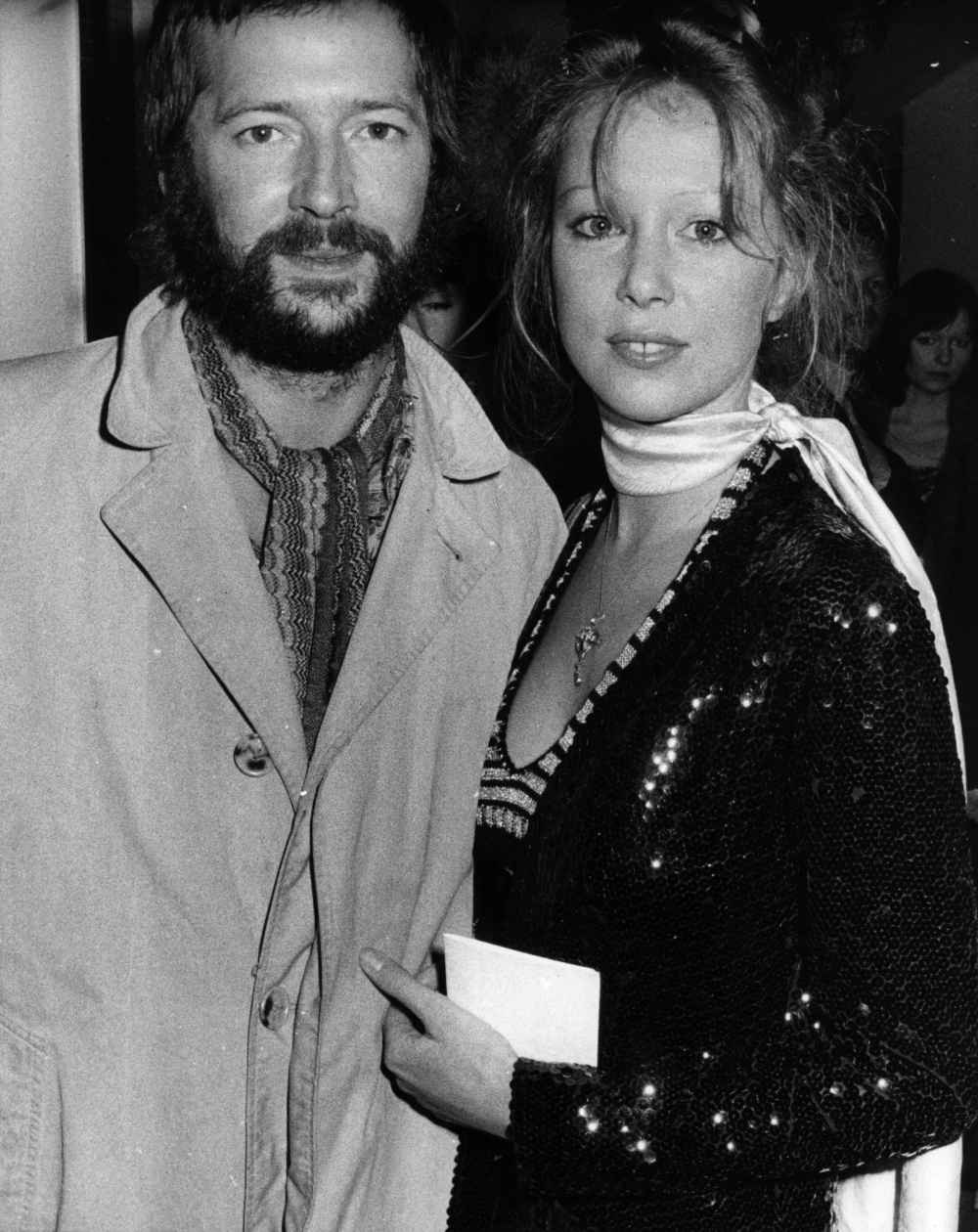
Eric Clapton and Pattie Boyd in 1975. (Photo by Evening Standard/Getty Images)
Clapton fell for Boyd while she was still married to Harrison, sparking an infamous pop culture love triangle.
Boyd and Clapton exchanged vows in 1979 and were married until 1989, with the relationship marred by a string of infidelities, unsuccessful IVF attempts and the singer’s battle with alcoholism.
The model later reflected on her marriages to Clapton and Harrison via an essay written for The Guardian decades after the respective relationships ended.

MFleetwood Mac is perhaps the most famous example of bandmates dating each other — and the ensuing complications that come with it. “I broke up with Lindsey [Buckingham] in 1976. We’d only been in Fleetwood Mac for a year and a half, and we were breaking up when we joined Fleetwood Mac,” Stevie Nicks recalled […]
“I think men are mainly unfaithful because as they get older, they feel the urge to prove to themselves that they are still attractive. They need proof from outside the marriage. It’s really sad. It’s all about them. It’s not about their wives at all. With George and Eric it was simply because they had women telling them how wonderful they were all the time. Women make the mistake of thinking that sex is love. Men are able to be a bit more detached about it,” Boyd wrote for The Guardian in November 2008.
She continued, “I read Eric’s autobiography and his description of our marriage. His reflection of it is much colder than I believed he felt at the time. I fell into his seductive trap and I believed it, whereas reading his book it seemed like he had forgotten how he was when we were together. Women hang onto the romanticism of a relationship. But a man compartmentalises it into the past and then gets on with his new life. I wasn’t very happy with his version of events.”

Sports1 minute ago
2026 Undrafted NFL Free-Agent Signings of Players in West
NewsBeat3 minutes ago
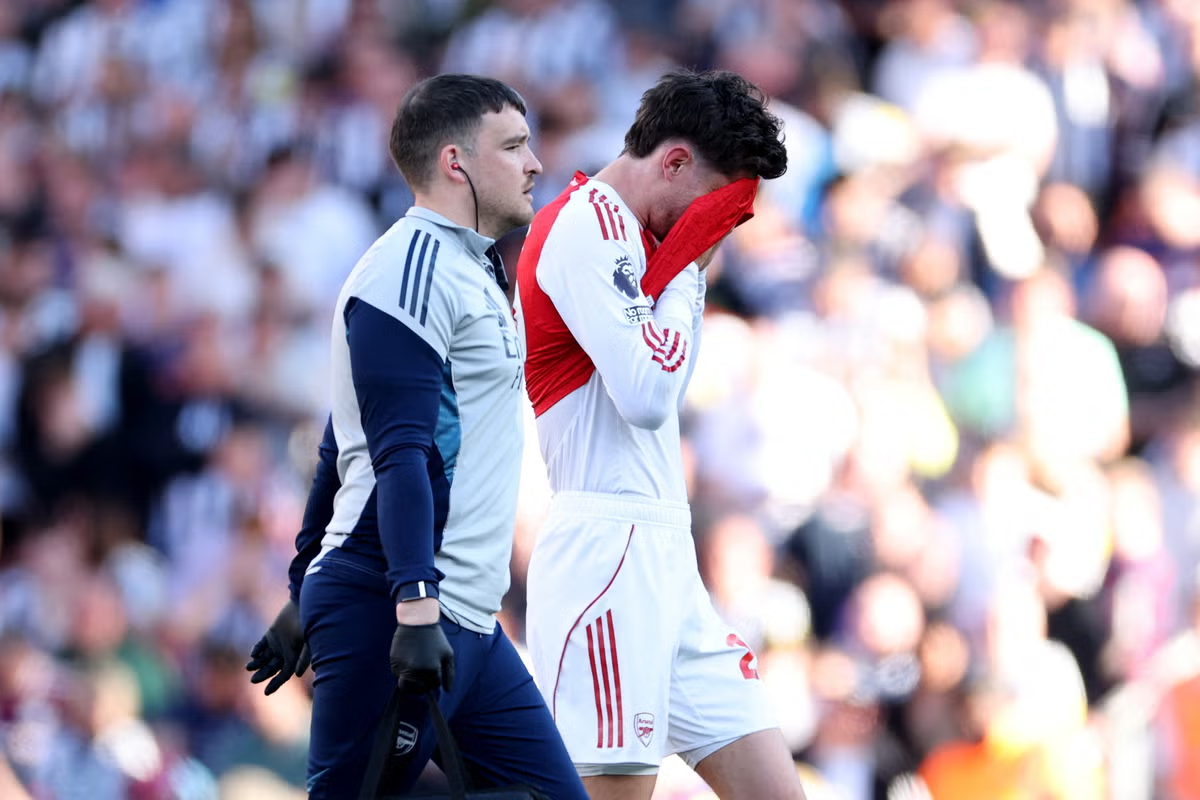
Arsenal dealt latest injury blow as Kai Havertz hobbles off against Newcastle

Business4 minutes ago
Tesla Snatches Back Global EV Lead from BYD as 2026 Sales War Heats Up

NewsBeat1 month ago
Manchester United reach agreement with Casemiro over contract clause amid transfer speculation

Politics2 weeks ago
US brings back mandatory military draft registration

NewsBeat3 weeks ago
Steven Gerrard disagrees with Gary Neville over ‘shock’ Chelsea and Arsenal claim | Football


-

 Business6 days ago
Powerball Result April 18, 2026: No Jackpot Winner in Powerball Draw: $75 Million Rolls Over
-

 Politics6 days ago
Zack Polanski demands ‘council homes not luxury flats for foreign investors’
-

 Fashion23 hours ago
Weekend Open Thread – Corporette.com
-
Entertainment6 days ago
NBA Analyst Charles Barkley Chimes in on Ice Spice McDonald’s Fiasco
-

 Tech7 days ago
Auto Enthusiast Scores Running Tesla Model 3 for Two Grand and Turns It Into Bare-Bones Go-Kart
-

 Politics5 days ago
Gary Stevenson delivers timely reminder to register to vote as deadline TODAY
-

 Politics3 days ago
Making troops accountable for war crimes threatens US alliance, ex-SAS colonel warns
-

 Business3 days ago
Rolls-Royce Voted UK’s Most Iconic Trade Mark as IPO Register Hits 150
-

 Politics3 days ago
Disabled people challenge government SEND proposals over segregation concerns
-
 Crypto World5 days ago
Bank of Hawai’i (BOH) Q1 2026: Net Income Drops to $57.4M as Net Interest Margin Expands
-

 Politics3 days ago
Zack Polanski responds to home secretary’s taser threat
-
Politics3 days ago
Wings Over Scotland | How To Get Away With Crimes
-

 Politics3 days ago
Starmer handler McSweeney to be dragged from shadows by Foreign Affairs Committee
-
Crypto World7 days ago
Kelp DAO rsETH Bridge Hack Drains $292M as DeFi Losses Top $600M in Two Weeks
-

 Politics3 days ago
‘Iran is still a nuclear threat’
-

 Crypto World4 days ago
New York sues Coinbase, Gemini over prediction market offerings
-
 Crypto World4 days ago
Five Value Stocks with Recovery Potential in 2026: PayPal (PYPL), Nike (NKE), and More
-

 Business3 days ago
The Job Benefits Most Men Don’t Know to Negotiate
-

 Crypto World1 day ago
Michael Saylor says BTC winter is over. Market analyst disagrees, says bitcoin was in a pullback
-

 Politics6 days ago
Reform investigating candidate who ‘hates’ the NHS
You must be logged in to post a comment Login