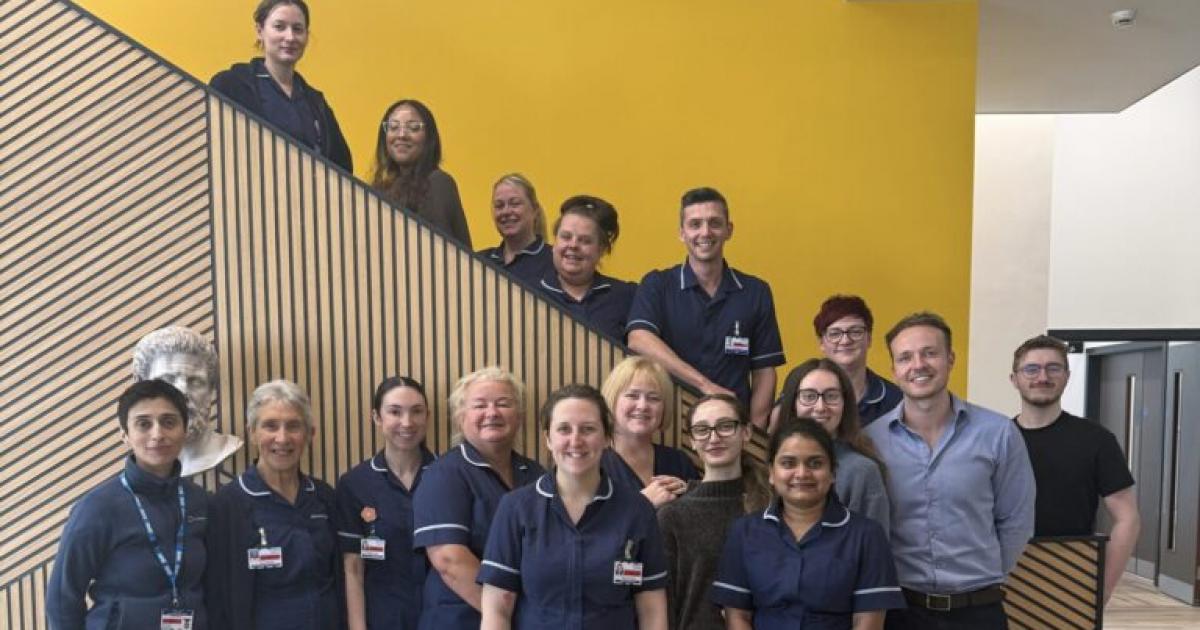
Bolton NHS Foundation Trust recruited the participants across more than 50 studies over the past year.
The research focused on areas including reproductive health, genetics, neonatal care and community-based trials, and coincides with International Clinical Trials Day.
Alison Loftus, head of research and development at Bolton NHS Foundation Trust, said: “It’s been another remarkable year when it comes to delivering world-leading research studies in Bolton.
Advertisement
“We would like to thank everyone, from our colleagues who help to support research to our individuals who consent to taking part, as without them we wouldn’t be able to continue our work to discover new ways of treating illnesses and conditions.”
One major study currently underway is OBS UK, which tests a standardised care bundle to manage heavy bleeding during and after childbirth.
Another is the Generation Study, a genomic screening project for newborns to detect more than 200 rare but treatable genetic conditions.
Neonatal services at the trust have exceeded recruitment goals in several studies, thanks to support from across medical, nursing, midwifery and Allied Health Professional teams.
Advertisement
There has also been a shift towards delivering research in community settings, in line with the National Institute for Health and Care Research’s goal of making clinical trials more accessible and inclusive.
Recent community-based studies include the TRICEPS trial, which is exploring whether nerve stimulation and home-based rehabilitation can improve arm and hand recovery following a stroke.
The REDUCe-2 study is examining whether long-term abdominal drains can improve the quality of life for people with advanced cirrhosis.
Bolton is also contributing to Genes & Health, the world’s largest community-based genetics and health study focused on British Bangladeshi and British Pakistani populations.
Advertisement
Ms Loftus said: “Our continued focus to work beyond traditional hospital settings to deliver ground-breaking research is creating potentially life-changing outcomes.”
If you would like to find out more about research opportunities in Bolton, visit Bolton NHS Foundation Trust’s website.
Cabin crew were reportedly asking for any passengers with medical training to come to the pilot’s aid
Tannur Anders UK & World News Reporter and Olivia Bridge Reporter in Live News Network
07:52, 26 May 2026Updated 07:52, 26 May 2026
A flight travelling to the UK was forced to make an emergency landing after the pilot suffered a suspected heart attack mid-flight.
The Jet2 flight LS1266, bound for Birmingham, had departed Tenerife on Friday (May 22) when it was forced to divert to Portugal. The plane, carrying 220 passengers, was cruising at 30,000 ft when it had to make the unscheduled landing at Francisco Sa Carneiro Airport near Porto.
Advertisement
Passengers said how cabin crew rushed down the aisles, asking if anyone onboard had any medical training. They said lights were flicking as the plane plummeted into a rapid descent and children cried as it quickly lost altitude, reports The Mirror.
“My partner and I were asleep when we were woken by chaos,” a passenger told The Sun.
“Lights began flashing and hostesses who were visibly upset, seeking a doctor. Our two-year-old began crying like many other children on board because the aircraft was dropping so quickly for an emergency landing.”
The aircraft landed in Porto at 2.11 am local time and emergency services boarded immediately. Medical staff attended to the pilot in the cockpit before he was taken to the hospital.
Advertisement
Passengers are understood to have remained on board for over an hour before disembarking and then spent about 13 hours in the terminal while the airline organised replacement crew.
A pilot flew in from Manchester to take travellers to Birmingham on a different aircraft.
“We were stranded in Portugal for over 13 hours without accommodation… There was nowhere to stay. They said accommodation was too expensive,” one passenger reportedly said.
Jet2 said the incident was due to one of the pilots feeling unwell.
Advertisement
“Flight LS1266 from Tenerife to Birmingham diverted to Porto on Thursday (21st May), due to one of the pilots feeling unwell,” Jet2 told The Sun.
“At no point was safety compromised, and customers subsequently continued their journey. We would like to apologise to customers for this unforeseen delay.”
She has felt unwell and very vulnerable, suffering from depression and feeling like her ‘life was over’ at times.
00:01, 26 May 2026Updated 07:37, 26 May 2026
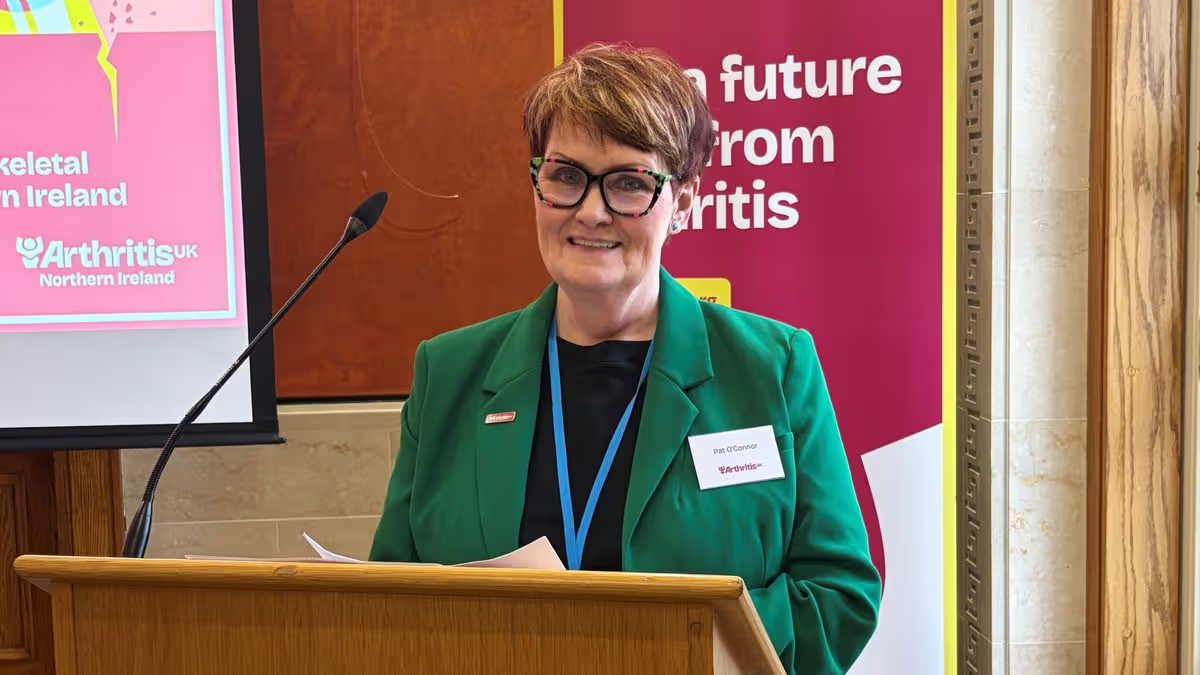
A Belfast woman says arthritis diagnosis delays are leaving many people like herself in pain and in limbo.
Pat O’Connor, 68, from Belfast is one of the 550,000 people in Northern Ireland living with a musculoskeletal (MSK) condition like arthritis.
She has felt unwell and very vulnerable, suffering from depression and feeling like her ‘life was over’ at times. She’s taken it upon herself to research her condition but has felt left in the dark.
Pat started getting pain in her left knee around 20 years ago , but it went away, then, four years ago, it started again becoming worse. About three years ago Pat went to the doctor and an x-ray showed she had arthritis in her knee.
Following her x-ray, she was given painkillers and two physio appointments after being diagnosed with arthritis and believes that a lack of information and support was instrumental in her being forced to retire early.
Despite having her x-ray and physiotherapy appointment over three years ago Pat still feels in the dark about her condition, with no one ever giving her a full diagnosis, or being told what type of arthritis she has and how to manage it.
Advertisement
“It has been an incredibly difficult process to receive a diagnosis and treatment. There are many hurdles and dead ends to overcome at a time when you are feeling unwell and very vulnerable.
“Ultimately it cost me my job as work became harder and I retired in April 2024, even though I felt I’d so much more to give, which left me feeling useless and wondering what my life was going to be.
“I was very low and at times felt so depressed, like life was over for me. There was such a lack of information. If someone had just taken a few minutes rather than assuming I knew where to start with researching myself—just a few minutes to tell me, to explain different types of arthritis and the effect—then it may have had less of an impact on my life.”
A new report today from Arthritis UK says too many people with arthritis are being left in pain, uncertainty and without vital support while waiting for a diagnosis.
Advertisement
With more than 10 million adults, young people and children in the UK living with arthritis, the charity warns that delays in an arthritis diagnosis can have major consequences for people’s health, work and independence.
The uncertainty of not knowing what is wrong can also take a major toll on mental well-being, make conditions harder to treat, while creating wider costs for the NHS and the economy.
The Silent Treatment: Why an Arthritis diagnosis matters reveals that delays are often caused not by one single long wait, but by a series of barriers across the diagnosis pathway.
Symptoms may be dismissed as minor, mistaken for ageing or work-related strain, or not recognised as arthritis at all. Once people seek help, they can face further hurdles such as difficulty getting appointments, delays accessing tests, or long waits for specialist referrals.
Advertisement
Last year, Arthritis UK’s report, Left Waiting, Left Behind: The Reality of Living with Arthritis, highlighted the scale of the problem. Among respondents with a diagnosis, 38% said getting a diagnosis took too long and 54% reported unreasonable waits or delays to see the relevant specialist.
This new report, launched as part of Arthritis Awareness Month, builds on that evidence by piecing together how these delays are experienced in real life.
Drawing on lived experience workshops and focus groups, as well as input from health and care professionals, the report found that diagnosis is about far more than a medical label. For many, it provides reassurance, recognition and a route to treatment, information and support after months or years of pain and uncertainty.
The sense of finally knowing that pain and symptoms were real and recognised was an area many found hugely comforting. This benefit is reflected in the charity’s previous findings, with 62% agreeing that receiving a diagnosis validated their experiences.
Advertisement
Arthritis UK says these experiences highlight the urgent need for UK governments to prioritise arthritis and related conditions and support health and care professionals operating in an already stretched system.
This could be faster, clearer routes to diagnosis with improved training for healthcare staff, including better recognition of symptoms, timely referral to specialist care and tailored support for people while they wait and at the point of diagnosis.
Sara Graham, Head of Northern Ireland at Arthritis UK, says people here with arthritis are waiting far too long for answers and support while living with pain and worsening symptoms.
Advertisement
She added: “Getting the right diagnosis quickly can be life-changing. When diagnosis is delayed, people are left in pain, uncertainty and without the support, treatment and information they need.
“In some cases, conditions may worsen while people wait, causing long-term damage and leaving people feeling isolated and alone.
“Delayed diagnosis has a wider cost. When people cannot access the care they need, it can affect their ability to work, care for families or live independently, while placing further pressure on our already stretched health services.
“Northern Ireland’shealth system cannot afford for arthritis and musculoskeletal conditions to continue to be overlooked. Faster routes to diagnosis, earlier intervention, better awareness and support must become a national priority.”
Donald Trump raised eyebrows this weekend after he yet again shared a series of provocative posts on his Truth Social platform, including one that appeared to depict Iran draped in the American flag.
The image showed a map of the Middle East labeled with countries Turkey, Syria, Iraq and Saudi Arabia.
The country of Iran was filled in using the US flag.
It was simply titled, “The United States of the Middle East?”
Advertisement
The post came as reports swirled of a potential US deal with Iran to end Trump’s war, which he launched in February. The possible negotiation, however, has drawn criticism from members of Trump’s own Republican Party.
The president also shared an image of himself gazing over Greenland, the semi-autonomous Danish territory he has repeatedly suggested the US should somehow take control of (alongside Canada and Venezuela).
A day earlier, he posted a photo showing an Iranian boat being blasted underneath the word, “Adios.”
Subscribe to Commons People, the podcast that makes politics easy. Every week, Kevin Schofield and Kate Nicholson unpack the week’s biggest stories to keep you informed. Join us for straightforward analysis of what’s going on at Westminster.
Kammy Hadiq is hiding a devastating reality (Picture: ITV)
The following article contains spoilers from the episode of Emmerdale dated May 26. It hasn’t aired on ITV1 yet, but can be viewed on ITVX and YouTube.
Brb, just picking up the pieces of my broken heart after watching secretly homeless Kammy Hadiq (Shebz Miah) hide under a blanket in the middle of a freezing cold barn in Emmerdale.
Belle stuck up for Kammy, but it was clear that Aaron’s words were playing on her mind. In the pub, Belle wondered if she could meet Kammy’s family soon, but he made an excuse and quickly rushed away.
Advertisement
To celebrate Eid, Belle presented Kammy with a homemade card as today’s episode opened. He was touched, but then grew cold when she mentioned popping by his home to see his relatives. Belle didn’t want Kammy to feel pressured and suggested that she could just stick her head in the door and then go, but Kammy wasn’t keen.
He snapped at Belle and told her to forget the idea of meeting his family, and she was very surprised to see this side to her boyfriend.
The dynamic between Kammy and Belle didn’t get any easier when they arrived at The Hide a few hours later. When Kammy stepped out and Belle was left alone with his phone, she debated going through it.
Belle knew this was a bad move, but alarm bells were starting to go off in her mind. She was prevented from totally invading Kammy’s privacy though due to him returning to the table. Belle swiftly got up and claimed to a stunned Kammy that she needed to get back to work.
Dawn tried to reassure Belle, telling her that she doesn’t think Kammy is a bad person.
Don’t miss a Soaps scoop! Add us as a Preferred Source
As a loyal Metro Soaps reader, we want to make sure you never miss our articles when searching for stories. We have all the latest soaps news, spoilers, videos, and interviews, with a vibrant community of highly engaged readers.
Click the button below and tick Metro.co.uk to ensure you see stories from us first in Google Search.
Now you can ensure you never miss a story from the Soaps team
As Belle convinced herself that her past was impacting her present, and that Kammy wasn’t at fault, his secret was revealed to us.
Inside one of the barns on Emmerdale Farm, Kammy was lighting up a camping stove ready to heat a tin of baked beans. As his makeshift meal bubbled away, a freezing cold Kammy hid under a blanket as it was confirmed to us that he is homeless.
Kammy’s week will go from bad to worse when he’s caught with a lighter and a can of petrol while on Robert Sugden’s (Ryan Hawley) land.
Advertisement
Robert and Aaron immediately accuse Kammy of being the arsonist, but he then reveals that he was actually planning on torching his car. Due to the fact Kammy legs it from the conversation seconds later, it looks like he’s guilty.
He’s then taken out of the village in a police car after Aaron makes the call, but will he tell anyone the truth about what he’s going through?
‘It’s that thing of peeling back the layers and just learning more about the character. One thing about Kammy is that he is the first Pakistani Muslim we’ve had on Emmerdale, and that itself is a big thing’, star Shebz Miah said, reflecting on Kammy’s new story.
‘And I think now we can finally start to truly understand what that looks like, especially in British soap as well. It’s not really common. So, I am excited and stoked to be able to finally tap into that. But also, the beauty is that I get to show Kammy as just a normal British Bradford lad as well. And it’s amazing that I’m able to blur the lines ever so slightly.
Advertisement
Kammy is accused of being the farm arsonist (Picture: ITV)
‘But also show myself, as Shebz. I am also sort of Muslim, and South Asian background, I get to show that as well, and it’s a big thing. I am so glad. I went to the producer, I was like, “please let it happen.” I’m truly excited. And you know, a lot of the fans constantly are asking me, “When are we ever going to learn more about Kammy?” And I think now’s the perfect time.
He added: ‘I think from when I first came in to now, it’s been a slow burner, but I think we are starting to learn more about Kammy and see that there is more to him than this cheekiness that he’s got and this bravado that he puts on.’
‘The mask comes off, and we get to see this different version of what we’ve seen so far. Uncomfortable at times, but at the end of the day, he’s human, and there’s only so long you can keep the bravado for. But yeah, fans won’t expect it, and it will snowball into other things as well, but we start to see why and where it all came from.’
Pope Leo has called for a ‘robust legal framework’ to be put in place to regulate AI, warning that autonomous weapons systems have advanced ‘practically beyond any human reach to govern them’ in a sweeping new encyclical
Emma O’Neill Content Editor and Alice Scarsi
15:24, 25 May 2026Updated 15:29, 25 May 2026
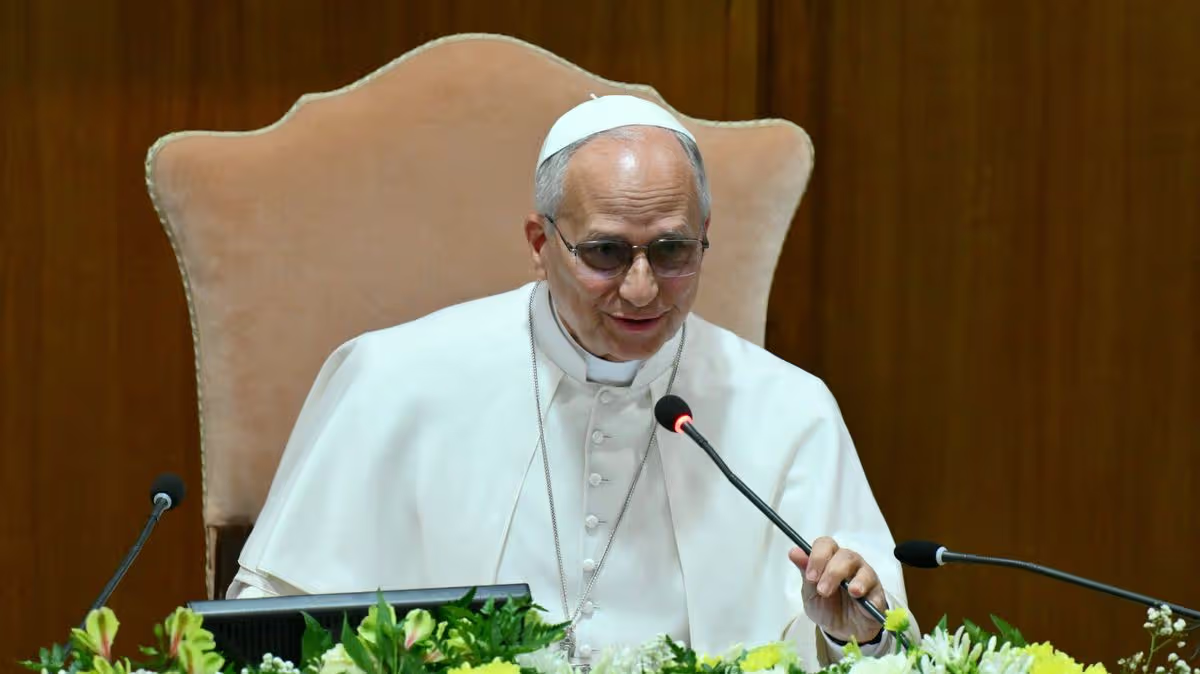
Pope Leo has called on governments to decelerate and rigorously oversee the advancement of AI systems in his first major document, published on Monday.
Speaking at a Vatican event to launch the text, the first US pope voiced his alarm that certain autonomous weapons systems have progressed “practically beyond any human reach to govern them”.
Advertisement
Pope Leo, who has adopted a more assertive stance in recent months and has attracted criticism from Donald Trump following his condemnation of the Iran war, made several passionate pleas to world leaders in the extensive document, known as an encyclical. The head of the Catholic Church argued that ownership of AI data should not rest exclusively in private hands, urged policy-makers to safeguard workers’ rights and protect children from the technology, and called for a reduction in rivalry between AI companies.
In the text, entitled Magnifica Humanitas (Magnificent Humanity), he said: “What is needed is a more active political involvement that is capable of slowing things down when everything is accelerating.”
The pope called for “robust legal frameworks, independent oversight, informed users and a political system that does not abdicate its responsibility.”
Advertisement
Encyclicals represent one of the most authoritative forms of teaching from a pontiff to the Church’s 1.4 billion members, reports the Express.
Monday’s eagerly awaited text, extending to nearly 43,000 words, has been under development almost since Leo’s election as pope just over a year ago. The document, which focused primarily on AI, also condemned the prevalence of armed conflicts across the globe.
He said: “The past 60 years have been marked by conflicts of astonishing brutality, often affecting civilian populations on a massive scale. Humanity is slipping into a violent culture of power, where peace no longer appears as a responsibility to be taken on, but as a fragile interval between conflicts.”
In his encyclical, Leo also delivered one of the most explicit papal rejections to date of the just war theory, a teaching the Church has employed since at least the fifth century to assess global conflicts.
Advertisement
The teaching broadly states that military action should only be undertaken to counter aggression.
“The ‘just war’ theory which has all too often been used to justify any kind of war, is now outdated,” wrote Leo. “The use of force, violence and weapons reflects a relational poverty that always has disastrous consequences for civilian populations.”
The pontiff also stated that any deployment of AI in military operations “must be subject to the most rigorous ethical constraints” and declared it “not permissible” to allow AI systems to make lethal decisions.
The SEN school still has more improvements to make concerning behaviour and learning.
A Cambridgeshire SEN secondary school has been recognised for making “positive progress” after being rated inadequate by OFSTED last year. A monitoring inspection was carried out at Riverside Meadows Academy on February 10 to check if the school had improved.
Advertisement
The school was judged to “require significant improvement” in June 2025. A new assistant head teacher responsible for curriculum and teaching was appointed in January 2026. A new CEO and executive team members were also appointed to the Horizons Education Trust.
In a report published on April 20, OFSTED said new leaders and trustees working at the school “have brought much-needed stability”. The report read: “In a short period of time, they have put into place effective systems and processes to reshape curriculum pathways, track attendance, address more challenging behaviours and improve governance.”
OFSTED reported that the school needs to make further improvements to “guide staff on how to teach the new curriculum”. Pupils have a “mixed view of behaviour” with some dealing well with the new policy while there is still some ‘unwelcome’.
The report notes that overall attendance is improving but it still remains low. However, fewer students are on part-time timetables and there have been fewer suspensions since the last inspection.
Advertisement
Riverside Meadows Academy has designed and reshaped its curriculum for both key stage 3 and key stage 4 pupils. The report said: “The school has checked it has an accurate picture of pupils’ starting points, including in reading.
“A realignment of class groupings is underway. This is to ensure pupils are following a pathway that is best matched to filling gaps in knowledge and to their aptitudes, therapeutic needs and interests.”
Kate Lovegrove, the Co-Headteacher of Riverside Meadows Academy, said: “We are pleased with the outcome of this first visit. There is still much work to do, but it is encouraging that inspectors have recognised we are focusing on the right priorities and taking the right steps in the right order.”
The owner faced a range of charges connected to three dog attacks on three women which left some of them with severe facial injuries
A man has been banned from owning a dog for 20 years and his French Bulldog put down after three separate dog attacks on three women.
Advertisement
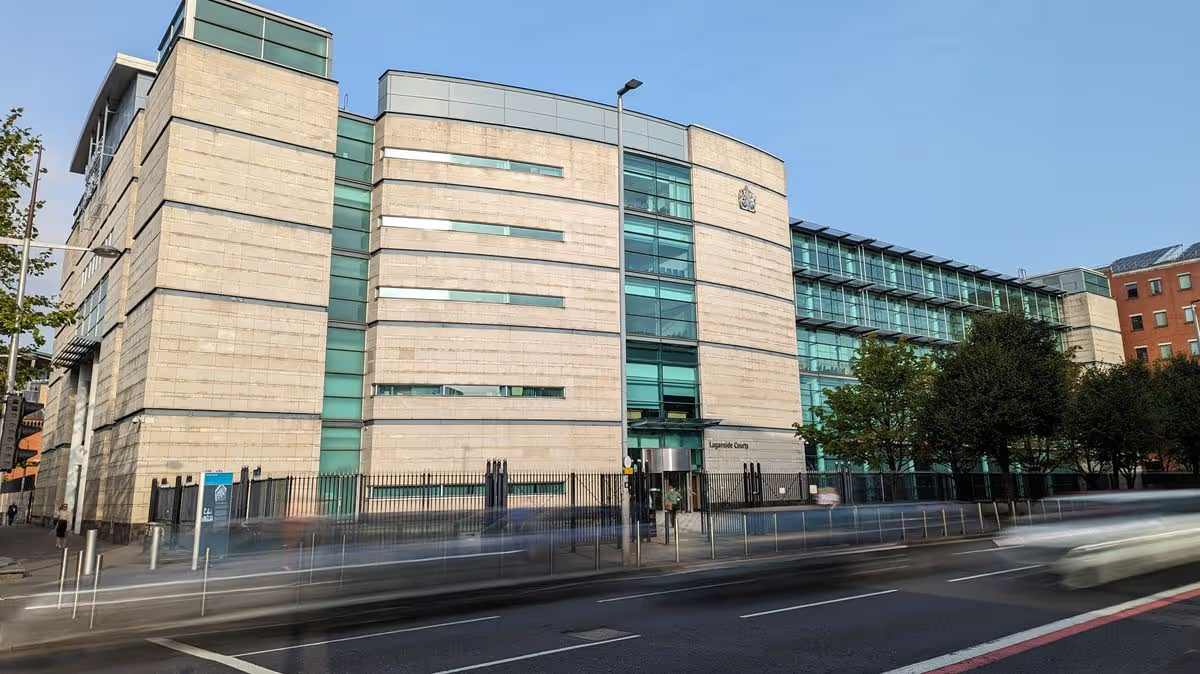
Gareth Gault from the Newtownabbey area appeared at Laganside Magistrates’ Court on May 5, where he faced a range of charges connected to three dog attacks on three women which left some of them with severe facial injuries. The attacks took place between October 2024 and April 2025.
Gault pleaded guilty to all charges in court and received 18 months’ probation and 80 hours of community service. He was also banned from owning a dog for 20 years, £100 for the offence of being the keeper of an unlicensed dog and was ordered to pay £1,000 compensation to each victim, £2,250 in legal costs, £750 towards Council kennelling costs and a £15 offender levy for each offence.
The judge also issued a destruction order for the dog.
An Antrim and Newtownabbey Borough Council spokesperson said: “Antrim and Newtownabbey Borough Council places a high priority on enforcing dog control legislation. Reports of dog attacks are thoroughly investigated, and formal action, including prosecution, is taken where appropriate, as demonstrated in this case.”
Advertisement
The council says this case highlights its ongoing commitment to public safety and to robust enforcement of legislation designed to promote responsible dog ownership across the borough.
New legislation is set to be introduced in England with a NI mum calling for the same to be put in place here
06:30, 26 May 2026
Advertisement
A Belfast mum has described the lengths that she has to go to in order to protect her four-year-old son who has a range of life-threatening allergies.
New legislation is set to be introduced later this year in England that will provide greater protections for children who suffer from allergies that will include; schools being required to have dedicated allergy policies , staff training, access to emergency adrenaline auto-injectors and individual care plans for children.
This followed campaigning by the Benedict Blythe Foundation and its founder Helen Blythe who lost her five-year-old son following an allergic reaction in school. Following the introduction of Benedict’s Law in England, she is now working to see further protections put in place in Northern Ireland.
Stephanie Kerr , whose son Caolán has life-threatening allergies to peanut, milk, egg, wheat, cumin, oat, strawberries, passionfruit and penicillin, is supporting the campaign for increased protections in NI and has described what life is like taking care of her four year old son.
Advertisement
She said: “Managing Caolán’s allergies requires constant vigilance from everyone who cares for him. Because he has so many allergies, it is not possible to remove every risk from his environment.
“Cross-contamination is one of our biggest concerns. At home, we use separate utensils, cooking equipment and food preparation areas, as well as designated fridge shelves and cupboards. He also needs close supervision at mealtimes to make sure he does not accidentally eat food that is unsafe for him.
“Ordinary childhood activities require intense planning and risk assessment. Something as simple as eating in a restaurant, travelling or going to a birthday party has to be carefully managed. In school, the risks can come from unexpected places, from milk cartons being used in art projects to food being handed out as a reward.
“Caolán needs his snacks prepared separately for example, he requires his own toaster to reduce the risk of cross-contamination. We have also needed to be vigilant and confirm that all staff in his current nursery setting have undertaken the appropriate training to recognise the symptoms of an allergic reaction, including anaphylaxis.
Advertisement
“Prevention is always the goal, but if an emergency happens, Caolán needs immediate action from the adults around him. In that moment, a quick response can be the difference between life and death.”
Stephanie said she was surprised to discover that certain protections she assumed would be in place to help her son did not exist in Northern Ireland.
She said: “Thankfully, Caolán has only needed his epi-pen once. He ate a piece of cereal that was within reach at daycare and suffered a delayed reaction. We were incredibly fortunate to already be at Accident and Emergency Department when adrenaline had to be administered. It was the worst day of our lives.
“Since then, we have done everything we can to work with teachers, staff and anyone responsible for his care to reduce risk and identify situations that could trigger another life-threatening reaction.
Advertisement
“After being given forms for signature by Caolán’s nursery that outlined they were not required to administer medication but did agree with me that a designated member of staff would – I looked at the Education Authority’s guidance on food allergies and medication more closely.
“What I found was deeply upsetting. While some settings do have trained staff, the current guidance does not place an overarching legal duty on school staff to administer medication, and staff cannot be directed to do so under Supporting Pupils with Medication Needs.
“As a mother, I find it heartbreaking that there is still no clear, enforceable guarantee that a trained adult will always be available to give life-saving medication without delay. Prior to Caolán starting his educational journey I had wrongly assumed that these protections for children would have already been in place and that policies would be designed with the safety and wellbeing of students at its heart.
“The work of the Benedict Blythe Foundation has given families like ours real hope. In England, Benedict’s Law is set to bring in protections from September 2026, including dedicated allergy policies in schools, staff training, access to emergency adrenaline auto-injectors and individual care plans for children with allergies. Children like Caolán deserve those same protections here.”
Advertisement
Helen Blythe from the Benedict Blythe Foundatio said she is engaging with politicians in Northern Ireland in order to try and help bring about change that will help ensure vulnerable children with allergies are protected.
She said: “No family should send their child to school wondering whether they will be safe in an allergy emergency. Benedict’s Law is now moving forward in England, yet many children in Northern Ireland still do not have the same basic protections.
Politicians here have been engaging positively, but children cannot wait indefinitely while reviews continue. Every school should have clear allergy policies, trained staff, and emergency medication available now.”
Scams and doorstep crime can have a devastating impact, particularly on vulnerable members of our communities.
Lanarkshire Preventions Officers and colleagues from Trading Standards, have teamed up with the local banks across Lanarkshire as part of the “Shut Out Scammers” campaign.
Advertisement
Scams and doorstep crime can have a devastating impact, particularly on vulnerable members of our communities.
Through partnership working, officers and partners are raising awareness around fraud, scams and doorstep crime while highlighting the support available to help keep people safe.
A Police Scotland spokesperson said: “We would also like to thank the local banks and staff across Lanarkshire for their continued support and the fantastic work they already carry out daily to protect customers from fraud and scams.
“By working together for the greater good, we can help better safeguard and protect our communities.
Advertisement
“Thank you to our partners from Trading Standards and Neighbourhood Watch Scotland for their support throughout the campaign and for helping provide advice and reassurance to members of the public.
“We appreciate the support from everyone involved and hope the advice and information shared helps people feel more confident in recognising and reporting scams.
“Look out for family, friends and neighbours and help us spread awareness. Together, we can help “Shut out Scammers” across Lanarkshire.”
Advertisement
*Don’t miss the latest headlines from around Lanarkshire. Sign up to our newsletters here.
And did you know Lanarkshire Live had its own app? Download yours for free here.
VATICAN CITY (AP) — Pope Leo XIV made a historic apology on Monday for the Holy See’s role in legitimizing slavery and for having failed to condemn it for centuries, calling the Vatican’s record a “wound in Christian memory.”
Past popes have apologized for Christians’ involvement in the trans-Atlantic slave trade. But no pope had ever publicly acknowledged, much less apologized for, the role that past popes played in giving European sovereigns explicit authority to subjugate and enslave “infidels.”
History’s first U.S.-born pope, whose family history includes both enslaved people and slave owners, delivered the apology in his first encyclical, “Magnifica Humanitas,” (Magnificent Humanity), which was released Monday.
Pope Leo XIV called Monday for robust regulation of artificial intelligence and for its developers to work for the common good rather than profit, issuing a sweeping manifesto on safeguarding humankind as the technology impacts everything from work to war.
Advertisement
The sweeping manifesto is about safeguarding humanity in an era of increasing reliance on artificial intelligence. Leo raised the slave trade in relation to what he called the new forms of slavery and colonialism that the digital revolution is fueling.
Advertisement
Black American Catholics, activists and scholars have long called for the Holy See to atone for its role in the colonial-era trade in human beings, beyond generic apologies for the involvement of individual Christians.
“It is impossible not to feel deep sorrow when contemplating the immense suffering and humiliation endured by so many in stark contrast to their immeasurable dignity as persons infinitely loved by the Lord,” Leo wrote. “For this, in the name of the church, I sincerely ask for pardon.”
Advertisement
Vatican Secretary of State Cardinal Pietro Parolin, right, talks to theologian Leocadie Lushombo during the presentation of his first encyclical, “Magnifica humanitas: On Safeguarding the Human Person in the Time of Artificial Intelligence,” at the Vatican, Monday, May 25, 2026. (AP Photo/Alessandra Tarantino)
Advertisement
Vatican Secretary of State Cardinal Pietro Parolin, right, talks to theologian Leocadie Lushombo during the presentation of his first encyclical, “Magnifica humanitas: On Safeguarding the Human Person in the Time of Artificial Intelligence,” at the Vatican, Monday, May 25, 2026. (AP Photo/Alessandra Tarantino)
Advertisement
Advertisement
Shannen Dee Williams, historian at the University of Dayton and author of the 2022 history of American Black Catholic nuns, “Subversive Habits,” welcomed the apology as a “monumental step toward the kind of essential truth-telling and reparation that many Catholics have prayed and worked to witness.”
“The Catholic Church has never been an innocent bystander in the history of white supremacy,” said Williams. “Black Catholics have waited a long time to hear the Vatican speak honestly about the church’s leading roles in the trans-Atlantic slave trade and chattel slavery–and thus by extension the enduring systems of anti-Black racism in the world today.”
Advertisement
Centuries of legitimizing slavery for European colonizers
The Vatican has insisted that it always upheld the dignity of all human beings as children of God. But a series of 15th-century directives from the Vatican authorized Portuguese sovereigns to conquer Africa and the Americas and enslave non-Christians.
In 1452, for example, Pope Nicholas V issued the papal bull Dum Diversas, which gave the Portuguese king and his successors the right “to invade, conquer, fight and subjugate” and take all possessions — including land — of “Saracens, and pagans, and other infidels, and enemies of the name of Christ” anywhere.
The bull also gave the Portuguese permission “to reduce their persons to perpetual slavery.”
That bull and another issued three years later, Romanus Pontifex, formed the basis of the Doctrine of Discovery, the theory that legitimized the colonial-era seizure of land in Africa and the Americas.
Advertisement
Nicholas V’s permissions to the Portuguese were confirmed or renewed by Pope Callixtus III in 1456, Pope Sixtus IV in 1481 and Pope Leo X in 1514, according to the Rev. Christopher J. Kellerman, a Jesuit priest and author of “All Oppression Shall Cease: A History of Slavery, Abolitionism, and the Catholic Church.”
Spanish kings received the rights for the Americas.
In 2023, the Vatican formally repudiated the Doctrine of Discovery, but it never formally rescinded, abrogated or rejected the bulls themselves. The Vatican insists that a later bull, Sublimis Deus in 1537, reaffirmed that Indigenous peoples shouldn’t be deprived of their liberty or the possession of their property, and weren’t to be enslaved.
Advertisement
Pope Leo XIV, left, arrives with Vatican Secretary of State Cardinal Pietro Parolin for the presentation of his first encyclical, “Magnifica humanitas: On Safeguarding the Human Person in the Time of Artificial Intelligence,” at the Vatican, Monday, May 25, 2026. (AP Photo/Alessandra Tarantino)
Advertisement
Pope Leo XIV, left, arrives with Vatican Secretary of State Cardinal Pietro Parolin for the presentation of his first encyclical, “Magnifica humanitas: On Safeguarding the Human Person in the Time of Artificial Intelligence,” at the Vatican, Monday, May 25, 2026. (AP Photo/Alessandra Tarantino)
Advertisement
Advertisement
Holy See late to condemn slavery, Leo says
In his encyclical, Leo recalled that his namesake, Pope Leo XIII, was the first pope to explicitly condemn slavery in 1888, long after many countries had abolished it. Before that, in antiquity and the Middle Ages, church institutions and even popes — Gregory the Great — had slaves, Kellerman said.
In acknowledging the 15th century papal bulls, Leo wrote in his encyclical: “Already in the early modern period, the Apostolic See of Rome, responding to the requests of sovereigns, intervened several times in order to regulate and legitimize forms of subjugation, and, in certain cases, including the enslavement of ‘infidels.’”
Advertisement
Leo said it wasn’t possible to judge the morality of the decisions with today’s standards.
“Yet neither can we deny or diminish the delay with which both society and the church came to denounce the scourge of slavery,” he said.
The pope said that the church has long affirmed the dignity of every human being as the basis of its doctrine, “even if it took eighteen centuries for its full incompatibility with slavery to be explicitly recognized.”
“This constitutes a wound in Christian memory, one from which we cannot consider ourselves detached,” he said.
Advertisement
Leo said that the church must firmly condemn all forms of trafficking related to the digital technological revolution “if we want to avoid the need to ask for pardon again in the future for having failed to respect the treasure of human dignity that is required by our faith.”
Pope Leo XIV, left, attends the presentation of his first encyclical, “Magnifica humanitas: On Safeguarding the Human Person in the Time of Artificial Intelligence,” at the Vatican, Monday, May 25, 2026. (AP Photo/Alessandra Tarantino)
Advertisement
Pope Leo XIV, left, attends the presentation of his first encyclical, “Magnifica humanitas: On Safeguarding the Human Person in the Time of Artificial Intelligence,” at the Vatican, Monday, May 25, 2026. (AP Photo/Alessandra Tarantino)
Advertisement
Advertisement
Advertisement
Advertisement
Anthea Butler, senior fellow at the Koch History Center, Oxford University, said Leo needed to acknowledge and atone for the church’s complicity in historic slavery if he wanted to credibly “speak to the current issues of technological enslavement.”
“For descendants of enslaved persons, this is once again a much needed apology from the pope,” said Butler, who is Black.
Leo’s own family history and past apologies
Kellerman, the scholar, welcomed Leo’s apology but said more needs to be done to further acknowledge how the Catholic Church legitimized and expanded slavery.
“Pope Leo has strengthened the moral credibility of the church with this admission and apology today,” he told The Associated Press. “Hopefully a future document will explain in more detail the church’s involvement with slaveholding. As a scholar I have some quibbles with the wording, but this is a truly remarkable moment.”
Advertisement
During a 1985 visit to Cameroon, St. John Paul II asked forgiveness of Africans for the slave trade on behalf of Christians who participated in it, but not the popes. In a 1992 visit to Goree Island, Senegal, which was the largest slave-trading center in West Africa, he denounced the injustice of slavery and called it a “tragedy of a civilization that called itself Christian.”
According to genealogical research published by Henry Louis Gates Jr., 17 of Leo’s American ancestors were Black, listed in census records as mulatto, Black, Creole or a free person of color. His family tree includes slaveholders and enslaved people, Gates wrote in The New York Times.
During a visit to Angola last month, Leo prayed at a Catholic shrine at the site of an important hub of the African slave trade during Portugal’s colonial rule. While at the Sanctuary of Mama Muxima, Leo recalled the “sorrow and great suffering” Angolans endured for centuries, but he didn’t refer specifically to slavery.
Advertisement
Pope Leo XIV listens to Cardinal Víctor Manuel Fernández, prefect of the Dicastery for the Doctrine of the Faith, right, during the presentation of Pope Leo XIV’s first encyclical, “Magnifica humanitas: On Safeguarding the Human Person in the Time of Artificial Intelligence,” at the Vatican, Monday, May 25, 2026. (AP Photo/Alessandra Tarantino)
Advertisement
Pope Leo XIV listens to Cardinal Víctor Manuel Fernández, prefect of the Dicastery for the Doctrine of the Faith, right, during the presentation of Pope Leo XIV’s first encyclical, “Magnifica humanitas: On Safeguarding the Human Person in the Time of Artificial Intelligence,” at the Vatican, Monday, May 25, 2026. (AP Photo/Alessandra Tarantino)
Advertisement
Advertisement
___
Winfield reported from Middletown, Connecticut.
Advertisement
___
Associated Press religion coverage receives support through the AP’s collaboration with The Conversation US, with funding from Lilly Endowment Inc. The AP is solely responsible for this content.
















































You must be logged in to post a comment Login