

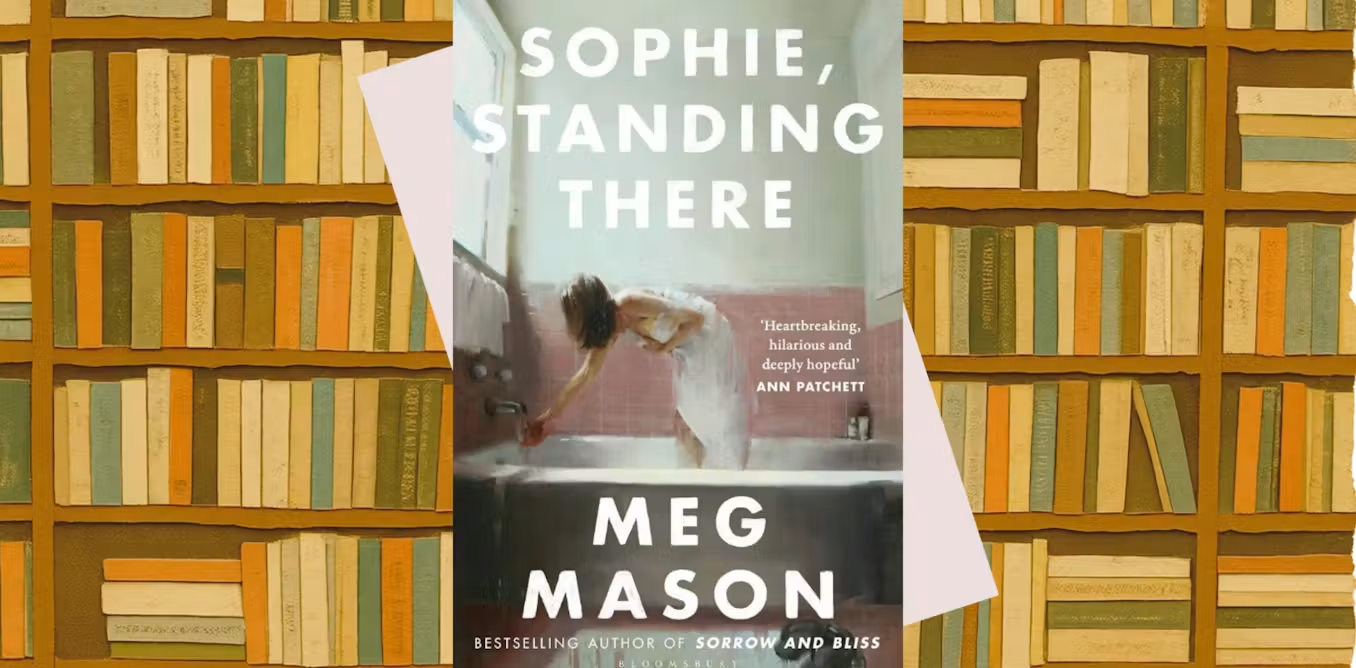
Meg Mason’s new book, Sophie, Standing There, has been advertised as a bittersweet story of love, loneliness and finding connection in the most unlikely of places.
Most reviews describe Sophie, Standing There as a novel about loneliness, chaos or obsession. Others focus on its insider insights on the world of literary festivals, drawing parallels with Mason’s own rapid rise to literary success.
However, what stands out to me is the novel’s depiction of intense introspection. Sophie is, as the title implies, a static participant in her own life. At times, her reflection and awkwardness is gruelling to observe. But while some readers might become impatient, others will feel a strong affinity with her minute self-analysis.
Sophie is a sound technician working in a precarious, seasonal role at literary festivals. She deferred her career to support her husband’s job, but the novel opens with her grieving the end of her marriage – he brutally ended their relationship while she was showering.
Sophie dwells on the immediate practical and emotional consequences of their separation, but does not disclose details until late in the novel. Throughout, plot elements are gradually and painstakingly conveyed: perseverance is the key.
Few novels have such self-effacing main characters. Sophie is something like the “witness-protagonist” figure – a major character who observes the central plot from the margins, such as Nelly in Wuthering Heights or Nick Carraway in The Great Gatsby.
However, both Nelly and Carraway largely observe the transformative effects of events on others while, arguably, influencing events from the periphery. This novel conveys Sophie’s life intimately, so her passivity is more perplexing.
Essentially, Sophie, Standing There is a love story – even though it’s about books and writers, readers and reading. In many ways, it is a conventional contemporary romance. Lacking self-worth and eager to be of service, Sophie is recovering from her marriage breakdown and failed IVF, and is struggling financially.
Beautiful but unhappy and unable to advocate for herself, she develops an obsession with a successful writer who, it transpires, will be a surprise replacement headliner at the upcoming literary festival she’s working at.
This revelation instigates Sophie’s fantasies about lacing microphone wires under the author’s clothes. She fails to pursue her fantasies to an erotic conclusion, though, as she cannot imagine herself being sexually attracted to women.
Reviewers have made comparisons to Virginia Woolf and Bridget Jones, and to sad-girl fiction – a genre Sophie avoids now that it evokes her own life. But in its introspective emotional analysis, unlikely coincidences and catastrophes, this novel also resembles a contemporary Jane Austen story.
As well as Sophie’s dream author’s sudden proximity, several other unexpected events arise: spilled soup and expensive trousers, sudden feverish illness and inopportune recovery.
There are also volte-face revelations about the people in her life. Sophie’s ineffectual and impolite manager Annaliese is redeemed as vulnerable and loyal, for example, while her flighty best friend Emma conveys unexpectedly astute emotional intelligence.
In Sophie, Standing There, as with Austen, the domestic everyday is overwhelming: egg sandwiches dripping inelegantly, dogs leaning warmly against legs, cold bathrooms, loose leggings, electric car chargers, playlists and light switches. An abundance of insignificant obstructions apply pressure. Among the painstaking minutiae of everyday life emerges gradual recovery.
Perseverance is rewarded with the late revelation of an important truth – a key enabling the fragile and passive heroine to start shaping her life. When that revelation comes (and the title’s specific meaning is revealed), Sophie’s inaction comes into sharp and painful focus.
Authors’ endorsements that describe this book as heartbreaking, moving and breathtaking suddenly make sense. Sophie forgives herself and others, and the reader can only do the same.
While reviews of this novel have generally been very positive, some have described reading it as unsettling and uneasy, or suggested that the object of Sophie’s obsession is unsatisfyingly distant. One found the late, hasty revelation of Sophie’s backstory inadequately explored.
While the swiftness of these revelations does feel at odds with the rest of the novel, their startling impact on Sophie seems realistic in light of her lifelong suppressed feelings and self-effacement.
Comparisons have been made with Mason’s previous novel, the runaway bestseller Sorrow and Bliss. Sophie, Standing There is described as less hilarious, more touching but just as well-observed.
Many readers will enjoy the deferred ending and opportunities to imagine alternatives. Alongside this, there is a hearty dose of criticism for the literary industry – including festival employees who barely read, author gossip, and impolite and inappropriate writers.
There is a constant reminder to look beyond the surface (to not judge a book by its cover, perhaps). The novel shows repeatedly that things happen in life – often financial or related to family dependencies – that impede politeness, effectiveness or keeping in touch. While some exploit those vulnerabilities, others make allowances and offer support.
Beyond revealing what is beneath Sophie’s surface behaviour, Sophie, Standing There is about the importance and complexity of friendship.
This article features references to books that have been included for editorial reasons, and contains links to bookshop.org. If you click on one of the links and go on to buy something, The Conversation UK may earn a commission.


























































You must be logged in to post a comment Login