Connect with us

NewsBeat

a world made from shipping containers and a city within a city

Published

on

a world made from shipping containers and a city within a city

When I left Ainura’s container-shop at the Dordoi Bazaar in Bishkek, the capital of Kyrgyzstan, I found the market eerily quiet. I had not noticed the passing of time, while she generously shared her life story with me.

Walking towards the mini-bus stop at the square in front of the bazaar, the echo of her words mixed with the end-of-day soundscape at Dordoi: the heavy slam of container-shops’ metal doors and the resonant clang of heavy padlocks clicking into place.


The Insights section is committed to high-quality longform journalism. Our editors work with academics from many different backgrounds who are tackling a wide range of societal and scientific challenges.

Advertisement

A moment later, only the sound of stray plastic wrappings stirred up by the last vendors and customers heading home, hinted at the day’s bustling activity.

Soon, the cleaners would sweep them down the pathways between the containers and children would try to snatch the recyclables. Answering my question about why she thinks Dordoi is a good place to work, Ainura explained:

Here in Kyrgyzstan, we can’t rely on the state. Dordoi feeds the country. It feeds our families; and it allowed me to start a new life after I had left my husband.

Ainura is one of thousands of people – many of them women – who found a new livelihood at Dordoi after life took an unexpected turn. Estimates of people working there range from 30,000 to 150,000, depending on whether auxiliary jobs, such as food hawkers, drivers, packers and carriers are included.

Advertisement

In 2025, these diverse economic activities generated roughly US$7.9 million in tax revenue: a substantial contribution to the city’s public finances.

Spanning more than 100 hectares and built from up to 60,000 double and triple-stacked shipping containers, Dordoi stands as one of Kyrgyzstan’s most important economic engines since the country gained independence in 1991.
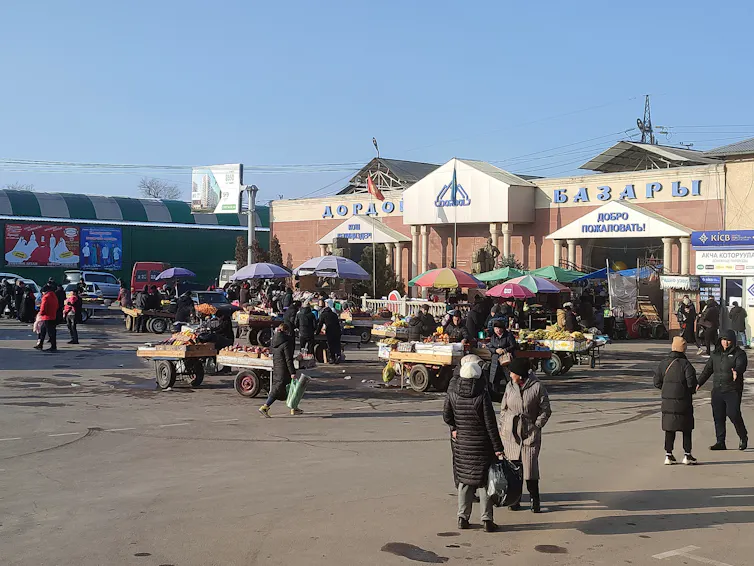
Outside a busy market
Dordoi’s main entrance in winter 2021.
Claudia Eggart

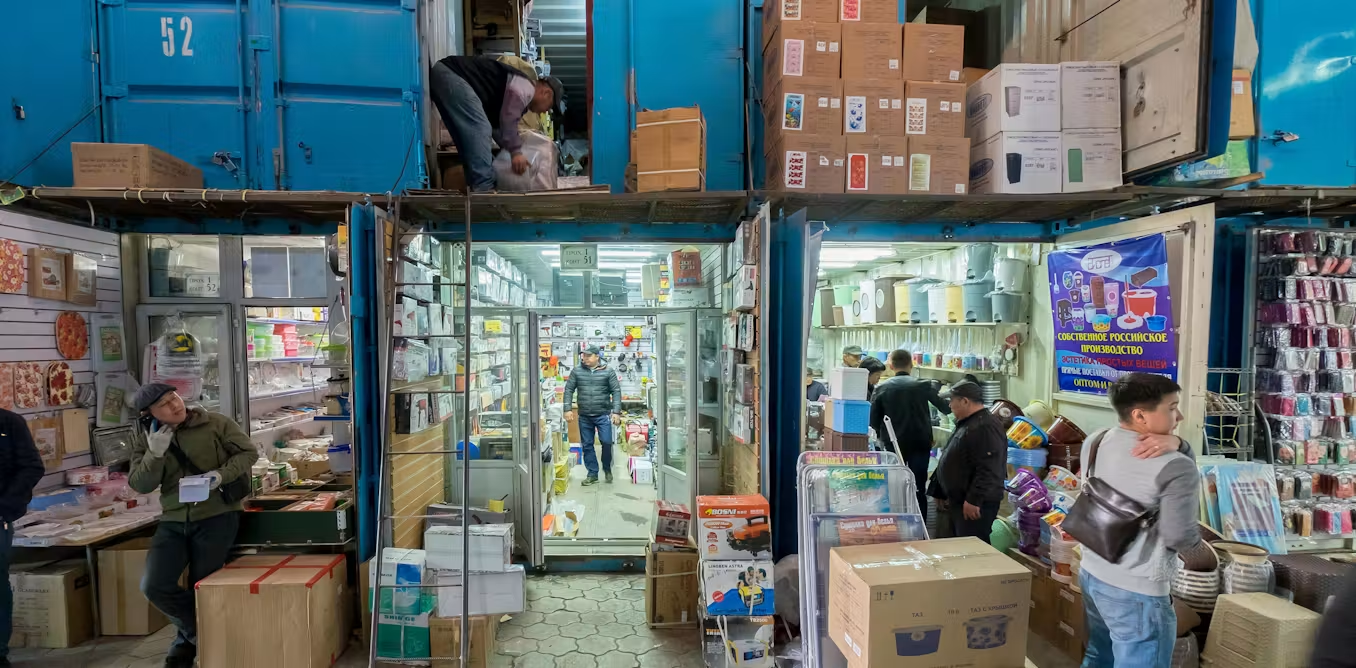
More than a trading centre, Dordoi is a city within a city. Beyond shops and storage spaces, it also has currency exchanges, medical centres, a fire station, hotels, a gym, beauty salons and a mosque.

Its liveliness is equally reflected in the languages spoken along its aisles. While Russian and Kyrgyz remain the languages of commerce, Dungan, Uyghur, Uzbek, Tajik, and Chinese can also be heard, revealing the extensive trading networks that converge here from across Central Asia and beyond. Traders sell almost anything that can be bought, packed and shipped – from sewing needles and refrigerators to cars and spare parts.

Yet clothing remains Dordoi’s lifeblood. Textiles, knitwear and ready-made garments dominate the trade, arriving chiefly from China and Turkey alongside an increasing volume of locally produced apparel.
Advertisement
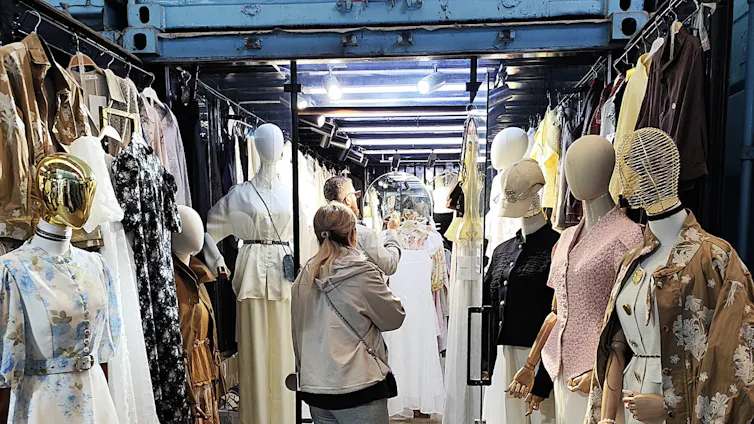
People shopping at clothes store on market
A couple photographs clothing inside a fashionable Dordoi store for online sale.
Claudia Eggart

At the heart of the market, the central passageway serves as both a shopping boulevard and the bazaar’s main artery. Cart pushers weave through the crowded aisles, shouting “Jol, jol, jol, jooool, daroga!” (“Make way!” both in Kyrgyz and Russian) as they manoeuvre heavily laden carts through the throngs of daily visitors.

Threading their way through the crowds, they deliver goods to packing stations near the long-distance bus terminal, where workers compress merchandise into tightly packed bales and sacks. Every centimetre matters in the effort to minimise shipping costs.

By midday, the pace begins to slow. The air fills with the scent of roasting meat and fresh dough as food stalls offer a culinary map of Central Asia, from Dungan laghman and Uzbek plov to Uyghur samsa.
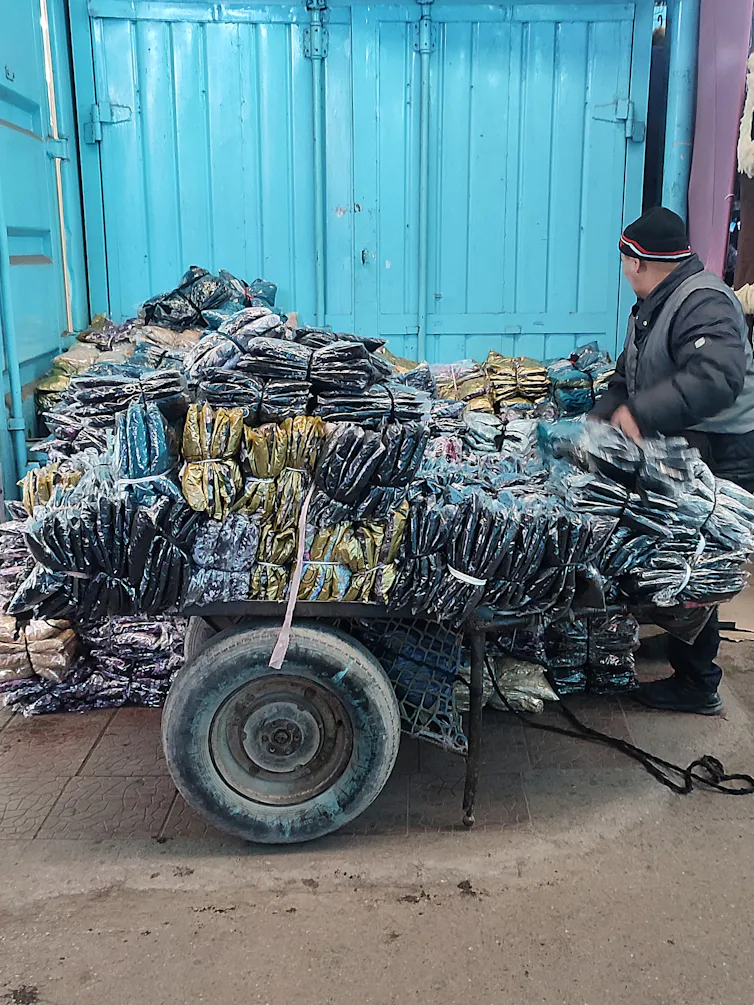
A man with a cart piled high with plastic-wrapped clothing
Carriers at Dordoi have a hard job, but the money is good.
Claudia Eggart

Tea vendors, coffee sellers and fruit merchants weave through the crowds, while – to my own delight – a growing number of barista coffee shops have become an increasingly visible part of the market landscape.

I began studying market biographies in 2018, at first with a focus on the emotions involved in losing a career after the collapse of the Soviet Union, but also the trauma that is often associated with the post-Soviet period. In 2019, I extended my research to include the Dordoi Bazaar in Kyrgyzstan.

Ever since, I have returned to Dordoi for extended fieldwork in 2021-22, 2024 and 2026. For my dissertation I conducted a comparative study of Dordoi and the remarkably similar container-built 7th Km Market in Odesa, Ukraine.

Advertisement

I am now turning that research into a bookLived Geopolitics – which traces the history of both markets from their rise after the collapse of the Soviet Union to the consequences of Russia’s full-scale invasion of Ukraine in 2022.

From a bird’s eye view, both the Dordoi Bazaar and the 7th Kilometer in Odesa appear as vast expanses of corrugated metal.

At ground level however every container opens onto its own distinct social world. That tension between scale and intimacy is what keeps drawing me back. These markets offer a unique vantage point from which to explore how personal histories, aspirations and moral commitments intersect with abstract forces of markets, logistics and global economic and political power.
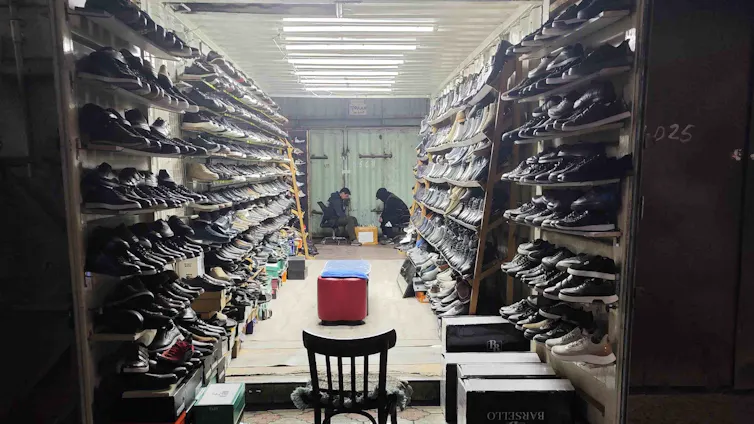
Two men play chess at the back of a market stall.
Two traders playing chess during a lull in business at Dordoi.
Claudia Eggart

My research examines how people make lives, livelihoods and futures within these intersecting forces and the ways traders create pockets of stability despite recurring crises and upheaval.

The Soviet collapse

Bishkek’s Dordoi Bazaar is neither an anomaly nor a continuation of the ancient bazaars often associated with Arab cities. Its origins lie in the collapse of the Soviet Union in 1991, when countless similar markets appeared across the former socialist world. As factories closed and rapid market reforms pushed millions into economic uncertainty, large numbers of newly unemployed workers were left to seek livelihoods in the booming retail sector.

Advertisement

Among the most visible responses to the faltering state economy was the proliferation of “shuttle trading”: small-scale cross-border commerce in which individuals – predominantly women – transported goods, often in bulk and manually, between sites of purchase and resale. Despite the small-scale, manual character, shuttle traders supplied an estimated 75% of consumer goods to post-Soviet countries by 1996.
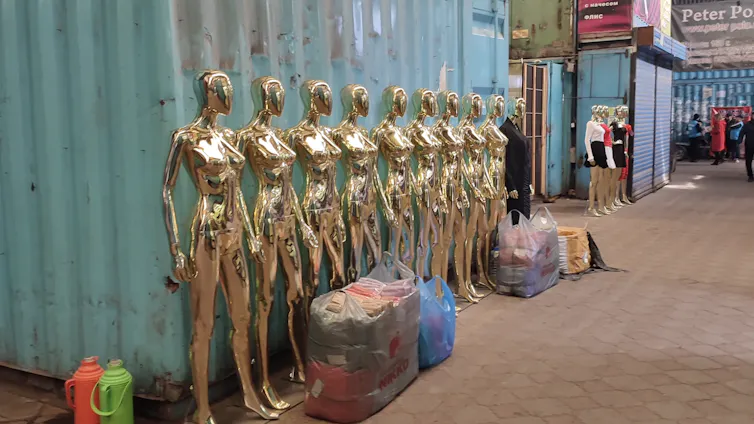
Mannequins lined up along a container in the eastern part of the 100-hectare Dordoi Bazaar.
Claudia Eggart

Olena, one of the women I spoke to in Bishkek and a former pharmacist with family roots in Ukraine, recalled how she first entered this new world of trade in the early 1990s.

At first, she ventured to Poland, a dangerous and exhausting one-week trip in buses and trains, to buy goods at the Jarmark Europa, Warsaw’s infamous wholesale hub, where traders from all across former Soviet countries filled their bags for retail back home.

In Poland, Olena had heard of an opportunity to buy stock from a garment factory in Indonesia. “It seemed like a once in a lifetime opportunity, so I gathered a group of eight people and we flew to Jakarta,” she said. At the airport, she remembered, border officials had never heard of a country called Kyrgyzstan. The passports were as unfamiliar as the newly independent state itself. Only after repeated trips did local authorities begin to develop a formalised visa-free entry agreement.

Like Olena, millions of ad hoc entrepreneurs travelled to unfamiliar destinations across Turkey, China, the United Arab Emirates and beyond. They bought goods where they were cheap and abundant, then carried them back to resell at home. These vast informal networks became a powerful engine of what scholars have called “globalisation from below”, integrating formerly planned economies into global markets through the everyday mobility and resourcefulness of ordinary people.
Advertisement
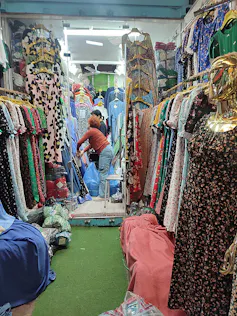
Two women in container.
Claudia Eggart

Nowadays, at wholesale hubs like the 7th Km Market or at the Dordoi Bazaar, goods arrive via cargo companies. Supply chains have become more complex, with prices and accessibility being ever more volatile in times of pandemics and wars.

Dordoi’s extensive reach also makes trade networks highly sensitive to shifts in tariffs, exchange rates and economic conditions in its main commercial partner countries, which include but are not confined to Russia, Kazakhstan and China.

Against this backdrop of volatility, a central question has guided my research: how have local entrepreneurs managed to keep their businesses running, and with them the market itself, despite recurring crises and long standing predictions of the markets’ decline?

‘Made in Kyrgyzstan’

One such moment of crisis came with Kyrgyzstan’s accession to the Eurasian Economic Union (EAEU) in 2015. The Russian-led bloc, comprising Russia, Kazakhstan, Belarus, Armenia and Kyrgyzstan, was designed to create a common market allowing for the free movement of goods, people and information. For Kyrgyzstan, membership meant aligning external import tariffs with EAEU rules.

This shift disrupted existing low tariff arrangements with China – the source of roughly three quarters of goods sold at Dordoi. Within a year, Damira Doolotaliyeva, the market’s trade union leader, reported a turnover drop of at least 80%. Some media outlets went so far as to warn that the collapse of Dordoi would amount to a humanitarian catastrophe.

Advertisement

It was during this period of uncertainty that Ainura, then in her early 30s, rented her first container. She still recalls the anxiety among Dordoi’s traders at the time. “But what choice did I have?” she asks.

I had left my husband, sold my parents’ house in southern Kyrgyzstan and moved to Bishkek with my two small children and my mother.

The first years were difficult for her. “There were no customers,” she recalls. “Every day I prayed that I would sell just a few pieces. I had debts to repay, and I knew that a single wrong decision, a delayed delivery, or an unpaid order could push me into bankruptcy.”

After around three years, she began to breathe more easily. By 2018, Ainura had built a stable client base among wholesale traders from Russia and Kazakhstan, who valued her selection of imported underwear from Turkey. As her business grew, she invested in a small garment workshop, bringing her mother and other female relatives into the enterprise, following a pattern common across the rapidly expanding “Made in Kyrgyzstan” garment sector.

The sector flourished on the back of low tariffs on imported raw materials and an abundant supply of skilled, low-cost labour. Long associated with cheap, low-quality goods it increasingly emerged as a key pillar of the national economy after Kyrgyzstan joined the EAEU.

Advertisement

Just as Ainura’s business was gaining momentum, the pandemic struck. Yet contrary to expectations that trade would collapse under lockdown conditions, many samoposhiv (translates to ‘self sewn’) producers fared unexpectedly well and even reported record sales during the pandemic. Once mobility restrictions were introduced, orders came in large volumes through WhatsApp or Telegram, thus reflecting a broader global turn toward digital platforms and e-commerce.

During my fieldwork in 2022, one woman even remarked, half jokingly, “Oh if only there was still a pandemic!” Many argued that locally produced garments now compete in style and quality with global brands such as Zara or Max Mara.

For Ainura, it meant her Telegram channel grew from 30 to 3,000 followers within days, and orders followed just as fast. She invested her entire savings in raw materials and worked at full capacity to meet the surge in demand.

Ainura’s story also speaks to the skill and willingness to take risks that characterise many of the women entrepreneurs I have met over the years.

Advertisement

She drew my attention to something else as well: the financial independence that Dordoi made possible was, for many, a means of leaving abusive relationships and rebuilding their lives.
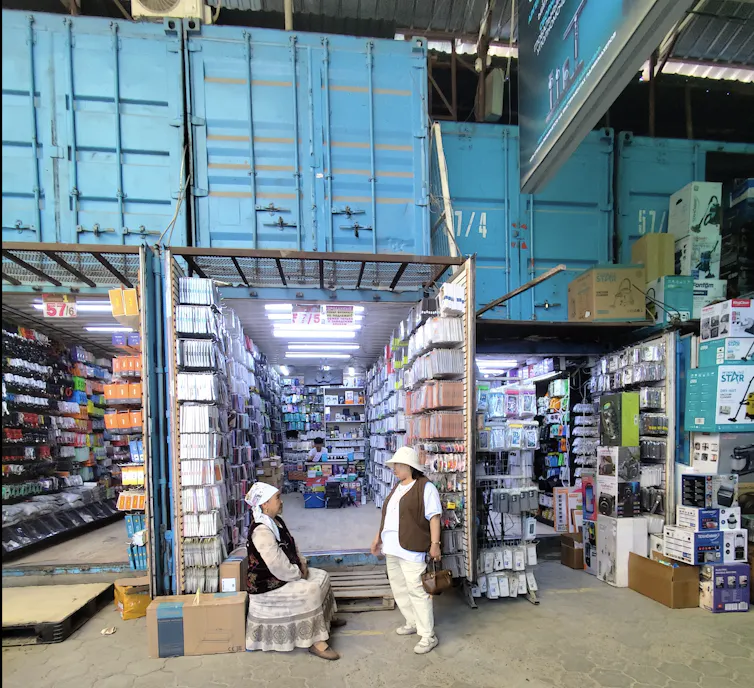
Two women talking outside market stalls
Two women chat outside their market stalls.
Claudia Eggart

While she asked me to keep the intimate details of her own experience private, she encouraged me to write about a different dimension of the bazaar: that, despite its hardships, it can be an empowering space where women earn the resources needed to support themselves and their children.

A whole world in miniature

Since emerging amid the socio-economic and political upheaval of the early 1990s, Dordoi has prospered by occupying the space between major economic spheres – most notably China, Russia and Turkey.

This position has created an opportunity structure in which traders profit from differences in availability, regulations and prices across borders. These geopolitical distinctions are mapped onto the market itself through sections known as Europe and China. Yet these labels signify less about geography than about value. Evropa (Europe) is home to traders selling higher-end goods, often, though not exclusively, textiles labelled “Made in Turkey.” The contrast reflects a broader hierarchy of value.

Evropa evokes quality and higher prices, while Kitai (China) refers to the world of shirpotreb: inexpensive, mass-produced consumer goods distributed at scale by Chinese wholesalers and Kyrgyz retailers.

Advertisement

But these categories are far from fixed. Zoja, one of the most memorable market characters whose age is impossible to guess, told me:

The bazaar is a miniature version of the world we live in, and Kitai has long surpassed Evropa.

As we walk down the bazaar’s central pathway she weaves nonchalantly left and right signalling towards different market sections and their role in the wider web of market relations. I am struggling to keep pace as she moves through the bazaar’s aisles with the ease of someone who is both entirely at home and slightly above the place, greeting vendors here and there while barely slowing her stride. Her hair was immaculately blow dried, her nails freshly done, a trace of expensive perfume enveloped me as we walked to her container.

Zoja’s container is unlike most others. It sits in a secluded corner of Dordoi, where entrances are hidden behind heavy curtains that block the view from passing eyes. The effect is stunning as it creates a surprising sense of intimacy amid the bazaar’s constant bustle.

Located in the very centre, this row is widely understood as the place “where real money is made” – an observation uttered in a wistful tone when speaking with those whose business is in more remote areas, and reluctantly confirmed by those who were lucky enough to sit in the thick of it.

Advertisement

Like its owner, the container is meticulously curated. Everything appears carefully chosen, elegant and expensive.
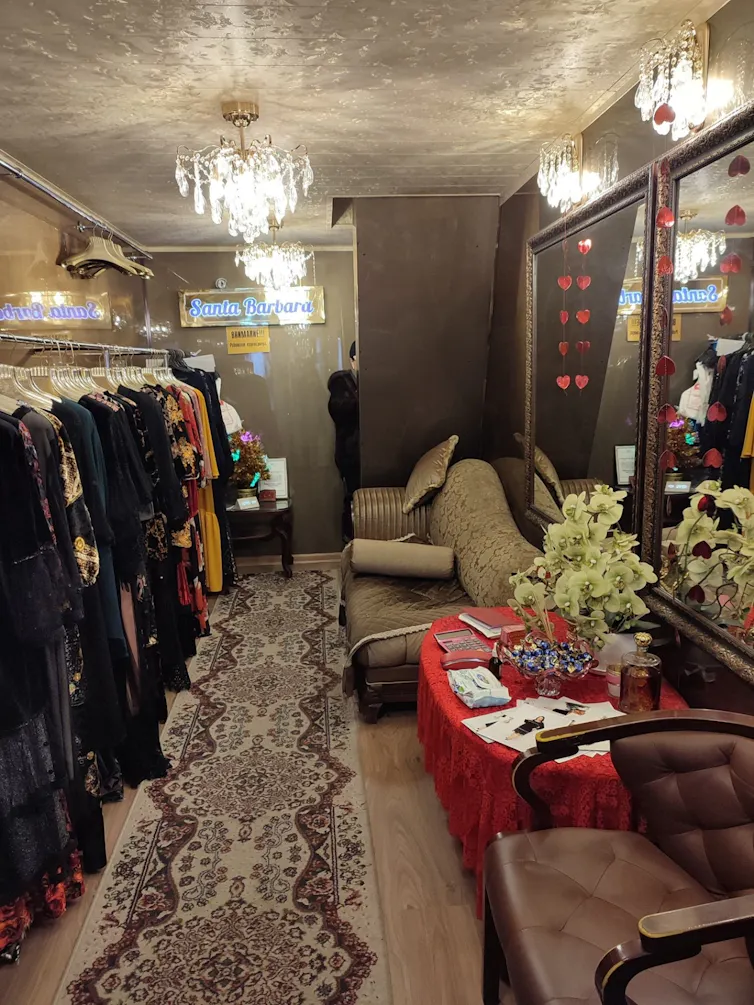
A boutique clothes shop.
Zoja’s container deluxe.
Claudia Eggart

As I settle onto a comfortable chaise longue, I remark on the unusually refined interior. Zoja smiles faintly and asks whether markets like Dordoi exist in Germany. Surely, she muses, shops in Europe must be even more luxurious than hers? Then, rather unexpectedly, she says with an almost tender undertone: “But you know, I wouldn’t like to give up my dvatsattonnyk.” Dvatsattonnyk, translates to “20-tonner”, but it actually refers to the 20ft measure of the standard shipping container, not its weight.

I asked Zoja if she knew how she became successful? Did she have an instinct for future trends? But the question itself immediately marked me as an outsider. “Only someone new to this business would call it luck or intuition,” Zoja pushed back.

I have worked hard, thought big and planned long term. Thanks to this, my family has good cars, nice houses and we can live well in Kyrgyzstan. But it is not easy to get there.

Since gaining independence in 1991, Kyrgyzstan has experienced repeated political upheavals, including popular uprisings, changes of government and periods of ethnic violence. These episodes, combined with recurring economic crises, have created an environment of persistent uncertainty for businesses and households alike.

Against this background, Zoja came to the conclusion that “only a container of my own could secure a stable income”. Dordoi’s containers are a funny thing. More than trading spaces, they function as assets in their own right.

Advertisement

Depending on location, they are traded for well over US$150,000 (£118,000), generating income not only through trade but through subletting as well. By 2023, prime containers fetched as much as US$250,000, and monthly rents reached US$3,000. By April 2026, prices had fallen to between US$80,000 and $150,000. Traders link this drop to the wider effects of Russia’s invasion of Ukraine. When demand from Russia slows, Dordoi feels it quickly. This shows how volatile the business really is.

Just like in other urban environments, inequalities at Dordoi are stark. While entrepreneurs like Zoja spend sums comparable to the price of a detached house in a desirable district of Bishkek, many struggle to afford rents in the market’s less profitable corners. But these inequalities have produced their own adaptations. Location is everything. Some containers are shared between several entrepreneurs, while others move repeatedly in search of better-connected rows and higher footfall.
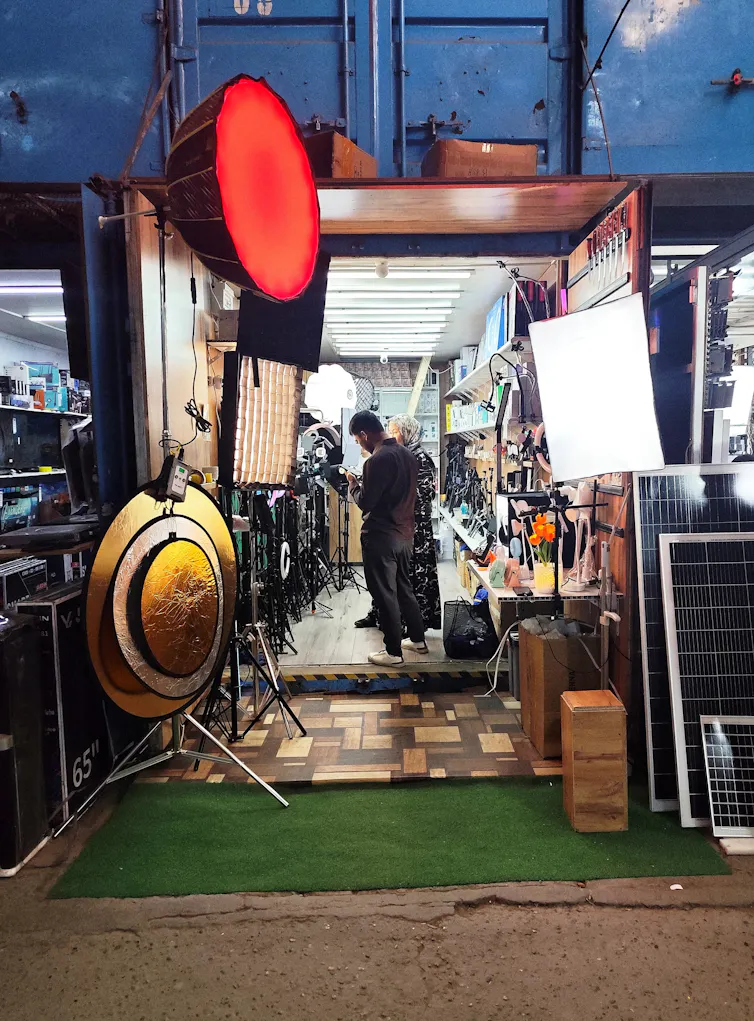
An electrical market stall.
A store in the Junghai Market, a Chinese dominated part of Dordoi where household appliances and electronics are sold.
Claudia Eggart

One trader told me her family sold their home during the pandemic to buy a container and rebuild their business. Others spent years working abroad, often in Russia, saving enough to secure a place in Dordoi’s dense commercial network. Despite all insecurities, Dordoi, as Ainura put it, “gives us hope, hope that we can build something here”.

Government modernisation drive

That prevailing sense of hope has recently been unsettled. In April 2026, President Sadyr Japarov summoned Askar Salymbekov to deliver a public reprimand: the market’s iconic “container empire” had failed to modernise.

Salymbekov, 71, is the man who had bought the land and put the first containers to build what has turned into the largest retail hub in Central Asia. Questioning whether the long-serving owner had grown “old and stingy,” Japarov argued that the bazaar should have long ago been redeveloped into a sleek complex like the ones he had seen in “Dubai or Istanbul”.

Advertisement

While his claim that years spent labouring in cramped container shops can take a toll on traders’ health is not unfounded, challenging Salymbekov strikes at a delicate nerve. As the founder of one of Kyrgyzstan’s most vibrant economic engines, he is considered something akin to a national hero. Besides, in a society where deference to elders is the norm, such remarks carry immense weight, if not risk.

Japarov’s ultimatum arrived against the backdrop of a booming economy. Kyrgyzstan recorded a staggering real GDP growth rate of 11.1% in 2025.

However, western analysts have been sceptical about this surge and warn that the growth is fuelled by complicity in Russia’s efforts to evade sanctions, and caution that such rates are unsustainable.

Regardless, the current government sees this moment as a pivotal opportunity to shed the image of a poor, landlocked, mountainous nation and reposition itself as a central node in China’s Belt and Road Initiative.

Advertisement

As several gigantic warehouse complexes are planned through co-funding from the Silk Road Fund, Japarov’s vision of transforming Dordoi into a semi-digitalised, futuristic retail hub begins to look less like mere ostentation and more like an ambitious but not impossible strategy.

Long live Dordoi!

At Dordoi today, future and past collide. While the market clings to archaic traditions, like burning juniper to ward off bad spirits, it is simultaneously being reshaped by digital platforms.

A new generation of baiery (Russian for buyers) no longer rents physical containers; instead, they act as intermediaries, sourcing goods from Dordoi to sell them via Instagram, or Russian-led online marketplaces like Ozon or Wildberries.

Advertisement
A bustling market

Saturday at Dordoi’s central street.
Claudia Eggart

Aiza, one such baier, explains the appeal of this model: “Before, costumers from Russia and Kazakhstan came to us, but since the pandemic they prefer to buy online.”

Yet, even this digital evolution remains tethered to the physical bazaar; without walking the floors to find and select goods, e-commerce cannot function. So Dordoi, for the time being, maintains its unique position as “the region’s largest showroom,” – a metaphor many state with pride.

This hybrid reality challenges the view of bazaars as mere relics of a transitional era. Critics often dismiss their informality, particularly regarding taxation and intellectual property, as a failure to modernise.

But Dordoi traders also remind me that the distinction between the informal and formal economy is rather ambiguous and hardly unique to Central Asia, or “do multinational businesses in Germany pay as much taxes as they should?” as some asked.

The issue is not whether informal markets fit a western ideal of order. It is what their survival strategies tell us about making a living amid capitalist crises and geopolitical ruptures.

Advertisement

In this sense, Ainura’s story, like many others I encountered during years of research at Dordoi, are not exceptional. They point to the broader principle of endurance through adaptation.

Traders continually recalibrate to shifting regulations, fluctuating trade routes, changing consumer demand and periodic economic shocks. In doing so, they provide what a formal economy often cannot – services, work, credit and practical forms of support that extend far beyond the act of buying and selling.

But Dordoi matters for something more interesting than its survival economies. Its significance lies in its capacity to coordinate economic life across a vast network of traders, suppliers, transporters and customers while at the same time, every container offers a glimpse into the ways in which ordinary people produce a sense of conviviality and stability in a world increasingly hostile to both.

I was on my way out when Ainura called after me. I turned back and she said: “We really like to work here… We love Dordoi.”

Advertisement

For you: more from our Insights series:

To hear about new Insights articles, join the hundreds of thousands of people who value The Conversation’s evidence-based news. Subscribe to our newsletter.

Advertisement

Source link

Continue Reading
Click to comment

You must be logged in to post a comment Login

Leave a Reply

NewsBeat

Harrowing CCTV footage captures moment man ‘wheels suitcase with body of Scots woman’

Published

on

Daily Record

The footage allegedly shows Sharif Ahmadzai wheeling the body of Elisabeth Jane Ross through the streets of Athens.

CCTV: Man captured wheeling body of Scots woman in suitcase on Athens street

Harrowing CCTV footage has captured the moment the man arrested over the death of a Scottish woman allegedly wheels a suitcase containing her remains through the Greek streets.

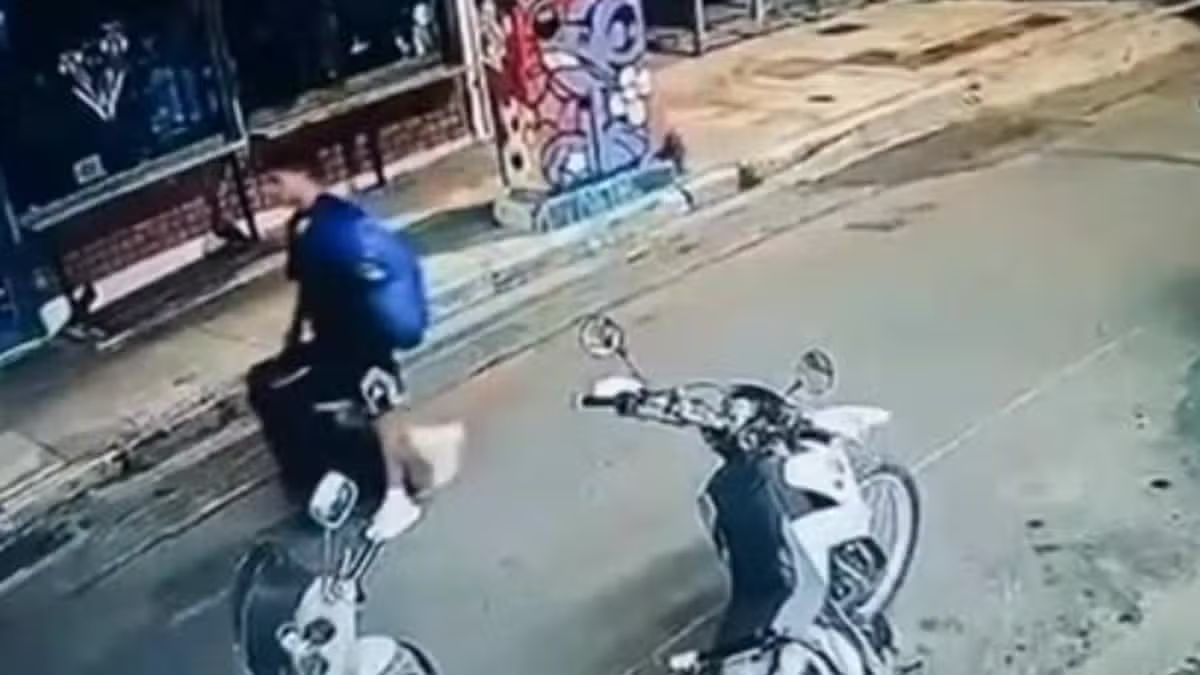
The chilling video reportedly shows Sharif Ahmadzai, 26, lugging the large, black case through the centre of Athens. Dressed in a black T-shirt and shorts and carrying a blue rucksack, Ahmadzai allegedly dumped the bag in an abandoned building in Kypseli before fleeing the scene.

The horror clip appears to show Ahmadzai’s movements on July 16, two days before Elisabeth Jane Ross’ body was discovered by a homeless man.

Elisabeth, also known as Lisa, 38, from Edinburgh was found dead inside a suitcase by a homeless man in an abandoned building in the district of Kypseli on Saturday, July 18.

Advertisement

Ahmadzai has since been arrested and charged in connection with Lisa’s death. Reports from local media state that he faces charges of intentional homicide, robbery and weapons offences. He reportedly confessed transporting Lisa’s body in the suitcase to cops but denies murder, according to the Guardian.

George Kalliakmanis, the honorary president of the police officers’ association in Athens, told the Guardian: “He has admitted to carrying her body in a trolley to the site. Police have CCTV footage of him doing this on the night of 16 July. He has also confessed to withdrawing €10,000 from ATMs using credit cards that belonged to her. But he has denied murder which police do not believe.”

Advertisement

The man, who is a champion boxer from Afghanistan, ran a refugee charity in the Greek capital, is understood to arrived in Lesvos in 2016 as a migrant, and later married US-born Alaina Hall in 2023.

The couple set up a ministry to help refugees in Athens and are believed to have known Elisabeth through their work. the Daily Mail reports. They had a key to the flat she was staying in – which was owned by their organisation, Love Every Nation Athens.

Initial medical reports suggest Elisabeth died from asphyxiation, according to The Times. An autopsy is currently underway with Lisa’s official cause of death unknown until toxicology reports are released.

Investigators determined that Lisa arrived in Greece in late June and stayed at several locations before renting a ground-floor apartment in Exarchia. The Daily Mail reports cops said the accused had access to her apartment through a set of keys. Lisa was last known to have contacted a friend three days before she was found dead.

Her loved ones became concerned when they continued receiving text messages that appeared uncharacteristic of her writing style.

His wife Alaina is understood to have provided key evidence to the probe including a location-sharing application showing her husband at Lisa’s apartment during the night of July 15 and into July 16. After Lisa’s identity became public, she reportedly suspected Ahmadzai involvement and left their home with her child.

Alaina is understood to have handed cops a mobile phone and €2,550 in cash that she believed may have belonged to the victim. During questioning, Ahmadzai allegedly claimed he found Lisa dead in the apartment bathroom before placing her body in a suitcase and disposing of it the following night.

But police reportedly allege he later admitted to using the victim’s mobile phone to impersonate her in messages sent to relatives and friends, while also withdrawing money using her bank cards. A search of the suspect’s home on August 1 uncovered a replica Glock-style pistol and a military-style knife, leading to additional weapons charges.

Ahmadzai’s website states his father, a military commander in Kabul, was shot dead in a Taliban ambush when he was four. His older brother was kidnapped by the Taliban five years later.

The rest of his family died in a suicide car bomb when he was 15, the website adds. Ahmadzai travelled to Greece in a small boat and went on to win the Greek super lightweight boxing title in March 2023.

Advertisement

He has been referred to the competent prosecuting authority to face the charges and is reportedly due to appear before magistrates in Athens on Wednesday.

Source link

Continue Reading

NewsBeat

Meet miracle baby Theo – the first bub in the UK to get a pioneering surgery while still in the womb

Published

on

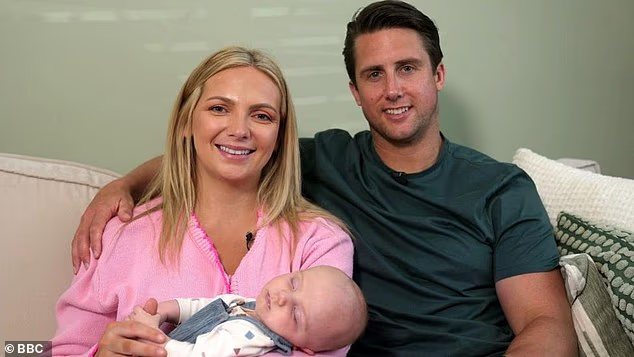
Ms Savage, 29, from London, and the baby's father, Josh French, expressed their relief at the surgery's success. They are pictured here together with Theo

Advertisement

A baby boy named Theo has become the first in Britain to have a pioneering surgery while still in his mum’s womb. 

Maisie Savage was operated on by a team of surgeons in Texas after her son was diagnosed with complex gastroschisis – a condition where the belly button does not develop properly and the intestines grow externally.

Doctors used keyhole surgery techniques to reach the baby in Ms Savage’s womb when she was 26 weeks pregnant and push his organs back inside his abdomen.

Theo, who is now five months old, is said to be doing well, after becoming the third baby in the world to benefit from a clinical trial of the procedure.

Advertisement

Ms Savage, 29, from London, and the baby’s 36-year-old father, Josh French, expressed their relief at the surgery’s success.

She told the BBC: ‘He’s a little miracle.’

Mr French described the diagnosis – made after Ms Savage’s 20-week scan – as ‘incredibly scary’.

The couple, who both work as teachers, were referred by medics at Great Ormond Street Hospital in London to Texas Children’s Hospital in Houston.

Advertisement

Ms Savage, 29, from London, and the baby’s father, Josh French, expressed their relief at the surgery’s success. They are pictured here together with Theo

Maisie Savage was operated on by a team of surgeons in Texas after her son Theo was diagnosed with complex gastroschisis

Maisie Savage was operated on by a team of surgeons in Texas after her son Theo was diagnosed with complex gastroschisis

The couple are seen together in the hospital after doctors carried out ground-breaking surgery on their unborn baby

The couple are seen together in the hospital after doctors carried out ground-breaking surgery on their unborn baby

Advertisement
Dr Michael Belfort, who led the team of paediatric surgeons, described the results as 'just remarkable', with Theo being born naturally in Texas

Dr Michael Belfort, who led the team of paediatric surgeons, described the results as ‘just remarkable’, with Theo being born naturally in Texas

Advertisement

They were both told to travel to Texas immediately, with Ms Savage describing the choice to go ahead with the procedure as a ‘huge decision’.

During the operation, amniotic fluid was drained from Ms Savage’s womb and replaced with carbon dioxide to give surgeons room to carry out the procedure.

Dr Michael Belfort, who led the team of paediatric surgeons, described the results as ‘just remarkable’, with Theo being born naturally in Texas.

Ms Savage said: ‘Everything they did just completely reversed what could have been a really horrible start to his life, and he’s just the best. He’s a completely normal baby, essentially.’

Advertisement

Mr French added: ‘We both feel incredibly fortunate. The impact they’ve had on us as a family is incredible. They made us feel so welcome, from the team at Great Ormond Street to Dr Belfort and the team.

‘Whilst we were over there, the level of care was amazing, and they made a very traumatic time of our lives so much easier, and we’ve got this little man – we couldn’t be happier.’

Advertisement

Source link

Advertisement
Continue Reading

NewsBeat

Moment foolish driver tries ‘frighteningly stupid’ bid to dodge paying his Jaguar finance

Published

on

Daily Mirror

Nathan Owen, 33, told 999 call handlers his car was accelerating on its own, triggering a huge police response that saw motorways closed – but was later discovered to have faked the incident

Bizarre new footage shows the moment a man slams into the back of a police car after faking an emergency to try and have his car written off.

Nathan Owen, 33, collided with a police car 31 times after he phoned emergency services to tell them his electric Jaguar was accelerating on its own and he could not stop, Liverpool Crown Court heard on Monday.

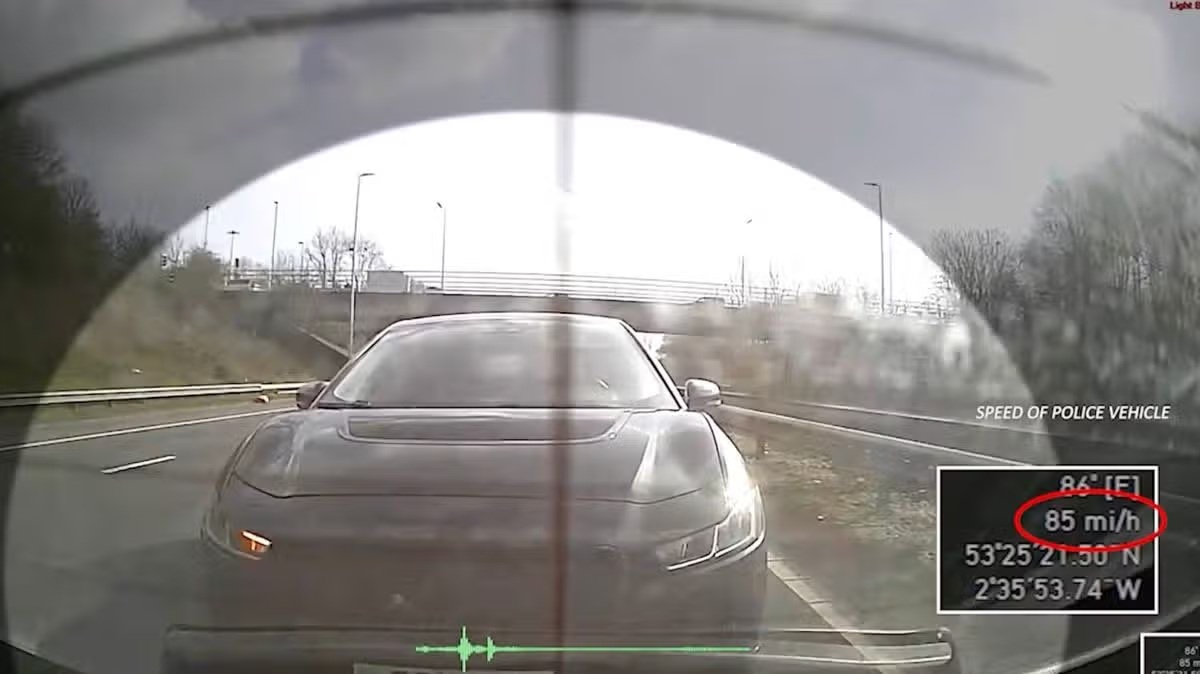
He drove at speeds of up to 86mph on the M58, M57 and M62 in Merseyside for about 35 minutes, over a distance of about 38 miles, during the incident on March 6, 2024.

Advertisement

It triggered a “significant“ police response as officers tried to stop what they were told was a runaway vehicle – but investigations later showed there was nothing wrong with the car, and that Owen was in full control the entire time.

He went on to plead guilty to dangerous driving and two counts of fraud, and sentenced to four years and three months in prison on Monday.

Sentencing him, Judge Ian Unsworth KC said: “You set in train a course of conduct which caused a significant police traffic operation to be deployed, undoubted alarm to the public and very substantial loss and disruption to others.”

The judge said police officers placed themselves in danger because they believed they were dealing with a genuine emergency.

Advertisement

He added: “You, meanwhile, sought to profit from a lie.”

Eric Lamb, prosecuting, said Owen, of Prestatyn, North Wales, had entered into a finance agreement in September 2023 for the Jaguar I-Pace.

He ran into “financial difficulties” and was in arrears with CA Auto Finance by March the following year with about £5,000 left to pay, the court heard.

Advertisement

On the day of the incident, he called loan company Plata to ask if he would be able to borrow more on top of the £3,000 he had already loaned from them, but was told he could not.

Five minutes later, shortly after 2pm, he called 999 claiming his car would not brake and he had no control over the vehicle, which he said was accelerating.

Mr Lamb said: “In fact, his car was stationary at the time of that call.”

Police responded and the car, which was then travelling at speeds of up to 86mph, had to be boxed off by emergency service vehicles to keep other road users safe before it came to a stop on the M62 near Warrington, Cheshire.

However, investigations found there was no fault with the car, the court heard.

Mr Lamb said: “He had fabricated the events in order to enable him to get rid of the vehicle.

“He had full control of the vehicle and with full control of the vehicle he travelled at excessive and extreme speeds.”

Advertisement

Motorways had to be closed as a result of the incident, the court heard.

Footage of the police pursuit was played in court along with the audio from his 999 call, in which he was heard telling an operator he was “shaking” and the car had “gone crazy”.

When the car was eventually brought to a stop, the brake lights could be seen turning on.

Owen contacted the finance company 40 minutes after the incident.

Advertisement

He was later paid £300 by The Sun and £500 by the Daily Mail for his story, the court heard.

In a statement, Murray Paul, from Jaguar Land Rover UK, said the firm had spent an extra £50 million in marketing to try and counter the publicity from the false allegations, which they said generated 180 pieces of adverse coverage.

Daniel Travers, defending, said Owen’s actions were “frighteningly stupid”.

He said Owen, who had no previous convictions and came from a “successful, stable family”, had been described by his father as a Walter Mitty character who “lives in a fantasy world”.

Advertisement

He added: “He had grand ideas and things just went wrong.”

Owen pleaded guilty to dangerous driving and two counts of fraud in June. He was banned from driving for a period of five years after his release from custody.

Speaking after the sentencing, Merseyside Police’s Detective Constable Michael Doyle said: “It was clear from our investigations that he was in full control of his vehicle throughout the duration of the incident.

“By his own admission there were workers on the hard shoulder of the motorway and he clearly put them and other road users in danger with his reckless actions.”

Advertisement

A charge of causing a public nuisance was ordered to lie on the file.

Source link

Continue Reading

NewsBeat

Andy Burnham set to free paedophiles and killers early: PC Harper thugs to be ‘released within months’

Published

on

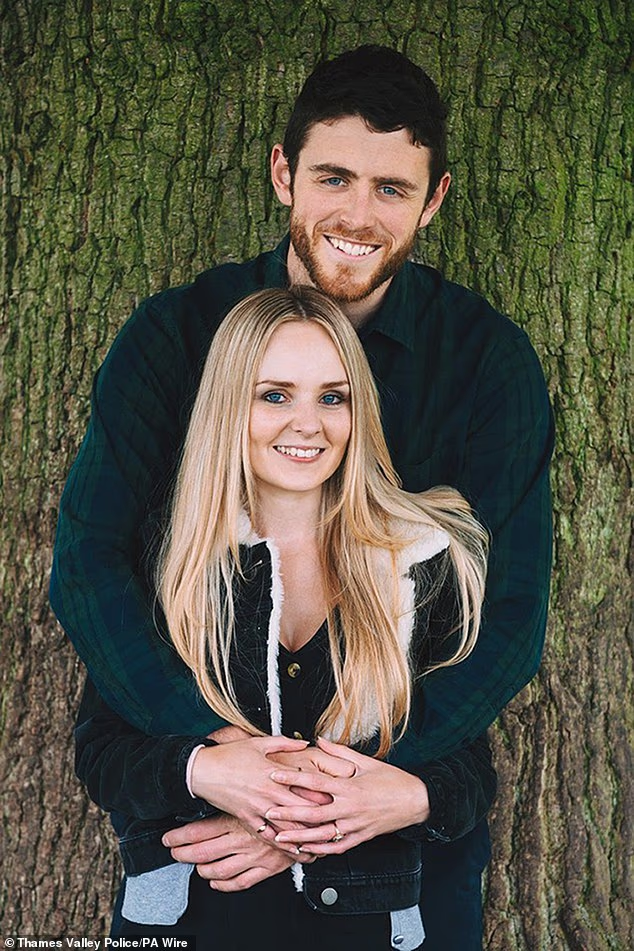
Anger: Lissie Harper, seen with late husband PC Andrew Harper, has hit out at the early release decision

Andy Burnham on Monday night gave the green light for thousands of killers, thugs and paedophiles to get out of jail early.

The Prime Minister paused the controversial plans last month after a public outcry over the proposed release of two of the killers of PC Andrew Harper.

Following an urgent review, rapists and the most serious sex offenders will now be excluded from early release. But Downing Street on Monday night confirmed the early release of thousands of other serious criminals, including killers and wife-beaters, will go ahead this autumn.

The programme will include the release of two of the three teenage killers of PC Harper, who was dragged behind a car for more than a mile in 2019.

Advertisement

His widow Lissie last month said the prospect of their release ‘makes me feel sick’.

Mr Burnham acknowledged the ‘anger, anxiety and distress’ caused to victims by the early-release plans. He said the exclusion of rapists and the worst paedophiles were ‘significant changes’ but acknowledged ‘there will still be concerns about other offenders having their sentences shortened’.

The Prime Minister said he had ‘wanted to go further’ but added: ‘It’s not possible without the prison system reaching capacity and collapsing, which would put public safety at much greater risk.’

Advertisement

Anger: Lissie Harper, seen with late husband PC Andrew Harper, has hit out at the early release decision

Tory leader Kemi Badenoch said: ‘Andy Burnham wants a round of applause for agreeing not to release rapists and child sex offenders. He’s not getting one.

‘This is only a partial climbdown. Killers, violent offenders, men who have terrorised their partners and more will all still walk out of prison in October thanks to Labour’s early release scheme.

‘Yet again victims are learning their fate from press releases. The victims of these horrific crimes have suffered weeks of uncertainty and fear. They deserve so much better.’

Advertisement

Domestic Abuse Commissioner, Dame Nicole Jacobs, said: ‘The decision to not exclude domestic abuse perpetrators from this scheme is wrong and puts victims lives at risk.’

The early-release plans mean that thousands of serious offenders who would normally have served two thirds of their sentence before being considered for release, will now be let out after only half of their term.

Less serious offenders, who would normally have served half of their sentence, will be released after only a third of their jail time.

The changes to the system are designed to be permanent, although plans to implement them have been delayed until October.

Advertisement

Justice secretary Alex Norris said those released early would face ‘tougher supervision’ on release, including tagging, exclusion zones and random drug tests. The number of areas using chemical castration to ‘help manage the drivers of sexual offending’ will be doubled.

Probation officers will also be given the power to ban some offenders from driving, pubs and football matches.

The changes announced by Mr Burnham are expected to cut the number of serious offenders earmarked for early release by around 1,000 to 5,000.

Rapists and those convicted of the most serious child sex and grooming gang offences will now be excluded from the early-release provision. However, thousands of other serious criminals can still look forward to early freedom. These include those with convictions for manslaughter, domestic abuse, child pornography, drug dealing and wounding with intent.

Advertisement
Smirking: Albert Bowers, left, and Jessie Cole could be among those released 'within months'

Smirking: Albert Bowers, left, and Jessie Cole could be among those released ‘within months’

Mr Burnham insisted keeping the public safe is his ‘top priority’. But he said the prisons crisis made early release inevitable.

Mr Norris has been ordered to ‘accelerate’ the prison building programme, although there were no details on Monday night of what this means in practice.

The Prime Minister pledged to ‘deliver the fastest prison building programme since the Victorian era and do what’s necessary to fix the prison crisis’. But the

Advertisement

failure to halt the early release of PC Harper’s killers is likely to raise questions about his judgment.

The 28-year-old officer was killed in August 2019 after responding to reports of a stolen quad bike in Berkshire. He suffered horrific injuries after getting caught in a strap attached to a getaway car driven by Henry Long, who was jailed for 16 years. Long’s accomplices Jessie Cole and Albert Bowers were both sentenced in 2020 to 13 years for manslaughter.

But the pair, who were pictured laughing during the trial, will now be released in the coming months.

Lissie Harper said: ‘This is disgusting. How dare ministers say the killing of a police officer is not enough of a ‘sickening crime’ that deserves the stiffest of punishments.

Advertisement

‘The level of disrespect the Government are showing to Andrew and other victims – and to their loved ones – is beyond contempt.’

Shadow justice secretary Nick Timothy welcomed the decision to bar rapists from the scheme but said the Government’s climbdown ‘doesn’t go far enough’.

He added: ‘One of Andy Burnham’s first acts as prime minister will be to let thousands of criminals – including killers and paedophiles – out early.’

Source link

Advertisement
Continue Reading

NewsBeat

Welsh beachgoers suffer awful burns after using disposable barbecues on the sand

Published

on

Wales Online

Warning: Graphic image of burns

Beachgoers in Wales have described suffering severe burns to their feet after walking on hot sand where they had earlier been enjoying barbecues.

Their injuries, which landed them in hospital and off work, have prompted warnings from medics at Morriston Hospital Burns’ Centre.

Sam Knight was unable to walk for a fortnight after burning himself after a family barbecue at Cefn Sidan beach at Pembrey Country Park earlier this year. Sign up for our free daily briefing on the biggest issues facing the nation sign up to the Wales Matters newsletter here.

Advertisement

The 27-year-old said: “It was a family gathering and it was a windy day so there was sand in everyone’s eyes. When we’d finished with the barbecue I used tongs to move it to one side and extinguished it, so I thought it was safe.

“But the patch of sand it had been on was still boiling, and after I stepped on it I had to be carried off the beach. I went to the Minor Injury Unit at Neath Port Talbot Hospital but they just patched me up and told me there the burns were so deep I needed to go to the Burns’ Centre at Morriston. I couldn’t walk for a couple of weeks so I had to take a fortnight off work.”

When he had recovered enough to return to the beach, Sam, a mechanical engineer, decided to put his work skills into practice and returned to the shore to carry out an experiment.

Sam fired up two disposable barbecues, placing one directly onto the sand, and another raised 40mm off it. When he measured the sand under the first, it recorded a temperature of 244°. The barbecue raised from the sand kept it close to the ambient temperature under the conditions tested.

Advertisement

“The packaging advised raising the barbecue from the surface, but it didn’t provide any way to do so, and suggested locating some bricks at the location it was being used,” Sam said.

Melanie Holbrook was also badly burned after using a disposable barbecue at another Welsh beach. Visiting Oxwich Bay on Gower with her husband she said they had also used a disposable barbecue and disposed of it sensibly to make it safe.

However, moments later she too stepped on the sand where the barbecue had been, feeling instant excruciating pain under her feet.

Advertisement

She said: “When I looked, the bottoms of my feet were burnt yellow. The heat from the barbecue had gone straight into the sand. I had no idea that could happen.

“My husband poured water over my feet and ran for help. They got my feet into a container with cold water and moved me over to the shade with my feet under running water until the ambulance came.

“I ended up in A&E in Morriston Hospital and then in the Burns’ Centre. The skin on my feet was badly blistered and had to be removed. I had weeks of treatment, with regular dressing changes and check-ups. I wouldn’t wish that pain on anyone.

“It took weeks for the skin on my feet to heal and it took about four to five months before I could properly walk again and I still get some sensitivity even now.”

Advertisement

By chance, Swansea Bay UHB physiotherapist David Fligelstone was close by on the beach when Mrs Holbrook experienced her burns, and was one of those who came to her aid.

He said: “Having worked both as an RNLI lifeguard and later as a physiotherapist on the Burns Unit at Morriston Hospital, I’ve seen first-hand the devastating impact these injuries can have.

“What makes them particularly concerning is that the danger is often invisible – once a disposable BBQ has been removed, the sand beneath can remain hot enough to cause serious burns for a considerable time.

“These injuries are entirely preventable. A simple action, such as thoroughly cooling the sand with water after removing a disposable BBQ, can prevent severe injuries, particularly in children. This summer we want people to enjoy our beaches safely while helping to prevent avoidable injuries before they happen.”

Advertisement

Consultant surgeon Jeremy Yarrow said a recent review of data from the International Burn Injury Database (IBID) highlights a worrying and continuous rise in disposable BBQ-related injuries over the past few years.

He added: “As burn care specialists on the front line at the Welsh Centre for Burns and Plastic Surgery, we are issuing an urgent public safety appeal regarding a severe and entirely preventable summer hazard: thermal burn injuries caused by disposable barbecues on our beaches.

“While many associate barbecues with open flames, a significant proportion of the severe injuries we treat in hospital stem from an invisible trap: super-heated sand beneath the grill.

“Sand absorbs intense heat from disposable barbecues, reaching temperatures upwards of 400°C that persist for hours after the barbecue unit itself has been removed or extinguished.

Advertisement

“To an unsuspecting child running barefoot or a beachgoer stepping onto the beach hours later or pet, this hidden hazard can inflict devastating, full-thickness burns in a fraction of a second.”

Morriston Hospital Burns’ Centre has now issued a warning to people thinking of enjoying al fresco cooking when they visit Wales’ beaches because of the way sand retains high temperatures even when disposable barbecues have been disposed of responsibly.

To protect family and fellow beach users, people using disposable barbecues are urged to follow three vital safety practices:

  • Raise the BBQ off the sand. Never place a disposable barbecue directly on the beach; always elevate it using stones, bricks, or a dedicated stand to prevent heat from transferring to the sand underneath.
  • Cool both the BBQ and the sand with water. Once you have finished cooking, douse the barbecue and the sand beneath it thoroughly with seawater, ensuring the ground is completely cold to the touch before leaving. We strongly warn against burying hot barbecues or glowing embers in the sand. Covering coals with sand does not extinguish them—it acts as an insulator, turning the sand into a hidden oven that poses danger to other beach users and animals.
  • Dispose of the cooled BBQ safely by placing it in a designated hot-ash bin or taking it home with you.

Should an accident occur, immediate and correct first aid is critical to improving outcomes and reduce the depth of the burn. People are advised to follow what doctors term ‘the three Cs’:

  • Cool the burn under cool running water for at least 20 minutes (do not use ice or butter).
  • Call 999 for emergencies or NHS 111 for clinical advice—all beach sand burns in children require urgent medical assessment.
  • Cover the wound loosely with clean cling film to protect the damaged skin.

Source link

Advertisement
Continue Reading

NewsBeat

Andy Burnham confirms rape, serious child sex and grooming offences barred from sentencing changes

Published

on

Manchester Evening News

It comes after Andy Burnham paused plans to release prisoners early in September to ease overcrowding in jails

Rape, serious child sex and grooming offences will be barred from the upcoming changes to prison sentences, it has been announced today (August 3).

Advertisement

The Prime Minister has blocked cuts to sentences for rape, serious child sex and other grooming offences ‘to keep the public as safe as possible’.

It comes after Andy Burnham paused plans to release prisoners early in September to ease overcrowding in jails. The scheme will now be delayed until October.

Click here to get the biggest stories straight to your inbox in our Daily Newsletter

Mr Burnham said he “wanted to go even further”, but that it is not possible without the prison system collapsing and putting the public “at much greater risk”.

Advertisement

However, he assured the public that offenders will face tighter community supervision, including new GPS monitoring for rapists to restrict movements.

Prime Minister Andy Burnham said: “Keeping the public safe is my top priority. That’s why I asked for an urgent review of the prisoner release scheme. I fully understand the anger, anxiety and distress that’s been caused.

“I’ve heard that loud and clear. That’s why we’re making significant changes: offenders who have been sentenced for rape, serious child sex offences and other grooming offences will be excluded from the changes.

“I want to be honest – I wanted to go even further as I know there will still be concerns about other offenders having their sentence shortened. But it’s not possible without the prison system reaching capacity and collapsing, which would put public safety at much greater risk.

Advertisement

“That’s why we will also be introducing much tougher community measures. There will be a presumption that all offenders are tagged, longer periods of supervision and tough new rules, including restriction zones for offenders.

“As a country, we haven’t invested in the prison estate when we should have, going back over a decade. This has created an unacceptable situation, with our adult male prisons now at 98 per cent capacity. For too long, the problems facing our prison system have been ignored – and it’s the victims who have been paying the price.

“That is not good enough. My government will deliver the fastest prison building programme since the Victorian era and do what’s necessary to fix the prison crisis.”

The decision comes after Mr Burnham listened to ‘victims’ concerns’, resulting in rape and serious child sex offences, including vile grooming gang offences, now being blocked from the upcoming sentencing changes – meaning these offenders will see no change to their custodial sentence.

Advertisement

The changes mean rape and child sexual offences will be added to the exclusions that were already in place for 18,000 offenders, including those who have been found by a court to be the most dangerous or anyone serving a life sentence.

Under changes in the Sentencing Act, some 6,000 offenders were set to be let out of prison in September after serving a third of their sentence – rather than half – in a bid to ease prison overcrowding.

Prisoners serving longer sentences of four years or more would be eligible for release at the halfway point of their term, rather than at two-thirds as had previously been the case.

The changes were due to be phased in, beginning with prisoners of less than 575 days.

Advertisement

The Government has said that, after listening to victims’ concerns, rapists and child sexual offenders will not be eligible for the sentencing changes.

These will be added to the exclusions already in place for 18,000 offenders, including those who have been found by a court to be the most dangerous or anyone serving a life sentence.

The Government has also announced a new package of victim support, backed by £10 million, to provide better trauma-informed contact.

A new national helpline will also be established and efforts made to contact all affected victims to offer information and support.

Advertisement

Mr Burnham added that the Government will deliver “the fastest prison building programme since the Victorian era”, aiming to create 14,000 new prison places by 2031.

The Prime Minister has also asked Justice Secretary Alex Norris to look at how the UK can remove more foreign offenders and faster, review Imprisonment for Public Protection (IPP) sentences and free up space in women’s prisons.

Justice Secretary Alex Norris: “The Prime Minister and I have reviewed these reforms, listened to the concerns and gone further to protect victims.

“These are decisions no Minister would ever want to take but it is right these sickening crimes are excluded from these reforms. Victims will also have access to better support and reassurance that offenders leaving prison face tougher supervision and punishment.”

Advertisement

The changes also introduce a new progression model which will end automatic release for badly behaved offenders. Those who break the rules or are violent behind bars face spending 100% of their sentence locked up.

Source link

Continue Reading

NewsBeat

Burnham bars rapists and serious child sex offenders from early release scheme

Published

on

Burnham bars rapists and serious child sex offenders from early release scheme

Rapists and serious child sex offenders, including those convicted of grooming offences, will be excluded from upcoming plans to release certain prisoners early.

Andy Burnham said he understood the “anxiety and distress” caused by the scheme and insisted he “wanted to go even further”, but that this would risk the collapse of the entire prison system. He assured the public that offenders will face tighter community supervision, including new GPS monitoring for rapists to restrict movements.

It comes after Mr Burnham paused plans to release prisoners early in September to ease overcrowding in jails following outcry from the public, including from survivors of sexual violence.

The scheme will now be delayed until October.

Advertisement

In an announcement on Monday night, the prime minister said: “Keeping the public safe is my top priority. That’s why I asked for an urgent review of the prisoner release scheme.

“I fully understand the anger, anxiety and distress that’s been caused. I’ve heard that loud and clear. That’s why we’re making significant changes: offenders who have been sentenced for rape, serious child sex offences and other grooming offences will be excluded from the changes.”

He added: “I want to be honest – I wanted to go even further as I know there will still be concerns about other offenders having their sentence shortened.

“But it’s not possible without the prison system reaching capacity and collapsing, which would put public safety at much greater risk.”

Advertisement
Andy Burnham had previously paused the scheme to review it
Andy Burnham had previously paused the scheme to review it (PA)

Mr Burnham said he also intends to introduce “much tougher” community measures including a “presumption” that all offenders are tagged, longer periods of supervision and new restriction zones for offenders.

Under changes in the Sentencing Act, some 6,000 offenders were set to be let out of prison in September after serving a third of their sentence – rather than half – in a bid to ease prison overcrowding.

Prisoners serving longer sentences of four years or more would be eligible for release at the halfway point of their term, rather than at two-thirds as had previously been the case.

The changes were due to be phased in, beginning with prisoners serving sentences of less than 575 days, going up to inmates jailed for 12 years or more being eligible for early release in June next year.

The government has said that, after listening to victims’ concerns, rapists and child sexual offenders will not be eligible for the sentencing changes.

Advertisement

These will be added to the exclusions already in place for 18,000 offenders, including those who have been found by a court to be the most dangerous or anyone serving a life sentence.

The government has also announced a new package of victim support, backed by £10m, to provide better trauma-informed contact.

A new national helpline will also be established and efforts made to contact all affected victims to offer information and support.

Mr Burnham added: “As a country, we haven’t invested in the prison estate when we should have, going back over a decade.

Advertisement

“This has created an unacceptable situation, with our adult male prisons now at 98 per cent capacity. For too long, the problems facing our prison system have been ignored – and it’s the victims who have been paying the price. That is not good enough.

“My government will deliver the fastest prison building programme since the Victorian era and do what’s necessary to fix the prison crisis.”

Labour aims to have 14,000 new prison places by 2031.

Kemi Badenoch held a press conference with survivors who had been told their abusers could be released early under the scheme in June
Kemi Badenoch held a press conference with survivors who had been told their abusers could be released early under the scheme in June (PA Wire)

Mr Burnham has also asked justice secretary Alex Norris to look at how the UK can remove foreign offenders faster and in greater numbers, review outdated Imprisonment for Public Protection (IPP) sentences and free up space in women’s prisons.

Mr Norris said: “The prime minister and I have reviewed these reforms, listened to the concerns and gone further to protect victims.

Advertisement

“These are decisions no minister would ever want to take, but it is right these sickening crimes are excluded from these reforms.

“Victims will also have access to better support and reassurance that offenders leaving prison face tougher supervision and punishment.”

Wider releases under the Sentencing Act have been delayed from September to October, giving probation staff time to plan for releases and to ensure victims can have a say in restrictions placed on offenders.

The changes also introduce a new progression model which will end automatic release for badly behaved offenders.

Advertisement

Those who break the rules or are violent behind bars face spending 100 per cent of their sentence locked up.

Shadow justice secretary Nick Timothy said the U-turn is a “victory for victims” but said it “doesn’t go far enough”.

Domestic abuse commissioner Dame Nicole Jacobs said not excluding domestic abusers is “wrong and puts victims lives at risk”.

She said: “It is critical that no abuser is released in October unless I am confident that victims’ safety is not being compromised.”

Advertisement

Source link

Continue Reading

NewsBeat

St Nicholas Street in Norton shut due to water leak

Published

on

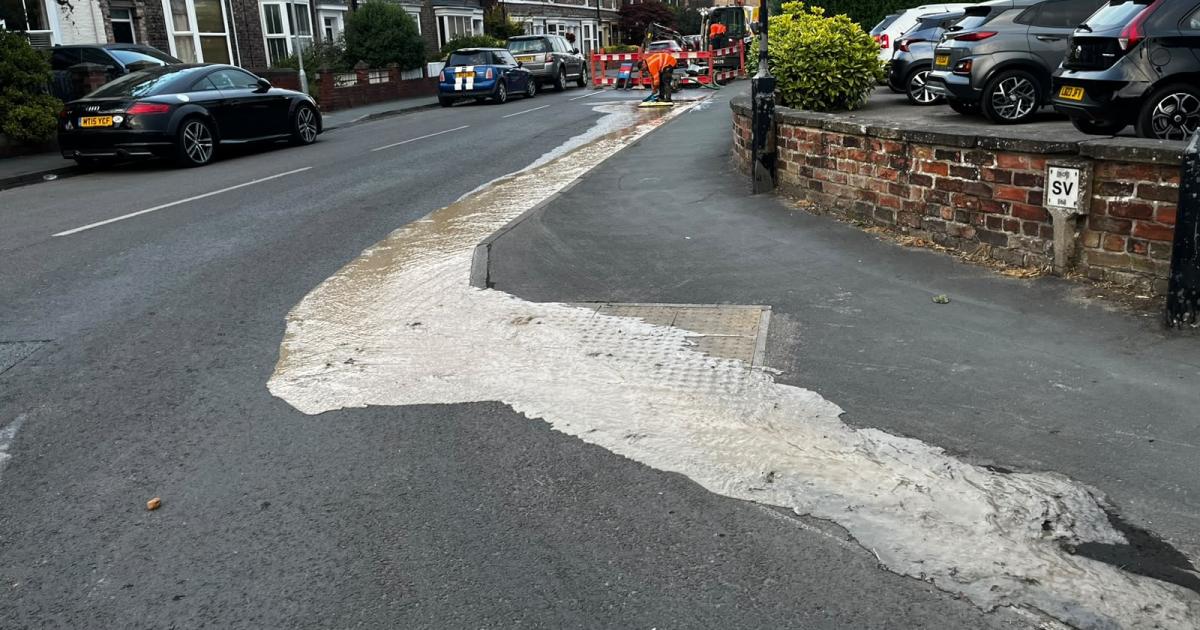
St Nicholas Street in Norton shut due to water leak

St Nicholas Street in Norton is partially closed while Yorkshire Water deal with a leak.

The road is closed between the junction with Welham Road and St Nicholas Street car park.

Cllr Di Keal, posted earlier this week that the water leak was getting worse with water now across the road.

Advertisement

She said: “There is an obvious crack between the white lines in the centre of the road with water bubbly out in addition to the manhole cover – goodness knows what is happening beneath the road AND how many gallons of water are being wasted.

“It is appalling that this has now been leaking for several weeks when the country is facing drought conditions.”

Source link

Advertisement
Continue Reading

NewsBeat

Emily Atack shows off her figure in a blue swimsuit during a couple of days of ‘tapas and tantrums’ with her fiance Alistair Garner and their son Barney

Published

on

Emily Atack and her family got away for a couple of days of 'tapas and tantrums' as they jetted off on holiday in snaps shared to her Instagram on Monday

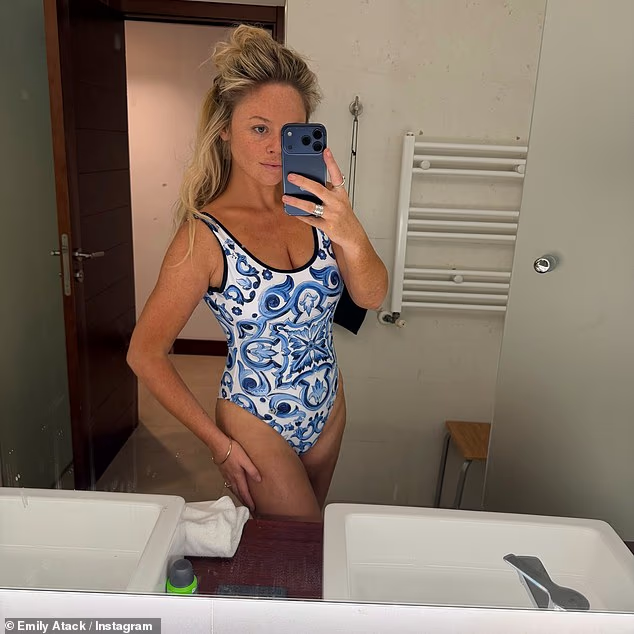
Emily Atack and her family got away for a couple of days of ‘tapas and tantrums’ as they jetted off on holiday in snaps shared to her Instagram on Monday.

The actress, 36, revealed what they got up to on the trip, which included her husband-to-be Alistair Garner and their son Barney.

Emily looked incredible in a patterned blue and white swimsuit which showcased her slimmed down frame as she posed for a mirror selfie.

The Rivals star looked fresh-faced as she went make-up free and wore her blonde hair in a half up, half down style. 

Advertisement

In one sweet snap, Alistair, who was wearing an unbuttoned black shirt and orange trousers, kissed Emily on the cheek as she snapped the photo.

Elsewhere he enjoyed a beer over lunch, while Emily indulged in a glass of white wine, wearing a pretty blue crochet top with naturally wavy hair.

Emily Atack and her family got away for a couple of days of ‘tapas and tantrums’ as they jetted off on holiday in snaps shared to her Instagram on Monday

Advertisement
The actress, 36, revealed what they got up to on the trip, which included her husband-to-be Alistair Garner (pictured) and their son Barney

The actress, 36, revealed what they got up to on the trip, which included her husband-to-be Alistair Garner (pictured) and their son Barney

Alistair enjoyed a beer over lunch

Alistair enjoyed a beer over lunch

The trip comes as it was reported Inbetweeners producers are desperate to sign Emily onto the reboot. 

A new Inbetweeners movie is reportedly on the horizon – with all four core members of the cast set to return.

Advertisement

The show became an instant classic when it aired for three seasons between 2008 and 2010, with two film spinoffs made as well.

While there have been whispers in the past about a reboot, The Sun has now claimed that the four main actors, namely Simon Bird, Joe Thomas, James Buckley and Blake Harrison have all signed on the dotted line to star in a third movie for Netflix.

However, the newspaper also said that streaming bosses aren’t satisfied with just the main men returning – they also want to see Emily reprise her role as Charlotte ‘Big Jugs’ Hinchcliffe.

The move comes as a surprise after Emily was axed from the Inbetweeners reunion five years ago following a ‘past fling’ with James. 

Advertisement

A source told the publication: ‘The creators of the show have written the script and are ready to roll – but Emily is one of the missing pieces in the project they’re keen to get in place.

‘Fans will already be delighted that the four main leads are returning as there was concern that a reboot might see new, younger actors cast in the roles of the lads, who were all supposed to be teenagers in the show.

Emily indulged in a glass of white wine, wearing a pretty blue crochet top with naturally wavy hair

Emily indulged in a glass of white wine, wearing a pretty blue crochet top with naturally wavy hair

Emily joked it had been a couple of days of 'tapas and tantrums' with their toddler

Emily joked it had been a couple of days of ‘tapas and tantrums’ with their toddler

Advertisement
Emily looked sun-kissed in a pretty white dress

Emily looked sun-kissed in a pretty white dress

‘But it’s fair to say getting Emily back would be the cherry on the Inbetweeners cake.’

The Sun added that all four of the main actors were ‘thrilled’ to be asked back, but noted that things would be a bit harder for Emily to commit to a reboot movie considering everything she’s got going on at the moment.

In 2019, Emily was reportedly axed from the Inbetweeners reunion after James told producers ‘it’s her or me’ following a past fling they had when they were both single.

Advertisement

Reports suggested at the time that James was afraid his wife, Clair Meek, would find out about the brief relationship they had during their days in the show during 2008 to 2010.

As well as starring in Disney series Rivals, Emily is in the process of making a new programme for the BBC called Reputation.

She’s also waiting to find out whether or not ITV will commission a second series of Nobody’s Fool – the game show she hosts with Rivals castmate Danny Dyer.

If filming on the Inbetweeners kicks off soon, the results could air as early as 2027, the source added.

Advertisement

Emily has been asked about a potential Inbetweeners return on numerous occasions in the past, telling Capital FM recently: ‘I don’t know. We’d all be quite a lot older now.

‘What was quite funny was when we filmed the series I was only 17, I’d just left school, but the boys were well into… I think they were in their late twenties, early thirties.’

It comes after last month bride-to-be Emily joked that she’d had ‘enough rosé to last a lifetime’ as she posed in a bikini and a veil in fun-filled snaps from her Cannes hen weekend.

The mother-of-one looked incredible in a black two-piece as she posed in front of a mirror before topping up her tan in the sunshine.

Advertisement
Streaming bosses aren't satisfied with just the main men returning - they also want to see Emily, 36, reprise her role as Charlotte 'Big Jugs' Hinchcliffe

Streaming bosses aren’t satisfied with just the main men returning – they also want to see Emily, 36, reprise her role as Charlotte ‘Big Jugs’ Hinchcliffe

Joe Thomas, Simon Bird, James Buckley and Blake Harrison have all signed on the dotted line to star in a third movie for Netflix

Joe Thomas, Simon Bird, James Buckley and Blake Harrison have all signed on the dotted line to star in a third movie for Netflix

She also showed off her golden glow in a white bikini and cover up by Agent Provocateur while living it up with her friends ahead of her wedding to Alistair in Spain in September.

The Rivals star had a very stylish wardrobe in tow, enjoying walks in a golden satin co-ord with a novelty veil on her head. 

Advertisement

And her group of friends tucked into countless bottles of Lady A rosé and enjoyed an incredible spread of food.

She wrote: ‘The most insanely perfect few days. Pure joy from start to finish and enough @drinkladya to last us a lifetime.

‘I thoroughly recommend having a hen do even if you aren’t getting married btw. It’s the most fun you’ll ever have losing all of your belongings.’

Emily had about 20 friends with her on her hen, with the group all featuring in photos together.  

Advertisement

A few days before, Emily shared another batch of photos and posed in her sparkly rainbow sequinned dress and veil. 

Emily got engaged to scientist Alistair in July 2025, after they welcomed their son Barney the previous year. 

Source link

Advertisement
Continue Reading

NewsBeat

Chris Evans engulfed in plastic surgery speculation after unrecognizable appearance in new Avengers trailer: ‘That’s a different person’

Published

on

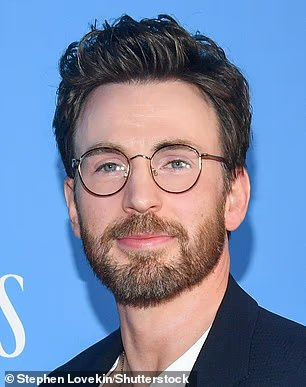
Chris Evans has been engulfed in plastic surgery speculation after his 'unrecognizable' appearance in the new Avengers trailer. Pictured: June 2025

Advertisement

Chris Evans has been engulfed in plastic surgery speculation after his ‘unrecognizable’ appearance in the new Avengers trailer.

The 45-year-old is reprising his role as Steve Rogers – alias Captain America – in the latest movie installment Avengers: Doomsday.

But following the release of a new trailer for the film, fans were distracted after Evans made a split-second appearance on screens.

The actor was sporting a bristling dark beard and longer hair with some fans claiming he also had a ‘puffier face’ and ‘different nose.’

Advertisement

Many film buffs rushed to X (formerly Twitter) to share their shock at his seemingly different appearance.

‘No like actually what did he do to his face?’ one wrote, alongside a comparison image of Evans in previous years.

‘Like that’s a different person. That’s your uncle who “kinda looks like Chris Evans if you squint,”‘ someone else shared. 

‘Is this Chris Evans’ glow down era?’ another scathingly added, as others suggested he may have undergone Botox and fillers.

Advertisement
Chris Evans has been engulfed in plastic surgery speculation after his 'unrecognizable' appearance in the new Avengers trailer. Pictured: In new trailer

Chris Evans has been engulfed in plastic surgery speculation after his ‘unrecognizable’ appearance in the new Avengers trailer. Pictured: June 2025 (left) and in new trailer (right)

Dozens of other fans rushed to Evans’ defense by insisting it could likely be the lighting or part of the film’s plot.

Others said any changes may simply be due to ‘aging,’ but one social media user hit back: ‘No it’s not “age,” he literally did something to his face.’ 

Advertisement

The Daily Mail has now spoken to a plastic surgeon to weigh in on the rumored changes.

Dr Rozbeh Torabi, a double board-certified plastic surgeon based in Arizona, said that many of the apparent changes are likely due to the ‘normal aging process.’ 

The expert, who has not treated the star but examined photos of Evans, speculated that he ‘might have some Botox’ but ‘definitely no facelift or rhinoplasty.’

Instead, the expert praised Evans for likely having a good skincare routine. 

Advertisement

Asked about what his skincare secrets could be, Dr Torabi shared it is likely down to ‘daily exfoliation, vitamin C and retinol.’

‘Nowadays different peptide skin care along with sunscreen can give you that glow,’ he added. 

Evans played Rogers in the Marvel Cinematic Universe (MCU) from 2011's Captain America: The First Avenger (pictured)

Evans played Rogers in the Marvel Cinematic Universe (MCU) from 2011’s Captain America: The First Avenger (pictured)

The Daily Mail has reached out to Evans’ representatives for comment.

Advertisement

Evans played Rogers in the Marvel Cinematic Universe from 2011’s Captain America: The First Avenger until Avengers: Endgame in 2019.

The 2019 blockbuster ended after the defeat of Thanos (Josh Brolin) where Rogers returns the Infinity Stones to their original timeline, and elects to live in the past with his one true love, Peggy Carter (Hayley Atwell). 

Avengers: Doomsday is scheduled to come out in theaters on December 18, 2026.

Advertisement

Advertisement

Source link

Continue Reading

Trending

Copyright © 2025