When one of the world’s worst ever energy crises began in the Strait of Hormuz in February, few believed that their internet access – rather than their gas bill – would be the worst-affected aspect of daily life.
But lurking many thousands of metres beneath the oil ships being attacked by the Iranian navy lie a series of undersea cables that play a vital role in the global economy, helping to power our internet and keep the world connected.
Earlier this month, Tehran floated plans to impose tariffs on Strait of Hormuz submarine cables, warning that they were a vulnerable chokepoint for the region’s digital economy.
The Middle East is not the only region facing these concerns. In April, three Russian submarines conducted a covert operation over cables in waters north of the UK, although none were damaged. On Friday, the UK announced it is introducing stringent new laws to punish any saboteurs who deliberately damage undersea internet cables with a possible prison sentence.
Advertisement
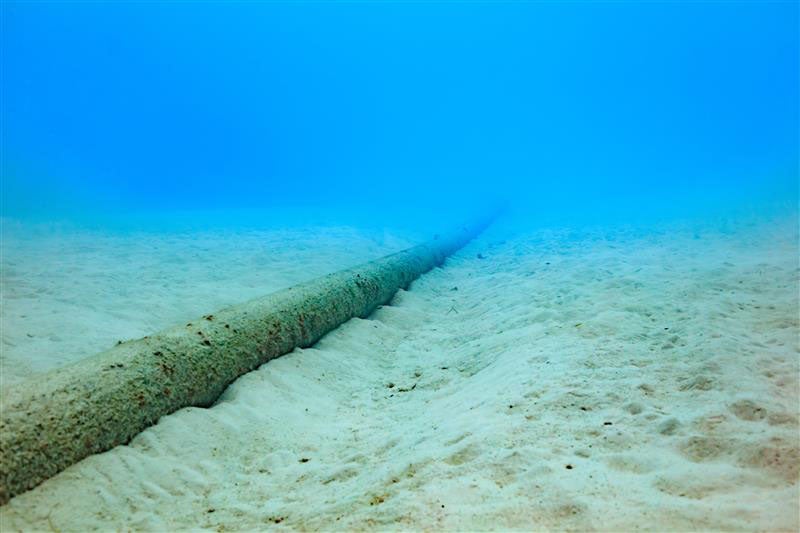
Undersea internet cables carry the vast majority of global internet traffic (Getty/iStock)
China has also been accused by Taiwan of several attacks on undersea cables in the region. For the island, which relies on just 24 cables, this can pose a significant national security risk.
Undersea cables carry more than 99 per cent of all international digital data traffic, acting as an invisible backbone of the internet and facilitating emails, banking transactions, messaging and more.
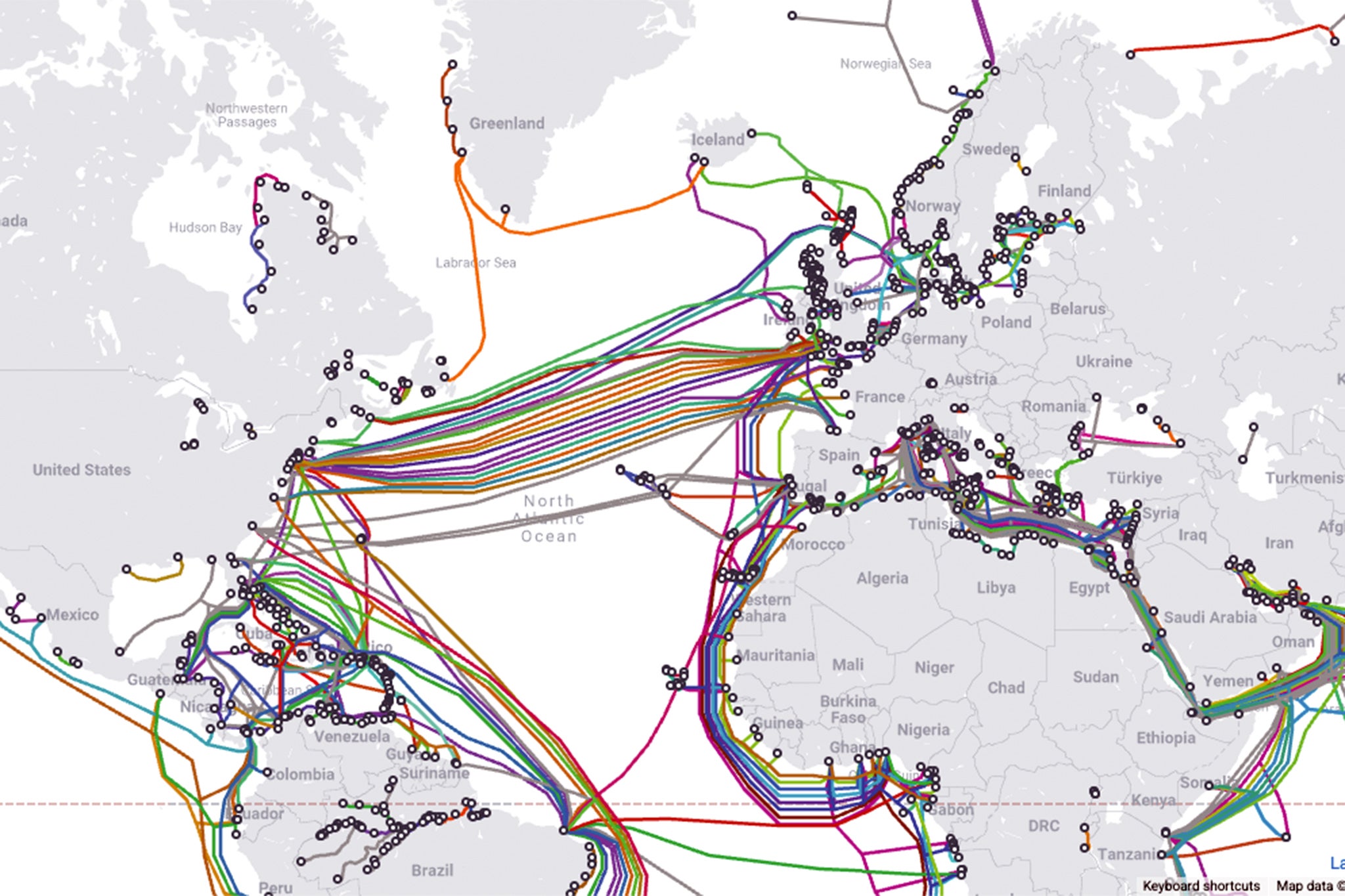
But the so-called global network of undersea cables is more an assortment of “narrow corridors” through which the internet flows – including through the Strait of Hormuz and the Red Sea.
The roughly 600 submarine cables are primarily owned and operated by some of the world’s largest private telecommunications companies, including Google, Meta, Microsoft and Amazon, and other consortia. Modern ones use fibre-optic technology, with the cable delivering the information no wider than a human hair, sheathed in several layers of insulation and protection.
Data analysis company TeleGeography believes there are more than 1.5 million kilometres of submarine cables globally, reaching up to 20,000km in length.
Advertisement
They are installed by huge, specialised cable-laying ships, which unspool the cables, burying them under the seabed in shallow waters and laying them on the floor in deep waters. This is only done after the topography of the ocean floor on the route in question has been carefully mapped.
Submarine cables are laid by large specialised ships (Social media)
“Everyone knows where they are,” explains Tony O’Sullivan, CEO of global network provider RETN, which operates between Europe and Asia.
“The Red Sea, the Gulf of Oman, parts of the East China Sea, and the Strait of Dover are good examples. Given the volume of traffic that runs along these routes, if they do get affected, it would affect not [just] the edge of the internet backbone but a major conduit.”
Serious damage to the cables can cause significant problems for consumers, particularly businesses. Although the belief that cables break and the internet goes down at once is not strictly true – traffic will typically find another route – the speed of the services can degrade sharply.
A heavy load on the alternative cable routes means they become unstable, leading to unprocessed payments, feeds that don’t update, and messages that take longer to send.
Advertisement
Vital services such as healthcare and banking may also suffer under an increasing load, potentially causing chaos for public services.
A global map of undersea cable routes shows how densely populated they are in certain routes (TeleGeography)
The Iran crisis has highlighted a wider problem in how the internet is run, Mr O’Sullivan says, with the routes too vulnerable to hostile actors seeking to wreak digital chaos.
“If a malicious actor should wish to try and take out maybe one fifth to one quarter of it, certainly a particular territory, and then you get an accident affecting another quarter of them, of course this is when things become really problematic.”
The greatest threat in the Middle East is not the cables running through the Strait of Hormuz; rather it is the possibility of the Iranian-aligned Houthis launching attacks on undersea cables in the Red Sea.
“If we think about the Red Sea, [this is] where all of the major data cables, which connect Europe to Asia by subsea, pass through,” Mr O’Sullivan explains. “The Iranians have been friends with the Houthi rebels in Yemen, and that’s where they could potentially inflict a lot more damage.”
Advertisement
The internal makeup of fibre-optic undersea internet cables (Getty/iStock)
In 2024, four crucial Red Sea data cables were cut, affecting 25 per cent of data traffic flowing between Asia and Europe, when a Belize-flagged commercial ship dropped its anchor following a ballistic missile attack by Houthi militants.
The Rubymar, loaded with 41,000 tons of fertiliser, was evacuated by its crew after the attack before drifting for nearly two weeks with its anchor down, through an area densely populated with the vital cables.
Although it was not a direct attack by the Houthis on the cables, it was a clear demonstration of how vulnerable cables can be – not only to direct attacks by hostile actors but to accidental damage.
“This is the thing to remember,” Mr O’Sullivan adds. “There are lots of cable cuts every single year. These happen all the time, the vast majority related to either fishing nets or anchor drag.
“It’s very, very easy to damage a subsea cable accidentally – the Iranian concern is mainly in how they’ve actively threatened the cables rather than it just being an assumed thing.”
Advertisement
A new path for the internet?
Efforts to prevent damage to undersea cables are unlikely to ever build comprehensive resilience. Instead, experts say, there is a need for a combination of sea, land and space routes.
In 2024, months after the Red Sea incident, Nato funded a new project to make the internet less vulnerable to disruption due to undersea cables, by rerouting information into space through satellites.
Undersea cables are regularly cut by accident (UK Government)
The project aimed to “address the urgent need for a more resilient internet infrastructure worldwide”, Dr Eyup Turmus, who was overseeing the programme, said at the time.
“The situation in the Persian Gulf also makes clear that adding more and more cables along the same corridors doesn’t help to build resilience,” Mr O’Sullivan said.
Advertisement
“The industry needs a real mix of submarine and terrestrial routes, diversified across geopolitical regions. We need to choose different routes, not a different cable in the same corridor.”
But experts agree that satellite systems are not a feasible long-term replacement, as they cannot handle the same volume of traffic and are more expensive.
“It’s not as though you could just switch to satellite. That’s not an alternative,” said Alan Mauldin, research director at telecom research firm TeleGeography, noting that satellites rely on connections to land-based networks and are better suited for things in motion, like airplanes and ships.
Low-Earth-orbit networks such as Starlink are “a boutique solution, which is not scalable to millions of users, at this time”, Kotkin added.
KINSHASA, Congo (AP) — Congolese authorities have reported one of the highest daily increases in Ebola cases in a month-old outbreak as the virus spreads quickly in a remote region whose shifting population challenges efforts to find those exposed.
Congo’s Ministry of Health on Sunday said 72 new cases were reported in a 24-hour period, bringing the total number of confirmed cases to 782. Those include 181 confirmed deaths, with 29 new ones.
“One month on, the Ebola disease outbreak is outpacing the response effort,” Kate White, emergency medical coordinator for Doctors Without Borders in Congo, said Monday. “No one knows the true scale or exactly where the disease is spreading in Congo.”
The medical charity said treatment centers in the epicenter of the outbreak are overwhelmed, many patients arrive in advanced stages of illness and most were not identified as contacts of infected people before seeking care.
Advertisement
Congo’s health ministry said that while the numbers show the outbreak is spreading rapidly, it also reflects more active surveillance. “Community members are reporting suspected cases, and response teams are investigating them,” it said on X.
The number of cases in what could become history’s worst Ebola outbreak is believed to be higher because the outbreak was confirmed on May 15, weeks after it is suspected to have begun.
The outbreak is caused by the rare Bundibugyo virus, which was not tested for in the early days. The more common Zaire virus, which now has a vaccine, was responsible for most of Congo’s past 16 outbreaks of the disease.
The outbreak is concentrated in Congo’s eastern province of Ituri, which accounts for more than 90% of the cases. Cases have also been recorded in the North Kivu and South Kivu provinces and have spread across the border to Uganda.
Advertisement
Congo said the contact tracing coverage rate is 56%, a sharp decrease from last week, as authorities hurry to find people who may have been exposed.
There was no immediate explanation for the drop. Congolese health authorities previously said contact tracing has been hampered by community resistance in some areas and by the rapid expansion of the outbreak into new health zones, increasing the workload for surveillance teams.
Advertisement
Sign up for Morning Wire:
Our flagship newsletter breaks down the biggest headlines of the day.
Advertisement
Nearly a million people have been displaced by years of conflict in Ituri, according to the U.N. humanitarian office, making contact tracing difficult as people flee attacks or move frequently in the vast province with dense forests, poor roads and remote villages that can take days to reach.
Tracing is also difficult among the thousands of miners who regularly move among remote sites in the mineral-rich region.
The health ministry said Sunday 40 people have recovered since the start of the outbreak, and the current fatality rate of the outbreak is 23%.
The World Health Organization said Sunday it is intensifying testing and contact tracing and treatment. Tons of supplies from the WHO have arrived in Congo.
And Africa’s top health body said it is deploying technical expertise and supporting laboratory systems, case finding and community engagement efforts to accelerate the response.
“We remain committed to supporting affected countries until transmission is stopped. We call on partners and donors to urgently mobilize resources to strengthen the response and save lives,” said the head of the Africa Centers for Disease Control and Prevention, Jean Kaseya.
During interviews, Ashwood stressed that he wanted to state for the record that he is not a racist.
15:10, 15 Jun 2026
Advertisement
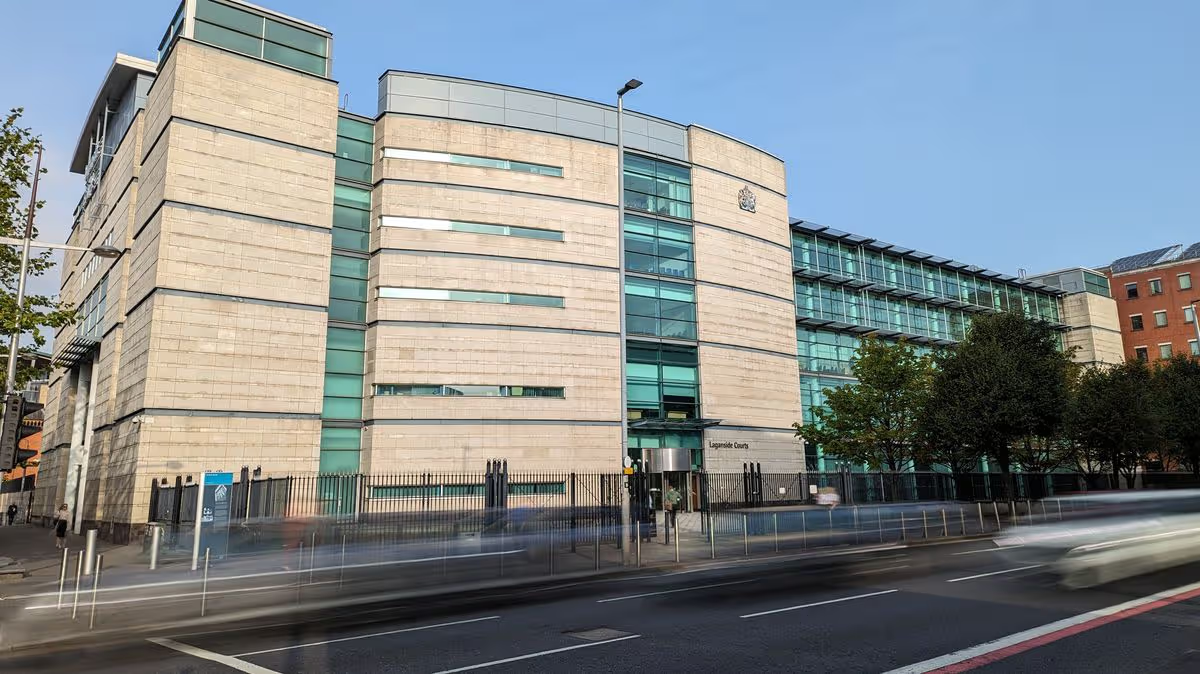
Racist vigilantes tore guttering from a house in south Belfast and tried to smash their way inside, a court heard today.
Up to five men attacked the property on Donegall Avenue, smashing front windows and injuring two victims who struggled to keep them out.
Gary Ashwood, 44, allegedly instigated the bid to break into the house in the early hours of Sunday morning, police said.
The window cleaner, of nearby Tavanagh Street in the city, was remanded in custody on charges of aggravated burglary, two counts of common assault, and criminal damage to a car parked outside.
Advertisement
Belfast Magistrates’ Court heard the attack was launched while one of the victims was at home with friends watching the World Cup.
As some of them left the property, a group of around five men began shouting aggressively at them and started to bang the windows to try to gain entry.
Two of those who had been in the house sustained cuts to their hand and elbow in the struggle before they managed to close the door.
“The males then armed themselves with pieces of plastic guttering which they tore from the wall of the property,” a PSNI officer said.
Advertisement
“They smashed the front window of the property and glass panels on the front door before pushing their way into the hallway.”
When they were shut out again, the group damaged the wing mirror of a Volkswagen Touran belonging to one of the occupants.
“The victims were able to close the door, and the suspects went on to smash the wing mirror of one of the injured parties’ car, which was parked outside the property, a Volkswagen Turan.
Ashwood was detained in a nearby street with gash to his hand and covered in blood, the court heard.
Advertisement
He was angry and rambling, and at one point allegedly stated without prompting: “Foreign b******s”.
Police searched his home, seizing a blood-stained t-shirt and arresting another topless man.
During interviews, Ashwood stressed that he wanted to state for the record that he is not a racist.
But opposing bail, the officer cited ongoing tensions in Belfast and concerns that vulnerable victims could be targeted again.
Advertisement
“The suspect believed to be the defendant was described as the main instigator,” she added.
“This was an unprovoked attack on an ethnic minority in their own home.”
Prosecutors confirmed the charges have been classed as aggravated by racial hostility.
Defence counsel Michael Boyd told the court Ashwood strongly denies any involvement in the attack.
Advertisement
The barrister said his client had been out drinking for most of the day, lives in the area where he was stopped and provided an explanation that he cut his hand falling on glass.
“He does not recall using that expression in relation to foreigners…in sobriety he told police that he is not a racist,” Mr Boyd submitted.
Refusing bail and remanding Ashwood in custody until next month, District Judge Steven Keown ruled that he poses an unmanageable risk.
Mr Keown said: “The police allegations outline that this man was part of a group of racist vigilantes attacking homes.”
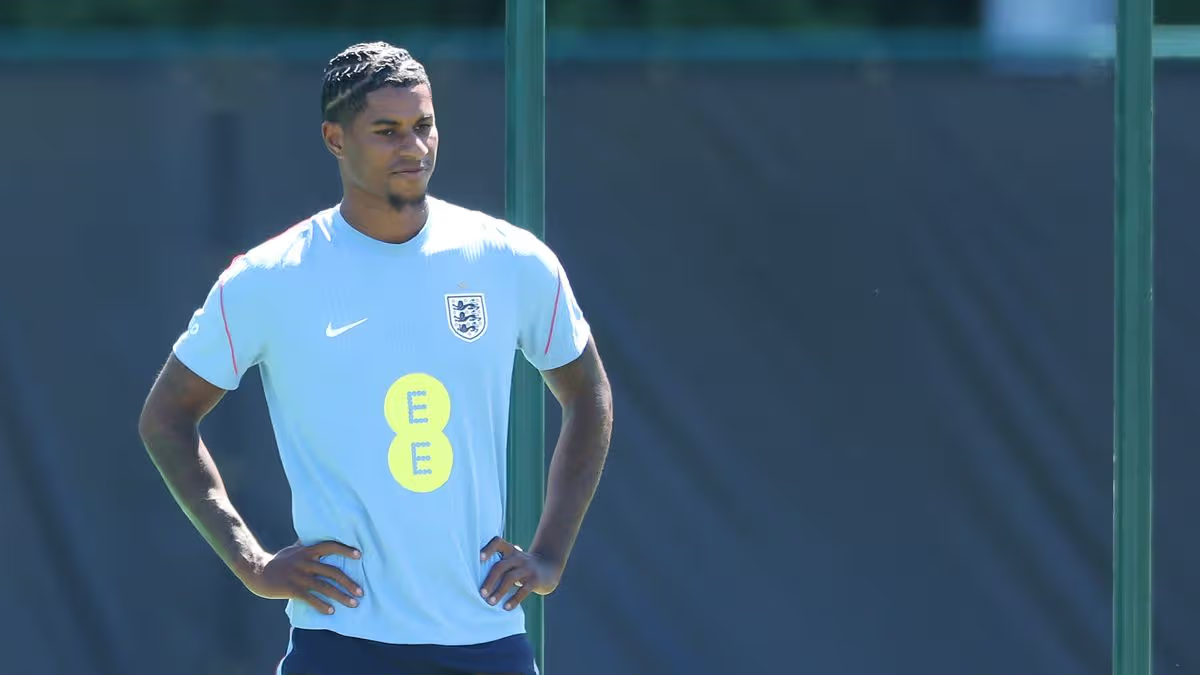
Marcus Rashford’s stance on his future at Manchester United has become clearer following his loan spell at Barcelona
Marcus Rashford is reportedly keen to remain a Barcelona player despite a permanent move from Manchester United seemingly no longer being on the cards. Rashford spent last season on loan with the La Liga giants, having previously expressed a desire to leave Old Trafford.
Advertisement
The England international enjoyed an impressive campaign in Spain, scoring 14 goals and providing 14 assists across his loan spell at the Camp Nou.
Such form has led to the 28-year-old being included in the England squad for this summer’s World Cup, but Rashford now faces an uncertain future ahead of the summer transfer window.
Get MEN Premium now for just £1 HERE – or get involved in our United WhatsApp group by clicking HERE. You can also join our United Facebook page by clicking HERE and don’t miss out on our brilliant selection of newsletters HERE.
Barcelona had the option of signing Rashford on a permanent deal for £26million, but the La Liga giants have decided against activating that clause, leaving the forward’s future up in the air.
Advertisement
There have been suggestions that Barcelona could still try and sign Rashford on another loan, and now there has been a fresh update about the forward’s future.
Spanish publication Marca has claimed that Rashford is fully committed to returning to Barcelona for next season, despite the La Liga club choosing not to sign him on a permanent basis.
The report claims that Rashford is still determined to return to the Camp Nou ahead of next season, and is said to have received confidence from manager Hansi Flick that another move could be arranged.
It has been reported that Rashford believes he can still complete a fresh move to Barcelona, whether that be on another loan or with a new transfer fee agreed with United.
Rashford’s chances of moving to Barcelona were handed a blow after the Spanish club signed Anthony Gordon from Newcastle for around £69million.
Separate reports over the weekend claimed that Rashford returning to United’s first-team squad next season is still an option, with suggestions the forward has explored the possibility with some of the players.
United boss Michael Carrick is also reported to have been in regular contact with Rashford, with the possibility of a return to the squad at Old Trafford not being ruled out.
Carrick has previously spoken about the prospect of Rashford returning to the United first-team squad, where the United manager did not dismiss the idea.
“I just think there’s decisions to be made in time on certain things and obviously Marcus is in that situation,” Carrick said back in April.
“But at this point in time, nothing’s been decided. And it will be, because it has to be at a certain point. But at this stage, there’s nothing to say.”
Advertisement
Upgrade your World Cup TV setup with the Sky Glass ‘designed for football’
This article contains affiliate links, we will receive a commission on any sales we generate from it. Learn more
Sky is knocking 20% off its entire range of Glass TVs to mark the start of the 2026 FIFA World Cup. Until June 17, shoppers can upgrade to the Sky smart TV that’s ‘designed for football’ from £4.50 per month when taken alongside a Sky TV and Netflix package.
Exercise is linked to a longer life. Strength training, for instance, is associated with up to four years greater lifespan, while one paper found that a combination of weight lifting and aerobic exercise resulted in the best longevity gains.
Speaking to HuffPost UK, Dr Harpal Bains, a longevity doctor and medical director at Harpal Clinic, seemed to agree with those findings.
“Exercise is one of the most powerful investments women can make in their future health,” she said.
“The key is consistency: moving regularly, avoiding long periods of inactivity and making sure exercise supports the four pillars of healthy ageing: cardiovascular fitness, strength, flexibility and stability.”
Advertisement
She suggested that, for longevity, women shouldn’t rely on cardio alone.
“Strength training is one of the most important things women can do because muscle supports metabolism, bone density, insulin sensitivity and long-term independence,” added the expert.
We asked Dr Bains to share the best exercise for women to do, by age.
Best exercise for women’s longevity, by age
Advertisement
1) 20-30
Now is the time to build a strong foundation of muscle, the doctor told us.
She advised: “Build your reserve. Prioritise strength training, brisk cardio, running, cycling, swimming, Pilates or yoga and balance-based movements. This is when you build muscle and bone density that protects you later.”
One study found that people whose cardiovascular health dipped between their 20s and 40s were 10 times as likely to experience heart health issues in their 60s.
Advertisement
2) 40-50
“This is where exercise becomes non-negotiable,” Dr Bains advised. “Strength training is key as oestrogen shifts can accelerate muscle and bone loss. Add brisk walking, intervals, cycling or swimming for heart and metabolic health, plus mobility and balance work to maintain joint range and coordination.”
Strength training during the menopause, meanwhile, has been linked to better bone density and improved hormonal and metabolic levels.
Advertisement
3) 60+
“Focus on independence,” advised the doctor. “Walking, swimming, cycling, light weights, resistance bands, Tai Chi, yoga and balance drills are excellent.
“The goal is to preserve muscle, balance and confidence, which lowers frailty and fall risk.”
Balance training – including Tai Chi, walking backwards, dancing, and single-leg training – has been described as a “neglected” way to help your balance and mobility as you age.
Jonathan Meehan from West Belfast appeared in court charged with rape and sexual assault following the incident
14:25, 15 Jun 2026Updated 14:31, 15 Jun 2026
A woman in England called the police after claiming she had seen her friend being sexually assaulted during a video call, a court heard today.
Jonathan Meehan, 40, from West Belfast appeared in Belfast Magistrates Court on Monday, June 15, charged with rape, sexual assault and false imprisonment following an incident that took place on Sunday, June 14.
The court heard Meehan did not know the 24-year-old alleged victim prior to messaging her on social media on June 13. Following an argument with her boyfriend, she had gone to Meehan’s home in the Suffolk Road area as he had said it was somewhere that “she could be safe”.
Advertisement
While at the property, they drank and took drugs together with Meehan allegedly attempting to kiss the victim at some point, but she kept turning her head away. It was alleged that he had put his hands around her throat.
The victim then tried to leave the property but was stopped by Meehan, who grabbed her by the neck before sexually assaulting and raping her.
The court heard the victim had taken videos during the incident that showed her repeatedly saying no and begging to leave the property. She also reportedly video called a friend who lived in England who witnessed Meehan sexually assaulting her and attempting to take her top off; her friend then called the police who contacted the PSNI.
Meehan’s representative told the court that Meehan had not instigated the alleged victim coming to his home and that she had wanted to do it. He said the two had taken alcohol and drugs together at the property and had consented to any activity.
Advertisement
Meehan’s bail was refused by the judge, who said his actions were “predatory” and “premeditated” and that he would be remanded in custody due to the “risk of harm to females and the wider public”. He is due to appear again on Tuesday, July 7.
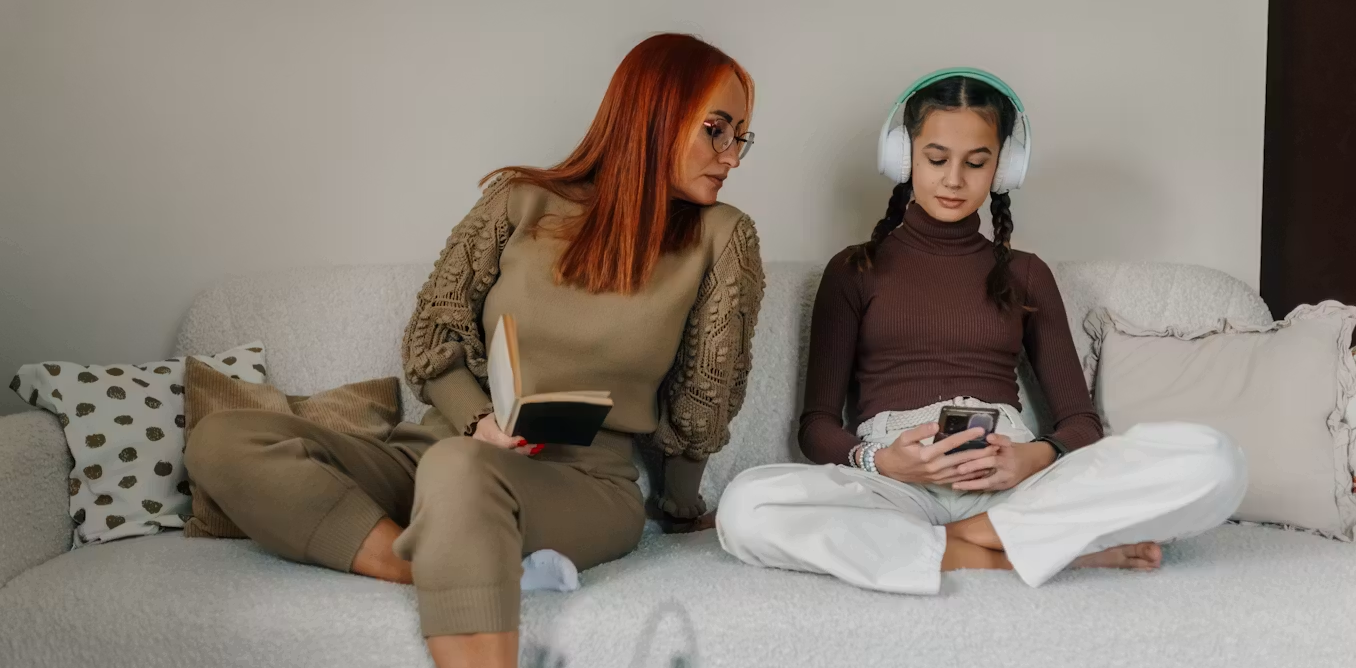
The UK government has announced plans to introduce a ban on social media use for children under the age of 16. This follows a consultation on the impact of social media on young people’s mental health, wellbeing and safety. It represents one of the most significant interventions in children’s online lives since the Online Safety Act.
The announcement has generated strong reactions. Many parents welcome the idea, arguing that social media companies have failed to create safe environments for children. Others question whether a ban will work in practice, or whether it risks oversimplifying a much more complex issue.
Perhaps most significantly, Ian Russell – one of the most influential and respected campaigners in the UK online safety debate – has questioned whether a blanket social media ban for under-16s is the right solution. Russell, whose daughter Molly died after being exposed to harmful online content, is strongly critical of social media companies. But he argues that the focus should be on making platforms safer by design and enforcing stronger regulation, rather than relying on a ban that many young people may simply find ways to circumvent.
Here are some key questions answered for parents trying to make sense of the headlines.
Advertisement
What is actually being announced?
The government’s intention is to prevent children under 16 from accessing mainstream social media platforms. This would be likely to include services such as Instagram, TikTok, Snapchat and X, although the final list has yet to be confirmed. However, it seems messaging platforms such as WhatsApp are not included the scope of the ban.
The proposal would require platforms to verify users’ ages and prevent underage access. This means the success of any ban will depend heavily on age-assurance technology. Such systems range from simple self-declaration to more sophisticated approaches such as facial age estimation or identity verification.
There are also proposals to restrict engagement with strangers on gaming platforms, such as limiting unsolicited contact. Livestreaming and endless scrolling on platforms will be banned for young people.
The prime minister, Keir Starmer, has said that the ban could come into effect in spring 2027.
Advertisement
Teens’ access to livestreaming platforms is likely to become more restricted. SeventyFour/Shutterstock
However, importantly, this is not simply a question of passing a law. The practical challenge is enforcement. Millions of children already have social media accounts, and many young people are highly skilled at navigating online restrictions. Experience from other countries suggests that some children will inevitably find ways around any barriers that are introduced.
The government has acknowledged this reality. The argument being made is not that a ban will be perfect, but that reducing access and raising the barriers to entry will reduce overall exposure to potential harms.
Why is the government doing this?
The proposal reflects growing political concern about children’s online experiences. In recent years there has been increasing attention on issues such as cyberbullying, exposure to harmful content, online exploitation, algorithmic recommendation systems, endless scrolling and excessive screen time.
Advertisement
Many parents will recognise these concerns. Stories about harmful content reaching children and social media-related anxiety regularly attract media attention. Campaign groups raised concerns about the “addictive” design of social media.
At the same time, concerns about children’s mental health have become increasingly linked to debates about smartphones and social media. While researchers continue to argue that the evidence for this is not clear, the perception that social media is contributing to a wider wellbeing crisis has become influential in public and political discussions.
The government’s proposal reflects a broader international trend. Australia has already introduced legislation to restrict social media access for younger users, while policymakers in several other countries are considering similar measures.
Advertisement
Will it work?
This is where the debate becomes more complicated.
Supporters argue that society already accepts age restrictions in many areas. Children cannot legally buy alcohol, cigarettes or gambling products. From this perspective, introducing age limits for social media is a reasonable response to evidence of harm.
Critics, however, point out that social media differs from many other age-restricted activities. Young people use these platforms not only for entertainment but also for communication, social connection, creativity and access to information. For many teenagers, social media is woven into everyday social life.
There are also questions about whether bans address the root causes of concern. Some researchers argue that platform design may be more important than access itself. Engagement-driven business models can affect users of all ages. Restricting younger users’ access may reduce their exposure to these features, but it does not necessarily address the systems that created concern in the first place.
There is also the possibility of unintended consequences. Some young people may simply migrate to less regulated platforms, use VPNs, create false accounts or access services through older friends and family members. Others may become less willing to discuss their online experiences if they fear losing access altogether.
What does this mean for parents?
Perhaps the most important point is that legislation cannot replace parenting, education and support.
Even if a ban is introduced, young people will continue to encounter digital technology, online communities and social platforms throughout their lives. The skills they need to navigate these spaces safely will remain important regardless of what the law says.
Advertisement
The government’s proposal represents a significant shift in online safety policy and reflects genuine public concern about children’s digital lives. Whether it becomes a transformative intervention or another chapter in a long-running debate about technology and childhood remains to be seen.
What is certain is that the challenge facing parents, educators and policymakers extends beyond social media itself. The real question is not simply how to keep children away from online risks, but how to help them develop the skills, confidence and resilience they need to navigate an increasingly digital world.
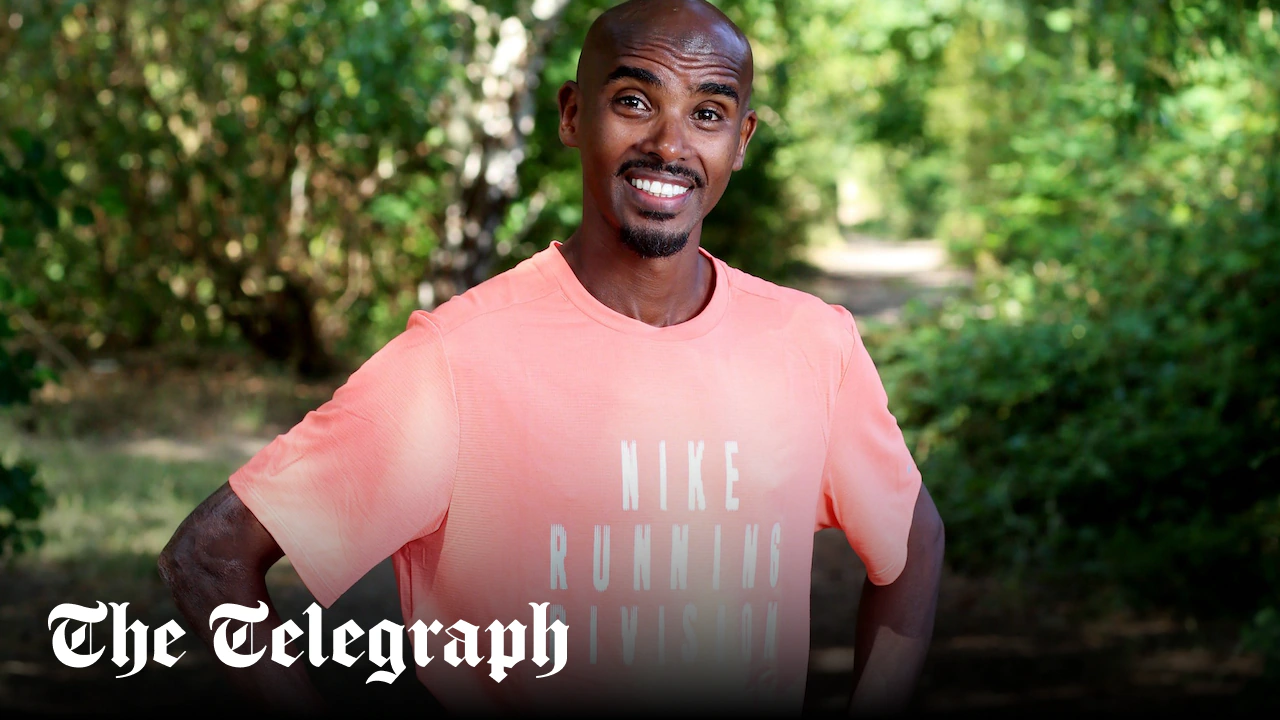
What are the ways you can increase running stamina?
Mave, South East
There are many ways that you can increase running stamina. The one thing that I know is in terms of training, which means more mileage, more distance. So for example, if you want to have more endurance, then you have to do more intervals, like 800m and then increase your mileage weekly.
Do you think ordinary runners will benefit from investing in carbon-plated shoes?
Simon, London
Advertisement
Yes, they will benefit because it means you’re saving your feet [with the carbon-fibre shoes]. It means that you can do more runs. You can do more, faster runs. And you’re not beating up [your feet] as much.
Do you think middle-aged people without any running experience can take up running safely?
Eleni, London
I’ve heard amazing stories where people in midlife pick up running and suddenly they’re enjoying it. But one thing I’ve always said is to have a goal, whatever that goal is.
If you want to compete at 5k, do that. If you want to compete [at] 10k, aim for that. If you want to run a personal best, you always have to have a goal. If you don’t have a goal, it’s hard to motivate yourself.
Advertisement
Outside of running, what is the one hobby that has helped keep you balanced over the years?
Brandon, London
For me, it is just going to the gym. I’ve always gone to the gym and done lifting, as well as core and stuff. And that keeps my body in good nick.
What’s the best piece of advice you’ve ever been given?
Zoe, London
The best piece of advice I got given is to join the running club.
Continuing with Mr Green’s statement, Mr Pitter KC said he checked on landing two where Fellows was residing. He said he spoke to him and Fellows ‘thanked him for being quiet’.
“I found it peculiar that he spoke to me as he normally speaks to me in the day,” he said.
He said as Fellows was a category A prisoner, he was checked hourly. He said he checked on Fellows at midnight and he was lying in his bed, either ‘looking at his TV or looking at the ceiling’.
Advertisement
Mr Green said he checked on Bevan and said he saw him lay on his front. He said Bevan was category B and checks were on roll call. He said Taylor and Newell were checked three or five times a night.
He said Newell was on the CSC (close supervision) unit because he was ‘unsafe to himself and others’. “I know he does not like sex offenders or offenders against children, neither does Fellows,” he said.
“I would say they [Newell and Fellows] are sociable, and friendly together.” Mr Green saoid Fellows was in charge of menus and keeping the area clean.
He added: “I always found him to be polite but he occasionally shouts and rants at others. He is a germaphobe, I recall one occasion when officers went to conduct checks in his cell and did not wear sterile gloves.
Advertisement
“He was unhappy they touched his belongings without wearing sterile gloves. Fellows has a dislike of offenders who committed crimes against children and he does not mix with sex offenders.”
He said Fellows, Taylor and Newell have been seen to spend time together. Mr Green said a new system had been introduced which left prisoners feeling like in a ‘category B jail’.
He said around two weeks before Bevan’s death, he received an application by Fellows to move prisons. “The reason he gave was because Ms Metcalfe was a joke, Ms Metcalfe is the new governor,”| he said.
He said he forwarded this onwards, and was unsure if he received a response.
Gareth Malone, known for his hit BBC series The Choir, will bring his latest live tour Sing-A-Long-A-Gareth: At The Movies to York Grand Opera House on the corner of Clifford Street and Cumberland Street on Saturday, November 7.
The new show invites audiences to sing along to some of the most iconic songs from cinema, offering the full enthusiasm and warmth for which Mr Malone is known.
Recommended reading:
He said: “I’m thrilled to be whisking you away to the movies for a night celebrating the power of song.
Advertisement
“We’ll raise the roof together one more time in a night of Oscars-inspired fun and laughter.
“Don’t miss out on this chance to sing your heart out.”
Sing-A-Long-A-Gareth: At The Movies, led by Gareth Malone, comes to York Grand Opera House on November 7 (Image: Olivia Hemingway)
Backed by his live band, singers, and local choirs, Mr Malone will guide the audience through a playlist of cinematic favourites.
The evening will include classics such as Singin’ in the Rain and Moon River from Breakfast at Tiffany’s, as well as modern hits like City of Stars from La La Land and family favourites from Frozen and Moana.
Advertisement
Gareth said: “We’ll raise the roof together one more time in a night of Oscars inspired fun and laughter.” (Image: Olivia Hemingway)
No singing experience is necessary—just a love of music and movies.
Mr Malone has become a household name through his television work and live tours.
He has achieved three number one records in the UK, including with the Military Wives Choir, and was awarded an OBE in 2012 for services to music.
“This will take it to the next stage though for broader society, having a social media restriction in place for our young people is the right thing to do because of the harm that it causes in so many areas around anxiety, mental health, depression, low self-esteem, eating disorders, many caused by young people getting access to this technology much too early, even before they are 10-years-old,” he said.





-copy.jpeg)
















































You must be logged in to post a comment Login