


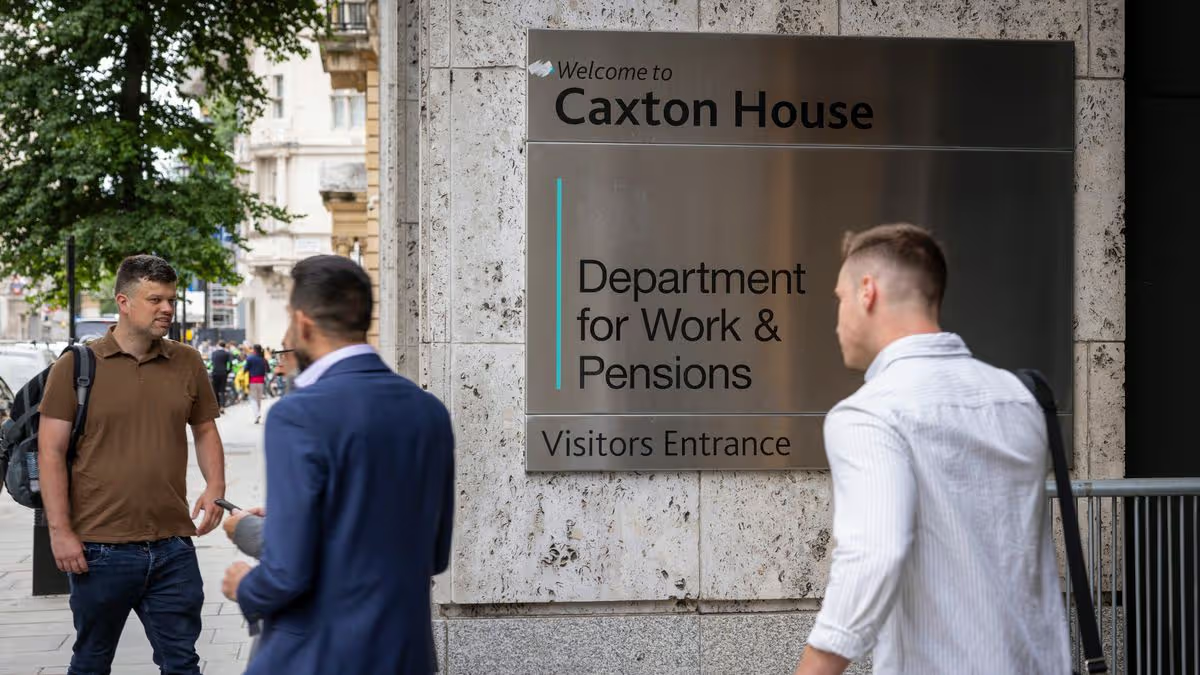
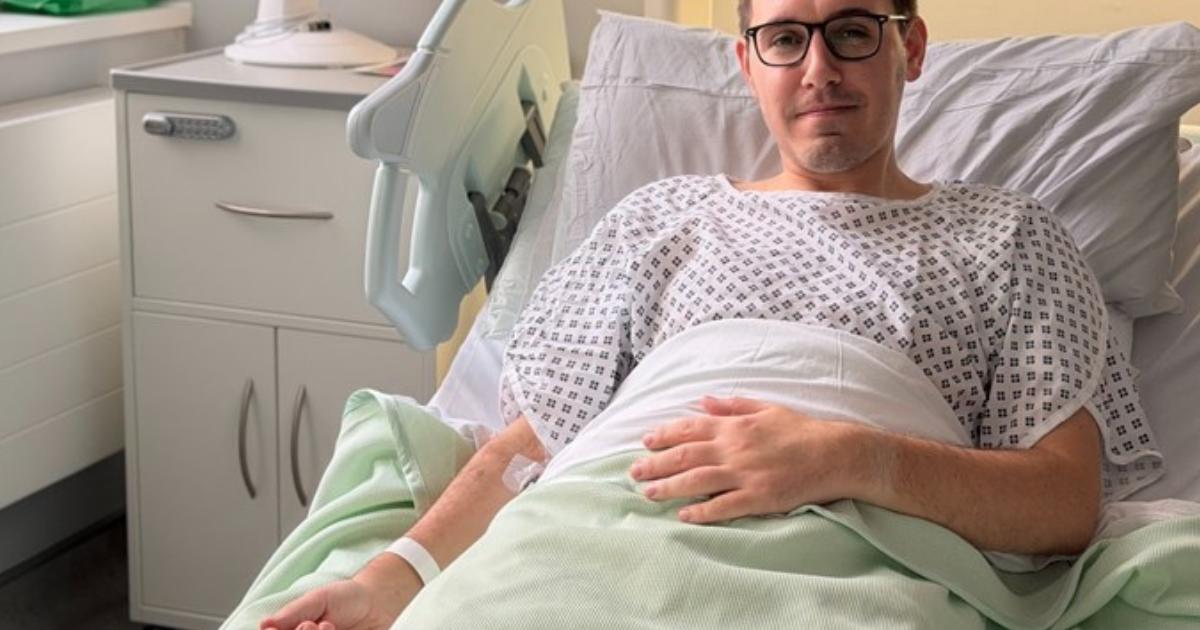
A benefits claimant died less than a week after telling call-handlers he was going to kill himself. Andrew Halliday, 41, had struggled with his mental health but left his job just three months before the tragedy
A benefits claimant died less than a week after telling Government call-handlers he was going to kill himself when his Universal Credit payment fell to £37 for a month. Hard working Andrew Halliday, 41, had struggled with his mental health for many years, an inquest heard. He had been forced to give up his his well paid telecoms job as a result. But in the days before his tragic death on Jan 6, 2025, he kept looking for work and had applied for a job interview.
But he had been telling NHS professionals and DWP workers that a reduction in his January payment to £37.50 left him fearing homelessness. During an inquest at Northumberland Coroners’ Court, Assistant Coroner Paul Dunn recorded a formal conclusion of suicide.
READ MORE: Doctor who ‘didn’t believe in fat jabs’ tried them and lost six stoneREAD MORE: Sir Richard Branson’s wife died of blood clot two weeks after fall, coroner hears
The inquest heard evidence from a report produced by Julie Inkster of the Department for Work and Pensions, along with medical reports, including one from psychiatry doctor – Dr Barbara Salas Revuelta – who had seen Mr Halliday days before his death.
The DWP investigated the circumstances of Mr Halliday’s death, the coroner said, highlighting an extensive report that was entered into evidence in the case. Mr Dunn said the report, produced by Julie Inkster, was “in regard to the fact that the deceased had mentioned that one of the underlying reasons for his mental health deteriorating had been a reduction in his Universal Credit”. Mr. Dunn said the report highlighted how, at the end of December 2024 Mr Halliday had made several attempts to query why his Universal Credit payment for January would be just £37. The inquest heard how he had been told this was due to the fact he had received back pay from a previous employer. However, Mr Halliday had, the inquest heard, received the back pay in October 2024 and used this to pay off debt.
It was taken into account for his January Universal Credit payment because HMRC was notified of this payment between the December assessment period which began on November 30.
Speaking after the hearing, a family member stressed that Andrew had held a well-paid job for his entire adult life and had only started claiming benefits three months before the tragedy.
“The loss of the benefits was the final blow,” said the relative. “He made about £80,00-a-year and had to take a break because of his mental health; he had never claimed benefits before. He took a sick leave and decided to leave the role to have some time to himself.
“The last paycheck in December affected the January benefits.”They said that because he had received that money, they had to cut his January benefit. But that December payment had gone toward his December bills. He rented, but he still had bills to pay.
“He was not sanctioned, it was a reduced payment. He looked for a job, missed no appointments, and had interviews for positions with much lower salaries to ensure he was doing what he was supposed to do.
“He had not been off work for long, it was around three months. The family believes this led to his suicide. He was passed from pillar to post, it was a box ticking exercise. “We spoke on the day he died, he called me and I went around to see him but it was too late. I was with him and called the ambulance; he called me on the Sunday afternoon and he died that Sunday night. He was still conscious when I got there. But they had to switch off his life support.” They added: “We felt there was no point in talking to the DWP. You just get passed around. No one will take any responsibility. There will be no accountability for it, he reached his last pay in December, which is why they made the decision.” The inquest heard that he had called the Universal Credit phone line again to query the January 2025 payment: “He said he had no money remaining for rent or bills and he could not get support from the council and this was leaving him at risk of homelessness.”
In the report, Mr Halliday is quoted as having said to a call handler: “Can I get any support or am I going to end up offing myself?” The call handler then requested an ambulance attend Mr Halliday’s address.
The inquest heard how call handlers follow a six-point plan in cases like Mr Halliday’s, where a safeguarding risk is identified, and that this was followed. The inquest also heard how the DWP investigation found that Mr Halliday’s holiday payment had been treated correctly – and that any challenge to this would likely have been unsuccessful.
The assistant coroner Mr Dunn read from medical reports as to Mr Halliday’s cause of death and the healthcare he had received in the months and days before he died.
In the days before he died, he was visited by the mental health crisis team and community treatment team – but that he was not always able to engage with visits.
Mr Dunn added: “The conclusion that will be recorded is one of suicide. I am satisfied that on the balance of probabilities that at the time that Andrew died he had intentionally taken an overdose.”
In a statement following the conclusion of the inquest, a DWP spokesperson said: “Our condolences are with Mr Halliday’s loved ones, friends, and family.”
The DWP explained that when a claimant’s maximum award is assessed, they are then subject to an “earnings taper” which reduces what they can receive based on any income they may have.
* For confidential support from volunteers, including for suicidal thoughts, Samaritans can be contacted free, on 116 123 or by email to jo@samaritans.org













































You must be logged in to post a comment Login