
Connect with us

NewsBeat

BP puts North Sea business up for sale

Published

on

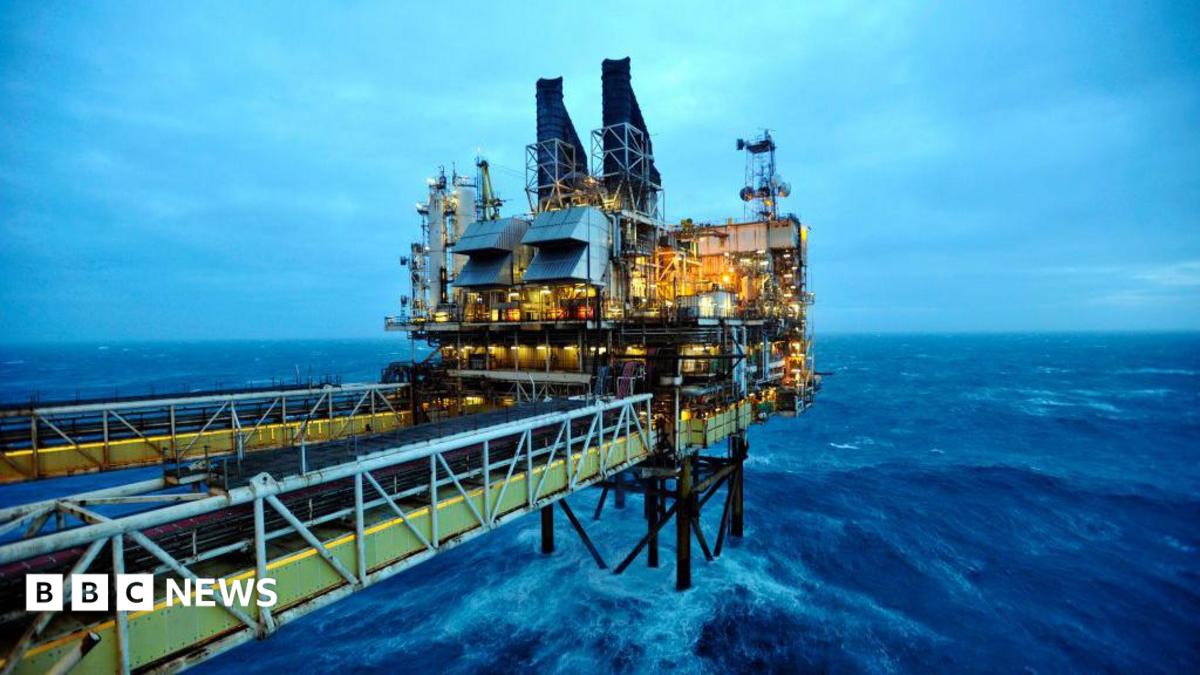
A general view of the BP ETAP (Eastern Trough Area Project) oil platform in the North Sea on February 24, 2014, around 100 miles east of Aberdeen, Scotland.

The North Sea has increasingly become a topic for political debate.

In its 2024 general election manifesto, Labour said it would not issue new licences for drilling, but would honour existing ones.

But in recent months, as the Iran war pushed up global oil prices, calls have grown for more North Sea drilling to be approved, from the Conservatives, Reform UK and from President Trump, while also becoming a divisive issue within the Labour party.

Some Labour MPs have urged the government to take a more liberal approach, warning that the transition away from oil and gas must protect jobs and the cost of energy bills.

Advertisement

But others have backed the government’s existing approach, arguing that expanding renewable energy is key to improving energy security and reducing the impact on climate change.

As energy secretary in Sir Keir Starmer’s government, Ed Miliband was a staunch supporter of the manifesto position. Miliband is now the foreign secretary in Burnham’s government.

Burnham himself has seemingly left the door open to future drilling. He said he told President Trump this week: “There is a resource there. When people are struggling – you can’t ignore that.”

Labour’s deputy leader Lucy Powell previously told the BBC that Burnham would stick to the party’s manifesto commitments, but there would be a “change of emphasis” on North Sea oil and gas.

Advertisement

Oil and gas companies have also criticised the UK’s windfall tax, which they argue means the North Sea has lost some of its appeal in recent years.

Source link

Continue Reading
Click to comment

You must be logged in to post a comment Login

Leave a Reply

NewsBeat

How many hours of sleep can we REALLY survive on – and for how long? Scientists reveal when sleep deprivation becomes deadly…as world leaders say just three hours is enough

Published

on

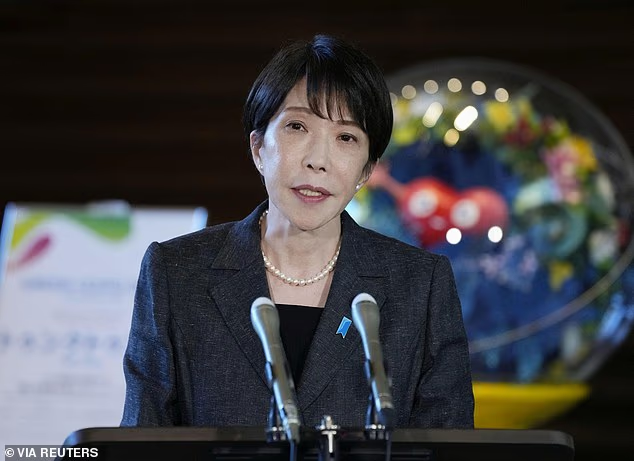
Japan's Prime Minister Sanae Takaichi said she usually sleeps 'zero to three hours' per night

Eight hours is said to be the magic recipe for restful, restorative sleep. But how many of us actually get it? Just one in five of us, according to the latest figures. 

Many – those working early shifts, insomniacs and new parents – regularly function on around half of the recommended amount of sleep and live to tell the tale.

The Prime Minister of Japan is one of them. Sanae Takaichi – the nation’s first female PM – revealed earlier this month that she’s slept a maximum of three hours a night during her nine month spell in power. 

She’s far from the only high-powered figure to adopt a restless routine. 

Advertisement

Former UK Prime Minister Margaret Thatcher was said to have slept four hours, while Winston Churchill managed a maximum of five. 

Studies show that chronic sleep deprivation can fuel a range of potentially deadly conditions including heart disease and dementia.

But how much sleep do we actually need to function and at what point do the late nights and early mornings become dangerous?

Here, experts reveal the alarming impact of too little rest – and exactly when you need to worry.

Advertisement

Japan’s Prime Minister Sanae Takaichi said she usually sleeps ‘zero to three hours’ per night

How many hours of sleep can we get by on?

Sleep serves many vital roles for keeping the brain in optimum health, experts say.

Deep sleep is vital for strengthening memories and storing new information; hence why exam performance is better after a good night’s rest. 

Advertisement

It is also essential for the functioning of the so-called glymphatic system, which clears waste products that are linked to dementia. 

Brain cells also benefit from a boost in energy during sleep, including the receptors responsible for hormones involved in mood like dopamine and serotonin.  

It takes several hours for these processes to be completed, says Dr Tom Chambers, a sleep medicine doctor and chief medical officer at Theta Sleep.

But, he adds, the widely touted ‘sweet spot’ of eight hours per night is ‘not based on science’.

Advertisement

‘Some people do not need it and can function just fine without eight hours of sleep.’

 However anything below six hours is unhealthy.

Former UK Prime Minister Margaret Thatcher got by on roughly four hours per night

Former UK Prime Minister Margaret Thatcher got by on roughly four hours per night

‘Sleep duration and need are a bit like shoe size; everyone is different,’ says Dr Chambers. ‘It’s normal and healthy to be at extreme ends of a sleep spectrum. The extreme lower end being six hours and the extreme higher end being nine hours.’

Advertisement

Sleeping three or four hours, in the short term, is unlikely to cause long-term problems, he says – apart from impairing your ability to function on day-to-day tasks during these periods.

‘We can cope pretty well with short periods of much less sleep when life demands it,’ he says, adding that new parents are a ‘good example’.

Dr Eidn Mahmoudzadeh, a sleep doctor and co-founder of The Sleep Project, adds: ‘Many people go through periods, up to a couple of years even, like this without any long-term ill-effects.’

Experts also recommend a hack to protect against some of the effects of short-term sleep deprivation.

Advertisement

‘A regular, consistent sleep pattern is more protective against cardiovascular diseases and death than having an optimum sleep duration,’ says Dr Chambers. 

In other words, going to bed at the same time every night and getting out of bed at the same time is more important than the number of hours you sleep, according to a 2023 UK study involving 61,000 people.

Years of bad sleep may send you to an early grave

Ms Takaichi could be spared the dangerous effects of her exhausting routine if it lasts for less than a couple of years, experts say.

But anymore than that and she’s putting herself at risk of diabetes, obesity, dementia, heart disease and stroke, as well as psychiatric illness like depression and anxiety.

Advertisement

Dr Chambers points to something called a ‘U-shaped curve’ to explain the phenomenon of health risks linked to sleep deprivation.

‘The curve shows that if you’re sleeping much less than six or seven hours, or much more than nine to ten hours, then there is an increased risk of illness and mortality. Both extremes are risky.’


Some studies suggest that a lifetime of regularly sleeping for less than six hours can increase the risk of dementia by 400 per cent.

According to one research review, getting less than five to six hours of shut-eye a night could lead to a higher risk of metabolic syndrome – a group of conditions including high blood pressure, raised blood sugar, excess belly fat and unhealthy cholesterol. 

Advertisement

Together, these increase your risk of heart disease, type 2 diabetes and stroke.

‘The effects tend to build gradually and over a very long period, so a few bad nights or even a few bad months are neither here nor there really,’ says Dr Mahmoudzadeh.

‘But over years and decades there’s no question that there is a strong association with so many long term health problems and an increased mortality risk, aka, dying younger.

‘And don’t rely on naps to “cancel out’” the effects of ongoing sleep deprivation.’

Advertisement

‘Although broken sleep still counts, solid, consolidated sleep is usually more restorative because the brain has time to move through repeated cycles of light sleep, deep sleep and REM sleep.’

He advises keeping naps under 30 minutes and in the early afternoon to avoid depleting sleep pressure – your natural urge to sleep – at night.

Are some people super sleepers?

Some people carry DNA that makes them both survive and thrive off much less sleep than the majority of the population.

‘Less than one per cent of people are genuine “short sleepers”, as we call them,’ says Dr Mahmoudzadeh.

Advertisement

‘They might sleep only around four to five hours and still wake refreshed, function normally and have no long term issues as a result.’ 

Sadly it’s not a trait you can develop, but due to rare genetic variations.

Dr Mahmoudzadeh adds: ‘The vast majority of people who are sleeping that little amount are in fact sleep deprived and doing themselves harm, whether they feel it or not.’

Dr Chambers is clear that sleeping three or four hours a night is not doctor-recommended. 

Advertisement

‘Sleeping zero to three hours a night is a dangerous thing to do. I would never recommend it at scale for the vast majority of people on the planet.’
Source link

Continue Reading

NewsBeat

Some progressive Democrats cite faith in fighting inequality

Published

on

Some progressive Democrats cite faith in fighting inequality

DETROIT (AP) — The jokes practically wrote themselves as an eclectic group of progressive pastors, imams and a rabbi walked into a room, finding their seats around a table to talk about religion and politics.

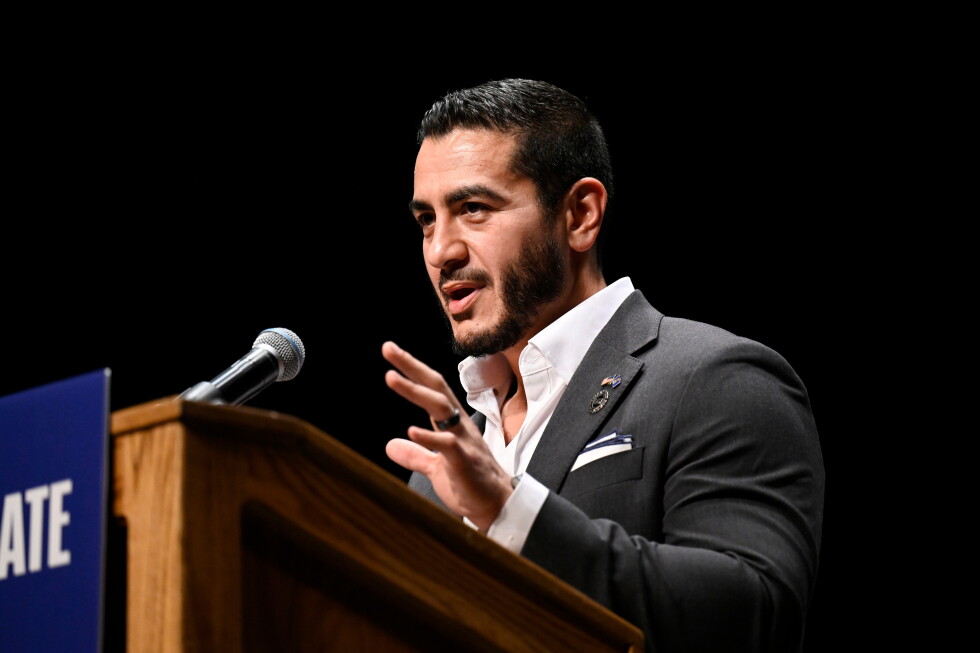
Though there was no shortage of levity, a sense of urgency filled the Detroit meeting room as Abdul El-Sayed, a former gubernatorial candidate who is running as a Democrat for the U.S. Senate in Michigan, began speaking about how his Muslim faith informs his progressive views.

The public health researcher asked the group of faith leaders ahead of Tuesday’s primary, “What does the inspiration of holding yourself accountable to something bigger than you mean for what you do for the people around you?”

El-Sayed added, “If you can’t eat food and I have something to do about it, I better do it.”

Advertisement

Progressive Democratic politicians have won major electoral victories across the country in recent months amid growing frustrations surrounding inequality, affordability and potential threats to job security posed by artificial intelligence. As the economy becomes a flashpoint for the November midterms, many of these candidates and voters who support them are citing religion as a justification for their positions.

“We’re in an era of historical inequality,” El-Sayed told The Associated Press. “Most faith traditions — certainly the Abrahamic faith traditions — put a lot more burden on the wealthy.”

The interfaith roundtable took place days after a high-profile rally for El-Sayed, who has made “Medicare for All” a fixture of his campaign and is running against the more moderate Rep. Haley Stevens. It featured speeches from progressive heavy hitters like Sen. Bernie Sanders of Vermont and Rep. Alexandria Ocasio-Cortez of New York.

Though not a member of the Democratic Socialists of America, El-Sayed is being endorsed by liberal allies, many of them members of the DSA, while being criticized by Republicans and centrist Democrats for being too far left to be electable in a swing state.

Advertisement

If elected in November, he would be the first Muslim senator in U.S. history.

Representatives for Stevens, who is identified in congressional profiles as a Protestant, did not respond to requests for comment.

Progressive ideologies carry different connotations for different generations

Religious support for progressive economic and labor movements is not new, even if it has ebbed and flowed in the U.S. over the centuries. Pope Leo XIV’s recent encyclical was in many ways an ode to “Rerum novarum,” Pope Leo XIII’s seminal 1891 text on labor, wages and unions that helped shape Catholic social teaching.

This embrace of religion isn’t unique to the Democratic Party’s progressive wing. More moderate candidates like James Talarico, the seminarian running for the U.S. Senate in Texas, also highlight their faith. But as left-leaning Democrats and democratic socialists like New York Mayor Zohran Mamdani, who is Muslim, score wins in local and national races, Republicans have repeatedly decried the party’s progressive wing as communists devoid of religion.

Advertisement

“Republicans and conservatives believe in natural rights that flow from a creator. I think communism rejects that. It espouses a very atheistic, centralized sort of secular view of society,” said Douglas Blair, a spokesperson for Heritage Action for America.

Megan Romer, a DSA national co-chair and ordained ruling elder within the Presbyterian Church (USA), conceded socialism is a troubling concept for some people of faith.

“People’s idea of it is, ‘Oh, that’s when you’re not allowed to have a religion, right?’ Which has been true in some socialist projects,” she said.

But experts say that narrative carries less weight among many younger Americans who have no memory of the Cold War and the anti-religious associations it begot.

Advertisement

Theology informs more than just faith

Though there are more Democrats unaffiliated with religion than Republicans, many people of faith do not see progressive ideologies like socialism as contradictory to their beliefs. They cite Black religious activists who were outspoken critics of capitalism, including Martin Luther King Jr., Malcolm X and W.E.B. Du Bois, as models for their thinking about the relationship between religion and politics.

The Rev. Andrew Wilkes, who co-pastors the Double Love Experience Church in New York City, became interested in democratic socialism more than a decade ago after presiding over a funeral for someone whose insurance wouldn’t cover a critical operation. “It was not God that sent him home but an unjustly organized healthcare system and economy,” he said.

“There’s an increasing recognition, I would say, connecting socialism to a sense of a moral compass,” Wilkes said, adding that religion can bring optimism and creativity in a time of pessimism. “There’s a level of world-building that faith can speak to.”

Romer, who joined the DSA in 2018 in part because of Sanders’ unsuccessful presidential run two years earlier, thinks there is a theological component to why Christianity in particular has thrived among conservatives.

Advertisement

“That flavor of Christianity is a very individualistic one. They talk a lot about your personal relationship with God,” she said. “My interpretation of Christianity is one that, I think the early Christians — they were not communists in the modern sense, but they lived in communal situations.”

Attitudes toward capitalism are changing, and religion is playing a role

This faith-driven economic focus is not limited to elections.

Clergy and Laity United for Economic Justice is a nonprofit organization that works with congregations throughout Southern California to support workers’ rights. Earlier this month, it facilitated a visit to Live Oak United Church of Christ in Brea, California, to support efforts to unionize a local grocery store chain.

“We just feel very, very overworked,” Luis Cueva, a Mother’s Market employee, told members of the congregation after their Sunday service as he asked for support.

Advertisement

“Jesus was a socialist,” Cueva said after the meeting, citing his teachings about it being difficult for rich people to go to heaven. “It means a lot to know that the church is willing to help.”

About half of U.S. adults have a positive view of capitalism, according to a poll last year from Gallup, down from 61% in 2010. Democrats have driven part of the shift, but favorable views of capitalism have also declined among independents.

President Donald Trump and other Republicans have cast these attitudes and candidates as being fundamentally at odds with religion.

“These are hard core, godless communists,” Trump said recently during a speech to the Faith & Freedom Coalition. “All communists are godless. They don’t believe in God.”

Advertisement

Faith can be both a political asset and a liability

Although there are myriad points of contention within the Democratic Party, such as support for Israel, El-Sayed considers economic issues a top issue for his campaign.

“I talk about taking money out of politics because it’s the reason life is not affordable,” he said. “People are realizing that politicians on both sides of the aisle really are being paid off by the same people.”

The son of Egyptian immigrants, El-Sayed is aware that his Islamic faith can be weaponized or misunderstood. But since having a religious experience in college that followed a rebellious childhood, he takes seriously the implications of his faith.

“If you put your morals on a mantel, they’re not morals. They’re just, you know, things that you can admire and then you give yourself the permission to step away from them when it’s convenient,” he said.

Advertisement

As the roundtable concluded, leaders from each faith took turns praying. Their heads lifted, but the Rev. Horace Sheffield chimed in with one last request on behalf of El-Sayed.

“I don’t think y’all were specific enough. So I’m gonna say it real simple,” he said. “Lord, let him win.”

___

Associated Press religion coverage receives support through the AP’s collaboration with The Conversation US, with funding from Lilly Endowment Inc. The AP is solely responsible for this content.

Advertisement

Source link

Advertisement
Continue Reading

NewsBeat

Teenage driver narrowly misses people before ‘shocking’ crash into building

Published

on

Cambridgeshire Live

The driver tried to outdrive police and then ran away from his car after crashing it into a building

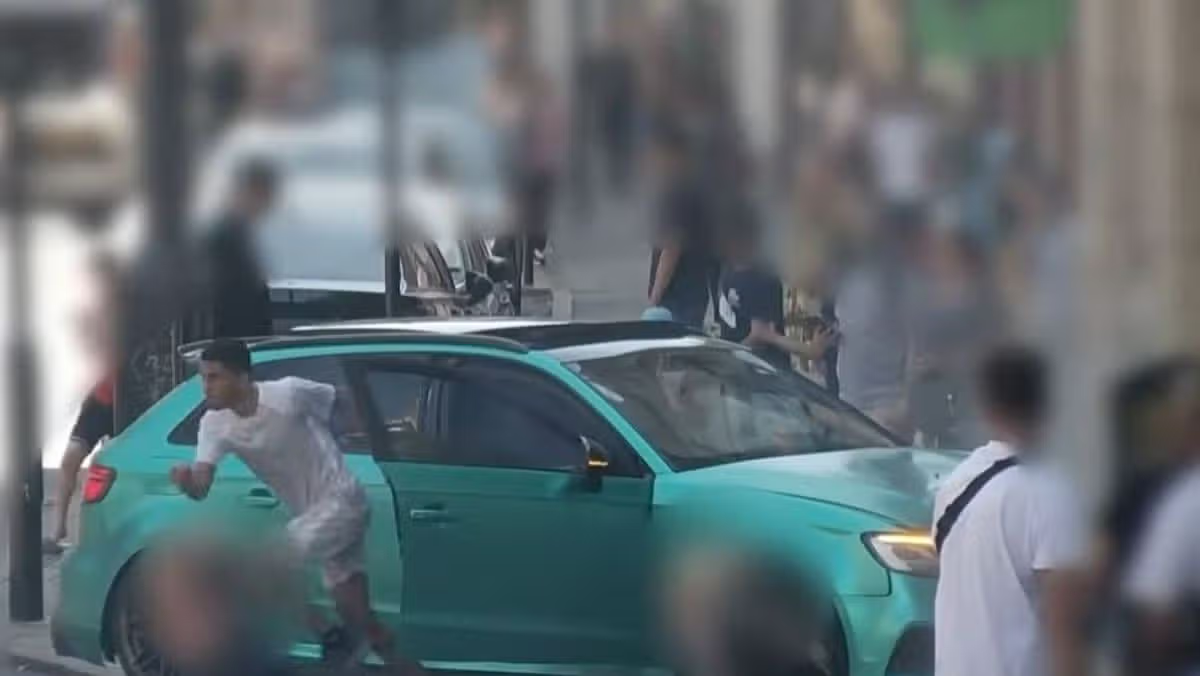
Mohammed Halani runs away from police after crashing into a building in Westgate

A young man narrowly missed pedestrians after crashing into a city centre building. Mohammed Halani, 19, was driving an Audi S3 at around 1pm on May 24 when he failed to stop for police in Lincoln Road, Peterborough.

He sped off and ignored bollards and no entry signs and drove dangerously in a busy area. Officers had to slow down their driving to avoid pedestrians.

Halani continued driving dangerously before losing control of the vehicle. He crashed into a building in Westgate, causing two people to jump out of the way.

Advertisement

The 19-year-old ran from the scene, dashed through the Queensgate shopping centre, and attempted to hide in a restaurant in Westgate. Officers found him sitting at a table in the restaurant and arrested him.

Halani, of Audley Gate, Netherton, admitted to failing to stop, dangerous driving, and driving without insurance. On Tuesday (July 28) at Peterborough Magistrates’ Court, he was sentenced to a year in prison, suspended for two years.

He was also ordered to complete 200 hours of unpaid work and 15 days rehabilitation activity. He has been disqualified from driving for two years.

PC Martyn Chapman said: “This was a shocking incident that could easily have been far worse. Halani narrowly missed multiple pedestrians when he collided with the building on what was a busy Sunday over a bank holiday weekend.

Advertisement

“A matter of milliseconds was the difference between at least two people being seriously injured – or worse. It is remarkable nobody was hurt.”

Source link

Continue Reading

NewsBeat

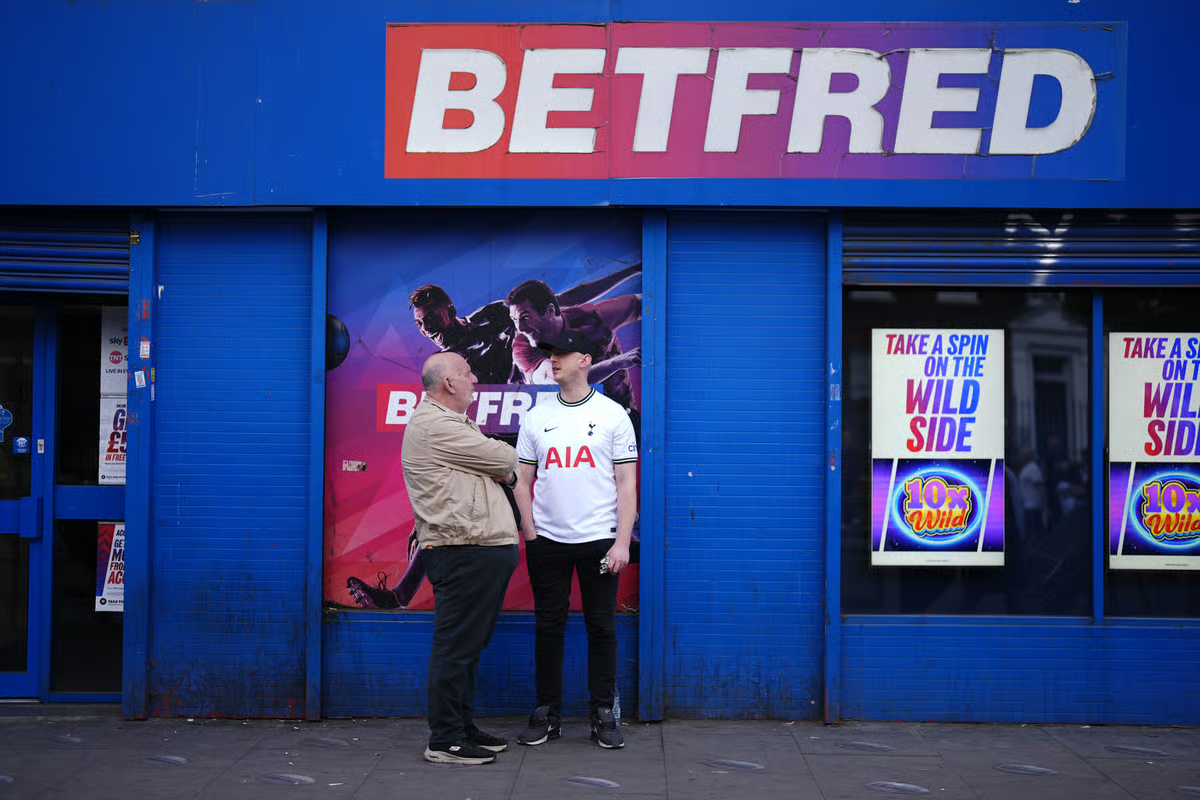
Betfred to shut 132 shops and axe 600 jobs after gambling tax hikes

Published

on

Betfred to shut 132 shops and axe 600 jobs after gambling tax hikes

Jo Whittaker, chief executive of Betfred, said: “We have tried hard to protect all our sites and the colleagues who work in them, but the combined impact of higher employer national insurance contributions, wage inflation, increases in gambling taxes and wider economic uncertainty has left us with no choice.

Source link

Continue Reading

NewsBeat

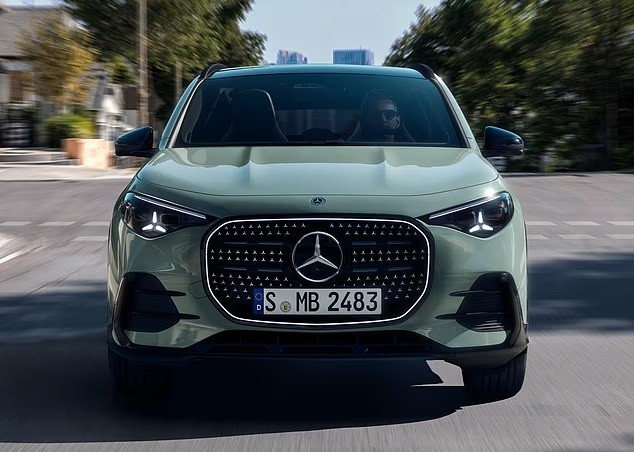
Mercedes GLA is the German brand’s new electric family car with 408 miles of range

Published

on

Mercedes GLA is the German brand's new electric family car with 408 miles of range

Mercedes has revamped its compact SUV and now caters for electric as well as petrol drivers. 

Entering its third generation, the GLA was due an upgrade with the second iteration in much need of an update having been in showrooms since 2019.

A best-seller for the German brand, the GLA was its first foray into the compact luxury segment. The diesel version was the UK’s fastest-selling car in 2025, taking an average of just 23 days to shift, says Autotrader.

The 2026 GLA sits on Mercedes’ new compact ‘MMA’ architecture, has a new interior and infotainment display, will come in electric and hybrid form, and has all of Mercedes’ latest design cues. Essentially, it’s a whole new GLA.

Advertisement

The longest-range all-electric version of the GLA will cover 408 miles on a single charge, which is more than the new all-electric CLA and larger GLB SUV.

In just a few months, the new all-electric version of the GLA will arrive, followed by the hybrid version next year. Here’s what we know for now…

Mercedes has revamped its GLA compact SUV, and now it will cater to electric drivers as well as petrol drivers. The all-new model will arrive in a few months 

Advertisement

Interior and exterior: How the GLA has evolved

The new GLA is much more grown-up looking, with a wider rear track, muscular shoulders and an athletic stance. 

It’s also longer, wider and lower than the Mk2 version preceding it.

The front is dominated by Mercedes’ huge blanked-off grille, usually reserved for its biggest, plushest vehicles. The grille has animated micro-LED lighting and illuminated stars to make the GLA even sportier.

Inside, the GLA is more minimalist in design, with a floating MBUX Superscreen that spans the entire width of the dashboard, totalling almost 40in. 

Advertisement

It comes with AI voice assistance to relieve some of the distracting consequences of trying to operate such an expansive infotainment display. 

There are also circular sporty vents, concave doors and floating-style door panel inserts, as well as a floating sporty centre console and a Burmester 3D surround-sound system.

The new GLA is longer, wider, and lower than the old GLA
The 2026 GLA ia more grown-up looking, with a wider rear track, muscular shoulders, and an athletic stance

The third-generation GLA (left) is now in keeping with Mercedes’ other larger, more luxurious SUVs 

Advertisement
The GLA is more minimalist in design with a floating MBUX Superscreen that spans the entire width of the dashboard, totalling almost 40 inches. It also comes with AI voice assistance.

The GLA is more minimalist in design with a floating MBUX Superscreen that spans the entire width of the dashboard, totalling almost 40 inches. It also comes with AI voice assistance. 

It too boasts a panoramic roof divided into seven segments. Each one can be controlled individually so passengers can decide how much light and visibility they want in their section.

Boot capacity stands at 410 litres, 70 litres more than the outgoing model. 

Fold the rear seats down (which split 40/20/20) and this increases to 1,400 litres. 

Advertisement

There’s also a 107-litre frunk.

Powertrain options

There are three fully electric versions of the new GLA: the GLA 200 with a 58kWh battery, the GLA 250+ with an 85kWh battery, and the GLA 350 4MATIC, which also has a 58kWh battery.

The 350 has the most power, offering 349bhp and a 0-to-62mph time of 5.4 seconds.

Another model will arrive in early 2027 with a 71kWh battery.

Advertisement

The maximum range, available in the 250+ version, is 408 miles on a single charge, which gets you from Birmingham to Glasgow.

The GLA can also charge at speeds of up to 320kW, allowing you to add 168 miles of range in just ten minutes to get you back on the road faster.

At the beginning of 2027, the hybrid GLA will launch and will be available as either a front-wheel-drive or all-wheel-drive car.

It will feature an all-new electrified 1.5-litre turbo engine and a 22kW electric motor. Peak power will hit 187bhp and around 50mpg is expected.

Advertisement

And despite it being the fastest-selling diesel last year, Mercedes won’t be offering one with an oil burner under the bonnet. 

The panoramic roof is divided into seven segments, with each segment able to be controlled individually so passengers can decide how much light and visibility they want.

The panoramic roof is divided into seven segments, with each segment able to be controlled individually so passengers can decide how much light and visibility they want. 

Pricing has yet to be confirmed, but the GLA is expected to cost around £45,000, similar to the new CLA

Pricing has yet to be confirmed, but the GLA is expected to cost around £45,000, similar to the new CLA 

Boot capacity stands at 410 litres, 70 litres more than the outgoing model. But the EV version also gets a 107-litre 'frunk' (pictured)

Boot capacity stands at 410 litres, 70 litres more than the outgoing model. But the EV version also gets a 107-litre ‘frunk’ (pictured)

Advertisement

How much does it cost? 

For the first time, the GLA will be available with four trim levels and a Night Package. 

You’ll be able to opt for AMG Line and AMG Plus if you want a more luxurious and sportier feel to your GLA.

Pricing has yet to be confirmed, but the GLA is expected to cost around £45,000, similar to the new CLA.

Source link

Advertisement
Continue Reading

NewsBeat

Family of six flee ‘apocalyptic’ Suffolk wildfires just days after forest blazes already drove them out of France

Published

on

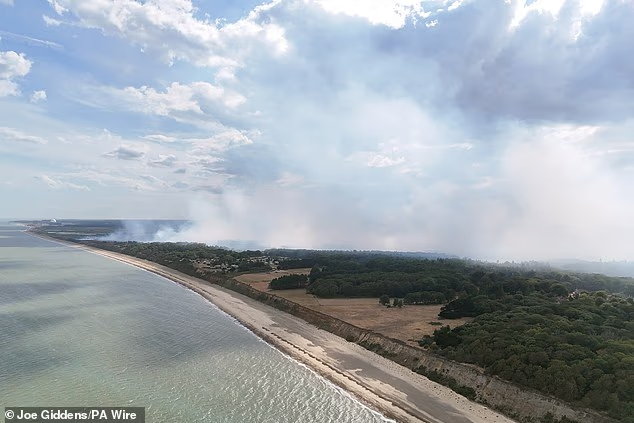
Suffolk Fire and Rescue Service said the blaze at Dunwich Heath, Suffolk covered around 24 acres, but today this had increased to the size of 210 football pitches

A family of six has fled ‘apocalyptic’ wildfires in Suffolk just days after being forced to do the same by forest blazes in France.

Firefighters have been tackling the blaze in Dunwich Heath, near Leiston, since Wednesday evening, with hundreds of holidaymakers and scores of residents evacuated.

The fire, which is now the size of 210 football pitches, is a few miles away from Sizewell B and the construction site for the new Sizewell C – but authorities insist there is no risk of the fire spreading towards the power station.

While the cause is not yet known, the blaze started on an RSPB wetland reserve before spreading on to the coastal heathland. 

Advertisement

Jo Arkle, 42, a renewable energy sector worker whose family from Norfolk had just arrived in Dunwich for a break but were now reloading suitcases into their car, said: ‘It’s time to go.

‘This is the second time we had to evacuate – we had to leave France before we came here. We thought we’d stick it out a little longer and see what happens.’

She and her family were close to Cotignac in France last week, where wildfires have burned across 42,000 hectares. 

She added: ‘It’s quite stressful, definitely. You realise quite quickly there’s nothing you can do about it. The smoke was coming up right across here.’

Advertisement

One of the family’s teenagers said: ‘It’s scary when you go to bed. You don’t know if it’s going to get worse overnight.’ 

Dozens of farmers have joined efforts to slow the progress of the ‘apocalyptic’ fire with many using their tractors to transport water bowsers.

Richard Negus, a hedgelayer, told the Daily Mail: ‘We got contacted across Suffolk through the farm watch network to ask if we had water bowsers to help with the wildfire.’ 

‘So farmers put their combine harvesters down and joined the efforts at Dunwich Heath. Farmers did what they do when we’re asked to bring kit and they all rushed to the fire and the farmers managed to help get it under control.’

Advertisement

Today, another fire has broken out at Middlewick Ranges near Colchester in Essex. Firefighters are currently at the scene battling to bring the blaze under control. 

Your browser does not support iframes.

Advertisement

Suffolk Fire and Rescue Service said the blaze at Dunwich Heath, Suffolk covered around 24 acres, but today this had increased to the size of 210 football pitches

A helicopter drops water on the wildfire. It is understood the fire started on an RSPB wetland reserve with the cause of the 'apocalyptic' blaze not yet known

A helicopter drops water on the wildfire. It is understood the fire started on an RSPB wetland reserve with the cause of the ‘apocalyptic’ blaze not yet known

Drone footage shows the scorched woodland surrounding a caravan park in Suffolk

Drone footage shows the scorched woodland surrounding a caravan park in Suffolk 

Advertisement
Firefighters tackle the blaze at Dunwich Heath. Heroic stories are emerging of how dozens of farmers joined efforts to slow the progress of the fire

Firefighters tackle the blaze at Dunwich Heath. Heroic stories are emerging of how dozens of farmers joined efforts to slow the progress of the fire

Pictured: A tractor joins emergency vehicles to tackle the blaze in Suffolk. Dozens of farmers have joined efforts to slow the progress of the 'apocalyptic' fire

Pictured: A tractor joins emergency vehicles to tackle the blaze in Suffolk. Dozens of farmers have joined efforts to slow the progress of the ‘apocalyptic’ fire

Mr Negus also claimed that one volunteer found ‘remnants of an open fire’: ‘[The open fire] shows people aren’t aware of the consequences of their activity.

‘Our site team has been working alongside the emergency services, surveying the areas the fire has been through – it’s complete devastation.’

Advertisement

Suffolk Fire and Rescue Service said today crews and officers remained at the incident. The service said the fire remained a ‘dynamic incident’ but appeared to be ‘stabilising’ today.

Fire crews from London, Essex and West Yorkshire have joined local firefighters and helicopters  – which were seen scooping up seawater in an effort to bring the wildfires under control.

Ms Arkle said that communication had been better in France, including alerts sent to their phones, adding: ‘There’’s no reception here, no wifi, so that’s why we decided to go. Without power, how do we know unless we get a knock on the door?’

Suffolk Fire and Rescue Service has thanked the ‘firefighters, specialist equipment and resources’ that had been sent to work alongside its crews.

Advertisement

‘We are incredibly grateful for the support they have provided during this challenging incident,’ it said.

‘We would also like to thank the many local businesses, farmers, volunteers, community groups and partner agencies who have stepped forward to help. Whether it’s been donating food and drinks, lending equipment, providing practical support, or helping to look after those affected by the incident, people have gone above and beyond.’

Adam Rowlands, RSPB area manager in Suffolk, said: ‘We know right across the heathland that risk is there at this time of year when the habitat is so dry […] that first spark emerged from the RSPB land and that’s devastating to know.’

He also warned that it could take 25 years for the area around Dunwich Heath to recover.

Advertisement

‘The problem is [the area] will look like a scene of devastation afterwards. All the vegetation will go and the majority of those birds will lose the places where they nest,’ he told BBC News.

Mr Rowlands added: ‘Some of that habitat will take five, 10, 25 years to come back to what it looked like before the fire broke out yesterday afternoon.’

National trust said that ‘Total devastation’ is the most likely outcome of the fire.

Matt Wilson, the charity’s countryside manager for Suffolk, said: ‘The impact on this site in particular is looking to be fairly catastrophic, to be perfectly honest.

Advertisement

A helicopter flies water collected from the sea to drop on the wildfire at Dunwich Heath, near Leiston, close to the Sizewell B. Fire crews warned that the blaze near the nuclear power plant was still a 'dynamic incident'

A helicopter flies water collected from the sea to drop on the wildfire at Dunwich Heath, near Leiston, close to the Sizewell B. Fire crews warned that the blaze near the nuclear power plant was still a ‘dynamic incident’

An update from Suffolk Fire and Rescue Service this morning said that 'crews and officers remained at the incident overnight' and that they 'maintained a watching brief during darkness'

An update from Suffolk Fire and Rescue Service this morning said that ‘crews and officers remained at the incident overnight’ and that they ‘maintained a watching brief during darkness’

Advertisement
The fire in Suffolk is seen from a plane flying over the area yesterday morning

The fire in Suffolk is seen from a plane flying over the area yesterday morning 

‘The fire is estimated to be 150 hectares [371 acres], but the whole of Dunwich Heath owned by the National Trust is just over 100 hectares [247 acres].

‘So we’re looking at total devastation across the National Trust site.’

Meanwhile, residents and holidaymakers in Suffolk have been warned to keep their windows and doors closed due to the risk of heavy smoke and falling ash.

Advertisement

Around 50 people have been evacuated from their homes and a local holiday park to Westleton, whose village hall now serves as a rest centre.

Speaking to local media, Freddie Gulliver, from the Suffolk Joint Emergency Planning Unit, said there is currently no concern of the fire spreading towards Sizewell B.

Mr Gulliver also told journalists that the local community has been ‘absolutely fantastic’ in opening up their homes, adding only a few people will need to stay in the rest centre on Thursday night.

He praised the local people that run the village hall, adding: ‘They’ve been absolutely brilliant at looking after everyone, so I want to stress my thanks and gratitude to everyone involved.’

Advertisement

Mr Gulliver added that the fire service is ‘confident’ it is tackling the blaze, including by filling trenches with water and dropping thousands of litres of seawater from helicopters.

Prime Minister Andy Burnham said the county’s fire service will have ‘all of the support’ they need in tackling the blaze.

Meanwhile, Green Party leader Zack Polanski called for Mr Burnham to host an emergency Cobra meeting to discuss the outbreak of wildfires in Britain, including in Suffolk.

On Thursday afternoon, an EDF spokesperson gave reassurances that the fire was ‘not affecting operations at Sizewell B power station’.

Advertisement

The energy supplier said it was ‘closely monitoring the situation’ and it is understood Sizewell B has an emergency plan in place that covers a range of scenarios including a fire on site.

Pictured: A fire at at Middlewick Ranges near Colchester in Essex. Firefighters are currently at the scene battling to bring the blaze under control

Pictured: A fire at at Middlewick Ranges near Colchester in Essex. Firefighters are currently at the scene battling to bring the blaze under control

Fire crews are seen battling a fire in Romford, east London, yesterday where around 30 acres of grassland were destroyed

Fire crews are seen battling a fire in Romford, east London, yesterday where around 30 acres of grassland were destroyed

Suffolk County Council said Cliff House Holiday Park, containing some 200 caravans, had been completely evacuated as a precaution.

Advertisement

Lisa Gordon, 54, on holiday with her husband and dog in their touring caravan, evacuated from Cliff House Holiday Park on Wednesday night.

Mrs Gordon said: ‘Just looking at the pictures… it’s quite worrying how close it is to the park now.

‘It’s a car, it’s a caravan, and it’s insured but at the end of the day it’s a lot of hassle, isn’t it?

‘They are things that can be replaced. But it’s not the relaxing day we thought we’d be having.’

Advertisement

She said that when she and her husband were told to leave the holiday park, they could see smoke behind the trees.

Mrs Gordon added: ‘It was only as we walked to reception to meet the police that all of a sudden it kind of hit us.

‘So where we were it didn’t seem too bad at all. We weren’t really panicking at all.

‘But as we got to sort of the reception and the entrance, then the smoke hit and we had to drive with the police through quite a lot of smoke.’

Martin Harris, 80, and his wife Sheila Harris, 76, who have visited Dunwich Cliffs Estate holiday park for more than 40 years, said they only had time to pack their medication before leaving their static caravan.

Advertisement

Mrs Harris said they saw a ‘glow’, adding: ‘It went from just being in the distance, and suddenly we were just covered in this black, and it was really scary so we just wanted to get out, really.’

She added: ‘Yesterday, I had a really bad moment because I suddenly thought: ‘I’ve been on (the caravan) site since 1980.’

‘And I thought: “If the caravan goes, then no chance of affording another one”.

‘I want to make the decision when I leave forever. I don’t want it taken out of my hands.’

Advertisement

She added: ‘I’ve never, ever wanted to go home in all the years I’ve been coming, but today I just want to go home.’

Mr Harris said they were lucky to get a room in a bed and breakfast.

He continued: ‘A lot of people, they had to sleep in their cars.

‘The people of Westleton have been fantastic. I don’t know what we’d have done without them.’

Advertisement

The couple plan to go home to Uxbridge in west London after collecting some belongings on Friday afternoon, but said they will return to their caravan in two weeks for another visit.

The fire service posted a video of damage caused by the blaze, with parts of RSPB Minsmere nature reserve, showing blackened trees and scorched ground.

Fires have also been raging in east London – where around 30 acres of grassland were destroyed in a blaze in Romford on Thursday, and a further ten acres were damaged in Rainham.

London Fire Brigade reported a second wildfire had broken out in Rainham in the afternoon, while a grass fire in Hornchurch burned across 15 acres.

Advertisement

The fire is now under control, and its cause is currently under investigation.

The number of wildfire incidents recorded this year already matches the total annual figures seen in 2021, 2023 and 2024 combined.

But the number is below the same point in 2025 when long-lasting drought and heat caused severe fire risk.

Temperatures soared across parts of the UK on Wednesday, reaching into the 30s in some places as Britain baked in its fourth heatwave of a record-breaking summer.

Advertisement

Suffolk has only received 2 per cent of its average monthly rainfall for July so far, according to the Met Office.

The forecaster said on Thursday afternoon other counties have recorded as low as one per cent or zero per cent of average rainfall for July, with Friday being the last day of the month.

Going into the weekend, temperatures will be cooler and closer to average for this time of year.

Source link

Advertisement
Continue Reading

NewsBeat

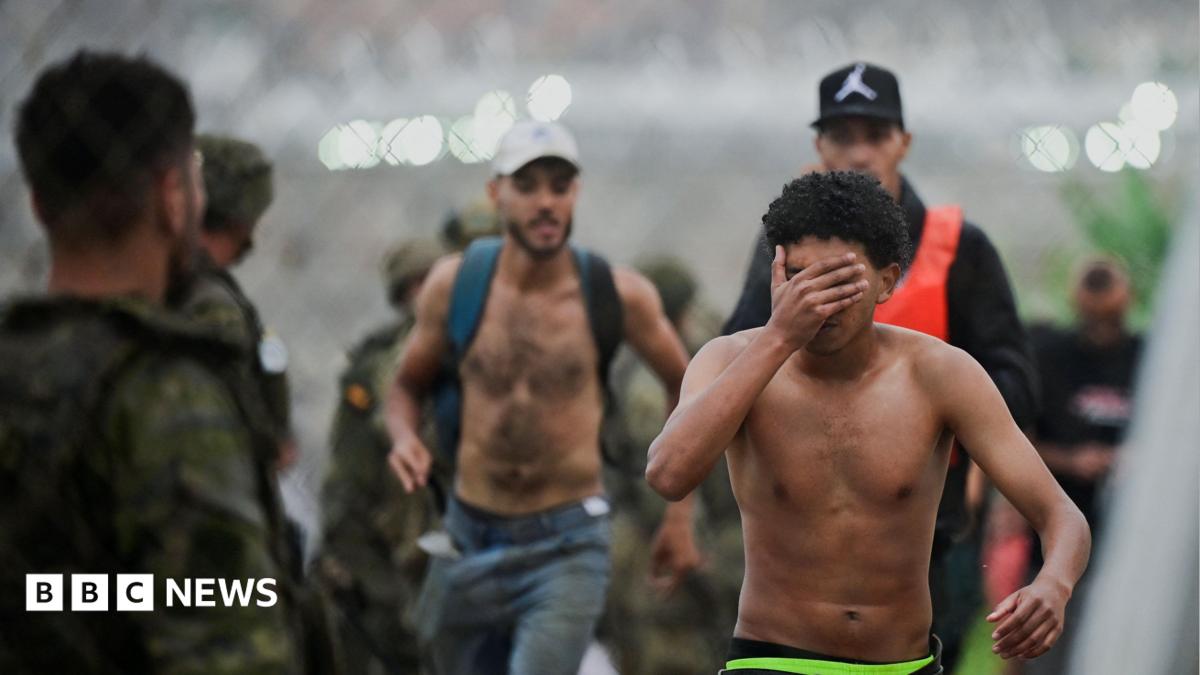
About 49,000 migrants enter Spanish territory of Ceuta, officials say

Published

on

Composite graphic showing the Spanish enclave of Ceuta on the North African coast. The upper panel is a satellite map locating Ceuta between Morocco and Spain, with labels including Benzú, Tarajal and the Península de Almina, and an inset map showing its position between Spain and Morocco. The lower panel shows dozens of migrants in the sea and gathered on rocks near a border fence, illustrating a route around the coastal border. BBC graphic using Getty imagery.

Ceuta, on Morocco’s northern coast, is separated from mainland Spain by the Strait of Gibraltar and has long been a focal point for migrants attempting to reach Europe.

Local officials had appealed to Madrid for help after a recent rise in attempted crossings, but there were chaotic scenes on Thursday as border controls apparently broke down.

Videos and images from Thursday show thousands of people swimming into the city, while local media reported crossings continuing into Friday.

The astonishing estimation by Spanish officials suggests the number of migrants who entered into Ceuta in the last day or so could be more than half of the population of the city – which sits at around 83,600 according to the latest local figures.

Advertisement

Spain has now deployed its armed forces to bolster security in Ceuta and at its sister city of Melilla, where between 300 to 400 crossings were also reported overnight.

Speaking on Friday during a visit to Ceuta, the prime minister condemned the crossings and said it was an attack on Spain’s territorial integrity.

Sánchez added that the government would be looking at reinforcing the border with Morocco.

The prime minister blamed the dangerous events on criminal networks manipulating the Supreme Court’s recent ruling, adding that incorrect information had “spread like wildfire in recent hours”.

Advertisement

He said authorities in Morocco were co-operating with plans to return those who had entered illegally.

Ceuta and Melilla trace their Spanish past to the 15th Century, and they have enjoyed a limited degree of self-government since 1995.

Coveted by Morocco, they have long been a flashpoint in diplomatic relations between the two countries.

They form the European Union’s only land borders with Africa.

Advertisement

Source link

Continue Reading

NewsBeat

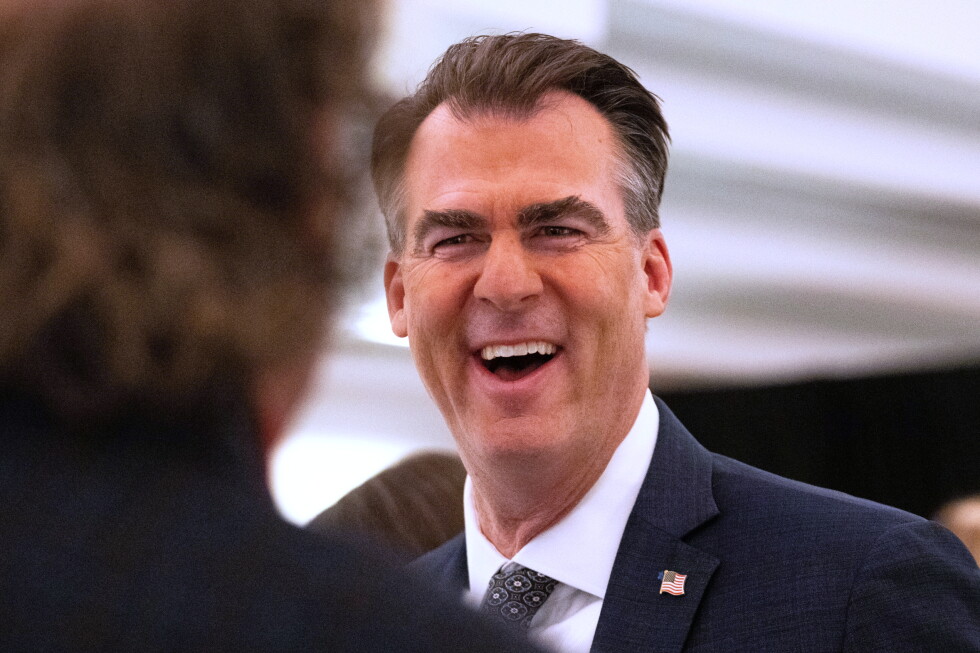
Oklahoma Gov. Kevin Stitt thinks political drama can be toned down

Published

on

Oklahoma Gov. Kevin Stitt thinks political drama can be toned down

OKLAHOMA CITY (AP) — The last time Gov. Kevin Stitt of Oklahoma hosted the nation’s governors, it didn’t go so well.

The annual gathering of state leaders in Washington in February was overshadowed by a fight with President Donald Trump, who refused to allow two governors — both Democrats — to attend a White House meeting. As head of the National Governors Association, Stitt successfully pressed Trump to reverse course but got an earful in the process.

Trump, who carried each of Oklahoma’s 77 counties in 2024, blasted Stitt as a “RINO,” meaning Republican in name only, and criticized the term-limited governor’s performance in office.

Stitt is again hosting his colleagues this weekend, this time on his home turf in Oklahoma City as he turns over leadership of the National Governors Association to Maryland Gov. Wes Moore, a Democrat and one of the governors Trump had sought to exclude. In an interview, Stitt discussed the dust-up with Trump, warned against efforts to federalize elections, and expressed concern that a mammoth federal government has contributed to the country’s tense political climate.

Advertisement

Here are highlights of the conversation, edited for length and clarity.

THE ASSOCIATED PRESS: You’ve spent the past year working closely with governors from both parties. What have you learned?

STITT: We agree on much more than we disagree. I was never in politics until I ran for governor. I’m like everybody else. I’m watching Fox News. I’m in my camp, and the other guys are in the MSNBC camp, and we’re over here thinking the other people are bad. But when I get in these roles and I meet the governor of Maryland and the governor of New York and these other governors, I realize that, literally, we’re all Americans.

AP: You’ve talked a lot about states’ rights. Going into the midterms, are you confident that states will be able to conduct their elections without interference from Trump or the federal government?

Advertisement

STITT: You know, I do.

First off, I don’t think that we should federalize the elections at all. I believe that is a state issue. The states should control their own elections. Should we make sure they’re done fairly and U.S. citizens are voting? 100%. I think there’s broad agreement with that. Oklahoma, literally, all of our absentee ballots have to be notarized. We have to know who they are. And then they have to be in by Election Day. So they’re all counted, and then when the polls close at 7, we drop all the absentee and early votes counted. Bam, you know what they are at 7:01.

It is weird that in a swing state, in a certain county, it takes them a month to count the votes. So rightly, you should be questioning some of these things. But Oklahoma does it the right way, and those are the things that I’m responsible for. But, yeah, I trust our election process.

AP: But if you were to look at those vote swings, do you trust governors of those states to look at that as opposed to Washington?

Advertisement

STITT: 100%. I don’t think we should federalize that. Because then you’ve got a pendulum swing. What about the next guy gets in office and the next guy and the next guy? The system that we have with 50 different states is the right system.

Now, the Save America Act, making sure that we know who’s voting, I think that’s a very legitimate thing to do.

AP: You pushed back against the president when he wanted to exclude two Democratic governors from a White House meeting. The president had some words for you as well at the time. As a Republican, how do you disagree with the president?

STITT: All I simply said was, “Hey, we can’t call this a National Governors Association meeting if you’re not going to have all the governors there.” And so, to President Donald Trump’s credit, he said, and I think he was getting bad information from staff at the time, but, yes, we talked, and all the governors were invited to the business meeting. He excluded a couple of governors from the dinner. But that’s all I basically said. I didn’t want to get on the bad side of the president. But we have a good working relationship.

Advertisement

I’m trying to do what’s best for Oklahoma. In that case, I was representing the National Governors Association.

AP: It sometimes seems that when Republicans push back against the president, it’s often when they’re leaving office. Should there be more open and frequent disagreement?

STITT: Well, I mean, sure. If there’s something that we fundamentally think is going to be bad for our country, we all should say something. Every citizen, regardless if you’re a Republican or a Democrat, we should say, “Hey, that’s the wrong approach.”

AP: How do we bring down the temperature in politics?

Advertisement

STITT: I think one of the reasons the temperature’s so hard, so loud and divisive, is because of this one-size-fits-all, huge federal government.

Then we want whatever idea we have, then we want everybody to do it across the country. And that is not how our founders set it up. They thought that New York was different from Delaware, different from Virginia and South Carolina and Maryland.

And that’s OK, and that’s what I tell people. Hey, Minnesota’s elected Gov. Tim Walz. That’s OK. Why does that bother me in Oklahoma? Why do I care what Mayor Zohran Mamdani’s doing in New York City? It shouldn’t affect me.

But politics is becoming like, if Kamala Harris wins, she’s going to try to make Oklahoma like California. We don’t want to be like California. And so I think if we can bring that temperature down and say, “Hey, it’s OK that the states are different and they have different values and philosophies.”

Advertisement

AP: What do you see as the future of the Republican Party?

STITT: I hope we get back to the fiscal piece of our party. Like in 1994, when Newt Gingrich came in with the Contract with America, and President Bill Clinton was in office, we balanced a budget. Now, Congress won’t even vote on a budget — it’s continuing resolutions. And our Founding Fathers would just be like, “What is this? What do you mean they don’t ever vote on the budget? That’s all their job is.”

AP: Do you plan on running for anything again, maybe national office?

STITT: I’m just going to finish my job as governor and plan on going back to the private sector, and we’ll see what happens in the future.

Advertisement

Source link

Advertisement
Continue Reading

NewsBeat

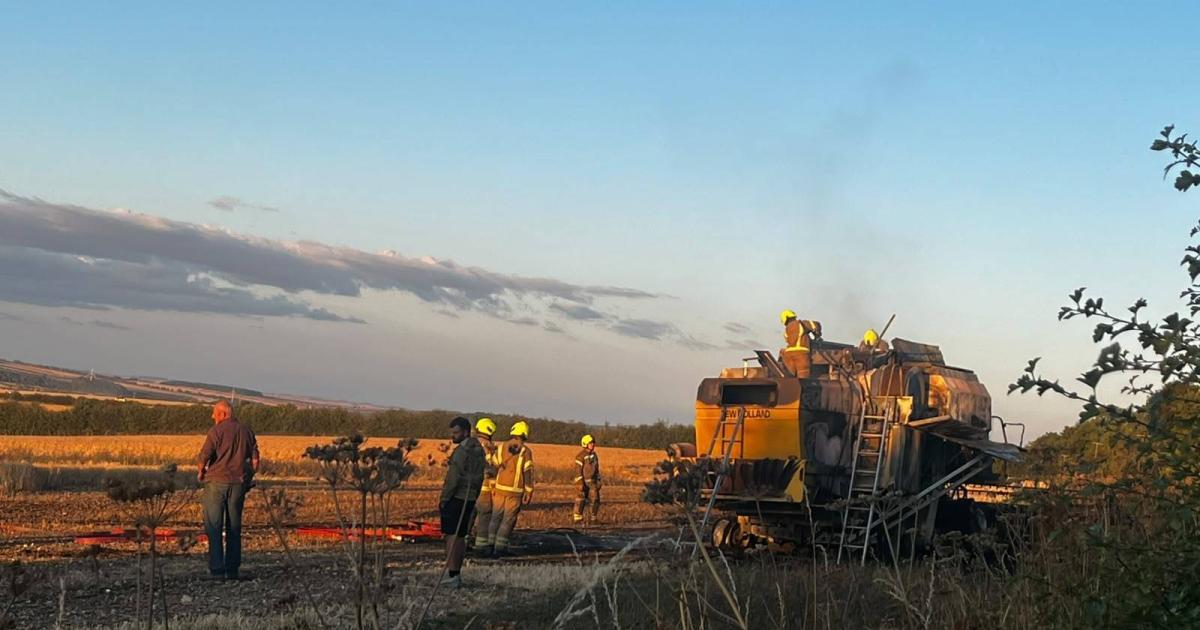
Combine completely destroyed in Settrington field fire

Published

on

Combine completely destroyed in Settrington field fire

Two crews from Malton responded at 7.27pm to a report of the combine on fire in a field near Settrington, which spread to 20 square metre of field.

A spokesperson for North Yorkshire Fire and Rescue said: “The combine was 100% damaged by fire. Crews extinguished the fire and damped down the surrounding area.

“Crews used two breathing apparatus, two hose reel jets, thermal imaging camera, triple extension ladder, small tools and a reciprocating saw to deal with the incident.”

Advertisement

Source link

Continue Reading

NewsBeat

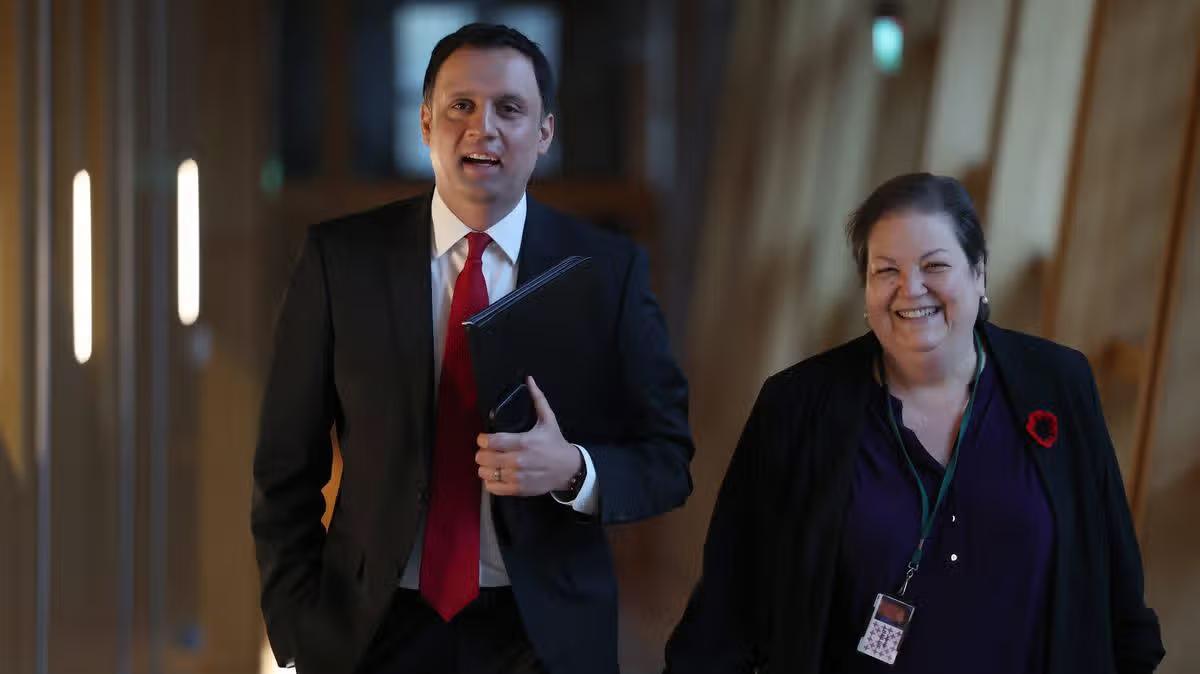
‘Scottish Labour is tearing themselves apart before their leadership contest has even begun’

Published

on

Daily Record

Scottish Labour is tearing itself apart before the party’s latest leadership contest has even started.

A party that has lost five Holyrood elections in a row to the SNP and cannot connect with voters is once again staring at its own navel.

The smart money was on a three-way contest between moderate Michael Marra, former council chief Joe Fagan and left-winger Monica Lennon.

But there is a growing sense that Lennon, despite being the candidate party figures believe would have the most reach with voters, will fail to make the ballot.

Advertisement

Contenders need three Labour MSPs and three Scottish Labour MPs to become candidates and every indication is that Lennon is struggling.

Part of her likely exclusion reflects the rough and tumble of politics.

Marra has been preparing for a contest for months and has activated his machine to hoover up nominations.

Lennon’s return to Holyrood after Anas Sarwar’s resignation from Holyrood was accidental and she does not have the infrastructure to compete.

Marra does not want her on the ballot and his supporters have been energetic in ensuring this becomes a reality.

Personality clashes are another factor behind Lennon’s inability so far to attract the necessary support.

Advertisement

She had a reputation as a moderate when she was first elected in 2016, but she alienated this bloc when she backed Jeremy Corbyn.

Her natural supporters in the Scottish Labour group – left wingers Katy Clark and Carol Mochan – are also withholding their support.

Mochan fundamentally differs from Lennon on trans rights while Clark inexplicably believes that she should be the left wing candidate in the race.

The end result is a likely all-male ballot between Fagan and Marra to succeed Anas Sarwar.

Advertisement

Even the staunchest supporters of both these contenders admit they have baggage.

Marra is an able politician who would be better than Sarwar at carving out dividing lines with the SNP.

But he will also struggle to shrug off his association with past Scottish Labour failures.

He was a senior adviser to hapless former leader Iain Gray, whose terrible Holyrood campaign led to an overall SNP majority in 2011.

Advertisement

Marra was also the architect of Labour’s dismal Holyrood manifesto in May – a document that failed to include a single eye-catching policy.

Scottish Labour has lost five in a row to the SNP and Marra was knee-deep in two of them.

Fagan also has a number of downsides.

As leader of South Lanarkshire council, he was suspended for two months for disclosing confidential information to the press.

Advertisement

He is also seen as a puppet of deputy leader Jackie Baillie, who critics believe wants Fagan to win so she can hold on to her power.

Senior party insiders also struggle to see the rookie MSP as a credible figure to lead Labour so soon into his Holyrood career.

Advertisement

One said: “Is he really going to be our candidate for First Minister? Will voters be able to picture him walking into Bute House? He is not a big league politician.”

Anger is also rising with Sarwar for plunging his party into a summer of infighting and rancour.

Party activists wanted the priority for Scottish Labour to be a review of their catastrophic election defeat in May.

The review is now irrelevant and the big structural issues Scottish Labour needs to consider will be shelved.

Advertisement

Senior party figures believe that whoever wins will lead a divided, inwardly-looking group at Holyrood.

And few people believe the victor will lead Scottish Labour into the 2031 Holyrood election.

The party of John Smith and Donald Dewar was already circling the drain before the leadership contest.

A pointless scrap that treats voters as an afterthought could see Scottish Labour vanish forever.

Advertisement

Source link

Continue Reading

Trending

Copyright © 2025