Connect with us

NewsBeat

British couple on honeymoon killed in helicopter crash on Greek island of Sifnos

Published

on

A few people are seen working at a blackened site on a mountain

The BBC has contacted the UK Foreign Office, the Greek authorities and the aviation company for comment.

Asset management firm Blackstone, where Cromie worked, said in a statement: “We are shocked by the tragic passing of three people including our colleague Alex Cromie and his wife Marie Ebert, who were celebrating their honeymoon.

“Alex was beloved by everyone who knew and worked with him at Blackstone, and our thoughts and prayers are with his loved ones.”

A senior police official told the Times that the crash came just before the helicopter’s scheduled landing time of 18:15 local time (16:15 GMT).

Advertisement

Sifnos’ Deputy Mayor, Manolis Foundoulakis, arrived at the scene shortly after the incident and told local news site Newsit there was almost “nothing left” of the aircraft.

He said locals saw the helicopter crash within metres of their homes and had described a “bizarre engine noise coming from the aircraft” as it was about to land.

He said two of the victims were found in the wreckage, while the third was a short distance away.

Firefighters worked to tackle a blaze which broke out after the crash, and the flames had been extinguished by Monday evening.

Advertisement

Source link

Continue Reading
Click to comment

You must be logged in to post a comment Login

Leave a Reply

NewsBeat

Mum who killed her three children ‘expressed thoughts of harming them’, court told | News US

Published

on

Mum who killed her three children 'expressed thoughts of harming them', court told | News US
Lindsay Clancy (right) is accused of murdering her three young children at the family home in Duxbury, Massachusetts (Pictures: Greg Derr/The Patriot Ledger)

Lindsay Clancy told her mother that medication was ‘destroying’ her mind and admitted having thoughts of harming her children in the months before she killed them, a court has heard.

Paula Musgrove said that her daughter was losing weight, becoming ‘paranoid’ and desperate to feel like herself again.

Clancy’s behaviour became so unsettling that she once asked if she could sleep in her mother’s bed with her.

Clancy, 36, is charged with murdering five-year-old Cora, three-year-old Dawson and eight-month-old Callan at the family home in Duxbury, Massachusetts on January 24, 2023.

Advertisement

She does not deny fatally strangling the children with an exercise band but pleaded not guilty by reason of insanity, described under Massachusetts law as a lack of criminal responsibility.

Her lawyers argue that the killings were caused by severe postpartum mental illness rather than a deliberate and criminal act.

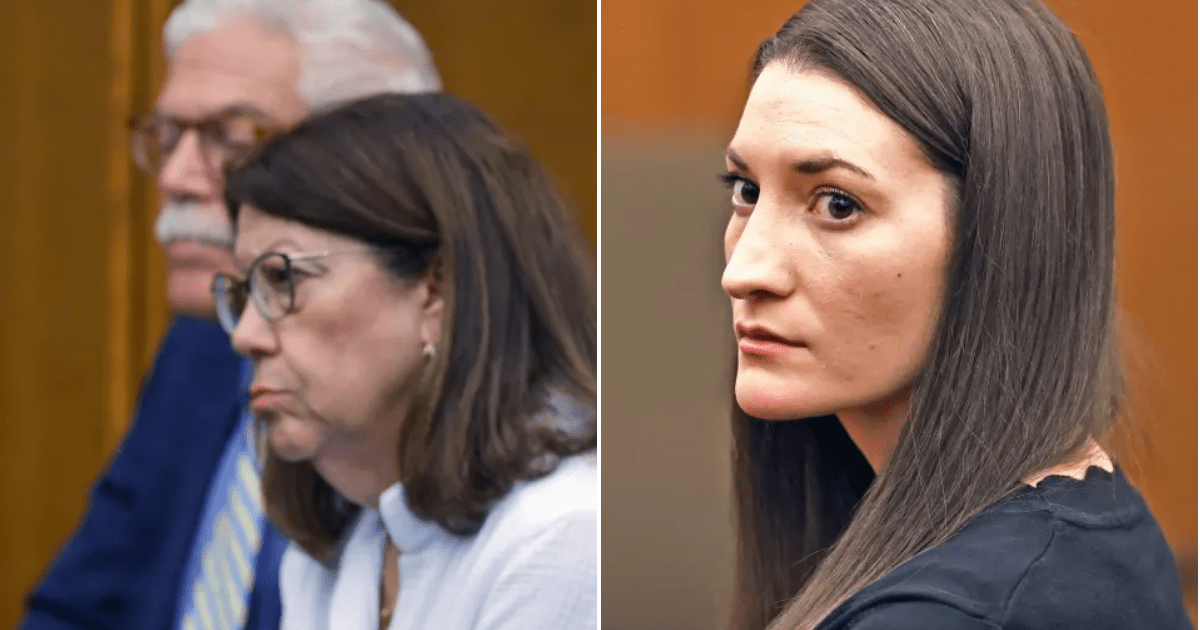
Lindsay Clancy listens to her mother Paula Musgrove on the witness stand during her murder trial in Plymouth Superior Court, in Plymouth, Mass., Monday, Aug. 17, 2026. (Greg Derr/The Patriot Ledger via AP, Pool)
The defence argues that Clancy lacked criminal responsibility (Picture: Greg Derr/The Patriot Ledger)

Prosecutors contend that Clancy intentionally killed the children before making an ‘insincere’ attempt to take her own life which left her paralysed.

Much of the trial has focused on her mental health, treatment and behaviour during the months leading up to their deaths.

Advertisement

Musgrove was among the first witnesses called by the defence after prosecutors rested their case on Monday. She described a conversation in which Clancy approached her and her former husband, Patrick, saying: ‘I want to tell you guys something,’ The Guardian reports.

‘She said she had thoughts of harming the children,’ Musgrove told jurors in Plymouth, Massachusetts. Patrick previously testified that his wife had made the statement but that she had said she didn’t have any plans to hurt them.

Lindsay Clancy's mother Paula Musgrove testifies about text messages between her and her daughter during her daughter's murder trial in Plymouth Superior Court, in Plymouth, Mass., Monday, Aug. 17, 2026. (Greg Derr/The Patriot Ledger via AP, Pool)
Clancy’s mother told jurors that her daughter’s mental health appeared to deteriorate in the months before the killings (Picture: Greg Derr/The Patriot Ledger)

Five days before the killings, Clancy used her phone to search for ‘symptoms of postpartum psychosis’ and ‘psychosis symptoms’, jurors heard.

She had also looked up ‘how quickly does Wellbutrin work for depression’ and ‘ketamine for suicidal ideation’.

The searches were discovered by digital forensic expert Ian Whiffin, the prosecution’s final witness. He examined Clancy’s internet history, calls, messages and health data.

Advertisement

Musgrove told the court that her concerns had begun months earlier. On October 20, Clancy sent her a message reading: ‘I’m really sick. Something is wrong.’

A copy of a text that Lindsay Clancy sent her mother is shown during her trial in Plymouth Superior Court, Plymouth, Massachusetts, U.S., August 17, 2026. Clancy is charged with murdering her three young children, Cora, Dawson and Callan, in their Duxbury home in 2023. Greg Derr/Pool via REUTERS
Messages between Clancy and her mother were seen and read aloud in the courtroom (Picture: REUTERS)

Lindsay Clancy said she didn’t know how she would make it through each day and that the medicine she had been prescribed had ‘made things worse’.

‘It’s just really scary and I don’t want to be alone,’ she added.

Musgrove travelled from Connecticut to her daughter’s home and stayed for a week. She and her husband continued making repeated trips during November and December, but said Clancy’s condition didn’t appear to improve.

‘In November and December, it was not getting better,’ Musgrove testified. She said her daughter believed ‘this wasn’t her mind’ and feared the medication was ‘destroying’ it.

Advertisement
Paula Musgrove, mother of Lindsay Clancy, enters the courtroom to take the witness stand during Clancy's trial in Plymouth Superior Court, Plymouth, Massachusetts, U.S., August 17, 2026. Clancy is charged with murdering her three young children, Cora, Dawson and Callan, in their Duxbury home in 2023. Greg Derr/Pool via REUTERS
Paula Musgrove said Clancy told her that medication was ‘destroying’ her mind and that she wanted to feel better (Picture: REUTERS)

Clancy also told her: ‘This isn’t me. I just want to feel better and enjoy my kids again.’

Her lawyers say she experienced a broad range of depressive symptoms and sought psychiatric help before the killings.

Clancy’s sister, Allison Ozga, also testified about learning that she had been experiencing suicidal thoughts. ‘She’s feeling numb, she’s feeling hopeless,’ Ozga told the court.

Patrick previously told jurors that Clancy later spoke to him from hospital about hearing a man’s voice before the children were killed.

She said it told her ‘that if she didn’t do it now, she would lose her chance, or something like that’, according to his evidence.

Advertisement
Paula Musgrove, mother of defendant Lindsay Clancy, listens to witness testimony during Clancy's murder trial at Plymouth Superior Court in Plymouth, Massachusetts, U.S., August 12, 2026. Mark Stockwell/Pool via REUTERS
Clancy’s mum and sister testified at the trial (Picture: REUTERS)

Clancy also spoke to Patrick by phone while he was away from the house collecting medication from a pharmacy and picking up a takeaway.

The prosecution has used evidence about that evening to argue that her actions were planned, while the defence maintains that she was severely mentally ill at the time.

If convicted of first-degree murder, Clancy faces the possibility of life in prison without the possibility of parole. If jurors find that she lacked criminal responsibility, however, she would instead be committed to a state psychiatric hospital.

The trial continues.

Source link

Advertisement
Continue Reading

NewsBeat

Man who asked child for naked photos and discussed sex dream avoids jail

Published

on

Belfast Live

The court heard that he sent his teenage victim a picture of his private parts and asked her to video chat whilst naked

Advertisement

A Co Tyrone man who was sexually communicating with an underage girl today narrowly avoided immediate custody and was instead handed a three-year probation order.

Matthew Leonard Kilpatrick, 31, of Sycamore Avenue in Sion Mills, had previously pleaded guilty to four counts of sexual communication with a child on dates between February 3 and February 10, 2024.

He further admitted a charge of inciting a child to engage in sexual activity on dates between February 3 and February 9, 2024.

Kilpatrick also pleaded guilty to two charges of possessing indecent images of a child on March 20, 2024.

Advertisement

Dungannon Crown Court, sitting in Belfast, heard that the offences all related to a girl then aged 14 referred to only as ‘T’.

Outlining the facts of the case, Judge Brian Sherrard said the offences came to light on March 20, 2024, when the victim’s mother had confiscated her mobile phone and came across live messaging taking place on Facebook from another computer where the defendant and ‘T’ were communicating.

He said in October 2023 the defendant made contact with ‘T’ online and she told him she was aged 14.

Said the judge: “You contacted her again in February 2024 and you fostered an inappropriate online relationship, much of this was made up of childish exchanges.

Advertisement

“The conversation also turned sexual on February 3, 2024 and it was your assertion that ‘I really want to take you to bed’. You asked if she was a virgin.”

The court heard Kilpatrick sent his teenage victim a picture of his private parts and asked her to video chat whilst naked. The following day the defendant asked for a picture of her bra.

“You said to her that you ‘wished you could join her in the shower and you wanted to see her t**s’. Again, this is just a 14-year-old child,” remarked Judge Sherrard.

The court was told that on February 5, 2024, Kilpatrick messaged the victim to say he wanted to see her bra and wanted to see her naked. He also discussed a sex dream about her.

Advertisement

Judge Sherrard told Kilpatrick: “You knew from the outset that you were much too old for this girl who was under the age for any sexual activity and you expressly stated that as early as the October 2023 communications.

“You also knew, it seems to me, that you might find yourself in legal jeopardy, saying on February 3, 2024, that you ‘hoped the girl didn’t report me on Snapchat’.”

The court heard the girl had also sent Kilpatrick moving and still images which related to the two charges of possessing indecent images of a child.

Judge Sherrard said the impact of Kilpatrick’s offending on the young was “significant”.

Advertisement

In a victim impact statement to the court, she said the offending had placed limitations on her freedom of movement, the impact it had on her education, the impact it had on her relationships with her peers and also her “anxiety around men”.

Said Judge Sherrard: “This is far from being a victimless crime simply because it occurred online. I am mindful that you did not meet the girl and the offending took place over a relatively short period.”

Judge Sherrard said he had a ”raft of papers” before him all dealing with Kilpatrick’s “vulnerabilities”.

A report from a clinical psychologist said the defendant had attended a school for pupils with special needs and had a moderate learning difficulty.

Advertisement

In a further report, a Registered Intermediary described the defendant as a “significantly vulnerable individual”.

In a pre-sentence report compiled by the Probation Board, the author stated that Kilpatrick had “limited insight and accountability for his actions” which added to the risk of this offending happening again and assessed him as a high likelihood of reoffending.

The court heard that Kilpatrick had encouraged the girl to hide her phone, to create a passcode on the phone and not to disclose the code to her mother.

Judge Sherrard said he had concluded that Kilpatrick had “intellectual limitations” which had some impact on his culpability.

Advertisement

“Moreover, those intellectual limitations also impact on the risk of future offending which is something of profound concern to me.

“There would be little opportunity for you to address your established and significant deficits after a relatively short custodial sentence and these deficits must be addressed. These are difficult cases for the court as they cry out for condign punishment but the balance in my mind has to be in favour of public protection which is the most important consideration.

“I consider this matter is best dealt with by way of a three-year probation order which will protect the public and effect your rehabilitation,” added Judge Sherrard.

Kilpatrick was made the subject of a SOPO for a period of five years and he was placed on the sex offenders register for an identical period.

Advertisement

The court granted a destruction order for the indecent images and all devices seized.

Source link

Continue Reading

NewsBeat

Annual maintenance closure at Sutton Bank to be extended

Published

on

Annual maintenance closure at Sutton Bank to be extended

Sutton Bank is a key route on the county’s highway network, and regular maintenance is vital to preserve the road’s condition, protect the public and prevent deterioration that could result in unplanned disruption.

This year’s programme of works will require the bank to be closed from 7am on Sunday, September 13, until 7pm on Sunday, October 4.

RECOMMENDED READING:

Advertisement

North Yorkshire Council’s executive member for highways and transport, Cllr Malcolm Taylor, said: “The works will include planned maintenance to the rock face and routine maintenance of the road. The longer scheme will also allow for further drainage and repairs.

“Carrying out these improvements at the same time will maximise the benefits of the road closure and help minimise the need for disruption to road users in the future.

“This year’s programme also marks the start of a wider programme of improvements planned over the next three years to enhance the resilience and long-term condition of Sutton Bank.”

Cllr Alyson Baker, who represents Hillside and Raskelf on North Yorkshire Council, added: “The A170 is a vital transport link for communities, businesses and visitors travelling across North Yorkshire.

Advertisement

“This annual programme of works will help ensure the route remains safe, reliable and well-maintained for everyone who depends on it.

“We will do everything possible to minimise disruption and would like to thank motorists, residents and businesses for their patience and cooperation while the work is carried out.”

Access to homes will be maintained whenever possible, but the nature of the work means there could be times when access is restricted.

To view the diversion routes, visit North Yorkshire Council’s roadworks map at www.northyorks.gov.uk/roadworks-map

Advertisement

Source link

Continue Reading

NewsBeat

Gillian Anderson shares emotional message about The Salt Path ‘betrayal’

Published

on

Gillian Anderson shares emotional message about The Salt Path 'betrayal'

Anderson also spoke about the controversy with The Radio Times last week, saying: “It’s very unfortunate. The film was doing really well in the UK – beyond my expectations. I think we were about to sign with Sony Classics for the United States the week when the article came out, so it sucked, and continues to suck.”

Source link

Continue Reading

NewsBeat

Don’t eat your feelings (or the rich) warns the surprisingly wholesome absurdist satire, Lady

Published

on

Don’t eat your feelings (or the rich) warns the surprisingly wholesome absurdist satire, Lady

On its surface, Samuel Abrahams’ Lady appears to be a familiar entry in the recent “eat the rich” cinematic trend, trailing in the wake of high-profile films like Saltburn, Parasite, The Menu and Triangle of Sadness. However, there is more to this surrealist film.

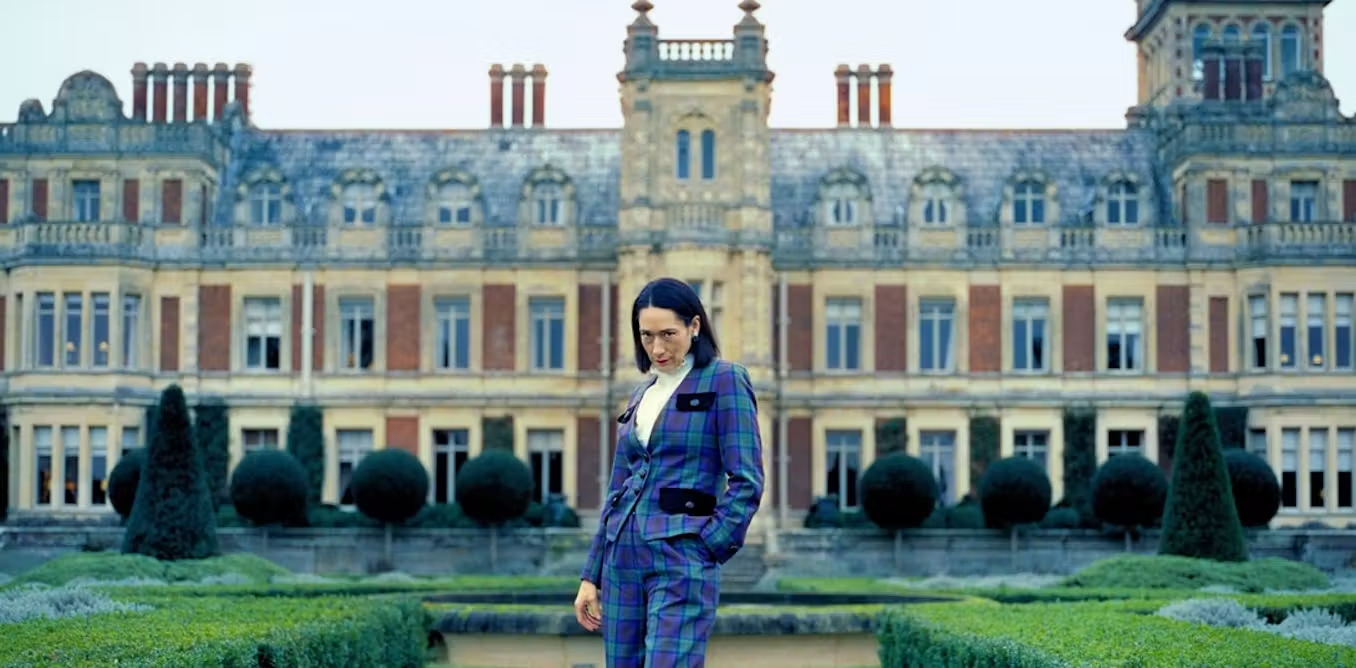
Here the setting is Ravenhyde Hall, a country estate in Suffolk where Lady Isabella (played by Sian Clifford) resides in eccentric isolation. The 40-something Isabella has decided that she is “aristocracy’s answer to the Kardashians” and is determined to become a modern influencer and artist. To facilitate this pivot, she hires Sam (Laurie Kynaston), a struggling young filmmaker desperate for a Bafta-winning breakthrough.

The film’s central irony lies in Isabella’s visibility. By virtue of her title, wealth and enormous home, she ought to be impossible to ignore. Yet, Isabella feels profoundly unseen.

The narrative’s most striking surrealist conceit begins when Isabella physically starts to disappear. The invisibility metaphor points to the diminishing cultural visibility of ageing women in a society that treats female bodies as commodities. Isabella attempts to become an aristocratic Kardashian at precisely the moment she fears she is disappearing from the world.

Advertisement

For Sam, Isabella only becomes a truly compelling subject when she begins to vanish; the more of her identity that is obliterated, the more valuable the footage becomes to him as content.

Initially, the film delights in mocking Isabella’s outlandish creative mission. Her wealth gives her the freedom to turn every private whim into a publicly consumable spectacle. However, as the plot unfolds, it becomes clear that Isabella is as much an instrument of the satire as its target. Her narcissism, we learn, is rooted in a deep, psychological avoidance of reality. When her hands begin to turn invisible, she simply hides them in gloves. When the condition is suggested to be a symptom of perimenopause, she dismisses it entirely.

Beneath Isabella’s performance of the “tortured artist” lies a history of genuine grief: a loveless marriage of convenience and the devastating loss of her only child. Her determination to remain the centre of attention is an elaborate strategy for avoiding everything she cannot bear to confront.

In one of the film’s most revealing exchanges, Sam accuses her of being self-obsessed. She indignantly corrects him, stating she is “self-centred” rather than “self-obsessed”. This distinction, while absurdly self-important, captures the essence of her struggle: she has turned her suffering into an artistic project where even her pain must be reconfigured as an act of self-expression, effectively shielding her from the world outside herself.

Advertisement

As Isabella becomes a more sympathetic and vulnerable figure, the satirical focus shifts toward Sam. He views himself as an objective truth-teller, the professional documentarian who can see through Isabella’s ridiculousness. Yet, he is revealed to be every bit as performative and exploitative as his subject.

When he captures footage of Isabella at her most unhinged and vulnerable, he is eager to package it into a sizzle reel for Netflix. The cruelty of his position is laid bare when Isabella asks why she looks “old and crazy” in the footage, and Sam replies with shocking brutality that it is because she is old and crazy. He is not, as he claims, objectively observing her madness and decay but instead facilitating it as part of a bid to ultimately profit from it.

While comparisons to Saltburn are common due to the country house setting, eccentric wealth and giant inflatable pink flamingo, Lady’s satirical method is actually closer to the black comedies like Joseph Heller’s Catch-22 or Ottessa Moshfegh’s My Year of Rest and Relaxation. Like these narratives, Lady begins with outrageous, comic behaviour but gradually gives way to a grim psychological reality.

Advertisement
There is a sad story behind the seemingly ridiculous aristocrat.
Samuel Abrahams

The film reaches its emotional and narrative climax at “Stately Stars”, an annual talent contest Isabella sponsors for local children. In a move that highlights her total lack of social awareness, Isabella decides to compete in the contest herself. Her performance is a raucous, surreal display: she appears naked, wearing a giant raven’s head that seems to float above her now fully invisible body. However, the moment of resolution occurs when she turns her attention away from her own performance to help Sam, who suffers from crippling public-speaking anxiety. By helping him perform one of her poems, she confronts a reality outside herself, which paradoxically reverses her physical disappearance.

Ultimately, Lady concludes with a serious argument hidden behind its obvious gags about eccentric aristocrats. It suggests that in a culture of relentless performance of identity, the obsessive attempt to make the self visible is precisely what threatens to erase it. Isabella and Sam spend the film looking at themselves, one in front of the lens and one behind it, while failing to truly see one another.

The film’s aggressively wholesome final message is that looking beyond your own ego is the only route to becoming truly visible to yourself. In a world that demands we turn our lives into spectacle, the most radical act of self-knowledge may simply be the decision to look outward.

This article features references to books that have been included for editorial reasons, and may contain links to bookshop.org. If you click on one of the links and go on to buy something, The Conversation UK may earn a commission.

Advertisement

Source link

Continue Reading

NewsBeat

St Kevin’s Community Hub in Bargeddie hosts Community Fun Day

Published

on

Daily Record

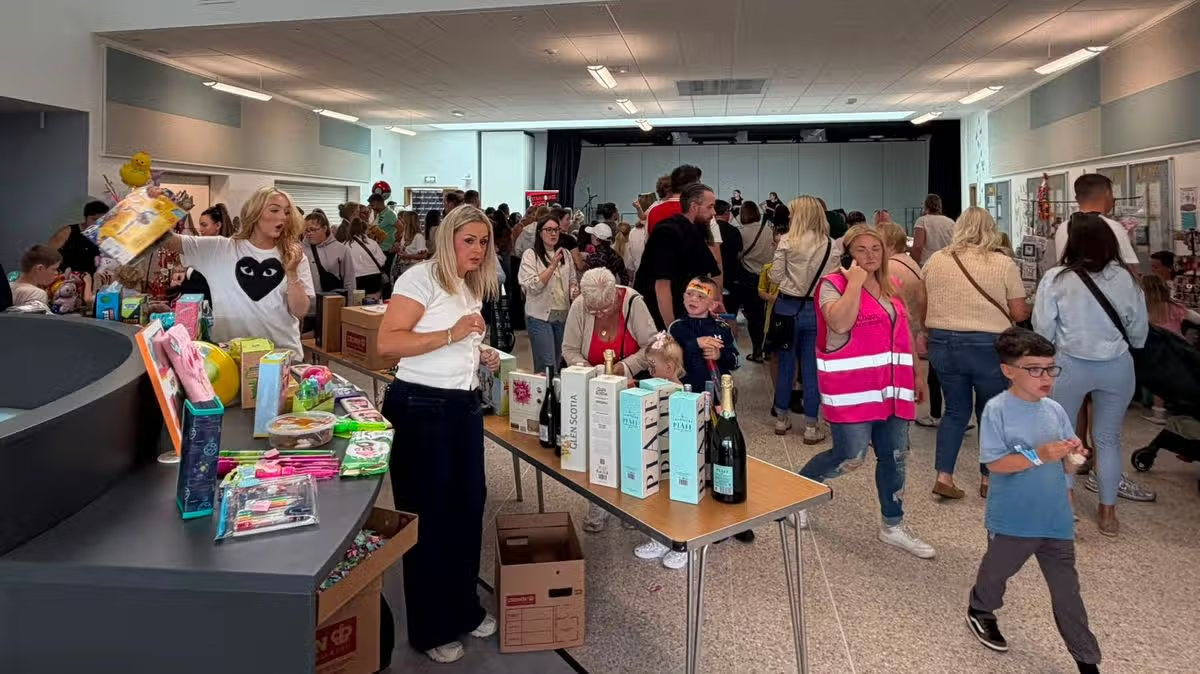
St Kevin’s Primary parent council organised the gathering, with activities including sports, live performances, stalls, food, face painting and bouncy castles.

Hundreds of excited locals gathered at St Kevin’s Community Hub in Bargeddie for a community event bringing together families, local organisations, businesses and performers.

Advertisement

St Kevin’s Primary parent council organised the Community Fun Day at the new school and community hub, with activities including sports, live performances, stalls, food, face painting and bouncy castles.

The event was organised by a small team of parent council volunteers and attracted a turnout which surprised even some of those who had expected the day to be busy.

The original idea for the Fun Day came from parent council member Rachael Kennedy, who proposed holding an event which could bring families together while making use of the new community facilities.

“I don’t think any of us realised just how much the idea would grow,” she said.

Advertisement

The scale of the response was praised by Coatbridge MSP Fulton MacGregor, who said he had been taken aback by just how many people attended.

Mr MacGregor added: “The parent council – all you guys – have done absolutely brilliantly.

“I’m astounded by how busy it is. I did think it would be busy because I know you’ve got a very good reputation and Bargeddie is a close-knit community, but I think just how busy it has been has really caught everybody by surprise.

“I can’t remember a community event recently that has been as busy as this.”

Advertisement

Coatbridge West councillor Gary Robinson said: “Look at the amount of people who have come together here today.

“There are hundreds and hundreds of people seeing what this community hub has got to offer, and it’s just a fantastic day.

“If you look at the range of activities that are available for families, the amount of stalls that are here and the number of organisations represented, it’s absolutely fantastic.”

Councillor Michael McBride, convener of the education, children and families committee, also highlighted the importance of community-led events in bringing residents together and opening local facilities to a wider audience.

Advertisement

He added that parent councils also had an important role within schools and needed support to help them develop activities and opportunities for families.

The Fun Day was made possible with support from a number of businesses, with nearby Viridor providing the largest contribution.

Other sponsors included Money & Me Solicitors, Kane Building & Landscape, Archiplan Glasgow, ATG Plumbing & Heating, The Princess Bar in Riddrie and AM Fagan Estate Agents.

Advertisement

Suzanne McLean, community benefits officer at Viridor, said the company wanted to support the new school and continue building its relationship with the surrounding community.

“We really value the community,” she added.

“We are right in the heart of it, and we want to be good neighbours and look after the community.

“You can see all the kids with their faces painted and big smiles on their faces.

Advertisement

“They all look like they’re having an absolute ball at all the different stalls and on the bouncy castles as well.”

Facepainting proved particularly popular, with unicorns the most requested design.

Julieanne from Doodlebug Facepainting described the Fun Day as a “brilliantly well-run event” with “wonderful feedback” from families.

Advertisement

Entertainment formed a major part of the Fun Day, with young dancers getting the opportunity to perform in front of families from across the local community.

Lisa Boyle, owner and instructor at ExtravaDance Academy, said: “The dancers were made to feel so welcome and the support from the audience was excellent.

“Most of our dancers are from the Bargeddie community so this was a fantastic opportunity for them to showcase their talents.

“It was also a lovely way for the local community to see what the dance school is truly about; making our young people confident, happy and healthy.

Advertisement

“The Fun Day brought lots of new interest in the dance school and we’re so excited to welcome along the new faces who have signed up to join our classes.”

Families were entertained throughout the day by Robert’s Magical Entertainments and the parent council also thanked Aurelia, Allegria and Isabella, students of Ruthven Music, who provided live musical entertainment, adding to the atmosphere across the event, and all of the volunteers who helped to make the whole day run “so smoothly”.

*Don’t miss the latest headlines from around Lanarkshire. Sign up to our newsletters here.

And did you know Lanarkshire Live had its own app? Download yours for free here.

Advertisement

Source link

Continue Reading

NewsBeat

Hayden Panettiere was ‘traumatised’ when her personal tragedies were used to inspire Nashville storylines

Published

on

Hayden Panettiere revealed she was'traumatised' when her personal tragedies were used to inspire Nashville storylines. She played troubled teen star Juliette Barnes who faced personal turmoil while trying to nab the Queen of Country title from rival Rayna Jaymes (Connie Britton)

She received critical acclaim for her role as Juliette Barnes in Nashville, earning nominations at the Golden Globes, Critics’ Choice and People’s Choice Awards among others. 

Yet it’s hardly surprising that Hayden Panettiere was lauded for her role as the troubled country singer, given she felt she was ‘acting out her own life’. 

Hayden was tragically found dead on Sunday at the age of 36 after going into cardiac arrest following a suspected overdose.  

It was a tragic end to her life mere weeks after she claimed ‘I have a lot more life to live,’ having ‘shaken off the darkness and negativity’ of her well-documented past. 

Advertisement

While Hayden delved into her traumatic past with the release of her memoir this year, fans will be familiar with her troubles, given many of them played out on screen in Nashville.  

The ABC series charted Juliette’s (Hayden’s) bid to nab the Queen of Country title from rival Rayna Jaymes (Connie Britton), with the star suffering from addiction, mental health woes and exploitation in her transition from child star to mature artist. 

Yet as the show went on in its six season and six year run, Hayden began to notice how much her real life paralleled her character’s. 

Advertisement

Hayden Panettiere revealed she was’traumatised’ when her personal tragedies were used to inspire Nashville storylines. She played troubled teen star Juliette Barnes who faced personal turmoil while trying to nab the Queen of Country title from rival Rayna Jaymes (Connie Britton)

She told Messenger in 2024: ‘Filming Nashville was very traumatizing because I felt like I was acting out my own life. Straight from the beginning, it was like, I’m dating a football player, [and then] Juliette dates a football player. 

‘And then they turned her into an alcoholic. Then they turned to her leaving her daughter and going to this crazy [place] in Europe, and it was very obvious…

‘They weren’t doing their homework. They weren’t creating new storylines. They were just looking at my life and going, “Oh, let’s just take what she’s going through and put our little spin on it.” And then, ta-da! It’s done and done.’ 

Advertisement

Hayden added that she also struggled with the intense storylines being filmed during 12-to-20 hour days.

‘I didn’t have time to take care of myself [and] to think about and go through the pain I was experiencing physically [and] emotionally,’ she said. 

‘I just wanted to drum it out and watch mindless television and great shows. Anything to keep my mind off of that because I knew that next day I was going to be back at it again. I was like, tear central. 

‘I don’t even think on a soap opera that I cried as much [as I did] on Nashville.’

Advertisement

She added on Jay Shetty’s podcast last year: ‘I didn’t know where Juliette began and Hayden ended. 

‘I didn’t even realize I was becoming her constantly, and I wasn’t able to take care of myself.’

Her role as Juliette also wasn’t what she had signed up to be, with Hayden believing she was meant to be a supporting character to co-star Connie.  

‘Unfortunately, after the pilot, it was clear that my billing had gone way up,’ she wrote in her memoir this year, adding: I went from maybe number five in terms of importance to nipping at Connie´s heels.I was deeply uncomfortable with this development.’

Advertisement

The Daily Mail has contacted Lionsgate for comment.  

Even in series one there were parallels, with her character being set up with a football player. At the time, Hayden was dating NFL star Scotty McKnight (pictured in 2012)

Even in series one there were parallels, with her character being set up with a football player. At the time, Hayden was dating NFL star Scotty McKnight (pictured in 2012) 

The inaugural season also saw Juliette attempting to navigate her toxic relationship with mother Jolene, played by Sylvia Jefferies, right

The inaugural season also saw Juliette attempting to navigate her toxic relationship with mother Jolene, played by Sylvia Jefferies, right 

Hayden was open about her own struggles with her mother, Lesley. It's believed the pair were still estranged at the time of her death  (pictured in 2007)

Hayden was open about her own struggles with her mother, Lesley. It’s believed the pair were still estranged at the time of her death  (pictured in 2007) 

Advertisement

Indeed, it seems Hayden’s life served as a template for her character’s arc. 

Even in series one there were parallels, with her character being set up with a football player. At the time, Hayden was dating NFL star Scotty McKnight. 

The inaugural season also saw Juliette’s toxic relationship with mother Jolene (Sylvia Jefferies). Hayden was open about her own struggles with her mother, Lesley. It’s believed the pair were still estranged at the time of her death

In 2014, Hayden announced she was expecting daughter, Kaya, with Wladimir Klitschko, with her pregnancy written into the show. 

Advertisement

Yet in another case of life imitating art, it was written into the script that Juliette suffered from postnatal depression just like Hayden – who later checked into rehab for treatment with the condition.

Both Hayden and her character also abused alcohol during their postnatal depression battle. 

In another parallel, Hayden and Juliette were temporarily separated from their daughter amid their addiction battles. 

On the show Juliette’s daughter Cadence was taken away by her father Avery (Jonathan Jackson) while she battled her addictions. 

Advertisement

While in real life, Hayden gave up custody of her daughter to her ex-fiancé Wladimir when she was aged three.

As Hayden suffered with her mental health, the actress agreed to allow Kaya to relocate to Ukraine with her father. 

She recalled in her memoir: ‘I remember every second of that day. Every f***ing second. No mother could forget a single thing about the day she signed her child away.’

Hayden then decided not to celebrate the series finale of Nashville, explaining: ‘I couldn’t pretend that this chapter of my life was something to memorialise.’ 

Advertisement
In 2014, Hayden announced she was expecting daughter, Kaya, with Wladimir Klitschko, with her pregnancy written into the show

In 2014, Hayden announced she was expecting daughter, Kaya, with Wladimir Klitschko, with her pregnancy written into the show

On the show Juliette's daughter Cadence was taken away by her father Avery (Jonathan Jackson) before slowly reintroducing the pair to one another

On the show Juliette’s daughter Cadence was taken away by her father Avery (Jonathan Jackson) before slowly reintroducing the pair to one another

She also penned: ‘Not being under the same roof with her [Kaya] every day has been the most gut-wrenching experience of my life, and it’s hard to describe the layers of emotion – including sadness, resentment, and anger – I’ve felt because of it.

‘I grieve that I’m not the mother I thought I’d be and definitely not the mother I want to be (trust me, no one should ever have to raise a child on FaceTime), and although I miss Kaya so much my heart aches, I know how blessed I am to be her mom.

Advertisement

‘She is the greatest gift of my life, with all the best parts of her father and me, and, today, I believe I have the opportunity to be a different kind of parent than most.’

While Hayden had since reconnected with Kaya, she vowed not to speak too much about their arrangement, explaining: ‘She didn’t ask to be born into the limelight or my chaos, and she didn’t get to choose her parents. I want her to have every choice that I didn’t, including the ability to live a private life.

‘So out of respect for her right to normalcy, my stories of motherhood will be through my eyes only, and I’ll keep personal details of her life to a minimum.

‘I also want to make clear that I don’t blame Wlad for any of my wrongs; I take full responsibility for my part in our relationship and my shortcomings as a mom. Wlad is one of the most courageous people I’ve ever met and a true hero in so many ways.’

Advertisement

Hayden and Wladimir met at a book launch in 2009. After two years of dating, they split up in 2011, before rekindling their relationship two years later.

On Tuesday, he broke his silence about her death, sharing a picture of the pair with Kaya and penning: ‘Our family is going through a time of profound shock and grief…

‘The announcement of Hayden’s tragic death saddens me deeply. She left this world far too soon. Hayden was, although no longer my partner, an important part of my life and the mother of our daughter, Kaya…

‘She built an incredible career through immense talent, while also facing the darker sides of a very demanding industry. Nothing will erase the times we shared or the place she had in our lives…

Advertisement

‘To our daughter Kaya, I will always speak of her mother with respect and make sure she remembers the person she was…

‘I extend my deepest condolences to Hayden’s parents, her friends, and her fans, who are also grieving today. Young and talented people like Hayden should not leave this world so soon…

‘I ask everyone to please respect our family’s feelings and privacy during this incredibly difficult time. For now, this is all I wish to say…

‘Thank you to everyone who is supporting my family and expressing their sincere condolences… Rest easy, Hayden. May you find eternal peace.’

Advertisement
On Tuesday, Wladimir Klitschko broke his silence about her death, sharing a picture of the pair with Kaya and penning: 'Our family is going through a time of profound shock and grief...'

On Tuesday, Wladimir Klitschko broke his silence about her death, sharing a picture of the pair with Kaya and penning: ‘Our family is going through a time of profound shock and grief…’ 

While a cause of death is yet to be announced, it was revealed on Monday that Narcan was found in the apartment where Hayden died.

The nasal spray, which is used to reverse the effects of an opioid overdose, was found on a mattress in a loft apartment where she was staying.

It is still unclear if that Narcan had been used to try and revive Hayden, although 911 audio obtained earlier on Monday revealed that the actress had gone into cardiac arrest following a suspected overdose.

Advertisement

Greenville County Sheriff’s Office said that her post-mortem examination had been completed and that no signs of trauma were found on the star’s body.

Further investigations will now take place to establish her cause of death, with chief deputy coroner Shelton England telling the Daily Mail that it was too early to discuss the drug overdose theory.

Earlier, a representative for Hayden confirmed her death, saying her family would remember her as an ‘incredible light’ who brought ‘immeasurable love and joy to all who knew her’.

A statement from her father, Skip, read: ‘It is with profound sadness that we share the tragic passing of our beloved Hayden.

Advertisement

‘She was an incredible light and a force of nature who brought immeasurable love and joy to all who knew her – and to the millions who watched her onscreen.’

Her father also asked that her family be given privacy as they ‘take time to process this unimaginable loss’.

For help and support with substance abuse and addiction issues in the UK, visit Change Grow Live on https://www.changegrowlive.org/

In the US, call Substance Abuse and Mental Health Services Administration (SAMHSA) on 1-800-662-4357

Advertisement

Source link

Continue Reading

NewsBeat

Earl Spencer to tell all about Diana’s death: He plans ‘historic’ book to take on ‘untruths’ about her marriage to Charles and aftermath of Paris crash

Published

on

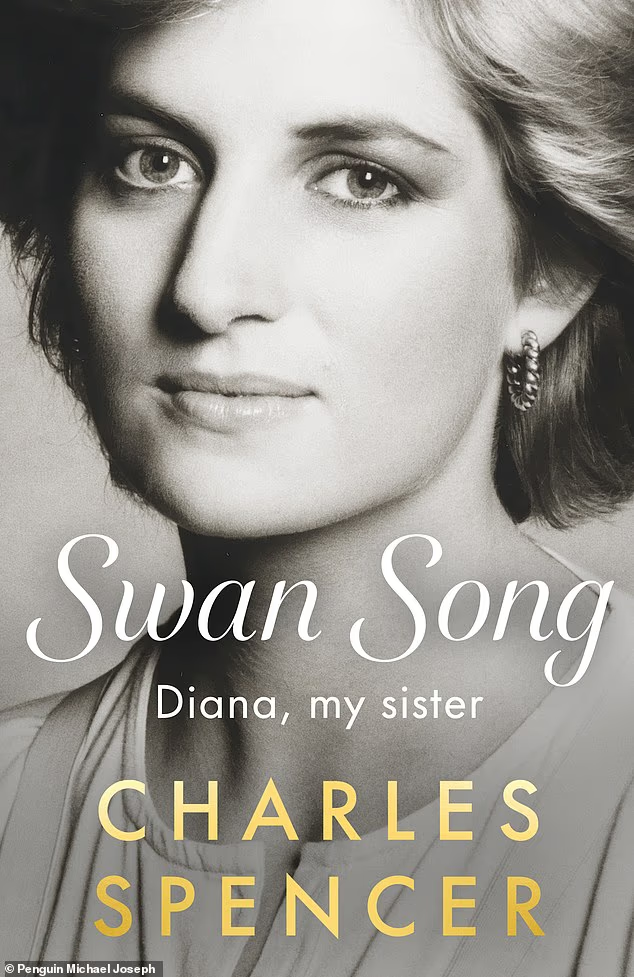
'Swan Song: Diana, My Sister' by Earl Spencer is due to be published on September 22

Earl Spencer has written a sensational memoir about his sister Princess Diana and the tumultuous aftermath of her tragic death, the Daily Mail can reveal.

Set to be published next month, ‘Swan Song: Diana, My Sister’ is a deeply personal account of his relationship with his sibling, which he has never told before.

The book, described as ‘historic’ and ‘extraordinarily moving’, is expected to cover Diana’s childhood, her deeply unhappy 15-year marriage to the then-Prince of Wales, and the febrile days following her shocking death in a car crash in Paris in August 1997.

Announcing the news today, Earl Spencer, 62, said: ‘With the 30th anniversary of Diana’s tragic death on the skyline, I’ve been inundated yet again with requests for interviews about my sister.

Advertisement

‘This has convinced me to write down my own thoughts and memories, once and for all, rather than having the discomfort of again reading the opinions of others, many of which are based on untruths that have become accepted over time.’

Swan Song, which will be published around the world and translated into 12 languages, is expected to provide an unprecedented inside account of a seismic week during which the House of Windsor was rocked by a global wave of public grief and anger.

Earl Spencer famously delivered a raw and defiant eulogy during Diana’s funeral at Westminster Abbey, which was broadcast to an astonishing worldwide audience of 2.5billion.

During the powerful oration, he highlighted how his sister ‘needed no royal title to continue to generate her particular brand of magic’.

Advertisement

‘Swan Song: Diana, My Sister’ by Earl Spencer is due to be published on September 22

Earl Spencer with his father Viscount ('Johnnie') Spencer and sister Princess Diana in 1989

Earl Spencer with his father Viscount (‘Johnnie’) Spencer and sister Princess Diana in 1989 

Diana with Charles Spencer in their early years. They called each other 'Carlos' and 'Duch'

Diana with Charles Spencer in their early years. They called each other ‘Carlos’ and ‘Duch’

Advertisement

He also pledged that Diana’s ‘blood family’ would protect Princes William and Harry ‘so that their souls are not simply immersed by duty and tradition, but can sing openly as you planned’.

His words so moved the huge crowds gathered outside that their spontaneous applause was eventually followed by clapping from the congregation inside the Abbey.

Earl Spencer today added: ‘The aim of this book is to tell the truth about Diana from her brother’s perspective, just as I attempted to do when speaking at her funeral.

‘As with my eulogy, I want to speak on Diana’s behalf and do so in an openly positive way.

Advertisement

‘I hope this book will be of interest to the many who still cherish the memory of Diana when she was alive, and I would be delighted if those too young to remember her in her heyday feel – after reading this – that they “get” who she really was: a one-off, dynamic character, full of love, charisma and self-doubt, who gave life a hell of a go, and left the world a far better place, despite exiting the stage while still so young.’

In the days leading up to the funeral, a heated row broke out behind the scenes over the decision for William and Harry to walk in Diana’s funeral procession.

Writing in his controversial 2023 memoir Spare, Harry disclosed that his uncle objected vocally at the time, describing as a ‘barbarity’ the idea of having the boys, then aged 15 and 12, following the funeral cortege.

He also revealed that when an alternative plan was suggested of having William walk alone behind the coffin, Harry objected, saying he did not want his brother to undergo the ordeal on his own.

Advertisement

Earlier this year, Earl Spencer described how ‘fundamentally unhappy’ he becomes every year on the anniversary of his sister’s death and how he finds it hard when strangers tell him where they were when she died.

Prince Philip, Prince William, Earl Spencer, Prince Harry and Prince Charles follow behind Princess Diana's coffin during the funeral procession to Westminster Abbey in September 1997

Prince Philip, Prince William, Earl Spencer, Prince Harry and Prince Charles follow behind Princess Diana’s coffin during the funeral procession to Westminster Abbey in September 1997

Earl Spencer addresses the congregation at Diana's funeral in Westminster Abbey in 1997

Earl Spencer addresses the congregation at Diana’s funeral in Westminster Abbey in 1997

Reflecting on Diana’s ‘extraordinary’ legacy, he added: ‘It’s different things to different people, particularly to women of a similar age. They really invested their lives in hers.

Advertisement

‘Maybe they had an unhappy marriage, maybe they battled an eating disorder. There’s plenty of Diana to look into and take your bit out of – almost like a horoscope, you can make it make sense for you.’

Swan Song is due to be published in the UK by Penguin Michael Joseph, a division of Penguin Random House, on September 22.

The book’s striking cover features an elegant black-and-white photograph of Diana.

Publisher Daniel Bunyard today said: ‘This is a book of historic importance, telling as it does the story of one of the 20th century’s most iconic and culturally significant figures, but it is also utterly unique in being written by Earl Spencer, from a vantage point of such intimacy.

Advertisement

‘Charles Spencer is both a loving brother and an acclaimed memoirist as well as a celebrated historian, and all these facets are brought together in Swan Song.

‘It is extraordinarily moving, beautifully written and remarkably candid, in no small part due to Charles’s rare ability to access great emotional depth without sentimentality, honest observation without rancour, and warmth without gloss.

‘While these pages contain many revelations that will draw considerable attention, readers will find, for the first time, but also for all time, a fitting tribute to the beloved woman who was Princess Diana.’

Charles Spencer and Diana grew up at the idyllic Park House on Queen Elizabeth’s Sandringham estate in Norfolk, until the family moved to Althorp in 1975 when Charles was 12.

Advertisement
Princess Diana and Prince Charles at Munich Opera House in November 1987

Princess Diana and Prince Charles at Munich Opera House in November 1987

Diana affectionately called her younger brother ‘Carlos’, while he would call her ‘Duch’ – short for duchess.

Their father, Viscount (‘Johnnie’) Spencer, had been equerry to both Queen Elizabeth and her father, George VI, while Diana’s mother, Frances, was the younger daughter of the 4th Baron Fermoy.

Diana was the Spencers’ third daughter and not the longed-for son who would secure continuance of the title. When Charles was born three years after Diana, a fireworks display was held in celebration.

Advertisement

Frances left Johnnie, later the 8th Earl Spencer, for the wallpaper heir Peter Shand Kydd in 1967. In an acrimonious custody battle the following year, Frances was dubbed ‘a bolter’ and lost the care of Diana, Charles and their older sisters Jane and Sarah.

From the age of eight, Charles was sent to Maidwell Hall boarding school in Northamptonshire, where he suffered appalling physical and sexual abuse.

In an extract from his poignant 2024 memoir A Very Private School, serialised exclusively in The Mail on Sunday, he described how a predatory assistant matron – whom he called a ‘voracious paedophile’ – preyed on him and other boys, grooming and then abusing them in their dormitory beds.

Earl Spencer had a ringside seat during his sister’s marriage to the future King, their eventual bitter separation and, in 1996, their divorce.

Advertisement

In 2020 he revealed how rogue BBC reporter Martin Bashir spun a shocking web of deceit to obtain his 1995 Panorama interview with Diana, during which the princess famously declared ‘there are three of us in this marriage’ – referring to Camilla Parker Bowles.

Bashir showed the Earl forged bank statements to gain access to Diana and then tricked her by peddling a string of lies, including that Prince William’s watch had been bugged to record her conversations.

The Duke and Duchess of Sussex and their children Archie and Lilibet reportedly visited the Althorp estate last month, where they are thought to have laid flowers on Diana’s grave.

The princess’s final resting place is on a tree-covered island in the middle of an ornamental lake called the Oval Lake.

Advertisement

Swan Song by Charles Spencer (Penguin Michael Joseph, £28). To order a copy for £23.80 go to www.mailshop.co.uk/books or call 020 3176 2937. Free UK delivery on orders over £25. Promotional price valid until 30/09/2026. 

Source link

Continue Reading

NewsBeat

Russia summons Japanese envoy following Putin’s visit to disputed islands

Published

on

Russia summons Japanese envoy following Putin's visit to disputed islands

MOSCOW (AP) — Russia’s Foreign Ministry on Tuesday summoned the Japanese ambassador to protest Tokyo’s condemnation of President Vladimir Putin’s trip to Kuril Islands, the Moscow-controlled Pacific archipelago that is claimed by both countries.

Last week, Putin visited Iturup, one of the four southernmost islands of the chain, which Japan calls the Northern Territories. The Soviet Union took them from Japan in the final days of World War II, and the dispute has kept the countries from signing a peace treaty formally ending their hostilities.

Japan’s Prime Minister Sanae Takaichi said Putin’s visit, his first to the islands, was “incompatible with the Japanese position on the Northern Territories” and is “absolutely unacceptable.” She said the visit was a further blow to already-strained ties between the two countries over Ukraine, and that Moscow should understand the consequences.

Japanese Foreign Minister Toshimitsu Motegi said Tokyo “strongly protests” Putin’s visit to Iturup, which Japan calls Etorofu, noting that “the Northern Territories, including Etorofu Island, are Japan’s inherent territory both historically and from the perspective of international law.”

Advertisement

On Tuesday, Russia’s Deputy Foreign Minister Mikhail Galuzin met with the Japanese Ambassador Akira Muto to lodge a formal protest over the “anti-Russia” statements by Takaichi and Motegi.

“Russia’s sovereignty and jurisdiction over the southern Kuril Islands are absolutely unshakable,” Galuzin told Muto, according to the Foreign Ministry.

“These territories passed to our country as a result of World War II that was enshrined in the relevant agreements of the Allied Powers and the U.N. Charter,” the ministry said. “Any attempts by the Japanese side to directly or indirectly call this obvious reality into question are absolutely unacceptable and unlawful.”

Galuzin told the ambassador that in view of Tokyo’s adherence to Western sanctions against Russia and its support for Ukraine, “Moscow reserves the right to take appropriate countermeasures.”

Advertisement

Decades of diplomatic efforts to negotiate a settlement haven’t produced any visible results. Moscow over the years has also bolstered its military presence on the Kurils in moves that appeared to underscore its firm stance in the dispute.

Speaking last week aboard a Russian warship taking part in the drills in the Pacific, Putin said Moscow previously “had developed constructive relations with a number of Japanese leaders, including the tragically deceased former Prime Minister Shinzo Abe, who did much to bring Japan and Russia closer together, to align our positions.”

Japan imposed sanctions on Russia after it sent troops into Ukraine in February 2022 and “listed Russia as a source of primary threats,” a change in that constructive relationship, he added.

Russia remains ready “to cooperate with all its neighbors, including Japan and other states in the region,” Putin said.

Advertisement

Source link

Continue Reading

NewsBeat

RICHARD LITTLEJOHN: Let’s hose down these shameless MPs and venal water bosses

Published

on

Water levels in England's rivers and reservoirs have dropped dramatically after an exceptionally hot and dry summer

With parts of the country coming to resemble the 1930s Oklahoma dustbowl and others the set of the 1961 disaster movie The Day The Earth Caught Fire, there is one oasis where householders are spared restrictions on water usage.

Millions of residents supplied by Severn Trent water are not subject to the otherwise widespread hosepipe bans imposed on much of drought-stricken Britain.

From Lincolnshire in the east to Gloucester in the south and Welshpool in the west, 4.6 million householders are free to carry on as normal, watering their gardens and washing their cars and windows.

Severn Trent is trusting its customers to preserve water voluntarily and sensibly without introducing punitive measures. In other parts of Britain, breaching a hosepipe ban can result in fines of up to £1,000.

Advertisement

The company is proud of its record in maintaining continuity of supply while encouraging alternative conservation measures such as collecting rainwater in butts. It claims to be fixing leaks at record levels. Consequently, it hasn’t had to impose a hosepipe ban for three decades. The last one was in 1995.

You might have thought that this was a cause for celebration. You’d be wrong.

The Environment Agency, which regulates the water industry, criticised Severn Trent for sending out the ‘wrong message’.

Wrong message?

Advertisement

Water levels in England’s rivers and reservoirs have dropped dramatically after an exceptionally hot and dry summer

Surely Severn Trent should be congratulated for avoiding a ban as a result of responsible management of supplies – unlike most of the other water companies in Britain who have banned domestic hosepipes while failing to stop leaks from the mains flooding streets and wasting millions upon millions of gallons.

Admittedly, those unfortunate folk who lost their homes to fire in Stourbridge, which falls within Severn Trent, have no reason to celebrate. But their terrible ordeal was reportedly caused by human stupidity – sparks from a disposable barbecue – not by any shortage of water to tackle the flames.

Advertisement

So why on earth is the Environment Agency chiding Severn Trent for not imposing a ban?

Simple. That’s the way the bureaucratic mindset always works. It demands conformity, even when there’s no justification. We saw this in extremis during the blanket Covid lockdowns, which were rigorously enforced unnecessarily. Hefty fines for sunbathers and dog walkers, for instance.

The thinking goes: if there are no restrictions in Severn Trent, then how long before residents in other areas start to think they can defy the hosepipe bans with impunity? All must suffer equally.

The real scandal here is that householders right across Britain are being punished for the failure of politicians and privatised utility companies to do their job properly. Britain is an island with plentiful annual rainfall and is surrounded by water. Yet under successive governments, there hasn’t been a new reservoir built since 1992, despite the population explosion caused by mass immigration. There’s only one desalination plant – in Beckton, east London – and by all accounts that’s hopelessly inadequate.

Advertisement

Water shortages aren’t caused by ‘climate change’ or semi-detached suburban Mr James washing his new Chinese-built EV. It’s down to a hopeless lack of forward planning by ministers and civil servants and greedy water company directors paying themselves and shareholders billions in bonuses and dividends, which should have been invested in reservoirs, distribution pipelines and plugging leaks.

So the paying public must suffer, through water rationing and ever-higher bills. The latest scam is a plan to levy Uber-style ‘surge pricing’ that would allow the water companies to charge more during droughts. It’s seen cynically as a way of forcing people to use less water or face much bigger bills.

Householders right across Britain are being punished for the failure of politicians and privatised utility companies to do their job properly, writes Richard Littlejohn

Householders right across Britain are being punished for the failure of politicians and privatised utility companies to do their job properly, writes Richard Littlejohn

Governments of all stripes have neglected spending on essential infrastructure projects while feeding the welfare monster to buy bigger televisions for layabouts and free cars for chancers allegedly suffering from ‘anxiety’.

Advertisement

Time and again, we are made to pay for their incompetence, mistakes or pursuit of policies which have no popular support.

Take mass immigration. No one has ever voted for that, yet the population continues to rise inexorably, putting extreme strain on public services.

The politicians have failed miserably to stop the boats or ‘smash the gangs’. As a result, tens of thousands of illegal migrants arrive here every year in ever-larger cross-Channel boats. Yet rather than turn them back, our Border Force ‘rescues’ them and brings them ashore, where they are fed and watered and given free sim cards for their mobile phones.

Our new, mandate-free PM declares that we must all share the burden of accommodating military-age, single young men from alien cultures in settled communities, such as the village of Piddington in Oxfordshire. He insists middle-class areas must take in more.

Advertisement

Why? His first duty is to British citizens, not undocumented economic migrants who have no right to be here.

Yet again, though, we are expected to live with the consequences of the problems which the politicians themselves have created, often deliberately and with utter contempt for the people they were elected to serve.

Same goes for the privatised, snouts-in-the-trough utilities, such as the water companies whose directors put filling their boots ahead of ensuring continuity of supply and now expect us to pay for their greed and neglect through rationing and sky-high ‘surge’ prices.

Yet the only criticism of any of these monopoly companies the Environment Agency can muster is to attack Severn Trent for continuing to serve its customers and not imposing a hosepipe ban.

Advertisement

You couldn’t make it up.

Richard Littlejohn with an Arabic translation of Mein Kampf during a documentary

Richard Littlejohn with an Arabic translation of Mein Kampf during a documentary

A bookshop in London’s Arab quarter, on the Edgware Road, has withdrawn from open sale copies of Hitler’s Mein Kampf, in which the Fuhrer sets out his vile anti-Semitic manifesto, after protests from a nearby synagogue.

Apparently, though, it’s still available in reference libraries and online.

Advertisement

This story intrigued me because almost 20 years ago, when I was filming my TV documentary The War On Britain’s Jews, I bought a copy of an Arabic translation of Mein Kampf and held it up on camera.

The bookshop which sold it to me was on the Edgware Road, probably the same one. Given the frightening explosion of far-Left/Islamist anti-Semitism in London since October 7, I shouldn’t be surprised to find that in another 20 years Mein Kampf is on every state school GCSE syllabus.

Never mind flying ants and mosquitoes, the hot weather is driving rats indoors in search of food. Apparently, Roland doesn’t like the heat any more than we do.

There have been casualties, too. But what would you do if you stumbled across an injured or ailing rat? Plan A would surely be to smash it over the head with a spade and dump it in the recycling bin under a stack of newspapers.

Advertisement

Not according to the RSPCA. Mail reader Malcolm Swift has drawn my attention to the animal charity’s website, which advises you to pick it up using thick gloves, wrap it in a towel, tuck it up in a secure container and contact a vet or ‘wildlife rehabilitator’. Who in their right mind wants to rehabilitate a rat? Then again there’s apparently no limit to sentimental stupidity when it comes to what most of us would consider vermin, such as foxes, and pests, such as wasps.

Yes, wasps.

A woman called Eilish Rothney, who works for the Norfolk Wildlife Trust, discovered a wasps’ nest in her office. Instead of sending for an exterminator, she decided to foster them. ‘The poor things are starving,’ she said and thought they should be provided with sugar.

(I think we’ve already found a clear winner of this year’s Here We Go Looby Loo awards.)

Advertisement

‘I’ll be sad when they leave. I do feel motherly towards them.’

She could always adopt a rat.

Source link

Advertisement
Continue Reading

Trending

Copyright © 2025