Connect with us
DAPA Banner

NewsBeat

Cambridgeshire garden named as one of the best picnic spring spots in the UK

Published

on

Cambridgeshire Live

The garden also has woodland play areas and sculpture trails for children to enjoy

Advertisement

A garden in Cambridgeshire has been named as one of the best places in the UK for a spring picnic. Bloom & Wild has created a list of the the UK’s “most beautiful botanical gardens and green spaces” to enjoy in the spring and summer.

The list featured the Spring Garden at the popular National Trust site Anglesey Abbey. The garden is described as coming “into its own” throughout the spring months and features daffodils and hyacinths.

You can enjoy taking in the flowers around the garden while soaking up the sun or snap a few springtime photos. The flowers are “complemented by the avenues of Amelanchier lamarckii, more commonly known as June berry” and a horse chestnut tree.

On the garden, Bloom & Wild said: “Anglesey Abbey is covered in thousands of daffodils throughout the spring months, with over 40 varieties of the stunning spring flowers. With woodland play areas, wind in the willows [sic] sculpture trails, it’s a perfect nature spot to take the kids in spring. The garden also welcomes picnics to be enjoyed throughout the garden with the exception of formal areas.

Advertisement

“The aptly named Spring Garden comes into full bloom in spring with daffodils and hyacinths, the Formal Garden blooms with tulips and hyacinths in shades of blues and whites through to April.”

After exploring the Spring Garden, you can also take a look around the rest of the estate. The Formal Garden is also popular for the springtime and is planted with blue and white tulips and hyacinths. There are also a few different walking and cycling trails to follow around Anglesey Abbey and its surrounding countryside.

For children, there is a woodland play area that features a climbing frame, balance beams, and swings for kids to let off steam. There are also areas places for children to get creative and involved in den-building or bug-hunting.

Advertisement

After walking through the gardens, you could take a visit to the Garden Office Café for a quick drink while overlooking the Rose Garden. If you need something to eat, the Redwoods Restaurant that offers light meals, a range of snacks, and homemade cakes and traybakes for a sweet boost.

Entry to the National Trust site costs £19 for adults and £9.50 for children between the ages of five and 17. There are a few family tickets available as well.

Anglesey Abbey is a 21-minute drive away from Cambridge via the B1102. There is a free car park for visitors.

Source link

Advertisement
Continue Reading
Click to comment

You must be logged in to post a comment Login

Leave a Reply

NewsBeat

Channel 5 – All Creatures Great and Small series 7 new post

Published

on

Channel 5 - All Creatures Great and Small series 7 new post

Channel 5 has confirmed that series seven of All Creatures Great and Small, its most successful drama series to date, has begun filming this spring in the Yorkshire Dales, with more heartwarming stories set to unfold in the fictional market town of Darrowby.

Based on the memoirs of Yorkshire vet James Herriot, the series has charmed audiences since its 2020 debut, airing six annual seasons to date, five in September and one in October.

All Creatures Great and Small (Image: CHANNEL5)

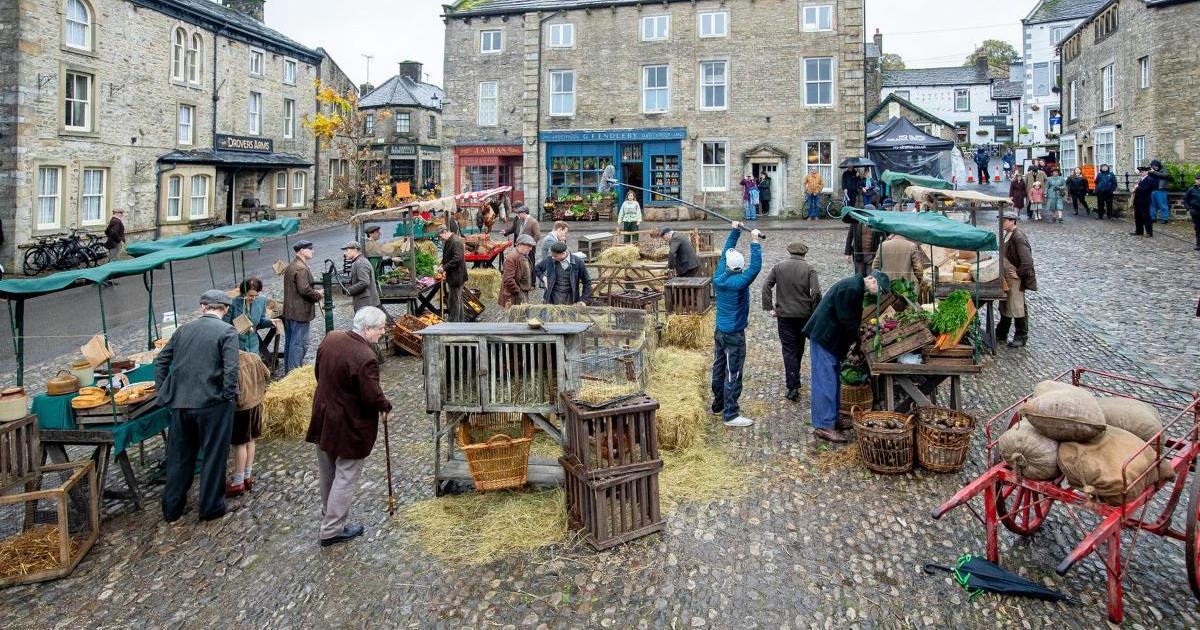
Filming began on March 25 in Grassington, North Yorkshire, which doubles as the fictional town of Darrowby with its period shop fronts and cobbled streets.

The Yorkshire Dales National Park Authority highlighted the return of filming in a recent social media post.

Advertisement

The authority said: “Last week we saw the set of “All Creatures Great and Small” return to Grassington!

“The cast enjoyed rare sunny weather whilst filming for the sixth series of this popular drama took place in Grassington, transforming the village into the fictional town of Darrowby.”

Channel 5’s Commissioning Editor, Greg Barnett, said: “All Creatures Great and Small is a jewel in 5’s drama crown and continues to delight viewers year after year.

Advertisement

“Its warmth, humour and heart, set against the beauty of Yorkshire, have made it a firm audience favourite.

“We’re thrilled to extend its future with two more series, with many new stories still to tell and more unforgettable adventures ahead for our Skeldale family.”

Production on the seventh series was confirmed earlier this year by cast member Samuel West, who plays Siegfried Farnon.

Mr West posted a behind-the-scenes photo showing Nicholas Ralph, who plays James Herriot, looking out across the Yorkshire landscape in costume.

Advertisement

He captioned the photo: “Nick enjoying today’s location near Burnside.

“Feel very blessed to be working in the Dales on days like these.”

Rachel Shenton (Helen Herriot), Callum Woodhouse (Tristan Farnon), and Anna Madeley (Mrs Audrey Hall) are also expected to return for series seven.

Grassington that doubles as Darrowby (Image: CHANNEL5)

Plot details for the new season remain under wraps, but Mr Barnett hinted at “unforgettable adventures” still to come.

Advertisement

Channel 5 and Masterpiece have renewed the series for both a seventh and eighth season, underlining the show’s continued popularity.

Series seven will once again comprise six episodes and a Christmas special.

Production crews also filmed scenes in Bradford city centre in March, transforming part of the city into 1940s London with vintage vehicles and period detail.

The sixth series wrapped up with a Christmas special, which included the emotional return of Helen (Rachel Shenton).

Advertisement

The seventh season is expected to continue from where it left off.

Greg Barnett said viewers can look forward to new tales of rural Yorkshire life and more heartfelt moments from their favourite characters.

Though a premiere date for series seven has yet to be confirmed, the autumn schedules appear likely, given the consistent release pattern of previous seasons.

Advertisement

Source link

Continue Reading

NewsBeat

Dramatic car fire spreads to bus stop in Cambridge

Published

on

Cambridgeshire Live

A road was closed while the firefighters tackled the fire

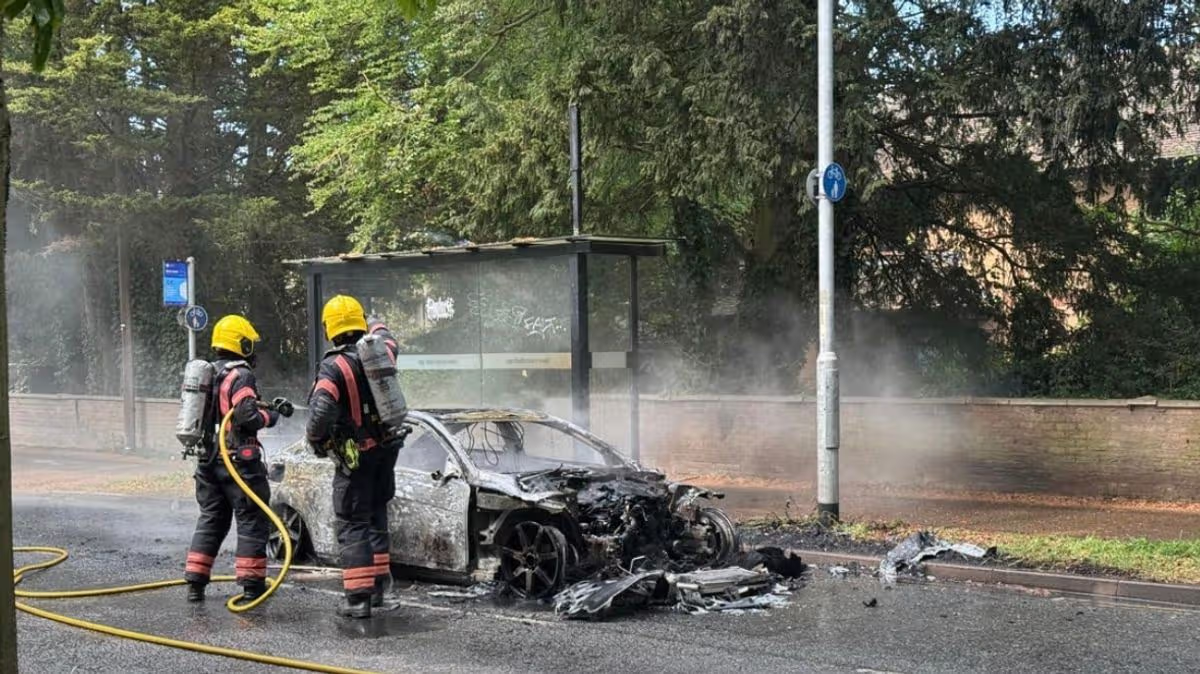
Firefighters were called to a road in Cambridge after receiving reports of a car in flames on Saturday, May 2. Cambridgeshire Fire and Rescue Service were called at 12.49pm to a car fire on Brooklands Avenue.

A crew from Cambridge arrived to find a car “well alight”. The fire had spread to a nearby bus stop.

The road was closed so the firefighters could tackle the fire safely and make the area safe. The crew used a hose reel and returned to their station by 2:11pm. The cause of the fire was confirmed to be accidental.

Advertisement

Source link

Continue Reading

NewsBeat

What your vacuum cleaner says about you

Published

on

What your vacuum cleaner says about you

The world of vacuum cleaners, it seems, is a tribal one, particularly among Telegraph readers, where brand loyalty is key.

Whether it’s a battle-hardened Henry dragged from job to job, a durable, German-engineered machine or a high-tech Dyson, each choice reflects a different philosophy of cleaning and often says as much about your priorities as it does about your floors.

When we recently updated our guide to the best vacuums, the comments were full of varying opinions and recommendations. So, here’s the advice worth considering next time you’re in the market for a new one.

Advertisement

The people’s champion: Henry

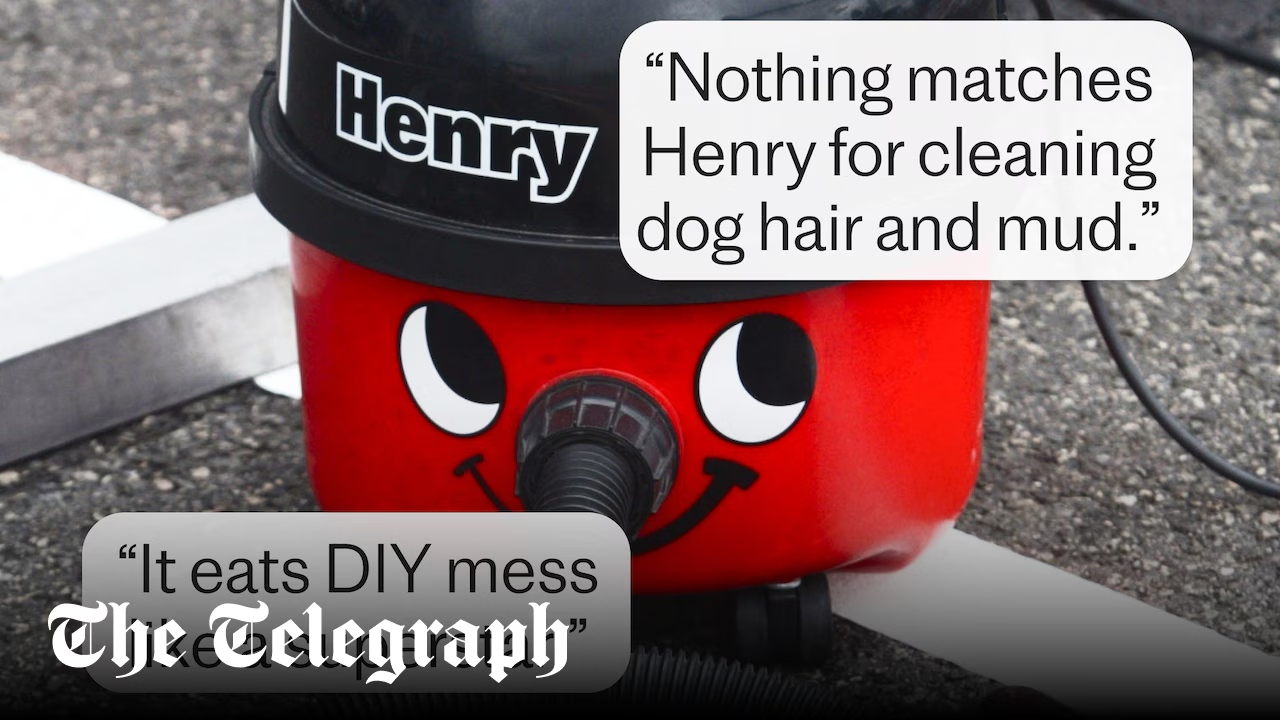
Unpretentious, nostalgic and found everywhere from tradesmen’s vans to family homes, Henry is by far the most highly-rated vacuum cleaner among our readers, and for good reason. Made by British brand Numatic, the vacuum is reliable, indestructible, and even fireproof, as one reader explains.

Henry is “the vacuum cleaner of choice” for David Jones, who regards the brand as the best for helping to manage maintenance on various facilities.

While at home, he prefers to use George: “It is basically a Henry with a wet extraction carpet cleaner bolted on. It can be used as a dry vacuum and works well.”

“I like Numatic stuff in general because its cleaners are powerful, robust and cheap. Parts are readily available, not that I seem to need them much,” he explains.

Advertisement

Jones has tried other vacuums in his work, such as a Dyson stick vacuum, which he found “expensive, flimsy, not very powerful and with limited battery life”.

Source link

Continue Reading

NewsBeat

The tragic Cambridgeshire RAF plane crash that left five dead

Published

on

Cambridgeshire Live

Three children and two people in the plane were killed as a result of this horrific crash

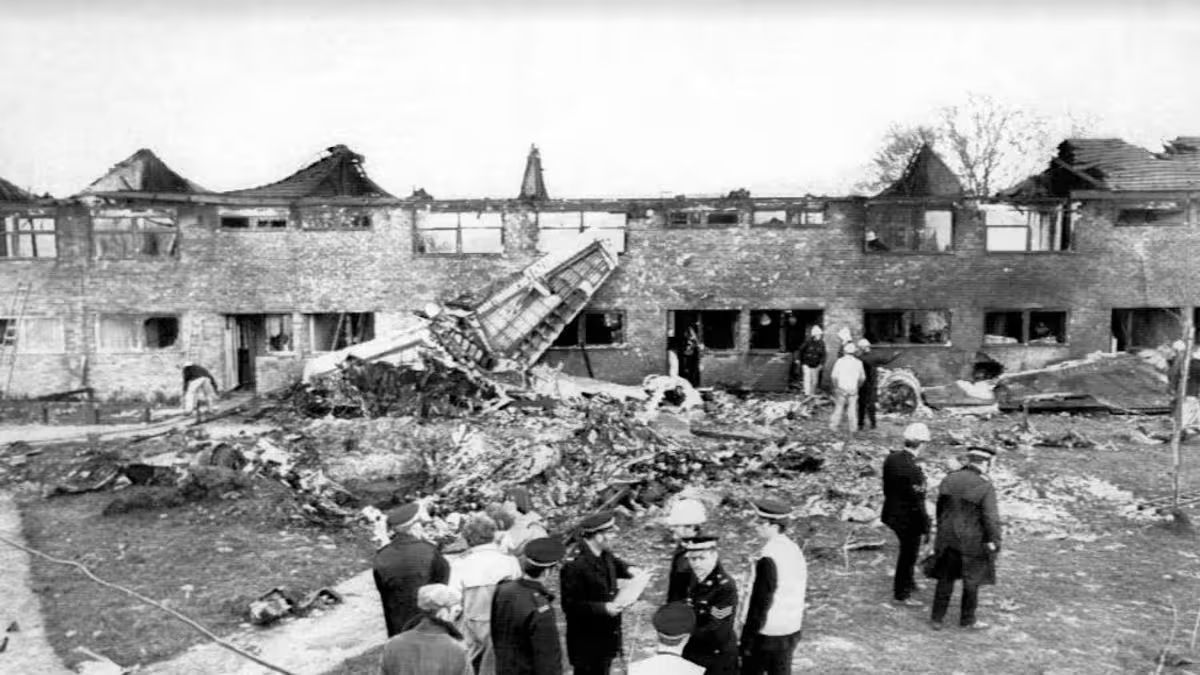
May 3 marks the 49th anniversary of one of the most catastrophic events in the history of the Cambridgeshire town of Huntingdon. The horrific event took place on May 3, 1977, when an RAF plane crashed into houses which resulted in five death.

Advertisement

The accident happened on Norfolk Road in Huntingdon and led to the deaths of three children and two air pilots. At about 11am, the Canberra was on its way back to RAF Wyton near Huntingdon after a routine training flight.

About two miles from the end of the runway, it crashed by some houses in the estate of Oxmoor. It is believed that the plane crash was caused by the pilot losing control.

Sisters Kelly Middleton and Tracey Middleton, aged two and four respectively, and baby Adrian Thompson who was only three and a half months old, all died. The pilot, Flt Lt John Armitage, 27, and navigator Fly Lt Lawrence Davies, 26, were also killed in the crash.

The event is still felt by locals of Huntingdon today. In 2017, Huntingdon Town Council unveiled a memorial bench and five tree plaques to mark the 40th anniversary and to remember the lives lost. The memorial is located on Norfolk Road near the site of the crash.

Advertisement

In 2023, the council, with representatives from RAF Wyton, held a ceremony at the memorial and installed an interpretation board to tell the story of the tragedy. Sunday, May 3, Huntingdon Town Council about posted the anniversary, marking 49 years to remember those “who lost their lives, and all those who were affected”.

Source link

Advertisement
Continue Reading

NewsBeat

Welsh Greens leader says Zack Polanski has ‘cleared things up’ after ‘horrible situation’

Published

on

Wales Online

Welsh Green Party leader Anthony Slaughter made the comments during a party campaign held in Cardiff this weekend

The leader of the Welsh Greens said Zack Polanski has “cleared things up” after backlash over a post he shared about the Golders Green police officers. Welsh Green Party leader Anthony Slaughter made the comments during a party campaign held in Cardiff this weekend.

Advertisement

Mr Polanski, the Green Party leader, has since apologised for sharing the post which accused officers of violently kicking the stabbing suspect in the head after he had already been incapacitated. He has faced criticism from Prime Minister Keir Starmer and Met Police chief Mark Rowley as well as from within his own ranks.

Earlier this week Anthony Slaughter, leader of the Welsh Greens, said during an LBC debate that the post seemed “inappropriate”. But at the party’s campaign event at the Church of Saint John the Evangelist in Canton Mr Slaughter said: “I think he’s cleared things up and he’s apologised – he’s offered to meet the Met commissioner.

“I was on the spot (during the LBC debate) because I’d only just heard about it as I walked in, so that was my own personal feelings on it. I can’t speak for Zack but, as far as we’re concerned, it’s all been cleared up now. It’s a fast-moving, horrible situation, social media moves fast.

“Zack is the leader for the moment. The party was very strong already, don’t get me wrong, people going beforehand built the strong foundation. But he is so passionate, so committed, and really, he’s really stood by Wales over the years. So he’s always welcome here.”

Advertisement

Speaking at the campaign event in Canton, Greens candidate Tessa Marshall used her speech to extend sympathy to Mr Polanski. She said: “I just wanted to say a huge thank you to you for everything you’ve done for this campaign and everything you’ve done for this party, like, it is seriously, so, so impressive.

“Everything that you’ve done and everything that you’re going through right now is absolutely… we see it. We are appalled by all the targeting, all of the… just hatred and nastiness that is coming your way. We see it and we feel it. I feel it, a part of it, I’m only getting a tiny, tiny portion of it and it is really, really hard.”

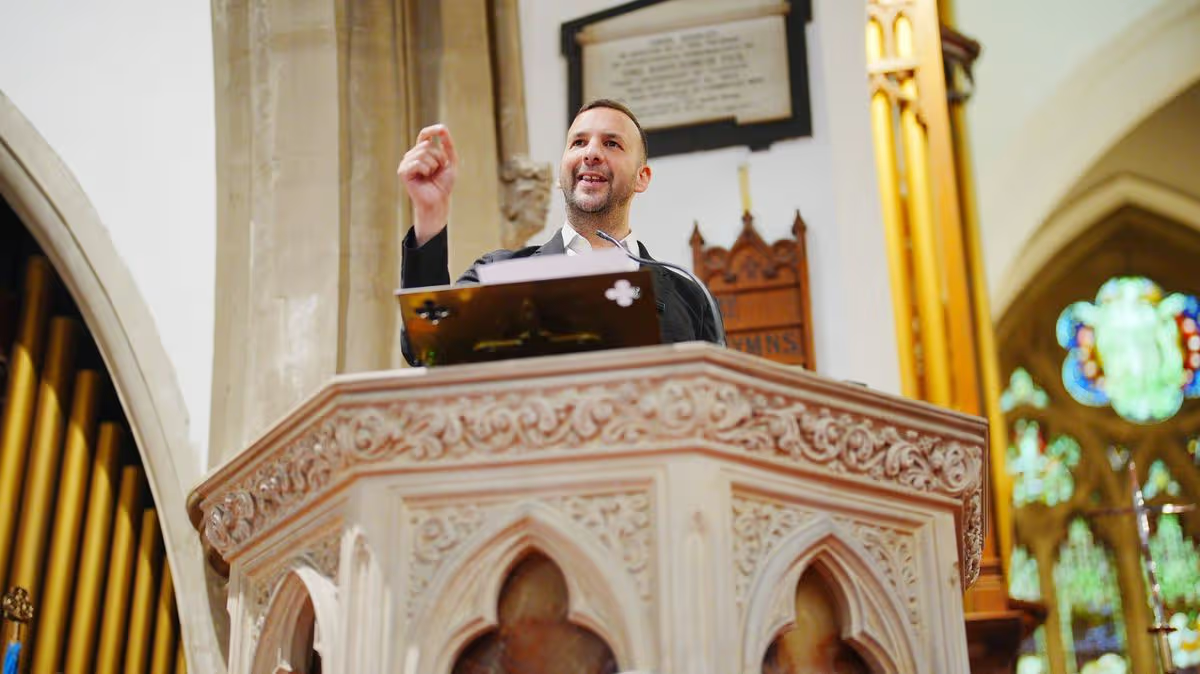
At the event Mr Polanski, who addressed candidates, members and supporters from the pulpit, said Green Party politicians will not be tempted by “fancy dinners or fancy drinks”. He insisted the Greens are not “professional politicians” and will not “get caught up with the establishment”.

Advertisement

He spoke to an audience of candidates and supporters in the run-up to the Senedd election on Thursday where the Greens are aiming to win their first ever seats.

He continued: “We need people to know that when they elect a Green Senedd member they are not electing professional politicians like other parties. They’re electing people who have had jobs in their lives, who know what it’s like to struggle, who know what it’s like to be in their community.

“And that’s exactly the person who, when they go to the Senedd, will not suddenly get caught up with the establishment and enjoy the fancy dinners or fancy drinks.”

“I won’t talk about drinking in Parliament,” he added, appearing to reference remarks made by Green MP Hannah Spencer in an interview with Politics Joe where she criticised MPs for drinking between votes.

Advertisement

Ms Spencer became the party’s most recent MP after winning the by-election in Gorton and Denton, south-east Manchester, in February. Mr Polanski said the by-election triumph demonstrated that “when it comes to Green Party versus billionaires, the Green Party can win every single time”.

He added: “The second reason why I mention Gorton and Denton is I remember being there a few days before the election, looking out at the crowd, and just thinking: ‘This is a crowd that wins things.’ I’m having that same feeling right now. Let’s go out there and let’s fight and campaign for every single vote, but also let’s recognise the momentum and the forward motion that Wales Green Party has right now.

“This moment didn’t just come about and, in fact, I’m often flattered by (people) saying, did this moment happen when you were elected leader? Certainly, there’s been a boost. But this moment has been happening for a long time. Wales Green Party has been building, people have been doing the hard yards, and this is the moment that everything pays off.”

Source link

Advertisement
Continue Reading

NewsBeat

Daniel Sturridge backs Man Utd star to go to ‘the next level’ after Liverpool win | Football

Published

on

Daniel Sturridge backs Man Utd star to go to 'the next level' after Liverpool win | Football
Daniel Sturridge after Man Utd’s victory over Liverpool (Picture: Sky Sports)

Daniel Sturridge has explained how Kobbie Mainoo can go to ‘the next level’ after Manchester United’s thrilling Premier League victory over Liverpool.

Mainoo, who was cast aside by former United boss Ruben Amorim, scored the winner in a 3-2 victory over Premier League champions Liverpool on Sunday.

Michael Carrick’s Manchester United raced into a two-goal lead at Old Trafford thanks to early goals from Matheus Cunha and Benjamin Sesko.

A routine home win looked inevitable at the half-time interval but Liverpool made a strong start to the second-half, scoring twice through Dominik Szoboszlai and Cody Gakpo.

Advertisement

The game was on the line at that point but United rescued back momentum and clinched a win that secures Champions League football through Mainoo’s 77th-minute goal.

England international Mainoo signed a contract extension with Manchester United during the week and celebrated his new deal by sealing the win over arch-rivals Liverpool.

Former England striker Sturridge was impressed by Mainoo’s performance against Liverpool and backed the 21-year-old to go to ‘the next level’.

Manchester United v Liverpool - Premier League
Kobbie Mainoo scored the winner at Old Trafford (Picture: Getty)

‘For Kobbie, it was a difficult time [under former manager Ruben Amorim,’ Sturridge said on Sky Sports. ‘Mentally, hearing your manager say “you’re up against Bruno Fernandes.”

‘Now, for him to come back into the squad week in and week out, he’s building some momentum. I would love to see him go to the next level.

Advertisement

‘I’d like to see him work on his explosiveness which he will get because he is only 21. And I want to see him bulk up.

‘Then, I think he will be strong and robust. He will be a guy in there who can run. I think he needs to work on his capacity to run.

Manchester United v Liverpool - Premier League
Michael Carrick celebrates beating Liverpool (Picture: Getty)

‘I think Kobbie does have the capability to do that, but he doesn’t show it consistently. If he bulks himself up and gets explosive, we’re talking about a guy that can go to the next level.’

Discussing Mainoo’s revival since Amorim’s sacking, ex-Manchester United boss Roy Keane added: ‘It’s a great moment for him.

‘He’s had his challenges over the last few months. That’s the journey of any young player. He’s taken his opportunity. To score the winning goal for any local kid, it’s fantastic.

Advertisement

‘The last six months will be quite good for him. For a young player at a big club, he comes on the scene and getting all the headlines, doing well and then getting involved with England.

‘The last few months, people have been talking about him going out on loan, but I always said that sometimes you have to sit and learn, watch the game and the team.

‘In football, there are good and bad experiences and I’ll think he’ll learn from this last few months than when he first got into the team.

‘He’s had to mature, he’s got his new deal, he’s had to learn his trade. He’s a young player, he’s still learning, he’s got years before he even peaks.’

Advertisement

Mainoo, meanwhile, reflected on the ‘difficult’ spell he had at boyhood club Manchester United after sealing the win over Liverpool.

‘Happy to turn it [the season] around, it’s a credit to all our players and the manager as well,’ he said. ‘We still need to finish the season strong, this is not enough for us.

‘It was difficult of course, anytime you’re not playing football. I just tried to look forward as much as possible and to keep my head down.’

On Carrick’s role since taking over as interim manager, Mainoo added: ‘He’s played a huge part in it, all the confidence he gives all the players. You want to follow him and fight for him and die for him on the pitch.’

Advertisement

While Manchester United have secured Champions League football and are third with three games remaining, Liverpool stay fourth, level on points with fifth-placed Aston Villa.

For more stories like this, check our sport page.

Follow Metro Sport for the latest news on
FacebookTwitter and Instagram
.

Advertisement

Advertisement

Source link

Continue Reading

NewsBeat

Ryanair to cute millions of UK seats overnight as it confirms Berlin base closure

Published

on

Wales Online

The budget airline has confirmed it will shut its seven-aircraft operating base at Berlin Brandenburg Airport (BER) from October

Ryanair is poised to slash flights from several UK airports following confirmation it will shutter a significant base in Germany.

Advertisement

The budget carrier revealed it will close its seven-aircraft operation at Berlin Brandenburg Airport (BER) from 24 October 2026. Alongside this development, Ryanair announced it will halve its flight capacity to and from the German capital throughout its winter timetable.

Consequently, routes linking Berlin with UK destinations such as London, Manchester, Birmingham and Edinburgh are anticipated to face disruption. The airline presently operates direct services from these airports to Berlin multiple times weekly, with journey times of approximately two hours, according to the Express.

While Ryanair hasn’t specified exactly which UK routes face the axe, it disclosed that Berlin passenger numbers will plummet from 4.5 million to 2.2 million in 2027.

Advertisement

The operator added that upwards of two million Ryanair seats annually will vanish as a consequence of the base closure. Ryanair confirmed it will maintain Berlin connections, albeit using aircraft stationed beyond Germany’s borders.

All seven Berlin-stationed aircraft will relocate to more economical airports across other EU nations, encompassing Sweden, Slovakia, Albania and Italy. The carrier attributed the decision to escalating airport fees and aviation levies in Germany.

Ryanair DAC CEO Eddie Wilson stated: “We regret to announce this planned closure of our seven aircraft Berlin base from 24 Oct 2026, but we have no alternative following the Airport’s latest 10% fee increase to its already high airport fees.

“This comes on top of the 50% increase in Berlin’s airport fees since 2019. Despite Berlin Airport losing 30% of its pre-Covid traffic thanks to its excessive airport charges, and Germany’s stupid aviation tax regime, they have now decided to increase charges by a further 10%, which will result in the loss of more than 2m Ryanair seats p.a. and seven based aircraft.

“Ryanair will still serve Berlin but on a/c based outside Germany and our Berlin traffic will fall by 50% from 4.5m to 2.2m pax in 2027.”

He added: “German aviation is broken. The Govt. admits that it is uncompetitive, yet there is no strategy to cut aviation taxes or high airport fees – despite Ryanair warning that Germany would lose traffic, connectivity, jobs and trade.”

Mr Wilson stated that additional reductions across Germany were “now inevitable” unless substantial cost reforms were implemented.

Advertisement

Ensure our latest news and sport headlines always appear at the top of your Google Search by making us a Preferred Source. Click here to activate or add us as Preferred Source.

He continued: “Efficient operations and competitive airport fees are the foundation which enable Ryanair to deliver long-term traffic growth and increased connectivity for airports and regions.

“This is impossible at Berlin following the German Govt’s failure to abolish its harmful aviation tax and Berlin Airport’s decision to again increase its already high airport fees.”

The airline confirmed that pilots and cabin crew stationed in Berlin have been informed of the proposed base closure.

Advertisement

Consultations with staff will commence in the near future, with affected personnel given the opportunity to seek alternative positions across the carrier’s European operations.

Source link

Continue Reading

NewsBeat

How the Great Strike tore through Durham like a tornado

Published

on

How the Great Strike tore through Durham like a tornado

“EVERY second shop in Newgate Street, the main street in Bishop Auckland, shuttered up and the shopkeeper ruined,” wrote the town’s prospective MP Hugh Dalton in his diary 100 years ago.

This was not the result of an out-of-town shopping centre. This was because of the General Strike which broke out a century ago this weekend and brought Britain to a standstill.

READ MORE: PICKETS IN PRIESTGATE AND FURY IN FERRYHILL: DAY-BY-DAY HOW THE GREAT STRIKE UNFOLDED IN THE NORTH-EAST

In Bishop Auckland, Dalton, leading member of the Labour Party, found “white-faced women who starved themselves to feed their children” and “men sitting silent in clubs too poor to buy either a drink or a smoke”.

Advertisement

Later, in December 1926, he made a single entry: “Miners hopelessly defeated”.

Digging for coal at Murton during the 1926 strike

Coal lay at the start and finish of the General Strike.

More than one million miners made coal the largest industry in Britain, and in 357 towns and villages of County Durham, it shaped the social geography.

Coal mining was the dirtiest, most dangerous (more than a thousand deaths annually) and dehumanising occupation in the country (80 per cent of coal was hewn by hand-pick). It gave rise to class conflict and the most appalling industrial relations.

Advertisement

A County Durham soup kitchen during the 1926 strike.

But after the First World War, there was a falling demand for coal, and the strike originated in an attempt by mine-owners to pass the problems of a declining industry down to their workers. Rather than amalgamate struggling pits, the owners tried to cut wages and increase hours.

The situation was aggravated by Chancellor Winston Churchill restoring Britain’s currency to the Gold Standard in 1925 in an attempt to regain the country’s financial prestige. This meant Britain’s currency was over-valued at a time when other countries were devaluing – therefore, cheap foreign coal came into Britain while British coal for export became 10 per cent dearer – and Durham coal was an exported commodity.

Miners resisted the owners’ changes – “not a penny off the pay, not a second on the day” – and appealed to the Trades Union Congress, which represented eight million workers, for support.

When lengthy negotiations failed as miners refused to accept inferior terms, they were “locked out” of their collieries on April 30. They reacted by going on strike on May 1.

Advertisement

Miner solidarity was total and was almost equalled by the 1.75 million workers called out by the TUC in support.

Yet on May 12, the strike – a “nine days wonder” – was over as the TUC capitulated.

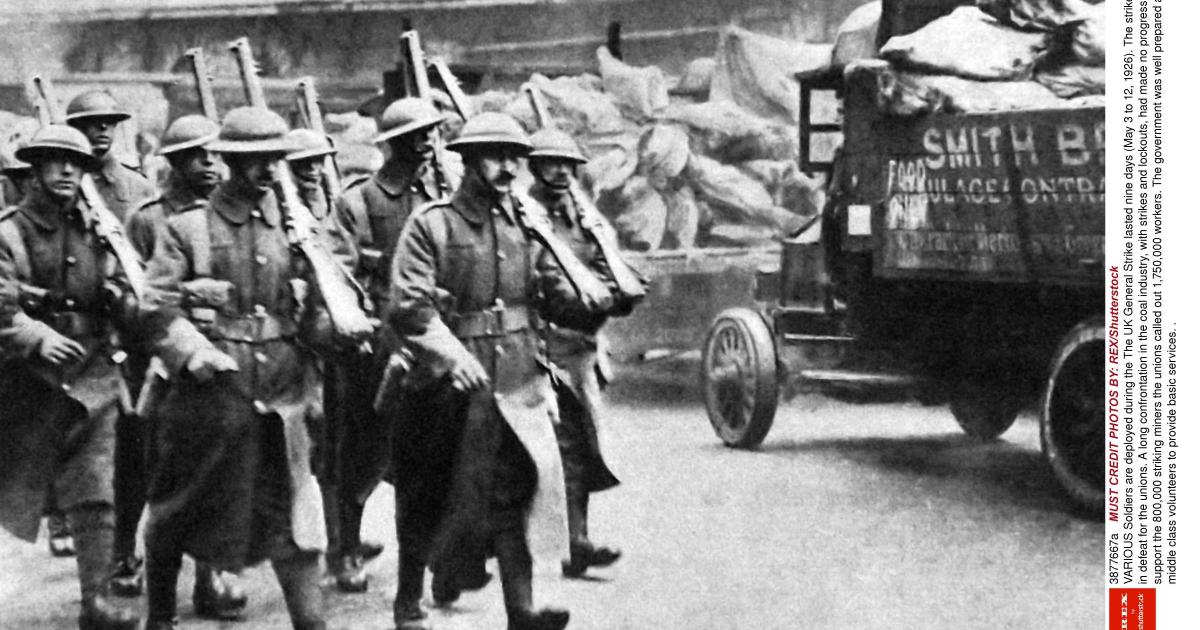
The troops are called in to deal with the strikers. Photo by Universal History Archive/REX/Shutterstock The troops are called in to deal with the strikers. Photo by Universal History Archive/REX/Shutterstock

Most miners continued to strike for six months until starvation and isolation – Dalton’s diary highlighting the appalling conditions on the ground in the coalfield – forced them to accept the owners’ harsh terms, and the lock-out ended.

Responsibility for this dire state of affairs can be shared between the four participants.

Advertisement

The TUC was anxious to protect its members’ wages but its leaders were divided and timid. They hoped not to paralyse the country but to pressure the government into forcing concessions from the owners. Afraid of “reds”, moderates like Ernest Bevin sought a Trumpian “exit ramp” from early days.

Righting a bus that was turned over in Glasgow by strikersRighting a bus that was turned over in Glasgow by strikers

The men’s leaders, like the Miners’ Federation of Great Britain (MFGB) secretary and gifted orator Arthur Cook, trusted neither the TUC nor a Conservative government. He stubbornly held to the rhetorical “not a penny off the pay, not a second on the day” long after May 12, until union funds of £4m were exhausted.

Colliery owners, at a time of right-wing government, adopted an intransigent stance. They remained deaf to calls for colliery improvement and felt they only had to wait the strike out. Even Tory hawk Lord Birkenhead called them the “stupidest men in England” and Prime Minister Stanley Baldwin found them “stupid and discourteous”.

During the 1926 Great Strike, unemployed miners formed fashionable jazz bands to wile away the hours. This is the No Place Nobblers, from near StanleyDuring the 1926 Great Strike, unemployed miners formed fashionable jazz bands to wile away the hours. This is the No Place Nobblers, from near Stanley

Baldwin shrewdly grasped that by trying to coerce him, the TUC had converted an industrial dispute into a political one. He was thus able to portray himself as a “man of peace” and to brand the strike as a threat to the constitution.

Advertisement

By contrast, Churchill denounced striking workers as “the enemy” trying to “hold up the nation”, words that could have been a rehearsal for the way the 1984 miners’ strike was presented by another Conservative government.

History suggests that, against these forces, the strike was doomed from the beginning.

Planning by the TUC was eleventh hour, improvised and fragmented. There were more than 500 Councils of Action acting virtually autonomously, such as the proactive and radical centre of Chopwell (“Little Moscow”), in Gateshead.

FIGHTING FOR COAL: Striking miners digging for coal at South Hetton during the 1926 strike

By contrast, government planning was timely and comprehensive. Coal and food were stockpiled and an emergency structure divided Britain into 10 districts. Each was under a Civil Commissioner empowered to recruit half-a-million (chiefly middle class) “patriotic volunteers” and to use the armed forces to ensure that food was smoothly delivered.

Advertisement

Warships also acted as an intimidating presence by turning their guns towards ports.

Leadership was exercised effectively by Baldwin and based on a clear strategy of protecting parliamentary democracy, while the supine TUC shrank from turning off the lights and fires and bringing industry to a halt.

Local leaders were more impressive. In Chopwell, Will Lawther – later the Labour MP for Barnard Castle – led the blocking of roads from Newcastle to Consett in order to undermine “volunteer” action, and he was imprisoned after the police baton-charged his supporters outside the Gateshead court.

The Flying Scotsman derailed near Cramlington when strikers removed a rail from the East Coast Main LineThe Flying Scotsman derailed near Cramlington when strikers removed a rail from the East Coast Main Line

In propaganda terms, Churchill orchestrated the government case in a nationally circulated newspaper called “The British Gazette”.

Advertisement

By contrast, the TUC deprived itself of favourable coverage by calling out the printers to strike! Their “British Worker” newspaper was hand-printed and circulation in Durham was limited to 16,000. In Blaydon, workers produced a publication called “The Northern Light” which was cyclostyled on equipment which was moved from house to house to avoid arrest.

The technically independent BBC focused on the political issue too and even blocked a broadcast of the Archbishop of Canterbury’s peace initiative. Its chairman was Darlington coal lord Jack Pease, Baron Gainford.

Road transport was at the centre of most of the trouble, but in general food and coal supplies were maintained. On Newcastle quayside, a submarine and two destroyers were moored beside a food-ship and convoys to Consett had police escorts.

It cost the United Bus Company £600 to repair damage to vehicles in Bishop Auckland.

Advertisement

Volunteers numbering 25,000, including university students, were available in the North East to drive private cars and lorries, and a further 12,000 acted as special constables. Of a national figure of 1,760 arrests for disorder, 396 were in the North East District.

Thankfully, no one was killed in the UK.

In the last analysis, the power of the state prevailed. The TUC had no stomach for the fight and the government spent £433m on winning it.

In working class Durham, there was little for strikers to do as support was solid and blacklegs practically unknown.

Advertisement

It was a hot summer and men at first enjoyed the natural warmth and light, and relief from toil.

But some families were turned out of their tied housing by the mine owners, and by July, with no benefits system for able men, food was running short. Perhaps in mining villages, some men could hunt and fish or “acquire” vegetables, but in towns there was more scavenging, notably of coal from heaps and railway lines, but also men had the possibility of casual work.

There was no paid work available for women and they can be seen to have been the real victims of the strike.

By November, only five per cent of Durham miners had returned to work, but by the end of that month, the privations their families and communities were suffering, forced the majority to accept severe, locally-dictated terms.

Advertisement

Nationally, the triumph of the owners meant there was no reorganisation and so nationalisation, universally popular with miners, did not come about until 1947.

In 1927, Baldwin introduced an Act of Parliament that outlawed sympathetic strikes. This, though, was seen by some as unnecessarily vindicative and contributed to his ousting in 1929, although it was not repealed until 1946.

The miners remained stoical and stubborn but recognised that a better future lay in supporting Labour politics rather than in industrial action. They were rewarded as early as 1929 with the formation of the second Labour government, with Will Lawther defeating the sitting Conservative MP Cuthbert Headlam in Barnard Castle.

Some miners and their supporters were victimized in 1926 but the strike was also a warning to employers that conciliation and collective bargaining were less risky than confrontation. And with non-militant men like Bevin leading the unions away from direct action, the result was relative industrial peace until the 1970s.

Advertisement

Sadly, 60 years after the General Strike, the lessons of under-preparation and taking on a strong government were not learned by a future miners’ leader who shared a first name with his role model Arthur Cook.

Glynn Wales at the Tommy statue in Seaham

  • Glynn Wales, of Bishop Auckland, began his career as a history teacher in 1969 at Ferryhill Grammar School, and he rose to become head of Ferryhill Comprehensive until he retired in 1997 to join Durham university and train the next generation of history teachers

Source link

Continue Reading

NewsBeat

Two migrants die in Channel crossing attempt off French coast

Published

on

Two migrants die in Channel crossing attempt off French coast

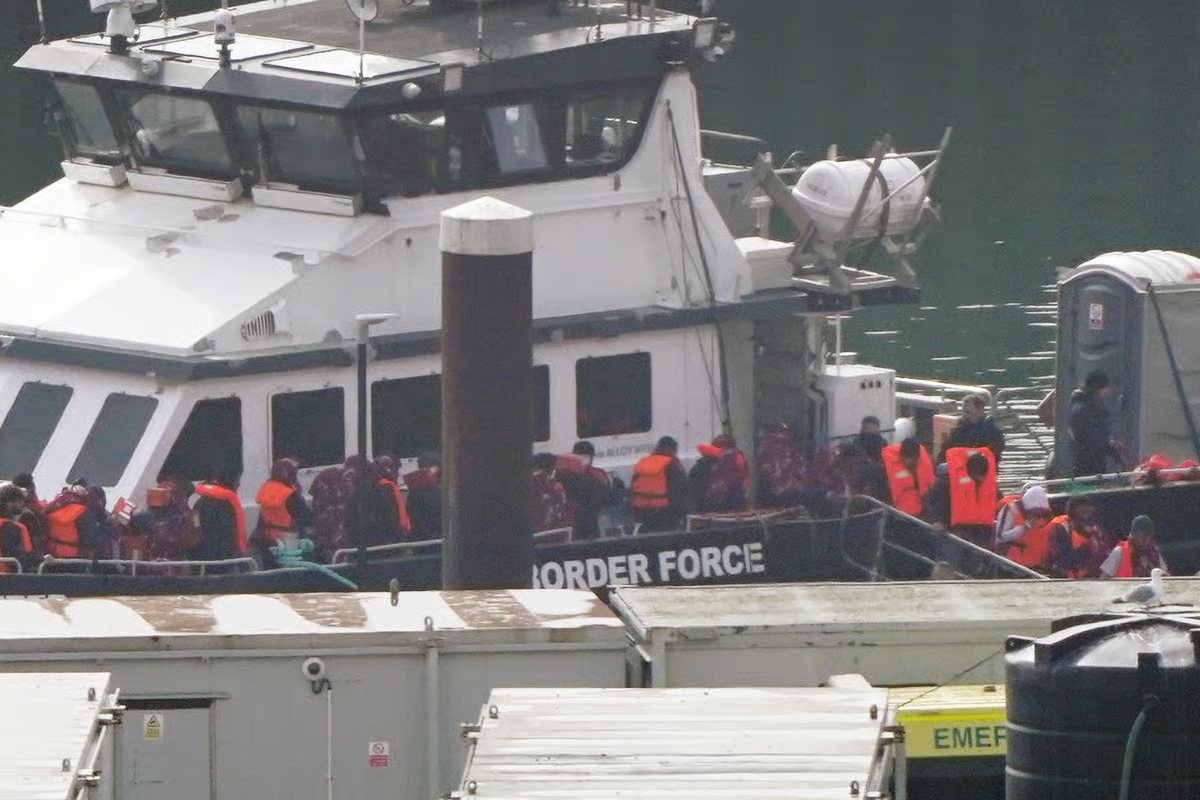
French authorities said in a statement: “All state services were mobilised to respond to this incident, with the involvement of the national gendarmerie, border police, aerial resources — including drones — the departmental fire and rescue service, as well as volunteers from Civil Protection, and resources co-ordinated by CROSS Gris-Nez under the authority of the Maritime Prefecture of the Channel and the North Sea.

Source link

Continue Reading

NewsBeat

Watch: Abay Finishing straight sprint wins 44th Phoenix Energy Belfast City Marathon by a split second

Published

on

Belfast Live

Ethiopian athlete Abay Alemu was first past the post in today’s event

Ethiopian long-distance runner Abay Alemu claimed victory at the 44th Phoenix Energy Belfast City Marathon earlier today by only a split second with a lung-busting finishing straight sprint.

Advertisement

More than 23,000 thousand people ran or jogged in the 44th Belfast City Marathon. The event started at Stormont Estate and finished in Ormeau Park with an array of entertainment provided to support the spectators and visitors.

An event spokesperson said: “It was a great day for athletes across the island of Ireland and beyond, congratulations to Abay Alemu winning the 44th Phoenix Energy Belfast City Marathon in a time of 2:16:23 with second place winner Teadese Mamo right beside in a time of 2:16:24. Third place was Abera Ketema in a time of 2:17:38.

READ MORE: Man charged with five offences over Dunmurry police station attackREAD MORE: Callum Hutchinson funeral: Tipperary teen killed in Antrim crash laid to rest

“For the ladies, Aziza Alaoui Selsouli came in first in a time of 2:38:00. In second place, Judith Storm of City of Derry Spartans finished in a time of 2:39:09 with Melissah Gibson of Ealing Eagles s third in a time of 2:42:44.

Advertisement

“Congratulations also to Jayne Bleakley who won the Wheelchair Race in a time of 2:32:39. A full list of the results will be available at www.belfastcitymarathon.com on Monday May 4, 2026.”

For all the latest news, visit the Belfast Live homepage here and sign up to our daily newsletter here.

Source link

Advertisement
Continue Reading

Trending

Copyright © 2025