Connect with us

NewsBeat

‘Careless’ Peterborough crash left man with ‘nightmares’ and ‘excruciating pain’

Published

on

Cambridgeshire Live

‘Sometimes my wife has to shake me to stop me shouting’

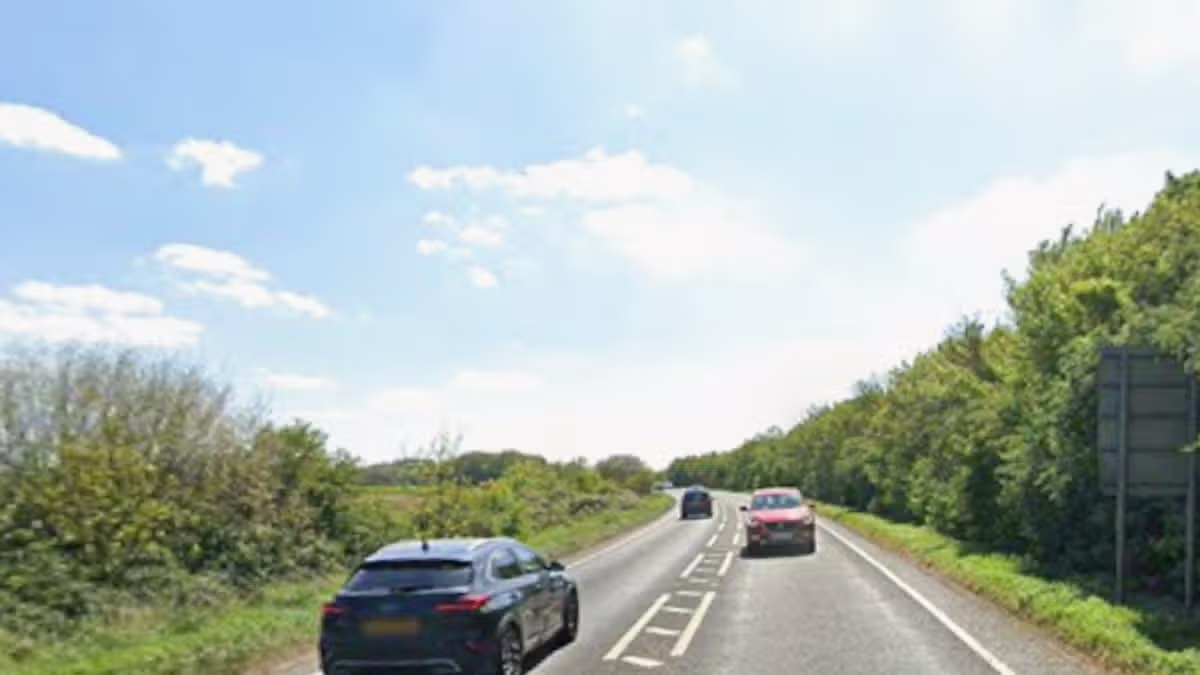
A driver left a man with “excruciating” pain and “nightmares” nearly a year after a crash. A motorcyclist was left “fighting for his life” after a crash involving a car and motorbike on September 29, 2025 on the A15 at Glinton.

Advertisement

The driver of the car, Les Rodgers, 52, was arrested and later charged with causing serious injury by careless and inconsiderate driving. Rodgers, of Black Prince Avenue, Market Deeping, was also charged with driving a motor vehicle with a proportion of a specified controlled drug above the specific limit, after he tested positive for cannabis in his system.

Rodgers appeared for sentencing at Peterborough Magistrates Court on Tuesday (August 11). For prosecution, Olaide Esan told the court how Rodgers was in stationery traffic on September 29, with the motorcyclist “overtaking this slow moving traffic”.

Rodgers then carried out a U-turn, leading his car to “go into the motorbike”. The court heard how the victim was left with “severe injuries”, which required three surgeries and “lengthy treatment”.

Ms Esan read out a victim statement from the motorcyclist dated from March 2 this year. The court heard how the victim has issues with his right leg, and he was “able to move a little on crutches”.

Advertisement

The statement added: “I still need to be supervised by my wife and told to take my medications.” The court also heard how the man had “not walked” properly since September 29.

The victim said he was “keen to get back to work”, but was unable to work for now due to his injuries. He added that he suffers “excruciating pain”, especially in his lower back.

“The pain is constant and throbbing,” the statement added. The court also heard that when the man wakes up in the morning, he feels like “concrete”.

Ms Esan also told the court that the pain “wakes the victim up at night” and he was “not getting as good a sleep” as he did before the crash. The statement added: “I am getting nightmares. Sometimes my wife has to shake me to stop me shouting. The nightmares are like I am in a box I can’t get out of.”

Advertisement

The victim concluded in his statement that he held “no animosity” towards Rodgers, but he wanted him to be “aware of what I have been through since the collision”.

In mitigation, for the defence, Mr Mohammad asked the judges to give credit to Rodgers for his earlier guilty pleas. The defence added that Rodgers was “remorseful and apologetic”, and that he reflected on the incident on a “daily basis”.

The court heard how Rodgers had not consumed drugs since the crash in order to keep a “clear head”. Rodgers was ordered to serve a high level community order for 18 months, including 15 days of rehabilitation activities. He was also disqualified from driving for 18 months, having served four months of that already.

Source link

Advertisement
Continue Reading
Click to comment

You must be logged in to post a comment Login

Leave a Reply

NewsBeat

Solar eclipse glasses sold out in Wales – how to safely watch without them

Published

on

Wales Online

Solar eclipse glasses have sold out across Wales ahead of today’s near-total solar eclipse, but there are still safe ways to watch the celestial spectacle beginning at around 6pm on August 12

Solar eclipse glasses have become completely unavailable across Wales, and it seems virtually impossible to secure delivery by this evening even through major online retailers. Nevertheless, those hoping to witness the first near-total solar eclipse in the UK since 1999 can still do so safely using several alternative methods.

Advertisement

The astronomical phenomenon is expected to commence at approximately 6pm today (August 12), reaching its maximum shortly after 7pm before concluding at around 8pm. Precise timings will vary depending on your location across the country.

Stocks of specialist eyewear have been depleted ahead of the event, with convenience stores, national parks and the Royal Observatory Greenwich all running out. The observatory alone has shifted roughly 15,000 pairs over the past month.

Experts have cautioned people against being lured by “knock-off” alternatives or resorting to ordinary sunglasses. Eclipse glasses must comply with the ISO 12312-2 safety standard, with uncertified versions potentially exposing eyes to damaging solar radiation, reports the Express.

What damage can directly looking at the solar eclipse cause?

Mohamed Elalfy, consultant ophthalmologist and president of the Royal College of Ophthalmologists, said: “The safest way to enjoy the eclipse is to observe it indirectly, such as by watching a live broadcast.

Advertisement

“Looking directly at the Sun during a solar eclipse can cause damage to the retina, potentially damaging the cells responsible for sharp central vision. Crucially, the retina has no pain receptors, so people will not feel the damage as it happens.”

NASA cautions against viewing the eclipse through cameras, telescopes or binoculars while simply wearing eclipse glasses. Tech news outlet BGR has additionally warned that directing a smartphone camera straight at the Sun risks damaging the device, as the powerful rays can become concentrated within the camera lens.

The risks were thrown into sharp focus following the UK’s 1999 total solar eclipse, when the Royal College of Ophthalmologists recorded approximately 70 cases of individuals reporting vision difficulties afterwards. Notably, around 40% had observed the eclipse for under a minute.

Advertisement

Symptoms may take several hours to manifest and include “blurred vision, a central blind or dark spot, distorted vision, reduced colour perception and increased sensitivity to light”.

Mr Elalfy added: “While some people recover over weeks or months, others can be left with permanent visual impairment.”

New Specsavers research found that 10% of Britons have previously viewed a solar eclipse without any eye protection, while 19% incorrectly believed it was safe to watch one through a camera or smartphone screen.

How can you safely watch the eclipse without glasses?

One of the most straightforward alternatives requires nothing more than an ordinary kitchen colander. Rather than gazing directly towards the Sun, observers can use its perforations to cast images of the eclipse onto the ground or another flat surface.

Advertisement

Imo Bell, a planetarium astronomer at the Royal Observatory, explained: “You can project the image of the eclipse using a household item like a colander which has lots of holes in – point the colander towards the Sun with your back facing it, and in the shadow of the colander you’ll be able to see the eclipse in the holes, which is really cool.”

A pinhole projector presents another alternative and can be fashioned using a single piece of card, while a more sophisticated version can be assembled from a cardboard box.

Even trees can offer a means to witness the spectacle. UK Health Security Agency guidance states that gaps between leaves can cast images of the Sun in much the same manner as the perforations in a colander.

Advertisement

Observers should position themselves with their backs to the tree and watch the eclipse materialise in the shadows formed through the gaps.

Can you watch the solar eclipse through a telescope or camera?

Kyla Black, Boots Opticians director of optical practice, said: “Budding astronomers who will be looking through cameras, binoculars or telescopes at the eclipse must make sure they have approved solar filters attached.

“If you’re not sure your telescope does, then contact the maker of the product to ensure you know you’ll be safe.”

Local astronomy centres might also be organising viewing sessions with properly filtered telescopes, offering an alternative for those who have been unable to secure eclipse glasses in time.

Advertisement

Source link

Continue Reading

NewsBeat

How medieval Scottish kings kept unrest at bay with populist policies

Published

on

How medieval Scottish kings kept unrest at bay with populist policies

Governments have always had to strike a balance between actions that are unpopular but thought to be necessary, and laws and policies that win them support from the public. In the UK, the new prime minister Andy Burnham has set out to grab the news agenda with a string of genuinely popular announcements.

Back in the middle ages, unpopular governments did not need to worry about the ballot box – but they did often face popular uprisings. The most famous of these was the 1381 Peasants’ Revolt in England – a serious of riots across the country against the corruption of government and local landlords. This is the most studied revolt of the middle ages, but there were many other uprisings across medieval Europe.

But one country where these uprisings were uncommon was Scotland. In my book, Protest, Resistance and Popular Politics in Late Medieval Scotland, I investigated why this might have been the case. One reason was the relative alertness of the Scottish state when it came to passing laws that eased the consequences of war, famine and plague for the people.

This is not to say that Scotland was anything close to a democracy, nor that Scottish kings pursued only those policies that would make them popular.

Advertisement

In the 15th century for example, both football and golf were banned in Scotland to ensure that people practised archery instead. The law was intended to ensure that the kingdom could be well defended against invasion. Yet, the banning of popular pastimes would not have gone down well, and the fact that these laws were passed four times that century suggests that they were repeatedly ignored.

Responding to the people’s struggles

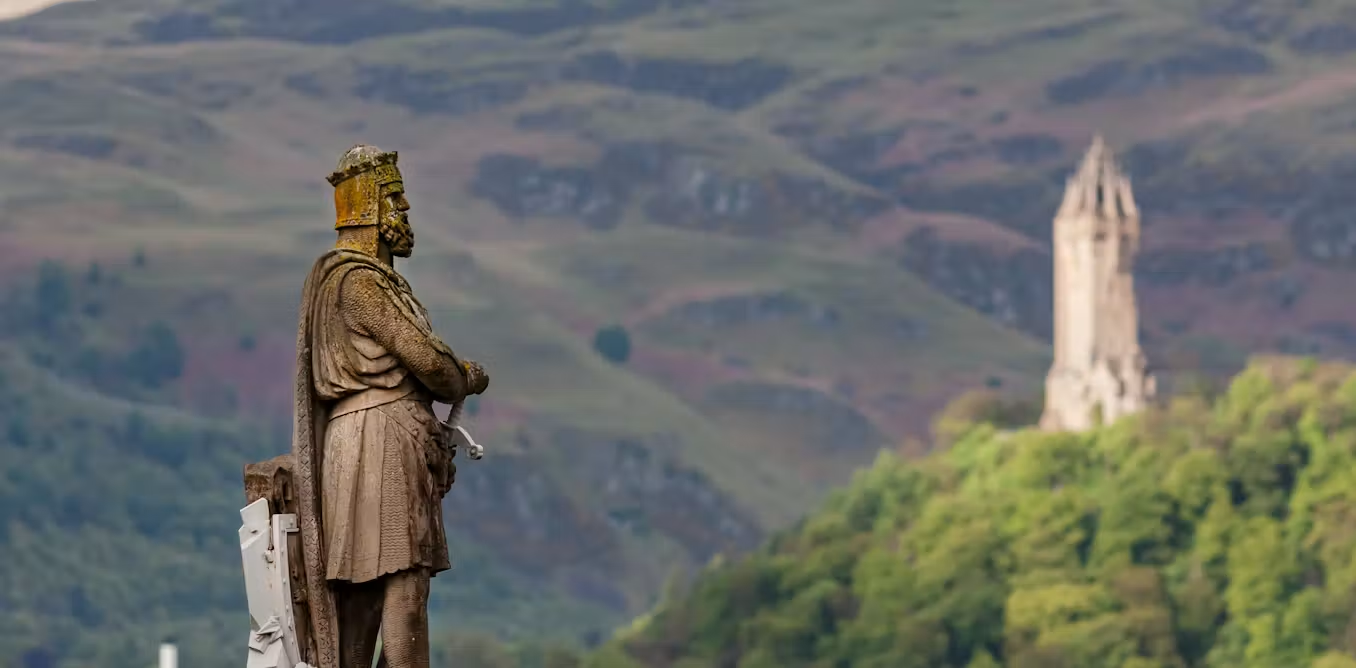
But a parliament held in 1318, during the reign of Robert the Bruce, shows how medieval kings could use laws to address social tensions. The parliament was held at the end of the Great European famine and after Scotland had experienced around three decades of bloody conflict with England in the first Scottish war of independence. It also followed a failed Scottish invasion of Ireland, in which the king’s brother, Edward Bruce, was killed.

As such, the king was not popular – and people may even have been questioning his right to rule. After all, Robert had seized the crown by force in 1306. Therefore, it was decreed that those who sowed discord between the king and his subjects by spreading “tales or rumours” would be arrested.

Yet despite clamping down on everyday speech in such an authoritarian way, the king was also keen to appeal to his poorest subjects. Bruce commanded that justice should be done as much to “paupers as to wealthy people”.

Advertisement

Several acts addressed the worsening socio-economic conditions of the time. One stated that soldiers who committed “murder, rape or theft” were to be tried by the justiciar, whose courts were the most important in Scotland, with only parliament being more powerful. Another forced lords who were joining the king’s army to ensure they brought enough food for their men, or pay them market rates for provisions.

Plague and famine hit Scotland, and much of Europe, throughout the 14th and 15th centuries. In 1439, a combination of disease along with poor harvests led to a devastating famine in the country. The cost of staples such as corn and oats appear to have spiked in that decade.

This would have been fresh in the memory of the young king, James II, in 1450 when an act sought to prevent merchants buying up essentials in order to ramp up prices. For those trying to profit from others’ misfortune in this way, their goods could be forfeited to the crown. This was soon after James reached adulthood and was able to run the kingdom by himself – the act meant he was seen to be tackling hardship by supporting ordinary people against profiteering.

Advertisement

King James II of Scotland (1430 to 1460) from Iconographia Scotica, published in 1797.
imageBROKER.com/Shutterstock

There were also instances when kings passed laws to benefit farmers. The most famous of these laws mandated the hunting of wolves and were passed in 1428 and 1458. Each baron was to lead a wolf hunt at the time when cubs were born.

The intention was to hunt the animals to extinction because they attacked livestock and were viewed as a danger. It seems the wolves held out though – it’s thought they remained in Scotland until the late 17th century. But with wolves widely viewed as a menace, if nothing else these laws showed the people that kings could recognise a commonly held problem that affected the lives of their subjects.


À lire aussi :
Farmers told me what they really think about reintroducing lynx and wolves to Britain and Ireland


Although they did not have to answer to the people in elections, medieval kings needed to court public opinion because, fundamentally, it made their lives easier. Protest and unrest could cause upheavals that kings wanted to avoid.

Advertisement

In Scotland, kings passed laws that had something of a “populist” appeal. They tried, though did not always succeed, to ensure that nobles behaved themselves and worked for the common good. Pressure of war, plagues, famine and economic hardship – if not addressed – could fester and escalate into large-scale uprisings. Some astute lawmaking, even if those laws were mostly statements of aspiration, combined with a bit of luck, might mean that medieval Scottish kings avoided mass rioting.

Source link

Advertisement
Continue Reading

NewsBeat

Energy bill warning as Government urged to make major change

Published

on

Energy bill warning as Government urged to make major change

E.On UK chief executive Chris Norbury has urged the Government to take energy policy costs off business electricity bills, arguing the move could encourage firms to invest and help drive the switch to cleaner energy.

The intervention comes as companies grapple with rising costs and uncertainty over future energy bills.

Mr Norbury said businesses of all sizes were “concerned” about the impact of higher energy costs and warned that additional policy charges could hold back investment.

Advertisement

E.On believes moving costs such as renewable energy levies into general taxation, or funding them through a dedicated energy transition fund, could ease the pressure on firms.

The energy giant said the move could also help unlock billions of pounds of investment in low-carbon technology.

Andy Burnham vows to ‘pull every single lever’

This comes as Andy Burnham has vowed to “pull every single lever” to help struggling households.

The Prime Minister is promising a series of “everyday fixes” to ease the pressure on household finances, with tougher rules on subscription traps and deceptive discounts among his first measures.


Recommended reading


Mr Burnham said: “Westminster has got used to telling people that everyday hassles like this are just part of life.

Advertisement

“I don’t think that’s right, especially when the cost of living continues to weigh heavily on so many people’s lives.

“I’m determined to pull every single lever we can to provide people with some room to breathe on the cost of living.”

Source link

Advertisement
Continue Reading

NewsBeat

‘Regret is a major theme of my work’: Matt Haig on finding acceptance

Published

on

‘Regret is a major theme of my work’: Matt Haig on finding acceptance

Best-selling author of The Midnight Library, Matt Haig, has made his career addressing regret and mental health. Now, at 50 years old and with the release of his new book The Midnight Train, he explains why acceptance descended on him

When Matt Haig thinks about regret, his mind goes back to the mental health crises he experienced in his early 20s, including a suicide attempt, and the impact it had on his girlfriend, now his wife.

“Me and Andrea have been together since we were 19, and I had a full-blown breakdown at the age of 24 and the years prior to that,” he says. “There was drink, drugs, bad behaviour, all giving Andrea hell. Then I went from being one type of nightmare boyfriend to the opposite type, who couldn’t leave the house and had to have his hand held to go to the corner shop for years, as I was agoraphobic.”

Advertisement

Now 50, Haig has found that, with time, “acceptance descends on you”.

“If you’ve spent enough time through depression, regretting and regretting, you start to regret the regret. It got to that point. Therapy helped.”

Advertisement

Haig’s personal experiences, particularly around mental health, have fed much of his work over the last three decades, from his breakthrough memoir Reasons to Stay Alive to the bestselling The Midnight Library, which explored alternate lives and roads not taken.

His latest novel, The Midnight Train, follows 81-year-old Wilbur, who boards a magical train after a heart attack and revisits key moments in his life, particularly his Venice honeymoon with his late wife, Maggie, confronting regret and the temptation to rewrite the past.

“Regret is a major theme of my work,” Haig says. “I feel this book is a companion to The Midnight Library. Whereas that was about there being no perfect life, this is more about not getting trapped in social pressures of status and workaholism and those very male things where, whatever level you’re at, you always feel you need one level higher.”

Advertisement

If you’ve spent enough time through depression, regretting and regretting, you start to regret the regret

That may be easier to say when you are one of Britain’s most widely read novelists.

“Yes,” he says, laughing. “But if you’re the type of person who always feels like you’re failing at something, that psychology stays with you. You tick a box and get something you’ve been dreaming of, whether in career or relationships, and you stay the same miserable git you were to start with.

“Then you think the problem is something else you’ve got to fix. That’s why we see so many celebrities go off the rails, because they haven’t fixed something they thought success was going to fix.”

He adds: “When the kids were young, me and Andrea were both, like a lot of new parents, in a state of freefall. I can’t remember much of those first 100 days. You treat everything too seriously and worry about everything. I’d love to go back and enjoy that more.”

Advertisement

Haig’s personal experiences, particularly around mental health, have fed much of his work over the last three decades

“There is always some calamitous world’s end to focus on, but what you remember at the end of your life is not going to be news footage, it’ll be the people you lived with.”

Advertisement

Born in Sheffield in 1975 and raised in Newark, Nottinghamshire, Haig says writing helped him find his feet, though it took time.

“A lot of people think Reasons to Stay Alive was my first book. I think it was number 10,” he says. “I started off being karaoke Ian McEwan, very intense, trying to win a Booker, and I realised that wasn’t me. Over time, I developed my own style.”

Part of that voice was shaped by his willingness to speak openly about mental health before it was common. “I’ve always had a dopamine hit from saying truths other people might find uncomfortable,” he says. “I like directness.”

Celebrities go off the rails because they haven’t fixed something they thought success was going to fix

However, that openness he says labelled him. “I wasn’t seen as Matt Haig the writer for a while, it was Matt Haig the mental health ambassador, and I didn’t feel equipped for that. People would write to me almost like I was a therapist. I was just someone who had had a breakdown, no longer was suicidal, and wrote about it.”

Advertisement

Now based in Brighton, with his wife, two children and two dogs, Haig has also found some relief in his 2021 autism and ADHD diagnosis.

“A lot of things clicked into place,” he says. “At school I was fidgety, couldn’t pay attention, always accidentally getting into trouble. I always wished there had been one clear reason for my struggles, because when you have depression you become a detective, trying to work out who did it.”

He smiles at the thought. “You almost envy people who had one triggering event. Mine was more diffuse. Some of it was family history, some bullying, some not fitting in, and part of it was being neurodivergent in a world that wouldn’t have recognised it. In the 1980s autism was basically Rain Man. That wasn’t me.”

Advertisement

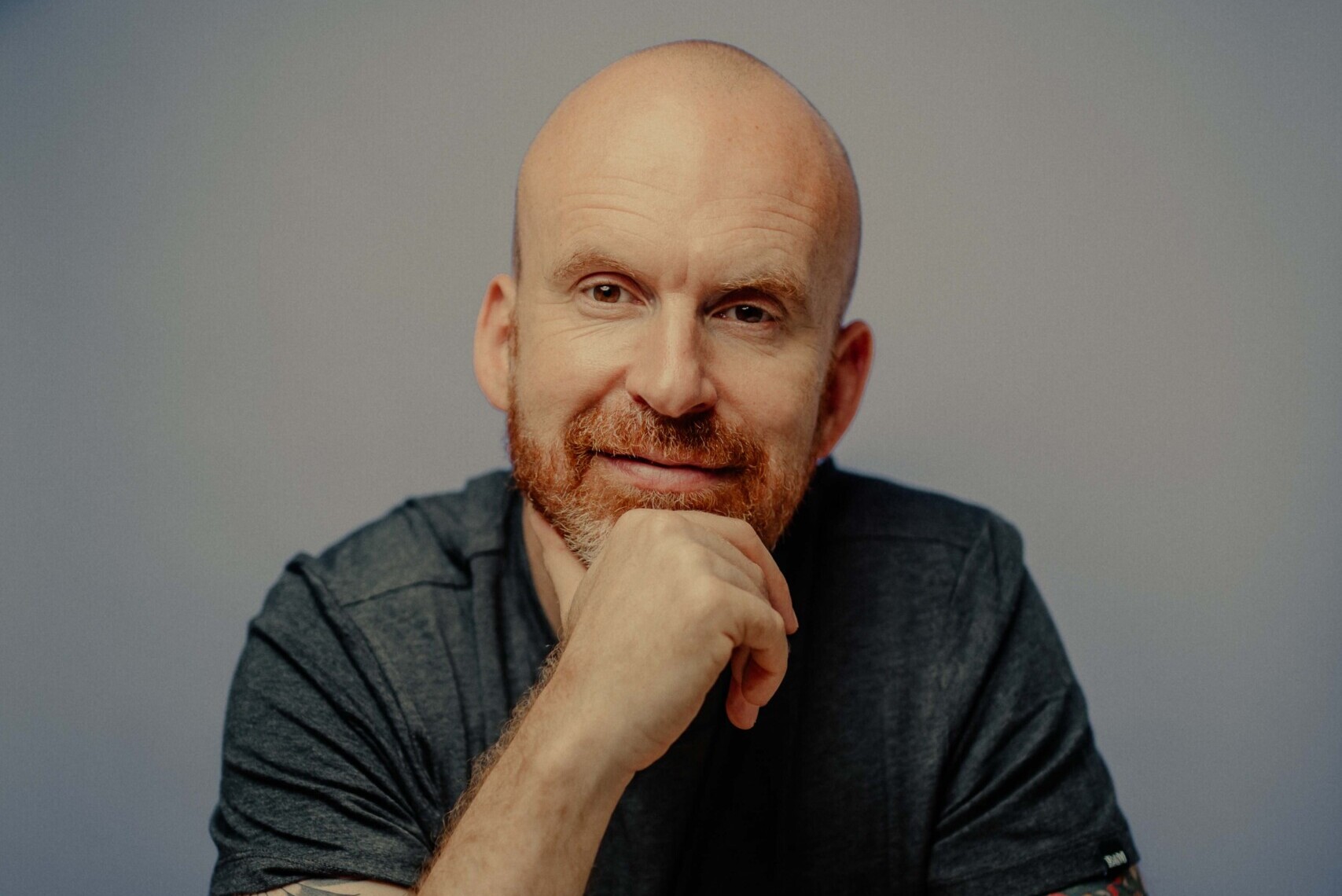
Matt Haig is now based in Brighton, with his wife, two children and two dogs

“I always had this feeling of difference. You feel like a weirdo in your own head. That sense of otherness, and the work of making peace with it, has shifted over time. Getting older has been beneficial for me,” he says. “The breakdown I had when I was younger was so traumatic, but the flashbacks eased. Accepting myself as a vulnerable person helped.”

That does not mean stability is permanent. “I’m convinced there will be future patches where I’m not mentally that well. Last year I descended into massive hypochondria and was diffcult to live with. You have to accept happiness is temporary and when you feel bad that is temporary too. It’s about riding the waves.”

Advertisement

That phrase feels close to a philosophy but it also informs how he thinks about masculinity and what he sees happening among younger men.

“If young men have nothing to do but stare at YouTube, rabbit holes are easy to fall down,” he says. “When I was young I hated being diagnosed with depression. I thought it said something weak about me as a man. A lot of what we’re facing with toxic masculinity is to do with men being unable to embrace vulnerability, to ever be a victim, to ever be ill. That’s why people don’t go to the doctor and die younger.”

I’ve always had a dopamine hit from saying truths other people might find uncomfortable

His answer is not abstract policy but places and people: youth clubs, sport, arts and community. Simply more places to belong. Research increasingly backs that instinct up, linking community belonging and social connection with better mental health, especially for young men vulnerable to isolation.

It is striking how often Haig circles back, even when talking about regret, to connection rather than achievement. Not the milestones, but the relationships around them. For a writer so associated with alternate lives and what-ifs, his conclusions are surprisingly grounded. Regret, he suggests, may be unavoidable, but it need not be a prison.

Advertisement

The fantasy at the heart of The Midnight Train is that we might revisit the past and alter our course. The gentler truth running beneath it is that peace may come not from changing what happened, but from seeing what was already there.

After decades writing about breakdown, mortality, anxiety and second chances, that feels close to a hard-won kind of hope. And perhaps that is the destination of this novel too: not to spend life staring backwards at missed platforms, but to recognise, while there is still time, that we are already on the journey.

The Midnight Train by Matt Haig is out now, published by Canongate.

Photography by Peter Flude 

Advertisement

Be part of the solution

At Positive News, we’re not chasing clicks or profits for media moguls – we’re here to serve you and have a positive social impact. We can’t do this unless enough people like you choose to support our journalism.

Give once from just £1, or join 1,800+ others who contribute an average of £3 or more per month. Together, we can build a healthier form of media – one that focuses on solutions, progress and possibilities, and empowers people to create positive change.

Support Positive News

Advertisement

Source link

Continue Reading

NewsBeat

The REAL story behind David Foster’s shock snubbing of Meghan Markle

Published

on

Meghan Markle suffered what looked like an awkward exchange with Prince Harry's pal David Foster at the music mogul's starry charity event in Canada last Friday

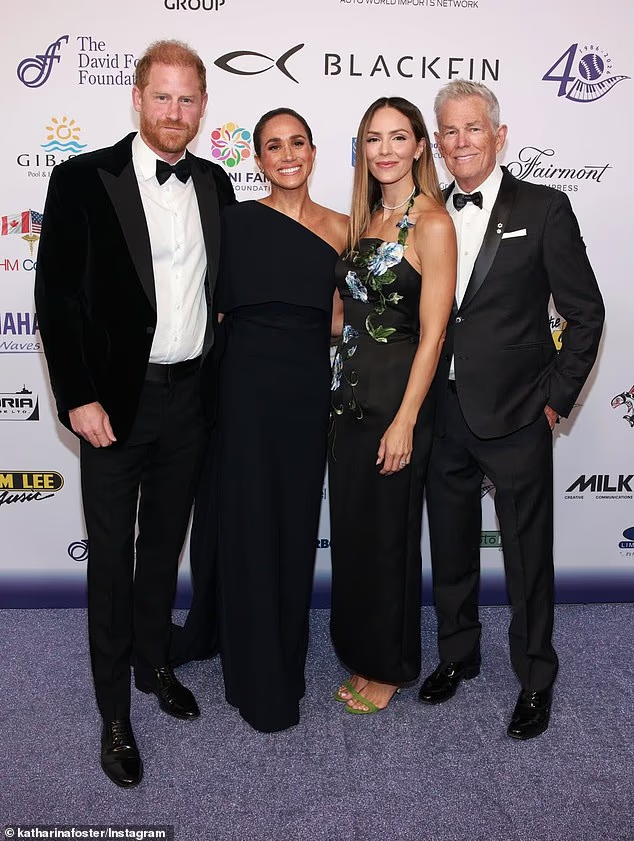
Meghan Markle suffered what looked like an awkward exchange with Prince Harry‘s longtime friend David Foster at the musician’s charity event in Canada last Friday.

In the viral clip, Foster appeared to completely ignore Markle as she eagerly extended her arm out to greet him on the red carpet before he swiftly walked past her to pose to the left of his much-younger wife Katharine McPhee for a group photo.

The Duchess of Sussex, 45, played the moment off expertly by quickly tucking her floating arm behind her back before leaning into her tuxedo-clad husband, 41, for a group photo with Foster, 76, and McPhee, 42.

However, all is not what it seemed as sources close to Foster have now exclusively revealed to the Daily Mail the truth behind the perceived ‘snub.’

Advertisement

Foster ‘wanted Harry and Meghan,’ the exclusive insider insisted, adding that the composer ‘genuinely just didn’t see’ the As Ever founder on the red carpet.

‘He’s always been a big fan of Diana and he’d never snub either of them,’ the source explained, referring to Harry’s late mother Princess Diana.

Meghan Markle suffered what looked like an awkward exchange with Prince Harry’s pal David Foster at the music mogul’s starry charity event in Canada last Friday

Advertisement

‘It was a genuine moment where he didn’t see them and nobody really thought much of it. It’s nothing.’ 

A second insider added that Foster was ‘so excited to see Harry and Meghan’ as he is ‘longtime friends’ of the couple, who also reside in Southern California’s affluent town of Montecito. 

Foster’s snubbing of Markle was a complete accident, the source claimed, noting that he was likely distracted by his hosting duties.

‘As host of the evening, David had a lot going on at the moment. David was doing interviews in that moment too.’

Advertisement

The insider then revealed that Foster had ‘already said hi [to Meghan and Harry] before’ the now-viral red carpet moment.

‘They had already said hi before that photo moment. There were lots of hugs and David introduced Harry & Meghan to his other family there.’ 

The Daily Mail has reached out to representatives for both Markle and Foster for comment but has yet to hear back.

The now-viral moment between Markle and Foster was also dissected by body language expert Judi James for the Daily Mail.

Advertisement
In the viral clip, Foster appeared to completely ignore Markle as she eagerly extended her arm out to greet him on the red carpet before he swiftly walked past her to pose to the left of his much-younger wife Katharine McPhee for a group photo

In the viral clip, Foster appeared to completely ignore Markle as she eagerly extended her arm out to greet him on the red carpet before he swiftly walked past her to pose to the left of his much-younger wife Katharine McPhee for a group photo

The Duchess of Sussex, 45, played the moment off expertly by quickly tucking her floating arm behind her back before leaning into her tuxedo-clad husband, 41, for a group photo with Foster, 76, and McPhee, 42

The Duchess of Sussex, 45, played the moment off expertly by quickly tucking her floating arm behind her back before leaning into her tuxedo-clad husband, 41, for a group photo with Foster, 76, and McPhee, 42

According to James, Markle was in ‘pose-alert’ as Foster and McPhee arrived on the red carpet.

‘Smiling at David Foster, she graciously extends an arm with hand palm-up to sweep them onto the red carpet and into the pose beside her, beckoning and gesturing to announce that they should step in front of her as they do so,’ James shared.

Advertisement

‘When Foster appears to walk past without replying to Meghan’s smile of greeting, she lowers her head and busies herself arranging her dress as an act of distraction. 

‘Meghan looks happy and slightly relieved when everyone has locked into her line-up and she returns to her professional mode – although Harry rather impolitely disrupts the arrangement by leaning back to chat to the man known as his “surrogate father” behind the wives’ backs.’

At this, the Duchess ‘performed an act of realignment by pulling Harry closer and laughing for no apparent reason apart from to perhaps negate any suggestion of rebellion and a lack of manners on his behalf’.

Friday night marked the 40th anniversary of the David Foster Foundation, which the 16-time Grammy winner hosted in his hometown of Victoria, British Columbia. 

Advertisement

He founded the organization in 1986 to provide financial support for Canadian families with children who need life-saving organ transplants and raise awareness of organ donation in Canada and the US. 

Meghan and Harry were the clear guests of honor as they were notably seated next to Foster and wife McPhee inside the event’s venue. 

However, all is not what it seemed as sources close to Foster have now exclusively revealed to the Daily Mail the truth behind the perceived 'snub'

However, all is not what it seemed as sources close to Foster have now exclusively revealed to the Daily Mail the truth behind the perceived ‘snub’

Foster 'wanted Harry and Meghan,' the exclusive insider insisted, adding that the composer 'genuinely just didn't see' the As Ever founder on the red carpet

Foster ‘wanted Harry and Meghan,’ the exclusive insider insisted, adding that the composer ‘genuinely just didn’t see’ the As Ever founder on the red carpet

Advertisement

The red-haired royal wore a black tuxedo and bow tie while his wife was dressed in a black maxi one-shouldered gown by Canadian designer Greta Constantine.

The Suits actress dazzled in an elegant black one-shoulder gown and accessorized with Princess Diana‘s diamond and sapphire earrings.

She also owns the late Princess of Wales‘s butterfly earrings and matching cuff bracelet as well as a diamond tennis bracelet, a Cartier Tank Louis and Diana’s ‘divorce ring’, an emerald-cut aquamarine surrounded by diamonds gifted to her by close friend Lucia Flecha de Lima in 1996.

Markle has previously worn Diana’s earrings at public events and chose to sweep her hair into an updo to show off the stones on the red carpet at the charity gala.

Advertisement

Meghan and Harry have long been friends with Foster and McPhee, who are considered an A-list musician couple.

They were even previously pictured on a double date with Foster and McPhee.

In 2019, Foster arranged for the Duke and Duchess to stay at a close friend’s mansion on Vancouver Island.

He told the Daily Mail at the time: ‘I felt honored that I was able to help Meghan there because I’m a Canadian, and we’re a Commonwealth country – we’re the Crown’s.

Advertisement

‘It’s important to us, so I grew up with that kind of sentiment. I was really happy to be able to help them to find a respite just to take a little time off.’

McPhee went to school with the LA-born Duchess and told Access Hollywood in 2020 that her husband and the Duke had a 'really, really beautiful relationship'

McPhee went to school with the LA-born Duchess and told Access Hollywood in 2020 that her husband and the Duke had a ‘really, really beautiful relationship’

The mansion, a secluded waterfront estate in North Saanich, British Columbia, was owned by Mr Foster’s close friend, whose identity he refused to give away.

McPhee went to school with the LA-born Duchess and told Access Hollywood in 2020 that her husband and the Duke had a ‘really, really beautiful relationship’.

Advertisement

‘They’re so cute. They’re like father and son,’ she gushed. ‘We just stay in touch with them [the Sussexes].

‘But mostly, Meghan and I knew each other from childhood, but really Harry and my husband are friends. It’s really nice.’

Source link

Advertisement
Continue Reading

NewsBeat

WFH: Working from hotels with the perks of air con, wifi and electricity included is the new heatwave trend

Published

on

WFH: Working from hotels with the perks of air con, wifi and electricity included is the new heatwave trend

Booking a hotel for the day isn’t a novel idea, but platforms like Dayuse, which allows users to book rooms by the hour, are enjoying renewed relevance. Most of the London properties on there are cookie-cutter chains and/or vaguely sleazy, but there are some winners, including Treehouse London, the soaring hotel at the end of Regent Street. There are also the London outposts of the ever-reliable Hoxton hotels (in Holborn, Southwark, Shoreditch and Shepherd’s Bush).

Source link

Continue Reading

NewsBeat

‘Andy Burnham needs to tell Trump not to pardon my groomer Ghislaine Maxwell’ | News Politics

Published

on

'Andy Burnham needs to tell Trump not to pardon my groomer Ghislaine Maxwell' | News Politics
Lara Blume McGee says she was groomed by Maxwell when she as 20 (Picture: Aaron Schwartz/Getty Images)

Andy Burnham should tell Donald Trump not to pardon convicted sex trafficker Ghislaine Maxwell, an Epstein survivor and a lawyer for his victims have said.

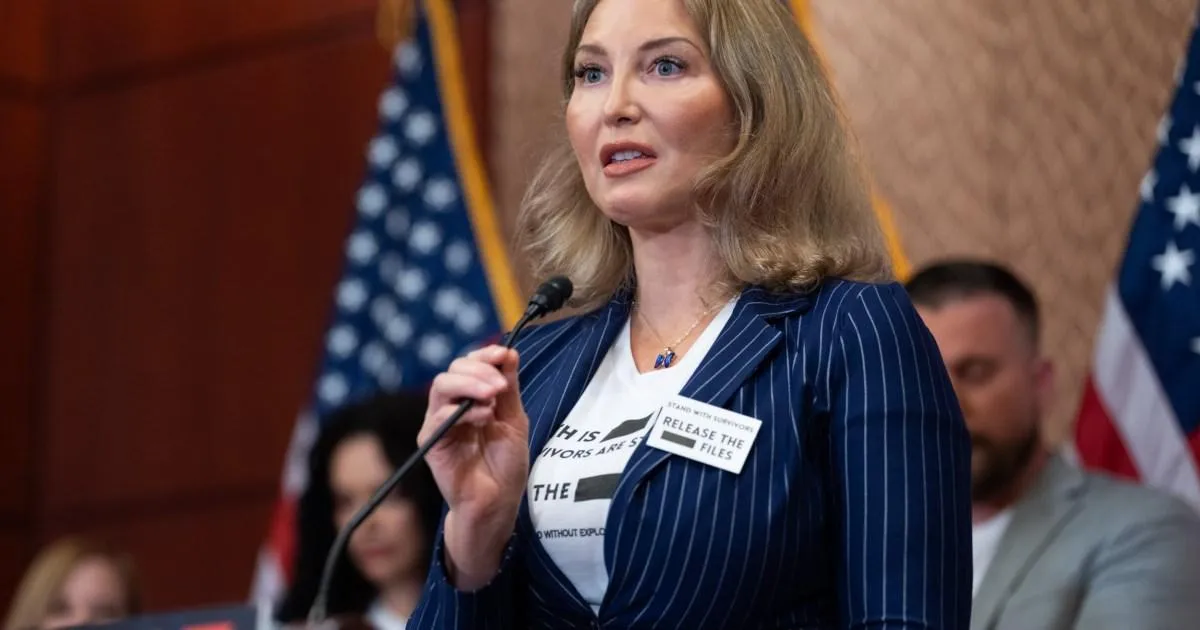
Lara Blume McGee, who says she was groomed by Maxwell aged 20, has urged the new Prime Minister to ‘make it clear’ Epstein’s former girlfriend should stay behind bars.

Lawyer Spencer Kuvin, who has represented nine Epstein victims, said Burnham ‘has a voice’ over a feared pardon of Maxwell, who is a British citizen.

Trump has not ruled out granting clemency to the former socialite, who was sentenced to 20 years in prison on child sex trafficking charges in 2022.

Advertisement
FILE PHOTO: Ghislaine Maxwell and Jeffrey Epstein are seen in this image released by the Department of Justice in Washington, D.C., U.S., on December 19, 2025 as part of a new trove of documents from its investigations into the late financier and convicted sex offender Jeffrey Epstein. U.S. Justice Department/Handout via REUTERS THIS IMAGE HAS BEEN SUPPLIED BY A THIRD PARTY. NO RESALES. NO ARCHIVES/File Photo
Jeffrey Epstein’s former girlfriend Ghislaine Maxwell was convicted of child sex trafficking (Picture: via REUTERS)

Many survivors are outraged at Trump’s new US attorney general Todd Blanche, who was responsible for moving Maxwell to a minimum-security prison shortly after meeting her last year.

Make sense of the mad world of British politics

Get analysis of the latest stories – including this week’s Clacton by-election – direct to your inbox from Metro’s Senior Politics Reporter Craig Munro. Sign up here.

One of those who railed against Blanche’s confirmation last week was McGee, who was just 20 when she met Maxwell at New York Fashion Week in 2000.

Advertisement

She claims Maxwell used the prospect of modelling connections to lure her into Epstein’s orbit before he abused her.

McGee told Metro: ‘A pardon for Maxwell would not only be a travesty of justice but a devastating message to survivors everywhere. We cannot allow this. We will not allow this.’

As well as being British, Maxwell’s victims were also groomed and abused at her residence in London, according to the US Department for Justice.

Asked what her message would be to the UK’s new Prime Minister, McGee said: ‘Prime Minister Burnham, stand with us.

Advertisement

‘Use your influence to ensure that the UK is a beacon of justice, not a sanctuary for those who exploit and abuse.

‘Make it clear to President Trump and the world that pardoning Ghislaine Maxwell would be a grave injustice that Britain will not tolerate.’

Lara Blume McGee, a survivor of deceased financier Jeffrey Epstein's sex trafficking ring, joined by survivors of deceased financier Jeffrey Epstein's sex trafficking ring, speaks to members of the media outside a closed-door session with former Attorney General Pam Bondi, not pictured, in Washington, DC, US, on Friday, May 29, 2026. Former Attorney General Pam Bondi is appearing before the House Oversight Committee for a closed-door interview regarding the Justice Department's handling and review of files related to investigations into deceased financier Jeffrey Epstein's sex trafficking ring. Photographer: Daniel Heuer/Bloomberg via Getty Images
McGee wants Andy Burnham to ‘stand with us’ (Picture: Bloomberg via Getty Images)

Burnham has agreed to meet Epstein’s victims but is not considering holding a public inquiry into the paedophile’s UK activities, Downing Street confirmed this month.

Kuvin, who has represented Epstein victims since 2006, called on the PM to support an independent statutory inquiry into Epstein and ‘say publicly if credible evidence exists that anyone’ participated in the financier’s crimes.

The attorney added that survivors are ‘extremely concerned’ by talk Maxwell could be pardoned after her lawyers said she would only co-operate with investigations into Epstein’s crimes if granted clemency.

Advertisement

Kuvin told Metro: ‘Victims should never be placed in the position of wondering whether the person convicted of helping facilitate their abuse might be freed because she has information that powerful people want.

‘That would send a terrible message to trafficking survivors everywhere.’

Asked whether Burnham could persuade Trump not to pardon Maxwell, the lawyer said ‘Britain absolutely has a voice’.

He added: ‘I would encourage Prime Minister Burnham and his government to communicate directly to President Trump that clemency for Maxwell would have consequences far beyond American politics.’

Advertisement
Pic shows: Maxwell pleads fifth in new video released Convicted Jeffrey Epstein associate Ghislaine Maxwell stays silent for every question put to her at a Congressional hearing in the US. Ghislaine Maxwell refused to answer questions during a closed-door congressional deposition on Monday, prompting criticism from a House representative backing efforts to release Jeffrey Epstein investigative files. Robert Garcia, ranking member of the committee on oversight and government reform, said in a statement that Maxwell invoked the fifth amendment and refused to testify during her scheduled deposition. Maxwell???s attorney, David Oscar Markus, also said that she invoked her fifth amendment right. supplied by Pixel8000 07917221968
Maxwell was moved to a minimum-security prison by Todd Blanche when he was deputy attorney general (Picture: Pixel8000)
Spencer Kuvin - lawyer defending Jeffrey Epstein victims
Spencer Kuvin has demanded an inquiry into Epstein’s activities in the UK

Kuvin continued: ‘The Prime Minister could say publicly and privately that Britain believes Maxwell should serve the sentence imposed upon her.’

The lawyer said there are still questions British institutions have to answer about how Epstein was ‘able to operate for so long in plain sight, while surrounded by some of the most powerful people in the world’.

The Senate unanimously passed a resolution last month declaring it’s opposition to any presidential pardon for Maxwell, who has repeatedly denied all wrongdoing.

Senator Jacky Rosen, a Democrat of Nevada, said at the time: ‘It’s frankly horrifying that Trump would entertain the idea of clemency for even a second for a convicted sex trafficker.’

A Government spokesperson said: ‘Our thoughts are firmly with the victims of Jeffrey Epstein, who have suffered devastating trauma, and it is right that Ghislaine Maxwell has been handed out a 20-year prison sentence for her role.

Advertisement

 ‘The Prime Minister is committed to meeting with victims. We are looking at all options to support them.’

Got a story? Get in touch with our news team by emailing us at webnews@metro.co.uk. Or you can submit your videos and pictures here.

For more stories like this, check our news page.

Follow Metro.co.uk on Twitter and Facebook for the latest news updates. You can now also get Metro.co.uk articles sent straight to your device. Sign up for our daily push alerts here.

Advertisement

Advertisement

Source link

Continue Reading

NewsBeat

Rio Ferdinand makes Arsenal title claim as Man City sanction Rodri transfer | Football

Published

on

Rio Ferdinand makes Arsenal title claim as Man City sanction Rodri transfer | Football


Source link

Advertisement
Continue Reading

NewsBeat

M60 traffic LIVE as motorway blocked with long queues after two incidents

Published

on

Manchester Evening News

Drivers are facing long delays on the M60 and M62 this morning following two incidents.

A crash near Simister Island is causing queues on the anticlockwise carriageway.

Traffic is stretching back past junction 19 of the M62 westbound, at Heywood.

Advertisement

The M60 is partially blocked between Simister Island and Prestwich.

Meanwhile, drivers are also facing delays in two areas of the M60 clockwise.

There are queues approaching Simister Island following the crash on the other side, while the road has also been partially blocked near junction 15.

Source link

Advertisement
Continue Reading

NewsBeat

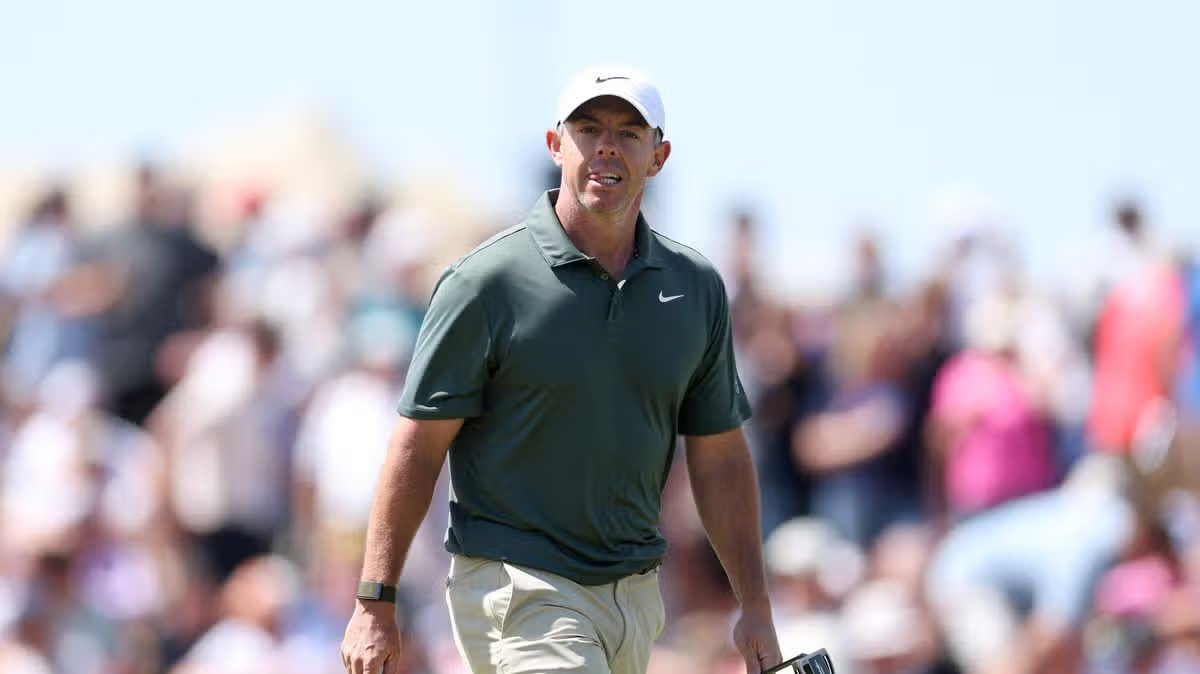
Rory McIlroy makes U-turn on decision after sending message to PGA Tour chiefs

Published

on

Belfast Live

Rory McIlroy has reversed his stance

Rory McIlroy has had a change of heart regarding the FedEx Cup by entering the opening leg of this year’s Playoffs. The world number two faced criticism 12 months ago for missing the first FedEx Cup event, as it had no bearing on his ranking position and provided an opportunity to rest before the Ryder Cup.

The FedEx Cup Playoffs is the culmination of the PGA Tour season. Throughout the regular campaign, players accumulate points based on their tournament performances.

Advertisement

When the regular season wraps up in August, the highest point earners qualify for a three-tournament playoff series that crowns the overall season champion.

The opening Playoff event, the St Jude Championship, features a field of 70 competitors. For the second event, the BMW Championship, this is reduced to 50.

Then, for the Tour Championship season finale, the field comprises the top 30 players on the list, reports the Mirror.

McIlroy heads into this year’s Playoffs sitting in 12th position, with his place in the Tour Championship essentially guaranteed even if he opts out of the first two events. As recently as last month’s Open Championship, McIlroy indicated he was willing to skip the initial Playoffs events and challenged the format in a direct message to PGA Tour officials.

Advertisement

Prior to last year’s Playoffs, the Starting Strokes format, which favoured players higher up the standings, was scrapped. It had seen the leader begin on 10 under par, while players ranked 26th to 30th on the list started on level par.

McIlroy stated at The Open: “I guess I’m just at a stage that I have other things that I prioritise. The PGA Tour is in a lot of flux at the minute, with a lot of their schedule and structure and everything like that.

“So, I think the change where it doesn’t matter where you are in the top 30 going into the Tour Championship, it’s like I just need to be in the top 30 going in there to have a chance to win a FedEx Cup.

“So why would I care about the first two? I sort of came to that decision last year, and I’m just sort of doing the same thing.”

Advertisement

Despite his earlier stance, McIlroy has had a change of heart and entered the St Jude Championship. He will be competing alongside the likes of Scottie Scheffler, who topped the regular-season leaderboard and pocketed a £7.4million bonus in the process.

This marks the first occasion since 2021 that McIlroy will enter the opening leg of the Playoffs outside the top 10 in the standings, though it would be premature to discount the Masters champion’s chances.

In a development likely to appeal to McIlroy, the PGA Tour is set to introduce a two-tier structure from 2028. A revamped Tour Championship will be held at a “rotation of prestigious courses, many of which the PGA Tour would play for the first time,” according to the Tour.

Sign up to our free sports newsletter to get the latest headlines to your inbox.

Advertisement

Source link

Continue Reading

Trending

Copyright © 2025