Charities watchdog OSCR said The Badenoch Trust, which lists Offord as a trustee
A charity run by Reform’s leader in Scotland has been accused of breaching the law and urged to comply with a regulator.
Advertisement
The Badenoch Trust, which has MSP Malcolm Offord as a trustee, has been advised by a watchdog to register with them “at the earliest opportunity”.
Offord, hand picked to lead Reform in Scotland by Nigel Farage, was elected to Holyrood on the West Scotland List this month.
Amid a bruising campaign, the millionaire yacht owner pledged to give his MSP salary to Badenoch Trust which started as a grant-making charity in 2007.
Under 2005 legislation passed by Holyrood, all organisations that represent themselves as charities in Scotland must register with the charities watchdog OSCR.
Advertisement
But the Trust is not registered as a charity north of the border.
An OSCR spokesperson told TFN, a media outlet for the voluntary sector: “Based on the information the Badenoch Trust has provided to OSCR, it appears that the charity is managed and controlled mainly in Scotland and carries out ongoing administrative activities from premises in Scotland.
“As such, the charity meets the criteria for registration with the Office of the Scottish Charity Regulator (OSCR).
Advertisement
“In these circumstances, we have advised the charity to apply to register with OSCR at the earliest opportunity. Further guidance on cross-border charity regulation, including how to apply, can be found on the OSCR website.”
The Badenoch Trust is currently registered with the Charity Commission in England and Wales.
A Scottish Green Party spokesperson said: “These are serious findings and Lord Offord must answer for them. Charity law exists for a reason, and the public has a right to expect those in positions of power to respect it, not ignore it.
“As a party leader and parliamentarian, Lord Offord must be completely transparent about the Badenoch Trust, his role in its unlawful operations, and what this means for his pledge to donate his MSP salary.
Advertisement
“He should set out exactly what happened, how it will be corrected, and whether any money connected to his parliamentary salary was ever intended to go to a trust that was not properly registered in Scotland.”
Scottish Labour deputy leader Jackie Baillie said “These serious reports demand urgent answers from Lord Offord.
“We need to know how and why this law-breaking occurred, what Lord Offord knew and when, and whether he is still planning to hand his MSP salary to his scandal-hit charity.
“Whether this is incompetence or something worse, it is yet more proof that Malcolm Offord can’t be trusted.
Advertisement
“Lord Offord and Reform can’t even get their own house in order – they have no chance of delivering for Scotland.”
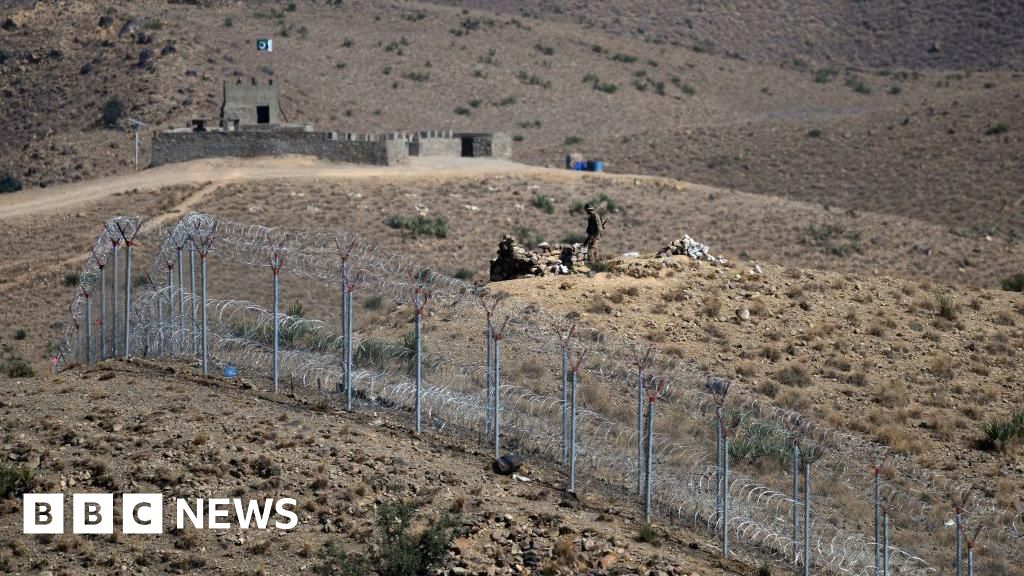
Information Minister Attaullah Tarar said on Wednesday that four targets had been destroyed in “calibrated strikes” that had killed 26 militants. Afghanistan’s Taliban government earlier said 13 people, including 11 children, were killed in Pakistani strikes in three provinces.
Mother has indeed returned (Picture: Youtube/Planet Photos)
‘Laser vaginas.’
A text came in from a friend yesterday that lit up my phone with the most unexpected two words, followed by a link to Madonna’s 10 minute musical film, featuring the first half dozen songs from her latest album Confessions II.
I have never clicked on YouTube so quickly in my life.
And there it was. Vaginas. With lasers shooting out of them.
Advertisement
There are around 10 people in this video, wearing very little, posing acrobatically, with a thin green laser shooting out of each of their vulvas. I spotted some lasers coming from a bit further South too.
It was marvelous, beautiful. Just the most unexpected art, yet somehow so wonderfully predictable from the sexually adventurous queen of pop, Madonna.
There’s nothing wrong with laser vaginas (Picture: Youtube/Planet Photos)
Despite this, some people are unable to come to terms with the visuals in her latest video, calling her ‘embarrassing and weird’ on X.
But there’s nothing wrong with laser vaginas, or the rest of the outrageously sexy short film, which includes a toilet scene, with men using urinals, Madonna herself simulating a sex act in one of the cubicles while Games of Thrones’ Gwendoline Christie looks on, then joining Benedict Cumberbatch for a dance.
Advertisement
Sabrina Carpenter appears, as does Kate Moss, Richard E Grant, Odessa A’Zion – and we even see a young Madonna in Julia Garner, who cosplays as her.
Only a legend like Madonna could gather such a large group of icons for her video.
Personally, I think that if you can’t handle it, then there’s something wrong with you. We should all be liberated like Madonna, at 21 or 67.
Advertisement
And I only mention her age because everyone else is. Only they are making disparaging comments like ‘she should retire’, or that ‘she is too old for the sexual stuff’.
I think that if you can’t handle it, then there’s something wrong with you (Picture: Youtube/Planet Photos)
But these people don’t seem to know who Madonna is, because the woman who liberated so many people in the 80s and 90s should absolutely not tone down her message with age.
Music lovers have been awaiting a Madonna release for a long time now, and after revealing in 2024 that she has begun working on something new, we sat down, crossed our legs and held our breaths.
Not least because last album, Madame X, released in 2019, leaving a lot to be desired. It was acclaimed by many as her strangest album, with the Associated Press calling it: ‘needy, trying-too-hard mess of an album that sounds like Madonna threw up on Madonna’.
What are your thoughts on Madonna’s artistic choices in her music video?
It’s bold and liberating.
Advertisement
It’s too shocking for my taste.
I appreciate the message but not the execution.
I have no strong opinion on this.
Sign up to Metro’s Puzzles Newsletter and get your favourite puzzles sent directly to you every day!
Advertisement
I would agree. But Madonna has never bent to criticism, and has always remained uniquely herself. That is what makes her so important, I suppose – she is beyond critique.
And so she shouldn’t be. If she had listened to any of the angry men back in the 80’s and 90’s, (possibly the same ones now online criticising her overt sexuality) we wouldn’t have any of the masterpieces she created.In fact, she is widely recognised as one of the first female musicians to have complete control over her music career.
Advertisement
And maybe that’s what is making people so angry now. Let’s not beat around the laser pointing bush here, we are talking about criticism mostly coming from men.
Madonna herself simulating a sex act in one of the cubicles while Games of Thrones’ Gwendoline Christie looks on, then joining Benedict Cumberbatch for a dance (Picture: Youtube/Planet Photos)
One horrible comment under her video on X reads: ‘Everything about this deranged, mentally-ill old woman is just gross’.
This comment, and many others that were similar, feel like an attack on her confident femininity, and, by extension, any women who embrace their sexuality.
And she doesn’t deserve it for simply pointing a laser from someone’s vulva and proceeding to straddle it.
This woman has created some of the best music that we’ve ever had. Songs such as Like A Virgin changed the way women represented their desire – the Madonna look became a massive fashion trend, as did her oozing sexuality.
Advertisement
And now, at 67, Madonna is still redefining what being a woman can look like. It can be laser pointers for vaginas.
In fact, Madonna said it is so, so it shall be.
I personally am glad she’s back, and that she’s illuminating conversations around our bodily autonomy.
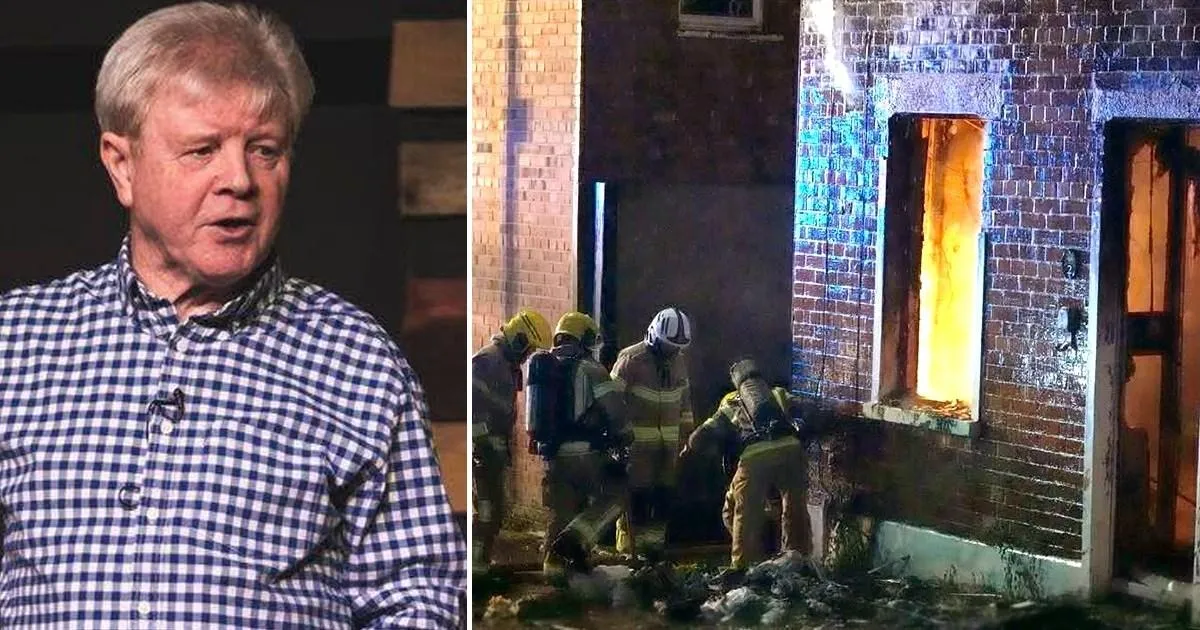
Jack McKee, 74, pushed through crowds of people throwing petrol bombs and setting homes on fire to reach two women trapped inside.
He spotted the pair, both African migrants, hiding in the corner as bricks were thrown through the windows of the property on Oakley Street.
Along with his daughter Paula, they were able to help carry them to safety as they were so scared ‘they were too weak to stand’.
Advertisement
Jack’s son Jonathan told Metro: ‘They had to carry them out the back door secretly because the rioters were shouting “where are the migrants”.’
Sign up for all of the latest stories
Start your day informed with Metro’s News Updates newsletter or get Breaking Newsalerts the moment it happens.
Advertisement
The family, who run a local church, received a text at midnight saying the home of one of their congregation members was being targeted by the far-right.
An image Jack took, after he helped carry the women out of the house (Picture: Metro)
Jack McKee went into one of the targeted women and helped carry them to safety (Picture: Metro)
On instinct, they went to the house and found the two women, both shaking with fear.
The neighbouring property had been set on fire, with the blaze slowly creeping towards the women’s home from behind.
And from the front, rioters threw anything they could find through the windows and doors, causing extensive damage.
Jack said: ‘My family helped carry them out with the fire service and laid one of the women in the back seat of my dad’s car.
Advertisement
‘This is life-changing for them. They can’t go home now. We are sending someone around the border up the windows but there are calls for more riots.’
Advertisement
Last night saw widespread disorder across Belfast, – with rioters throwing petrol bombs, setting homes alight, and burning buses to the ground.
Last week, Natalie’s partner was sentenced for her brutal murder which also claimed the life of her unborn son
Riots Aftermath – Remains of a Glider Bus on the Newtownards Rd
The brother of Natalie McNally has slammed “patriots” following last night’s disorder and questioned where they were when his sister was killed.
Last week, Natalie’s partner Stephen McCullagh, was sentenced for her brutal murder which also claimed the life of her unborn son.
Violence erupted on the streets of Belfast and in other parts of Northern Ireland following protests in response to a knife attack in North Belfast on Monday evening.
Advertisement
The victim, a man aged in his 40s, has been named locally as Stephen Ogilvie and he is in a serious condition in hospital where he is being treated for wounds to his back, eye and face.
Taking to social media on Tuesday, Brendan McNally said: “From the sentencing remarks of a High Court Judge in Belfast not even a week ago: ‘a brutal and frenzied attack that involved the use of a knife”, so complex that the state pathologist couldn’t determine the fatal sequence.
“He adds that ‘the murder of women by a current or former partner is a grave and recurring phenomenon in our society…almost half of the murders in Northern Ireland in recent years have a domestic abuse motivation’.
“I didn’t see much of the same angry outcry and mobilisation from so called ‘patriots’ then, using the toxic mudslide of distortion and misinformation of their social media platforms. I wonder what the difference is?”
Roy Keane has cleared the air with Manchester United captain Bruno Fernandes, with the pair having a “lovely chat” after he misquoted the Portuguese – which led to Fernandes accusing him of lying.
Former Republic of Ireland midfielder Keane also implied Fernandes was prioritising individual accolades over the team’s success.
Fernandes broke the record for the most assists in a single Premier League season on the final day of the 2025-26 campaign, setting up his 21st goal against Brighton.
Speaking on The Overlap podcast after the penultimate round of fixtures in May, Keane questioned Fernandes’ mindset and described him as being at the centre of a “circus act”.
Advertisement
He claimed the Portugal midfielder had said “I probably should have shot but I made them passes” in an interview following the 3-2 win over Nottingham Forest.
Fernandes subsequently accused Keane of telling a “lie”, pointing out that his actual post-match comments were: “There were probably moments today when I should have passed instead of shot.
“I’m very happy for the assist, but more than that, I’m happy for the win and to finish the season on a high.”
Fernandes said he was keen to meet the former Manchester United captain to discuss the issue, with Keane revealing on Wednesday’s Stick to Football podcast that a “nice, mature conversation” had taken place.
Advertisement
“There was a reaction after what we said on the podcast a few weeks ago and he reached out to me and wanted a chat – I called him and we had a lovely chat,” Keane said.
“It was nice because when we do podcasts or games, sometimes you think you say something afterwards and you communicate something and it doesn’t come across properly, so people get upset and he said he wanted to talk to me. We had a nice, mature conversation.
“I like having boundaries with players. I don’t want to be speaking to players every few weeks or their agents, I don’t want to go down that road, but every now and then a player might reach out, so I think it was important I spoke to him.
“There has been lots going on and lots reported. He’s obviously a big player for United, I’m an ex-United player and I think the idea of this communicating and having a proper conversation, I really enjoyed it. Hopefully I think he did as well. Nice chat about a bit of everything and I felt better afterwards.”
The moment of first contact with extraterrestrials is a staple of science fiction. It usually involves a frantic scientist having a Eureka moment, realising in a single dramatic instant that Earth is being visited by creatures from light-years away.
Aliens are in the public consciousness once again thanks to Steven Spielberg’s latest film, Disclosure Day, which follows a whistleblower’s attempts to reveal extraterrestrial visitations to the world.
In reality, the discovery of extraterrestrial intelligence is far more likely to emerge as a faint anomaly in astronomical data, followed by a slow, painstaking process of verification, peer review and intense international deliberation. There might be no single Eureka moment, and no lone scientist with the answer.
As our telescopes have advanced, so too has the complexity of the world we live in. That is why a committee of the International Academy of Astronautics (IAA) has just voted to accept a major overhaul of the “post-detection protocols” – the scientific code of conduct for what happens after we find evidence of life beyond Earth.
Advertisement
The IAA body that has approved the changes is the Search for Extraterrestrial Intelligence (Seti) Committee. Seti is the collective term for scientific projects dedicated to searching for signs of intelligent alien life in the universe.
The previous version of these principles was adopted way back in 2010. To put that
in perspective, in 2010, the “fake news” era hadn’t quite arrived, social media was in its infancy, and the broader idea of “technosignatures”, looking for signs of alien technology such as waste heat from giant structures in space, was still largely on the fringes of mainstream astronomy.
Today, the field has exploded. We are no longer just listening out for artificial radio signals from a few select stars. Projects like Breakthrough Listen have globalised the search, and we now observe the entire electromagnetic spectrum for any sign of advanced technology.
If a sign of intelligent life is found, scientists should begin a quiet, rigorous attempt to prove themselves wrong. Anthony Holloway, Author provided (no reuse)
Furthermore, the information landscape has become a minefield. In an era of deepfakes and instant global connectivity, a single unverified claim could trigger global panic or widespread misinformation before scientists have even had a chance to check their data.
At the heart of the 2026 update is a commitment to scientific rigour. The new
protocols make it clear: we do not shout “alien” the moment we see a strange blip in our data. If a researcher detects a candidate signal, which could be an artificial radio signal, or something else, such as a sign of alien technology, the first step isn’t a post on social media; it’s a quiet, rigorous attempt to prove themselves wrong. The discovery must be independently authenticated by multiple organisations using different instruments.
Only when a consensus is reached that the signal is truly credible is it brought to the world. This isn’t about secrecy for secrecy’s sake. There is no obligation to disclose verification efforts while they are ongoing, precisely to avoid embarrassing and damaging false alarms.
However, once a discovery is confirmed, the protocols demand full transparency. The data, the analysis methods, and the code used must be made open to the entire global scientific community and, indeed, the general public for replication.
Advertisement
Should we talk back?
One significant addition to the 2026 declaration is the focus on researcher safety.
We’ve seen in recent years how scientists at the centre of high profile news stories can become targets for harassment or “doxxing”, where malicious individuals post the scientist’s personal details online. The new guidelines urge institutions to protect their researchers from negative professional repercussions and physical or digital harassment.
The protocols also address the “trash” of our own making: radio frequency
interference (RFI). The radio frequency bands that Seti scientists use to listen for E.T. are increasingly polluted – from below by mobile networks, radar and poorly shielded electronics, and from above by the growth of satellite “mega-constellations” like Starlink.
The declaration calls for extraordinary international efforts to protect the frequencies where a signal is detected, ensuring our “communication channel” isn’t drowned out by our own technology.
Scientists could detect advanced technology built by alien civilisations, such as large devices designed to harvest energy from stars. Droneandy
The most controversial part of Seti isn’t the searching; it’s the messaging. Known as Meti (Messaging Extraterrestrial Intelligence), the idea of intentionally sending signals to other worlds splits the community. As enshrined in the earlier declarations, the 2026 Declaration remains firm on one point: no response should be sent until there has been a broad, international consultation.
Deciding how to represent Earth to an alien civilisation is a choice that belongs to all of humanity, not a single institution or individual. These consultations
must take place through the United Nations or other broadly representative global bodies.
Advertisement
The discovery of intelligent life beyond Earth would stand as one of the most
transformative events in human history. To help manage the profound aftermath, the
IAA SETI Committee is establishing a permanent Post-Detection Sub-Committee.
This body will not simply be a room full of astronomers; it will include international experts in ethics, law, social sciences and communications to advise on the complex, long term societal implications of contact.
The new protocols themselves are designed to be living documents, supplemented by a separate Code of Conduct and Best Practices Guidelines that will be periodically reexamined and updated to reflect the “best practice” of the day.
The revised declaration has recently been formally adopted by the IAA Board of Trustees and over the rest of the year it will be filed with other appropriate organisations for their endorsement.
Advertisement
The next goal will be to present the finished framework to the wider scientific
community at the International Astronautical Congress in Turkey in August 2026. Beyond that, the Committee hope that the new protocols will also be reviewed and noted by the UN.
By establishing these rigorous rules now, we ensure that if, or when, that signal
finally arrives, the world is prepared to listen, verify, and respond as one planet.
Clean energy is being reshaped by cross-industry thinkers, from aerospace engineers to banking boffins, and beyond
Supported by:
When Lynne McIntosh-Grieve was a young engineer working for Rolls-Royce, she made a bit of a name for herself “as something of a ‘fixer’”: someone who could go into companies in the supply chain and “problem-solve – look at their processes and understand what was going wrong, or what might work better”.
Advertisement
Among other places, this took her to India: a “fantastic experience”, but quite an eye-opener, for both her and the plant she was visiting. “I was really young, you know, and I looked quite different to the people that were typically walking round the factory. I’m a six foot tall blonde Scots lassie, so that was interesting for the staff there!”
Confounding expectations, in other words, which has been something of a theme: not just for McIntosh-Grieve, but for the way in which renewable energy has flourished thanks to workers transitioning into the sector from a range of other industries. It’s a much-needed transition, too. According to the UK’s National Grid, by 2050 the workforce employed in delivering net zero will need to number around 400,000, of which 260,000 will be new roles.
So there are some serious skill shortages to be overcome. That sounds like a stretch, but people like McIntosh-Grieve prove it’s far from impossible.
Advertisement
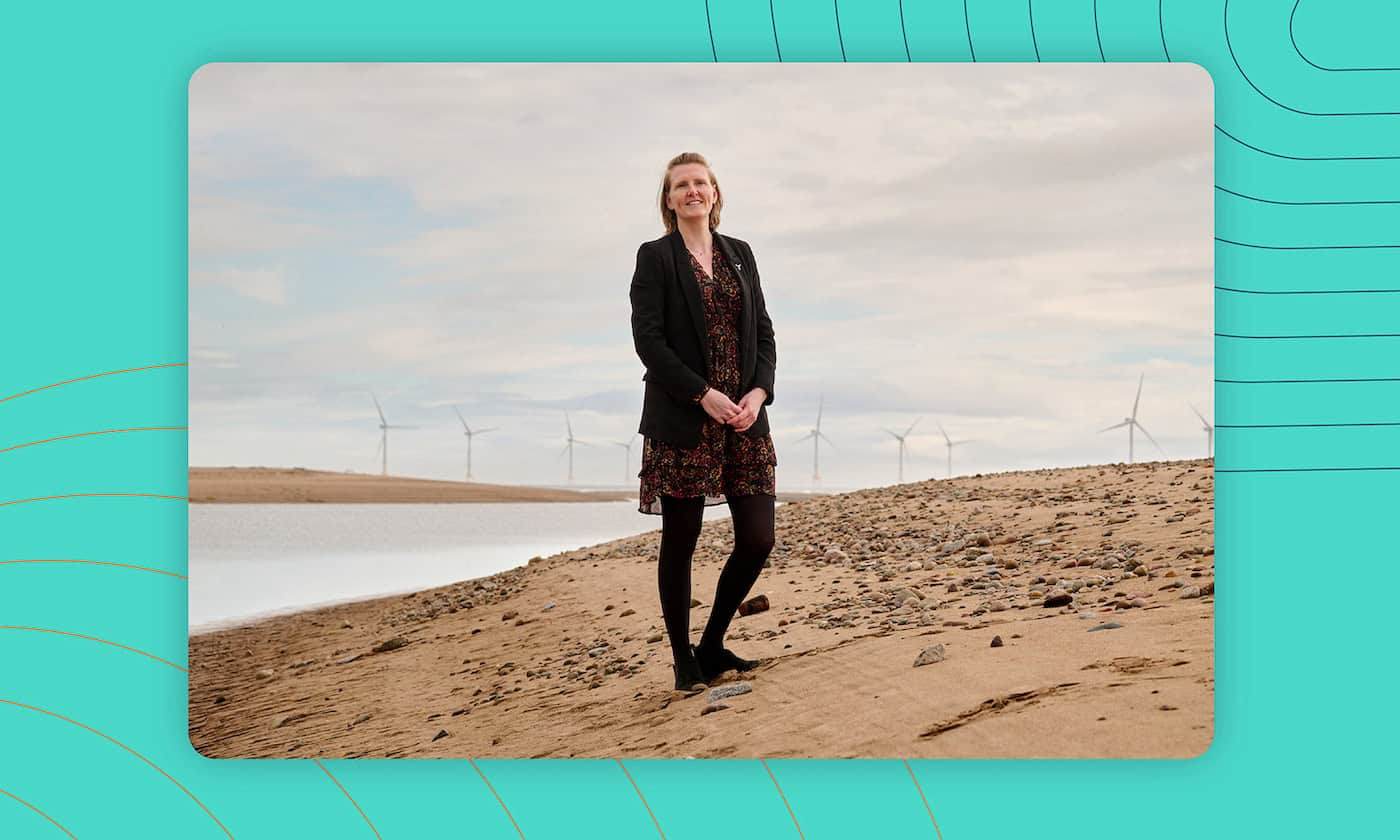
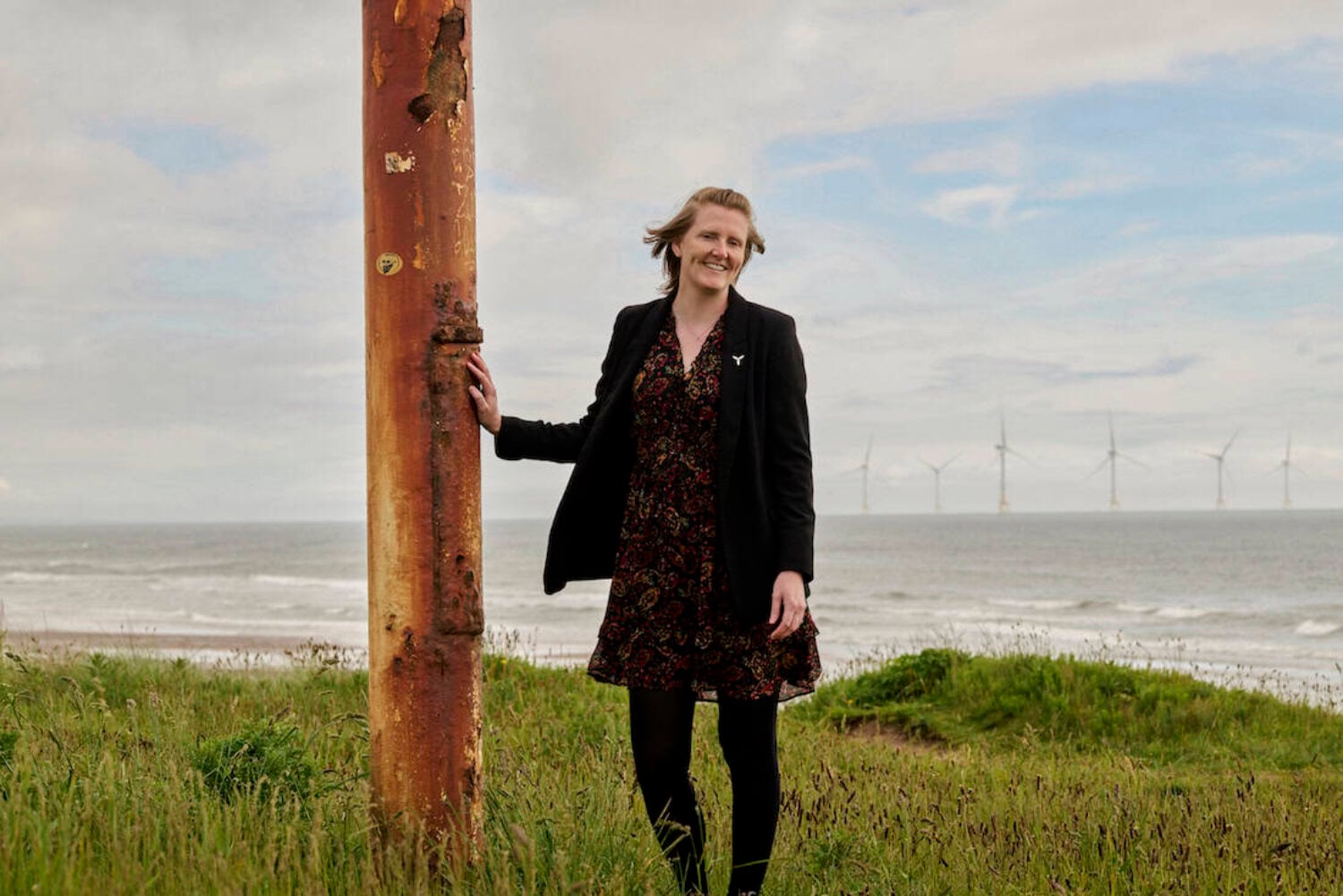
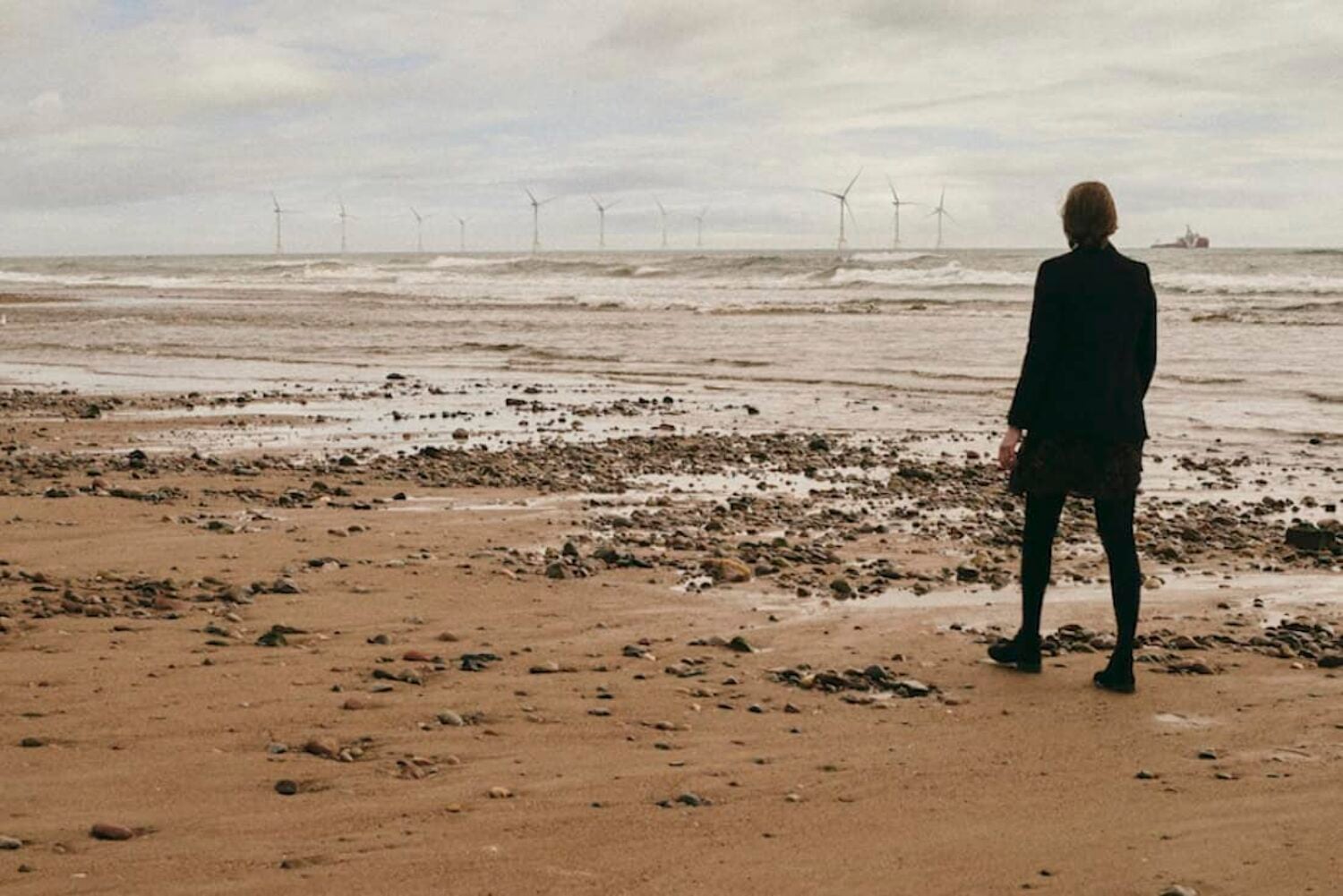
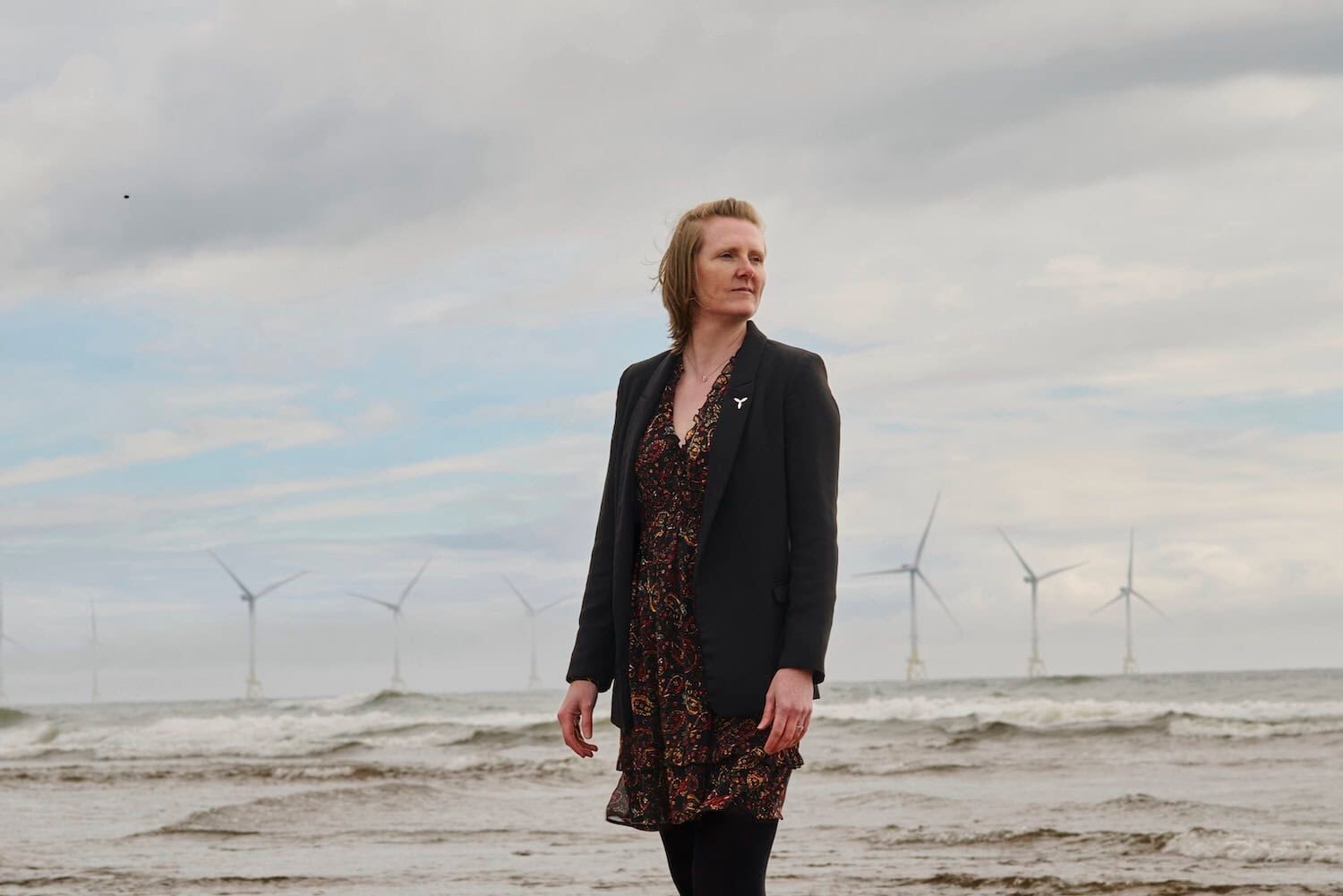
Lynne McIntosh-Grieve, head of programme delivery at the Offshore Wind Growth Partnership, on the Aberdeenshire coast
She was born and grew up in Clydebank, outside Glasgow: once a thriving industrial town, home to the “good old Singer sewing machines and the John Brown shipyards”. But by the time she came on the scene in the late 80s, it was deindustrialising fast, and job prospects for its young people seemed slim at best.
Nonetheless, buoyed by “fantastic teachers, who really championed their pupils to aim high”, she won a place at the University of Strathclyde for a master’s in mechanical engineering. Academic life, though, wasn’t entirely her cup of tea. “I liked things that were hands-on. I liked the physical aspect of making things work, putting them together, taking them apart and putting them together again, and the university environment [doesn’t always provide] that type of experience. It was quite difficult to see what you might end up doing in real life.”
Advertisement
So when one day in the common room, she saw a flyer advertising a summer placement at Rolls–Royce, she jumped at the chance. Invited to an assessment at the company’s Derby engineering base, she looked around at the other candidates and felt “really nervous. There were a lot from more ‘esteemed’ backgrounds, from the Oxfords and Cambridges of this world. I was one of the only females there, I spoke and sounded different to everyone else. I stood out like a sore thumb, basically.”
After starting out in aerospace engineering, McIntosh-Grieve now helps UK businesses seize opportunities in offshore wind
Advertisement
But McIntosh-Grieve’s obvious practical skills, and her enthusiasm for her work – which positively tumbles out of her as she talks – secured her a placement. After graduating with a first-class degree she joined Rolls-Royce in 2010 as a graduate trainee. Working on new ways of making compressor airfoils (key components of a gas turbine engine) she won rapid promotion to advanced manufacturing engineer, and soon embraced her ‘fixer’ role.
A round of redundancies unsettled the working atmosphere, though, and while her own job was never at risk, by 2015 she’d decided to move on. Her next berth was at the University of Strathclyde’s Advanced Forming Research Centre, oneof the High Value Manufacturing Catapult. (The catapults – there are nine in total – are part of Innovate UK’s government-backed initiative to provide the sort of cutting-edge R&D facilities that can help British business recover its knack for innovation.)
The work itself played to her enthusiasm for robust, hands-on practicality, involving “hot metal forging. Lots of bashing big bits of metal, basically.” And if that sounds a little … basic, she’s quick to point out it had applications in everything from aerospace and civil nuclear power to medical technologies. So quite sophisticated bashing, then.
Within a month, McIntosh-Grieve was promoted to team lead. “I’d never led people before, and here I was leading people with a lot more experience than me. So that was a steep learning curve, let’s put it like that.”
Advertisement
These businesses really do have the appetite, the tenacity, to make things happen. That’s what gets me out of bed in the morning
In any case, learn she did, and she now harnesses that learning by acting as a STEM ambassador, regularly speaking in schools, offering the sort of female role model that was largely lacking for her as a young woman. Meanwhile, she progressed with growing confidence, until within a few years she’d risen to be chief technologist on its future of forging programme, today FutureForge.
Then in 2020, she made the leap to renewables. Why? The immediate trigger was personal: her partner lived and worked in Aberdeen, home to a wide range of energy activity, both in the traditional oil and gas sector, and the fast-emerging renewables one. Increasingly, the former, as it starts to wind down, is helping provide the recruits needed to power the growth of the latter.
For McIntosh-Grieve, both the new and old energy sectors had their appeal. “I explored both – but then the role came up in the Offshore Wind Growth Partnership, and I thought it looked really interesting’”. Managed by another catapult – the Offshore Renewable Energy (ORE) one – the partnership helps British companies exploit the many and varied opportunities in the sector’s supply chain.
Advertisement
‘Those who work with or for me can bring their full self to work in whatever way that means, because everyone’s got something to offer here’
As head of programme delivery, she helps those outside it learn how to break in, and those already within it with issues like cost-competitiveness and capabilities, so they can really compete at national and international level. “The ones I most enjoy working with are the family-owned businesses,” says McIntosh-Grieve. “Because the UK has so many of these that are doing phenomenal work, and they just need a little bit of help [to break through].”
Advertisement
Her face shines with pride as she enthuses about businesses she’s supported that have gone on to “do amazing things, growing their companies three, four, five times over. These businesses really do have the appetite, the tenacity, the get-up-and-go to make things happen. That’s what gets me out of bed in the morning. I get quite passionate about manufacturing in the UK.” Confounding expectations, again, then – in this case, on behalf of British business’s potential to compete on the world stage.
It’s a stage that’s growing bigger all the time, as even traditional energy centres diversify into renewables. Take Houston, Texas, arguably the beating heart of Big Oil, but now increasingly a hub for low-carbon startups. Initiatives like its Renewable Energy Alliance Houston are seeking to harness the experience of Texas’s oil and gas sector to boost the region’s new energy potential.
Everyone’s got something to offer here. When people meet each other with care and compassion and empathy, that’s where the good stuff happens
Such programmes emphasise that you don’t have to be a dyed-in-the-wool green activist to embrace its opportunities. For her part, McIntosh-Grieve is quick to admit that she’s not a dedicated environmentalist, “but I’m interested in technology, and how to apply it in different ways. And the more I learned about the sector, the more I realised just how important it will be to the future energy system of the UK. It sparked my curiosity, and [my interest in it] snowballed.”
The work appealed to her strengths on the technical front, but ORE Catapult appealed in other ways too. As a gay woman in engineering, she’d met in the past with some “unfortunate” reactions when she came out, but her decision to be completely open about herself was vindicated at the interview. “I remember saying: ‘I’m planning to get married, and my wife and I are going to live in Aberdeenshire’, and they were just like: ‘Oh great! When’s the wedding?’. It was the first time I really felt I could bring my whole self to work.”
Advertisement
It’s something she feels passionate about beyond issues of sexuality, trying to ensure that “those who work with or for me can bring their full self to work in whatever way that means, because everyone’s got something to offer here. When people meet each other with care and compassion and empathy, that’s where the good stuff happens.”
Skill swaps
Who’s moving into renewables – and why it matters
According to the International Renewable Energy Agency (IRENA), renewable energy employment worldwide is set to grow from 12.7m jobs in 2022 to 42m by 2050. That will open up opportunities for people with skills from a wide range of sectors. Among those well placed to make the transition into renewables are those with experience in the following:
Advertisement
Aerospace
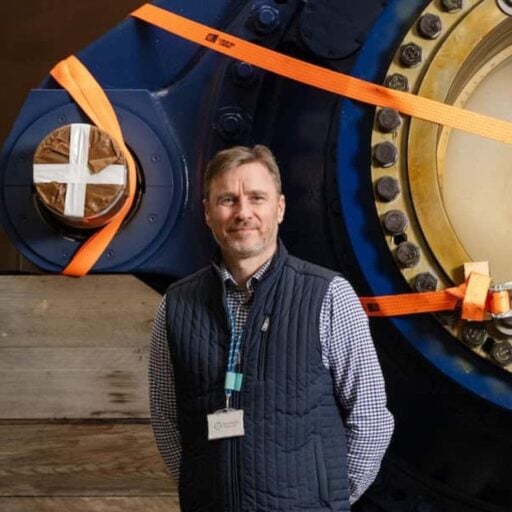
Engineering nous combined with an understandable emphasis on safety lend themselves well to renewables, as both McIntosh-Grieve and others such as James Barry (pictured left), another former Rolls-Royce employee, demonstrate.
Image: Gordon Burniston
Advertisement
Automotive
Even before the rapid rise of electric vehicles (EVs), batteries and electronics played a key part in cars and trucks. Skilled automotive engineers are well-placed to lead the EV transition, as is happening at second life battery specialists Connected Energy. (Pictured right is Tania Saxby, head of sustainability at Connected Energy.)
Image: Sam Bush
Advertisement
Construction
Specialists in large-scale structures, such as major building projects, have some highly relevant skills when it comes to wind farms, as one-time tower crane operator Chris Akehurst (pictured left) discovered.
Advertisement
Image: Asnaya Chou
Engineering
Advertisement
Whether in wind, solar, hydro, wave or tidal power, engineering skills – not least electric engineering – are key to the successful design and deployment of renewables.
Image: Unsplash/ThisisEngineering
Advertisement
Oil and gas
A wide range of expertise in oil and gas is transferable, according to the Renewable Energy Institute, which specialises in skills for the transition. It suggests that up to 90% of oil and gas workers already have skills relevant to green energy roles, including those in offshore engineering, power distribution and project management.
Image: Unsplash/ThisisEngineering
Advertisement
Beyond such specific technical expertise, the burgeoning renewables sector will, like all rapidly growing industries, require contributions from finance, health and safety, IT and AI, sales and marketing and, of course, sustainability specialists. Such is the speed and scale of the sector’s growth, that pretty much any skillset will be relevant – and, indeed, much needed.
A car crashed into a barrier on a busy Cambridgeshire road on Wednesday, June 10, which caused delays for motorists. Cambridgeshire Police were called at 6.43am this morning with reports of a car, a Toyota, crashing into a barrier on the A47.
This happened near to the Brotherhoods Retail Park roundabout in Peterborough. The force has confirmed that the man driving the Toyota was not injured.
At the time of the incident, a spokesperson for Cambridgeshire Police urged motorists to “avoid” Brotherhoods Roundabout due to the collision. Drivers were advised to find alternative routes in order to avoid delays. The vehicle has since been recovered.
Advertisement
A spokesperson for Cambridgeshire Police said: “We were called at 6:43am today (10 June) with reports of a car, a Toyota, crashing into a barrier on the A47 near the Brotherhoods Retail Park roundabout in Peterborough.
“The man driving the car was not injured and the vehicle has now been recovered.”























































You must be logged in to post a comment Login